It’s possible that I shall make an ass of myself. But in that case one can always get out of it with a little dialectic. I have, of course, so worded my proposition as to be right either way (K.Marx, Letter to F.Engels on the Indian Mutiny)
US President Donald Trump threatened to bomb Iran's power grid into oblivion. However that could prove more difficult to do than say as the Iranian electricity grid is one of the most decentralised in the world making it extremely resistant to attack, says bne IntelliNews’ military analyst Patricia Marins.
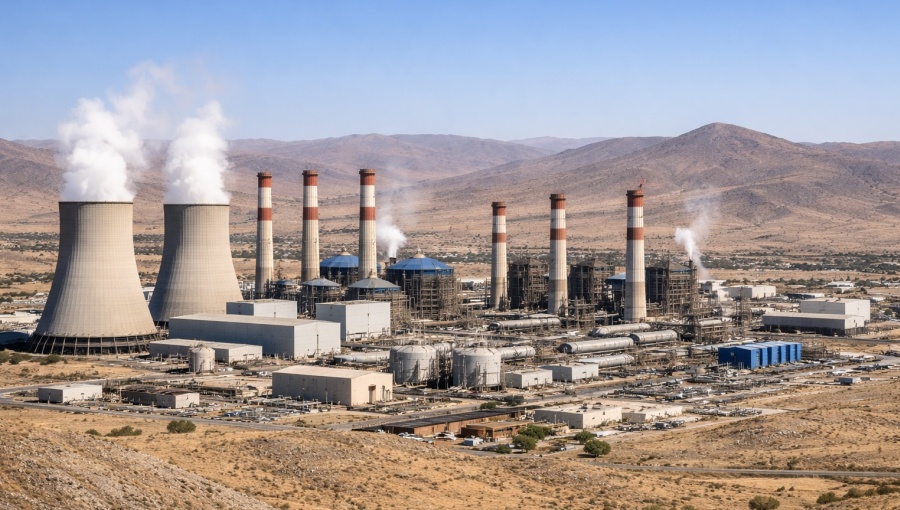
Unlike many countries that rely on a handful of large generating hubs, Iran’s grid is unusually dispersed making it very difficult to attack. There are no significant targets to destroy. Instead a network of small interlinked power stations is much more suited to absorbing strikes and still able to provide electricity to the whole country.
"The Iranian electric grid is one of the most decentralised in the world, with around 130 to 150 power plants, primarily gas-fired thermal plants," Marins says. "No individual plants dominate large portions of the country’s electricity generation."
The dispersion is striking when set against the size of the system. Iran’s total installed capacity is approaching 100GW, according to official figures, yet even its largest facility plays only a marginal role.
"The largest power plant in the country, Damavand, located near Tehran, has a capacity of approximately 2,868 MW, representing only about 2.9% of the total installed capacity."
Other major plants, such as Shahid Salimi Neka, Rudeshur and Kerman, as well as hydroelectric facilities like Karun-3, operate in the 1.6–2.2GW range. Even taken together, Marins notes, "the 5-10 largest plants account for only a modest share, probably less than 15–20% of the total. The rest of the capacity is spread across dozens of smaller and medium-sized facilities."
This fragmentation is compounded by the nature of Iran’s generation mix. Around 80–85% of electricity is produced from natural gas, distributed across numerous thermal plants rather than concentrated in a few strategic nodes. The result is a grid that is inherently resilient to targeted strikes.
"Iran appears to have been designed for this kind of battle against the world’s leading military power and the strongest air force in the Middle East," says Marins.
Military planners familiar with infrastructure targeting say that while strikes on major plants or substations could trigger localised blackouts — particularly in high-demand centres such as Tehran — they would be unlikely to produce an immediate nationwide collapse. Recent analysis suggests that even coordinated attacks would primarily generate “serious domestic disruption and economic strain” rather than decisively degrading Iran’s military capabilities.
That resilience has strategic implications. US President Donald Trump threatened to blow up all of Iran’s power resources on March 21 if the Strait of Hormuz were not opened within 48 hours. However, he backtracked almost immediately, extending the deadline by another five days to March 28, after Tehran threatened to destroy all the power assets in the entire Gulf region in retaliation if the US carried through on its threat. That deadline has now been extended again to April 6.
"Attacks on its electrical infrastructure would take several days to have a significant effect and would almost certainly be followed by a retaliation that could leave the Gulf in the dark," says Marins.
Energy infrastructure across the Gulf is tightly interconnected and highly exposed, particularly in export-oriented economies dependent on desalination plants and air conditioning. Any escalation targeting grids risks rapid regional spillover that would have serious humanitarian consequences – especially if the desalination plants went offline, which provide drinking water for almost all the countries in the region. And this was no idle threat, experts say.
"After 26 days of war, Iran continues to launch between 30 and 40 missiles daily while deploying additional air defences, leading to a gradual increase in incidents of aircraft being hit," says Marins. "The country has effectively absorbed the coalition's strikes. Meanwhile, the coalition's strategic options are dwindling as stockpiles of both offensive and defensive munitions reach critical levels."
This raises questions about the viability of coercive strategies centred on infrastructure destruction.
"I see very few options powerful enough to genuinely force the Iranians into negotiations," says Marins, who adds that the comparison with other energy-heavy states is also misleading.
"If Washington’s political thinking ever drew a parallel, I would say there is virtually nothing similar between Iran and Venezuela other than oil production."
Bombing power sectors into ruins has become a fairly standard tactic in wars. The Nato allies destroyed 80% of Serbia’s power sector during the Kosovo war in 1999, saying it was a legitimate military target.
"Yes, I'm afraid electricity also drives command and control systems. If President Milosevic really wants all of his population to have water and electricity all he has to do is accept Nato's five conditions and we will stop this campaign," Nato’s Chief Spokesman Jamie Shea said at the time. "But as long as he doesn't do so we will continue to attack those targets which provide the electricity for his armed forces. If that has civilian consequences, it's for him to deal with."
Russian President Vladimir Putin has adopted the same tactic in the Ukraine war, destroying much of Ukraine’s power sector over the last two years, building up to a crescendo when he tried to freeze Ukraine into submission during one of the coldest winters in a decade. Only an estimated 20% of Ukraine’s pre-war generating capacity has survived, experts say.
Unlike Serbia, Ukraine or Venezuela, where the grid is heavily centralised and vulnerable to cascading failure, Iran’s network reflects decades of sanctions-era adaptation — a system built not for efficiency, but for survival.
"Trump’s threat highlights a broader strategic dilemma: even overwhelming military superiority does not guarantee leverage when the target has engineered its infrastructure to withstand precisely that kind of pressure," says Marins.
Tuesday, March 24, 2026
A Breakthrough Or Buying Time? Trump’s Claim Of Talks With Iran Raises Questions – Analysis
President Donald Trump’s claim that the United States has held talks with Iran has raised hopes of an end to the weekslong war rocking the Middle East.
But it is unclear if the purported talks — dismissed as “fake news” by Tehran — are a sign of a potential breakthrough, intended to calm panicked financial and global energy markets, or simply to buy Trump more time.
Even if there is a concerted diplomatic push, a huge gap remains between the United States and Iran. Tehran’s chokehold on the Strait of Hormuz, a key artery for global oil supplies, also gives it leverage in any negotiations to end the war, experts say.
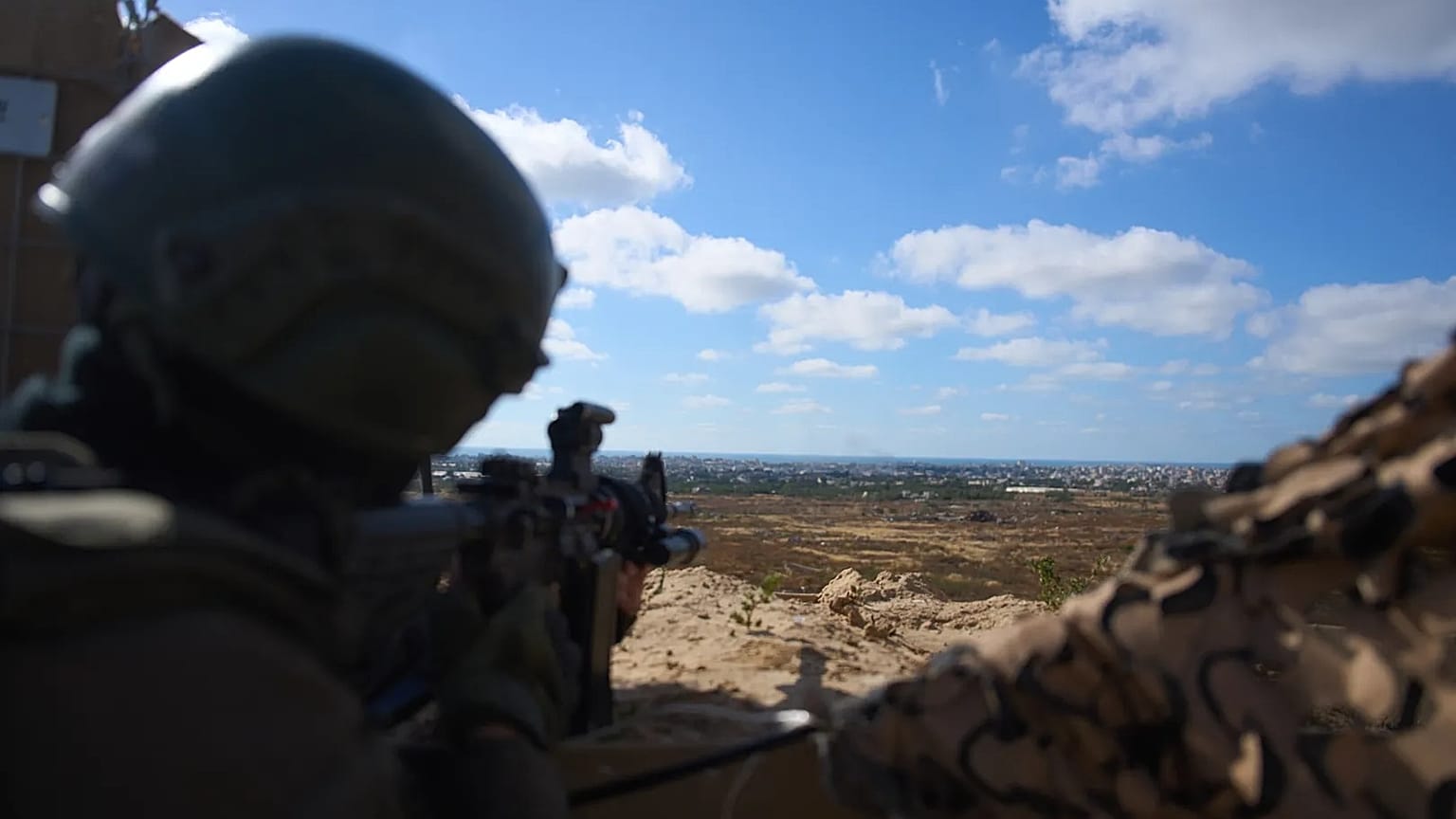
Despite the talk of diplomacy, the war with Iran showed no signs of de-escalation on March 24. The United States and Israel launched a new round of air strikes on Iran, which fired missiles at Israel and hit energy infrastructure in the Persian Gulf.
“I don’t think Trump is seeking an off-ramp and an end to the war yet,” said Farzan Sabet, a managing researcher at the Geneva Graduate Institute.
Trump still has “escalatory options to attempt to reopen the Strait of Hormuz and to coerce the Islamic republic to accept his terms,” he said, including the possible use of US troops to seize Iran’s Kharg Island, which serves as the country’s key oil terminal, or capture Iranian territory with the aim of ending Tehran’s effective closure of the narrow waterway.
US media reported last week that two American expeditionary units, with thousands of Marines and supporting ships and aircraft, were on their way to the Middle East.
Experts said Trump’s claim of talks with Tehran provided the US president an opportunity to walk back from his threat to “obliterate” Iran’s power plants if Tehran did not reopen the Strait of Hormuz, through which 20 percent of the world’s oil and liquefied natural gas are shipped. Trump, who had issued a 48-hour ultimatum on March 21, said he was postponing the strikes to allow time for talks to succeed.
“Backing down from his ultimatum and specifically the threat to destroy Iranian power plants probably had more to do with the risks involved with such an action, which could lead Tehran to strike reciprocal targets in the Persian Gulf, with potentially devastating humanitarian and economic consequences for both sides,” said Sabet.
“He likely faced intense pressure not to follow through on this threat,” he added. “There was also likely an element of Trump trying to manipulate global energy prices by giving the impression of de-escalation, coaxing them to go down, even if temporarily.”
‘Very Strong Talks’
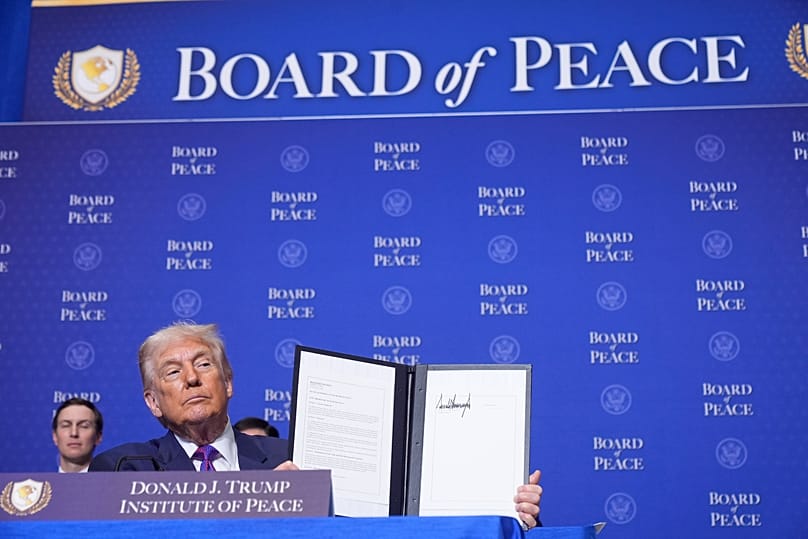
Trump wrote on his Truth Social platform on March 23 that the United States and Iran had held “very good and productive” conversations about a “complete and total resolution of hostilities in the Middle East.”
Trump later told reporters that his special envoy Steve Witkoff and son-in-law Jared Kushner had held discussions with an unnamed top Iranian official in recent days.
“We have had very, very strong talks. We’ll see where they lead. We have major points of agreement, I would say, almost all points of agreement,” Trump said.
Trump’s comments quickly sent oil prices falling. But they rose back above $100 a barrel after Iran said there had been no direct talks with the United States.
“No negotiations have been held with the U.S., and fakenews is used to manipulate the financial and oil markets and escape the quagmire in which the US and Israel are trapped,” Mohammad Baqer Qalibaf, Iran’s powerful speaker of parliament, wrote on X.
Later, the White House said the situation was “fluid” and cautioned that no formal meetings between any US and Iranian officials had been scheduled.
Amid the contradictory claims from the United States and Iran, there appears to have been at least initial contact between the sides through intermediaries, according to US media reports.
‘Permanent Political Solution’
Even if there is a genuine push to end the war, the gap between the sides remains significant and the likelihood of a breakthrough is low, experts say.
Trump has demanded an end to all nuclear enrichment and the elimination of all of Iran’s uranium stockpiles that could be potentially used to make a bomb.
Iranian officials have made their own demands, including guarantees that the United States and Israel will not attack Iran again, the lifting of crippling US sanctions, the closure of US military bases in the Persian Gulf, and war reparations from Washington and Israel.
“The Iranians are aiming for a more permanent political solution rather than de-escalation or a cease-fire,” said Sina Azodi, an expert of Iran’s military and history and an assistant professor of Middle East politics at George Washington University.
Iranian officials have said they do not want a repeat of the 12-day war with Israel and the United States in June 2025 which ended with a cease-fire, only for a new war to erupt on February 28.
“They believe that if they stop now, Israel and the US will come back in six months if not a year,” Azodi added. “Their aim is to deter future attacks since they believe this is a fight for their survival.”
Iran’s demands, experts say, reflect its belief that it will come to any negotiation from a position of strength.
US-Israeli strikes have degraded but not destroyed Iran’s ability to fire missiles and drones at Israel and America’s allies in the Persian Gulf. Tehran still maintains a chokehold on the Strait of Hormuz, and Iran’s stockpiles of highly enriched uranium remain buried underneath nuclear sites damaged by US-Israeli strikes.
“Right now, Iran has the upper hand in terms of its ability to deny the US a victory,” said Azodi.
Frud Bezhan is Senior Regional Editor in the English-language Central Newsroom at RFE/RL, leading coverage of the Middle East, South Asia, and Central Asia. Previously, he was the Regional Desk Editor for the Near East, with a primary focus on Iran, Afghanistan, and Pakistan. As a correspondent, he reported from Afghanistan, Turkey, Kosovo, and Western Europe.
Friday, March 20, 2026
Blaming Refugees Not Warmongers:
The Right-wing Press, Fortress Europe and ‘Weaponized Migration’
An expected refugee crisis is looming from the US-Israeli wars on Iran and Lebanon. This probability has already been raised by aid agencies, but also, of course, by the right-wing press that thrives on the fear-mongering that Europe is being overrun by foreigners. As a GB News headline blared just days into the conflict: “Europe braces for ANOTHER migrant crisis…’It will wash up on Britain’s shores!’”
While the obvious connection is made between the war and the likelihood of millions fleeing, the implication of such articles and videos is that Iran is responsible, rather than the whole debacle being due to an illegal war of aggression.
This propaganda line – which is also a diversionary tactic – has been extremely effective over the years, that immigrants are coming to Europe for reasons other than conflict, economic exploitation, or Western policies, including regime change and instigated uprisings, like in Iraq, Libya and Syria.
Indeed, just weeks before the war on Iran, I mentioned to two middle-class Italian ladies the fact that US wars forced refugees to head for Europe, and opined that European countries should have opposed such aggression from happening in the first place. They were surprised, saying they had not made that connection before. Incredible, the lack of critical thinking to make that link between the US, Israel and Europe’s warmongering in the wider Middle East and beyond, and Europe’s ‘migration crisis’.
Of course, if that connection –the context– is not made in news articles, TV reports or social media videos, it is easy to imply that migrants are coming to Europe for reasons other than those caused primarily by Western imperialism. This is sadly not that surprising, however, as context requires space and time, and media outlets increasingly cut back on such background as people don’t want to read more than a few hundred words or watch lengthy explanations of how we got to where we are at; sound bites are preferable. Reflective of this is that news agency Reuters a few years ago cut the standard length of articles from 800 to 600 words over concerns about reader attention spans. That cut of 200 words is concerning, as it is just enough words – a few paragraphs – to provide some context.
The other talking point that the right-wing media brings up that needs to be watched out for is the trope of ‘weaponized mass migration’ or ‘migrant warfare’. The GB News article quotes Mani Basharzad at the UK’s right-wing think-tank the Institute for Economic Affairs saying: “The Islamic regime mobilises illegal immigration … These people are a real threat to England (and) a real threat to the countries that they are in.”
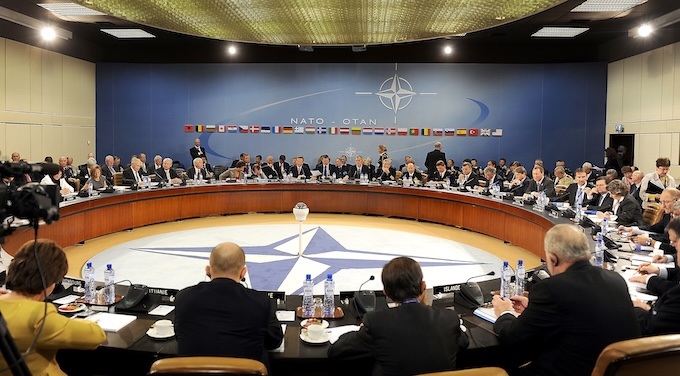
This concept of ‘weaponized migration’ surfaced in a 2011 book, Weapons of Mass Migration by Kelly Greenhill, which argues that migration can be a ‘geopolitical weapon in asymmetric statecraft’. The concept has been picked up by the European Commission, the UN, NATO, and the US – there was a House Foreign Affairs Subcommittee on Europe hearing in February on the topic – with ‘migrant warfare’ supposedly a part of ‘hybrid warfare’ being used against Europe ‘to shape national and international policies’, whether by Moscow, Tehran or another usual suspect.
The book argues that in the 64 documented cases of ‘coercive engineered migration’ since 1951, over half have been successful in achieving political goals. I am not sure how the author’s mental gymnastics ended up making such a conclusion based on cases studies on Cuba’s 1980 Mariel Boatlift, Slobodan MiloÅ¡ević’s threats during the Kosovo crisis, Haiti’s 1991 boat people crisis, and North Korea’s potential threats to China. Indeed, if Cuba was, as alleged, using migrant warfare to bring down the US, then Secretary of State Marco Rubio, who is of Cuban origin, must be so deep undercover that even he doesn’t know it – or maybe he is a modern day Manchurian Candidate?
In any case, these migrant warfare stories do not hold water. Sure, people could point to, for instance, the case of the three Iranian asylum seekers arrested last year in the UK for allegedly spying, but that hardly constitutes a major threat or that Iranians trying to migrate to the UK are undercover agents or fifth columnists.
This weaponized migration argument is particularly disturbing coming from countries that have caused so much mass migration, and in the cases of the USA and Israel, their colonial-settler origins are based on weaponized mass migration to ethnically cleanse the indigenous population – just ask the original citizens of Turtle Island or Palestinians.
The other anti-immigrant argument being put forward is rooted in Islamophobia, that any refugees from Iran or Lebanon will be, or become, Islamic extremists. As the GB News article quoted Tobias Ellwood, a former Conservative MP and chairman of the Defence Select Committee: “The other one is extremism, because when people do depart from war zones, they could easily then be subject to indoctrination and then you get Islamic extremists coming out from that.”
What is not mentioned here is the link between people being radicalised and their country being bombed, friends and family killed, and their lives smashed. As a study in which nineteen university students role-played the persona of an apprehended suicide bomber showed, the psychological mechanisms to do such an act of self-sacrifice may be universal rather than rooted in religious extremism.
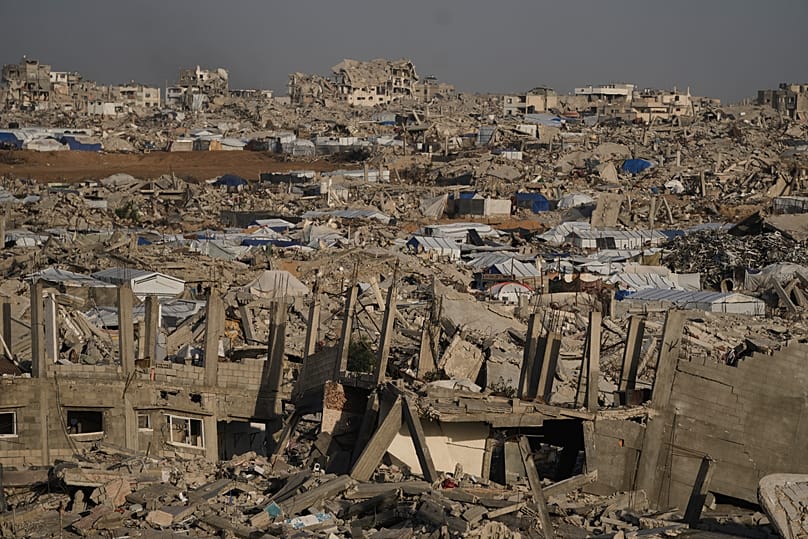
The ‘real story’ is not the refugees that might make their way to Europe. It is the huge numbers of people that will be displaced in the Middle East. The International Organisation for Migration has estimated that more than 19 million people are already internally displaced due to conflict, violence and disasters across the wider Middle East. The war on Iran has now caused 3.2 million Iranians to be internally displaced, while in Lebanon, close to 1 million are displaced. Such numbers will inevitably increase as the wars continue.
While some refugees will try to get to Europe, most will be forced to stay in the region, as happened with the Syrian refugee crisis from 2011 onwards. Europeans point to the 1.3 million Syrians who came, and the nearly 1.1 million granted some form of asylum between 2015 and 2023, yet Europeans overlook that Lebanon took in around 1 million Syrians – roughly 20% of Lebanon’s population. It caused immense pressure on Lebanon, as well as anti-Syrian sentiment, but it did not cause the same uproar as in Europe, or bolster right-wing populists, as in Europe and the UK, with the anti-immigration sentiment playing a role in Brexit.
This time, unlike with the Syrian crisis, Europe is better prepared to stop the ‘barbarians at the gates’, having spent billions of euros on Fortress Europe and outsourcing prevention. Countries such as Italy and Spain have outsourced migrant processing centres offshore, Germany is considering doing the same, while the EU has essentially paid off Turkiye, Libya and elsewhere in North Africa to prevent migrant outflows. A new EU Pact on Migration and Asylum is also to take effect in June, with mandatory border procedures, faster asylum processing, and a common return system put in place.
Europe is beefing up Frontex, its border patrol force, as part of the Fortress Europe approach, with an additional 10,000 officers to be added to its current ranks of 1,300 by 2027, and a further 30,000 proposed for the near future. Frontex has been accused of using state-organised violence as ‘deterrence’, with the EU agency linked to the deaths of 2,000 migrants. Coast guards, such as Greece’s, have used deadly tactics, in 2023 ramming a migrant boat and killing 15 people.
The idea of ‘re-emigration’ has also taken root in Europe as a means to kick out migrants, which, if there is an uptick in migration due to the wars on Iran and Lebanon, may rise further up the agenda of right-wing political parties, and could result in such populists taking further cues from the Trump playbook by instigating ICE-style arrests and deportations.
Europe’s crackdown on migrant smuggling and other policies has led to a decline in irregular migration, down 38% in 2024 on the previous year, and down 30% in the first quarter of 2025, while 110,385 third-country nationals were returned to their home countries in 2024, up 19.3% from 2023.
Yet despite Fortress Europe’s offensive and defensive posturing on refugees, the push factors for people to leave the Middle East keep piling up, due to both American and European actions. While US wars exacerbate economic instability, and the current war on Iran is driving up the prices of food and energy, the stop-gaps that had been in place, notably humanitarian aid, are drying up. The Trump administration has cut 90% of funding for USAID, as well as for other NGOs and UN programmes. The UK, Germany, the Netherlands and others have also cut humanitarian assistance to bolster defence budgets. In short, the very agencies that mopped up after previous US wars have either ended operations or are underfunded and overstretched. It will add to the push factors for people to leave the region. The drop in aid will also force Europe to shore up authoritarian governments such as Turkiye’s and Egypt’s as part of efforts to stop migrants leaving their shores. This will provide bargaining chips for Turkiye’s Erdogan and Egypt’s Sisi in their negotiations with Europe – pay up, don’t criticize us, or we open the gates.
The glimmer of hope is that Europe wakes up and realizes the cause for a great deal of instability and suffering on its immediate southern border is due to the US and Israel’s actions, and demands a stop to the warmongering while placing full blame on Washington and Tel Aviv for any fallout. But going by recent history, the lack of context in much of the coverage of the wars on Iran and Lebanon, and the spinelessness of the European establishment to stand up to the American hegemon or the Zionists, this is not likely to happen – but if it does, it will already be too late.
Paul Cochrane is an independent journalist covering the Middle East and Africa. He lived in Bilad Al Sham (Cyprus, Palestine and Lebanon) for 24 years, mainly in Beirut. He is also the co-director of a documentary on the political-economy of water in Lebanon, “We Made Every Living Thing from Water”.
Computer simulation improved understanding of refugees
Computer simulations can help people gain a better understanding of the situation faced by migrants. This is shown by a new study in which 148 teenagers were assigned random migration pathways, with different start and end points. Along the way, they encountered unforeseen events that affected their journey. Experiences from the game led to a partial shift in attitudes towards migration.
The researchers set out to investigate whether it is possible to improve the standard methods currently used in teaching about migration. One common teaching method is for teachers to present international migration statistics. The teaching design tested in the study instead makes it possible to create a more student-activating approach, in which students develop an understanding of migration by experiencing the situation for themselves.
An initial sample of 148 students
The study involved 148 students (aged 14–19) from five Swedish schools. The participants undertook individual and randomised digital journeys as migrants from the Middle East and North Africa to countries of their choice around the world. The simulation involves experiencing the life of a randomly generated character from birth to death in another country, where players have to try both to navigate world events that affect their life situation and to improve their living conditions using the resources they have and acquire.
“We demonstrate that students can develop a deeper understanding of migration by experiencing a simulated migration journey for themselves,” says Thomas Nygren, Professor at Uppsala University and one of the authors. “At a time of polarised debate on migration and widespread disinformation, this offers new opportunities to address attitudes in an evidence-based manner. It’s like Hans Rosling’s models for tackling fact resistance meeting computer games.”
Critical thinking and fact-checking
The simulation is based on accurate, research-based data on migration and combines game mechanics with fact-based decision-making scenarios. The gaming experience involves both critical thinking and fact-checking through interactive participation. Before the study, the students’ attitudes towards various social issues related to migration were measured. The assessment was repeated after they had carried out the computer simulation. Around 25 per cent of the participants attempted to migrate, but failed to reach their target countries due to financial constraints, limited travel options to other countries, illness or death.
“It’s not really surprising that many students were unable to migrate their characters. In reality, migration is often difficult to achieve, particularly from certain parts of the Middle East and North Africa, where many people live in great economic deprivation. You need favourable conditions, such as money and good health,” says Markus Al-Afifi, the study’s lead author.
An eye-opener for many
During the game, the students therefore had to try to create the conditions that would enable their characters to migrate later in life, which was not always easy depending on the country in which they were born and the resources they were born with.
“This game is likely to be an eye-opener for many students who believe that the opportunity to migrate is wide open to everyone, regardless of their circumstances,” says Al-Afifi.
The analysis showed that: • The pupils exhibited significantly increased social understanding following the simulation • The outcomes were influenced by the students’ prior knowledge, basic attitudes and perceived learning • No statistically significant change in political understanding could be observed
The study sets out from a scientific theory (intergroup contact theory) which shows that contact between groups can reduce prejudice. When direct contact may not be possible – such as in a classroom setting – a simulation can serve as a structured, educational form of indirect experience. The results were analysed using three different scientific methods (the Wilcoxon signed-rank test, hierarchical regression analysis and interaction analysis).
The results of the study show, among other things, that students: • Can develop greater empathy and social understanding towards immigrants • Develop an understanding of immigrants to varying degrees, depending on their prior knowledge of the causes of migration
The computer simulation can also help students to: • Gain insight into the causes of migration • Understand how structural conditions influence individual decisions to flee • Experience agency, uncertainty, risk and limited options from a first-person perspective in the context of migration
“By using structured and fact-based information, this type of simulation can give students a nuanced and data-driven understanding of global migration patterns. Having said that, the results show that political views on immigrants’ rights are more stable and do not change so easily as a result of a single intervention of this kind,” says Al-Afifi.
Screenshot data selected indicator by countries in this computer simulation. The simulation involves experiencing the life of a randomly generated character from birth to death in another country, where players have to try both to navigate world events that affect their life situation and to improve their living conditions using the resources they have and acquire.
Screenshot of personal settings for the persona. During the game, the students had to try to create the conditions that would enable their characters to migrate later in life, which was not always easy depending on the country in which they were born and the resources they were born with.
Statistics of birth and target countries in the simulator. The birth country was randomised, while they could choose the target country. Around 25 per cent of the participants attempted to migrate, but failed to reach their target countries due to financial constraints, limited travel options to other countries, illness or death.
“It’s not really surprising that many students were unable to migrate their characters. In reality, migration is often difficult to achieve, particularly from certain parts of the Middle East and North Africa, where many people live in great economic deprivation. You need favourable conditions, such as money and good health,” says Markus Al-Afifi, the study’s lead author.