Monday, March 03, 2025


Fusion Technology to Revolutionize Geothermal Power

SCI-FI-TEK + FRACKING


  • Geothermal energy has the potential to provide an almost infinite source of clean energy, but current technology limits its accessibility to specific locations.

  • Researchers are investigating the use of gyrotrons, a technology used in nuclear fusion, to drill deeper and more efficiently, potentially revolutionizing geothermal energy production.

  • Breakthroughs in deep drilling technology could make geothermal energy a globally viable solution, significantly impacting the future of energy and the fight against climate change.


The Earth’s core produces so much heat that if we could tap just one tenth of one percent of it, the world’s energy needs would be satisfied for the next 20 million years. And that infinite source of power would yield zero greenhouse gases in the process. But while geothermal energy thrives today in places like Iceland, where heat from the Earth’s core naturally comes up to the surface of the Earth’s crust, for the rest of the world it remains out of reach. 

At present, geothermal accounts for a mere 0.5% of renewable energy on a global scale. And growing that share will require some serious technological breakthroughs. “To grow as a national solution, geothermal must overcome significant technical and non-technical barriers in order to reduce cost and risk,” says the introduction to a 2019 U.S. Department of Energy (DOE) report — GeoVision: Harnessing the Heat Beneath Our Feet. “The subsurface exploration required for geothermal energy is foremost among these barriers, given the expense, complexity, and risk of such activities.” 

But scientists are hard at work trying to figure out a way to tap into that heat from anywhere on the planet. All it will require is digging the deepest hole in human history. The Earth's crust varies from about 3 to 47 miles in thickness, and most of those thin bits are way out in the deepest parts of our oceans. So far, the deepest humans have ever dug was a vertical depth of just 12,289 meters (40,318 feet or just over 7.6359848 miles) way back in 1989. And in that project, the Russian Kola Superdeep Borehole, was deemed a failure after it was unable to reach its end goal of the Earth’s mantle – but it managed to tap into temperatures measuring 180 °C (356 °F) using traditional drilling technologies alone.

“Where conditions become too difficult for physical drill bits to operate, researchers have been testing the capabilities of directed energy beams to heat, melt, fracture and even vaporize basement rock in a process called spallation, before the drill head even touches it,” New Atlas recently reported.

Now, researchers are investigating other, more reliable ways to reach depths as great and greater than the Kola borehole, in order to make geothermal plants feasible for installation anywhere on the planet. Some projects have looked into borrowing technologies from the fracking industry to accomplish this goal. But so far this approach has not been fruitful, either as these technologies remain cost prohibitive. “For now, federal analysis shows this type of geothermal costs around $181 per megawatt hour, while utility-scale solar costs just $25,” NPR reported in 2023. However, some geothermal experts project that those costs will decrease by about a third over the next decade. 

So now science has turned to poaching technology from an entirely different sector – nuclear fusion research. Gyrotrons are currently used in nuclear fusion experiments to super-heat and maintain plasma. But Quaise Energy, and MIT offshoot based in Cambridge, Mass., argues that they can also be used to drill deeper and more efficiently than ever before, by melting rock with energy beams. Quaise Energy has already raised $95 million from investors (including Mitsubishi) to apply gyrotrons to geothermal energy extractions. 

The MIT team’s experimenting and mathematical models suggest that “a millimeter-wave source targeted through a roughly 20 centimeter waveguide could blast a basketball-size hole into rock at a rate of 20 meters per hour,” according to IEEE Spectrum. “At that rate, 25-and-a-half days of continuous drilling would create the world’s deepest hole.” Move over, Kola Superdeep Borehole. 

This could have enormous ramifications for the future of energy as we know it, and a silver bullet for climate change to boot. “Barring too many further surprises, [gyrotron technology] should [...] significantly change the equation for ultra-deep drilling, making it possible and profitable to get deep enough into the crust to unlock some of the Earth's immense geothermal energy potential,” New Atlas reports. 

By Haley Zaremba for Oilprice.com


German stellarator fusion design concept unveiled

Thursday, 27 February 2025

Munich-based Proxima Fusion and its partners have published a new peer-reviewed paper presenting Stellaris, the world's first integrated concept for a commercial fusion power plant designed to operate reliably and continuously.

German stellarator fusion design concept unveiled
(Image: Proxima Fusion)

Stellaris builds on the record-breaking results of the Wendelstein 7-X research experiment in Germany, the most advanced QI stellarator prototype in the world, directed by the Max Planck Institute for Plasma Physics (IPP) and the product of over EUR1.3 billion (USD1.4 billion) in funding from the German Federal Government and the European Union. In February 2023, Wendelstein 7-X succeeded for the first time in generating a high-energy plasma that lasted for eight minutes. The facility is designed to generate plasma discharges of up to 30 minutes in the coming years.

Published in Fusion Engineering and Design, Proxima Fusion - which was spun out of IPP in 2023 and was founded by a team which includes six former IPP scientists - says the Stellaris concept is "a major milestone for the fusion industry - advancing the case for quasi-isodynamic (QI) stellarators as the most promising pathway to a commercial fusion power plant".

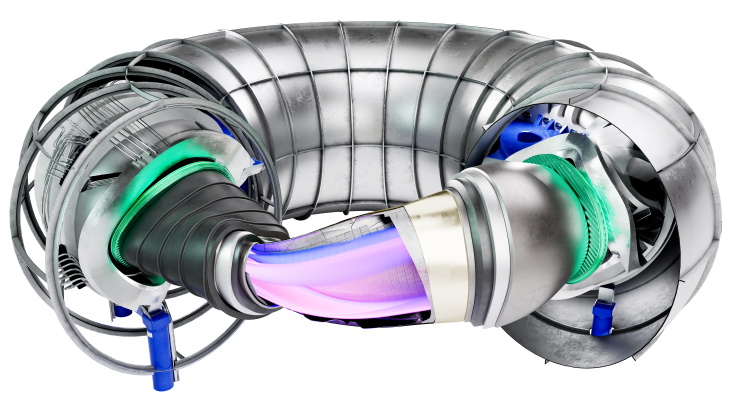
A stellarator fusion reactor is different to a tokamak fusion reactor such as the Joint European Torus in the UK or the ITER device under construction in France. A tokamak is based on a uniform toroid shape, whereas a stellarator twists that shape in a figure-8. This gets round the problems tokamaks face when magnetic coils confining the plasma are necessarily less dense on the outside of the toroidal ring.

(Image: Proxima Fusion)

According to Proxima Fusion, Stellaris is designed to produce much more power per unit volume than any stellarator power plant designed before. The much stronger magnetic fields that are enabled by high-temperature superconducting (HTS) magnet technology allow for a significant reduction in size compared with previous stellarator concepts. It says smaller reactors can therefore be built more quickly, provide more efficient energy generation, and promise to be more cost-effective in both construction and operation. The Stellaris concept also makes use of only currently available materials, meaning it will be buildable by expanding on today's supply chains.

The company says its simulation-driven engineering approach has enabled rapid design iterations, leveraging advanced computing. Stellaris, it says, is the first QI stellarator-based power plant design that "simultaneously meets all major physics and engineering constraints, as demonstrated through electromagnetic, structural, thermal, and neutronic simulations".

Proxima Fusion says the Stellaris design incorporates groundbreaking technical features, including: a magnetic field design that obeys all key physics optimisation goals for energy production; support structures that can bear the forces present when operating at full power; a showcase that HTS technology can be effectively integrated in high field stellarators, while ensuring effective heat management on internal surfaces; and a neutron blanket concept that is adapted to the complex geometry of stellarators.

The company plans to demonstrate that stellarators are capable of net energy production with its demo stellarator Alpha in 2031, and aims to deliver fusion energy to the grid in the 2030s.‍

"The path to commercial fusion power plants is now open," said Francesco Sciortino, co-founder and CEO of Proxima Fusion. "Stellaris is the first peer-reviewed concept for a fusion power plant that is designed to operate reliably and continuously, without the instabilities and disruptions seen in tokamaks and other approaches."

"For the first time, we are showing that fusion power plants based on QI-HTS stellarators are possible," added Jorrit Lion, co-founder and chief scientist of Proxima Fusion. "The Stellaris design covers an unparalleled breadth of physics and engineering analyses in one coherent design. To make fusion energy a reality, we now need to proceed to a full engineering design and continue developing enabling technologies."

Coal’s Last Stand? U.S. Power Plants Face a Mass Exodus in 2025

The American coal industry, once the backbone of the nation’s electricity grid, is facing a reckoning in 2025. According to the latest data from the Energy Information Administration (EIA), the planned retirement of coal-fired power plants is set to double this year, marking one of the steepest declines in decades. An estimated 8.1 gigawatts (GW) of coal capacity is slated for closure, a sharp increase from 2024’s 4 GW retirement figure and a return to the more aggressive phaseouts seen over the past ten years.

Coal’s share of the U.S. power generation mix has already dwindled to 16%, a far cry from its dominance just two decades ago. The culprits? Cheaper natural gas, aggressive renewable expansion, and climate-policy shifts led by the Biden administration’s push for a cleaner grid. Yes, Trump-era policies are a temporary reprieve, but the long-term trajectory is clear: US coal is at least eyeing the exit, although the US still relies heavily on coal for its power.

For now.

But it’s not just regulation that’s driving coal to the exit. Market forces are proving just as lethal. Utilities are opting for natural gas and renewables over coal, both for cost and emissions reasons. Even without stringent federal mandates, power producers are finding it increasingly difficult to justify the expense of maintaining aging coal plants.

By the Numbers

The EIA’s breakdown of 2025 retirements is stark:

  • 12.3 GW of total power capacity set to retire (a 65% increase from 2024)
  • 66% of those retirements will come from coal
  • 21% will come from natural gas, mostly less-efficient single-cycle plants

What’s Filling the Gap?

With fossil fuel retirements accelerating, where is the replacement power coming from? According to the EIA, 63 GW of new utility-scale generation is expected to come online in 2025. The largest contributors:

  • Solar (leading the charge)
  • Battery storage
  • Wind power
  • Some additional natural gas capacity

This marks a nearly 30% increase in new capacity from 2024, making last year the biggest year for power generation expansion since 2002.

The Catch

But a wildcard is threatening the clean energy surge--America’s data center boom. The U.S., home to one-third of the world’s data centers, is seeing an unprecedented strain on the grid that has already led to delays in coal and gas plant retirements.

While renewables are making rapid gains, concerns over grid stability and energy storage capabilities remain. Can a solar-and-battery-heavy grid handle peak demand? Or will the U.S. be forced to keep some fossil-fuel assets in reserve longer than expected?

The numbers don’t lie—coal is being phased out at a historic pace, and 2025 will mark a significant step toward its eventual demise in the U.S. power sector. But the transition isn’t without its challenges. The rise of data centers and a growing need for grid reliability means that utilities will need to balance aggressive clean energy targets with the practical realities of keeping the lights on.

While it's unlikely that clean energy will usher in coal's final act anytime soon, the industry’s role is shrinking.

By Julianne Geiger for Oilprice.com

U.S. Deepens Ties with Central Asia Amidst Shifting Geopolitical Landscape


By Eurasianet - Feb 27, 2025

The Trump administration is continuing the Biden-era initiative to strengthen US influence in Central Asia, primarily due to the region's natural resources and its strategic location bordering China.

Uzbekistan and Kazakhstan are central to the US's C5+1 engagement, with discussions focusing on trade, investment, WTO accession, and managing relations with the Taliban in Afghanistan.

Uzbekistan is taking a leading role in regional efforts to engage with the Taliban government, aiming to boost trade and address shared concerns such as water resource management.


When it comes to Eurasia, the Trump administration has acted quickly to reverse the foreign policy of its predecessor, underscored by moves to foster a rapid thaw in relations with Russia. But there is one Biden-era legacy that the Trump State Department seems intent on preserving, an initiative to increase US influence in Central Asia known as the C5+1 format.

Secretary of State Marco Rubio emphasized the US interest in building up the C5+1 framework during a February 21 talk with Foreign Minister Bakhtiyor Saidov of Uzbekistan. According to a State Department spokesperson, Rubio “discussed continued cooperation, including through the C5+1 diplomatic platform, in support of a more peaceful and prosperous Central Asia.”

The main driver of US interest in Central Asia is the region’s abundant natural resources, not only oil and natural gas, but also minerals and rare earths used in high-tech devices and for clean energy and defense purposes. A geographic consideration may also factor into the US policy calculus: Central Asian states sit on China’s western border, and an avowed aim of Trump’s second term is containing Chinese global economic influence.

Rubio in his discussion with his Uzbek counterpart specifically mentioned that “the United States looks forward to working with Uzbekistan to highlight mutually beneficial opportunities for investment in critical minerals and US civil nuclear energy technologies.”

Saidov indicated that Uzbekistan was eager to engage with the United States, describing his conversation with Rubio as “candid and productive.” In a statement posted on Telegram, he added that Uzbekistan would work to expand bilateral ties “in all spheres without an exception,” focusing on “building strong bridges between business communities, increasing trade volume in both directions [and] ensuring prosperous development.”


Uzbekistan and Kazakhstan are considered the lynchpin states within the C5+1 context. Then-secretary of state John Kerry initiated the C5+1 format in 2015. But the Biden administration significantly elevated the framework’s status by convening the first-ever presidential-level summit of C5+1 leaders in 2023. The following year, the Biden administration launched a related initiative, dubbed the B5+1 process, to specifically promote trade and investment.


The Rubio-Saidov discussion indicated that the United States will remain committed to backing Uzbek efforts to gain entry to the World Trade Organization. Prior to Trump’s return to the White House, the two countries inked an agreement in December to expand mutual market access. US officials at that time hailed the Uzbek government’s “significant progress” in opening the country’s economy.

The February 21 talks also confirmed that Uzbekistan will work with the United States on the repatriation of illegal Uzbek migrants. Rubio thanked Saidov for Uzbekistan’s “cooperation in curbing illegal migration.” Seven Uzbek deportees arrived in Tashkent on February 24, Uzbek media reported. The US has reportedly shipped additional Uzbek deportees to Panama and Costa Rica.

Meanwhile, Uzbekistan is taking the lead on regional efforts to engage the Taliban government in Afghanistan. Tashkent hopes that by pulling Afghanistan into a closer trade orbit with Central Asia, Uzbek officials and their counterparts from other regional states can increase their negotiating leverage with the Taliban on matters of regional concern, in particular Afghanistan’s construction of the Qosh Tepa canal, a project that could upset Central Asia’s already delicate water resources balance.

A high-level Taliban delegation held trade talks in Tashkent on February 22 resulting in agreements covering railroad improvements, the creation of a free trade zone on the Uzbek-Afghan frontier, de-regulation of agricultural exports, mining and oil & gas development and a power transmission line project.

By Eurasianet.org

Mexico's Energy Sector Poised for Private Investment Revival

  • Mexico's new energy reform, approved by the Senate, allows for increased private sector investment in the energy sector, with the state maintaining a majority stake in partnerships.

  • President Sheinbaum aims to expand renewable energy to 45 percent of total power generation by 2030, signaling a shift towards a more diversified energy mix.

  • Despite opening the door to private investment, recent constitutional reforms have raised concerns among private companies about regulatory changes and government control over key energy agencies.

After six years of energy nationalisation under former President Andrés Manuel López Obrador (AMLO), the new President Claudia Sheinbaum administration is expected to once again welcome more private companies into Mexico’s energy sector. While Sheinbaum plans to maintain some of AMLO’s nationalisation policies, she is expected to allow greater participation from foreign companies in both fossil fuels and renewables, to diversify the country’s energy mix and boost energy security.

President Sheinbaum came into power in Mexico in October as the leader of the Morena Party, which was voted in for a second term. In November, the government launched a new National Electricity Strategy, part of the National Energy Plan 2025-2030, which established rules to allow private companies to add up to an additional 9.6 GW from renewable sources by 2030. The new framework permits 46 percent of electricity generation to come from private investments. 

At the end of January, Sheinbaum sent a draft energy reform to Congress, which aims to accelerate the energy transition and improve access to energy, partially by allowing greater private sector investment in the sector. The Senate approved the reform on the 26th of February with 85 votes in favour, 39 against, and one abstention. 

The law allows for new partnerships between private companies and Mexico's state-owned utility Federal Electricity Commission (CFE) and national oil company Pemex, but only when the state holds a majority stake. The legislation states that at least 54% of all electricity supplied to the national grid must be provided by the CFE. The state-owned firm currently generates 57% of Mexico's electricity. It is uncertain whether electricity produced by privately owned plants and sold to CFE will count towards CFE's share or that of the private sector. 

In terms of oil and gas, under the law, Pemex will no longer need to undergo a bidding process overseen by an independent regulator to migrate existing agreements to mixed participation contracts. It is worth noting that Pemex remains one of the most indebted oil companies in the world, with a debt of around $5.1 billion. The state-owned oil company has also had various safety failures in recent years. Pemex’s poor financial situation and safety concerns have led to a distrust of the company at the international level, which could make it difficult to foster public-private relationships. 

Through the new legislation, Sheinbaum aims to ensure Mexico’s energy sovereignty and move away from former President Peña Nieto’s 2013 privatisation reform. However, she appears to be far more open to private participation in the energy sector than her predecessor AMLO, who sought to close Mexico’s energy sector off almost entirely from foreign investment. The legislation is expected to provide clear rules for private companies seeking to operate in the market. 


Fluvio Ruiz Alarcón, a former Pemex board member stated, “The overall design is positive.” Ruiz added, “It is still early days, but they are on the right track. They will give more coherence to the sector by aligning legislation with institutional design and with energy policy. It gives more certainty and clarity to investors, which wasn't there before.”

While Sheinbaum has generally continued on the same track as AMLO in terms of energy reform, the president has been more favourable about renewable energy. AMLO focused primarily on the expansion of Mexico’s oil and gas industry to ensure the country’s energy security, greatly overlooking the vast renewable energy potential. By contrast, Sheinbaum said in January that the government aimed to add 27 GW of power generation capacity between 2025 to 2030, with a large proportion coming from renewable energy sources. Sheinbaum vowed to expand renewable energy to 45 percent of total power generation by 2030, compared to around 24 percent in 2022. 

While the new reform shows promise for greater private sector participation, some government decisions in recent months have left private investors uncertain about their role in the sector. In October, Sheinbaum signed a constitutional reform to alter the legal status of the CFE and Pemex, thereby making them “public companies” rather than “productive state companies”. This means that third parties will not be permitted to supply power transmission and distribution services. 

Then, in November, Mexico’s Senate approved a constitutional reform dissolving the Energy Regulatory Commission (CRE) and National Hydrocarbons Commission (CNH), combining them within the government Energy Ministry (Sener). This will lead to seven autonomous agencies being dissolved in 2025. Private companies are concerned about what that means for them when partnering on energy projects, as they must work with government-controlled agencies rather than autonomous industry regulators going forward. 

Mexico’s President Sheinbaum has begun to transform the country’s energy sector since coming into office in October, with new reforms opening the doors to renewable energy production and greater privatisation. While the role of foreign companies in Mexico is still expected to be limited, as state actors continue to dominate the country’s energy sector, the new law paves the way for more public-private partnerships and supports greater energy diversification.  

By Felicity Bradstock for Oilprice.com


US Biofuels Industry Demands Clarity on Future Regulations

  • Oil and biofuel groups have formed an unusual alliance to advocate for increased biofuel blending mandates in response to market instability caused by the Trump administration's opaque approach to biofuels policy.

  • International biofuels projects, such as a private equity-backed refinery in Canada, have been negatively affected by the regulatory chaos and market disruptions tied to U.S. tax credit policies and uncertainties surrounding the Renewable Fuel Standard.


Regulatory chaos is upending the biofuels industry. Pending changes and high levels of uncertainty at the Environmental Protection Agency (EPA) could have huge impacts on the sector, and in particular on bio-diesel. In the previous Trump administration, extensive waivers were issued to small refineries, allowing them to bypass well-established biofuels quotas, taking a huge bite out of the sector.

Already, the volume of petitions for exemptions from the federal-level Renewable Fuel Standard “has risen dramatically in recent months” according to the University of Illinois economist Scott Irwin, as reported by Agri-Pulse this week. There are currently 139 such petitions pending for compliance years 2016-2025. 

Renewable Fuel Standard (RFS) quotas – also commonly known as renewable volume obligations (RVOa) – require certain levels of biofuels (such as products like corn-based ethanol, manure-based biogas, and wood pellets) in the national fuel mix to supplement petroleum-based fossil fuels. “Renewable fuel” is an umbrella term used by the EPA to encompass “fuel produced from planted crops, planted trees, animal waste and byproducts, and wood debris from non-ecological sensitive areas and not from federal forestland,” according to a summation from Grist. 

Most recently, RVOs were proposed and finalized annually until the compliance year 2023 at 20.94 billion gallons, with standards were set through the end of this year at 22.33 billion gallons. This means that the Trump administration needs to begin considerations for 2026 requirements. But so far the highly disruptive Trump administration’s approach to biofuels targets and policy remains opaque at best.

In response to extreme market uncertainties fueled by this opacity, U.S. oil and biofuel groups banded together last week in a highly unusual show of solidarity to urge the Trump administration to increase biofuel blending mandates. These groups included the American Petroleum Institute, one of the United States’ largest oil trade organizations, and the Renewable Fuels Association and Growth Energy. However, The American Fuel and Petrochemical Manufacturers notably did not participate in the campaign

"While our organizations have not always agreed on every detail, we have joined together in recognition of the critical role liquid fuels serve in the American economy, to advance liquid fuels, and ensure consumers have a choice of how they fuel their vehicles," the groups penned in a letter to Lee Zeldin, the new EPA administrator. "We believe strong, steady volumes for conventional biofuel targets, biomass-based diesel, and advanced fuels would more accurately reflect the availability and ongoing investments in feedstocks and production capacity," they went on to write.

Anxieties over potential future cutbacks and regulatory uncertainty and chaos in the United States is already creating tangible fallout in the international biofuels sector. A private equity-backed biofuel refinery in Canada halted operations in December, after investing firms Cresta Fund Management and Energy Capital Partners had already poured over $650 million combined into the project. When operational, most of the refinery’s output went directly into U.S. markets. As such, market disruptions tied to U.S. tax-credit policies led to low profit margins and an uncertain future for the refinery, resulting in the decision to put the plant on ice.

The Wall Street Journal reports that the idling of the project “underlines the risks faced by asset managers in a nascent renewable-fuel sector still highly dependent on government policies for support.” Anxieties about these risks are widespread. One of the requests included in the letter sent to Zeldin by oil and biofuels groups was to urgently release multi-year standards for the Renewable fuel standard “to provide more market certainty for both refiners and renewable fuel producers” according to reporting from Reuters.

Biofuel quotas have long been contentious among fossil fuel supporters and environmentalists alike, though Big Oil seems to be changing its tune in the interest of market stability. “Relying on dirty fuels like factory farm gas and ethanol to clean up our transportation sector will only dig a deeper hole,” Tarah Heinzen, legal director for the non-profit environmental watchdog group Food & Water Watch said during the last round of Renewable Fuel Standard deliberations in 2023. “The EPA should recognize this by reducing, not increasing, the volume requirements for these dirty sources of energy in the Renewable Fuel Standard.” 

By Haley Zaremba for Oilprice.com

Natural Gas Surges to Meet Data Center Power Needs

By Rystad Energy - Mar 01, 2025

Data center growth in the US is skyrocketing, driven by advancements in AI and cloud computing, leading to a massive increase in energy demand.

Natural gas is currently a key source for meeting the immediate power needs of data centers, though there's a strong push from hyperscalers for clean-firm energy sources like nuclear and geothermal.

Renewable energy deployment faces challenges due to grid interconnection limitations, despite significant growth in solar and battery storage capacity.


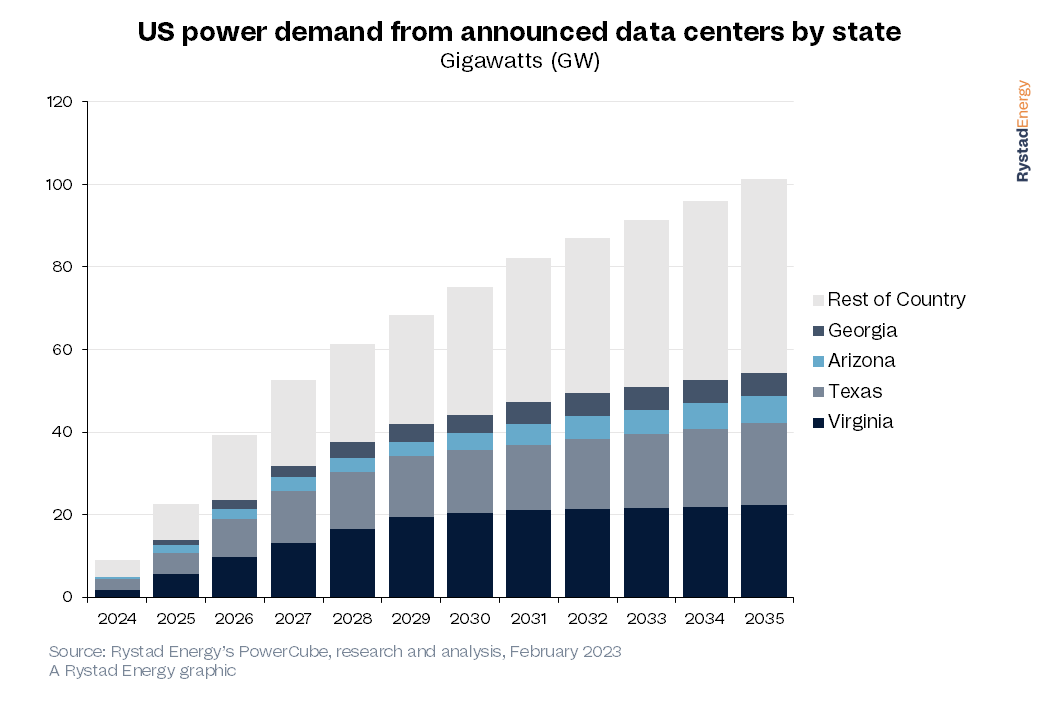
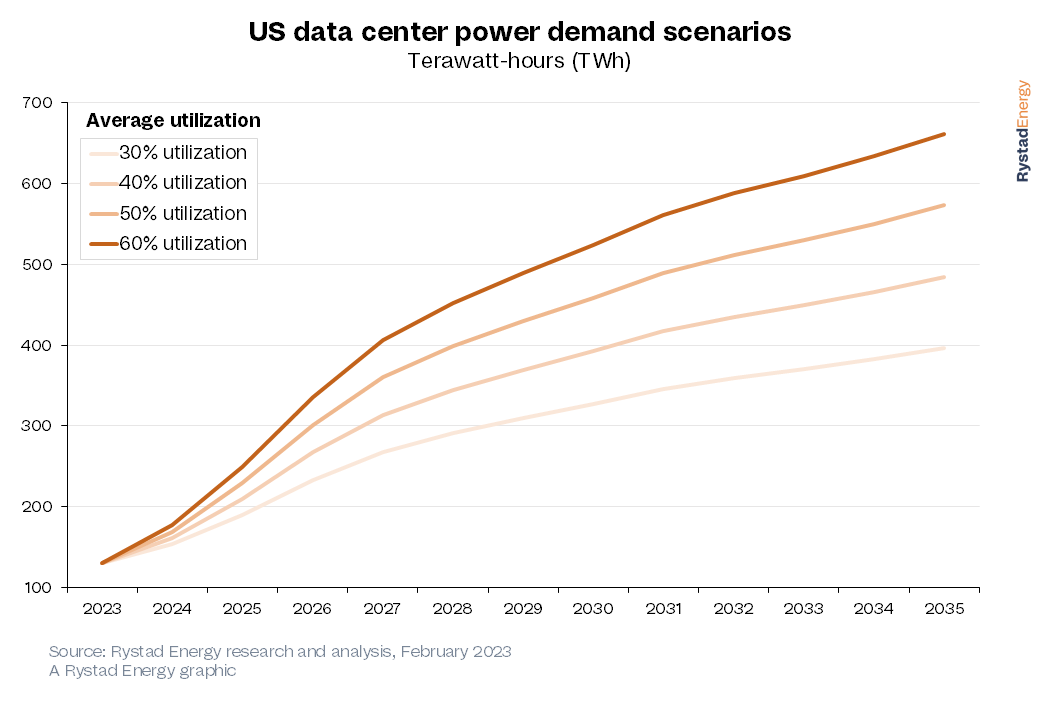
The US has made over 100 GW of data center land acquisition and construction announcements, with estimated commercial operation dates falling between 2024 and 2035. At a global level, this represents roughly 40% of total data center announcements as of 2023. Domestically, data centers are poised to require between 395 and 660 terawatt-hours (TWh) of power by 2035, representing at least 10% of current demand. The surge in announcements is driven by rapid advancements in artificial intelligence (AI) technologies from leading tech firms, alongside continued growth in cloud computing services.

Gas and solar grow as hyperscalers continue search for 'clean-firm' power


Data centers have stringent “five-nines” uptime standards (99.999% availability), equating to less than five minutes and fifteen seconds of downtime annually. Energy reliability constraints require developers to secure either front-of-meter connections to highly reliable grids or behind-the-meter connections to firm (non-intermittent) energy sources.

Natural gas emerges as a critical power source to supply firm and flexible power within an immediate time frame. The inventory of planned gas generation projects within the utility sector – with the exclusion of independent power producers – has increased from 6 GW in late 2023 to a staggering 17.5 GW currently, the highest since 2017. These plans can be linked to either population growth or increases from data center demand.


Integrated oil companies are building gas plants to take advantage of the potential power boom. In December 2024, ExxonMobil announced that it would join the power generation business for the first time, building a gas plant specifically for data centers. In January 2025, Chevron and Engine No.1 announced the creation of a new partnership with an objective to develop scalable and reliable power solutions for data centers running on domestic natural gas. The partners will cooperate with one of the leading gas turbine manufacturers, GE Vernova, on the first generation of so-called ‘power foundries’ – co-located data centers and power plants fueled by GE Vernova’s seven HA natural gas turbines in the US Southeast, Midwest and West regions. The initial capacity will be up to 4 GW with a behind-the-meter generation setup, wherein the electricity will not flow initially through the existing transmission infrastructure to mitigate potentially adverse implications for consumer power prices.

Hyperscalers such as Meta, Microsoft, Google and Amazon also have carbon-free energy goals and are trying to access ‘clean-firm’ power: resources like nuclear and geothermal that are zero-emissions while still providing stable electricity. For example, Microsoft is working to restart a reactor at Three Mile Island’s Unit 1, Meta has issued a request for proposals seeking up to 4 GW of nuclear energy, and Amazon has invested in X-Energy in an attempt to build up to 5 GW of nuclear projects by 2039. In the US, nuclear energy may see a limited increase in the short term via reactor repowering and technology upgrades. Yet, small modular reactors and other advanced nuclear technologies are not yet widely commercially available, meaning that they will not meet immediate demand.

In exchange of clean-firm power, hyperscalers are currently meeting their annualized clean energy goals through virtual power purchase agreements (PPSs) with solar and wind plants, while receiving a mix of energy sources directly from the grid. But even this strategy has its limitations. Although Microsoft maintains its 2030 carbon-free electricity goal, its emissions increased by 30% between 2020 and 2024, largely due to data center buildouts.

Data centers may opt for renewable energy sources that can be rapidly deployed to meet oncoming demand, so long as it is mixed with baseload sources to meet their 24/7 requirements. The US installed 30 GW of utility-scale solar in 2024, a 50% increase from 2023. The US also added 10 GW of battery storage, a 60% increase from 2023. In 2025, developers plan to add over 33 GW of solar and 18 GW of battery storage to the grid, showing that renewable energy sources still have an integral role in meeting rising demand.

Even so, renewable energy projects face unique deployment challenges in the US due to limited transmission availability. Over 2 terawatts of potential energy projects, mostly made up of renewable resources, await grid interconnection approval. Many of these will never achieve commercial operation as, historically, the approval rate for queued projects has hovered around 15%. Processing speeds have slowed in recent years partially due to inadequate transmission availability: high upgrade costs trigger project withdrawals, which in turn necessitate restudies and decision delays. Poor transmission disproportionately stifles renewable resource buildout. For example, in PJM – the mid-Atlantic independent system operator that supports most data center growth – a solar project generally pays $100,000 per MW to upgrade local networks and enable grid connection.


Energy availability is a key bottleneck for data center buildouts, but there are other constraints. The US lacks a domestic semiconductor supply chain, and supply may be further impacted by potential tariffs as soon as April 2025. Data centers also require fiber optic cable availability, water for cooling and diesel generators for backup power – all of which will have to be maintained if buildouts are to continue uninterrupted in the US.

The US and the global economic trajectory is increasingly reliant on tech companies’ success. Tech stocks make up over a third of the S&P 500, and the tech-heavy Nasdaq fell 3.1% on 27 January 2025, as investors reacted to recent developments from DeepSeek, a Chinese open-source large language model that competes with AI products like OpenAI’s ChatGPT and Google’s Gemini. The current US administration has ordered the removal of any regulations inhibiting AI’s progress, and private investors have poured in $500 billion into the Stargate data center initiative.

DeepSeek’s improved computational efficiency may provide a pathway to quell hyperscalers’ power requirement – but it could also escalate the AI arms race and compel companies towards more power-intensive innovation. OpenAI has outlined five steps on the road to the ongoing development of AI, and it is currently working towards its third stage, showing that there is still room for significant growth in the AI industry.

By Marina Domingues, Vice President, Head of US New Energies Research and Surya Hendry, Analyst, New Energies Research at Rystad Energy


Apr 3, 2024 ... Top 10: Hyperscalers · 1. AWS · 2. Microsoft Azure · 3. Google Cloud · 4. Meta · 5. Apple · 6. Alibaba · 7. IBM &mi...