Wednesday, April 01, 2026

South Asia Faces Severe Economic Crisis Due to US-Israeli War on Iran


Abdul Rahman 


Most of the countries in the region depend highly on trade in energy and other products with the Persian Gulf, which has been severely affected by the war.


Liquefied Petroleum Gas cylinders in India. Photo: Wikimedia Commons

The US-Israeli war on Iran began over a month ago. The attacks by the US and Israel have killed over 2,000 Iranians, displaced tens of thousands, and targeted Iran’s civilian infrastructure like schools, hospitals, and recreation centers. Casualties from Iran’s retaliatory attacks have also been reported in the neighboring Gulf states and in Israel. But beyond the direct death and destruction, the war has had global impacts, causing a dramatic increase in the price of crude oil, effectively shaking up the entire economy.

The neighboring South Asia region has been the primary recipient of the knock-on impacts of the war due to the number of South Asian nationals within the Gulf countries and the Gulf being the primary exporters of fuel to the region.

There are over 21 million South Asians living and working in the Persian Gulf countries. Out of the over a dozen people killed in the region so far by Iranian retaliations, at least 10 are from the different South Asian countries. The violence and instability has prompted many to attempt to return home. But if large-scale return migration were to happen, it would disrupt the lives of millions in South Asian countries because, for most of these families, jobs in the Persian Gulf are their only source of income.

Apart from the impact on migrants, Iran’s pressure tactic to close off the Strait of Hormuz has also disrupted trade in energy and other commodities between the two regions, creating a major shortage of gas, petrol, and diesel in South Asia. This has already pushed prices up, forcing many countries to adopt emergency measures to control consumption such as shortened work weeks, suspension of school, and more. Those measures further disrupt domestic life and industrial production

The energy crisis is also coming just as summer approaches in South Asia when the demand for energy typically rises. All the countries in the region are heavily dependent on imports of their basic energy resources, such as oil and gas, and have limited storage facilities. 

The war is also expected to disrupt the supply of crucial fertilizers to the region as well as the export of various commodities from South Asian countries to West Asia, further disrupting economic activity.

India

Though Iran has declared it will allow Indian ships to pass through the Strait of Hormuz, the South Asian country’s fuel supply is still affected due to production disruptions.

The shortages have forced the Indian government to initiate various rationing measures. Apart from cutting supplies to commercial enterprises and prioritizing domestic consumption, India also reintroduced Kerosene as an alternative to cooking gas for domestic use years after it was discontinued due to economic, environmental, and health reasons.

A large number of industries in the country are already suffering from the inadequate supply of commercial gas, causing partial closures of industries and unemployment for hundreds of thousands of people.

Hundreds of thousands of people who mostly rely on selling food and beverages on the streets in various cities have been forced to either shut their businesses due to the shortage of cooking gas or shift to wood or other highly polluting materials.

In order to keep the price of the petroleum products in check, the Indian government announced a cut in taxes last week. However, it is speculated that the cuts will not be enough to mitigate the effects of the global increase in prices, now crossing USD 115 per barrel, and the consumers will have to pay increased prices soon. 

In addition, the fate of nearly nine million Indian migrants working or living in the Persian Gulf hangs in the balance. The majority of the migrants killed in Iranian retaliatory strikes in the Gulf region are Indian.

Sri Lanka

Sri Lanka was one of the first countries to introduce fuel rationing, given its high dependence on imports and lack of adequate storage facilities. It has already seen a 33% increase in fuel prices for domestic consumers since the beginning of the war.  

Rising oil prices have increased the cost of public transportation and the price of other commodities as well. 

Sri Lanka, located on the crucial maritime trade route is seeing congestion at its ports, delays, and the cancellation of some of its exports as well. 

To mitigate the shortage of energy products, the government has now implemented an additional holiday in the week on Wednesday and is considering more such measures in the coming days.

Though Iran has offered to supply oil to the country, it has been unable to do so due to the shortage of its own vessels, and is now depending on India and China for transportation. 

Over 650,000 Sri Lankans work in the Persian Gulf region.

Bangladesh 

The Daily Star reported on Monday that the Bangladeshi government is considering various austerity and emergency measures to deal with the energy crisis in the country caused by the US-Israel war on Iran. 

Bangladesh is already facing a shortage of fuel and long queues at oil stations with the growing cost of imports. 

The proposed measures include shutting down schools and holding classes online as well as adding extra holidays in the week and work from home options. 

Bangladesh has already issued restrictions on the usage of electricity by government offices. 

Nearly five million Bangladeshi citizens live and work in the Persian Gulf region. 

Pakistan 

Pakistani officials claimed on Monday that beginning next month the country will have virtually zero availability of Liquified Natural Gas (LNG). LNG is used to produce nearly 20% of all electricity in the country. 

Common Pakistanis are already facing a severe increase in the price of energy products due to the shortage in supply and expected to face even higher prices in the coming days.

Pakistan has raised the price of fuel to 332 Pakistani rupee per liter (USD 1.20). 

The Pakistan government was one of the first governments in the region to implement emergency measures in early March, given the fact that more than 90% of its energy needs are fulfilled by imports from the Persian Gulf region.

It has announced severe austerity measures while shutting down schools and colleges and implementing a quota system for fuel distribution to curb consumption.

Over five million Pakistanis live and work in the Persian Gulf region. 

Nepal

Nepal is also facing a shortage of cooking gas and oil due to the war on Iran. It has also seen both the increase in prices and the implementation of rationing.

Due to the expansion of the war in the region, thousands of Nepali citizens wishing to travel to West Asia in search of jobs are unable to do so while those already in the region are facing the grim situation of returning home to safety. 

Nearly 1.2 million Nepalis live and work in the Persian Gulf and send remittances, which form a crucial part of the country’s GDP (nearly 25%).  

The war has threatened the economic prospects of these migrants and millions of others depending on them at home.

Courtesy: Peoples Dispatch

UN Declares Transatlantic Slavery as ‘Gravest Crime Against Humanity’


Nicholas Mwangi 


The UN has adopted a landmark declaration, introduced by Ghana, recognizing the transatlantic slave trade as the “gravest crime against humanity,” in a move that has intensified calls for reparations from African and Caribbean countries.

UN votes to designate slavery the worst crime against humanity. 

On March 25, 2026, the United Nations General Assembly adopted a landmark resolution declaring the transatlantic trafficking and racialized chattel enslavement of Africans as the “gravest crime against humanity”. The decision, passed with 123 votes in favor, 3 against (Argentina, Israel, United States), and 52 abstentions, marks a historic shift in the international recognition of one of the most devastating systems in human history.

The resolution places reparations at the center of global justice discourse, affirming that addressing historical wrongs against Africans and people of African descent is both necessary and overdue.

A long struggle for reparations

The declaration represents the culmination of decades of Pan-African advocacy, intensified in recent years through coordinated diplomatic efforts led by the African Union (AU) and supported by the Caribbean Community (CARICOM).

In February 2026, African heads of state had already adopted a continental position recognizing slavery, deportation, and colonialism as crimes against humanity, setting the stage for the UN vote. At the forefront of this effort was Ghana’s President John Dramani Mahama, serving as the AU champion for reparations.

Ahead of the vote, Mahama told member states: “Let it be recorded that when history beckoned, we did what was right for the memory of the millions who suffered the indignity of the slave trade … Let our vote restore their dignity and humanity.”

UN Secretary-General António Guterres, in his address, described the transatlantic slave trade as; a “deep betrayal of human dignity”.

A system in which millions were abducted, one in seven dying during the Middle Passage, while a global economic order was constructed on exploitation, racial hierarchy, and violence sustained for over 400 years.

Further, Guterres emphasized that slavery was not just an isolated historical crime, but a “machinery of mass exploitation and deliberate dehumanization” whose legacies persist today in inequality and systemic racism.

By explicitly recognizing reparations as a “concrete step toward remedying historical wrongs,” the resolution advances a demand long championed by African and Caribbean movements.

Reparations debates have historically faced resistance from former colonial powers, often framed as impractical or legally complex. However, this declaration strengthens the argument that, the transatlantic slave trade constituted a crime under international moral law, its economic benefits were systematically extracted and accumulated and its harms remain measurable in structural inequalities, underdevelopment, and racial injustice.

Geopolitics of denial

The vote revealed deep geopolitical fractures. The opposition by the United States, Israel, and Argentina, alongside 52 abstentions, show ongoing resistance to fully confronting historical accountability. These positions reflect broader patterns of imperial power and reluctance to accept liability, particularly given the potential economic and legal implications of reparations.

From a Pan-African perspective, this resistance is not surprising. Princess Yanney, from the Pan-African Progressive Front, told Peoples Dispatch:

“The countries that voted against the motion; US, Israel, and Argentina. It is no secret that these countries particularly, even in the current situation in the Middle East (US and Israel), attest to them being major drivers of imperialism and the drivers of oppression. Hence, these countries presumably never wanted a day, where the African people get the justice that they deserve. And more so, that this recognition would affect them in so many ways than one.”

Yet, she adds, recognition alone is insufficient.

“The real work has only just begun … several systems must change for a new structure to emerge.”

Beyond legal and economic implications, the resolution intervenes in the politics of memory and healing. For centuries, the transatlantic slave trade was either minimized or distorted through racial ideologies that justified exploitation.

“There is something unique about healing. Without healing it is difficult to genuinely aspire forward, forgive and forget. Africans are suspicious of others who have tormented them and practically aimed to destroy their existence. Now we live together and coexist, but with this burden of hurt. It is vital to ensure complete healing so that we can all move forward as a global family, and this is exactly what this resolution asserts,” Yanney says.

The controversy extended beyond the opposition by the United States and its close allies. On the same day that the Ghanaian head of state addressed the UN to speak on the historic resolution, his government signed a security and defense partnership with the European Union. The move was heavily criticized by progressives as on one hand the nation was leading the fight for historical memory and reparations, and on the other, assisting in cementing neo-colonial presence in West Africa, a frontline of the struggle against colonialism and imperialism.

Courtesy: Peoples Dispatch


APRIL FOOLS TRIFECTA
​'Uh oh': Speculation swirls over rare simultaneous addresses from world leaders


Alexander Willis
April 1, 2026 
RAW STORY


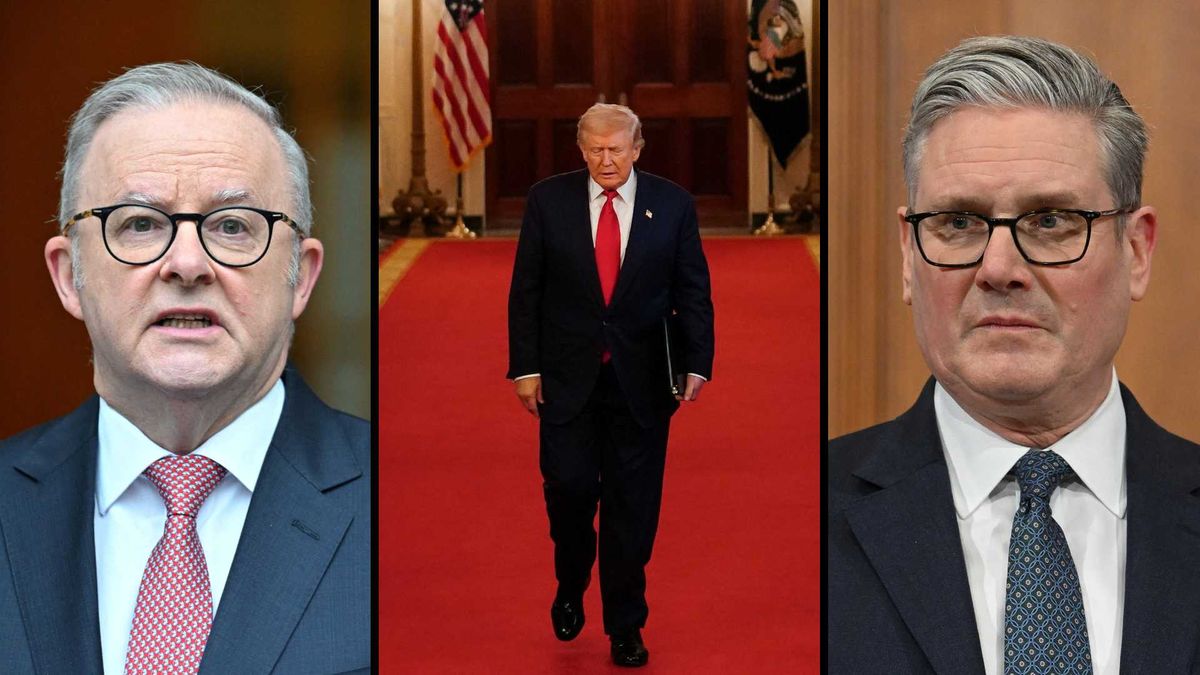
LEFT: Australia's Prime Minister Anthony Albanese speaks during a press conference at Parliament House in Canberra, Australia, March 10, 2026. AAP Image/Mick Tsikas/

CENTER: U.S. President Donald Trump arrives to host a round table on collegiate sports in the White House in Washington, D.C., March 6, 2026. REUTERS/Nathan Howard

RIGHT: British Prime Minister Keir Starmer gives an update on the situation in the Middle East at Downing Street Briefing Room, in London, Britain, March 05, 2026. Jaimi Joy/Pool via REUTERS


Three world leaders have or will be addressing the nation on Wednesday regarding the U.S.-Israeli war against Iran, news of which sparked an immediate online frenzy of speculation and fear.

“Uh oh,” wrote progressive influencer Hasan Piker Wednesday in a social media post on X to their more than 1.6 million followers.

“Uhhhhh guys. What's going on?” wrote another in response to the news, X user “Elections Joe,” a political commentator with more than 20,000 followers.

Australian Prime Minister Anthony Albanese, in a “rare national address,” urged Australians early Wednesday morning to switch to public transport and to prepare for difficult times as a result of the ongoing Iran conflict, which has sent oil prices soaring. United Kingdom Prime Minister Keir Starmer delivered a similar address Wednesday, warning Britons of an impending “crisis.”

And the White House revealed on Tuesday that President Donald Trump would be addressing the nation Wednesday night at 9 p.m. ET to provide “an important update” on his administration’s war against Iran.

“This seems coordinated,” wrote academic and author Sunny Singh in a social media post on X, reacting to the news of three world leaders issuing major addresses on the same day.

“This reminds me of March, 2020,” wrote Aidan Simardone, a Canadian immigration lawyer, in a social media post on X, referencing the brief time period leading up to the worldwide COVID-19 pandemic.And X user “Rational Aussie,” a popular political commentator who’s amassed more than 33,000 followers, speculated that the multi-national address could be an effort to “get ahead of incredibly bad news that will follow shortly.”


Nobel Prize-winning economist pinpoints major flaw in Trump's 'nervous' Iran war ploy

Ewan Gleadow
April 1, 2026 
RAW STORY

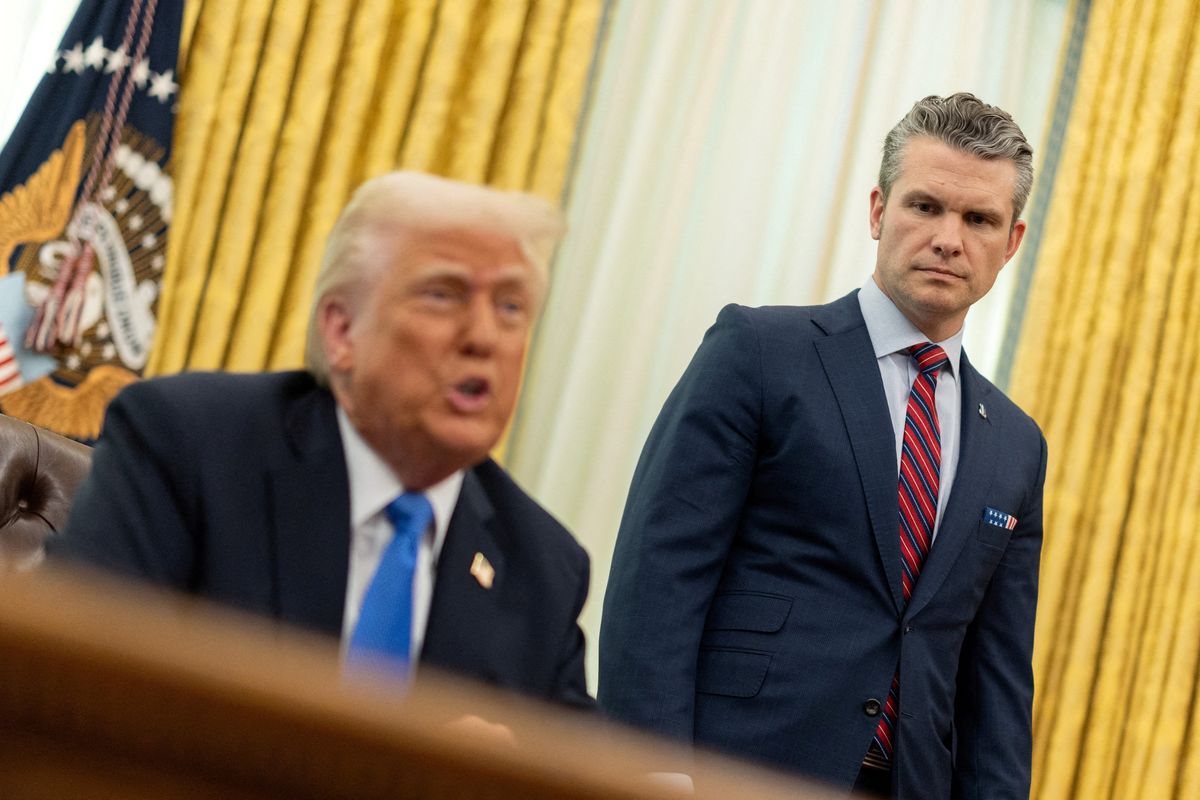
FILE PHOTO: U.S. Defense Secretary Pete Hegseth looks on, as President Donald Trump delivers remarks, in the Oval Office at the White House, in Washington, D.C., U.S., March 21, 2025. REUTERS/Carlos Barria/File Photo

Donald Trump's plan for the war with Iran could cause even further trouble for taxpayers across the country, according to a Nobel Prize winner.

Paul Krugman has warned that the president's current task in Iran is to reopen the Strait of Hormuz. Crude oil prices reached a staggering $100 a barrel earlier this week, and the veteran economist does not see the price improving any time soon. Even though the United States' own oil exporters profited from the Strait of Hormuz closure, Krugman claims there is no way this will help the average citizen.

Writing in his Substack, he explained, "Now, America produces a lot of oil, and the domestic oil industry will be earning large windfall profits even as U.S. consumers suffer. But so what?

"We don’t have any mechanism in place to capture and redistribute those windfall gains, so ordinary U.S. families will bear the full brunt of the global oil shock even though America is a net oil exporter."

"The Fed could, in principle, try to look through the effects of the Strait crisis on business costs as well as direct effects on consumer prices. But given how nervous everyone is about the risk of 70s-type stagflation, it probably won’t."

Krugman went on to suggest the reaction of the Federal Reserve could be a cause for concern. "There’s an additional, technical but important reason to be even more worried about soaring prices for diesel, jet fuel and industrial materials than about gasoline prices," he wrote. "It involves how the Federal Reserve is likely to react.

"The Fed normally bases its decisions about whether to reduce or increase interest rates on 'core' inflation — inflation excluding food and energy prices. The reason it does this is that food and energy prices are highly volatile and are usually a poor indicator of what inflation will be over the next few years."

"So the Fed tries to 'look through' inflation fluctuations driven mainly by the prices of groceries and gasoline. For example, it didn’t raise rates in 2011, when there was a temporary uptick in inflation driven entirely by oil prices."

Trump just earned an economic title he'll never brag about

Robert Reich
March 30, 2026 
RAW STORY


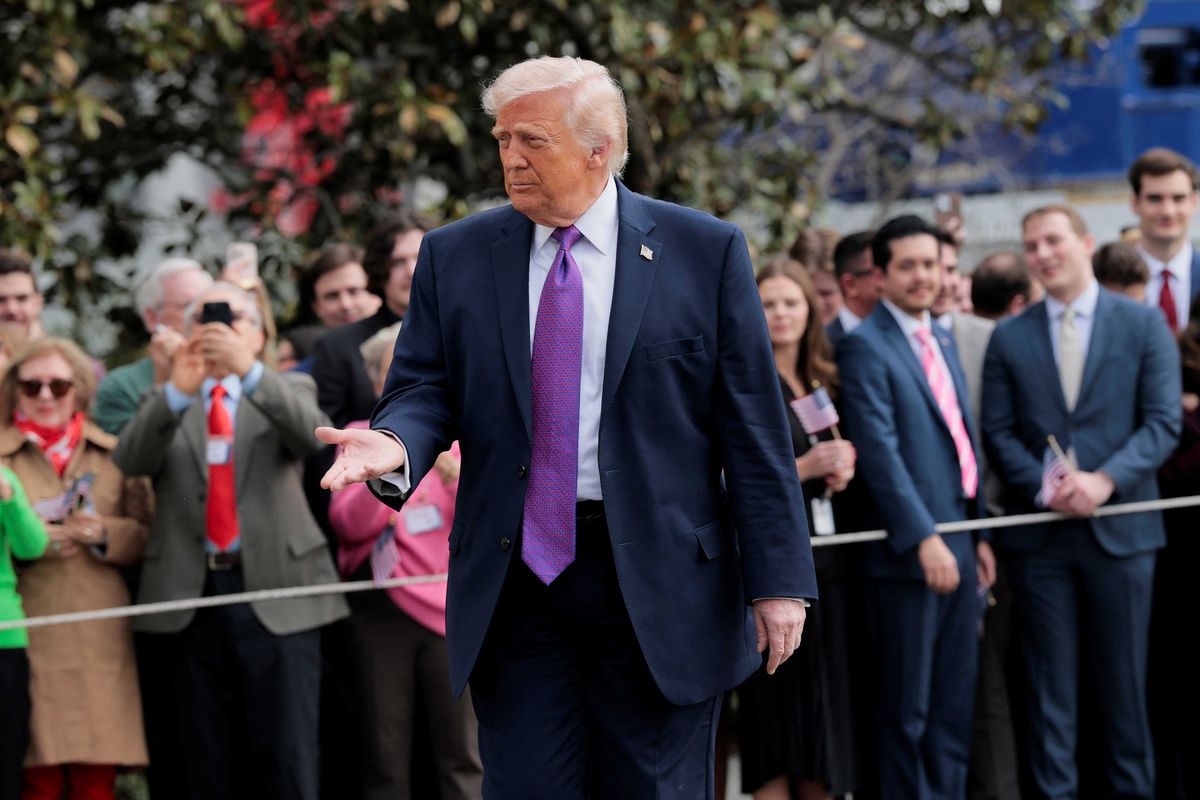
U.S. President Donald Trump walks as he heads to Marine One
 to travel to Ohio and Kentucky, from the White House in Washington, D.C.,
 U.S., March 11, 2026. REUTERS/Brian Snyder

Friends,

When he ran for president again in 2024, Trump made three promises to the American public:

(1) He said he’d “secure” the southern border. Most Americans now believe he’s gone too far in this.

(2) He’d avoid foreign wars. He said: “We’ve spent $8 trillion in the Middle East, and we’re not fixing our roads in this country? How stupid. How stupid is it? And we’re not fixing our highways, our tunnels, our bridges, our hospitals, even.” Umm. How well has this promise turned out?

(3) His third promise was to bring prices down and create more jobs. He said: “Starting on day one, we will end inflation and make America affordable again, to bring down the prices of all goods.”


In fact, Trump has pushed prices way up.


As of today, the price of Brent crude, the global benchmark for oil, is above $116 a barrel. The average price for a gallon of gas in the United States is now $4.00, and many people are paying far more. Food costs are also heading upward.

He’s also raised tariffs on imports. This has increased the prices of everything we buy from abroad.

He has also pledged to be “the greatest jobs president that God has ever created.


But he’s been the worst jobs president in American history.

In his first term, Trump presided over a historic net loss of nearly 3 million jobs, the worst jobs numbers ever recorded under an American president.

So far in his second term, he has presided over a loss of 150,000 jobs. (By contrast, in the final 14 months of Joe Biden’s presidency, the economy added 1.74 million jobs.)


The only thing Trump has done to make any Americans better off is to cut taxes on the rich and big corporations. He did this in his second term. It was also his major economic policy in his first term (which he promised would result in $4,000 annual raises for everyone else. How did that work out? Did you get a $4,000 raise?)

May I speak plainly? Trump has turned the American economy into s---.Trump’s economic record is only slightly worse than that of every Republican president before him. Here’s the historic truth that everyone needs to understand: The American economy does worse under Republican presidents. Since 1933, the U.S. economy has grown nearly twice as fast on average under Democrats.

Wage growth slowed after Reagan’s tax cuts for the rich and big corporations. And the Bush and Trump tax cuts didn’t trickle down, either.


These giveaways to the wealthy have come at the expense of investments in infrastructure, education, and health care — making life more expensive and difficult for everyone who isn’t rich.

They’ve also exploded the debt and deficit.

Reagan oversaw a 186 percent increase in the national debt — the biggest percentage increase in over 70 years.


The Bush and Trump tax cuts — which mostly benefited corporations and the rich — are the main reasons why America’s debt continues to grow faster than the economy.

Look at the historic record and you see something else: Republican presidents have led us into the three worst economic crises of the last hundred years.

The Great Depression began in 1929 under Herbert Hoover. The Great Recession began in 2008 under George W. Bush. The pandemic recession of 2020 began under Trump.


Democrats (FDR, Obama, and Biden) led us out of these Republican economic crises.

Republicans talk about “running the country like a business.” Sure. They’ve run it the way Trump ran his businesses: with massive debts, a string of failures, and payouts for the folks at the top, while average workers get shafted again and again.

Given Republicans’ track record, why would any hardworking American put their financial security in the hands of a Republican president (or, for that matter, a Republican Congress) ever again?

Robert Reich is an emeritus professor of public policy at Berkeley and former secretary of labor. His writings can be found at https://robertreich.substack.com/. His new memoir, Coming Up Short, can be found wherever you buy books. You can also support local bookstores nationally by ordering the book at bookshop.org

Right-wing editor tears into Trump's endless 'national emergency' declarations

(Official White House Photo by Daniel Torok)
April 01, 2026 
ALTERNET


President Donald Trump is displaying nothing short of “narcissistic authoritarianism” when he repeatedly describes various things as being a “national emergency,” according to a right-leading editor.

“Much like his notion of what constitutes a ‘national emergency,’ Trump's perception of existential threats to the republic is highly idiosyncratic,” wrote Reason Magazine editor Jacob Sullum in a piece published Tuesday. Sullum then reviewed the list of issues that Trump has characterized in apocalyptic terms including crime, terrorism, illegal immigration, “Democratic electoral victories” and "constitutionally protected criticism of Trump.” From there, Sullum went into detail about an issue that he has raised before — Trump’s attempt to prosecute members of Congress who urge members of the military to ignore illegal orders.

“That video, which featured two senators and four representatives, reminded U.S. military personnel of their duty to ‘refuse illegal orders,’” Sullum wrote. “The Trump administration is ‘pitting our uniformed military and intelligence community professionals against American citizens,’ the legislators said. ‘We know you are under enormous stress and pressure right now. Americans trust their military, but that trust is at risk.’ Although ‘we know this is hard,’ they added, ‘your vigilance is critical,’ and ‘we have your back.’”


Trump tried to indict the legislators but failed, with Sullum writing that the federal grand jury rejecting the proposed indictment was a “striking rebuke, since grand jurors, who hear only the government's side of a case, almost always approve charges recommended by federal prosecutors.”

He added, “Two days later, in a separate case involving the Defense Department's attempt to punish Sen. Mark Kelly (D–Ariz.) for participating in the video, U.S. District Judge Richard Leon, a George W. Bush appointee, ruled that the retired naval officer's criticism of Trump was ‘unquestionably protected’ by the First Amendment.”


Overall Sullum concluded Trump’s habit reflects “the narcissistic authoritarianism that underlies much of what Trump says and does, whether it is declaring nonexistent crises, waging war without congressional approval, summarily executing suspected cocaine smugglers, asserting unlimited tariff authority, attempting to rewrite statutes or the Constitution by presidential decree, demanding impeachment of judges who rule against him, using the criminal justice system to punish his foes, or threatening people who say things he does not like with deportation, regulatory penalties, grant revocations, or other unpleasant consequences.”

Sullum has previously criticized Trump, even though both men identify with factions of America’s political right-wing. Earlier in March, he did so by blasting the president’s law enforcement policies.

"Under federal law," Sullum wrote, "millions of Americans are committing felonies right now because they own guns and use marijuana — even if they live in states that have legalized the drug. There is nothing unconstitutional about that baffling situation, a Trump Administration lawyer assured the Supreme Court on Monday, (March 2), because cannabis consumers are analogous to 'habitual drunkards,' who historically, could be confined to workhouses or mental institutions. Most of the justices, including both Republican and Democratic appointees, seemed skeptical of that claim."


Sullum concluded, "Their agreement reflected the trans-partisan alliances inspired by this case, which illustrates the potential for common ground between right-leaning critics of gun control and left-leaning critics of the War on Drugs."

Similarly in February Sullum argued that the Justice Department prosecuting Trump’s critic should encounter the legal obstacles that did indeed beset them.

"In 2013, several Republican senators questioned President Barack Obama's use of drones to kill suspected terrorists," Sullum wrote. "The lawmakers, who included Sens. Rand Paul (R–Ky.), Ted Cruz (R–Texas), Mike Lee (R–Utah), and Marco Rubio (R–Fla.), were especially troubled by the possibility that drones might be deployed against American citizens on U.S. soil, which, they argued, would be clearly unlawful in the absence of an imminent threat. How would Republicans have reacted if Obama, assisted by a Justice Department eager to do his bidding, threatened to arrest and jail those critics? That is how President Donald Trump has responded to Democratic legislators who worry about his potentially illegal use of military power."

Writing for Reason Magazine as a contributor in 2024, this author quoted President Grover Cleveland, who though a Democrat articulated in his 1887 State of the Union message the philosophy in favor of low tariffs that conservatives and libertarians have consistently advocated throughout American history. A number of Reason Magazine contributors have criticized Trump for his high tariffs.

"When we consider that the theory of our institutions guarantees to every citizen the full enjoyment of all the fruits of his industry and enterprise, with only such deduction as may be his share toward the careful and economical maintenance of the Government which protects him, it is plain that the exaction of more than this is indefensible extortion and a culpable betrayal of American fairness and justice," Cleveland wrote in that address. "This wrong inflicted upon those who bear the burden of national taxation, like other wrongs, multiplies a brood of evil consequences."
Pope Leo Delivers ‘Rebuke’ of Pete Hegseth With Anti-War Palm Sunday Sermon

“This is our God: Jesus, King of Peace, who rejects war, whom no one can use to justify war.”


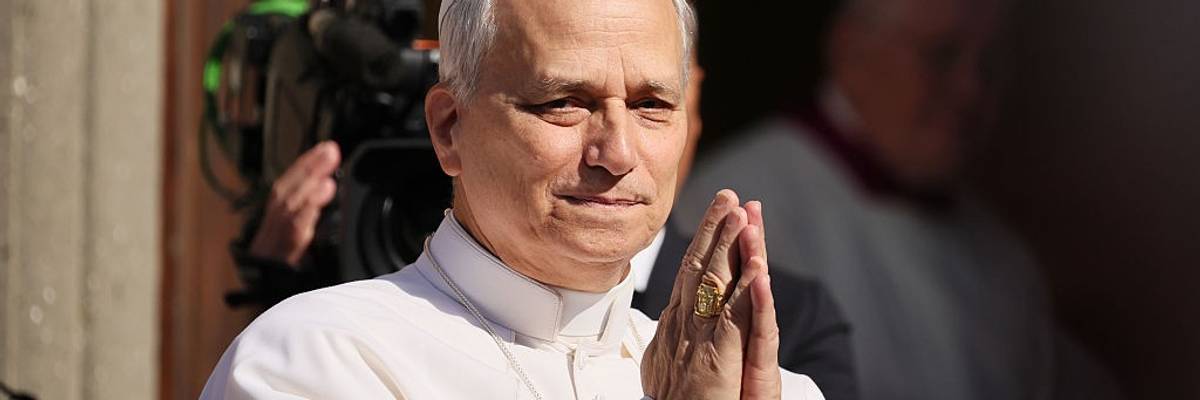
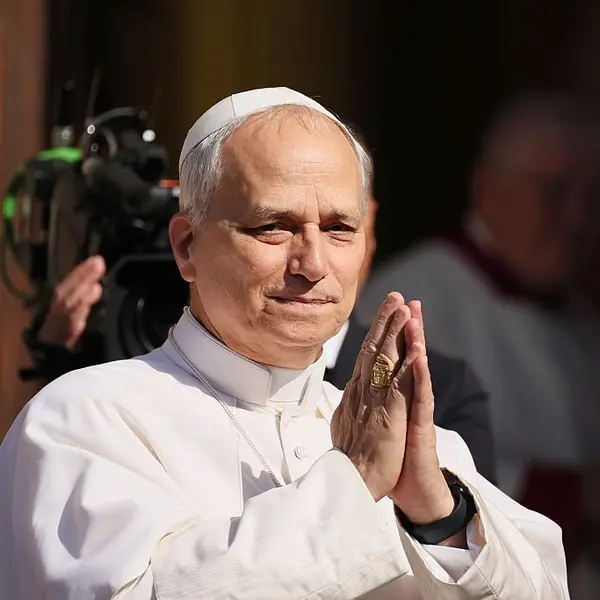
Pope Leo XIV greets the crowd as he leaves after presiding over a mass at San Pancrazio cathedral at Albano Laziale on July 20, 2025 in Albano Laziale, Italy.
(Photo by Ernesto Ruscio/Getty Images)


Brad Reed
Mar 29, 2026
 COMMON DREAMS

Pope Leo XIV used his Palm Sunday sermon to take what appears to be a shot at US Defense Secretary Pete Hegseth.

In his sermon, excerpts of which he published on social media, the pope emphasized Christian teachings against violence while criticizing anyone who would invoke Jesus Christ to justify a war.


Pope Leo to Iran War Architects: ‘Cease Fire’

‘Heretical and Batshit Crazy’: Hegseth Rebuked for Bloodthirsty Prayer Asking God to Bless Iran War

“This is our God: Jesus, King of Peace, who rejects war, whom no one can use to justify war,” Pope Leo said. “He does not listen to the prayers of those who wage war, but rejects them.”

The pope also encouraged followers to “raise our prayers to the Prince of Peace so that he may support people wounded by war and open concrete paths of reconciliation and peace.”

While speaking at the Pentagon last week, Hegseth directly invoked Jesus when discussing the Trump administration’s unprovoked and unconstitutional war with Iran.

Specifically, Hegseth offered up a prayer in which he asked God to give US soldiers “wisdom in every decision, endurance for the trial ahead, unbreakable unity, and overwhelming violence of action against those who deserve no mercy,” adding that “we ask these things with bold confidence in the mighty and powerful name of Jesus Christ.”

Mother Jones contributing writer Alex Nguyen described the pope’s sermon as a “rebuke” of Hegseth, whom he noted “has been open about his support for a Christian crusade” in the Middle East.

Pope Leo is not the only Catholic leader speaking against using Christian faith to justify wars of aggression. Two weeks ago, Cardinal Pierbattista Pizzaballa, the Latin patriarch of Jerusalem, said “the abuse and manipulation of God’s name to justify this and any other war is the gravest sin we can commit at this time.”

“War is first and foremost political and has very material interests, like most wars,” Cardinal Pizzaballa added.
Bush advisor says Trump admin's weaponization of Christianity is a 'scam'


Matthew Rozsa

April 01, 2026 

President Donald Trump and his advisers forget that America was not founded as a Christian nation, a former aide to a different Republican president warned on Tuesday.

“The separation of church and state is foundational to American civilization,” Steve Schmidt, who advised President George W. Bush, said on his Substack. “In fact, on the list of the greatest American inventions, the two at the top — competing for gold and silver — are the peaceful transition of power and the separation of church and state. These are brilliant ideas, the greatest in all of history.”

Yet according to Schmidt, Trump is violating this separation in dangerous and deliberate ways. Specifically, he called out Secretary of Defense Pete Hegseth and Press Secretary Karoline Leavitt for explicitly citing “our Lord and Savior, Jesus Christ” when justifying America’s recent invasion of Iran.

“Do you see all the Stars of David in the Normandy cemetery?” Schmidt said. “World War II was not a Christian mission. The United States Army is not a Christian organization. In America, we have a right to freedom of conscience, freedom of religion, and freedom of speech — and all of it is under threat from Donald Trump and his administration.”

Ultimately, Schmidt refused to classify America’s war in Iran as being motivated by any form of respectable Christianity.

“This is not religion,” Schmidt said. “This is a scam. This is a con.”

Schmidt is not alone in critiquing the Trumpist version of Christianity. Religious studies scholar Sarah Posner recently spoke with The Daily Beast's Greg Sargent about Pope Leo XIV, the American-born Pope who denounced warmongering interpretations of Christianity in a speech delivered shortly after Hegseth's breakfast prayer.

"Hegseth is expressing an extreme version of Christian supremacy, where America, a Christian nation, is entitled, and in fact probably, in his mind, required by God, to smite America's enemies — or to smite the enemies of Christianity, even, Posner said. "When we talk about Christian nationalism, this is exactly what we're talking about. But the important thing to remember with Hegseth, in contrast to other versions of Christian nationalism that we see more commonly in the Republican Party, is that his is a very extreme version of Christian supremacy where we Christians are entitled to go out and take dominion over the world, to vanquish enemies, and to do so violently — and even when they do so violently, with the express mandate from God."

Speaking with this journalist for Salon in 2024 about historian Federico Finchelstein comparing Trump’s far right “rhetorical violence” to that of Nazi German dictator Adolf Hitler, Leavitt replied that “it's been less 72 hours since the second assassination attempt on President Trump's life and the media is already back to comparing President Trump to Hitler. It's disgusting. This is why Americans have zero trust in the liberal mainstream media."

As Schmidt pointed out, America was founded as an explicitly secular country. The First Amendment to the Constitution states that “Congress shall make no law respecting an establishment of religion, or prohibiting the free exercise thereof,” while President Thomas Jefferson — who also co-authored the Declaration of Independence — wrote in 1802 that “religion is a matter which lies solely between Man & his God” and as such “the legitimate powers of government reach actions only, & not opinions” because the American people “declared that their legislature should ‘make no law respecting an establishment of religion, or prohibiting the free exercise thereof,’ thus building a wall of separation between Church & State.”


UK security officials withhold intel from US as Trump trashes allies: insiders


Thomas Kika
April 01, 2026
ALTERNET


The U.K. has reportedly ceased a nearly century-long agreement to share intelligence with the U.S., according to inside sources who spoke with The i Paper, citing President Donald Trump's erratic and aggressive behavior, as well as his tendency towards "screwing over allies."

In a report published Wednesday, sources indicated to the outlet that the vital security relationship shared between the U.S. and the U.K. "has been plunged into uncertainty," in the wake of "Washington’s threats to Greenland, its ambition to interfere in European politics and public outrage over Britain’s refusal to join the US war with Iran." Trump's repeated insults towards Britain's past military engagements with the U.S. and "personal insults" towards Prime Minister Kier Starmer have also driven the decision.

The joint intelligence-sharing relationship between the U.S. and the U.K. dates back to 1941, with "the exchange of information on Japanese and German ciphers" prior to the former's official entry into World War II. Since then, the partnership, known as "Two Eyes," has evolved into "a cornerstone of the Western alliance, with intelligence and military officials working together to combat all manner of threats, from direct war to clandestine operations."

According to one source in the U.K. Foreign Office, Trump's desire for an "America First" agenda has turned into a habit of "screwing over allies," with no indication that he will change course anytime soon. In the face of this behavior, the source said that the U.K. "cannot trust" its longtime ally for the time being. The i Paper further cited another recent report from the Financial Times, which revealed that American officials are being asked to leave meetings within U.K. government departments whenever "sensitive information" is being discussed.

Another British intelligence official told The i Paper that the decision was "tit for tat," arguing that it only came in response to the "similar hostilities" perpetrated by the U.S. John Foreman, the former Defense Attaché for the U.K. to Russia, added that “trust once gone is hard to restore."


"If the U.S. aren’t willing to ensure that UK secrets remain classified, then restrictions will have to be put in place," Foreman said. "But [this is] hard when intelligence sharing is so deep and wide.”

A senior official with NATO also told the outlet that Trump's rhetoric earlier in the year about annexing Greenland was "creating tensions and distrust" between the U.S. and its longtime European allies, including the U.K.

“We used to get beers together, but now it’s really strange," the source said. "I have been fighting in Iraq and Afghanistan side-by-side with Americans. This is very disruptive in a way that I have never thought of before because it is so unrealistic and surprising.”

'It was a test': Trump moves against NATO as members 'weren't there for us'

Ewan Gleadow
April 1, 2026 
RAW STORY


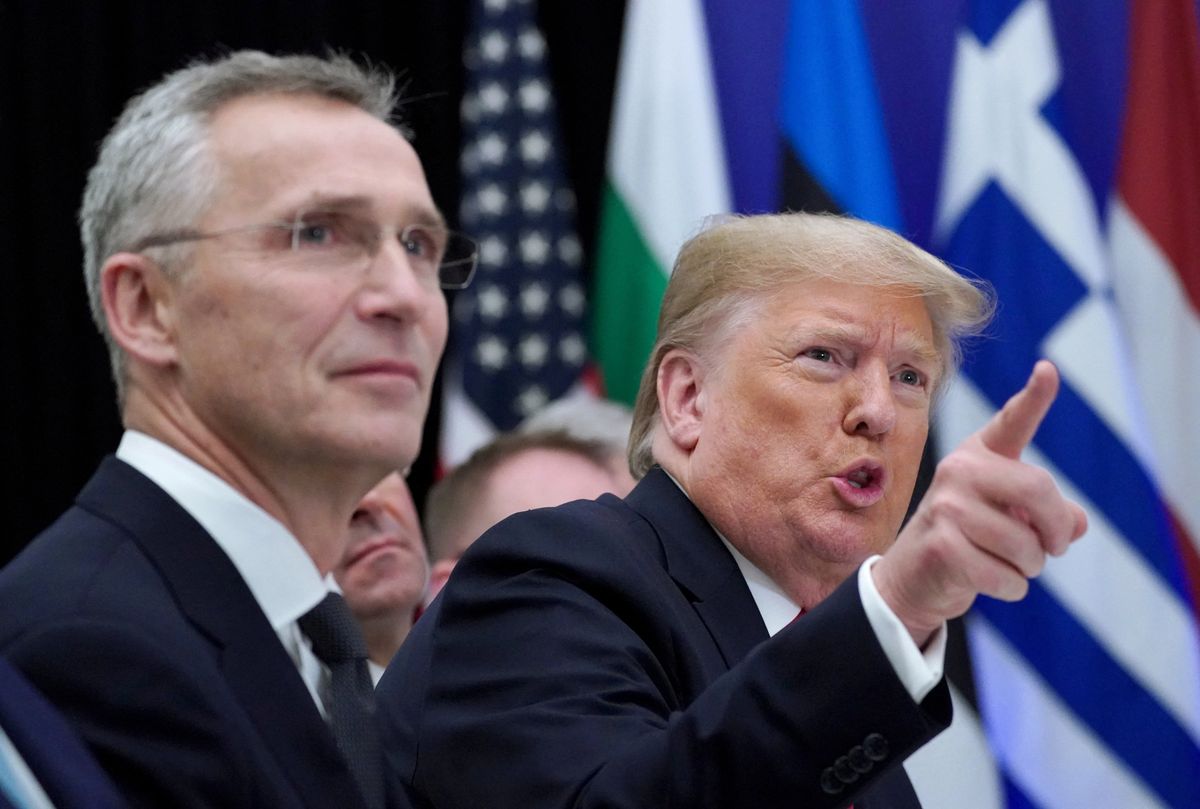
FILE PHOTO: U.S. President Donald Trump gestures next to NATO Secretary General Jens Stoltenberg as they attend a working lunch during the NATO leaders summit in Watford, Britain, December 4, 2019. REUTERS/Kevin Lamarque/File Photo

Donald Trump has suggested he has no interest in continuing with NATO and may even pull the United States out of the intergovernmental organization.

The president has done much to anger the North Atlantic Treaty Organization's members this year, strongly implying he would take Greenland by force if necessary. His administration's strikes on Iran last month marked another contentious point for the president and his relationship with NATO, as he called on member nations to back the war.

Speaking to The Telegraph, Trump said, “Oh yes, I would say [it’s] beyond reconsideration. I was never swayed by NATO. I always knew they were a paper tiger, and Putin knows that too, by the way."

Trump went on to use the war in Ukraine as an example of where he felt the US had been let down by NATO members and other governments.

Trump added, "Beyond not being there, it was actually hard to believe. And I didn’t do a big sale. I just said, ‘Hey’, you know, I didn’t insist too much. I just think it should be automatic.

"We’ve been there automatically, including Ukraine. Ukraine wasn’t our problem. It was a test, and we were there for them, and we would always have been there for them. They weren’t there for us."

The president's comments on NATO follow on from Secretary of State Marco Rubio denouncing the intergovernmental organization.

In an interview with Hashem Ahelbarra of Al Jazeera, the Donald Trump appointee criticized the NATO alliance for not backing the US war on Iran, and then stated, “I think it was very disappointing. You have this – and again, look, the President and our country will have to reexamine all of this after this operation is over."

"But one of the reasons why NATO is beneficial to the United States is it gives us basing rights for contingencies. It allows us to station troops and aircraft and weapons in parts of the world that we wouldn’t normally have bases, and that includes in much of Europe.”
Avi Lewis Models How to Be a Climate Champion Despite Opposition

His forthright approach on a difficult issue is likely to appeal to voters.


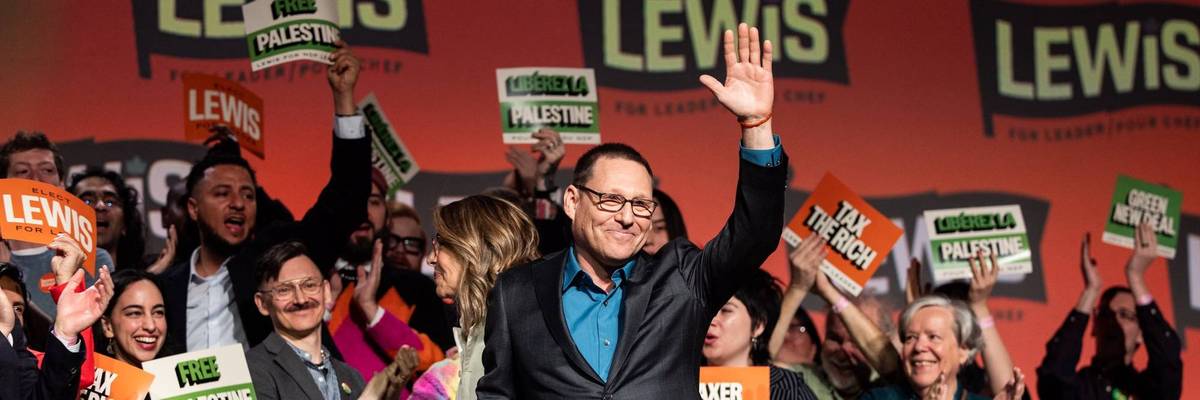
Progressive activist Avi Lewis walks onstage at the New Democratic Party’s convention in Winnipeg, Manitoba, holding hands with his wife Naomi Klein, after being elected party leader on March 29, 2026.
(Photo from Avi Lewis for Leader)


Linda Mcquaig
Apr 01, 2026
Toronto Star


Well, as honeymoons go, that was brief.

Avi Lewis may well have set a record for honeymoon brevity in Canadian politics. He wasn’t even done accepting the great prize of winning the leadership of the federal New Democratic Party (NDP) last Sunday before two key figures in his own party denounced him over his resolve to move the country beyond fossil fuels.

Lewis may also have set something of a record for sheer cheerfulness in the face of such speedy backstabbing.

In response to Alberta NDP leader Naheed Nenshi’s attack, Lewis didn’t miss a beat. Even as reporters pressed him for some hot words, Lewis remained buoyant and smiling as he insisted these disputes are necessary and inevitable. He even went on to voice strong support for Nenshi, maintaining that what really matters is Nenshi defeating Danielle Smith to become Alberta premier.

But while the issue is tough, the way forward is clear. Science doesn’t give us a lot of wiggle room; the clock is running out on the world’s remaining chances of preventing carbon emissions from reaching catastrophic levels.

Talk about turning the other cheek; that was a class act. It suggests that Lewis may have a shot at knitting the party together, despite this rather troubled start.

Of course, knitting the party together won’t be easy. There’s a serious divide in the NDP over whether fossil fuels should be kept in the ground, for the sake of saving the planet.

Let’s face it—this is a tricky issue for the NDP.

On one hand, climate action is a winning issue for the party; most progressive voters care about climate, and Prime Minister Mark Carney has opened up lots of territory on his left flank by abandoning any plausible claim to being a climate champion with his willingness to embrace Big Oil.

On the other hand, the fossil fuel industry is powerful and employs Canadians, particularly in Alberta and Saskatchewan—the two provinces where NDP leaders are hostile to Lewis.

But while the issue is tough, the way forward is clear. Science doesn’t give us a lot of wiggle room; the clock is running out on the world’s remaining chances of preventing carbon emissions from reaching catastrophic levels.

Furthermore, the world has already started transitioning to renewable energy. Not only are renewables increasingly affordable—battery costs have declined by 99% over the last three decades—but rebuilding our economy around them would be a huge job creator.

In fact, fossil fuel employment is on the decline, as the industry becomes less labor-intensive. Over the past decade, fossil fuel employment in Canada has already shrunk by 38,000 jobs, even as oil and gas production has risen significantly, notes economist Jim Stanford, director of the Centre for Future Work.

So Lewis is doing the right thing—not only in championing climate action, but in coming out and stating his position clearly, despite the political heat he’s taking for it inside his own party. This forthright approach on a difficult issue is likely to appeal to voters.

In addition to the knives wielded inside the party, Lewis can expect scorn from mainstream commentators, who tend to dismiss him as a left-wing extremist.

But are his positions too extreme for the electorate, or just too extreme for mainstream commentators?

Lewis advocates publicly-owned grocery stores and banks—ideas outside the political mainstream. But, given the way grocery and bank monopolies are squeezing customers these days, is it far-fetched to imagine voters might support public alternatives?

Interestingly, Toronto City Council voted last week to establish a pilot project for public grocery stores. And public banking through the post office, which existed in Canada for decades, could be a welcome alternative for low-income customers stung by payday loan operators, as well as for residents in rural areas, where banks are scarce.

Lewis also proposes a wealth tax on the very rich—again, an idea ridiculed by many mainstream commentators. But polls show it has wide popular support.

Perhaps these sorts of left-wing populist ideas have had trouble succeeding in Canadian politics because they’ve lacked a passionate and articulate advocate.

That may have just changed.


© 2023 TheStar.com


Linda Mcquaig
Linda McQuaig is an author, journalist, and former NDP candidate for Toronto Centre in the Canadian federal election. The National Post has described her as "Canada's Michael Moore." She is also the author of "The Sport and Prey of Capitalists: How the Rich Are Stealing Canada's Public Wealth" (2019), "War, Big Oil and the Fight for the Planet: It's the Crude, Dude" (2006) and (with Neil Brooks) of "Billionaires' Ball: Gluttony and Hubris in an Age of Epic Inequality" (2012).
Full Bio >


NDP leader Naheed Nenshi IS A FORMER LIBERAL,  BUT EVEN FORMER NDP PREMIER  RACHEL NOTLEY WAS VOCALLY OPPOSED TO THE FEDERAL PARTY OVER ALBERTA HYDROCARBONS

THERE IS A REASON FOR THIS

SEE

THE ALBERTA NDP THE PARTY OF OIL WORKERS

THE COINCIDENTAL BIRTH OF THE NEW DEMOCRATS 
AND THE OIL INDUSTRY IN ALBERTA


Cuba Operating on Fumes While Marco Rubio Smirks

It’s doubly ironic that Rubio who thinks he knows so much about Cuba has been to Cuba only once, for only one day visiting the American prison at the US naval base at Guantanamo, Cuba.


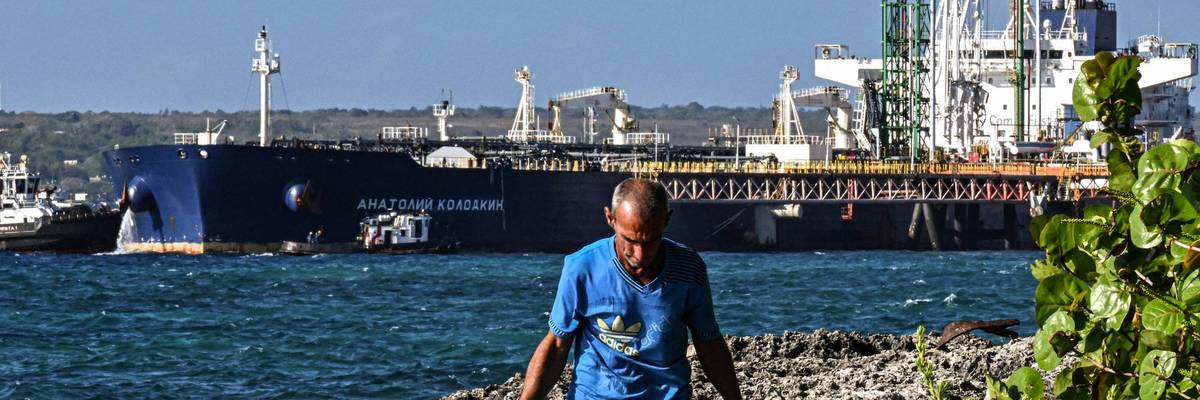
A man walks as the Russian oil tanker Anatoly Kolodkin is seen at the oil terminal in the port of Matanzas, northwestern Cuba, on March 31, 2026. The Anatoly Kolodkin, a tanker under US sanctions carrying 730,000 barrels of crude, is set to deliver the first crude shipment to Cuba since January after Washington gave the crisis-hit island a reprieve from an effective fuel blockade.
(Photo by Yamil Lage / AFP via Getty Images)

Ann Wright
Apr 01, 2026
Common Dreams


As 700 international solidarity citizens visited Cuba last weekend, Cuban-American Secretary of State Marco Rubio smirked at the humanitarian disaster his and Trump’s policies were wrecking on Cuba, as small island nation of 9 million people only 90 miles off the tip of Florida. Rubio had predicted the Cuban government would fall from the disastrous policies, particularly the blockade of fuel to the island.

But Rubio’s plan was partially upended on Sunday night, when President Trump decided to allow a Russian oil tanker carrying 100 tons of oil to deliver it to Cuba.

International Citizens Solidarity with Cuba, While Nations Turn Their Backs on Cuba

Last weekend, I was in Cuba for the second time in two months, joining 700 international solidarity citizens from 30 countries. Organized in less than six weeks by Progressive International, CODEPINK: Women For Peace, and many other groups, hundreds of persons outraged about the latest US punishment of the Cuban people saw very quickly and deeply the inhumane effects of the recent oil embargo as well as the cumulative effects of a 65-year-old US economic blockade of Cuba.

On my first trip this year, in late January 2026, the capital city of Havana, where we spent most of our time, was showing definite signs of the negative effects of the blockade, particularly of the fuel shortage.

Six weeks later in mid-March, the lack of fuel was starkly evident. Very few cars were on the streets. Lines for the few buses with fuel were very long.

Cubans were cooking with wood in the parks as electricity was sporadic.

Electrical blackouts of the entire country were frequent.

Hospital generators were almost out of fuel.

Cuba Operating on Fumes

Aiming directly at Mexico, Trump’s January 29, 2026 executive order threatened heavy tariffs on “any other country that directly or indirectly sells or otherwise provides any oil to Cuba.” PEMEX, the Mexico state oil company, has been the primary supplier of oil to Cuba after the kidnapping of Venezuelan President Nicolas Maduro in January. Sadly, bending to Washington’s threat, with only two to three weeks left of oil in Cuba at the time of the executive order, the Mexican government suspended shipments of oil to keep the country running.

While rumors abounded of Russia sending an oil tanker to Cuba, no ship was in sight until Sunday.

In the meantime, Cuba is operating on fumes.

Secretary of State Marco Rubio Willing to Torpedo the Entire Country of Cuba

It is ironic that Cuban-American Rubio has US citizenship through the “birthright law” that he and the Trump administration are trying to eliminate. The US Supreme Court is hearing arguments on Rubio’s case for torpedoing the birthright law on April 1.

Rubio was born in the US of non-U.S. citizen parents who fled the Baptista regime before the Cuban revolution against Baptista. Finally, journalists delved into his background years after Rubio entered politics and he was forced to acknowledge his “birthright” citizenship something he had kept hidden.

It’s doubly ironic that Rubio who thinks he knows so much about Cuba has been to Cuba only once, for only one day visiting the American prison at the US naval base at Guantanamo, Cuba.

Rubio grew up in Miami in midst of the fervent anti-revolution rhetoric and actions. He quickly saw that his political future rested with being as anti-revolution as possible, despite the strides in health and education that were being made in Cuba.

U.S. Government, not the Cuban Government, Holding up Compensation of US Citizens and Corporations from 1959 Nationalization

In his many years in Florida state politics and then as a US senator, Rubio refused to acknowledge that it was the US government that stopped compensation of US individuals and corporations when the revolutionary government nationalized services for the people to take them from the hands of the private sector that was getting richer and richer off the backs of the poverty stricken and enslaved Cubans.

After the 1959 revolution, Cuba negotiated “lump sum” compensation packages with Canada, Switzerland, the United KingdomSpain, and France for individuals and corporations whose property had been nationalized.

The United States, however, refused to participate in the compensation plan for US individuals and businesses. Instead, the US decided efforts to overthrow the revolutionary Cuban government would be its strategy.

Today, 65-years later, in order to attract US private investment to Cuba, Cuban Deputy Foreign Minister Carlos Fernández de Cossio told Drop Site News that the Cuban government will attempt to convince the US government to agree to a “lump sum” to handle the claims of approximately 6,000 US individuals and businesses who have filed claims for nationalized property, as a part of a larger agreement that would eliminate US sanctions and the economic blockade. The claims that have been certified by US Foreign Claims settlement Commission initially totaled $1.9 billion but now with interest accumulated over the decades amount to around $9 billion.

Trump’s “Change of Heart” to Let Oil Come Into Cuba

On an evening flight of Air Force One on Sunday, President Trump said to reporters: “I told them if a country wants to send some oil into Cuba right now, I have no problem with that, whether it’s Russia or not. Whether or not they get a boat of oil, it’s not going to matter. I’d prefer letting it in, whether it’s Russia or anybody else, because the people need heat and cooling and everything else.”

The Russian-owned oil tanker Anatoly Kolodkin left Primorsk, Russia on March 8 carrying 730,000 barrels of crude oil (100,000 tons) and is expected to dock at the Matanzas, Cuba oil storage facility on the morning of April 1. The tanker was accompanied by a Russian naval escort through the English Channel. The oil will be processed at one of Cuba’s three refineries, located in Havana, Cienfuegos, and Santiago.

When questioned about the oil delivery, Russian government spokesman Dmitry Peskov said, “The brutal blockade is jeopardizing life-support systems and electricity generation” and inhibiting the ability of Cubans to provide medical services. “Russia considers it its duty not to stand idly by and to provide the necessary assistance to our Cuban friends.”

International Group Visits Cuba in Solidarity with the Cuban People

The international delegations last week with over 700 persons were a part of a globalized effort called the Nuestra América Convoy organized by Progressive International. Hundreds of people came to Cuba from Latin America, the United States, Canada, and Europe to denounce the US blockade on Cuba and deliver life-saving aid to the Cuban people.

CODEPINK’s Nuestra América Convoy delegation of 170 people brought together a politically diverse but deeply aligned group of people—healthcare workers, lawyers, professors, students, veterans, labor organizers, journalists, independent media workers, photographers, filmmakers, writers, artists, researchers, faith-based activists, immigrant justice organizers, reproductive justice advocates, Palestine solidarity activists, Black liberation organizers, cultural workers, and more.

CODEPINK’s delegation delivered 6,300 pounds of urgently needed medicines and medical supplies, including neonatal equipment, analgesics, catheters, and other critical hospital materials. The supplies, valued at $433,000, were collected by Global Health Partners.

In addition to the several tons of medical aid, delegates brought suitcases containing supplies tailored to the needs of specific groups affected by the blockade, such as LGBTQ+ people, artists, students, animals, and others.

In total, the Nuestra America convoy delivered:More than $400,000 of humanitarian supplies on a charter flight, including medical equipment, medicines, staple foods, infant nutrition products, and hygiene supplies, coordinated by CODEPINK.
Over $500,000 worth of solar panels and generators to support hospitals and essential infrastructure facing electricity shortages.
Over 2000 pounds of medical supplies from Europe, carried by a medical delegation travelling from Milan, Italy.
Cancer medicines valued at $23,000 organized by Global Exchange.
Around 1100 pounds of medical supplies from Brazil, coordinated by the Brazilian Front of Solidarity with Cuba.
Solar-powered equipment from Colombia, including solar chargers and lighting systems.
Menstrual health kits for approximately 1,300 women, organized by a solidarity coalition in Mexico.
$100,000 in aid for maternity centers.

Our work is licensed under Creative Commons (CC BY-NC-ND 3.0). Feel free to republish and share widely.


Ann Wright
Ann Wright is a 29 year US Army/Army Reserves veteran who retired as a Colonel and a former US diplomat who resigned in March 2003 in opposition to the war on Iraq. She served in Nicaragua, Grenada, Somalia, Uzbekistan, Kyrgyzstan, Sierra Leone, Micronesia and Mongolia. In December 2001 she was on the small team that reopened the US Embassy in Kabul, Afghanistan. She is the co-author of the book "Dissent: Voices of Conscience."
Full Bio >


Russian tanker set to deliver oil to crisis-hit Cuba


By AFP
March 31, 2026


The Anatoly Kolodkin, a tanker under US sanctions, is on its way to the port of Matanzas, east of Havana, with 730,000 barrels of crude - Copyright AFP Yamil LAGE


Lisandra COTS

A Russian oil tanker was set to deliver the first crude shipment to Cuba since January on Tuesday after Washington gave the crisis-hit island a reprieve from an effective fuel blockade.

The Anatoly Kolodkin, a tanker under US sanctions, was on its way to the port of Matanzas, east of Havana, with 730,000 barrels of crude.

US President Donald Trump’s decision to let Russia deliver the oil avoids a confrontation with Moscow and provides temporary relief to a country that has endured blackouts, fuel rationing and dwindling public transportation.

“We’ll welcome it with open arms. You have no idea how badly we need that oil,” said Rosa Perez, a 74-year-old retiree whose home in Matanzas had lost power again.

“Let’s see if things improve for us, even just a little… I can’t take it anymore,” she told AFP, voicing hope that more shipments will follow.

Trump said Sunday that he did not object to Russia or others sending oil to the island because Cubans “have to survive.”

The White House denied however that there was any change to US sanctions policy.

“We allowed this ship to reach Cuba in order to provide humanitarian needs to the Cuban people. These decisions are being made on a case-by-case basis,” White House Press Secretary Karoline Leavitt said.


– Driving Cuba ‘to the brink’ –


Cuba was cut off from oil supplies in January after US forces ousted its main regional ally, Venezuela’s socialist leader Nicolas Maduro, and Trump threatened tariffs on countries that send crude to the country.

The US president has mused about “taking” the communist-ruled island, though Cuban President Miguel Diaz-Canel confirmed in March that Cuban and US officials had held talks.

Ricardo Herrero, executive director of the Cuba Study Group, a nonpartisan policy group in Washington, said the aim of restricting oil was to force Havana “to make real concessions at the negotiating table.”

“The strategy here is to drive the system to the brink,” Herrero told AFP. “But it’s not to precipitate a full-blown societal or humanitarian collapse.”

“It’s all consistent with idea that the US holds all the cards and they’ll decide when to hold, when to fold and when they go all in,” he said.


– Two weeks of diesel –


Cubans have endured seven nationwide blackouts since 2024, including two in March, and fuel prices have soared.

The blackouts as well as persistent shortages of food and medicine have fueled public frustration and some rare protests.

Analysts said the Russian oil would buy the Cuban economy only a few weeks.

Jorge Pinon, an expert on Cuba’s energy sector at the University of Texas at Austin, said the more urgent need is diesel, which could be used for backup power generators or for transportation systems to keep the economy running.

It would take a month to refine the oil and deliver the diesel, which would be enough to cover demand for about two weeks, he said.

Herrero said the shipment was just “another donation” by Cuba’s Russian ally, but he doubted that Moscow wanted to subsidize the Cuban economy in the long term.

“This is not going to help the economy recover,” he said. “This is just humanitarian aid.”

Cubans ready for Russian oil but some say not enough


By AFP
March 30, 2026


A Russian oil tanker is due to arrive in the Cuban port of Matanzas by Tuesday - Copyright AFP STRINGER


Laurent Thomet and Lisandra Cots

Cubans on Monday cautiously welcomed the imminent arrival of a Russian oil shipment, with some warning it would do little to ease an energy crisis after US President Donald Trump granted a reprieve from an oil blockade.

The Anatoly Kolodkin, a tanker under US sanctions carrying 730,000 barrels of crude, was due to arrive by Tuesday with the first shipment of oil to the communist-ruled island since January.

Trump’s decision to let Russia deliver oil to Cuba avoids a confrontation with Moscow and provides a potential lifeline to a country that has endured blackouts, fuel rationing and dwindling public transportation.

“It’s wonderful. Of course it’s going to be a huge help given the situation we’re facing in our country,” Miriam Joseph, a 65-year-old government worker in Havana, told AFP.

Others said it was not enough to solve Cuba’s crisis.

“It’s a drop in the bucket compared to what this country needs. It means next to nothing,” said Raul Pomares, a 56-year-old gardener waiting for a taxi in the capital.

“It’s a symbolic gesture that won’t have any real impact on the economy for ordinary Cubans,” he added.

Moscow said Monday it was “pleased” that the tanker had reached Cuban waters.

“Russia considers it its duty to step up and provide necessary assistance to our Cuban friends,” Kremlin spokesman Dmitry Peskov told reporters.

Peskov said Moscow and Washington had been in touch over the shipment.

“We don’t mind having somebody get a boatload, because they need — they have to survive,” Trump said on Sunday.

“I told them, if a country wants to send some oil into Cuba right now, I have no problem with that. Whether it’s Russia or not,” he said.

But he predicted that the oil delivery would have no impact as he renewed his threats against the Cuban government.

“Cuba’s finished, they have a bad regime, they have very bad and corrupt leadership, and whether or not they get a boat of oil it’s not going to matter,” Trump said.

Cuba lost its main regional ally and oil supplier in January when US forces captured Venezuela’s socialist leader Nicolas Maduro.

Trump subsequently threatened to impose tariffs on any country sending oil to Cuba and has mused about “taking” the island of 9.6 million people.

Mexican President Claudia Sheinbaum, whose country last sent crude to Cuba in January, said Monday that there are talks with private companies about buying oil from Mexico’s state-owned energy company to sell it to private entities in Cuba.

Washington slightly eased the blockade last month to allow oil sales to Cuba’s small private sector.


– Diesel for buses or power? –


The Anatoly Kolodkin was just north of central Cuba on Monday and is estimated to arrive at the western port of Matanzas by Tuesday morning, according to shipping tracker MarineTraffic.

It would take about 15-20 days to process the oil and another 5-10 days to deliver its refined products, according to Jorge Pinon, an expert on Cuba’s energy sector at the University of Texas at Austin.

The Russian shipment could be converted into 250,000 barrels of diesel, enough to cover the country’s demand for around 12.5 days, Pinon told AFP.

The government would have to decide whether to use the fuel for backup power generators or for buses, tractors and trains needed to keep the economy going for two weeks, he added.

“This little diesel that they have, which is not a lot, where do they prioritize it?” Pinon said.

The oil would likely not be used for Cuba’s aging thermoelectric power plants, which rely on the country’s own crude production.

Cubans have endured regular outages as the power plants struggle to meet demand, with seven nationwide blackouts since 2024, including two this month.

The blackouts as well as persistent shortages of food, medicine and other basics, have fueled public frustration and some rare protests.

Orlando Ocana, a 76-year-old retiree, said the Russian shipment was a “Band-Aid.”

“It’s a relief, but it’s not the solution,” he said. “The real solution to our problems is building new thermoelectric power plants.”