Thursday, May 07, 2026

How China Stabilizes the World Economy


 May 7, 2026

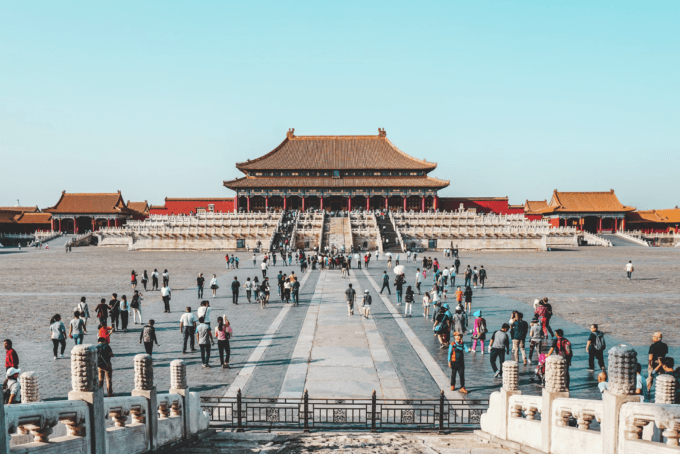
Photo by Ling Tang

As the smoke from intensified Middle East conflicts shrouds the Strait of Hormuz in spring 2026, the global economy finds itself teetering on a precarious edge. With the artery that carries about 20 percent of the world’s crude oil and roughly one third of its maritime fertilizer trade effectively constricted, international shipping costs have surged to an all-time high, and oil prices even breached the $119 per barrel mark.

Yet, beneath these headlines of geopolitical fracture, a counter-narrative of resilience is emerging: China has evolved from a mere growth engine into an indispensable global stabilizing anchor. In an era when certainty is the rarest of commodities, China’s industrial depth and strategic consistency are providing the floor that prevents a global free-fall.

China’s primary contribution to global stability lies in its supply chain resilience. It has acted as a safe harbor when global trade routes are compromised. While the world felt a genuine fear of broken chains due to disrupted fertilizer and oil shipments, China leveraged the world’s most complete industrial system to resist these shocks. Its comprehensive industrial system ensures autonomous control from raw materials to finished products, spanning 41 industrial categories, 207 middle categories, and 666 sub-categories. This closed-loop network maintains a high domestic component rate, providing a critical buffer against global logistical chaos and supply-chain disruptions.

This stability is not merely self-serving. It also supports the global market, as seen when China’s rapid scaling up of high-purity helium production filled the void left by Qatari supply cuts, preventing a total collapse in global semiconductor manufacturing. Furthermore, by proactively regulating domestic energy costs and maintaining steady fertilizer exports to Southeast Asia and Africa, China has effectively mitigated global inflationary pressures and safeguarded international food production security.

Furthermore, the energy crisis has highlighted China’s efficiency dividend, consolidating its position as a global manufacturing center. As skyrocketing energy bills forced manufacturers in Europe and Japan into painful contractions and reductions of order outflows, Chinese manufacturing showcased a massive competitive advantage. By aggressively managing domestic energy costs through technological upgrades and a diversified energy mix, China became the preferred destination for global orders. This is not simple price subsidization; it is a reduction of dimensionality through innovation. The surge of Chinese high-tech manufacturing—with industrial robot production growing by 33.2 percent and New Energy Vehicles (NEVs) exports reaching 954,000 units, representing a 120 percent year-on-year surge in the first quarter—proves that in an era of energy uncertainty, China offers the most reliable path to quality stability.

The Middle East conflict has accelerated a global pivot toward renewable alternatives, a transition led by Chinese technology. China now controls over 80 percent of the global manufacturing capacity for polysilicon, wafers, cells, and modules.

As of early 2026, the “New Three” (Electric Vehicles, Lithium-ion Batteries, and Solar Cells) sectors have solidified their role as the primary engine of China’s high-end, Green, and intelligent export growth. As the cost of Chinese CSP (Concentrated Solar Power) stations under construction is 40 percent lower than that of plants built elsewhere, China is acting as the stabilizer for nations desperate to decouple their economies from volatile fossil fuel markets.

Beyond tangible goods, China’s financial and institutional framework is providing a new layer of systemic security. In today’s climate of high risk-aversion, China’s capital market has become a reservoir for global funds due to its reasonable valuations and steady policy expectations. The significant increase in investment from Middle Eastern sovereign wealth funds, such as Saudi Arabia’s PIF and the UAE’s Mubadala, is a strategic redefinition of renminbi (RMB) assets.

The RMB is accelerating its evolution from a trade currency to a reserve and hard currency. Since late March, the RMB has been on an upswing, repeatedly hitting three-year highs. Amid rising tensions in the Middle East, the RMB was at one point the only major currency to appreciate against the dollar in the month ending April 3. Nowhere is this more visible than in energy markets. In March, RMB settlement in China’s crude-oil trade with the Middle East surpassed 41 percent for the first time. This milestone saw the renminbi overtake the euro to become the second-most-used currency in the region’s oil trade, following only the dollar.

This shift provides a much-needed buffer against the volatility of a dollar-centric system increasingly weaponized by sanctions and geopolitical strife, offering a diversified safety net for emerging economies. Furthermore, the rapid rise of “Panda Bonds” and expanded currency swap agreements have established China as a pivotal liquidity provider and financial stabilizer for the region. By the end of 2024, cumulative Panda bond issuances exceeded RMB 800 billion by 109 overseas issuers.

The strategic value of the Belt and Road Initiative (BRI) has also reached a historic inflection point as traditional maritime passages falter. As the Red Sea and Hormuz routes became paralyzed, the BRI’s land links—once considered secondary—became the primary lifeline for Eurasia. The China-Europe Railway Express handled 3,501 freight trips in the first two months of this year, carrying 352,000 twenty-foot equivalent units of goods, up 32 percent and 25 percent year on year, respectively.

This physical connectivity, paired with China’s diplomatic commitment to “persuasion for peace and promotion of talks,” provides the world with a blueprint for resilience that transcends traditional maritime dependencies and fosters a more balanced global trade architecture.

Ultimately, the fire of conflict in the Middle East has served as a crucible, testing the durability of the global order and refining the understanding of national power. In this volatile landscape, China’s development dividend has transitioned from a national success story to a “global public good”—a reliable infrastructure of supply, energy, and finance that serves the common interest.

This first appeared on FPIF.

Jianlu Bi is a Beijing-based award-winning journalist and current affairs commentator.His research interests include international politics and communications. He holds a doctoral degree in communication studies and a master’s degree in international studies. He also writes for the SCMP, Foreign Policy In Focus, TRT World, IOL, the Citizen and others.

Re-Opening Mexico to Fracking Could Lead to More Corporate Lawsuits


 May 7, 2026

The Ruling Class’s Ongoing Destruction of Nature in Colorado, a Sign of the Times

May 7, 2026

Bar sign, Durango, Colorado. Photo: Jeffrey St. Clair.

On April 21 managing engineers at Denver Water announced they were going to drain Antero Reservoir, the first water body in that public agency’s chain of reservoirs comprising its massive mountain storage system. The system serves about 1.5 million customers in the Denver area and is the state’s largest domestic water purveyor.

But numbers and system descriptions are merely Gradgrindian fact mongering. What is most important is that this agency’s proposed actions will destroy a body of water that is a place of stark and irreplaceable natural beauty. It belongs to everyone and everything. It satisfies Thoreau’s definition of wildness.

Denver Water announced it was going to drain this high mountain reservoir so as to eliminate the reservoir’s annual evaporation loss of about 5,000 acre-feet in a time of drought.   The destruction, it said, would begin on May 1, thus foreclosing on any public discussion about reasonable alternatives, moral limits, and folly.

The public has every right to demand this kind of discussion since the surface water in this state belongs to the people. The state was denied ownership by the framers, people of a pronounced populist bent, who feared the state would more willingly give it away to the high and mighty. Neither does Denver Water, and other users own it. Still, they all have very strong use rights, but they don’t have absolute dominion.

In fact, in this state the test of beneficial use must be demonstrated before the state, acting on behalf of the people, can issue a water use right. So given these legal realities, a very serious issue arises: can destruction of a public water resource of almost unique beauty and affection be willfully destroyed, turned into a mudflat, and still be deemed a beneficial use of public water? Let us look now at other issues that begin to surface with this question.First, while it is true this proposed action would result in the agency having “new” water for sale, not by building a new reservoir, in a region of rapidly diminishing snow pack and rainfall, but by destroying one, and thereby, in the mythic serpent-like way, starting to eat itself.  This in turn begins to expose the law of limits relentlessly imposing its will.

Denver Water reportedly charges its users about $2,000 to $3,000 for an acre-foot of water. By destroying Antero it will have realized a very dicey and exaggerated one-time savings to its revenue stream of about $15 million.. Moreover, this is a primitive form of problem solving and a hopelessly incomplete estimate of the economic impacts since it completely zeros out the intrinsic value of this water body from a wildlife, esthetic, and societal standpoint.

For example, the planned destruction and announced economic benefits do not take into account the increased transportation losses as the water stored in Antero is shunted 40 direct-air-miles downstream in the Platte River drainage to be reregulated at the much deeper and narrower Chessman Reservoir. (With its many twists and turns, the actual river miles are much greater.)

Neither does it account for evaporation loss at Chessman. It is sure to be less, as they assert, but it will be something and not incidental to this engineering fix. Clearly, between transportation loss and evaporation at Chessman, the net savings is going to be something less than 5,000 acre-feet.

More puzzling is Denver Water’s promise that it can and will, with godlike impudence, undo the destruction of Antero by quickly refilling it, probably beginning next year. This promise is built on a very questionable, if not absurd, assumption: that the future will look like the past when it comes to the west’s water. Indeed stasis is the last refuge of the ruling elite, which, of course, includes and increasingly serves the super rich. They preach the sophistry that there will always be a technological fix and that there are no limits in nature. Denver Water is a significant member of this consortium.

The consensus in the scientific world is the opposite: that there are, in act, real limits, and that continued and unrestrained exploitation in defiance of those limits will not change the laws governing them, only hasten their impact. And as a result of this stasis-serving defiance, the earth continues to grow hotter, dryer, and more Hobbesian. Thus, it may not surprise some to learn that last March was the driest March in this nation’s 132 years of climate record keeping.

Nevertheless, adopting, for the sake of the argument, the agency’s promised refill of Antero, it would still take 3 to 4 years to restore that which it took only a month or two to destroy. After all, this ham-fisted experiment in the destruction and resurrection of Antero has been done in the past to partially manage system shortfalls. But several years of at least average snow pack were always required for refilling. It can’t be done overnight. Still, that was then, and this is now. Climate change is now undeniably controlling. It is relentless and gaining, yet completely ignored in this Band-Aid solution laced with poison.

Moreover, from a social license standpoint, it’s very questionable whether the agency has the authority to convert the Platte River into its own private plumbing system, with Antero serving as a toilet bowl in its plumbing system that the agency can flush with impunity because it claims ownership.

As to the economic value of the reservoir itself, this the reader should know. It is a valuable destination point for birdwatchers, botanists, and fisherman, generating millions in revenue for local businesses and government in Park County, which are themselves heavily dependent on tourism dollars.

Abundant sunlight and the reservoir’s relative shallowness have combined to create aquatic fecundity and the building blocks for one of the best brown trout fisheries in the state, if not the nation. It is a destination fishery and as such has tremendous public, as well as economic value.

In this regard, some fishery biologists estimate there may be as many as 5 million fish in Antero.   And remember refilling, if it really does occur, will take 3 to 4 years. All in all, it would take at least 4 to 5 years for the reservoir to begin resembling the fishery it was before Denver Water decided to destroy it and create a mudflat. And of course with refilling, the evaporation losses the agency is now attempting to eliminate become a certainty once again.

Denver Water says it will, with the aid of the state, transfer as many of Antero’s fish as it can to other reservoirs, with a success rate and at a cost unknown. They are less forthcoming about avian life that will be displaced by the reservoir’s destruction. Maybe like the fish they can just find another reservoir with lots of rooms for rent.

In 2015, the last time Denver Water drained Anterior, the declared purpose was to raise the dam so that water depth in the reservoir could be raised and thereby fish winterkill, that had been recurrent at this reservoir in the past, could be substantially eliminated to the benefit of the fishery and the public. The agency estimated those rehab costs at between $17 and $20 million. It was completed in 2016 with refilling taking 3 years.

For those unsure or unfamiliar with river formation and flow in Colorado, the following might be of use. The Rocky Mountains run down the middle of the state. Running north to south, the spine of the Rockies, called the continental divide, determines the direction of water flow. Rivers formed on the west side of the divide flow westerly toward the Pacific Ocean. Those formed on the east side, such as the Platte River, flow eastward, eventually meeting the Missouri River and finally the Gulf of Mexico.

There is hardly anyone alive, except for a few notables in D.C.’s black-tie set, that doesn’t know the Colorado River system is in crisis, that some atmospheric scientists predict the annual flow in the river could diminish by 40 percent in this century, thus jeopardizing the domestic safety of the 40 million in western states that rely on the river for their drinking water. We can add to this that the retirement of millions of acres of irrigated farmland in the west are also probable. Some of this land can be measured among the most productive on earth. Few can bear to think that even these projections may be optimistic.

The Platte River and tiny Antero Reservoir are on the flip side of this crisis, indeed the drier side of the continental divide. Thus, predictably, the only real future differences will be those of scale, one is regional, one is local, but the impact on the social collective will be horrific and alike in quality.

Still, very few of the ruling elite in Colorado, those on the east side of the divide, the Platte River side, are sounding the alarm. In fact, Denver Water’s draining of Antero and its vacuous promise that it will soon restore it, suggest it is totally clueless. That there has been little to no objection from the state’s ruling elite suggests cluelessness may be endemic to this small, wealth-worshiping group as well.

The American writer and philosopher Henry David Thoreau wrote, “the perception of beauty is a moral test.” He also said, that “in wildness is the preservation of the world.” Thoreau is lost on the mighty managers at Denver Water. They fail his test. They don’t see Antero as an example of wildness, a thing existing in nature that should create delight and wonderment in the beholder. Clearly, they don’t think this experience can bring about the realization that we are a part of things, not outside them, and that with this realization we bear some moral responsibility for their preservation.

For Denver Water and too many in the ruling class and uber-rich, Antero is simply a commodity to be sold and even destroyed if thereby it can be used to disguise momentarily the coming crisis. They’ve put a price tag on its destruction as something less than $15 million. Large estates in uber-rich Denver enclaves sell for more.