Khanna introduced an amendment to strike down the proposal on Thursday, but was met with widespread opposition.
By Shireen Akram-Boshar ,
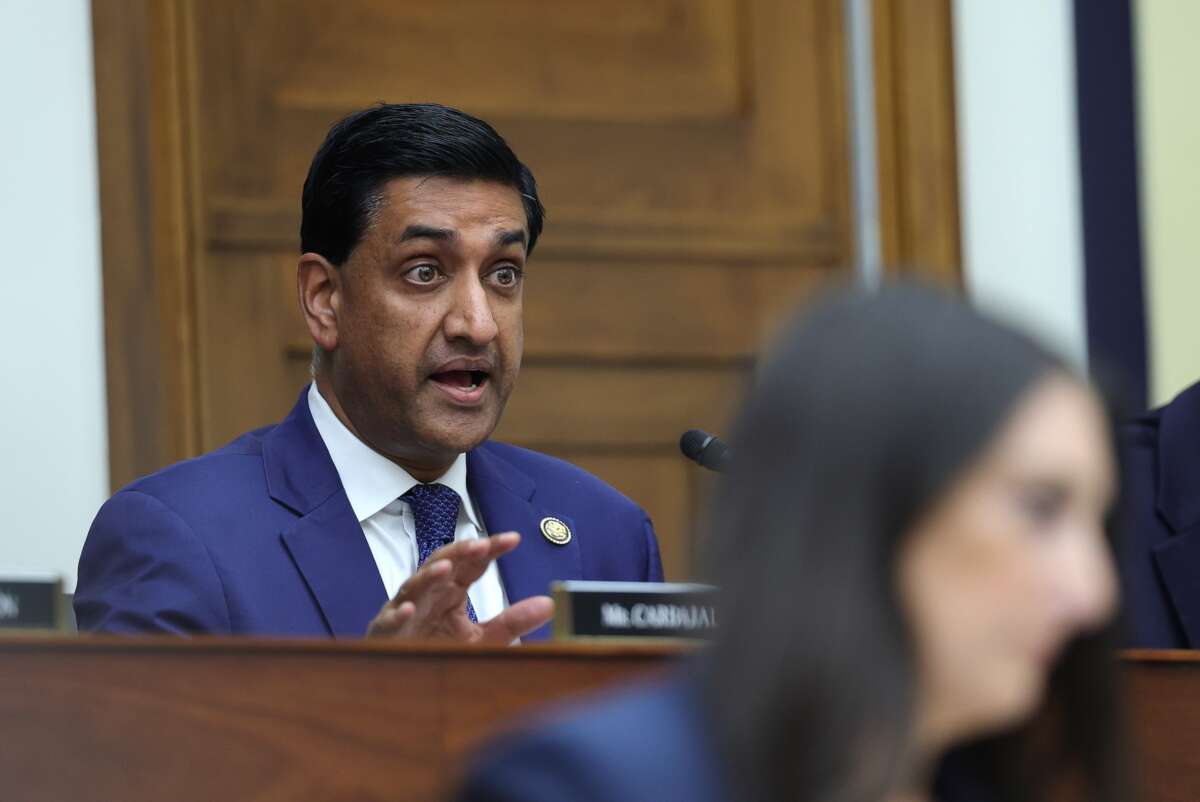
On Thursday, the House of Representatives pushed forward with a measure to increase military cooperation between the U.S. and Israel despite one congressman’s efforts to block the proposal.
The House Armed Services Committee held a marathon session Thursday on the National Defense Authorization Act (NDAA) budget, concluding after midnight on Friday and ultimately approving $1.15 trillion for defense programs.
Democratic Rep. Ro Khanna (California) attempted to remove Section 224 of the NDAA, which calls for an increase in military cooperation between the U.S. and Israel, but was met with opposition, including from fellow Democrats.
Section 224 of the NDAA calls for an increase in military technical cooperation between the U.S. and Israel’s defense industries, with the creation of a position in the Pentagon to “synchroniz[e] cooperative efforts,” and “expand and accelerate bilateral defense technology research, development, testing, evaluation, integration, and industrial cooperation.” This would also entail more cooperation on missile defense, AI, and other technology, “joint training exercises,” and more collaboration across “government, private sector, and academic institutions” in the U.S. and Israel.
Khanna introduced an amendment to strike down the proposal on Thursday, but was met with widespread opposition, with only a single Democrat voicing approval.
Khanna attempted to appeal to lawmakers across the political spectrum in his remarks, saying, “Everyone in America – whether you’re a Republican, an independent or a Democrat – says that we need to tell Netanyahu that America calls the shots, not the prime minister of any other country.”
Khanna was referring to a letter penned by Israeli Prime Minister Benjamin Netanyahu that endorsed the measure and called for the U.S.-Israel relationship “to move from aid recipient to partner” under a “new framework of joint defense cooperation.” Khanna claimed that Section 224 echoed Netanyahu’s demand.
“[Americans] want less cooperation and blank checks to Israel, not more. Only the United States Congress would dream up at this moment, ‘Let’s actually do more for Israel,’ not less,” Khanna said.
But eight committee members – including Democrats – spoke against Khanna’s amendment. They said that the creation of the liaison position would ensure U.S. supervision of the program, and that the technology-sharing would allow the U.S. to benefit from Israeli technology.
This technology has been developed through the subjugation of Palestinians – Gaza especially has been used as a “testing ground” for Israeli technology. Since 2024, south Lebanon, too, has become a testing ground for Israeli weapons technologies.
Washington Rep. Adam Smith – the lead Democrat on the committee – said that he was “sympathetic” to Khanna’s argument. “Mr. Netanyahu insisted on this war with Iran that has strengthened Iran and weakened our position. I do not like his leadership of Israel or where he is going,” he said.
But Smith insisted that having a military partnership with Israel is useful “because Israel has actually been having to fight.”
“They have faced drone attacks and missile attacks. They have had to develop new technologies, technologies that we’ve benefitted from,” he continued.
Smith also stated that the framework was not new. “We have three existing programs right now where we do military cooperation with Israel to develop technologies. Those programs already exist,” he said.
Only Rep. Sara Jacobs (D-California) spoke in favor of the amendment. “The United States should have the same standards for Israel as we do for everyone else,” she said. “If any other country in the world had been credibly accused of violating U.S. and international law again and again, of killing tens of thousands of civilians, of blocking food and medicine from reaching a starving population, we would not be moving to deepen and permanently expand our military ties with them.”
But the lack of support from other Democrats is a reminder that the U.S. sees working more closely with Israel as in its own interests, too, not just Israel’s – and a long line of both Democratic and Republican presidents have maintained this position for decades.
We Should Not ‘Integrate’ Our Military With Any Foreign Nation!
Not since the notorious 2012 National Defense Authorization Act (NDAA) provided for indefinite detention of American citizens, has the annual funding bill been as misused as this year. Embedded in the bill is an insult to every American who values our national sovereignty. The NDAA’s Section 224, the “United States-Israel Defense Technology Cooperation Initiative,” would “integrate” the Israeli military with our own, fusing technology, production, intelligence-sharing, and more.
As Ben Freeman wrote last week in Responsible Statecraft:
“The US and Israel already work together heavily on missile defense, but this provision would greatly expand coordination to seemingly every area of defense tech, including AI, quantum, autonomous systems, directed energy, cyber, biotech, and many more. It also proposes ‘network integration’ and ‘data fusion.’ In other words, the US military’s data could soon be the Israeli military’s data.”
It is hard to think of a more “America last” position than handing the keys to the Pentagon (and our intelligence community) to a foreign country.
The insanity of Section 224 is made even more clear with news over the weekend that the Pentagon has raised to “critical” the threat level of Israel spying on the United States and its officials!
We should not “integrate” our military with any foreign country or organization, but integrating with a country that is a “critical” espionage threat to our national security? How does this make any sense?
The “problem” for American lawmakers is that after the killing in Gaza and now Lebanon, the American people – particularly younger Americans – have turned sharply against the US relationship with Israel. This foreign entanglement has sucked billions from the US treasury over the decades, and it has sucked us into endless conflict in the Middle East, including the current US war on Iran.
Rather than listen to the will of their constituents, Congress has decided to defy the wishes of Americans in favor of the wishes of a foreign government. AIPAC largely controls our Congress and passing Section 224 would be a great victory for the foreign lobby.
It should come as no surprise that Israeli Prime Minister Benjamin Netanyahu endorses Section 224. He may have written it for all we know!
Should Section 224 remain in the NDAA, it would essentially remove future Congresses from any role in determining what level of support, cooperation, and oversight should be included in the US relationship with Israel. It would be worse even than President Obama’s 10 year guaranteed US financial support for Israel. Funding would not only be on autopilot, but the US would be further drawn into Israel’s multiple wars with its neighbors. Worse even than backing up Israel in its regional wars, the wars themselves would become ours.
Americans must speak out against plans to integrate our military with any foreign country. What we should be doing is disentangling from these overseas obligations, whether they be NATO or support for Ukraine or backing Taiwan against China.
We already spend more than a trillion dollars a year on our own military and our national debt is nearing $40 trillion. Taking on the obligation to fight even more wars overseas will hasten our bankruptcy. Section 224 must be stricken from the NDAA and it is up to every American who cares about our sovereignty to demand that Congress do so.
 Ron Paul is a former Republican congressman from Texas. He was the 1988 Libertarian Party candidate for president.
No comments:
Post a Comment