EU Steps Up to Fund Ocean Data Collection as U.S. Pulls Back
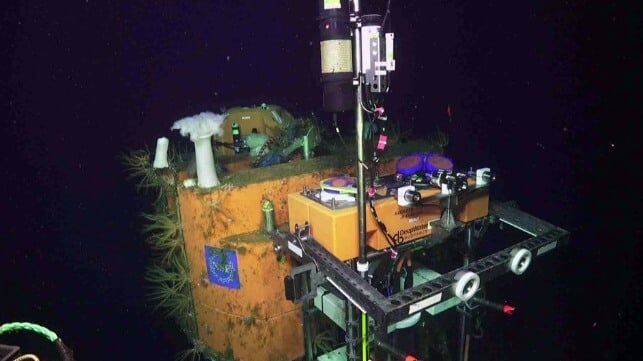
Following the Trump administration's decision to remove the global ocean sensor network run by the NSF/Woods Hole's Ocean Observatories Initiative, the European Union has come up with its own funding pool to cover some of the lost scientific sensor capability.
Last week, the European Commission announced that it would be launching a new program dubbed OceanEye to boost EU contributions to global ocean data collection. The long-term objective is to build about one third of the world's ocean observing system by 2035 and position Europe as "the global leader in ocean intelligence," putting it in competition with decades of U.S. leadership. The program will kick off with an investment of about $105 million to underwrite European contributions to the Global Ocean Observing System (GOOS) and R&D on ocean observation technologies.
Among other deliverables, the project hopes to secure 35 percent of the ocean tech market (ocean AI models, sensors and digital twin systems) for Europe by 2035. It also pledges to deliver a publicly-accessible ocean digital twin system by 2030 - a project well under way at Mercator Ocean International, a research center in Toulouse.
The announcement follows closely after news that the Trump administration has ordered the removal of all seven of the Ocean Observatories Initiative's cabled installations, from the North Pacific to Greenland to the Southern Ocean. The decommissioning work is already under way, and will take about 15 months to fully implement. The globe-spanning project took decades to design and install at a capital cost of $370 million, and was expected to remain in service at least 15 more years. The shutdown should save taxpayers about $50 million per year, and - given OOI's prolific production of climate-related ocean data - it aligns with plans to disincentivize climate-related research.

No comments:
Post a Comment