Port Everglades Contributes $48.3 Billion in Economic Impact
[By: Port Everglades]
Port Everglades generates approximately $48.3 billion in economic activity and supports nearly 300,000 jobs throughout Florida, according to a new study by maritime industry analyst Martin Associates. This year’s report captured energy related user impacts to match industry reporting standards, which resulted in significant increases in overall calculated economic activity.
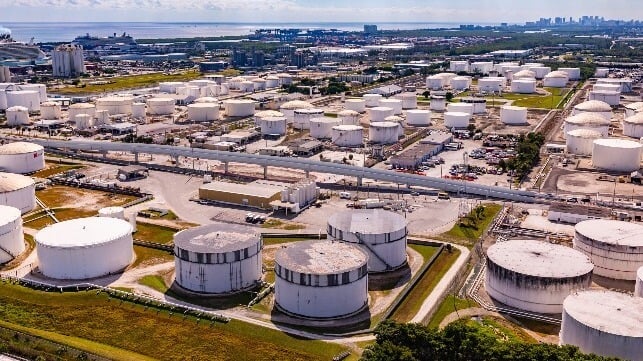
Port Everglades is the state’s top seaport for receiving and distributing fuel such as gasoline, diesel and jet fuel, but the economic impacts had not been fully accounted for in past reports. The commissioned report for Fiscal Year 2025 (Oct. 1, 2024, to Sept. 30, 2025) captures the full impact of the distribution of energy (petroleum) products handled at the port, in addition to previously accounted for impacts from its cruise and cargo business lines.
“We are a significant provider of Florida’s fuel needs – supplying 12 counties and five international airports – and by capturing the entire related user impact of the port’s waterborne petroleum trade in this year’s report, we are able to fully identify the significance of our port in the energy sector,” said Joseph Morris, CEO and Port Director of Port Everglades. “Energy, cargo and cruise business activities represent the top three revenue generators for Port Everglades, an enterprise fund of Broward County government that is self-sustained by user fees rather than local tax dollars.”
In total, economic impact increased by 72% and supported 44% more jobs statewide over the previous report for Fiscal Year 2024. That includes approximately 13,139 jobs that are directly dependent on the port’s business activity, a more than 7% increase over the previous fiscal year.
Business activity for cruise, generated in part from a record 4.7 million cruise guests, increased 21.7% in Fiscal Year 2025 compared to Fiscal Year 2024, and direct local jobs climbed by 9.4%.
Economic activity for record cargo volumes of 1.167 million TEUs (20-foot equivalent units, the industry’s standard container measurement), rose by 17.9% and supported a 5.3% increase in direct jobs.
The report assesses the port’s economic impact based on jobs, business revenue, employee earnings, and state and local taxes.
The business activity at Port Everglades contributes nearly $1.9 billion to state and local taxes, a 69% year-over-year increase, which are paid by parties dependent on the port’s activity.
Fiscal Year 2025 Local and Regional Impacts Generated by Port Everglades
Category | Total |
Jobs (Direct, Induced, Indirect, Related User) | 295,166 |
Economic Activity (Business Services Revenue, Related User Output) | $48,316,051 |
State and Local Taxes | $1,893,247,000 |
The products and services herein described in this press release are not endorsed by The Maritime Executive.
PortMiami’s Director Ousted as County Seeks Fisher Island Fuel Terminal
A messy two-year land battle that drew national attention to PortMiami and Miami-Dade County took a new turn as the county’s mayor ousted key officials and announced they would proceed with an eminent domain action. At stake is the fuel depot that supplies PortMiami’s ships.
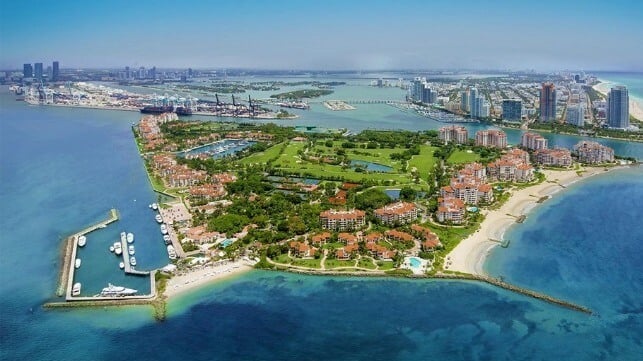
The situation began in 2024 when a small, approximately 10-acre parcel of land on the tony Fisher Island that sits to the east of the port in Miami Bay went up for sale. Once the location of William K. Vanderbilt II’s winter home, Fisher Island began developing in the 1980s into an exclusive community, only reachable by a ferry. It is the home to celebrities, but in one small corner facing the port is the fuel depot that has supplied Miami for nearly 100 years.
The modern port in Miami began to be developed in the mid-1960s. The original director had a vision of it being a “clean port,” meaning that much of the cargo operations, including fuel and petroleum products, moved through the nearby Port Everglades while Miami concentrated on cruise ships and ultimately containerships. The port became a major economic contributor to the region and specifically Miami-Dade County.
The fuel depot is critical to supplying the ships berthing at PortMiami, but it has always been located on the nearby island, instead of being incorporated into the landfill island, Dodge Island, where the port was built. According to The Wall Street Journal and Miami Herald, when the plot of land with the depot went up for sale in 2024, Miami-Dade made an offer but failed to pursue the acquisition aggressively. A Chicago-based developer purchased the facility, reportedly for $180 million, and announced plans to redevelop it as more luxury condominiums.
Mayor Daniella Levine Cava highlights that the Board of County Commissioners directed the county to negotiate for the land, but in September 2025, it also authorized eminent domain proceedings if an agreement could not be reached. The newspaper accounts said that the developer wanted $400 million to sell the property to the county.
The association representing the approximately 800 homeowners on the island also filed suit against the county when they learned of the negotiations and possible use of eminent domain. They sued last week to stop developer HRP Fisher Island from selling the fuel bunker property to Miami-Dade County, alleging the deal would violate binding agreements with representatives of the residents. They reported that the county was nearing a deal to pay $200 million upfront and another $200 million over 20 years. Furthermore, they are also alleging environmental issues and a lack of transparency in the negotiations.
The mayor said in an announcement on Friday that the parties were unable to reach an agreement on an acceptable deal. This came after leaked reports of friction and disagreement within the county government.
Thursday, the Miami Herald reported that the mayor announced the immediate retirement of her key deputy, Jimmy Morales, who, among other roles, oversaw the port and airport. PortMiami is county-owned but derives its operating revenues from the fees paid by the shipping lines and other operations at the port.
The mayor also announced that Hydi Webb, who had served for the past four years as Seaport Director, was retiring. She said Deputy Port Director Frederick Wong would take over as Interim Director of PortMiami.
“We pursued the negotiations in good faith and carefully considered the proposal,” said Mayor Levine Cava. “But in the end, the price was simply too high.” She said she has instructed her new Deputy Mayor, Roy Coley, to work with the County Attorney’s Office to initiate legal action consistent with the board’s prior direction.

No comments:
Post a Comment