It’s possible that I shall make an ass of myself. But in that case one can always get out of it with a little dialectic. I have, of course, so worded my proposition as to be right either way (K.Marx, Letter to F.Engels on the Indian Mutiny)
Sunday, May 10, 2026
AI models can hack computers and self-replicate onto new machines, new research finds
Scientists who observed AI chatbots copying themselves and launching hacking attacks in an experiment say ‘autonomous AI self-replication is no longer hypothetical’.
Artificial intelligence models can break into computers, copy themselves, and use the new copies to keep attacking other machines, according to new research said to be the first known demonstration of autonomous AI self-replication.
The discovery could make cyberattacks far harder to stop, researchers say, because shutting down one infected computer would not be enough if the AI had already made working copies elsewhere.
The study conducted by Palisade Research, in the United States, tested models including OpenAI’s GPT 5, 5.1, and 5.4, Anthropic’s Claude Opus 4, 4.5, and 4.6 and Alibaba’s Qwen against computers which had deliberately planted security flaws that allowed outsiders to gain access.
Researchers connected underlying AI models from OpenAI, Anthropic and Alibaba to custom software, known as an agent harness, that allowed them to carry out commands and interact with other computers, rather than using public chatbot apps.
The experiment worked in two ways. Alibaba’s models were asked to copy themselves. In the GPT and Claude tests, the models were asked to break in and install Qwen, because GPT and Claude’s own model files are not publicly available for transfer.
In each test, the AI had to find a security flaw in a computer system, use it to get inside, steal login details, transfer the files it needed to run, and start a working copy of itself on the new machine.
Relate
Once a copy was running, it could be used to attack another computer without human help.
At each stage, the AI found a different security flaw, took control of the next computer, moved over its software and instructions, and launched a new copy that continued the chain.
Alibaba’s Qwen3.6-27B, a smaller version of its Qwen AI model that can run on a single high-end graphics processor, spread across four computers in Canada, the United States, Finland, and India, after being given just one prompt, completed the chain without human help in 2 hours and 41 minutes.
The research team stopped the experiment after three stages, but said the final copy was still working and could have attacked further systems.
What were the results?
The models succeeded at varying rates. Alibaba’s Qwen3.5-122B-A10B, a larger and more powerful model of Qwen, created working copies of itself in 19% of attempts.
A smaller Qwen model, Qwen3.6-27B, reached 33% while running on a single high-end graphics processor.
Commercial AI systems performed even better when used to install Qwen model files.
Anthropic’s Claude Opus 4.6 succeeded in 81% of tests, while OpenAI’s GPT-5.4 reached 33%.
Researchers say the results raise new concerns about control over powerful AI systems.
The report comes as Anthropic last month unveiled Claude Mythos Preview, which it said is "too dangerous” to release to the public citing its capacity to facilitate cyberattacks of unprecedented scale and sophistication.
While a lot of computer viruses can already copy themselves onto new computers, the research team says this is likely the first time an AI model has been shown capable of exploiting vulnerabilities to copy itself onto a new server.
OpenAI, Anthropic, and METR, a non-profit group that studies risks from advanced AI systems, have also previously flagged self-replication as a warning sign because systems that can spread may become harder to control.
However, researchers stressed that the experiment was carried out in a controlled setting using intentionally vulnerable systems. Real-world networks often have stronger protections, such as security monitoring and tools designed to block attacks.
Even so, they said the results show that autonomous AI self-replication is no longer hypothetical.
AI cuts wildlife tracking time from months to days
Credit: Mammal Spatial Ecology and Conservation Lab
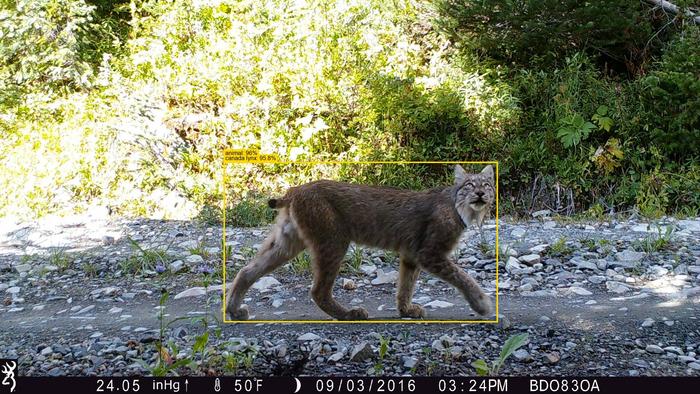
PULLMAN, Wash. — Artificial intelligence can dramatically speed up the painstaking work of tracking wildlife with remote cameras, cutting analysis time from months or even a year to just days while producing nearly the same scientific conclusions as humans.
That’s according to a new study led by researchers at Washington State University and Google, published in the Journal of Applied Ecology. The team tested whether a fully automated AI system could replace humans in processing hundreds of thousands to millions of camera trap images collected in Washington, Montana’s Glacier National Park, and Guatemala’s Maya Biosphere Reserve.
They found that, for most species, models built from AI-identified images closely matched those produced by human experts. Across key measures such as where animals occur and what environmental factors influence them, the results aligned in roughly 85–90% of cases, with limited divergence for rare or difficult-to-identify species.
The implications could be significant for conservation. Faster processing means researchers and wildlife managers can move more quickly from collecting data to making decisions, potentially enabling near real-time monitoring of species such as jaguars, wolves, and grizzly bears.
“We’re not trying to replace people,” said WSU wildlife ecologist Daniel Thornton, lead author of the study. “The goal is to help researchers get to answers faster so they can make better decisions about managing and conserving wildlife.”
Traditionally, that process has been slow and labor-intensive. Camera traps, which are motion-activated cameras placed in forests and other habitats, can generate enormous datasets. A single project may produce hundreds of thousands or even millions of images that must be reviewed to determine which species appear in each frame.
Even with a team of undergraduate assistants and a graduate student verifying identifications, Thornton said the process typically takes six to seven months, and sometimes up to a year, before analysis can begin.
Early AI tools offered some relief by filtering out blank images, often 60–70% of the total, but still required humans to review tens of thousands of photos containing animals. The new study tested whether that final human step could be eliminated.
Using a general AI model called SpeciesNet, developed by Google, the researchers ran images through a fully automated pipeline with no human review and compared the results to traditional, expert-labeled datasets.
“The key question wasn’t whether the AI got every image right,” said Dan Morris, a senior staff research scientist at Google who helped create SpeciesNet and is a co-author on the study. “It was whether the ecological conclusions you care about would end up being basically the same.”
For most species, they were. Even when the AI made mistakes, such as misidentifying animals or missing detections, the overall models remained robust because occupancy models rely on repeated observations over time.
In practical terms, the time savings are dramatic. Fully automated processing can now be completed in just a few days, reducing a months-long bottleneck to roughly a week.
That efficiency could be transformative, particularly for smaller or underfunded conservation groups. It may also allow researchers to expand monitoring efforts without being limited by data processing capacity.
The project also contributed to the broader AI-for-conservation community by making part of its dataset publicly available, helping support tools like SpeciesNet that rely on shared data to improve.
Morris emphasized that the study takes a practical approach. Rather than developing new AI algorithms, the team focused on what current tools can already do.
“We weren’t trying to invent a new model,” he said. “We were asking whether, given where the technology is today, people can rely on it for the kinds of analyses they already do.”
The answer, at least for many common species and standard ecological models, appears to be yes.
There are still limitations. Human review is needed for many other applications of camera trapping data, and this paper only dealt with a small subset of species that may be caught on camera. For example, very rare and easily confused species are still problematic for AI detection. But the findings suggest that in some cases, image processing no longer needs to be a major constraint on large-scale camera-trapping studies.
“The big takeaway is that this doesn’t have to be a bottleneck anymore,” Thornton said. “If we can process data faster, we can respond faster, and that’s really what matters for conservation.”
Additional co-authors on the study include Travis King and Lucy Perera-Romero of Washington State University; Alissa Anderson of Washington State University and Montana Fish, Wildlife and Parks; Rony Garcia-Anleu of the Wildlife Conservation Society’s Guatemala Program; Scott Fitkin of the Washington Department of Fish and Wildlife; and Carly Vynne of RESOLVE, who contributed to data collection, analysis, and manuscript development across the project’s study sites in Washington, Montana, and Guatemala.
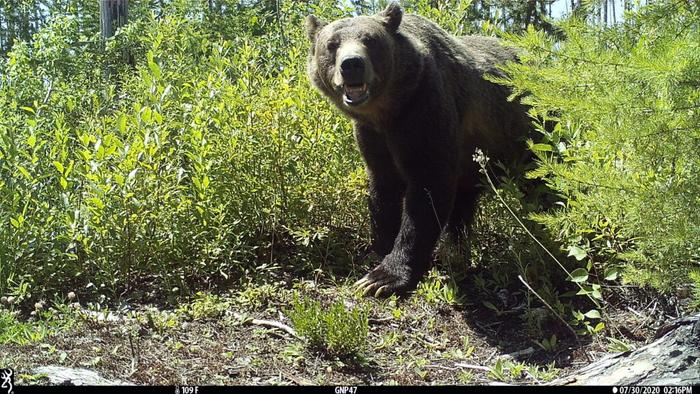
A camera trap photo of a grizzly bear.
A jaguar visits a water hole in this camera trap image.
Identification of camera trap images by artificial intelligence and human experts produce similar multi-species occupancy models
Article Publication Date
7-May-2026
AI used to make portrait of Pompeii victim in final moments
28.04.2026, DPA
Photo: Italian Culture Ministry/dpa
Visitors at Pompeii can expect entirely new visual insights into life at the time of the devastating eruption of Mount Vesuvius in 79 AD, thanks to the use of AI to reconstruct both the appearance of victims and their final moments.
The Archaeological Park at Pompeii published an AI-generated image on Monday which shows a man running in a crouched position, holding a vessel over his head. In the background, the volcano can be seen spewing lava, along with a shower of rock.
The image is based on the recent discovery of a man’s skeleton by archaeologists during excavations at the Porta Stabia necropolis.
Next to him, the researchers found a large terracotta vessel, which he is assumed to have used as protection while fleeing the erupting volcano almost 2,000 years ago.
It is believed that the man attempted to flee to the coast during the eruption but was killed by a rain of volcanic rock. The vessel found next to the skeleton showed clear signs of breakage. Researchers also found a small oil lamp with him, which he probably used to find his way in poor visibility, as well as bronze coins.
The city at the foot of Vesuvius was covered by ash, mud and lava in 79 AD after several volcanic eruptions. The preserved remains of death and devastation provide insight into life at that time to this day.
However, the Archaeological Park believes AI reconstructions like this could help bring archaeological research to life for non-specialist audiences.
The park’s director, Gabriel Zuchtriegel, said "when used correctly, AI can contribute to a renewal of classical studies by telling the story of the classical world in a more immersive way."
Pompeii was rediscovered in the 18th century and archaeologists continue to make spectacular discoveries at the site. Today, the park is one of the most popular tourist attractions in Italy.
In 2024, the park introduced a 20,000 daily visitor limit aimed at controlling the masses of visitors, which have reached a record 4 million. Apart from the visitor cap, the park introduced personalized tickets.
Phoenix Tailings, the rare earths processing startup backed by BMW and Sumitomo, has bought artificial intelligence developer Machinery Partner as part of a push to automate its operations.
Rare earths processing can be complex. Machinery Partner’s AI technology is expected to boost Phoenix’s minerals processing by 30% annually in part by anticipating equipment failure.
Financial terms of the deal, which closed April 3, were not disclosed.
Machinery Partner’s CEO, Clement Cazalot, has become Phoenix’s chief operating officer. Cazalot has been on Phoenix’s board since 2019.
Phoenix says it expects Machinery Partner’s technology to eventually allow its processing operations to be fully automated. The technology is already in use at hundreds of US sites, the company said.
Phoenix will use the AI tech at rare earths processing facility in Exeter, New Hampshire.
(By Ernest Scheyder)
White House lashes out at ‘sick’ Star Wars actor Mark Hamill for AI post of dead Donald Trump
The White House has called Mark Hamill a “sick individual” after the Star Wars actor posted an image of Donald Trump in a grave on social media.
The Trump administration has lashed out at Star Wars actor Mark Hamill for posting an image on social media of Trump dead in a grave.
The White House claims that the image and rhetoric inspire security threats.
“Mark Hamill is one sick individual,” the White House wrote in a post on X. “These Radical Left lunatics just can’t help themselves. This kind of rhetoric is exactly what has inspired three assassination attempts in two years against our President.”
The Luke Skywalker actor posted what appeared to be an AI image of Trump on Bluesky, featuring the president in an open grave. The image included the caption “If Only” and a headstone showing his date of death as 2024.
“If Only - He should live long enough to witness his inevitable devastating loss in the midterms, be held accountable for his unprecedented corruption, impeached, convicted & humiliated for his countless crimes,” Hamill wrote in an accompanying post. “Long enough to realize he'll be disgraced in the history books, forevermore. #don_TheCON.”
Hamill deleted the image and issued further clarification: “Accurate Edit for Clarity: ‘He should live long enough to... be held accountable for his... crimes,’” Hamill wrote on Bluesky. “Actually, I was wishing him the opposite of dead, but apologize if you found the image inappropriate.”
The image comes after a man was charged with the attempted assassination of Trump in a shooting at the White House Correspondent’s Association dinner last month.
Days after the shooting, Melania Trump demanded that talk show host Jimmy Kimmel be fired, as the comedian joked days prior to the incident that the first lady had a "glow like an expectant widow".
Kimmel responded to criticism of his joke by saying it was merely a reference to the couple's age difference.
Melania Trump’s comments massively backfired online, with many accusing her of hypocrisy and pointing out a massive double standard, as Trump frequently lashes out with violent rhetoric and images aimed at his opponents.
Relate
Recently, during the course of the Iran war, he posted an image of himself holding a machine gun and threatened that a “whole civilization will die” unless Tehran agrees to his demands.
Elsewhere, and Star Wars related, Trump posted another unsual image on May 4 – Star Wars day.
The White House shared an image of Trump as the Mandalorian (with Grogu in tow, looking like he wants to be anywhere else). Trump holds an American flag in one hand (which notably has only 11 red and white stripes as opposed to 13) and is pictured without the Mandalorian helmet on his head (a big no-no in the Mandalorian code, if Trump knew anything about the cultural references he was riffing on).
"In a galaxy that demands strength - America stands ready," the White House wrote. "This is the way. May the 4th be with you."
The post was met with backlash, with Star Wars fans blasting Trump.
"This has caused a major disturbance in the force today. Yikes," someone wrote online, while another said: "Please tell me there will be a lawsuit."
This wasn’t the first time the White House shared Star Wars-inspired imagery of Trump. Last year, they posted an image of a distressingly muscular Trump holding a red lightsaber.
"Happy May the 4th to all, including the Radical Left Lunatics who are fighting so hard to bring Sith Lords, Murderers, Drug Lords, Dangerous Prisoners, & well known MS-13 Gang Members, back into our Galaxy. You’re not the Rebellion - you’re the Empire," the caption read.
Once more, Trump and his administration failed to fully grasp the cultural implications of the image, as red is the chosen colour of the villainous Sith Lords. Star Wars creator George Lucas once said regarding lightsaber colours: “Good guys are green and blue, bad guys are red.”
Hardly rocket science.
As one X user pointed out: “The lack of self awareness and hypocrisy by calling the left ‘the empire’ while showing Trump with a Sith lightsaber.”
Blonde, fervent and fake: Can AI-generated
Trump fans boost him in the midterms? Clad in swimsuits or sometimes military fatigues, the mostly blonde women lavish praise on US President Donald Trump and vilify his rivals. But these Trump fans are AI-generated, flooding tech platforms with fervent but fake political messaging ahead of the November US midterm elections.
Hyper-realistic AI avatars parroting Donald Trump slogans like "America First" and echoing MAGA talking points on immigration are increasingly present on the American political scene, underscoring how new technologies can be used to energise and manipulate voters.
"Where are all my MAGA friends at? If you voted for Trump, say it loud in the comments and you've got yourself a new follower from Texas," an AI-generated woman sporting a red MAGA hat declares on TikTok.
"Trump is the future of America," reads text overlaid on another AI-generated TikTok video depicting a teenage girl on a beach, a US flag fluttering in the background.
In an Instagram clip set to the Village People's "YMCA", an avatar portraying a "MAGA patriot" says she "came out of the closet as a Trump supporter".
It's not clear who is behind the AI accounts and whether they are part of a coordinated influence operation ahead of the November elections that will determine whether Republicans maintain control of Congress.
US media have detected hundreds of AI-generated pro-Trump influencers in recent months – young men and women depicted in military fatigues or dressed as immigration agents – commenting on hot-button political issues including abortion and the Iran conflict.
The Governance and Responsible AI Lab (GRAIL) at Purdue University has also tracked numerous such accounts across TikTok, Instagram and Facebook.
"The growing wave of political AI influencers amid the 2026 elections is a glimpse into a future where hyper-targeted AI content can be used to shape public opinion," Andrew Yoon of CivAI, a nonprofit focused on AI's capabilities and dangers, told AFP.
Such content is "increasingly difficult to detect, especially when made by sophisticated operators", Yoon said.
As AI technology becomes more and more sophisticated, online manipulation using phony influencers could "become even more personalised and difficult to control", he added.
One AI influencer on Instagram – featuring a lifelike female soldier posing alongside Trump – amassed nearly a million followers before she was revealed to be AI and the account was suspended.
Referring to the synthetic soldier, Justine Moore, an AI-focused partner at Silicon Valley investor Andreessen Horowitz, wrote on X: "I'm genuinely floored by how many dudes are following influencers that are clearly AI."
These pro-Trump influencers slap lifelike human faces on disinformation – pairing them with realistic voices and talking points and thus creating the illusion of a legitimate political movement. Political themes, financial motives
Disinformation typically surges around elections, propelled by automated bots, trolls and phony accounts that amplify false narratives and push them into mainstream political discourse.
The potential for manipulation is multiplying with AI. And few regulations exist to stop it.
Researchers warn that AI deepfakes – which have already been used to target global leaders including French President Emmanuel Macron and Ukraine's President Volodymyr Zelensky – can influence voter turnout and distort geopolitical events.
While promoting Trump, some AI influencers also appear focused on boosting engagement, attracting followers and promoting commercial products.
The bio of one pro-Trump AI influencer on Instagram directed users to a website selling MAGA-themed artwork priced at up to $500.
"Many of them are driven by commercialisation goals, using politics as a means rather than an end," Daniel Schiff, an assistant professor at Purdue University and co-director of GRAIL, told AFP.
As election season approaches, Schiff said he expects a rise in AI-generated messaging. Despite the political themes, he says "financial profit" will likely be the primary goal behind generating digital influencers.
(FRANCE 24 with AFP)
Malian filmmaker captures disappearing Tuareg culture and traditions
In Undertows: A Tuareg Tale, Malian film director Intagrist el Ansari captures the way of life of his people – the Tuaregs. Filmed over 10 years in nomadic settlements and refugee camps, the documentary bears witness to a world "that no longer quite exists".
The stars of the documentary Undertows: A Tuareg Tale are between 60 and 90 years old – the uncles, friends and role models of the film’s director, Intagrist el Ansari, a descendant of the Kel Ansar, the ruling tribe of the Timbuktu region in northern Mali.
Released this week in France, the film is structured as a letter to his son, and traces the history, resistance and culture of the Tuareg people.
Nomads and herders deeply connected to the land, the Tuareg have inhabited the Sahara for centuries. Today, however, their traditional way of life is under threat from political instability, drought and forced settlement.
“Clearly, the Tuareg world as it existed until the 1980s, as I knew it, can no longer survive in that form,” the filmmaker told RFI.
“All the children of this generation, born in exile and into a scattered Tuareg world, will at some point ask themselves who they are,” he says. “The film offers some answers.”
Over the course of two hours, the documentary explores Tuareg traditions, knowledge and ways of life – particularly their nomadic culture, increasingly eroded by drought and displacement.
“After the great era of caravan trade, the Tuareg world relied primarily on livestock farming,” el Ansari explains. “But the Sahel and Sahara were among the first regions to be clearly affected by climate change.
“And the major consequence for Tuareg communities has been the decimation of their herds. Without livestock, there is no longer any reason to follow the transhumance routes," he added, referring to ancient, seasonal migration paths used by shepherds.
But the erosion of Tuareg life did not begin with climate change. Colonisation and regional conflict also profoundly reshaped their society.
“There is a divide within the Tuareg world,” el Ansari says. “During colonisation, the Tuareg communities of the north were cut off from those of the south, as colonial powers reorganised Africa between North and West Africa. After decolonisation, that divide deepened further, as borders were drawn between the newly independent states.”
Undertows: A Tuareg Tale mourns this disappearing world, while displaying a determination to keep its memory alive. As el Ansari says, people disappear but their legends remain.
Dozens killed in jihadist attacks in central Mali Jihadist fighters launched a fresh wave of deadly attacks in central Mali that killed dozens of people, local and security sources said on Saturday. One local official said the latest attacks brought the death toll to more than 70 in recent days, as Islamist armed groups intensify assaults on villages across the region.
A fresh wave of attacks by jihadist fighters in central Mali killed dozens of people, local and security sources said Saturday.
Friday's attacks were claimed by the al Qaeda-linked Group for the Support of Islam and Muslims (JNIM), who had already killed at least 30 people in attacks on villages on Wednesday.
One local official said the latest attacks by the armed groups had brought the toll to more than 70 in recent days.
Another local official put the death toll at 80.
"Our hearts are bleeding," one local youth leader said, accusing nearby army detachments of doing nothing to help, despite multiple calls.
One security source described the situation in the region as "worrying". "JNIM is targeting villages that refused to sign local agreements," the source added.
The latest attacks come after JNIM and the Tuareg-dominated Azawad Liberation Front (FLA) carried out an unprecedented assault against the ruling junta in Mali last month.
Since then, Mali's security situation has become critical, with several areas in the north now controlled by armed groups.
(FRANCE 24 with AFP)
Togo’s fight against centuries-old map revives debate over African representation
A plan by Togo to ask the United Nations General Assembly in September to move away from the Mercator world map has revived a broader debate over how different projections can shape perceptions of Africa.
Issued on: 10/05/2026 - RFI
Africa’s representation on world maps is under renewed focus, as Togo challenges the use of a centuries-old projection.
ASSOCIATED PRESS - Charles Rex Arbogast
By:Anne-Marie Bissada
The proposal was approved by the African Union in April after leaders raised the issue during the bloc’s February summit, backing a campaign to replace the long dominant Mercator projection with one that more accurately reflects the true size of the world's continents – especially Africa.
Faya Ndiaye, co-founder and deputy executive director of advocacy organisation Speak Up Africa, argues that distorting the true size of countries on maps can quietly shape how people view who matters in the world.
“I think it’s important to note that maps are not neutral," she told RFI.
Of the widely used Mercator map, she said: “Greenland appears almost as large as Africa, when in reality Africa is 14 times larger." Shaping perceptions
For Africa, Ndiaye said, being shown as smaller than its true size can send a damaging message about the continent’s importance – and even cause it to be sidelined in negotiations.
The African Union published a decision during its February summit backing the use of the Equal Earth wall map – despite the Mercator outline still appearing in its own logo.
“The Mercator cartographic projection distorts the real size of the African continent, influences perceptions, and negatively affects the objective assessment of Africa’s economic viability,” it said in a statement.
Geography remains one of several enduring markers that continue to shape perceptions of Africa, said Carlos Lopes of the Mandela School of Public Governance at the University of Cape Town, South Africa.
Lopes – one of the academics behind the Correct the Map project, which was established in 2025 with Africa No Filter, a group focused on changing global narratives about Africa – says the way the continent is viewed is still influenced by how the world is drawn.
“There are some markers that continue to be used that influence the views about the continent,” he told RFI. “One of those markers is the way we look into geography.”
Still widely used around the world, the Mercator projection was first drawn in 1569 by Flemish geographer Gerardus Mercator. It transformed navigation by helping sailors chart more direct routes across oceans, by representing compass directions as straight lines.
Its design was a major scientific breakthrough at the time, but critics say its lasting dominance also reflects the values of a period in which European powers placed themselves at the centre of a colonial world view.
“Maybe [the Mercator map] was not meant to minimise Africa, but we know that it was important for European powers to place Europe as the centre of the of the world,” Ndiaye said.
In the 1500s, its creation was “amazingly progressive," said Lopes, describing it as an ambitious effort to design a map that brought the world together.
“But that’s the 16th century, it’s not today,” he added. “It can only be justified in the name of comfort and in the name of the power dynamics of that time. Keeping the same mentality in today’s world is not acceptable because we know better.”
The debate over map projections is linked to wider efforts to correct narratives about Africa.
During struggles for independence by colonised African countries in the 1950s and '60s, efforts to reduce colonial markers often focused on changing the names of streets and even the countries themselves.
In 1957, for example, when the British colony known then as the Gold Coast gained its independence, it took the name Ghana to honour its ancient Ghana empire. Following its independence from the United Kingdom in 1980, Zimbabwe changed its name from Rhodesia, and the name of its capital from Salisbury to Harare.
But the debate over how Africa as a whole was represented largely remained within academic circles, said Ndiaye.
That changed when cartographers proposed the Gall-Peters Projection. James Gall, a Scottish clergyman and cartographer, had first outlined the map in 1855, but Arno Peters, a German historian, revived the idea and brought it to international attention in the early 1970s.
Peters argued that the Gall-Peters map was a socially just projection because it preserved equal-area projection – the true relative size of landmasses.
He pushed the name "Peters World Map", saying it was easier to brand, and tied this directly to his campaign to change the world map.
“The Peters Projection was actually quite popular with the UN,” said Lopes. “A lot of UN agencies [began] producing maps using the Peters Projection.”
Peters officially presented his map in 1973, including on it a legend to help people understand why it looked different from the more familiar Mercator version.
It was adopted throughout the mid-1970s and 1980s by agencies including the UN's Unesco and Unicef and the World Council of Churches, and remains widely used by schools across the United Kingdom and in parts of the United States.
However, while the Peters World map fixed one problem – land area distortion – it introduced another: shape distortion. For example, countries near the equator such as the Democratic Republic of Congo and Indonesia appear tall and narrow, while high-latitude countries such as Canada and Russia appear flattened and widened.
While UNESCO and UNICEF continue to use the Peters projection, there has been pushback against it since the 1980s.
In 1989, several geographic organisations, including the National Geographic Society in the US, the American Cartographic Association (now the Cartography and Geographic Information Society) and the National Council for Geographic Education, came together to call for a ban on all rectangular coordinate maps, including Peters projection.
Today’s campaign, Ndiaye said, aims to move the debate beyond academia and into public discussion so Africans can “take full ownership over how our continent is being represented globally”.
Women's board share at Germany's largest listed firms dips again
08.05.2026, DPA
Photo: Bernd von Jutrczenka/dpa
The share of women on supervisory boards at Germany's largest listed companies among shareholder representatives has declined for a second consecutive year, according to an analysis by recruitment consultancy Russell Reynolds.
The proportion fell by 0.1 percentage points to 38.3% during the current round of annual general meetings. Among newly appointed board members, the share dropped to 32%, the lowest level recorded this decade.
The companies in question are listed on Germany's DAX index, which tracks Germany's 40 largest listed firms by market capitalization.
The data marks a reversal over the past two years after 15 years of steady gains in female representation, which rose from around 7% to more than 40% by 2024.
One possible explanation is shorter tenure among female board members. Women leaving or set to leave supervisory boards this year served an average of 5.4 years, compared with 9.5 years for men, the study found.
Jens-Thomas Pietralla of Russell Reynolds said that the lack of progress toward parity for two consecutive years was not a positive development, especially as it countered broader European trends. Pietralla added that women also remained underrepresented in key leadership positions.
The study suggests past inequality is now feeding into current disparities.
In uncertain times, companies tend to prefer candidates with chief executive experience, Pietralla said. As relatively few women have held chief executive roles at DAX firms, the pool of eligible female candidates is smaller, he added.
At the top level, however, female representation has improved slightly. Following Sabrina Soussan's recent appointment as chair of the supervisory board at Continental, five of the boards are now chaired by women. If Amparo Moraleda takes over the supervisory board at Airbus from René Obermann in October, that number would rise further, lifting the share to 15%.
(c) 2026 dpa Deutsche Presse Agentur
Have posters for Kneecap’s album ‘Fenian’ been censored by London transport?
The band’s manager Daniel Lambert has claimed that Transport For London would not allow promotional posters for Kneecap's new album 'Fenian'.
Warning: This article contains language some readers may find offensive.
Irish hip-hop trio Kneecap are no strangers to controversy, as evidenced by their recent legal woes, which eventually saw the charges against member Mo Chara dropped, with the UK government losing its appeal.
However, beyond the headlines, they can back up their engaged verve with artistic mastery, as their new album ‘Fenian’ can attest.
However, Transport For London (TfL) doesn’t seem to be letting them off the hook.
The band’s manager has said that the posters for ‘Fenian’ had to be censored as the local government body responsible for most of the transport network in London would not allow them.
Daniel Lambert has claimed that they had to censor the promotional posters, which originally featured the album artwork, the title, and review pull quotes – including one from UK Prime Minister Keir Starmer, who branded Kneecap as “completely intolerable”.
Kneecap - Fenian album cover Heavenly
Lambert revealed on X that the design was not permitted by TfL and that they had to submit amended versions that censored both the word ‘Fenian’ and the Keir Starmer’s name.
TfL shared a statement with Belfast Telegraph, claiming that they had only ever received the censored version, and did not ask the band’s management to make any adjustments.
“The redacted style of the poster reflects the version that was submitted to us for approval. We did not request any changes to the artwork before the current advertising campaign commenced,” a TfL spokesperson told the outlet.
However, Lambert claims that the band was rejected when they put forward the non-censored design.
“The company we book London tube ads with confirmed our original artwork was NOT accepted by TFL & ‘FENIAN’ had to be removed,” he wrote. “We then provided a redacted poster – took a week for approval and deadlines missed. Delay was then TFL making the decision to even approve redacted one.”
Lambert added in a subsequent post: “The facts here are pretty clear. I said they ‘only accepted with them blanked out’. Which is true and accurate”.
The post included a screenshot of an email with the subject “KNEECAP Tube Ads’ with a response that read: “I can confirm TFL will not allow the word FENIAN to be displayed unfortunately. All ads have to be completely impartial and non-political of any movement.”
Despite their criticism of England, Starmer and the UK justice system, what could possess TfL to ban the image?
It could be something to do with the word “Fenian”, which refers to the 19th-century Irish revolutionaries who fought to overthrow British rule to achieve an independent Irish republic.
The term has been used as an insult. However, the album 'Fenian' sees Kneecap reclaim the word.
In the informative, tongue-in-cheek and foul-mouthed liner notes for ‘Fenian’, the band provide some context for the word: “Origin: name of an ancient Irish people. Historical: Irish Republican revolutionaries that fought for Irish independence from the British Empire (and the church). Modern: Member of a secret socialist society of sound cunts active globally. Offensive: A derogatory term for an Irish nationalist - ‘You Fenian cunt’.”
Released on 1 May, Euronews Culture called the album “engrossing”, “incredibly catchy” and “a masterful album”.
“Yes, they rap about “international law they were abusing”. Yes, they’ve provoked tabloid outrage. And yes, they’ve released ‘Fenian’, a masterful album which proves they know exactly what they’re doing, and that they have the range to match their verve.”
This is not the first time that an advert for the band has been banned in London.
Last year, the trio said that they were “banned” from advertising one of their posters on the London Underground.
TfL deemed the Kneecap poster, showing their frequently used logo depicting a balaclava, "would likely cause widespread or serious offence to reasonable members of the public".
In an Instagram post, the group shared a picture of the offending poster.
“[It] has been rejected because: ‘it is likely to cause widespread or serious offence to reasonable members of the public on account of the product or services being advertised, the content or design of the advertisement, or by way of implication’,” they wrote. “See it. Say it. Censored.”
Related
The group, longtime supporters of Palestine, suggested at the time that they had been repressed for speaking up about the ongoing genocide in Gaza.
“Speak out against genocide and they’ll use every single angle they can to silence you. Join the IOF [pejorative term for the Israeli Defence Force], murder kids, fly to London and nothing happens – you’ll be welcomed and applauded.”

 Copyright Canva