Saturday, May 23, 2026


Ancient DNA reveals web of marriage and migration in Peru


Long-distance movement, intermarriage and kinship shaped ancient Andean coastal networks before the Inca Empire, new research finds


University of Sydney

Map of the study area 

image: 

Fig. 1 | Map of the study area. A. Locations of the Chincha Valley and other Andean sites referenced in this study that yielded ancient DNA data. B. The archaeological sites under investigation for this study. Basemaps for panels A and B were obtained from the World Imagery dataset (https://www.arcgis.com/home/item.html?id=10df2279f9684e4a9f6a7f08febac2a9) and created with ArcGIS Pro v3.6.2. Sources: ESRI, Michael Bauer Research GmbH 2022, Instituto Nacional de Estadística e Informática (INEI), Earthstar Geographics, Vantor. 

view more 

Credit: Basemaps for panels A and B were obtained from the World Imagery dataset (https://www.arcgis.com/home/item.html?id=10df2279f9684e4a9f6a7f08febac2a9) and created with ArcGIS Pro v3.6.2. Sources: ESRI, Michael Bauer Research GmbH 2022, Instituto Nacional de Estadística e Informática (INEI), Earthstar Geographics, Vantor.


 Friday 22 May 2026 

Long-distance migration along Peru’s Pacific coast began at least 800 years ago, centuries before the rise of the Inca Empire and much earlier than previously thought, a new international study reveals. 

By analysing ancient DNA (aDNA) alongside archaeological and historical data, the study provides some of the strongest evidence to date of population movement along the Pacific coast prior to Inca rule (AD 1400 to 1532), demonstrating that pre-Inca coastal communities were far more mobile and connected at local and interregional scales than historically believed. 

Published in Nature Communications, it suggests people travelled more than 700 kilometres from Peru’s north coast to the Chincha Valley in the south. Here, they settled and intermarried with neighbouring populations, while maintaining distinctive cultural traditions – such as cranial modification and painting the dead with red pigment – for generations. The study also identified a single grave containing relatives who engaged in endogamy, or close-kin procreation.  

“Migration and kinship have long been part of the human story and the development of powerful societies,” said co-lead author Dr Jacob Bongers, digital archaeologist and member of the Vere Gordon Childe Centre at the University of Sydney, and Visiting Research Fellow at the Australian Museum Research Institute.  

“What’s most interesting about this research is that it shows the close-knit and far-reaching social networks of pre-Inca coastal communities, as well as how people maintained cultural traditions of marking group identities for centuries, even as they intermarried with distinct groups,” he said. 

Tracing ancient movement and mating patterns through aDNA  

The research team analysed aDNA samples of 21 individuals recovered from burial sites in the Chincha Valley to reconstruct family relationships and explore genetic diversity over time.  

“The genome-wide data and radiocarbon dates suggest migrants arrived in the Chincha Valley by at least the thirteenth century AD, well before Inca expansion,” Dr Bongers said. “Their ancestry traced back to the Peruvian north coast, more than 700 kilometres away, and the aDNA of these early migrants revealed no evidence of mixing with local populations.” 

Genetic evidence revealed mixed ancestry between people from the north, central and south coasts over subsequent generations. “This likely means that, after northerners migrated to Chincha, they intermarried with groups from neighbouring coastal areas, a practice that continued during the Spanish Colonial Period (AD 1532-1825),” Dr Bongers said.  

Genetic and bioarchaeological data from the aDNA samples also indicated close-kin procreation.  

“The burial of family members together and the evidence for close-kin unions in the lower Chincha Valley highlights the importance of the familial unit for ancient Andeans,” said co-lead author Assistant Professor Jordan Dalton from the State University of New York, Oswego. 

“The close biological relationships suggest the sampled individuals were members of an ayllu or parcialidad, a traditional, kin-based group that shares common territory, resources and ancestry. Close-kin unions may have served as a strategic means of retaining control over resources within the group,” she said.  

Cultural traditions endured across centuries    

All sampled individuals had some north coast ancestry, demonstrating population continuity for at least 200 years. This coincides with persistent cultural traditions maintained in Chincha from at least the thirteenth to fifteenth centuries. 

“In the sampled individuals from the lower and middle valley we observed practices such as cranial modification, a process carried out in infancy to shape the head using boards and bindings, human vertebrae strung on reed sticks, and the postmortem application of red pigment to the skull,” Dr Bongers said.  

“Postmortem red pigment application and cranial modification are cultural traditions that have long been documented on Peru’s north coast, so this evidence shows migrants may have brought their body modification traditions south to mark group identities." 

The timing of migration from northern Peru aligned with major social and political changes along Peru’s coast, yet the precise reasons for population movement remain uncertain, Dr Bongers said. 

“Climate hazards, the expansion of powerful northern polities such as the Chimú, and access to valuable resources including seabird guano, are all possible drivers of ancient Andean migration,” he said. 

"Importantly, this research expands our understanding of how and when interregional interaction occurred along the Andean Pacific coast and makes it clear the Inca incorporated highly mobile and deeply connected coastal communities into their empire." 

-ENDS- 

IMAGES/VIDEO 

Images and video available for download here. Please see documents within the folder for captions.  

Images of human remains associated with cultural practices available on request. 

RESEARCH 

Read the research here (available once embargo lifts): https://www.nature.com/articles/s41467-026-72216-y 

Bongers, J, L., Dalton, J. A., et al., ‘Ancient DNA reveals a family ossuary and long-distance migration on the Pacific coast before the Inca Empire’ (Nature Communications, 2026). 

DOI: 10.1038/s41467-026-72216-y 


DECLARATION 

This research was carried out in collaboration with descendant communities and governing agencies in Peru. Fieldwork, exportation of samples, and laboratory analyses were conducted under permits issued by the Peruvian Ministry of Culture. For the middle valley, permits were granted in 2013 (206-2013-DGPC-VMPCIC/MC), 2015  

(218-2015-DGPA-VMPCIC/MC), 2016 (107-2016-VMPCIC-MC), 2017 (145-2017-DGPA-VMPCIC/MC), and 2018 (148-2018-DGPA-VMPCIC/MC). For Las Huacas, permits were granted in 2017 (001379-2017/DGPA/VMPCIC/MC) and 2019 (035-2019-VMPCIC-MC, 101-2019-VMPCIC-MC). This project emerged from long-term, collaborative research programs (2012–current) involving archaeological fieldwork among archaeologists and university students from Peru and the United States, as well as community members from the Chincha Valley. This study was fully authorised by the Peruvian Ministry of Culture. We complied with all legal and ethical norms for the study of aDNA and will continue to work with local leaders and museums to share our research findings with communities and incorporate their questions into further research projects.


Aerial view of a cemetery in the middle Chincha Valley 

Aerial view of a cemetery in the middle Chincha Valley. Photo by Jacob L. Bongers. 

Aerial view of a cemetery in the middle Chincha Valley 

Aerial view of a cemetery in the middle Chincha Valley. Photo by Jacob L. Bongers. 

Aerial view of a cemetery in the middle Chincha Valley 

Aerial view of a cemetery in the middle Chincha Valley. Photo by Jacob L. Bongers.


SPACE/COSMOS


Tiny black holes: crystals of space and time


A team from Vienna and Frankfurt has found a formula describing a strange phenomenon: space and time can form a kind of “crystal” that may turn into a black hole


Vienna University of Technology

Spacetime crystals 

image: 

Left: visualization of a spacetime-crystel. Right: a cubic crystal structure

view more 

Credit: TU Wien


Alongside the famous gigantic black holes, physics also allows for microscopic versions. They emerge from so-called critical states, when spacetime organizes itself into a regular, crystal-like structure during a process known as critical collapse. A team from Goethe University Frankfurt and TU Wien has now succeeded, for the first time, in describing this phenomenon with an exact mathematical formula using an unusual mathematical trick.

Black holes usually form in spectacular events, such as the death of a massive star. But in theory, arbitrarily small black holes are also possible: tiny microscopic objects that can emerge from special critical states after the slightest addition of energy. Such states may have existed shortly after the Big Bang, when the universe was still a chaotic mixture of particles, potentially giving rise to so-called primordial black holes.

The theoretical possibility of such critical structures had already been demonstrated in computer simulations. Now, researchers from Goethe University Frankfurt and TU Wien have managed to confirm these results with a mathematical formula — using nothing more than paper and pencil.

Critical Collapse

“Sometimes a tiny, seemingly insignificant cause is enough to trigger a huge and dramatic change,” says Prof. Daniel Grumiller from TU Wien. “Take liquid water at zero degrees Celsius, for example. A very small change is enough to make the water freeze. The water molecules then spontaneously arrange themselves into a regular pattern and form an ice crystal.”

According to Albert Einstein’s theory of relativity, something very similar can happen in space and time. Whenever particles move from one place to another, they affect spacetime itself. “We say that spacetime is curved by mass,” explains Christian Ecker from the Institute for Theoretical Physics at Goethe University Frankfurt. “Large objects such as stars curve spacetime strongly — for example, we can observe this when light rays are deflected by massive stars. But smaller masses also produce spacetime curvature, just to a lesser extent.”

Just as physics allows water molecules to form a regular crystal out of disordered liquid water, relativity allows spacetime curvature to organize itself into a regular structure — a repeating pattern in space and time. A kind of “spacetime crystal” emerges. Physicists refer to the process leading to this state as critical collapse.

“This spacetime crystal is a very peculiar and fascinating object,” says Grumiller. “It is a kind of intermediate state, an unstable point that can evolve in two different directions. It may simply dissolve again, leaving behind ordinary spacetime filled with freely moving particles. But if a tiny amount of energy is added, the evolution takes a completely different path: the inconspicuous spacetime crystal turns into a black hole.”

Confirming an Old Hypothesis

Computer simulations had already suggested back in 1993 that black holes might form spontaneously in this way. Since then, researchers have tried to describe the process mathematically and derive the correct formulas — but this turned out to be extremely difficult. The team from Vienna and Frankfurt has now solved the problem using a remarkable trick.


“Our universe has four dimensions — three dimensions of space and one dimension of time,” explains Christian Ecker. “But in principle, nothing prevents us from writing down physical equations for a larger number of dimensions — five dimensions, forty-two dimensions, or even infinitely many.”

One might expect the theory to become vastly more complicated that way, but that is not necessarily the case. The team showed that, in the limit of infinitely many dimensions, some highly complex questions become surprisingly simple. The next step is to check whether the solution can be translated back to a smaller number of dimensions. In this way, the researchers were able to gain insights into our four-dimensional universe by taking a detour through a hypothetical universe with infinitely many dimensions.

“Our technique turns out to be remarkably stable. Depending on the desired precision, we can systematically improve our formulas using additional approximation methods,” says Florian Ecker from TU Wien. “This gives us a new method for studying black-hole-related phenomena that could previously not be analyzed analytically.”

Astronomers de-fog exoplanet atmospheres with new cloud-detecting method


Discovery by Johns Hopkins researchers of daily cloud cycle on a Hot Jupiter planet provides unique window into its make-up and evolution


Johns Hopkins University

Exoplanet WASP-94A b 

image: 

Artistic representation of  WASP-94A b, a gas giant in the Microscopium constellation. Clouds build as air flows over the dark side of the planet, reaching a large swell by daybreak. The clouds dissipate on the dayside, leaving clear skies in the early evening.  

view more 

Credit: Hannah Robbins/Johns Hopkins University


Sand clouds form every morning but clear up by nightfall on WASP-94A b, a well-studied gas giant in a constellation located nearly 700 light years away from Earth. 

The research, which uses data from the James Webb Space Telescope (JWST), is among the first to detect cloud cycles on a Hot Jupiter exoplanet. By isolating the clouds, researchers can more accurately measure the planet’s atmosphere and provide one of the clearest pictures to date of the planet’s composition — a significant advance in planetary science.

“I've been looking at exoplanets for 20 years, and general cloudiness has been a thorn in our side. We’ve known for quite a while that clouds are pervasive on Hot Jupiter planets, which is annoying because it’s like trying to look at the planet through a foggy window,” said co-author and program PI, David Sing, a Bloomberg Distinguished Professor of Earth and Planetary Sciences at Johns Hopkins. “Not only have we been able to clear the view, but we can finally pin down what the clouds are made out of and how they’re condensing and evaporating as they move around the planet.”

The results are published today in the journal Science.

To study WASP-94A b in the Microscopium constellation, Sing and his team of researchers gathered data as the planet passed directly in front of its star. Using the high-powered, space-based JWST, the researchers were able to take separate measurements of WASP-94A b's leading edge as it started to cross in front of the star and the trailing edge as the planet completed its transit. At the leading edge, the air flows from the night side of the planet to the day side, effectively making it the morning. Air flows from day to night at the trailing edge, making it the evening.

Observations revealed that mornings and evenings on WASP-94A b have extremely different weather patterns: mornings are riddled with clouds made of magnesium silicate, a common mineral found in rocks, while the evening has clear skies. 

The researchers think one of two things could be happening. Powerful winds might lift clouds high into the sky on the cooler side of the planet and then plunge downward on the hotter dayside, dragging the clouds deep into the planet’s interior and effectively burying them out of sight before sunset. Alternatively, the phenomenon may be akin to morning fog burning off on Earth, but on an extreme scale. Clouds would form in the darkness of the planet’s nightside. As they drift into the scorching heat of over 1,000 degrees on the day side, the chemicals that make up the clouds boil away, and the clouds simply vaporize.

“It was a huge surprise. People have expected some differences, like its cooler in the morning than the evening—that’s something natural that we experience here on Earth,” Sing said. “But what we saw was a real dichotomy between the weather on both sides of the planet, and huge differences in cloud coverage, and that changes our whole picture of the planet.”  

Because the evenings are clear of clouds, the researchers could look to the trailing edge specifically to see what the atmosphere of the planet looked like—something the Hubble telescope could not provide. 

“With the Hubble telescope, when we used to do this type of observation, we got an average view of the whole planet with data from the clouds and the atmosphere squished together and indistinguishable,” said first author Sagnick Mukherjee, a postdoctoral fellow at Arizona State University who was a student at Johns Hopkins and UC Santa Cruz at the time of the research. “This approach with the JWST lets us localize our observations, which helped us see the cloud cycle.”

When the researchers looked at the clear evening sky, they found that WASP-94A b was much more like Jupiter than they thought. Previously, when the clouds were averaged in, the data suggested the planet was made of hundreds of times more oxygen and carbon than Jupiter—a finding that baffled researchers given it couldn’t be explained by planet formation theory. The new data, however, shows WASP-94A b has only five times the amount of oxygen and carbon.

Hot Jupiter planets orbit much closer to their stars—closer even than Mercury to the sun—and therefore are much hotter and are exposed to more radiation. Because of their extreme environments, these planets also make good laboratories to study the chemistry and physics of cloud dynamics. 

Using WASP-94 Ab as a benchmark, the team looked at eight other hot gas giants and discovered the same distinctive cloud cycle on two other worlds: WASP-39 b and WASP-17 b. Next, Sing and his team will be using data from a new large JWST program to study cloud cycling across a wide variety of exoplanets, including an eccentric gas giant planet in the habitable zone.

Friday, May 22, 2026


Mexico Denies Approval for Royal Caribbean’s Yucatán Amusement Park

Mexico water amusement park
Royal Caribbean wants to build a water amusement park in Mexico able to handle 20,000 passengers a day (RCI)

Published May 20, 2026 4:22 PM by The Maritime Executive


The Government of Mexico confirmed that it plans to deny permits to Royal Caribbean International, which was planning to build a massive amusement waterpark on Mexico’s Yucatán Peninsula. It is seen as a victory for environmentalists and residents who had expressed concerns about overtourism in an area with critical mangroves and reefs and home to a small coastal fishing village.

“We must not do anything that affects that area, which has a very important ecological balance, and is particularly important for the reefs,” said Mexican President Claudia Sheinbaum. She said she had instructed the country’s environmental authority, SEMARNAT, to conduct “a very detailed analysis,” while suggesting the project could be relocated to less sensitive areas.

Environment Minister Alicia Barcena told reporters on Tuesday that SEMARNAT, after receiving complaints from the residents and from a wide range of environmentalists, had decided not to grant the necessary environmental permits to proceed with the construction. She suggested that the company was “taking steps to withdraw the project.”

Royal Caribbean Cruises issued a statement saying it respected the role of SEMARNAT and others, but denied it would be withdrawing from the project. It says it still believes in Mexico and over the coming weeks will re-engage stakeholders.

The cruise company announced plans in October 2024 to develop a private attraction on Mexico’s Caribbean coast in Mahahual. It is a small fishing community with fewer than 3,000 residents. It is located close to the cruise line developed Costa Maya Port, but is also adjacent to the Mesoamerican Reef System, the second largest coral reef in the world. It is also alongside mangrove forests, which environmentalists report act as a natural hurricane barrier and carbon sink.
 
The theme park, to be called Perfect Day Mexico, is part of the corporation’s strategy to develop private destinations. It has operated private destinations on a Bahamas Out Island and in Haiti for more than 30 years, and in 2019 redeveloped Coco Cay in the Bahamas into a waterpark amusement destination, which has become a major money maker. It plans to expand the concept both with additional waterparks and its new beach club concept, including a waterpark in Vanuatu in the South Pacific, and beach clubs in the Bahamas, Santorini, and Cozumel. 

Royal Caribbean acquired the Costa Maya Cruise Port in July 2025, saying it could be developed from the current approximately two million passengers annually to a total of 6.5 million passengers annually from its ships and other cruise lines.


The park would include a private beach club (RCI)


Perfect Day Mexico was to encompass more than 200 acres, with the line saying it would be bigger and bolder than anything it had developed on shore. Plans call for seven areas, including a waterpark with 30 slides and a 170-foot-tall tower, a splash cove, an adults-only area, and a beach club. It would have 24 bars, including six swim-up bars, and 12 eateries. The company planned to open the first portion by late 2027, and said it would handle as many as 20,000 visitors a day on cruises coming from Galveston, New Orleans, and Florida. The Costa Maya port remains available to all cruise lines.

To support the project, Royal Caribbean was promising a first-of-its-kind for the area waste treatment plant. They promised it would have advanced sorting technologies, closed-loop processing systems, material recovery solutions, and environmental controls to reduce landfill. They also promised to relocate a community center and build a wastewater treatment facility.

Local environmentalists complained of the potential impact on the sensitive area and won support from Greenpeace, which was calling for the project to be relocated. Residents were protesting, demanding a voice in the review and planning process, and the opposition even grew with an online petition reported to be supported by singer Taylor Swift and the pop group BTS. Reuters says that there were over four million signatures supporting the online petition.

It was not the first time the project had encountered pushback from the government. Royal Caribbean had been ordered to stop cleanup at parts of the site in February. Mexico’s federal environmental enforcement agency raised concerns about the impact on the mangroves as the company’s contractor compacted a dirt road and worked to dismantle an abandoned amusement park on the site. They were ordered to halt demolition.

Royal Caribbean contends the project would be an economic stimulus to the region and create jobs for Mexicans. 


Valaris Fined for Rig Worker's Fatal Fall Through Hole in Deck Grating

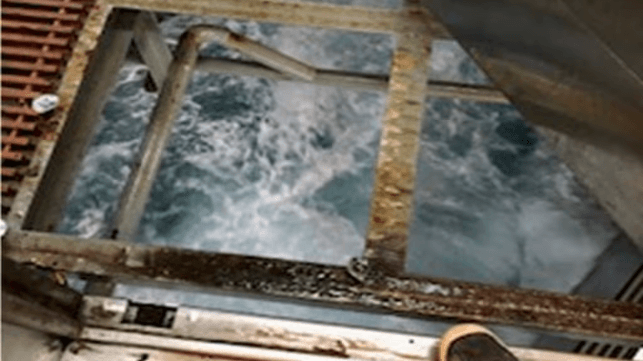
An image of the missing grating where rig worker Jason Thomas is believed to have disappeared (UK HSE)

Published May 19, 2026 9:46 PM by The Maritime Executive


A court in Aberdeen, Scotland has fined rig operator Valaris a total of $385,000 for the death of a worker who fell through a hole left by a missing deck grating.

On January 22, 2023, the rig Valaris 121 was under tow towards Dundee, Scotland in worsening weather and 15-foot waves. Jason Thomas, 50, was the deck supervisor during the day shift. At about 1430 hours he was seen in the staff lounge on break, departing about half an hour later. When last seen, he had a cup of coffee and his phone, and he was planning to go reinstall a lifebuoy that had come loose from a bracket in the rough conditions outside. At some point thereafter, he disappeared. 

At 1600, a worker in the rig's deckhouse heard a loud noise out on deck and went out to check. He found a dislodged deck grating and an open space between the deck's framing beneath, with only the turbulent waters of the North Sea below. 

Mr. Thomas could not be located on board, and at 2100 hours, the rig's managers reported him missing to HM Coastguard, which launched a search. The SAR effort was not successful; given the prevailing conditions and odds of survival, the search was called off on January 23. 

An investigation by the UK Health and Safety Executive (HSE) determined that the polymer grating's fasteners had been dislodged by the force of wave action, displacing the grating and creating a hole that Thomas likely stepped through. After the finding, operator Ensco (later acquired by Valaris) conducted a fleet-wide replacement of all polymer grating on its rigs, opting for galvanized steel grating instead. 

"Jason Thomas was an experienced offshore worker who lost his life in the most unimaginable way possible. The fact his body was never found resulted in great anguish to his mother, who has also since died," said HSE inspector Steven Hanson Hall in a statement. "Had the company taken relatively simple measures to identify and control the underlying risks, particularly during the rig move, it is highly likely the incident would never have occurred."


Nigerian Ports Blocked by Collision Between Maersk Feeder and Small Tanker

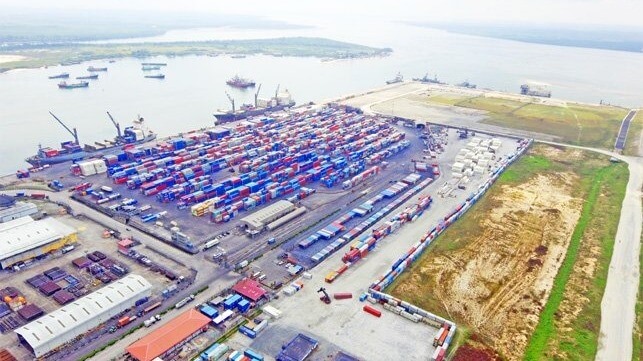
Onne Port Nigeria
The collision reportedly took place in the Bonny Channel as the feeder was maneuvering before docking at Onne Port (Nigerian Ports Authority)

Published May 21, 2026 1:10 PM by The Maritime Executive


A feeder containership operated by Maersk was involved in an incident in Nigeria’s Bonny Channel, which has left the ship aground. According to media reports, the Maersk Valparaiso is blocking access to the channel and preventing ship movements at Port Harcourt and the Onne port, where it was headed.

The 23,359-dwt feeder has a capacity of 1,740 TEU and operates on a route linking Nigeria, Ghana, Togo, and Côte d'Ivoire. Built in 2010, the feeder is 175 meters (574 feet) in length. Registered in Singapore, it has been operating for Maersk since 2022.

According to a statement from the Nigerian Maritime Administration, the Maersk Valparaiso was inbound to the West Africa Container Terminal located in Onne Port on May 20. It was carrying approximately 717 containers bound for the terminal operated by Maersk’s APM Terminals.

The Daily Trend newspaper reports the vessel was maneuvering in the channel, preparing to dock at berth 4 at Onne. It collided with a small product tanker coming from the Onne Oil and Gas Free Zone. The tanker named Lady Martina grounded, and according to the Daily Trend, the Maersk vessel became “stuck in the mud” in the channel. It is reported to be waiting for a damage assessment.

The Maritime Authority responded to a call from the vessels, sending a patrol boat. It reports that five of the crewmembers aboard the product tanker sustained injuries and were taken ashore for treatment. The vessel, which is 57 meters (187 feet), was built in 1962 and had departed the terminal at Port Harcourt. According to the reports, it drifted and is aground in the Bonny Channel. The authorities are dealing with an oil spill.

The Maersk vessel’s AIS signal continues to show status as “aground” as of Thursday, May 21. The newspaper reports that the hope was that the tide would help the containership to move, but it has remained stuck. Nigerian officials are reported to be working on a plan to refloat the vessel.

For now, the access channel to both ports remains blocked. The Daily Trend quotes sources saying congestion is growing in the Bonny Anchorage. Vessels are unable to arrive or depart from the Oil and Gas Free Zone.

Onne Port was developed by the government and converted to a unique Public-Private Partnership approach by the Federal Government of Nigeria. It has emerged as Nigeria’s second-largest port for exports. APM highlights the terminal for its excellent hinterland connections to the rest of Nigeria. It reports the terminal has a capacity to handle vessels up to 4,500 TEUs and an annual throughput capacity of 361,000 TEUs.

Navy's Unmanned Tanker Jet Has Been Approved for Production

An MQ-25A with a refueling "buddy" pod, stowed for transit (Boeing)

Published May 21, 2026 4:24 AM by The Maritime Executive

After eight years of development, the U.S. Navy has given authorization for Boeing to begin production of its long-awaited unmanned tanker aircraft, the MQ-25A Stingray. The $200 million aircraft can carry about 15,000 pounds of jet fuel aloft from the deck of an aircraft carrier, automating the routine duty of refueling strike fighters in midair - an essential task that currently falls to other strike fighters. 

In operation, the Stingray will free up all of a carrier air wing's F/A-18 Super Hornets to carry out more combat missions by taking them off of tanking duty. It is also expected to augment the carrier's reach by flying along with fighter squadrons on strike missions, bearing extra fuel to extend their range. 

The authorization announced Tuesday approves Stingray to pass a key development milestone and enter low-rate initial production, initially set at three airframes in the first year. The design's first carrier qualification trials are scheduled for the end of 2026.

"Moving the MQ-25A Stingray to Milestone C and into production is arming our warfighters with a capability that increases the lethality of our Carrier Strike Groups. This is a decisive advantage that delivers our warfighters what they need to fight and win," said Acting Secretary of the Navy Hung Cao in a statement. 

The MQ-25 is unarmed, but its stealth and ultra-long range would make it a natural fit for future carrier-based strike missions. Boeing appears to have confirmed this possibility in 2024 when it displayed a scale model of the unmanned jet carrying two LRASM stealth antiship missiles under its wings. The basic hardware for the weaponization of the tanker may already be in place: the existing underwing pylons for the aerial refueling system appear to support the carriage of other external stores, potentially including the high-end LRASM (with integration). 

The concept has been a long time in coming: the Navy's unmanned fighter procurement effort began in 2000, and it culminated in the X-47B carrier-capable unmanned combat aerial vehicle in 2011. However, despite success in testing, the X-47B was suspended without entering production in 2015, and the Navy began the search for an unmanned tanker design instead.