Wednesday, June 10, 2026

France moves closer to ocean goals with three new marine protection zones

The French government has announced three new marine protected areas, bringing it a step closer to goals established at the 2025 United Nations Ocean Summit. These "strong protection" zones are situated in mainland France, in the French West Indies and the French Southern and Antarctic Lands.


Issued on: 09/06/2026 - RFI

A person swims near a whale shark off the coast of St. Helena in the South Atlantic Ocean in February 2025. © AP - Flora Tomlinson-Pilley

This brings to 14.68 percent the proportion of French maritime waters under strict protection, a designation that prohibits or strictly limits activities such as fishing, extraction, and tourism.

"We are moving much closer to the objective we set for ourselves at the UNOC (the United Nations Ocean Conference in June 2025) of reaching 14.8 percent by the end of this year," according to the Minister for Ecological Transition, Monique Barbut, who made the announcement alongside the Minister Delegate for the Sea and Fisheries, Catherine Chabaud.

Barbut was speaking at the opening of the "Neptune Forum," which aims to be the "Davos of ocean exploration," and which brought together scientific experts, diplomats, representatives of NGOs, and institutional leaders, on Monday in Paris.

It coincided with the UN World Oceans Day which carried the theme 'Reimagine: Beyond the world we know, a new relationship with our ocean'.

The three new marine zones encompass diverse parts of France's wide-reaching territory, including parts of the French Southern and Antarctic Lands (TAAF), where the seabed lies beyond 2,500 metres.

In Guadeloupe, the zone will protect coral reefs, home to sea turtles, while in the Bay of Audierne, off the coast of Finistère, the measures will protect a bird species known as the Kentish plover.

UN Summit advances ocean protection, vows to defend seabed

In December, France launched the "strong marine protection zones" label for 63 sites in its waters – taking a concrete step towards a pledge made in June 2025 at the UN Ocean Summit in Nice.

The sites include the Cordelière Bank in the Scattered Islands in the Mozambique Channel, the marine core of Port-Cros National Park in the Mediterranean and a reserve off the Île de Ré on the Atlantic coast.


Tackling plastic pollution

The Nice summit concluded with the ratification by 50 countries of the High Seas Treaty (known as the BBNJ), an international agreement designed to better protect international waters, representing half the planet.

"Today we have more than 90" signatory countries, stated French Ambassador for Oceans and Polar Affairs Olivier Poivre d'Arvor on Monday at the forum.

France rolls out 'strong protection' label for 63 marine areas

"Our goal (...) is to ensure that on January 11, 2027, in New York, at the United Nations, during the first COP of the Ocean, the COP of the High Seas, we have more than 120 countries around the table," he added.

Barbut and Chabaud also presented an action plan for combating plastic waste for the years 2026 to 2030.

"Every year, nearly 12 million tons of plastic end up in our oceans. The fight against plastic waste at sea was therefore one of the priorities of UNOC-3 and is a major issue for the health of marine ecosystems, from inland to coastal areas," according to a statement from the Ministry of Ecological Transition.


Divers made the first video ever of this shark in the Med - then got back to work on the real threat


By Denis Loctier
Published on 

Volunteer divers had the astonishing encounter while retrieving abandoned fishing nets from a shipwreck.

When Derk Remmers and other volunteer technical divers went on a mission to clear a ghost net-entangled shipwreck in the Mediterranean, they witnessed something astonishing.

As they descended roughly 40 metres between Sicily and Tunisia, a large great white shark emerged from the blue.

Derk scrambled for his camera, capturing what is believed to be the first underwater footage of an adult great white shark ever filmed in the Mediterranean in its natural habitat. Rare surface sightings have occasionally been recorded in the region, but underwater encounters filmed by divers have never previously been known.
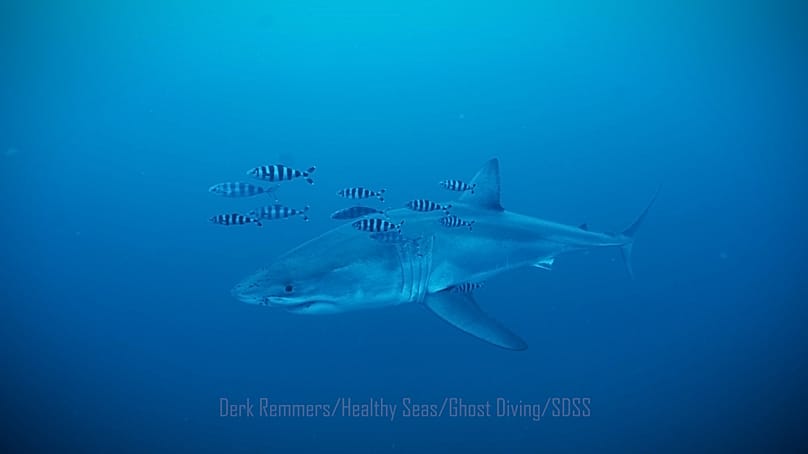
The great white shark filmed in the Strait of Sicily by Derk Remmers
The great white shark filmed in the Strait of Sicily by Derk Remmers Healthy Seas/SDSS/Ghost Diving

The unique encounter occurred during a ghost net removal mission organised by the Healthy Seas Foundation together with Ghost Diving and the Society for Documentation of Submerged Sites (SDSS), who shared the footage with Euronews Earth.

"We were all a bit shocked - and amazed," Derk Remmers, a volunteer technical diver and head of Ghost Diving's German chapter, tells Euronews Earth. "My fingers were trembling, that's for sure - it was a big animal and we didn't expect this at all."

My fingers were trembling... We didn't expect this at all.
 Derk Remmers 
Technical diver, Ghost Diving

The shark circled the group before apparently losing interest. "He swam by and then he turned around and faced us and came back. It seemed clear that he was curious and not aggressive - he was really laid back, like he had the attitude of being the boss down there. And when we started releasing a few bubbles from our mouth, he started speeding up a little bit and vanished into the blue," recalls Derk.

Marine biologists consulted after the mission described the sighting as highly unusual and scientifically valuable. "Most of our knowledge on white sharks in the Mediterranean comes from records of dead specimens caught by fishing operations. Observations like this are extremely valuable for improving our understanding of the distribution, habits, and behaviour of this critically endangered species," said Dr Carlo Cattano, researcher at the Sicily Marine Centre of the Stazione Zoologica Anton Dohrn, in a statement released by Healthy Seas.

Ghost nets: A silent killer

The shark was extraordinary. The reason the divers were there was - sadly - not.

The Strait of Sicily is one of the most heavily exploited fishing areas in the Mediterranean, and the shipwreck the team was targeting had been accumulating ghost nets - fishing gear lost or abandoned at sea - for years.

Ghost nets do not stop fishing simply because no one is pulling them. Entangled on underwater structures like reefs and wrecks, they continue to trap and kill marine life indefinitely.

"They are made to kill fish and they still do that when they're not attached to the fishing boat anymore," Derk tells Euronews Earth. "Year by year, the amount of nets caught on this wreck gets bigger and bigger."
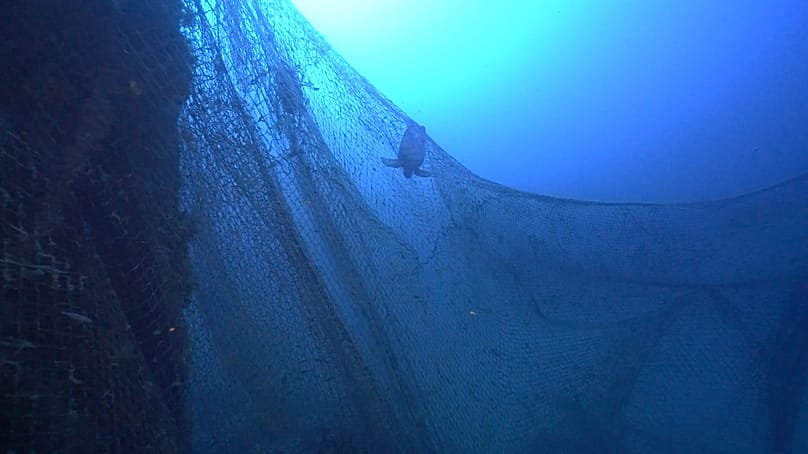
A dead turtle entangled in a ghost net
A dead turtle entangled in a ghost net Healthy Seas/SDSS/Ghost Diving

Previous dives at the site had already documented loggerhead sea turtles and large fish species trapped in abandoned gear. The team recovered sections of net on this mission as well, which will either be discarded safely or, where possible, recycled.

The scale of the problem extends far beyond any single wreck. "Between one to 10 per cent of all fishing gear of all fishing vessels in the world gets lost every given year," says Derk. "This might add up to more than half a million tonnes per year."

The shark's presence was a stark reminder of the scope of this threat, which echos through the entire marine food web.

"We feel somehow blessed to have this encounter, which also shows us the importance of our work," says Derk. "Because if a predator like that is hunting close to this wreck, that also means that there's a big amount of fish and a big amount of animals he could hunt there. And if they are trapped, there's also a chance we trap some of these predators. And if we trap them - there are only very few around there - that would be a big disaster."
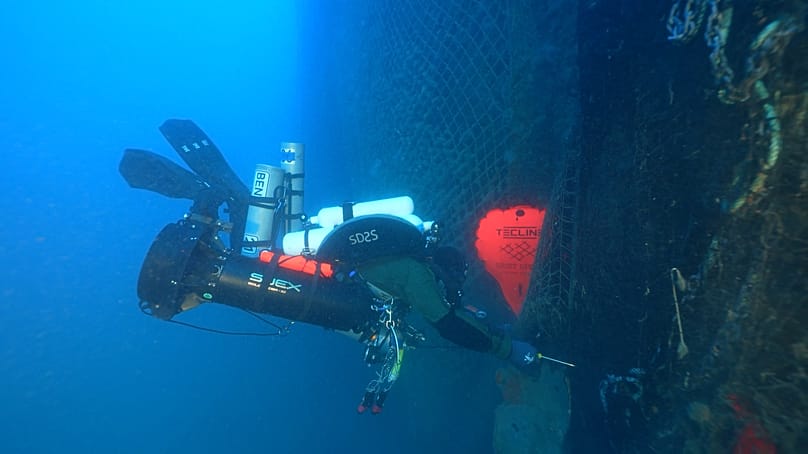
A Ghost Diving volunteer removing an abandoned fishing net from the wreck
A Ghost Diving volunteer removing an abandoned fishing net from the wreck Healthy Seas/SDSS/Ghost Diving

A problem that needs more than divers

Derk is clear that volunteer clean-up operations alone cannot solve the ghost net crisis. "We can only do so much - we are only a few people," he tells Euronews Earth. "One thing is to remove the nets, which is the least we could do as humans. But it's also our idea to inform the public about this problem, so that work can be done before we need to collect the nets."

That upstream work, he argues, means confronting illegal and large-scale industrial fishing head-on. Family-run fishing businesses, he notes, have strong incentives not to lose gear - a lost net is an economic disaster for a small operation. It is industrial and illegal actors, operating at scale, who pose the greatest threat to the ecosystem.

"We should, as humans and as Europeans, try to enable our politicians to work against this threat and be more careful about our environment underwater," urges Derk.

The mission also included environmental DNA sampling and underwater monitoring to improve understanding of the species present around the wreck. Further analysis is expected in the coming months, with additional footage and scientific material to be released.


Vietnam’s Construction Boom In Disputed Spratly Chain – Analysis


A Vietnamese outpost in the Spratlys, May 2024. Photo Credit: RFA

June 10, 2026 
RFA
By Noh Jung Min

Vietnam is building military and maritime infrastructure at 27 sites across at least 18 reefs in the disputed Spratly Islands in the South China Sea, satellite imagery analyzed by Radio Free Asia revealed.

The improvements include ports, runways, military facilities and communications arrays that will improve Hanoi’s maritime and airspace awareness, experts told RFA.

“Hanoi is likely hoping that this development will deter Chinese action against Vietnamese economic activity at sea, including fishing and offshore oil and gas,” Harrison Prétat, deputy director of the Washington-based Asia Maritime Transparency Initiative, or AMTI, told RFA.

The Spratlys are a strategically critical and heavily contested archipelago comprising more than 100 small islands and reefs claimed wholly or in part by China, Vietnam, the Philippines, Malaysia and Brunei. The region is vital for global trade and is rich in fishing grounds and potential oil and gas reserves. No single nation holds universally recognized sovereignty over the islands.


Hanoi’s Objectives


Over the past decade, claimant nations — most notably China and, more recently, Vietnam — have engaged in extensive dredging and construction as a means to increase their footprint in the disputed territories and to bolster their claims.

Vietnam has been particularly aggressive in reclamation efforts, creating an additional 534 acres (216 hectares) of land across the archipelago over the past year, according to AMTI. This was in addition to the 2237 acres (905 hectares) it had already reclaimed over the past five years. The new reclamation areas undertaken in the second half of 2025 are on a much smaller scale as reclaimable areas become more scarce.

More than one project is active on some of Vietnam’s holdings in the Spratlys, including Cornwallis South Reef, Alison Reef and East London Reef.

The aggressive expansion in the Spratlys is Hanoi’s attempt to improve its ability to operate there, Lynn Kuok, the Lee Kuan Yew Chair in Southeast Asia Studies at the Washington-based Brookings Institution, told RFA.

“Vietnam is strengthening the logistical foundations of its presence in the South China Sea,” she said. “By expanding its network of harbors across the Spratlys, Hanoi is making it easier to move personnel, supplies and equipment between its occupied features and the mainland to sustain operations over longer periods.”

Monitoring the airspace

A key part of the new construction will help Hanoi to patrol the skies. At present Vietnam has a single 4000-foot (1,200-meter) runway on Spratly Island, the fourth-largest island in the Spratly chain from which the archipelago gets its name.

A new, much larger runway at Barque Canada Reef will stretch approximately 13,000 feet (4,000 meters) when it is complete.

In addition to the runway, Satellite imagery also confirms that a new communications structure has been installed — according to AMTI, it appears to be a Doppler VHF Omnidirectional Range (DVOR) navigation beacon that will likely provide accurate navigation for Vietnamese aircraft within 100 nautical miles of the island.

AMTI said similar beacons could be seen at the Spratly airstrips controlled by China.

“The navigation beacon at Barque Canada mainly serves to support Vietnamese aircraft navigating the surrounding areas of the South China Sea,” said Prétat. “I would only expect to see another DVOR beacon if they build another new airstrip, but we will likely see other types of communications and sensing facilities built on all the new outposts.”

The improvements to airspace infrastructure indicate a shift in Vietnam’s Spratly development, said Kuok. The first phase was land reclamation, and now the second phase, adding infrastructure to the enlarged islands and reefs, is underway.

“The installation of communications and navigation infrastructure should improve connectivity among the features Vietnam occupies and support aircraft operating in the South China Sea,” she said.

Insurmountable disparity


Despite the construction boom, Vietnam has no realistic path to matching China’s air capabilities, Prétat said.

Beijing already has four airstrips — at Fiery Cross Reef, Subi Reef, Mischief Reef and Woody Island — and will likely add a fifth at Antelope Reef. Additionally, Vietnam’s air force is far smaller and less technologically advanced than China’s.

“Hanoi is likely hoping that this will improve its ability to monitor its maritime areas and deter Chinese grey zone activity, but it won’t change the fact of China’s overwhelming military dominance in the South China Sea,” Prétat said.

China therefore retains substantial advantages in the Spratlys, with roughly twice as much reclaimed land, more extensive military infrastructure and overwhelming advantages in naval, coast guard and maritime militia capabilities, Kuok said.


Tit for tat?

RFA recently reported that Vietnam protested China’s land reclamation activities at Antelope Reef, but Prétat said China may have started those as a reaction to Vietnam’s Spratly expansions.

China’s construction of a new facility at Antelope Reef suggests Beijing wants to keep that gap sufficiently large — perhaps to signal to Vietnam and other Southeast Asian claimants that “catching up” is not an option. Beijing will do what it must in order to maintain its dominance in the South China Sea, he said.

Kuok said she is concerned that Vietnam’s fortification of features it occupies could create additional points of friction with Chinese forces and therefore increase the possibility of incidents or clashes.

But China’s disputes with Vietnam are less of a flashpoint than those Beijing has with the Philippines, she noted, adding that both Vietnam and China have strong incentives to prevent tensions in the South China Sea from spilling over into the broader bilateral relationship, which remains important economically and politically.

Prétat said that Vietnam’s position in the dispute is complicated by its broader relationship with China.

“Vietnam has been very proactive. They fought battles with China in the South China Sea, but they also have a very different set of international relationships,” he said. “On the one hand, they are one of the stronger voices on the South China Sea disputes, but on the other hand they have a unique relationship with China that they have to maintain.”

RFA attempted to contact both the Vietnamese and Chinese governments for comment on the ongoing construction in the Spratly Islands, but neither responded.


About RFA
Radio Free Asia’s mission is to provide accurate and timely news and information to Asian countries whose governments prohibit access to a free press. Content used with the permission of Radio Free Asia, 2025 M St. NW, Suite 300, Washington DC 20036.
View all posts by RFA →


India's many territorial disputes and their impact on its economic potential

India's many territorial disputes and their impact on its economic potential
/ Raghu Nayyar - Unsplash
By IntelliNews June 10, 2026

For much of the 26 years since the beginning of the millennium, India has aimed at becoming a rising economic power by way of first becoming a service centered hub and gradually shifting towards becoming a centre of manufacturing. However, many of these ambitions have hit the wall of geopolitical constraints as New Delhi is forced to navigate one of the most hostile neighbourhoods in all of Asia.

India has historically been both a continental and maritime economy, with both mercantilism and strategic security as well as economic concerns being the driving force behind expansion in both the land and sea domain. While India’s territorial negotiations with its neighbours have yielded positive results, its trade potential remains geographically throttled as it is unable to exploit some of the most lucrative overland trade corridors.

Adversarial neighbouring countries such as China and Pakistan which share a border with each other also seek to dominate markets in what New Delhi traditionally considers a more amenable lot amongst its neighbours such as Bangladesh, Nepal, and Sri Lanka.

However, the unseen cost of these frictions is unrealised potential trade volume, underdeveloped and under-serviced infrastructure as well as the inability to mitigate effects of economic border shocks for all involved. Economically and strategically the most consequential dispute is in the Himalayas, across the Line of Actual Control (LAC) between China and India.

Due to Beijing’s hostile and assertive posture, the Indian population recognises it more as a volatile national security frontier than a trade artery and major source of wealth as it was during much of the past few hundred years. Paradoxically while the biggest drain on its exchequer for settling payments for imports and military spending aimed at maintaining credible deterrence, China is also New Delhi’s biggest trading partner by value and volume right alongside the US.

According to data from India’s Department of Commerce, the country had a trade deficit of $99.2bn with China in FY2024–2025. While the main cause for this is the nature of the Indian economy and the policy direction its political leadership adopted for much of the late 20th and first two decades of the 21st century, India essentially put most of its eggs into the basket of service and outsourcing sectors - providing cheap white collar labour to Western conglomerates in the technology and finance sectors.

New Delhi’s more recent awakening to the strategic significance of the manufacturing sector happened at a time when China had already consolidated over four decades of expertise, thus anything short of a technological leapfrogging scenario made Indian entities competing with their Chinese counterparts untenable.

Furthermore, Indian companies have found no significant direct complementarities to Chinese goods and services that they could channel into mutually beneficial arrangements, instead ceding the opportunities for value creation to Western conglomerates that exploited cheap Chinese factory produced goods and the trained but low paid skilled service industry labour of Indian nationals.

Pakistan presents an even bleaker picture, as Islamabad’s claim over the Indian state of Jammu and Kashmir and the constant threat of insurgents supported by Pakistan’s military makes it nearly impossible for a normal bilateral trade relationship to exist.

As India is forced to bypass Pakistan to service its relations and bilateral trade with Afghanistan and former Soviet Central Asian states, the costs increase, thus lowering the profit in what was traditionally the second most important trade artery for India.

Looking north, while India's border with Nepal has been the least concerning in terms of security threats, it hasn’t been entirely untouched by controversies and friction. As is evident from newly elected Nepali Prime Minister Balen Shah’s speech to the Nepali Parliament, in which Shah acknowledged that there is a need for a trilateral engagement between India, Nepal and the UK to resolve the present day territorial concerns, many are the result of British policy during its colonial administration of an undivided India.

However even with the resolution of the dispute, the net beneficiary in trade terms is likely to be Kathmandu as it relies on India for much of its international trade access as well as infrastructure financing, with New Delhi not finding a proportionate route to channel its exports to any desirable destinations via Nepali territory.

Since it also shares a border with China, Nepal has to entertain its trade access and infrastructure funding offers on an equal pedestal as New Delhi, but due to a much better people to people connection and shared cultural affinity, Kathmandu has largely prioritised India over Beijing.

Bangladesh and Sri Lanka, despite being traditionally more amenable to India, have been more volatile in their alignment between India and China, largely reflecting the policy stance and alignment of the governments in power at certain points in time.

Under Sheikh Hasina and her 15 year rule over Dhaka, India was the primary trade partner for Bangladesh, with China only able to extend its influence when India explicitly chose to pass over the opportunity for financing development or exploiting any revenue sources.

However, after Hasina’s ouster in 2024 and the interim government’s lack of a coherent and long term policy vision, things are yet to become clear vis-a-vis the newly elected Bangladesh National Party Prime Minister Tariq Rahman and if he will choose to align with Beijing or New Delhi.

It is possible that Rahman could go an entirely new route of equidistance, which will likely start a race between India and China to court more influence in the country.

One issue in the relationship is India's large number of illegal immigrants from Bangladesh, which has had a measurable impact on the level of unemployment and cost of living for its own population, as demographics in its border regions have begun to change.

The illegal immigration problem is partly the reason behind India being selective about enforcing border control and trade flows to and from Bangladeshi territory, which inherently lowers volume and transshipment potential for India’s own exports.

Similarly, under the government of Sri Lanka’s former president, Mahinda Rajapaksa, Colombo was facilitating Chinese investment and trade access into the country at breakneck speed.

However, after a major economic crisis that saw the Rajapaksa administration ousted from office, Sri Lanka under the incumbent Anura Kumara Dissanayake administration has chosen a more equidistant policy of alignment between India and China.

Unfortunately unresolved disputes over fishing rights and maritime access still leads to minor frictions between the two countries’s maritime constabulary, coastguard and navies on occasion, leading to yet another obstacle in what could be a complimentary, if not healthily competitive co-owned fishing industry.

India’s data centre ecosystem expands beyond Mumbai

India’s data centre ecosystem expands beyond Mumbai
/ Massimo Botturi - Unsplash
By IntelliNews June 9, 2026

India’s fast-growing data centre industry is primarily centred around Mumbai. India’s financial capital is one of the fastest-growing markets in the Asia-Pacific region and is likely to grow beyond 1GW of operational capacity by the end of 2026, a recent report by global real estate services provider Cushman & Wakefield says.

However, in the recent past, India’s data centre industry has begun to look beyond Mumbai into cities like Hyderabad, Chennai, Delhi NCR, Pune and Bengaluru.  

India boasts of 1.6GW of operational capacity when it comes to data centres, the second-largest market in the Asia-Pacific region. When it comes to the development pipeline of data centres, the South Asian country ranks among the top three markets, with 3.1GW either under construction or proposed, according to the report.

The Cushman & Wakefield report argues that a number of second-tier cities like Hyderabad, Chennai, Delhi NCR and Pune are also fuelling the incremental growth in the Indian data centre industry. In the report, Hyderabad is cited as the leading secondary market in the Asia Pacific and ninth globally. India’s IT hub Bengaluru is also ranked as a tertiary data centre market within the regional data centre landscape.

In India, especially in Mumbai, Hyderabad and Pune, hyperscale demand remains a key driver of expansion. AI workloads and large-scale cloud deployments are increasingly influencing capacity expansion strategies across multiple Indian markets. The report also points to the rise of locations such as Vizag, which is aiming to be a future AI hub, reflecting a larger shift toward scalable markets capable of supporting next-generation digital infrastructure.

The scale of India’s long-term expansion trajectory further reinforces the growth seen to date and that projected. More than 10.5GW of capacity remains at the land stage, reflecting robust future development potential as operators continue to secure sites and prepare for sustained demand.  Amidst all this, the Indian market remains structurally underpenetrated, with data centre density at about 943,000 people per MW, indicating major space for further growth. There has further been a decline in vacancy to the tune of 12.9% as of Q4 2025, pointing to sustained absorption of new capacity and strengthening demand fundamentals.

A separate report published by KPMG in late May says that India is facing a fast-changing digital infrastructure storm and is experiencing an exponential shift, propelled by new regulatory requirements for data localisation, which are leading to a robust growth in AI-driven workloads, and the widespread adoption of 5G technology.

According to the KPMG report, these factors have compelled the industry to alter its direction; moving away from tardy progress and into a period of accelerated expansion. As such, KPMG believes that right now, the biggest challenge to scaling up is not a lack of demand but the sheer complexity of meeting the demand. The industry is currently using fragmented service providers who work in silos across the data centre space - be it construction, technology, or cooling, it says. But the market needs to offer a seamless service that covers everything from planning and building to deploying, and operationalising. It also needs to adapt to high-value areas like capital markets, telecom, digital transformation, and ESG frameworks to become a global force in the coming years, KPMG adds.

On the AI readiness gap, KPMG says that older Indian facilities still rely on legacy air-cooling designs that simply cannot handle the intense heat of modern GPU clusters. Upgrading from standard raised floors to more advanced cooling and new power sourcing is not just an engineering headache; it is a massive multi-stakeholder delivery risk, KPMG continues.

Capital efficiency is also a challenge when it comes to India. International investors want to enter India, but they often hit a brick wall of confusing land acquisition laws and state -level power regulations.

Data centres use huge amounts of energy, so meeting global sustainability benchmarks is
crucial. By focusing on efficient power usage and locking down renewable energy agreements, operators align with global ESG expectations. This makes them much more attractive to investors. In addition, India allows 100% Foreign Direct Investment (FDI) under the automatic route for data centres, which lets offshore capital flow smoothly into onshore operations.

KPMG believes that India's digital appetite is massive, backed by favourable government policies and a stable economy. With 1bn internet users and businesses rushing to the cloud, building domestic data centres is now a necessity.

KMPG report, citing industry data, says that the total sector revenue is on track to hit an estimated $45.69bn by 2033. For AI -specific infrastructure, that niche market was worth about $588.6mn in 2024. KPMG expects it to skyrocket to $3.55bn by 2030, growing at a massive
35.1% CAGR.

The Indian data centre market is up for grabs as the window of opportunity is still wide, KPMG says, but it will not stay that way forever. By 2030, the big players are expected to consolidate the market. They already know that simply offering raw real estate is not enough anymore. Integrated partners who can combine complex physical engineering, specialised AI readiness, regulatory mastery and financial structuring into one cohesive lifecycle partnership are best suited to succeed, KPMG says.


Heatwaves are killing tens of thousands in India. Officials are barely counting them

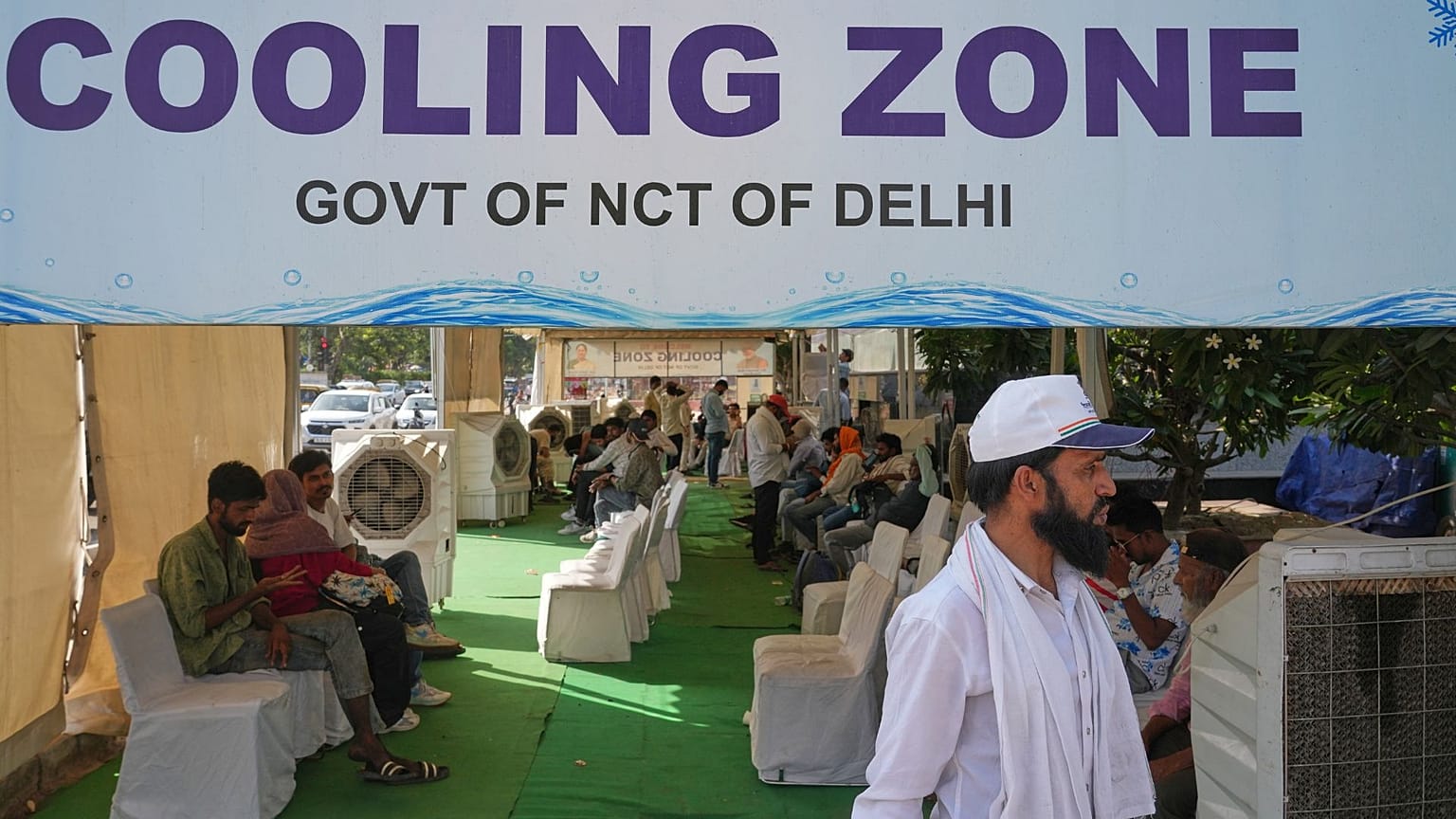
Commuters rest at a roadside cooling station set up by the government to provide relief for people from the intense summer heat in New Delhi, India, Wednesday, May 20, 2026.
Copyright AP Photo/Manish Swarup

By Angela Symons
Published on


Experts warn that official heatwave death figures are grossly underestimated.

India has been sweltering through a baking hot summer, with temperatures in the northern state of Uttar Pradesh creeping past 48°C in May.

A recent study underlines the dangers of these worsening highs. It estimates that a single day of extreme heat causes approximately 3,400 excess deaths nationally in India.

A five-day heatwave is linked to nearly 30,000 extra deaths, according to the paper published in the Frontiers in Environmental Health journal last month.

These heatwaves are becoming more frequent, longer and more intense as climate change – driven by the burning of fossil fuels – pushes global temperatures higher. The past 11 years, from 2015 to 2025, were the hottest on record, according to the World Meteorological Organization (WMO).

Why are the estimates so much higher than official figures?

Official counts of heatwave deaths in India are much lower – between 500 and 1,500 annually nationwide – but experts warn these are grossly underestimated. This is due to a lack of uniform tracking and a failure to take indirect impacts into account, such as the exacerbation of underlying health conditions.

The study is the first to attempt to rectify this by providing detailed numbers for all of India’s 765 districts. It also captures the full hidden impact of heat by taking into account all excess deaths during a heatwave, rather than only those directly attributable to heatstroke or heat-related disasters.

In the absence of uniform, countrywide data, the researchers looked at past data from 10 Indian cities in different climate zones on excess death rates during heatwaves. They matched each of India’s 765 districts to the city with the most similar climate, to estimate how many extra deaths would occur during hot periods.

India’s meteorological department declares a heatwave when temperatures reach 40°C or more in the plains, or at least 30°C in hilly regions. To qualify, these maximums must also be at least 4.5°C higher than the region’s normal average for at least two consecutive days.

Adding up all the districts to get national and state totals, the researchers found that just one extremely hot day is linked to about 3,400 extra deaths across India. A five-day heatwave is linked to roughly 30,000 extra deaths.

The biggest impacts are in states like Uttar Pradesh, which alone accounts for approximately 8,100 excess deaths during a five-day heatwave. Individual districts such as Ahmedabad, Jaipur and Surat each exceeded 250 excess deaths in a single event.

These findings are still described as conservative estimates, as they rely on historical temperature baselines and extrapolation from urban data. Rising temperatures, combined with the particular vulnerabilities of rural areas – outdoor work, less access to air-conditioning and medical care, higher rates of poverty and existing health conditions – likely mean the true numbers are higher.

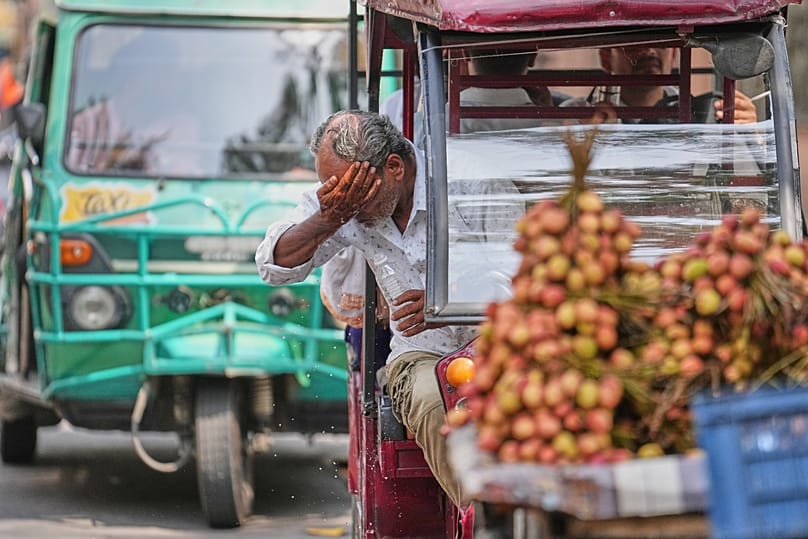
An electric rickshaw driver splashes water on his face to cool off under the intense summer heat in Lucknow, India, Wednesday, May 20, 2026. AP Photo/Rajesh Kumar Singh

Better protections needed for India’s most vulnerable citizens

The study underscores the need for better protections for India’s citizens during heatwaves, especially in the hottest and most crowded areas. This includes more localised heat action plans, improved and heat-relevant healthcare infrastructure, and robust early-warning systems.

The research also reveals deep inequalities. The five states bearing the highest heatwave mortality burden account for 66 per cent of national excess deaths while contributing only 29 per cent of India’s GDP – meaning the places least able to fund adaptation are also those facing the greatest risk. The authors argue this should reshape how federal investment in heat resilience is directed.

The findings have implications far beyond India’s borders. The study’s authors note that countries across South Asia and Sub-Saharan Africa face similar combinations of extreme heat, limited healthcare infrastructure and poor mortality surveillance – making India’s district-level methodology a potential model for understanding a largely invisible death toll elsewhere.

Heat-related deaths in Europe

The findings have implications closer to home too. A study by researchers at Imperial College London and the London School of Hygiene & Tropical Medicine found that climate change was responsible for an estimated 16,500 additional deaths across 854 European cities in the summer of 2025 – 68 per cent of all heat-related deaths that summer.

During the record-hot summer of 2024, more than 62,000 people died in Europe’s heatwave.

In Spain, May 2026 alone saw a record 101 heat-related deaths, 3.6 times the monthly average of the past decade, before summer had even begun – with the health minister warning that heat is now arriving before people’s bodies have had time to acclimatise.

As emissions continue to rise, what the Indian study makes clear is the true human scale of a crisis that official figures have only just begun to capture.


EU monitor warns of 'new normal' following record temperatures in May


By Emma De Ruiter
Published on

Records were broken in Britain, France, Ireland and Portugal last month as a "heat dome" of warm air from northern Africa pushed temperatures well above normal levels across western Europe.

Europe experienced one of its hottest Mays on record last month under an unusually early heatwave that the EU's Copernicus Climate Change Service warned is becoming the "new normal".

It was the second-hottest May on record globally, and Britain, France, Ireland and Portugal broke their own records as a "heat dome" of warm air from northern Africa pushed temperatures well above normal levels across western Europe.

"The month was marked by a rapid transition from much cooler-than-average conditions to one of the most intense heatwaves ever observed this early in the year in western Europe," the Copernicus Climate Change Service said in its May bulletin.

The "unusually early and intense heatwave demonstrates how quickly climate extremes are becoming the new normal rather than the exception", said Samantha Burgess, strategic lead for climate at the European Centre for Medium–Range Weather Forecasts (ECMWF), which operates Copernicus.

"Feels-like" temperatures reached 35C to 40C across large parts of Europe, Copernicus said.

"The rapid transition likely increased impacts on populations, leaving little time for people, as well as crops and ecosystems, to acclimatise to much higher temperatures," it said.

Globally, the average surface air temperature reached 15.81C, second only to May 2024, according to Copernicus.

The average sea surface temperature was also the second-highest on record, behind May 2024, as conditions shift towards the warming El Niño weather pattern.

Forecasts warn that the coming El Niño could be one of the strongest on record, pushing global temperatures to historic highs in 2027.

Temperatures stayed at "exceptionally high levels" across a swathe of the tropical Pacific, Copernicus said.

El Niño has an 80% chance of developing between June and August, increasing the risk of extreme weather events, the World Meteorological Organization said last week.

The last El Niño contributed to making 2023 the second-hottest year on record and 2024 the all-time high.

Wetlands In The Brazilian Savanna Store More Carbon Than Amazonian Forests


The Cerrado, the second-largest biome in South America and the most biodiverse savanna in the world, is known as the “cradle of waters” (photo: Paulo Bernardino)

June 9, 2026 
By Eurasia Review


The wetlands and veredas of Brazil’s Cerrado savanna-like biome can store up to 1,200 tons of carbon per hectare. This is about six times the biomass stock of typical Amazonian forests. Dating indicates that this carbon has, on average, been in place for 11,000 years and, in some cases, as long as 20,000 years. This is the result of a slow accumulation process favored by the lack of oxygen in water-saturated soils.

The findings come from a study published in the scientific journal New Phytologist and led by researchers from the Institute of Biology at the State University of Campinas (IB-UNICAMP) in the state of São Paulo, Brazil.

Since these groundwater-dependent wetlands are poorly studied, the scientists conducted an initial mapping using remote sensing data combined with machine learning. This analysis indicates that the wetlands may cover 167,000 square kilometers (km²) in the Cerrado. This represents a region at least six times larger than previously thought: about 8% of the biome and 2% of Brazil’s territory.

The Cerrado, the second-largest biome in South America, is the world’s most biodiverse savanna. It is known as the “cradle of waters” because it contributes two-thirds of the water supply to major river basins, especially in the country’s South and Southeast regions. It also contains seeps or “water eyes” – natural outcrops of the water table – including diffuse ones, which are protected by the Forest Code (Law No. 12,651/2012) and classified as Permanent Preservation Areas (APPs).


Immortalized in the novel Grande Sertão: Veredas – which celebrates its 70th anniversary in 2026 – by writer João Guimarães Rosa (1908–1967), veredas are a type of peatland, which are flooded and marshy ecosystems. In addition to storing carbon, they are significant sources of methane (CH₄), especially in permanently flooded areas where higher temperatures increase emissions.

Though barely visible and often overlooked, these formations play a crucial ecological role as sources for rivers and watersheds. However, according to the researchers, these ecosystems are highly vulnerable to changes in the water regime caused by agricultural expansion, deforestation, wetland drainage, small dam construction, and intensive water use for irrigation.

Even when preserved in fragments, changes in the surrounding environment can lower the water table and transform these soils into sources of carbon emissions.

“If we cut down a tree that’s been in the forest for 300 years, we lose a large carbon stock and important ecosystem functions that are difficult to fully restore. But with the forest restoration process, it’s possible to get close to that in 30 or 40 years. In other words, you can plant trees and witness this process during your lifetime. However, we won’t recover the carbon in the soil of a Cerrado wetland within our lifetime, since it was stored over tens of thousands of years,” explains Larissa da Silveira Verona, the first author of the article and a biologist, to Agência FAPESP.

The study is partly based on her master’s thesis, which was supervised by Professor Rafael Silva Oliveira and awarded the best thesis prize in the Graduate Program in Plant Biology at IB-UNICAMP in 2024.

Verona is currently working at the Cary Institute of Ecosystem Studies in the United States with Amy Zanne, another author of the article. She received a scholarship from FAPESP, which also supported the study through a Research Grant awarded to Oliveira.

“The Cerrado was chosen as Brazil’s primary agricultural frontier geared toward large-scale commodity production. Situated between two forest formations, the Amazon and the Atlantic Forest, the biome faces intense pressure for conversion and, unlike those forests, it isn’t recognized as national heritage in the Constitution, and it has a legal requirement of only 20% for preservation areas. Unfortunately, there’s a perception that maintaining APPs along rivers is enough to conserve the biome’s ecosystem functions. We’re finding that’s not the case. To maintain the Cerrado’s hydrological processes, we must understand the connectivity of the landscape. It isn’t enough to preserve small fragments while the rest of the territory is converted,” adds Oliveira, a co-author of the article.

Despite a downward trend, deforestation rates in the biome remain high. From August 2025 to January of this year, 1,905 km² of the Cerrado were under deforestation alert, compared to 2,025 km² in the previous period (a 6% decrease), according to data from the Real-Time Deforestation Detection System (DETER) of the National Institute for Space Research (INPE).

A MapBiomas survey, conducted by a collaborative network of non-governmental organizations, universities, and technology startups that map land cover and land use in Brazil, showed that 47% of the Cerrado is occupied by human-used areas (2024 data). Of this, 24% is used for pasture and 13% for agriculture, most of which is dedicated to soybean cultivation. Regarding water surface area, the document shows that 2024 had the largest area since 1985, but 60% of it is used for human activities, much of which is for hydroelectric power.

Fieldwork

The research is pioneering in its use of deep soil samples (up to four meters deep) to quantify carbon in these environments. Soil samples were collected from veredas and wet fields at seven locations in Chapada dos Veadeiros National Park in Goiás state in 2023.

“Collecting these samples involved exploring some regions. There were places where the vegetation reached my shoulder height, and, since it’s flooded, your feet often sink into the mud. Our soil is denser than others, so it was physically exhausting – sometimes requiring five or six people to operate the equipment – but the results are very rewarding,” says Verona.

The group used a LI-COR Trace Gas Analyzer connected to PVC rings installed in the ground to measure carbon dioxide and methane.

To perform carbon dating, the UNICAMP researchers collaborated with scientists from the Max Planck Institute in Germany. Paulo Negri Bernardino from UNICAMP and Guilherme Gerhardt Mazzochini from the Rio de Janeiro Botanical Garden contributed to mapping the areas using remote sensing.

The study also indicated, through spectroscopy, low carbon stability compared to other tropical peatlands. About 70% of annual CO₂ and CH₄ emissions occurred during the dry season. Since most of the vegetation in these wetlands is grass, which decomposes easily, stored carbon can be released as emissions when the soil dries out. This process may be exacerbated by climate change and increased hot, dry seasons.

In the article, the researchers emphasize the importance of expanding the protection of wetlands and raising awareness about these zones, which are fed by groundwater. They also emphasize the importance of expanding mapping efforts and conducting more in-depth studies to better understand these ecosystems.

In this regard, Verona says she is continuing her research on seasonal wetlands in order to better understand the carbon dynamics. Meanwhile, Oliveira is deepening his analysis of the hydrological system to better understand how these ecosystems function and how to restore them.

“If we lose peatlands or veredas, it’ll take thousands of years to restore stored carbon levels, not to mention the losses in other ecosystem services. Preservation is the way forward, but we must continue trying to better understand the processes,” the professor notes.

Another article led by Oliveira and published last year highlighted that despite their importance for water security and legal protection, the Cerrado’s wetlands, including the “water eyes,” continue to be systematically neglected by public policies, environmental consultants, rural landowners, and regulatory agencies.


Who gets a seat at the table? UN climate talks slammed over visa delays and shrinking civic space

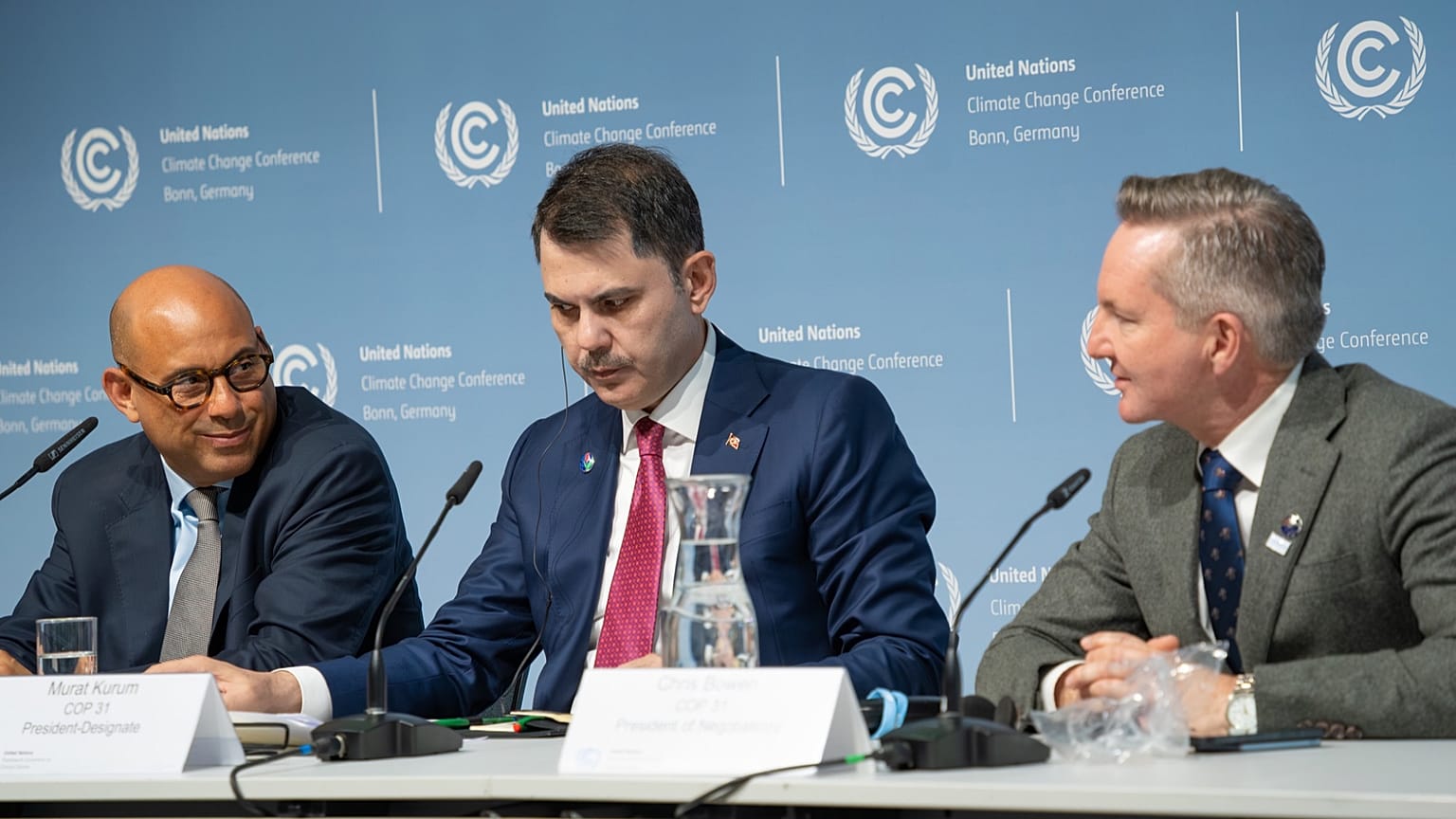
COP31 Presidency Press Conference.
Copyright UN Climate Change | Lara Murillo via Flickr.


By Liam Gilliver
Published on

Climate activists and members of the press are facing unprecedented barriers to one of the most important environmental conferences of the year.

All eyes are on the German city of Bonn this week, as delegates from around the world gather for one of the biggest environmental conferences of the year.

The 64th session of the Subsidiary Bodies (SB64) of the United Nations Framework Convention on Climate Change (UNFCC) is the first major negotiating session since COP30 in Belém, where almost 200 nations failed to produce a roadmap to phase out fossil fuels despite growing momentum.

The talks, which commenced on 8 June and will finish on 18 June, arrive at a moment of growing pressure to turn political commitments into implementation pathways on adaptation, fossil fuels, food systems, land use, trade, and just transition.

One of the main questions hanging over the summit will be how political initiatives can form outside of the formal UN process – following on from the success of the Santa Marta conference on fossil fuels that took place in April.

However, concern is growing that these climate talks are becoming increasingly exclusive and inaccessible – particularly for those living in developing countries, who are the most affected by climate change.

‘A vital window’ into climate negotiations

“Climate negotiations affect billions of people around the world, but most people cannot be in the room,” Mohamed Adow, founder and director of climate think tank Power Shift Africa, tells Euronews Earth.

“Civil society press briefings are one of the key ways the public gets an independent account of what is happening behind closed doors. This issue is especially important because many journalists, particularly from developing countries, are unable to attend in person due to cost, visa barriers or shrinking newsroom budgets.”

For the last three decades, Climate Action Network (CAN), a global network of more than 2,500 civil society organisations in over 150 countries, has held daily press briefings at UN climate talks.

These briefings are the main way that those organisations can communicate what is happening inside the negotiations to journalists, observers and the wider public.

However, this year at Bonn, CAN was allocated just five press conference slots for the entire conference. On LinkedIn, Adow described the move as a “deliberate narrowing of civic space”.

After Adow’s post gained traction online, the UN has now allocated CAN two additional press conference slots during the SB64 summit.

“We’re deeply concerned by reports that civil society press access at SB64 has been significantly reduced,” Dr Ketakandriana "Ke" Rafitoson, Executive Director of Resource Justice Network, tells Euronews Earth.

“Civil society briefings are one of the few ways the public can understand what is happening inside highly technical negotiations. Restricting that space risks weakening accountability precisely when Parties should be rebuilding trust in multilateral climate action.”

If the UN climate process is serious about a just transition, Dr Rafitoson argues that it must protect the civic space that allows impacted communities and their representatives to be heard.

Civil society out, oil and gas lobbyists in

Meanwhile, the number of pro-oil lobbyists attending these kinds of events is growing. A 2025 analysis by the Kick Big Polluters Out (KBPO) coalition found that one in every 25 COP30 attendees was a fossil fuel lobbyist, a 12 per cent increase compared to the 2024 talks in Baku, Azerbaijan.

According to KBPO, this marks the largest concentration of fossil fuel lobbyists at COP since the coalition started tracking attendees in 2021.

The UNFCCC did not immediately respond when asked how many lobbyists are attending this week’s talks in Bonn.

“When access for civil society is reduced, it is not only NGOs that lose out,” Adow warns.

“Journalists, citizens and communities around the world lose a vital window into the negotiations. The principle at stake is whether independent civil society voices have a regular platform within the UN climate process.”

Bonn’s big visa problem

Many governments argue that negotiations require a controlled space in order to be effective, but Baboucarr Nyang of CAN Africa tells Euronews Earth that there is a “profound difference between a quiet room and a closed one”.

“Negotiations can be focused and still be fair,” he adds. “But when it is consistently African delegates, Pacific islanders, and frontline community representatives who are denied visas, delayed at borders, or priced out by soaring hotel costs while wealthy country delegations arrive without a single barrier – that is not process management. That is exclusion wearing a bureaucratic mask.

Climate justice cannot be negotiated without the people who need it most. Every visa denial is not just a paperwork problem, it is a person erased from a conversation about their own survival.
 Baboucarr Nyang 
CAN Africa

Visa barriers to climate meetings are neither new or unique to Bonn. The German Institute of Development and Sustainability (IDOS) has been raising concerns about exclusion of delegates from the least developed countries from UN climate negotiations in Europe due to paperwork delays as far back as 2008.

Last year’s climate event in Bonn saw 223 delegates from Africa and Asia experience difficulties in getting visas in time or at all. 25 applicants were denied a visa outright, while 167 applications were left unprocessed and 37 received visa delays.

Burundi, Cameroon, Egypt, Morocco, and Rwanda were all left without a single representative due to this issue, and things are only getting worse. According to the IDOS, reported cases of delegates struggling with their visa application rose to 298.

Meet the climate activists excluded from UN climate talks

Randa Khaled from the Egyptian environmental organisation Greenish is just one of the many climate activists who will likely miss the negotiations due to her visa application not being processed in time.

Khaled obtained UNFCCC accreditation, applied for a visa – paying €150 – made travel preparations and submitted her visa application on time, but her participation remains uncertain.

She tells Euronews Earth she’s "devastated" by the visa backlog, adding: “What makes this especially frustrating is that climate negotiations repeatedly emphasise inclusion, equity, and participation.

“However, when representatives from countries like Egypt are unable to physically access the spaces where decisions are being made, those principles begin to feel conditional rather than universal.”

Randa Khaled.
Randa Khaled. Randa Khaled. Supplied to Euronews Earth.

The financial impact has also been “significant” for Khaled: “For many grassroots organisations and youth-led initiatives, resources are already limited. Every delayed visa, every postponed appointment, and every uncertainty carries a real financial cost that wealthier organisations from developed countries are often better positioned to absorb.”

Khaled argues that the ongoing issue contradicts the heart of global climate governance, demanding that mobility and access must be treated as part of climate justice itself.

Euronews Earth has been told that an employee from Powershift Africa, who lives in Ghana, has had her German visa rejected.

“Imagine spending months preparing to represent your community at the most important climate meeting in the world only to be turned away at the embassy or not even being responded to,” Nyang says.

“This is the reality for too many African delegates. When the people who live with floods, droughts and food insecurity every single day cannot get into the room, how can anyone call the outcomes fair?

“Trust is not built in polished communities. It is built when a Ugandan farmer, a Kenyan fisherwoman, or a Sahelian pastoralist can see someone who looks like them, who has walked in their shoes, sitting at that table.”