Democratic Party leadership has largely downplayed the idea of impeaching the president should they win in the midterms.
By Chris Walker ,
June 29, 2026
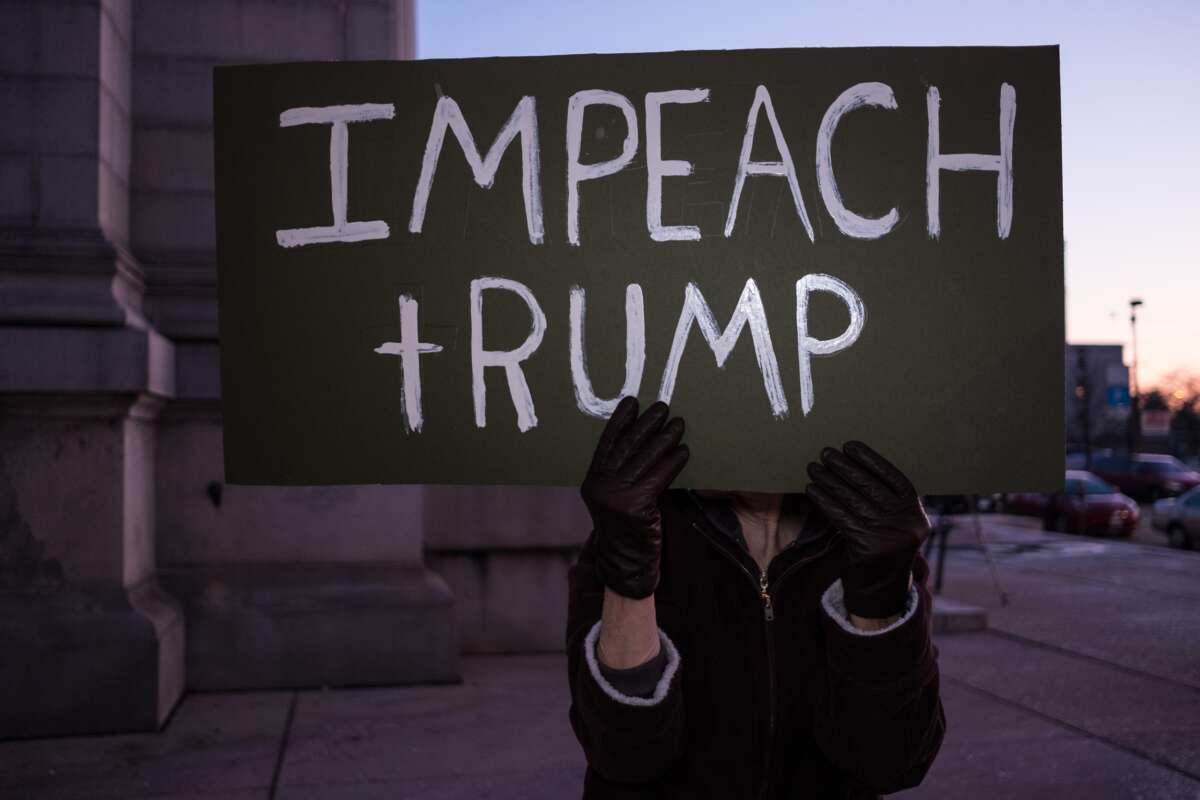
A protester holds an Impeach Trump placard during a Trump pro-impeachment rally in Dayton, Ohio.Megan Jelinger/SOPA Images/LightRocket via Getty Images
New polling data reveals that a majority of Americans believe there are grounds to impeach President Donald Trump right now.
But despite those sentiments, leaders in the Democratic Party are still refusing to include the idea of impeaching Trump in the party’s messaging in the run-up to the 2026 congressional midterm elections.
The Strength in Numbers/Verasight poll, conducted from June 17-22, asked respondents whether there were grounds to impeach Trump at the present moment. Fifty-three percent of Americans say there are grounds to impeach the president, the poll found, while only 39 percent said there were not. Eight percent said they weren’t sure
When asked what grounds there were to impeach Trump, respondents gave a variety of answers. Thirty percent of respondents cited “corruption/self-enrichment” that Trump has engaged in while in office, while another 30 percent cited “abuse of power/defying the courts.” Another 20 percent said Trump should be impeached due to his decision to start an illegal war in Iran and/or his engaging in war crimes, while 16 percent said he should be impeached for his handling of the Epstein files.
Notably, the poll didn’t ask whether respondents supported impeaching Trump in general, but rather whether there were grounds for doing so. A previous Strength in Numbers/Verasight poll in April found 55 percent backed impeaching Trump, when the polling outfit didn’t connect the question to giving specific reasons to do so, with only 37 percent against impeaching him.
Among independent voters, impeachment was backed by a nearly 2 to 1 margin, with 50 percent of voters from that bloc backing the idea and only 28 percent opposed.
The findings suggest that a carefully crafted message from Democrats, ranging from general openness on impeaching Trump to outright calling for it, could be politically beneficial for the party in the run-up to the 2026 midterm elections. Yet leadership from the party in both houses of Congress has largely sought to downplay the idea of impeachment as a possibility should they win control of the House, the Senate, or both.
Earlier this month, House Minority Leader Hakeem Jeffries (D-New York) said that Democrats “haven’t ruled anything in” and “haven’t ruled anything out” when it comes to impeaching Trump. He elaborated that the party isn’t considering impeachment “at this moment.”
In April, Jeffries characterized the idea of impeaching Trump as a fruitless effort, one that could have political backlash:
A failed effort, a party leader suggested privately, risks being framed as tacit approval of the Preimpeachment sident’s conduct, while also diverting attention from the party’s core economic message on affordability and health care — issues party leaders believe resonate more directly with voters.
Yet just the opposite could be true — not calling for impeachment could be viewed as “tacit support” for Trump’s actions.
“[Trump] is the most corrupt president in history, and that fact, with all its dark details, needs to be aired for the public to see while he is in office,” Salon’s Heather Digby Parton said in a recent column.
New polling data reveals that a majority of Americans believe there are grounds to impeach President Donald Trump right now.
But despite those sentiments, leaders in the Democratic Party are still refusing to include the idea of impeaching Trump in the party’s messaging in the run-up to the 2026 congressional midterm elections.
The Strength in Numbers/Verasight poll, conducted from June 17-22, asked respondents whether there were grounds to impeach Trump at the present moment. Fifty-three percent of Americans say there are grounds to impeach the president, the poll found, while only 39 percent said there were not. Eight percent said they weren’t sure
When asked what grounds there were to impeach Trump, respondents gave a variety of answers. Thirty percent of respondents cited “corruption/self-enrichment” that Trump has engaged in while in office, while another 30 percent cited “abuse of power/defying the courts.” Another 20 percent said Trump should be impeached due to his decision to start an illegal war in Iran and/or his engaging in war crimes, while 16 percent said he should be impeached for his handling of the Epstein files.
Notably, the poll didn’t ask whether respondents supported impeaching Trump in general, but rather whether there were grounds for doing so. A previous Strength in Numbers/Verasight poll in April found 55 percent backed impeaching Trump, when the polling outfit didn’t connect the question to giving specific reasons to do so, with only 37 percent against impeaching him.
Among independent voters, impeachment was backed by a nearly 2 to 1 margin, with 50 percent of voters from that bloc backing the idea and only 28 percent opposed.
The findings suggest that a carefully crafted message from Democrats, ranging from general openness on impeaching Trump to outright calling for it, could be politically beneficial for the party in the run-up to the 2026 midterm elections. Yet leadership from the party in both houses of Congress has largely sought to downplay the idea of impeachment as a possibility should they win control of the House, the Senate, or both.
Earlier this month, House Minority Leader Hakeem Jeffries (D-New York) said that Democrats “haven’t ruled anything in” and “haven’t ruled anything out” when it comes to impeaching Trump. He elaborated that the party isn’t considering impeachment “at this moment.”
In April, Jeffries characterized the idea of impeaching Trump as a fruitless effort, one that could have political backlash:
A failed effort, a party leader suggested privately, risks being framed as tacit approval of the Preimpeachment sident’s conduct, while also diverting attention from the party’s core economic message on affordability and health care — issues party leaders believe resonate more directly with voters.
Yet just the opposite could be true — not calling for impeachment could be viewed as “tacit support” for Trump’s actions.
“[Trump] is the most corrupt president in history, and that fact, with all its dark details, needs to be aired for the public to see while he is in office,” Salon’s Heather Digby Parton said in a recent column.

No comments:
Post a Comment