Thursday, June 18, 2026


Salesforce France CEO: Both leaders and employees need to adapt to AI


Copyright Euronews
By Roselyne Min
Published on

Speaking at Vivatech in Paris, Emilie Sidiqian, Salesforce France’s CEO, told Euronews Next how companies should embrace AI and why leaders must drive its adoption from the top.

Once best known for its software that helps businesses track customers, sales leads and service requests, Salesforce says it is now moving deeper into artificial intelligence (AI).

The US company has been promoting what it calls the “agentic enterprise,” a model where AI agents work alongside human employees across business functions.

In 2024, Salesforce launched Agentforce, its AI-agent platform, and this month announced a $3.6 billion (€3.14bn) deal to acquire Fin, a customer-service AI company whose agent can answer customer questions and resolve support cases.

“We moved from a standard Customer Relationship Management (CRM) to data, data to AI, AI to the agentic enterprise,” Emilie Sidiqian, Salesforce France CEO, told Euronews Next at the tech conference Vivatech in Paris, France.

“Our positioning is to reinvent the way all enterprises need to embrace the AI revolution,” Sidiqian added.

Salesforce says Agentforce can deliver “real conversational AI” across service, sales and marketing workflows, citing 66% autonomous case resolution, 15% more marketing pipeline and 1.8 times higher lead conversion.

Its AI agents are already being used by clients, the CEO says, such as SharkNinja, a US home appliance company that uses them for 24/7 customer support across 30 countries.

She also says Swiss staffing company Adecco has used AI-powered candidate conversations to reach 1.2 million conversations and help accelerate 50,000 job placements.

The Salesforce executive said enterprise AI is “for everyone,” from small companies to mid-sized businesses and global corporations.

“This is not a tool,” Sidiqian said. “This is a small wave of a new kind of innovation. The pace is massive. You can see that it impacts all types of jobs, all types of activities.”

Job transformation in the AI era

Sidiqian underlined the goal is not to replace humans, but to build a form of “hybrid” work where people remain “at the centre” while agents take on more routine or repetitive tasks.

She believes the shift should be treated as a leadership question, with CEOs and executive teams deciding how AI reshapes jobs across the company.

“AI is AI, it is a technology. When you really reinvent your business model, it is the leaders who need to understand how they will transform every single job in the company,” she said.

“This is a leadership question and it should be carried by the CEO and by every single executive committee,” she added.

Sidiqian said she uses AI tools every day, including a Salesforce-owned Slack, where Slackbot acts as a “concierge” to summarise overnight activity across teams from the US to Japan and flag what needs approval.

She said the aim is to avoid moving between several different tools and instead use AI as a “cockpit” to organise work with the right permissions and data. She also encourages her teams to use AI, arguing that adoption has to be led from the top.

“When you have like the right leadership, when you had the right adoption, when you carry this revolution at the heart of your business model, there is a huge opportunity to have growth for your company”.


From Foxconn to Nvidia: Why France is so attractive for Europe’s AI infrastructure

Presentation of the various Foxconn and Nvidia innovations.
Copyright Courtesy of Foxconn at VivaTech 2026, all rights reserved.

By Pascale Davies
Published on

Foxconn, Nvidia and Mistral AI announce major AI infrastructure deals at Europe's VivaTech conference, with France's cheap nuclear energy and homegrown talent drawing global investment.

The race to build Europe's artificial intelligence future sets up a home in Paris this week, as the city's flagship tech conference VivaTech becomes a magnet for global technology giants who see France as a key to building AI on the continent

The event has grown from a 45,000-person gathering into Europe's largest startup and tech conference, drawing over 200,000 attendees from 170 countries. This year, it carries more geopolitical weight than ever, with AI sovereignty and infrastructure dominating the agenda.

Taiwanese manufacturing giant Foxconn and French computing firm Bull announced a partnership on Thursday to build powerful AI computers in Europe to power the continent's fast-growing network of AI factories, the large-scale computing centres that form the backbone of artificial intelligence infrastructure.

“France is one of the biggest countries in Europe with quite a lot of talent… We also know that France is very good at high-tech and especially in the space industry,” Foxconn’s vice president and spokesperson James Wu told Euronews Next.

“France has very great ambitions in solving AI projects and we believe we can create a very important role to help France achieve that goal,” he added.

Components will be manufactured and tested at Foxconn's facilities in the Czech Republic before final assembly and validation at Bull's factory in Angers, France. The servers are targeted at cloud providers and the growing market of AI factories across Europe.

The announcement was made at VivaTech in Paris, marking Foxconn's first appearance at the show.

Alongside the Nvidia-powered AI server news, the company displayed two electric vehicles, one of which had a massage chair, and a wheeled humanoid robot capable of performing precision assembly tasks.

The Foxconn-Bull deal is part of a wider surge of AI infrastructure investment in Europe anchored by Nvidia.

At last year's VivaTech, Nvidia CEO Jensen Huang committed to building more than 20 AI factories across Europe and named Mistral AI as the continent's sovereign-compute champion.

This year, Nvidia and Mistral AI announced the creation of Mistral Compute, a sovereign AI infrastructure and GPU cloud platform project designed specifically for Europe.

Foxconn presentation at VivaTech 2026.
Foxconn presentation at VivaTech 2026. Photograph courtesy of Foxconn, all rights reserved.

Why France is attractive to AI giants

Under French President Emmanuel Macron, the country has positioned itself as startup nation and a serious contender in AI.

France is at a unique advantage over other European countries in that its energy source is much cheaper, as it relies on nuclear, which was attractive to Foxconn.

“Today we talk about AI computing capacity as a power, but utility actually is fundamental for computing power. So I think France has a very good advantage in the power structures… especially with a lot coming from nuclear, which is very stable as a supply,” Wu said.

“I believe for those advanced countries to generate new energy to fulfil the demand for the AI era, France definitely has a very, very good advantage here,” he said, adding that France was also at an advantage as it has a “determination to develop the AI industry”.

Wu said that it was not just the AI server rack that powers AI factories that the company is bringing to France, but also the potential to boost the country’s entire AI ecosystem from electric vehicles to smartphones and PC’s, all of which require AI-embedded technology.

Foxconn will provide the AI factory infrastructure while the US giant Nvidia provides the latest AI chips.

Nvidia CEO Jensen Huang this month described AI as a five-layer cake that includes energy, chips, infrastructure, data centre servers and the AI models and applications.

“Nvidia is trying to help everyone across that cake, all the layers, work together and progress together,” Nat Ives, Nvidia’s director of enterprise for Benelux, France & Nordics, told Euronews Next.

He said that “comes home to roost in France in particular,” as France has the French multinational electric utility company EDF, which is owned by the government of France, nuclear power and renewable power.

“When I look at the work that goes into deciding where data centres should be and when people are contracting with data centres, the sustainability and the carbon impact or lack of is a really massive part of the process,” Ives said.
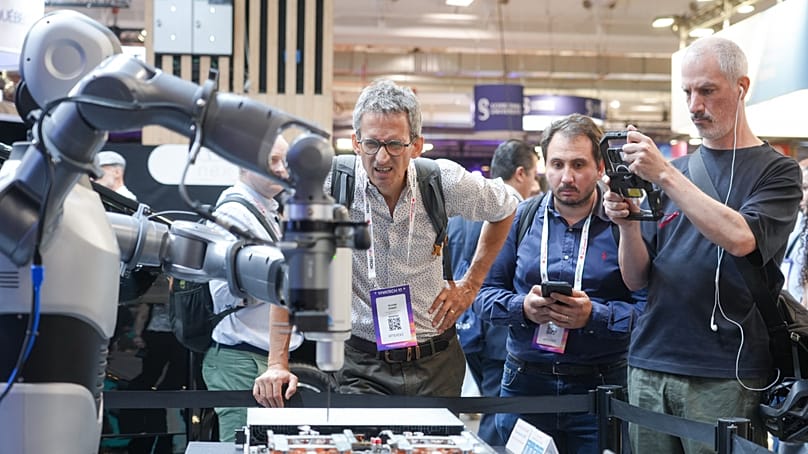
Foxconn presentation at VivaTech 2026.
Foxconn presentation at VivaTech 2026. Courtesy of Foxconn at VivaTech 2026, all rights reserved.

The planning is increasingly shaped by Nvidia's own environmental commitments. The company powered all of its global offices and data centres with renewable electricity.

Its latest Blackwell chip architecture also delivers up to 25 times lower energy consumption for AI tasks compared to the previous generation.

France is at another advantage with its AI champions, including Mistral AI, AMI, H Company, as well as software providers and builders, and has a strong history of talent that rises through the universities, he added.

“Those model builders in Europe have a massive role to play and I'm pleased to say that I've known Mistral guys since they were like three guys in a coffee shop and even before they were Mistral, and we've worked with them all the way through,” Ives said.

These open-source and open-science companies that allow access to AI for organisations or developers that lack the means to pay for other closed-source companies, such as OpenAI, help promote a more equal playing field.

“So we've worked with and collaborated with and helped and invested in those things since the very beginning because we believe that open source and open science, which most of them are doing, is super important to generate that choice,” he added.


Jeff Bezos at VivaTech: We need to colonise the Moon to save Earth
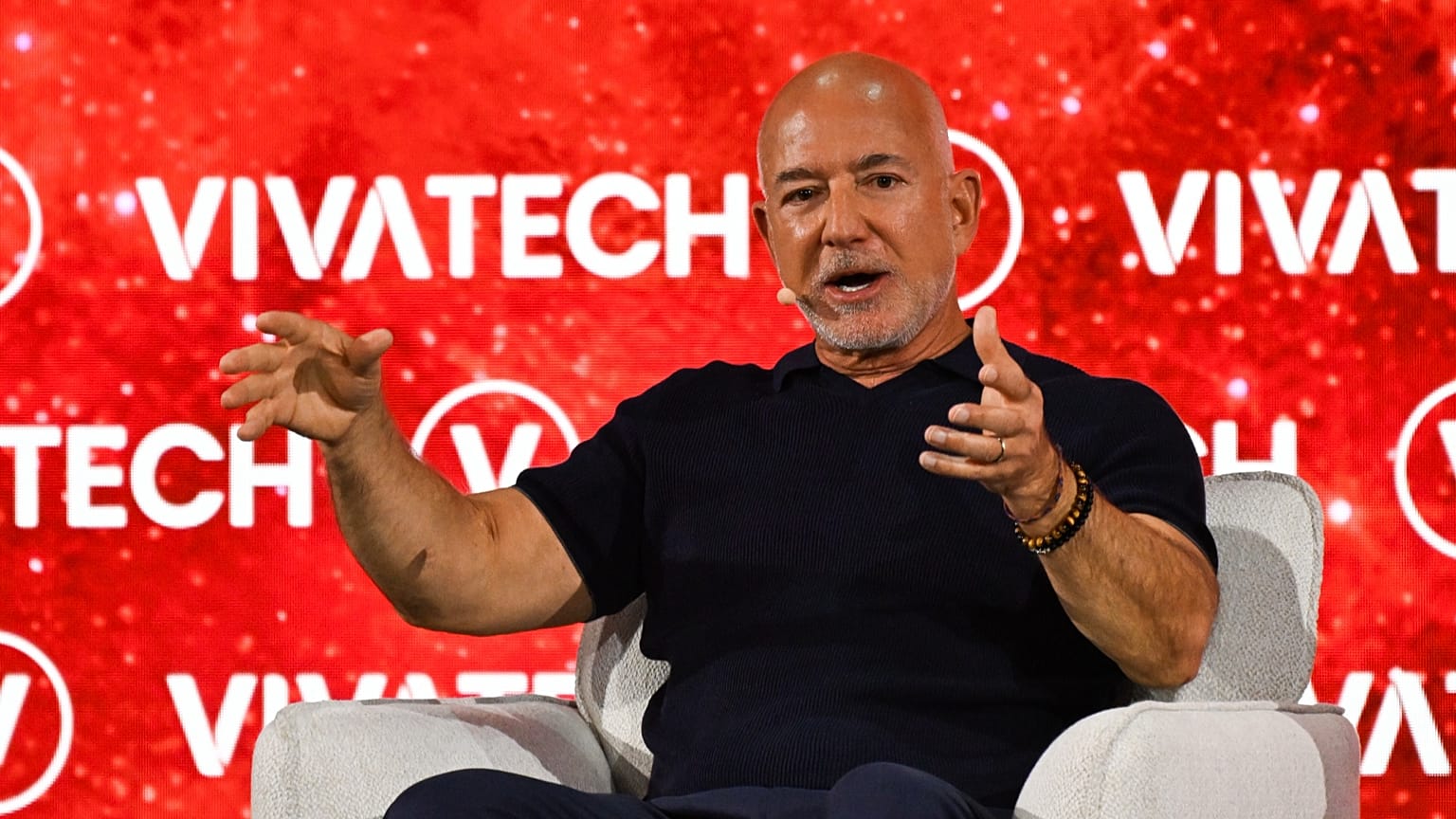
Amazon founder Jeff Bezos speaks at the Vivatech fair in Paris, Wednesday, June 17, 2026. (AP Photo/Emma Da Silva)
Copyright Copyright 2026 The Associated Press. All rights reserverd


By Pascale Davies & Una Hajdari
Published on

The Amazon founder told VivaTech in Paris that moving heavy industry off Earth is the only way to reconcile economic growth with a liveable planet — and the moon is where it starts.

Jeff Bezos took the stage at VivaTech in Paris on Wednesday to make the case that humanity must move to the moon and eventually beyond, not just for the sake of exploration but to save the planet from the effects of technology and industry.

Speaking alongside Blue Origin chief executive Dave Limp in a session moderated by former NASA astronaut Mike Massimino, the Amazon founder and Blue Origin executive chairman argued that shifting heavy industry off Earth is the only scenario in which economic growth and environmental preservation can coexist.

"[Our] garden planet can be returned to its pre-industrial revolution state," Bezos said.

"This is the only way in which the world is worse today than it was 500 years ago ... We can actually have both," he continued, emphasising that the quality of life has improved for the entirety of humanity but that the planet suffered as a result.

His message was unambiguous on sequencing, namely that the moon comes before Mars, and skipping that step would be a mistake.

The moon's proximity, which is reachable in three and a half days, makes it accessible at any time rather than once every two years like Mars, and its shallow gravity makes it an essential staging post, he argued.

"When you skip steps, it actually doesn't make you faster," Bezos said. "It's a kind of a gift. It's so near Earth."

Materials lifted from the lunar surface require 28 times less energy per kilogram than those launched from Earth, he noted. That figure makes the moon not just a destination but a potential supplier for deeper space missions.

He was pointed about the Apollo programme too: the original moon landings were pulled forward in time by geopolitics and the race with the Soviet Union, achieved by spending up to 4.5% of the US federal budget and ultimately unsustainable.

What Blue Origin is attempting now, he argued, is categorically different — not a sprint driven by rivalry but a permanent settlement driven by necessity.

"The idea that we've been to the moon before — it's the permanence of it, of staying there," he said. "Now is the right time. To really get into it and go to stay."

The economic logic of the moon, in Bezos's telling, is as compelling as the environmental one.
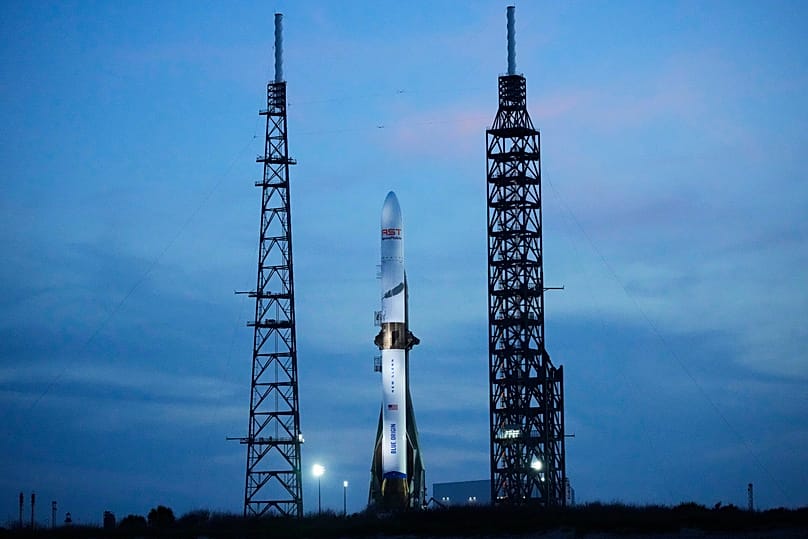
FILE - A Blue Origin New Glenn rocket stands ready for launch at the Cape Canaveral Space Force station in Cape Canaveral, Fla., 18 April 2026. (AP Photo/John Raoux, File) Copyright 2026 The Associated Press. All rights reserved

Lunar water ice, detectable from orbit and soon to be examined up close, could be converted into liquid oxygen — one of the key propellants for deep space travel — and launched into orbit at a fraction of the cost of lifting it from Earth.

The moon's surface, bombarded for four and a half billion years by meteorites, holds virtually every mineral needed to build infrastructure in space.

The longer vision he sketched was sweeping: large space habitats of the kind first proposed by physicist Gerard O'Neill in the 1970s, in which thousands or even millions of people live and work in orbit, compute infrastructure built in space, solar energy generated beyond the atmosphere, and chips manufactured off-world with answers beamed back to Earth.

Mars and further destinations would follow but only once the lunar foundation is in place.

"We will build colonies on Mars and so on," he said. "The moon is an important first step."

Bezos also used the appearance to address Prometheus, his artificial intelligence venture co-founded last year, which he described as a tool to compress the engineering cycle — potentially cutting a ten-year development programme to five years, then two, then one.

Unlike large language models trained on text, he said, Prometheus is built on engineering-specific data suited to designing physical objects, with the goal of dramatically accelerating the pace of invention.

He closed on characteristic optimism. Civilisational wealth, he argued, has always been driven by invention, from the plough 6,000 years ago to the steam engine, and the current moment is the most target-rich environment in human history.

"Every young person right now should be so excited," he said. "It's never been a better time to be an entrepreneur."


LA REVUE GAUCHE - Left Comment: Search results for THE MOON IS A HARSH ,MISTRESS


Row between Elon Musk and German broadcaster ZDF sparks major controversy

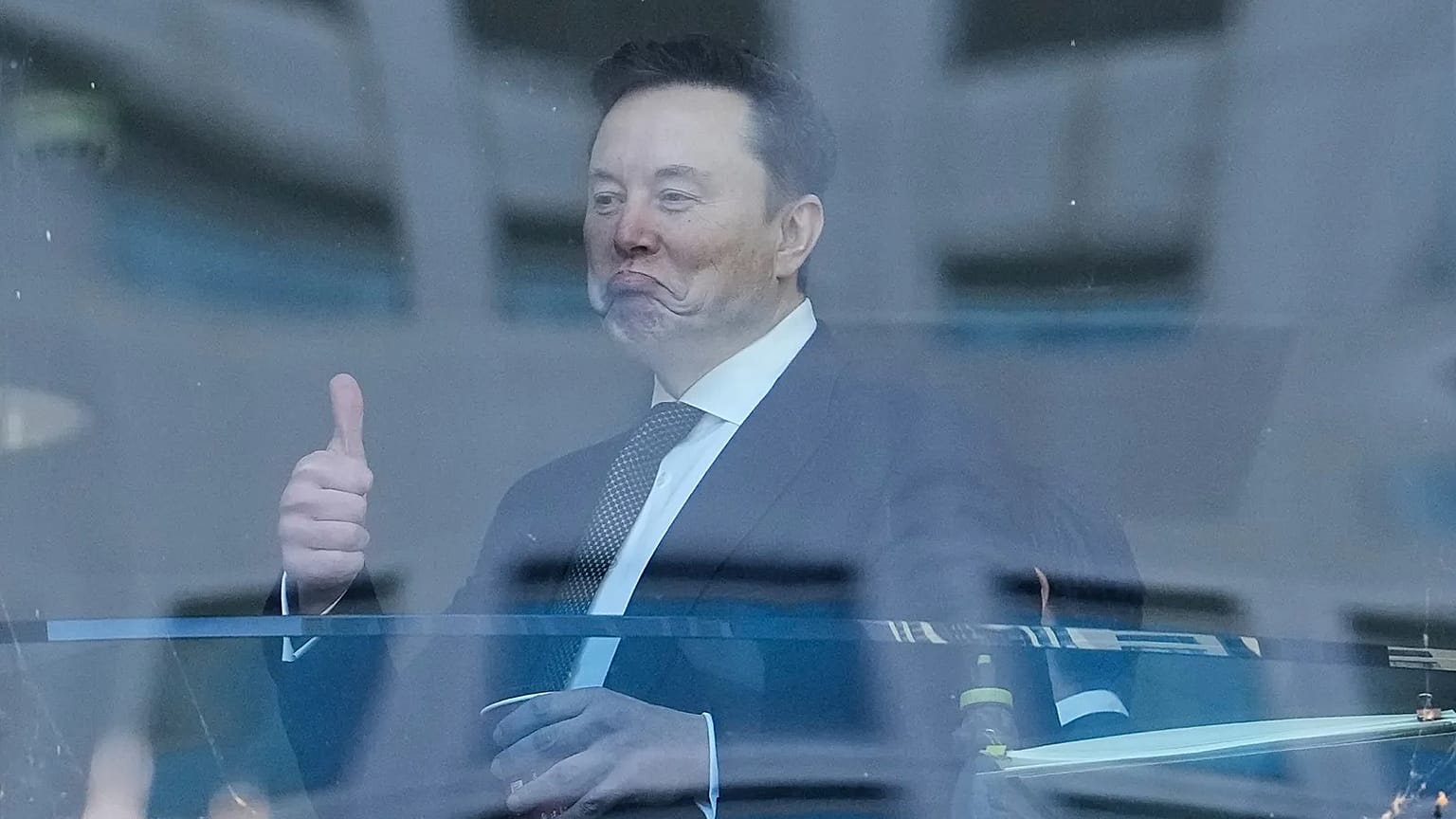
Elon Musk gestures as he walks through a hallway inside the US District Court in Oakland, 29 April, 2026
Copyright Copyright 2026 The Associated Press. All rights reserved


By Kirsten Ripper & Gavin Blackburn
Published on

German broadcaster ZDF has reacted to a cease-and-desist suit from Elon Musk, deleting a line from a programme intro over his links to UK right-wing activist Tommy Robinson.

The dispute between US tech entrepreneur Elon Musk and the public broadcaster ZDF is causing a major stir across Germany.

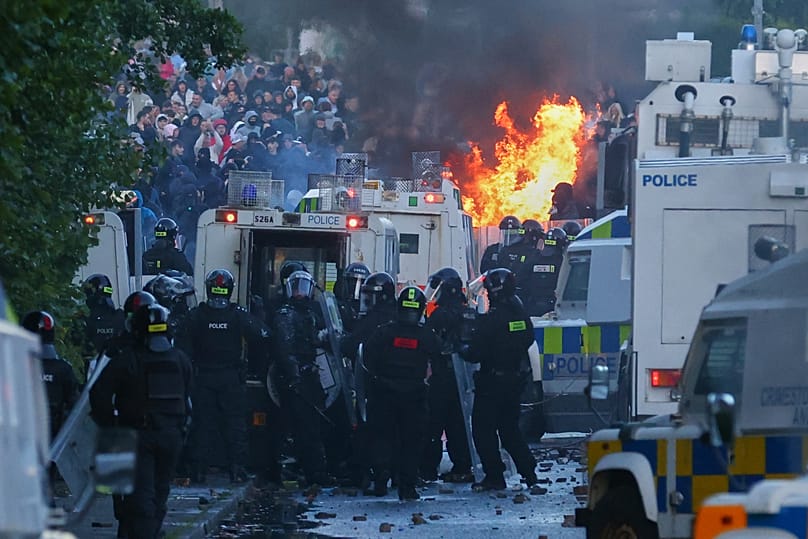
In its coverage of last week's anti-immigrant riots in Belfast, an edition of "ZDFheute live" said that Musk had called for "a migrant hunt" in his social media posts about Northern Ireland.

On Monday, Musk called ZDF's characterisation of his words a "terrible lie" and said he was pursuing legal action against the broadcaster, which has since removed the contested passage.

On 9 June, Musk shared a post by British far-right activist Tommy Robinson in which Robinson, following the knife attack by a Sudanese man in Belfast, called for protests.

Musk commented: "Only by protesting REPEATEDLY and LOUDLY will there be any change!!"

Police attempt to clear protesters near Newtownabbey following a stabbing incident, 10 June, 2026 AP Photo/Peter Morrison

ZDF has since confirmed "that Elon Musk, via a German law firm, demanded a cease-and-desist declaration concerning the opening presentation of the 12 June 2026 edition of 'ZDFheute live' entitled 'Riots in Belfast – How Musk is fuelling the protests.' ZDF has complied and removed the disputed passage from the introduction. As early as Saturday, ZDF had added a corrective transparency note to the programme."

The broadcaster added a disclaimer to the online version of the broadcast in question in which it admitted that its words were "imprecise and potentially misleading."

According to the BBC, the US-based Centre for Countering Digital Hate said social media had played a "key role" in stoking the violence in Belfast.

At the same time, the organisation accused Musk of having amplified "anti-migrant narratives" spread by others and extended their reach to millions of users.

Support from the German right

The far-right Alternative for Germany (AfD) came out in support of Musk in the row with ZDF.

Joining in on the debate, AfD co-leader Alice Weidel posted on X saying: "Defamation shouldn't go without consequences. Don't let them get away with it."

Musk has been a vocal supporter of the AfD in recent years and has also backed other far-right parties in Europe.

The row is being further fuelled by editor-in-chief of the right-wing news portal, Julian Reichelt.

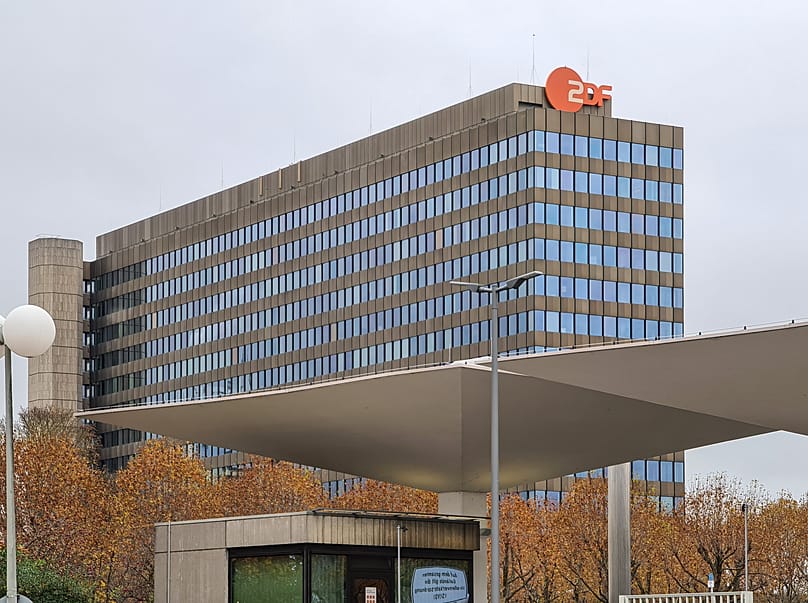
The headquarters of ZDF in Mainz, 7 November, 2021 CC BY 4.0/PantheraLeo1359531


The former editor-in-chief of the daily tabloid Bild wrote on X: "Lerchenberg is a fortress of lies. ZDF simply invents the claim that Elon Musk 'called for a hunt for migrants.' In fact, Musk wrote on X: "Only by protesting REPEATEDLY and LOUDLY will there be any change!!" How much longer are we going to accept that this state forces us to pay for the propaganda lies it tells us? And how can it be that at ZDF heute there is constant lying, deception and manipulation with words and AI, without any personal consequences?'"

In his statement in support of Musk, Reichelt also mentioned Germany's public broadcasting licence fees, whose abolition the AfD has made one of its flagship policy points.


The UK’s Slow Descent Into Disorder And Intolerance – OpEd


Pro-Palestinian protest in London. Photo Credit: Alisdare Hickson, Wikipedia Commons


June 18, 2026 
Arab News
By Mohamed Chebaro


Rioting and violent protests taking place after a crime is carried out by a migrant — or someone believed to be one — are becoming a feature in the UK. They are slowly starting to form a serious challenge to law and order and community cohesion in a multiethnic and multireligious society.

The pictures from Belfast in Northern Ireland last week of violent and unnecessary riots were a reminder of the confrontations from the dark days of communal strife between Catholics and Protestants, republicans and unionists. The violence perpetrated by masked men against peaceful people who happened to look different to them calls for an examination of the root causes.

Yes, a savage knife attack took place. The suspect, Hadi Alodid, a 30-year-old Sudanese man who had claimed asylum in the UK, has been charged with attempted murder. He is alleged to have used a kitchen knife to blind Stephen Ogilvie in the left eye and carve deep wounds on his head, face and back. Graphic footage of the stabbing and the response of passersby, who subdued the attacker, quickly spread on social media. Before the police had even determined whether to treat the incident as a terrorist act, all hell broke loose.

Protests flared into violence in Belfast and several other areas. Masked men set fire to several homes they believed housed immigrants, torched a bus and pelted police with rocks and other objects. The government’s Northern Ireland Secretary Hilary Benn called the attacks acts of “racist thuggery.”

But this thuggery, amplified by some British and foreign activists and political personalities, aided by digital radicalization, is becoming more frequent. It is increasingly threatening democracy, the supremacy of law and order, and trust in the system in many Western societies.


This violence is not new. It is reminiscent of the riots that swept England and parts of Northern Ireland two years ago after a teenager — wrongly portrayed on social media as an immigrant — killed three girls and seriously wounded 10 other people in a stabbing rampage at a dance class near Liverpool.

The latest round of violence in Belfast broke out a week after protesters clashed with police in the southern English city of Southampton over the fatal stabbing of a university student and the subsequent release of a video showing police apprehending the victim rather than the perpetrator, a British-born Sikh of Indian origin.


All three of these crimes featured Black or Asian-origin suspects and victims who were white. Race and immigration are clearly a motive for whipping up anger, especially against the Labour government of Prime Minister Keir Starmer.

Such events in the streets and the wider reaction to the stabbings reflect the broader rise in anti-immigrant sentiment in the UK and Europe, which is being fueled by political debate over asylum policies, illegal immigration and small-boat crossings. There is also the alleged pressure this has been adding to the welfare state, but often all that has been magnified and heightened by an extreme and toxic online debate.


The dangerous aspects of the story we are seeing unraveling on the UK’s streets are also directly linked to the country’s persistently poor economic outlook and the failure of the state to deal with this. The unrest is also being fueled by sinister forces and social media, which allows extremism to incubate and even flourish. Politicians are trying but failing to separate the relationship between migration and the economic downturn, while racism against foreigners is becoming a normalized expression of social discontent, sometimes expressed violently.

The role of far-right political parties like Reform UK and activists colluding with the tech mogul Elon Musk, among others, is not an accident. Musk’s tweets about British politics, which have a strong focus on the failure of the police and the state, echo the words of US Vice President J.D. Vance, who blamed the Southampton stabbing on the “mass invasion of migrants.” Starmer snapped back against such interventions, criticizing people “trying to interfere in our democracy and seeking to stir up division on our streets.”

The organized nature of the protests carried out by masked men remove any spontaneous, peaceful motives. These are not individuals merely expressing their democratic right to demonstrate and raise their voice about certain ills in society. One can easily see that the rioters’ actions show signs of foreign interference and the use of immigration as a tool to sow discontent and even chaos for political ends.


Many commentators in Britain fear that the social media posts of influential personalities are toxic and not innocent acts of free expression. They are seen as a dangerous practice that could harm the fabric of society in a country still deeply divided 10 years after the Brexit vote. One can even see them as part of a larger ploy to engineer chaos in Western societies in the hope of eroding domestic peace and shaking government stability — a tool of foreign forces that use hybrid forms of criminality to sow discord, aided by the digital media and which many Western intelligence agencies have repeatedly warned about, particularly since the start of the war between Russia and Ukraine.


The state versus the agitators is a battle that could have dire implications. It must be addressed urgently. The UK’s slow descent into disorder and intolerance should be stopped in its tracks through decisive policies that regulate social media companies and punish misinformation and disinformation. The digital realm’s toxic narrative, if left unpoliced, could spread chaos and divide communities everywhere. The target is not just peace and law and order but the trust of society as a whole in the legitimacy and validity of the state and its institutions to protect people and keep them safe. If the UK or any country loses that trust, there might be no turning back.


Mohamed Chebaro is a British-Lebanese journalist with more than 25 years of experience covering war, terrorism, defense, current affairs and diplomacy.

About Arab News
Arab News is Saudi Arabia's first English-language newspaper. It was founded in 1975 by Hisham and Mohammed Ali Hafiz. Today, it is one of 29 publications produced by Saudi Research & Publishing Company (SRPC), a subsidiary of Saudi Research & Marketing Group (SRMG).
View all posts by Arab News →


European lawsuits over child suicide and self-harm caused by social media pile up

There are a few pivotal lawsuits against social media companies in France, Italy and a US case involving a Scottish teenager
Copyright Canva

By Anna Desmarais
Published on

Cases are being heard before courts in Italy and France, while the family of a Scottish teen is part of a lawsuit in the United States.

As European countries decide whether to restrict social media for children under 16, a wave of legal cases similar to those in the United States against the platforms are starting to come forward.

Civil lawsuits brought forward by families in France and Italy allege that platform algorithms contribute to suicide and self-harm. Meanwhile, cases in the Netherlands and Germany target addictive design, child safety and manipulation.

In the United States, a California judge denied Meta and Google’s ask for a new trial last week in an addictions case, where both companies were ordered to pay a former young user $6 million (€5.17mn), according to US media.

The case argued that the platforms were negligent in warning young users about the potential harm extreme use of social media could cause.

We take a look at other court actions happening across Europe against social media companies.

Italy

Earlier this year, an Italian rights group battled it out with TikTok and Meta, the parent company of Facebook and Instagram, in a Milan court.

The class action lawsuit, the first of its kind filed in Italy, asks the court to force platforms to adopt stronger age-verification systems for users under 14.

The lawsuit is also asking the court to require that platforms publish more transparent information about how their algorithms work and remove anything potentially manipulative from their platforms.

The goal is to protect the roughly 3.5 million Italian children aged between 7 and 14 who are illegally active on social media platforms.

Lawyers for Meta and TikTok challenged whether Italian courts have the right to adjudicate on the lawsuit in the first hearing in May, according to a statement from MOIGE, the legal firm representing the families.

It also said that Meta and TikTok “attempted to downplay the scientific significance" of evidence that they produced that they claim shows that both companies “are already aware” of harms that their platforms have on children.

Meta said in a statement to Euronews Next that the company is "consistently making changes to help protect teens," on their platforms.

They "strongly disagree with the allegations," in the Italian lawsuit against them, claiming that it "ignores our longstanding commitment to supporting young people."

Meta mentioned that its Teen Accounts provide default protections for teens, including limits on who can contact them, the content they see and how much time they spend on Facebook and Instagram.

"We stand by our record and will continue to do more to keep young people safe," a spokesperson said.

Euronews Next also reached out to TikTok about these first hearings but did not receive an immediate reply.

The next court date for this case is June 30, with the final date set for November 19, according to the lawyers, who note that comes a day before International Children’s Rights Day.

France

In 2024, a group of French families called Algos Victima sued TikTok over exposing teenagers to harmful content, which led to two suicides

The families allege in the lawsuit that the platform’s algorithm exposed children to content promoting self-harm, eating disorders and suicide.

In November 2025, French prosecutors opened a formal criminal investigation into whether TikTok's algorithms exposed minors to suicide-related content and endangered vulnerable users.

The investigation could cover offences including the promotion of suicide-related content and the unlawful collection of personal data, according to the government.

In May, Algos Victima expanded its suit to include abuse of vulnerability and expanded the number of families represented to 16.

Five of the families are grieving the suicides of their daughters, and the other young people involved suffer from severe eating disorders, depression or suicidal thoughts related to content they have seen on the platform, according to the lawsuit. As of June 2026, no public trial dates have been announced.

United Kingdom

The UK has also become part of the broader wave of litigation targeting social media companies over alleged harms to young users.

The family of Scottish teenager Murray Dowey, who died by suicide in December 2023 after being tricked into sending intimate pictures to an Instagram contact, joined a Delaware lawsuit against Meta for his wrongful death, according to The Guardian.

The Social Media Victims Centre, which filed the complaint, claimed that Dowey’s death and others are the “foreseeable consequence of the deliberate design decisions made by Meta,” it said in a statement in 2025.

The Centre alleges that Meta was aware of a feature that allowed adult strangers to connect with children since 2019, exposing them to predators.

The company also allegedly rejected the researcher's recommendations to default teen accounts to private, which would have prevented approximately 5.4 million direct messages.

This story was updated with comment from Meta.


More people get news from social media than traditional outlets, study shows

FILE - A teenager looks at her mobile phone in London, 15 June 2026. (AP Photo/Kin Cheung)
Copyright Copyright 2026 The Associated Press. All rights reserved


By Anna Desmarais
Published on

Fifty-four percent of people said they used social media as a news source at least once a week compared to the 51% using traditional media, like TV, radio or news websites.

Social media is the world’s leading news source across all groups, overtaking conventional news sources for the first time, according to a sweeping report from Oxford University in the United Kingdom.

The Digital News Report, published Tuesday, asks 100,000 news consumers in 48 countries about where they get their information and while social media has been on the rise as an information source among young people for years, the report notes that this is the first time it has become a major source in all markets for all ages.

Fifty-four percent of the survey’s respondents said they used social media to consume news in the last week, compared with 51% who used legacy media, such as television, radio or news websites.

Globally, 30% of those surveyed said social media and video networks are their main source of news, up from 22% in 2020.

This number goes up to 52% if it just includes respondents aged 18-24, the study found, which is 32 points higher than the next most popular main news source.

Traditional media sources, such as television news and apps, have declined by 13 and 12 points, respectively, since 2020, while social media use grew in 22 of the 48 markets studied, the report found.

The reasons for the switch among the respondents are mixed, the report found. Some users said social media is just a better place for getting news, or that they just watch less TV than they did before.

The report describes the rise of social media as “more of a drift rather than a shift, but it is nevertheless an important moment,” the report said.

Traditional outlets still outpace social media in the United Kingdom, Germany, Sweden, Finland, Czech Republic, Austria, Belgium, the Netherlands, Ireland and Croatia, along with a handful of Asian countries, the study found.

There is a broader public trust in legacy media institutions in these countries than in others and, on average, social media users are less reliant on individual creators for their news, the report found.

Those who reported using social media still often go to established news channels and news providers to get their information, but the report notes that news providers “are having to battle hard for their share.”

In social media-dominant countries, there is criticism of how traditional media have covered conflict, such as the war in Iran or the Israel-Hamas war in Gaza.

For example, almost 40% of people under 35 say social media is the best way to follow news about the war in Iran, compared to those over 35, who prefer television or news websites.

The report also noted that 10% of people use artificial intelligence (AI) as a news source in the last week, which it said means it has not exploded for this yet.

However, the study flags that recent changes to Google’s search engine to prioritise “AI mode” could change users’ consumption habits.

Trump-Xi Summit In May Changed Nothing In US-China Equation – OpEd


China’s President Xi Jinping with US President Donald Trump. Photo Credit: @WhiteHouse, X


June 17, 2026 
By Ayesha Sikandar

When Airforce One landed in Beijing last month for much anticipated Trump-Xi summit, carefully choreographed optics emerged depicting two major powers pledging stability. These optics became a highlight for many editorial desks who later featured it to their front page. Markets around the world inhaled breath of fresh air and analysts started talking about possibility of thaw in bilateral relations in context of the US-China competition. However, outcome of this summit looked like a managed pause in competition as neither side is willing to backdown from their position. The readouts coming from Washington and Beijing highlighted issues of trade and security as the primary issues discussed during talks. But what didn’t come out were the more imminent and pressing issues pertaining to intensifying great power competition over technology, digital infrastructure and economic security. This means that despite symbolism, meeting didn’t transform the trajectory of US-China relations.

The optics that Trump-Xi summit exuded were quite different from what it actually achieved. The main issues that were at the table before this summit remained there and tensions increased after summit as demonstrated by frictions over trade and technology. The first and foremost issue was related to trade which was also the highlight of Trump’s first administration. Being featured as the primary component of talks in the official readouts, nothing substantial came out in the end. One of the agreements that was reached during these talks was the purchase of 200 Boeing jets which, if materialized, will mark China’s first purchase in over a decade. However, the official confirmation of this deal is yet to be done by two of the three parties of this agreement that is Boeing and the China. Another thing was the reduction of tariffs over some agricultural products and resumption of poultry and beef imports to China as licenses of many facilities were renewed. However, the most important issue on table was the extension of trade truce that was signed between both parties in 2025. US Treasury Secretary Scott Bessent said that the US is “not in a rush to extend” the one-year trade truce, adding that “Things are stable.” Tariffs continue to serve as instruments of strategic leverage, while both countries increasingly view economic relations through the prism of national security.

The most consequential area that dominated the academic and policy circles debates before summit was the technological competition. The future of the US-China competition will revolve around this arena where both powers will try to secure the technological dominance over the other. The issues of technology mainly comprise of competition over semiconductors and advanced chips, Artificial Intelligence (AI) and emerging technologies, Digital infrastructure and technological standards. After the summit, President Trump suggested that there were limited discussions on these issues and only discussions that took place were the cooperation over AI safety standards. Later the remarks by U.S. Trade Representative Jamieson Greer further clarified that the issue of export controls was not discussed. This was notable given the presence of Nvidia CEO Jensen Huang in the presidential delegation and the issue surrounding sales of advanced Nvidia H200 chips to China. While Beijing subsequently announced plans for a bilateral AI dialogue, Washington has yet to signal a comparable initiative, underscoring the persistent gap between the two sides on technology-related issues.

Both the powers seek to dominate the race in domain of AI as it is becoming increasingly intertwined with economic competitiveness and military power. As US wants to maintain its lead in advanced AI models, China is trying to catch up despite restrictions. Recently, Anthropic suspended access to its advanced AI models Fable 5 and Mythos 5 for foreign users. The reason sighted was the national security concerns by the US government without giving any further details. It is public knowledge that the US accuses China of using ‘distillation’ technique to replicate capabilities of leading U.S. AI models such as such as Anthropic and OpenAI. With all these issues in AI causing frictions in the US-China relations, summit produced only limited discussion on AI safety standards.


The United States continues to impose restrictions on advanced semiconductor exports to China to limit its AI and military advancement, but these measures remain unchanged. While Washington debates their effectiveness and companies like Nvidia warn of economic costs and unintended acceleration of China’s self-reliance, Beijing is steadily expanding its domestic chip capabilities. Given that semiconductors are central to AI, computing, and defense systems, the summit ultimately made no progress on one of the most contentious issues in the bilateral relationship.

In the US policy making circles, there are growing concerns about increasing Chinese actions in cyberspace. The issue centers on ongoing U.S. allegations that China conducts sustained cyber espionage against American government institutions, private firms, and critical infrastructure, with specific concerns around intrusions attributed to groups like Salt Typhoon and Volt Typhoon that reportedly target telecommunications and essential services such as energy and water systems. U.S. intelligence views China as the most persistent cyber threat, yet the recent summit produced no meaningful agreement on cyber stability or rules of restraint. After this summit Trump talked about the discussion on issues related to cyber threats. When asked whether there were any discussions about cyber issues he stated that; ‘I did and he talked about attacks that we did in China. Y’know, what they do, we do too.” He added that, “They’re talking about the spying. Well, we do it too.” “We spy like hell on them too.” This casual equivalence also downplays the significance of cyber tensions raised in diplomatic settings, effectively stripping the issue of moral or legal distinction and reframing it as routine intelligence competition. In doing so, his comments contrast with the usual official U.S. framing, which typically emphasizes Chinese cyber threats as asymmetric and destabilizing rather than mutually mirrored behavior.

In short, Trump-Xi summit delivered little beyond carefully managed optics, creating an impression of stability without altering the underlying trajectory of U.S-China rivalry. While commentators initially read the meeting as a potential thaw, the substantive outcomes were limited to minor trade adjustments and uncertain commitments, while the most consequential issues such as technology competition, semiconductors, AI governance, and cybersecurity remained largely untouched. The absence of substantive breakthroughs at the summit suggests that future U.S-China engagement will likely remain transactional and issue-specific rather than transformative. As both powers double down on technological self-reliance and strategic hedging, the relationship is set to evolve not toward reconciliation, but toward a stable yet persistent rivalry shaped by mutual deterrence and cautious engagement.


About Ayesha Sikandar
Ayesha Sikandar is an MPhil International Relations (IR) scholar at National Defence University, Islamabad. Her areas of interests include China's domestic and foreign policy, as well as South Asian politics. She is currently affiliated with Strategic Vision Institute as Research Assistant.
View all posts by Ayesha Sikandar →


Who Lost Out And Who Made Big Money From The Iran War? – Analysis


June 18, 2026 
By Richard Rousseau

Since Israeli-American airstrikes against Iran began, speculators and oil companies have been making huge profits. Airlines and consumers, on the other hand, are the ones losing out. In the face of inflation, only the strength of currencies such as the Swiss franc, and of commodities such as gold, silver, copper and oil, is providing a counterbalance.

Generally speaking, there are more losers than winners in a war. The stock market indices reflect this: since the start of the war on 28 February, the S&P 500 fell by around 8% in the initial weeks, but has since surged to new highs and is now trading substantially above pre-war levels, in line with the tech-focused Nasdaq. While companies are generally in a difficult position due to soaring energy prices, institutions based in the Middle East, including banks, have been targeted by the Iranian regime.
Speculative gains on commodities

Oil and gas price volatility has not been this high since the start of the war in Ukraine in February 2022. Following the strikes against Iran, the price of a barrel of Brent crude, which was around $70 in February, neared $150 in the first few days before falling back below $100. Since the peace deal was announced between Iran and the United States on 14 June, the Brent price has fallen to $83, offering opportunities for high returns to speculators. Some hedge funds specialize in betting on volatility and are profiting from instability in the commodities market.

For example, between 1 and 6 March, the commodities fund managed by Doug King, a London-based trader at RCMA Capital, surged by 9.5%. Year-to-date, it has gained 20%, thanks to bets on oil, European gas, base metals, coal and agriculture:

The fund managed by Ron Ozer, a trader at Statar Capital in Florida, gained 6.25% in the first week of the conflict thanks to its natural gas investments. Meanwhile, the energy-focused Saber Capital fund from Barclays Bank also gained 6.7% in the first week, with results reaching 13.5% by the end of April. Others profited from bullish bets on gold, silver, copper and tin. Market commentators anticipate that the gains will continue as commodity volatility shows no signs of abating.


Super profits for oil companies

‘A barrel at $100 is the jackpot,’ said a commentator in Le Monde, referring to the expected profits for TotalEnergies this year. As during the war in Ukraine, oil companies such as the French giant and Britain’s BP have benefited greatly from high oil prices.

As the price per barrel increases, so do these companies’ profit margins. So do their refining margins, which are linked to the prices of diesel and kerosene. TotalEnergies and BP are also major players in the gas market, and gas prices have also skyrocketed. TotalEnergies’ stock price has risen by 28% on the stock market this year, and BP’s by 22%. The stock prices of Exxon, Chevron and Shell are also rising, enriching the portfolios of investors who bought these stocks from the outset.


Gains in the arms industry

As with every war, it is a grim reality that arms stocks are among the big winners. Elbit Systems, an Israeli arms company, has seen its stock rise by 20% since the start of the strikes against Iran, having already gained twice as much during the 2.5 years of war in Gaza as it had over the previous five years.

In the United States, Lockheed Martin, the manufacturer of the F-35, has risen 30% since January. The surge began before the conflict in Iran started, but has continued since then. Northrop Grumman, known for its missile defense systems, was up 26% in March.

In Europe, Leonardo, an Italian group, has seen its value increase by 27%, while Dassault, a French company, has seen its value soar by 25%. In contrast, Germany’s Rheinmetall, the big winner of the war in Ukraine whose market value rose from $4.5 billion to $104 billion between October 2021 and October 2022, is not benefiting from the current conflict outside Europe this time.

Cryptos seen as a safe haven

Bitcoin is one of the winners of the war in Ukraine: after a long downtrend in which it lost 50% of its value over the past year, the leading cryptocurrency has managed to reverse this trend since the start of the Israeli-American strikes, gaining 18%. Ethereum, the other major cryptocurrency, has also benefited from the war, rebounding by 22% since the start of the strikes after declining since January.


The crypto community has always promoted the idea that cryptocurrencies play the role of safe haven during turbulent times. However, the Iranian crisis has not vindicated the idea that Bitcoin is a safe haven, but it has offered the clearest real-world test of this theory in the current cycle.

Furthermore, Reuters reports that significant volumes of cryptocurrency funds were transferred from Iranian platforms such as Nobitex to other parts of the world from the outset of the conflict on Saturday, 28 February. The Iranian government cannot control crypto assets in the same way that it controls traditional money. This allows for secure capital flight, even if the volumes — amounting to a few million dollars — have remained modest.

The consumer is the big loser

American and European consumers were the big losers from the return of inflation following the war against Iran. As a result of the global oil shortage, gas prices in the US have risen sharply, increasing by around 40% since the US and Israel began the war. According to data from motor club AAA, gas prices have risen to an average of over $4 per gallon, putting a strain on household budgets nationwide. Higher fuel costs have led to increased transportation costs, which in turn have driven up food prices and the cost of everyday goods. Electricity and heating bills have also increased, as have grocery prices.
Companies weighed down by energy costs

Many companies sensitive to rising energy prices have been penalized. In Europe in particular, companies are more dependent on energy imports than in the US.

Among the biggest losers are airlines. For groups such as Lufthansa (which also owns Swiss) and Air France-KLM, fuel alone often accounts for 20–35% of costs. Fuel prices are also crucial for shipping companies such as the Geneva-based giant MSC and the Danish container shipping firm Maersk, as well as the French company CMA CGM, which has a strong presence in emerging markets.

The booming data center sector is highly energy-intensive and is currently undergoing a historic AI-driven infrastructure boom. It is therefore highly exposed to rising energy costs.

Finally, not all currency and stock market traders have come out of the armed conflict ahead, with some losing out on inflation. Some were on the wrong side of their bets, particularly those who were betting on an expected decline in inflation this year.


About Richard Rousseau
Richard Rousseau, Ph.D., is an international relations expert. He was formerly a professor and head of political science departments at universities in Canada, Georgia, Kazakhstan, Azerbaijan, and the United Arab Emirates. His research interests include the former Soviet Union, international security, international political economy, and globalization. Dr. Rousseau's approximately 800 books, book chapters, academic journal and scholarly articles, conference papers, and newspaper analyses on a variety of international affairs issues have been published in numerous publications, including The Jamestown Foundation (Washington, D.C.), Global Brief, World Affairs in the 21st Century (Canada), Foreign Policy In Focus (Washington, D.C.), Open Democracy (UK), Harvard International Review, Diplomatic Courier (Washington, C.D.), Foreign Policy Journal (U.S.), Europe's World (Brussels), Political Reflection Magazine (London), Center for Security Studies (CSS, Zurich), Eurasia Review, Global Asia (South Korea), The Washington Review of Turkish and Eurasian Affairs, Journal of Turkish Weekly (Ankara), The Georgian Times (Tbilisi), among others.
View all posts by Richard Rousseau →
How Israel’s New ‘Security Belts’ Could Impact Middle East Stability – Analysis


AN Infographic generated by Gemini (Google AI)


June 18, 2026 
 Arab News
By Anan Tello

In what it describes as a campaign of self-defense, Israel has seized approximately 1,000 sq. km of land in Gaza, Lebanon and Syria since October 2023 — about 5 percent of its territory within the 1949 borders, according to a recent analysis.

The new zones of control, rights groups say, have displaced millions of people, razed residential areas and destroyed swathes of farmland. Israeli Prime Minister Benjamin Netanyahu has described these territorial seizures as “deep security belts” beyond Israel’s borders.

In a video message in late March, he said Israeli forces now hold about half of Gaza, control territory in Syria from the summit of Mount Hermon to the Yarmouk basin and have carved out “a vast buffer zone” in Lebanon to prevent infiltration and missile attacks.


The posture has continued to harden.

After Pakistan announced on June 14 that the US and Iran had reached a peace deal — one that observers speculate could include a halt to violence in Lebanon — Israeli Defense Minister Israel Katz said his troops would not withdraw from land seized in Lebanon, Gaza or Syria.

In a June 15 statement, Katz said Israel would remain in those areas “without a time limit” to “protect the border and Israeli communities,” the Israeli news website Ynet reported.

“The area will be cleared of local residents, and all terror infrastructure, above and below ground, including homes in contact-line villages that served as terror outposts, will be destroyed,” the statement added.

Netanyahu struck the same note that day, pledging that Israeli forces would remain in Lebanon, where Israel occupies more than 570 sq. km of territory, according to a recent analysis by the Financial Times.

“We will stay in the Lebanon security buffer zone for as long as necessary,” he told a press conference.

For critics, these statements reflect more than a short-term military doctrine.

Chris Doyle, director of the London-based Council for Arab-British Understanding, said years of Israeli “impunity” had enabled it to seize land in neighboring territories.

“Israel has expanded its territory in Palestine, in Lebanon, in Syria, occupying yet further swathes of land,” Doyle told Arab News. “It’s been able to do this because of a climate of impunity that has existed for decades and is even more favorable to Israel than ever before.”

Some of those expansions, particularly in the West Bank, are “ideological — out of a belief of a greater Israel,” he said. But others are intended to pressure states, create divisions and keep regional crises “bubbling over” to “maintain a state of tension that suits the Netanyahu coalition.

“Netanyahu requires this because he needs the Israeli population to be in a state of turmoil, of fear, that keeps him out of the courtroom, away from his trial, and with an ambition to alter the map of the Middle East and to demonstrate that he, his legacy, is one that leaves Israel as the dominant regional actor,” Doyle said.

“Of course, in doing this, he is risking going to war in Lebanon, in Palestine, Iran, and all the unforeseen consequences that war typically involves. And he’s now stuck in this eternal conflict cycle and doesn’t have an easy way out in which he can deliver on the objectives that he set.”

Whatever Netanyahu’s motivations, other analysts are skeptical that territorial expansion will deliver the security that Israel desires.

Hussein Chokr, a Beirut-based policy expert, said Israel is “stumbling in its search for security” and “does not seem to know how to secure itself.”

Like Doyle, he said the expansion would likely bring more violence, not more security.


“Further Israeli advances in Syria, for example, will make Turkiye feel that its national security is under threat, as Israel moves closer to its southern border,” Chokr told Arab News. “The same applies to Egypt in relation to Gaza.

“This will increase the likelihood of friction and deepen tensions, laying the groundwork for further rounds of violence that neither peace agreements nor normalization with these two states will necessarily prevent.”

To make that case, Chokr pointed to history.

“In the past, (Israel) believed that occupying surrounding territories, whether in Gaza or southern Lebanon, would bring it security. It did not, (and) Israel eventually withdrew under the pressure of resistance.

“Today, it is attempting the same approach once again, while sending a message first to the states on its borders and then to the wider region, that it is prepared to pursue destruction, killing, and even the occupation of territory prohibited under international law in order to feel secure.

“The region’s states will interpret this expansion collectively as a project of domination, while each will also assess it individually according to its own geopolitical implications.”

Israel occupied the Gaza Strip after the 1967 Six-Day War and carried out a unilateral disengagement in 2005. Israeli settlers were removed in August of that year, and the military completed its withdrawal from inside Gaza in September 2005.

In Lebanon, Israel invaded in 1982 and, after a partial pullback in 1985, maintained a “security zone” in the south with the South Lebanon Army as an allied force during the civil war — before withdrawing entirely on May 24, 2000.

The Iran-backed militant group Hezbollah was credited with pushing Israeli troops out.

Hezbollah emerged from militias formed in southern Lebanon to resist Israel’s 1982 invasion. Far from destroying the group, many observers believe Israeli attacks have strengthened Hezbollah politically, as it presents itself as the protector of the south.

Until today, Hezbollah has refused to disarm, citing Israel’s continued attacks and presence on Lebanese territory.

Israeli officials say the buffer zones follow sustained cross-border attacks, including the Hamas-led Oct. 7, 2023 assault from Gaza, near-daily Hezbollah rocket and drone fire from Lebanon, and periodic strikes or attempted infiltrations from Syrian territory.

They argue the expanded security belts are intended to push armed groups farther from Israel’s borders and reduce the risk of incursions, anti-tank fire, and short-range rocket attacks on civilian communities.

Although Hezbollah has reportedly been weakened since Israel’s military escalation in September 2024, which killed former leader Hassan Nasrallah, the group was able to launch an attack on northern Israel on March 2 in retaliation for joint US-Israeli strikes on Feb. 28 on Iran.

This latest conflict has killed at least 3,700 people in Lebanon and displaced more than 1.2 million, according to official figures. No reliable public count has emerged for newly displaced Israelis since March 2, though reporting points to continued temporary sheltering.


In Gaza, Israel occupies more than 60 percent of the territory, Reuters reported. Since Oct. 7, 2023, Israeli attacks have killed at least 73,000 people in the enclave, repeatedly displaced about 90 percent of the population, and rendered entire neighborhoods uninhabitable.

Meanwhile in Syria, the Israeli military has moved into the UN-patrolled buffer zone in the Golan Heights, exploiting the security vacuum immediately after President Bashar Assad’s removal in December 2024, and now controls the summit of Mount Hermon.

Israeli officials say the new Syrian government and other armed groups active in the country remain potential threats. In March 2025, Katz said the military “is prepared to stay in Syria for an unlimited amount of time.

“We will hold the security area in Hermon and make sure that all the security zone in southern Syria is demilitarized and clear of weapons and threats,” he said during a visit to the summit.

Israel has also carried out incursions into Syria’s southwestern Quneitra province, according to media reports.

On May 14, Amnesty International condemned what it called Israel’s “deliberate destruction of civilian homes” there since December 2024, saying the actions “should be investigated as war crimes.”

Amnesty reported that over the six months from Dec. 8, 2024, the Israeli military damaged or destroyed at least 23 civilian structures in three villages, displacing entire families.

Taken together, these campaigns point to what critics describe as an occupation-centered strategy that is deepening, not easing, regional instability. Chokr said Israel’s “occupation-driven approach will not bring it security.

“(Israel’s) crisis does not originate in its surroundings,” he said. “It is rooted in the nature of its own settler-colonial and exclusionary project, which struggles to accept coexistence with those who are neither Jewish nor Zionist unless they are rendered sufficiently weak.”

That strategy, Chokr argued, is also foreclosing diplomatic alternatives. He said Israel’s “expansionist policies” would push neighboring states “away from the collective Arab solution embodied in the Beirut Arab Peace Initiative.

“It is effectively forcing them to choose between submission to military pressure and the pursuit of unilateral agreements similar to Camp David,” he said.

Under the Camp David framework and the subsequent 1979 Egypt-Israel peace treaty, Israel agreed to withdraw from the Sinai Peninsula in stages, culminating in a complete military and civilian pullout.

As part of this process, all Israeli settlements in Sinai were evacuated and demolished, and military bases dismantled, despite strong resistance from many settlers and their supporters.

“Such agreements may eventually return some of the territories Israel is taking from them today. But they will not return the territories occupied in 1967, nor resolve the Palestinian question (but marginalizing it), nor prevent the cycle of violence from recurring.”

The Arab Peace Initiative, adopted by the Arab League at its Beirut summit in March 2002, offered Israel full normalization with Arab states in exchange for a full withdrawal from territories occupied since 1967, acceptance of an independent Palestinian state with East Jerusalem as its capital, and an agreed solution to the Palestinian refugee issue.

Chokr said the Arab and Muslim worlds “will not accept a Palestinian question abandoned to its fate.

“Yet any renewed demand for Palestinian rights appears to alarm the current Israeli state, with its increasingly exclusionary and settler-colonial character, prompting it to repeat the same policies it is pursuing now and has pursued before, the occupation of additional territory, as happened in 1967, 1978, and 1982.”


About Arab News
Arab News is Saudi Arabia's first English-language newspaper. It was founded in 1975 by Hisham and Mohammed Ali Hafiz. Today, it is one of 29 publications produced by Saudi Research & Publishing Company (SRPC), a subsidiary of Saudi Research & Marketing Group (SRMG).
View all posts by Arab News →