Thursday, June 18, 2026

Archaeologists discover 5,000-year-old 'proto-Stonehenge' just a few miles from the famous monument

By Theo Farrant & AP
Published on 18/06/2026 - 

The structure consisted of two wooden posts that aligned precisely with the summer sunrise and winter sunset, suggesting ancient Britons were already tracking the Sun before the creation of Stonehenge.

Archaeologists have discovered a structure near the iconic prehistoric stone circle of Stonehenge in southern England that may have served as a “prototype” for the 5,000-year-old Neolithic monument.

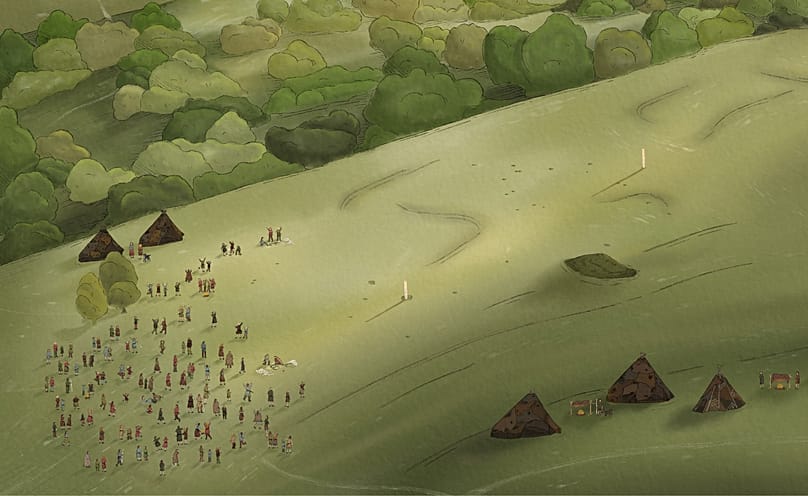
A team from the British firm Wessex Archaeology said the structure would have consisted of two wooden poles 120 metres (394 feet) apart and aligned to point directly at the rising sun during the summer solstice and the setting sun at the winter solstice.

Based on the depth of the postholes, researchers estimate the wooden poles stood between three and four metres high.

The team was led by archaeologist Phil Harding, who is well known in the UK through his many years of excavations for Channel 4 TV series “Time Team.”

Related

Archaeology student finds 1200-year-old gold in his first excavation


A reconstruction of the summer solstice celebrations as they might have appeared at Bulford 5000 years ago Credit: Wessex Archaeolog

Harding said the site was likely to have been a focus for major religious gatherings, predating Stonehenge by around 500 years.

Among the finds were pottery, animal bones and tools, including a rare disc-shaped flint knife, which researchers believe may have held symbolic meaning linked to the Sun.

"Opportunities like this probably only come once in a career, in a lifetime," Harding said. "I’m probably towards the end of my career now, but thank God I’m still in archaeology long enough to be part of this discovery, because it’s certainly the highlight of my career."

The findings were released ahead of the summer solstice, which falls this year on Sunday, when thousands head to Stonehenge each year to celebrate the longest day of the year in the Northern Hemisphere.

Phil Harding of Wessex Archaeology at Stonehenge Credit: Wessex Archaeology

Built in stages from around 3000 BC on the flat expanse of Salisbury Plain, Stonehenge is one of Britain's most visited sites and a UNESCO World Heritage Site.

Its exact purpose remains debated - theories range from solar temple to healing sanctuary to astronomical calculator - though its alignment with the solstices is the most widely accepted interpretation.

The original excavation at Bulford took place between 2015 and 2017, with years of subsequent analysis before the results could be published.

The dig was carried out as part of a broader archaeological survey tied to the Ministry of Defence's programme to rehouse troops returning from Germany, where the British Army maintained a large presence for decades. Bulford itself is home to a military barracks.

Large crowds are expected to gather at Stonehenge this Sunday to mark the summer solstice.


Keeping up appearances: Greece reveals Parthenon façade after 220 years

Parthenon
Copyright Greek Ministry of Defence

By Euronews Greece
Published on

For the first time in about 220 years, the west façade of the Parthenon in Greece can be see in its fullest possible form. External scaffolding has now been permanently removed from the monument, marking a key step in its long restoration.

Greece is marking a major milestone with the completion of work to reveal the western pediment of the Parthenon. For the first time in more than two centuries, the country's most famous monument is now definitively free of its external scaffolding.

The restoration of the orthostates of the tympanum constituted one of the most complex interventions of recent years for the Acropolis Monuments Restoration Service (YSMA).

According to Greece's culture ministry, the project required highly specialised technical solutions and absolute precision at every stage of the process, from working the new marble to lifting it into place and installing it on the monument.

The large orthostate of the west pediment was restored to its original geometry by bonding the surviving ancient fragments and supplementing them with new marble, while the second was made entirely from new marble. For the final placement of the blocks, a new functional scaffolding system was installed, meeting the strictest modern safety standards and being aesthetically adapted to the monument.

FILE: The Parthenon in Athens
FILE: The Parthenon in Athens Greek Ministry of Defence

The Minister of Culture, Lina Mendoni, noted:“Today we are talking about the completion of an extremely demanding restoration intervention, thanks to which the west pediment of the Parthenon is being presented in its fullest form in some 220 years. The sight is truly breathtaking. The pediment, which generations of Greek citizens and visitors from all over the world had grown used to seeing incomplete, is regaining its architectural unity. The two new orthostates, which have been placed in its vacant positions, do not simply make good a morphological gap. They allow the unique proportions and geometric perfection of the Parthenon’s western façade to be highlighted once again.

Today we are looking at the west pediment of the Parthenon as it has not been seen for two centuries. It is a moment of historic significance for the monument, for the Acropolis and for world culture. A moment that fills us with pride, but also with a sense of responsibility to continue, with the same consistency, the great work of protecting and showcasing the foremost symbol of Western civilisation.”

The completion of the programme to restore the western façade was carried out as part of a project funded by the Recovery and Resilience Facility.


Shared home, shared microbiome? Study says flatmates swap gut bacteria

Sharing a home also means sharing microbes in your gut and mouth.
Copyright Cleared/Canva

By Marta Iraola Iribarren
Published on

You may share more than the kitchen with your flatmates: people who live together share parts of their oral and gut microbiome, according to a new study by the University of Trento in Italy.

Researchers found that cohabiting people share certain microbes regardless of the ‘proximity’ of their relationship. Siblings, parents and children all shared similar numbers of microbial strains.

Your flatmates may be living rent-free in your gut, too.

Romantic partners, however, shared more oral microbes, which the researchers attribute to kissing.

“Who we decide to share our homes with can have a huge influence on our microbiomes, which has potential consequences for our health,” said Vitor Heidrich of the University of Trento, Italy, first author and computational biologist at the University of Trento, Italy.

The team analysed 1,644 paired mouth and stool samples to see how microbes spread between healthy people living together, and how microbes move from the mouth to the gut within the same person.

People living together shared 19% of their gut microbiome strains and 26% of their oral microbiome strains, compared to 6% and 0% among people who did not live together.

Romantic partners shared an average of 44% of their oral microbes.

The human gut and oral microbiome are made up of millions of microscopic organisms, including bacteria, viruses, fungi and parasites. They are unique for each person and are determined by a combination of factors, such as birth environment, infant feeding, long-term diet and lifestyle.

The exchange is likely to happen through daily contact and shared environments. People living together prepare and eat food together and share bathrooms, which provides opportunities for microbes to move from one person to another.

“We know that diet and other lifestyle factors can change our microbiome, but these factors are acting on the microbes that are already within us,” said senior author and computational biologist Nicola Segata of the University of Trento, Italy. “It doesn’t solve the question about where the microbes are coming from.”

Segata added that it was surprising that the oral microbiome was only slightly more transmissible than the gut microbiome.

“This speaks to the fact that most of our microbes are kind of everywhere, and the microbial exchange is very high, but our microbiomes are shaped more at the level of whether our body accepts the colonisation of these bacteria.”

The researchers also found that the microbes most easily transmitted between people were more likely associated with poor health, particularly type 2 diabetes and more generally, poor cardiometabolic health.

In the mouth, the most transmissible species included two microbes that are associated with colorectal cancer and several opportunistic pathogens that can cause serious illness in people with weakened immune systems.

The authors said that these findings may suggest that disease-associated microbes may possess characteristics that allow them to spread more easily or encounter less resistance when colonising new hosts.

“It’s difficult to speculate why this is, but it might be a reflection of their ability to withstand stress,” says Heidrich. “The same traits that help them survive the journey between humans may also allow them to thrive in the inflammatory conditions associated with disease.”

The findings could help improve microbiome-based treatments, including probiotic and fecal microbiota transplant therapies, the researchers say.


French fishermen gather in Cherbourg as sector faces down multiple challenges


By Euronews
Published on

In total, the French government said €13 million would be dedicated to the fishing sector for fuel consumption in April and May.

Resource management, fuel prices, foreign competition - pressing issues for French fishermen and other actors in the maritime sector to discuss at their meeting in Cherbourg.

In April, fishermen protested against high fuel prices from Normandy to the French Mediterrenean island of Corsica.

The recent framework deal signed between Iran and the US is giving fishermen hope for a decrease in energy prices.

Fuel represented up to 60% of ship owners' turnover in May. As a result, some professionals have had to decrease their sea outings.

In this situation, the French government adopted some measures in April to support French fishing companies.

An aid of 20 cents per litre of fuel in April and of 35 cents per litre in May, were set.

In total, the government said €13 million would be dedicated to the fishing sector for fuel consumption in April and May.

In the English Channel, fishermen also have to coexist with aquaculture, offshore wind farms and maritime transport.

Small fishermen hope the French coastal strip will soon be out of bounds to ships measuring over 25 metres.

On the Atlantic coast, fishing might temporarily be prohibited next year in the Bay of Biscay to protect dolphins.

Last but not least, fishermen are calling for measures to modernise and decarbonise fishing vessels.

Korea-Fication, A Youth Phenomenon Redefining India’s North-East – OpEd

June 18, 2026 
By Allen David Simon and Sneha Banik

A significant feature of globalization is the interchange of ideas and cultures via the internet, linking people beyond borders with the ease of access to media and content, providing new mediums for expression and interaction. The “Hallyu Wave” referring to the consistent and exponential growth in popularity of South Korea’s cultural exports, including pop-culture, entertainment, music, TV dramas, movies, series, etc., worldwide.

The cultural phenomenon was epitomized by the popularity of Korean television dramas in East and Southeast Asia evolving into a robust and deliberate foreign policy strategy. This transnational spread of Korean pop culture has increasingly been institutionalized and strategically deployed by the South Korean government as an instrument of soft power, influencing not only public perception but also bilateral and multicultural relations. Despite its historical position between major Sino and Japanese civilizations, South Korea has been successfully using its cultural exports to build global influence.
 
Namaste India!

The global popularity of Korean pop culture or K-pop exploded in the 2010s with the viral hit of PSY’s Gangnam style. With the onset of the pandemic, soap operas such as Autumn in my Heart and Full House, gathered attention as a cultural force in India. The Zindagi channel aired K-dramas like Descendants of the Sun, Boys over Flowers, Snowdrop, etc. The surge in popularity of K-pop incentivized both Indian streaming networks like Zing, VH1, Zee Café, Jio Hotstar, and international platforms like Netflix, Amazon Prime, Hulu, etc., along with user-generated content on YouTube to respond to changing consumption preferences of the Indian audience. While India became one of the biggest Hallyu markets with a solid K-pop fandom, it has remained peripheral to Hallyu research, with East Asian countries like Japan, China, Taiwan and Southeast Asian countries like Thailand and Vietnam having gained much of the attention in this regard.
 
From the stomach to the heart

Across cities such as Imphal, Shillong, Gangtok, Korean restaurants, ramen stalls, kimchi sales, kimbap, gochujang-based dishes became increasingly common, giving a tight competition to authentic Japanese cuisine in Indian restaurants. In Manipur and Mizoram in particular, Korean cuisine blended easily with local food practices due to similarities in rice-based meals, fermented foods and the use of vegetables and meats. This culinary integration reflected how Hallyu in the North East is not merely consumed but adapted to local tastes. What started as an interest in K-dramas and K-pop is now reflected in everyday dining choices especially among millennials and GenZ. GenZ has been playing a significant role in this trend, accounting for 27% of all Korean food orders, along with search patterns showing that dishes such as Korean fried chicken being the most looked-for items on the internet.

Fandoms & Fanhood

While Emperor of the Sea was the first Korean series telecasted on DD-I (National Channel) in 2006, K-dramas had already been broadcasted in states like Manipur and Mizoram. Manipur became the starting point of Hallyu, in the early 2000’s followed by restrictions on Hindi satellite television imposed by insurgent groups, Korean dramas were circulated through DVDs and later via cable and the internet, making them as widely popular. K-dramas such as Jewel in the Palace and Boys Over Flowers found eager audiences particularly among the North-eastern Indian youth and women. Sensational K-pop bands such as BTS, EXO and BLACKPINK inspired local dance crews, music cover bands and fan clubs in Nagaland and Mizoram. Annual K-pop contests organized in collaboration with the Korean Cultural Centre became major events in cities like Kohima, Aizawl and even in Kolkata.


Korean as Aspirational

Prerna Tiwari, the admin to the Korean Culture India Fan club, emphasized the energy and passion of Indian fans in engaging with Korean culture. Highlighting the emotional impact of K-pop idol’s messages on body, confidence and self-esteem amongst the Indian youth which has sensitized the Indian audience on body positivity encouraging an open mindset in perceiving oneself.


Shattering the normative perceptions of masculinity and femininity of Bollywood, K-pop criticized the worst attributes of masculinity such as misogyny or violence portrayed in silver screens of Hindi cinema, i.e., the Ekta Kapoor archetype, while keeping the familiar protagonist-centric storylines of Bollywood. Korean actors are styled to look different from the western portrayals of “macho” men portrayed as a muscular, emotionally distant and daring, who wearing violence on his sleeves or even damsel-like women. This also coincides with GenZ notions of “pookie” characters, where men are gentler and softer in daily life.

Beyond this, what made Korean content beloved to the Indian pallet was its alternative form of modernization, i.e., showcasing a hybrid culture, between western liberalism and traditional collectivism, and its conflicts. Similar to the prismatic culture of South Asia, K-dramas showcase classic conflict between generational values between social responsibility, individuality and youths’ pursuit of happiness. Korean commodities have captured the imagination of the young and the neo middle class in India which is fueled by globalized consumer preferences, awareness and choices. Korean cultural products have become a new aspirational category for Indian GenZ.
 
North by North-east

K-pop especially caught the attention of the youth of North-eastern states, over the years, in due course of misrepresentation of the North East in mainstream Bollywood or Hindi films, dramas and cinematography, like Mary Kom, Tango Charlie , Chandni Chowk to China etc. K-pop came in as a shelter for the North-eastern youth, coupled with cultural affinity by virtue of belonging to the same racial stock conjoining with identical social tastes invading borders. The South Korean government has successfully used its media industries not only to entertain but also to influence, connect and reframe global perceptions of Asia, creating a Korean conscious audience as a vehicle of economic export and cultural diplomacy.

In Das 2025, Sourish Ghosh states that that Hallyu “It wasn’t just pop culture — it was identity.” Therefore, ‘Korea-fication’ of global pop-culture is more than a trend it is a deliberate, strategic extension of cultural diplomacy, rooted in what can be called a distinct branding of ‘Oriental cultural diplomacy.’ South Korea has used its media industries not only to entertain but also to influence, connect and reframe global perceptions of Asia.

Often seen as an extension to mainland India; having been consistently marginalize in Indian politics and policy, and an underlying motion of racism and discrimination against North-east Indian citizens due to their ‘Asian’ physique. Our chapter titled Korea-fication: Korean Media(s) in the ‘Hallyu’ Wave, Impact on Indian Youth, Asian Affinities and Oriental Modules” (2025) in Media, Soft Power & Diplomacy: Framing Global Narratives by Eds. Mahul Brahma, Kankana Ghosh & Arunima Dey argues that the often ‘otherized’ region struggling to attain full ‘cultural’ citizenship in India. The broad racial affinity between Korea and North-east Indians on their ‘Mongoloid’ features creating a phenomenological belonging, i.e., a sense of identity transient beyond space and time. This is also associative with how identities have come to be enmeshed in the West. As diasporic populations have become representative of what an ethnicity and the country theory originate from is viewed from the eyes of the Occidental, the emerged ‘Asian’ category is a synthesis of Chinese, Korean, Japanese, Philippine, and other ethnic minorities form the Asia-Pacific. As these ethnic diasporas have amalgamated into an Asian identity, the representation of Hallyu commodities as an Asian-designate product, has similarly created a sense of Asian solidarity amongst youth in North-east India.


About Allen David Simon
Allen David Simon is a political commentator writing on the intersection between political culture and governance. Currently engaged as Postgraduate Researcher & Deputy Head of Academics Deputy Head of Academics at the International Association of Political Science Students (IAPSS); and Editor at Forum of Global Studies (FGS). He has written research articles for university journals, and his commentaries have been featured in national and international media, with several chapters in edited volumes and essays in student magazines. He has an MA Political Science and BA Political Science Honors with Mass Communications and Journalism from St. Xavier’s College (Autonomous), Kolkata [University of Calcutta].
View all posts by Allen David Simon →

About Sneha Banik
Sneha Banik has an MA Political Science candidate at the Postgraduate and Research Department of Political Science, St. Xavier’s College (Autonomous), Kolkata (University of Calcutta); and has graduated valedictorian with a BA Political Science Honors from Loreto College, Kolkata. She has been awarded the Ratan Lal Dasgupta Memorial Gold Medal and Lina Law Memorial Scholarship for her academic merit. She served as the Vice President of Student Council of Loreto College, Kolkata between 2023-24. Her research interests lie in public policy and government legislation.
View all posts by Sneha Banik →
Famous ‘Pink Planet’ Harbors A Salty Surprise


This artistic illustration of the Pink Planet, or GJ504b, orbiting its host star. Astronomers think the object is pink because it's incredibly old (between 2.5 billion and 4 billion years old) and cold. CREDIT: NASA/Goddard Space Flight Center


June 18, 2026 
By Eurasia Review


Northwestern University-led astronomers have discovered salty skies surrounding the universe’s famous “Pink Planet.”

For more than a decade, the ancient, rosy hazed world kept astronomers guessing. One of the coldest known planetary-mass companions ever directly imaged, the elusive object is too faint for astronomers to dissect its light from Earth. But new observations from the James Webb Space Telescope (JWST) reveal an atmosphere filled with exotic chemistry — and salty clouds unlike anything seen before.

The observations provide some of the first direct evidence for salt clouds in a cold object’s atmosphere, a phenomenon scientists theorized more than 15 years ago. The discovery also marks an important step toward studying increasingly cold objects, which are too dim to examine with ground-based telescopes.

The study will be published on Thursday in the Astronomical Journal.


“The Pink Planet is the coldest companion ever discovered using ground-based instruments,” said Northwestern’s Aneesh Baburaj, who led the study. “Many teams all around the world performed follow-up observations to study its light, but it was too faint for ground-based instruments. That made it a perfect target for JWST. When we finally obtained its spectrum, it immediately looked interesting. But once we started digging deeper into the data, we realized it was not like anything we have analyzed before.”

An expert on exoplanets, Baburaj is a postdoctoral associate at Northwestern’s Center for Interdisciplinary Exploration and Research in Astrophysics (CIERA). This work was conducted in collaboration with scientists at the Space Telescope Science Institute (STScI), including Marshall Perrin, who devised the observing program for this object. Perrin is a member of the JWST Telescope Scientist Team, which contributed to the telescope’s design and is responsible for its current day-to-day operations.
Old and cold

Discovered in 2013, the Pink Planet (dubbed GJ504b) orbits a sun-like star located 57 light-years from Earth. Despite its nickname, astronomers are unsure if it’s a planet at all. At roughly 25 times the mass of Jupiter, GJ504b sits near the fuzzy boundary between giant planets and brown dwarfs. So, astronomers refer to it as a “planetary-mass companion,” meaning that it’s a planet-sized object orbiting a star.

Further complicating the mystery, repeated attempts to study it with ground-based telescopes have fallen short. While most directly imaged exoplanets are closer to 1,000 to 2,000 degrees Fahrenheit, GJ504b is just 550 degrees Fahrenheit (290 degrees Celsius) — roughly the temperature of a bread-baking oven.

The companion’s age is responsible for its chilly temperature, Baburaj said. Although they are born blistering hot, giant planets cool as they age. And the new study estimates GJ504b is between 2.5 billion and 4 billion years old.

Using the JWST, Baburaj and his team captured the GJ504b’s faint light. Then, they used advanced data-processing techniques to strip away glare from its much brighter host star. This combination finally revealed the companion’s spectrum, a graph that breaks down dispersed light into component colors. Each color represents a different element. So, by analyzing an object’s spectrum, scientists can uncover the presence of specific elements and molecules.

“In the past, other astronomers observed the companion for an entire night with some of the biggest telescopes in the world to obtain a spectrum,” Baburaj said. “And they could not see the object. With JWST, our entire observation took around two hours, and we were successful.”

Famous world comes into focus

The data revealed a rich mix of chemicals, including water vapor, methane, carbon dioxide, ammonia and other molecules. To reconstruct the companion, the researchers fed these data into an astrophysical model. But something didn’t add up. The companion’s simulated atmosphere only matched the observations if it contained unusual, physically implausible features. When the researchers added clouds to the model, the unusual characteristics vanished. Salt clouds likely veiled the atmosphere’s deeper layers, shaping the light that reached JWST.


“We ran simulations with clouds, and the results aligned with what we know about cold planets,” Baburaj said. “We tried three different types of clouds, and salt clouds fit best. When we accounted for salt clouds, it subdued the signature of molecules hidden deeper in the companion’s atmosphere. Then, the results became physically possible.”

The spectrum also suggested that GJ504b is unusually rich in heavy elements, or metals. However, the mystery of the object’s formation persists, with current data suggesting it could have formed either like a planet or a small star.

Baburaj says the techniques used in the study could help unravel other mysteries surrounding cold, faint planets. Jupiter, for example, hosts clouds made of ammonia ice. While those cloud types remain beyond the reach of current observations, the detection of GJ504b’s salt clouds suggests astronomers are getting closer.

“This is the first time we’ve found that salt clouds are critical to explaining the spectrum of an object,” Baburaj said. “It’s a good reminder to account for clouds in our models.”

The study, “JWST-TST high contrast: First direct spectroscopy of GJ504b reveals clouds and possible metal enrichment,” was supported by NASA (award number 80NSSC20K0586).
Antarctica Is Giving Us A Warning Of Sea Level Rise Decades In Advance


June 18, 2026 
By Eurasia Review


Scientists predict that the next three to five decades provide a critical window to anticipate and plan for Antarctic ice loss and its contribution to sea level rise.

Research published in Nature, led by Monash University researcher Dr Felicity McCormack from Securing Antarctica’s Environmental Future (SAEF), looks at the predictability of Antarctic ice loss and what this means for sea level rise projections.

Based on reports from the Intergovernmental Panel on Climate Change (IPCC), a global sea level rise exceeding two metres by 2100 cannot be ruled out under high-emission scenarios due to the large-scale collapse of the Antarctic Ice Sheet.

This level of sea level rise would expose one quarter of Australian residential properties to inundation, render much sovereign territory across the Pacific uninhabitable, and displace hundreds of millions of people globally, representing one of the most significant humanitarian and economic challenges in history.


However, the trajectory of sea level rise between now and 2100 remains deeply uncertain, largely due to the difficulty of projecting Antarctic ice loss. Under a worst-case scenario, the IPCC predicted that the rate of sea level rise from Antarctic ice loss alone could nearly double within the next 30 years. But until now, there has been no robust estimate of Antarctica’s contribution to sea level rise over the next few decades, the timescale most critical for coastal planning and policy decisions.

The research aims to answer the question of how much ice Antarctica will lose over the next 30-50 years, and whether that loss can be predicted reliably enough to give governments and nation states sufficient lead time to respond effectively. The study assessed predictability in ice sheet model projections of sea level rise within this near-term window.

Dr McCormack explains how Antarctic ice loss exhibits a strong, steady predictability until the mid-century, allowing for reliable estimations regarding sea level rise.

“If ice sheet models accurately reproduce the rates of ice loss we observe today, we can have confidence in using those same models to reliably predict Antarctica’s contribution to sea level rise over the next 30 to 50 years. Accurately predicting how much and how fast global sea levels will rise offers vital information for future coastal planning and government policy,” said Dr McCormack.

However, this predictability breaks down by the end of the 21st century when physical processes that can rapidly accelerate ice loss become increasingly likely. For example, ice resting on bedrock below sea level can enter a rapid retreat, which once triggered, is difficult to reverse and could drive ice loss far beyond what near-term climate change projections would suggest.

“The research findings provide a roadmap for future climate planning. By improving how ice sheet models represent critical physical processes that lead to rapid ice sheet retreat, we can narrow the deep uncertainty that hampers reliability of long-term sea level rise projections,” Dr McCormack said.

The researchers have identified that a window of opportunity for climate action does exist. The next three decades represent a period of well-constrained sea level rise trajectories and are critical to strategic adaptation planning.

Professor Steven Chown, Director of SAEF says that the time to act is now, within the window of opportunity, and we must invest in better observational capabilities.

“The predictability identified in this research does not reduce long-term risk, instead it provides a defined period in which to act with greater confidence. Improvements in observational systems and ice sheet model developments will directly translate into more reliable sea level projections for short-term planning horizons,” Professor Chown said.

In relation to engaging Indo-Pacific partners, Professor Chown explained that Australia is well-positioned to lead regional efforts to translate these findings into practical adaptation frameworks.

“Pacific Island governments require reliable near-term projections to make decisions about infrastructure, community relocation, and long-term land use. Engagement on sea level science and adaptation planning represents a foreign policy opportunity and a regional responsibility,” Professor Chown said.

Dr McCormack said establishing a clear pathway for integrating ice sheet model projections into sea level rise policy frameworks is critical.

“When models replicate present-day observations of Antarctic ice mass loss, their projected ice mass loss rates over the coming several decades provide a reliable foundation for planning and adaptation, while longer-term sea level rise uncertainties highlight the need for ongoing development,” Dr McCormack said.

Framing Antarctic projections around these two time horizons – short-term predictable ice loss and long-term feedback-dominated change – may provide a clearer foundation for a robust policy response.
QUAD To Safeguard Undersea Cables Against Chinese Disruptions – Analysis

June 18, 2026 
By P. K. Balachandran

The Foreign Ministers of the QUAD countries — the US, Japan, Australia, and India — met in New Delhi on May 26 and vowed to collectively safeguard undersea cable networks from threats and sabotage by both non-State and State actors.

Spanning around 1.4 million kilometres across every ocean, these undersea cables carry nearly 100% of global internet traffic. They form the backbone of the modern economy, enabling instantaneous financial transactions, real-time diplomatic exchanges, and military communications.

In warfare, severing them could isolate a nation’s command structures from intelligence feeds, sensor data, and deployed forces. For a nuclear-armed state, the loss of reliable communications could prove catastrophic, undermining control over strategic weapons.

West Sees Threat from China and Russia


While undersea cable disruptions can stem from various causes, the QUAD’s primary concern centres on China’s activities in the Indo-Pacific. In “The Conversation”, John Calabrese highlighted how Chinese researchers unveiled a new deep-sea tool capable of cutting even the world’s most secure subsea cables.


First revealed in February 2025 and promoted as a civilian salvage and seabed mining device, the tool can operate at depths of 4,000 metres — far beyond most existing infrastructure. This capability raises serious implications for global communications and security.

Taiwan has repeatedly accused Chinese vessels of sabotage. In 2023, two Chinese ships were blamed for cutting the only two cables serving the Matsu Islands, isolating 14,000 residents for six weeks. Taiwan documented 27 such disruptions since 2018. In January 2025, its coast guard linked another incident off the northeastern coast to a vessel operated by a Hong Kong company with Chinese crew. These actions coincide with intensified Chinese military drills around Taiwan.

Russia has also demonstrated interest in such tactics. In 2023, a cable between Sweden and Estonia was damaged alongside a gas pipeline. In January 2025, a Latvia-Sweden cable was breached, prompting NATO patrols and the seizure of a suspect vessel. Dmitry Medvedev hinted at targeting undersea cables in retaliation for incidents like the 2023 Nord Stream explosions.

Need to Internationalise Protection

The roughly 650 operational undersea fibre-optic cable systems, which facilitate daily transactions worth US$10 trillion, lack robust international protection. This stems from competing national security interests and heavy private-sector involvement.

Brendon J. Cannon and Ash Rossiter note in an article in “Science Direct” that in January 2023, US Assistant Secretary of Defence Ely Ratner announced enhanced satellite monitoring via Hawkeye-360 Cluster 6 to track illicit activities, including threats to cables. The US pledged to share this data with QUAD partners. This was followed by the May 2023 QUAD Partnership for Cable Connectivity and Resilience, which leverages member expertise in manufacturing, deploying, and maintaining cable infrastructure.

A core goal is to avoid routing traffic through Chinese-owned or operated cables, given Beijing’s laws requiring firms to hand over data to the government. China’s “Digital Silk Road” initiative further aims to align global cable networks with its strategic interests.

Pattern of Cable Ownership


Traditionally, cables were owned by consortia of telecom firms. Leading players include Japan’s NEC Corporation, France’s Alcatel Submarine Networks, and the US’s SubCom, now joined by tech giants like Google and Meta. Chinese entities such as HMN Tech (linked to Huawei) and China Unicom have rapidly expanded through state support, heightening espionage and sabotage risks amid broader geopolitical rivalries.
Australia’s Leadership Role

The QUAD assigned Australia a leading role in cable security following the 2023 partnership launch. Australia’s Department of Foreign Affairs and Trade (DFAT) coordinates technical and policy research while providing regional support. Members rotate contributions based on strengths, with Australia convening workshops. Collaboration can extend bilaterally, trilaterally, or plurilaterally.


The US supports efforts through its CABLES program. Australia, the US, and Japan are jointly investing US$95 million in a cable project linking Micronesia, Nauru, and Kiribati to counter Chinese dominance in the Pacific.


Washington urges partners to exclude “unreliable suppliers” from networks and has withheld licences for cables involving Hong Kong or mainland China. It has promoted alternatives like the Apricot, Bifrost, and Echo consortia, rerouting through trusted locations such as Singapore, Indonesia, the Philippines, and Guam. Since 2019, the US has offered training grants to discourage engagement with Chinese firms.


QUAD’s Informal Structure


The QUAD has evolved with annual summits and joint statements but remains informal, lacking binding commitments, budgets, or enforcement mechanisms. This flexibility offers advantages: it enables coordination on shared maritime interests while preserving member sovereignty. However, it can slow decisive action on threats.

Informality suits States wary of ceding autonomy. It fosters trust-based alignment without rigid hierarchies, though history shows collective action often faces impediments even among allies.

Impediments to Action


Private companies prioritise operations over security, while public entities face regulatory hurdles. Unilateral measures are simpler, but multilateral efforts require aligned legal and governmental frameworks. Jurisdictional limits — states control territorial waters but not the high seas — add reluctance, particularly among some Asian nations.
Towards Collective Action

QUAD countries should first map inter-agency coordination (navies, coast guards, marine police, telecom regulators) within their governments. This embeds cable protection into broader maritime strategies and clarifies tensions between public and private interests.

Each QUAD country should designate a lead agency to coordinate domestically, aligning with International Cable Protection Committee (ICPC) best practices. Cross-sector dialogue between officials, cable owners, suppliers, and operators is essential for policy alignment.

India’s Vital Role


Enhanced Indian participation is crucial given its growing global influence and inclusive multilateral approach. The QUAD should also engage the Global South, emphasising that secure cable connectivity underpins communications and economic development for vulnerable states.

Cable Repair Vessels

Repair remains largely a private endeavour. Cannon and Rossiter recommend that the QUAD consider a dedicated fleet of strategically deployed cable repair ships across the Indo-Pacific to enhance resilience.

By strengthening cooperation, the QUAD can better protect these critical information superhighways against state-sponsored threats, particularly from China, while promoting a more secure and resilient digital infrastructure in the region.

About P. K. Balachandran
P. K. Balachandran is a senior Indian journalist working in Sri Lanka for local and international media and has been writing on South Asian issues for the past 21 years.
View all posts by P. K. Balachandran →


Switzerland heading towards referendum on construction of new nuclear plants

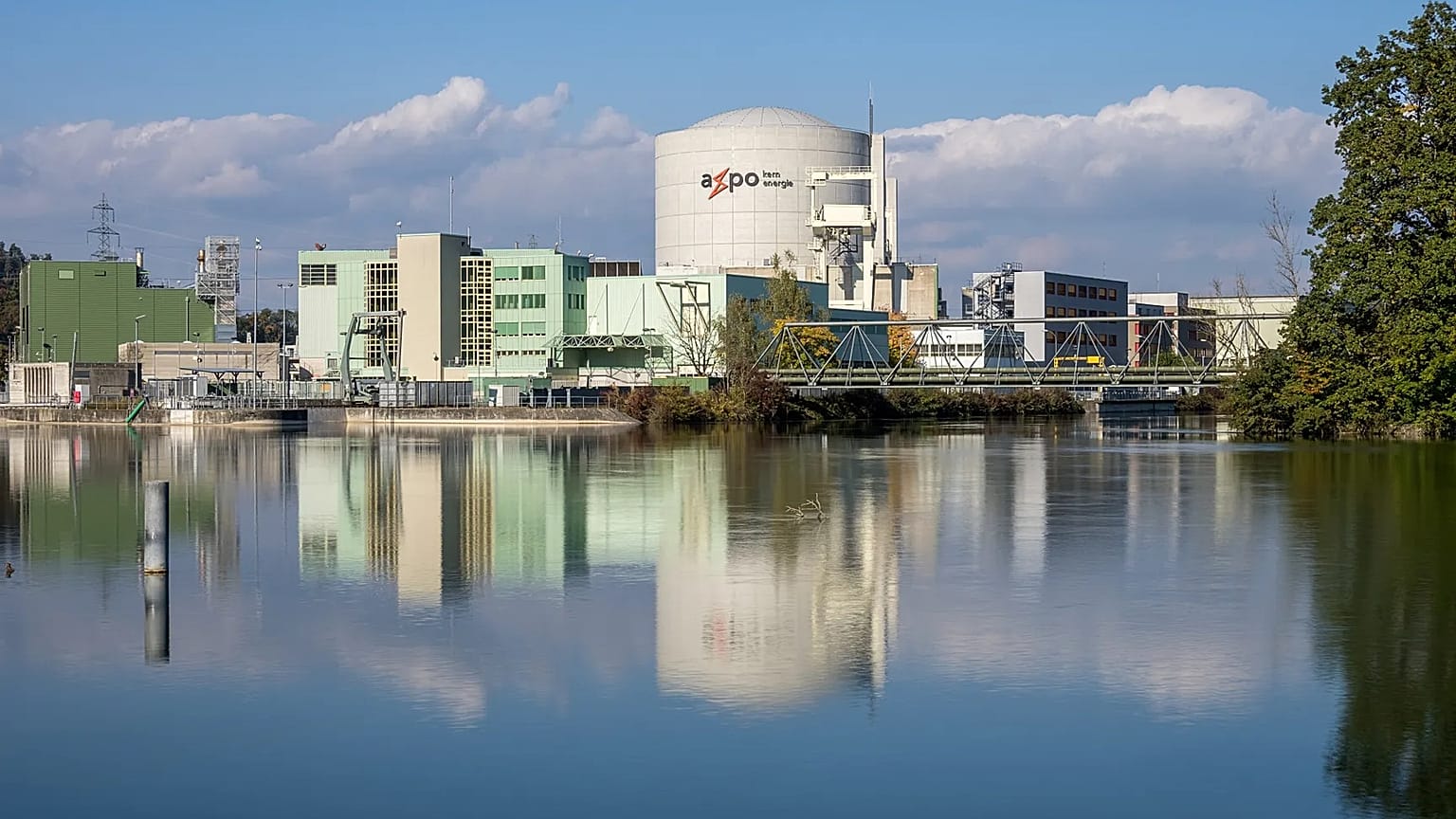
The Beznau nuclear power plant on the River Aare, 16 October, 2021
Copyright CC BY-SA 4.0/JoachimKohler-HB


By Gavin Blackburn
Published on

During the debates in parliament, Energy Minister Albert Rosti stressed the need to keep the nuclear power option open to guarantee the country's long-term energy supply.

Switzerland's parliament approved a divisive government plan to build new nuclear power stations on Thursday, overturning a 2018 ban and putting the country on course for a referendum.

The lower house of parliament joined the upper chamber in backing a government proposal to reverse the ban put in place following a referendum won by anti-nuclear campaigners in 2017.

During the debates in parliament, energy minister Albert Rosti stressed the need to keep the nuclear power option open to guarantee the country's long-term energy supply.

Both houses say authorisation for new nuclear plants can only be granted if the financing is secured.

Swiss voters are meanwhile set to have the final say.

People queue to cast their ballot at the City Hall in a referendum in Zurich, 28 November, 2021
People queue to cast their ballot at the City Hall in a referendum in Zurich, 28 November, 2021 AP Photo

A broad coalition of groups "will launch a referendum," the Green Party said in a statement.

Greens president Lisa Mazzone said the parliament vote "sabotages the rapid development of renewable energies, climate protection and our energy sovereignty."

The collection of signatures for a referendum would begin this month, the party said.

To trigger a referendum under Switzerland's direct democracy system, 50,000 valid signatures must be collected within 100 days of publication of a new law, a hurdle the coalition is expected to clear.

'Insurance policy'

The Swiss government has been pushing since 2024 to reverse the ban, citing the growing need for domestic low-carbon electricity to achieve its goal of net-zero emissions by 2050.

Fears of shortages linked to world events, such as the US-Israeli war on Iran and Russia's full-scale invasion of Ukraine, and Switzerland's dependence on electricity imports in winter were also cited.

The government project argues that allowing new nuclear power plants to be built would "create an insurance policy for electricity supply" in case renewable energies are insufficient or if there are no other "climate-friendly solutions to guarantee electricity production."

The Swiss approved the gradual phase-out of nuclear power in the 2017 referendum, banning the construction of new power plants.

Greenpeace activists hang banners saying "The End" at a building of the Beznau nuclear power plant, 5 March, 2014
Greenpeace activists hang banners saying "The End" at a building of the Beznau nuclear power plant, 5 March, 2014 Urs Flueeler/AP

That law was the result of a long process initiated after the 2011 Fukushima nuclear accident in Japan, which was triggered by a tsunami.

Switzerland continues to operate four nuclear reactors whose construction dates back to the 20th century.

Beznau 1, commissioned in 1969, is the oldest functioning nuclear reactor in Europe. It will cease operations in 2033, while Beznau 2, connected to the grid since 1971, will close a year earlier, in 2032.

Gosgen and Leibstadt began operating in 1979 and 1984, respectively.

America’s Military Readiness Depends On Deployable Nuclear Power – Analysis


Radiant says its portable Kaleidos microreactor can be “installed overnight with no heavy infrastructure and lasts 20 years.” RADIANT


June 18, 2026 
By James Durso

For decades, energy policy in Washington was debated on the basis of economics, climate change, and domestic politics. That era is over. The United States is entering a period where energy security must be recognized as a core pillar of national security and military readiness.

The global competition underway with China is not just about trade or tariffs. It is about industrial capacity, technological dominance, artificial intelligence (AI), semiconductor manufacturing, and defense production – all of which depend on a foundational requirement: abundant and reliable electric power.

America’s future military superiority will rely in part by whether the nation can generate enough resilient, secure baseload electricity to support its defense industrial base and rapidly expanding digital infrastructure.

That is why deployment of Small Modular Reactors (SMRs) must be a top national priority.


The United States faces a convergence of unprecedented energy demand and an electric grid that is at capacity and is vulnerable to cyberattacks, physical sabotage, transmission bottlenecks, and extreme weather events.

Intermittent energy sources alone will not meet the scale or reliability requirements necessary to sustain America’s strategic position. The nation requires dependable, 24/7 baseload power capable of supporting critical infrastructure under all conditions – including during natural disasters, geopolitical crises, or military conflicts.

Advanced nuclear energy, delivered by SMRs, is rapidly emerging as one of the few realistic solutions capable of meeting those demands on a shorter timeline than legacy power systems.

Unlike traditional large-scale nuclear plants, SMRs are designed to be smaller, factory manufactured, and more flexible in deployment. They can be built to support specific industrial facilities, defense installations, AI infrastructure, and in remote or constrained environments where grid reliability is a concern.

The national security implications are significant.


Modern military operations are increasingly energy intensive. Defense installations, logistics hubs, shipyards, semiconductor fabrication plants, weapons production facilities, and command and control infrastructure all depend on uninterrupted electricity. Yet many of these facilities remain dependent on centralized transmission systems vulnerable to disruption.

One of the most strategically important developments in the SMR sector is the growing focus on “behind-the-meter” deployment capability — the ability to place reactors adjacent to mission-critical facilities rather than relying exclusively on long-distance transmission infrastructure.

This approach could fundamentally reshape military and industrial resilience in the United States.

Distributed advanced nuclear generation could provide secure dedicated power to defense installations, industrial corridors, AI campuses, and manufacturing hubs while reducing dependence on vulnerable grid infrastructure without competing for electric power with civilian communities. It could also improve survivability during cyberattacks, physical sabotage, or grid instability scenarios.

Equally important is the question of fuel security.

One of the least discussed but most consequential challenges facing the advanced nuclear industry is fuel availability. Several next-generation reactor concepts depend on High-Assay Low-Enriched Uranium (HALEU), a fuel source that lacks large-scale commercial availability in North America and is tied in part to Russian-controlled enrichment capacity.

That presents a strategic vulnerability the United States cannot afford to ignore.

Energy independence cannot exist if critical fuel supply chains remain dependent on geopolitical competitors or unstable foreign markets. Any serious national nuclear strategy must prioritize technologies capable of operating with commercially available fuel supported by secure supply chains.


This is where deployment readiness becomes critically important.

For years, much of the advanced nuclear conversation has focused on future concepts, demonstration projects, and theoretical deployment timelines. But America’s strategic competitors are not waiting. China is rapidly expanding its nuclear footprint domestically and internationally as part of a broader geopolitical strategy tied to industrial influence and infrastructure dominance. The U.S. Department of Energy reports that from 2014 to 2023 China increased installed net nuclear capacity almost three times, and that domestic experience is the basis for Beijing’s push to export 30 nuclear reactors by 2030 to countries participating in the Belt and Road Initiative.

The United States must move with urgency, and the technology exists to do it now.

Today, NuScale Power is the only SMR developer with full U.S. Nuclear Regulatory Commission standard design approval under the modern Part 52 licensing framework and the only company currently positioned with a commercially deployable, regulator-approved SMR technology transitioning to manufacturing.

That distinction matters because licensing is the hurdle that will determine which technologies are deployed in the next decade.

Most competing SMR and Generation IV reactor companies, to include Westinghouse, Oklo, TerraPower, and X-Energy are years away from NRC approval, rely on unproven fuel supply chains, or continue operating within demonstration programs without commercially deployable designs. Many experts acknowledge that several competing technologies may not achieve meaningful commercial deployment for another decade or longer.

NuScale’s position does not simply reflect a business milestone but the reality that the United States currently has NRC-approved SMR technology with a near-term pathway toward commercial deployment at scale.

The recent collaboration involving the Tennessee Valley Authority, ENTRA1 Energy, and NuScale is important not simply because of the companies involved, but because it signals a broader shift from discussion to deployment.

The proposed initiative, potentially involving up to six gigawatts of SMR capacity, reflects growing recognition that advanced nuclear energy may soon become indispensable to supporting America’s industrial expansion, digital economy, and national security infrastructure.

This is an exciting development that underscores a reality policymakers must confront: deployment timelines matter.

The United States does not have the luxury of waiting another decade for energy technologies trapped in prolonged licensing processes, uncertain fuel pathways, or unresolved manufacturing challenges. Strategic competition is accelerating now.

This is not an argument for abandoning other energy sources. It is an argument for recognizing that advanced nuclear power is increasingly becoming an essential component of America’s long-term energy resilience strategy alongside fossil fuels and renewables.

The debate over SMRs should not be framed as solely an energy issue. It is fundamentally about whether the United States can maintain military readiness, secure critical infrastructure, support advanced manufacturing, power the AI revolution, and preserve geopolitical leadership in an increasingly unstable world.

Energy dominance is no longer simply economic policy. It is national defense policy. Small Modular Reactors allow America to maintain its strategic advantage.


This article was published at Real Clear Defense

About James Durso
James Durso (@james_durso) is a regular commentator on foreign policy and national security matters. Mr. Durso served in the U.S. Navy for 20 years and has worked in Kuwait, Saudi Arabia, Iraq, and Central Asia.
View all posts by James Durso →