Fact check: Can EU countries restrict or ban Israeli settlement imports?

Several EU states are weighing measures against goods from Israeli settlements in the West Bank, East Jerusalem and the Golan Heights – all considered illegal under international law. Some argue that rules that exclude such goods from Israel’s tariff-free trade deal are not being properly enforced.
Calls for tougher measures against goods originating from Israeli settlements are gaining momentum across Europe.
France and Sweden have urged the European Commission to adopt EU-wide restrictions, while countries including Belgium, Spain, Slovenia and Ireland have examined national measures targeting settlement imports.
The debate comes amid the continued expansion of Israeli settlements in the occupied West Bank.
In 2025, Israeli Finance Minister Betzalel Smotrich boasted that 69 new settlements had been approved in recent years, describing it as a record level of expansion.
Data published by the Israeli settlement monitoring group Peace Now indicates that 103 new settlements have been approved in the West Bank since the current Israeli government took office in late 2022.
While the issue is expected to feature prominently at upcoming talks among EU foreign ministers in July, questions are mounting over whether it's legally possible for individual member states to take measures against settlement goods under EU law.
How does the EU currently treat Israeli settlements?
The European Union distinguishes between Israel proper and Israeli settlements in territories occupied since 1967.
Under the EU-Israel Association Agreement, goods originating from these settlements are not eligible for preferential tariff treatment. They may still be imported into the EU, but without the duty-free advantage granted to products originating from within Israel's internationally recognised borders.
The European Commission has also issued guidance requiring products originating from Israeli settlements to be clearly labelled as such.
Since 2004, Israeli exporters have been required to provide postal codes identifying the place of production, enabling the EU to distinguish between goods made in Israel and those produced in settlements.
In 2019, the Court of Justice of the European Union ruled that food products from Israeli settlements must state their origin on labels to avoid misleading consumers.
There is currently no EU-wide ban on imports from Israeli settlements.
Investigations raise questions over enforcement
Several recent investigations have raised questions about whether these rules are being properly implemented.
According to a new investigation by the international NGO Global Echo Litigation Center, products originating from Israeli settlements continue to enter European markets free of tariffs despite existing restrictions.
The organisation analysed more than 30,000 administrative trade records covering exports from Israel to the EU member states between 2017 and 2026.
Based on that analysis, the NGO, which was founded by Israeli and Palestinian lawyers, estimates that around one-fifth of Israeli shipments destined for the EU originated from settlements in the West Bank, East Jerusalem and the Golan Heights.
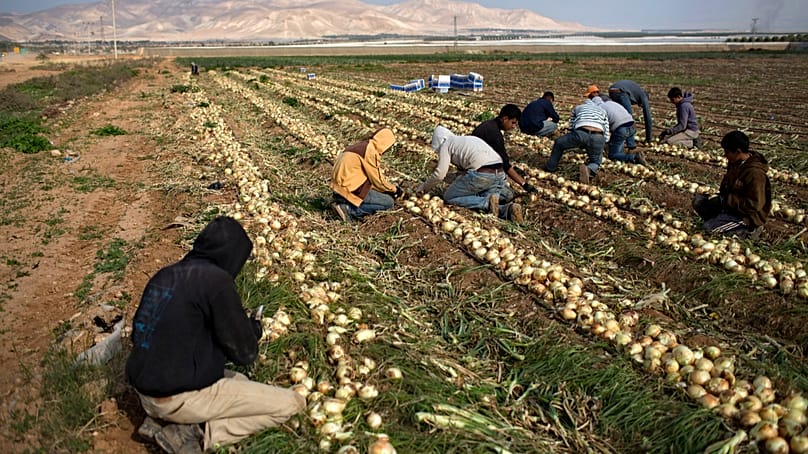
Emily Schaeffer Omer-Man is the founder and executive director of the Global Litigation Center and an expert in international humanitarian law. She told Euronews' fact-checking team, The Cube, that the investigation, based on testimonies from industry representatives, identified three main methods allegedly used to obtain preferential tariff treatment for settlement products.
The first, she said, is what investigators describe as "hiding in plain sight", where paperwork lists Israeli origin and eligibility for preferential treatment, while the actual place of production is redacted. In some cases, the true origin is replaced with an Israeli address that does not correspond to where the goods were produced.
A second method involves mislabelling, with products declared as Israeli-made despite being produced in settlements.
The third consists of mixing settlement goods with products made inside Israel and packaging them together under a single "Product of Israel" label, making their origin difficult to distinguish.
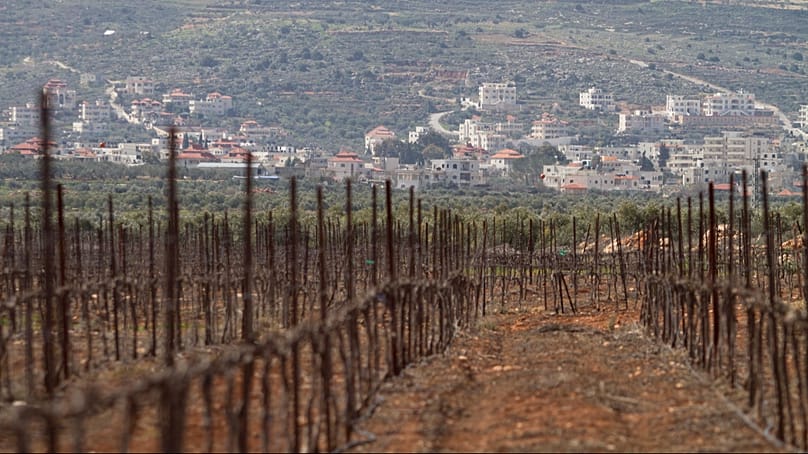
A separate investigation by +972 Magazine, an independent online media outlet founded by Palestinian and Israeli journalists, reaches similar conclusions.
In January 2026, it reported that some Israeli settlement wineries exported bottles labelled simply as "Made in Israel", without reference to their origin in the West Bank.
Trade experts say such cases illustrate the challenges authorities face when verifying the origin of imported goods. Agnès Bertrand-Sanz, humanitarian expert and spokesperson for Oxfam Belgium, highlighted the difficulties faced by European customs officials.
"The main responsibility to check the origin of a product lies with the customs authorities, and it really depends on their capacity," she said. "There are so many products arriving in our ports, in the port of Antwerp, in the port of Rotterdam. Of course, it's done on a case-by-case basis, and they don't have time to check everything."
Martin Konečný, director of the Brussels-based think tank the European Middle East Project, said enforcement is further complicated because Israel considers settlements part of its own territory.
Growing calls for stronger measures
Against this backdrop, several European governments argue that the current framework is insufficient.
In a letter co-signed by France and Sweden and sent to the European Commission in April 2026, and seen by The Cube, the two countries call for additional measures targeting products originating from Israeli settlements. Their proposals include tariffs on settlement goods and restrictions on settlement imports through export licensing schemes.
In an interview with Euronews, French deputy trade minister Nicolas Forissier stressed that the letter advocated a pan-European approach.
"With our Swedish friends, we wrote to the Commission and insisted on the necessity to have a common European position on this question, rapidly," he said.
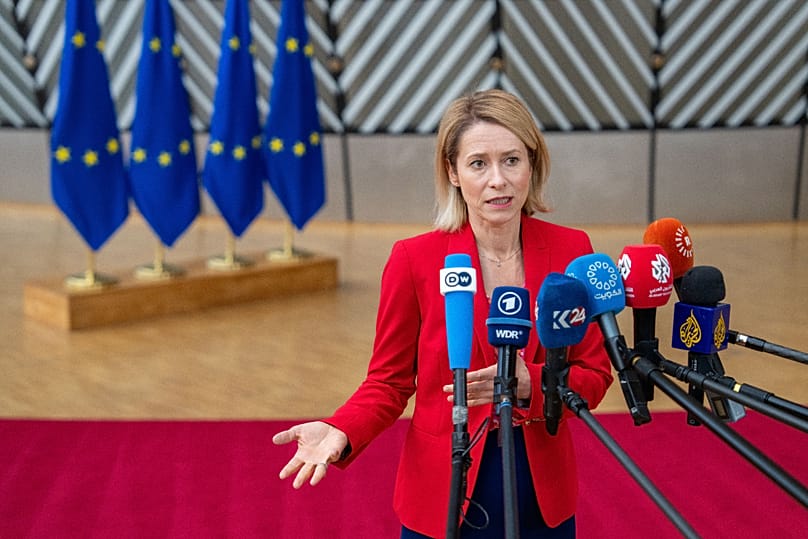
He added that the EU should not permit imports originating from territories deemed illegally occupied under international law.
"We cannot accept any import of products that are, in fact, produced in illegally occupied territories regarding international law," Forissier said.
Sweden and France argue that settlements are illegal under international law and therefore should not benefit from trade arrangements negotiated with Israel.
Konečný voiced a similar opinion, noting that "the settlements are not a part of Israel."
"They are outside Israel's territory and therefore are not covered by the Association Agreement," he said. “They are also not covered by Israel's membership of the World Trade Organization (WTO) because they are not part of the territory of a WTO member under international law."
Member states push ahead with their own measures
With an EU-wide approach still up in the air, several European governments have taken matters into their own hands.
In late December 2025, Spain implemented a package of trade restrictions against Israel, including a ban on imports of goods originating from Israeli settlements in the West Bank, the Golan Heights and East Jerusalem.
Slovenia has also moved towards prohibiting imports of goods originating from settlements, alongside a separate ban on the export, import and transit of arms and military equipment to and from Israel.
Belgium has announced plans to restrict imports from territories it considers illegally occupied, although no legislation has yet been adopted. Some of the measures put forward so far focus on reducing institutional and economic cooperation rather than imposing a direct trade ban.

Ireland is expected to introduce legislation targeting goods originating from Israeli settlements in the West Bank by mid-July 2026.
The Netherlands has meanwhile examined measures aimed at limiting trade in products from the settlements and has indicated it could consider broader restrictions in the future.
Despite these moves by individual member states, any attempt to restrict imports from Israeli settlements could face obstacles. Trade policy is an EU competence, while trade relations with Israel are governed by the EU-Israel Association Agreement, which remains in force.
A European Commission spokesperson told The Cube that trade policy falls under "the EU's exclusive competence" and that "any national measure must be assessed for its compatibility with EU law."
Regarding Spain, the Commission said that Madrid had informed Brussels of its plans but had not yet formally presented the legal text detailing the measures.
A legal debate over the EU-Israel Agreement
Whether member states — or even the EU itself — can legally ban settlement imports remains disputed among legal experts and NGOs.
Konečný argues that the EU-Israel Association Agreement does not include settlement products because settlements fall outside Israel's internationally recognised territory.
Loran Bartels, professor of international law at the University of Cambridge, took a more cautious view.
He said the agreement states that quantitative restrictions on imports and measures having an equivalent effect are prohibited between the EU and Israel.
In his view, this applies not only to products eligible for preferential treatment, but to all goods physically coming from Israel into the EU.
The practical distinction between Israeli and settlement goods remains contentious. As Omer-Man notes, products from both Israel and the settlements in the West Bank and Golan Heights are exported through Israeli ports and handled by Israeli authorities, thus physically departing from Israel proper.

Bartels argues that the EU already differentiates settlement products by excluding them from preferential tariffs and requiring specific origin labels.
An import ban, he said, would represent "a qualitatively different measure", as it would go beyond restricting trade preferences and instead prohibit such goods from entering the EU market altogether.
Schaeffer Omer-Man, however, reaches a different conclusion. She argues that the EU's current approach places it in a "compromised situation" that is difficult to reconcile with international law. She also notes that Israel has long opposed any distinction between Israeli and settlement goods, which it sees as "an affront" and contrary to its interests.
The question of whether the EU could take stronger measures also raises the issue of economic leverage.
Michael Lynk, former UN Special Rapporteur on human rights in the Palestinian territories and associate professor of law at Western University in Canada, argues that the EU has more leverage than is often assumed.
"The EU is Israel's largest trading partner," he said, noting that bilateral trade exceeds €43 billion a year and accounts for around a third of Israel’s global trade.
By contrast, trade with Israel represents less than 1% of the EU's external trade. As Lynk puts it: "This trading relationship is far more important to Israel than it is to the EU."
‘Gwynocide’: Gwyneth Paltrow facing backlash for 'tone deaf' luxury Israel real estate advert
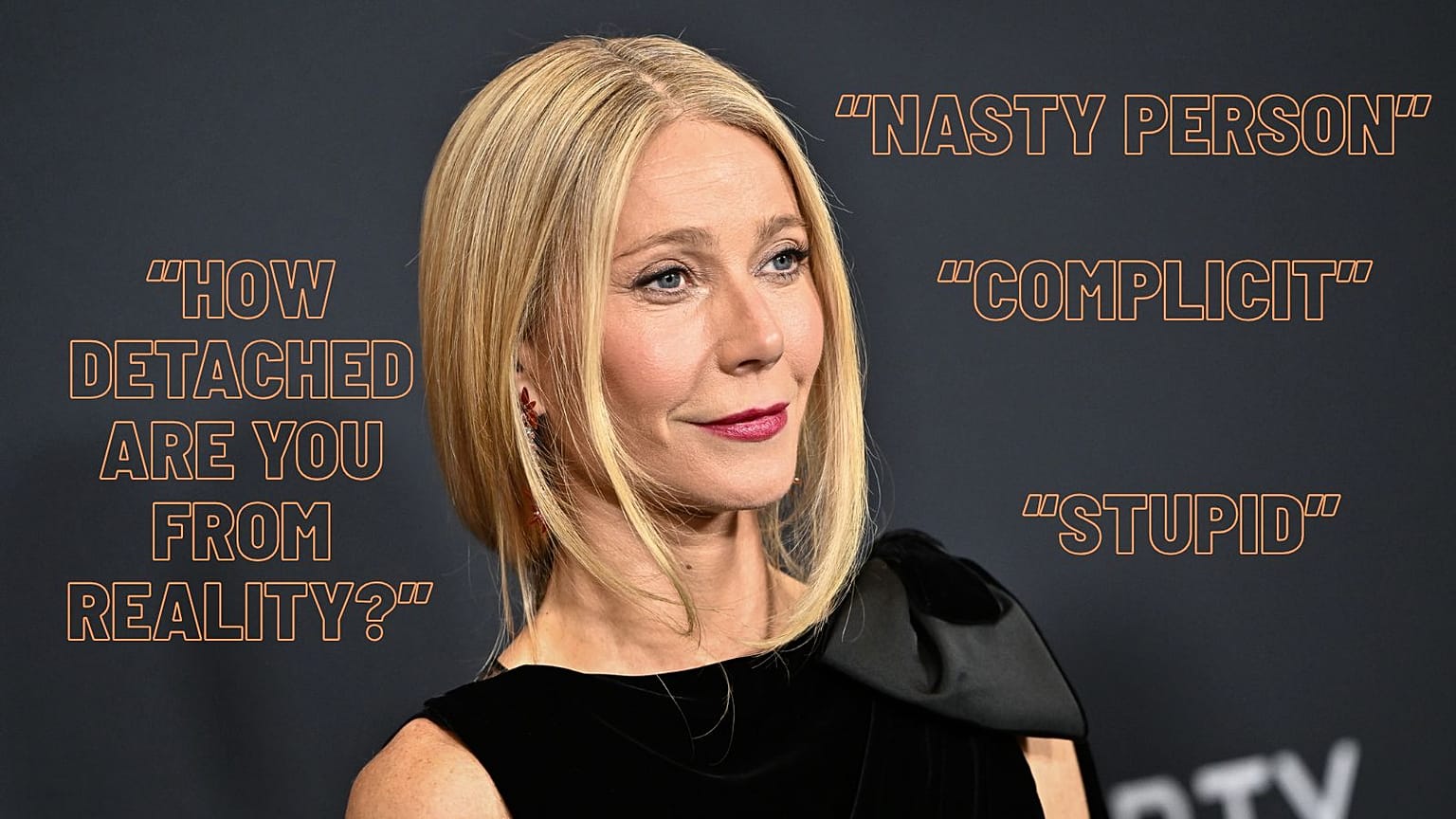
The Oscar-winning actress has appeared in an advert for luxury penthouses in Israel. The backlash has been intense, with one celebrity asking whether Paltrow is “actually a really, really nasty person” or just “stupid”.
Oscar-winning actress Gwyneth Paltrow has found herself at the heart of an epic backlash, with critics calling her “tone deaf”, “stupid”, and referring to her recent shameless stunt as “Gwynocide”.
The 53-year-old actress turned lifestyle entrepreneur with her brand Goop has appeared in a promotional video for 51 Park, a 51-storey luxury residential development in Herzliya, just north of Tel Aviv.
In the cringeworthy spot, Paltrow narrates a morning routine and praises the appeal of park‑side buildings.
“There’s a reason the world’s most iconic buildings are by a park,” she says.
When asked if the luxury building is in New York. She replies: “Herzliya. Israel.”
This clip has prompted a wave of criticism on social platforms, with commenters citing the ongoing conflict in Gaza and the humanitarian crisis. Indeed, mere miles away from 51 Park, Palestinians are being killed and displaced by settlers and the Israeli military. According to a recent analysis from Oxfam, more Palestinians have been killed in the last three years than in the previous 17 years combined.
While Paltrow, who was raised in an interfaith Jewish-Christian family, did not post the clip herself, many commenters posted Palestinian flags and "Free Palestine" messages on her most recent Instagram posts.
One user on X wrote: "Total moral degradation. While children in Gaza face genocide, starvation, and daily massacres, Gwyneth Paltrow is busy promoting luxury apartments in Israel. No conscience, no ethics just pure complicity with an occupying regime. Absolutely repulsive."
Another posted: "Disgusting woman. Anything for a bit of extra cash I guess."
One X user said: “I used to love Gwyneth Paltrow because of her acting skills. I have not missed a single movie of hers till now. Today I feel like throwing up. For a few bucks, which she already had in abundance, she sold her soul to the devil by promoting a residential development in Israel being developed on a stolen Palestinian land.”
Check out some of the reactions below:
Several public figures also chimed in, calling the advert out for its glaring lack of sensitivity and labelling Paltrow as “complicit”.
Alana Hadid, activist and sister of models Bella and Gigi Hadid, called the campaign "tone deaf" and "complicit”, while influencer Matt Bernstein slammed Paltrow for her participation in the ad, saying: "The level of greed and depravity is truly incomprehensible."
Colin Firth’s ex-wife, Livia Giuggioli, criticised Paltrow for her “disgusting” participation in the advertising campaign and announced she has cancelled Paltrow’s upcoming visit to her farm in Italy.
“I just cancelled Gwyneth Paltrow,” Giuggioli said in a recent Instagram video. “She was supposed to come to the farm in a couple of weeks’ time on a tour, a soil-to-fork farm experience, and we just cancelled her because what she did is completely unacceptable.”
Giuggiolo added: “Making an ad for a luxury condo is as disgusting as it can be for someone [with] privilege. How detached are you from reality? You’re either so detached that you need to be cancelled, because you live in another world. Or you’re actually a really, really nasty person. Or you are stupid. Which are you, Gwyneth Paltrow?”
Paltrow has yet to address the backlash publicly, so the question goes unanswered for now.
Paltrow isn't the only high‑profile celebrity that has faced scrutiny for business investments involving Israeli companies or projects. Last year, we reported that Leonardo DiCaprio faced similar backlash for co-financing a luxury eco-hotel in Israel. DiCaprio had previously been involved in several projects in Israel, including investments in Mobli, a social media startup, and Aleph Farms, a farmed meat company.
Israel has been accused by several human rights organizations of committing genocide in Gaza. Last week, Amnesty International released a 149-page report accusing the Israeli government of carrying out a campaign of “state-sanctioned, state-driven and state-implemented” ethnic cleansing in the occupied West Bank.
Israeli leaders have repeatedly denied the allegations, saying its military campaign was aimed at defeating Hamas.