Saturday, June 20, 2026

TODAY IS WORLD REFUGEE DAY

Foreign aid cuts and climate change pushing up migrant flows, IOM chief warns
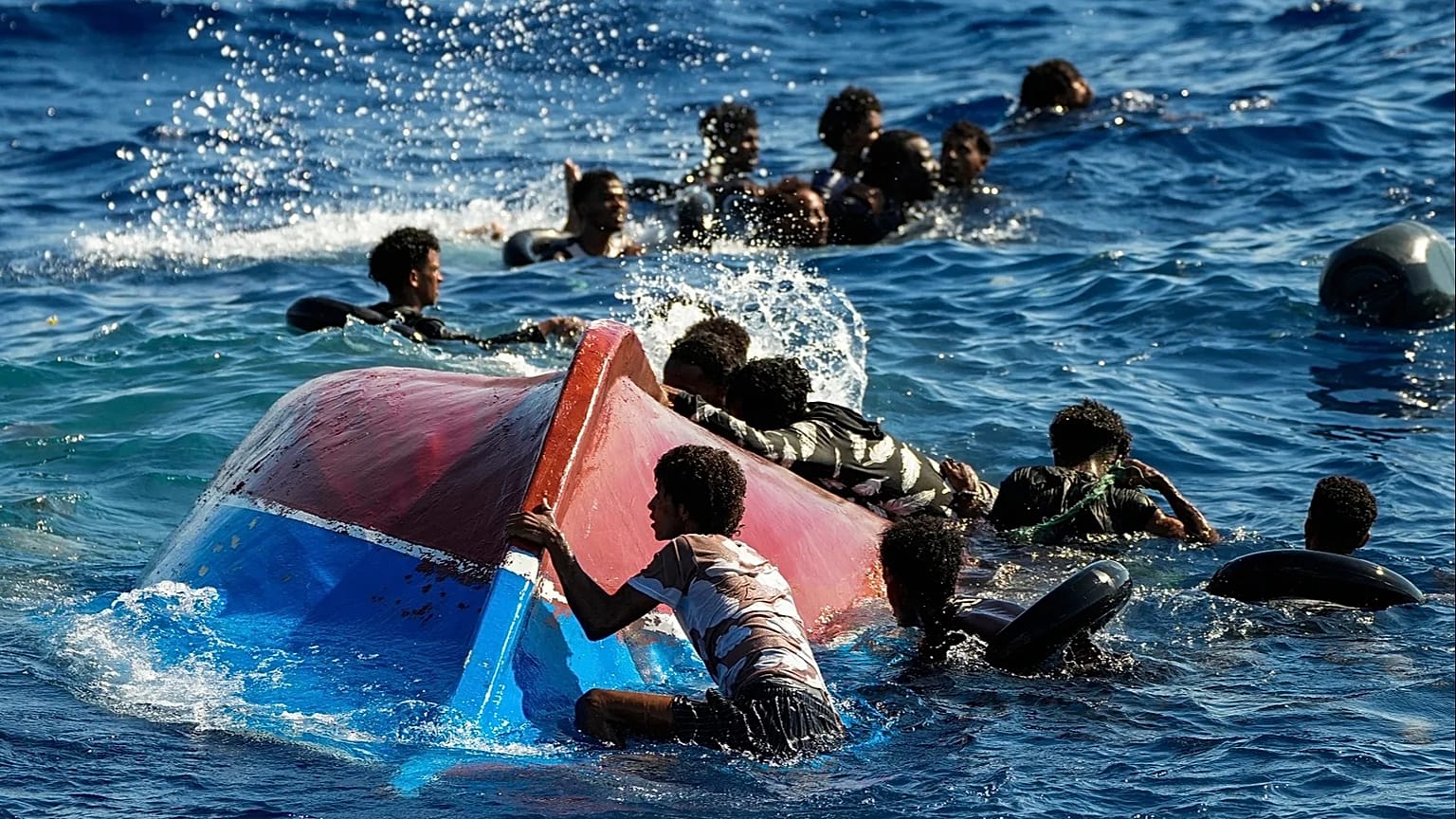
Migrants from Syria and Libya in a wooden boat call for help in the Mediterranean Sea, 11 August, 2022
Copyright AP Photo


By Gavin Blackburn
Published on


Several rich Western countries, particularly the United States but also many European nations, have cut their development aid budgets in recent years.

Cuts in development aid by wealthy countries tend to drive up displacement away from the world's poorest regions, the head of the UN's International Organisation for Migration warned in an interview with the AFP news agency on the sidelines of the Berlin Climate Mobility Forum on Thursday.

"When we see cuts in development assistance, we're actually just making the likelihood that people will have to leave in search of safety, in search of stability, so much higher," Amy Pope said.

"We've seen it in places like Sudan, which is the world's largest displacement crisis as a result of the war there."

"With decreasing support for humanitarian assistance, we then see more Sudanese look for safety, look for opportunity further afield," she added.

Several rich Western countries, particularly the United States but also many European nations, have cut their development aid budgets in recent years, while also tightening migration policies and strengthening border controls.

"In order to respond to domestic political pressures" many countries are making "short-term decisions...that may not ultimately serve (them) in the long term," she said.

"The more we can connect assistance to the movement of people in ways that are humane and dignified, ways that give people agency and opportunity, the less likely we're going to see large patterns of movement."

Shortly after entering the White House for a second time, US President Donald Trump cut 83% of the programmes run by USAID. Before the cuts, the US development agency managed some 42% of global government humanitarian aid.

Germany has slashed its development budget under successive governments to just over €10 billion this year from nearly €14 billion in 2022.
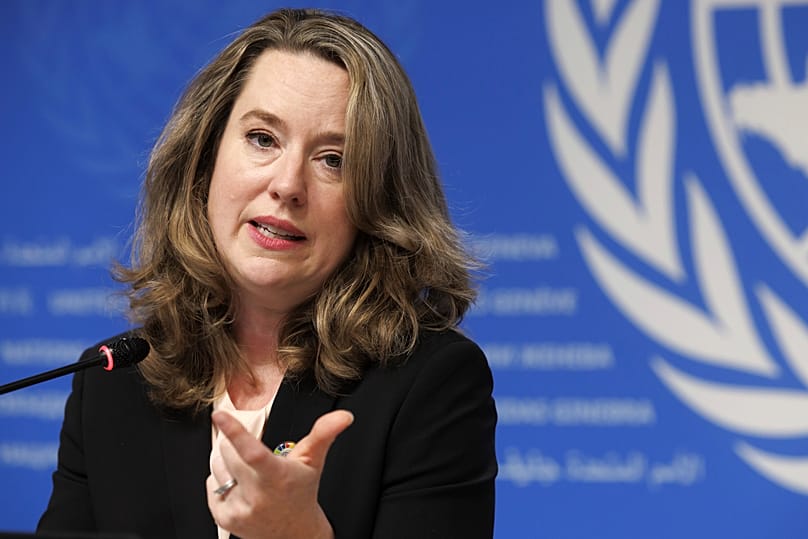
Director General of the IOM Amy Pope speaks during a press conference in Geneva, 2 October, 2023 AP Photo

Climate change fuels migration

Climate change is having an "enormous impact on migration around the world," Pope said.

Small Pacific island states such as Tuvalu are threatened by rising sea levels, while some 10 million people are estimated to have been displaced because of storms in the Philippines, the IOM chief said.

Several regions of Africa have been affected by prolonged drought.

Pope called on policymakers in the wealthiest countries, which bear the greatest responsibility for climate change, to offer more help for people forced to leave their homes.
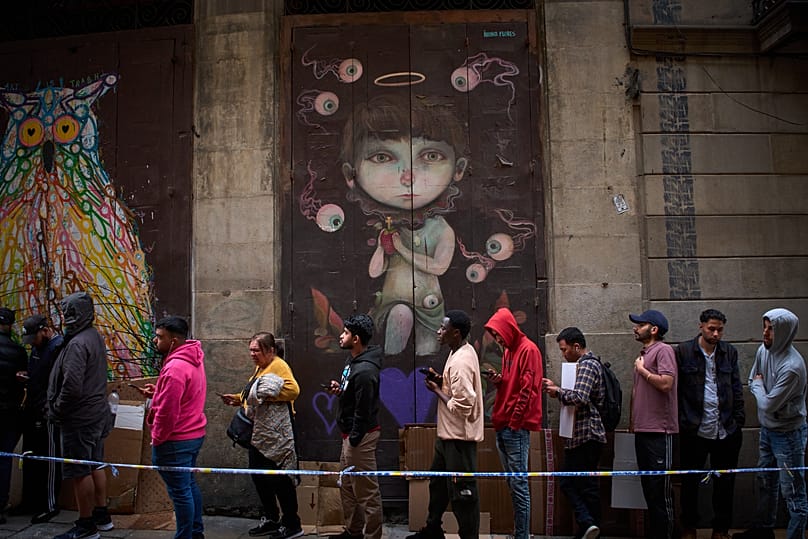
Migrants queue outside Barcelona City Hall, 29 April, 2026 AP Photo

"What are they willing to invest now to ensure more stability, more options, less likely occurrence of unplanned migration in the future?" she said.

"Let's not wait for the emergency...Let's make the investments now."

Contrary to the narratives being pushed by some political leaders about migration, most displacement happens within countries rather than across borders, Pope said.

By mid-2024 there were an estimated 304 million international migrants, according to the IOM, and more than 700 million internal migrants worldwide.

"In the first instance, people will stay in their country. They will go somewhere in their country if they can find resources or safety. Then they move in the neighbouring countries," Pope said.

Providing support within the countries most affected "actually is a lot less expensive...and will have a more stabilising effect," she added.

"Really, as policymakers, we should be looking at the issue in terms of where can we provide the most support in a way that saves the most lives."


On World Refugee Day, Support Refugees,


Don’t Deport Them

The US dropped the bombs that forced Southeast Asian families to flee and is now deporting them back to the very land that is still littered with American bombs.
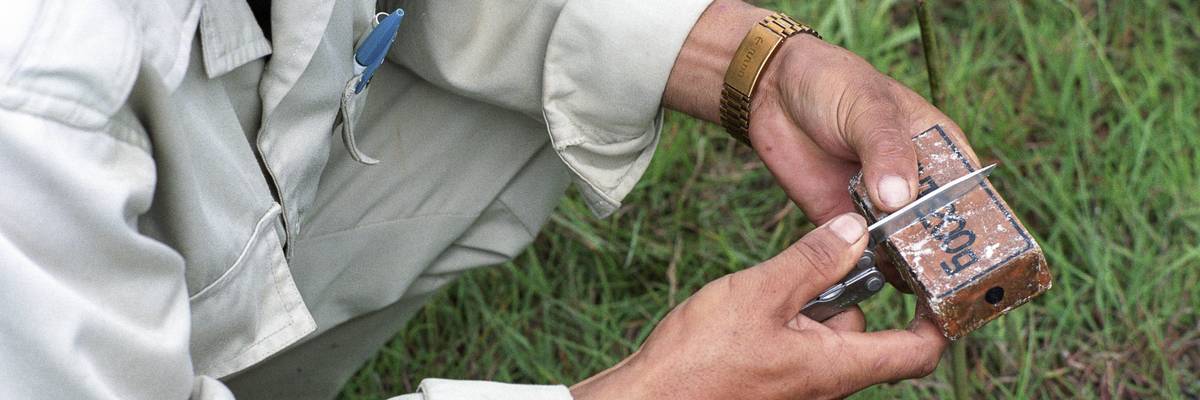


Unexploded ordnance are cleared by humanitarian deminers in Phonsavan, Lao People’s Democratic Republic, August, 2003.
(Photo by Thierry Tronnel/Corbis via Getty Images)


Chris Phommasathit
Jun 20, 2026
Common Dreams

I was only an infant when my family slipped into a weathered wooden boat under the cover of darkness in 1978. Our journey across the mighty Mekong River was wrapped in an eerie, suffocating stillness as my parents, older brother, and I fled Laos. Whenever my mother recounts that night, she always ends with the same whispered awe: “It is a miracle you and Alex didn’t make a sound. I was terrified we wouldn’t make it.”

It would be decades before I fully grasped the terror of that treacherous crossing, the complex geopolitical forces at play, and the shared history between the US and my birth country that forced us out into the night.
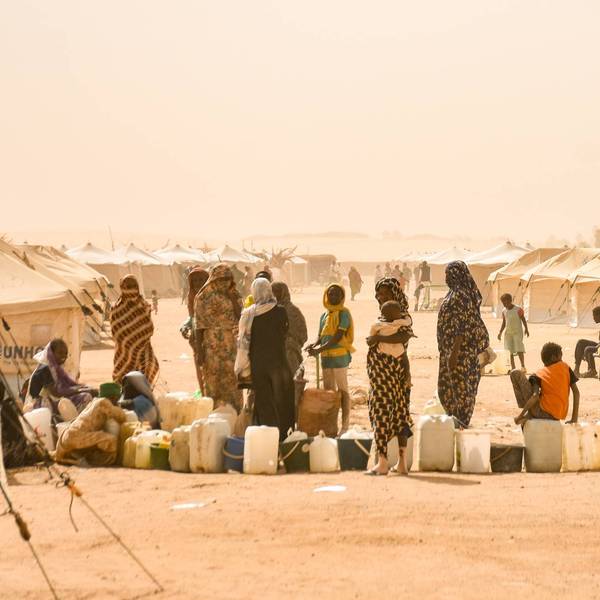

‘Collective Failure of Humanity’: Nearly 118 Million Refugees Violently Displaced Worldwide


I think of that river escape every year on World Refugee Day. It is a day to honor the immense courage of those forced to flee everything they know. For me, it is also a day that demands a deeply honest look at how we treat people once they arrive on our shores.

Following the violence that consumed Laos, Cambodia, and Vietnam in 1975, millions fled, culminating in the largest refugee resettlement in American history. We arrived first through sponsorship programs, and later through the Refugee Act of 1980, laying new roots across the US. Today, our Southeast Asian American community has grown to over 3 million, with vibrant enclaves from California to Minnesota, and my home here in Ohio.

Instead of tearing families apart here at home, the United States must commit to fully funding the removal of unexploded ordnance in Laos until the job is done.

My family is one of the lucky ones. After years of hardship, Columbus welcomed us and helped us plant our roots. Today, I am full of gratitude for my parents’ sacrifice, and we are proud to give back through family businesses we built and by serving on nonprofit boards like the annual Columbus Asian Festival and Legacies of War.

Not every story mirrors ours.

Many Southeast Asian refugees were resettled in severely under-resourced, over-policed neighborhoods without the support necessary to heal from the invisible, lingering wounds of war. Forced to navigate poverty and systemic barriers, some young refugees became entangled in the criminal justice system. Decades later—long after they have served their time, rehabilitated, and built families—they are being subjected to a cruel double punishment.

Since 1998, over 17,000 Southeast Asians have received deportation orders. Many have lived here for decades; the United States is their chosen home, and often the only home they have ever known. Once someone is deported, there is almost no way back, severing families permanently. These policies do not make America safer. They merely manufacture new trauma, uprooting lives all over again.

The tragic irony of these deportations is impossible to ignore. We are sending refugees back to a country still littered with the very weapons that drove their families into the dark to begin with.

Laos remains the most heavily bombed country per capita in history. From 1964 to 1973, in a covert effort to destroy traffic along the Ho Chi Minh Trail, the US dropped at least 2.5 million tons of ordnance across 580,000 bombing missions. That is the equivalent of a planeload of bombs falling every eight minutes, 24 hours a day, for nine years. Even today, unexploded ordnance continues to claim civilian lives, with children making up over 60% of those harmed.

True accountability requires a different path. It requires cleaning up the remnants of war that America left behind in Laos and honoring the humanity of those who survived it. For decades, US programs have addressed these lasting legacies. These efforts not only save lives and support vulnerable communities, but they also bolster years of diplomatic progress in a region of immense strategic importance. Foreign aid is not charity—it is a strategic investment for our country. US assistance in Southeast Asia consistently garners bipartisan support precisely because it yields clear, tangible benefits: enhanced safety, economic stability, and strengthened bilateral cooperation.

Instead of tearing families apart here at home, the United States must commit to fully funding the removal of unexploded ordnance in Laos until the job is done. I urge members of Congress to join the UXO and Demining Caucus and support legislation like the Southeast Asian Deportation Relief Act. We must end this cycle of displacement and keep our communities whole.

The United States was forged by those seeking a better life. This enduring legacy is embodied by the Statue of Liberty, our “Mother of Exiles,” who stands as a beacon of hope for people escaping persecution and war.

World Refugee Day was first celebrated 25 years ago. This year’s theme, “solidarity with refugees,” calls on us to recognize that true compassion does not end at the border. It means standing by refugees as they build their lives, acknowledging the full weight of our shared past, and ensuring that no one who seeks refuge from danger is ever forced back into harm’s way.


Our work is licensed under Creative Commons (CC BY-NC-ND 3.0). Feel free to republish and share widely.


Chris Phommasathit
Chris Phommasathit is a board member at Legacies of War and a refugee from Laos.


archivehttps://archive.org  › details  › multitudewardemo0000hard

Multitude : war and democracy in the age of empire : Hardt,...

Ask the publishers to restore access to 500,000+ books · Search the history of more than 1 trillion web pages


monoskophttps://monoskop.org  › images  › 9  › 95  › Hardt_Michael_Negri_Antonio_Empire.pdf

EMPIRE

Empire / Michael Hardt and Antonio Negri.


France grants reparations to children uprooted from Réunion Island

Paris has approved a law granting reparations to more than 2,000 children from Réunion Island who were sent to mainland France between 1962 and 1984 – acknowledging the state's responsibility for a policy that separated families, uprooted minors and left lasting trauma.


Issued on: 17/06/2026 - RFI

One of 47 people born on Réunion Island and raised in France's Creuse region is welcomed back to the island on 7 April 2023. France has approved a law granting reparations to children transferred from Réunion Island to mainland France between 1962 and 1984. AFP - STEPHAN

The French parliament gave final approval to the bill on Tuesday after a unanimous vote in the Senate, following an earlier vote in the National Assembly.

The legislation creates a commission to preserve the memory of the scandal, establishes a national day of tribute on 18 February and gives victims and their descendants the right to apply for a lump-sum payment from a state fund.

Lawmakers said the measure recognises the state's responsibility in a scandal that affected 2,015 minors from Réunion Island, a French overseas territory in the Indian Ocean.


Childhoods uprooted

Between 1962 and 1984, children were moved from Réunion to 83 mainland French departments, mainly rural areas.

The policy was officially intended to respond to the island's population doubling in 30 years and to help repopulate rural regions. The department of Creuse received the largest number of children, giving rise to the nickname "Children of the Creuse".

Many of the children had been placed in state care before being transferred.

The policy meant childhoods cut short overnight, sudden changes to civil status records and, in some cases, mistreatment and humiliation that caused deep trauma.

"Thousands of lives were turned upside down by exile, by family separation, by the brutal break with a land, a language and a lineage," Overseas Territories Minister Naïma Moutchou said.

The law is "a measure of justice and dignity" that addresses the "darker parts" of French history, she added.

The legislation was introduced by Réunion lawmaker Karine Lebon and was adopted in the presence of survivors and associations representing them

Families left behind


The impact extended beyond the children themselves.

"Parents waited in vain for the return of their children and families were marked forever by silence, misunderstanding and sometimes shame," said Audrey Bélim, a senator from Réunion.

One of the children affected was Marie-Germaine Périgogne, now president of the Federation of Uprooted Children from France's Overseas Departments and Regions.

Adopted in 1969 after living with a foster family and separated from her brothers and sisters, she spent years believing her name was Valérie and that she had been born in Creuse.

Her true origins only came to light when she discovered an identity document at the age of 16. Recovering her original name required a lengthy administrative battle.

In 2017, Emmanuel Macron described the policy as a "mistake" that had "worsened the distress" of the children transferred from Réunion Island.

Lawmakers said some of those affected may still be unaware of their origins.


Memory and repair


The new law gives victims and their descendants the right to apply for a lump-sum payment funded by the state.

The legislation follows laws passed in 2005 for people repatriated from North Africa and in 2022 for Harkis, which included similar recognition and compensation measures.

"A new memorial milestone on the long road to rebuilding for the children transferred from Réunion," senator Viviane Malet said.

(with newswires)
FRENCH HISTORY

France’s Popular Front at 90: a movement that became a myth

Ninety years ago, a broad left-wing coalition swept to power and kickstarted reforms that fundamentally changed working life in France. Its brief but radical tenure made it the stuff of legend for the French left.

SAME TIME AS THE SPAINISH CIVIL WAR


Issued on: 14/06/2026 - RFI

Women march in a Bastille Day rally in Paris on 14 July, 1936 celebrating labour reforms introduced by France's Popular Front government. © AFP

By: Jessica Phelan

Within weeks of taking office on 6 June, 1936, the Front Populaire – or Popular Front – had established collective bargaining, enshrined the right to strike, capped the working week and granted all employees paid leave.

But the movement that redefined workers’ rights in France didn’t start out on an economic platform. Instead, it was forged to fight authoritarianism.

By the 1930s, fascists were in power in Germany and Italy, and far-right groups were flexing their muscles in France too. In February 1934, they rallied near the parliament building in Paris, seeking to bring down the centre-left government. The rally ended in a riot, with a dozen people dead and hundreds injured.

This rising tide prompted communist chiefs to drop their objections to working with moderates. In the months that followed, the French Communist Party teamed up first with the social democratic French Section of the Workers' International (SFIO), then with the centrist Radical Party.

On 14 July, 1935, with France now under a conservative government headed by Pierre Laval, a future Vichy collaborator, the new alliance gathered a crowd of 500,000 in Paris. Channelling the spirit of the revolutionaries who had stormed the Bastille some 150 years earlier, they pledged to “defend the democratic freedoms won by the people of France, to provide bread for the workers, work for the young, and lasting peace for the whole world”.

When France held parliamentary elections the following spring, that became the Popular Front's slogan: “pain, paix, liberté” – bread, peace, freedom.


Economic experiments

By now backed by trade unions, civil society organisations and local anti-fascist groups, “it was a kind of huge coalition way above the political milieu”, says Nicolas Brisset, a historian of economic thought at the Université Côte d'Azur in Nice.

It had also expanded its original remit. The Great Depression was biting and while France’s leaders were focused on slashing public spending, elsewhere governments were taking the opposite approach.

In the United States, President Franklin D Roosevelt was investing massively in public works and job creation schemes, while establishing social security benefits and expanding workers’ right to unionise.

“It's clear that the Popular Front was also inspired by what were called at that time the ‘Roosevelt experiments’,” Brisset says. Drawing on his New Deal, as well as other examples, they promised welfare for the unemployed, infrastructure projects and other stimulus measures.

Voters were convinced. They elected the Popular Front alliance on 3 May, 1936, securing 386 seats in parliament out of 608. The SFIO was the largest party and its leader, Léon Blum, was in line to head a new Popular Front government.

Listen to this story on the Spotlight on France podcast:

The joy of strikes

The month between winning power and taking office saw the Popular Front rewrite its platform again.

The impetus came from the workers’ movement. Angered by seeing employees punished for joining May Day protests and emboldened by the Popular Front’s victory, unions launched strikes that would become some of the largest in France’s history.


Between May and early June, more than 2 million workers occupied thousands of factories across the country, bringing production to a halt and forcing shops to close.


The strikes were exceptional not just for their size, but their nature. Organic and almost celebratory, they were accompanied by picnics, music, dancing and card games on the picket lines. They came to be remembered as “the joyous strikes”.


Workers dance and play music at a French factory on 5 May, 1936, in the early days of 'the joyous strikes'. © AFP

By the time Blum was sworn in as France’s first socialist prime minister, his government was in a position to deliver its promises and more. “It was an extraordinary weapon for him to have all those people outside striking,” says Brisset. “It was a huge political pressure.”

With all sides agreed on the urgency of getting France back to work, the new government passed reforms at breakneck speed.

On 8 June, it got employers and unions to sign accords establishing the right to strike and unionise, as well as a blanket pay rise. By the end of the month, it had followed up with legislation guaranteeing collective bargaining, a 40-hour working week and two weeks of paid leave – measures even more ambitious than the Popular Front’s original programme.

It was the start of a summer that has since entered into myth in France’s collective memory: when street parades celebrated a new era for labour rights and workers took what were for many their first holidays.


Reforms halted


But as the days cooled, the Popular Front’s momentum stalled.

After a flurry of other progressive measures, spanning from fixing minimum prices for farmers to extending compulsory education, in February 1937 Blum announced social reforms were on hold.

Germany was rearming and Blum wanted to build up France’s defence industry in readiness. Meanwhile markets were betting against the franc, dragging down its value, and the wealthy were moving their capital to safe havens abroad.


Leon Blum, France's first socialist prime minister, answers journalists' questions in June 1936 in Paris. AFP - -

Under financial pressure, the government prioritised arms production. As workers saw reform sidelined and inflation swallowing their extra wages, the Popular Front lost support from its base and divisions within the alliance widened.

In June 1937, Blum sought special powers to push through emergency financial measures. Parliament denied them and, after barely a year in office, he and his government resigned.

They were replaced by the Radicals, who pulled successive governments further to the centre. When they opted to ally with right-wing parties instead of Blum’s socialists in April 1938, the Popular Front was effectively dead.

Reviled and revered

During the war that followed, the Vichy regime sought to blame the Popular Front for France’s invasion by Nazi Germany, putting Blum – the first Jew to lead France – on trial.

For decades the narrative persisted that the alliance’s reforms had weakened the French economy and contributed to its defeat, says Brisset.

When France reduced the working week to 35 hours in 2000, he notes, opponents invoked the reforms of 1936 as a warning – “like, ‘remember the Popular Front? Remember what happened last time we reduced working hours?’”

Historians have since reassessed its legacy, pointing out that Blum reversed years of under-investment in French armament. Most tellingly, France has kept or expanded the Popular Front’s flagship measures.

“The Popular Front set the foundations of the social state,” says Brisset. “Of course the Popular Front failed, because it fell really quickly. But all the measures it implemented came back again after the war... And some others have been added, like the social security system, large-scale nationalisation etc. And I think without the Popular Front, this second wave of the construction of the social state would not have happened.”


A protester holds a placard reading: 'Let's bring the Popular Front back again' at a May Day demonstration in Paris on 1 May, 2016. © AFP - ALAIN JOCARD

For the French left, the alliance’s year in power remains a foundational moment and a symbol of bold, progressive government. In France’s most recent legislative elections in 2024, left-wing parties came together as the “New Popular Front”, a broad coalition that became the biggest bloc in parliament – but proved too broad to hold.

Brisset speculates that parallels between the crises of the 1930s and today – notably the rise of the far right – partly explain why the left continues to invoke the Popular Front.

But he also believes its legendary status is, to some extent, deserved.

“I think it proved that something we thought was impossible was in fact maybe possible,” he says.

“It changed what we think the role of the state is, in terms of economic intervention, in terms of social intervention, in terms of social security intervention... And I think it's priceless. I really think it's priceless.”

The project nurturing West Africa's new generation of women filmmakers

Some of the West African film industry's biggest names are backing a new mentorship programme to support emerging women filmmakers. Showcased at this year's Cannes Film Festival, the Mariama Lab project aims to help women bring their stories to a wider audience in the region and beyond.


Issued on: 14/06/2026 - RFI

Cover image: Senegalese filmmaker Angèle Diabang behind the camera on a shoot. She is a mentor in the Mariama Lab programme to support West African women filmmakers. 
© Karoninka
02:37


By:  Ollia Horton


Born in Côte d’Ivoire, Azata Soro made her name as an actress in Burkina Faso and has since become a director and producer. She learned on the job, but always dreamed of going to film school for professional training.

"I talk all the time about imposter syndrome, and it lasted for so long. I still carry it with me. My advice to young women today would be: 'Free yourself from it and shine,'" Soro tells RFI.

Today, she is helping other young women as one of the coordinators for Mariama Lab, a year-long mentoring programme to support emerging women filmmakers from West Africa.

Co-created by the Collectif 50/50, a French NGO for gender equality, and the Mariama Institut, a film writing residency in Mauritania, it is designed to boost women working on their first or second features.

The five women chosen to participate in the first edition, which runs until December, hail from Gambia, Senegal, Guinea Conakry and Mauritania.

Escaping the male gaze


For Soro, cinema represents first and foremost a way for women to take control of their stories.

"The first film I remember seeing on television was about excision [female genital mutilation] – I didn’t know what it was at the time, but I remember my father getting very angry about it. Our grandmother wanted that for us and he didn’t," she recalls.

"Creating an African women’s cinema means telling our stories through our eyes without the male gaze focused on our bodies."

Actress and film director Azata Soro is a coordinator for the Mariama Lab project to support emerging West African women filmmakers. She is pictured speaking to RFI at the Cannes Film Festival, 19 May 2026. © RFI / Ollia Horton

As an actress, Soro suffered a violent attack on a set that left her physically and emotionally scarred.

"For a long time I was stuck at home, I didn't dare speak up, I didn't dare share my story. There was this fear," she says.

Soro later realised that cinema could become a powerful platform to expose stories like hers. Together with other women in film, in 2019 she helped launch the African #MeToo movement, #MemePasPeur (Not Afraid). "It’s thanks to cinema that I have been able to speak out about the violence I suffered in the industry," she says.

Helping women too afraid come forward and opening the way for them to make a career in film became her new drive.


Breaking barriers, building bridges

Now settled in France, Soro has found support from groups like Collectif 50/50, which are raising awareness about issues such as sexual violence, discrimination and gender equality in the cinema industry at large.

Through the Mariama Institute, she also hopes to set up training programmes for intimacy coordinators for African film sets, something less standard on the continent than in some Western countries.

Soro is one of several well-known names in the African film industry involved with the Mariama Lab project. Others include screenwriter Kessen Tall, who worked on the award-winning 2014 film Timbuktu with Mauritanian director Abderrahmane Sissako.

Senegalese director and producer Angèle Diabang, who was part of the Un Certain Regard Jury this year in Cannes, will provide advice to Mariama Lab participants, as will France-based actress and director Aïssa Maïga, who has Senegalese and Malian roots.

Aïssa Maïga speaking to RFI at the 2025 Cannes Film Festival. © Romain Ferré / RFI

Run with the support of the French embassy in Guinea Conakry and the Institut Français cultural network, the programme has four main stages: one-on-one online mentoring, face-to-face masterclasses with industry professionals, a writing workshop in Guinea and participation in a film festival.

For now, Mariama Lab is focused on West Africa, but the ambition is ultimately to open it up to the entire continent.

"There’s a problem of breaking down the barriers within the African film market itself – there aren’t many bridges between countries within the cinema industry," explains Mathy Mendy, a coordinator on the programme for Collectif 50/50.

"Whether we have candidates from countries that speak French, English or Portuguese, it doesn't matter, the main thing is to bring together the synergies of female filmmakers and artists across Africa more broadly."

Mathy Mendy, a coordinator with the French NGO Collectif 50/50, promoting the Mariama Lab mentoring programme for West African women at the Cannes Film Festival, 19 May 2026. © RFI / Ollia Horton


From script to screen

The mentoring programme is starting by focusing on women directors, Mendy says, but in the long term they want to target every role in the production chain, from screenwriters to camera operators to editors.

"Collectif 50/50 observed that when women are behind the camera, they generally have a more gender balanced team," she notes.

Both Soro and Mathy agree that Africa has a dynamic film industry, but lacks the cinemas to show its work widely. Without broad distribution, African films often struggle to travel across the continent.

"Africans want to tell their own stories – especially women," Soro says. "There is a large audience that wants to see African content and this includes the diaspora."

She points to box office success stories like Diabang’s So Long a Letter, an adaptation of Mariama Ba’s novel that became a breakout hit in Senegal, and Marabout Chérie by Côte d’Ivoire’s Kadhy Touré, which drew thousands of filmgoers in West Africa before securing wider international distribution.

As for the participants in Mariama Lab, Mendy’s advice is "to listen to themselves, to trust themselves, to move forward".

"There will surely be obstacles, setbacks, but [they should] continue on this path because it's where they belong. Soon people will be talking about them, they're already talking about them, and before long they will be indispensable in the international film industry."
France among 15 countries to pledge to target illegal fishing with shared data

France is among 15 countries to have signed the Mombasa Declaration, unveiled at the Our Ocean Conference held in the Kenyan port city this week. The global agreement, aimed at combatting illegal and destructive fishing, commits countries to improved data collection and sharing of information on fishing vessels.


Issued on: 18/06/2026 - RFI

Fifteen countries signed the Mombasa Declaration on 17 June, including Ghana, pictured here. AFP/File

The 11th edition of the Our Ocean Conference began in Mombasa on Tuesday, its first time being held in Africa, bringing together politicians, NGOs, investors and innovators.

Since its first edition in 2014, organisers say it has led to more than 2,900 commitments valued at over $169 billion, covering marine conservation, sustainable fisheries, climate adaptation, security and pollution reduction.

The Mombasa Declaration signed on Wednesday commits to modernising vessel registries, better monitoring and sharing data with the United Nations Food and Agriculture Organization (FAO).

Signatories include Belgium, Cameroon, Chile, Dominican Republic, France, Gambia, Ghana, Guinea, Liberia, Panama, Papua New Guinea, Peru, Somalia, South Korea and the Republic of Congo.

For years the fishing industry has resisted transparency, either to disguise illicit activity or simply to ensure competitors did not know about valuable hunting grounds, Tony Long, CEO of charity Global Fishing Watch told French news agency AFP.

Many ships also disguise their real owners, flying flags that have nothing to do with their true base of operations, he said.

Global Fishing Watch is launching a "world-first global map" during the conference, tracking every class of fishing vessel, including the so-called "dark fleet" that tries to hide its location.

"Too much of today's fishing remains invisible to those tasked with managing our ocean," said Long, vowing the map would "transform scattered, fragmented data into actionable insights for policymakers".

Many countries have come to see the long-term benefits of open data, notably since the UN's Sustainable Fisheries Resolution in 2024, which has put "transparency at the forefront of every discussion," Long said.
Disappearing dugongs

The issue is existential for local fishermen just a few kilometres up the Kenyan coast, who accuse large, foreign-crewed trawlers of destroying fish stocks and damaging the marine environment.

"This is making people here poor and dramatically changing the sea ocean bed which has depleted a lot of species in our area," said Awadh Mbarak, 53, secretary of a "beach management unit" in the coastal town of Kipini.

A retired fisherman from the same town, Twaha Yusuf, told AFP he had not seen a dugong, the beloved manatee-like sea mammals, for 40 years – and blames the trawlers.

"Maybe my son will not even see sea turtles in the future," he said.

Locals accuse trawlers of illegally trespassing in shallow waters reserved for small, local boats. But without publicly available data, it is impossible to hold them to account.

"Small-scale fishers are unable to feed their families. They're losing their livelihoods," said Maisey Pigeon of the Coalition for Fisheries Transparency, a Washington-based NGO.

"A lack of transparency enables things like illegal, unreported and unregulated fishing, and also human rights and labour abuses on fishing vessels."

(with AFP)
EU leaders weigh new trade defences to counter China's export dominance

European Union leaders will debate on Thursday whether the bloc needs stronger trade defences to curb a surge of Chinese exports that Brussels sees as a threat to European industry and jobs.


Issued on: 18/06/2026 - RFI

Chinese-made cars being loaded on to a European freight ship for export at a port in Yantai, in China's eastern Shandong province, on 11 June 2026. © AFP

At a two-day summit in Brussels starting on Thursday evening, EU leaders will seek ways to reduce a growing imbalance in the flow of goods between Europe and China – which Brussels fears makes it vulnerable to potential coercion and supply shocks.

The bloc’s trade deficit in goods hit around €360 billion last year, meaning Chinese exports sharply exceeded those from the EU.

“Our trading relationship with China has reached a point that requires a reset. Not confrontation, but rebalancing,” EU trade chief Maros Sefcovic said.

One option would be to create a new tool to impose sector-specific tariffs, for example on chemicals or green technology.

French President Emmanuel Macron last month called for a “European equivalent of Section 301”, the trade tool used by US President Donald Trump to impose sweeping tariffs, arguing Europe’s “sovereignty is at stake”.

Germany has so far been cautious because its economy is more exposed to possible retaliation, while Spain has sought to avoid tensions as it pursues Chinese investment.

But Berlin appeared to be moving closer to France’s position. Germany was “open” to new tools if they were necessary, as long as they were “not targeted at specific recipients”, a German official told French news agency AFP.

Concern about China’s dominance is not limited to the EU. Fears are rising in the West over Beijing’s control of the market for rare earth minerals used in everyday electronic appliances.

China was also on the menu during talks between G7 leaders in France this week, after export controls imposed by Beijing on rare earths last year sent shockwaves through global supply chains.


China subsidies


Over dinner on Thursday, EU leaders will consider which existing tools the bloc can use to address the imbalance and whether new instruments and actions are needed.

The European Commission, which oversees EU trade policy, has pushed for tougher action. The discussion is expected to show how far the EU is ready to go to protect its industries, with leaders due to guide the commission on its next steps.

The commission is also considering whether to introduce safeguard measures for the chemicals industry, similar to those used for steel.

Brussels says fair competition is needed, pointing to the advantage Chinese companies gain from massive state subsidies.

Between 2005 and 2024, Chinese firms received around three to eight times more government support than firms in the Organisation for Economic Co-operation and Development, the OECD said, calling the figure “a conservative estimate”.

Retaliation

Beijing has vowed to retaliate if the EU pushes through rules that would exclude certain products made outside the bloc from public contracts. After the EU imposed higher tariffs on Chinese electric cars in 2024, China imposed anti-dumping duties on European cognac.

The EU has shown little appetite for a broader trade war with China, and hopes dialogue can prevent escalation. Sefcovic has reportedly invited Chinese Commerce Minister Wang Wentao to Brussels later this month.

The debate comes as Europe is also looking at alternative trade and energy routes, made more urgent by the Iran war’s shock to global fuel prices.

European Commission President Ursula von der Leyen has expressed renewed interest in the India-Middle East-Europe Economic Corridor (IMEC), which is intended to improve transport, trade, energy and digital links.

“Alternative export routes have been created that are more resilient and offer choices,” von der Leyen told G7 leaders this week, citing IMEC as an example.

The corridor is seen as a possible way to diversify the EU's supply chains and strengthen energy security.

(with newswires)


INVESTIGATION

Mozambique journalists face killings and silence as repression deepens

Mozambique's journalists are facing growing pressure after years of killings, disappearances and attacks that have gone unpunished. Violence against reporters intensified after disputed 2024 elections, while a long-running system of intimidation has reached a new peak. This sixth instalment of Mozambique Exposed – an investigation coordinated by Forbidden Stories to which RFI contributed – examines how that climate of fear is reshaping the country's media.


Issued on: 18/06/2026 - RFI

Four Mozambican journalists have been killed or have disappeared since 2020, while others were attacked covering the country's post-election crisis in 2024. No one has been held to account. © Baptiste Condominas

Albino Sibia's final words were broadcast live on Facebook as he lay dying after being shot while covering a protest in southern Mozambique.

"They shot me and they're still shooting... I'm dying."

On 12 December 2024, the 30-year-old blogger was filming police firing tear gas during a demonstration in Ressano Garcia, a Mozambican town on the border with South Africa, when he was shot twice in the back.

Demonstrations contesting the results of the October 2024 general election, which triggered months of unrest, were in full swing at the time.

"Mozambican journalists paid a heavy price for covering the post-election crisis," said Muthoko Mumo, Africa programme coordinator at the Committee to Protect Journalists.

Mozambique's branch of the Media Institute of Southern Africa (Misa) filed a legal complaint over violence against journalists during the unrest that followed the election.

"Proceedings were opened. Misa was heard in February 2025 but since then, nothing has happened," journalist Slaide Muthemba, the press freedom organisation's spokesperson in Maputo, told RFI.

Climate of fear


The post-election unrest lasted nearly four months and marked the peak of a long-running crackdown on press freedom and liberty of expression.

Mozambique is one of the few African countries never to have experienced a change of government since independence. Frelimo, the Mozambique Liberation Front, has ruled the country since 1975.

"What happened during the post-election crisis was something we had never seen before," Luis Nachote, coordinator of the Mozambique Centre for Investigative Journalism, told RFI.

"Over the past 10 years, we have faced severe restrictions. There have been many cases of people being arrested and disappearing."

Four journalists have been killed or have disappeared since 2020.

Among them was Joao Chamusse, editor-in-chief of the online newspaper Ponto por Ponto, who was found dead at his home in Catembe, on the outskirts of Maputo, on 14 December 2023. His phones and computer were gone.

Community radio journalist Ibraimo Mbaruco disappeared after being taken away by men in uniform in 2020. Online journalist Arlindo Chissale, from Pemba in the northern province of Cabo Delgado, disappeared in similar circumstances in 2025.

Rich in gas, rubies and lithium, Cabo Delgado is central to Mozambique's economic future. But the province has also been the scene of an insurgency by a terrorist group known locally as Al-Shebab and linked to the Islamic State (although with no connection to the Somali militant group of the same name).

The conflict has killed more than 6,500 people and displaced nearly 1 million.

Growing repression

"The post-election crisis frightened the regime and it responded very harshly," said Borges Nhamirre, a researcher at the Institute for Security Studies, a South African think tank. "Today, its control over the media is even stronger."

Demonstrations, the creation of Anamola – the party of opposition figure Venancio Mondlane, the defeated presidential candidate and driving force behind the protest movement – and the war in Cabo Delgado have all become taboo subjects, he told RFI.

"If you want information on these subjects, you have to search online. You won't find anything in the traditional media."

Online platforms have instead become an important space where many young Mozambicans exchange information.

"Communication through the internet and social media ended up raising awareness among young people. That's what triggered the mass outrage during the post-election crisis," explained journalist and sociologist Helder Leonel.

Leonel has hosted the weekly radio programme Hip Hop Time for 20 years. It has become a hub for rap and alternative culture in Mozambique.

"Through WhatsApp groups and memes shared on social media, a narrative emerges that runs counter to the one pushed by those in power," he said.

The Mozambican government or senior Frelimo figures have stakes in the country's three telecoms operators, Mcel, Vodacom and Movitel. Many young people have responded by finding ways around those controls, most commonly by using a VPN, or virtual private network, to hide their online activity.


Voice that won't fade

Alternative voices gathered on 6 May at the former home of rapper Azagaia in Matola to honour the musician, who died of an epileptic seizure three years earlier.

Azagaia became a symbol of dissent after authorities censored his 2008 song Povo no poder ("People in Power"), which has since become an anthem for many young Mozambicans.

"It's still almost impossible to hear it on the radio," Leonel said. Different versions of the song have nevertheless been viewed more than 1.5 million times on YouTube.

Marches held across several Mozambican cities after Azagaia's funeral in March 2023 were violently dispersed by security forces. At least 19 people were injured in Maputo, including two who were seriously hurt.

Activists, artists, journalists and academics came together at the house, which has since been turned into a library.

Outside, dozens of books were laid out on a table, including Traveller's Baggage by Portuguese writer and 1998 Nobel literature laureate Jose Saramago, biographies of former Mozambican president Samora Machel and US activist Malcolm X, and a comparative study of the first presidents of Angola and Senegal, Agostinho Neto and Léopold Sédar Senghor.

Above the entrance was written: "O verbo que nao se cala" – "the word that never falls silent".


Mozambique police accused of using spy networks to pursue government critics

Mozambique's criminal police are under growing scrutiny as political repression continues more than 18 months after disputed elections triggered unrest. Civil society groups denounce abductions and killings by security forces, with particular attention focused on the National Criminal Investigation Service, known as Sernic. This fifth instalment of Mozambique Exposed – an investigation coordinated by Forbidden Stories to which RFI contributed – examines claims that Sernic has become a form of political police serving Mozambique's ruling party.


Issued on: 17/06/2026 - RFI

More than 18 months after Mozambique's disputed October 2024 election, civil society groups accuse security forces of carrying out abductions and killings. Rights defenders say the National Criminal Investigation Service, known as Sernic, has played a central role in the repression. © Baptiste Condominas/RFI
By:RFI
ADVERTISING


At 8.40pm on 23 January 2025, Simiao Carvalho was walking through Choupal, a neighbourhood behind the airport in Maputo, Mozambique's capital.

Protests linked to the disputed October 2024 general election had shaken the capital that day, as they had many times in previous months. Demonstrators continued to challenge the results of the vote, which had sparked months of unrest across the country.

"I was accompanying a friend to check that his boss's shop had not been vandalised," Carvalho tells RFI.

Three white and grey Toyota Hilux vehicles suddenly pulled up behind him, and 12 men got out, he recalls. "They were dressed in civilian clothes and had black face coverings."

Three other young men were nearby, also helping protect their boss's shop. "Go home!" the masked men shouted.

"When we turned our backs, they started shooting," Carvalho says.

A bullet struck his foot and he hid behind a low wall for hours before relatives helped him reach hospital.

How Cabo Delgado's riches became fuel for the Islamist insurgency in Mozambique


Agency under scrutiny

"It's always Sernic that persecutes us," said Amilcar Francisco, an activist with the opposition party Anamola, referring to Mozambique's National Criminal Investigation Service.

Francisco says he was forced into an unmarked white car by a group of men in late April and beaten with iron bars on a patch of wasteland.

"One of them I knew," he adds. "He is part of the service. He is a short man with a beard. I don't know his name. You only observe Sernic people from a distance."

Sernic is officially tasked with investigating criminal cases and operates with what its website describes as administrative, technical and tactical autonomy.

Human rights defenders see it differently and describe the agency as a form of political police working for the government.

"Sernic is one of the most powerful services in the country," explains Borges Nhamirre, a researcher at the Institute for Security Studies.

"It's more powerful than the army because it is politically very connected to Frelimo."

Frelimo, the Mozambique Liberation Front, has ruled the country since its independence from Portugal in 1975. Sernic's predecessor, the Criminal Investigation Police, operated until 2017.

Mozambique's current interior minister led that force between 2010 and 2015.

'Spies everywhere'

"Sernic is the armed wing of the regime," Nhamirre says. "They track people down in the streets, in bars." Part of that work relies on telecommunications surveillance.

Mozambique has three phone operators.

MCEL is state-owned. Movitel is 70 percent owned by Viettel, a Vietnamese telecoms company controlled by Vietnam's defence ministry, while 20 percent is held by SPI, a Frelimo holding company.

Vodacom is 85 percent owned by its South African parent company, with the rest held by private interests close to the government.

"Data protection is extremely weak in Mozambique," Nhamirre says. "Nobody uses phone lines. People prefer WhatsApp, Signal or Telegram."

A dense network of human informants also helps Sernic, Francisco adds.

"I'm sure the person who betrayed me is a member of our party," he says, rubbing his injured leg. "They have spies everywhere."

Mozambique was governed under a one-party Marxist-Leninist system after independence, and researchers say the government has built an information network across the country.

Among its local links are neighbourhood chiefs, known as chefes de quarteirao.

"They are the people you must notify if you move house," Carlos Quembo, a researcher at Amnesty International, tells RFI. "You explain where, when and why."

Several sources told the journalists behind the Mozambique Exposed investigation that neighbourhood chiefs are systematically drawn from Frelimo and often lead local party meetings.

One neighbourhood chief interviewed by the consortium acknowledged sometimes sharing information with the authorities.

Missing businessman

The disappearance of businessman Americo Sebastiao on 29 July 2016 shows the level of impunity critics say Sernic, and its predecessor, have enjoyed.

Sebastiao, who worked in the timber sector, was abducted in Sofala province in central Mozambique.

A judicial source in Portugal told the consortium that Portuguese police supplied Sofala's regional prosecutor with several leads that could have advanced the investigation.

"Sebastiao's bank card was used for nearly 10 days after his abduction," the source said. "Police recovered bank surveillance footage that could have identified the people using the card."

Portuguese investigators also provided the phone number of a man known as Aviao, whom their inquiry had identified as one of the coordinators of the kidnapping.

Contacted by the consortium on that number, Sergio Aviao acknowledged that he is a member of Sernic. He was also serving as a police officer in Sofala province when Sebastiao was abducted.

Mozambican authorities never followed up with Portuguese police, the judicial source said. The investigation never led to a resolution and Portuguese officers were never sent to Mozambique.

"The issue is sensitive and could affect relations between two states," the source said.

Neither Sernic nor the Mozambican authorities have responded to requests for comment.

This article has been adapted from the original version in French by Gaëlle Laleix, reporting from Cabo Delgado.

It is the fourth instalment of Mozambique Exposed, an investigation coordinated by Forbidden Stories, a global non-profit network of investigative journalists. The project is based on nearly 100 interviews and five months of reporting by 30 journalists from 10 media organisations, including RFI and Les Observateurs de France 24 (France), Evident Media (United States), Expresso (Portugal), M28 Investigates (Rwanda), Paper Trail Media (Germany), SourceMaterial (United Kingdom), ZDF (Germany) and Zitamar News (Mozambique).

Friday, June 19, 2026

ZIONIST TERRORISM

'All of Lebanon must burn,' Israeli minister says after IDF reports four soldiers killed

By Nathan Rennolds
Published on 19/06/2026 
EURONEWS

Israel's military said the soldiers were killed "in combat" when their tank was hit during an operation near Kfar Tebnit.

Israel's national security minister said "all of Lebanon must burn" after the Israeli military reported that four of its soldiers had been killed in the south of the country on Thursday.

"For every tear of an Israeli mother, a thousand Lebanese mothers must weep," Itamar Ben-Gvir wrote in a post on X.

Israel's military said the soldiers were killed "in combat" when their tank was hit during an operation near Kfar Tebnit. It has named one of the victims as 32-year-old Lt. Col. Dor Gedalia Ben Simhon, the commander of the 52nd Battalion of the 401st Armored Brigade.

On Friday, the Israel Defense Forces (IDF) said an "explosive drone impact" in southern Lebanon had also severely injured a reserve officer, with four others sustaining light injuries.


The IDF carried out strikes across southern Lebanon overnight, targeting what it said were Hezbollah operatives and infrastructure. Eighteen people have reportedly been killed in the strikes as of this morning.

It comes just days after US and Iranian leaders signed an initial agreement aimed at ending the Iran war. Under the terms of the provisional deal, both sides and their allies are required to suspend all military activities, including in Lebanon.

"With all due respect to the Americans, Israel must make it clear to the entire world that the blood of our sons and the security of our citizens are not forfeit," Ben-Gvir said in his post on Friday.

Ben-Gvir sparked controversy in May after he posted video footage showing him taunting detained activists from the Global Sumud Flotilla who had been attempting to transport aid to Gaza.


The video showed the minister berating detainees and waving a large Israeli flag as the activists were forced to kneel with their hands tied behind their backs.

“Welcome to Israel, we are the landlords,” he says in the footage.

Israeli Prime Minister Benjamin Netanyahu said at the time that the manner in which Ben-Gvir had dealt with the activists was "not in line with Israel’s values and norms".

Football not covered by US-Iran framework deal, Iran's World Cup squad finds

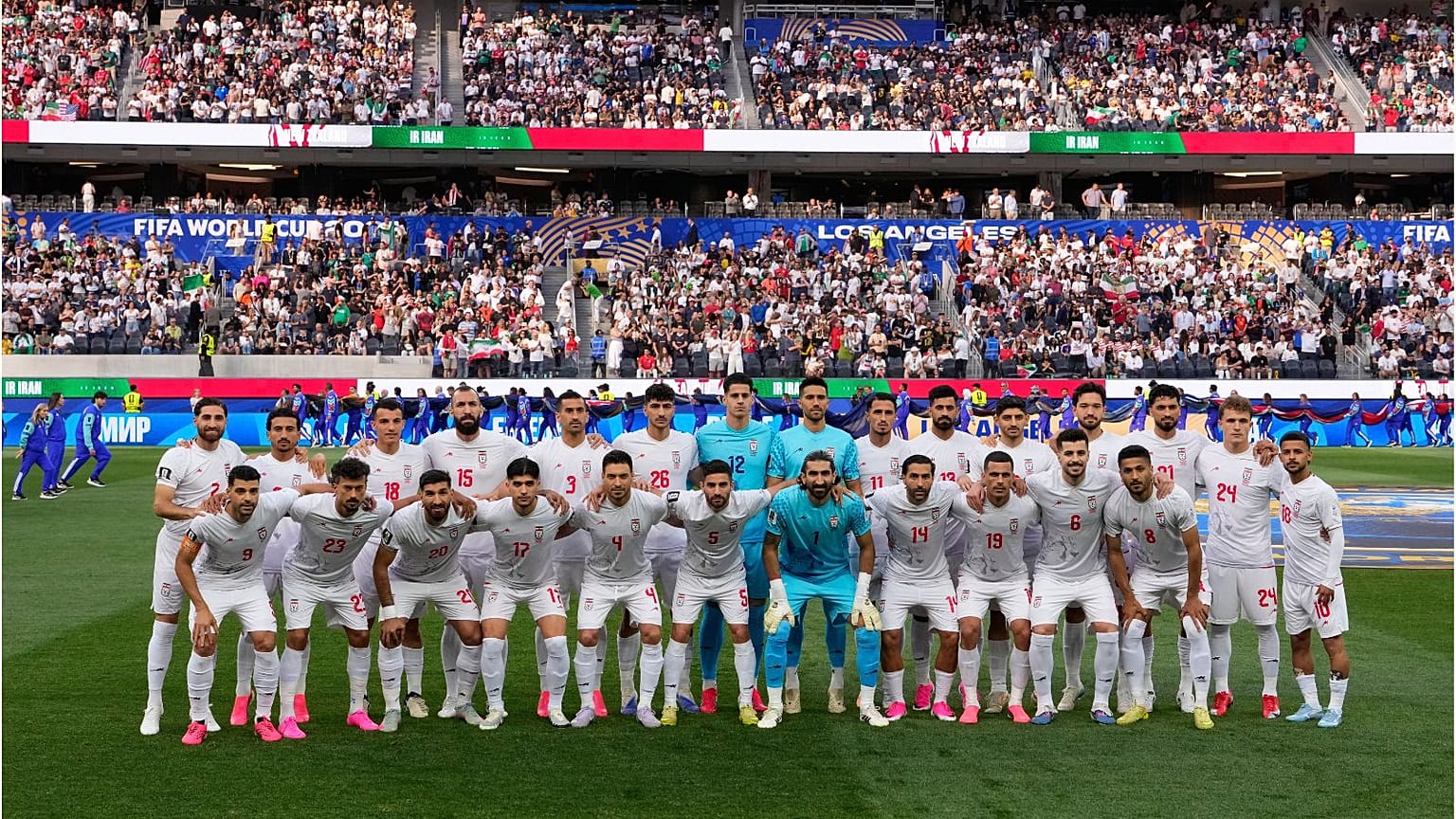
Iran national football team
Copyright AP Photo

By Babak Kamiar & Euronews Persian
Published on

Just two days after Washington and Tehran signed a framework deal aimed at ending their war, Iran's football federation said US travel restrictions on its World Cup squad remain unchanged, and is filing a formal complaint with FIFA.

Iran's national football team is still being held to entry restrictions inside the US two days after Washington and Tehran signed a framework deal aimed at ending their war, causing further ire and threatening to put a stain on this summer's World Cup.

The 14-point deal, separately signed by US President Donald Trump in Versailles and Iranian President Masoud Pezeshkian in Tehran on Wednesday, makes no mention of eased conditions for Iranian nationals, including footballers, moving through US immigration.

Iran's football federation said on Thursday it would file a formal complaint with FIFA, arguing that US-imposed travel restrictions are stopping the team from preparing properly for the tournament.

The complaint follows confirmation from US officials that Iranian players will only be allowed into the country one day before each match and must leave immediately afterwards — rules that remain unchanged despite this week's diplomatic breakthrough.

The Iranian federation FFIRI said in a statement it would pursue the complaint through FIFA's legal channels, calling the restrictions "inconsistent with the principle of equal conditions for all participating teams."

The statement came days after head coach Amir Ghalenoei called his side "the most oppressed team in the history of international competitions" following Iran's 2-2 draw with New Zealand in their opening match.

Iran's coaching staff had planned to arrive two days before each match and leave the day after, to give players time to recover and adjust.

Instead, for the New Zealand game, the squad arrived in Los Angeles just one day before kick-off and had to leave straight after the final whistle.

Forward Mehdi Taremi said the players were told on the day of the match that they would have to leave US territory once the game ended.

White House dismisses complaints

Andrew Giuliani, head of the White House task force overseeing the tournament, dismissed the federation's complaint, saying the rules had been set out from the start. "From the beginning, we stated clearly that this procedure would apply," he said.

"The team will be allowed to enter the United States one day before the match and will be required to leave after the game. This applies to Los Angeles and Seattle," Giuliani added.

Iran had asked to arrive in Los Angeles earlier before its next match against Belgium, scheduled for Sunday at 9 pm CET, but the request was denied.

The travel restrictions add to an already strained relationship between the federation and US authorities.

Washington has also refused visas for around 15 members of Iran's backroom staff, including federation president Mehdi Taj, who has been unable to accompany the team.

What can FIFA do?

Iran is playing in the tournament hosted by the US, Mexico, and Canada against the backdrop of the recent war and the fragile ceasefire that followed, which forced the team to be based in Tijuana instead of across the border in the US, where all three of its group-round matches are to be held.

A framework deal that paves the way to long-term peace was signed on Wednesday and will be followed by another 60 days of talks, with tensions between the US and Iran still high.

FIFA had not responded to the complaint at the time of publication.

FIFA has limited authority to intervene in such disputes. The organisation has stated that immigration enforcement "remains outside its jurisdiction," even though its host city agreements require governments to guarantee a "nondiscriminatory visa environment" for players and officials as a condition of hosting matches.

FIFA has previously stripped a host of a tournament over visa-related access issues — it removed Indonesia as host of the 2023 Under-20 World Cup after the government blocked Israel's participation — but it has not signalled any willingness to take similar action against the US.

The Trump administration's own travel-ban proclamations exempt athletes and team staff travelling for the World Cup from entry suspensions, although the timing and conditions of that entry remain at the discretion of US border officials.

HUMAN RIGHTS VS RELIGIOUS RITES

U.S. Justice Department Looks Into Alleged MLB Religious Discrimination


June 20, 2026 
By EWTN News
By Tyler Arnold

Major League Baseball (MLB) is coming under federal investigation for potentially discriminating against San Francisco Giants players who displayed Bible verses on their uniforms during the team’s gay pride celebrations.


Harmeet Dhillon, assistant attorney general for the Civil Rights Division of the Department of Justice (DOJ), sent a letter to MLB Commissioner Rob Manfred on June 18 that said the DOJ will use all available means to hold employers accountable for discrimination and referred the matter to the Equal Employment Opportunity Commission (EEOC).

The Giants held a “Pride Night” on June 12 in which most players wore caps that infused the colors of the Progress Pride Flag onto the team’s logo, which was advertised as a “celebration of Pride and the LGBTQIA+ community” during a game against the Chicago Cubs.


Starting pitcher Landen Roupp and two relief pitchers wore the caps but wrote Bible verses next to the rainbow-colored logo. Roupp wrote “Genesis 9:12-16,” in which God tells Noah the rainbow is “the sign of the covenant that I am making between me and you and every living creature with you for all ages to come” and promises to never flood the entire Earth again.

The Giants apologized in a statement to the San Francisco Standard, saying the display “caused pain and anger to many in the LGBTQ+ community.” It also prompted an official warning from the MLB to not display handwritten messages in any future games.

The DOJ letter cites an MLB explanation for why the players were warned, reported by NBC News, which said the warning is not disciplinary and “had absolutely nothing to do with the content of the message.” Rather, the MLB cited a rule that prohibits displays of writings and messages on uniforms.

However, Dhillon accused the MLB of having a “double standard” in how it enforces this rule, noting the MLB allowed players to wear “Black Lives Matter” messages in spite of the broad prohibition.

Dhillon’s letter noted that employers cannot legally use “facially neutral” policies as “a pretext for discrimination” and said the selective enforcement “calls MLB’s true motives into question” and raises questions about whether the league is complying with federal civil rights protections. She also cited Supreme Court precedent requiring employers to accommodate religious expression in uniform rules.

“The Civil Rights Act prohibits MLB and its franchises from unreasonably burdening the rights of players with religious objections to serving as the league’s vehicle for pro-Pride messages,” she wrote to the commissioner.

Neither the MLB nor the Giants responded to a request for comment.
Support from archdiocese

The players got public support from the Catholic Archdiocese of San Francisco, which was first reported by the New York Post.

Peter Marlow, a spokesperson for the archdiocese, said in statements provided to EWTN News that “people of faith should not be compelled to hide or suppress their sincerely held religious convictions in public life, including in the world of professional sports.”

“In a diverse society, respect should be a two-way street,” he said. “Just as individuals with same-sex attraction deserve to be treated with dignity and free from unjust discrimination, people of faith deserve the freedom to express their beliefs peacefully and respectfully without being presumed hostile or hateful.”

While he said he understands that “some individuals may have been offended,” he added: “We do not believe that a respectful reference to sacred Scripture should be viewed as inherently hurtful or exclusionary.”
Other controversies

This investigation also comes less than one month after the Nationals fired Sean Hudson, its former director of community relations, for saying the team tries to avoid the inclusion of pitcher Trevor Williams in promotional materials because of his strong Catholic faith.


Williams was outspoken against the Los Angeles Dodgers giving a Pride Night award to the Sisters of Perpetual Indulgence — a group of drag queens who dress like Catholic nuns and mock Catholic symbols and practices, which includes a blasphemous satire of the Mass.

This week, Rep. Lauren Boebert, R-Colorado, reiterated her call for a DOJ investigation into that incident and questioned a long-standing rule that exempts the league from antitrust regulations. In her June 17 letter, she demanded a response within 10 days to her concerns about alleged patterns of discriminatory behavior from the MLB.

“No private organization, even one granted special legal status, should be permitted to penalize or marginalize Americans for objecting to the public mockery of their faith,” she wrote. “MLB’s privileged antitrust position must not serve as a license for exclusionary practices.”

The Nationals did not respond to a request for comment.

Controversies about pride celebrations have also extended into the minor leagues, with the York Revolution forfeiting a game because some players refused to wear pride-themed jerseys. This team is part of the Atlantic League of Professional Baseball, which is a partner of the MLB.

The team issued a statement saying the players’ refusal to participate in pride is “completely inconsistent with our vision.” The statement said they decided to cancel the game and host a separate Pride event “out of respect for the Pride community and the York community.”


About EWTN News
EWTN News is the rebranding of the Catholic News Agency (CNA), following the decision by EWTN — which was launched as a Catholic television network in 1981 by Mother Angelica, PCPA — that brings CNA and its affiliated ACI international outlets under a single, unified identity. Previous CNA articles may be foundby clicking here.
View all posts by EWTN News →