Elon Musk and the Politics of Trillionaire Fascism
June 19, 2026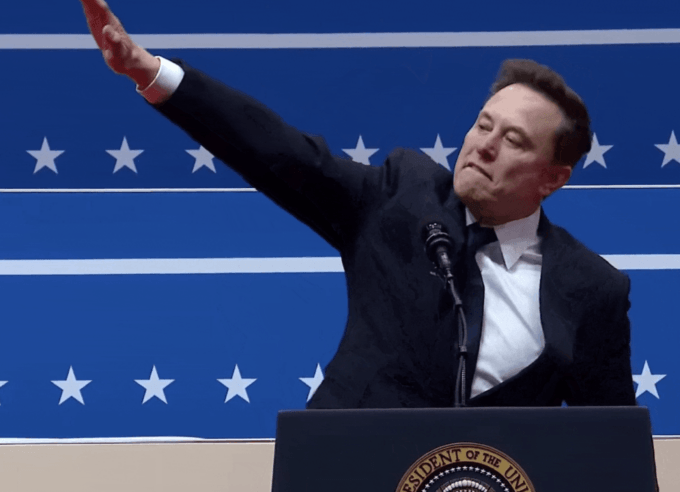
Musk giving a Roman (fascist) salute at the second inauguration of Donald Trump before saying “My heart goes out to you. It is thanks to you that the future of civilization is assured.” Public Domain.
You can’t have capitalism without racism.
–Malcolm X
Elon Musk is less an aberration than the grotesque byproduct of a capitalist order that converts inequality into virtue, exploitation into spectacle, and mistakes its own deepest failures for its greatest successes. The media frenzy surrounding the prospect of Musk becoming the world’s first trillionaire is not a celebration of human progress or individual initiative. It is a symptom of a deeper social and political crisis, one that exposes the power of class privilege, the corrupting forces of gangster capitalism, and a culture increasingly incapable of distinguishing wealth from worth or exploitation from human flourishing.
Musk is symptomatic of the rot of a capitalist system that generates staggering inequalities while concentrating wealth and power in the hands of a tiny elite whose fortunes depend not simply on markets, but on public subsidies, collective labor, social institutions, and shared resources, all sustained by an authoritarian culture animated by white supremacy, ultranationalism, and the mobilizing passions of fascist politics, especially in the age of Trump. As Dan Dinello argues, Musk has become an “avatar of chaos, cruelty, and death.” The description is difficult to dismiss. How else are we to understand his role as Trump’s chief enforcer?
In this case, the world’s richest man played a crucial role in closing and slashing aid for the U.S. humanitarian assistance agency (USAID). To be sure, USAID embodied the contradictions of American power. While it funded vital global health and humanitarian programs, it also functioned as an instrument of U.S. soft power, advancing development agendas and political arrangements often aligned with American geopolitical and economic interests. Its history reminds us that humanitarianism under capitalism has frequently been entangled with empire, shaped as much by the imperatives of power and profit as by the demands of justice and human need. Yet acknowledging these contradictions does not diminish the catastrophic consequences of dismantling the agency. The consequences have been almost unimaginable. Becky Ferreira states that:
According to monitoring models, the collapse of USAID may have already caused 762,000 preventable deaths, 500,000 of which are children, while the cuts could lead to more than nine million preventable deaths by 2030, according to a study published in February 2026….[In addition], after USAID closed, there was a rapid increase in the likelihood of violence, the severity of conflict, and the lethality of conflict, in nearly a thousand administrative regions across Africa.
Yet the mythology surrounding Musk erases these social foundations. The self-made billionaire is transformed into a heroic figure, while the workers, public investments, and democratic institutions that made his fortune possible disappear from view. Jenni Krithara is right in stating that “Elon Musk has become a symbol of success! In reality, however, he is nothing more than a symbol of inequality and exploitation. No billionaire created the wealth he possesses alone. Behind every corporate empire are workers, public infrastructure, universities, research programs, natural resources and entire societies.”
At the same time, Musk’s ascent reveals the power of a culture and public pedagogy that normalizes and celebrates massive inequities in wealth and power. In a society saturated by myths of entrepreneurial genius and limitless success, extreme concentrations of wealth and power are legitimated as objects of admiration rather than outrage. The scandal is not simply that one person can possess more wealth than entire nations while millions struggle to survive and are relegated to life-threatening poverty and lack of adequate health care.
As Thomas Piketty makes clear in Capital in the Twenty-First Century, people are taught to view the grotesque imbalance and staggering levels of inequality and power as natural, inevitable, and even desirable. At work here is a politics that normalizes economic injustice, while depoliticizing any attempt to analyze it and hold a system and individuals responsible for propagating it. It is hardly surprising that Musk regards empathy as a threat to the authoritarian ethic of white Christian nationalism and treats free speech as a disposable principle, useful only when it serves the interests of power.
Under these conditions, inequality becomes a spectacle sustained by a lethal public pedagogy in which exploitation is rebranded as achievement and democracy itself is endangered as economic power increasingly shapes politics, public discourse, and everyday life. The media’s celebration of Musk’s wealth is not innocent reportage. It teaches people to admire concentrations of wealth that earlier generations would have regarded as obscene. It transforms plutocracy into aspiration and dispossession into a private failing rather than a public injustice. Under such conditions, private issues rooted in a celebrity discourse are severed from the broader systems of power and inequality that produce them. To understand Musk’s appeal, however, requires examining the spectacle through which his power is organized and legitimized.
Spectacle in the age of Musk no longer functions simply as distraction. It has become a mode of governance. Musk understands that power today depends less upon persuading people than upon occupying the circuits of attention through which people experience reality itself. The billionaire is no longer merely an owner of capital. He is an engineer of attention, a curator of affect, and an architect of the public imagination.
What Debord once called the society of the spectacle has entered a new phase. Spectacle is no longer confined to television screens, political rallies, or advertising campaigns. It is now embedded in algorithms that organize desire, shape perception, and reward outrage. In Musk’s universe, visibility itself becomes power. Every provocation, conspiracy theory, racist insinuation, or theatrical gesture feeds an economy of attention in which shock displaces thought and notoriety becomes indistinguishable from authority.
The spectacle no longer hides domination. It glamorizes it. Wealth appears as genius, cruelty as authenticity, and the dismantling of democratic institutions as evidence of courage. Politics becomes performance while the public sphere collapses into a marketplace of emotions organized around fear, resentment, and manufactured grievance.
Yet Musk’s wealth is inseparable from the politics it enables. Economic power at this scale does not merely influence public life; it reshapes the very conditions under which democracy can survive. Musk’s politics intensify these dangers.He has used his immense wealth and control over digital platforms to amplify conspiracy theories, attack democratic institutions, and lend support to far-right and nationalist movements in the United States and abroad. He has embraced the language of racial panic, amplified antisemitic and white nationalist narratives, promoted accounts trafficking in racist conspiracy theories, and used X to normalize forms of hatred once relegated to the political margins. Wealth at this scale is not simply economic. It is political, cultural, and pedagogical. It shapes public consciousness while insulating itself from democratic accountability.
Musk represents something historically new: the fusion of celebrity culture, algorithmic power, and authoritarian politics into a single figure whose influence extends across nations and institutions. He is not simply a capitalist with political opinions. He is a spectacle unto himself, a brand organized around excess, provocation, and the performance of transgression. The appeal of such figures cannot be understood through economics alone. It must also be understood aesthetically.
Susan Sontag once argued that fascist aesthetics transforms politics into an intoxicating drama of style, ritual, and emotional intensity. The attraction lies less in ideas than in sensations: the thrill of power, the seduction of force, the glamour of transgression. Musk updates this tradition for the digital age. He stages himself as the outlaw billionaire, the rebellious genius unconstrained by norms, laws, or democratic accountability. What he offers his followers is not merely a politics but an affective experience: the pleasure of belonging to a movement that mistakes cruelty for courage and domination for freedom.
The spectacle’s greatest deception is that it draws attention to Musk the personality while obscuring Musk the architect of a new political economy. Behind the oscillating images of genius and martyr lies a project aimed not merely at dismantling parts of the public sphere but at reorganizing them around private power—integrating his companies into state and military infrastructures, weakening the institutions charged with regulating them, and converting public resources into engines of oligarchic wealth and influence.
The spectacle’s greatest deception is that it draws attention to Musk the personality while obscuring Musk the architect of a new political economy. Behind the oscillating images of genius and martyr lies a project aimed not merely at dismantling parts of the public sphere but at reorganizing them around private power—integrating his companies into state and military infrastructures, weakening the institutions charged with regulating them, and converting public resources into engines of oligarchic wealth and influence.
Musk’s rise is not a triumph of individual initiative or entrepreneurial genius. It is the product of a social order in which public resources, state subsidies, collective labor, and technological infrastructures are privatized and redirected toward the enrichment of a tiny oligarchic elite. He despises the social contract because it places obligations on wealth and imposes democratic limits on power. As Quinn Slobodian and Ben Tarnoff note in Muskism: A Guide for the Perplexed, in its place, Musk advances a far-right vision that fuses state power with technological control, elevates algorithmic governance over democratic accountability, and normalizes racialized exclusion as a principle of social order. Musk’s political project promises freedom while producing new forms of dependence, claiming to democratize technology even as it concentrates unprecedented power in private hands.
Will Bunch is right in stating that Musk has transformed X into a global amplifier for racial resentment and white nationalist politics. Under the guise of defending “free speech,” he has repeatedly elevated far-right influencers, reinstated accounts banned for hate speech, and promoted narratives that depict immigrants and racial minorities as existential threats to Western civilization. Just before the Belfast anti-immigrant riots in 2026, Musk amplified calls by the far-right agitator Tommy Robinson for people to “hit the streets,” adding his own exhortation: “Only by protesting REPEATEDLY and LOUDLY will there be any change!!” The consequences were immediate and terrifying: attacks on immigrant communities, immigrant addresses posted online and homes set ablaze, and an online culture of racial hatred legitimated and endorsed by the world’s richest man.
Zadie Smith has observed that the propaganda machinery of fascism once relied on posters, radios, and megaphones, crude instruments compared to what Elon Musk now commands. The comparison is instructive. The danger today lies not simply in extremist messages but in the infrastructures that circulate them. Algorithms reward outrage, synchronize emotions, and impose forms of conformity that often operate invisibly. The propaganda machine no longer shouts at citizens from a distance. It lives in their pockets, curates their desires, and quietly organizes their fears.
Musk presides over precisely such a machinery. X functions not simply as a platform for communication but as an apparatus for manufacturing attention, resentment, and ideological belonging. The result is a culture in which people increasingly surrender the burdens of judgment and critical thought to the emotional rhythms of the feed. Spectacle becomes a form of social organization, teaching individuals to react rather than reflect and to experience political life as an endless theater of outrage and enemies.
X is no longer merely a communication network. It has become an infrastructure of authoritarian politics, normalizing racism, rewarding outrage, and converting white grievance into a global spectacle of resentment and cruelty. The richest man on the planet has become one of the chief architects of a politics of white victimhood, one in which white people are perpetually under siege by dangerous invaders who happen to be Black, Brown, and immigrants. How else to explain his barrage of racist posts and conspiratorial rhetoric, along with his support for far-right anti-immigrant movements such as Restore Britain?
X has become one of the most powerful pedagogical apparatuses of the digital age, teaching millions to equate cruelty with courage, racial hierarchy with common sense, and hatred with truth. What is marketed as free speech increasingly operates as a machinery of authoritarian desire that erodes the civic and ethical foundations of democratic life. The symbolism surrounding Musk has become increasingly ominous. After making a gesture at a political rally that was widely condemned as echoing a Nazi salute, Musk responded to the ensuing criticism with mockery rather than reflection. The episode was revealing because it exposed an authoritarian politics in which provocation becomes spectacle, cruelty becomes a public virtue, and historical amnesia becomes a precondition for making fascist ideas appear ordinary, even commonsensical. Fascism rarely begins with concentration camps or military coups. It begins with the normalization of contempt, the trivialization of violence, and the celebration of power unmoored from ethical responsibility.
Musk’s growing influence has become a warning sign of a new form of oligarchic rule in which immense wealth, technological power, and political influence converge to hollow out democratic life from within. The danger lies not only in his embrace of far-right movements and authoritarian figures abroad, but in the extraordinary capacity of a single billionaire to distort public debate, destabilize democratic institutions, and shape political life across national borders. Musk is not the real issue. He is the symptom. The larger question is whether any vestige of democracy can survive when private wealth acquires such immense power over the institutions and cultures that sustain public life.
The spectacle of the world’s richest man accumulating unimaginable wealth while endorsing politics that deepen social divisions and undermine democratic norms exposes the moral bankruptcy of a gangster capitalism that rewards accumulation while abandoning social responsibility. Trillionaire politics is not simply the concentration of wealth. It is the concentration of power, influence, and the capacity to shape the stories societies tell about themselves.
The gravest danger is not Musk himself but the culture that celebrates him. Citizens are increasingly schooled to applaud the very forces that diminish their agency and erode their social protections. They are encouraged to admire those who dominate them, to mistake cruelty for strength, and to equate democracy with the freedom of billionaires to exercise unchecked power. Trillionaire politics is the end point of a society inhabited by what might be called the walking dead: citizens politically numbed and morally anesthetized, taught to applaud their own dispossession, embrace loneliness as freedom, and accept misery as the price of greatness.
The first trillionaire is not a monument to human achievement. He is an indictment of a corrupt social order that mistakes accumulation for greatness, toxic masculinity for leadership, and domination for success. Is it any wonder that Musk views empathy as a weakness and free speech as a disposable principle? Both stand in the way of the politics of cruelty, white nationalism, and unchecked power he increasingly champions.
Musk is the product of a culture that worships wealth, mistakes spectacle for truth, and increasingly confuses domination with freedom. He represents the emergence of a new authoritarian formation in which capitalism, digital technologies, and fascist sensibilities converge in unprecedented ways. He is the avatar of a techno-fascist order, an updated form of neoliberal gangster capitalism in which state power, digital technologies, and oligarchic wealth converge to erode democratic institutions and remake society in the interests of a predatory elite.
The danger he poses lies not only in the policies he supports or the movements he amplifies. It lies in the world he helps create: a world in which algorithms replace judgment, cruelty becomes entertainment, racism is repackaged as realism, and democracy is hollowed out by spectacles of resentment and manufactured consent.
If Trump embodies the theatrical politics of authoritarianism, Musk represents its technological future. He is the engineer of a new machinery of spectacle, one capable of shaping consciousness on a planetary scale. In this sense, Musk is not simply the world’s richest man. He is among the most powerful public pedagogues of the twenty-first century, educating millions in the pleasures of unfreedom and the aesthetics of authoritarian desire.
Musk is not an exception to our time. He is the most visible symptom of a society in which cruelty is celebrated as strength, democracy is hollowed out by oligarchic power, and freedom is reduced to the prerogatives of the rich. This is more than a failed society. It is capitalism stripped of its myths and revealed in all of its gangster, authoritarian, and fascist impulses.
Musk is a Trillionaire and Wealth Concentration in the U.S. Remains Solidly Entrenched
June 19, 2026

Image by Maciej Ruminkiewicz.
“A few people are getting fabulously, unimaginably wealthy at the same time that entire generations of families worry they will never be able to afford to buy a house, raise children or enjoy a comfortable retirement.” New York Times June 13, 2026
I have written many articles published by Counterpunch on the way wealth is distributed in the United States showing how wealth concentration generally keeps growing and is so wrong and disturbing. Marxists would explain that the accumulation of capital has the tendency to give rise to the centralization and concentration of capital. That has certainly been the case with the wealth holdings of individuals as revealed by the Blooomberg Billionaires Index that is recalculated daily and the Distribution of Household Wealth in the U.S. since 1989 put out by the Federal Reserve Board covering the changes from one yearly quarter to the next.
The tendency has been one of growing wealth concentration, though there have been periods of setbacks, something inevitable given the instability of capitalism with its periods of rapid growth followed by slow or negative growth. However, those periods of declines in wealth concentration have been followed by the wealthiest holding an even greater share of the country’s total wealth.
For example, according to the Federal Reserve Board figures, the share of the nation’s wealth held by the wealthiest .1% reached a new high of 11.9% in the third quarter of 2007 prior to the great recession. It declined to 10.3% in the first quarter of 2009. By the second quarter of 2015, it had reached a new high of 12.7%.
After falling to 11.7% in the first quarter of 2020 (that marked the onset of Covid), as of the last quarter of 2025, it reached an even greater new all-time high of 14.5%.
The wealthiest of the wealthy have experienced a more rapid rate of growth than the rest of their colleagues in the .1%. The Fed figures show that the nominal wealth of the .1%, that includes the wealthiest ten, has increased over 14 times from $1.81 trillion in 1990 to $25.47 trillion at the end of 2025. By contrast, using the Forbes billionaires list for 1990 and 2026, the wealthiest 10 (whose membership, with the exception of Buffett, has changed) have seen their wealth increase from $25.92 billion to $2.561 trillion, growing over 98 times in 36 years.
Wealth of the Wealthiest Compared to the Poorest 50%
The gap between the wealthiest .1% and the poorest 50%, almost all of whom belong to the working class, has been increasing since the Federal Reserve Board started putting together its tables on household wealth. According to the Fed, at the beginning of 1990, the wealth of the wealthiest .1% of the population stood at $1.81 trillion while that of the poorest 50% was $.71 trillion making the wealth of the .1% more than 2.5 times as great. At the end of 2025, the wealth of the .1% was $25.47 trillion while that of the poorest 50% came to $4.31 trillion resulting in the wealth of the .1% being almost six times as great as that of the poorest 50%.
Using the June 12, 2026, Bloomberg figures, the wealth ($4.32 trillion) of the 24 wealthiest U.S. citizens surpassed the wealth determined by the Federal Reserve Board at the end of 2025 held by the poorest 50% of the population ($4.31 trillion). 24 people alone are wealthier than some 170 million people in what is often described as the richest country in the world!
Utilizing the Federal Reserve Board figures, at the end of 2025, the average wealth of one among the poorest 50% is around $25,000 while that of one in the .1% is almost $75 million, or about 3,000 times as great.
+++
In January of 2022, I wrote an article in which I asked:
“How many seats need to be on a rocket ship to carry people worth a trillion dollars? An answer to this question will change over time, perhaps soon requiring only one seat if Musk continues to accumulate wealth at the same rate as he has done during the last two years.”
As of June 12, 2026, according to the Bloomberg Billionaires Index, only one seat would now be needed to hold Elon Musk, whose wealth has been put at $1.11 trillion after increasing $490 billion since the beginning of 2026 which is an amount that is greater than the total holdings of anyone else. (Many may now hope that Musk soon gets on a rocket ship and abandons the earth for good.)
Were Musk’s wealth distributed equally to the U.S. population of approximately 340 million, each person would receive over $3,200.
The size of Musk’s wealth of $1.11 trillion can be restated as $1,110 billion or $1,110,000 million. To describe his level of wealth as ridiculously and disgustingly obscene is a gross understatement of its wretchedness.
Much of the growth in Musk’s wealth has come in the form of an increase in the value of his stock holdings on which he has never paid taxes unless he has sold some of it for a gain. By contrast, homeowners often pay a hefty yearly property (wealth) tax on the value of their homes, even if much of the value on which they pay taxes consists of mortgage debt owed on their homes.
In the above 2022 article cited, I went on to write on the decreasing number of seats on a rocket ship required to hold people worth a trillion.
“Great progress has been made in reducing the number of needed seats. Using the Bloomberg figures, in the beginning of 2020, 16 seats were required. At the beginning of 2021, the number needed had declined to 9. The “good news” is that as of the end of 2022, the number has been further reduced to only 7. That represents more than a 50% reduction in just two years–an impressive rate of progress.”
Using the June 12, 2026, Bloomberg Billionaires Index figures, a rocket with enough seats provided for people worth $1 trillion would now require just one seat for Musk. A second rocket holding people worth one trillion would need four seats for Page (total net worth $306B), Brin ($285B), rocket man Bezos ($260B), and Ellison ($238B). A third rocket would need only six seats for Dell ($213B), Zuckerberg ($202B). Huang ($170B), two Waltons ($148B and $145B), and Buffet ($146B).
While sixteen seats were needed on one rocket in 2020 to hold people worth a trillion, eleven seats are needed on three separate rockets to hold people worth over $3 trillion. And a fourth rocket holding U.S. citizens worth a trillion would need only eleven seats! What progress?
Reducing Wealth Inequality
Should a healthy society allow any individual to accumulate one billion or even one hundred million dollars while others must endure inadequate food, housing, and health care, and can’t afford to provide for the needs of their children? Does any individual need the quantity of money now held by the super wealthy? If your answer is no, then confiscatory policies need to be enacted to use the wealth seized to benefit and fill the needs of the majority of the population. Mild wealth taxes of 1-5%/year will likely have an inadequate impact on reducing inequality since the yearly increase in the wealth of the wealthiest has often been greater than the proposed size of the tax.
Update: The June 17 Bloomberg Billionaires Index now places Musk’s wealth at $1.26 trillion which is over $900 billion more than the second wealthiest individual, Larry Page whose wealth is $310 billion. Musk’s level of wealth is greater than the combined wealth ($1.096 trillion) of the next four wealthiest individuals in the world.
Wealth and the Political Power of Billionaires
June 19, 2026
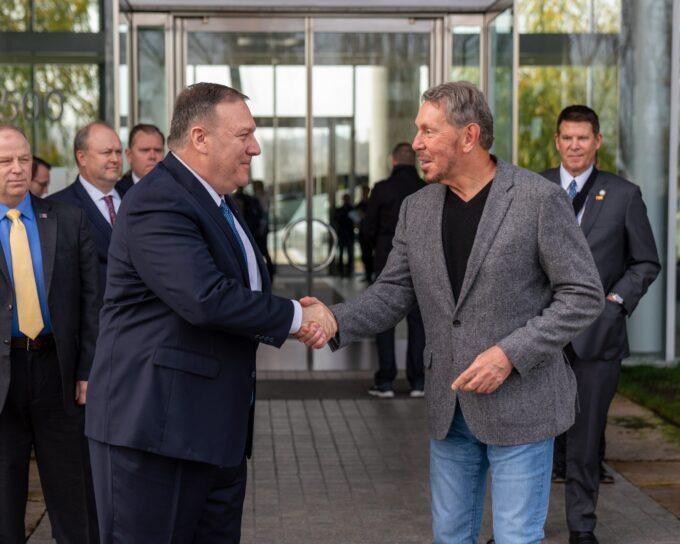
Oracle’s billionaire owner Larry Ellison meeting with Mike Pompeo. Photo: State Department.
Elon Musk’s trillion-dollar payday from the IPO of SpaceX has hugely amplified the public’s focus on extreme wealth inequality. Musk’s economic and political power is certainly something to be concerned about, but wealth can be a misleading focus.
I have raised this point before; wealth can be a misleading measure on both ends. As far as bringing down the wealth at the top, I welcome taxes, if they can be made effective, but the most likely way that the wealth of folks like Musk will be brought closer to earth is with a collapse of the AI bubble.
I look forward to the collapse, and the sooner the better, but I’m not sure everyone will be celebrating the loss of trillions of dollars of wealth by America’s billionaires and trillionaires when it happens. Just speaking from experience, very few celebrated the elimination, or at least downsizing, of many great fortunes when the tech or housing bubbles collapsed.
Of course, many non-rich families will also be hit. In the 1990s tech bubble, this meant a huge whack to people’s retirement accounts. In the collapse of the housing bubble, millions lost their homes. In both cases, we got recessions and a big rise in unemployment. It is understandable that people may not have been celebrating, even though there was a huge reduction in wealth inequality.
Musk giving a Roman (fascist) salute at the second inauguration of Donald Trump before saying “My heart goes out to you. It is thanks to you that the future of civilization is assured.” Public Domain.
You can’t have capitalism without racism.
–Malcolm X
Elon Musk is less an aberration than the grotesque byproduct of a capitalist order that converts inequality into virtue, exploitation into spectacle, and mistakes its own deepest failures for its greatest successes. The media frenzy surrounding the prospect of Musk becoming the world’s first trillionaire is not a celebration of human progress or individual initiative. It is a symptom of a deeper social and political crisis, one that exposes the power of class privilege, the corrupting forces of gangster capitalism, and a culture increasingly incapable of distinguishing wealth from worth or exploitation from human flourishing.
Musk is symptomatic of the rot of a capitalist system that generates staggering inequalities while concentrating wealth and power in the hands of a tiny elite whose fortunes depend not simply on markets, but on public subsidies, collective labor, social institutions, and shared resources, all sustained by an authoritarian culture animated by white supremacy, ultranationalism, and the mobilizing passions of fascist politics, especially in the age of Trump. As Dan Dinello argues, Musk has become an “avatar of chaos, cruelty, and death.” The description is difficult to dismiss. How else are we to understand his role as Trump’s chief enforcer?
In this case, the world’s richest man played a crucial role in closing and slashing aid for the U.S. humanitarian assistance agency (USAID). To be sure, USAID embodied the contradictions of American power. While it funded vital global health and humanitarian programs, it also functioned as an instrument of U.S. soft power, advancing development agendas and political arrangements often aligned with American geopolitical and economic interests. Its history reminds us that humanitarianism under capitalism has frequently been entangled with empire, shaped as much by the imperatives of power and profit as by the demands of justice and human need. Yet acknowledging these contradictions does not diminish the catastrophic consequences of dismantling the agency. The consequences have been almost unimaginable. Becky Ferreira states that:
According to monitoring models, the collapse of USAID may have already caused 762,000 preventable deaths, 500,000 of which are children, while the cuts could lead to more than nine million preventable deaths by 2030, according to a study published in February 2026….[In addition], after USAID closed, there was a rapid increase in the likelihood of violence, the severity of conflict, and the lethality of conflict, in nearly a thousand administrative regions across Africa.
Yet the mythology surrounding Musk erases these social foundations. The self-made billionaire is transformed into a heroic figure, while the workers, public investments, and democratic institutions that made his fortune possible disappear from view. Jenni Krithara is right in stating that “Elon Musk has become a symbol of success! In reality, however, he is nothing more than a symbol of inequality and exploitation. No billionaire created the wealth he possesses alone. Behind every corporate empire are workers, public infrastructure, universities, research programs, natural resources and entire societies.”
At the same time, Musk’s ascent reveals the power of a culture and public pedagogy that normalizes and celebrates massive inequities in wealth and power. In a society saturated by myths of entrepreneurial genius and limitless success, extreme concentrations of wealth and power are legitimated as objects of admiration rather than outrage. The scandal is not simply that one person can possess more wealth than entire nations while millions struggle to survive and are relegated to life-threatening poverty and lack of adequate health care.
As Thomas Piketty makes clear in Capital in the Twenty-First Century, people are taught to view the grotesque imbalance and staggering levels of inequality and power as natural, inevitable, and even desirable. At work here is a politics that normalizes economic injustice, while depoliticizing any attempt to analyze it and hold a system and individuals responsible for propagating it. It is hardly surprising that Musk regards empathy as a threat to the authoritarian ethic of white Christian nationalism and treats free speech as a disposable principle, useful only when it serves the interests of power.
Under these conditions, inequality becomes a spectacle sustained by a lethal public pedagogy in which exploitation is rebranded as achievement and democracy itself is endangered as economic power increasingly shapes politics, public discourse, and everyday life. The media’s celebration of Musk’s wealth is not innocent reportage. It teaches people to admire concentrations of wealth that earlier generations would have regarded as obscene. It transforms plutocracy into aspiration and dispossession into a private failing rather than a public injustice. Under such conditions, private issues rooted in a celebrity discourse are severed from the broader systems of power and inequality that produce them. To understand Musk’s appeal, however, requires examining the spectacle through which his power is organized and legitimized.
Spectacle in the age of Musk no longer functions simply as distraction. It has become a mode of governance. Musk understands that power today depends less upon persuading people than upon occupying the circuits of attention through which people experience reality itself. The billionaire is no longer merely an owner of capital. He is an engineer of attention, a curator of affect, and an architect of the public imagination.
What Debord once called the society of the spectacle has entered a new phase. Spectacle is no longer confined to television screens, political rallies, or advertising campaigns. It is now embedded in algorithms that organize desire, shape perception, and reward outrage. In Musk’s universe, visibility itself becomes power. Every provocation, conspiracy theory, racist insinuation, or theatrical gesture feeds an economy of attention in which shock displaces thought and notoriety becomes indistinguishable from authority.
The spectacle no longer hides domination. It glamorizes it. Wealth appears as genius, cruelty as authenticity, and the dismantling of democratic institutions as evidence of courage. Politics becomes performance while the public sphere collapses into a marketplace of emotions organized around fear, resentment, and manufactured grievance.
Yet Musk’s wealth is inseparable from the politics it enables. Economic power at this scale does not merely influence public life; it reshapes the very conditions under which democracy can survive. Musk’s politics intensify these dangers.He has used his immense wealth and control over digital platforms to amplify conspiracy theories, attack democratic institutions, and lend support to far-right and nationalist movements in the United States and abroad. He has embraced the language of racial panic, amplified antisemitic and white nationalist narratives, promoted accounts trafficking in racist conspiracy theories, and used X to normalize forms of hatred once relegated to the political margins. Wealth at this scale is not simply economic. It is political, cultural, and pedagogical. It shapes public consciousness while insulating itself from democratic accountability.
Musk represents something historically new: the fusion of celebrity culture, algorithmic power, and authoritarian politics into a single figure whose influence extends across nations and institutions. He is not simply a capitalist with political opinions. He is a spectacle unto himself, a brand organized around excess, provocation, and the performance of transgression. The appeal of such figures cannot be understood through economics alone. It must also be understood aesthetically.
Susan Sontag once argued that fascist aesthetics transforms politics into an intoxicating drama of style, ritual, and emotional intensity. The attraction lies less in ideas than in sensations: the thrill of power, the seduction of force, the glamour of transgression. Musk updates this tradition for the digital age. He stages himself as the outlaw billionaire, the rebellious genius unconstrained by norms, laws, or democratic accountability. What he offers his followers is not merely a politics but an affective experience: the pleasure of belonging to a movement that mistakes cruelty for courage and domination for freedom.
The spectacle’s greatest deception is that it draws attention to Musk the personality while obscuring Musk the architect of a new political economy. Behind the oscillating images of genius and martyr lies a project aimed not merely at dismantling parts of the public sphere but at reorganizing them around private power—integrating his companies into state and military infrastructures, weakening the institutions charged with regulating them, and converting public resources into engines of oligarchic wealth and influence.
The spectacle’s greatest deception is that it draws attention to Musk the personality while obscuring Musk the architect of a new political economy. Behind the oscillating images of genius and martyr lies a project aimed not merely at dismantling parts of the public sphere but at reorganizing them around private power—integrating his companies into state and military infrastructures, weakening the institutions charged with regulating them, and converting public resources into engines of oligarchic wealth and influence.
Musk’s rise is not a triumph of individual initiative or entrepreneurial genius. It is the product of a social order in which public resources, state subsidies, collective labor, and technological infrastructures are privatized and redirected toward the enrichment of a tiny oligarchic elite. He despises the social contract because it places obligations on wealth and imposes democratic limits on power. As Quinn Slobodian and Ben Tarnoff note in Muskism: A Guide for the Perplexed, in its place, Musk advances a far-right vision that fuses state power with technological control, elevates algorithmic governance over democratic accountability, and normalizes racialized exclusion as a principle of social order. Musk’s political project promises freedom while producing new forms of dependence, claiming to democratize technology even as it concentrates unprecedented power in private hands.
Will Bunch is right in stating that Musk has transformed X into a global amplifier for racial resentment and white nationalist politics. Under the guise of defending “free speech,” he has repeatedly elevated far-right influencers, reinstated accounts banned for hate speech, and promoted narratives that depict immigrants and racial minorities as existential threats to Western civilization. Just before the Belfast anti-immigrant riots in 2026, Musk amplified calls by the far-right agitator Tommy Robinson for people to “hit the streets,” adding his own exhortation: “Only by protesting REPEATEDLY and LOUDLY will there be any change!!” The consequences were immediate and terrifying: attacks on immigrant communities, immigrant addresses posted online and homes set ablaze, and an online culture of racial hatred legitimated and endorsed by the world’s richest man.
Zadie Smith has observed that the propaganda machinery of fascism once relied on posters, radios, and megaphones, crude instruments compared to what Elon Musk now commands. The comparison is instructive. The danger today lies not simply in extremist messages but in the infrastructures that circulate them. Algorithms reward outrage, synchronize emotions, and impose forms of conformity that often operate invisibly. The propaganda machine no longer shouts at citizens from a distance. It lives in their pockets, curates their desires, and quietly organizes their fears.
Musk presides over precisely such a machinery. X functions not simply as a platform for communication but as an apparatus for manufacturing attention, resentment, and ideological belonging. The result is a culture in which people increasingly surrender the burdens of judgment and critical thought to the emotional rhythms of the feed. Spectacle becomes a form of social organization, teaching individuals to react rather than reflect and to experience political life as an endless theater of outrage and enemies.
X is no longer merely a communication network. It has become an infrastructure of authoritarian politics, normalizing racism, rewarding outrage, and converting white grievance into a global spectacle of resentment and cruelty. The richest man on the planet has become one of the chief architects of a politics of white victimhood, one in which white people are perpetually under siege by dangerous invaders who happen to be Black, Brown, and immigrants. How else to explain his barrage of racist posts and conspiratorial rhetoric, along with his support for far-right anti-immigrant movements such as Restore Britain?
X has become one of the most powerful pedagogical apparatuses of the digital age, teaching millions to equate cruelty with courage, racial hierarchy with common sense, and hatred with truth. What is marketed as free speech increasingly operates as a machinery of authoritarian desire that erodes the civic and ethical foundations of democratic life. The symbolism surrounding Musk has become increasingly ominous. After making a gesture at a political rally that was widely condemned as echoing a Nazi salute, Musk responded to the ensuing criticism with mockery rather than reflection. The episode was revealing because it exposed an authoritarian politics in which provocation becomes spectacle, cruelty becomes a public virtue, and historical amnesia becomes a precondition for making fascist ideas appear ordinary, even commonsensical. Fascism rarely begins with concentration camps or military coups. It begins with the normalization of contempt, the trivialization of violence, and the celebration of power unmoored from ethical responsibility.
Musk’s growing influence has become a warning sign of a new form of oligarchic rule in which immense wealth, technological power, and political influence converge to hollow out democratic life from within. The danger lies not only in his embrace of far-right movements and authoritarian figures abroad, but in the extraordinary capacity of a single billionaire to distort public debate, destabilize democratic institutions, and shape political life across national borders. Musk is not the real issue. He is the symptom. The larger question is whether any vestige of democracy can survive when private wealth acquires such immense power over the institutions and cultures that sustain public life.
The spectacle of the world’s richest man accumulating unimaginable wealth while endorsing politics that deepen social divisions and undermine democratic norms exposes the moral bankruptcy of a gangster capitalism that rewards accumulation while abandoning social responsibility. Trillionaire politics is not simply the concentration of wealth. It is the concentration of power, influence, and the capacity to shape the stories societies tell about themselves.
The gravest danger is not Musk himself but the culture that celebrates him. Citizens are increasingly schooled to applaud the very forces that diminish their agency and erode their social protections. They are encouraged to admire those who dominate them, to mistake cruelty for strength, and to equate democracy with the freedom of billionaires to exercise unchecked power. Trillionaire politics is the end point of a society inhabited by what might be called the walking dead: citizens politically numbed and morally anesthetized, taught to applaud their own dispossession, embrace loneliness as freedom, and accept misery as the price of greatness.
The first trillionaire is not a monument to human achievement. He is an indictment of a corrupt social order that mistakes accumulation for greatness, toxic masculinity for leadership, and domination for success. Is it any wonder that Musk views empathy as a weakness and free speech as a disposable principle? Both stand in the way of the politics of cruelty, white nationalism, and unchecked power he increasingly champions.
Musk is the product of a culture that worships wealth, mistakes spectacle for truth, and increasingly confuses domination with freedom. He represents the emergence of a new authoritarian formation in which capitalism, digital technologies, and fascist sensibilities converge in unprecedented ways. He is the avatar of a techno-fascist order, an updated form of neoliberal gangster capitalism in which state power, digital technologies, and oligarchic wealth converge to erode democratic institutions and remake society in the interests of a predatory elite.
The danger he poses lies not only in the policies he supports or the movements he amplifies. It lies in the world he helps create: a world in which algorithms replace judgment, cruelty becomes entertainment, racism is repackaged as realism, and democracy is hollowed out by spectacles of resentment and manufactured consent.
If Trump embodies the theatrical politics of authoritarianism, Musk represents its technological future. He is the engineer of a new machinery of spectacle, one capable of shaping consciousness on a planetary scale. In this sense, Musk is not simply the world’s richest man. He is among the most powerful public pedagogues of the twenty-first century, educating millions in the pleasures of unfreedom and the aesthetics of authoritarian desire.
Musk is not an exception to our time. He is the most visible symptom of a society in which cruelty is celebrated as strength, democracy is hollowed out by oligarchic power, and freedom is reduced to the prerogatives of the rich. This is more than a failed society. It is capitalism stripped of its myths and revealed in all of its gangster, authoritarian, and fascist impulses.
Musk is a Trillionaire and Wealth Concentration in the U.S. Remains Solidly Entrenched
Image by Maciej Ruminkiewicz.
“A few people are getting fabulously, unimaginably wealthy at the same time that entire generations of families worry they will never be able to afford to buy a house, raise children or enjoy a comfortable retirement.” New York Times June 13, 2026
I have written many articles published by Counterpunch on the way wealth is distributed in the United States showing how wealth concentration generally keeps growing and is so wrong and disturbing. Marxists would explain that the accumulation of capital has the tendency to give rise to the centralization and concentration of capital. That has certainly been the case with the wealth holdings of individuals as revealed by the Blooomberg Billionaires Index that is recalculated daily and the Distribution of Household Wealth in the U.S. since 1989 put out by the Federal Reserve Board covering the changes from one yearly quarter to the next.
The tendency has been one of growing wealth concentration, though there have been periods of setbacks, something inevitable given the instability of capitalism with its periods of rapid growth followed by slow or negative growth. However, those periods of declines in wealth concentration have been followed by the wealthiest holding an even greater share of the country’s total wealth.
For example, according to the Federal Reserve Board figures, the share of the nation’s wealth held by the wealthiest .1% reached a new high of 11.9% in the third quarter of 2007 prior to the great recession. It declined to 10.3% in the first quarter of 2009. By the second quarter of 2015, it had reached a new high of 12.7%.
After falling to 11.7% in the first quarter of 2020 (that marked the onset of Covid), as of the last quarter of 2025, it reached an even greater new all-time high of 14.5%.
The wealthiest of the wealthy have experienced a more rapid rate of growth than the rest of their colleagues in the .1%. The Fed figures show that the nominal wealth of the .1%, that includes the wealthiest ten, has increased over 14 times from $1.81 trillion in 1990 to $25.47 trillion at the end of 2025. By contrast, using the Forbes billionaires list for 1990 and 2026, the wealthiest 10 (whose membership, with the exception of Buffett, has changed) have seen their wealth increase from $25.92 billion to $2.561 trillion, growing over 98 times in 36 years.
Wealth of the Wealthiest Compared to the Poorest 50%
The gap between the wealthiest .1% and the poorest 50%, almost all of whom belong to the working class, has been increasing since the Federal Reserve Board started putting together its tables on household wealth. According to the Fed, at the beginning of 1990, the wealth of the wealthiest .1% of the population stood at $1.81 trillion while that of the poorest 50% was $.71 trillion making the wealth of the .1% more than 2.5 times as great. At the end of 2025, the wealth of the .1% was $25.47 trillion while that of the poorest 50% came to $4.31 trillion resulting in the wealth of the .1% being almost six times as great as that of the poorest 50%.
Using the June 12, 2026, Bloomberg figures, the wealth ($4.32 trillion) of the 24 wealthiest U.S. citizens surpassed the wealth determined by the Federal Reserve Board at the end of 2025 held by the poorest 50% of the population ($4.31 trillion). 24 people alone are wealthier than some 170 million people in what is often described as the richest country in the world!
Utilizing the Federal Reserve Board figures, at the end of 2025, the average wealth of one among the poorest 50% is around $25,000 while that of one in the .1% is almost $75 million, or about 3,000 times as great.
+++
In January of 2022, I wrote an article in which I asked:
“How many seats need to be on a rocket ship to carry people worth a trillion dollars? An answer to this question will change over time, perhaps soon requiring only one seat if Musk continues to accumulate wealth at the same rate as he has done during the last two years.”
As of June 12, 2026, according to the Bloomberg Billionaires Index, only one seat would now be needed to hold Elon Musk, whose wealth has been put at $1.11 trillion after increasing $490 billion since the beginning of 2026 which is an amount that is greater than the total holdings of anyone else. (Many may now hope that Musk soon gets on a rocket ship and abandons the earth for good.)
Were Musk’s wealth distributed equally to the U.S. population of approximately 340 million, each person would receive over $3,200.
The size of Musk’s wealth of $1.11 trillion can be restated as $1,110 billion or $1,110,000 million. To describe his level of wealth as ridiculously and disgustingly obscene is a gross understatement of its wretchedness.
Much of the growth in Musk’s wealth has come in the form of an increase in the value of his stock holdings on which he has never paid taxes unless he has sold some of it for a gain. By contrast, homeowners often pay a hefty yearly property (wealth) tax on the value of their homes, even if much of the value on which they pay taxes consists of mortgage debt owed on their homes.
In the above 2022 article cited, I went on to write on the decreasing number of seats on a rocket ship required to hold people worth a trillion.
“Great progress has been made in reducing the number of needed seats. Using the Bloomberg figures, in the beginning of 2020, 16 seats were required. At the beginning of 2021, the number needed had declined to 9. The “good news” is that as of the end of 2022, the number has been further reduced to only 7. That represents more than a 50% reduction in just two years–an impressive rate of progress.”
Using the June 12, 2026, Bloomberg Billionaires Index figures, a rocket with enough seats provided for people worth $1 trillion would now require just one seat for Musk. A second rocket holding people worth one trillion would need four seats for Page (total net worth $306B), Brin ($285B), rocket man Bezos ($260B), and Ellison ($238B). A third rocket would need only six seats for Dell ($213B), Zuckerberg ($202B). Huang ($170B), two Waltons ($148B and $145B), and Buffet ($146B).
While sixteen seats were needed on one rocket in 2020 to hold people worth a trillion, eleven seats are needed on three separate rockets to hold people worth over $3 trillion. And a fourth rocket holding U.S. citizens worth a trillion would need only eleven seats! What progress?
Reducing Wealth Inequality
Should a healthy society allow any individual to accumulate one billion or even one hundred million dollars while others must endure inadequate food, housing, and health care, and can’t afford to provide for the needs of their children? Does any individual need the quantity of money now held by the super wealthy? If your answer is no, then confiscatory policies need to be enacted to use the wealth seized to benefit and fill the needs of the majority of the population. Mild wealth taxes of 1-5%/year will likely have an inadequate impact on reducing inequality since the yearly increase in the wealth of the wealthiest has often been greater than the proposed size of the tax.
Update: The June 17 Bloomberg Billionaires Index now places Musk’s wealth at $1.26 trillion which is over $900 billion more than the second wealthiest individual, Larry Page whose wealth is $310 billion. Musk’s level of wealth is greater than the combined wealth ($1.096 trillion) of the next four wealthiest individuals in the world.
Wealth and the Political Power of Billionaires
June 19, 2026
Oracle’s billionaire owner Larry Ellison meeting with Mike Pompeo. Photo: State Department.
Elon Musk’s trillion-dollar payday from the IPO of SpaceX has hugely amplified the public’s focus on extreme wealth inequality. Musk’s economic and political power is certainly something to be concerned about, but wealth can be a misleading focus.
I have raised this point before; wealth can be a misleading measure on both ends. As far as bringing down the wealth at the top, I welcome taxes, if they can be made effective, but the most likely way that the wealth of folks like Musk will be brought closer to earth is with a collapse of the AI bubble.
I look forward to the collapse, and the sooner the better, but I’m not sure everyone will be celebrating the loss of trillions of dollars of wealth by America’s billionaires and trillionaires when it happens. Just speaking from experience, very few celebrated the elimination, or at least downsizing, of many great fortunes when the tech or housing bubbles collapsed.
Of course, many non-rich families will also be hit. In the 1990s tech bubble, this meant a huge whack to people’s retirement accounts. In the collapse of the housing bubble, millions lost their homes. In both cases, we got recessions and a big rise in unemployment. It is understandable that people may not have been celebrating, even though there was a huge reduction in wealth inequality.
Individual Wealth and the Welfare State are Alternatives
On the other side, while it might be nice to see most households with a stash of tens or even hundreds of thousands of dollars in the bank, it strikes me as better to ensure that they have access to the necessities of life. Some people have been wrongly led to believe that these necessities require wealth. That is not true.
People might feel they need to own a home to have decent and secure housing. They need wealth to pay for their retirement or their kids’ education, and to cover their medical bills. But wealth is only necessary insofar as we don’t have an institutional structure to meet these needs without wealth.
In the case of housing, other countries and New York City have laws that provide for strong tenants’ rights. These laws typically limit rent increases and provide security of tenure so that landlords can’t just throw out a tenant arbitrarily. As a result, many middle-class people, or even upper-middle-class people rent, rather than own. It’s only necessary to have homeownership as a route to secure housing in places where tenant protections are weak or non-existent.
It’s a similar story with the other uses of wealth. If a country has a strong Social Security system and/or a strong system of employment-based pensions, people don’t need to accumulate substantial wealth to have a secure retirement. Wealth is only needed where these institutions fail or do not exist.
In most wealthy countries, most of the cost of health care is borne by the government. This means that people do not need to have substantial funds in reserve to cover unexpected expenses. The same is true of college and professional education. In other countries, the expense is mostly covered by the government. For this reason, people don’t have to save to pay for their kids’ education.
On the other side, while it might be nice to see most households with a stash of tens or even hundreds of thousands of dollars in the bank, it strikes me as better to ensure that they have access to the necessities of life. Some people have been wrongly led to believe that these necessities require wealth. That is not true.
People might feel they need to own a home to have decent and secure housing. They need wealth to pay for their retirement or their kids’ education, and to cover their medical bills. But wealth is only necessary insofar as we don’t have an institutional structure to meet these needs without wealth.
In the case of housing, other countries and New York City have laws that provide for strong tenants’ rights. These laws typically limit rent increases and provide security of tenure so that landlords can’t just throw out a tenant arbitrarily. As a result, many middle-class people, or even upper-middle-class people rent, rather than own. It’s only necessary to have homeownership as a route to secure housing in places where tenant protections are weak or non-existent.
It’s a similar story with the other uses of wealth. If a country has a strong Social Security system and/or a strong system of employment-based pensions, people don’t need to accumulate substantial wealth to have a secure retirement. Wealth is only needed where these institutions fail or do not exist.
In most wealthy countries, most of the cost of health care is borne by the government. This means that people do not need to have substantial funds in reserve to cover unexpected expenses. The same is true of college and professional education. In other countries, the expense is mostly covered by the government. For this reason, people don’t have to save to pay for their kids’ education.
The Pursuit of Wealth for the Masses Has a Real Economic and Political Cost
If the question is just whether we would be a better country if everyone had $100K sitting in the bank, the answer is yes. But the world doesn’t work like that.
For people to accumulate their $100K or $500K or whatever we consider a reasonable sum for a typical family, they have to invest in stocks, mutual funds, or other assets. This costs money. An average fund would have administrative costs in the neighborhood of 1.0 percent. By contrast, Social Security has administrative costs of 0.4 percent of annual payouts.
But that comparison hugely understates the superiority of Social Security. The 1.0 percent fee applies to a stock of money. The 0.4 percent administrative cost refers to the annual flow of benefits. If an average dollar sits in a mutual fund for 20 years, the cost would be 20 percent of the accumulation, or 50 times the cost of Social Security.
From an economic standpoint, this is pure waste. We can provide the service —whether it be a pension, paying for health care, or whatever — without handing hundreds of billions of dollars a year to the financial industry. It’s also worth noting that the financial industry itself is a major source of big fortunes and inequality, so downsizing it is one step toward reducing inequality.
The political side of this equation is straightforward. Wealth accumulation is an individual activity, where some will do better than others. To some extent, that could be skill, where people get wealth by choosing smart investments. It also will inevitably involve a large element of luck, where some people get on the right end of a trend or event, and others end up on the wrong side.
Regardless of the cause, the winners in the wealth contest will be more likely to side with the millionaires, billionaires, and trillionaires in demanding low taxes on the rich and subsidies for their businesses. They will also be less likely to support public programs like Social Security, Medicare, and public education.
For these reasons, the pursuit of mass wealth should never be a priority for progressives. We need to focus on having a high level of public services. If we have ensured everyone decent healthcare, pensions, education, and housing, and we still have $100K left over to send to every family, that would be great. But until we get to that point, the focus on mass wealth is misguided.
If the question is just whether we would be a better country if everyone had $100K sitting in the bank, the answer is yes. But the world doesn’t work like that.
For people to accumulate their $100K or $500K or whatever we consider a reasonable sum for a typical family, they have to invest in stocks, mutual funds, or other assets. This costs money. An average fund would have administrative costs in the neighborhood of 1.0 percent. By contrast, Social Security has administrative costs of 0.4 percent of annual payouts.
But that comparison hugely understates the superiority of Social Security. The 1.0 percent fee applies to a stock of money. The 0.4 percent administrative cost refers to the annual flow of benefits. If an average dollar sits in a mutual fund for 20 years, the cost would be 20 percent of the accumulation, or 50 times the cost of Social Security.
From an economic standpoint, this is pure waste. We can provide the service —whether it be a pension, paying for health care, or whatever — without handing hundreds of billions of dollars a year to the financial industry. It’s also worth noting that the financial industry itself is a major source of big fortunes and inequality, so downsizing it is one step toward reducing inequality.
The political side of this equation is straightforward. Wealth accumulation is an individual activity, where some will do better than others. To some extent, that could be skill, where people get wealth by choosing smart investments. It also will inevitably involve a large element of luck, where some people get on the right end of a trend or event, and others end up on the wrong side.
Regardless of the cause, the winners in the wealth contest will be more likely to side with the millionaires, billionaires, and trillionaires in demanding low taxes on the rich and subsidies for their businesses. They will also be less likely to support public programs like Social Security, Medicare, and public education.
For these reasons, the pursuit of mass wealth should never be a priority for progressives. We need to focus on having a high level of public services. If we have ensured everyone decent healthcare, pensions, education, and housing, and we still have $100K left over to send to every family, that would be great. But until we get to that point, the focus on mass wealth is misguided.
Wealth and the Political Power of Billionaires
People are entirely right to complain that ridiculously wealthy buffoons like Elon Musk have enormous political power. However, reducing their wealth through various tax schemes is not likely to address the problem.
To see this point, take your most optimistic scenario. Suppose we manage to tax away 30,40, or even 50 percent of their wealth. Elon Musk, with $500 billon, still has way too much money to affect elections, as do Larry Ellison, Jeff Bezos, and Mark Zuckerberg with over $100 billion each. There simply is not a plausible story where we can take away enough of the wealth of the very rich to neutralize their outsized power in politics. (We should restructure the economy so it doesn’t make these people so rich in the first place. That would be the best way to address the problem.)
Also, it is silly to imagine that we will correct the power imbalance with campaign finance reform. Political ads do not have a unique ability to affect votes. If right-wing rich people can buy the media, as in Fox News and now CBS, and possibly CNN, they will control what we see between the political ads. They also own X and TikTok. This is likely to have more influence than whatever they could hope to buy with their ads.
The more plausible route is to take measures that ensure the non-rich have a voice. These measures include policies like the super-match (8 to 1) for small contributions that New York City has for its elections or the democracy vouchers to finance local campaigns in Seattle.
We also need to democratize the media. A system of media vouchers, giving each person a sum to support the news outlets of their choice, would go far in this direction. Also, it is still possible to prevent some of the consolidation of media in the hands of the far-right with antitrust law. And we need to revise Section 230 along the lines that the European Union has done, to prevent Elon Musk and Mark Zuckerberg from wholesaling lies with impunity.
People are entirely right to complain that ridiculously wealthy buffoons like Elon Musk have enormous political power. However, reducing their wealth through various tax schemes is not likely to address the problem.
To see this point, take your most optimistic scenario. Suppose we manage to tax away 30,40, or even 50 percent of their wealth. Elon Musk, with $500 billon, still has way too much money to affect elections, as do Larry Ellison, Jeff Bezos, and Mark Zuckerberg with over $100 billion each. There simply is not a plausible story where we can take away enough of the wealth of the very rich to neutralize their outsized power in politics. (We should restructure the economy so it doesn’t make these people so rich in the first place. That would be the best way to address the problem.)
Also, it is silly to imagine that we will correct the power imbalance with campaign finance reform. Political ads do not have a unique ability to affect votes. If right-wing rich people can buy the media, as in Fox News and now CBS, and possibly CNN, they will control what we see between the political ads. They also own X and TikTok. This is likely to have more influence than whatever they could hope to buy with their ads.
The more plausible route is to take measures that ensure the non-rich have a voice. These measures include policies like the super-match (8 to 1) for small contributions that New York City has for its elections or the democracy vouchers to finance local campaigns in Seattle.
We also need to democratize the media. A system of media vouchers, giving each person a sum to support the news outlets of their choice, would go far in this direction. Also, it is still possible to prevent some of the consolidation of media in the hands of the far-right with antitrust law. And we need to revise Section 230 along the lines that the European Union has done, to prevent Elon Musk and Mark Zuckerberg from wholesaling lies with impunity.
The Rich Do Have Too Much Political Power, But We Won’t Fix That with a Wealth Tax
As a friend long ago cautioned, we don’t have many bites at the apple; make sure they are good ones. It is important to approach policy with clear eyes, so we can ensure our actions are directed in a way that makes a difference. I would argue that much of the focus on wealth inequality has been misdirected. The rich do have far too much political power, but we will have to go far beyond a wealth tax to correct this problem.
Most importantly, we need to focus on mechanisms for increasing the power of the masses. They do exist.
This first appeared on Dean Baker’s Beat the Press blog.
As a friend long ago cautioned, we don’t have many bites at the apple; make sure they are good ones. It is important to approach policy with clear eyes, so we can ensure our actions are directed in a way that makes a difference. I would argue that much of the focus on wealth inequality has been misdirected. The rich do have far too much political power, but we will have to go far beyond a wealth tax to correct this problem.
Most importantly, we need to focus on mechanisms for increasing the power of the masses. They do exist.
This first appeared on Dean Baker’s Beat the Press blog.
Europe's ultra-rich: Which countries are adding the most $30m+ millionaires?
Europe's ultra-rich population has surged by a quarter over the past five years. On average, more than 20 people join the continent's $30m+ wealth club every day, while 89 people worldwide cross the $30 million wealth threshold daily.
Wealth inequality across and within Europe remains stark, as shown by several indicators. According to the European Central Bank's latest report, published in 2023, the median net wealth of households in the euro area stood at €123,500. However, this ranged from just €2,000 for the bottom 20% of the population to €1.01 million for the top 20%.
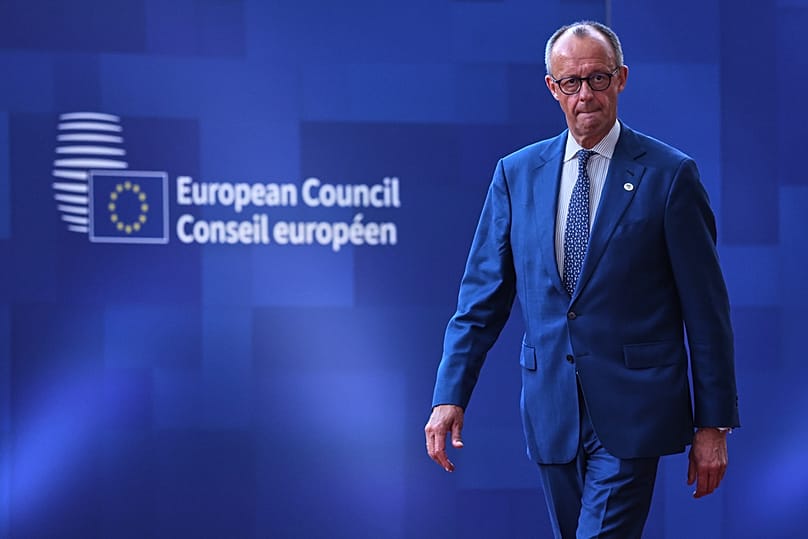
At the same time, the ranks of the ultra-rich are growing rapidly across the continent. The number of people with at least $30 million (€25.7m) in wealth rose by 26% over the past five years. Knight Frank's Wealth Report 2026 classifies them as ultra-high-net-worth individuals (UHNWIs).
Their number increased from 146,525 in 2021 to 183,953 in 2026.
Over the five-year period, 37,428 people joined this exclusive group. That translates into an average increase of 7,486 members a year, or roughly 20.5 new entrants every day across Europe.
In Germany, five people join the ultra-rich every day
Germany has the highest daily increase in the number of people joining the $30m+ wealth club in Europe.
The number of UHNWIs in the country rose from 28,942 in 2021 to 38,215 in 2026, an increase of 9,273 over five years.
In other words, every day, five people in Germany cross the $30 million wealth threshold on average. Of course, they do not accumulate that wealth in a single day; rather, their assets gradually grow until they pass the benchmark.
Germany, Europe's largest economy, ranks third globally by GDP, after the US and China, according to the IMF.
In Switzerland, the number of ultra-rich individuals has increased by the equivalent of 2.7 people a day. Over the past five years, their number has grown by 4,968, bringing the total to 17,692.
France adds two new members every day
Between 2021 and 2026, France added an average of 2.1 new members to its $30m+ wealth club each day. The country's UHNWI population increased by 3,781 to reach 21,518.
Other major European economies follow closely behind. The daily increase stands at 1.6 in both the UK and Italy, followed by Spain at 1.5. In Turkey, the figure is 1.1.
Of these seven countries, five are among Europe's largest economies. Switzerland and Turkey are the only other countries in the region where the number of people with at least $30 million in wealth rises by at least one person a day on average.
The daily increase is 0.9 in Poland, 0.5 in both Czechia and Austria, 0.4 in Denmark and Portugal, and 0.3 in the Netherlands, Ireland and Sweden.
Every 90 minutes, a person joins the ultra-rich in the US
The US is home to by far the largest number of people with at least $30 million in wealth, with 251,352 UHNWIs in 2026. China ranks second with 121,677.
In the US, an average of 36.7 people join the $30m+ wealth club every day — roughly one new member every 90 minutes.
China adds around 12.5 new members a day. Germany ranks third globally, while India (4.2) and Australia (2.2) are the only other non-European countries in the global top 10.
Worldwide, the number of UHNWIs increased by 162,191 between 2021 and 2026, equivalent to 89 new members every day. This brought the global total to 713,626.
“We are witnessing one of the most significant shifts in global wealth distribution in modern history," Liam Bailey, global head of research at Knight Frank, said. "The US remains the dominant engine, but we are also seeing rising strength from India and a cohort of fast-maturing economies that are now shaping the global landscape."
As of 2026, Germany is home to the largest number of ultra-high-net-worth individuals (UHNWIs) in Europe, at 38,215, followed by the UK (27,876) and France (21,518).
The average wealth per adult also varied widely across Europe, according to the UBS Global Wealth Report 2025 and additional data shared with Euronews. In 2024, it ranged from €29,923 in Turkey to €634,584 in Switzerland across 31 European countries.


.jpg)