NUKE NEWZ
US Uranium Production Continues To Grow, Highest In Past 9 Years
Production of uranium from mines in the USA last year was more than double 2024’s figure, and the highest in nine years, according to the latest report of annual data from the Energy Information Administration.
US mines produced 1,388,000 pounds U3O8 (534 tU) in 2025, up from 677,000 pounds U3O8 in 2024. The 2025 figure was the highest since 2016’s production of 2,545,000 pounds, according to the government agency’s Domestic Uranium Production Report, released on 23 June. Production was from one underground mine and seven in-situ recovery operations – the same as in 2024 – with some production from “other sources” of uranium, which the Energy Information Administration (EIA) says could include mine water, mill site cleanup and mill tailings, and well field restoration.
Uranium exploration and development drilling activities in 2025 were at their highest levels since 2013 for number of holes drilled and for total footage drilled, the EIA reported. Although at the end of 2025 only one conventional uranium mill – Energy Fuels’ White Mesa Mill in Utah – was in operation, two remained on standby (the Shootaring Canyon Uranium Mill in Utah and the Sweetwater Uranium Project in Wyoming), while the Sheep Mountain heap leach facility in Wyoming had reached a partial permitting and licensed stage.
In-situ recovery (ISR) facilities at the Alta Mesa, Lost Creek, Smith Ranch-Highland Operation, Ross Central Processing, and Willow Creek projects were operating at the end of the year, with a combined annual capacity of 13.3 million pounds U3O8 per year – slightly down from the industry-wide ISR capacity of 14.1 million pounds in 2024. Five in-situ recovery plants, with a combined annual production capacity of 8.8 million pounds U3O8, were on standby. Seven ISR plants – in South Dakota, Texas, and Wyoming – were planned, with a combined annual production capacity of 10.5 million pounds U3O8. (ISR – also known as in-situ leach – involves dissolving uranium directly from the orebody and recovering it via wells: see WNN’s guide to Uranium and the nuclear fuel cycle for more information).
Expenditures for land, exploration, drilling, production, and reclamation totalling USD234.7 million in 2025 were the highest since 2014, while total employment in the U.S. uranium production industry, at 711 full-time person-years (a person year is equal to full-time employment for one person), was 41% up from the 506 full-time person-years in 2024 and the highest employment total since 2014.
Following the Fukushima accident of 2011 – which led to all of Japan’s nuclear reactors being taken off line for an extended period – a time of weak uranium prices and an excess supply of uranium globally saw many US producers decide to curtail their operations. The last time US domestic production topped the million pounds mark was in 2017: production fell so low that numbers were withheld in 2020 to avoid disclosure of individual company data (World Nuclear Association figures put US production at just 6 tU in 2020). This left US reactor operators dependent on imports of uranium to fuel their power plants.
Since 2022, successive US Administrations have pursued strategies to revitalise and secure the domestic US nuclear fuel supply chain.
The Energy Information Administration is a statistical and analytical agency within the US Department of Energy.
The World Is Racing to Develop New Nuclear Fuels
- Advanced reactors and SMRs increasingly require fuels such as HALEU, but commercial supplies remain limited outside Russia and China.
- The U.S. and U.K. are investing heavily in domestic uranium enrichment to strengthen nuclear fuel security.
- Several reactor developers are adopting LEU+ as a more readily available alternative while domestic HALEU production expands.
In the age of the nuclear renaissance, several countries are strategising to significantly increase their nuclear energy capacity over the coming decades, as part of efforts to diversify their energy mix and boost long-term energy security. However, securing fuel to power operations has been complicated, particularly following the introduction of sanctions on Russian energy products. Now, alternative uranium fuels offer promise for the nuclear energy industry.
Nuclear fission, used in all existing nuclear power plants, is the process in which an atom's nucleus splits into two or more smaller nuclei and other particles. Fission can release large amounts of heat and radiation. Today’s nuclear power plants use this heat to boil water and drive steam turbines to make electricity. Operators typically use uranium fuel, enriched to up to 5 percent uranium-235 (U-235), to power nuclear reactors. Scientists worldwide are also striving to achieve and commercialise nuclear fusion, which could produce more abundant clean power.
Operators will increasingly need to use high-assay low-enriched uranium (HALEU), which is enriched to more than 5 percent and less than 20 percent, to power the advanced nuclear reactors and small modular reactors (SMRs) being developed today. However, HALEU is not widely commercially available at present, with only Russia and China currently producing the fuel at scale.
Following the United States ban on Russian uranium imports in 2024, the U.S. government has focused efforts on developing its domestic HALEU production capacity. As such, Centrus Energy produced over 920 kg of HALEU from a demonstration cascade at Piketon, Ohio, between October 2023 and mid-2025.
In January 2026, the U.S. Department of Energy (DoE) earmarked $2.7 billion to expand domestic uranium enrichment capacity over the next decade. Meanwhile, in the United Kingdom, the government announced in January 2024 that it would allocate £300 million to support HALEU production.
More operators are using TRISO (TRi-structural ISOtropic particle) fuel in SMRs, which is derived from HALEU. It is safer and more efficient than conventional enriched uranium, and the same amount of fuel can be concentrated in a smaller package, while more U-235 can be consumed before the smaller fuel pellets are depleted.
Each TRISO particle is covered with three layers of specialised ceramics and other materials to trap gases and provide the particle with high heat tolerance, thereby preventing the TRISO fuel from melting. In addition, TRISO fuel reactors use either helium or molten salt as a thermal transfer fluid rather than water, which is less reactive or has a higher boiling point. Each TRISO pellet functions as its own tiny containment vessel, meaning there is no need to construct massive facilities to contain meltdowns. While TRISO is more expensive than conventional nuclear fuels, it can power lighter, less expensive reactors.
However, accessing HALEU and TRISO at scale remains a challenge, as the China National Nuclear Corporation is the only commercial-scale producer of TRISO fuels, and Russia’s TENEX is the only commercial-scale supplier of HALEU. This has driven several companies in the United States and across Europe to explore alternative fuels to power SMRs, to shift reliance away from Russia and China.
Companies such as GE Hitachi, Westinghouse, and Aalo Atomics have opted for Low Enriched Uranium Plus (LEU+) rather than HALEU to power operations, as it can be purchased from existing U.S. facilities. Holtec’s SMR-300 has been developed to be powered by either conventional LEU or LEU+, which has a U-235 concentration of between 5 and 10 percent.
The Chief Technology Officer at Aalo Atomics, Yasir Arafat, explained why Aalo had chosen LEU+ as its primary fuel. Arafat stated, “We know we want to get to market fast, and we know we need to scale up to build hundreds of reactors, and we can't do that with HALEU for many years, because the U.S. is still pumping money into that HALEU machine, trying to figure out how to crack the code.” He believes that SMRs powered by LEU+ will advance faster than those powered by HALEU, as “We actually have a company that’s starting to make LEU+ here in the U.S.”
Urenco USA was given authorisation by the U.S. Nuclear Regulatory Commission to produce LEU+ at its Eunice, New Mexico, facility last September, and has since been producing small quantities of the fuel. The firm expects to achieve commercial production by mid-2026.
Aalo signed a supply chain agreement with Urenco for the fuel it requires to power its Aalo-X experimental reactor, which is currently being developed as part of the DoE’s Reactor Pilot Programme. It expects to launch a commercial reactor, the Aalo Pod, powered by LEU+ by 2029.
While several companies continue to rely on Russia for their uranium supplies, some countries are looking to develop a domestic HALEU production capacity, while many companies are exploring the potential of using alternative, more easily accessible uranium fuels to power operations.
By Felicity Bradstock for Oilprice.com
AI Demand, War, and Climate Pressure Push World Back To Nuclear
- The US and Canada each announced plans this week to build ten new nuclear reactors, the biggest coordinated nuclear push in North America in decades.
- The moves come as the AI boom, the war in Iran, and broader geopolitical instability push energy security to the top of the policy agenda worldwide.
- China added 34 gigawatts of nuclear capacity over the past decade to the US's one plant, and is on track to overtake both the US and France as the world's top nuclear producer.
Global energy markets are in turmoil as energy crises keep piling up. The energy-hungry AI boom, war in Iran, geopolitical instability, and climate pressures are creating a polycrisis for the global energy sector, and it’s just getting started. To solve multiple overlapping crises, we will need multiple overlapping solutions. An all-of-the-above solution to increasing energy security is therefore gaining favor on a global scale as the precariousness of over-reliance on limited energy supply chains becomes dangerously clear. While fossil fuels continue to provide the lion’s share of the global energy mix, alternative energy sources, especially those that are harder to blockade or embargo, are quickly gaining favor.
One of the biggest benefactors of this all-of-the-above approach to energy growth is the nuclear energy sector, which is currently undergoing a worldwide renaissance. While nuclear energy had fallen out of favor in much of the world in the wake of high-profile nuclear disasters like Chernobyl, Three Mile Island, and Fukushima, it has come roaring back due to the undeniable advantages it offers as a zero-carbon, round-the-clock energy source with well-established supply chains and high efficiency.
“With energy security now ranking alongside climate commitments as a top policy priority, nuclear power appears positioned to play a central role in the global electricity landscape through mid-century,” the Foreign Policy Journal reported earlier this month.
Just this week, the United States and Canada unveiled separate plans to build ten new nuclear reactors each, marking a massive acceleration of nuclear energy development across North America. On Monday, Energy Minister Tim Hodgson introduced a plan for a “new civilian nuclear renaissance” that serves as a central component of a larger plan to double the capacity of the national electrical grid by 2050 to keep up with projected demand growth.
“If our goal is to double our grid and build a low-carbon economy in less than 25 years, there is no credible plan to do that without nuclear energy and the clean, reliable baseload power it provides,” Hodgson said at a news conference in Ontario. “There is no credible plan for Canada to become an energy superpower if we choose not to build upon one of the strongest energy advantages we have,” he went on to say.
Just a day later, the Trump administration announced that it plans to funnel billions of dollars in federal loans toward kickstarting a buildout of nuclear power plants across the United States as part of Trump’s desire to to “produce lasting American dominance in the global nuclear energy market.” The new Department of Energy plan, which a New York Times report describes as “complex and unusual”, would rely on utilities to put forward hundreds of millions of dollars of their own money in order to access the federal loans, with the ultimate goal of easing the sticker shock of the components for large new reactor types.
These two plans are designed to reverse a yearslong inertia in Western nuclear energy markets. In the last ten years, the United States only built one new nuclear plant, and it was years overdue and billions over budget by the time it was finally finished. Over the same time period, China added a staggering 34 gigawatts of capacity over the same time period. As a result, China is on track to overtake the United States (and France) to become the world’s biggest producer of nuclear energy within the next ten years.
The United States and Canada’s new plans pale in comparison to China’s lofty nuclear goals as outlined in the country’s newest five-year plan, but they mark a major shift in energy strategy for the two powers, and potential progress toward rebalancing the global nuclear sector.
By Haley Zaremba for Oilprice.com
NASA Eyes Moon Base Powered by Solar Panels and Nuclear Reactors
- NASA plans robotic missions followed by human landings and a semi-permanent, solar- and nuclear-powered lunar base near the Moon's south pole.
- China is targeting a crewed lunar landing by 2030 and aims to build a permanent Moon base with Russia by 2035.
- Both nations view sustained lunar operations as a stepping stone toward scientific research, resource utilization, and future missions to Mars.
With major plans for space travel, several governments are proposing lunar energy production, including solar and nuclear projects. In May, NASA announced plans to send robotic landers, hopping drones, and vehicles to the moon as part of the United States government’s plans to develop a lunar base.
NASA is expected to develop the machines alongside Intuitive Machines, Astrobotic, Blue Origin, and Elon Musk’s SpaceX. The United States aims to land its astronauts back on the moon before President Donald Trump leaves office in 2029, 60 years after it first achieved the feat.
In March, NASA announced a $20 billion programme to develop a permanent base powered by nuclear and solar energy at the Moon’s south pole by 2032. The creation of a base would allow the United States to conduct scientific experiments, potentially mine valuable resources, and assess the feasibility of a journey to Mars. NASA recently experienced success when it sent Artemis II around the Moon in April.
Before sending humans to the Moon, NASA aims to send robotic landers and hopping drones to the surface to assess its terrain. It also plans to transport delivery vehicles capable of driving astronauts across the lunar surface and carrying communications and scientific instruments.
NASA hopes to use Blue Origin's lunar lander Endurance to conduct precise landings, as well as Astrobotic’s Gryphon-1 lander. The agency expects to carry out 25 launches and transport around 4 metric tonnes of cargo to the Moon by 2029. It then aims to develop nuclear and solar power facilities on the Moon, including fission reactors.
More ambitiously, NASA wants to establish conditions for humans to live on the moon in “semi-permanent” housing by as early as 2032. It believes that the Moon’s South Pole could offer suitable conditions, as frozen water could be used for drinking water or to produce oxygen.
However, many have criticised NASA, suggesting that its timeline is likely unrealistic. Simeon Barber, a Lunar Scientist at the United Kingdom’s Open University, said, “It would not surprise me at all if China gets there first.” Barber cited NASA’s delays in acquiring a spacecraft capable of landing humans on the Moon. “The limiting step is getting the astronauts down onto the surface… It sounds to me like [NASA] feels they’re in a position where they have to start saying they’ve got plans. So, I think there’s a lot of political drive behind this,” added Barber.
The U.S. space agency is competing with China to become the first country to return humans to Earth’s surface, with China having set a 2030 deadline. China has already sent astronauts to its space station nearly a dozen times, and it is getting more ambitious in its plans to achieve a human lunar landing.
In May, China launched its Shenzhou-23 spacecraft to transport a crew of three astronauts to its Tiangong space station. One of the astronauts is set to stay in the space station for a year, a record length for the country. This will help researchers to assess long-duration human physiology in space, including the physiological effects of radiation exposure, bone density loss, and psychological stress.
Many speculate that the Chinese government aims to colonise and mine lunar territory and resources, although Beijing has rejected these claims. To achieve its 2030 goals, China must develop suitable new hardware and software for a lunar mission, as its current technology was developed for low-Earth orbit. China has so far sent only robots to the moon. However, its regular space missions are helping to improve the country’s space capabilities.
In June 2024, China became the first country to recover lunar samples from the far side of the moon, using robots. If China achieves a human landing by 2030, it aims to develop a permanent base on the moon with Russia by 2035. Compared with the NASA timeline, China’s deadline is considered more conservative. Beijing is focusing closely on safety tests of all aspects of its lunar technology.
China is also conducting the world’s first human artificial embryo experiment in space, having transported human stem cell samples to the Shenzhou-22 crew to assess the long-term residence, survival, and reproduction of humans in space. “The human artificial embryo is made of human stem cells as raw materials,” explained Yu Leqian, the project leader for the artificial embryo space science experiment. “This is not a real human embryo and does not have the ability to develop into an individual. However, it can serve as a model for studying early human development,” added Yu.
The space race is back on, with the United States and China competing to achieve the first 21st-century human moon landing. If successful, each country plans to establish a base, generate power, and eventually create conditions for humans to live semi-permanently on the Moon.
By Charles Kennedy for Oilprice.com
The IAEA Faces a New Nuclear Puzzle Inside Iran
- Experts say effective IAEA inspections require broad access to verify Iran's enriched uranium stockpiles, enrichment activities, and nuclear infrastructure
- A key challenge will be locating Iran's roughly 450 kilograms of highly enriched uranium and ensuring it is properly downblended and cannot be re-enriched.
- Former officials argue that restoring the IAEA's "continuity of knowledge" after recent military strikes and restricted access will be one of the agency's toughest tasks.
Amid an ongoing row between Washington and Tehran over whether international monitors can verify Iranian compliance with its nuclear nonproliferation commitments, former officials have told RFE/RL that the scale, scope, and degree of access are crucial to the success of inspections.
Details on those have yet to be determined, though Raffael Grossi, head of the International Atomic Energy Agency (IAEA) said the UN body "will be working on the modalities -- dates, procedures, places -- very soon."
That doesn't mean, according to experts, that the organization hasn't already drawn up a wish list for any eventual inspections.
"They almost certainly have a plan for when they go back in, what the priorities are, where they would want to go first, second, third," Laura Rockwood, a former IAEA negotiator on Iran, told RFE/RL.
"The key thing is to find out where in particular the enriched uranium is.... I'd be willing to bet you that they have in place a plan for the day they need to go back in," added Rockwood, who took part in high-level negotiations on Iran during a 28-year career at the IAEA before retiring in 2013.
Downblending Uranium
While US President Donald Trump has said that Iran has agreed to the highest level of nuclear inspections and Iran says it has no plans to allow the inspections, point No. 8 of the US-Iranian memorandum of understanding (MOU) states the two sides have agreed on a "minimum methodology" that Iran's stocks of highly enriched uranium (HEU) will be "downblended on site under the supervision of the IAEA."
But the details of this could also prove contentious.
"If IAEA inspectors were able to measure and characterize both the high and low enriched material before the downblending, then simple arithmetic gives a good sense of what the product is. They'd then want to measure to confirm and seal that product for future accountability," Matthew Sharp, who served as director for Iran nuclear issues on the US National Security Council (NSC) from 2021-2022, told RFE/RL.
"If, on the other hand, Iran does the downblending itself and then provides the product to inspectors, it would be much more difficult to know how much HEU Iran started with, which could create uncertainties as to whether all of the 60 percent or other enriched material had been downblended or if some remained out of our awareness," said Sharp, now a senior nuclear fellow at the MIT Center for International Studies.
Right now, the location of Iran's roughly 450 kilograms of HEU is unclear. After the US and Israeli air strikes, it could be buried under rubble in a bunker beneath a mountain, or the Iranian authorities may have moved some or all of it elsewhere to hide it.
But if it can be successfully located and downblended, the next step is stopping Iran from re-enriching it again at a later date.
Monitoring Enrichment
The MOU says the two parties agreed "to discuss the issue of enrichment and other mutually agreed matters related to the Islamic Republic of Iran's nuclear needs, based on a satisfactory framework being agreed upon in the final deal."
Experts told RFE/RL that verifying this must include a role for the IAEA.
"Any suspension on uranium enrichment is relatively meaningless if it cannot be verified and if the IAEA does not have the access to ensure that there are no covert nuclear activities related to enrichment going on elsewhere in the country," said Kelsey Davenport, director of nonproliferation policy at the Arms Control Association.
"The level of access, the provision of information to the International Atomic Energy Agency, how quickly Iran has to comply with IAEA requests for access -- all of that is going to be crucial," she told RFE/RL.
"Once the enrichment level is low, below 5 percent, it's much safer to ship out that material. It could be stored under an international fuel bank in Kazakhstan," Davenport added.
The idea of shipping the downblended uranium out of Iran is something US officials appear keen on. At a recent background call with reporters, one official said dilution within Iran was "the floor" but that "we will push for more than that."
A senior US official said Washington would rely heavily on the UN nuclear watchdog and US technical teams for verification. "We're not in the trusting business," the official said.
The IAEA has previously verified Iran's compliance with its commitments to the Nuclear Non-Proliferation Treaty, which it ratified in 1970, and the 2015 Joint Comprehensive Plan of Action (JCPOA).
Lessons From The Past
Experts say many lessons have been learned from these experiences. They point to the importance of the IAEA's Model Additional Protocol, which provides additional tools for verification.
Rockwood, now a senior fellow at the Vienna Center for Disarmament and Non-Proliferation, was the principal author of the protocol.
"Under the additional protocol, instead of just routinely being limited to nuclear material and nuclear facilities, we have access to information and locations concerning the entire nuclear fuel cycle, including the production of centrifuges," she said. "So, if you know roughly how many centrifuges they are capable of making, you want to know where they are, and we can ask for that kind of access with an additional protocol."
Iran signed the Additional Protocol in 2003 but has not sent an official letter to the IAEA that would bring it into force.
Iran provisionally implemented its provisions between 2003 and 2006 and for a period under the JCPOA. However, noted Rockwood, "there were lots of indications of noncompliance by Iran" during this time.
This, she said, could be expected to continue -- with added complications.
Iran stopped granting the IAEA access to sites hit by US and Israeli strikes on its nuclear facilities in June last year. This has disrupted what Rockwood calls the "continuity of knowledge." In other words, the IAEA has lost track of what Iran has and where it is. Also, the extent of damage is unclear, potentially complicating access, and there may also be unexploded ordnance on site.
"There will be uncertainties, and there may be more uncertainties than there were before. In fact. I would expect that to be the case. Yeah, really, a heavy slog," Rockwood said.
By RFE/RL
US gives Cameco-backed Westinghouse $17.5B nuclear boost
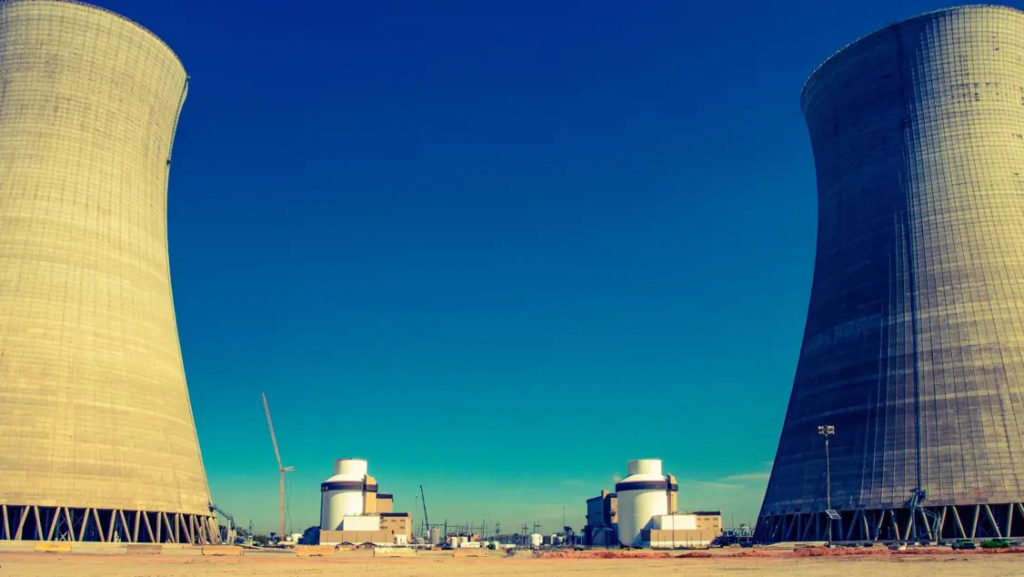
The US Department of Energy (DOE) is planning to provide $17.5 billion in loans to support the nationwide buildout of 10 large-scale commercial nuclear reactors, with the goal of fast-tracking their deployment by up to three years.

The funding — issued by the Office of Energy Dominance Financing (EDF) — is designated to help five eligible projects in their procurement of long-lead-time items needed to build these large nuclear power plants, the DOE said in a statement on Tuesday.
Termed as the American Nuclear Supply Chain Loans, the initiative marks another key step in President Trump’s executive order last year to reinvigorate the US nuclear industrial base.
“Just over one year ago, President Trump directed the Energy Department and its agency partners to unleash the next American nuclear renaissance,” US Energy Secretary Chris Wright said. “To accomplish that mission, these conditional loans will play an important role in reviving the supply chain needed for America to once again build large-scale commercial reactors.”
Procurement for 10 reactors
According to the DOE, the $17.5 billion funding would be allocated towards five energy projects, each supporting two nuclear reactors at its site, for a total of 10 reactors.
Westinghouse, which operates the country’s only licensed large-scale advanced commercial reactors (AP1000), will partner with the selected companies to procure long-lead items at a fixed price and will have joint ownership in each project.
For each project, both Westinghouse and its partner are required to fully commit their project equity of $500 million each (or $1 billion total per project) upfront prior to accessing DOE loan funds. Purchasing for each project will be staggered based on the timing of equity commitments and other relevant factors.
Westinghouse has signed letters of intent with seven potential partners, each with identified project sites, the Department said.
1.1GW power
According to the Department, each of the AP1000 reactors will generate 1.1 gigawatts of power, with the combined power output from all 10 reactors providing enough electricity to power nearly 10 million American households.
The loan facilities’ bulk equipment purchase order structure creates a strong commitment to restarting the nation’s nuclear industry by providing the necessary financing for rebuilding the American nuclear supply chain, the DOE said.
In doing so, the loan facilities drive down costs for individual nuclear components, create significant supply chain efficiencies, and shorten timelines for nuclear deployment by up to three years, it added.
Commitment to AP1000
The loan commitment comes eight months after Westinghouse — co-owned by Brookfield Renewable Partners and Canadian uranium producer Cameco — signed an $80 billion deal with the Department of Commerce to build eight AP1000 power plants.
Currently, there are six AP1000 reactors setting operational performance and availability records worldwide with 14 additional reactors under construction and five more under contract, according to the company.
“We are pleased to see the US government make this additional commitment to expanding nuclear power capacity using the proven AP1000 reactor technology,” Cameco CEO Tim Gitzel said in a press release. “When combined with the May 23, 2025, executive orders and other US government initiatives, we believe the right incentives are being created to advance the rapid deployment of AP1000 reactors in the US.”
“The expansion of nuclear power in the United States is expected to create significant opportunities for Westinghouse and Cameco, accelerating growth in Westinghouse’s energy systems segment during the procurement and subsequent construction phase,” he added.
Shares of Cameco traded 2% higher on the news amid broader weakness in equities. Year to date, the stock is up by more than 10%. The Saskatchewan-based company has a market capitalization of $47.7 billion.

