Monday, June 29, 2026

Poll shows majority of Serbians think country is on wrong track

Poll shows majority of Serbians think country is on wrong track
/ IntelliNewsFacebook
By Tatyana Kekic in Belgrade June 25, 2026

More than half of Serbians believe the country is heading in the wrong direction, while trust in key state institutions has deteriorated sharply, particularly in the police, according to a survey published on June 25 by the Belgrade Centre for Security Policy (BCSP).

The survey of 1,000 respondents, conducted between May 12 and May 26, found that over 50% of citizens believe Serbia is on the wrong path, compared with 32.9% who think the country is moving in the right direction.

The findings come as President Aleksandar Vucic faces persistant of anti-government protests and growing scrutiny over the state of Serbia's democratic institutions ahead of possible early elections later this year.

More than 37% of respondents said Serbia is not a democracy, while another 25.2% described it as a democracy with major problems. Only 24.6% viewed the country as a democracy with minor shortcomings.

The poll also highlighted significsnt dissatisfaction with the government. Some 34.4% of respondents said they opposed the government, while a further 12.6% said they were somewhat opposed. By comparison, 17.2% said they supported the government and another 18.6% expressed partial support.

Asked who wields the greatest influence over decision-making in Serbia, 87.5% identified Vučić, while 71.7% pointed to the government. More than half, 57.8%, said organised crime also influences state decisions.

Trust in institutions remained highest for the Serbian Orthodox Church, which was trusted by 59.7% of respondents, followed by the armed forces at 53.9%.

Vučić was trusted by 39.7% of those surveyed, while 45.9% said they did not trust him. Prime Minister Đuro Macut was trusted by 32.4% and distrusted by 49.1%.

One of the most notable findings was a sharp decline in confidence in the police. BCSP researcher Filip Ejdus said trust in the force had fallen from 76% in a comparable 2022 survey to just 39% today, Danas reported.

The poll found that 45.6% of respondents believe the police protect criminals connected to the state, while 44.6% said the force shields politicians who abuse power. Only 41.4% said the police primarily protect citizens and their property.

The decline comes amid a series of scandals that have fuelled public concerns about links between organised crime and state institutions. A recent gangland-style killing and the subsequent arrest of a senior police official on suspicion of attempting to conceal the crime, although the most serious allegations have now been dropped, reinforced perceptions of blurred lines between the state and criminal networks.

At the same time, the survey suggested that most citizens continue to favour institutional change over political confrontation. Nearly 73% said elections were the preferred mechanism for bringing about political change, while 48.1% supported lustration measures and 43.3% backed the creation of specialised prosecutorial and police bodies to strengthen accountability.

"Elections remain the dominant path for change in the minds of citizens," BCSP researcher Dušan Stanković said during the presentation of the findings, Danas reported.

The results point to growing frustration with democratic governance and state institutions, but also suggest that public support for political change remains largely focused on electoral rather than extra-institutional means.

For Vučić, who has governed Serbia for more than a decade and is weighing whether to call early parliamentary elections, the findings underscore a more challenging political environment than in previous electoral cycles.

CHAMPION OF FREE SPEECH (SIC)

BEYOND THE BOSPORUS: X blocks videos of stand-up comedian calling Erdogan “dictator”

BEYOND THE BOSPORUS: X blocks videos of stand-up comedian calling Erdogan “dictator”
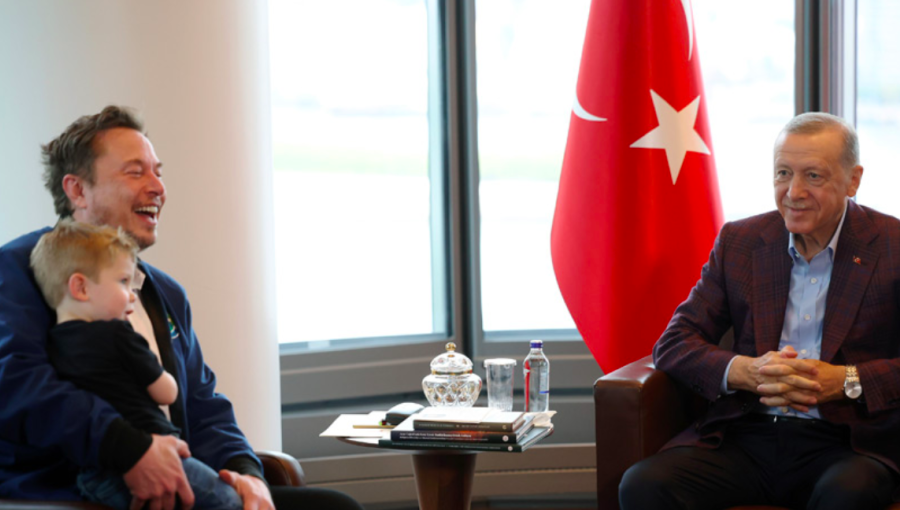
Responsible comedy from Recep Tayyip Erdogan. Elon Musk. the owner of X, laughs his head off with conviction. / tccb.gov.tr
By Akin Nazli in Belgrade June 28, 2026

Social media platform X has blocked access within Turkey to video clips of stand-up comedian Deniz Goktas, who – as reported by IntelliNews on June 26 – went viral with an upload of a comedy set in which he called the country’s president Recep Tayyip Erdogan a “dictator”.

The EngelliWeb initiative (@engelliweb), a project of Turkey’s Freedom of Expression Association, has reported the ban introduced by X.

The geoblocking of Goktas videos was executed under Article 8/A of Law No. 5651, which refers to Turkey’s controversial internet regulation statute. The article allows authorities to order the removal of content or block access to websites on the grounds of protecting national security, public order or crime prevention.

“National security” no less

The Goktas decision was executed “on the grounds of protecting national security and public order”, a general clause that is employed to block anything ranging from stories about corruption to the work of comedians.

Turkey also regularly applies bandwidth throttling at up to 90%, advertising bans and eventual platform blackouts.

Watched 4.4mn times

Goktas, known for his sharp, politically charged dark comedy that frequently touches on Turkey’s socio-economic struggles, state institutions and judicial system, has built a massive audience.

On June 24, he uploaded his latest comedy show on YouTube. Since then, the video has been viewed more than 4mn times.

“Dictator at peace with himself”

During his performance, Goktas describes Erdogan as having transitioned from a "shy dictator" to one who is "at peace with his own identity".

“There is no debate that this indecent individual named Deniz Goktas will be arrested. The reason for his arrest is his mockery of the Islamic religion. The buffoons making defences like 'Oh, it’s just a joke' should make jokes about their own sacred values instead,” an Erdogan-supporting troll on June 27 wrote on X, where Goktas remains a trending topic.

“However”

“This upstart named Deniz Goktas uses his high-pitched voice in his stand-up show to lash out at our President. He calls him a 'dictator,' he calls him 'ignorant,' and so on and so forth. Up to a certain point, I can accept harsh criticism in comedy,” another such troll wrote.

He then added a “However”. The use of an “However” is a well-known tack taken by Erdogan backers online. Goktas in fact has a “however” joke in his satirical show. In this case, the troll says that, though he can accept harsh criticism in comedy, “Directly insulting someone and serving up impertinence wrapped up as a joke under the guise of 'haha huhu' has absolutely nothing to do with comedy.”

What is comedy?

“Comedy requires a spark of intelligence; the performer forms an invisible bond with the audience, the audience instantly processes the subtle jabs, and if they like it, they become part of the show,” the social media post continued.

So, in this case, the suggestion appears to be that if this was a case of comedy, things would be okay. “However,” the apparent problem is that this is not a case of comedy.

“Who are you to talk about our president?”

“What’s more, I cannot understand how these upstarts grant themselves a special status, despite having no life experience or achievements of their own, while humiliating a leader who has won every election he has entered over 24 years and has made history in this country,” the troll also wrote. “What is your story [Goktas]? Do you have a single achievement? How many books have you read, for instance?”

The troll in question is an ex-Gulenist. Introducing the issue of books where the anti-Gulenist Erdogan is concerned could be a sign that he remains a crypto-Gulenist as Goktas’ comedy routine also includes a joke about Erdogan and books.

“Refined wit” of Musti from Senegal

“Musti from Senegal, who learned Turkish later in life, also used to criticise our President in his stand-up routines, but nobody was offended. Because he was producing comedy with a refined wit,” the troll continued.

The “Musti from Senegal’ concerned has argued that Erdogan would win the elections in Senegal if he ran there. A curious kind of criticism.

But, no matter, make of it what you will, for our troll friend concluded: “If you fail to maintain the fine line between comedy and impertinence, you end up talking nonsense; you become impertinent, not funny.”

“Primary motivations are insulting Erdogan and Islam”

Wading back in, with a further set of tweets, troll guy added: “The debate over comedian Deniz Goktas’ show continues. Those who offer him support and direct their anger at us are predominantly taking an ideological stance. In particular, 'animosity toward Tayyip Erdogan' and 'anti-Islam sentiment' serve as their primary motivations”.

Back in the groove, trolling man observed: “The interesting part is that they mount their defence by referencing positive concepts such as 'tolerance' and 'forbearance.' We know this fraudulent, masked approach all too well. Just a day or two ago, the actor Halil Ergun was subjected to a lynching campaign simply for criticising, not even [founder of the Republic of Turkey, Mustafa Kemal] Ataturk himself, but those who exploit Ataturk’s legacy.”

Can you call Ataturk a dictator?

“If you approach comedy with such immense tolerance, could you repeat word for word, neither more nor less, what was said about our President regarding Ataturk? Personally, I have no issue with Ataturk and I treat his memory with the utmost respect; I only say this to test the boundaries of your tolerance,” troller next wrote.

“Back then, the Republican People’s Party (CHP) was up in arms because Can Dundar [a journalist, currently in self-exile in Germany for using videos to expose the ‘MIT trucks incident,’ a clash between Gulenist cops and a Turkish intelligence service MIT officer, with the spooks found to be transporting guns to Syria], a favourite figure among the opposition, used a photograph of Ataturk smoking a cigarette in a documentary. For years in this country, it was forbidden to write or draw in reference to Ataturk drinking alcohol,” he added.

“The career of TV host Guner Umit came to an end because of a joke he made about our Alevi citizens during a live broadcast. Every country has its shared values, its sacred beliefs, and its own sense of humour,” he advised.

Avoidance of “tragedy”

And for a clincher: “One must be careful; this is where our sensitivity lies. If every newcomer turns comedy into a 'weapon of attack,' they will be slashing and drawing blood along the very fault lines that hold society together. It would be a tragedy”.

Kazakhstan Chess Federation

Freedom Holding's Timur Turlov announces candidacy for FIDE vice-president

Freedom Holding's Timur Turlov announces candidacy for FIDE vice-president
Freedom Holding's Timur Turlov says Kazakhstan’s recent progress in chess demonstrates a model that could be expanded globally. / Freedom HoldingFacebook
By IntelliNews June 29, 2026

Timur Turlov, president of the Kazakhstan Chess Federation and founder of Freedom Holding, has announced his candidacy for vice-president of the International Chess Federation (FIDE), joining the ticket of incumbent FIDE president Arkady Dvorkovich ahead of elections in September, Freedom Holding said in a statement on June 29.

The next FIDE leadership elections will take place in Samarkand, Uzbekistan, on September 26-27 during the federation’s general assembly. Under FIDE rules, the president and vice-president run on a joint ticket.

Turlov announced his candidacy on social media, saying Kazakhstan’s recent progress in chess demonstrates a model that could be expanded globally.

“The results achieved over these 3.5 years have convinced me of a simple thing: the approach we’re using in Kazakhstan works, and it can be scaled up much more broadly, to the level of world chess,” Turlov said.

Turlov has led the Kazakhstan Chess Federation since 2023, overseeing reforms aimed at expanding participation, strengthening institutional support and improving international competitiveness.

Kazakhstan’s national teams have improved their standing in recent years, according to the company's statement. In 2025, Kazakh players won 162 medals at international tournaments, including 64 gold medals. More than 1,500 schools and over 60,000 students are now participating in the country’s chess education programme.

In 2026, Kazakhstan introduced a new accreditation system for chess schools and clubs and began preparing the launch of KazChess ID, a unified digital platform designed to integrate the country’s chess ecosystem.

Freedom Holding allocates around $15mn annually to support chess development in Kazakhstan. The company has also expanded its involvement in global chess.

In April, Freedom Holding announced the acquisition of ChessBase, one of the world’s largest chess software and analytics platforms. The company plans to invest about €5mn in its development, with chess tournament broadcasts already integrated into the Freedom SuperApp.

Freedom Holding, listed on Nasdaq since 2019, reported revenue of $2.2bn for fiscal year 2026. The company’s market capitalisation exceeds $8bn, while Forbes estimates Turlov’s personal fortune at $5.5bn.

The group operates in more than 20 countries across Kazakhstan, the US, Europe and the Middle East, serving over 14mn clients through banking, brokerage, insurance and digital services.


North Korea's unlikely economic revival reshapes life in Pyongyang as Russia and China deepen support

North Korea's unlikely economic revival reshapes life in Pyongyang as Russia and China deepen support
The growing cooperation between China, Russia, Iran and North Korea, is causing the one-time pariah nation to boom as war-related money pours in. / bne IntelliNews

By Ben Aris in Berlin June 29, 2026

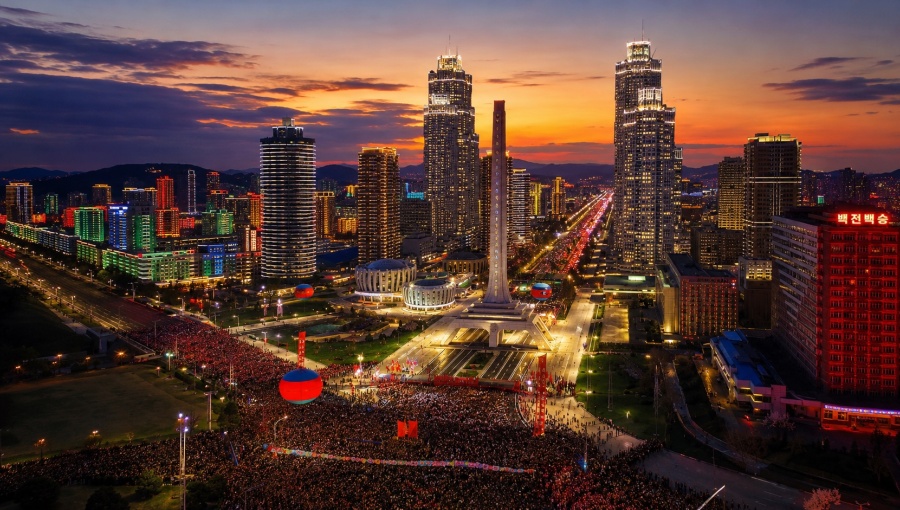
Pariah no longer, since the war in Ukraine started, Russian and Chinese money has poured into Pyongyang, fuelling a rapid economic development and unexpected real estate boom in a country better known for repression and poverty.

Decades of sanctions, international isolation and chronic shortages left the country an economic basket case, but once the world was split into rival Global South and North as part of the ongoing East-West clash, catalysed by the mercurial Trump administration, the Democratic People’s Republic of Korea (DPRK) North Korea has been drawn into the expanding CRINK supremacy – a pragmatic economic-military alliance of China, Russia, Iran and North Korea.

On the face of it, North Korea does not have much to offer, but after decades of isolation, it has built up huge stockpiles of Soviet-designed artillery shells and sold millions of these, albeit low quality, shells to Russia in the first year of the war, significantly changing the balance of power in the war at a time when Kyiv was running out of ammunition.

Pyongyang has also aided Iran. As part of its nuclear missile development programme, it has been investing heavily into long-range missile technology and appears to have shared this with Tehran in what could also be dubbed a “coalition of the sanctioned.”

Iran surprised the world when it attempted to strike the joint US-UK base at Diego Garcia in March using two Kheibar (aka Khorramshahr-4) missiles, based on the DPRK’s technology. What was surprising is the island base is around 4,000km from Iran – twice the distance of what was previously assumed Iran’s longest-range missiles can reach. One failed during flight and the other was intercepted by a US Navy SM-3 missile before reaching the island, but in theory these missiles put parts of Europe into the range of Iranian missiles, including cities such as Berlin, Paris and Rome.

All this help has to be paid for. Russian Foreign Minister Sergei Lavrov was in Pyongyang last summer to reaffirm the Russo-North Korea security pact where Pyongyang provides military equipment and soldiers to Russia in return for grain, energy, technology and money, following Russian President Vladimir Putin's visit to North Korea in 2024. Unusually, Russia signed off on a full security agreement with North Korea during Putin’s visit, that includes Nato Article 5-like collective security clauses – something that was not offered to Iran when Putin signed a similar deal with Tehran in 2025.

Obviously, there is little official information on how much this trade is worth, but experts’ at the South Korean state-linked Institute for National Security Strategy best-guess estimates put the total trade and investment value at about $7bn–$14.4bn from Russia since 2023 through arms supplies, missiles and personnel support for the Ukraine war. That’s a huge sum for an economy whose annual GDP is usually estimated at only about $25bn–$30bn.

Reported components include the sale of roughly 250 KN-23 short-range ballistic missiles, artillery ammunition, multiple-launch rocket systems and troop-related payments. One estimate says Russia may have paid more than $600mn for North Korean military personnel alone deployed from late 2024 and used to retake the Kursk after it was occupied by the Armed Forces of Ukraine (AFU).

China has been less proactive, but trade is flourishing: China-North Korea trade recovered to about $2.3bn in 2023, $2.2bn in 2024 and $2.73bn–$2.74bn in 2025, close to the pre-pandemic 2019 level of $2.79bn. Reuters reported that China trade rose again in early 2026.

Trade with China is now at its highest level in eight years, supplying consumer goods, industrial components and technology that contribute to a growing domestic digital economy.

Pyongyang booming

Recent accounts from Russian travellers and diplomats suggest that life in the capital is booming as a result of the inflowing cash.

"Restaurants there serve up brick-oven pizza and chicken wings. Diners can pay through a mobile QR-code system. Chinese electric vehicles whiz through the streets. Pyongyang has new pet stores, an internet-gaming cafe and car dealerships selling BMWs," Russia analyst Nina Byzantina wrote in a recent blog post. "Kim has initiated a nationwide construction boom. Last year, North Korea built 10,000 new homes in Pyongyang—more than either Los Angeles or Chicago."

The observations, highlighted in a recent Wall Street Journal report, paint a picture of a country whose capital is becoming increasingly modern despite remaining one of the world's most heavily sanctioned economies.

Military cooperation with Russia, expanding trade with China and increasingly sophisticated methods of circumventing international sanctions, as the CRINK members are now actively developing alternative trade and payment systems in concert, have all provided the Kim Jong Un regime with fresh sources of revenue.

For returning visitors, the changes are immediately visible. Australian tour operator Rowan Beard, who has travelled to North Korea more than 100 times, told a local newspaper he was astonished by the speed of change after returning for the first time since before the pandemic.

"My mind was blown," Beard said after using a smartphone application to hail a taxi in Pyongyang — a service that barely existed only a few years earlier.

The digital transformation extends well beyond ride-hailing. QR-code payments have become common in restaurants and department stores, while smartphone-based delivery services, domestic mobile applications and online services have expanded rapidly, supported largely by Chinese-made components and technology.

Kim has made construction one of the defining themes of his economic policy. Entire new districts of apartment towers have appeared across Pyongyang as part of an ambitious programme to build 10,000 new homes annually. Major infrastructure projects completed over the past year reportedly include hospitals, industrial facilities, greenhouses and tourism developments, while Kim's "20×10" regional development initiative aims to build factories and modern public facilities across the country over the next decade.

The capital's roads have also been fixed. Chinese-built electric vehicles have become commonplace, reflecting both Beijing's growing commercial presence and Pyongyang's efforts to modernise transport while reducing dependence on imported fuel. Dealerships now sell imported BMW AG vehicles, alongside a growing range of Chinese brands that have quietly entered the market despite international restrictions.

Most of the progress is reportedly contained to the capital. Outside Pyongyang, conditions remain starkly backward. United Nations agencies continue to estimate that large parts of the population suffer from chronic food shortages, while much of the countryside remains impoverished. The benefits of recent growth appear concentrated overwhelmingly among the political elite and residents of the capital, as in the early days of Russia’s transformation in the 1990s.

Even so, analysts argue that the improvements visible in satellite imagery suggest the changes are not simply state propaganda.

South Korean researchers have documented increased activity at oil-storage facilities, busier parking areas and substantially brighter nighttime satellite imagery. According to one study cited by the Wall Street Journal, North Korea now emits roughly three times more light at night than it did five years ago, suggesting higher electricity consumption and greater economic activity.

Economic growth

The Bank of Korea, South Korea's central bank, estimates the DPRK's economy expanded by 3.7% in 2024, the fastest pace in eight years. While outside estimates remain necessarily imprecise, the figure broadly aligns with reports of expanding industrial production, construction and foreign trade.

For years, Western policymakers assumed economic sanctions would eventually force Pyongyang back to negotiations over its nuclear weapons programme. However, first Iran and now Russia have shown that even extreme sanctions have little effect and are unable to force policy changes on reluctant regimes. Indeed, now they are backfiring by driving the sanctioned regimes into an expanding anti-western alliance.

Growing financial support from Moscow, expanding commercial ties with Beijing and revenues from cybercrime have provided Kim with alternative sources of income that reduce dependence on sanctions relief.

Stephen Haggard, a long-time specialist on the North Korean economy at the University of California, San Diego, described the turnaround as remarkable given the country's isolation and limited resources.

The result is an economy that remains deeply distorted but considerably more resilient than many Western policymakers had hoped for. And one that is actually booming now as an intended consequence of the various wars and military threats plaguing the rest of the world.
 

India turns to global alliances to accelerate wind power growth

India turns to global alliances to accelerate wind power growth
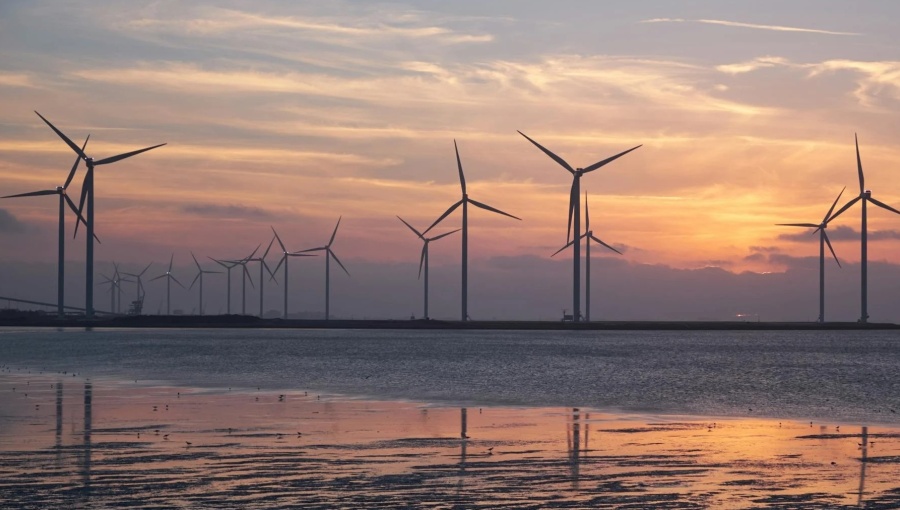
/ Pexels - Wind Turbine Landscape PhotographyFacebook
By IntelliNews June 29, 2026

Solar power is the largest source of renewable energy in India. In May 2026, India’s installed solar capacity reached 157 GW, accounting for almost 68% of the country’s renewable energy portfolio and about 29% of overall generation capacity. However, the government of India is of the view that wind energy will also play a vital role in the country's energy transition plan, according to a note published in mid-June.

Wind power projects can be a vital source of clean, locally produced electricity. India has significant onshore and offshore wind power potential, which can drive the sector's long-term growth. According to the government, wind power can also play an important role in balancing the electricity system, with almost half of the generation taking place during peak demand periods, complementing solar power and improving grid stability.

India is now working with the UK, Denmark and Belgium to advance the growth of the wind power sector.

In February this year, India and the UK unveiled the India–UK Offshore Wind Task Force under which the two countries will focus on market design, developing infrastructure and supply chains and finance.

Earlier this year, New Delhi and Brussels agreed to work together on offshore wind, research and development and green taxonomy. In May last year, India and Denmark renewed their bilateral Memorandum of Understanding (MoU), which was signed in 2019. The two parties plan to work on power system modelling, integration of variable renewable energy and joint expert training.

The government has zeroed in on some states that hold wind power potential. New Delhi is looking to expand wind deployment into emerging states such as Madhya Pradesh, Telangana and Odisha. It has also identified leasing areas in the states of Gujarat and Tamil Nadu to set up offshore wind projects.

The idea is to integrate wind power into Round-the-Clock (RTC) renewable energy solutions through storage-linked business models, upgrade the grid and use artificial intelligence (AI)-based forecasting models for the management of renewable energy sources. In order to minimise dependence on imports, the government also wants to strengthen domestic manufacturing across the entire wind energy value chain.

Huge potential

India holds significant wind power resources, with an estimated gross wind power potential of 695.5 GW at a hub height of 120 metres and 1,163.9 GW at 150 metres above ground level. A large part of this potential is located in eight resource-rich states. The leader of the pack is the desert state of Rajasthan with 284.2 GW of estimated potential at 150 metres. Next is Gujarat with a potential of 180.8 GW and Maharashtra with 173.9 GW stands in third place. Other important states are Karnataka, which has a potential of 169.3 GW, Andhra Pradesh with 123.3GW, Tamil Nadu with 95.1 GW, Madhya Pradesh with 55.4 GW and Telangana with 54.7 GW.

According to the government of India, more than 900 wind-monitoring stations have been set up in the country to undertake resource assessment and project development. Wind resource maps have also been established for hub heights of 50, 80, 100, 120 and 150 metres, to help identify high-potential sites that could hold potential for future investments.

India has set a goal of hitting 100 GW of installed wind capacity by the end of this decade and 156 GW by 2036. The country’s vast resources and the performance of the last decade provide the confidence needed to achieve this goal. The country’s installed capacity has jumped from 21.04 GW in March 2014 to 56.09 GW in March 2026, representing a growth of almost 2.7 times. About 28 GW of additional capacity is under development.

The financial year 2025-26 was the strongest year for the sector. Last fiscal saw new installations to the tune of 6.05 GW, surpassing the previous record of 4.15 GW achieved in fiscal 2024-25.

The domestic manufacturing has also recorded impressive growth. India's wind turbine manufacturing capacity has grown from 10 GW in 2014 to around 24 GW in March this year. The industry has achieved 70-80% localisation across major components and has developed robust domestic supply chains for blades, towers, gearboxes and other critical equipment, the government said.

Financial support

The government of India has also announced policies related to financial aspects to help focus on accelerating wind deployment, promoting offshore projects and modernising grid infrastructure. A viability gap funding of INR68.53bn has been sanctioned for 1,000 MW of offshore wind projects off the coasts of Gujarat and Tamil Nadu. The government has also granted INR5bn under the Generation-Based Incentive scheme during 2025-26.

A 500-MW pilot project has also been unveiled under the Contracts for Difference mechanism, which is set up to provide better clarity when it comes to revenue for renewable energy developers. The government has set up a dedicated task force that is responsible for tackling regulatory issues, land acquisition, transmission and implementation challenges facing the sector.

The government also believes that additional measures, including a dedicated wind component under renewable purchase obligations, green energy open access rules, implementation of the approved list of models and manufacturers, transparent bidding guidelines and late payment surcharge rules have given a boost to investor confidence.

Equinor Pulls Out of Japan’s Offshore Wind Market

Equinor is ending its offshore wind business activities in Japan and will close its Tokyo office by the end of the year as the Norwegian energy major is realigning its non-oil and gas strategy to focus on power markets.

“This decision reflects a reassessment of Equinor’s strategic direction, with a strengthened focus on integrated power markets,” the Norwegian company said on Friday.

While Equinor is ending its Japanese presence, Japan will remain an important country for Equinor, which will continue to invest in its longstanding relationships with Japanese companies in technology development, commodities, capital markets, and across the supply chain, said the Norwegian firm.

Equinor, which had big offshore wind ambitions more at the end of the 2010s, entered the Japanese offshore wind market in 2018. In 2020, Equinor teamed up with local firms Jera and J-Power to jointly bid in Japan’s offshore wind auctions.

However, Equinor has failed to win any leases in Japan’s auctions to date, while the Japanese offshore wind industry suffered a heavy blow last year after Mitsubishi Corporation dropped plans to develop three offshore wind projects amid unexpected changes and rising challenges in the market.

Since Mitsubishi was selected as the operator of the projects in December 2021, the business environment for offshore wind power “has significantly changed worldwide due to factors such as tight supply chains, inflation, exchange rates, and rising interest rates,” the Japanese firm said last summer.

Equinor, for its part, is active in the offshore wind markets in the UK, Poland, and Norway, after withdrawing from several other markets including Spain, Portugal, and France.

At the Capital Markets Day 2026 earlier this month, Equinor said it is concentrating its power growth ambitions in selected markets and segments, where integration with a broader energy offering is achievable.

Building a competitive integrated power business is a key pillar of Equinor’s latest strategy, alongside maximizing production of oil and gas offshore Norway, growing its international oil and gas business, and creating additional value through trading and market optimization.

By Michael Kern for Oilprice.com

ANGOLA


The Billion-Dollar Debt Deals Exposing an Oil Giant


  • Sonangol has raised billions of dollars in loans and bonds as it struggles with weak cash generation from its core oil business.

  • Much of the company's profitability comes from dividends and external investments rather than upstream and downstream operations.

  • Asset sales, corporate restructuring, and a planned 2027 IPO are central to Sonangol's strategy to restore financial health.

Last week, Angola's state oil company, Sociedade Nacional de Combustíveis de Angola (Sonangol), secured a $2.65-billion financing deal with a consortium of international banks to fund the company's operating expenses and capital investments. The financing was heavily backed by a syndicate of foreign lenders including Société Générale, First Abu Dhabi Bank, Standard Bank of South Africa and Absa, while local Angolan banks, including Banco Fomento de Angola (BFA), Banco Millennium Atlântico and Banco Angolano de Investimentos (BAI), chipped in with $105 million. 

The deal is the latest in a series of financing deals completed by Sonangol since the beginning of the current year, with the company having secured a $1.75 billion facility from the African Export-Import Bank (Afreximbank) in January to support its working capital needs and crude trading operations, shortly before it raised $750 million in international markets through a five-year bond carrying a 10% coupon in the same week. Sonangol is still hunting for more capital, with the company currently seeking an additional $4.8 billion from Chinese and European lenders to cover a funding deficit for the planned $6.6-billion Lobito Refinery.

Unfortunately, a deeper dive into Sonangol's flurry of financing deals uncovers major weaknesses in the Angolan oil model.  

While the massive capital raise from international banks appears like a big seal of approval of Sonagnol’s operations, it actually underscores how a lack of core profitability, diversification into unrelated business and declining production are choking the country's energy champion.

First off, Sonangol’s core Oil & Gas operations are barely profitable. The company reported a respectable net profit of 862.4 billion Kwanza ($940 million) for its 2025 financial results; however, Sonangol’s upstream exploration and production(E&P) operations generated a miniscule Kz97.1 billion ($105 million) in actual profit despite generating generated a massive Kz4 trillion ($4.36 billion) thanks to to astronomical costs, asset depreciation and taxes. The company’s downstream refining and distribution segment fared even worse after posting a Kz820.3 billion ($895 million) loss in a single year. 

Fully 53% of Sonangol’s profits in 2025 did not come from its core business, but rather from dividends paid by external corporate stakes in Portugal’s Galp Energia (OTCPK:GLPEF), Millennium BCP bank and the Angola LNG project. Sonagol owns a 22.8% stake in the Angola LNG project alongside Chevron Corp. (NYSE:CVX), with a 36.4% stake, while BP Plc (NYSE:BP), TotalEnergies (NYSE:TTE), and Eni S.p.A. (NYSE:E) each own a 13.6% stake apiece. Designed to process up to 1.1 billion cubic feet of natural gas per day and deliver 5.2 million metric tons of liquefied natural gas (LNG) per year, the $12-billion facility is supplied with associated natural gas from various offshore fields--including those operated by Chevron--and processes it into liquefied natural gas for the global market. The project plays a crucial role in eliminating the flaring of associated gas from offshore oil production fields, redirecting it instead into a commercialized clean energy export.

But Sonangol's problems do not end there. 

The company’s statutory audit board recently warned that Sonangol’s internal cash reserves can cover only 18% of its immediate financial needs, with the cash crunch highlighted by the Kz8.2 trillion ($8.96 billion) owed to Sonangol by third parties and by the Angolan state itself.

That said, much of Sonangol’s woes can be traced back to the systemic corruption by Angola’s government. For years, the Angolan government used Sonangol as a de facto sovereign wealth fund, forcing the state oil company to accumulate stakes in roughly 65 non-core businesses.

The company was burdened with stakes in everything from aviation (Sonair) to medical clinics (e.g., Girassol clinic). These non-strategic holdings have proven to be a severe financial drain, costing the company billions in losses over a long stretch. Poor cash flows have forced Sonangol’s oil production to steadily decline due to the natural depletion of mature offshore fields and delayed upstream investments, with national crude output falling to just 1.1 million barrels per day (bpd) from its 2 million bpd peak in 2008. Much of the remaining prospective acreage is located in ultra-deepwaters, requiring high capital expenditures.

Thankfully, there’s still hope for Angola’s largest company. To refocus on its energy operations, Sonangol is lining up the sale of more than 70 non-core subsidiary shareholdings spanning real estate, aviation, banking, and telecommunications. 

The company is restructuring its massive debt burden to ensure liquidity and is actively pursuing partnerships with international majors (such as Chevron) to develop new deep-water assets. 

Further, the Angolan government is giving Sonagol more free rein to compete with its international peers. Until recently, Sonangol acted as both an oil operator and the state's concessionaire; however, the transfer of regulatory and licensing powers to the National Oil, Gas and Biofuels Agency (ANPG) has freed up Sonangol to bid on and manage oil blocks on an equal footing with international operators. 

The ultimate goal of the restructuring drive is to float up to 30% of Sonangol on the stock market, with an IPO planned for 2027. Management is targeting a phased public listing, initially on the Luanda Stock Exchange with plans for subsequent listings on major international markets like the U.S and the U.K.

By Alex Kimani for Oilprice.com