Sunday, July 05, 2026

‘Going Out of Its Way to Enable Trump,’ US Supreme Court Has Used Secretive Shadow Docket Like Never Before

“That hugely consequential cases are decided with no transparency,” said one civil rights lawyer, “only adds to the court’s illegitimacy and further decreases the public’s confidence.”
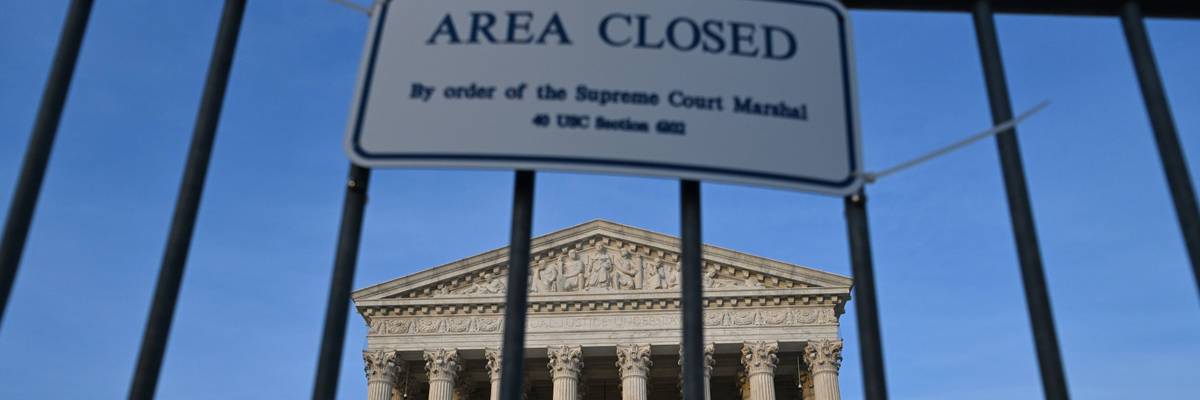


The area in front of the US Supreme Court in Washington, DC, is gated off on June 30, 2026.
(Photo by Li Rui/Xinhua via Getty Images)


Stephen Prager
Jul 02, 2026
COMMON DREAMS


As its conservative majority showed unprecedented deference to President Donald Trump, the US Supreme Court passed what ProPublica described as a “troubling milestone” during the term that ended last October.

For the first time in its modern history, an analysis published Wednesday found, the court decided more cases using its secretive “shadow docket” than using the regular process.

Unlike the so-called “merits docket,” in which cases undergo lengthy periods of review, parties file briefs and make oral arguments for their side, and the justices issue extensive signed rulings explaining their reasoning, shadow docket decisions are expedited and offer little mechanism for accountability.


They are often unsigned, with no final vote count or explanation of the court’s decision, and are often issued within hours of legal action being taken, leaving no time for deliberation or public input.

These cases are meant to be reserved for emergency or temporary interventions. But as Trump has attempted to exert unprecedented executive authority that often brazenly pushes legal boundaries, ProPublica found that the court’s use of the shadow docket has exploded.

The analysis found that during the last Supreme Court term, the court issued 63 decisions on the shadow docket, compared with just 56 on the merits docket. Analyzing more than two decades of decisions by the high court, they found that the court has never come close to issuing this many secret decisions in any previous term.

This is due largely to the Trump administration’s unprecedented petitioning to have cases decided on the shadow docket after elements of the president’s agenda were stymied by lower courts.

As ProPublica explained, the court “has repeatedly green-lit policies of his that lower courts have blocked—and has done so with little to no explanation,” and often the decisions have been highly consequential and “have thrown lower courts’ processes into turmoil and have sometimes directly contradicted longstanding legal precedent.”
On June 23, 2025, after a lower court had ruled that eight men being deported to South Sudan should have due process, the Supreme Court intervened after a request from the administration to stop that order. The men were deported. The majority didn’t issue an opinion justifying its ruling.

Three months later, the Supreme Court voted to allow immigration agents to stop people based on racial or ethnic characteristics while still-ongoing litigation against it proceeded. To justify the decision, Justice Brett Kavanaugh wrote a rare shadow docket opinion that people who were in the country legally would be “free to go after the brief encounter.” These became known as “Kavanaugh stops.” Last year, ProPublica found more than 170 citizens who had been stopped and detained by ICE agents. The more than 50 Americans held even after agents learned of their citizenship were almost all Latino.

And in May, while an election in Louisiana was already underway, the justices allowed the state to immediately redraw its electoral map, removing one of the two majority-Black voting districts. Louisiana can now use that map for the 2026 midterms as part of a nationwide redistricting battle for control of the House of Representatives—an effort touched off by Trump’s call for Republican-led states to create more safe seats for themselves.


An analysis by the legal group Court Accountability in October found that the Supreme Court sided with Trump 90% of the time in the 23 orders included in its analysis of his second administration through October 2025, nearly all of which were issued on the shadow docket.

“The patterns show a court going out of its way to enable Trump,” Stephen Vladeck, a law professor at Georgetown University and a Supreme Court analyst, told ProPublica.

Noting that the American public’s approval of the high court has fallen substantially in recent years, Leslie Proll, a civil rights lawyer and the former director of voting rights at the Leadership Conference on Civil and Human Rights, called the court’s unprecedented secrecy “utterly disgraceful.”

“That hugely consequential cases are decided with no transparency,” she said, “only adds to the court’s illegitimacy and further decreases the public’s confidence.”


Alito's influence on the Supreme Court may be reaching an all-time high


FILE PHOTO: U.S. Supreme Court Associate Justices Samuel Alito (L) and Clarence Thomas (Photo: Chip Somodevilla/Pool via REUTERS)
July 04, 2026
 ALTERNET


One of the most dangerous power players in the U.S. Supreme Court is at it again, wrote the New York Times in a report about the conservative Justice Samuel Alito.

Alito recalled in his youth his father tapping away on a calculator, trying to redraw electoral maps. All of that came to a head on Tuesday when Alito penned the landmark decision that struck another harmful blow to the Voting Rights Act. The decision ultimately makes it more difficult to bring racial discrimination challenges to districts.

But the end of Alito's career is leaving questions about whether he will retire, allowing President Donald Trump to appoint another far-right justice to stack the courts. According to those close to Alito, he has no desire to retire. But if Democrats take over Congress in the 2026 midterms, there could be a renewed call.

"People who know him say that he may not want to jeopardize the chance to have a successor who aligns with his ideology, and that he is mindful of what unfolded when Justice Ruth Bader Ginsburg died in September 2020," the report said. "Her death set off a confirmation scramble that allowed Mr. Trump to appoint her successor, the conservative Justice Amy Coney Barrett, shifting the makeup of the court."

While Alito was quiet in 2024, the past year brought more of his opinions to the bench. It appears Chief Justice John Roberts has assigned decisions for Alito to author when the court intends to hand Trump a "win," said Stanford law school professor Pamela Karlan.

“It’s hard to think of an area where Justice Alito’s views do not align completely with the conservative legal movement,” she added.

In his opinions on the Voting Rights Act and anything to do with race relations, the Times explained that those appearing before him "will have to provide evidence of intentional race discrimination to prevail. The ruling prompted a Republican scramble to redistrict across the South, and likely handed the GOP an edge ahead of the midterm elections."

Alito, a constitutional law professor at Yale, Akhil Reed Amar said it's simply that Alito has greater seniority on the court and his outsized role is easily explained by that.

“It’s a seniority system, and you don’t get the plum assignments in your early years,” Professor Amar said. “The longer you’re around, the more you get to write opinions in big cases.”

Those close to Alito maintain that he remains engaged with the court, despite checking out a day early for their summer break.


Trump's humiliation is tinged by stark signs of Supreme Court insanity

Robert Reich
June 30, 2026 


U.S. Supreme Court Associate Justices Samuel Alito (L) and Clarence Thomas wait for their opportunity to leave the stage at the conclusion of the inauguration ceremonies in the Rotunda of the U.S. Capitol on January 20, 2025 in Washington, DC. Chip Somodevilla/Pool via REUTERS


Today, the Supreme Court struck down Trump’s Day One executive order canceling the right to birthright citizenship. Good. That executive order declared that children born in the U.S. would not be considered citizens if their parents were living in the country illegally or were visiting the country on temporary visas.

The executive order never took effect. It was quickly blocked by multiple lower courts because it appeared to directly conflict with the 14th Amendment, which states that “all persons born or naturalized in the United States, and subject to the jurisdiction thereof, are citizens of the United States.”

The Trump regime appealed the lower-court rulings, contending that the 14th Amendment’s citizenship provision had been misunderstood for more than a century. The administration argued that the drafters of the amendment were focused on guaranteeing citizenship for the children of former slaves—and that the amendment was never intended to extend citizenship to the children of people who weren’t living in the country legally.

Trump and his Solicitor General, who argued this case before the Court, also said that narrowing birthright citizenship was necessary to prevent “birth tourism” — the practice of immigrants coming to the U.S. to give birth here and obtain citizenship for their child.

Trump has been vowing to try to change the law since entering politics in 2015, arguing the 14th Amendment was written specifically to enshrine the rights of freed slaves. His critics have countered that it was always designed to apply to the children of immigrants too. An 1898 Supreme Court decision confirmed that U.S.-born children of immigrant parents are entitled to American citizenship.

Today, Chief Justice John Roberts wrote that the deeply-rooted understanding that virtually everyone born on American soil is automatically a U.S. citizen was enshrined in the Constitution with the passage of the 14th Amendment in 1868: “Citizenship, then and now, was the right to have rights — to freely participate in our political community,” Roberts wrote. “The Framers of the Fourteenth Amendment extended that promise to every free-born person in this land. We keep that promise today.”

In another era, this would have been a no-brainer. No constitutional lawyer I know thought the Court would decide otherwise. The lower federal courts had consistently and unanimously ruled against Trump.

Had Trump won, it would have probably caused panic among recent immigrants and their families. Although Trump has insisted his policy would apply only to future births, it was far from clear that the logic of any win for Trump wouldn’t apply retrospectively if a future president (JD Vance? perish the thought) wanted to go there.

What I find troubling is that the decision was 5 to 4 rather than unanimous or nearly so, as it should have been.

Only five of the nine justices ruled against Trump on constitutional grounds. Brett Kavanaugh dissented on statutory grounds; while agreeing that Trump’s executive order was unlawful, he argued that the court should have resolved the case under federal immigration law rather than the Constitution.

The Court’s three most conservative justices — Clarence Thomas, Neil Gorsuch, and Samuel Alito — dissented. Thomas wrote for the group: “The Court adds to the sad history of the Fourteenth Amendment, which was designed and understood to secure equal rights for the freed Blacks but has instead been repurposed for political projects that the Reconstruction Congress did not support.”

Pure and utter claptrap.

Thomas, Gorsuch, and Alito are so far to the right of America that their views on this case and other matters should be presumed bonkers. Yet what’s particularly sobering is that Trump is only one justice away from having a Supreme Court majority that would have gone his way on this absurd reading of the 14th Amendment.

Clearly, the Supreme Court must be changed — either by expanding the number of justices or by invoking term limits on Supreme Court justices. The Constitution would permit both remedies.

Perhaps the best thing about today’s majority decision is that it’s such a direct repudiation of Trump, who has long taken a personal interest in the issue. During his 2024 campaign, he made curtailing birthright citizenship a key element of his immigration platform.


When the high court heard arguments on the case in April, Trump took the unprecedented step of showing up in person for the hearing, making him the first sitting president ever to attend a Supreme Court argument. For the Court to so directly reject his position today is surely a humiliation for Trump.


Robert Reich is an emeritus professor of public policy at Berkeley and former secretary of labor. His writings can be found at
https://robertreich.substack.com/. His new memoir, Coming Up Short, can be found wherever you buy books. You can also support local bookstores nationally by ordering the book at bookshop.org
Trump Loaded Up on Abbott Laboratories Stock Before His DOJ Dropped Criminal Probe

Abbott, which donated $500,000 to the president’s inaugural fund, faced an investigation stemming from alleged deadly contamination at one of its baby formula plants in Michigan.


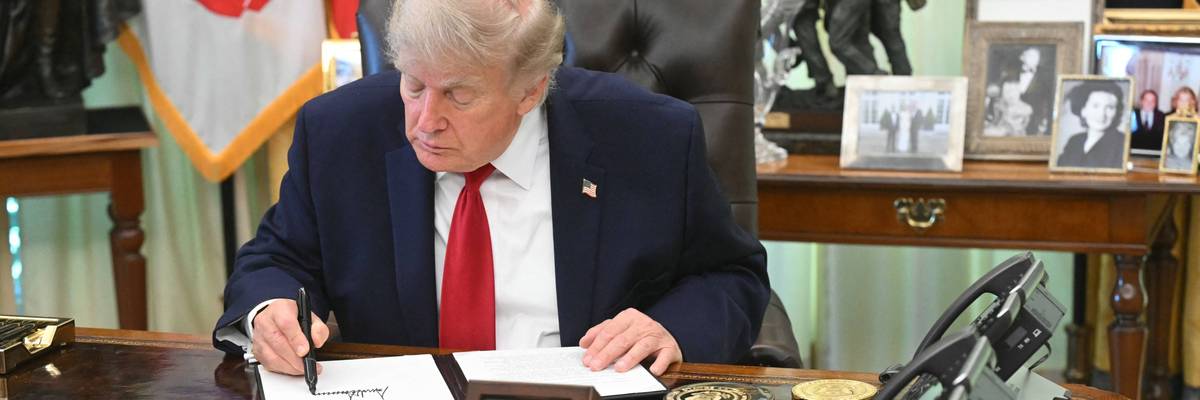
President Donald Trump signs a presidential memo in the Oval Office of the White House in Washington, DC on June 29, 2026.
(Photo by Saul Loeb/AFP via Getty Images)


Jake Johnson
Jul 02, 2026
COMMON DREAMS

US President Donald Trump last year purchased hundreds of thousands of dollars of Abbott Laboratories stock before his Justice Department dropped a years-long criminal investigation into the company, which was accused of misconduct after infant hospitalizations and deaths were linked to one of its baby formula factories.

The stock purchases were revealed in the president’s annual financial disclosure report, which spans 927 pages and shows thousands of trades valued at over $1 billion. Trump’s first purchase of Abbott stock last year was made in late September, and the president bought around $500,000 worth of shares in total in 2025, according to the nonprofit media organization More Perfect Union.

The Wall Street Journal reported on Sunday that “top decision makers” at the Department of Justice shut down the criminal investigation into Abbott—which donated $500,000 to Trump’s inaugural fund—even though “some prosecutors believed they had evidence to criminally charge the company under a law they have used to pursue other businesses for allegedly selling contaminated foods.”

“Prosecutors had been considering a misdemeanor charge against Abbott for violating the federal Food, Drug, and Cosmetic Act and a separate count for misleading the government,” the Journal reported, citing unnamed people familiar with the matter. “Investigators in early 2022 had found traces of a potentially deadly bacteria at its plant in Sturgis, Michigan, including on equipment very close to infant formula containers—as well as a long list of other problems.”

The Food and Drug Administration received reports of at least nine infant deaths linked to baby formula produced at Abbott’s Sturgis plant, which the company temporarily shut down amid fears of dangerous contamination. The Justice Department launched its investigation into Abbott, the largest infant formula manufacturer in the US, in 2023, under the administration of former President Joe Biden.

Trump’s DOJ has taken a far more lax approach to corporate enforcement, reaching sweetheart settlement deals with companies accused of price-fixing, stifling competition, and other illegal activities.

The Journal reported that the Justice Department and Abbott “reached a settlement to resolve” a separate but related civil lawsuit alleging that the company knowingly “failed to follow manufacturing standards to protect against the risk of contamination.”

“That suit, which was joined by 31 states, alleged that Abbott had a ‘culture of concealment’ at Sturgis and ‘withheld information from FDA related to the presence of microorganisms in the Sturgis facility,’” the Journal observed.


Last April, the investigative outlet ProPublica reported that workers at Abbott’s Sturgis plant—which resumed production in June 2022—said the company was still “engaging in unsanitary practices similar to those that led it to temporarily shut down.”

“Current and former employees told ProPublica that they have seen the plant in Sturgis, Michigan take shortcuts when cleaning manufacturing equipment and testing for microbes,” the outlet reported. “The employees said leaks in the factory are sometimes not fixed, a dangerous problem that can promote bacterial growth. They also said workers at the facility do not always take required swabs to check for pathogens while performing maintenance during production. Supervisors have urged workers to increase production and have retaliated against workers who complained about problems, the employees said.

Abbott, whose stock is down significantly year-to-date but up over the past month, called the ProPublica story “misleading” and impugned the motives of workers who spoke to the outlet.

Trump’s purchase of Abbott stock wasn’t the only buy that preceded significant action by his administration.

“On April 8, 2025, the day before Trump announced the tariff pause, the disclosure shows 327 individual stock purchases worth as much as $12.8 million, one of the largest single-day stock buying sprees disclosed in the filing,” Sludge reported on Wednesday. “The purchases included Apple, Microsoft, Nvidia, Amazon, and Alphabet, each valued as much as $250,000, along with scores of other companies. The S&P 500 jumped nearly 10% the following day when Trump announced the pause, one of the largest single-day gains in the index’s history.”

Fox host warns Trump will pay for his 'breathtaking' corruption


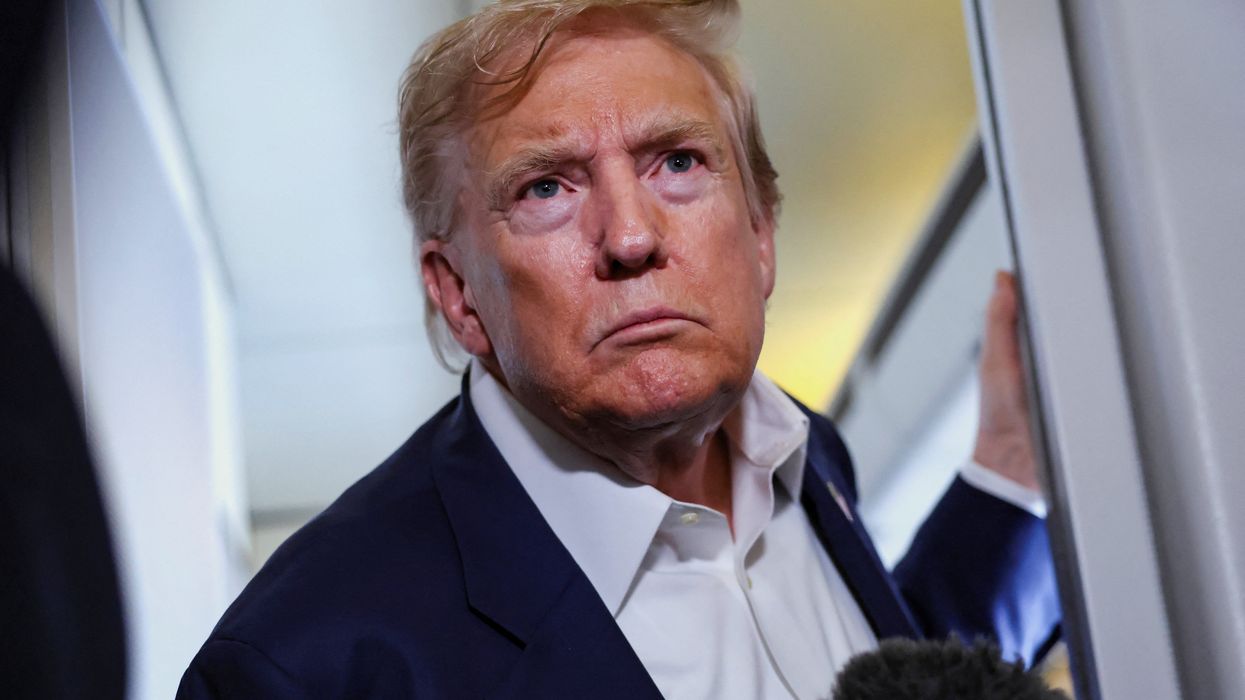
U.S. President Donald Trump reacts as he speaks to members of the media on board Air Force One en route from Scotland, Britain, to Joint Base Andrews, Maryland, U.S., July 29, 2025. REUTERS Evelyn Hockstein

July 03, 2026
ALTERNET

On Friday, Fox News host and political analyst Brit Hume offered a prediction that President Donald Trump is unlikely to appreciate. If the Democrats come out ahead in the midterms, the chief executive could find himself paying big for his "breathtaking" crypto corruption.

Hume's forecast comes in the wake of the president's 2025 financial disclosures earlier in the week, which revealed that his family raked in a shocking $1 billion from its cryptocurrency ventures while Daddy Trump regulated the market. As Mediate explains, "The filing reported roughly $500 million in income from World Liberty Financial, the crypto company founded with his sons Eric Trump, Donald Trump Jr., and Barron Trump, along with approximately $635 million from sales of the $TRUMP meme coin through CIC Digital LLC. The disclosure also detailed hundreds of millions of dollars in income from Trump’s real estate holdings and millions more from licensing deals and other business ventures. The president made more than $2 billion overall."

Another Fox News host, John Roberts, called the numbers "eye-popping," prompting Hume to respond, "It is, John, and I think the right word for this is unseemly, for a president to profit while in office.”


He continued, "Now, it’s not fair to say that he profited from the office, although, you know, that’s surely gonna be subject to investigation — particularly if the Democrats get control of one or both branches of Congress. But, if you wanted seemliness in the White House, Donald Trump was not your man, and if you wanted a guy that wasn’t very rich in the White House, he wasn’t your man for that either. The fact is that he’s a very rich guy, and when you hold the kind of holdings he has, you do get richer. This amount from crypto seems breathtaking, but as the point was made by you and [Treasury Secretary] Scott Bessent, not illegal. So, the people that don’t like Trump won’t like this. The people that do like Trump won’t care very much, in my judgement."

Hume is only partly true in regards to that last assertion. While much of MAGA has remained loyal to the president regardless of his financial improprieties, he's had pushback from some high-profile supporters. The New York Post, for example, which is typically complimentary toward Trump, declared that a recent story involving his sons' profiting off a Kazakhstan mining deal their father struck "stinks to high heaven." According to the Post, "The Lutnick [sons of Treasury Secretary Howard Lutnick] and Trump boys have been sloshing around in the muck since their dads came to power 18 months ago. They’ve profited handsomely from cryptocurrency deals while the government their fathers control were setting crypto policy.”
US-UK Medicine Deal Will Take ‘Wrecking Ball’ to NHS, Causing 229,000 Excess Deaths: Study

“We cannot afford to sit by while our NHS is picked apart by a foreign regime,” said one member of Parliament.


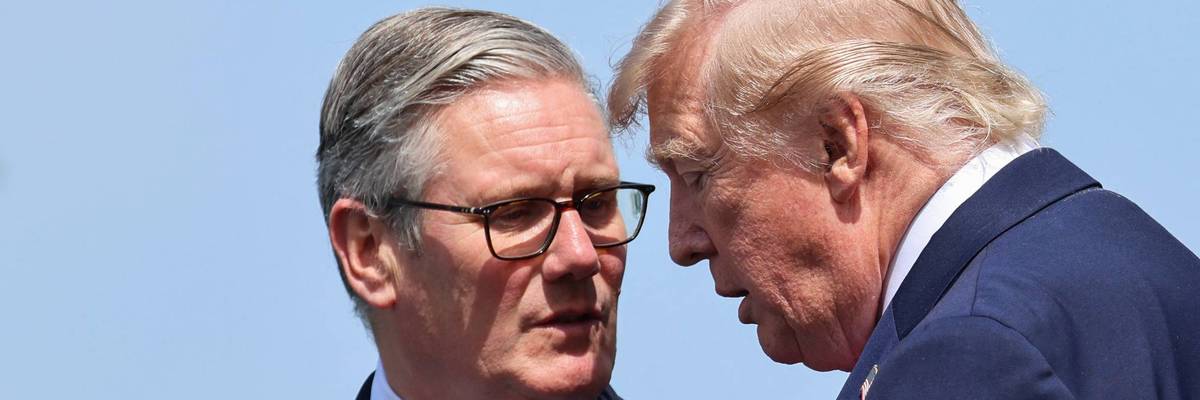
British Prime Minister Keir Starmer and US President Donald Trump speak during the G7 summit, in Evian, France on June 16, 2026.
(Photo by Ludovic Marin/pool/AFP via Getty Images)

Julia Conley
Jul 02, 2026
COMMON DREAMS

One member of British Parliament called on the Labour government to defend the country’s revered National Health Service “with everything we have and firmly stand up to the bully in the White House” after a study published Wednesday showed the UK-US pharmaceutical trade deal brokered last year is projected to cause 229,000 excess deaths as funding is stripped away from the NHS.

“It is a complete insult to patients who are suffering and dying on hospital trolleys and waiting months for treatment,” said Helen Morgan of the Liberal Democrats Party regarding the new analysis. “We cannot afford to sit by while our NHS is picked apart by a foreign regime.”

The study, conducted by researchers at the University of York, the University of Liverpool, and Christchurch Hospital in New Zealand and published in the British Medical Journal, found that £44.7 billion ($59.5 billion) will have to be diverted from health services by 2036 in order to pay for new medications under the deal.

The agreement was reached last December, with recently resigned Prime Minister Keir Starmer’s government agreeing to pay 25% more for new US medications over the next decade. The NHS will double the percentage of gross domestic product that it allocates for pharmaceuticals, from 0.3% to 0.6%, with the spending increasing from 10% to 12% of the universal healthcare system’s budget.

In exchange, the Trump administration agreed not to impose tariffs of up to 100% that he had threatened for UK medicines being imported to the US.

Science Minister Patrick Vallance insisted in April that the deal would give NHS patients access to “life-changing new medicines that they previously would have been denied” while boosting the UK’s “life sciences sector” by avoiding Trump’s tariffs.

“Scandalously, this backroom deal was not subject to any scrutiny in Parliament before being rushed through—and the government refuses to say what impact it will have on the NHS.”

But Sir Ciarán Devane, chief executive of the NHS Alliance, told The Guardian that the study raised “serious questions” about whether Britons will truly benefit from the agreement.

“If billions of pounds are diverted away from frontline care to meet higher medicines costs, the consequences for prevention, community services, and the treatment of long-term conditions could be profound,” said Devane. “The government must urgently publish the full impact assessment and ensure there is appropriate scrutiny of the deal if it could have such far-reaching implications for population health.”

The projected avoidable death toll in the study far exceeds that which the UK saw during the coronavirus pandemic, when 137,000 excess deaths were recorded between March 2020-June 2022.

“If the indirect effect on adult social care is also included, the increase in excess deaths is even greater (291,000),” reads the study.

The greatest number of excess deaths is projected to occur in patients suffering from cardiovascular, respiratory, and gastrointestinal issues as well as cancer.

Patients with “neurological, endocrine, musculoskeletal, and mental health problems” will also face “broader effects on quality of life,” the research states.

The government has assured the public that “frontline services” will be protected, notes the report, but “the NHS will need to fund this deal from allocations made six months before the deal was agreed. The evidence suggests that if additional public expenditure was available, it could be more effectively deployed within the NHS itself.”

The research projected that the greatest number of deaths would occur in cardiovascular, respiratory, gastrointestinal and cancer patients.

It added that there will also be broader harm caused to quality of life for patients in those sectors as well as “neurological, endocrine, musculoskeletal, and mental health problems”.

Tim Bierley, a campaigner with the UK-based group Global Justice Now, said that the report “adds to the overwhelming evidence that the Trump medicines deal risks taking a wrecking ball to our health and our economy.”

“Billions that could be spent on recruiting more NHS staff, cutting [general practitioner] waiting times, or improving our hospital care are set to be siphoned off by corporate giants in the pharma industry,” said Bierley, whose group has joined the campaign Just Treatment in filing a legal challenge against the deal. “Scandalously, this backroom deal was not subject to any scrutiny in Parliament before being rushed through—and the government refuses to say what impact it will have on the NHS.”

“The next prime minister,” said Bierley, “must change direction, stand up for our NHS, and unpick the mess left by their predecessors.”
Canadians Rip Carney for ‘Pouring Fuel on the Flames of the Climate Emergency’ With Pipeline Push

“This country needs an alternative to the Liberal-Conservative consensus that is doubling down on a future of climate-wrecking corporate welfare,” said New Democratic Party Leader Avi Lewis.


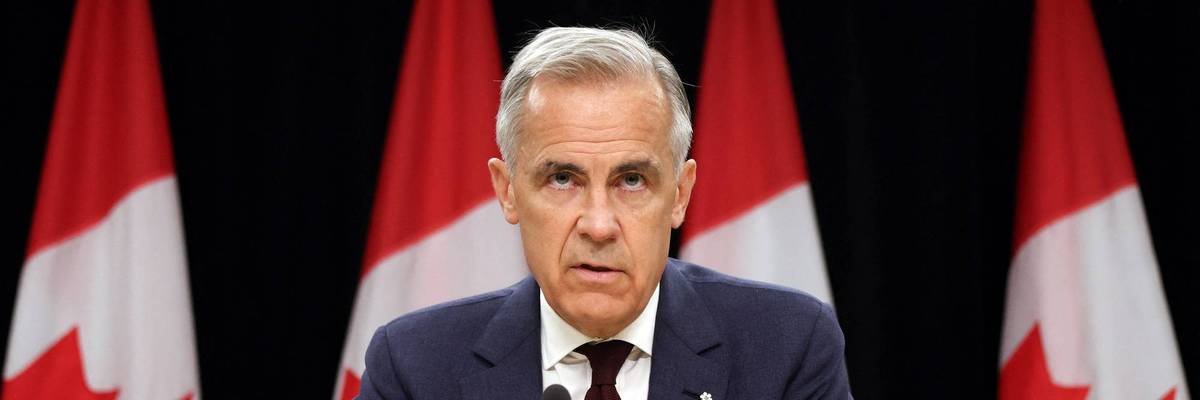
Canadian Prime Minister Mark Carney speaks during a news conference at the National Press Theatre in Ottawa, Canada on June 25, 2026.
(Photo by Dave Chan/AFP via Getty Images)

Jessica Corbett
Jul 03, 2026
COMMON DREAMS

On the heels of young Canadians suing over Prime Minister Mark Carney’s climate “failure” and people across the country mobilizing to urge the government to “stop fast-tracking destruction,” the Liberal leader on Thursday made a pair of fossil fuel-related announcements that sparked fresh anger.

Carney and Alberta Premier Danielle Smith of the United Conservative Party announced that the province is partnering with the federally owned Trans Mountain Corporation and Calgary-based Pembina Pipeline Corporation for a proposed tar sands pipeline that would bring more oil to British Columbia’s west coast.


Canadian Youth, Groups Sue Over Carney ‘Failure’ on Climate Crisis


“The proposed pipeline would generally follow the existing footprint of the federally owned Trans Mountain pipeline, running from Bruderheim, northeast of Edmonton, to the Roberts Bank export terminal in Delta, BC, south of Vancouver,” the Canadian Broadcasting Corporation reported. “Smith said the project would send more than 1 million barrels to Asian markets every day, reducing Canada’s reliance on the US.”

“The Alberta government’s submission to the federal government’s Major Projects Office said the project would cost between $35.2 billion and $43.7 billion, including contingencies. Construction would start as early as 2027 and finish by 2034,” CBC noted. “As for who foots the bill, Smith said detailed funding and the cost for taxpayers ‘remains to be negotiated.’”

Sounding the alarm about the plans with a Friday blog post, 350 Canada country manager Atiya Jaffar wrote, “In other words, we can get ready to expect $35-100 billion of our taxpayer dollars wasted on building this dangerous pipe dream.”

“Canada is headed in a dangerous direction. Expanding tar sands and the fracked gas industry is like pouring fuel on the flames of the climate emergency,” she argued, urging Canadians to pressure their members of Parliament to sign what the advocacy group is calling a “People’s MOU,” a jab at the memorandum of understanding the federal and Alberta governments signed last year.


Smith and Carney’s pipeline press conference came after shortly after the PM and BC Premier David Eby announced a “cooperative prosperity agreement” that the Wilderness Committee condemned as “an abandonment of both governments’ efforts to fight climate change and protect the environment,” given its provisions on the province’s liquefied natural gas (LNG) and mining endeavors.

Although Eby, a member of the New Democratic Party (NDP), “has been a prominent critic of the Carney government’s work with Alberta on pipeline plans,” Politico reported Thursday, the provincial leader cut short a trip to Beijing, where he traveled to meet with PetroChina executives about LNG production, “to be at the prime minister’s side” for the announcement.

Eby tried to stress that “this agreement doesn’t require us to support any pipeline proposal from Alberta. However, as I’ve said before, we recognize our constitutional position, and we do not have the authority to stop a new pipeline. We will not be going to court to fight a pipeline project. Instead, we will ensure we fulfill our constitutional obligations in good faith.”

“Pipelines are federal jurisdiction,” he continued. “That’s why this agreement matters. It ensures that the northern tanker ban stays in place, and it ensures that if a pipeline goes ahead, that British Columbians are fairly compensated for the environmental risks we would take on any new pipeline project.”


The Wilderness Committee’s conservation and policy campaigner Lucero González responded, “Eby said he will ensure British Columbians are compensated for the environmental damage of another pipeline, but there is no compensation for the extinction of the southern resident orcas.”

“How do you compensate for the unimaginable pain of an endangered orca like Tahlequah who has shown us her dead calves throughout the Salish Sea while each new megaproject continues to destroy their habitat?” González inquired.

Pointing to not only the potential increase in tanker traffic and oil spill risk but also the federal government’s “proposed evisceration” of the Species at Risk Act, González declared that “Carney is showing us his enthusiastic willingness to accept and fund the extinction of endangered species and a future where oil and private profit are more valuable than the entire Salish Sea ecosystem.

As Politico highlighted, the prime minister’s motivations for pushing the new pipeline include combating a separatist movement in one of the involved provinces:
The project is also aimed at easing separatist tensions in Alberta, where voters will decide in October if they want to hold a referendum to separate from Canada. Smith has blamed “10 years of bad Liberal policy” under former Prime Minister Justin Trudeau for fueling western alienation, pointing to climate rules and energy regulations she says hurt Alberta’s economy.

In a 17-minute video posted to his YouTube channel earlier this week, Carney acknowledged that his government’s energy policies will increase emissions. He argued that the climate policies championed by Trudeau had become a political wedge—and fodder for Alberta separatists.

Even before the video, advocacy organizations had partnered with a trio of young citizens in June to take legal action over the prime minister failing to bring Canada’s 2030 emissions reduction plan into compliance with a key federal law.

Julia Levin of Environmental Defence, one of the groups behind the case, said last month that “PM Carney is betraying Canadians by taking a wrecking ball to our hard-fought climate progress. It is Canadians who are paying the price through wildfires, heat domes, rising food insecurity and high costs of living.”


The Wilderness Committee’s associate director, Torrance Coste, similarly said Friday that “at a time when people across the country are suffering in extreme heat, wildfire evacuations, and devastating floods, pursuing the expansion of Canada’s most polluting industry is utterly despicable.”

“In the fight against climate change, Prime Minister Carney and Premier Eby are issuing their surrender, and resigning us to a future of ecological and economic decline,” Coste added.


While Eby flew home to be by the prime minister’s side for Thursday’s first announcement, the NDP’s recently elected national leader, Avi Lewis, delivered a scathing rebuke of a federal government that he said “will protect above all else: the profits of Big Oil.”

“As we mark the five-year anniversary of a heat dome that killed 619 people in British Columbia—and as many communities across the country are facing extreme weather right now—Canadians deserve leadership that protects us,” Lewis argued on social media. “Instead, this government is doubling down on yesterday’s failed solutions and dragging us into further danger, risk, and insecurity.”

The pipeline’s “opaque and confusing public-private partnership ownership structure means it’s very likely that we, the public, will not only bear the risks and the damages, but also the lion’s share of the costs,” he warned. “Canada’s New Democrats unequivocally oppose this pipeline proposal. If anything, this is a pipeline to the courts. It ignores the federal government’s legal responsibility to meaningfully consult Indigenous nations, including Treaty 8 nations in Alberta, threatens endangered species, and accelerates climate change. It will sow the very divisions the prime minister claims he wants to avoid.”

“We do not achieve unity or prosperity from projects that pit communities against one another, all while a handful of oil and gas CEOs walk away with enormous profits,” he continued. “While we’re stuck fighting yesterday’s battles over pipelines, and the prime minister openly admits that our emissions will rise, the rest of the world is racing ahead on renewables. We cannot afford to fall behind while other countries build the industries of the future. ”

According to the NDP leader: “Canadians deserve better than being told our only choice is another fight over another pipeline. This country needs an alternative to the Liberal-Conservative consensus that is doubling down on a future of climate-wrecking corporate welfare.”

“New Democrats are ready to build something bigger, safer, and better—a Canada that is a renewable energy superpower, with an east-west clean electricity grid and good green jobs in every region,” he concluded. “Lower costs for families with home retrofits and heat pumps for all. Investing in the care economy as a nation-building project. That’s what it looks like to build big things that actually unite this country.”
‘Get the Flock Out’: Nationwide Backlash Grows Against AI-Powered Surveillance Tech

Since 2021, 82 Flock contracts have been canceled across 28 US states—39 of them during the first five months of this year alone.


A Flock Safety camera monitors traffic in this undated company photo.
(Photo by Flock Safety)

Brett Wilkins
Jul 03, 2026
COMMON DREAMS


Resistance is mounting across the United States against the increasing use of surveillance tech company Flock Safety’s cameras, with a growing number of cities canceling contracts as the artificial intelligence-powered license plate readers are quietly being installed in thousands of locations nationwide.

State and local police departments first used the Atlanta-based company’s automated license plate reader (ALPR) systems for standard law enforcement purposes, but they are now being employed for a much broader range of uses, including immigration-related searches and other actions supporting US Immigration and Customs Enforcement (ICE) during the Trump administration’s deadly anti-immigrant crackdown.

“We have cameras that are used for everything from illegal dumping to drug houses to hotels that are just big problems,” Flock Safety engineer Kevin Cox told prospective customers during a demonstration of the company’s Condor Camera, according to a Thursday report in The Washington Times.

“There are endless, endless uses for what we can do with these things,” Cox added.

Those uses include spying on constitutionally protected protest activity and enforcing abortion bans by tracking pregnant people’s travel across states—even ones in which the medical procedure is legal.

The ACLU—which recently launched a “Get the Flock Out” campaign to “fight creepy ALPR cameras”—says there are currently between 80,000 and 100,000 Flock devices installed nationwide that conduct more than 20 billion scans per month. More than 5,000 law enforcement agencies use the cameras, and some of them keep their locations a secret.


“Flock’s ALPR cameras aren’t like your normal traffic cameras,” the ACLU explained. “This surveillance technology records and tracks every car that comes into view, and then an AI algorithm catalogs the make, model, color, license plate number, bumper stickers, and even scratches. This personal information is then uploaded into a nationwide database that any law enforcement agency with a Flock contract can search—with few regulations or oversight on how they use what they find.”

The backlash against creeping state surveillance has even transcended the partisan divide.

“I think our country is in a kind of uniquely anti-surveillance environment right now, which is to say that, in a time where it seems there is nothing that is not partisan, opposition to government surveillance is nonpartisan,” ACLU privacy and surveillance attorney Chad Marlow told The Washington Times on Thursday.

There is growing action—both legal and otherwise—to end the use of ALPRs across the country.

According to the public information project Ban Flock Cameras, 82 Flock contracts were terminated across 28 states between August 2021 and May 2026, with 39 of those cancellations occurring in the first five months of 2026 alone.

Even Amazon-owned Ring announced earlier this year that it would stop doing business with Flock Safety.

Susie O’Hara, a member of Santa Cruz, California’s nominally nonpartisan City Council, told WBUR earlier this year that she grew increasingly concerned about local use of eight Flock cameras last year after learning that police were sharing data gleaned from the cameras with the company’s national network without city officials’ knowledge, a violation of state laws banning the practice.

O’Hara became increasingly convinced that Santa Cruz should cancel its Flock contract after an ICE agent fatally shot Renee Good, a US citizen, in Minneapolis in January.

“I have goose hbumps on my arms thinking about the absolute chaos that was happening in Minneapolis,” she said. “And just the absolute insanity of what we were seeing... It was totally clear to me that we should in no way consciously be in this system at all—just no way.”

Less than a week after Good’s killing, the Santa Cruz City Council voted to terminate the city’s Flock contract, becoming the first municipality in California to do so.

“For us, the threat to our civil liberties was greater than any benefit we could get from the flawed product,” Santa Cruz Mayor Fred Keeley told KQED at the time.

Chad Kemp, who represents District 32 on the nonpartisan Dane County Board of Supervisors in Wisconsin—which in April voted to stop funding two dozen cameras leased from Flock—told The Washington Times that “there’s a public safety issue here, but there is also a privacy issue.”

“There are serious concerns about individuals who can be monitored without their knowledge, or if it is even constitutional or ethical to track people without a warrant,” he added.

At the national level, US Reps. Robert Garcia (D-Calif.) and Raja Krishnamoorthi (D-Ill.) last year launched an investigation into the use of Flock cameras to track pregnant people across state lines for abortion care and to conduct unauthorized immigration enforcement operations.

Krishnamoorthi and Sen. Ron Wyden (D-Ore.) have also urged the Federal Trade Commission to investigate Flock Safety “for failing to implement cybersecurity protections, allowing Americans’ personal data to be exposed to hackers, criminals, and spies to steal.”

Their demand came after the cybersecurity firm Hudson Rock revealed that hackers stole passwords and data from at least 35 Flock customer accounts.

In May, US Reps. Jesús “Chuy” Garcia (D-Ill.) and Scott Perry (R-Pa.) introduced a bipartisan amendment to a bill that would prohibit state and local governments receiving federal highway funds from using ALPRs for purposes other than electronic toll collection.

It’s not just Flock. Axon, Vigilant Solutions—a subsidiary of Motorola Solutions—Genetec, PlateSmart, Innova Systems, Rekor, ELSAG, Perceptics, Jenoptik, and other firms market ALPRs to law enforcement agencies, private companies, and others.

“It doesn’t matter which company has its creepy cameras in your neighborhood,” the ACLU said, “they all have the same problems: a lack of transparency, oversight, and regulation into how they collect, store, and use our data, and how to hold public and private actors accountable if they abuse it.”


As High Heat Cancels July 4 Plans, US Must ‘Declare Our Independence From Fossil Fuels’

“How we confront the climate crisis will determine a lot about the next 250 years of American history, including if we make it that long,” one climate advocate said. “The revolution we need today is the clean energy revolution.”


A young visitor shields themself from the sun at the Great American State Fair during Fourth of July celebrations on the National Mall on July 4, 2026 in Washington, DC.
(Photo by Finn Gomez/Getty Images)

Olivia Rosane
Jul 04, 2026
COMMON DREAMS


The US reliance on and promotion of fossil fuels is interfering with its ability to celebrate its 250th birthday, as several July 4 events were canceled due to a dangerous, record-breaking heatwave in the Central and Eastern US that scientists say would have been “virtually impossible” without the climate emergency.

As millions of people sweltered under heat alerts, extreme heat and humidity led to the cancellation of both Washington, DC and Philadelphia’s Independence Day parades. Nearly 30 other events in states including Alabama, Delaware, New Jersey, New York, Pennsylvania, Maryland, and Virginia were modified, postponed, or canceled, according to USA Today.


“The US having to cancel major 4th of July celebrations because of extreme heat is almost too spot on as a metaphor for the country’s failure to combat global warming,” Fossil Free Media director Jamie Henn told Common Dreams. “How we confront the climate crisis will determine a lot about the next 250 years of American history, including if we make it that long. The revolution we need today is the clean energy revolution so we can finally declare our independence from fossil fuels.”


Temperature records were tied or broken in 22 locations on Thursday and 17 on Friday, according to CNN, with DC breaking a 120-year record on both days with temperatures above 102°F.

The heat forced the temporary closure Friday afternoon of the Great American State Fair on the National Mall, and seven attendees required “advanced life support,” probably due to heat exposure, according to CNN.

Matt Rein, the Democratic National Committee’s influencer and creative partnerships director, reported from the state fair on Saturday that local emergency workers said guests were “dropping like flies” due to the heat.


Meanwhile, one group who tried to draw attention to the climate emergency at a July 4 event was evicted for its efforts by the US Coast Guard, as the Times Union reported. The nonprofit Hudson River Sloop Clearwater had attempted to join Saturday’s Sail4th 250 parade of tall ships to New York Harbor when its sailboat was removed by the guard. The Coast Guard later said it was due to banners the boat was displaying reading, “Save the Clean Water Act” and “Indigenous rights, racial justice, climate solutions,” despite the fact that the group had the event organizer’s permission to participate.


The heat dome that has settled over the Central and Eastern US over the July 4 weekend is so dangerous in part because it includes high humidity along with high heat, with heat indexes of 105-115°F expected in some places. This corresponds with a Wet Bulb Global Temperature (WBGT)—a measurement that accounts for heat, humidity, and air flow—of 28-30°C, at which point it is dangerous for even healthy people to be physically active outdoors. According to World Weather Attribution, the current heatwave broke regional records for WBGT.

“It is still a relatively rare event even in today’s climate, that has warmed by 1.4°C due to the burning of fossil fuels. In a 1.4°C cooler climate, WBGTs as high as those forecast in early July 2026 would have been so extreme as to be virtually impossible,” the group wrote on Friday.

Friederike Otto, a professor of climate science at Imperial College London, told CNN, “When a historic 4th of July celebration is disrupted, and World Cup matches are played in conditions that are unsafe for players and fans, it shouldn’t take another scientific study to wake people up.”

Otto continued, “Climate change is here, it’s already impacting the things we enjoy in our everyday lives, and it will continue to get worse the longer we drag out the inevitable transition to net zero emissions.”

Climate scientist and communicator Katharine Hayhoe encouraged people to use this opportunity to talk about the climate emergency to their friends and family:
Heatwaves aren’t new. But I’m a climate scientist, and I can tell you heatwaves like this are virtually impossible without fossil fuel pollution. Not only that, but when extreme weather hits, research shows that connecting it to climate change helps people understand why it matters. And you know who the most trusted people to do that are? Not scientists. You! Yes, people we know are the most effective messengers to have these conversations. So if you’re worried about what’s happening and how extreme heat puts us at risk—talk about it!

While the US is the world’s leading historical emitter of greenhouse gas emissions, and its military is the No. 1 institutional climate polluter, the Trump administration in particular has taken steps to accelerate the climate emergency by increasing oil, gas, and coal production while hindering the development of renewable energy.

“Trump’s promotion of coal burning and cancellation of wind turbines make him the Benedict Arnold of America’s current struggle, not its George Washington.”

Just two days before the nation’s birthday, Energy Secretary and fracking CEO Chris Wright bragged on social media that the Trump administration would end subsidies for new wind and solar on July 4.

Climate scientist Rebekah Jones shot back: “During a record heatwave, no less. Fossil fuel industries have received $549 BILLION in direct subsidies, and $7 TRILLION in tax benefits. They average $30 billion per year in upfront taxpayer money. All of renewable energy recieved $400 million per year from 1994-2009.”

Tennessee state Sen. Heidi Campbell (D-20) also called out the move: “Talk about ‘slugs for salt’—it’s 119 degree heat index in the Eastern US this week—these guys are all in on the rapture.”

In a July 4 post, scholar Juan Cole argued that President Donald Trump’s climate policies were tantamount to treason.

“Since 2018, some 13,000 Americans have died from heat,” he said. “Trump’s promotion of coal burning and cancellation of wind turbines make him the Benedict Arnold of America’s current struggle, not its George Washington.”

Cole pointed out that the current heatwave was part of a pattern of hotter summers in the nation’s capital due to the climate emergency, noting that the last decade was its hottest on record.

He continued:
The bad news is that this is only the beginning. Summers in the capital are going to be more dangerous every decade unless we halt dangerous carbon emissions.

The average summer temperature in DC could be 97°F in the 2080s if we go on farting out CO2 at our current rate. Humidity will also increase, as the Atlantic heats up and puts more water vapor in the atmosphere. The ability of the atmosphere to hold water vapor increases 7% with every 1°C increase in temperature.

That combined with more frequent storms and sea-level rise opens up the possiblity that DC “will be unlivable in the summers within the lifetime of my younger readers,” he wrote.

“Trump is helping climate change accomplish what British military might could not, putting in question the future of America in places like Washington, DC and Baltimore, at least in the summers,” Cole said.
'Young Washington' is the July 4 movie MAGA needs — but won’t understand


By Emanuel Leutze - The Metropolitan Museum of Art, Public Domain, https://commons.wikimedia.org/w/index.php?curid=9520770
July 04, 2026
ALTERNE


An Angry Movieogoer

Both before and after seeing "Young Washington," I spoke with members of the audience to get a sense of who was seeing the film and what they thought of it. Virtually everyone was there because they loved American history, wanted to celebrate the 4th of July and/or both. With one exception (a woman who was bored to tears), the eight people who spoke to me on the record all thought "Young Washington" was a fun, action-packed historical epic that celebrated Washington's early military career while still revealing his human side.

There was one notable exception, though, amidst this patriotic good cheer. One elderly woman, upon hearing that I'm a journalist, demanded in a loud voice, "Wait, are you MAGA?" I politely replied, "No, I am not" and said good day to her while her glaring eyes bore a small hole in the back of my head.


If anyone needed to be better informed about what Washington stood for, it was that lady.

My favorite scene from "Young Washington"


In a key scene from “Young Washington,” America’s future revolutionary leader and first president seizes the opportunity to read books with the eagerness that modern children display for video games, Instagram videos and AI slop. Reflecting the real George Washington’s interests, he intellectually imbibes the ideas of classical scholars like Plutarch and Seneca, classical heroes like Cato and Cincinnatus and the late 16th century French Jesuit text “Rules of Civility and Decent Behaviour In Company and Conversation.” Through these books, which Washington reread and took extensive notes on, he developed ideals that he embraced for the rest of his life — compassion for the less fortunate, enjoyment of scholarly learning, comporting oneself with modesty and dignity, being humble and taking accountability for one’s mistakes.

Most importantly for the future country he would lead, they taught Washington to embrace republican forms of government. It is impossible to imagine the young military leader growing up into a democratically-elected president who refused to accept kingship without these ideas first being inculcated into his young mind. “Young Washington” is, at its core, the story of how these principles shaped the man who would become a great free nation’s founding father.

Because it has been released on America’s 250th birthday, and at a time when the United States is led by a president who rejects every single one of those aforementioned values, it is also inevitably a commentary about Donald Trump.


Trump Derangement Syndrome?


I can see Trump supporters rolling their eyes at this point in the review, accusing me of Trump Derangement Syndrome and asking why I must bring him up when they’re just trying to enjoy a movie. In the case of “Young Washington,” though, it is obscene to not juxtapose the man whose courage created America and the one whose physical and moral cowardice is destroying it. The contrast is inevitable for thoughtful and honest people — and necessary to appreciate why “Young Washington” is both a masterpiece on its own terms and a vital reminder that the man whose movement says it will “Make America Great Again” has in fact done the exact opposite of that. When I listed all of the positive qualities Washington developed from his education earlier in this review, I can't avoid noticing that they are all qualities Trump has actively rejected.

“Young Washington,” which will be released on the 4th of July weekend 2026, was directed by Jon Erwin, co-written by Erwin, Tom Provost and Diederik Hoogstraten and starring William Franklyn-Miller, Ben Kingsley, Andy Serkis, Joel Smallbone, Kelsey Grammer, Mary-Louise Parker and Mia Rodgers. As the title indicates, it shows audiences Washington’s youth, focusing on the period from his father’s death (in 1743, when Washington was 11) to his personal (though not military) victory during the French and Indian War in the Battle of the Monongahela (in 1755). Instead of putting Washington on a pedestal, “Young Washington” shows him during a period when he failed over and over again — in love, in his military career, in controlling his pride and stubbornness. Long before he became “first in war, first in peace, and first in the hearts of his countrymen,” Washington was the social-climbing son of a modestly affluent planter and merchant who faced constant discrimination for being a provincial without distinguished forebears.


This is an important tale to tell, and for two big reasons. First, it obliterates the popular image of Washington as an infallible, God-like figure; we see him make foolish strategic choices, succumb to demoralization and cringe-inducingly misread social milieus. (He also chops a lot of trees, but the movie steers clear of reaffirming the famous cherry tree fable about his youth.) This is done not to tear down Washington’s image, but to make him easier to admire. Humans cannot easily relate to divine figures, but plucky and precocious youths who figuratively trip over their own feet are quite another matter. The Washington whose face appears on the $1 bill and on Mount Rushmore is a myth; the one whose incompetence inadvertently helped spark the French and Indian War was a human being. If the goal is to inspire people to emulate America’s founding fathers, it is far easier to do so when we see them as humans rather than myths.

“Washington's experience during the French and Indian War involved learning a great deal, both about military culture and strategy, but also about his place in the complex world of the British military,” Gautham Rao, a historian at American University and editor-in-chief of the journal Law & History Review (as well as this author’s adviser when he wrote his master’s thesis about a different president, Grover Cleveland), told AlterNet. Referring to Washington’s loss in the Battle of Jumonville Glen, Rao explained that “from this Washington would learn about the delicate norms that governed the use of force. Washington also learned, in a different theater, about the difficulties of guarding advanced positions in areas not entirely under control, as the task of patrolling between disparate forts led to significant casualties. Finally, Washington learned the importance of careful planning from General John Forbes, beneath whom he worked in the effort to seize Fort Duquesne in 1758.”

Why Washington despised aristocrats


Not all of these events are depicted in “Young Washington,” but one key detail is conveyed — namely, that Washington learned about the inherent unfairness of aristocratic systems, which ultimately informed his sympathy for the American Revolution.


“The entire experience also taught Washington about the glass ceiling in the British service for a colonist, and by the time he resigned his commission, he was well aware that he would not have the ability to advance further as a military man,” Rao told AlterNet.

Second — and more relevant to the year of its release — it demonstrates why Washington grew into the man who would not become king. Although “Young Washington” does not cover this period in his life, the man’s most important legacy was repeatedly refusing to become a king because he sincerely believed in democracy. Washington’s “I won’t be a king, even when the opportunity presents itself” era began near the end of the American Revolution. When it was suggested in 1782 that the Army believed he could become a monarch, he replied "no occurrence in the course of the War, has given me more painful sensations than your information of there being such ideas existing in the Army as you have expressed, and I must view with abhorrence, and reprehend with severety [sic]."

This attitude continued through the end of his second term. In his Farewell Address, Washington famously warned that political partisanship might one day create the conditions for a president to become a dictator by refusing to accept the will of the people when he loses an election.

“The alternate domination of one faction over another, sharpened by the spirit of revenge, natural to party dissension, which in different ages and countries has perpetrated the most horrid enormities, is itself a frightful despotism,” Washington (with the help of his one-time Secretary of the Treasury, Alexander Hamilton) co-authored in 1796. “But this leads at length to a more formal and permanent despotism. The disorders and miseries which result gradually incline the minds of men to seek security and repose in the absolute power of an individual; and sooner or later the chief of some prevailing faction, more able or more fortunate than his competitors, turns this disposition to the purposes of his own elevation, on the ruins of public liberty.”


Washington and Trump's Big Lie


Because of Washington’s precedent, every president who served after him accepted the will of the people after it was time for them to leave power — until, that is, Donald Trump rejected his loss to Joe Biden in the 2020 election. As conservative columnist and Ronald Reagan 1980 campaign adviser George F. Will wrote in February, Trump's loss to Biden is beyond reasonable doubt, and is only questioned by those with partisan motives.

“Someone should read to him ‘Lost, Not Stolen,’ a 2022 report by eight conservatives (two former Republican senators, three former federal appellate judges, a former Republican solicitor general, and two Republican election law specialists),” Will explain for The Washington Post. “They examined all 187 counts in the 64 court challenges filed in multiple states by Trump and his supporters. Twenty cases were dismissed before hearings on their merits, 14 were voluntarily dismissed by Trump and his supporters before hearings. Of the 30 that reached hearings on the merits, Trump’s side prevailed in only one, Pennsylvania, involving far too few votes to change the state’s result.”


Will added, “Trump’s batting average? .016. In Arizona, the most exhaustively scrutinized state, a private firm selected by Trump’s advocates confirmed Trump’s loss, finding 99 additional Biden votes and 261 fewer Trump votes.”


It is inconceivable that Washington would not have been horrified and disgusted by Trump’s manipulation of Republican partisanship to convince millions that an election he legitimately lost was stolen from him, as well as turn into a cult of personality for Trump as a man. Washington also would have opposed the idea that Trump should lead America by creating a climate of fear rather than developing a legacy that deserved respect; as one character instructs Washington in “Young Washington,” America’s first president understood that “obedience can be commanded. Respect must be earned.”

Dean Caivano, a professor of political science at Lehigh University (where this author studied for his PhD in history until his dissertation adviser died, leaving him ABD), elaborated on Washington's skepticism toward power when speaking to AlterNet.

"At several key moments, Washington accepted limits," Caivano said. "He resigned his military commission after the revolution. He accepted constitutional authority. He left the presidency after two terms. Those decisions helped establish the idea that public office is temporary and that military authority must be subordinate to civilian rule."

He added, "That lesson is very relevant in the Trump era. Contrary to his actions and rhetoric, the presidency is not personal property. The military is not a private instrument. Law enforcement is not supposed to function as an extension of personal loyalty. A constitutional republic depends on the refusal to collapse public authority into the will of one person."

The seeds of Washington's refusal to believe himself superior to others, and therefore worthy of being a king, were planted as he was humbled during the 1750s. A direct line can be drawn from the flawed youth in "Young Washington" and the great man who became America's first president — not a grandiose king, but a humble, intellectually curious and democratically-elected leader of finite duration.

Washington Derangement Syndrome?


I'm not without criticisms of this movie, or of Washington the man. “Young Washington” is imperfect in its depiction of American history. In addition to a host of smaller details, the movie inaccurately depicts the death of his close friend Christopher Gist for dramatic effect and glosses over Washington's racist views toward African Americans and Native Americans, likely to avoid offending right-wingers who refuse to acknowledge Washington's moral warts.

“Washington is historically significant, having helped establish norms of restraint and peaceful transfer of power. But he was also part of a political world built through slavery, Indigenous dispossession, and exclusion," Caivano told AlterNet. "This, of course, does not make Washington useless for the present. In fact, I think it makes him more useful if we read him honestly. His career helps us see one of the central problems of American politics: how a republic born through war and exclusion could also produce real principles of constitutional restraint, public responsibility, and limits on executive power.”


That is why, despite these shortcomings, “Young Washington” still soars as a movie. It depicts its protagonist as a relatable person, and relays this part of his biography with much gusto. While my review up to this point might make “Young Washington” seem like a somber affair, it has the atmosphere of high fantasy epics like the TV series “Game of Thrones” or the film trilogy “The Lord of the Rings,” all of which combined sweeping scores, beautiful cinematography, strong character development and top-notch acting to make distant worlds feel paradoxically immediate and yet worthy of being escaped into. Set both in colonial Virginia and the Ohio Country (which today includes Ohio, northwestern West Virginia, western Pennsylvania and eastern Indiana), “Young Washington” brings this bygone era to vivid life. It also moves at a brisk clip, feeling far more like an action-packed epic than a stodgy period piece.

In short, "Young Washington" is the best kind of history film — entertaining as well as edifying.

The greatness of "Young Washington" — and America


The educational aspect, as said before, could not be better timed. Before seeing “Young Washington,” I reached out to former Harvard Law professor Alan Dershowitz, who defended President Donald Trump during his first impeachment trial. When I spoke with Dershowitz for a 2019 Salon interview, he guaranteed that the then-first termer would never refuse to step down if he lost the 2020 election.

"No president will refuse to step down if his opponent is elected in his place,” Dershowitz told me at Salon at the time. “It just will not happen, and the American public would never tolerate it.”

Similarly, in response to my question in advance of "Young Washington" about how his earlier quote holds up in light of Trump's coup attempt and talk of staying in power after his second term ends, Dershowitz told AlterNet that Washington “would be distressed if Trump were to try for a third term, even if it were constitutionally permissible.” Washington, after all, set the precedent which held that presidents should only serve for two terms, more than a century and a half before the 22nd Amendment made it law. Aside from Ulysses Grant in 1880 and Franklin Roosevelt in 1940 and 1944, no president before Trump has ever tried to get elected more than twice.

Dershowitz wasn't alone in saying Trump could learn from Washington's approach to power. Caivano, when asked what lessons Trump should draw from Washington, said that Trump should realize “the presidency is temporary. It is not owned by the person who occupies it. The basic lesson I would draw from Washington is that power has to be limited to remain republican.”

He added, “Strength is not the same thing as domination. Executive power is not legitimate because a single person can command attention or loyalty. It is legitimate only when it remains bound by law, constitutional limits, and public accountability. That is the message Trump should take from Washington.”

Rao similarly observed that Washington, unlike Trump, learned from his past poor decisions to be measured, cautious and studied, even when it aggravated his allies.

"Washington at his best was a deliberate and careful decision-maker," Rao told AlterNet. "This applied as much to his time at the helm of the Continental Army as it did to his time as Commander-in-Chief."

Since I doubt Trump will ever pay attention to what anyone has to tell him, even the first occupant of the office he now holds, I instead urge Trump supporters and those who wish to persuade Trump supporters to pay attention to the message of “Young Washington.” For all of his shortcomings, Washington personified and implemented ideals involving freedom, scholarship and decency that allowed America to contribute massively to the welfare of both its own citizens and humanity overall. Trump has put all of that into jeopardy, and the main question one has after finishing “Young Washington” is whether the Washingtonian philosophy has merely been wounded by Trumpism or outright murdered.
Political scholar exposes surprise gender gap in GOP’s July 4 mania


President Donald Trump gestures as he attends UFC Freedom 250 on the South Lawn of the White House in Washington, D.C., June 15, 2026. REUTERS/Evan Vucci

July 04, 2026
ALTERNET


Much has been said about the partisan divide at play in the ways that Americans react to President Donald Trump, but as one political scholar revealed for The Hill, there is also a surprising gender gap going on, and it is most striking in relation to the celebration of America's 250th birthday.

Melissa K. Miller is a professor of political science at Bowling Green State University in Ohio, and to mark the Fourth of July, she published a new piece for The Hill revealing the findings of a national poll her school conducted with YouGov. According to the poll, she explained, gender is a significant driver of sentiment and engagement with the country's 250th anniversary, having a notable impact on whether or not the respondents said they would take part in festivities, but also on what they believed to be important to celebrate about the occasion.

"Compared to men, women are less engaged with the 250th anniversary of the Declaration of Independence," Miller explained. "They also hold significantly different views on what events surrounding the historic occasion should emphasize: less founding fathers, more bringing people together. Data from a national poll conducted by my university, Bowling Green State University, in conjunction with YouGov, makes the gender gap plain."


She continued: "Interest in America’s 250th anniversary is 10 points lower among women than men: 60 percent versus 70 percent. Women are also significantly less likely than men to say they will participate in an activity marking the occasion: 45 percent versus 54 percent. Asked to choose up to two possible emphases for the celebrations, nearly twice as many men as women select commemorating America’s founding fathers as a primary focus: 26 percent versus 14 percent. The tables turned when we asked about bringing 'Americans together across differences.' Nearly half of women, 48 percent, choose this as a focus for the semiquincentennial, versus 37 percent of men."

Miller further stressed that these findings do not appear to be the result of women statistically favoring the Democratic Party more than men. When broken down by party, there remains a major gender gap between Republican men and women, and almost no gap at all between Democratic men and women, when "controlled" for partisan affiliation, though she did note that women in both parties are less likely to celebrate based on the raw data.


"In terms of a primary emphasis on commemorating the founding fathers, the gender gap among Republicans is 16 points, with Republican women less enamored than Republican men," Miller wrote. "Among Democrats? The gender gap is statistically insignificant. The same goes for bringing Americans together across differences. While there is no gender gap among Democrats, it’s 19 points among Republicans. A majority of Republican women favor a bring-the-people-together focus for the festivities, versus just one-third of Republican men — 52 percent versus 33 percent."

She concluded: "Mindful of this exception, the Republican gender gap over America’s historic anniversary remains noteworthy. Democrats might want to take note. Low turnout among Republican women could make the difference in close House and Senate races this fall. Cue the clips of cage fighting on the White House lawn. There were no women on the card. They were hard to spot in the audience as well."