Monday, July 06, 2026

United States at 250: Looking beyond the founding fathers to unsung revolutionaries

The American Revolution is often examined through the lives of towering figures such as George Washington and Benjamin Franklin. But as the United States marks 250 years since the Declaration of Independence, RFI uncovers the stories of an enslaved spy, a woman who fought disguised as a man and an Oneida healer, all of whom helped shape the fight. Their stories begin long before 1776, with European colonisation, the dispossession of indigenous people and the labour of enslaved Africans.


Issued on: 04/07/2026 - 

An 1857 engraving depicts patriot Nancy Hart confronting British soldiers who entered her home. Hart was one of many women whose contributions to the American Revolution have received greater attention from historians in recent decades. © Domaine public

The United States' journey to independence began almost three centuries before the declaration of 1776, as European powers competed for North America's east coast and English settlements grew into the Thirteen Colonies.

For much of the 20th century, the story of the revolution was told mainly through familiar figures such as Washington and Franklin. The civil rights movement and the rise of social history encouraged historians to look anew at who fought and supported the cause – a perspective shift that continues today.

A "more accurate view of the past" is now emerging as a result, Christopher Brown, a historian of the British Empire at New York's Columbia University, told the Associated Press news agency.

From colonies to revolution


European interest in what is now the United States began in 1497, when Genoese explorer Giovanni Caboto – better known in England at the time as John Cabot – reached Newfoundland while sailing for the English crown.

The territory was then home to around 5 million indigenous inhabitants. By 1800, that number had fallen to 600,000.

England established its first colonies at Roanoke, North Carolina, in the 1580s, and Jamestown, Virginia, in 1607.

In 1619, Angolan survivors from a slave ship landed in Virginia as free people, the first Africans to settle in North America, and a year later the pilgrims aboard the Mayflower reached Cape Cod.

By the 18th century Britain controlled the Thirteen Colonies, from New Hampshire to Georgia.

The north prospered through farming and the fur trade, while the south built plantation economies on enslaved labour, with enslaved people making up around a fifth of the population there – compared with less than 10 percent in New England and the Middle Colonies.

Britain emerged victorious but financially weakened from the Seven Years' War – a global conflict between European powers fought from 1756 to 1763 – and new taxes on the colonies split opinion between patriots and loyalists.

In 1776, the colonies declared independence, triggering another seven years of war.

Forgotten fighters

But the familiar story centred on the first US president, George Washington, and statesman Benjamin Franklin leaves out many of the people who helped secure independence.

James Armistead, an enslaved man from Virginia, joined the Continental Army, the colonists' main fighting force, in 1781 with his owner's consent and was assigned to the Marquis de Lafayette, a French general fighting for American independence.

Posing as a runaway slave, he infiltrated the camp of Benedict Arnold, the American general who switched sides to the British, and later that of British commander Lord Cornwallis, gathering intelligence while feeding false information to British forces.

"The danger of that work was beyond the pale," Stephen Seals, a historical interpreter and researcher at Colonial Williamsburg, who studies Armistead's life, told US regional news outlet Cardinal News.
An 1830 engraved copy of the recommendation letter written by the Marquis de Lafayette for James Armistead in 1784. The testimonial helped the formerly enslaved spy secure his freedom three years after the American Revolution. © Domaine public

Armistead's reports on British troop movements were considered decisive in the American victory at Yorktown, the last major battle of the war. He was not granted the freedom given to some black soldiers, because he had been classified as a spy rather than a combatant, and was returned to his owner after the war.

In 1784, Lafayette wrote an official testimonial describing his services as "essential", helping secure his emancipation by the Virginia Assembly in 1787.

Armistead later adopted the name Lafayette in gratitude.

Another unlikely revolutionary was Deborah Sampson, who disguised herself as a man to join the Continental Army in 1782 under the name Robert Shurtliff. The Massachusetts schoolteacher and weaver served for 17 months in an elite light infantry unit.

She was reportedly wounded near Tarrytown by a sword and a musket ball and is said to have removed the bullet herself to avoid discovery. She later fell seriously ill, and the doctor who treated her kept her identity secret until the war ended.

Sampson was honourably discharged at West Point on 25 October, 1783, one of the few documented women to fight directly in the Continental Army.

An engraved portrait of Deborah Sampson from Herman Mann's The Female Review. Disguised as a man, Sampson served for 17 months in the Continental Army during the American Revolution. © Domaine public

Native Americans too fought on the patriot side.


Louis Cook, also known as Akiatonharonkwen, was born to an Abenaki mother and an African father and raised by the Mohawks, one of the indigenous nations of north-eastern North America.

Fluent in Mohawk, French and English, he joined the Continental Army in 1775 and commanded Oneida and Tuscarora fighters, two indigenous nations allied with the revolutionaries, at the pivotal Battle of Saratoga and in the Mohawk Valley.

In 1779, the Continental Congress promoted him to lieutenant colonel, the highest rank held by an officer of both indigenous and African ancestry in the army.
Beyond the battlefield

However, not everyone who shaped the revolution fought on the battlefield. Esther de Berdt Reed, a British-born patriot whose husband Joseph Reed became Pennsylvania's top official in 1778, mobilised women to support the war effort after Britain's capture of Charleston dealt a severe blow to army morale.

In June 1780, Reed published Sentiments of an American Woman, one of the first political texts written by an American woman, and founded the Ladies Association of Philadelphia, which collected the equivalent of more than $300,000 for soldiers.

Reed hoped each soldier would receive a share of the money directly, but George Washington insisted the funds should instead be used to buy linen and make shirts.

Reed died of dysentery that September, but her friend Sarah Franklin Bache, Benjamin Franklin's daughter, completed the project and delivered thousands of shirts to the army.

A new exhibition at the New York Historical, a museum in New York, explores the women who helped shape the country's founding. It "moves past symbolism to centre the real expertise and labour of women", Louise Mirrer, the museum's president and chief executive, told Smithsonian Magazine.

A portrait of Esther de Berdt Reed by Charles Willson Peale. Reed mobilised women to raise money and supplies for George Washington's Continental Army during the American Revolution. © Domaine public

The role of indigenous communities in the battle for independence is also often overlooked.

Oneida healer Polly Cooper travelled hundreds of kilometres through the snow with around 50 Oneida and Seneca warriors, both indigenous nations, to Valley Forge, where George Washington's army spent the harsh winter of 1777-78, carrying corn for his starving troops.

She taught soldiers how to prepare the corn, cared for the sick using Oneida medicinal knowledge, and refused payment. She is honoured by a bronze statue at the National Museum of the American Indian, part of the Smithsonian Institution in Washington.

Although, as Philip Deloria, Harvard University's first tenured professor of Native American history, told Harvard Magazine: "For native people, the violence and conflict of the revolution don't really end."

Lemuel Haynes, born to a black father and a white mother, served with patriot militias at Fort Ticonderoga, a strategic fort seized from the British, an experience that shaped his belief that the revolution's ideals of liberty should also apply to enslaved people.

His essay Liberty Further Extended, written in 1776 but discovered much later, was one of the first anti-slavery pamphlets. It was also the first to cite the Declaration of Independence's idea that all men are born free and equal.

Haynes became one of the first published black American writers and, in 1785, the first black pastor to be ordained in the United States.

Partially adapted from this article in French by Baptiste Condominas.
The Role France Played In The Birth Of The United States – Analysis


Surrender of Lord Cornwallis, a painting by American artist John Trumbull depicting Cornwallis and his army (center) surrendering to French (left) and American (right) troops, at the conclusion of the Siege of Yorktown in 1781.

July 5, 2026 
By Richard Rousseau

Key Takeaways

Geopolitical Revenge, Not Pure Idealism — France’s support for the American Revolution was primarily driven by strategic realpolitik. Louis XVI and Foreign Minister Vergennes saw the rebellion as a golden opportunity to weaken Britain after the humiliating defeat in the Seven Years’ War (1756–1763), not out of ideological solidarity with democracy.

Secret Aid Before Formal Alliance — Before the official 1778 alliance, France provided substantial clandestine support through Pierre-Augustin Caron de Beaumarchais’ front company (Rodrigue Hortalez et Compagnie), supplying arms, ammunition, and funds to the insurgents while remaining officially neutral.

Dual Motivations & Saratoga Turning Point — French involvement combined state interests (Louis XVI) with Enlightenment-inspired enthusiasm among the elite and figures like Lafayette. The decisive American victory at Saratoga (1777) convinced Versailles to move from covert aid to open alliance, fundamentally shifting the balance of the Revolutionary War.


Analysis


On July 4, 1776, the Thirteen Colonies broke away from the British Crown and declared independence. The support that France provided for the American Revolution is rarely acknowledged by ordinary Americans. Long before the Declaration of Independence was signed, the monarchy of Louis XVI saw the rebellion of the Thirteen Colonies as an opportunity to weaken its British enemy. Two hundred and fifty years later, this founding act continues to fascinate. Amidst geopolitical retribution and Enlightenment ideals, let’s examine the pivotal—and frequently overlooked—role France played in the birth of the United States.

Behind the Declaration of Independence lies another story: that of the long-standing rivalry between the two great European powers of the time. Although the American rebels had just proclaimed their political independence, they were far from winning the war. On the other side of the Atlantic, however, one kingdom was watching the rebellion with growing interest: France.

For the young Louis XVI, the rebellion presented an unexpected opportunity to exact revenge on France’s historic rival. French aid was not spontaneous support for a democratic revolution but rather part of several decades of conflict with its neighbor across the Channel.

The English in America Who Wish to Remain So

As early as the 17th century, France and England were vying for control of North America, the Caribbean, the Indies, and trade routes. At that time, New France stretched from the Gulf of St. Lawrence to the Gulf of Mexico. France controlled nearly half of the territories east of the Mississippi. For both monarchies, America was part of a much broader global conflict between the English and the French.

However, this rivalry did not prevent trade. As early as the 17th century, a steady trade developed between the British New England colonies and the French West Indies. Timber, foodstuffs, livestock, and building materials regularly crossed the Atlantic. Even before independence, the French and American colonists maintained close economic ties. At that time, however, no one could imagine breaking with London. The Americans were, above all, Englishmen in America and wished to remain so. The Thirteen Colonies and their 2.5 million inhabitants did not consider themselves citizens of a single nation yet.
The Trauma of the Seven Years’ War

Everything changed with the Seven Years’ War. Beginning in 1756, it pitted England and Prussia against France, Austria, and Russia. This global conflict, fueled by colonial rivalries, concluded in 1763 with the Treaty of Paris. France was forced to cede several territories to England: Canada, part of Louisiana, part of the West Indies, Senegal, and most of its possessions in India, except for a few trading posts, such as Pondicherry and Chandernagore.

This defeat was seen as a national humiliation. From that point on, one idea took hold at Versailles: preventing England from becoming the dominant power. Though a peaceful man by nature, Louis XVI was cautious at first. The kingdom was weakened by the conflict and had to rebuild its navy. France had only one thing on its mind: reclaiming territory and sabotaging the British. From the French perspective, if Great Britain were to lose part of its empire, it would be fitting comeuppance following the humiliation of 1763.

At the same time, the British Crown imposed new taxes on its colonies, notably on sugar, tea, and stamped paper, after the Seven Years’ War cost it a colossal fortune. The infamous “Stamp Act” applied to all printed documents. Since the colonists had no representatives in Parliament, they refused to pay and expressed their anger with the slogan “No taxation without representation.”

Beginning in 1774, Charles Gravier, Comte de Vergennes, the newly appointed Secretary of State for Foreign Affairs under Louis XVI, closely monitored the rising tensions between the British Empire and its Thirteen Colonies. The breaking point was reached in the spring of 1775 when the first clashes broke out between insurgents and British troops in Lexington, Massachusetts. This marked the beginning of the American Revolutionary War.

For Vergennes, this was a historic opportunity. He planned to exploit the crisis to the fullest without rushing France into a premature conflict. The paradox was immense, though. How could an absolute monarchy support insurgents rising up against their own king? Initially, it was a matter of political realism. France wanted to use the Americans against its hereditary enemy. Underlying this conflict was a clash between two rival ethnocultural identities. France’s support was based first and foremost on this logic of realpolitik. This “ambiguity” permeates French politics. Officially, Louis XVI could not endorse a rebellion against a monarchy. Unofficially, however, every British setback served French interests.


However, reducing this policy to a simple geopolitical calculation would be incomplete. For several decades, Enlightenment ideas had been circulating in Parisian salons. Montesquieu, Voltaire, and Rousseau fueled debates on liberty, the separation of powers, and popular sovereignty. Several American leaders drew direct inspiration from these thinkers.

From the beginning, two different approaches coexisted. The king acted against Great Britain, while some of the French elite supported the Americans out of conviction. This duality is embodied by two figures. Louis XVI pursued a strategic and geopolitical objective, while the Marquis de La Fayette—who would become the most famous French figure of the American Revolution—saw the American struggle as a cause driven by the ideals of the Enlightenment.
Diplomacy in the Shadows

Before any formal alliance was established, Versailles opted for discretion. On May 2, 1776, Louis XVI authorized the Count of Vergennes to secretly send weapons, ammunition, and supplies to the insurgents via Pierre-Augustin Caron de Beaumarchais, who operated behind the “front company” Rodrigue Hortalez et Compagnie. Beaumarchais became an indispensable secret agent for Louis XVI. He financed the rebels as long as France refused to officially commit. Two prominent factors drove this caution. First, it was unclear whether the insurgents would declare independence or if they could withstand the British military. Second, a premature commitment by France risked leading to another financial and diplomatic catastrophe.

Two months later, on July 4, 1776, the break between the British Crown and its thirteen colonies was finally formalized with the adoption of the Declaration of Independence. The young American nation changed its name from the “United Colonies” to the “United States of America.” However, the fighting did not cease. In September 1776, British troops captured New York City. For the representatives of the American colonies who had just declared independence, finding reinforcements was urgent. Eager to hasten a rapprochement with France, Congress dispatched a new commissioner to Paris: Benjamin Franklin. When he arrived in France in December 1776 to seek aid from Louis XVI, the renowned American scholar quickly became a celebrity in the capital.


Franklin charmed the French with both his inventions and his personality. He frequented salons, mastered their codes, and, in the eyes of the French, embodied the new ideals emerging from America. However, Vergennes remained true to his strategy of waiting for the right moment to transform this clandestine support into an open alliance. That moment did not come until October 1777. In Saratoga, New York, George Washington’s troops inflicted a decisive defeat on the British, forcing 6,000 English soldiers to surrender.

This military success finally convinced Versailles that the insurgents could prevail. A few months later, France signed an alliance with the United States and officially entered the war against Great Britain. This decision would profoundly change the course of the conflict.


About Richard Rousseau

Richard Rousseau, Ph.D., is an international relations expert. He was formerly a professor and head of political science departments at universities in Canada, Georgia, Kazakhstan, Azerbaijan, and the United Arab Emirates. His research interests include the former Soviet Union, international security, international political economy, and globalization. Dr. Rousseau's approximately 800 books, book chapters, academic journal and scholarly articles, conference papers, and newspaper analyses on a variety of international affairs issues have been published in numerous publications, including The Jamestown Foundation (Washington, D.C.), Global Brief, World Affairs in the 21st Century (Canada), Foreign Policy In Focus (Washington, D.C.), Open Democracy (UK), Harvard International Review, Diplomatic Courier (Washington, C.D.), Foreign Policy Journal (U.S.), Europe's World (Brussels), Political Reflection Magazine (London), Center for Security Studies (CSS, Zurich), Eurasia Review, Global Asia (South Korea), The Washington Review of Turkish and Eurasian Affairs, Journal of Turkish Weekly (Ankara), The Georgian Times (Tbilisi), among others.
View all posts by Richard Rousseau →


250 years of US independence: Why France supported the American Revolutionaries


ANALYSIS


French support for the American Revolution began well before the Declaration of Independence on July 4, 1776. King Louis XVI saw the rebellion in North America as an opportunity to weaken his British rival and avenge past defeats. FRANCE 24 looks back at how European colonial rivalry and Enlightenment ideals forged a decisive alliance between the nascent United States and its "oldest ally".  


Issued on:  04/07/2026 - FRANCE24
By: Barbara GABEL

The 1776 Declaration of Independence, Louis XVI, and the Enlightenment all provided the basis of French support for the American insurgents. © France Médias Monde graphic studio


On July 4, 1776, 13 British colonies in North America broke with the British Crown and declared their independence in a momentous act of rebellion that would change the course of history. As the United States celebrates its 250th birthday, FRANCE 24 looks back at France’s decisive – and often overlooked – role in the American Revolution.

Behind the fight for independence lies another story: that of a long-standing rivalry between Great Britain and France, the two great European powers at the time. When the Thirteen Colonies proclaimed their independence, they were still a long way from winning the war. Across the Atlantic, France watched the brewing rebellion with increasing interest.

For the young King Louis XVI, the dispute between American colonists and the British government represented an opportunity to exact revenge on France's historic rival. Far from being a spontaneous show of support for a democratic revolution, France’s support was rooted in decades of conflict with its neighbour from across the Channel.

‘Englishmen in America’


France and Britain had been competing for control of North America, the Caribbean, the Indies and trade routes since the 17th century. The French monarchy had colonised territory spanning from the Gulf of Saint Lawrence in the north, in modern-day Canada, to the Gulf of Mexico in the south.

"France held nearly half the territory east of the Mississippi," said Steven Ekovich, professor emeritus of politics and history at the American University of Paris. “For both monarchies, America was part of a much wider global conflict between the English and the French."

The rivalry between the two powers did not prevent trade. As early as the 17th century, steady commerce developed between the British colonies of New England and the French West Indies. Timber, supplies, livestock, and construction materials all regularly crossed the Atlantic Ocean. These early economic ties between French and American colonists were well established before independence.

A break between the colonists and the mother country was unimaginable at this time. "The Americans were Englishmen in America above all, and they wished to remain so," said Ekovich. The Thirteen Colonies and their 2.5 million inhabitants thus far did not consider themselves as citizens of a single nation.


The trauma of the Seven Years’ War


The Seven Years’ War (1756 to 1763), pitting England and Prussia against France, Austria and Russia, changed everything. The global conflict fuelled by colonial rivalries ended with the Treaty of Paris, which forced France to cede several of its territories to the British: including Canada, part of Louisiana, parts of the West Indies, Senegal and most of its territory in India – except for a few trading posts such as Pondicherry and Chandernagore (now Chandannagar).

The French defeat was perceived as a national humiliation. The court in Versailles became obsessed with one idea: preventing England from becoming the dominant power. But Louis XVI, a pacifist at heart, remained cautious at first. His kingdom had emerged significantly weakened from the conflict and needed to rebuild its navy.

"France had only one objective on its mind: reclaiming its territory and undermining the English," said Émilie Mitran, a historian specialising in the United States and the author of Des Américains en France,1776–1792 (Americans in France, 1776-1796). "If Britain lost part of its empire, it would be proper payback from the French point of view following its own humiliation of 1763."

Britain was also under financial pressure after the Seven Years' War, which had cost a colossal fortune. To compensate, it imposed new taxes on its colonies – specifically on sugar, tea and stamped papers through the infamous Stamp Act, which applied to all printed documents. Since the colonists had no representatives in the British Parliament, they refused to pay and angrily chanted, "No taxation without representation.”
Supporting the rebels without encouraging a revolution

France’s newly appointed foreign minister Charles Gravier, count of Vergennes, watched from the sidelines as tensions continued to simmer between the British Empire and the Thirteen Colonies. The friction evolved into the American War of Independence in the spring of 1775, with the first clashes between insurgents and British troops in Lexington, Massachusetts.

It was a historic opportunity for Vergennes. His plan was to exploit the crisis to the fullest while holding back from entering the conflict prematurely.

For an absolute monarchy like that in France, support for insurgents revolting against their king was a striking paradox. Louis XVI could not officially condone the rebellion. Yet unofficially, every British setback served French interests.

"It was initially a matter of political realism," said Ekovich. "France wanted to use the Americans against its hereditary enemy. (...) French support was primarily driven by the logic of realpolitik."

Enlightenment ideas also guided French supporters of the Thirteen Colonies. For decades, Parisian salons were the setting for philosophers like Montesquieu, Voltaire and Rousseau as they launched debates on liberty, the separation of powers and popular sovereignty. American leaders picked up these concepts while fighting for their independence.
Lafayette: France’s forgotten hero, America’s beloved patriot

"Two sets of logic coexisted from the beginning," said Ekovich. "The king acts against Great Britain, while a portion of the French elite supports the Americans out of conviction."

This duality was embodied by two figures: Louis XVI, who pursued a strategic objective, and the Marquis de Lafayette, a French aristocrat who later became the most famous French figure of the American War of Independence. The latter viewed the American struggle as a just cause driven by Enlightenment ideals.
Shadow diplomacy

Versailles opted for discretion before initiating any formal alliance. On May 2, 1776, Louis XVI authorised Vergennes to covertly send arms, ammunition and supplies to the insurgents through Pierre-Augustin Caron de Beaumarchais, who used a shell company known as Rodrigue Hortalez et Compagnie as a cover for the transactions.

"Beaumarchais became an irreplaceable secret agent for Louis XVI," said Mitran. "He made it possible to fund the rebels as long as France refused to commit officially."

France’s caution was based on several imperatives. "No one knew whether the insurgents would declare independence or if they could withstand British military might," she said. "For France to commit prematurely meant running the risk of another financial and diplomatic disaster."

The break between the British Crown and the Thirteen Colonies was finally sealed two months later with the adoption of the Declaration of Independence on July 4, 1776. The young nation’s name went from the "United Colonies" to the "United States of America".

Fighting between Britain and the colonists continued. British troops captured New York in September 1776. For the representatives of the American colonies who had just declared their independence, finding reinforcements became urgent.

Eager to forge a bond with France, the American Congress dispatched a new diplomat named Benjamin Franklin to Paris. His mission was to persuade France to openly support the American rebels. Soon after arriving in France in December 1776, he became a celebrity.

"Benjamin Franklin captivated the French as much with his inventions as with his personality," said Mitran. "He visited the salons, mastered their social codes and incarnated the new ideals arriving from America for the French."

Despite the successful charm offensive, Vergennes remained cautious. He continued to wait for the right moment before transforming France’s covert support into an open alliance. That moment did not arrive until October 1777, when George Washington's troops inflicted a decisive blow on the British at Saratoga, forcing 6,000 soldiers to surrender.

This military success finally convinced Versailles that the rebels could prevail. A few months later, France signed an alliance with the United States and officially entered the war against Great Britain – a decision that would profoundly alter the course of the conflict.


250 years of US independence: How France helped turn the tide of the Revolutionary War

ANALYSIS


After months of discreet support, France officially allied itself with the American revolutionaries in their war against the British Empire, a decision that would permanently alter the fate of both nations.


Issued on: 04/07/2026 - FRANCE24
By: Barbara GABEL


Lafayette, the Treaty of Paris, Benjamin Franklin and the Battle of Yorktown: the key milestones in French support for the American rebels. © Studio graphique France Médias Monde


On July 4, 1776, 13 British colonies in North America broke with the British Crown and declared their independence, in a momentous act of rebellion that would change the course of history. As the United States celebrates its 250th birthday, FRANCE 24 looks back at France’s decisive – and often overlooked – role in the American Revolution.

More than a year after the Declaration of Independence, the Revolutionary War was still raging. On the ground, the balance of power remained precarious until the Battle of Saratoga in October 1777 in the state of New York. The American victory over the British troops proved to be a turning point.

In the eyes of Louis XVI, this success changed everything. For the past year and a half, the king had already been supporting the insurgents in secret. Weapons, ammunition and funds were being smuggled to the rebellious colonies, but Versailles was still reluctant to openly confront Great Britain. Saratoga dispelled any remaining reservations.


How US independence is being celebrated across the pond
Cover image: ENTRE NOUS © FRANCE 24
06:56


On December 17, 1777, Louis XVI officially recognised the independence of the US, making France the first country to grant diplomatic recognition to the newly formed republic.

“By recognising the American state, France legitimised the Declaration of Independence and its republican values,” said Steven Ekovich, professor emeritus of politics and history at the American University of Paris. “It helped to establish the world’s first republican state.”
The alliance strengthens in Paris

Diplomatic recognition, however, was only the first step. A few weeks later, on February 6, 1778, Benjamin Franklin and the French secretary of state for foreign affairs, the count of Vergennes, signed two historic treaties at Versailles: one commercial, the other military.

From then on, the two countries vowed not to conclude any peace with Great Britain. Consequently, the War of Independence ceased to be a mere colonial rebellion and became an international conflict pitting the greatest powers of the era against each other.

In Paris, Franklin quickly became the face of the American Revolution. Received by Louis XVI at Versailles and celebrated by Voltaire at the Academy of Sciences, he captivated the French aristocracy. But not all American representatives enjoyed the same success. While Franklin charmed, John Adams, another Founding Father, proved a disappointment.

“John Adams was a much more austere and puritanical man. He arrived at a court where luxury and the codes of the Ancien Régime reigned supreme: it was a real culture shock for him,” said Émilie Mitran, a historian specialising in the United States and the author of Des Américains en France,1776–1792 (Americans in France, 1776-1796).

Unlike Franklin, “John Adams did not speak French and showed little inclination to adopt the diplomatic customs of Versailles,” Mitran added.

Convinced that he would be of greater use elsewhere, Congress sent him to the United Provinces (now the Netherlands) in 1780 to secure an essential loan for the war.
Lafayette, ‘Hero of Two Worlds’

While diplomats were consolidating this alliance in the salons of Versailles, it gradually began to take shape on the ground. In the spring of 1778, France officially entered the war against Great Britain, committing its navy, its army and substantial financial resources. But the initial results were limited: admiral Charles Henri d’Estaing’s naval operations failed in both New York and Savannah and the partnership remained fragile.

It was ultimately a young French aristocrat who breathed new life into the alliance: Gilbert du Motier, the marquis of Lafayette, who arrived in America in June 1777 to fight alongside the revolutionaries.

Lafayette: France’s forgotten hero, America’s beloved patriot
Cover image: FRANCE IN FOCUS © FRANCE 24
12:23


“When Lafayette arrived in the US, he presented an image of the French that was completely different from the one the colonists had,” said Mitran. “The French were often seen as Catholics, as ‘Papists’. He arrived with incredible enthusiasm for defending their ideals. George Washington quickly took him under his wing and, when he returned to France, he became the leading ambassador for the American cause.”

This dual loyalty soon earned him a nickname that stuck: the “Hero of Two Worlds”.

In the spring of 1779, Lafayette returned to Versailles to persuade Louis XVI to step up his military commitment. The king agreed to send a full-scale expeditionary force to America under the command of the count of Rochambeau. Nearly 6,000 soldiers arrived in Newport, Rhode Island, during the summer of 1780. For the first time, the revolutionaries had an ally fighting by their side for the long term.


An undated portrait of the Marquis de La Fayette, painted by Matthew Harris Jouet, from the Mabel Brady Garvan Collection held at the Yale University Art Gallery in New Haven, Connecticut, in the United States. AP

The year 1781 marked a turning point in the conflict. While Lafayette was pursuing British troops in Virginia, Rochambeau persuaded George Washington to abandon his plan to attack New York and instead concentrate his forces further south, where the army of British general Charles Cornwallis was entrenched at Yorktown, Virginia. At the same time, another figure entered the scene: admiral François Joseph Paul de Grasse.

At the head of the French fleet, admiral de Grasse left the West Indies and sailed north towards Chesapeake Bay, where he took the Royal Navy by surprise. This naval victory prevented the British from resupplying or evacuating Cornwallis’s troops. Trapped between the French fleet and the armies of Washington and Rochambeau, the British found themselves surrounded.
‘France helped the Americans win’

“The Battle of Yorktown was the decisive battle that brought the war to an end,” Ekovich said. “It relied on a perfectly coordinated operation between the land forces commanded by Rochambeau and Washington and admiral de Grasse’s fleet. It was this combined manoeuvre that made all the difference.”

On October 19, 1781, after a three-week siege, Cornwallis surrendered. For many historians, it was at Yorktown that the United States was truly born. Without the French naval blockade, the British army would probably have received reinforcements. Without the thousands of soldiers sent by Louis XVI, Washington would have found it difficult to maintain a siege on such a scale.

In total, the French monarchy deployed tens of thousands of soldiers and mobilised its naval fleet to aid the revolutionary cause.

“France helped the Americans win for practical political reasons against its enemy across the Channel,” said Ekovich. “Above all, French aid enabled the United States to emerge as a fully-fledged nation with widespread diplomatic recognition.”

After the surrender at Yorktown, the outcome of the war was all but sealed. In London, the British government realised that it would now be impossible to reconquer the former colonies. Fighting continued for several more months, but peace negotiations were already under way.


A copy of the Treaty of Paris, signed on September 3, 1783, which officially brought the American War of Independence to an end, at the museum in Miami, Florida, on June 18, 2026. © Chandan Khanna, AFP

It was in Paris that the epilogue to the American Revolution was written. Adams returned to the capital in 1782 to take part, alongside Franklin and diplomat John Jay, the former president of the Continental Congress, in the negotiations that led to the Treaty of Paris. Signed by the Thirteen Colonies and British representatives on September 3, 1783, it brought an end to eight years of war. It was this treaty that definitively compelled Great Britain to recognise American independence. On the same day, France also made peace with London.

A victory that would backfire on Louis XVI


The newly established peace helped foster exchanges between the two countries and ideas now crossed the Atlantic as swiftly as diplomats. Thomas Jefferson, the main author of the Declaration of Independence, arrived in Europe in 1784, once the hostilities had ended. Initially tasked with negotiating trade agreements, he officially replaced Franklin as the American representative in France in 1785.

“A circle formed around Thomas Jefferson known as the ‘Americanists’. They were interested in the principles set out in the Declaration of Independence – the idea that all men are born free and equal in rights – which would subsequently influence the French Revolution,” said Mitran.

Victory, however, came at a considerable cost. Between 1778 and 1783, the monarchy spent over a billion French livres to fund the war, military expeditions and aid to the American revolutionaries. This colossal debt exacerbated the financial straits France had been in since the Seven Years’ War (1756–1763).

France’s territorial gains remained modest. While it regained its fishing rights in Newfoundland and several trade advantages, it definitively gave up any hope of restoring its former North American empire.

Ironically, by helping the American revolutionaries establish a new republic, Louis XVI unwittingly contributed to the weakening of his own kingdom. Ideas of liberty and popular sovereignty were now circulating more widely across the Atlantic. French officers returning from the United States, most notably Lafayette, brought back with them a unique political experience that would fuel debates in the years to come.

“There are always unforeseen events in history,” said Ekovich. “France’s aim was to weaken its British enemy. But by helping the Americans, it also helped to legitimise this new political experiment that was the Republic.”

The French Revolution broke out six years after the Treaty of Paris. By helping a republic emerge on the other side of the Atlantic, the king of France helped hasten the demise of his own monarchy.

This article has been translated from the original in French. Click here to read Part I: Why France supported the American Revolutionaries


America At 250: Why The US Still Wrestles With Its Ideals At Home And Its Role Abroad – OpEd

July 5, 2026 
Arab News
By Jonathan Gornall

On the occasion of its 250th birthday this July 4, amid the usual fireworks, state fairs, battle re-enactments, parades and backyard barbecues that define Independence Day celebrations, America is a country reflecting on its founding ideals in an era of division and reinvention.

In a sense, this is history repeating. In 1776, America was forged in a spasm of division and reinvention, when 56 members of the recently convened Continental Congress of Britain’s 13 colonies accused King George III of tyranny, split from the mother country and declared independence.

The colonialists won the war that had begun the previous year and, in the terms of the peace deal signed in Paris on Sept. 2, 1783, Britain formally recognized the birth of a new nation: the United States of America.

If America’s birth pains were severe, its growth was equally agonizing, with its expansion westward carried out at the barrel of a gun and at the expense of the native Americans, referred to in the Declaration of Independence as “the merciless Indian Savages.”

One of the contradictions inherent in the Declaration — and at the core of some of the divisions in American society that continue to this day — was its assertion that “all men are created equal … endowed by their Creator with certain unalienable Rights.”

Yet many of the men who endorsed that statement were slave owners, a glaring hypocrisy that festered at the heart of the new nation for almost a century until, in 1861, it erupted into a brutal civil war.

The four-year war claimed a quarter of a million American lives — 10 times the toll of the struggle for independence.

And, as attested by the rise of the civil rights movements in the 1950s and 60s, and the more recent Black Lives Matter protests, it left a deep wound that has never quite healed.

This historic anniversary arrives at a moment of profound transition for an America divided by culture wars, personality politics and fierce debates about justice, immigration and freedom of speech, to say nothing of an unprecedented upending of political, social and judicial norms.

Without doubt, change can be discomfiting.

And yet, as President John F. Kennedy liked to remind Americans during an earlier period of great national transformation, “time and the world do not stand still. Change is the law of life. And those who look only to the past or the present are certain to miss the future.”

Today, America is not alone among countries in having to confront the realities of mass immigration, one of the thorniest issues of our time. Critics of the activities of Immigration and Customs Enforcement (ICE) point to the fact that America is a nation built by immigrants.

They also invoke the tradition of generous tolerance represented by the Statue of Liberty, which welcomed generations of shipborne immigrants to America with the words engraved on its pedestal: “Give me your tired, your poor, your huddled masses yearning to breathe free.”

But this, of course, ignores the reality that neither the original settlers nor the millions of “huddled masses” came to America illegally.

It also takes no account of the fact that since 2023 America has deported more than 2 million illegal immigrants — a strain on resources on a scale faced by few other countries.

On the world stage, America’s anniversary finds the country seemingly reconsidering its global role as it contemplates its semiquincentennial.

There can be no doubt that the America that emerged 250 years ago from the chrysalis of independence has, at many times throughout its history, fulfilled the vision of John Winthrop, the 17th-century founder of the Massachusetts Bay Company, that it should be “as a city upon a hill,” with “the eyes of all people … upon us.”

Certainly, the eyes of the world were on America when it fulfilled President Kennedy’s vision that it would win the space race and land a man on the moon, as they were at the key times in history when it stepped up to the plate when the world needed it most.


It was America that ended the expansionist ambitions of Nazi Germany and Imperial Japan in the Second World War, acted as the great Cold War bulwark against the rise of Communism and came to the aid of the Middle East when the peace and stability of the region was threatened by Saddam Hussein.

Undeniably, some American interventions have also ended very badly — the 20-year conflict in Afghanistan concluded with the return to power of the Taliban in 2021 and the 2003 invasion and subsequent eight-year Iraq War removed Saddam Hussein but triggered a civil war that claimed more than 280,000 lives and boosted Iranian influence.

It is still too early to pass final judgement on the latest American conflict, the war in Iran.

Regardless, America’s allies, especially those in the Gulf, know that their friendship with the US can be neither defined nor fundamentally altered by the passing program of any single administration.

After all, no fewer than 15 presidents have passed through the White House since King Abdulaziz, the founder of Saudi Arabia, met Franklin D. Roosevelt aboard a US warship on Egypt’s Great Bitter Lake on Feb. 14, 1945, and forged a friendship that has endured for the past eight decades.

Today, the Declaration of Independence is displayed in the imposing neoclassical National Archives building in Washington DC, alongside the US Constitution and the Bill of Rights. The ink on the document has faded significantly over the past two and a half centuries, but although the words may now be almost invisible, the conversations they began are not.

For 250 years, America has wrestled with the meaning of liberty, equality and justice, rarely living up to its own ideals completely, yet never entirely abandoning them, either.

And, as the US embarks on its next 250 years, history will judge not what was written in Philadelphia in 1776, but what each generation of Americans has chosen to make of it.


About Arab News
Arab News is Saudi Arabia's first English-language newspaper. It was founded in 1975 by Hisham and Mohammed Ali Hafiz. Today, it is one of 29 publications produced by Saudi Research & Publishing Company (SRPC), a subsidiary of Saudi Research & Marketing Group (SRMG).


The United States at 250: An Ode or Goad?

by | Jul 6, 2026 

The 250th anniversary of American independence is fundamentally incompatible with a foreign policy defined by overwhelming civilian casualties and global devastation.  As the United States commemorates its semiquincentennial with celebratory pageantry, this milestone forces a reckoning.  How can a nation built on the promise of “life, liberty and the pursuit of happiness” justify its role in upending and extinguishing millions of lives across the Middle East?

The Cost of War Project conducted by Brown University Watson Institute, documents that post-9-11 military interventions – ranging from operations in Iraq and Afghanistan to Syria, Yemen and Iran (Palestine not included) have killed millions and displaced at least 38 million more.  Beyond these figures are fragmented lives and demolished communities.

Every day the human toll compounds. Behind every geopolitical maneuver and barbaric U.S.-Israeli bombing campaigns are shattered childhoods, obliterated infrastructure, and ancient Gaza reduced to endless piles of concrete ruins.

Families have been torn apart.  Incomprehensible numbers of orphans and homeless refugees are left to survive in unlivable conditions.  The fundamental pillars of existence – homes, hospitals, grocery stores, schools, libraries, banks, parks, playgrounds – have been pulverized.

The U.S and Israeli military machines do not operate in a vacuum.  American taxpayers have funded their weapons of mass destruction for decades. This reality makes celebrating American independence feel hollow and deeply hypocritical.  How can a nation observe a quarter millennium of its own sovereignty while arming and systematically depriving sovereignty and human rights to people across the Middle East?

Since its founding, the United States has fought 36 major wars and conducted 469 military interventions; only five were formally declared by Congress as the Constitution requires.  The country has been at war for 229 of its 250 years, at a cost of $11.7 trillion.

True patriotism requires moral accountability.  Solemnizing America’s 250th birthday while turning a blind eye to genocide and daily massacres in Gaza and the occupied West Bank creates a contradiction that history will never forget.

To honor the highest ideals of a republic – freedom, self-determination and fundamental human rights – the United States must finally confront the legacy of its destructive foreign policy.  And until the United States places human dignity above perpetual militarism and alliances with rapacious regimes, the semiquicentennial will remain a testament to abandoned principles and ideals rather than an observance of realized liberty.

© 2026, M. Reza Behnam, Ph.D.

Dr. Behnam is a political scientist who specializes in comparative politics with a focus on West Asia. His Cultural Foundations of Iranian Politics, published by University of Utah Press and still in print, was recognized by Choice as Outstanding Academic Book for 1987-1988.

What MAGA doesn't know about American history as historians demolish Trump report


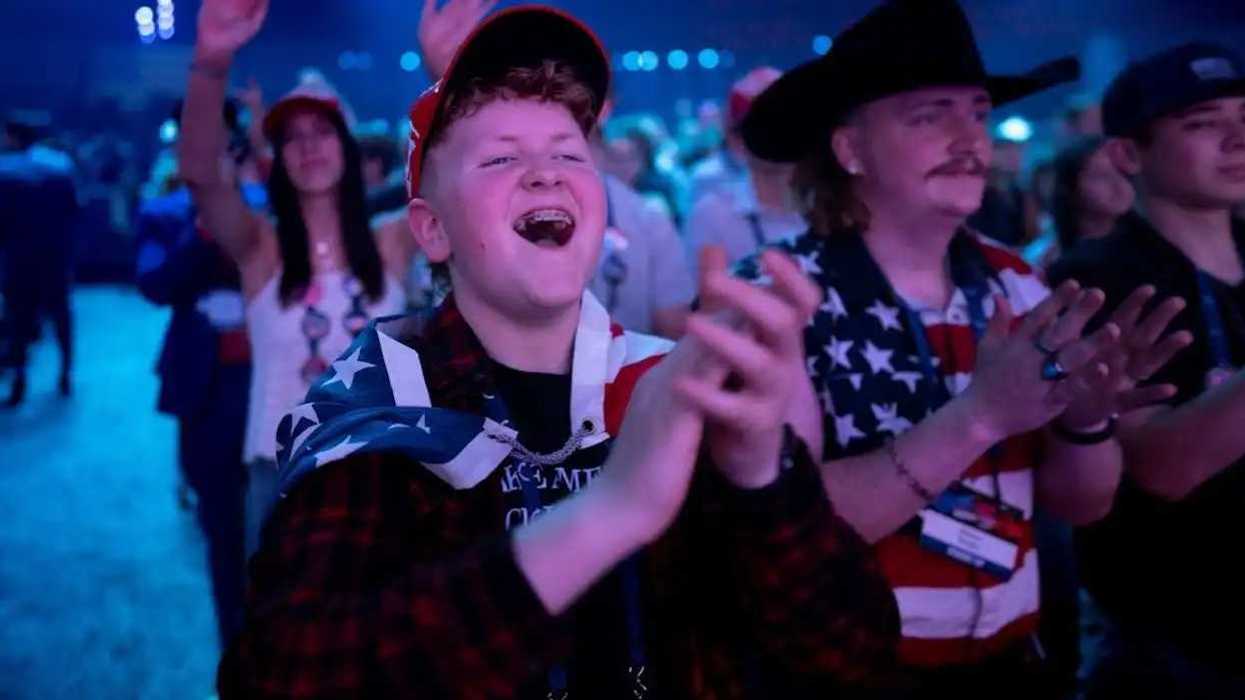
Attendees react during the AmericaFest 2024 conference sponsored by conservative group Turning Point in Phoenix, Arizona, U.S. December 19, 2024. REUTERS Cheney Orr

July 05, 2026
ALTERNET

President Donald Trump’s Religious Liberty Commission released a draft report on American religious history that, according to experts, gets a lot of basic facts wrong about its purported subject.

“A new draft report from a Trump administration task force presents a competing vision of America’s tradition of religious liberty — one that argues that the founders wanted as much religion, everywhere, as possible — and that makes the case that our understanding of religious freedom has been corrupted by 20th-century European secularists and radical progressives aiming to eliminate religion from public life,” Vox’s Christian Paz wrote on Sunday. The report also claims that the Founding Fathers’ seminal documents like the Declaration of Independence, Constitution and Bill of Rights were based explicitly on religious concepts.

Paz spoke with experts who push back against that narrative.

“The First Amendment is also about a practical response to the fact that you have 13 colonies that you need to unify, and many of them have established churches, but they’re different churches,” historian Matthew A. Sutton told Vox. “The First Amendment is not this kind of high ideal about freedom of religion. It’s simply about how can we keep these people from killing each other when we know for the last 300 years, different groups of Christians have killed each other in Europe.”

This was ultimately why the 13 colonies forming a new nation settled on the statement that in America “there will be no establishment of religion.”

He also placed in context the fact that Benjamin Franklin asked to open one of the early Continental Conventions with a prayer.

“In 1774, it’s not clear there’s going to be a revolution,” Sutton told Vox. “They have not left, and the clergyman they chose for this prayer is a member of the Church of England. They were trying to signal to England that they did want to maintain their unity, that they wanted to keep their religious bonds together. It was very practical. But this is the selective cherry-picking that the Trump people do. They didn’t have a prayer at the Constitutional Convention. So you can’t have it both ways. If you’re going to talk about when you do, you need to talk about when you don’t and see those as equally valid.”

University of Notre Dame politics and religion scholar Dave Campbell also pointed out that it is misleading to describe the “Founding Fathers” as a monolithic group, as they often had wildly varying opinions about what American religion should look like in a free society.

“It’s a misnomer to speak of the Founders as though they had one view,” Campbell told Vox. “They had different views, but they did agree, even though they had to compromise, on the wording of the First Amendment. Whatever this amorphous group that the Founders is, they disagreed, and yet they nonetheless could come to consensus that there should be no established religion, which was very novel at the time, and there should be as much latitude given to the free exercise of religion as possible.”

In contrast to this, he characterized the Trump administration’s attitude as being biased toward one particular approach to religion.

“To them, religious freedom means not respecting all religions equally, but instead ensuring that Christianity and particularly their flavor of Christianity has a favored place in the public square and in law,” Campbell said.


Sutton echoed that view.

“The Bremerton decision on the high school football coach being allowed to pray [at games], the recent debates about whether or not Christian charter schools are going to receive state financing, debates about the Ten Commandments on school grounds — we can see just a concerted effort by attorneys through these religious organizations that have made this kind of document essentially marching orders and used it to try to reestablish or bring us back to a world in which the Protestant majority can try to impose its will on everybody else,” Sutton told Vox. “The courts seem more open to that than they have been in a couple of generations.”

Back in May, Paz also drew attention to the Trump administration’s numerous mistakes when it comes to accurately representing the Christian faith it claims to propound.

“The religious right has been ascendant during the second presidency of Donald Trump, and they’ve harnessed his disdain for rules and norms to blur the lines between church and state,” Paz reported on Thursday. “Inside the White House, the secretary of defense has framed the war in Iran and American military action abroad as sanctioned and guided by God. Outside the government, this alliance between church and state often skirts near the edge of outright idolatry. Conservative pastors are erecting golden statues of Trump (but insisting it does not mirror the infamous golden calf of the Old Testament). They’re extending their hands over the president in prayer after comparing him to Jesus and standing by him, with some mild criticism, after he cast himself as an AI-slop Messiah.”

In April a former staffer for a different Republican president, Ronald Reagan, also argued that Trump’s behavior and that of his supporters is anti-Christian.

"The past few days have featured the vice president of the United States lecturing the pope on morality and church doctrine; Sean Hannity making it official that he worships at the Church of Trump; Pete Hegseth quoting made-up verses from Pulp Fiction as if they were actual scripture; and Trump styling himself as Jesus Christ," The Bulwark’s Charen wrote. "A few years ago, one might have wondered how these acts of contempt toward Christianity would go down with the religious right, but after 10 years of cultishness, it would be foolish to expect many defections."


Trump's 'sad' America 250 celebration dismays analyst: 'Cheap and slapped together'

Robert Davis
July 5, 2026 
RAW STORY


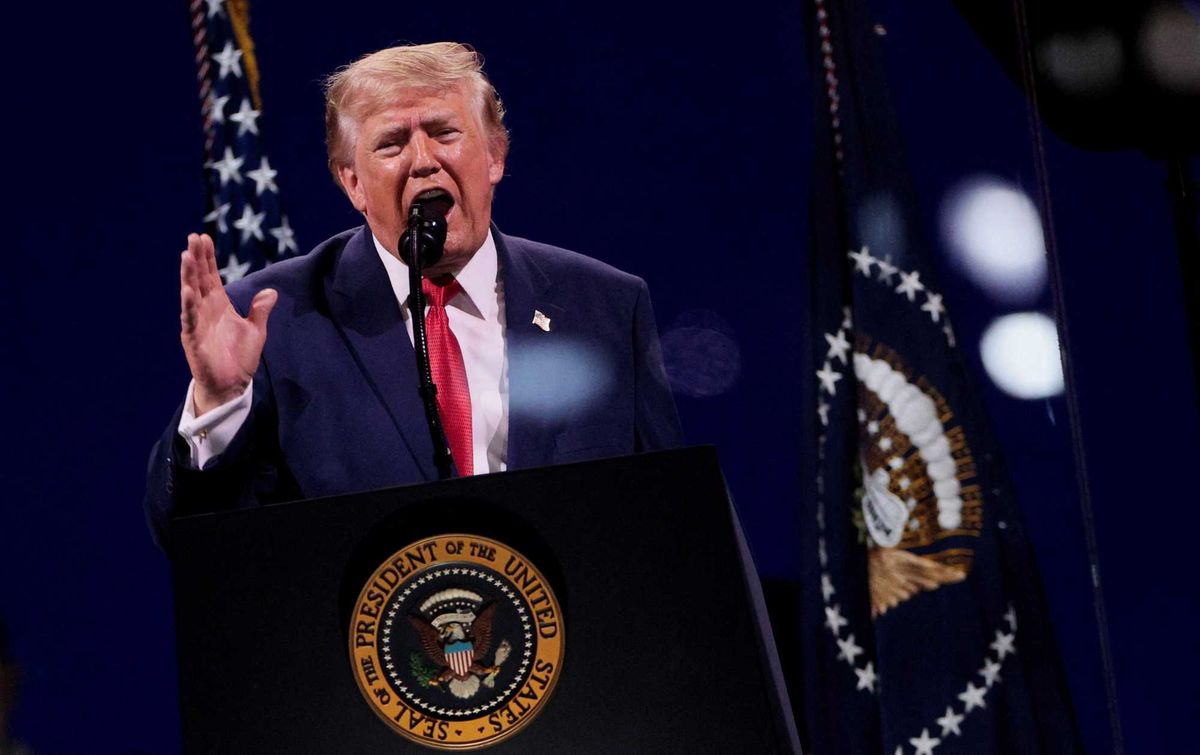
U.S. President Donald Trump speaks at a Fourth of July rally, marking the 250th anniversary of U.S. independence, on the National Mall in Washington, D.C., U.S., July 4, 2026. REUTERS/Evan Vucci

At least one political analyst left President Donald Trump's July 4 celebration feeling a little let down.

Trump had spent months ginning up a story that his July 4 bash would be the biggest in American history. However, the event was marred by extreme heat, long lines, and a weather delay, which caused many people to leave the National Mall before Trump took the stage. Washington, D.C., was so hazy the morning after the fireworks that some people reported feeling a burning sensation in their lungs when they went outside.

Sam Stein, managing editor of The Bulwark, attended the festivities and shared his thoughts on a new episode of the "Bulwark Takes" podcast with guest Bill Kristol, the publication's editor-at-large.

"This whole thing was really sad, honestly," Stein said.

"Everything on the mall seemed cheap, honestly, except for the fireworks," he added. "But, just poorly done, cheap, slapped together, like in some cases literally falling apart."

Stein mentioned a video that surfaced last week of performers who were nearly struck by a falling piece of the stage during rehearsal.

"I'm sad because it could have been something genuinely heartfelt for the 250th, and it turned out to be anything but that," Stein said.


Revealed: New report exposes how much MAGA has co-opted 'patriotism'


President Donald Trump sits ringside at UFC 327 in Miami, FL. 
Kevin Lamarque/REUTERS

July 05, 2026 
ALTERNET


President Donald Trump and his MAGA movement have caused a major disruption in the partisan nature of "patriotism," according to an extensive new report from Politico, mirroring a similar shift caused by the far right on a global scale.

On Sunday, Politico reported on the findings of its latest poll, claiming that "Patriotism has become partisan," according to respondents from all over the world, at least as far as expressions of national pride are concerned.

"It doesn’t matter that people across the ideological spectrum are equally likely to say that they themselves are patriotic. New international polling shows that when you ask them about expressions of patriotism, they think those displays are right-coded," the report detailed. "Those results from The POLITICO Poll reveal the extent of right-wing populist parties’ success after years of claiming nationalism as central to their political identities — and growing in power and popularity."

According to the poll's findings in the U.S., "respondents were 15 points more likely to expect someone who said they were proud to be American to be Republican (38) than Democratic (23)." Despite that notable perception, the poll also found that, overall, "pride in one’s country is essentially nonpartisan," with 68 percent of U.S. adults, "including most Trump 2024 voters and former Vice President Kamala Harris voters," agreeing that they were proud to be Americans. Similar majorities were found amongst respondents across the United Kingdom, France, Germany and Spain.

"The findings are the latest sign that these parties — from Donald Trump’s 'America First' movement in the United States to the rise of the far right across Europe — are owning the language and symbols of patriotism, including a country’s flag," the report added. "Right-wing parties have rapidly gained ground by tapping into voters’ growing concerns over border security and cost of living, and have flexed their power over the last decade, reshaping existing debates over conservatism, sovereignty and national identity. In some cases, they have pushed major political parties, like America’s GOP, further to the right."

It continued later: "In the United States, Trump’s 'America First' agenda and 'Make America Great Again' movement have explicitly made national identity central to Republican messaging. The president has vowed to secure the southern border, conduct widespread deportations and prioritize aggressive trade politics aimed at boosting the U.S. economy."
Massive blunder as news outlet prematurely releases Mitch McConnell memoriam piece


Matthew Chapman
July 6, 2026
RAW STORY6


Mitch McConnell speaks at the Conservative Political Action Conference (CPAC) in 2014. (Shutterestock.com)


Sen. Mitch McConnell (R-KY) has not passed away, at least according to current news reports — but The Hill accidentally published an article clearly intended to be embargoed until he has.

The article in question, screenshotted and posted to X ahead of its removal, was titled, "A lookback at Mitch McConnell's time in the Senate," but was prefaced by an all-caps warning to site editors, saying, "DO NOT USE."


McConnell, a decades-long titan in the Senate who previously served as Republican Leader, has been in the hospital for weeks, after he was reportedly discovered "unconscious and unresponsive" in his home, given CPR for cardiac arrest, and taken by advanced emergency support team.

Few details have been released publicly about his condition since then, although some sources have insisted he is "recovering."

This comes after Laura Loomer, a far-right influencer with close ties to the White House, alleged with no evidence that sources told her McConnell is "officially brain dead," something that no other source has corroborated.

This is not the first time in the last few weeks that a major story was erroneously published and retracted. NPR's Nina Totenberg came under fire last week after publishing an article announcing the retirement of Supreme Court Justice Samuel Alito, who as of this writing has not retired.


Journalists float astonishing theory around silence surrounding Mitch McConnell’s health

Alexander Willis
July 5, 2026 
RAW  STORY


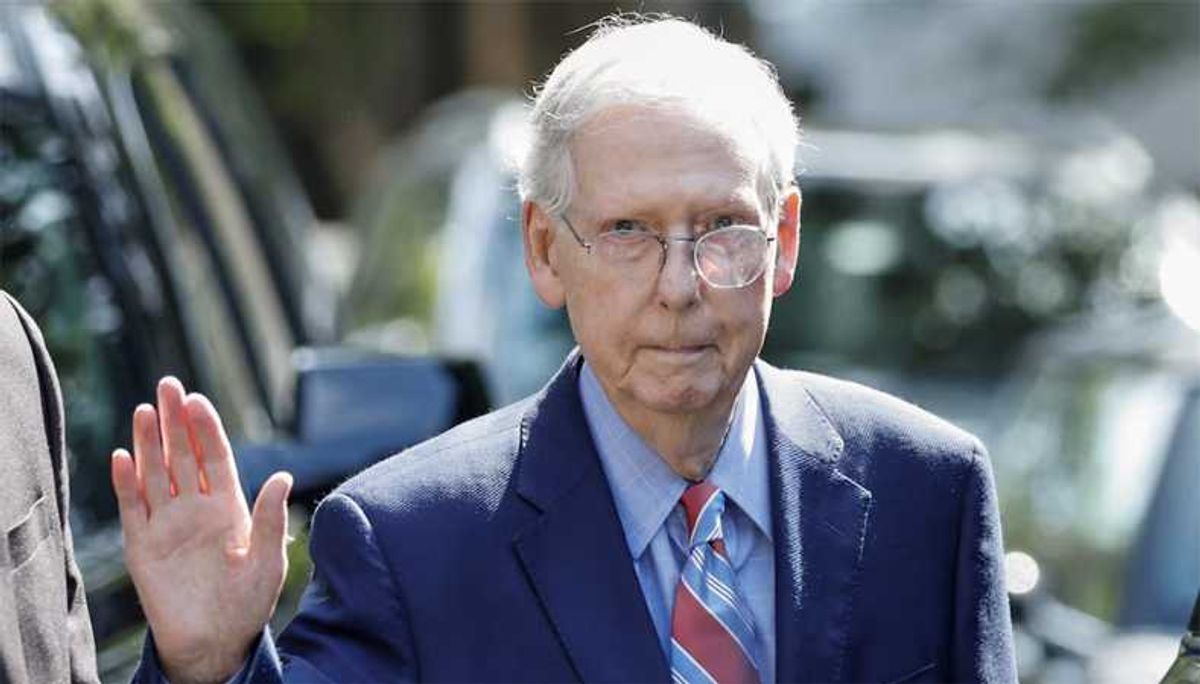
U.S. Senate Minority Leader Mitch McConnell (R-KY) waves as he leaves his Washington house to return to work at the U.S. Senate, less than a week after he froze for more than 30 seconds while speaking to reporters at an event in his home state of Kentucky, in Washington. REUTERS/Jonathan Ernst

With Sen. Mitch McConnell's (R-KY) health status still unclear after his latest medical incident, multiple journalists have offered a stunning theory for why his office and fellow Republicans have remained largely silent.

McConnell was rushed to the hospital in mid-June for an undisclosed medical reason, with his spokesperson David Popp issuing a vague statement regarding the reason for the hospitalization. It wasn't until last week that media outlets learned McConnell had been discovered "unconscious" at his home and had to be administered CPR for potential “cardiac arrest.”

It remains unclear why McConnell’s staff refused to share details, but some, including independent journalist and crypto commentator Adam Cochran, have a theory.

“In Kentucky, a special election to replace a Senator will NOT be called if it’s closer than 3 months till the next election,” Cochran wrote Saturday in a social media post on X. “If McConnell’s condition is clearly unfit for office, they’d hide that to avoid being forced to submit a resignation letter until after that date.”

According to Kentucky election law, independent candidates have until “the second Tuesday in August preceding the regular election” to file to run in the case of a vacancy that occurs after the state’s June filing deadline.

And, with a medical expert recently declaring McConnell, “even if he is alive, unfit to serve” based on details of his latest health incident, Cochran suggested that Republicans may be seeking to avoid having ousted Rep. Thomas Massie (R-KY) make a last-minute grab for McConnell’s seat.

“So all they have to do is drag their feet until [the second Tuesday in August], then tell you that he didn’t make it,” Cochran continued. “And in turn block Massie from disrupting an otherwise safe Republican seat.”

David Morris, a journalist and author, also appeared to endorse the theory with a brutal jab at McConnell and his legacy.

“Mitch McConnell remaining technically alive for an extra three weeks because of a manipulative procedural maneuver is exactly how he would have wanted to go out,” Morris wrote in a social media post on X.

And Hasan Piker, the prominent progressive influencer, asked his more than 1.7 million followers a blunt question regarding McConnell’s health.

“Is Mitch McConnell dead, and if so, will Massie run for his seat?” he wrote in a social media post on X.


Dr. Oz's 'ridiculous' claims about health 

Robert Davis
July 5, 2026 
RAW STORY


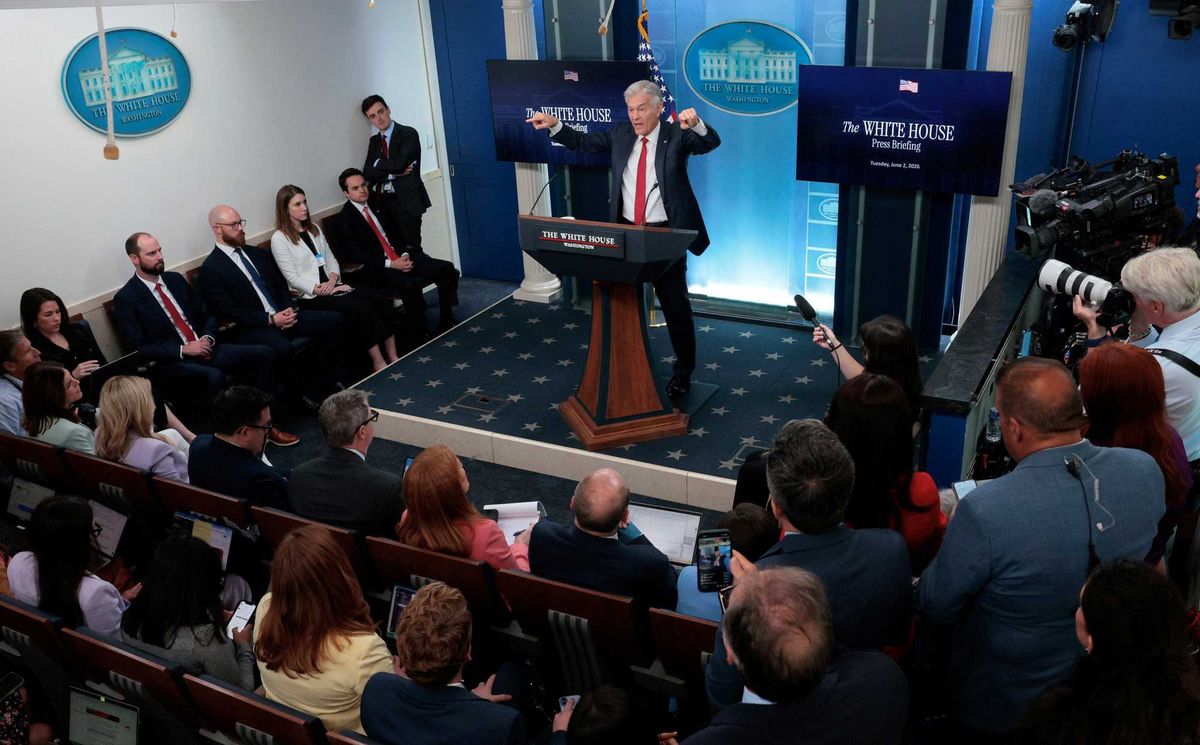
Administrator of the Centers for Medicare and Medicaid Services (CMS), Dr. Mehmet Oz, holds a press briefing at the White House in Washington, D.C., on June 2, 2026. REUTERS/Kevin Lamarque

President Donald Trump's top health care chief revealed during a recent Fox News interview that he apparently doesn't know how health insurance works, according to one political analyst.

Dr. Mehmet Oz, the Trump administration's Centers for Medicare and Medicaid Services administrator, discussed his efforts to combat alleged health care fraud during a recent Fox News appearance. During the interview, Oz claimed that "40%" of people who signed up for Obamacare "never used their health insurance" and insurance brokers are "making a ton of money off of the American people" by signing multiple people up for the same policy that isn't being used.

David Pakman, host of "The David Pakman Show" on YouTube, reacted to Oz's interview during a new episode. He described Oz's comments as "ridiculous."


"What he's describing is not how insurance works," Pakman said. "It's sort of like if you didn't crash your car last year, your auto insurance was a fraud. If your house didn't burn down and you needed to make a homeowner's insurance claim, it must have been fake homeowner's insurance. If you didn't have a medical emergency, your health insurance somehow wasn't real. It's one of the strangest arguments I've heard."

"The whole point of insurance is I hope you don't need it," he added. "That's why it's called insurance."