Monday, July 06, 2026

El Niño Forecast To Intensify, Increasing Likelihood Of Extreme Weather


July 5, 2026 
By UN News

More blistering heatwaves and other weather extremes are becoming increasingly likely across the world now and in coming months, linked to strengthening El Niño conditions in the tropical Pacific, the UN World Meteorological Organization (WMO) said on Friday.

“El Niño will also give an extra boost to global temperatures,” said WMO scientist Alvaro Silva. “We know that during El Niño years, the global temperatures normally reach record levels.”

Key points
El Niño has developed in tropical Pacific
Rapid development expected from July to September
El Niño typically peaks between November and February
Countries urged to act on WMO warning, to save lives and livelihoods

According to WMO’s monthly Global Seasonal Climate Update, strong El Niño conditions are expected to develop rapidly from July to September, with “high confidence” in this outlook.


It is based on multi-model forecasting from WMO partners which indicates a “consistent and significant warming of ocean temperatures” across the central and eastern equatorial Pacific, with seasonal-average sea-surface temperature anomalies expected to exceed 2°C in monitored regions.
Regional variations

On land, the outlook is equally worrying. “It’s the first week of July, it’s the start of what is traditionally the hottest month of the year,” WMO spokesperson Clare Nullis told journalists in Geneva. “And yet already in June we’ve seen record-breaking temperatures in many parts of Europe; just as an example, Germany last weekend saw a new national temperature record of 41.7°C.”

The WMO update highlights a “prolonged and dangerous heatwave” in the central and eastern United States until the end of this week and into the Independence Day weekend, flagged by the US National Weather Service.


In addition, there are likely to be drier than average conditions in Central America and the Caribbean, along with North and South America.

Drier weather patterns are also forecast in parts of Indonesia and Southeast Asia during the monsoon season, but wetter conditions are anticipated during the rainy season from September to December in East Africa. It is also possible that East Africa may be wetter than normal and face flooding because of another important climate driver, the Indian Ocean Dipole, which WMO describes as a possible development.

The El Niño alert has prompted an “unprecedented mobilization” by WMO, its members worldwide and partners in regional climate centres, to support governments by providing timely forecasts to save lives and protect livelihoods, the agency said.
No time to lose

“We have a window to act for preparedness for early action. And this window is narrowing in some regions,” WMO’s Mr. Silva said. For areas where drought is anticipated, priorities include ensuring that there is enough water for agriculture, energy production and other key activities.

El Niño and La Niña are opposite phases of the El Niño – Southern Oscillation (ENSO); they are one of the most powerful climate drivers.

The naturally occurring phenomenon is characterized by above-average sea-surface temperatures in the central and eastern equatorial Pacific Ocean.

El Niño events typically occur every two to seven years and usually last between nine and 12 months. They often begin developing between March and June, reach peak intensity between November and February, and exert their strongest influence on global temperatures in the year following their onset.


The effects of El Niño vary depending on the intensity, duration, the time of year and also how it interacts with other climate variability modes, including the Indian Ocean Dipole.

Not all regions of the world are affected, and even within a region, impacts can be different. “Even when ENSO is neutral, extreme weather can still occur,” WMO explains.

The agency classifies El Niño and La Niña events as weak, moderate, strong or very strong.

“The intensity of El Niño is important because it increases the likelihood of extreme weather and climate events in different parts of the world…on top of long-term climate change due to human activities,” WMO’s Mr. Silva stressed.
As heat waves loom, scientists wonder how humans will adapt
DW
07/03/20

Temperatures are set to soar in the US around the July 4 holiday, a week after Europe struck new records. With experts predicting more intense and more frequent heat waves in the future, can our bodies adapt?


People may be able to get used to some heat, but 'this rapid pace of change is beyond what ecosystems and humans can adapt to,' says physician Claudia Traidl-Hoffmann
Image: Carsten Koall/dpa/picture alliance


Late June brought record-breaking temperatures to France, Spain, the United Kingdom, Belgium, the Netherlands, Switzerland and Germany. The national weather service, DWD, reported that Germany had never experienced such intense heat for such a long stretch so early in the year.

Now, large parts of the central and eastern United States are also living under heat warnings heading into the July 4 holiday weekend, with extreme heat expected to push temperatures as high as 100 to 115 degrees Fahrenheit (37.8-46.1 C) across much of the region.

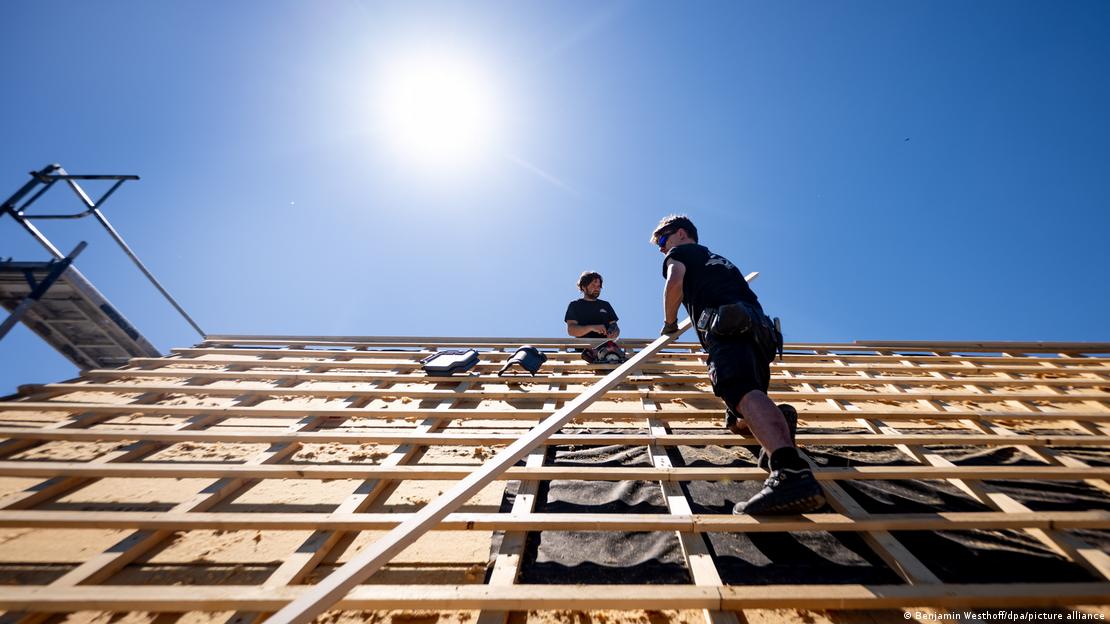
Outdoor workers are especially at risk during heat waves
Image: Benjamin Westhoff/dpa/picture alliance

A heat wave like this, with daytime temperatures well above 30 degrees Celsius (86 Fahrenheit) and nights when the thermometer doesn't drop below 20 C, places enormous strain on the human body. That is especially true for young children, pregnant women, older adults, people with underlying health conditions and those who perform physically demanding work or work outdoors.
Are people from hotter regions better able to cope with heat?

"The human body can adapt, and those adaptations are more developed in people who are continuously exposed to heat," said Claudia Traidl-Hoffmann, a physician and university professor. She is director of the Institute of Environmental Medicine at the University of Augsburg, where she treats patients with environmentally related illnesses.


Traidl-Hoffmann is also director of the Institute of Environmental Medicine at Helmholtz Munich, where she researches environmental diseases. As a member of the German government's scientific advisory council, she advises policymakers.

Adaptation to changing environmental conditions takes time, Traidl-Hoffmann writes in her book "Medicine of the Future — Healing in a Changing World" (original German title: "Die Medizin der Zukunft — Heilen in einer veränderten Welt"). But it's not a matter of years — rather, it will take centuries.

What happens to the human body in the heat?


"Once outdoor temperatures reach 23 C (73.4 F), the body begins activating mechanisms to regulate its temperature," Traidl-Hoffmann explained. Blood vessels widen, allowing the body to release heat. Sweating provides additional cooling. Together, these processes help keep the body's core temperature stable.

If these mechanisms don't work properly or fail altogether, the consequences can range from cardiovascular disease and stroke to multiple organ failure. The latter happens when the body can no longer maintain a stable core temperature.


"When our body temperature rises too much, metabolic processes initially accelerate further — until the body loses control — across all levels from the immune system to the nervous system. At around 42 degrees Celsius (107.6 F), the body experiences severe cell damage, multiple organ failure and, without immediate treatment, death can occur," said Traidl-Hoffmann.

The lungs also suffer in extreme heat. At the molecular level, the underlying processes are not yet fully understood, Traidl-Hoffmann said, but there are several hypotheses. Breathing in hot air appears to accelerate inflammatory processes.

"The lungs become inflamed more easily and more vulnerable to infections," she said.
What should we do — and avoid — during a heat wave?

Traidl-Hoffmann said people tend to think about heat and its effects only after temperatures have already soared — when railroad tracks begin to buckle, roads crack and emergency services are stretched to their limits.

She advises her patients to prepare for hot weather as early as January. That includes discussing possible medication adjustments with their doctor. Because heat can accelerate inflammatory processes, conditions such as allergies should be treated in advance with specific immunotherapy whenever appropriate.

How to survive heat waves in the city  11:57


Heat can also worsen eczema, making early treatment important. "Every chronic condition should be stable before the heat season begins," the physician said.

Once the thermometer starts to climb, Traidl-Hoffmann recommends drinking plenty of water, eating light plant-based meals and avoiding cigarettes and alcohol whenever possible. Getting enough sleep also gives the body a chance to recover from at least some of the day's heat stress.

Can our bodies adapt to a warming climate?


Heat keeps many people from getting enough sleep, and the body is more likely to reach what doctors call decompensation, the point when it can no longer compensate for physiological dysfunction.

How well the body can cope with heat and adapt to it all depends on how vulnerable a person is. Traidl-Hoffmann compares the body's capacity to adapt to a barrel: For older people, those with chronic illnesses or those taking medication, the barrel fills up much more quickly during a heat wave.

Young, physically fit people who are accustomed to hot weather generally have a greater tolerance, she said. But still, this also has its limits.

"This exponential increase in the number of hot days, this rapid pace of change, is beyond what ecosystems and humans can adapt to," she said.

This article was originally written in German.

Julia Vergin Senior editor and team lead for Science online
From north to south, Africa braces for volatile El Nino year
DW
06/07/2026 - 


The World Meteorological Association warns that the El Nino climate phenomenon could bring drought, floods and displacement to parts of Africa later this year. Are governments prepared?


In 2024, El Nino resulted in a prolonged drought in northern Botswana, affecting people and wildlife alike
Image: Monirul Bhuiyan/AFP/Getty Images


The UN Food and Agriculture Organization (FAO) and the World Food Programme (WFP) have appealed for over $200 million (€175 million) in funds to help protect 8.8 million people across 22 high-risk countries from the looming return the destructive El Nino weather pattern.

The support would include cash transfers, climate-resilient seeds, livestock protection and flood-control measures, as extreme weather patterns affect much of the world already.

"El Nino conditions have developed in the tropical Pacific, and are forecast to strengthen rapidly over the coming months, increasing the likelihood of extreme weather events in many parts of the world," the World Meteorological Organization (WMO) has warned.

In Africa, the countries listed as most at risk include Cameroon, Ethiopia, Kenya, Madagascar, Malawi, Mozambique, Nigeria, Somalia, South Sudan, Sudan, Uganda and Zimbabwe.


What El Nino means across Africa

El Nino is a naturally occurring warming of sea-surface temperatures in the central and eastern Pacific Ocean, which usually happens every two to seven years.

It can last nine to 12 months. In some regions, El Nino can bring hotter and drier conditions; in others, it can increase rainfall and flooding.

"For Africa, it's not one climate story. It's actually going to be a much more varied impact," Kgaugelo Mkumbeni, a research officer in the Climate Risk and Human Security Project at the Institute for Security Studies in Pretoria, South Africa, told DW.

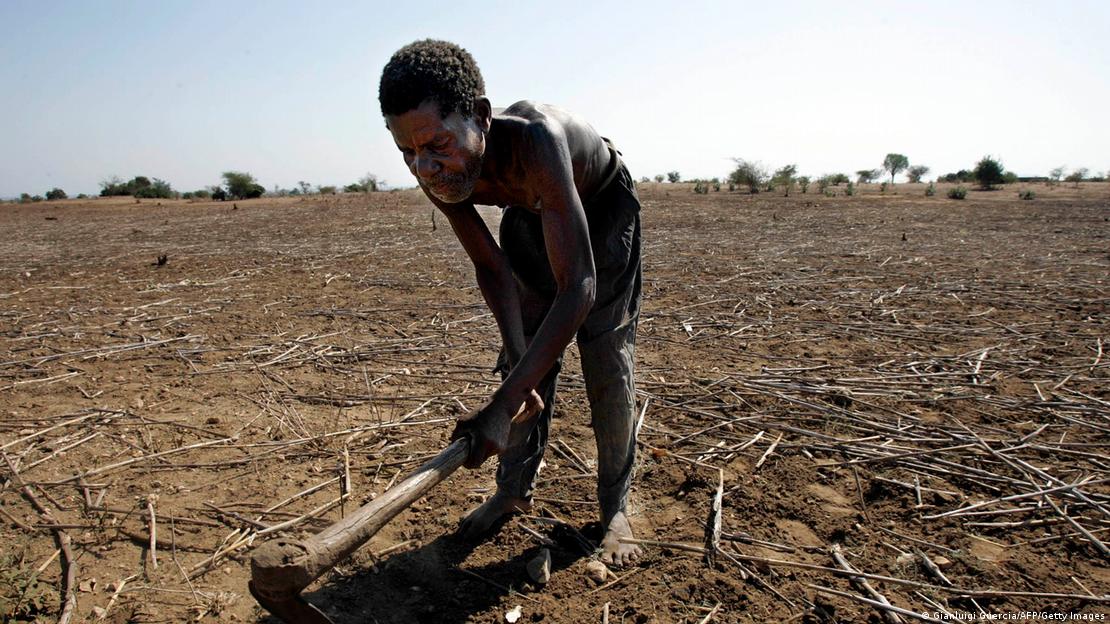
Southern Africa has in the past experienced "hotter and much drier conditions" during El Nino events, Mkumbeni said, which raises the risk of "drought, water shortages and general food insecurity."

The situation in Eastern Africa, however, is more complex, as El Nino can have different effects depending on the season.


Global warming: Bad to worse

Bhargabi Bharadwaj, a research associate at Chatham House's Environment and Society Centre, told DW that "El Nino reshapes rainfall and temperature patterns around the world, though its impacts can vary depending on the region and which season it hits."

"Some areas will face drier conditions, which increases risk of drought and wildfire occurrence, whereas other parts of the world will have wetter conditions and face likelihood of storms and flooding," Bharadwaj said.

Scientists such as Bharadwaj say climate change does not directly cause El Nino, but it can make its effects more severe.

"We're working with warmer baseline temperatures of around 1.4 degrees (Celsius, or 2.5 F) higher than preindustrial levels. This means that, when an El Nino event does occur, then there are more extreme outcomes," Bharadwaj said.

Some experts are also concerned about the possibility of a very strong — or "super" — El Nino this year, "when your average temperature difference is around 2 degrees higher, or at least forecast to be 2 degrees higher," she said.

Acting before disaster strikes

The real challenge is whether governments and aid agencies can act quickly enough, as "science is ahead of policy," Bharadwaj said.

In northern Kenya, Abdikadir Aden Hassan, founder of Garissa Million Trees, told DW that the danger is not only the possibility of heavy rains and subsequent floods, but the fact that they may come after months of drought.

"We are in a dry spell and are headed toward drought in August and September," Hassan said. "Then, in October, November and December, we are expected to have the short rains. People may be coming out of drought and then going straight into flash floods. That means their livelihoods will be affected for a second time."

With lives and livelihoods at stake, experts say Africa's climate preparedness cannot be left to individual governments or ministries.

"It has to be embedded within agriculture, within health, within water, within energy, education and social protection," Mkumbeni said.


Droughts in Africa can often lead to hunger and even famine, especially among subsistence farmersImage: Gianluigi Guercia/AFP/Getty Images


Climate-linked displacement


Conflicts, high energy costs, debt pressures, fertilizer disruptions and cuts in international aid are already weakening the ability of many countries to respond to external shocks. Bharadwaj said this made the forecast for 2026 particularly worrying.

"The concern isn't just El Nino," Bharadwaj said. "It's that it's occurring at a time when the global system is already quite fragile. A lot of the vulnerable populations are living in regions that are highly impacted by import costs but also high debt."

Aimee-Noel Mbiyozo, a senior researcher at the Institute for Security Studies, said climate-related events were already forcing people to leave their homes.

"Cyclones and flooding have been by far and away the biggest pushers of mass displacement in Africa," Mbiyozo said. "Drought has, as well, but drought tends to do it a little bit more slowly."

"People don't want to leave home," Mbiyozo said. "Most people want to stay where they are."

Cities on the front line of climate crises

Drought and desertification are driving people increasingly toward Africa's towns and cities, which are increasingly having to absorb climate-linked migration — even as many struggle with wide-ranging issues such as a lack of housing and public services and widespread informal employment.

"The bulk of the movement that's happening, whether it's sudden or slow or general population growth, is into the cities," Mbiyozo said.

According to the World Bank, climate change alone could drive up to 86 million additional internally displaced people into African cities by 2050.
Concern for Lake Chad and southern Africa

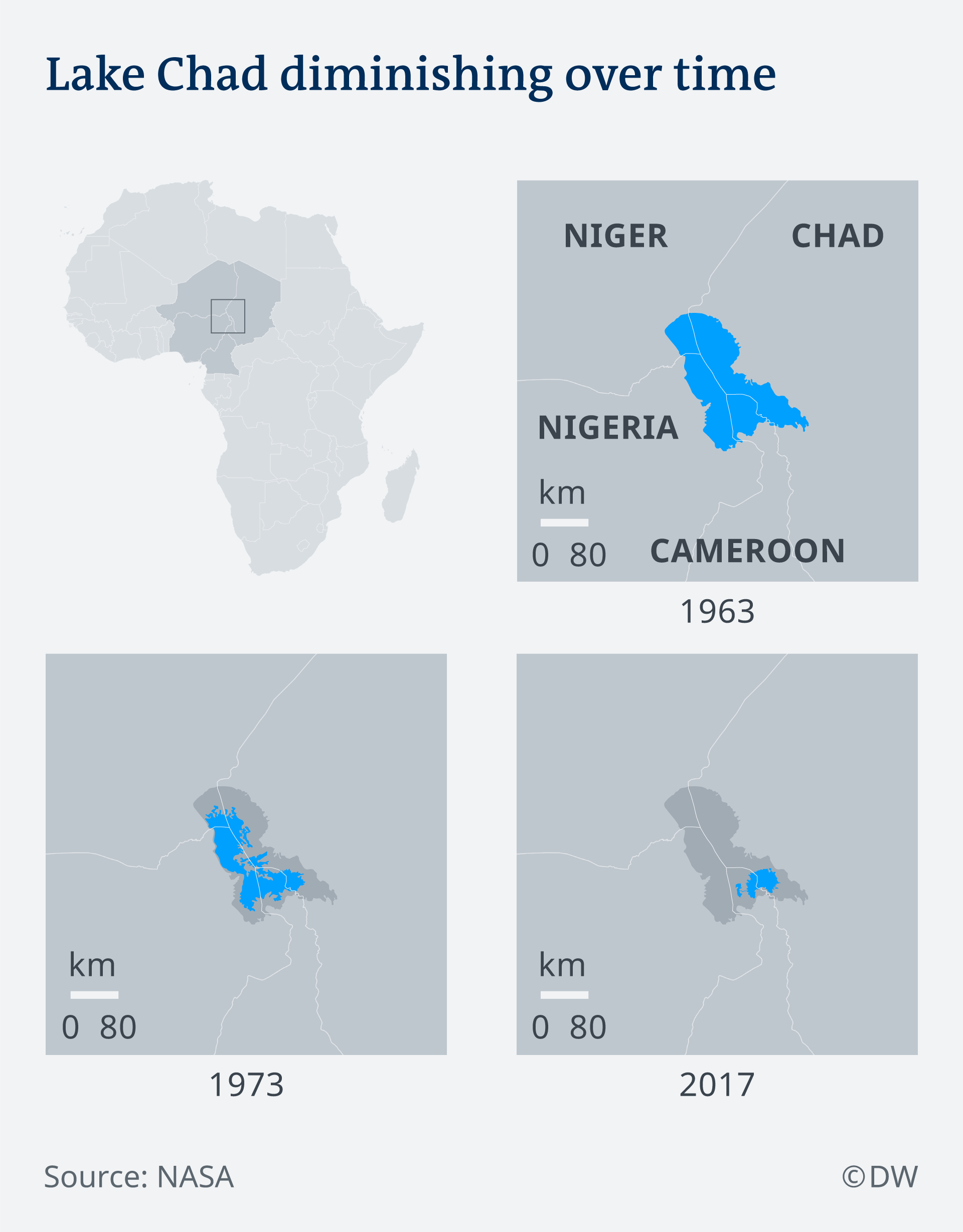
In the fragile Lake Chad Basin, research on displacement patterns from 2008 through 2024 found that disasters displace more people than conflict and violence, Mbiyozo said. "What we're also finding is that the violence is intersecting with the disasters," she said.

Mbiyozo said the region was ripe a "perfect storm" in which borderland fragility, violent extremism, pastoralism and climate shocks all collide.

Lake Chad has been vanishing for more than half a century, driving more and more people relying on the body of water for survival into despair

Southern Africa meanwhile is another major area of concern. The region has faced repeated cycles of drought and cyclones, with countries such as Mozambique, Malawi, Zimbabwe and Madagascar repeatedly affected in recent years.

"Madagascar at this point is hit by cyclones almost every year," Mbiyozo said, and Mozambique has repeatedly faced "never-before-seen-strength cyclones" in recent years.
Are early warning mechanisms enough?

Some countries have made progress in being better prepared: Mozambique has invested in early warning systems and climate literacy in coastal communities. South Africa has passed a Climate Change Act, which experts see as a positive legislative step.

Kenya has improved coordination between government agencies and humanitarian organizations, including emergency operation centers and efforts to move people in flood-prone areas to higher ground, Hassan said.

"As a country, we are better off and much more organized right now," he said. "But the challenge is that, if we do not get external support, the national emergency funds available may not be enough."

Hassan said early warnings systems must be matched by funds that are available before disasters escalate: "Money may be allocated," he said, "but delays in releasing it can make the disaster worse."


Cai Nebe Contributed to this article.
Edited by: Sertan Sanderson


Mimi Mefo Newuh Mimi is an award-winning Cameroonian-born journalist.https://x.com/mimimefo

Why heat waves heighten the risk of blackouts


DW
06/07/2026 - 


When extreme heat hits, people turn to AC, but what if the grid fails? From France to the US, heat waves are pushing power systems to the limit, raising blackout risks and energy prices when electricity is needed most.

Infrastructure like electricity masts and power lines can be vulnerable to heat and other weather extremes

Andreas Franke/dpa/picture alliance

In late June, a heat wave in France left nearly 70,000 households without power after a transformer failed under high temperatures. For about 24 hours, as the mercury hovered near 40 degrees Celsius (104 Fahrenheit), residents in parts of Brittany sweltered in deadly heat without fans or air conditioning.

Then as the United States baked in extreme heat in the run up to its 250th birthday celebrations, federal authorities issued blackout warnings. Grid operators were allowed to order large energy users, such as data centers, to switch to backup generators to maintain power to homes and emergency services like hospitals.

Power grids worldwide are struggling under intense heat waves and other extreme weather events — and in the US, outages are already happening. Heat-season power outages in the country, some linked to hot temperatures, rose about 60% over the past decade compared with the 2000s, according to data from the nonprofit Climate Central. Having no access to cooling in heat waves is especially dangerous for children, the elderly and those with chronic illness.


Extreme heat in the run up to the United States' 250 birthday prompted federal authorities to declare a blackout warning    Image: Cheney Orr/REUTERS

That trend is expected to continue as human-induced climate change drives longer, more frequent and intense heat waves, making it crucial for energy networks to adapt.

"As it gets hotter, things stop working quite so well," said Iain Staffell, associate professor of sustainable energy at Imperial College London. That means one "should expect faults to be more common at these very high temperatures."

"I think we do need to adapt the power system to cope with the changing weather," added Staffell, referring to Europe, which is warming much faster than the rest of the world.
Why are heat waves a problem for power networks?

When heat waves hit, electricity demand surges as people turn to ACs, fans and other cooling devices for relief. That strains the power grid, especially later in the day when heat lingers but solar power starts to fade.

At the same time, the infrastructure that keeps electricity flowing — from power plants to transformers — is vulnerable to heat stress. Transmission lines moving power across the country expand as temperatures rise, for instance. This causes them to sag, sometimes enough to brush against trees or other obstacles, increasing the risk of short circuiting or outages.

"The grid operator has to reduce the amount of power that flows down these wires in the very hottest temperatures to make sure everything remains safe," said Staffell.


Some nuclear power plants in France and Switzerland reduced output or switched off reactors due to the June heat wave
Image: Lionel Bonaventure/AFP

Heat and sagging lines were contributing factors in 2003 when around 50 million people across the northeastern US and parts of Canada were left without power during high temperatures. It was the largest blackout in North American history. While grid operators have since introduced safeguards to prevent a repeat outage of that scale, experts say extreme weather still poses a threat.

Thermal power plants are not immune either. In extreme heat, cooling in coal, gas and nuclear plants becomes less effective, meaning operators sometimes have to reduce output.

"Efficiency of coal and gas as well as nuclear power stations falls by roughly 1% for every degree it gets hotter," Staffell said — so they're 10% less effective at 35 C than at 25 C.

During Europe's heat wave in June, several nuclear facilities in France and Switzerland had to reduce output or temporarily shut down because the rivers they use for cooling had become too warm. Regulations require plants to limit the temperature of discharged water to protect ecosystems and aquatic life.

Renewable energy sources are affected as well. Low water levels can hamper electricity production from hydropower, for instance. And solar panels become slightly less efficient in high temperatures, while wind speeds often drop during heat waves, reducing their output.


These factors, taken together, can contribute to grid instability, with operators needing to source energy from elsewhere if the mismatch between demand and supply becomes too tight.

If cheap solar or wind isn't available during these critical crunch times, grid operators often have to rely on more expensive backup sources to fill the gap. And those tend to be planet-heating fossil fuels.

Even when blackouts don't occur, heat can drive up wholesale electricity prices, which are sometimes passed on to consumers depending on the market and the contract. During the recent European heat wave, power prices spiked across countries, including in France and Germany, especially during evening peak hours.

Can we heat-proof energy systems?


There are some smaller fixes "that can have a really big impact," said Staffell.

That includes upgrading grid components to withstand heat and installing better cooling systems for powerlines, transformers and other equipment. That could be as simple as "bolting on additional fans for putting a shade over the top of them," added Staffell.

Nuclear power plants, for example, could be built with "hybrid cooling systems, so they are not so reliant on the rivers," said the sustainable energy expert.

While the European electricity grid is one of the most resilient in the world, the infrastructure is aging, says Alexander Roth, an energy and climate policy fellow at Brussels-based economics think tank Bruegel.

At the same time, countries are transitioning to renewable energy systems largely based on electricity that will power everything from electric cars and data centers to heat pumps and air conditioning.


Snapshot Freddy/Zoonar/IMAGO

As Europe decarbonizes its economy, electricity is expected to account for about half of total energy use by 2040, up from about 20% today. That means demand will keep rising, even without factoring in hotter summers.

"And the current system is not fit for that," said Roth.

Meeting that challenge will require modernizing the grid, boosting the flow of power between countries, and creating more flexibility in the system. Battery storage, for example, can help reduce stress on electricity networks, especially during heat waves.

"These batteries could, for instance, store cheap generation of solar PV around midday and then actually feed it out in the evening hours ... because the wind is gone and the sun is gone but there's still high demand," said Roth.

Demand-side measures could help too. Dynamic pricing — whereby electricity costs vary throughout the day — can incentivize consumers to use power during off-peak hours, easing pressure on the grid, added Staffell.
What's the hold-up?

In Europe, a significant obstacle is the huge backlog in projects, including batteries and an estimated 1700 gigawatts worth of renewables, waiting in a queue for a grid connection. Legislation is under discussion in Europe to improve the grid, with massive investment required. But it'll likely take some time to build the required infrastructure, say analysts.

In the US, the Department of Energy has also announced a major investment to expand and modernize grid infrastructure. The country has seen an uptick in power outages over the past decade, as its ailing grid has struggled to cope with more frequent extreme weather events such as hurricanes and winter storms.


At the same time, the grid is facing "historic stress" from the growth in electric vehicles, renewable energy and energy-intensive data centers, according to JP Morgan Chase. The bank noted that smart grids and advanced grid tech were vital for energy security.

Meanwhile, in Europe, Roth believes there is a huge opportunity to create a better-functioning, more flexible grid that "is smarter, where we use more electricity, and also, that in the end, benefits the people."

Edited by: Jennifer Collins
Can India, Europe produce solar energy without China?

Jyoti Thakur | Leon Kirschgens
DW
06/07/2026 - 

With China dominating every step of the solar energy production chain, governments in India and Europe are looking to reduce their overreliance on a single supplier.


While India has made significant strides, it still heavily relies on China for much of its solar power needs [FILE: March 2018]Image: Aijaz Rahi/AP Photo/picture alliance


In December 2025, Italy awarded more than 1.1 gigawatts of solar capacity across 88 projects in the country's first auction restricted exclusively to projects built without Chinese-manufactured equipment.

The winning bids averaged €66.38 ($75.80) per megawatt hour, 17% above the price set in an unrestricted renewable auction held in 2025, according to data from Italy's electricity services agency, GSE.

It was a deliberate premium, paid to buy solar hardware from anywhere other than China. But with more than 90% of solar modules installed in the European Union still imported from China , the auction exposed just how thin Europe's alternatives really are.

China still produces more than 80% of the world's solar components, dominating every stage of the value chain from polysilicon to finished modules. That scale has delivered affordable panels to the world, but it has also left the governments in Brussels and New Delhi increasingly uneasy about relying so heavily on a single supplier.

"China is present in almost every global solar supply chain," Ajay Srivastava, founder of the Global Trade Research Initiative, told DW. Even panels assembled in India or Vietnam, he said, typically rely on Chinese-made cells, wafers or polysilicon further up the chain.


India's manufacturing push

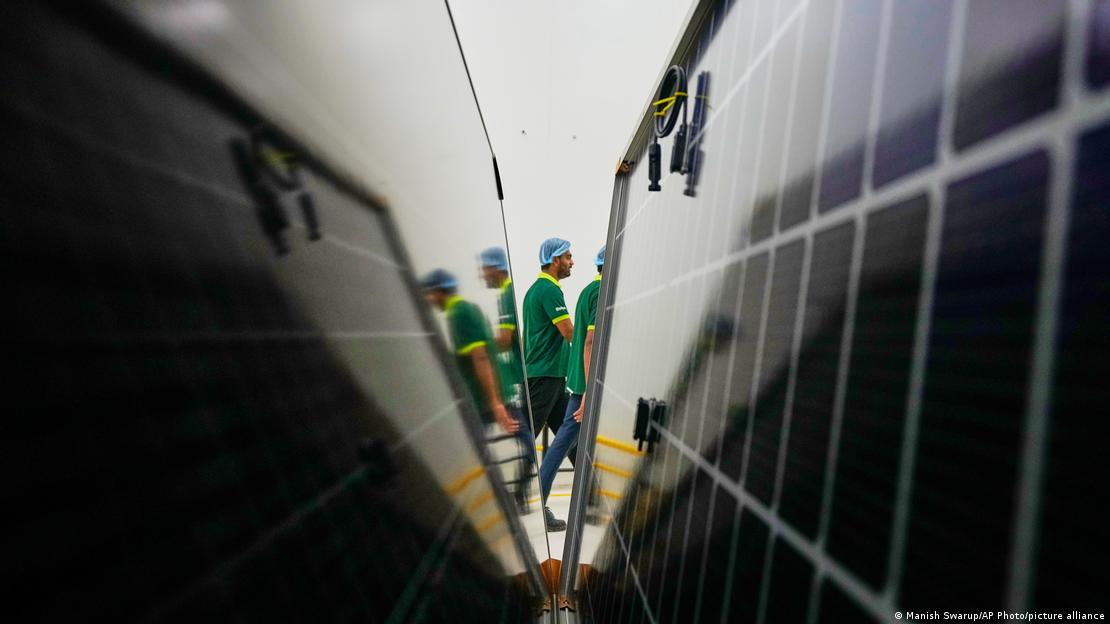
India's transformation from buyer to builder has been rapid, at least on paper. The country's solar photovoltaic (PV) module manufacturing capacity reached 172 gigawatts (GW) in early 2026, while cell capacity has nearly tripled to 30 GW.

This shift has been largely policy-driven.

Sanjay Varghese, a senior executive at Indian firm ReNew, credited the government's "Make in India" push — tariffs and non-tariff barriers, such as the Approved List of Models and Manufacturers (ALMM), backed by a roughly $2.5 billion Production-Linked Incentive (PLI) scheme — with reshaping the sector almost overnight.

"Five years ago, all solar modules being installed in India were being imported from China," Varghese said. "But today, all modules, and about 50% of the cells being consumed in India, are made in India."

Varghese is hopeful that the complete value chain from modules, cells, wafers, ingots, and polysilicon to even metallurgical-grade silicon will become domestic within five to seven years.

Dries Acke, CEO of SolarPower Europe, described India's capacity as already outstripping its own demand. "This clearly means that you will have a country looking for export opportunities," Acke said.

India's solar sector has received a major boost from the government's 'Make in India' drive [FILE: August 2025]Image: Manish Swarup/AP Photo/picture alliance


Where the limits lie

But analysts also cautioned against overstating India's readiness to replace China.

Jochen Rentsch, head of technology transfer at the Fraunhofer Institute for Solar Energy Systems, pointed to wafers as the critical bottleneck: roughly 99% of the world's photovoltaic wafers are still made in China. He also warned that Chinese manufacturers can price wafers below production cost, making it "nearly impossible" for new entrants to compete on economics alone.

While India has become largely self-sufficient in cells and modules, Rentsch added, it remains dependent on China for wafers, polysilicon and manufacturing equipment, suggesting that a shift towards Indian panels would only relocate part of the process rather than eliminate Europe's exposure to China.

Varghese acknowledged the same gap from the industry side, noting that India still relies on Chinese firms for the tools and machinery needed to manufacture solar products, and that China continues to lead the world in solar technology development.

Europe's policy gap

Europe's predicament, however, is different. Germany alone has set a target of sourcing 80% of its electricity from renewables by 2030, a goal that requires enormous volumes of imported clean-energy hardware, much of it still tied to Chinese supply chains.

According to BSW-Solar, the German solar association, domestic module production in Germany has shrunk to a small, niche-market operation, though the country retains stronger positions in inverters, mounting systems, battery storage and upstream manufacturing equipment.

Acke argued Europe needs its own version of India's PLI scheme, an output-based subsidy, similar in spirit to the US Inflation Reduction Act's tax credits, to make local manufacturing commercially viable.

The EU's forthcoming Industrial Accelerator Act, intended to build on the Net Zero Industry Act, 2024, has disappointed advocates like Acke by defining "Made in Europe" broadly enough to include free-trade partners rather than requiring literal European production.


To make matters worse, US tariffs on Indian goods have squeezed export prospects elsewhere, pushing Indian manufacturers to look harder at Europe. But Varghese noted that anti-dumping and countervailing duties on Indian-origin cells and modules in the US now exceed 250%, effectively closing that market for now.

But India's geographical position does offer some advantages. Rahul Sharan, deputy director and shipping specialist at Drewry, an independent maritime research consultancy, noted that India's west coast ports connect efficiently to Europe via the Suez Canal, potentially shortening delivery times compared with its East Asian rivals.

Still, he cautioned that logistics "alone is unlikely to eliminate the structural cost advantages that China has built through scale and integration." Sharan also flagged the Strait of Malacca — through which more than 60% of global maritime trade passes — as a persistent chokepoint whose disruption, whether from South China Sea tensions or US-China rivalry, could ripple through solar supply chains far beyond Asia.

A long road ahead

While experts argue that, for now, India remains the most credible alternative to China emerging anywhere in solar manufacturing, it is not yet a substitute. Srivastava suggested that genuine manufacturing capability takes 10 to 20 years to build and that incentive schemes like India's PLI often encourage assembly rather than deep manufacturing.

He believes the only realistic path is a coordinated "China-plus-one" strategy, with the US, Europe, India and others investing in parallel supply chains even if the output costs 10 to 15% more initially. "At present, however, that political and industrial leadership is missing," Srivastava said.


This article is part of the India-Germany Climate and Energy Journalism Programme organized by Clean Energy Wire, supported by Heinrich Böll Stiftung.

Edited by: Karl Sexton
How China’s Renewable Technology Benefits The West – OpEd


Western Tariffs Hurt Green Goals — US/EU restrictions on Chinese solar, EVs, and batteries slow the global renewable transition and raise costs.

China Dominates Renewables — China leads in manufacturing capacity and price reduction for solar, wind, and batteries, adding more renewable power than the rest of the world combined.

Cooperation Beats Confrontation — Engaging China on green tech would accelerate decarbonization and innovation; protectionism harms the West’s own climate and economic interests.

The current heat wave in Europe and North America is seen by scientists as evidence of the accelerating impact of climate change. With temperatures across a wide swath of eastern U.S. and northern Europe topping historical highs and the heat domes persisting beyond normal time trends, an unprecedented number of the public – several hundred million people – are suffering from their government’s failure to prioritise a more rapid transition to renewable and clean energy technology in their national development.

Missing or lost amidst the furore generated by the mounting heat related deaths and other impact caused by the heat wave and the search for relief from a weather phenomenon that is likely to become more frequent and widespread is the war that the West is waging on the renewable technology front against China.

This policy war has been intensifying with an emphasis on actively “de-risking” and protecting domestic markets from what is being sold to the western public as “China Shock 2.0” .


Key strategies in this war for now include high tariffs, strict procurement rules, and supply chain security bans targeting electric vehicles, batteries, solar panels, and inverters.

United States Initiatives

Targeted Inverter Bans: The U.S. is currently drafting regulations to restrict the import of Chinese energy inverters, citing national security threats to electrical grids.National Defense

Restrictions: The U.S. updated the National Defense Authorization Act (NDAA) to prohibit the Department of Defense from procuring solar equipment and inverters manufactured by Chinese entities of concern.

Heavy Tariffs: The U.S. continues to enforce major Section 301 tariffs on Chinese electric vehicles, batteries, solar cells, steel, and aluminum.
European Union Initiatives

Trade Defense Instruments: The EU is heavily utilizing anti-dumping investigations and countervailing duties against Chinese electric vehicles, steel, and industrial manufacturing.

Industrial Accelerator Act: The EU has proposed the Industrial Accelerator Act, which prioritizes EU-made clean-tech and low-carbon products in projects that use public funds, aiming to reduce reliance on third-country supply chains .

G7 Alignment: European leaders and the G7 bloc have collectively agreed to map and reduce critical mineral dependencies.

Next On The Renewable Technology War Front

Western nations are currently implementing tariffs, stricter local content requirements, and anti-subsidy investigations on Chinese solar panels, EVs, and batteries. The primary stated goals are to protect domestic manufacturing and address concerns about China’s alleged overcapacity. As these barriers increase the cost of imported equipment, they will raise upfront prices for consumers and slow down the adoption rate of renewable and clean technology,

The uncomfortable and indisputable reality the West should accept is that China is a market leader and perhaps even a role model for the West in renewable energy. Hence, it is counter productive on the energy and climate change fronts to fight rather than work with China. The other reality is that China’s scaling of renewable energy manufacturing has created significant price efficiencies – solar panel prices declined by 89% between 2010-2023 largely due to Chinese production scale. This price effect has accelerated global, including western, adoption of renewable technology.

China’s New Long March In Development


China’s “New Long March” – a phrase frequently invoked by Chinese leadership – can be seen also to be referencing the nation’s coordinated, state-driven pivot away from cheap, scale-led manufacturing toward technological self-reliance, green and clean energy adoption, and industrial modernization.

​This transition has been responded to by the West through a lens of intense geopolitical friction, treating it as a zero-sum conflict. In the past, opposition to China was justified on security, human rights, labour concerns and other governance related grounds.

This strategy no longer works. When reapplied to the renewable energy front, it misjudges how the global and Chinese economy works. If structured and integrated constructively, China’s economic and technological evolution including in the green revolution can yield massive dividends for the West and the rest of the world.
​Areas of Mutual Benefit

​The global community stands to gain significantly from China’s upgraded industrial model, provided both sides maintain open economic pipelines free of the ideological battles that Western leaders have foisted on the world.

The clearest example for now is the demand by Western consumers for Chinese air conditioners and other cooling appliances during this heat wave episode. This is a policy lesson for critics attempting to justify restrictions on Chinese imports on the basis of the reflexive and protectionist ‘overcapacity’ charge regularly trotted out by senior European lawmakers and politicians.

​1. Accelerating the Global Green Transition


​China has essentially built the supply-chain backbone for the world’s decarbonization efforts. In recent years, its expansion in renewable energy capacity has been unprecedented, adding more solar and wind power than almost the rest of the world combined.

​The Benefit: By leveraging China’s massive manufacturing efficiencies in electric vehicles (EVs), lithium-ion batteries, and solar photovoltaics, Western countries can dramatically lower the capital cost of hitting their own net-zero climate goals.

​2. Driving Global Scientific Breakthroughs

​China’s 15th Five-Year Plan (2026–2030) centers on foundational research, artificial intelligence, and frontier sciences. According to trackers from groups like the Australian Strategic Policy Institute, China now leads global research output in a vast majority of critical technologies.

​The Benefit: Rather than treating scientific advancement as a closed loop, encouraging academic transparency and cross-border scientific collaboration allows Western researchers and corporations to build upon these foundational breakthroughs. This speeds up global innovation cycles that can help in mitigating the impact of climate change.

​3. Stabilizing Global Supply Chains


​The upgraded version of China’s economic model focuses heavily on industrial resilience and preventing catastrophic bottlenecks.

​The Benefit: A highly organized, high-tech manufacturing sector reduces the risk of global supply chain shocks. While the West is actively “de-risking” or friend-shoring critical components, a robust, highly productive Chinese industrial base keeps a floor under global manufacturing capacity, curbing long-term inflationary pressures.

​How the West Can Encourage a Productive Outcome


​For China’s “New Long March” to benefit everyone, the global response needs to shift from purely defensive isolation and protectionism to engagement and partnership. An emphasis on actively “de-risking” and protecting domestic markets from a perceived “China Shock 2.0” will only hurt the West or other countries attempting similar policy measures..

“At what cost” the conundrum frequently used to describe and criticise China’s development is one that the West needs to apply to itself in this and many more of the ways that it approaches the challenges of our time.

·

About Lim Teck Ghee

Lim Teck Ghee PhD is a Malaysian economic historian, policy analyst and public intellectual whose career has straddled academia, civil society organisations and international development agencies. He has a regular column, Another Take, in The Sun, a Malaysian daily; and is author of Challenging the Status Quo in Malaysia.
View all posts by Lim Teck Ghee →
As a new heatwave looms, Europe falls for Chinese air conditioners

Issued on: 06/07/2026 - 

Hundreds of people besieged supermarkets in and around Paris, with scuffles and shouting matches breaking out as residents scrambled to get their hands on bargain air-cooling units before the next heatwave. With the hunt for affordability, Europeans are turning to Chinese AC units - despite trade tensions between Beijing and Brussels. FRANCE 24's Yena Lee tells us more.


Mount Etna ash grounds flights at Sicily's Catania Airport

06.07.2026, 

Photo: Soeren Stache/dpa

Persistent ash fall from renewed volcanic activity at Mount Etna forced the suspension of all flights at Catania Airport in Sicily on Monday, the airport operator SAC said.

The operator said all incoming flights had been halted and no departures were permitted. The restrictions are expected to remain in place until 10 am (0800 GMT) on Tuesday. The airport said further information on developments will follow.

Passengers were advised to contact their airlines before travelling to the airport. According to the airport's website, almost all flights had been cancelled.

Europe's largest active volcano has shown renewed activity since the weekend. Italy's National Institute of Geophysics and Volcanology (INGV) reported strong ash emissions from one of Etna's vents early on Sunday.

The activity then intensified, sending a cloud about 1.5 kilometres above the volcano's summit. Residents reported ash and volcanic dust falling across a wide area.


Heavy rains trigger deadly landslides in Bangladesh refugee camps

06.07.2026

Photo: Mohammed Shajahan/ZUMA Press Wire/dpa

At least nine people, including eight Rohingya refugees, were killed in landslides triggered by heavy rain in south-eastern Bangladesh, officials said on Monday.

Rescue workers recovered the bodies of the Rohingya victims from beneath the mud after their thatched homes were buried in two refugee camps in Cox's Bazar district, said Dollar Tripura, head of the local Fire Service and Civil Defence rescue unit.

The camps are located more than 300 kilometres south-east of the capital, Dhaka.

A ninth victim was killed in Cox's Bazar town, a major tourist destination, according to local police.

More than 1 million Rohingya refugees live in overcrowded camps in Cox's Bazar after fleeing persecution in neighbouring Myanmar. More than 750,000 crossed into Bangladesh following a military crackdown in Myanmar's northern Rakhine State in August 2017.

Most refugees live in makeshift shelters of bamboo and tarpaulin built on steep hillsides across the sprawling camp complex in the Ukhiya and Kutupalong areas, leaving them particularly vulnerable to landslides during the annual monsoon.

Authorities had warned residents of the risk of landslides and flash floods and urged them to move to safer ground.

Cox's Bazar has been battered by heavy rain in recent days. The local meteorological office recorded more than 150 millimetres of rainfall in the 24 hours to Monday morning and forecast further rain on Tuesday.

The United Nations High Commissioner for Refugees (UNHCR) said the heavy rainfall had triggered landslides and flooding across the Rohingya camps, causing deaths and injuries.

"Our thoughts are with the affected families," the UNHCR said in a post on X.


Microsoft announces 3,200 job cuts in Xbox business

06.07.2026, 

Photo: Oliver Berg/dpa

Microsoft announced on Monday that it is cutting around 3,200 jobs in its Xbox video games division, in what Xbox chief executive Asha Sharma described as the "most significant restructure" in her company's history.

"Our business today is not healthy," Sharma said in an email to staff shared on X.

She said some work currently passes through too many layers of management and that the complex organizational structure slows down decision-making. The "reset" will reduce management to a maximum of five layers, and only three where possible, she said. 

Sharma said 1,600 jobs will be cut immediately, with the remainder to be finalized within 12 months. In addition, four game development studios are to leave the group, she said.

The chief executive noted that the number of players and the time spent gaming on Xbox platforms has fallen in recent years.

Sharma wrote that the restructuring was aimed at future growth for the Xbox business, and that she wanted the firm to eventually reach more than 1 billion daily users. 

Microsoft has already cut thousands of video game jobs since completing its roughly $69 billion acquisition of the studio Activision Blizzard at the end of 2023.