Tuesday, July 07, 2026

Calls for Sudan ‘Ceasefire Now’ Grow as 300+ Children Killed, Wounded in 2026 Alone

“Children are not incidental victims; they are directly affected, facing forced recruitment, sexual violence, unlawful detention, torture, and a lack of medical care,” Amnesty International USA stressed.
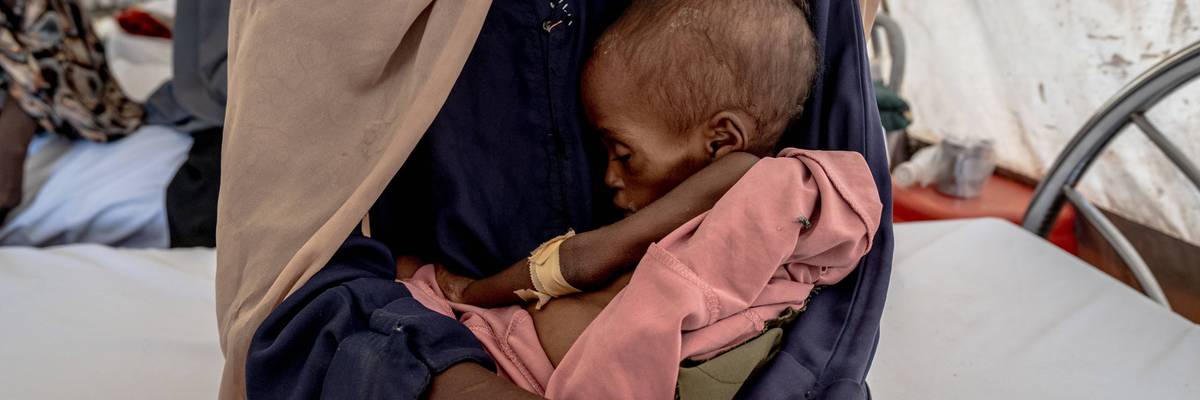


A starving Sudanese 3-year-old weighing less than 12 pounds lies inside the severe acute malnutrition ward at the Médecins Sans Frontières (MSF) Paris Hospital in Tawila, Sudan in this photo published on May 27, 2026.
(Photo by Giles Clarke/Avaaz via Getty Images)


Brett Wilkins
Jul 06, 2026
COMMON DREAMS

Demands for a ceasefire in Sudan’s three-year civil war mounted this week amid reports that more than 300 children have been killed or injured in the northeastern African nation this year alone, mostly by drone strikes.

The United Nations Children’s Fund (UNICEF) said Modaysu that “children across Sudan continue to bear the brunt of a war that is becoming increasingly deadly, with at least 330 children reported killed or injured during the first six months of 2026. Darfur and Kordofan states continued to record the highest levels of child casualties.”

“The situation in and around al-Obeid, and more broadly across North Kordofan, is particularly alarming,” UNICEF continued. “Since May 2026, drone strikes and other attacks have reportedly resulted in more than 35 child casualties in the state, including at least 18 children killed and more than 17 injured. The affected children ranged in age from just 2 months to 17 years. According to reports, drone attacks accounted for 60% of these casualties, highlighting the growing impact of this method of warfare on children and families.”

“Repeated drone strikes and shelling have also damaged civilian infrastructure, including homes, schools, health facilities, water systems, and markets; disrupted supply routes; and placed essential services under increasing strain,” the agency added. “With an estimated 500,000 civilians at risk in and around al-Obeid and across North Kordofan, any further deterioration could expose even more children to death, injury, displacement, and other grave protection risks.”

Amnesty International USA said Monday that both the Sudanese Armed Forces (SAF) and Rapid Support Forces (RSF) rebels “have committed numerous human rights violations, including deliberate attacks on civilians.”

“Ethnic targeting has resulted in assaults on non-Arab communities, with women and girls subjected to sexual violence and exploitation,” Amnesty added. “Children are not incidental victims; they are directly affected, facing forced recruitment, sexual violence, unlawful detention, torture, and a lack of medical care.”


On Monday, the United Nations Human Rights Council approved a measure proposed by five European countries—Germany, Ireland, the Netherlands, Norway, and the United Kingdom—condemning escalating RSF-led violence in and around al-Obeid.

While both the SAF adnd RSF have committed documented human rights crimes, an independent United Nations panel released a report earlier this year detailing allegedly genocidal crimes committed by RSF rebels during last October’s offensive in Darfur, where thousands of people were killed and others tortured, raped, and starved during the capture of el-Fasher.

The UN experts found that “genocidal intent is the only reasonable inference that can be drawn” from RSF’s actions.

The ceasefire demands from UNICEF and Amnesty follow similar calls from governments, including France and the United Arab Emirates, as well as other UN agencies.

On Friday, UN High Commissioner for Human Rights Volker Türk warned that “another human rights catastrophe is unfolding” in al-Obeid.


“Civilians have been subjected to siege-like conditions for 18 months, battered by relentless drone attacks as the Sudanese Armed Forces and the Rapid Support Forces battle for control over areas surrounding the city,” Türk noted.

“Some people are selling their belongings to finance their escape from the city,” he continued. “For many, the exorbitant cost of transport and constant attacks on vehicles along exit routes, make leaving impossible.”

“We have documented patterns of summary executions, abductions, torture and ill-treatment, sexual violence, and looting along the routes taken by displaced people across the Kordofan region,” Türk added. “This is not a drill. It is a red alert that needs to land on the desks of heads of state and government around the world.”

Since April 2023, Sudan’s conflict has killed at least 59,000 people, displaced around 13 million others, and fueled famine in different parts of the country of approximately 52 million inhabitants. More than 30 million Sudanese are also in need of humanitarian assistance.

Sudan’s Proxy War: Gulf Rivalries, Resource Extraction, and the Fragmentation of a State
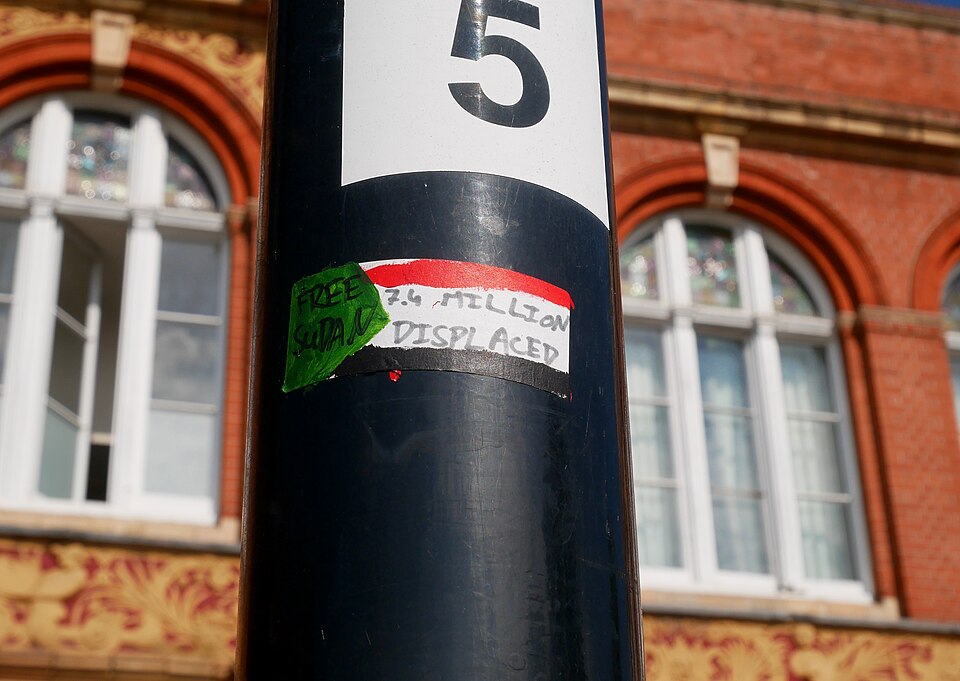
Source: Originally published by Z. Feel free to share widely.

Introduction: From Civil War to Regional Systemic Conflict

Sudan’s ongoing war is often described as an internal power struggle between rival military factions. While domestic rivalries are central to the conflict, this framing risks obscuring the broader regional and global dynamics that increasingly shape and sustain it.

What is unfolding in Sudan can also be understood as a case study in how regional competition, resource extraction, and global geopolitical interests intersect in fragile postcolonial states. The conflict is not only internal; it is embedded in wider networks of political economy and external engagement that have developed over decades.

Rather than a conventional civil war, Sudan represents a fragmented conflict environment in which domestic power struggles and external influence are deeply intertwined.

Regional Rivalries and the Externalization of the Conflict

A key dimension of the war is the involvement of regional actors, particularly Gulf states, whose competing interests have contributed to the internationalization of the conflict.

The United Arab Emirates and Saudi Arabia have both developed strategic relationships with different elements of Sudan’s military and economic structures. These relationships are often interpreted as part of broader regional competition over influence, security priorities, and access to strategic corridors along the Red Sea.

The Rapid Support Forces (RSF), which have become a central actor in the conflict, are widely reported to be embedded in Sudan’s gold economy and informal cross-border trade networks. Various investigations and reports have suggested that these networks intersect with external financial and logistical channels connected to regional actors, including Gulf-based intermediaries.

At the same time, the Sudanese Armed Forces (SAF) maintain closer institutional ties with Saudi-aligned regional security frameworks. These overlapping relationships have not created direct control over the conflict, but they have contributed to its persistence by embedding local actors within wider regional systems of support.

Sudan’s Strategic Position and the Political Economy of Gold

Sudan’s geopolitical importance is shaped not only by internal fragility but also by its location along the Red Sea corridor and its resource base, particularly gold.

Over decades of military rule and economic restructuring, state capacity has been weakened and formal economic institutions have partially fragmented. In this context, survival increasingly depends on informal extraction networks, especially in peripheral regions.

Gold extraction has become a key pillar of these networks. These flows are not purely domestic: they are integrated into transnational trade circuits, where regional financial hubs—particularly in the Gulf—play an intermediary role in processing, trading, and circulating value.

This does not imply a single centralized command structure. Rather, it reflects a fragmented political economy in which armed groups, intermediaries, and financial centers each occupy different positions within a broader system of extraction and circulation.

External Powers and the Internationalization of the War Economy

Western governments have consistently called for ceasefires and humanitarian access in Sudan. At the same time, they remain structurally connected to regional security arrangements and arms transfers that shape the broader environment in which the conflict unfolds.

This tension between humanitarian diplomacy and strategic partnership reflects a broader pattern seen in other regional conflicts, including Libya and Yemen, where external involvement has contributed to both containment efforts and the reproduction of instability.

In parallel, emerging global actors such as China and Russia have expanded their engagement in Sudan, primarily through infrastructure projects, resource agreements, and arms-related cooperation. Rather than resolving instability, these engagements have added additional layers to an already fragmented conflict economy.

From Political Transition to Military Fragmentation

The 2019 uprising against Omar al-Bashir briefly opened a period of political transition and raised expectations of civilian governance. However, the absence of durable institutional restructuring, combined with the entrenched power of military and economic networks, left the transition highly vulnerable.

The 2021 coup and the outbreak of full-scale war between the SAF and RSF in 2023 marked the collapse of this transitional process. Since then, Sudan has experienced a deepening fragmentation of authority and increasing competition over territorial, economic, and logistical control.

War as an Economic System

One of the defining features of the current conflict is the extent to which it has become economically self-reproducing.

Gold extraction, smuggling routes, taxation systems imposed by armed actors, and external financial flows have together created a war economy that operates with a degree of autonomy from any unified political project.

In this context, violence is not only a means of accessing political power. It also functions as a mechanism of economic accumulation. This dynamic makes the conflict particularly difficult to resolve, as multiple actors derive material benefit from its continuation.

Conclusion: Fragmented Sovereignty and Prolonged Instability

Sudan illustrates a broader transformation in contemporary conflict dynamics, where internal wars are increasingly shaped by external networks of influence, extraction, and finance.

Sovereignty in this context remains formally intact but is practically fragmented. The distinction between internal and external conflict has become increasingly blurred, as domestic actors are embedded in transnational systems of support and accumulation.

The future of Sudan will depend not only on military developments on the ground, but also on whether these intersecting networks of extraction and external involvement can be meaningfully restructured.

Without such a transformation, any political settlement is likely to remain fragile, and the cycle of fragmentation may persist in new forms.Email

Majid Maleki Meighani, (sometimes writing under the name Majid Maleki), is an Iranian political analyst, writer, and translator. He was imprisoned for his political activities. His work focuses on critical analysis of Iran’s labor movement, the political left, anti-imperialist critiques of geopolitics, and social movements in West Asia and the Global South. His analysis is grounded in direct fieldwork and interviews within local communities. He has translated into Persian Walter LaFeber’s Inevitable Revolutions: The United States in Central America and the collection Voices of the Arab Spring. He has been a contributor to ZNetwork, Tribune Zamane, and Akhbar-e Rooz. You can access his full body of work on his author page on ZNetwork.


Hamad Gamal: The War Was Started to Crush the Sudanese Revolution


 July 7, 2026

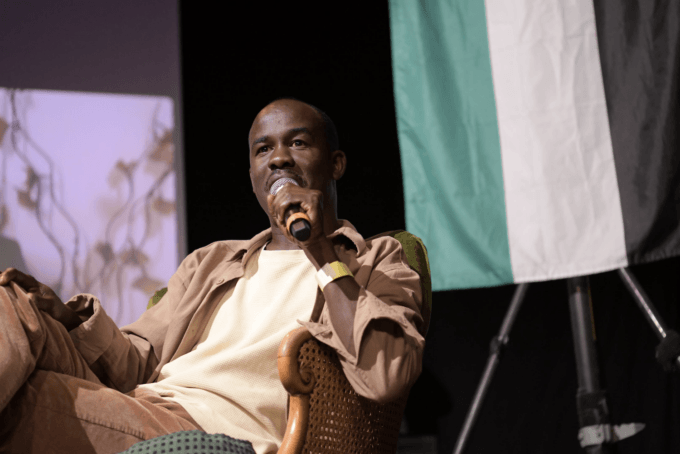
Hamad Ganale, photo by Nelson Pereira.

As the UN warns of the imminent threat of another large-scale massacre in Sudan, activists from the Sudanese democratic movement in exile denounce a war launched to end the popular revolution that began in December 2018. They argue that the war is supported by foreign powers eager to control the country’s resources and not interested in enabling a democratic transition in Sudan.

“War was the last resort chosen to crush the revolution, after several attempts to manipulate the revolutionary movement failed,” says Hamad Gamal, a Sudanese activist exiled in France.

The popular protests succeeded in overthrowing dictator Omar al-Bashir in April 2019. The army, however, remained in power, initially forming alliances with civilian parties, but ultimately regaining total control through a military coup on October 25, 2021.

“By choosing to sign an agreement with the counter-revolutionary military forces rather than pursuing the revolution to its conclusion, the Forces of Freedom and Change bear direct political responsibility,” Hamad emphasizes. “The military coup and the current war are the culmination of this flawed trajectory.”

For the Sudanese activist, the agreement reached by the military with the Forces of Freedom and Change was nothing more than a strategy to hijack the revolution. “It was at this point that we saw the first attempt to confiscate the revolutionary mobilization.”

However, the democratic forces understood that this was a move against the revolution and against the revolutionaries and did not abandon their demand for a democratic transition. A sit-in was organized in front of the army headquarters in Khartoum. But on June 3, 2019, soldiers and militiamen violently dispersed the protesters, killing more than 130 people.

“At that point, the revolutionary force agreed to sign an agreement with the army. But while the activists saw this agreement as a transition to a phase of stability, the army saw it as a new opportunity to hijack the revolutionary movement,” explains Hamad.

Determined to thwart the objectives of the democratic front and thus undermine the credibility of a civilian solution, the army realized that, despite the obstacles, civilians were achieving more or less significant results on the ground. The military then decided to stage a coup on October 25, 2021, seizing total power. “This coup triggered a second phase of mobilization. People once again took to the streets en masse to protest the coup, but also to continue the revolutionary work. This time, however, with much more radicalism, with much more determination,” underlines the Sudanese activist.

“After the failure of all attempts to discourage popular mobilization, from hijacking to obstruction and even the coup itself, the military understood that the people remained determined to resist, despite the repression, and decided to subject Sudanese civil society to the horror, to the extreme experience of war,” details Hamad Gamal. “Putting a country to fire and blood is the most effective way to stop a revolutionary mobilization.”

On April 15, 2023, war broke out between the Sudanese Armed Forces and the Rapid Support Forces (RSF), one of the militias created in the 2000s by Omar al-Bashir to suppress local rebellions, even though an agreement to integrate this paramilitary group into the army was expected. The war shattered the hopes of a civil and democratic revolution and forced many activists involved in the revolution into exile.

For Hamad Gamal, this is primarily a counter-revolutionary war, waged by two armed structures created by the dictator al-Bashir: the army and the RSF paramilitaries. It is also a proxy war, since each side in this conflict is supported by foreign powers eager to control the country’s natural resources and strategic position.

While the Sudanese army receives both military and diplomatic assistance from Turkey, the United Arab Emirates (UAE) is accused of providing military support to the RFS paramilitary militias, notably through mercenary forces. This support is linked to the UAE’s interest in controlling the Sudanese gold trade, as Dubai is a hub for gold illegally mined by the Rapid Support Forces.

Since the beginning of the conflict, the Sudanese Armed Forces and the RSF have committed numerous human rights violations, including deliberate attacks against civilians. According to the United Nations, the war has killed tens of thousands of people and displaced more than 12 million, including nearly one million in Chad. More than 30 million people are in need of humanitarian aid, and extreme famine is affecting the Darfur and Kordofan regions.

As the city of El-Obeid, the capital of North Kordofan state, has been besieged by the RSF paramilitaries for several months and violence continues to escalate, the UN High Commissioner for Human Rights, Volker Türk, issued a “red alert” on July 3, describing it as “a new human rights catastrophe” in Sudan.

El-Obeid, a city of half a million inhabitants, hosts approximately 100,000 refugees displaced by violence elsewhere in the country.

Mukesh Kapila, former UN Humanitarian Coordinator for Sudan, warned that the dramatic situation in El-Obeid could have an even more serious outcome than what unfolded in El-Fasher in 2024-2025.

El-Fasher was besieged for over a year and a half by the Rapid Support Forces before falling under their control. Civil society organizations had been warning for months about the famine gripping the city and the mortal danger faced by its inhabitants, but their pleas went unheeded by the international media. In December 2025, a whistleblower revealed that warnings about a possible “genocide” in El-Fasher had been removed from a risk assessment conducted by the British Foreign Office to protect the UAE.

The RSF militia’s capture of the city in October 2025 was accompanied by mass killings of the inhabitants, among the worst atrocities committed since the start of the war. It is estimated that over 60,000 people were killed in just a few days.

“The Sudanese people fought for universal values ​​and suffered violent repression and a war ignored by the international community due to commercial interests involving many countries,” Hamad emphasizes. “The companies whose governments participate in this neocolonial system now have a duty of solidarity towards Sudan,” the Sudanese activist concludes.

Hamad Gamal is a Sudanese activist exiled in France, Hamad Gamal is the co-founder of Sudfa Media, a Franco-Sudanese media platform created in the context of the revolutionary mobilization in Sudan. He co-directed, with Sarah Bachellerie, the documentary film “Jusqu’au bout!” which shows the efforts of Sudanese exiles to keep the revolution alive from exile.


Source: Convergence

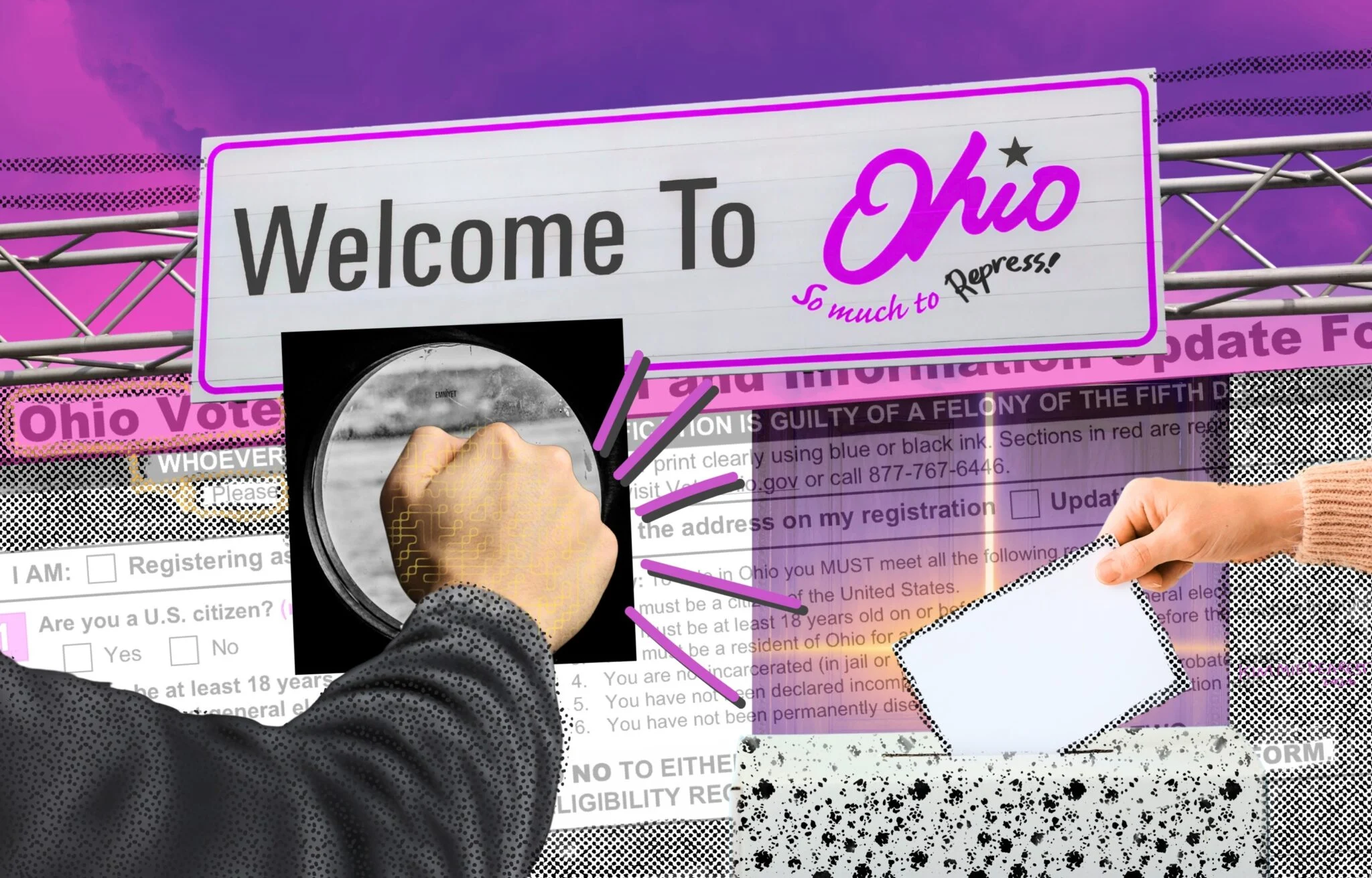
Reports say over one hundred FBI agents descended on Ohio voter registration organizers in early June. The number is the tell.

On Thursday, June 11, FBI agents searched the Cleveland offices of the Ohio Organizing Collaborative and fanned out across the state—to the homes of its leaders, its staff, and people who had done nothing more than basic canvassing. The agents carried subpoenas. They seized laptops and phones. They knocked on doors in front of children and asked everyday Ohioans whether they were committing voter fraud. A Collaborative board member put the count at more than one hundred agents.

I want to be precise about what happened here, because precision is the most damning account. The loose version of this story—they’re trying to steal the election—is both too big and too small. Too big, because there’s no evidence of a mechanism to cancel a vote that hasn’t happened yet. Too small, because it lets you treat this as a single outrage rather than what it is: a repeatable procedure, run before, run elsewhere, and run again.

This is a procedure, not an incident

Read it next to the rest of the year. In February, the Bureau raided a Georgia election hub tied to the 2020 conspiracies. Agents have opened inquiries into voting protocols in Wisconsin, subpoenaed voting records in Arizona, and sought reviews of voting machines in Puerto Rico. Prosecutors in California have gestured at the Los Angeles mayor’s race after the president suggested, with nothing behind it, that the result was rigged.

Ohio is not a departure from that sequence. It’s the next entry. And the targeting is legible: the Collaborative works in Cleveland, Columbus, and Cincinnati—the liberal anchors of a state that has otherwise trended toward authoritarian candidates, and the metros where the voters are youngest and Blackest and most underrepresented on the rolls. You don’t need a leaked memo to read that map. The map reads itself.

How you manufacture fraud from compliance

Here’s the part that requires honesty, because the regime is counting on us to be sloppy with it.

Any operation that registers voters at scale, using paid or volunteer canvassers, will generate bad forms. This isn’t a secret and not a scandal; it’s arithmetic. When you pay people per form collected—and county officials have noted that these groups do—a fraction of any large workforce will cut corners, and a few will fabricate outright. The Collaborative isn’t immune to this. In 2017, one of its paid canvassers pleaded guilty in a registration-fraud scheme. That happened. Pretending it didn’t only hands the other side the argument.

None of it—none of it—explains a hundred-plus federal agents conducting predawn visits to canvassers’ homes across an entire state, seizing devices, and interrogating volunteers on their porches in front of their kids.

Minor, self-flagged, routine paperwork errors don’t summon that machinery.

But hold the next fact next to it: In most states, including Ohio, a registration group cannot simply throw out the suspicious forms it collects. It is required to submit them, and to flag the questionable ones for election officials to catch. That’s the law working exactly as designed—the bad forms get turned in, marked, and screened out before a single fraudulent ballot is ever cast. Which is precisely why the experts keep telling you that voter fraud is vanishingly rare and that altering an actual outcome would take a massive, coordinated effort that has never once materialized.

So when federal agents seize the records of a group that did what the law requires, they’re not discovering fraud. They’re collecting the paper trail of compliance and preparing to recast it as guilt.

I strongly believe they are not investigating fraud. They’re, in a manner of speaking, manufacturing it—out of the very compliance the law demands.

The disproportion is the whole story

This is the line I’d ask you to hold onto, because it survives every counterargument the other side has.

Concede the bad forms. Concede the 2017 plea. Concede that a paid-canvass operation is an imperfect thing run by imperfect people. None of it—none of it—explains a hundred-plus federal agents conducting predawn visits to canvassers’ homes across an entire state, seizing devices, and interrogating volunteers on their porches in front of their kids.

Minor, self-flagged, routine paperwork errors don’t summon that machinery. The gap between the conduct and the response isn’t a detail of the story. It is the story. When the punishment is wildly out of scale with the offense, the scale is telling you the offense was never the point.

Here are some examples of instances when disproportionate crackdowns made the case that they were politically motivated:

The Fugitive Slave Act renditions (1850s)

The clearest early case. To return Anthony Burns, one escaped man, to slavery in 1854, the federal government locked down Boston, deployed troops and marshals, and spent a sum often put in the tens of thousands—a lot of money back then—to march a single person back into bondage past crowds of thousands. No one needed an army to recover one enslaved laborer. The army was the message—to abolitionists, to the enslaved, and to a North being told that the slavocracy could command federal force on free soil. The scale announced that the point was the legitimacy of the system, not the recapture.

The Black Codes and convict leasing (Reconstruction onward)

This is the anchor case, and the purest version of the logic. The “offenses” were vanishingly small by design: vagrancy, loitering, not carrying proof of a labor contract. The response was forced labor, the chain gang, a carceral apparatus that re-subordinated an entire emancipated population. The triviality of the trigger and the enormity of the response, taken together, tell you the offense was a pretext for restoring control over Black labor. When the “crime” can be anything, the crime was never the point.

Haymarket (1886)

Four anarchists hanged for a bombing none was shown to have committed. The evidence connected them not to the act but to their speech and their organizing for the eight-hour day. Executing the orators to punish a thrown bomb is a disproportion that points straight past the defendants to the labor movement the state actually wanted broken.

[T]he likeliest payoff—to pre-build the evidentiary theater for contesting results they don’t like.

The Palmer Raids (1919–1920)

Thousands arrested in coordinated nationwide sweeps, often without warrants or charges; hundreds of immigrants deported over the nominal offense of foreign radicalism. The dragnet was so indiscriminate that the mismatch between the procedure and any individual wrongdoing was itself the tell: the target was the immigrant left and the labor movement, with the goal of chilling everyone adjacent to them. Note how cleanly the voter fraud welded to the ‘noncitizens’ frame rhymes with this.

Japanese American incarceration (1942)

A hundred and twenty thousand people imprisoned on the “offense” of ancestry, dressed as military necessity. Here the offense was essentially nonexistent, and this was known to the government. This is the limiting case of the principle: when the response is total and the offense is null, the response is the whole truth. Race was the point.

Fred Hampton (1969) and the MOVE bombing (1985)

The two that rhyme most directly with Cleveland, because both were pre-dawn or all-out raids on a home. Hampton was killed in his bed in a raid built out of COINTELPRO’s war on Black political organizing—the nominal pretext nowhere near the scale of the operation. In 1985, Philadelphia police dropped a bomb from a helicopter onto a row house over charges that began as parole violations and weapons counts, killing eleven people including five children, and burning down sixty-one homes. You don’t bomb a city block to serve a warrant. The destruction of the block was the point—the destruction of a Black radical commune and a warning to anyone like them.

Back to Ohio: The immigration seam

There’s a second frame being stitched to the first, and it’s the one I’d watch most closely. Last fall, Ohio’s Republican secretary of state referred more than a thousand apparent noncitizen registrations to the Justice Department, along with a claim that 167 noncitizens had cast ballots across four federal elections since 2018. It’s not yet confirmed that Thursday’s search grew from those referrals. But note the choreography: as agents moved on the Collaborative, the US Attorney for the district was in Washington at a press conference announcing immigration cases.

That’s the fusion to watch—voter fraud welded to noncitizens. It’s a more durable narrative than fabricated forms, because it runs on the engine the regime already has at full throttle. If you want to know what story they’re building, watch which two fears they’re trying to braid together.

What it’s actually for, and what we do

Strip away the maximalism, and the function becomes clear enough. This action is built to intimidate the people who register voters, to chill registration in the precincts where it matters most, to manufacture a fraud narrative with the borrowed authority of a federal seal, and—the likeliest payoff—to pre-build the evidentiary theater for contesting results they don’t like. That last one isn’t speculation. It’s the 2020 playbook, started early. The investigations are the props; the contestation is the show. Could it escalate toward something worse, toward pretexts for delaying or voiding a count? It’s a tail risk worth naming. It’s not the base case, and we lose credibility if we lead with it.

Register more voters, in the same precincts, more visibly, this month. The chilling effect only works if we cooperate with it.

So we don’t take the bait. We don’t amplify the fraud frame by panicking inside it. We name the procedure for what it is—intimidation dressed as enforcement—and we make the disproportion impossible to look away from. We get lawyers to the canvassers and we don’t let a single volunteer stand on a porch alone. And we register more voters, not fewer, because the entire point of the exercise is to make us flinch.

A hundred agents isn’t a sign of strength. It’s the number you reach for when the case is thin and the clock is short. They’re telling on themselves. Our job is to make sure everyone can read it.

So here’s the work 

General resolve is not a plan. If you run a voter registration program, or you support one, here is what “not flinching” actually requires you to do, starting this week.

Every organization that registers voters needs counsel on retainer or a committed pro bono firm now, plus a one-page rapid-response protocol that everyone—staff and volunteers—has read. Put a 24-hour legal hotline number on a card and in every canvasser’s phone. The single most important sentence in this whole piece, operationally, is this one: no one talks to a federal agent without a lawyer present, ever, full stop—not to “clear things up,” not to “just answer a few questions,” not to seem cooperative. That isn’t obstruction; it’s the most basic exercise of a right, and agents are trained to exploit the instinct to be helpful. Train people to say one line: “I won’t be answering questions; I want to speak to my lawyer”—and to repeat it.

Know exactly what happens when agents arrive.

Designate, in advance, who is the on-site point person at the office and who is the backup. That person’s job: ask whether agents have a warrant, ask to see it, read what it actually authorizes—the address, the items, the scope—and confirm whether it’s signed by a judge. A subpoena is a demand for documents on a timeline and gives you the chance to respond through a lawyer; a search warrant lets them search now. You do not have to consent to anything beyond what a warrant specifies, and you should say clearly, out loud, “I do not consent to any search beyond this warrant.” Don’t physically interfere, don’t lie, don’t destroy anything—but don’t volunteer access, passwords, or statements either. Film the encounter if you safely can.

Practice good data hygiene as a standing discipline

Collect only the voter data you actually need and retain it only as long as you must. Encrypt devices and drives, use strong passcodes rather than biometrics (fingerprints, retina scans, facial recognition, etc.) where you can, keep secure backups offsite so a seizure doesn’t erase your operation, and move sensitive internal coordination onto encrypted messaging. The goal is simple: a seized laptop should yield as little as possible, and losing it should not stop your work.

Build the buddy system into the schedule, not the afterthought.

No canvasser works a door alone in a targeted area. Pair people, check in on a preset cadence, and stand up an accompaniment roster so that anyone who is visited at home—especially in front of their kids—has a trained person and a lawyer’s number within reach within the same hour. Burnout, fear, and isolation are the actual weapons here; the schedule is where you defeat them.

Stand up mutual aid across organizations before anyone is hit.

The regime’s method is to isolate one exposed group and turn a coalition into a series of private, frightened calculations. Refuse the isolation in advance: agree now, in writing, that when one organization is raided, the others show up: with statements, with legal support, with money, with bodies at the press conference. Pool a rapid-response legal defense fund across the field so no single group faces the cost alone. Solidarity that has to be invented after the fact of being targeted arrives too late.

Discipline the message—yours and your members’.

Brief your people on how to talk about a raid before one happens. Lead with the disproportion (a hundred agents, porches, children) and the lawful compliance that’s being recast as guilt. Do not repeat the fraud allegation to “debunk” it; repeating it spreads it. Don’t lead with the most catastrophic interpretation; name the documented function—intimidation dressed as enforcement—and let the facts carry it. Designate trained spokespeople so the story doesn’t get told by whoever is most rattled.

And do the thing they are trying to stop.

Register more voters, in the same precincts, more visibly, this month. The chilling effect only works if we cooperate with it. The most powerful answer to a hundred agents is a registration drive that is larger the week after than it was the week before, run by people who know their rights and know they aren’t standing on that porch alone.

If you take nothing else: get the lawyers lined up, build the buddy system, network the mutual aid before the next raid, and keep registering. That is what it looks like to make the disproportion backfire instead of work.

Scot Nakagawa is a co-founder and co-director of the 22nd Century Initiative, a national strategy and action hub in the fight to defeat white nationalism and authoritarianism. Scot is also the founder of The Anti-Authoritarian Playbook, an online newsletter to the frontline of the growing movement to win a truly people-centered, pluralistic, multiracial and feminist democracy in the U.S.


This article was originally published by Convergence; please consider supporting the original publication, and read the original version at the link above.