Thursday, July 09, 2026


Ice baths, saunas and hypoxic chambers: inside Erling Haaland's routine

Norway's Erling Haaland (9) leads the team as they participate in a viking boat row after the World Cup round of 16 soccer match between Brazil and Norway.
Copyright AP Photo/Frank Franklin II


By Marta Iraola Iribarren
Published on


“I feel tired, but I tell my body I’m not,” that’s a motto of Erling Haaland, who leads Norway towards a first World Cup quarter-final. He shared his great performance secrets that include ice baths, fatty steaks and enough sleep with fans on YouTube before the World Cup.

Over 1,200 players are participating in the men’s World Cup 2026, which is taking place in Canada, Mexico and the United States.

With 92 games already played, however, some players are outshining others. This is the case with Erling Haaland. The Norwegian forward scored two goals against Brazil to book his country's place in the quarter-finals for the first time, one step closer to the final on 19 July.

“Maybe this will write history in Norway,” Haaland said after the game. “Everyone just needs to enjoy themselves. This is just an insane day. It’s one of the most insane days in Norwegian history. Just enjoy it, embrace it and enjoy the moment.”

He has been a key part of the national team since his debut in 2019.

What is his secret? Part of the answer may lie in his background: Haaland comes from a sports family and both his parents were professional athletes.

Alf-Inge Haaland is a former professional footballer with an extended career both in Norway's national team and at English clubs. Gry Marita Braut was a national champion heptathlete, competing at the top level in Norwegian track and field.

But genetics is only part of the story, Haaland points to a disciplined daily routine, built around training, recovery and nutrition, as the foundation of his form.

“You need to be a 24/7 athlete; it's not just the two hours of the game,” Haaland said on his YouTube channel.

“Our bodies can handle so much more than we think; a lot is in the mind,” he added. “I feel tired, but I tell my body I’m not. It’s a psychological thing.”

For Haaland, the 90 minutes of football are the end result of everything else he does during training.

“It’s how you sleep, how you prepare yourself for the next training, how you prepare yourself for the next game, how you recover from the game,” he added. “It’s a whole package.”

As with any professional footballer at such a high level, Haaland follows a tight routine designed to get the maximum out of his body.

Pro training conditions

Haaland lives in Manchester, where he plays for Manchester City and won the Premier League twice, in 2023 and 2024.

In between stretches, strength exercises and cardio, flexibility is a key factor in Haaland’s training.

“I have a natural good flexibility in my groins and hips, which is so important for me to keep, because how do you score these goals? We need to have good mobility or flexibility to score these crazy goals,” he added.

As part of his training at Manchester City’s facilities, he performs some of his exercises in a hypoxic chamber.

This chamber is designed to create a controlled low-oxygen environment that replicates higher altitudes. It can also increase heat and humidity levels.

According to Haaland, training in these conditions helps him recover faster between sprints during matches.

“You need to find what’s good for you, because everyone is different,” said Haaland. “The important thing is to move your body and stay active.

Even 10 or 15 minutes of stretching or mobility can make such a big difference, he noted.

Importance of recovery

The same way the game doesn’t start with the first kick, it doesn’t end with the final whistle.

For Haaland, recovery is essential to his routine. An ice bath and sauna are part of his post-training regime, something he tries to do four or five times a week.

Many athletes take ice baths as a way to soothe muscle pain and alleviate soreness.

In the video, Haaland also uses red light — a treatment that uses low levels of red light to reportedly improve your skin’s appearance, like reducing wrinkles, scars, redness and acne —which he says compensates for the lack of sunlight that he gets in Manchester.

There is ongoing research to determine whether red light treatment is effective. Some early studies suggest it might help certain skin problems such as acne and psoriasis, but the evidence is still limited.

Haaland has also stated in multiple interviews that sleep is the most important thing in the world and that a healthy sleep schedule is non-negotiable.

‘Simple nutrition’

Another important aspect of Haaland's daily routine is food and nutrition. In the video documenting a typical day, he begins the morning with a coffee containing raw milk and maple syrup.

Raw milk is milk that has not been pasteurised, a process that removes disease-causing germs by heating milk to a high enough temperature for a certain length of time.

It is not recommended by public health authorities and its sale is strictly regulated.

Good nutrition is essential for any high-performing athlete.

"I like to read and try out new things. Why not? For my life and also my career, why not try to optimise some easy small things as much as I can?" Haaland added.

He said that "nutrition is simple". He prefers a straightforward breakfast and fatty steaks. "I love food, and I said it before; I live to eat food no matter what happens in the day."


How appeal court verdict against Le Pen puts her back in the running for 2027

A French appeals court this week upheld Marine Le Pen's conviction for embezzling funds from the European Parliament and sentenced her to house arrest – something the far-right leader previously said would rule her out of France's 2027 presidential race. Yet Le Pen still has one last legal recourse to overturn her conviction and, pending that appeal, remains free to hit the campaign trail.


Issued on: 09/07/2026 - RFI

Marine Le Pen of France's far-right National Rally at a party event in Liévin, northern France, on 4 July 2026. © Tom Nicholson/Reuters

Despite maintaining the guilty verdict against Le Pen, Tuesday's ruling by the Paris court of appeal worked in the politician's favour.

It shortened a ban on public office that would have kept the leader of the far-right National Rally (RN) – formerly the National Front – out of next year's presidential election and cleared the path for a second appeal that effectively puts her sentence on hold.

Le Pen was convicted last year of participating in a fake jobs scam at the European Parliament which saw more than €2.8 million of EU funds fraudulently diverted to the RN's coffers between 2004 and 2016.

A lower court had sentenced her to a four-year prison sentence, a fine of €100,000 and, crucially, a five-year ban from public office.

Effective from March 2025, it would have put the 2027 election definitively out Le Pen's reach.

But the appeals court this week shortened the ban to 15 months – plus 30 suspended – starting from her conviction. That period expired at the beginning of this month.

Le Pen, who had been preparing her protégé Jordan Bardella to stand in her place, announced her candidacy the same evening.


House arrest

The biggest legal obstacle that remains is Le Pen's custodial sentence.

The appeals court shortened it from four years to three, with two suspended. The remaining year can be served under house arrest, with an electronic ankle monitor.

That sentence would severely limit Le Pen's movements, with a judge's approval required to travel or even leave her home outside designated times.

Before the ruling, Le Pen indicated she would not run for president under house arrest, telling the LCI news channel: "I can't be dependent on a judge to authorise me to go hold a campaign rally... or to visit a market."

Yet Le Pen, who denies any wrongdoing, has announced that she will appeal her conviction again in France's highest court, the Court of Cassation, which has the power to uphold the verdict definitively or to order a new trial.

Until the court rules – which typically takes around a year – her sentence will not be enforced.

"I had said that I would not campaign while wearing an electronic ankle monitor, but since I have the option to appeal... and since an appeal to the Court of Cassation suspends the effects of the ruling, I will therefore campaign without an ankle monitor," Le Pen told broadcaster TF1 after Tuesday's ruling.

Marine Le Pen leaves the Paris Court of Appeal on 7 July, after receiving a lighter sentence. © AFP - DIMITAR DILKOFF


Legal gamble

The Court of Cassation "may be able to issue its ruling no later than early April 2027", it said in a statement on Wednesday, while cautioning that the timeline depended on multiple factors and could be extended.

The first round of France's presidential election is set for 18 April, with a run-off on 2 May.

That raises the possibility that, if the court rejected Le Pen's appeal, she could find herself under house arrest at a crucial point in the campaign.

Her lawyer Rodolphe Bosselut, speaking to Radio France, admitted there was "a risk" that Le Pen's campaign could be disrupted, but said the sentence could be adjusted by the specialised judge responsible for deciding how it is applied.

The process of setting the terms of house arrest and fitting an ankle monitor often takes several months.

Alternatively, if the court orders a new trial, it is unlikely to take place until after the vote.

If she were to be elected president, Le Pen would benefit from immunity from prosecution for as long as she remained in office.

"I'm not playing for time," she told reporters as she kicked off her campaign in the Loire town of La Flèche on Wednesday.

Le Pen's opponents argue the embezzlement charges should disqualify her, if not legally then morally. Socialist MP Boris Vallaud called her "a delinquent" – while centrist presidential candidate Édouard Philippe pointed out that Le Pen has previously called for politicians convicted of corruption to be barred from holding office "for life".


Dogs and cats at work: Yes or no? Here are Europe's most pet-friendly countries

Copyright Euronews
By Alessio Dell'Anna 
Published on

In a new survey of 16,000 workers, more than half would consider switching job for a dog-friendly company.

To each their own. Some parents need to bring their children to work, while others...their dogs.

Whether that's going down well with the management largely depends on the country.

For example, the UK really seems to have a soft spot for pets.

An analysis of online job openings by career platform Flexa revealed that around two-thirds of vacancies (64%) on the British market claim that dogs are allowed.

And that seems to have quite a few benefits. Bringing dogs to the office might reduce stress and anxiety, encourage better social interaction and even improve cognitive powers, according to the study “Dogs in the Workplace: A Review of the Benefits and Potential Challenges.

Charlotte the dog shares a tender moment with a woman at the Palm Dog award ceremony in Cannes, southern France, Friday, May 22, 2026 AP/Andreea Alexandru

Germany has the second-highest number of dog-friendly workplaces, with nearly half of job listings saying pets are welcome (45%). The US ranks third (42%), followed by Australia (32%), then France (28%), the Netherlands (28%) and Spain (27%). Ireland is last, with only 17%.

Could having strict pet policies make a company less competitive? It might. Mars' 2026 Workplace report surveyed 16,000 workers and found that more than half would consider switching jobs if pets were allowed at their new workplace.

The most eager to switch jobs if their furry friends are allowed are the Romanians (65%), followed by Greeks (64%), Swiss (64%) and Hungarians (63%).

Meanwhile, the French (49%), Belgians (49%) and Spaniards (49%) are among the least concerned, with fewer than half saying that pets would influence their decision to switch jobs.

How to make a workplace pet-friendly?

That's certainly an important factor for employers, who also have to consider the disadvantages.

Some workers may be scared of dogs or allergic to pet hair, for example.

Additionally, pets can cause damage to personal property, so businesses might have to obtain specific insurance or pay additional fees to allow animals on the premises.

However, for those businesses planning to make their space more pet-friendly, the study suggests creating designated "pet-free" and "pet-friendly" zones, and providing "essential amenities like outdoor relief areas, hydration stations and outdoor green spaces", as well as conducting a thorough safety walkthrough to remove any hazards – from loose cables to toxic office plants.

The 'canine CV' as imagined by Mars
The 'canine CV' as imagined by Mars Mars 2026 Workplace Report

The most peculiar tip is perhaps "canine CVs” introducing the participating pets and their personalities (i.e. “loves a good ear scratch” or “hates the doorbell”).

When it comes to actual pet-friendly policies, the most welcome ones by the employees are flexible work schedules (62%), pet insurance as part of employee benefits (59%), financial support for pet-care when travelling for work (58%), on-site pet-care (56%) and paid leave for a new or sick animal (55%).

Ugandan farmers take TotalEnergies' pipeline to UK court
 
Four Ugandan farmers filed a case against the East African Crude Oil Pipeline (EACOP) at the UK's High Court on Tuesday, seeking to have Ugandan constitutional, environmental and climate law applied to EACOP Ltd, the UK-registered company financing the project

Issued on: 08/07/2026 - RFI

Police apprehend a Ugandan activist during a protest against the East African Crude Oil Pipeline (EACOP) plans in Kampala, Uganda, on 15 September, 2023. © Reuters


Rights NGO Avaaz, which is supporting the case, has called it "first-of-its-kind" litigation against the $5.6 billion project, led by French energy giant TotalEnergies, which holds the majority stake.

Due to begin operating in 2027, EACOP would become the world's longest heated pipeline, running 1,443km (897 miles) from Uganda's oilfields near Lake Albert to the Tanzanian coastal port of Tanga.

The claim was filed before the pipeline starts operating and asks the court to enforce Uganda's legal protections against a company incorporated in England and Wales.


EACOP has already faced several lawsuits in France, where a Paris court ruled last week that TotalEnergies was liable for emissions generated by its clients, a decision hailed as a landmark for climate law.

A 'global test case'

The claimants argue the project would affect more than 100,000 people through land acquisition, and that it crosses critical freshwater systems and protected habitats.

"The case seeks remedies that could go to the heart of the project's commercial viability, including an injunction to stop oil being transported through the pipeline," Avaaz said in a statement earlier this year.

The NGO said it believes this is the first time Ugandan environmental law has been brought before a foreign court, describing EACOP as a "global test case for whether new fossil fuel megaprojects can still be forced through despite mounting legal, financial, climate and community opposition."

Claimants say a successful ruling could ultimately prevent the pipeline from becoming operational.

Company denies harm

TotalEnergies maintains that "strict measures have been taken to avoid, mitigate and offset" the project's environmental impact, pointing to efforts to restore forest and wetland areas and boost biodiversity nearby.

Ugandan opponents of the pipeline, meanwhile, have told local media they have faced intimidation and arrest by police in the area, where the project is seen as a political priority.

The UK claim alleges that the pipeline violates Uganda's constitution and breaches the country's environmental and climate legislation.


Belgium has the worst forever chemicals record in Europe: Are they breaching citizens' human rights?

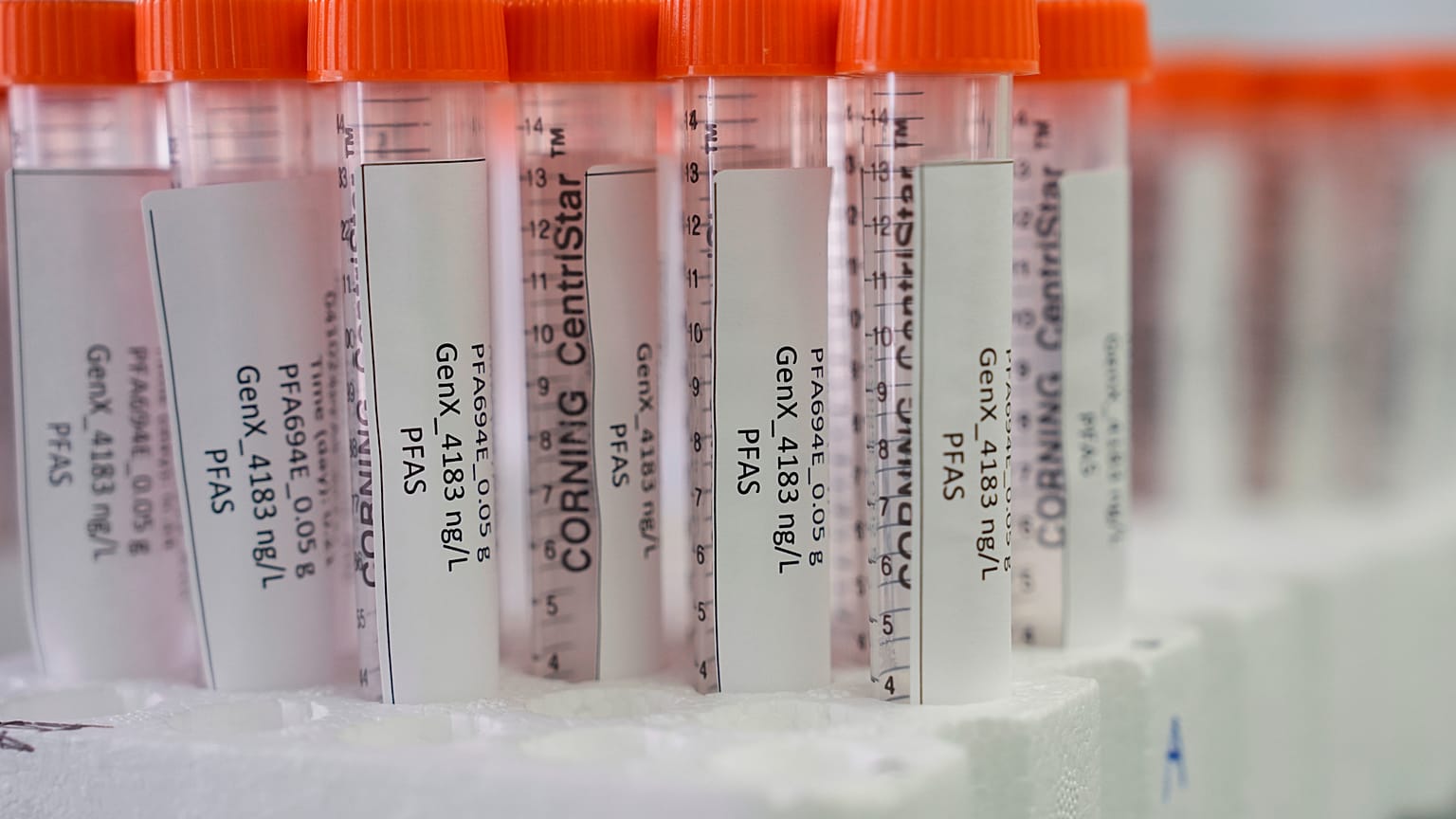
Vials containing samples of forever chemicals, known as PFAS, sit in a tray, April 10, 2024, at a U.S. Environmental Protection Agency lab in Cincinnati
Copyright AP Photo/Joshua A. Bickel, File

By Alice Carnevali
Published on


Environmental NGO ClientEarth argue Belgian authorities have not acted despite knowing about high levels for years.

Lawyers have filed a complaint against Belgium over its failure to protect its citizens’ from the significant health risks of forever chemicals.

ClientEarth has filed a human rights complaint with the European Committee of Social Rights (ECSR). Belgium has the highest levels of forever chemicals (PFAS) of any European country.

“Not only is there contamination for a long time, but we noticed that authorities have had information about this contamination for years, if not decades, and that very little has been done,” says Hélène Duguy, environmental lawyer at ClientEarth.

The NGO ClientEarth has a strong track record of filing legal procedures against governments and companies on environmental issues. This is the first time they’ve addressed the ECSR, a Council of Europe’s monitoring body that judges whether member states are respecting the European Social Charter. “We chose it because we know that this committee has a very big enforcement power,” Duguy tells Euronews Earth.

Life in Zwijndrecht: A European PFAS hotspot trying to tackle PFAS | Euronews Tech Talks

A half-baked roadmap’: What’s missing from the EU and UK’s so-called crackdown on forever chemicals

Belgium: The major European PFAS hotspot

PFAS, also known as forever chemicals, are a group of more than 10,000 man-made chemicals widely used by the industry for their water, stain, and grease-resistant properties. They’re also found in pizza boxes, non-stick pans, menstrual pads and outdoor clothing.

They have been linked to multiple health risks such as certain types of cancer, metabolic diseases and fertility issues.

Belgium has the highest levels of PFAS pollution in Europe, according to The Forever Pollution Project, which collected data and mapped PFAS pollution across the continent.

Major Belgian sites affected by PFAS pollution include Zwijndrecht, a town near Antwerp heavily impacted due to its proximity to the multinational 3M plant, and Chièvres, near the French border, where contamination has been linked to a nearby air base. The map also shows that Brussels is significantly impacted by PFAS pollution, particularly in the areas around Anderlecht and Uccle.

ClientEarth’s complaint is based on examples like Zwijndrecht, where public agencies knew about the PFAS issue years before the scandal erupted in 2021.

Members of the Flemish government, including Bart De Wever, the then-mayor of Antwerp and now Belgium’s Prime Minister, were informed of the contamination as early as 2017 but took no action.

As far back as the early 2000s, 3M and Flemish agencies had discussed the PFAS pollution in the area near the plant, but underestimated the extent of the problem.

What are the health risks of forever chemicals?

PFAS are associated with several health conditions. In 2023, the World Health Organization classified perfluorooctanoic acid (PFOA) as carcinogenic to humans and perfluorooctanesulfonic acid (PFOS) as possibly carcinogenic to humans.

These two PFAS are banned in the EU, but because they can take hundreds of years to decompose they are still present in soil, water, and the blood of people in many contaminated areas across Europe.

Cancer is not the only health hazard associated with PFAS. “These compounds are associated with various metabolic diseases like diabetes, decreased fertility, obesity,” Philippe Grandjean, professor of environmental medicine at the National Institute of Public Health in Copenhagen, told Euronews Earth.

Grandjean highlighted that PFAS not only pose a risk to adults currently exposed to them, but also to future generations.

“PFAS will affect the health of the father's semen, that is the semen’s quality, and PFAS will increase the risk of infertility or involuntary abortion,” he explained. “PFAS will pass the placenta, and therefore the mother will share her PFAS burden with her foetus, and third thing is that PFAS are excreted in human milk,” he added.

All these health risks, according to Grandjean, should therefore act as important drivers for governments to invest in prevention.

How forever chemicals became a human rights issue

It is not the first time that PFAS pollution has been linked to human rights violations. In 2024, United Nations experts called PFAS pollution generated by DuPont and Chemours in North Carolina a human rights issue.

Legal actions on PFAS pollution are ongoing across Europe, with environmental NGOs and residents suing France over its failure to tackle PFAS pollution in May 2026. A decision is expected in 2027.

“We really want to have a complaint that supports and is complementary to those [European] actions,” Duguy explains.

“PFAS is not only an environmental issue, it’s also very much a human issue and governments and public authorities have a duty to protect those rights,” she continued.

In a press release, ClientEarth noted that the ECSR is expected to decide on the admissibility of the complaint in 2027 and a final decision is estimated in two to three years.

With this complaint, ClientEarth hopes to spark concrete changes in Belgium’s PFAS regulation.

Specifically they want Belgium to ban all forever chemicals and provide solutions to affected communities. “Those measures are, for example, making sure there is systemic biomonitoring of people, specifically vulnerable populations like children or pregnant women. But it's also starting to remediate and decontaminate, which is something that's still very slow in Belgium,” Duguy told Euronews Earth.

Cleaning up PFAS pollution, however, is incredibly complicated. According to a study published on Monday (6 July) in the Environmental Science: Processes and Impacts journal, even if Europe invested €100 billion a year in remediation, it would remove a tiny fraction of forever chemicals from the environment.


North Macedonia’s rare pink ruby gets protected status in push for global recognition

North Macedonia’s rare pink ruby gets protected status in push for global recognition
The distinctive pink-coloured corundum known as the Macedonian ruby is found in the wider Prilep region. / IntelliNews
By Valentina Dimitrievska in Skopje July 9, 2026

The story of the Macedonian ruby begins in a small jewellery store in the heart of Skopje, where one gemstone enthusiast spent years trying to convince the public and institutions that the country possessed a unique geological treasure.

Dean Skartov-Deko, a jewellery maker and gemstone expert who says he founded the Macedonian ruby business, has spent decades promoting the rare pink-coloured corundum found in the country.

After several years in Italy studying gemstone cutting, he opened his jewellery store in Skopje in the early 2000s. His laboratory for cutting Macedonian rubies started operating in 2004, followed by the public promotion of the gemstone in 2006.

The atmosphere in the shop reflects the personal connection many people have developed with the stone. The woman working there spoke with enthusiasm about gemstones and the Macedonian ruby, describing it not only as a unique natural stone but also as a symbol of love and forgiveness.

Asked whether foreign visitors were familiar with the stone, she said many were, noting that customers often leave messages in the shop’s guest book and, years later, return to read what they wrote during previous visits.

"In 2011-2012, we began to ask the state to legally treat this business," Skartov-Deko told IntelliNews, describing the protection of the gemstone as a prestigious activity and an important step for the future of the industry.

Today, he estimates that around 10 jewellery stores in North Macedonia sell Macedonian rubies or are involved in their processing.

For Skartov-Deko, the gemstone’s value lies not only in its rarity but also in its origin. "It is the only ruby originating in Europe," he says, noting that other rubies are mainly sourced from Africa, Asia and South America.

The decision by the state to protect the Macedonian ruby as a geographical indication marks a new chapter for the gemstone, opening the way for closer cooperation between institutions and businesses. A collection of Macedonian rubies is now planned to be exhibited at the Ministry of Energy, Mining and Mineral Resources.

Skartov-Deko believes that official recognition could help expand the sector, create opportunities for more jewellery workshops and eventually lead to Macedonian ruby stores opening in cities across the country.

From hidden treasure to protected brand

Now, North Macedonia is taking the first formal step towards turning one of its rarest geological treasures into a recognised national brand, with the protection of the Macedonian ruby as a geographical indication expected to pave the way for controlled promotion, stronger market recognition and future economic opportunities.

While the country has long been known among geologists and collectors for the distinctive pink-coloured corundum found in the wider Prilep region, officials say the priority is no longer simply promoting the gemstone but ensuring that every stone marketed as a Macedonian ruby can be traced back to its geological origin.

According to the Ministry of Energy, Mining and Mineral Resources, protecting the geographical indication is "the first and necessary step" for the proper valuation, presentation and promotion of the gemstone on both domestic and international markets.

Rather than launching an immediate global marketing campaign, the ministry plans to build the product's reputation gradually, beginning at home.

"The domestic market should be the first and main promotional space, because it is here that the product's recognition, trust in its origin and understanding of its value should be built," the ministry said in an e-mailed statement to IntelliNews.

Institutional promotion, cooperation with artisans and jewellers, tourism initiatives, museum and educational exhibitions, as well as the use of the Macedonian ruby in official promotional activities are among the measures envisaged to establish the gemstone as a recognisable national product.

Only after a credible domestic identity has been established does the ministry envisage expanding promotion abroad.

International marketing will be developed gradually through professional gemological, mineralogical, jewellery, tourism and diplomatic channels, with European and other markets showing interest in natural minerals, unique semi-precious stones, handcrafted jewellery and products with protected geographical origin identified as the initial targets.

A gemstone unlike traditional mining products

Unlike precious stones extracted through dedicated mining operations, the Macedonian ruby has a rather unusual origin.

"The Macedonian ruby is not a classic industrial exploitation of an independent mineral raw material, but a corundum material that occurs as an associated mineral occurrence in the dolomite and calcite-dolomite marbles of the wider Prilep region," the ministry explained.

As a result, the material is typically discovered during regular marble quarrying activities rather than through dedicated ruby mining.

This distinction also explains why there are currently no official statistics on companies or individuals involved in its extraction and sale.

Instead of industrial production, the process involves collecting, separating, recording, classifying and processing naturally occurring corundum material. Marble companies may encounter the stones during routine operations, while suitable samples can later be processed by artisans and specialised stone processors.

Until now, there has been no comprehensive system for recording, classifying or tracing the material through the supply chain.

Under the new geographical indication framework, however, only authorised users whose material can be verified and traced to its origin will be entitled to market products under the name "Macedonian ruby". 

Small volumes, bigger ambitions

The ministry acknowledges that production remains extremely limited. "There is no officially established, organized and statistically monitored annual production of Macedonian ruby, in the sense of classical industrial production," it said.

Based on consultations with craftsmen, processors and others familiar with the material, the current annual volume of collected or purchased corundum is estimated at around 100-200 kg.

The ministry believes that, once a formal reporting and traceability system is introduced, "the future annual recorded volume could reach approximately 250-300 kg of corundum material". However, officials stress that these figures should not be interpreted as future production capacity but rather as an indication of improved reporting.

"It is particularly important to emphasise that not every collected, purchased or processed sample can automatically be treated as a 'Macedonian Ruby' product in terms of the geographical indication," the ministry said. "For this, it is necessary to determine the origin, to have traceability, to document the processing stages and to carry out expert control."

Building value through authenticity

For now, the ministry is cautious about forecasting the commercial impact of the initiative. Rather than promising immediate gains in exports or investment, officials describe the geographical indication as laying the foundation for future market development.

The expected benefits include greater consumer confidence, protection against misuse of the name, stronger development of artisanal jewellery production, increased tourism appeal and wider recognition of North Macedonia's geological heritage.

"The protection of the geographical indication creates prerequisites for positive economic effects," the ministry said, adding that its precise impact on exports, investments, employment and local economic development will require separate economic and market analyses.

For a gemstone produced in only modest quantities, the strategy is less about increasing volume than about increasing value. By linking every certified stone to its unique geological origin in the Prilep region, North Macedonia hopes the Macedonian ruby will earn recognition not only as a mineral curiosity but as an authentic national product whose rarity becomes its greatest commercial strength.

Could Geoengineering Work To Tamp Down Super El Niños?

El Niño on June 8, 2026 as represented by sea surface height. Image: NASA


July 9, 2026 
By Eurasia Review


With an anticipated “super” El Niño looming, a new study led by UC San Diego’s Scripps Institution of Oceanography considers whether society could use a weather-altering technique as a tool to mitigate the floods, extreme heat and other events that El Niño would bring.

An attempted real-world field test could lead to disastrous unintended consequences but the “Black Summer” bushfires that scorched Australia in 2019 and 2020 served as a “natural experiment.” The smoke that wafted into the atmosphere was filled with reflective, cloud interacting aerosols akin to those used in a geoengineering method called marine cloud brightening.

Previous research by one of the study co-authors found that the smoke-brightened clouds throughout the southeastern Pacific Ocean appeared to play a key role in creating global La Niña-like weather patterns. The effect was compelling enough that the team led by Scripps Oceanography researchers Kate Ricke and Jessica Wan used a seasonal forecasting model to investigate what would have happened if a similar event had occurred before a “super El Niño” instead. The results suggest that this might be an instance where geoengineering is worthy of serious consideration, the authors said.

“As long-term anthropogenic warming and short-term natural variability often compound to produce extreme weather events, our findings suggest it may be worth considering interventions which target natural variability, rather than the forced response to greenhouse gases,” said the authors in the study released July 8 in the journal Science Advances. “Such an approach could result in similar physical risk reduction with shorter duration interventions that carry less sociotechnical risk than a sustained deployment.”


The study appears in the journal Science Advances.

Geoengineering — the altering of climate by making clouds brighter, the oceans more greenhouse gas-absorbent or other means — has been proffered as a solution to slow the pace of global warming for decades but is always accompanied by controversy. Scientists and environmental agencies cite the potential for such methods to make things worse in ways not easily predicted. Entrepreneurs seeking to build a new industry have pushed for real-world testing and have quietly done so in a few regions of the world.

Ricke, a climate scientist with appointments at Scripps Oceanography and UC San Diego’s School of Global Policy and Strategy, is usually firmly in the camp of scientists who urge caution, saying much more research needs to be done to make an adequate risk/reward analysis. This case is not ordinary, she said. Applied to El Niños like the one forming now, geoengineering could be used temporarily as a tool to help society mitigate specific events nearly guaranteed to produce significant damage. Economic analyses have shown that recent large El Niños cost society trillions of dollars in damage, the authors note.

Strategic marine cloud brightening could be added to an arsenal that already includes flood control and other measures.


The rapid-response nature of such an intervention contrasts with geoengineering schemes that address human-caused global warming but entail a need for international cooperation to manage them over years or decades, Ricke and Wan said.

“One of the biggest social concerns around geoengineering is the fact that if we use it to reduce long-term climate risks, we have to deploy it continuously for an indefinite period of time,” said Wan, now a postdoctoral researcher at the University of Chicago who performed the research while she was a graduate student in Ricke’s lab. “If we could target natural variability, we could get some of the benefits of geoengineering without having to employ it indefinitely.”

Ricke and Wan say this analysis wouldn’t have been possible without a 2023 study led by John Fasullo of the National Center for Atmospheric Research (NCAR) in Boulder, Colorado. (Fasullo is also a co-author of this paper.) Fasullo’s team charted the effects of the bushfire smoke that mixed with clouds over the southeastern Pacific Ocean. Another research team had earlier found that the fires emitted a record-breaking amount of aerosols, an effect on par to that from volcanic eruptions.

The reflective particles in that smoke brightened the clouds, increasing the amount of solar radiation bouncing back to space and altering the atmosphere’s circulation, lessening how much El Niño-fueling heat made it to the lower atmosphere. The team also found that it enhanced the La Niña that formed in 2020.

“It was the key breakthrough to this becoming a viable research question,” said Ricke. “Without that validation opportunity, I don’t think our findings would be so credible.”

The team modeled what would happen if — instead of “natural” cloud brightening from smoke during La Niña — deliberate marine cloud brightening were deployed in the Southeast Pacific during major El Niños that originated in 2015 and 1997. The simulation suggested that the targeted marine cloud brightening would indeed attenuate its effects, becoming more effective the earlier in the El Niño event they were introduced. If deployed over the central Pacific Ocean, marine cloud brightening could increase the cooling and drying effects associated with La Niña by more than 40%.


The researchers said they are not aware of any proposals to test this on the El Niño brewing now, but as research progresses, actual geoengineering schemes could be considered by government-level decision makers in the future.

“It’s a different way of thinking about geoengineering,” said Ricke. “We need to understand a lot more, but if there is a way to use this in addition to the risk reduction tools to mitigate El Niños, why wouldn’t we consider it?”

Besides Wan, Ricke and Fasullo, study co-authors are Nan Rosenbloom and Chih-Chieh Chen of NCAR.

The National Science Foundation, NASA, the U.S. Department of Energy and NOAA supported the research.


Uzbekistan expands anti-desertification drive with 1.27mn-hectare reforestation plan

Uzbekistan expands anti-desertification drive with 1.27mn-hectare reforestation planFacebook
By Mokhi Sultanova in Tashkent July 8, 2026

President Shavkat Mirziyoyev has approved proposals to strengthen Uzbekistan's efforts to combat desertification between 2026 and 2030 and launch the Green Samarkand initiative aimed at transforming the city into a climate-resilient urban centre.

The proposals, reviewed by the president, come as Uzbekistan faces mounting environmental pressures linked to climate change, water scarcity and land degradation. 

Around 80% of the country's territory consists of desert or semi-desert landscapes, with soil salinisation, shifting sands and dust storms posing growing risks to agriculture, public health and economic development.

The government noted that the strategy for 2026–30 will focus on restoring ecosystems while creating new economic opportunities through what it described as a "desert economy" model.

Under the plan, forests will be established or restored across 1.27mn hectares, while protective forest belts will be planted on 16,000 hectares of desert, mountainous and foothill areas. 

Authorities also intend to create 10,000 hectares of new green cover in Surkhandarya region and establish an 84km "green wall" along border areas of Syrdarya region.

The initiative builds on existing reforestation programmes, including efforts to stabilise the dried seabed of the Aral Sea. More than 2mn hectares of forest plantations have already been established on the former seabed, while the nationwide Yashil Makon (Green Nation) programme has planted more than 1bn trees and shrubs since its launch, increasing Uzbekistan's green coverage from 8% in 2020 to 14.3% in 2025.

Mirziyoyev noted that desert regions should be viewed not only as an environmental challenge but also as a source of economic growth. 

The proposed desert economy strategy includes developing nurseries for desert plants, expanding cultivation of salt-tolerant crops, increasing pasture productivity and supporting livestock farming, ecotourism and scientific research.

Plans also include establishing desert plant nurseries in Karakalpakstan, creating pistachio plantations in the Babatag area, expanding halophyte gardens and developing a regional bank of drought-resistant plants and seeds. Authorities aim to attract international financing and private investment to support the projects.

The proposals also call for stronger regional cooperation among Central Asian countries, including expanding the activities of the Central Asian Regional Research Centre for Combating Desertification and Developing the Desert Economy, increasing projects under the regional Green Shield programme and preparing a regional strategy on desertification through 2040.

Separately, the government presented the Green Samarkand initiative, which aims to transform the historic city into a climate-resilient urban centre by 2030.

The programme sets environmental targets including preventing the release of 51,200 tonnes of air pollutants, halving concentrations of PM2.5 and PM10 particulate matter, reducing construction-related dust by 80%, cutting vehicle emissions by 50% and increasing green space to an average of 30% across populated areas.

A dedicated Yashil Samarkand Project Office will be established to coordinate implementation across urban planning, transport, construction, tourism, industry and municipal services.

The strategy also introduces stricter environmental standards for new construction, requiring energy- and water-efficient technologies, waste sorting and recycling systems and compliance with green building standards.

Transport reforms include the purchase of 50 electric buses, installation of 150 new traffic lights and a commitment to transition public transport and taxi services to electric vehicles by 2030. 

Authorities also plan to introduce a Park & Ride system, expand pedestrian-friendly tourist areas and gradually reduce private vehicle access to the city centre.

Infrastructure projects include the construction of at least four artificial lakes and reservoirs in Samarkand, development and restoration of 319km of irrigation canals and creation of a 102.7km green belt covering 3,532 hectares around the city's New Grand Ring Road.

The government also plans to develop a 300-hectare Green City Samarkand district featuring residential, commercial, tourism and public facilities built to international sustainability standards.

Industrial facilities will be required to adopt best available technologies, digital environmental monitoring and "Zero Visible Emission" systems, while eight high-risk industrial enterprises are expected to be relocated outside the city.

Additional measures include introducing a zero-waste management system, developing carbon reduction targets for 2030 and 2035, launching climate finance and environmental monitoring platforms and promoting biodiversity through new tourism and conservation initiatives.

Officials said the programme is intended to position Samarkand as Central Asia's capital of green investment and innovation.