Tuesday, June 02, 2026


Genco Rejects Third Offer from Diana Two Weeks Before Shareholder Meeting
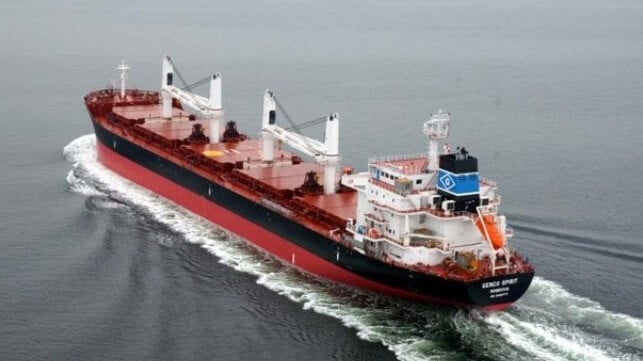
Genco dry bulk vessel
Genco again rejected Diana's offer as inadequate leading to a showdown at the upcoming shareholder meeting (Genco file photo)

Published Jun 2, 2026 6:39 PM by The Maritime Executive


The takeover battle that has been going back and forth for six months continues to build with Genco Shipping & Trading releasing a statement from its board rejecting Diana Shipping’s third, increased offer. It comes just two weeks before the pivotal shareholder meeting for Genco that could decide the outcome of the battle.

Diana’s Chief Executive Officer, Semiramis Paliou, increased his rhetoric in a statement shortly after Genco went public with its rejection of the offer. Paliou says it has become evident that, despite what it says, Genco’s board has no intention of engaging in meaningful negotiations. He says Diana has attempted to initiate negotiations for six months since it went public with its offer and twice raised the value of its cash offer to the shareholders. Diana remains the largest shareholder of Genco, having purchased nearly 15 percent in open market transactions last year.

Genco’s board asserts it has engaged with Diana for two years, beginning in June 2024, when it says its CEO proactively reached out to Diana to explore a potential business combination. Genco is the past has asserted that it has a stronger balance sheet and should be leading the discussions.

After Diana raised its offer to $24.80 per share in late May and extended the expiration date on the tender, Genco says its board engaged with investment bankers from both Jefferies and Morgan Stanley. Based on that review, it again unanimously rejected the revised unsolicited tender offer. 

The board calls the offer “inadequate from a financial point of view,” and says it “continues to meaningfully undervalue the company.” Genco cites calculations based on the net asset value estimates from investment firms SEB, Clarkson Securities, Fearnley Securities, Deutsche Bank, and Pareto to assert the mean analyst estimate is $26.66 for NAV and a current median estimate of $27.10. It also asserts that Diana has not been willing to offer shareholders a premium for the change in control.

In some of its strongest language, Diana now accuses Genco’s board of “moving the goal posts on valuation,” asserting the company, which has cited the valuation from the independent VesselsValue for years, abandoned them for the analyst estimates. 

“Beyond the question of which valuation source is most appropriate, Genco is demanding a premium on top of those inflated estimates when shares of drybulk companies, including Genco itself, have consistently traded at a meaningful discount to NAV.  Shipping take-private transactions have on average been concluded at a 20 percent discount to NAV — not at a premium.  Applying a control premium on top of an already inflated NAV estimate is a framework designed to make any offer appear inadequate, not to achieve a fair result for shareholders,” asserts Diana.

Genco reiterates in its statement its willingness to meet again with Diana “if and when they submit an offer that adequately compensates shareholders.”

The shareholder meeting scheduled for June 18 is the next test with Diana advocating for its slate of replacement directors.  Analysts believe it is too early to determine which way the investors will vote and the likely outcome of the meeting. It rates as one of the longest-running and most hotly contested takeover battles the industry has seen.

 

Six Estonian Maritime Companies Solving Retrofit and Port Challenges

Estonia

Published Jun 2, 2026 11:28 AM by Trade Estonia


As the maritime industry faces growing pressure to modernize fleets, improve energy performance, and prepare for tighter sustainability requirements, the search for capable partners is becoming more practical and more urgent.

The challenge is no longer only setting long-term goals, but addressing the bottlenecks that need attention now, from retrofit pressure and port electrification to energy efficiency, engineering capacity, and infrastructure readiness. In practice, that means looking at companies that solve specific operational problems, from fuel storage and onboard efficiency to shore power, engineering workflows, and port infrastructure.

“Estonian maritime companies are gaining attention because they combine engineering depth with flexibility and a strong implementation mindset, especially in areas like sustainability and energy efficiency. For international operators, that means partners who understand both innovation and the practical realities of delivery,” said Silve Parviainen, US Export Adviser at Enterprise Estonia.

Retrofit, efficiency, and onboard upgrades

One of the core challenges with methanol is storage volume: traditional tank solutions take up a great deal of space, and onboard space is never neutral – it affects layout, operations, range, and revenue potential. SRC, a company that works across the full retrofit chain, from design and engineering to final onboard installation, has an innovative solution for that. Their Methanol Superstorage technology allows vessels to carry close to double the methanol fuel volume compared with conventional tank arrangements, helping strengthen the business case for methanol and dual-fuel conversions. The Methanol Superstorage solution has now received RINA Type Approval, giving it added credibility.

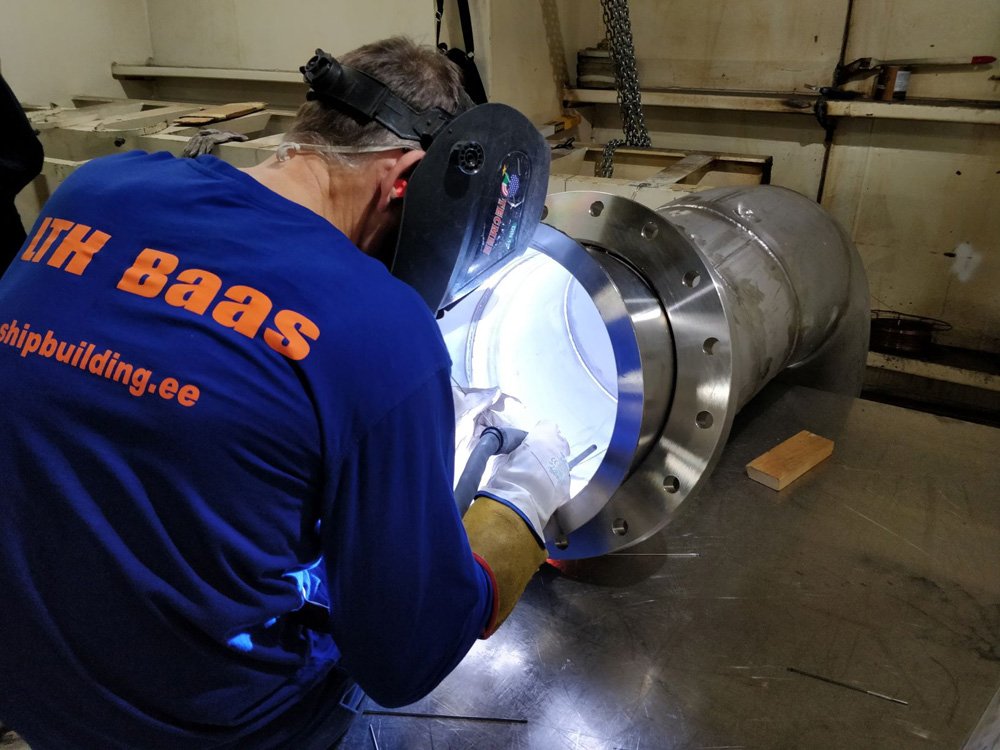
In addition to methanol challenges, the sector is facing a growing need for practical decarbonization through continuous onboard improvement. LTH Baas has extensive experience in passenger ship retrofits and newbuild outfitting, and its approach is rooted in a practical challenge facing the industry: operators are under growing pressure to improve energy efficiency in ways that make both technical and commercial sense.

LTH Baas is focusing on energy-efficient solutions that support that shift, from waste heat recovery to improving HVAC performance – one of the largest energy consumers onboard. Rather than treating decarbonization as a dramatic technological break, the company’s approach is based on practical evolution: step-by-step improvements that reduce energy waste and improve vessel performance in commercially sensible ways.


Another area where practical onboard choices matter is interior weight. In passenger vessels, lighter materials help improve overall efficiency, which makes weight-saving solutions valuable even in spaces like bathrooms. Eumar Design addresses that need with lightweight bathroom and interior solutions based on its proprietary GelCeramic Lightweight® technology, which has antibacterial properties and reduces weight by up to 50 percent. The company’s approach supports fuel efficiency, hygiene, durability, and onboard comfort, making it relevant for owners looking at long-term efficiency as well as aesthetics.

Digitalization and the use of AI are also becoming part of retrofit and operational competitiveness. Inspirators! develops AI-powered engineering tools for shipbuilding, offshore industries, and contract manufacturers, helping teams work faster and more accurately. Its FutuDraw Automatic BOM module generates bills of materials directly from specifications, drawings, and customer orders, allowing engineering teams to speed up workflows and reduce errors.

Smarter ports and more resilient infrastructure

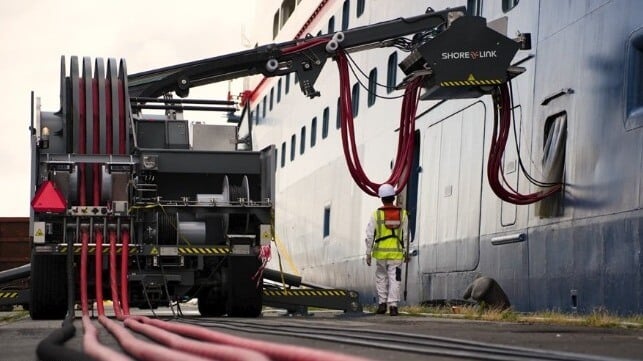
As ports face growing pressure to reduce emissions, one of the clearest near-term challenges is how to electrify vessels at berth in a way that is reliable and practical to operate. ShoreLink addresses that need through shore power and shore charging solutions designed to support port decarbonization. The company develops advanced cable management systems for a wide range of vessel types, including cruise ships, and its solutions are already in use internationally. As shore-side electricity moves from pilot concept to expected infrastructure, this is becoming an increasingly relevant part of the maritime transition.


Ports and other maritime infrastructure face another long-term challenge: concrete structures need to withstand water, pressure and time without becoming maintenance-heavy or vulnerable to failure. Primostar Group addresses that with advanced waterproofing and profile solutions designed for concrete and underground infrastructure in ports. Rather than relying on external membranes alone, the company focuses on long-life watertight concrete performance, controlled crack design and solutions that help reduce installation time, complexity and labor costs.

Taken together, these examples reflect a broader reality across the maritime sector: the transition will depend less on new ideas alone and more on how existing solutions can be implemented at scale. Much of the technology already exists, but the real challenge lies in making it commercially viable, practical to use and coordinated across ships, ports and infrastructure. That is also why many of the most relevant near-term measures are not futuristic concepts, but solutions that can be applied already today.

About Trade Estonia
As part of Enterprise Estonia, the official governmental business and innovation agency, Trade Estonia connects enterprises to a dynamic, innovation-driven economy, providing access to
global markets. Trade Estonia also serves as a gateway for foreign enterprises seeking sourcing opportunities in Estonia, offering e-consulting services and facilitating connections with leading Estonian companies.

This project is funded by the European Union – NextGenerationEU and organized in collaboration with the Ministry of Foreign Affairs of Estonia.


This article is sponsored by Trade Estonia.

The opinions expressed herein are the author's and not necessarily those of The Maritime Executive.


Labor Problems Grow at Royal Fleet Auxiliary as Officers Set 24-Hour Strike

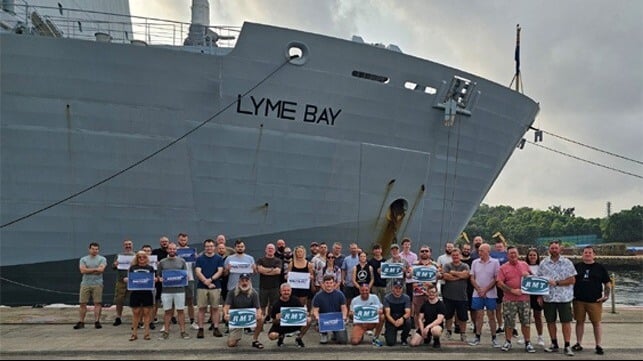
officers and ratings on strike in front of RFA ship Lyme Bat
Nautilus and the RMT which staged a joint strike in September 2024 and are again in a pay dispute with the RFA (Nautilus)

Published Jun 1, 2026 7:22 PM by The Maritime Executive


The UK’s Royal Fleet Auxiliary, which is responsible for the operations of the Navy’s support ships, is facing mounting labor problems as its officers are planning to stage a 24-hour strike next week. The union Nautilus announced the strike plan, saying its members overwhelmingly supported an escalation of the ongoing pay dispute.

Nautilus, which represents the RFA’s officers, complained at the end of April that the concerns of the officers working on the ships were not being addressed. It cites long-standing frustrations over pay as well as working conditions, leave, and allowances. In 2024, Nautilus contended that members had “endured” a 30 percent real-term pay cut since 2010, which led to the first-ever strikes by both the officers and the ratings represented by a separate union, the RMT.

Starting on May 10, the officers of the RFA began a limited job action that involved working to the rules of their contract. Nautilus reported that, except for the masters of the vessels, the officers, including engineers, navigation, communications, systems engineering, logistics, and supply roles, would refuse additional duties beyond their contracts and extended tours. They also began refusing to be moved between vessels or shore roles not named in their contracts and declining multi-location assignments.

Nautilus reported that 95 percent of its RFA members had voted in February to support an action short of a strike. Additionally, 88 percent were in favor of a strike.  

The officers who are members of Nautilus will stop work for 24 hours starting at 0800 on June 9 and not return to work until 0800 on June 10. They have said that safety obligations would be met.

“RFA officers are standing together?and acting?because enough is enough,” said Martyn Gray, Nautilus International Director of Organizing. “This action is about fairness, respect, and securing the pay?and working conditions?they deserve.”

The RMT, which represents the ratings working for the RFA, has already held strikes on May 8 and 13 over its pay dispute with the government. It also raised questions if the RFA was in compliance with the National Minimum Wage legislation in the UK.

The current dispute is the second for the unions with the RFA in two years. The first-ever strike by RFA officers took place on August 15, 2024, and was followed by a second joint action between Nautilus and the RMT on September 3, 2024. Both unions complained of overwork and underpay, while saying members were being undervalued. The dispute continued till the end of the year before a new contract was agreed upon for the civilian employees of the RFA.

The pay disputes come as the RFA continues to face a labor shortage and a shrinking fleet. It is down to nine active vessels, including tankers and supply ships. The unions are saying they have shown “real discipline” during the current hostilities in the Persian Gulf and Gulf of Oman, but that their patience has been met with continued delays by their employer.


A British Minesweeper That Was Withdrawn From the Gulf is Back on Patrol

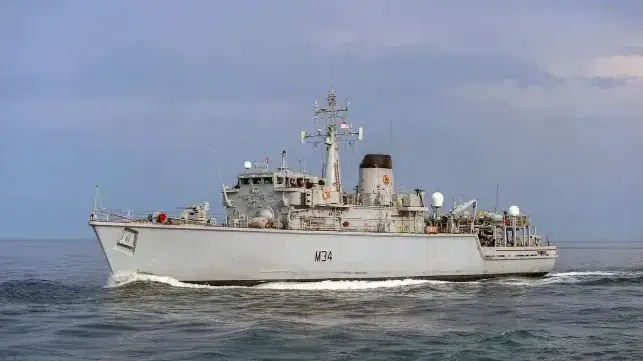
HMS Middleton
HMS Middleton (Royal Navy file image)

Published Jun 2, 2026 3:31 PM by The Maritime Executive


The Hunt Class minesweeper HMS Middleton (M34) was withdrawn from Bahrain just before the outbreak of fighting in the Gulf on February 28. HMS Middleton (M34) provided the last of a unique minesweeping capability alongside the US Navy’s Avenger Class minesweepers, which were also withdrawn from Bahrain at about the same time. This left both navies relying on remote or airborne mine clearing capability, before such capability had been fully brought into service - a gap felt keenly now that the Strait of Hormuz is effectively closed to free transit.

HMS Middleton was brought back to the UK from Bahrain on board the semi-submersible heavy lift vessel MV Rolldock Storm (IMO 9656503), and was refloated in Southampton in early March.

Her sister ship HMS Chiddingfold (M37) returned to the UK by the same means at the same time last year, and in between HMS Bangor (M109) was also brought back from Bahrain. This left the Bahrain-based 9th Mine Countermeasures Squadron bereft of ships.

The general assumption was that the ships of the 9th Mine Countermeasures Squadron were being taken out of service, prompted by the collision between HMS Chiddingfold and HMS Bangor in Bahrain in January 2024, and also by the understanding that HMS Middleton was no longer certified for sea service.

A different, and happier story is now emerging. HMS Bangor has entered a refit which once complete will see her in service for a further five years. Moreover, HMS Middleton has completed a short maintenance period in Portsmouth and at the beginning of May started a deployment up the East Coast of England, and around Scotland, patrolling past Scarborough, Whitby, Sunderland, the Northumberland coast, Scapa Flow, the Isle of Sky and the Isle of Man, very much operational and exercising the mine clearance divers aboard. HMS Chiddingfold is also still in commission too, on extended readiness and now with HMS Middleton as part of the Portsmouth-based 2nd Mine Countermeasures Squadron.

At a time when the older Type 23 frigates are reaching the end of their service lives, and before the arrival of the first Type 23 and 31 frigates currently being fitted out, having ships of the 2nd Mine Countermeasures Squadron available will assist with filling gaps at a time when the Royal Navy is facing increased need to patrol home waters to shadow Russian ship movements – either from the much-depleted Russian Navy or the Russian tanker dark fleet. The multi-crewing of ships in the squadron also assists in improving vessel availability for short-notice tasks.

Intercepting sanctioned Russian-owned dark fleet tankers is still clearly presenting the Royal Navy with challenges. Whilst theoretically having the necessary legal framework in place to carry out interceptions, when vessels are either unseaworthy or false-flagged, the Royal Navy for the moment has been confined to a supporting role for French naval action, it being unclear whether this is for legal reasons or because of a shortage of necessary naval vessels which would be needed to intercept and escort targeted Russian dark fleet tankers.

The last enforcement action in the maritime sector initiated by the United Kingdom’s Office of Financial Sanctions Implementation was a $6,750 penalty imposed on Svarog Shipping & Trading Company Limited in May 2025, a fine which is unlikely to have given the managers of the Russian dark fleet too much cause for concern.


On Day One of Posidonia, NZF and Strait of Hormuz Are at Center Stage

Kpler
Courtesy Posidonia Events

Published Jun 1, 2026 8:52 PM by The Maritime Executive

At the first day of the Posidonia conference in Athens, the contours of the Western shipping industry's biggest gathering became clear: This will be the biggest Posidonia ever, following on the heels of the biggest Marintec China conference ever - a sign of the industry's health and growth. 

Against a backdrop of geopolitical uncertainty (and rising airfare prices), 2,200 exhibitors have descended upon the Athens Metropolitan Expo center in order to meet an estimated 40,000 attendees over the span of five days. Collectively, they are expected to spend more than $100 million on food, lodging and transport around the region - but the deals signed at the show should be worth far more. 

On the first day, talk quickly turned - as might be expected - to the question of decarbonization and the future of the IMO Net Zero Framework (NZF). The regulatory scheme has critics in some quarters of Greek shipping, as it would have unpredictable effects on profitability and operations, and could create difficulty for planning fleet expansion. 

In an opening keynote address at a Capital Link event on Monday, Greek maritime affairs minister Vasilis Kikilias called for IMO member states to go slowly, listen to shipowners and "be reasonable" on decarbonization policy. "This will allow us to gain time, to discuss, and gradually reach a real decision at the IMO on the important and serious issues. First and foremost, safety," Kiliakis told the audience. He was followed later in the day by three prominent tanker owners from Saudi Arabia and Greece, who voiced their opposition to the emissions plan, and by IMO Secretary General Arsenio Dominguez, who expressed confidence in its long-term success and pushed back on any "negativity" about the prospects for an emissions regulation system.

The situation in the Strait of Hormuz also figured prominently - especially the effects on seafarers trapped inside the Arabian Gulf. "The first objective is always to seafarers, to engage, so they can actually leave the conflict zone," said Dominguez.

Views on timing vary, but many owners appear confident that a ceasefire deal and a reopening of the waterway are within view. "I am quite optimistic that waiting for a couple of weeks or a month, a solution will be found," said leading Greek tanker owner Evangelos Marinakis hopefully. 


Iran Demands an Israeli Ceasefire in Order to Continue Hormuz Peace Talks

Hormuz
NASA file image

Published Jun 1, 2026 6:57 PM by The Maritime Executive

The Strait of Hormuz remained largely closed on Monday, and the messaging from Iranian and American negotiators suggested a limited chance of an agreement in the immediate term. In the morning, Iran suggested it might stop reading messages from the Trump administration due to ongoing hostilities between Israel and Hezbollah in Lebanon, and President Donald Trump indicated that the U.S. might be just fine going "silent" for a while on talks. While the two sides contemplate a hiatus, the global oil supply remains curtailed by dueling blockades at Hormuz; the pace of global and U.S. petroleum reserve draws suggests that if the situation does not change, the physical oil market's ability to fend off price hikes may approach an end within months. 

Early in the day, Iranian sources said that they had suspended peace talks with U.S. officials until such time as Israel agreed to limit its offensive against Iran-backed Hezbollah in southern Lebanon. Israel's military accelerated its campaign north of the Litani River over the weekend, angering Iran. "Given that Lebanon was part of the ceasefire preconditions, and now this ceasefire has been violated on all fronts, including Lebanon, the Iranian negotiating team is suspending 'discussions and exchanges of texts through intermediaries,'" reported semiofficial Iranian outlet Tasnim. 

In addition, the official Islamic Republic of Iran Broadcasting network (IRIB) threatened that the ongoing Israeli offensive could jump-start Houthi anti-shipping operations in the Red Sea, long quiescent. "In the event of a ceasefire violation by Israel in Lebanon, the established order in the Strait of Hormuz will also prevail in the Bab al-Mandab," IRIB reported. 

Following the Iranian warnings, Trump held a call with Israeli Prime Minister Benjamin Netanyahu and encouraged him to curtail operations in Lebanon, without apparent success. "There will be no troops going to Beirut, and any troops that are on their way, have already been turned back," Trump claimed in a post-meeting statement. However, Netanyahu signaled that Israeli operations would continue as circumstances required. 

Sources familiar with the call told Axios - an outlet with close ties to the White House - that Trump reprimanded Netanyahu vigorously and profanely, reminding him of past personal favors and questioning his decision to advance so far into Lebanon. 

Unusually, Trump also acknowledged a direct and "very good" call with Hezbollah, the designated terrorist organization that controls much of southern Lebanon and periodically harasses Israel with missile attacks. It is the first time in years that a U.S. president has openly communicated with the banned organization. 

Despite his unprecedented efforts to obtain the preconditions demanded by Iran, Trump indicated that he was indifferent to the future of the conversation. "I don’t care if [the talks with Iran are] over, honestly. I really don’t care. I couldn’t care less. If they’re over, they’re over. If they’re not, you know, I think they took too much time. Frankly, I thought they started to get very boring," Trump told CNBC's Eamon Javers. 

Notwithstanding the stalled state of talks, small amounts of traffic continue to trickle past the U.S. and Iranian blockades in the strait. The so-called Persian Gulf Strait Authority - a U.S.-sanctioned administrative body that handles transit payments and paperwork for the Islamic Revolutionary Guard Corps - said Monday that 300 vessels have submitted their applications to pass through the waterway to date. The Iranian agency claims that GCC states' shipping interests dominate the list of requests to enter the Gulf, led by the UAE, Iran's main local opponent (and target) in recent hostilities. The claims cannot be easily verified, and shipping interests have every reason to be circumspect about any interactions with the sanctioned agency. 

On the southern side of the waterway, U.S. forces claim to have coordinated transits for about 70 vessels to date, and have directed Iran-linked tonnage to divert from course about 120 times. At present, U.S. forces are refraining from an on-the-water escort operation, but are providing remote assistance to neutral vessels that attempt to make the transit without Iranian permission.  


U.S. Disables an Iran-Linked Tanker With a Hellfire Missile

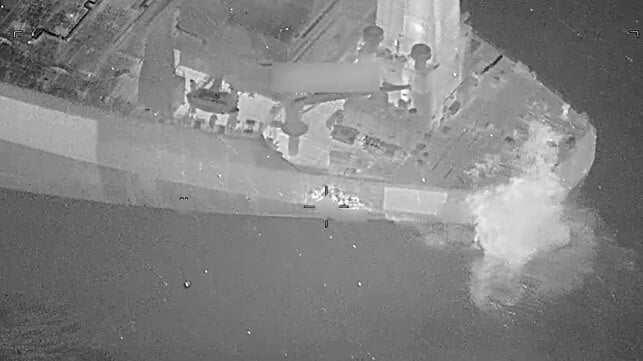
Lexie
Aftermath of a missile strike on Lexie's port quarter, in way of the engine room (Central Command)

Published Jun 2, 2026 6:07 PM by The Maritime Executive

U.S. forces have disabled another tanker near the Strait of Hormuz, according to U.S. Central Command, bringing the total tally to six vessels. 

On June 2, Centcom forces observed the stateless tanker Lexie transiting towards Kharg Island, one of Iran's primary loading terminals for oil exports. Empty tankers provide the potential for Iran to extend its production capacity through floating storage, and Centcom has attempted to prevent this by blocking inbound traffic, with substantial success. 

According to the command, U.S. forces repeatedly ordered Lexie's crew to halt their transit, but the tanker ignored the warnings for 24 hours. To bring the vessel to a stop, a U.S. aircraft launched a small Hellfire guided missile at the Lexie's engine room, disabling the vessel and preventing her from reaching Iran. As in several previous Centcom blockade-enforcement strikes, official video footage shows no sign that the tanker was making way towards a destination at the time of recorded impact. 

It was the sixth Iran-linked ship that Centcom has disabled to date, and the strike adds to a series of exchanges of fire between U.S. and Iranian assets that have persisted over the past week. A ceasefire between the two sides remains in effect. 

Lexie (also"Lexi," IMO 9203277) is a 300,000 dwt crude oil tanker built in 2001. She falsely claims to be registered with the flag state of Botswana, according to her Equasis record; the landlocked African nation does not have an international ship registry, but has been frequently used as a false flag by "shadow fleet" vessels like Lexie. The ship has a long history of false flagging, having previously claimed to be registered in the Comoros Islands and Samoa. She is sanctioned by the U.S. government for involvement with the Iranian oil trade and by Ukraine for involvement in the Russian oil trade. 


AIS data provided by Pole Star Global shows that Lexie has spent much of the past three months operating in the dark, with her transponder likely turned off. When visible, she has been broadcasting a location at the northern end of the Gulf of Oman, near the Strait of Hormuz and Kharg Island. Her position was last received last week, on May 26. 


Dali Civil Trial Delayed to Consider Legal Issue After Most Claims Settle

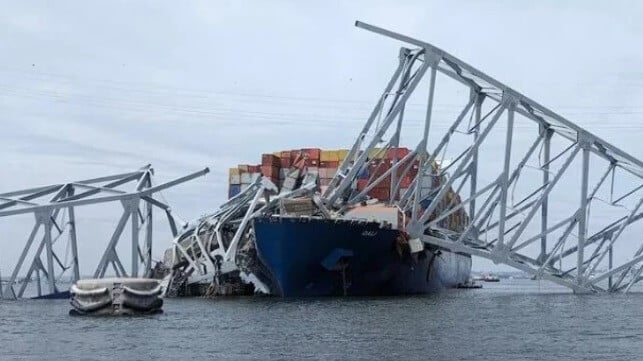
Dali and wreckage of Francis Scott Key Bridge
The civil trial related to the Dali was delayed indefinitely after most of the claims have been settled (Army Corps of Engineers photo)

Published Jun 1, 2026 3:07 PM by The Maritime Executive


The U.S. federal district court judge scheduled to hear opening arguments in the civil trial related to the containership Dali expressed frustration while agreeing to instead postpone the trial indefinitely. Most of the claims have now been settled, and all the remaining parties agreed to the delay, in part to consider a legal issue related to the remaining claims.

The owners of the Dali, Grace Ocean, and the manager of the vessel, Synergy Marine, made a last-minute motion on Saturday, May 30, to stay the civil proceedings, and Judge James Bredar ruled on Monday, June 1, to delay the trial instead of proceeding to opening arguments. He said that while it is typical to have last-minute settlements in civil trials, he still expressed general frustration for the court and the public after more than two years of legal process on the case that sought to test the ability of the companies to limit their civil liabilities.

The companies argued that all but 11 of the 54 initial claims filed in the civil case have been settled or voluntarily dismissed. They noted that all the wrongful death claims were settled, as well as the claims from the injured survivors. The court had denied a previous motion for a delay, saying it was time for the families to have their day in court. In addition, all but one cargo claim and one property damage claim (from the City of Baltimore) have been resolved.

Lawyers for the City and County of Baltimore agreed for different reasons that the trial should be delayed. They said a potential criminal conviction would change the remaining case as it would “conclusively demonstrate that petitioners (Grace Ocean and Synergy) cannot invoke the protection of the Limitation of Liability Act.” 

Baltimore is claiming property damage for a water main that ran alongside the bridge and under the river that was damaged by the collapse. The remaining claims are economic loss claims.

At issue is a 1927 U.S. Supreme Court decision that bars economic loss recoveries caused by negligence unless there were also physical damages to properties. Most of the remaining claims cite economic losses due to the closure of the port and the loss of the bridge. The judge has given all the parties two weeks to file new motions on this issue. Judge Bredar expects the issue to be fully briefed by mid-July.

The largest of the settlements was a record $2.25 billion with the State of Maryland, as well as $100 million with the federal government. Terms of the settlements with the families have not been announced. Others, including the employer of the road crew working on the bridge, and cargo claims, such as one from Zim and MSC, have also been settled.

Synergy Marine and one of its port superintendents, however, were indicted by the federal government for issues related to the operation of the Dali. They are also facing charges of providing false information to the investigators, including the National Transportation Safety Board. 


MSC Acquires Majority Stake in Ukrainian Terminal Operator

Ukraine port
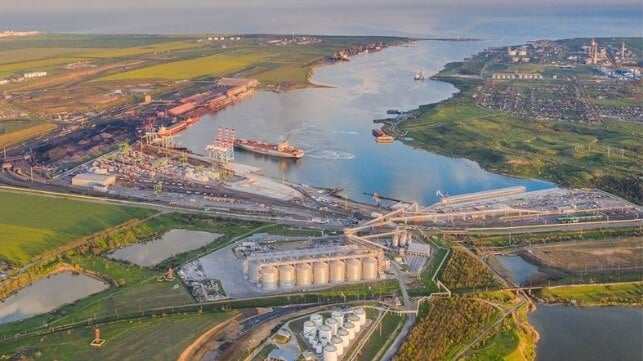
MSC is reported to have acquired a majority position in TIS, the operator Ukraine's Pivdennyi port near Odesa (TIS)

Published Jun 2, 2026 4:10 PM by The Maritime Executive


Media reports from Ukraine indicate that MSC Mediterranean Shipping Company has acquired a controlling stake (51 percent) in Ukrainian terminal operator TIS Group. Local industry executives are excited by the prospect of MSC’s investment, noting it would be the first time a major carrier has invested in Ukraine and that it will help to raise the operating standards in the country.

MSC Group is reported to have purchased the shares of TIS Group, replacing an earlier 51 percent investment by DP World. The Dubai-based company had, in March, sold its shares to the founders of TIS Group and exited Ukraine. The speculation was that the move was prompted by a deal between DP World and Russia’s Rosatom to develop shipping along Russia’s Northern Sea Route with FESCO. As part of the deal, TIS also regained control of the towing business, which had been operated as P&O Maritime Ukraine.

TIS (Transinvetservice) is reported to be the largest private terminal operator in Ukraine. It was founded in 1994, and before the war, the TIS terminal operation at Pivdennyi, the southern port in the Greater Odesa complex, handled over 30 million tons of cargo annually. It is reported to have accounted for 20 percent of the total cargo volume in Ukraine and to be the second-largest terminal in the Black Sea.

The port was purpose-built and is reported to have the deepest container terminal in Ukraine. It has specialized facilities for grain, bulk, and project cargo alongside containers and direct road and rail connections linking it to inland centers.

The acquisition of the shares by MSC would be subject to regulatory approval, as MSC also holds a large position in Germany’s HHLA, which owns a container terminal in Odesa. Experts note that, in addition to linking the two terminals, the deal also provides access to MSC’s network, including terminals in Treiste and Tallinn.

The move is the latest by MSC as it works to build out its terminal and logistics operations. Last year, it acquired a 50 percent interest in an intermodal logistics operator in Ukraine and a 25 percent interest in a cross-border terminal. Elsewhere in Europe, it has also been making terminal acquisitions, and it, of course, is the bidder behind the stalled deal to acquire CK Hutchison’s global network of terminals.


China’s COSCO JV with PTP Approved to Redevelop Spain’s Tarragona Port

Tarragona, Spain port development
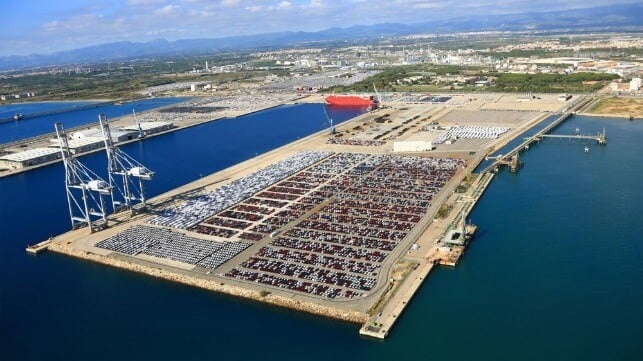
The approved plan calls for a 50-year concession for the development of a large new multipurpose terminal (Port Authority of Tarragona)

Published Jun 1, 2026 8:05 PM by The Maritime Executive


A newly formed joint venture between divisions of China COSCO and a Spanish company, PTP, was approved for a new concession and redevelopment of the Spanish Port of Tarragona. The deal, which includes a 50-year concession for port operations, comes as there is increasing scrutiny on Chinese efforts to expand global port operations.

Under the terms that were approved by the board of the Port Authority of Tarragona, the new JV will invest €116 million ($135 million) to redevelop the port, including a massive new terminal. The port authority justifies the 50-year concession, highlighting that the financial investment is far larger than envisioned in the plans for the port. 

COSCO Shipping Ports and COSCO Bulk will form a company to hold 51 percent of the JV. The remaining 49 percent will be held by PTP Iberica, a Spanish subsidiary of the Argentine PTP Group. The awarding of the concession still requires the formation of the new operating company and the formalization of contracts following Spanish legislation.

The Port Authority says the plan will help the Port of Tarragona, which is located on the Mediterranean in northern Spain near Barcelona, to consolidate its strategic position. They predict that the port will develop as a regional logistics center in the Mediterranean, connected to both main international maritime routes, the Iberian Peninsula, and Europe’s inland centers.

“Not only are we recovering the container and expanding the general cargo and the movement of vehicles, but we will become one of the reference gateways in the Mediterranean for both traffic coming from China and the Far East and Latin America,” predicted the president of Port Tarragona, Santiago J. Castellà. He called the agreement “a historic moment for the Port.”

The concession includes over 510,000 square meters of area, which is the entire space available for the concession plus another 58,000 square meters belonging to the La Boella railway terminal. The plan calls for the development of a multipurpose terminal to handle containers, general merchandise, vehicles, and cold chain logistics, as well as auxiliary facilities and a maneuvering area.

The maximum capacity is estimated at 680,000 TEU equivalents, including both containers and general cargo. According to the business plan, they will grow traffic between 2027 and 2033 with a commitment to a minimum of 360,000 TEU equivalents starting in 2031. The majority must be containers with a minimum of 200,000 TEU annually, and the additional volume will come from general cargo. 

Some political questions have been raised in Spain about awarding a long-term concession to a Chinese state company, but so far, it has not faced major opposition. This, however, comes as the sale of CK Hutchison’s global port terminal operations remains in question and political challenges continue in Panama. China’s development of the large Port of Chancay in Peru. COSCO is reported to have invested $1.3 billion in the port’s development, which was seen as a foothold in South America. It has created legal and political controversy in Peru, while the Trump administration continues to challenge China’s growing influence in global ports and port infrastructure, such as its dominance in large cargo cranes.