Friday, June 26, 2026


Pay transparency isn't only about women. It exposes inequalities affecting millions of workers

Worker cleans windows
Copyright AP Photo


By Evi Kiorri
Published on

The EU's pay transparency rules can help close the gender pay gap and expose how Europe systematically underpays young, migrant, disabled and racialised workers.

The EU Pay Transparency Directive was to enter into force on June 7, and it requires employers to disclose pay ranges before hiring, report on gender pay gaps, and take corrective action when those gaps exceed 5 percent without justification. Workers will know what a role pays before they apply, and the burden of proof in discrimination cases shifts onto employers.

The figures behind the law remain stark. Eurostat data shows women's average gross hourly earnings across the EU stood 11.1 percent below men's in 2024, a gap that has barely budged in a decade.

"Same job, same performance, same pay," a European Commission spokesperson said when asked whether the directive could shift workplace power dynamics in employees' favour. "There is no reason why women should earn less than men for doing the same work," they added, framing equal pay not just as a fairness issue but an economic one. The European Institute for Gender Equality estimates closing the EU's gender equality gaps could add €1.95 trillion to GDP per capita by 2050.

A patchwork rollout

7 June 2026 was the deadline for member states to transpose the directive into national law. Only a handful met it. The Commission said transposition "remains dynamic" in several capitals with legislative debate ongoing and warned that delay carries a cost. "Confusion and delays hinder both our competitiveness and our fight for gender equality," the spokesperson said.

Where a country misses the deadline, Brussels can open infringement proceedings under Article 258 of the Treaty on the Functioning of the EU. Fines for non-compliant companies will be set nationally but must be "effective, proportionate and dissuasive," according to the Commission, which also pointed to new protections for workers, including compensation for pay discrimination and the reversal of the burden of proof.

On the administrative burden on employers, the Commission argues that the directive simplifies rather than complicates matters. Reporting obligations apply only to companies with 100 or more staff. Smaller firms get lighter, phased requirements. The European Institute for Gender Equality has built a job-evaluation toolkit to help firms comply. "Every day without transposition is a day those rights are not fully enforceable," the spokesperson added when pressed on the risk of further delay.

Beyond the gender frame

The directive's legal architecture is built entirely around comparing women and men. But the data it generates, pay bands by job category, grade, hours, contract type and location, could, in principle, be used to map disparities that have nothing to do with gender at all.

Younger workers, who have absorbed much of the precarity stemming from weakened collective bargaining and temporary contracts since the 2010s, could find themselves systematically placed on lower pay scales than their older colleagues in equivalent roles.

Migrant workers, whose research consistently shows face wage penalties even after accounting for education and occupation, could have those gaps quantified rather than assumed. Disabled workers, often concentrated in lower-paid, lower-hour roles with stalled progression, could see disparities that currently surface only when researchers manually cross-reference separate datasets.

Ethnic and racial pay gaps are harder still to surface because most EU states restrict employers from collecting data on race or ethnicity, treating it as sensitive personal information. Where this kind of analysis has been attempted elsewhere, Massachusetts uses an encrypted, multi-employer system that lets companies report pay by demographic group without exposing individual firms' data. It required deliberately building demographic categories into the reporting architecture from the start. The EU directive does not currently require anything comparable.

There is also a geographic gap hiding in plain sight. Research from the European Trade Union Institute has found that workers in Central and Eastern EU states are paid up to €1,000 less per month than their German counterparts for comparable work, even within the same multinational companies. The directive's focus on within-firm, national-level gender comparisons does little to expose such cross-border disparities.

None of this is automatic. Whether transparency data surfaces these inequalities depends on whether member states require more granular reporting, whether unions and equality bodies push employers to cross-reference pay data against demographic information, and whether the political will exists to ask uncomfortable questions about who, beyond women, has been quietly underpaid all along.


Which EU countries fight pay gaps? New transparency rules split the bloc

Euronews
Copyright Euronews

By Evi Kiorri & Mert Can Yilmaz
Published on

Only four EU countries have implemented the EU’s Pay Transparency Directive, missing the June deadline meant to boost enforcement of equal pay rules across the bloc. Watch the video.

Starting in June 2026, employers across the EU must publish salary ranges in job ads, stop asking about candidates' pay history, and allow workers to request pay data on colleagues doing equivalent work.

That's the promise of the Pay Transparency Directive. However, most member states missed the June deadline to adopt it into national law.

Only Italy, Slovakia, Malta and Lithuania fully transposed the rules on time. Belgium, Malta and Poland did so partially. The Netherlands has pushed its deadline to January 2027, and Ireland confirmed it will miss it too. Estonia signalled it may simply pay EU fines rather than implement the directive as written. Five countries, including Austria, Hungary and Luxembourg, have taken no action at all.

The stakes are high. Women in the EU earn 11.1 percent less per hour than men, a gap that has barely changed in a decade. The directive aims to close it by making pay visible and shifting the burden of proof onto employers when discrimination is suspected.

"That veil didn't just hide gaps, it reproduced them," says MEP Gabriele Bischoff.

For now, rights guaranteed on paper at the EU level remain unevenly enforceable on the ground.

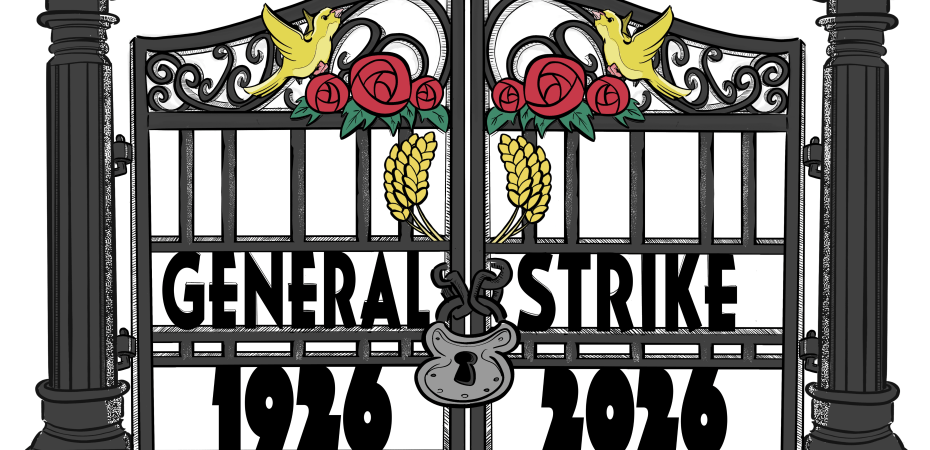
Forgetting and Remembering the UK General Strike


JUNE 22, 2026

On its centenary, Peter Gurney explores why the 1926 Strike has been so little commemorated – and why it should be.

To those of us on the left, the importance of remembering the General Strike seems self-evident. However, it is worth reflecting more carefully on what it is we want to remember about the strike and also why it has often been forgotten. Not that there is a lack of literature on the subject: participants offered their particular views in the immediate aftermath of the nine-day stoppage and professional historians have produced a plethora of books and articles about the subject at regular intervals, encouraged especially by the commemorative urge.

But despite this attention, the tendency has been to downplay the significance of an event that has overwhelmingly been regarded as doomed to failure, little more than a hopeless gesture. More important, the General Strike has been to a large extent forgotten within the national culture and by the leadership of the mainstream labour movement. There is no monument to the strike, no statue to the miners’ leader A. J. Cook whose impassioned oratory electrified audiences during the dispute. Why has it been forgotten or at best seriously marginalised within popular memory?

This relative absence within the dominant culture is not hard to explain, owing much no doubt to the biased nature of the capitalist media and the state education system. Most of the press and the BBC were against workers’ interests in 1926 as they are against them today, while the General Strike does not feature on the national curriculum taught in schools.

Labour movement forgetting is harder to understand but can be accounted for by the fact that the memory of the General Strike has always been fiercely contested, its meaning and significance understood often in starkly divergent ways, when it happened and ever since. Labour Party leaders and the TUC have found it difficult to commemorate 1926, unlike say the Tolpuddle Martyrs, who were resuscitated in the 1930s by the TUC’s General Secretary Walter Citrine to help revive the fortunes of a flagging trade union movement. 1834 was easier to sanitise as a humanitarian cause than 1926, which was hard not to consider as anything other than an intense moment of class struggle. Typically, it has often been activists on the left who have done most to keep alive positive memories of the General Strike, without much support forthcoming from above.

It seems to me that Labour Party and trade union leaders have frequently ignored the General Strike, or else dismissed the episode with a few complacent platitudes, because it represented not only a defeat but also a victory they preferred to forget – one that generated sour memories. On the other hand, activists that have sought to sustain the memory of the General Strike have been motivated by both a sense of betrayal and unfulfilled working-class potential.

The desire to forget the trauma of defeat was understandable. The General Strike marked the climax of a period of trade union retreat, not advance, and it is unfortunate that the strike did not occur soon after World War One. During the half- decade following 1920, the trade unions lost 3 million members and workforce density declined from 45% to 28%. It is a commonplace of historical writing that 1926 vividly demonstrated the strength of anti-labour forces, mobilised most efficiently within civil society and by the state. Tens of thousands of middle-class professional men, university students and Society women volunteered to work on the docks, railways, buses, and as special constables, regarding their activities not as ‘strike breaking’ but as national service. In all, about 500,000 signed up for the Organisation for the Maintenance of Supplies.

The state was very well prepared. In the context of anti-Bolshevik fears in the aftermath of the October 1917 Russian Revolution and heightened labour unrest at home, extensive planning was undertaken to thwart any general stoppage. Historians have emphasised how such anxieties were overblown, though they were no less real for that. On labour’s side, there was little systematic thinking of what a general strike might entail and no agreement even on what the term actually meant.

Regardless, governing elites planned for the worst. Home Secretary Winston Churchill’s anti-labour credentials were notorious by 1926, but it would be mistaken to think that Prime Minister Stanley Baldwin was any less keen to give workers a hiding. Although he cultivated an image of himself as a moderate Englishman who embodied an ideal of ‘fair play,’ he was a sharply perceptive class warrior rather than tolerant class conciliator. He was not prepared to coerce the coal owners and withdraw the severe wage cuts that had provoked the miners’ strike which precipitated the wider confrontation. Admittedly, he showed restraint at times, on Red Friday in July 1925 when the government agreed to subsidise miners’ wages, in appointing Churchill editor of the anti-strike organ the British Gazette where he would do less harm, and in refusing to introduce anti-union legislation during the strike, but these and other actions reveal strategic capitalist thinking, not sympathy. We might note too how Baldwin put the knife in more deeply on 14th May, sending proposals to miners and coal owners that were even more severe than recommendations in the Samuel memorandum.

The General Strike revealed the state’s preparedness, then, but it also exposed more than ever before profound divisions within the working class. The split between so called reformists and revolutionaries is a well worked theme that can only be pushed so far, the terms being too clear-cut.

Of more importance perhaps in explaining labour’s weakness were divisions between workers organised as producers and those organised as consumers. Like the trade unions, co-operative societies suffered in the immediate aftermath of the First World War, but unlike trade unions they soon recovered strongly, with over 5 million members by 1926.

Often seen as quintessentially reformist, the co-operative movement was kept under surveillance by the state at the end of the war as a potential revolutionary organisation. Liberal as well as Conservative politicians feared that co-op societies would be able to sustain a prolonged national stoppage that might undermine the state, and such fears were not entirely misplaced. Tremendous material support was given to striking miners by local societies and the national movement in 1921, which was repeated in many localities in 1926 if to a lesser extent. But Ernest Bevin, General Secretary of the Transport and General Workers Union who was largely responsible for the organisation of the strike, had little time for the Co-op, insisting that their employees come out in support, his intransigent stance generating long-lasting acrimony.

The experience of defeat in May 1926 – the causes of which were obviously both structural and complex – was immediately portrayed on the left as a betrayal by the General Council of the TUC, which having marched the organised working class up the hill, deserted them. None felt this sense of betrayal more sharply perhaps than A.J. Cook, who singled out the self-seeking leader of the National Union of Railwaymen, Jimmy Thomas, for particular censure.

Cook’s quite restrained but damning comments about Thomas in The Nine Days, his contemporary account of the tawdry negotiations that took place between the government and some members of the General Council, no doubt accurately reflected the opinion of many workers. Although historians pride themselves on avoiding such judgements, it is difficult not to regard Thomas as nothing other than a renegade class traitor, a view confirmed by his corrupt conduct in the 1930s.

Unsurprisingly, Cook’s colleague Arthur Horner, later General Secretary of the National Union of Mineworkers, also blamed the General Council whose “single purpose those nine days,” he believed “was to secure an excuse for terminating the strike… We could have won if the General Strike had been seriously fought by the TUC General Council… neither the majority of the General Council nor the leaders of the Labour Party had any desire or intention to mobilise the strength of the working class.”

It was not only left leaders that used the language of betrayal. As Harry Watson, a London port worker, recalled: “It was hours later when we found out that there was no agreed settlement and the miners were still locked out. It was a betrayal, nothing short of betrayal… there was more resentment and signs of spontaneous violence from the men and women in the East End to the sell-out than there’d ever been all the way through the strike. It was a terrible experience and one I never forgot or forgave.”

From another angle, of course, the TUC’s climbdown could be seen as a victory not a defeat – a victory for advocates of realism in capital-labour relations. The General Strike strengthened the hand of pragmatic moderates like Thomas and Walter Citrine who recoiled from the remarkable display of working-class solidarity almost as much as Stanley Baldwin. The head of the most powerful centralised bureaucracy, Ernest Bevin believed in organisation more than agitation and though he alienated working-class co-operators, he had demonstrated his ability to successfully orchestrate the activities of hundreds of thousands of trade unionists, proving himself someone political and economic elites had to reckon with.

Understandably, this was a victory such men preferred to forget. Citrine may have found the miners’ leaders culpable, particularly Cook, but nevertheless emphasised the importance of forgetting: memory maintained old divisions and bred new ones. At the 1927 TUC conference of union executives convened to review the dispute, Citrine appealed for everyone to forget old feuds and work together for the sake of the movement. For him, the strike proved that confrontation between capital and labour was outdated and counterproductive. He advocated instead co-operation with employers in order to ‘rationalise’ industry and increase economic efficiency for the benefit of all.

Predictably, moderate leaders of the Labour Party too were keen to learn the lesson of pragmatic realism from this defeat. Ramsay MacDonald was most emphatic, declaring, “The General Strike is a weapon that cannot be used for industrial purposes.”

In his autobiography published eight years after the strike, Philip Snowden observed that hot-headed trade unionists “needed a lesson of the futility and foolishness of such a trial of strength” and took comfort in its after-effects: “Since then there has been no repetition of such a hopeless adventure, nor is it likely there will be so long as the memory of this unfortunate experience survives.”

As historian John McIlroy has noted: “The strike played a part in the process, which had been developing since 1920, of weakening the left and undermining belief in direct action. It helped to close the (labour) movement to Communists and separated out reform and revolution. It strengthened ever-present tendencies to constitutional industrial relations and gradualist politics and reinforced, at the national union centre and beyond, the moderation, responsibility and constructive engagement with the state that Citrine and Bevin came to embody.”

Although Citrine had no pretensions as a theorist or historian – his most well-known publication was entitled ABC of Chairmanship – he nevertheless played a key role in shaping the TUC’s collective memory of the General Strike. He embedded the idea that general strikes were doomed to fail in the TUC and its bureaucracy, appointing all General Secretaries that served until the early 1970s. Citrine’s long-lasting influence helps explain Vic Feather’s resistance to calls for collective action in support of dockers imprisoned in Pentonville in 1972: “No responsible trade unionist is wanting to call for a general strike… General strikes are very harmful indeed – not only harmful to the country but harmful also to the trade union movement itself.”

There are more optimistic – even utopian – interpretations of 1926 to put alongside betrayal by corrupt leaders or realistic acceptance of the dominant economic and political order. Not that a workers’ revolution was a possibility that spring. Such monumental change had been unlikely in 1919, let alone six years later. A small number of communists were keen on the idea, certainly, but the argument that such individuals failed to take the initiative and exploit the situation must be discounted.

G.D.H. Cole, the most well-known socialist historian of his generation, later concluded that “there was no thought, except among a very few, of turning the strike into any sort of revolutionary movement. In the minds of most of the strikers, the strike was just a strike – exceptionally big no doubt, but no different in its objects from other strikes. Its purpose was to get the miners a square deal, and it was only incidental that this involved attempting to force the hands of the Government as well as of the colliery owners. From the side of the Tories and of the bulk of the middle classes, the affair looked very different.”

While such a conclusion rings true in some respects, more can and should be said. Cole was writing twenty years after the event and the statement that “the strike was just a strike” is both simplistic and not one that he would have agreed with at the time.

In the early twentieth century, the French thinker George Sorel famously proposed the idea that the general strike functioned as a powerful myth, providing workers with an alternative “framing of the future.” Although Sorel was misguided in many other ways, this emphasis is useful.

For the events of early May 1926 not only disclosed the potential of proletarian power to state and capital, they also demonstrated that power to workers themselves, teaching them vital lessons. One of the most important trade union leaders, Tom Mann, who was unfortunately abroad when the General Strike was declared, understood this better than most. Deeply influenced by syndicalism, Mann had published a pamphlet on the usefulness for labour of the general strike weapon in 1923.

Reflecting less on problems of organisation, Mann was attracted to the tactic because of the great boost it would likely give to Industrial Solidarity and Direct Action – his over-riding concerns. He believed that the experience of a general strike could mark a step change in working-class consciousness, a qualitative shift that would enable workers to grasp their full potential. Left wing Labour MP ‘Red’ Ellen Wilkinson – who published Clash in 1929, one of the few novels about the strike – thought similarly, remarking that it was a wonderful opportunity to undermine the “hold that class collaboration formulas have on the workers’ minds.”

Historians still know too little about the effects of the impressive mobilization of solidarity that occurred in May 1926. As is widely acknowledged, working-class support was still growing when the TUC called off the strike after just nine days, a fact that has understandably fuelled accusations of betrayal ever since. Labour Party women denounced TUC leaders, declaring: “There shall be a Next Time…the most important thing is that the people themselves now know and feel their own power.” A miner told the TUC: “We will have another General Strike without you and we will win next time.” How was solidarity experienced by the hundreds of thousands of workers who took part in the strike, and how did it feel to be part of a much wider collectivity, however shortly?

That the experience was highly emotional is unsurprising, for miners most obviously perhaps. The conditions in which they lived and worked were already pitiful before the mine owners and Baldwin threatened to grind them down still further. There is a wonderful passage in the autobiography of a later leader of the National Union of Mineworkers, Arthur Horner, in which he remembers A. J. Cook’s appeal: “In the months before the 1926 strike, and during the strike, we spoke together at meetings all over the country. We had audiences, mostly of miners, running into thousands. Usually I was put on first. I would make a good, logical speech, and the audience would listen quietly, but without any wild enthusiasm. Then Cook would take the platform. Often he was tired, hoarse and sometimes almost inarticulate. But he would electrify the meeting. They would applaud and nod their heads in agreement when he said the most obvious things. For a long time I was puzzled, and then one night I realised why it was. I was speaking to the meeting. Cook was speaking for the meeting. He was expressing the thoughts of his audience, I was trying to persuade them. He was the burning expression of their anger at the iniquities which they were suffering.”

It was the exploitation and suffering of this group of workers that lay at the core of the stoppage. Knowledge and indignation at their treatment was not confined to the coalfields either but was understood by a great many workers across the country without the help of middle-class tourists like George Orwell. Popular empathy for the plight of the miners partly explains the working-class solidarity witnessed in 1926.

Mass solidarity across industries was undoubtedly a learning curve, about which we still have much to learn. A poem by the great German Marxist playwright Berthold Brecht entitled Questions From a Worker Who Reads comes to mind. It begins in this way:

“Who built Thebes of the seven gates? 
In the books you will read the names of kings. 
Did the kings haul up the lumps of rock? 

And Babylon, many times demolished, 
Who raised it up so many times? 

In what houses of gold glittering Lima did its builders live? 
Where, the evening that the Great Wall of China was finished, did the masons go?

Great Rome is full of triumphal arches. 
Who erected them? 

Over whom did the Caesars triumph? 
Had Byzantium, much praised in song, only palaces for its inhabitants? 

Even in fabled Atlantis, the night that the ocean engulfed it, 
The drowning still cried out for their slaves.” 

The last two lines raise the key issue: “Even in fabled Atlantis, the night that the ocean engulfed it/The drowning still cried out for their slaves.”

The General Strike demonstrated the reliance of capital on labour in the most visible manner. A great deal was made at the time and since of the activities of the Organisation for the Maintenance of Supplies to show how middle-class volunteers could run services as well as workers could, but their efforts were largely performative, done for purposes of propaganda. In reality, they revealed just how dependent the middle class were on the labour of their subordinates.

We can only speculate about how many workers learned this lesson, but some certainly did. One of these was John Langley from Brighton, who was 21 when the General Strike occurred. He was already well-disposed, admittedly, having worked on the railways since the age of 13 where he was influenced by an older worker – “an outcast because he was a socialist” – who encouraged Langley to read the Daily Herald and inculcated in him two key principles: “Russia would be the salvation of the world” and “the Co-op movement would help towards the salvation of the world.”

In his autobiography, Langley recalled: “1926 was different. That was a ruthless strike, absolutely ruthless. The strange part about it, what wasn’t realised, was the strength of the trade union movement. It was so strong that it overwhelmed us. Everybody was coming out, our foreman, everybody in authority came out with us, so long as they were on a wage basis. We stopped everything, we were so powerful. And yet we weren’t prepared to govern with it. We couldn’t, because we didn’t have the organisational ability to manoeuvre all that great power… We had the power then, and we should have gone on, but it was too much for us. The power was too big. We couldn’t grasp it – it was like going to the moon.”

One wonders how many other workers shared this simultaneous sense of actual and unrealisable power, a power momentarily within one’s reach then beyond it in an instant. Not just labour socialists like Langley either, but workers who had had different experiences and whose political consciousness had not been shaped in similar, sympathetic ways.

The cultural critic Raymond Williams touched on these important issues in an essay on the social significance of the General Strike, in which he emphasised how 1926 should be regarded not only as a defeat but also as a partial victory, especially “the growth of consciousness during the action itself.”

Williams went on to suggest how participation in the General Strike changed people, generating confidence and a sense of independence. For him, the negative significance of the strike – the struggle against class enemies – was less important than what he described as “the steady and remarkable self-realization of the capacity of a class, in its own sufficient social relations and its potentially positive social and economic power.”

From this perspective, the events of early May 1926 afforded a brief glimpse of a completely different kind of society, one organised from the bottom up, in which the common people assumed full control. And this, perhaps, is why it is vital to remember the General Strike.

Peter Gurney is Professor of British Social History at the University of Essex.

Image c/o Unite.

 

European trade unions call for World Cup-style ‘cooling breaks’ for workers as temperatures soar

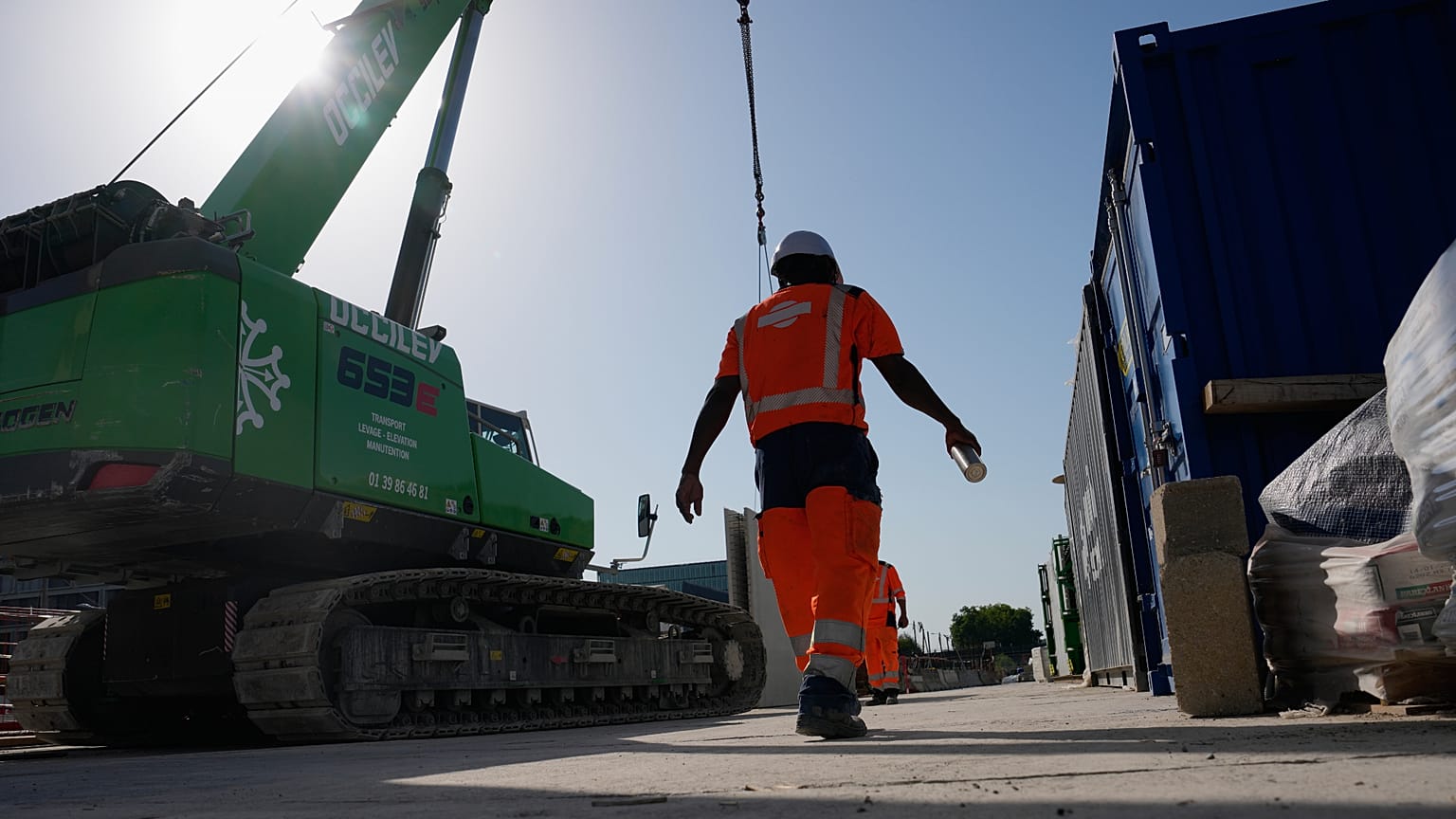
A worker on a construction site during high temperatures in Boulogne Billancourt, outside Paris, Wednesday, June 24, 2026.
Copyright AP Photo/Christophe Ena

By Marta Iraola Iribarren
Published on

The European Trade Union Confederation is pressing the European Commission to set a maximum working temperature law, warning that extreme heat now poses a predictable and preventable threat to workers across the continent.

“Cooling breaks” for all workers? A European trade union organisation calls on the European Commission to introduce breaks for workers amid a record-breaking heatwave.

“The cooling breaks being used at the World Cup have put the spotlight on the danger posed to workers by extreme heat and the kind measures that can be taken to keep people safe,” Esther Lynch, General Secretary of the European Trade Union Confederation (ETUC), said.

She added that, while workers would need longer than three minutes to recover from heat exposure, the practice is a good example of how work can be adapted to the changing climate.

“We need a maximum working temperature law that gives all workers the right to paid breaks, water and toilets too,” Lynch told Euronews Health.

Workplace heat stress causes physiological strain in the body that can lead to exhaustion, pathological conditions and death.

Deaths at work due to extreme heat have increased across Europe over the past few years.

The latest data from the World Health Organization noted that more than 2.4 billion workers are exposed to excessive heat globally, resulting in more than 22.85 million occupational injuries each year.

According to the WHO, in order to sustain an eight-hour work shift, core body temperature should not exceed 38°C.

Long-term exposure to high temperatures carries significant health risks, raising the chances of cardiovascular conditions, worsening respiratory disease and contributing to other conditions such as chronic kidney disease or infertility.

Who is most at risk?

While heat affects all workers, some jobs and health conditions put people at a greater risk.

Older workers, people with chronic health conditions, pregnant women and those performing very intense physical jobs are more vulnerable to the high temperatures.

“People working outdoors in construction or agriculture are obviously at high risk of heat exposure, but almost half of all workers are exposed to heat at work,” Lynch said.

What can be done to help workers?

Heatwaves are expected to become increasingly common and workplaces are working to adapt to this new reality.

Adjustments such as flexible working time, regular breaks and job rotation are the most common measures to prevent heat stress and climate change-related risks at work, according to the European Agency for Safety and Health at Work.

“Employers need to recognise that heat is now a predictable work-related risk and must be prevented through planned protective measures being discussed in advance,” said Lynch.

She noted that the current problem across Europe is a “patchwork of inadequate and outdated national laws and voluntary guidance from the European Commission”.

“Climate change is not a problem that respects borders, so we need binding European legislation and investment in labour inspectorates to ensure it’s being respected,” Lynch added.


Heat stress threatens 130 million European workers, trade union body warns


By Gregoire Lory
Published on

The European Trade Union Institute (ETUI) has presented a proposal for European legislation to protect workers' health during heatwaves.

Europe is breaking heat records. These extreme events pose a threat to people's health both at home and at work. The European Trade Union Institute (ETUI), a research centre affiliated with the European Trade Union Confederation, presented a report on Thursday laying out solutions aimed at safeguarding workers' health in the face of climate change.

One of the report's authors emphasised that the danger is not limited to the south of the continent.

"The problem is the worst in the south, of course; that's where we see most of the accidents. At the same time, though, we have been recording the highest increases in accidents in central and northern Europe," said Andreas Flouris, professor of physiology at the University of Thessaly.

"The south is already hot, and it's a problem. But the centre and the north are catching up very fast."

According to the report, around 130 million workers across Europe are exposed to workplace heat stress, resulting in 277,000 related injuries and 230 deaths annually.

An EU-OSHA (European Agency for Safety and Health at Work) survey from 2025 found that around one in five workers in the EU reported exposure to extreme heat at work in the previous 12 months. Climate change is increasing the frequency and intensity of these heatwaves, which affect health and reduce work capacity.

"The optimum temperature to work at is 16°C. Beyond that, for every 1°C rise, there is an average productivity loss of around 2%," Flouris told Euronews.

"During an average heatwave in southern Europe, productivity losses reach around 20 to 25%. In central Europe, the figure is between 8 and 14%, and even in Scandinavia, we have recorded losses of 3 to 6% due to heatwaves over the course of a year," he added.

Based on scientific evidence, the report's authors propose that the European Union introduce legislation specifically targeting heat risks in the workplace.

"What we propose is a mandatory heat risk assessment, in order to oblige employers to assess and identify the risks related to heat exposure in their workplace. Only by knowing what we are dealing with can we protect workers and prevent the risks associated with heat exposure at work," said Marouane Laabbas-el-Guennouni, a researcher at the European Trade Union Institute.

The report also proposes using a broader index to assess heat stress exposure. The authors argue that temperature should not be the sole indicator, and that humidity and wind speed should also be factored in when determining exposure levels.

The researchers emphasised that heatwaves are a measurable, predictable, and therefore preventable phenomenon.


100,000 jobs and four plants: Volkswagen reportedly plans radical overhaul

Oliver Blume has been Chief Executive Officer of Volkswagen AG since 1 September 2022.
Copyright (c) Copyright 2025, dpa (www.dpa.de). Alle Rechte vorbehalten

By Maja Kunert
Published on

Volkswagen is reportedly preparing for the most radical restructuring in its history. Up to 100,000 jobs could go worldwide, twice as many as previously known. Four German plants may close.

Volkswagen, the carmaker based in Wolfsburg, is bracing for an unprecedented upheaval. According to a report in manager magazin citing insiders, chief executive Oliver Blume is planning to cut up to 100,000 of the group’s roughly 657,000 jobs worldwide. That would mean doubling the previous job-cut target: only a few months ago VW announced plans to shed around 50,000 jobs by 2030 – a move that was already seen at the time as historic in its scale.

Blume is said to have already presented the board with a corresponding restructuring plan. According to a second insider, the key document deliberately contains no specific figure in order to leave room for further fine-tuning.

Four plants face closure

In addition to job cuts, four production sites are also to be shut down in the medium term, according to the report in manager magazin. The VW plants in Hanover, Zwickau and Emden, as well as the Audi plant in Neckarsulm in the state of Baden-Württemberg, would be affected. Under the plans, manufacturing at these sites would cease once the models currently built there are phased out. It remains unclear how such massive job cuts could be enforced under labour and collective bargaining law: at Volkswagen, a job guarantee currently runs until the end of 2030, and at Audi even until the end of 2033.

Beyond job cuts, the group is reportedly planning a fundamental overhaul of its structure. Both the core Volkswagen brand and the components division are to be carved out of the group and turned into independent companies. In this logic, individual spun-off brands could in future be placed on the capital market more easily.

Crisis with a long history

The current plans are not a bolt from the blue, but the provisional culmination of a deep-seated structural crisis. In the first quarter of 2026 the group’s net profit slumped by 28 percent to 1.56 billion euros, while revenue fell by two percent to 75.7 billion euros.

At the time, chief financial officer Arno Antlitz issued an unusually blunt warning: "The cost cuts planned so far are not enough. If we fail to achieve this, we risk our future." On top of that come US tariffs, which according to Antlitz are weighing on the group to the tune of around four billion euros a year. At the same time, VW saw sales in its most important single market, China, drop by 20 percent in the first quarter – with Chinese manufacturers such as BYD not only gaining ground at home but increasingly pushing into Europe as well.

Thursday, June 25, 2026

 Opinion

A growing movement wants to regulate the wellness industry


(RNS) — Seek Safely is a nonprofit organization that aims to add guardrails to the wellness and self-help industry by focusing on three main areas: education, advocacy and legislation.
(Photo by HUUM/Unsplash/Creative Commons)

(RNS) — In 2009, 18 people were hospitalized with kidney failure and dehydration and three died after participating in a Spiritual Warrior “sweat lodge” retreat led by self-help guru and multimillionaire entrepreneur James Arthur Ray. 

Participants had paid nearly $10,000 to attend. Ray had lied about his credentials. Two years later, he was found guilty of causing three deaths by negligent homicide. He served just 20 months in prison.  

One of the victims was 38-year-old Kirby Brown. Her family describe her as an intelligent and safety-conscious woman who ignored her body’s warning symptoms because Ray convinced her they were signs of a spiritual breakthrough rather than extreme dehydration. She would also have been determined not to leave, they explained, because of her “indomitable spirit” and the fact that she had invested her life savings in the retreat.  

Ginny and Jean Brown, the mother and sister of Kirby, want to honor her memory by exposing the dangers of the self-help industry and trying to make it safer for others. But how are safety, ethics and accountability fostered in a culture that places responsibility solely on individuals and has become a billion-dollar unregulated industry? 

In 2014, the Browns founded Seek Safely, a nonprofit organization that aims to add guardrails to the self-help industry by focusing on three main areas: education, advocacy and legislation. 

The Seek Safely movement is part of a wider ethical reckoning happening in contemporary wellness and spirituality — the emergence of critical and constructive approaches that are placing safe and ethical communities rather than the individual at their center. 

Seek Safely logo. (Courtesy image)

At Seek Safely, education includes providing resources such as a Red/Green Flag list to help individual consumers assess and develop informed consent about what self-development services they choose to engage with. Seek Safely has also developed the “Seek Safely Promise” — a pledge consisting of a set of ethical and pragmatic principles designed to protect the well-being of consumers. 

Working with a consumer protection model — laws that are designed to safeguard buyers of goods and services from fraudulent operations — Seek Safely has also been pursuing legislative advocacy. For the last 10 years, the organization has been working on New York State Senate Bill S1155A, which would require nonlicensed self-help providers to disclose information to their clients about risks of their practices as well as a risk-management plan.   

The Browns’ mission was reenergized after they met Anne Peterson, who also reports firsthand experience of the harms of the self-development industry. Peterson sacrificed 20 years of commitment, community and a leadership position at Landmark to become a whistleblower and public critic of what she argues are exploitative practices in the organization. Realizing that her experience was not unique to Landmark, Peterson created Confronting the Line, a public platform “dedicated to exploring the boundary between genuine transformation and exploitation in the self-help industry.” 


Seek Safely Summit  

The Browns and Peterson joined together to host the recent Seek Safely Summit, held on May 30. It featured a loose coalition of advocates, educators, therapists, cult experts and lawyers and was structured around four questions: 

  • Why do we need a movement for Safe Seeking? 
  • How can we equip people of all ages to recognize and resist manipulation? 
  • What laws and policies are needed to hold self-help providers accountable? 
  • How do we ensure healing and visibility for those who have been harmed? 

In their joint presentation “Bringing Common Sense to the Self-Help Industry,” Peterson and Jean Brown began by highlighting the size, influence and dangers of the self-help market. They reported that the global self-improvement market was worth $41.23 billion in 2023 and is predicted to grow to $81.77 billion by 2032, with a compound annual growth rate of 8.1%. The U.S. market specifically was estimated at $15.99 billion in 2023, projected to reach $27 billion by 2032 with a 6% growth rate.  

Yet, despite the size of the self-help industry, it largely operates without any regulatory bodies or oversight. Among a number of problems identified, they pointed to unrealistic promises of specific outcomes. As Jean Brown noted, licensed professionals like lawyers and therapists can lose their licenses for making such false promises. Yet most practitioners within the self-help industry are offering services without professional credentials and so do not face the same consequences licensed professionals would face.  

While education is a key part of Seek Safely’s mission, the organization rejects the idea that consumer ignorance or naivete is the sole problem. As Jean Brown points out, many people who join harmful groups are sincere and intelligent.

“It wasn’t just [that Kirby] made a bad decision, or it was a stupid move, or she was being naive,” she said. “She was doing something that she thought was going to improve her life and better herself. And I think that’s a really noble effort that so many people obviously undertake.” 

As they explain, the problem is that many of these people become victims of groups that intentionally employ manipulative tactics to exploit their good intentions. Some of these tactics were identified by speakers Chris Shelton and Jon Atack, hosts of popular podcasts in the Cultic Studies network.  

In a session focusing on legislation, Ginny Brown reflected on how Ray’s defense lawyers kept asking why Kirby had not just left the retreat. Such a question fails to acknowledge the role of indoctrination and undue influence. Ginny Brown emphasized the importance of the American legal system recognizing coercive control — an intentional pattern of behavior designed to assert domination over an individual. Coercive control in the context of intimate and family relationships is recognized as a crime in the United Kingdom. A number of researchers and survivors are advocating for it to be extended to other contexts, including spiritual and religious communities.   


Self-help and religion  

Jean Brown and Peterson see the decline of institutional religion as a key factor in the rise of the self-help industry. They acknowledge that religious communities have traditionally met many of the legitimate individual growth and social needs that lead people to turn to self-help culture. Seek Safely is not calling for a societal return to the ethical foundations or organizational structures of Christianity, but it is interrogating the harm engendered by the individualism, narcissism and commodification of modern wellness culture. 

As Peterson reflected, wellness culture’s emphasis on extreme individual responsibility within the wider context of American individualism and consumerism has led to much exploitation and abuse. For her, “collaboration is how we actually change things. … Coming together we can create the kind of evolution that we were all looking for in this space in the first place.” 

The movement to check the self-help industry is a shift perhaps from a “me” to a “we” culture.  

(Ann Gleig, a professor of religion and cultural studies at the University of Central Florida, is author of the forthcoming “Talking About Cults: Abuse and the Study of New Religious Movements.” Her work is supported ​by the John Templeton Foundation. The views expressed in this commentary do not necessarily reflect those of Religion News Service)