Monday, June 29, 2026


Human rights allegations at critical minerals mines jump 73%


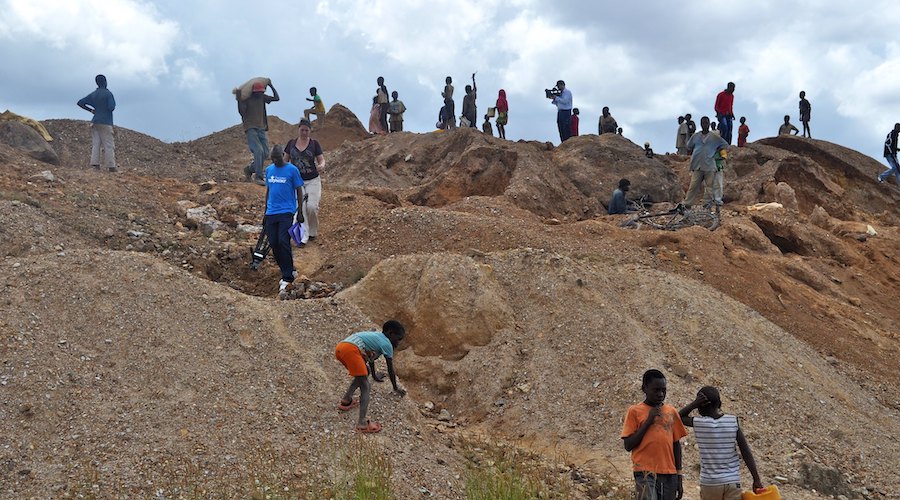
Artisanal cobalt mining site in DRC. (Reference image by Fairphone, Flickr.)

The global rush to secure copper, lithium and other energy-transition minerals drove a 73% increase in human rights abuse allegations at major mining operations in 2025, underscoring mounting social and environmental risks linked to the clean energy supply chain.

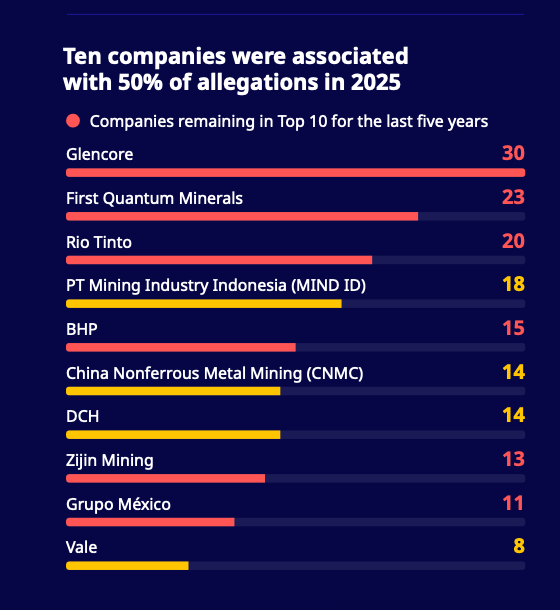
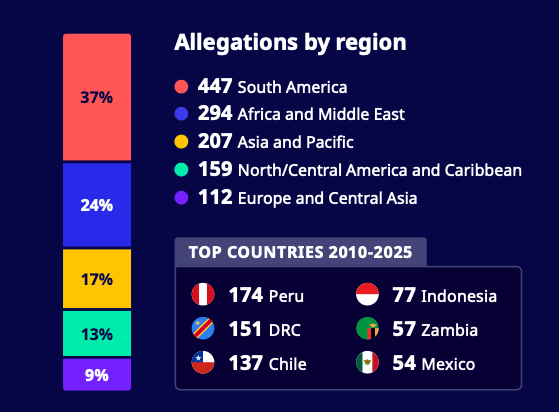
The Business and Human Rights Resource Centre’s 2026 Transition Minerals Tracker recorded 329 allegations of abuse last year, up from 156 in 2024, bringing the total since 2010 to 1,226 allegations across 299 mining operations producing key transition minerals including copper, cobalt, lithium, nickel and rare earth elements. 

The report also documented 42 attacks against human rights and environmental defenders, more than 50% higher than the previous year.

“Growing mineral demand is also fuelling environmental and human rights risks to Indigenous Peoples and local communities, as well as rising conflict between industry and communities where these harms materialize,” the report said. It found allegations increasingly centred on water pollution, worker safety, land rights and impacts on Indigenous communities.

South America leads

The findings highlight a growing challenge for governments and companies racing to secure supplies of minerals needed for electrification, renewable power and battery manufacturing. South America remained the region with the highest number of recorded allegations, while Africa posted the sharpest increase, with reported abuses more than doubling from a year earlier. 

Copper mining accounted for about 60% of all allegations in 2025, reflecting the metal’s central role in global decarbonization efforts.

The report argues that neglecting community concerns and human rights protections ultimately threatens the energy transition itself. It recorded 61 protests, 10 strikes and 44 lawsuits or regulatory actions linked to mining operations in 2025, with at least 27 cases resulting in mine suspensions, slowdowns or closures. Researchers said those disruptions create material risks for mining companies, investors and downstream manufacturers that depend on reliable mineral supplies.

Supply risks

Indigenous Peoples remained disproportionately affected, accounting for 17% of allegations despite representing about 6% of the global population. Worker-related complaints also surged, with 92 allegations involving labour rights or occupational health and safety issues, including 22 reports of work-related deaths. The tracker found only 56% of mines associated with allegations were covered by publicly available human rights policies.

The Business and Human Rights Resource Centre said the data show that stronger human rights safeguards, meaningful community engagement and fair benefit-sharing arrangements are essential to building resilient mineral supply chains. Without those measures, the organization warned, rising opposition, litigation and operational disruptions could undermine both mining investments and the broader transition to low-carbon energy.

Read the full report here.


Botswana’s Debswana plans 20% diamond output hike in 2026


First National Bank, Gaborone, Botswana. Stock image.

Botswana’s Debswana Diamond Company expects to raise diamond production by about 20% this year, a central bank official said on Wednesday, a potential boost to an economy seeking to recover from a prolonged downturn in the global diamond market.

Debswana — a joint venture between the Botswana government and De Beers that produces about 90% of the country’s diamonds — plans to increase output to 18 million carats in 2026 from 15 million carats last year, when production was cut sharply in response to weak demand.

“(The increase in production) is what would be driving the economy this year,” Thato Mokoti, the central bank’s deputy director for research and financial stability, told a press briefing.

A company spokesperson confirmed the planned production increase.

Diamonds typically account for about a third of Botswana’s fiscal revenues and roughly three-quarters of its foreign exchange earnings, leaving the economy highly exposed to swings in global demand.

A downturn that began in 2023 — driven by economic uncertainty and rising competition from lab-grown stones — forced producers to scale back.

Debswana reduced output by 16% last year, while Botswana’s broader economy contracted for two consecutive years.

In February, Finance Minister Ndaba Gaolathe said the economy was expected to rebound to growth of 3.1% in 2026, hinging in large part on a recovery in diamond production and demand.

Minerals and Energy Minister Bogolo Joy Kenewendo told Reuters on Tuesday that Botswana is seeing a soft recovery in diamond demand in key consumer markets such as the US and China, supported in part by a global marketing campaign for natural diamonds.

Before the downturn, Debswana typically produced about 24 million carats a year.

Managing director Andrew Motsumi told the media on Tuesday that Debswana is restructuring to become leaner and more efficient, with plans to cut annual operating costs by a third to 6 billion pula ($416 million) by 2028.

($1 = 14.4092 pulas)

(By Brian Benza; Editing by Nelson Banya and Ros Russell)


Billionaire Ira Rennert agrees to $150 million settlement of Peru smelter claims


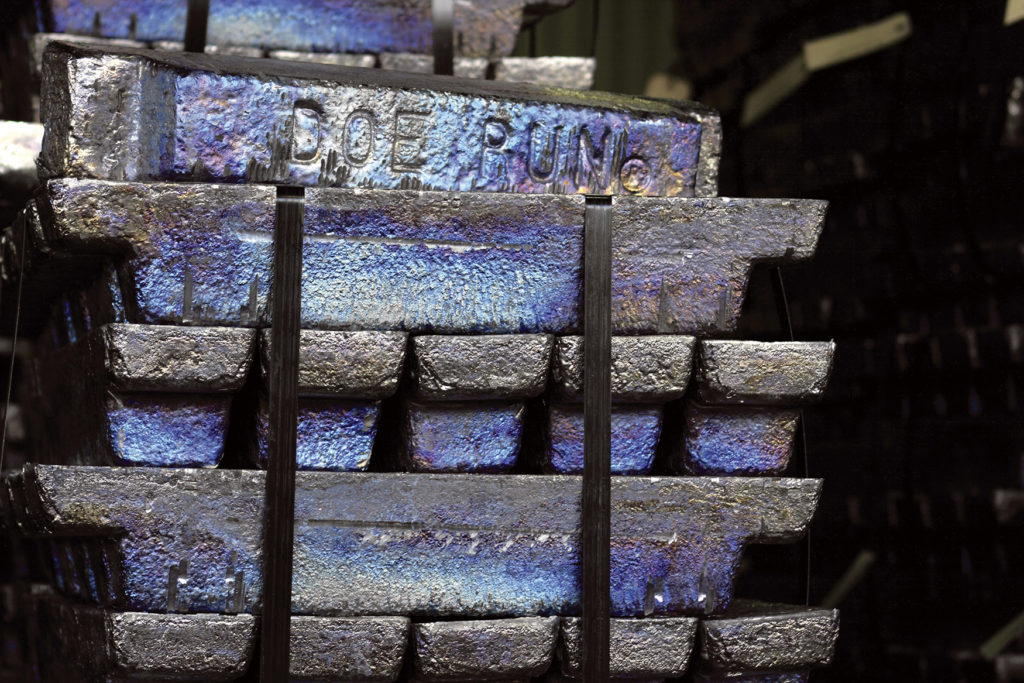
Doe Run produces lead metal and alloys including 1-ton lead blocks, 100-pound lead ingots and 60-pound ingots, also known as pigs. (Image: Doe Run Resources)

Billionaire Ira Rennert agreed to pay $150 million to resolve more than a thousand claims that a lead smelter owned by his companies poisoned residents of a Peruvian town, reaching a deal on the eve of a US trial that was nearly two decades in the making.

Attorneys for residents of La Oroya, Peru, said they’d reached the accord just as the first set of lawsuits over the smelter’s pollution was headed to trial June 29 in St. Louis. The settlement with Rennert’s company, Doe Run Resources Corp., resolves almost a third of the suits filed by people living in the Andean highlands town who were seeking billions of dollars in damages.

Doe Run said the settlement covers suits by more than 1,380 La Oroya residents who’d alleged long-term health problems from smelter emissions and tainted water. That suggests each person who agreed to the deal would get about $109,000. However, almost 3,000 claims remain unresolved, according to the lawyer handling those cases, which have no trial dates.

The billionaire’s wealth — estimated at $6.6 billion — was expected to be featured at the trial that had been scheduled next week. The 92-year-old industrialist is best-known for owning the largest mansion on the Hamptons on Long Island.

“This resolution is the culmination of 19 years of relentless work to obtain justice for children who were innocent victims” of the smelter’s emissions, Jerome Schlichter, a lawyer for the Peruvians, said in a press release late Tuesday announcing the deal.

Doe Run officials decided to settle the cases to put the long-running environmental issue behind them and “focus on what matters — running our business, serving our customers, and investing in new technologies for the future,” chief executive officer Matthew Wohl said in a statement Tuesday.

Production boost

The first La Oroya suits were filed in 2007 by Catholic nuns who worked with poor children in Peru. They alleged Rennert executives reneged on promises to clean up pollution at the smelter site, which had operated since 1922. Rennert’s companies bought it from the Peruvian government in 1997 and immediately ramped up production, court filings show.

Wohl said Doe Run invested more than $300 million to improve conditions in La Oroya and reduce emissions, but that Peru “abdicated its responsibilities” to clean up the site. Doe Run’s lawyers also argued residents’ claims should be litigated in Peru, but the suits were allowed to proceed in the US after a long legal fight.

Children who lived near the smelter were exposed to toxins including arsenic, cadmium and sulfur dioxide, along with lead that the smelter belched into La Oroya’s air and water, the plaintiffs alleged. Nine of 10 kids had lead levels in their bodies that could cause permanent ailments, according to a 2005 Saint Louis University study cited in court filings.

The cases are being litigated in federal court in St. Louis because Doe Run is based in the city. Its parent company, Renco Group, is based in New York. The firms operated the La Oroya smelter over a 10-year-period until it sought bankruptcy protection in 2009. In 2023, the plant reopened under control of worker-owned Metallurgical Business Peru SAA, which isn’t involved in the cases.

In court filings, Rennert complained La Oroya residents improperly sought to make his wealth the main issue in the first trial. His attorney, Jennifer Saulino, told US District Judge Catherine Perry at a June 9 pre-trial hearing that any reference to Rennert’s wealth — “his wife’s jewelry and furs and his house — would only serve to inflame the jury.”

Realtor.com notes his Sagaponack mansion – valued at $425 million and known as “the house that ate the Hamptons” – boasts 29 bedrooms and 39 bathrooms. It includes a basketball court, pool, two tennis courts, and a movie theater with a 164-seat capacity. It also has a 100-car garage.

The case is AOA v. Doe Run Resources Corp., No. 11-cv-00044-CDP, US District Court for the Eastern District of Missouri (St. Louis).

(By Jef Feeley, Carla Samon Ros and Tim Bross)


China plans whistleblower hotline to help it catch critical mineral smugglers


Stock image.

China on Wednesday announced plans for a whistleblower hotline ​to encourage citizens to report smuggling ‌of restricted critical minerals, as Beijing continues its crackdown on a sector that has provided so much diplomatic ​leverage.

Organizations and citizens can report a ​wide range of export control breaches, including ⁠transshipment, to the Ministry of Commerce, which ​said it may in some cases grant rewards.

Tipsters ​must call during business hours, with the hotline closed for 2.5 hours over lunch. Information can also be ​submitted via an online form.

China processes the ​vast majority of the world’s rare earths, and used its ‌control ⁠over production to great diplomatic effect during the trade war with the US.

Because previous rounds of Chinese rare earth export controls were undermined ​by massive smuggling, ​the latest ⁠restrictions have coincided with a state-led crackdown on attempts to circumvent ​the regime.

China’s spy agency said last ​year ⁠that foreign agents were colluding with domestic lawbreakers to steal rare earths and vowed to crack down ⁠on ​the practice.

Two Japanese nationals suspected ​of smuggling rare earths were detained last month.


(By Lewis Jackson; Editing by Tomasz Janowski and Jan Harvey)


Chinese brokerages push for LME membership to expand global metals role


Stock image.

Three Chinese brokerages – Yongan Futures, Orient Futures and ​Guotai Junan Futures – are preparing to apply for membership of the London Metal Exchange, sources familiar with the ‌matter said, in a move that would boost China’s presence on the world’s biggest marketplace for industrial metals.

The push reflects efforts by Chinese firms to capture a larger share of revenue from metals derivatives trading and further the brokers’ ambitions for global expansion.

Only six of the exchange’s more than 40 ​clearing members – firms that clear and settle trades – are Chinese, leaving the world’s top metals consumer under-represented.

Guotai Junan ​Futures is already in the process of applying for LME membership, one source said.

Orient Futures ⁠also has plans, though the timeline is unclear, two sources said.

Hangzhou-based Yongan is preparing its own application after setting ​up a UK entity last year, according to four sources who declined to be named as the plan is not ​public.

The three brokers are major players on China’s main metals bourse, the Shanghai Futures Exchange, and have established subsidiaries in Singapore over the past decade.

Leveraging London’s advantages

Yongan, whose British arm is known as Yongan International Financial (UK), recently hired Zhang Wei to head up the operation and guide the ​brokerage through the LME approval process, the sources said. Company registration documents show Zhang was appointed as director in April.

Zhang ​previously worked for an existing Chinese LME member, GF Financial Markets, in London, as well as for China Merchants Securities, which resigned its ‌LME ⁠membership in early 2021 after six years.

Zhang was not reachable for comment, while Yongan did not respond to a request for comment.

Orient Futures and Guotai Junan did not respond to requests for comment.

On an interactive investor platform this month, Yongan said it was applying for a regulatory licence from Britain’s Financial Conduct Authority and establishing a “solid foundation for legal and compliant operations in the ​UK and European markets”.

Two ​sources said the licence ⁠would be a precursor to an LME membership application, though Yongan did not mention the exchange.

“In the future, leveraging the advantages of London as an international financial centre and collaborating with ​resources in Hong Kong and Singapore, we aim to become a leading cross-border integrated financial ​services provider,” it ⁠said.

The LME, owned by Hong Kong Exchanges and Clearing, posted record futures trading volumes of 183.3 million contracts last year, up 7.7% from 2024. But these were mostly routed through non-Chinese clearing members which make money on every trade.

CLSA UK, owned by China’s ⁠CITIC Securities, ​was approved as an LME member last month and will begin trading on ​Monday.

“As the world’s largest industrial metals producer and consumer, China is fundamental to the global metals market and represents significant activity in the LME market,” an ​LME spokesperson said, declining to comment on applications.

(By Tom Daly and Pratima Desai; Editing by Veronica Brown and Elaine Hardcastle)


Chinese copper supplier says US demand can bear Trump’s tariffs

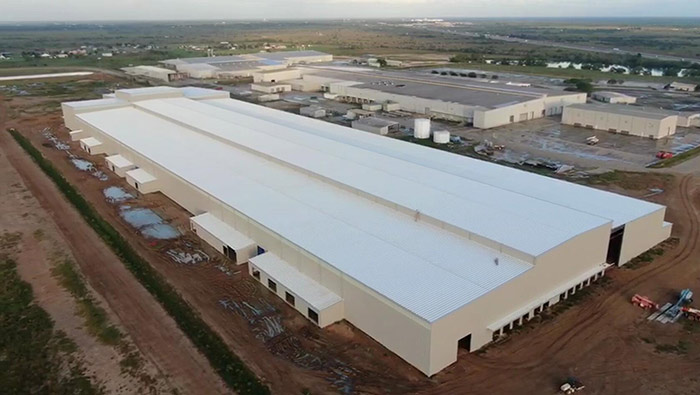
Zhejiang Hailiang’s facility in Houston. Credit: Zhejiang Hailiang

Chinese copper manufacturer Zhejiang Hailiang Co. is betting its American customers won’t balk at higher prices if the US follows though on placing tariffs on the refined metal.

The Hangzhou-based maker of copper tubes has expanded to locations from Indonesia to Morocco to get closer to clients and escape trade restrictions. Its operations include a plant in Houston that’s nearing full capacity after delays to construction during Covid.

“We’re not concerned about the cost increases because we can fully pass those onto clients,” Yan Yuhao, a trader and senior analyst with the company, said in an interview. “US consumers are very different from Chinese consumers. We are amazed by the resilience of US spending power.”

The Trump administration’s looming decision on whether to tariff refined copper has electrified the global market, juicing the premium paid for metal in the US and creating lucrative opportunities for traders. While the policy is aimed at shoring up domestic copper production, it also threatens to fan the inflationary pressures that Washington has struggled to control.

Yan said the need to cut dependence on foreign copper, a metal crucial to hi-tech manufacturing and power transmission, means the administration is highly likely to impose tariffs sooner or later.

But the idea that heftier costs for refined copper won’t derail demand is relatively alien to Hailiang’s home market. Until the Iran war, Chinese factories had only experienced deflation since the pandemic ended. That’s left buyers far more resistant to chasing copper prices higher during rallies.

Hailiang’s Texas plant makes tubes for autos, plumbing and air conditioners and is close to full capacity of 90,000 tons a year, said Yan. Trump’s tariffs on semi-finished copper last year have already boosted the company’s fortunes and its stock in Shenzhen has more than doubled over the past 12 months.


Goldsky closes Agnico deal to become sole owner of Swedish project

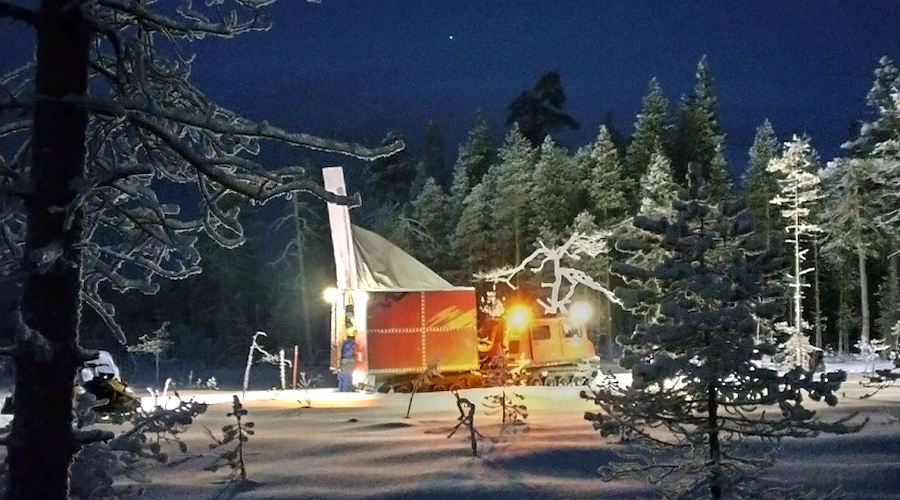
Barsele gold project camp. (Image courtesy of Goldsky Resources’ presentation.)

Goldsky Resources (TSXV: GSKR) said on Thursday it has completed the earlier-year transaction to consolidate ownership of the Barsele project in Sweden, which it plans to follow up with a large drilling program.

In January, the Scandinavia-focused gold explorer announced its intention to buy a 55% interest in the property from Agnico Eagle Mines (TSX, NYSE: AEM) to become its sole owner.

As agreed, Agnico received $20 million in cash, approximately 75.51 million of Goldsky’s shares valued at C$2.64 each, as well as a 2% net smelter return royalty. Its royalty obligations to Orex Minerals (TSXV: REX) on the project would also be transferred to Goldsky as part of the transaction.

With the transaction closed, Agnico has become an approximate 32% owner of Goldsky, holding nearly 83 million shares of the company, with an investor rights agreement for top-up.

Goldsky Resources’ share price was 2.5% higher by midday Thursday at C$3.25 apiece, with a market capitalization of C$598 million ($421.7 million).

Drilling planned

In a press release, Goldsky CEO Russell Bradford said the Barsele transaction marks “an exciting new chapter” for the company. The project, located in Västerbottens Län about 600 km north of Stockholm, has been explored by Agnico for a decade, with an existing resource of 2.15 million oz., mostly in the inferred category.

According to Bradford, the Goldsky team is planning what is expected to be one of the largest drilling campaigns ever undertaken across the Barsele licence. The company said it has budgeted $25 million for the 2026 program.

As part of the Barsele transaction, Nuvolari Capital, an arm’s-length party, received 2.57 million shares at the same price as finder’s fee, while Bradford received 468,550 shares at a higher deemed price of C$3.20 per share.

In addition to Barsele, the Toronto-based gold junior has two other projects in Sweden — Paubäcken and Storjuktan — both located in the historically defined Gold Line belt located in the northwestern part of the country. It also holds three projects in Finland, including the Rajapalot property in the Lapland region.


Strikes, soaring costs and M&A await BHP’s new CEO

BHP incoming CEO Brandon Craig. (Image courtesy of Brandon Craig | LinkedIn.)

Newly minted BHP CEO Brandon Craig faces a crowded in-tray as he takes mining’s top job on July 1, from threatened iron ore strikes and ballooning costs to a potential uranium push and a febrile M&A backdrop that could yield fresh opportunities.

The 53-year-old starts as geopolitical instability and inflation persist, and as BHP shares trade near a record high hit last week on investor bets that data centres, energy and defence will drive demand for copper and other metals.

“Cost control is definitely a priority in this inflationary environment, especially after the Jansen blowout,” said Elan Miller, a deputy portfolio manager at Blackwattle Investment Partners, which owns BHP shares.

For investors, concerns about inflation and cost overshoots have intensified after BHP last week flagged a $2.3 billion charge due to overruns and a delay at its Jansen Stage 2 project which was under Craig’s purview as head of Americas.

“Capex increases are on everyone’s mind, and BHP has other major projects underway,” said Glyn Lawcock, head of resources research at Barrenjoey in Sydney.

Those projects include BHP’s Vicuna copper joint venture in Argentina and Chile, and Copper South Australia, where a decision on a multibillion-dollar smelter expansion is due by year-end.

Miller said labour relations and productivity in South America and Australia were also major issues.

An immediate challenge will be the growing threat of industrial action in Australia’s iron ore heartland, with unions escalating tensions at BHP’s Port Hedland operations and threatening to mount coordinated strikes for the first time in decades if talks on July 7 fail.

M&A on the backburner

Craig is not expected to immediately follow in his predecessor Mike Henry’s footsteps chasing major M&A. However, in the current environment, opportunities could still come knocking.

BHP pursued Anglo American in the past two years but the London-listed miner opted instead to merge with Teck Resources. When that deal completes, the merged entity could become appealing again, depending on valuations, investors and analysts say.

“BHP and diversified peer Rio are expected to continue to target growth inorganically and organically. BHP’s valuation premium positions them well to pursue M&A,” said Baden Moore, an analyst with CLSA in Sydney.

Glencore has made no secret of its ambitions to get bigger and allow major investors to exit but has been rebuffed, at least for now, by its number one target Rio Tinto, with talks subject to a six-month standstill.

In March, sources said that Glencore CEO Gary Nagle was hoping a surge in coal prices would help bring Rio Tinto back to the table for a fresh attempt at creating the world’s biggest mining company.

While BHP has maintained a focus on growing its own assets, people familiar with Glencore’s thinking said a friendly approach for a conversation by the Swiss trader and miner couldn’t be ruled out.

Glencore and BHP declined to comment on mergers and acquisitions.

Uranium ambition

One area for growth could be uranium, a business that BHP has recently commented on more than in the past. However, it sees achieving sufficient returns from the tiny market as a major hurdle, investors and analysts said.

Craig told one investor that he would have a “really good look at uranium, but scale is hard.” The investor declined to be named because it was against company policy.

Uranium demand is expected to grow as power-hungry data centres boost the need for new generation capacity, including nuclear plants, while governments also look to diversify their energy sources in the wake of the Iran war.

Analysts point to potential from BHP’s Australian copper expansion, where the company already produces around 5% of global uranium supply as a byproduct from Olympic Dam, but it has so far ruled out any significant increase in uranium.

BHP has been increasingly highlighting uranium as a “future facing commodity,” with an improving demand profile. CFO Vandita Pant said in May BHP regularly reviewed its core commodities, adding that it was “very comfortable” with its position in uranium at Olympic Dam.

Speaking at the Bank of America conference in May, Craig said he would consider making bolt-on acquisitions to secure growth, where they brought value.

Craig, whose appointment in December surprised investors, may face departures among senior executives. CEO transitions typically spur around a third of top management to depart within a few years, a pattern BHP chairman Ross McEwan in March called a natural outcome of competitive succession processes.

Senior executives, including CFO Vandita Pant and Australia president Geraldine Slattery, had been seen by some investors as leading contenders for the top job.

(By Melanie Burton and Clara Denina; Editing by Veronica Brown and Sonali Paul)


Metinvest seeks new investor for Italy’s landmark steel project

Piombino, Italy. Credit: Metinvest Adria

Metinvest Holding is looking for a new investor to provide equity financing for a €3 billion ($3.4 billion) steel plant in Italy as the Ukrainian group tries to downsize its commitment.

An additional partner is being sought for the project at the site of a former steelworks in Piombino on the Tuscan coast, Metinvest said in an emailed statement to Bloomberg. It wants to strengthen the financing “in light of the war-related risks associated with Metinvest’s significant operating footprint in Ukraine,” the mining and steel company added.

Meanwhile, some potential lenders have become more cautious as a result of heightened geopolitical risks, including the recent conflict in the Middle East, according to a person familiar with the matter, who asked not to be identified because the discussions are private.

“In terms of debt capital structure, we have good visibility over it, and we are continuing our dialogue with financial institutions to finalize this stream as well,” Metinvest said.

The initiative has been designated a “national strategic project” by the Italian government and touted as “the rebirth of steel in Italy” by Metinvest Adria, the joint venture established last year with the Danieli Group to build the state-of-the-art facility. It expects to produce 2.7 million tonnes of low-carbon steel a year and create 1,100 jobs in an area that has seen little activity in over a decade.

Under the original plan, funding was supposed to consist of debt, government grants and equity contributions from the joint venture partners. Metinvest agreed to contribute more than €500 million, or 75% of the total equity, but is now seeking to reduce this to less than €300 million, according to people familiar with the matter, who asked not to be identified.

Danieli, which has committed to providing 25% of the equity, and the Italian government did not immediately respond to requests for comment.

War damage

In its statement, Metinvest said it had obtained “strong support from all stakeholders,” including the Italian government, which had already approved grants and credit guarantees and allocated funds for the construction of a new quay in Piombino port.

Metinvest’s finances have come under pressure after it had to draw on cash reserves to pay back a $428 million bond in April. Some of the firm’s assets in Ukraine have been lost or damaged as a result of Russia’s invasion. High energy costs and labor shortages have also hurt its operations.

S&P Global Ratings upgraded its assessment of Metinvest’s creditworthiness this month after the bond was redeemed but kept a negative outlook on the business, highlighting the need for Metinvest to build a cash buffer. Metinvest said it had $150 million of unrestricted cash at the start of May, according to S&P.

Metinvest is exploring the possibility of raising long-term financing and recently met with investors to discuss the pricing and structure of a potential bond issue. Like most Ukrainian firms, Metinvest has not accessed the bond market since the invasion in 2022. Nonetheless, the group has managed to meet its financial obligations and reduce its debt load.

(By Edward Clark, Alberto Brambilla and Donato Paolo Mancini)


Ground view Kazakhstan: Brezhnev’s needles


Kazakhstan holds a vast geological archive, a Soviet legacy vital for the West’s critical minerals.(Stock image by By piyapong01.)

Kazakhstan is sitting on one of the largest geological archives on Earth, a Soviet inheritance that could help feed the West’s growing hunger for critical minerals. To make that archive usable, the country first has to win a quieter race: finding a magnetic needle last manufactured under Brezhnev before the data on the tape disappears for good.

Somewhere in Kazakhstan, on one of perhaps three machines in the entire country still capable of the job, a reel of magnetic tape from the 1960s is being played back one careful pass at a time. The tape holds seismic data, the kind that describes what sits a kilometre or more beneath the vast steppe.

The needle reading the tape has not been manufactured in fifty years, and there are only so many of those needles left. Some reels survive intact. Others, as Yerlan Galiyev, chairman of Kazakhstan’s National Geological Service (NGS), said at the Astana Mining and Metallurgy Congress, are already gone. Demagnetized past recovery, the data on them lost. “It’s impossible to retrieve,” he said. “Which is, of course, very unfortunate.”

The reason Kazakhstan is chasing down Soviet-era tape needles is that it wants to feed rapidly advancing artificial intelligence tools. The NGS is converting its entire historical archive into a machine-readable form so that modern AI and machine-learning tools can read it, model it, and reinterpret it.

The most advanced computing available to the exploration industry, in other words, is being held up at the front door by one of the simplest and oldest tools in the building. The needle is the bottleneck for the algorithm. It is almost comical to think that the discovery and development of the critical minerals needed to drive modern technological advancement are dependent on a needle that would typically be found in a museum.

It is worth saying why anyone outside Astana should care about a national geological archive preservation project in Kazakhstan. The Astana Congress, and the C5+1 critical minerals dialogue that ran alongside it, were not gatherings about diplomatic niceties. They were wall-to-wall critical minerals: where to find them, how to mine them, and how to move them to the markets now competing for them.


Andrew Glass, the senior commercial officer at the US Mission in Kazakhstan, described the current moment to me as a marked shift “from dialogue to action,” and he had the receipts to back the assertion, with more than twenty US companies in Astana there to make deals and over seventeen billion dollars in trade and investment deals signed with Kazakhstan in the final quarter of last year.

A separate memorandum signed with Saudi Arabia during the Astana Congress is also an indicator that the competition for Kazakh critical mineral deposits is no longer a simple US-versus-China story. It is multipolar, and it is loud. The West, and not only the West, is hungry now.

The operative word is now. Appetite is not a permanent condition. Demand windows close. Attention drifts to the next region’s promising prospects. A country that wants to be a critical-minerals supplier to the West, as Kazakhstan is clearly positioning itself, has to make its resource legible and investable while the buyers are still seated at the table, because there is no guarantee the table will be set this way in five years. But the race Kazakhstan is running is not only a geological one. It is a race against the patience of Western capital.

Which is what turns a dusty archive into a strategic asset, once you see what the archive actually is. The thing to understand about a Soviet geological record is that it represents mineral exploration that has already been paid for. The Soviet state spent decades and an enormous sum mapping the entirety of Kazakhstan, the ninth-largest country in the world, from the surface down, gridding the country, shooting the seismic, drilling the holes, and writing it all up. Call it Pre-Paid Exploration. The bill was settled, in both rubles and years, two and three generations ago. This Soviet data is a real inheritance, and it is the reason a mid-tier explorer can take Kazakhstan seriously without having to allocate a major explorer’s budget.

When a reel demagnetizes, the deposit beneath the steppe does not disappear. A high-quality ore body gets found eventually, one way or another. What disappears when the reel demagnetizes is the inherited prepayment. The market has to pay to acquire the same knowledge a second time: re-fly the survey, re-shoot the seismic, re-drill the hole to learn what a Soviet team already knew and wrote down over half a century ago. And it has to fund that with capital from junior exploration markets, which are the tightest, highest risk and most failure-prone pool of capital in the industry.

Every tape that deteriorates on the shelf is a bill the next junior has to pay again, charged against the two things junior explorers have least of: time and money. Even where the data survives, its quiet value is that it allows scarce exploration dollars to be aimed instead of sprayed. It tells you which hole to drill, so you do not fund forty dusters to find one hit.

But saving the data tape is only the first of two challenges facing Kazakhstan. A file that is preserved but cannot be read carries minimal value. This is the distinction the headlines tend to skip. Scanning the archive turns a rotting paper report into a stable PDF, which is genuine progress against the clock, but a PDF is just a picture to a computer. As Galiyev put it, the model sees an image, but an image alone is not something you can query, model, or recombine.

To be useful, a field sheet from 1962 has to become homogenized data. Not merely a scan of a map, but data rendered as polygons, vectors, and points that a machine can actually compute against. That is the larger job facing Galiyev and his team at the NGS, and frankly the harder one. Soviet geological maps are, by Galiyev’s own description, “beautiful objects,” hand-drawn with a precision that looks almost typeset.

They are also dense beyond modern habit, with enormous quantities of information packed onto a single sheet. Worse, for a machine, they are not standardized. The colour or pictogram one Soviet institute used for a Devonian unit might mean something else on a map drawn in another part of the country. Teaching a model to read all of it consistently is the core technical problem for the NGS.

Even when the data is preserved and put into a digital and legible format, there is yet another roadblock Western capital runs into. Most of the archive describes reserves in the old Soviet GKZ classification, and Western regulatory regimes use JORC or NI 43-101. Kazakhstan has even developed its own CRIRSCO-aligned KAZRC standard. There is no magic conversion methodology.

Galiyev was candid about this: “You know in the perfect world we would have a very you know simple coefficient. We just multiply it at 1.3 and you have the new reserves. No, unfortunately it doesn’t look like that.” The geology does not change between the two systems; what is in the ground is what is in the ground. It is the economics associated with the discoveries that need to be redone, deposit by deposit. So far, by Galiyev’s count, something like 143 of roughly 400 to 500 significant deposits have been restated under the new code. This conversion work is being done by the licence holders themselves as they come forward, not by the state on their behalf.

Once all those hurdles are finally cleared, the machine-readable, standardized, code-compliant geoscience becomes the raw feedstock that modern exploration tools are built to consume. An entire national archive converted into that form is an unusually large meal.


Dr. Shawn Hood, who runs the geoanalytics business at ALS and has spent his career applying machine learning to exploration data, frames the value of these historical datasets bluntly. “A Soviet archive nobody can open is worthless. But the moment the data becomes machine-readable, it becomes invaluable training and target data at the same time. The tools we have built can do remarkable things with a century of consistent coverage that was unimaginable barely a decade ago.”

What that unlocks, in practice, is best captured in a story Galiyev told. A prospector, he said, once sat in a hotel room in Bangkok, opened the portal on his laptop, found a block on the map that interested him, and applied for the licence over it, all without ever having set foot in Kazakhstan. The platform, minerals.e-qazyna.kz, lets a geologist in Vancouver or Perth pull the geological data for free, see what sits on a given block (a river, a protected area, ground already closed to mining), and then apply, report as a holder, or relinquish, first-come, first-served.

For a century this archive sat in buildings in Kazakhstan, reachable only by those who could physically get to it; the marginal cost of reaching a continent’s worth of Pre-Paid Exploration has now fallen to the price of a hotel Wi-Fi connection. The state has pulled some ground out of that first-come pool for itself and its national champion, Kazatomprom, but those were deposits already on the radar, and the known ground was never the real prize.

The prize is the prospect a Soviet crew logged decades ago and no one has revisited since, the target buried in a dataset too large for any person to read, that a machine-learning model can now surface for a junior who could never have afforded to find it the old way. That, more than any single known deposit, is what changes who gets to explore here.

So that is the picture from the ground. A country sitting on a century’s worth of Pre-Paid Exploration, racing to save it before it demagnetizes, racing again to make it legible, and doing all of it against a demand window of unknown duration.

The most futuristic kitchen in the mining world is being held up, at this moment, by a search for needles that were last made under a Soviet general secretary. Whether Kazakhstan gets the feast out before its guests lose their appetite is the open question of the next few years, and it is one to keep watching.


* Erik Groves is a contributing analyst for MINING.COM and Corporate Strategy and In-House Counsel at Morgan Companies. He recently attended the 16th International Mining and Metallurgy Congress and Exhibition (AMM) in Astana, Kazakhstan. He will be sharing insights gathered at one of Central Asia’s most important mining events.