New York Mayor Mamdani Applauded for Closing $12 Billion Budget Deficit Without Austerity Measures
“We didn’t close the gap on the backs of working people,” said Mayor Zohran Mamdani. “We closed it while funding parks, libraries, safer streets and making historic investments in public housing.”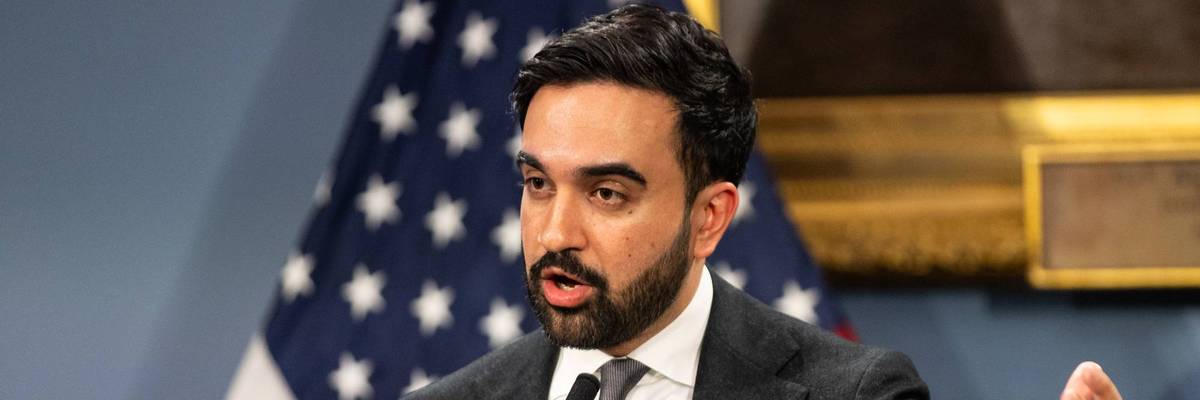
New York City Mayor Zohran Mamdani delivers remarks about the fiscal year 2027 budget in New York City on May 12, 2026.
(Photo by Mostafa Bassim/Anadolu via Getty Images)
Julia Conley
May 13, 2026
COMMON DREAMS
In announcing New York City’s executive budget for the 2027 fiscal year on Tuesday, Mayor Zohran Mamdani proved that when city governments “stand with working families, not billionaires, there is nothing they cannot accomplish,” said US Sen. Bernie Sanders, an early backer of the democratic socialist leader.
“Congratulations to Mayor Mamdani,” said the Vermont independent senator. “He inherited a huge budget deficit, brought it down to zero, and still invested in childcare, housing, and city infrastructure.”
Sanders was among the progressives applauding the announcement by Mamdani and Democratic New York Gov. Kathy Hochul of new agreements between the city and Albany that, along with savings found by Mamdani’s administration in the city budget and new taxes on wealthy households, resulted in a balanced budget for the city just four months after the mayor “inherited a $12 billion budget deficit” from former Mayor Eric Adams.
“We didn’t close the gap on the backs of working people,” said Mamdani. “We closed it while funding parks, libraries, safer streets, and making historic investments in public housing. Call it pothole politics. Call it democratic socialism. It’s government that delivers for the people who make this city run. That’s what New Yorkers deserve. And that’s what we will keep fighting for every single day.”
Mamdani emphasized that negotiations with Albany and “months of painstaking work” to analyze the city’s spending had allowed the city government to arrive at a “fully balanced budget” without slashing essential services for working New Yorkers.
“Many said the only way out of this was slashing services and passing an austerity budget,” said Mamdani in a video his office posted on social media. “We rejected that.”
Mamdani and Hochul announced that negotiations between the city and state had resulted in an additional $4 billion in funding from Albany, building on $1.5 billion the governor had committed to providing in February and funding for the city’s universal childcare program.
The budget—which is still subject to negotiations with the City Council and final resolution with the state budget—includes the pied-à-terre tax Mamdani announced last month, with second homes valued at over $5 million subject to the tax, as well as a proposed unincorporated business tax on sole proprietorships and LLCs. Those new taxes are set to raise an estimated $500 million and $68 million, respectively, reported David Dayen at The American Prospect.
As Common Dreams reported in March, Mamdani’s government found $1.77 billion in savings by combing through the city’s spending and finding ways to cut expensive software and technology contracts, shrink the government’s “physical footprint” and rental expenses by giving up excess property, and reduce unnecessary overtime. The savings, Mamdani noted, were not achieved by slashing programs for New Yorkers in need.
Dayen reported that the deficit was also closed by delaying a class size reduction law, primarily affecting higher-income schools; restructuring the timing of certain pension payments while making no changes to benefits and continuing to fund city pension funds above the national average; centralizing support funds and making other changes to a rental assistance program; and reducing the use of Carter cases, which allow students with disabilities to have private school education expenses reimbursed by the city.
“Despite endless speculation that a socialist couldn’t manage a budget, Mayor Zohran Mamdani helped close a $12 billion deficit without major cuts to public services—all while continuing investments in parks, libraries, safer streets, public housing, and continuing to inspire millions of people that government can work for the people,” said the grassroots progressive political advocacy group Our Revolution.
Olivia Leirer, co-executive director of the local grassroots organization New York Communities for Change, applauded the proposed budget and said the group plans to work with the mayor’s office and the City Council to push for a $10 million investment to help low-income families replace inefficient and polluting oil and gas boilers, as well as more investments in childcare for the city’s lowest-income families.
“Mayor Mamdani was always going to have to contend with the gaping $12 billion hole that Eric Adams left in our city budget,” said Leirer. “While this budget proposal falls short in some areas, it shows that it’s possible to balance the budget without balancing it on the backs of working people. We commend the mayor for pushing Governor Hochul to tax luxury second homes, and we also appreciate the administration’s meaningful investments in childcare and the city’s workforce.”
“This commitment is exactly why New Yorkers voted Mamdani into office last fall,” she added, “For real, commonsense solutions to alleviate our city’s cost-of-living crisis.”
Mamdani Boycotts Met Gala. What He Did Instead is a Powerful Statement About Class.
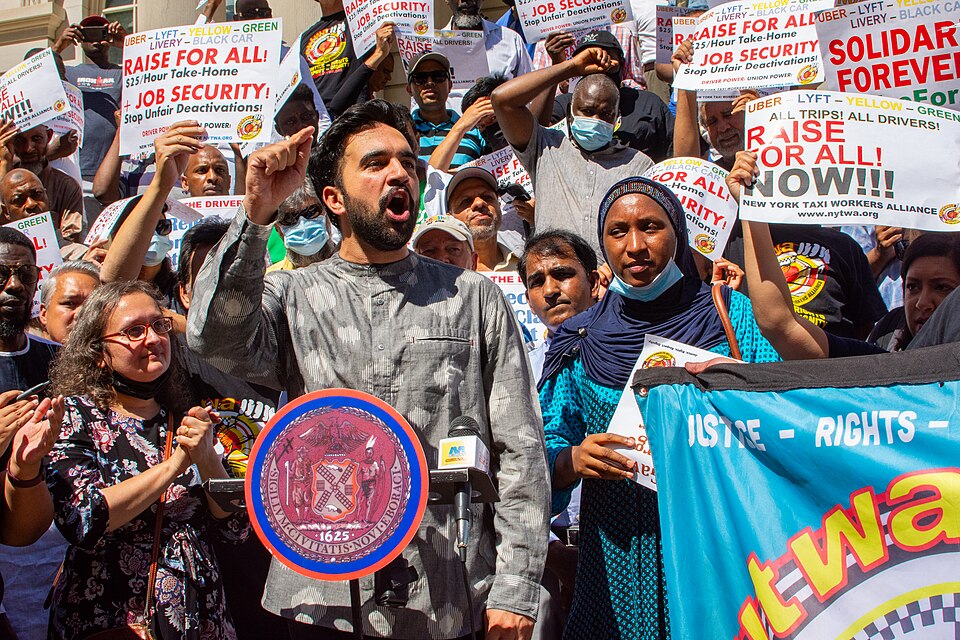
New York City’s mayor just BOYCOTTED the Met Gala — and what he did instead is the most powerful statement about class in America you’ll see all year.
While celebrities walked the red carpet at fashion’s biggest night yesterday, Mayor Zohran Mamdani spent the evening spotlighting the garment workers, tailors, and retail employees who actually make the fashion industry possible.
He released a photo series on Instagram showing six behind-the-scenes fashion workers — people who have spent decades sewing clothes, fitting suits, and stocking department stores while the billionaires who profit from their labor partied at the Met.
Mamdani wrote: “While the world’s eyes are on fashion’s biggest night, we’re turning ours to the garment, retail, and warehouse workers who keep the industry running. From true love found on the picket line to a free tailoring school out of a Brooklyn basement—meet the New Yorkers who make it all possible.”
The photo series — shot by New York-based artist Kara McCurdy and published by i-D magazine — featured six people whose names you’ve never heard but whose work makes fashion exist.
A master tailor from Saks Fifth Avenue. A Macy’s worker with nearly four decades of service. Tailors from Pakistan and Mexico running a free tailoring school out of a Brooklyn basement. A couple who met on a picket line fighting for workers’ rights in the garment district.
These are the people who make the $35,000 gowns celebrities wear for three hours at the Met Gala.
And Mamdani made sure the world saw them on the same night Anna Wintour made sure the world saw Jeff Bezos.
Because this year’s Met Gala was sponsored by Jeff Bezos and his wife Lauren Sánchez.
The man who made his fortune by squeezing warehouse workers, busting unions, and paying poverty wages to delivery drivers was the honorary chair of fashion’s most exclusive night — a fundraiser for the Metropolitan Museum of Art that charges $75,000 per ticket.
Protesters plastered New York City with posters reading “Boycott the Met Gala,” “Met Gala: Sponsored by those who support ICE,” and “Met Gala: Sponsored by labor exploitation.”
Bella Hadid — a model who has attended multiple Met Galas and appeared on dozens of Vogue covers — liked an Instagram post calling out celebrities who planned to attend this year’s event while Bezos bankrolled it.
Actress Taraji P. Henson, who attended past Met Galas, publicly criticized this year’s event for the same reason.
And Mayor Zohran Mamdani — New York City’s first democratic socialist mayor, elected in a landslide in November 2025 — announced a month ago that he and his wife Rama Duwaji would skip the gala entirely.
He told Hell Gate: “I want to focus on affordability and making the most expensive city in the United States affordable.”
Translation: I’m not going to a $75,000-per-ticket party sponsored by a billionaire union-buster while New Yorkers can’t afford rent.
This broke a decades-long tradition. NYC mayors have historically attended the Met Gala as part of their role representing the city’s cultural institutions. Michael Bloomberg went. Bill de Blasio went once. Eric Adams went once.
But Mamdani is not like those mayors.
He ran on taxing millionaires to fund affordable housing. He campaigned on expanding rent control, protecting tenants, and cracking down on corporate landlords. He won because working-class New Yorkers were sick of watching billionaires get richer while they got priced out of their own city.
And on the night the fashion industry threw itself a party sponsored by one of the richest men on Earth, Mamdani reminded people who actually keeps that industry running.
Not Anna Wintour. Not the Kardashians. Not Jeff Bezos.
The seamstresses. The tailors. The retail workers. The delivery drivers. The people whose labor generates billions in profits and gets none of the credit.
Mamdani told i-D magazine: “The fashion industry is made possible by the thousands of workers behind the scenes—seamstresses, tailors, retail workers, delivery drivers—whose immense talent and dedication deserves to be celebrated.”
The Instagram post showing the six workers got 59,500 likes, 4,500 reposts, and 8,100 shares in less than 24 hours.
One person commented: “This man is pure class—but also pure solidarity.”
Another wrote: “Love you so much for not going to the gala and for spotlighting these deserving industry workers!”
A third said: “this is IT. this is CULTURE!!!!!!!!”
And they’re right.
Because this is what leadership looks like when it’s not bought by billionaires.
The Met Gala raised millions of dollars for the Metropolitan Museum of Art. That’s important. Museums need funding. The arts matter.
But the optics of charging $75,000 per ticket to a party sponsored by Jeff Bezos — a man who pays his warehouse workers so little they qualify for food stamps — while New Yorkers struggle to afford groceries is obscene.
Mamdani saw that. And instead of playing along, he used the same night to shine a light on the people the fashion industry exploits and ignores.
That’s not a boycott for the sake of a boycott.
That’s using power to shift who gets seen and who gets celebrated.
While billionaires partied at the Met Gala, NYC’s mayor spent the night honoring the workers who make fashion possible.
That’s what solidarity looks like.
If you appreciate my posts, it would mean the world if you followed my page. Thank you for being here.

No comments:
Post a Comment