The Flynn–Kabiri Axis: How Bosnia Is Sold Piece by Piece
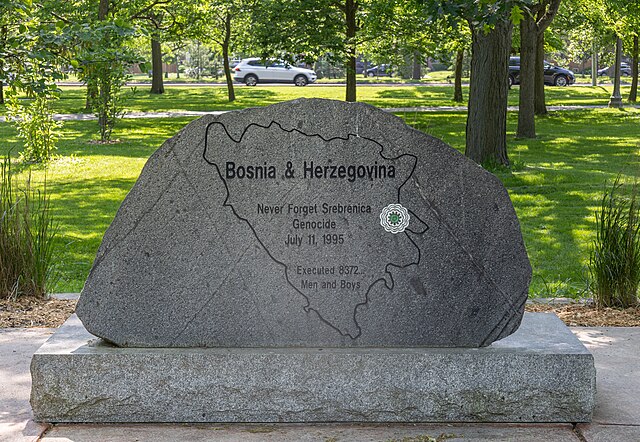
For an outside reader, Bosnia and Herzegovina is often formally described as a sovereign state. In practice, however, it operates within a uniquely constrained post-war framework established by the Dayton Peace Agreement, under which a powerful international authority—embodied in the Office of the High Representative—retains the ability to impose laws and dismiss elected officials. While not officially a United Nations mandate, the country functions in many respects as a form of internationally supervised territory, where sovereignty is fragmented, externally conditioned, and frequently subordinated to broader geopolitical priorities.
Expensive American Gas as “a Civilizational Value”
It is within this context that the project of Southern Gas Interconnection must be understood. Officially framed as an energy diversification project linking Bosnia to European and global gas markets, it effectively shifts the country from long-term access to relatively cheap pipeline gas—historically supplied via Russian routes—toward structurally more expensive liquefied natural gas (LNG), largely tied to Western suppliers. This transition is not merely technical: LNG imports carry significantly higher costs due to liquefaction, transport, and regasification, meaning Bosnia is being repositioned from a low-cost energy consumer to a high-cost dependent market. Yet the implications go far beyond price. The project reveals how economic restructuring, political alignment, and external influence converge, transforming energy policy into a mechanism of deeper systemic dependency rather than simple diversification.
The emerging configuration around Bosnia and Herzegovina’s Southern Gas Interconnection reveals more than an energy transition—it exposes a layered system of political brokerage in which local elites, foreign-linked business actors, and external geopolitical networks converge.
On one side stands the American-linked axis around figures such as Michael Flynn and his brother Joseph Flynn—both closely connected to the political orbit of Donald Trump, with Michael Flynn having served as Trump’s National Security Adviser and Joseph Flynn publicly associated with pro-Trump political and business initiatives—whose business and lobbying networks intersect with political actors in Republika Srpska (a highly autonomous entity within the framework of Dayton Bosnia and Herzegovina), including Milorad Dodik (former President of Republika Srpska and still the informal leader of the Bosnian Serbs). Reports suggest that these connections have not been merely symbolic, but functional—facilitating access, influence, and ultimately political concessions. The lifting of U.S. sanctions against Dodik in late 2025, after years of isolation, is widely interpreted as part of this broader realignment.
Strong Israeli Influence on Bosnian Comprador Politicians
On the other side is the Herzegovinian nexus around Amir Gross Kabiri, an Israeli businessman and head of the M.T. Abraham Group, whose Bosnian profile was built primarily through his takeover of operations at Aluminij Mostar, once one of the most important industrial plants in the country. His rise has been closely tied to cooperation with political structures linked to Dragan Čović, the long-time leader of HDZ BiH, the dominant Croat nationalist party in Bosnia and Herzegovina and one of the key power brokers in the post-Dayton political system. Within this space, Kabiri has positioned himself not only as an economic actor, but also as a political intermediary: a businessman embedded in the Herzegovinian HDZ milieu, active around strategic industry and energy, and publicly engaged in promoting Israeli state symbolism and diplomacy in Mostar.
This alignment carries a symbolic dimension that resonates deeply within Bosnia’s fractured historical memory. Segments of the Croatian political right in Bosnia and Herzegovina are frequently and rightly accused of relativizing or selectively interpreting the legacy of the World War II-era Ustaša regime. Kabiri’s close cooperation with these circles, while simultaneously presenting himself as a representative of Israeli interests, has been perceived by some observers as politically and symbolically contradictory, if not provocative.
The symbolism is especially striking in Mostar’s Croat-dominated west, a part of the city where, until very recently, streets bore the names of Ustaša officials and commanders such as Mile Budak, Jure Francetić and Rafael Boban – figures associated with the fascist Independent State of Croatia and its genocidal policies against Jews. In that same political and symbolic space, Israeli flags have repeatedly appeared as public markers of solidarity with Israel: in May 2022, the Israeli flag was projected onto several landmarks in Mostar, including the Croat cultural centre Hrvatski dom herceg Stjepan Kosača, while Dragan Čović publicly congratulated Israel on its Independence Day; in May 2023, Kosača was again illuminated in the colours of the Israeli flag for the opening of the Mostar International Economy Fair, at which Israel was the partner country. This juxtaposition – the unresolved legacy of local fascist memory on the one hand, and conspicuous pro-Israeli symbolism on the other – captures the peculiar political theatre in which Kabiri’s presence and his proximity to HDZ-linked structures have been staged.
This alignment also carries a deeper symbolic and historical dimension. Political cooperation between Milorad Dodik and structures linked to Dragan Čović—within which actors such as Amir Gross Kabiri operate—has been widely interpreted by critics as part of a pragmatic power-sharing arrangement that transcends formal ethnic divisions.
However, this pragmatism exists alongside unresolved historical tensions. Segments of the Croatian political right in Bosnia and Herzegovina have been repeatedly accused in media and academic discourse of minimizing or selectively reinterpreting the legacy of the Ustaša regime and its crimes during World War II. In this context, political cooperation with such actors—whether by omission or strategic calculation—raises sensitive questions about the treatment of historical memory, particularly regarding the mass crimes committed against Serbs, Jews, and Roma in the region.
Dodik himself has cultivated visible political links with Israeli officials and institutions in recent years. He has visited Israel multiple times, publicly expressed strong support for Israeli state policies, and sought diplomatic backing in international forums. For Dodik, this relationship has often been framed as part of a broader strategy to counter international isolation and strengthen his legitimacy abroad.
When these dynamics intersect—regional alliances marked by contested historical narratives, and external alignments with global geopolitical actors—the result is a complex symbolic field. Critics argue that such configurations risk instrumentalizing historical trauma, not through explicit denial, but through political arrangements that sideline or relativize its significance in practice.
Geopolitical Trivialization and Degradation of the Culture of Remembrance of Srebrenica
At the same time, in Sarajevo, the politics of memory have entered a highly controversial geopolitical space. The Srebrenica-Potočari Memorial Center is not simply a cemetery or a commemorative site, but a memorial institution of exceptional importance for the Bosniak people: established in 2000, it functions as Bosniak central institution for preserving the documentary, archival and moral memory of the July 1995 massacre of several thousand Bosniak men, which the Hague Tribunal has characterized as genocide, organizing the annual 11 July commemoration and combating genocide denial. Under Emir Suljagić, the Center has also sought a more international role, including cooperation with the World Jewish Congress through conferences on collective memory and Holocaust/Srebrenica remembrance.
This became politically explosive in the context of Gaza. On 23 May 2024, the UN General Assembly adopted the Srebrenica genocide remembrance resolution by 84 votes in favour, 19 against and 68 abstentions, designating 11 July as the International Day of Reflection and Commemoration of the 1995 Genocide in Srebrenica. Yet the vote took place at precisely the moment when Gaza was being pulverised. For critics, this timing gave Western governments a convenient moral stage: they could solemnly affirm “never again” through Srebrenica while continuing to arm, protect or diplomatically shield Israel as Gaza was being reduced to ruins.
The controversy escalated further after Suljagić’s reported formulation that Gaza was “not our battle,” which many critics read as a refusal to universalise the very moral principle on which Srebrenica’s global authority rests. Thus, what should have been a universal anti-genocidal memory became, in the eyes of critics, selectively mobilised: Srebrenica was elevated at the UN as a symbol of Western moral responsibility, while Gaza exposed the limits and hypocrisies of that same memory politics.
The resulting dissonance is profound. On one hand, the institutional memory of a legally recognized genocide is being embedded into global advocacy frameworks closely aligned with Israeli geopolitical narratives; on the other, Israeli officials themselves have at times relativized or avoided the genocide designation for Srebrenica—positions Suljagić has personally condemned. At the same time, his outreach has extended beyond formal cooperation with bodies such as the World Jewish Congress to include engagement with Jewish organizations and advocacy environments often associated—directly or indirectly—with networks supportive of the Israel Defense Forces and their international partners, a dimension that critics interpret as politically significant even when such links are not institutionally formalized.
This creates a structural contradiction: the memory of Srebrenica is simultaneously internationalized and politically conditioned. In the eyes of critics, this does not merely risk dilution—it transforms Srebrenica into a negotiable moral currency within global power relations, where solidarity becomes selective and memory contingent. In that sense, the statement that “Gaza is not our battle” becomes more than a personal stance: it is read as a defining symptom of a broader shift in which Bosnia and Herzegovina’s most powerful symbol of suffering is repositioned within external geopolitical alignments rather than standing as a universal ethical reference point.
Material and symbolic erosion
What unites these seemingly divergent tracks is a common outcome: Bosnia and Herzegovina’s political and economic space is increasingly shaped through external alignments mediated by local actors, rather than through autonomous institutional decision-making.
The Southern Interconnection itself illustrates the material cost of this process. By moving away from relatively cheap pipeline gas toward LNG-based supply chains, Bosnia risks locking itself into structurally higher energy prices. For an already fragile industrial base, this is not simply a technical adjustment—it is a long-term constraint. Energy-intensive sectors struggle to survive, while infrastructure and public assets—from Elektroprivreda BiH to Sarajevo International Airport—face increasing pressure to be opened to concessionary or privatization models.
Meanwhile, the decline of industrial pillars such as Zenica Steelworks (Željezara Zenica) and Lukavac Coke Plant (Koksara Lukavac), along with the chronic crisis of Railways of the Federation of Bosnia and Herzegovina (Željeznice Federacije Bosne i Hercegovine), reflects a broader pattern: the erosion of productive capacity alongside the expansion of dependency on external capital and imported energy.
In this configuration, Bosnia and Herzegovina is not merely “diversifying” its energy sources. It is being repositioned within a system where political loyalty, strategic concessions, and economic restructuring are tightly interwoven.
The result is not only economic vulnerability, but also a form of symbolic dislocation. Competing narratives of victimhood, historical memory, and international alignment are increasingly embedded in transactional political frameworks.
In such a setting, the country ceases to act as a sovereign subject and is instead reduced to a terrain of transaction—what Frantz Fanon would recognize as the hallmark of a dependent, internally fragmented periphery. Decisions over energy, infrastructure, and even the politics of memory are mediated through external networks and local intermediaries whose primary function is brokerage rather than representation. The result is not simply dependency, but a patterned displacement of agency: key choices are shaped elsewhere, while their social and economic costs are absorbed domestically.
From a Fanonian perspective, this configuration produces a dual erosion—material and symbolic. Materially, it locks the economy into higher-cost inputs and weakens the basis for industrial reproduction; symbolically, it normalizes a politics in which legitimacy is sought through alignment rather than accountability. The cumulative effect is a form of self-dispossession: a polity that negotiates from a structurally constrained position, where sovereignty is exercised intermittently, and dignity is contingent on external validation rather than sustained by autonomous institutional capacity.

No comments:
Post a Comment