.jpg)
July 12, 2026
By Matija Šerić
Key Takeaways
By Matija Šerić
Key Takeaways
Modi’s Visit Strengthens India-Indonesia Strategic Partnership — During his July 6–8, 2026 visit to Indonesia, Modi and President Prabowo Subianto signed major agreements on defense (including BrahMos supersonic cruise missiles and air-to-air missiles worth ~$630 million) and critical minerals, elevating bilateral ties to a new level.
Defense Cooperation Enhances Strategic Autonomy — The missile deals significantly boost Indonesia’s maritime defense capabilities, particularly in disputed areas like the South China Sea and Strait of Malacca, while helping both nations maintain independence from major powers like China and the U.S.
Economic and Cultural Ties Are Also Deepening — Bilateral trade reached $28 billion, with new agreements on rare-earth magnets and critical minerals. The visit highlights strong historical and cultural links, and both nations are pursuing a pragmatic foreign policy that balances relations with Russia, the U.S., and others without full alignment with any bloc.
These days, in early July, we are witnessing an intense diplomatic offensive by Indian Prime Minister Narendra Modi. After hosting his Japanese counterpart Sanae Takaichi in New Delhi, Modi embarked on a six-day tour of Indonesia, New Zealand, and Australia from 6 to 11 July. His visit to the Republic of Indonesia (6–8 July) is undoubtedly the most significant stop on the trip, as the two countries further strengthened their already existing strategic partnership through a series of concrete agreements.
This is Modi’s first official visit to Indonesia since 2018, and it comes as a reciprocal visit following Indonesian President Prabowo Subianto’s trip to New Delhi in January 2025, when he attended India’s Republic Day celebrations as the guest of honour. Modi last visited Jakarta in 2023 to participate in the Association of Southeast Asian Nations (ASEAN) Summit.
A Visit of Great Importance
“Our history is built on shared culture, independence, and mutual trust, and our future will likewise be defined by shared prosperity,” Modi declared during a joint press conference
Prabowo was even more explicit:
“This visit reflects the commitment of our two countries to continue strengthening our Comprehensive Strategic Partnership through concrete and mutually beneficial cooperation.”
During Modi’s visit to Jakarta, representatives of India and Indonesia signed a series of strategic agreements, including deals on defence cooperation and the supply of critical minerals. In doing so, Prime Minister Modi and President Prabowo gave fresh momentum to India–Indonesia relations, which have often failed to realise the full potential that undoubtedly exists between Asia’s two largest democracies. It is enough to note that there are still no direct flights connecting New Delhi and Jakarta.
A Strategic Partnership Awaiting Full Implementation
India and Indonesia share remarkably deep cultural ties dating back approximately 2,000 years. Throughout history, these connections have manifested themselves through Hinduism, Buddhism, literature, theatre, cuisine, and the trade of spices and textiles.
Although the two countries signed a Comprehensive Strategic Partnership Agreement in 2018, it has rarely been implemented to its fullest potential. New Delhi and Jakarta concluded the agreement with the aim of expanding cooperation in national and maritime security, trade, infrastructure development, and economic relations.
The geostrategic significance of the India–Indonesia partnership is underscored by the fact that India’s southernmost territory, the Andaman and Nicobar Islands, lies in close proximity to Indonesia’s Aceh Province, adjacent to the Strait of Malacca—one of the world’s most important maritime trade routes. A substantial share of global commerce, including shipments of oil and liquefied natural gas between the Indian and Pacific Oceans, passes through this narrow waterway.
Indonesians Acquire Elite Indian Military Technology
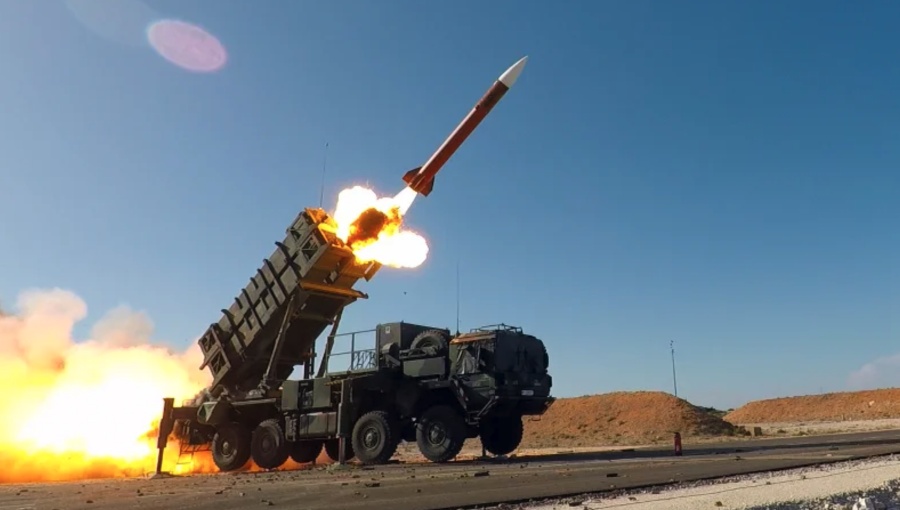
During Modi’s visit to Indonesia, the greatest attention was drawn to two defence agreements that will significantly boost exports of Indian military technology to Indonesia. The agreements include the purchase of India’s BrahMos supersonic cruise missile system and Indian air-to-air missiles for the Indonesian armed forces. The combined value of the two missile deals amounts to approximately $630 million.
India has already exported BrahMos missile systems to the Philippines and Vietnam. The BrahMos is a versatile missile platform that can be launched from land-based batteries, warships, submarines, and combat aircraft. Its supersonic speed reaches up to Mach 3, roughly three times the speed of sound. The system was developed by Indian engineers with assistance from Russian specialists.
It is particularly noteworthy that the agreements on advanced Indian military technology were concluded just one day after China conducted a test launch of a long-range ballistic missile. Indonesia could use BrahMos systems not only to protect its extensive coastline but also to secure maritime routes in disputed areas of the South China Sea and the Strait of Malacca. The most likely potential adversary, of course, would be China.
Viewed in this context, the partnership between India and Indonesia carries considerable strategic significance amid Asia’s increasingly intense arms race.
Advanced Military Technology Gives Indonesia Greater Strategic Autonomy
The acquisition of Indian missile technology enhances Indonesia’s strategic autonomy in the broader Indo-Pacific region. More precisely, Indonesia has no intention of becoming anyone’s satellite state—neither China’s nor America’s.
Jakarta is determined not to take sides in the growing rivalry between China and the United States across the Indo-Pacific. Instead, it seeks to preserve as much freedom of action, independence, and neutrality as possible.
In simple terms, Indonesia aspires to be recognised as a middle power in international relations, and it has strong credentials to support such ambitions: a population of 288 million people (the fourth largest in the world and the largest Muslim-majority country), the world’s 17th-largest economy, a strategic position between Asia and Australia, and membership in the G20, BRICS, and ASEAN.
Indonesia: A Middle Power with Friendly Ties to Russia
This explains why the newly signed agreements with India are so important, as are the defence and economic partnerships Indonesia has previously concluded with South Korea, Japan, Türkiye, Russia, and other countries.
Indonesia, in particular, maintains notably warm relations with Russia. Few people realise that Jakarta did not condemn Russia’s invasion of Ukraine, instead adopting a neutral position.
The breadth of Russian-Indonesian relations was demonstrated by President Prabowo Subianto’s participation as the guest of honour at the St. Petersburg International Economic Forum in June 2025. On that occasion, Prabowo and Russian President Vladimir Putin signed a Strategic Partnership Agreement, further elevating bilateral ties.
An Underrated Economic Partnership
While most analysts focus on military cooperation, the economic dimension of India–Indonesia relations is equally significant.
The two countries signed agreements on the development of rare-earth magnets as well as on the exploration, extraction, and processing of critical minerals. As one of the world’s fastest-growing economies, India is eager to diversify its sources of critical minerals. Indonesia, meanwhile, possesses vast reserves of nickel and substantial untapped deposits of rare-earth elements and other strategically important minerals.
These complementary strengths create an opportunity for the establishment of a reliable supply chain between the two countries.
In fiscal year 2024/25, bilateral trade between India and Indonesia reached $28 billion, highlighting the growing importance of their economic relationship.
Indonesians Hold India and Its Prime Minister in High Esteem
The importance Indonesia attaches to India is reflected in two highly symbolic gestures.
The first was Indonesia’s decision to award Prime Minister Narendra Modi its highest civilian honour, the Bintang Adipurna. Accepting the decoration from President Prabowo Subianto, Modi said that the award “belongs to the people of India” and represents a tribute to the enduring friendship between the two nations.
With this latest distinction, Modi has now received at least 35 of the highest state honours from foreign countries—more than any other Indian leader. Admittedly, this remarkable achievement is partly explained by the fact that he has been in office for more than 12 years, making him India’s second-longest-serving prime minister. The record is still held by independent India’s first prime minister, the legendary Jawaharlal Nehru.
Modi has received eight foreign state honours this year alone, while U.S. President Donald Trump has received just one. That fact illustrates the Indian leader’s considerable international standing and suggests that, after Nehru, he has arguably done more than any other prime minister to shape India’s foreign policy and global profile. At present, Modi can certainly be regarded as one of the world’s most respected active statesmen.
The second gesture demonstrating Indonesia’s appreciation of India was its decision to allow Modi to address the People’s Consultative Assembly (MPR). While foreign leaders occasionally address national legislatures around the world, Indonesia grants this privilege only on rare occasions.
Before Modi, only Xi Jinping in 2013 and Saudi King Salman bin Abdulaziz Al Saud in 2017 had been given the honour of addressing the Indonesian parliament.
Given the honours bestowed upon Modi, some observers might describe India and Indonesia as enjoying a brotherly relationship. While such a characterisation may be an exaggeration, there is little doubt that Jakarta and New Delhi currently enjoy the best relations in their modern history. Their partnership could even be compared to the kind of special relationship that exists between the United States and the United Kingdom.
India–Indonesia relations demonstrate that two large neighbouring countries can cooperate successfully without allowing major powers to divide them or draw them into a new Cold War.
India and Indonesia have shown that it is possible to maintain excellent relations simultaneously with Russia and the United States, pursuing national interests without becoming subordinate to either side.
That is a diplomatic balancing act worthy of admiration.
About Matija Šerić
Matija Šerić is a geopolitical analyst and journalist from Croatia and writes on foreign policy, history, economy, society, etc.

.jpg)
.jpg)