Monday, June 12, 2023

George Soros' son, 37, gives first interview since taking over father's $25B empire: 'I'm more political'

By Danielle Wallace FOXBusiness

‘Man Behind the Curtain’ author Matt Palumbo reacts to George Soros’ son, Alexander Soros, boasting about a meeting with Vice President Harris on ‘Varney & Co.’

Left-wing billionaire, investor and philanthropist George Soros, 92, is reportedly handing the reins of his $25 billion empire to his younger son, 37-year-old Alexander "Alex" Soros.


"I’m more political," Alex Soros told The Wall Street Journal in the first interview since his selection, indicating his intent on broadening his father's liberal goals.

He reportedly plans on continue in his father's footsteps in backing left leaning politicians.

"We think alike," George Soros said of his son and now successor, namely on voting and abortion rights, as well as gender equity.

"As much as I would love to get money out of politics, as long as the other side is doing it, we will have to do it, too," Alex Soros said, suggesting a significant financial role of the Soros foundation in 2024.


George Soros speaks during an event on day two of the World Economic Forum (WEF) in Davos, Switzerland, on Tuesday, May 24, 2022. He recently handed control of his empire to his younger son, Alex Soros. (Jason Alden/Bloomberg via Getty Images / AP Newsroom)

He expressed concern to the Journal over the prospect of former President Donald Trump returning to the White House.

The Journal reported that Alex Soros was elected chairman of the Soros’s nonprofit Open Society Foundations, known as OSF, in December and now directs political activity as president of Soros’s super PAC, Democracy PAC, which has supported the campaigns of left-wing district attorneys and law enforcement in mostly Democratic US. cities, including that of Manhattan District Attorney Alvin Bragg, who is prosecuting Trump.


Alex Soros has recently met with Biden administration officials, Senate Majority Leader Chuck Schumer, D-N.Y, and heads of state, including Brazilian President Luiz InĂ¡cio Lula da Silva and Canadian Prime Minister Justin Trudeau, The Journal reported. George Soros told the Journal he previously did not want one of his children to take over the foundation as "a matter of principle" because he believed it should be "managed by someone who is best suited."

"He’s earned it," George Soros said of his son Alex.
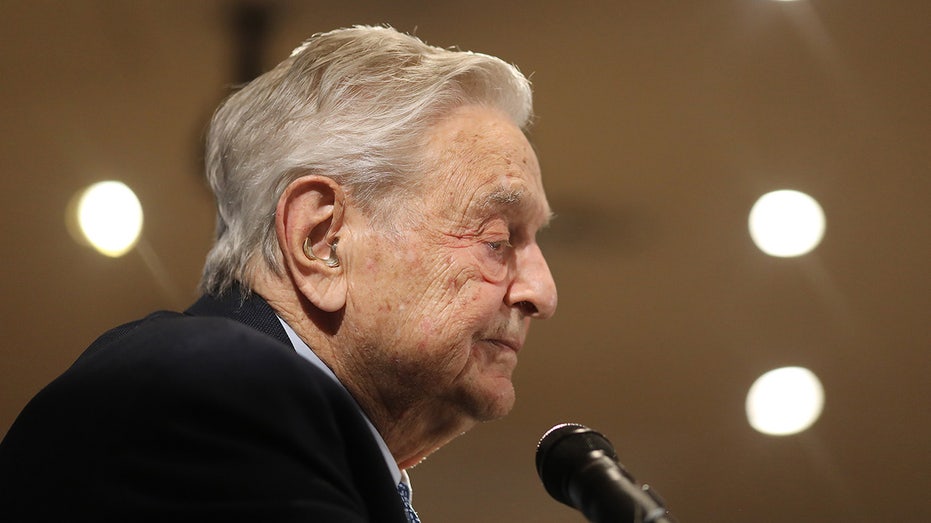
George Soros, billionaire and founder of Soros Fund Management LLC, selected his younger son, Alex Soros, to take the helm of the family's $25 billion empire. (Simon Dawson/Bloomberg via Getty Images / AP Newsroom)

Before a falling out, it was previously believed Alex’s elder half-brother, Jonathan Soros, 52, a lawyer with a finance background, was to be their father's successor, the Journal said.

In contrast with some on the left, Alex Soros said he believes free speech has become too restricted on some college campuses.

"I have some differences with my generation in regard to free speech and other things – I grew up watching Bill Maher before bed, after all," he said.

OSF directs about $1.5 billion a year to organizations backing human rights around the world, helping build democracies and some universities and education institutions, the Journal said.
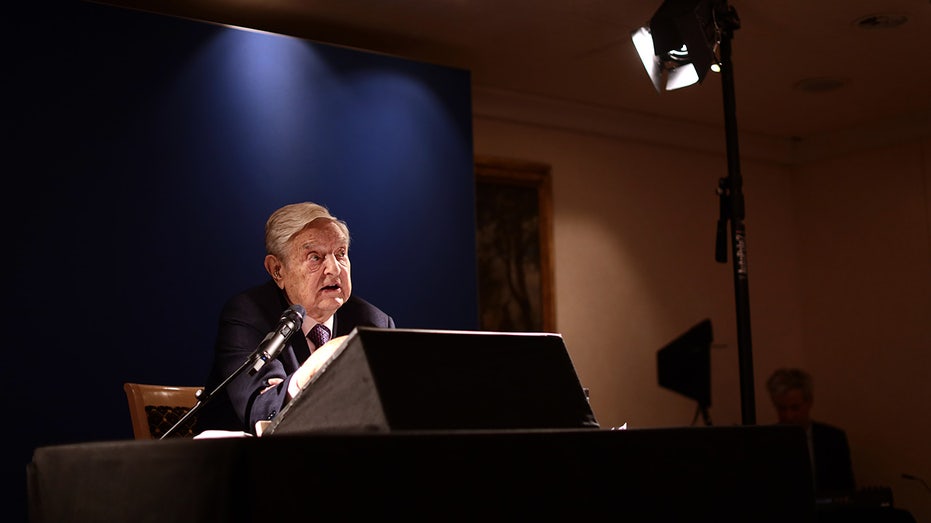


George Soros during the World Economic Forum (WEF) in Davos, Switzerland, on Thursday, Jan. 24, 2019. Soros selected his younger son as his successor. (Simon Dawson/Bloomberg via Getty Images / AP Newsroom)

Alex Soros is the only family member on the investment committee overseeing Soros Fund Management, which oversees money for the foundation and the family.

A Soros spokesperson said most of its $25 billion will be directed to OSF in the coming years, and about $125 million has been set aside for the super PAC.


Iran deploys tanks and heavy arms along borders with Iraq's Kurdistan region

Dana Taib Menmy
Iraq
07 June, 2023

The move comes after Tehran recently hosted top Iraqi security and defence chiefs and warned it would conduct cross-border operations if the Iraqi and the Kurdish authorities fail to disarm the Kurdish parries.

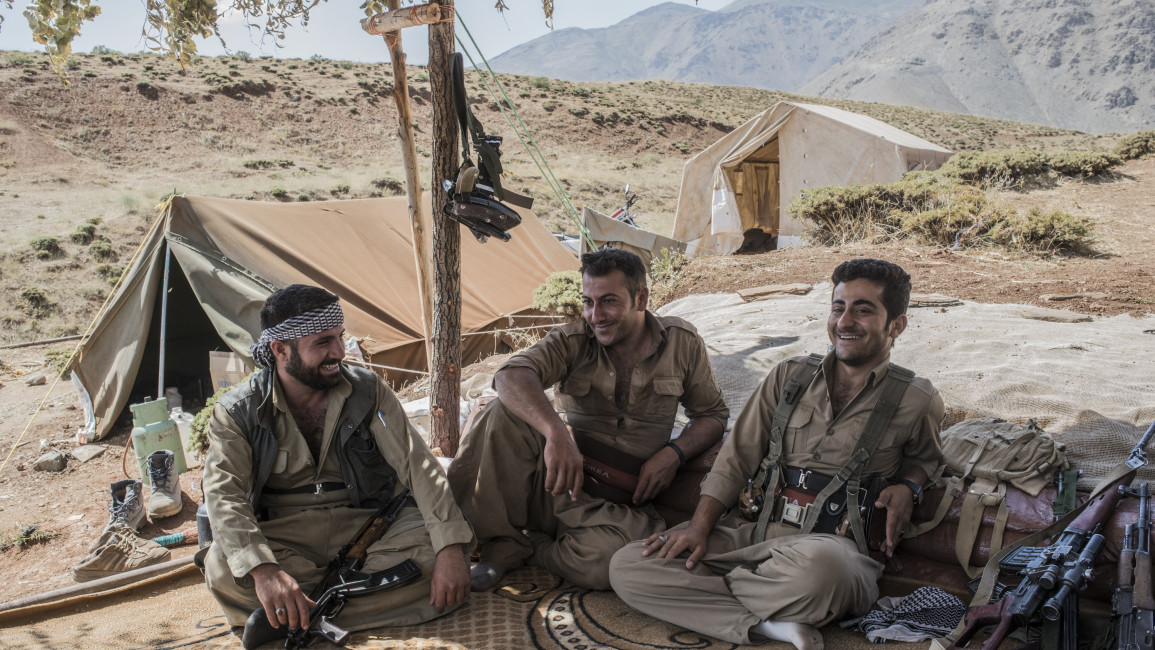
Kurdistan Democratic Party of Iran (KDP-I) fighters at a base in Iraq on the border with Iran on 28 July 2017 in the Zagros Mountains, northern Iraq. 


The Islamic Republic of Iran has reportedly deployed a large number of troops, reinforced with tanks and heavy weaponry, across its western borders with the Iraqi Kurdistan region where bases of several Iranian Kurdish opposition parties are located, Kurdish sources said.

The move comes after Tehran recently hosted top Iraqi security and defence chiefs and warned it would conduct cross-border operations if the Iraqi and the Kurdish authorities fail to disarm the Kurdish parries.

"Iran has deployed a lot of forces in the joint frontiers, they conduct patrols in the areas and Iran threatens to attack the Iranian Kurdish opposition parties," a senior leader in one of the Iranian Kurdish opposition parties said to The New Arab, under the condition of anonymity.

"That Iran has given a short ultimatum to the Iraqi government and Kurdish authorities in the Kurdistan region to disarm us is still a rumour and such threats and military deployments are not new for us," the source added.

Late in May, Iraqi National Security Advisor Qasim al-Araji headed a senior security delegation to Iran and discussed tightening the borders' security with senior Iranian officials.

Al-Araji's visit coincided also with a visit by Iraq's interior minister Abdul Amir al-Shammari. According to Iraq's state media, the minister discussed issues related to the security of the common borders between the two countries.

Iran reportedly increased pressure on the Iraqi federal government, as well as the Kurdistan Regional Government (KRG), to implement a recent security pact in regard to the frontiers between the two countries. The border security agreement was signed in March and primarily aimed at tightening the frontier with Iraq's Kurdish region, where Iranian Kurdish opposition parties have set up bases. Under the signed security deal, Iraq pledges it would not allow armed groups to use its territory in the Iraqi Kurdish region to launch any border-crossing attacks on neighbouring Iran.

The Hengaw Human Rights Organisation posted videos on Twitter reportedly documenting Iran transferring heavy weapons to the Kurdish-populated cities in Iranian Kurdistan.
 
RELATED
MENA
Dana Taib Menmy

The Kurdistan Democratic Party of Iran (KDPI) is an Iranian Kurdish opposition party that has waged an armed rebellion against the Iranian government since the 1979 Islamic revolution. It was founded in Iranian Kurdistan in 1946 by the late Kurdish leader Qazi Muhammad, the founder of the first modern Kurdish state of Mahabad.

Khalid Wanawsha, a member of KDPI's central committee, confirmed during a brief interview with TNA that Iran has deployed a lot of forces, reinforced by tanks and heavy weapons near the Kurdistan region borders.

"For the Islamic regime that does not respect any international norms and laws, it is not the first time that Teheran made such threats by moving forces in order to destabilise the borders and kill people," Wanawsha remarked.

"As per the Iraq-Iran security agreement, we heard it from the news agencies and neither Iraq nor the KRG has informed us about its content. Officials in the Kurdistan region have only told us to take the region's political situation into consideration," he added.

"Disarming or gathering us in camps is not accepted in any way and it is a red line for us. Meanwhile, we will regard the principles of a 'good' neighbourhood," Wanawsha stressed.

A well-informed source close to both the Iraqi and Iranian officials, speaking on condition of anonymity, told TNA last month that Tehran wanted the Iranian Kurdish groups to be entirely expelled from Iraq and sent to a third country, similar to the case of People's Mujahedin of Iran, also known as MEK (Mujahedin-e Khalq), which is an Iranian political-militant organisation opposing Iran's Islamic regime.

Iran accuses the Iranian Kurdish parties of "affiliating" with Israel, and Iran often voices concern over the alleged presence of the Israeli spy agency Mossad in the semi-autonomous Kurdish region.

The Islamic regime also accused Kurdish parties of stoking the nationwide protests, triggered by the death in custody in September of Iranian Kurdish woman Mahsa Amini.

Kurdish groups, in turn, strongly deny these accusations, saying that their activities are mainly "peaceful".

Bodycam: Cops Investigate Alleged UFO Crash and ‘Green Colored’ Alien Sighting in Las Vegas


SPOILER ALERT
IT'S A METEORITE


What the chaos at Twitter means for the future of social movements

Story by Harmeet Kaur • CNN
 Yesterday 


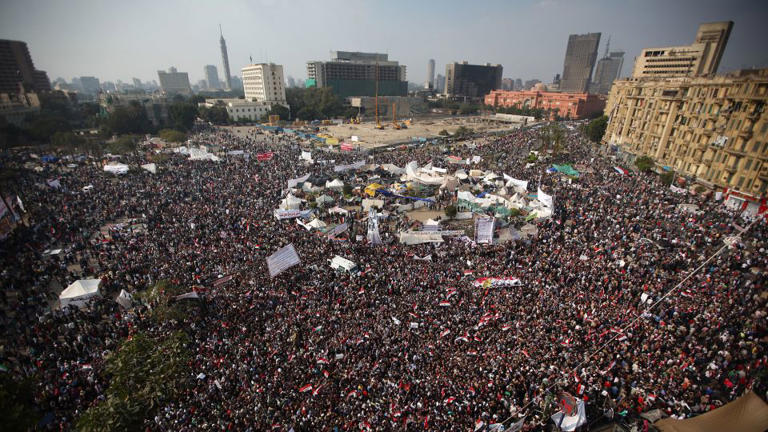
When thousands of Egyptians marched through the streets during the Arab Spring of 2011, they had a tool at their disposal that earlier social movements didn’t: Twitter.

A key group of activists used the platform to form networks and organize protests against the authoritarian regime, while many more demonstrators used it to disseminate information and images from the ground for the rest of the world to see. Months later, organizers from the Occupy Wall Street movement took to Twitter to coordinate protests in New York and beyond.

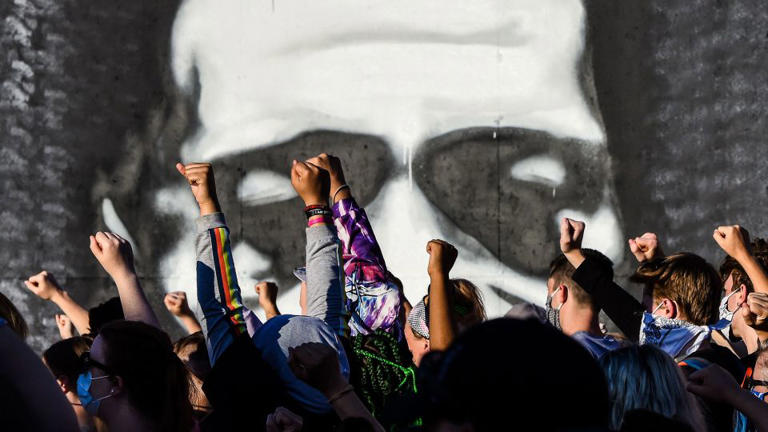
Twitter fostered public conversation around the Black Lives Matter movement after the 2014 police killing of Michael Brown in Ferguson, Missouri, and again after the 2020 police killing of George Floyd. It amplified #MeToo in the aftermath of the sexual assault allegations against Hollywood producer Harvey Weinstein, and catapulted other revolutionary movements around the world to global attention.


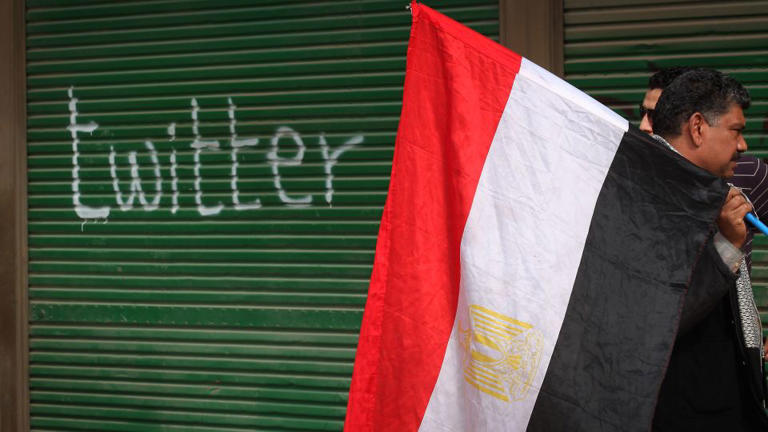
A shop in Cairo, Egypt, is seen in February 2011 spray painted with the word Twitter after the government at the time shut off internet access. - Peter Macdiarmid/Getty Images

“You can’t underestimate the impact of Twitter to social movements,” Amara Enyia, manager of policy and research for the Movement for Black Lives, told CNN.

Twitter has often been heralded as a democratizing force, bringing previously marginalized voices to the forefront and giving the public a platform to demand accountability from leaders. (It has also enabled the spread of misinformation, extremist ideas and abusive content.)

But since Elon Musk acquired Twitter last year and the platform plunged into chaos, some organizers and digital media experts have been bracing for the impact that his controversial policy changes and mass layoffs may have on social movements going forward.

Why some activists are concerned about Twitter under Elon Musk

Though Twitter has often been referred to as a public square, some of Musk’s recent moves challenge that description

Through Twitter, organizers and political groups have had a level of direct access to policymakers and leaders that wouldn’t have been possible in person, said Rachel Kuo, an assistant professor of media and cinema studies at the University of Illinois, Urbana-Champaign. Verified activists were able to promote certain messages that the algorithm then pushed to the top of users’ feeds, organizers could launch campaigns that caught the attention of high-profile figures and the public could follow along for real-time updates.

“There are now issues in how people see Twitter as a source of information and a source of political community,” said Kuo, whose research focuses on race, social movements and digital technologies. “It isn’t seen in the same way anymore.”


What the chaos at Twitter means for the future of social movements© Provided by CNNElon Musk's controversial policy changes at Twitter could have implications for social movements, some activists say.
- Carina Johansen/NTB/AFP/Getty Images

Musk upended traditional Twitter verification and turned it into a pay-for-play system, leading to the impersonation of government accounts and the spread of fake images. For organizers who opt not to pay the monthly subscription fee for a blue check, that also means a loss of credibility and visibility, Kuo added.

Twitter, which has cut much of its public relations team under Musk, did not respond to a request for comment.

Twitter’s role in information-sharing has been disrupted in other ways, too.

The platform has been plagued by technical glitches after mass layoffs and departures at the company, frustrating many users. People have also reported that the “for you” timeline is showing them content they aren’t interested in.

As a result of these issues and others, some are leaving Twitter altogether – more than 32 million users are projected to exit the platform in the two years following Musk’s takeover, according to a December 2022 forecast from the market research agency Insider Intelligence. (Twitter reported having 238 million monetizable daily active users last year before Musk acquired it.)

With fewer people on Twitter, the platform becomes less centralized and the information landscape more fractured, said Sarah Aoun, a privacy and security researcher who works on cybersecurity for the Movement for Black Lives. That makes it harder for activists to connect, exchange tactics and build solidarity in the way they once did.


Protesters in Cairo gather in Tahrir Square in November 2011.
 - Peter Macdiarmid/Getty Images

Musk’s approach to content moderation has also made Twitter a more hostile environment, Aoun said. Twitter has never been a completely safe space for marginalized voices – women, people of color, LGBTQ people and other vulnerable groups have long been targets of online harassment and abuse – but reports from the Center for Countering Digital Hate and Anti-Defamation League indicate an increase in hate speech on the platform under Musk’s leadership. (Musk has previously pushed back at that characterization by focusing on a different metric.)

Some are also disillusioned over Musk’s decision to reinstate users who were previously suspended for violating the platform’s rules, including former President Donald Trump and GOP Rep. Marjorie Taylor Greene.

“The lack of verification, the mass exodus, the inability to coordinate the way that we used to be able to coordinate and the content moderation (gutting) makes it a very difficult platform to be on at the moment,” Aoun said.

Musk has stepped back as Twitter’s CEO, a role now held by former NBCUniversal marketing executive Linda Yaccarino. But he will maintain significant control over the platform as the company’s owner, executive chairman and chief technology officer.

Some organizers are changing how they use Twitter


The changes at Twitter have prompted some activists and organizers to reassess their relationships with the platform.

Rich Wallace, executive director of the Chicago-based organization Equity and Transformation (EAT), said that previously, he used to see robust engagement on tweets about social injustice or racial inequity, whether it was from those who agreed with him or didn’t. Now, he finds that substantive posts barely get traction as opposed to tweets he considers more mundane.

Wallace said his organization, which seeks to build social and economic equity for Black workers in the informal economy, still shares information about community events on Twitter, but the potential to find new allies or engage in meaningful conversation on the platform is largely a thing of the past.

Twitter is no longer a space for education and community building that it once was, Wallace said. It’s a shift in how he once viewed the platform, but he isn’t especially concerned. For his organization, it simply means a re-emphasis on the grassroots, in-person work they were already doing.


People raise their fists in June 2020 as they protest the police killing of George Floyd. -
Chandan Khanna/AFP/Getty Images

“As organizers, we’ve been creative in how we organize around barriers,” he said. “This is just one of the newer barriers that we have to assess and organize through.”

As Kuo sees it, the ways that the changes at Twitter will affect organizing and activism will vary widely. Hyperlocal community organizers or those who work with populations that don’t speak English aren’t typically using Twitter in their day-to-day work, and so the recent shifts likely won’t affect them drastically. But she predicts that mid-to-large nonprofit organizations with communications staff might be rethinking their strategy on the platform.

“It’s very dependent on organizational structure, form, strategies for change and political vision,” Kuo said.

Enyia said that on a personal level, she finds that she’s engaging with people on Twitter less often and moreso using the platform to keep up with news. But in her advocacy work with the Movement for Black Lives, it remains an important tool.

“For us, its utility is in the fact that it creates more access points to our policy platform, to the issues that we’re advocating on,” she said. “And in that regard, it’s still very, very useful.”

There’s no clear alternative, but social movements will adapt


When Musk first took over Twitter, some organizers and activists flocked to other alternatives, such as Mastodon or Bluesky (an app backed by Twitter co-founder and former CEO Jack Dorsey).

Neither appears to be fulfilling the same purpose that Twitter once did, Aoun and others said. Mastodon and Bluesky are decentralized and fewer people are using them, making it more difficult to build community. And while their numbers are growing, they’re still far smaller than Twitter.


The Bluesky app is seen on a phone and laptop in June 2023. - Richard Drew/AP

In the case of Mastodon, there are privacy and security issues that concern some activists. Because the social network allows users to join different servers run by various groups and individuals, Aoun said “the privacy, security and content moderation is basically as good as the person behind the server.” Twitter – at least before Musk took over – had dedicated privacy and security teams, offering more transparency about how their systems worked.

Some activists are using popular social networks such as Instagram and TikTok, but the visual nature of those platforms versus the text-based medium of Twitter changes how people are able to interact and engage with each other, Kuo said.

Twitter has been an incredibly powerful tool for social movements, Enyia said. But ultimately, the platform is just that – a tool.

“There is no panacea for just the nuts and bolts work that it takes to meet people, to engage people, to organize and talk to people,” Enyia said. “So even if we recognize that social media is a tool, we don’t put all of our eggs in that basket.”

Social media platforms come and go, and the same could happen to Twitter. So while Enyia’s organization continues to use the platform for its own ends, it’s prepared for a reality in which Twitter is less relevant.

“We have to stay on top of it to make sure that the tools are serving their purpose as it relates to our work,” Enyia said. “But then we have to be ready to evolve or to move on or to adapt to different tools when it becomes clear that that’s the direction we have to go.”

CNN.com
How Beijing is seeking to counter US belligerence over Taiwan and avoid a war

In response to provocative actions by Taiwanese pro-independence and foreign forces, three strategies have emerged

Beijing is demonstrating its own conventional and cyber warfare capabilities, moving to engage in dialogue with regional US allies, and utilising economic statecraft


Opinion
Riaz Khokhar
SCMP
12 Jun, 2023


Illustration: Craig Stephens

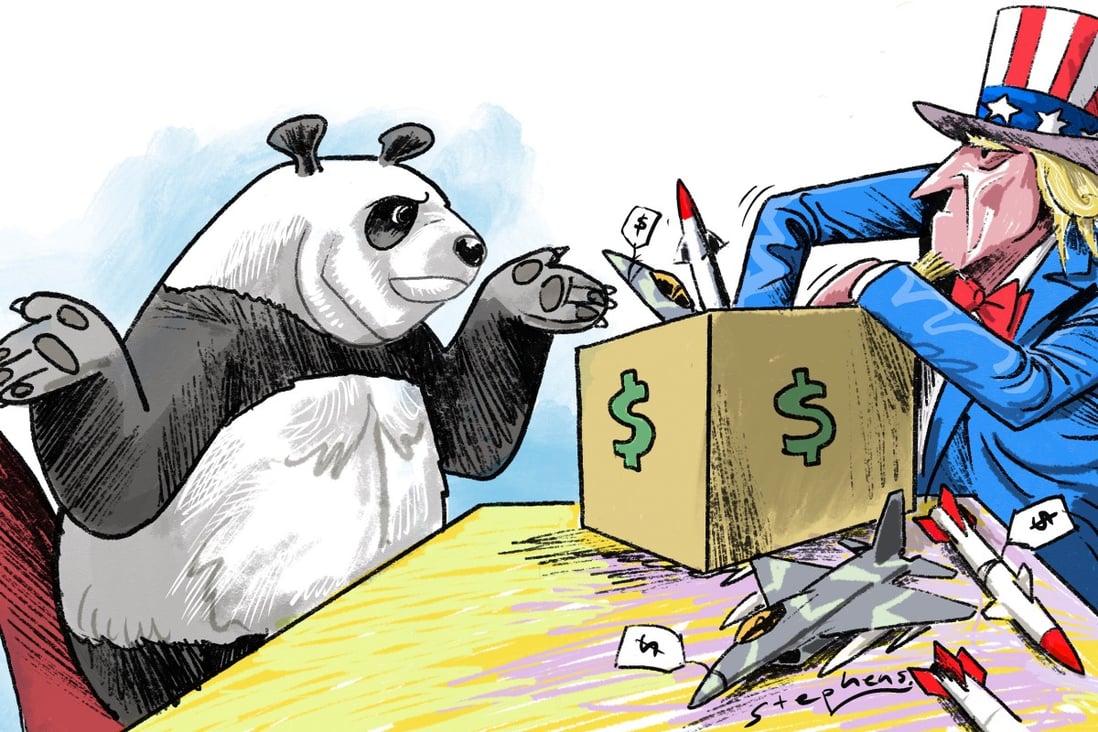
It is no surprise that Chinese Defence Minister Li Shangfu did not meet his US counterpart Lloyd Austin at this month’s Shangri-La Dialogue in Singapore. For one thing, Beijing has repeatedly cautioned Washington against arms sales to Taiwan, which it views as support for pro-independence forces.

The 1982 US-China communique stated that arms sales to Taiwan would not be a long-term policy and signalled a phased reduction. However, Washington continues to justify these sales under the Taiwan Relations Act and Six Assurances.

Even as past US administrations sold arms to Taiwan, they prioritised a peaceful resolution to tension across the Taiwan Strait. But, in recent years, deliveries of offensive arms, regular warship transits through the Taiwan Strait and the treatment of Taiwan as a “critical node” in the Indo-Pacific have suggested that Washington may now be opposed even to peaceful cross-strait unification.

In the 1982 communique, the United States pledged to gradually decrease arms sales to Taiwan until a “final resolution”. Moreover, the Taiwan Relations Act obliges the US to provide Taiwan with the necessary arms for defence only. However, the Trump and Biden administrations have deviated from this commitment by supplying weapons in excess of the defence requirement.

During Donald Trump’s time in office, the arms sold included 66 F-16V fighter jets, 135 AGM-84H/K air-to-ground missiles and 100 Harpoon Coastal Defence Systems. The Joe Biden administration has continued in this vein, approving the sale of weapons such as 100 AGM-88B high-speed anti-radiation missiles, to be mounted on F-16 jets.

Additionally, the US routinely sends warships to the Taiwan Strait and reconnaissance aircraft to disputed areas of the South China Sea. In response, China’s navy deploys its warships and aircraft for surveillance and readiness.

Around the time of the Shangri-La Dialogue, close encounters between Chinese and US aircraft and warships were reported, raising the possibility that miscalculation or human error could lead to conflict between these military powers.

In this context, Washington circles often highlight mainland China’s growing military capabilities as a reason to prepare Taiwan for various contingencies, including asymmetric warfare. The US is bound by the Taiwan Relations Act to “resist” any force or coercion that jeopardises Taiwan’s security, or social and economic system. It has been rallying its Indo-Pacific allies against Beijing’s possible military coercion of Taiwan.

Ironically, from Beijing’s perspective, Washington’s assertive diplomacy and military posture may be the very factors that, under China’s 2005 Anti-Secession Law, contribute to Taiwan’s separation, impede peaceful unification efforts and force Beijing to consider employing “non-peaceful means”.

As it is, the Taiwanese are more negative towards Beijing than Washington, and Taipei is not just developing asymmetric warfare capabilities but also extending mandatory military service for men from four to 12 months.

In a recent think piece, the Stimson Center’s Yun Sun suggested that Beijing would not be able to force a shift in public opinion in Taiwan. But, in her view, nor would it attempt a direct takeover of Taiwan.

Given these circumstances, she said, Beijing’s best way forward is to eliminate Taiwan’s options by curtailing foreign interference in the Taiwan Strait and external support for the island.

To counter Taiwanese pro-independence and foreign forces, three Chinese strategies have emerged: demonstrating conventional and cyber warfare capabilities to deter the US; moving to engage in dialogue with regional US allies; and, utilising economic statecraft.

China recently showcased its military prowess by conducting simulated hypersonic strikes against a US aircraft carrier fleet. This highlighted the vulnerability of the US carrier group once regarded as unsinkable by conventional weapons.

Furthermore, cyberattacks allegedly originating from China were found this year to have targeted telecommunication systems in Guam and the US, raising concerns about future destructive attacks. In a crisis, Beijing’s top priority would be disrupting communication systems and the US Transportation Command that moves American military assets around.

A review of the 2018 US National Defence Strategy warned that the US could face a “decisive military defeat” by China, given its advanced capabilities and the logistical challenges confronting the US in the Indo-Pacific.


The US relies on its Indo-Pacific allies in its strategy of integrated deterrence against China. In response, Beijing is expected to move to engage in military dialogue with each of these allies, including Japan, South Korea and the Philippines.

While these countries adhere to the one-China policy, they are against a forceful change to the status quo in the Taiwan Strait. Beijing’s white paper on Taiwan seems to be for the benefit of these countries. It expresses Beijing’s sincere wish for peaceful reunification, with the use of force only as a last resort.

Despite aligning their broader strategies with the US, American allies such as Japan, South Korea, Australia and the Philippines stress the importance of China in regional peace and stability. They also advocate for dialogue to ease tensions between the US and China, and to stabilise their own relations with Beijing.

Behind the scenes, China and the US are engaged in dialogue
7 Jun 2023

For example, China and Japan recently established a military hotline to prevent misunderstandings, given their security concerns in the East China Sea. The two countries are also resuming military exchanges in July, after four years.

The foreign policy positioning of these US allies suggests a low likelihood of direct military confrontation with mainland China over Taiwan.

Meanwhile, Beijing continues to limit Taiwan’s international presence. Honduras recently switched diplomatic recognition from Taipei to Beijing, the ninth country to do so since 2016. This reduction in Taiwan’s diplomatic allies, to 13, may impact the island both domestically and internationally.


Riaz Khokhar is a research analyst on geopolitics and security of the Indo-Pacific region and a former Asia studies visiting fellow at East-West Center in Washington
Egypt will further its human rights abuses as co-chair of Global Counterterrorism Forum
The New Arab
09 Jun, 2023

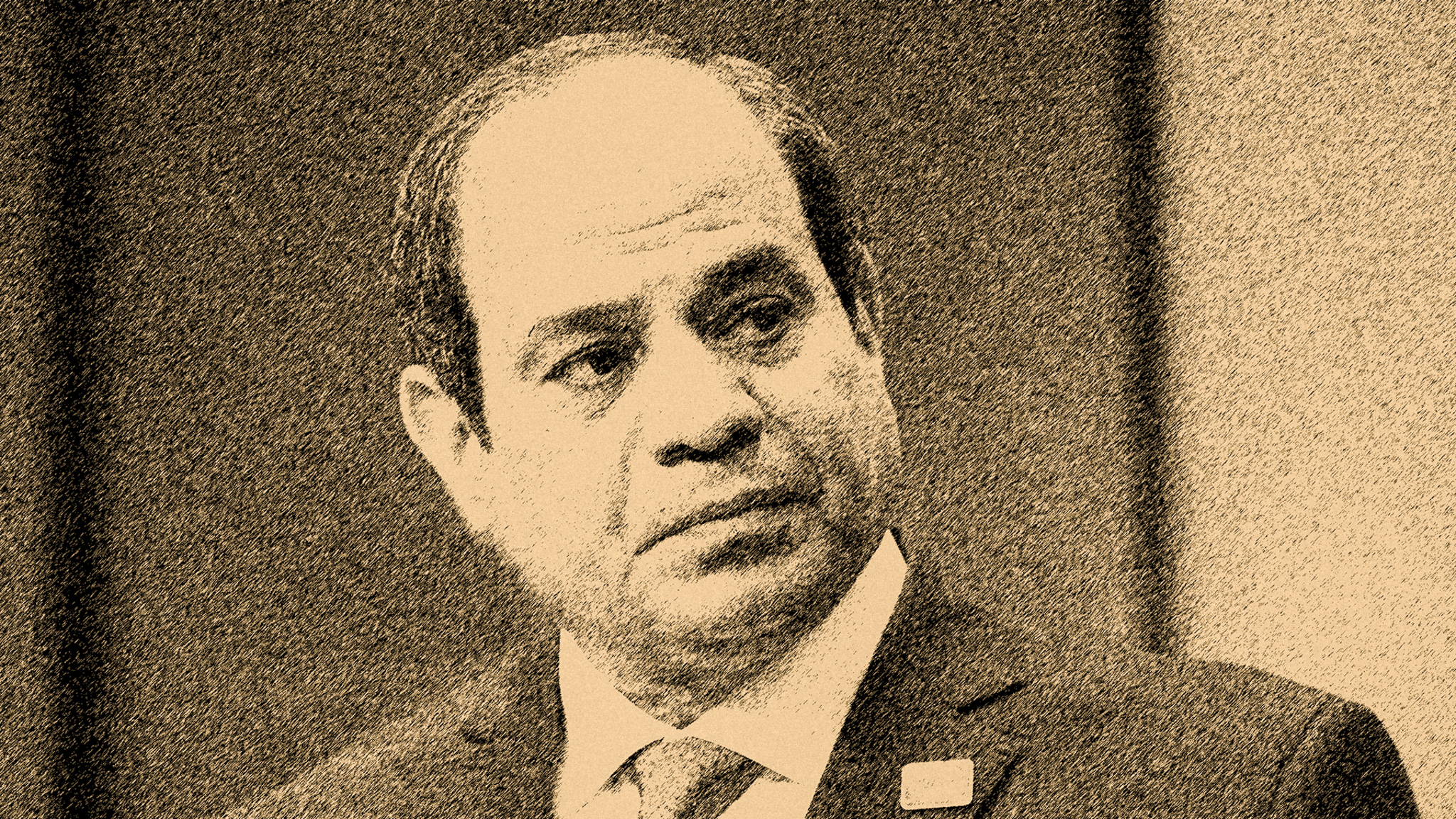
Since Sisi has been in power, Egypt’s growing human rights abuses have been justified as fighting terrorism. Allowing him to co-chair the Global Counterterrorism Forum with the EU will only give him continued free reign, argues Abdelkader Cheref.


Several NGOs, including Human Rights Watch and Amnesty International, have denounced the EU’s decision to partner with Egypt in chairing the Global Counterterrorism Forum, writes Abdelkader Cheref.

Early last month, Egypt formally took over as a co-chair with the European Union, the Global Counterterrorism Forum (GCTF), a 30-member country international organisation that works closely with the United Nations to shape global counter-terrorism policies.

The EU-Egypt bid to co-chair the GCTF was proposed by France. However, several NGOs, including Human Rights Watch and Amnesty International, have denounced the EU’s decision to partner with Egypt. They claim the country’s human rights record, under the repressive rule of President Abdul Fattah al-Sisi, is stark.

Since Sisi led the toppling of Mohamed Morsi, the first democratically elected President of Egypt, he systematically jailed, tortured, and physically liquidated human rights activists and political opponents while unjustifiably labelling their legitimate activities as “terrorism”.

''Sisi and his regime have used counter-terrorism policies to muzzle any form of dissent; and he will definitely use his instrumental position within the Global Counterterrorism Forum (GCTF) to further abuse human rights in Egypt.''

Sisi’s 2013 coup as defence minister at the time, and member of the hegemonic Supreme Council of the Armed Forces (SCAF), was subsequent to days of mass anti-government demonstrations and Morsi's refusal to concede to an ultimatum from the generals. He was railroaded into ending what the generals termed Egypt’s most excruciating political crisis since Hosni Mubarak was ousted in 2011.

The rebellion against Morsi was executed by the rank and file in the streets but stage-managed and choreographed by media moguls, celebrities, and state dignitaries with significant ties to the Egyptian military. It was also, to a certain extent, backed by Israel, Saudi Arabia, the UAE, and the US.

It is worth mentioning that all this was done with the blessing of the Obama administration, but in total infringement of a US by-law. The US government provides $1.5 billion a year to Egypt in military and economic assistance but under US legislation, the government should hold off that foreign aid to any nation whose elected leader is overthrown in a coup d’Ă©tat. Such a provision in the law was never acted upon.

Similarly, when on the campaign trail, Joe Biden pledged “no more blank cheques” to Sisi’s government. But once in the White House, this was disregarded in the name of realpolitik.

At the same time as the Obama administration continued to fund the Egyptian military, the army arrested Morsi along with a group of senior figures from the Muslim Brotherhood, and accused him of mishandling the economy as well as failing to address the very issues that triggered the Arab Spring and, ultimately, brought him to power.


Tens of thousands took to the streets of Cairo and Alexandria, demanding Morsi's immediate release and reinstatement. However, almost 1,000 people were massacred in Cairo’s Rabi’a al-Adawiya Square in August of 2013. A carnage the military authorities justified as a fight against “terrorism.”

As soon as Sisi became president the following year, he suspended the Egyptian constitution of 2012, banned the Muslim Brotherhood’s Freedom and Justice Party (FJP), jailed thousands of activists regardless of their political affiliation, and military officers invaded all spheres of power.

As a result, Egypt witnessed a wave of unprecedented violence by insurgents, which was used to tighten repression further. The Muslim Brotherhood was outlawed as a terrorist group. A case in point is the 2015 anti-terrorism law which grants security services unlimited powers to “ensure public order and security” comparable to the state of emergency laws effective during Mubarak’s regime.

And when Mubarak was released from jail, many Egyptians realised that they were back to square one, and that the deep state was in total control. It is also worth noting that Sisi had been Mubarak’s chief of military intelligence for years.

Like most of the other Arabic-speaking countries that witnessed popular protests in 2011, Egypt has since gone through a brutal counter-revolution. For many analysts, the success of the counter-revolution and the rise of Sisi is a clear indication of the power of the Egyptian “deep state”. Egypt’s top military brass – known as the Supreme Council of the Armed Forces (SCAF) – in alliance with the oligarchy and the judiciary, decided to first undermine Morsi, and maintain the status quo by hook or by crook.

And ever since Sisi came to power in 2013, the Egyptian government has engaged in a widespread crackdown on opposition activists, torture, enforced disappearances, and extrajudicial killings. Not to mention, according to the Committee to Protect Journalists, Egypt is also ranked among the world’s worst jailers of journalists. The president's latest call for dialogue with the media is but a fig leaf.

The current Sisi government is largely composed of rapacious military officers and pro-military bureaucrats who, as in other dictatorial regimes in the MENA, reject any idea of power-sharing with civilians. While the country’s rapidly growing population of almost 102 million is trying to cope with severe challenges, including pervasive youth joblessness among both the educated and the uneducated, a deep-rooted poverty, an impending water shortage, and a looming conflict with Sudan and Ethiopia caused respectively by the internal strife in Sudan and Ethiopia’s construction of the Grand Renaissance Dam.

While Sisi’s government is trivially engaged in an international PR stunt surrounding the very journalists it is repressing, it is also facing a catch-22 in Sudan. Exacerbating the current conflict in Sudan, Egypt is backing Sudanese army chief General Al-Burhan, while the UAE – Egypt’s principal financier – is backing the opposing faction led by the Rapid Support Forces (RSF).

In reality, Sisi and his regime have used counter-terrorism policies to muzzle any form of dissent; and he will definitely use his instrumental position within the Global Counterterrorism Forum (GCTF) to further abuse human rights in Egypt. The EU should instead take meaningful and persuasive measures to address the miserable human rights record in Sisi’s Egypt.

It is crystal clear that the EU, with the pivotal role of French president Emmanuel Macron, has decided to deliberately overlook the human rights abuses in Egypt. And its major concern is to embolden Sisi’s “counter-terrorism laws,” while whitewashing his crack down on independent civil society, and allow him to improve his sullied image on the global stage.


Dr. Abdelkader Cheref is an Algerian academic and a freelance journalist based in the US. As a former Fulbright scholar, he holds a PhD from the University of Exeter, Institute of Arab and Islamic Studies. His research interests are primarily politics in the MENA region, democratisation, Islam/Islamism, and political violence with a special focus on the Maghreb.
Follow him on Twitter: @Abdel_Cheref


Opinions expressed in this article remain those of the author and do not necessarily represent those of The New Arab, its editorial board or staff.
Crews fighting to protect Edson, Alta., as wildfire grows to more than 200,000 hectares

Story by Mrinali Anchan • Yesterday 1:01 p.m.

Crews are still working to contain a wildfire threatening the town of Edson, Alta., and some parts of Yellowhead County, as the fire continues to grow.

"It's slower today, but that doesn't mean that risk is over," Edson chief administrative officer Christine Beveridge said Sunday in a fire update live on Facebook.

Luc Mercier, Yellowhead County's chief administrative officer, echoed Beveridge's caution.

"These fires are on our doorstep and ... have the ability to be a significant danger in a matter of minutes," Mercier said.

The wildfire, known as EWF031, has grown to more than 200,000 hectares, up from 130,000 hectares on Friday.

According to the Alberta Wildfire dashboard, as of Sunday, there are 79 fires burning across the province, including 77 in the forest protection areas. Twenty-five fires are listed as out of control.

Edson's 8,400 residents were ordered Friday evening to evacuate the town. It's the second time this wildfire season the town 200 kilometres west of Edmonton has fallen under an evacuation order.

Caroline Charbonneau, an information officer with Alberta Wildfire, said Sunday the fire is only two kilometres south of Edson.

"Friday night that fire moved so quickly because of the strong winds," Charbonneau said in an interview.

"[Monday] we don't expect very strong winds but the winds have been so unpredictable that we can't take any chances."

Mercier said Yellowhead County had been planning on winding down its emergency response operations two days before the evacuation order was given.

"That idea went out the door when the fires just went over control very drastically again," he said.

He said the fire's rapid growth shows the volatility of Alberta's wildfire situation.

Hot temperatures are expected to last until Wednesday. Evacuees have been told they may not be allowed to return home before then.

Firefighters have been putting structural guards in place and patrolling neighbourhoods. They have been moving combustible objects such as propane tanks, barbecues and hanging planters away from homes.

The county is getting help in the form of additional sprinkler systems and water bombers.

'Not again'

Edson residents Calvin Bootsman and Pamela Holden made their way to the Edmonton Expo Centre, which has been set up as a reception centre for evacuees.

They said having to evacuate again is a reminder of how uncertain the situation is in the province.

"Not again, I just couldn't believe we were having to do it again," Holden said in an interview with CBC.

"It looked like the apocalypse was coming," Bootsman said. "The fire was about three kilometres from where we lived and by midnight when we left, you can see the glow and the tip of the flames."

While Bootsman appreciates the help being provided, he said he hopes more crews will be brought in to process evacuees more quickly.

"The only thing is they needed to process in teams with people because there's so many people stressed out angry."


For Edson, Alta., residents Pamela Holden and Calvin Bootsman, having to evacuate again is a reminder of how uncertain the situation is in the province.
© CBC
Northern Alberta church celebrates commitment to LGBTQ+ community


Story by Luke Ettinger • Yesterday 

A Peace Country congregation is celebrating pride in its pews.

St. Paul's United Church in Grande Prairie is one of a dozen ministries across Canada receiving Affirm United membership during Pride Month.

The church will officially become an Affirm United member on Sunday. Some of the other congregations becoming Affirm United members in June are in Whitehorse, Regina, Toronto and Upper Tantallon, N.S.

Since 1992, Affirm United has partnered with the United Church of Canada to help congregations become more inclusive for people of all sexual orientations and gender identities.

More than 300 local churches, colleges, assisted living homes and other ministries are part of Affirm United.

St. Paul's is the first affirming ministry in the Peace Country of northwestern Alberta. In March, at least 75 per cent of the 125-family congregation voted in favour of the Affirm United membership.
Safety and spirituality

Becoming an affirming ministry is about creating a safe space for everyone, particularly the LGBTQ+ community, said Karen Scott, chair of the St. Paul's United Church council.

"I want for them to feel safe and connected and able to explore a spiritual side to themselves if that's what they want," she said. "It's important that we ensure that people are allowed to be who they are."

Scott said work toward inclusion also happens outside of Sunday service. She attends the annual Grande Prairie Pride events on behalf of St. Paul's — often to the surprise of attendees.

Related video: KC churches share importance of creating safe spaces for LGBTQ+ community (KSHB Kansas City, MO)  Duration 2:10  View on Watch

"And people over and over again have come up and said, 'Wow, you're a church, you're here? I'm amazed,'" she said.

The process at St. Paul's was initiated in 2020, Scott said.

On the road to becoming an affirming ministry, St. Paul's hosted an affirming education week in collaboration with groups that support the LGBTQ+ and Indigenous communities.

And the work won't stop with official membership in Affirm United. The affirming ministry committee has transitioned to become the social justice committee which will continue to organize events and work toward inclusion.


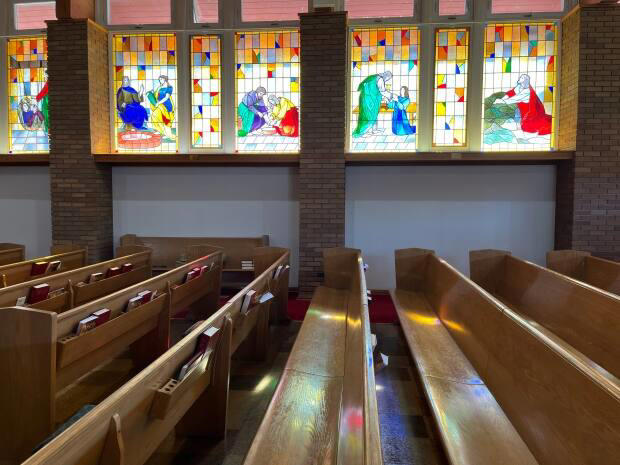
Pews are illuminated with colour beneath stained glass windows at St. Paul's United Church in Grande Prairie.© Luke Ettinger/CBC

Rev. Gord Waldie said he was happy to see the affirming ministry conversation surface, but adds it was important that the decision came from the congregation.

"I intentionally didn't take a really active role in that," Waldie said.

"It needed to be something that so that if there were people on either side who had strong concerns, they could feel comfortable coming to me."

Waldie said Affirm United also pushes for action beyond LGBTQ+ issues including truth and reconciliation.

"The church, [universally], has a history of finding ways to shut people out or to sort of put people into categories and say, you're good, you're not, you're welcome, you're not," he said.


Susan K Thomson and Karen Scott sit in the friendship room at St. Paul's United Church in Grande Prairie.© Luke Ettinger/CBC

Susan K Thomson is a congregant and ally who helped Scott lead the local Affirm United campaign. She said being an affirming ministry is about ensuring everyone feels like they are full members of the congregation.

"It allows people of the LGBTQ community to go, hey, I can go to church there and nobody's going to look down on me and nobody's going to shun me," Thomson said.

Thomson's sentiment is echoed by the minister.

"It means whoever you are, if you want to read scripture on a Sunday morning, you can read scripture on a Sunday morning," Waldie said.

HOMOPHOBIC TERRORISM

Several Target stores in Oklahoma City metro briefly evacuated after bomb threat

The Oklahoman

Several Target locations in the Oklahoma City metro area were briefly evacuated Saturday afternoon after media outlets received what police described as "vague bomb" threats, police said. The threats come as the retail chain faces backlash over its Pride Month merchandise.

"Whether it's a hoax or not we have to take it seriously," said Sgt. Rob Robertson of the Oklahoma City Police Department. Robertson said Target stores in Yukon, Moore, Norman and Oklahoma City had been notified.

Oklahoma City television station KFOR reported that it had received the email, which listed several Target locations and claimed two had bombs inside.

"We are going to play a game," the email said, according to the station. "We hid the bombs inside some product items. The bombs will detonate in several hours, guess which ones have the bombs. Time is ticking."

The email included the date of April 19, 1995, the date of the Oklahoma City bombing, KFOR reported.

The Oklahoma City store at 5400 May Ave. reopened around 6:20 pm after about a two hour closure. The company said in a statement that all the stores had reopened.

“The safety of our team members and guests is our top priority," the statement said. "Law enforcement investigated claims regarding several stores in the Oklahoma City area today and determined these stores are safe. Our stores are currently open and operating regular hours.”

Target is among corporate brands that have come under fire from right-wing groups for supporting the LGBTQ+ community. Target stores in Utah, Ohio and Pennsylvania have also received bomb threats in recent weeks

After critics posted videos of attacking LGBTQ+ Pride displays and confronting employees in Target stores in late May, the company held an emergency meeting and decided to remove or relocate some Pride merchandise to make them less visible in stores.

"Our focus now is on moving forward with our continuing commitment to the LGBTQIA+ community and standing with them as we celebrate Pride Month and throughout the year," the company said in a statement at the time. June is Pride Month.

KFOR reported that the threatenin emails went out to several newsrooms and state lawmakers. The Oklahoman, part of the USA TODAY Network, does not appear to have received one.

Target bomb threats:Bomb threats made against Target stores in Utah, Ohio and Pennsylvania over Pride controversy


Target stores in at least five states receive 

bomb threats over Pride items


BY OLAFIMIHAN OSHIN - 06/12/23 
THE HILL

Target stores in at least five U.S. states had to be evacuated over the weekend after receiving bomb threats, which tie into the recent backlash the U.S.-based retail chain received for its Pride Month merchandise.

The Washington Post reported on Monday that local news outlets in parts of Oklahoma, New York, New Hampshire, Vermont, and Louisiana received emails from unknown individuals about bomb threats at the stores.

In one email sent to Oklahoma City NBC affiliate KFOR, which is owned by Nexstar Media Group, the individual listed seven locations in and around the Oklahoma City area, claiming that two of the locations already had bombs in them, adding that they hid the bombs inside of products.

“The bombs will detonate in several hours, guess which ones have the bombs. Time is ticking,” the email reads, also ending with the date “4/19/1995,” the date of the Oklahoma City bombing.

Oklahoma City Police Department spokesperson Gary Knight said that several news outlets notified them about the emailed threats, adding that after evacuating the listed stores as a precaution, authorities didn’t find any suspicious items, according to the Post.

South Burlington, Vt. police chief Shawn Burke said that news outlets in Vermont, New Hampshire, and New York all received the same email bomb threat over the weekend, which accused the retail chain of betraying the LGBTQ+ community, also naming the locations of four stores in the three states including South Burlington.

“I think it had quite an impact locally,” Burke said, the Post reported. “It makes people a little bit uneasy to think about what’s going on. We’re more and more seeing this type of behavior in terms of swatting at schools locally and in terms of stores like Target [nationally].”

The recent incidents come after Target received criticism for their LGBTQ+ initiatives, with the retail chain announcing last month that it removed some Pride Month merchandise in its stores after facing backlash from customers, citing concerns about their workers’ safety.

After the announcement, company stores in Ohio, Pennsylvania, and Utah received bomb threats from people who were claiming to be unhappy with the removal of the Pride merchandise, the Post reported.

The Target controversy also follows Bud Light, which received backlash for its partnership with transgender actress and influencer Dylan Mulvaney.

The Hill has reached out to Target for comment and more information on the matter.


‘The hate never went away’: US schools face violent Pride backlash

Story by Lois Beckett in Los Angeles • THE GUARDIAN
Yesterday 4:00 a.m.

Photograph: Richard Vogel/AP© Provided by The Guardian

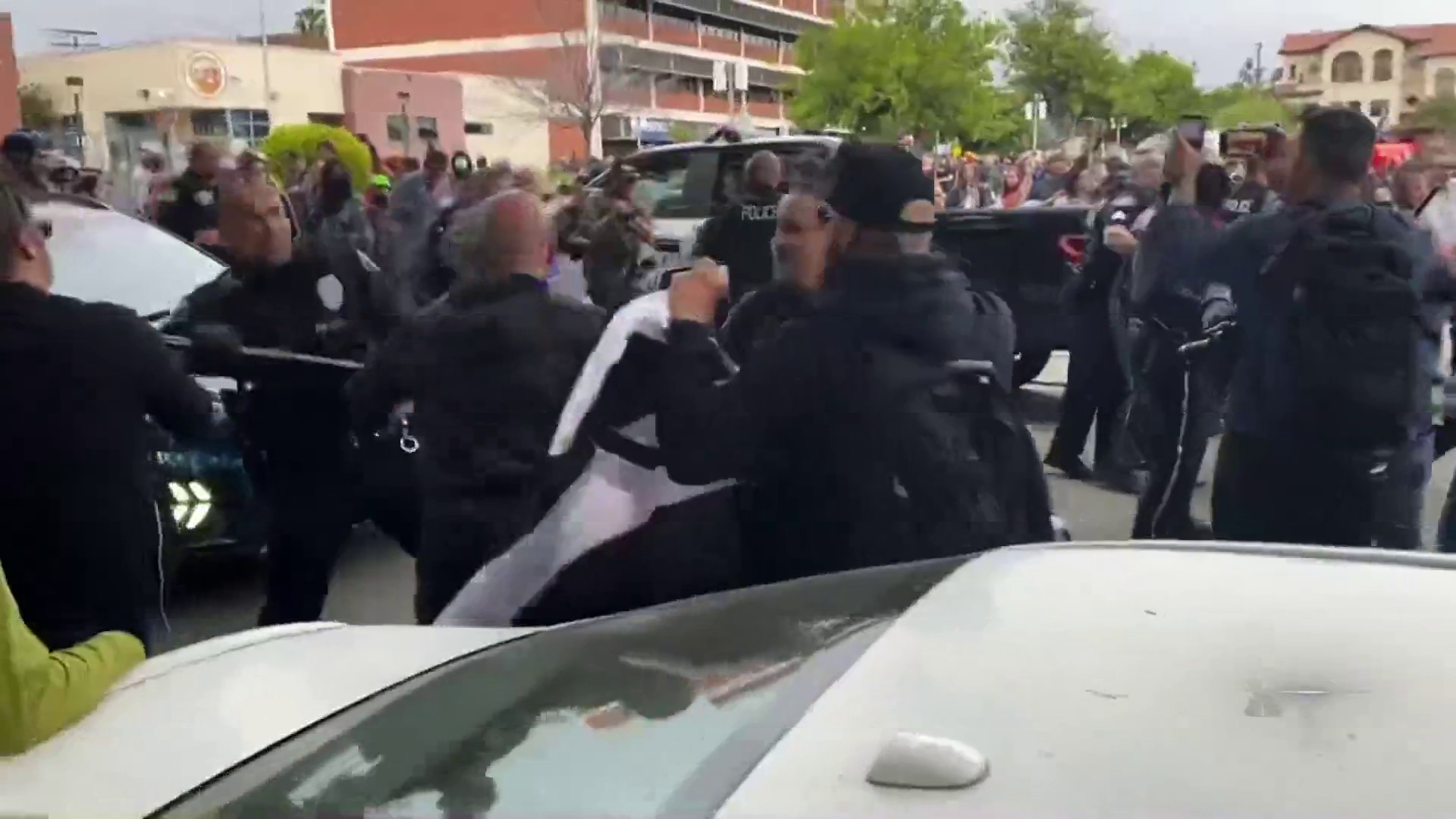
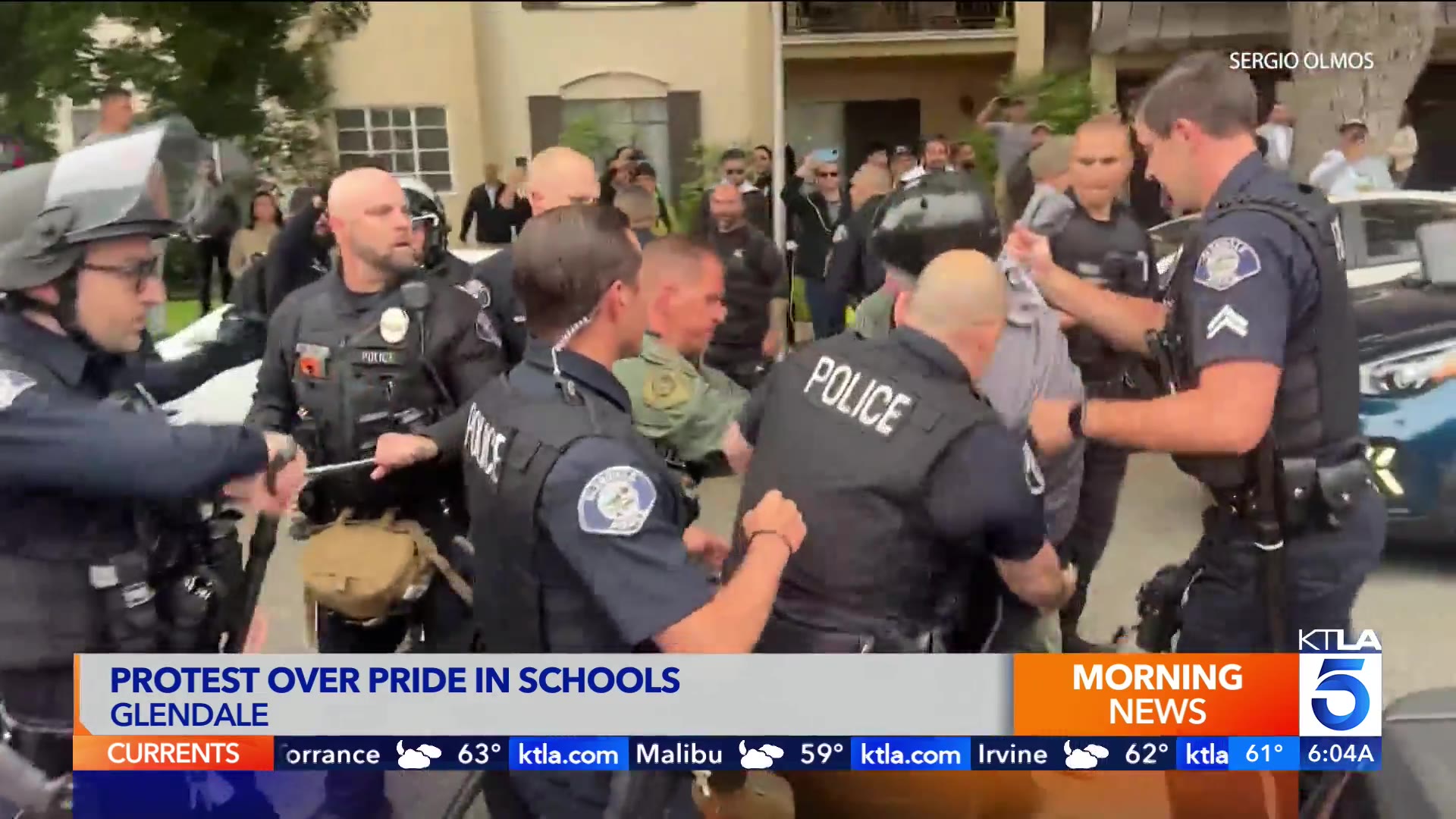
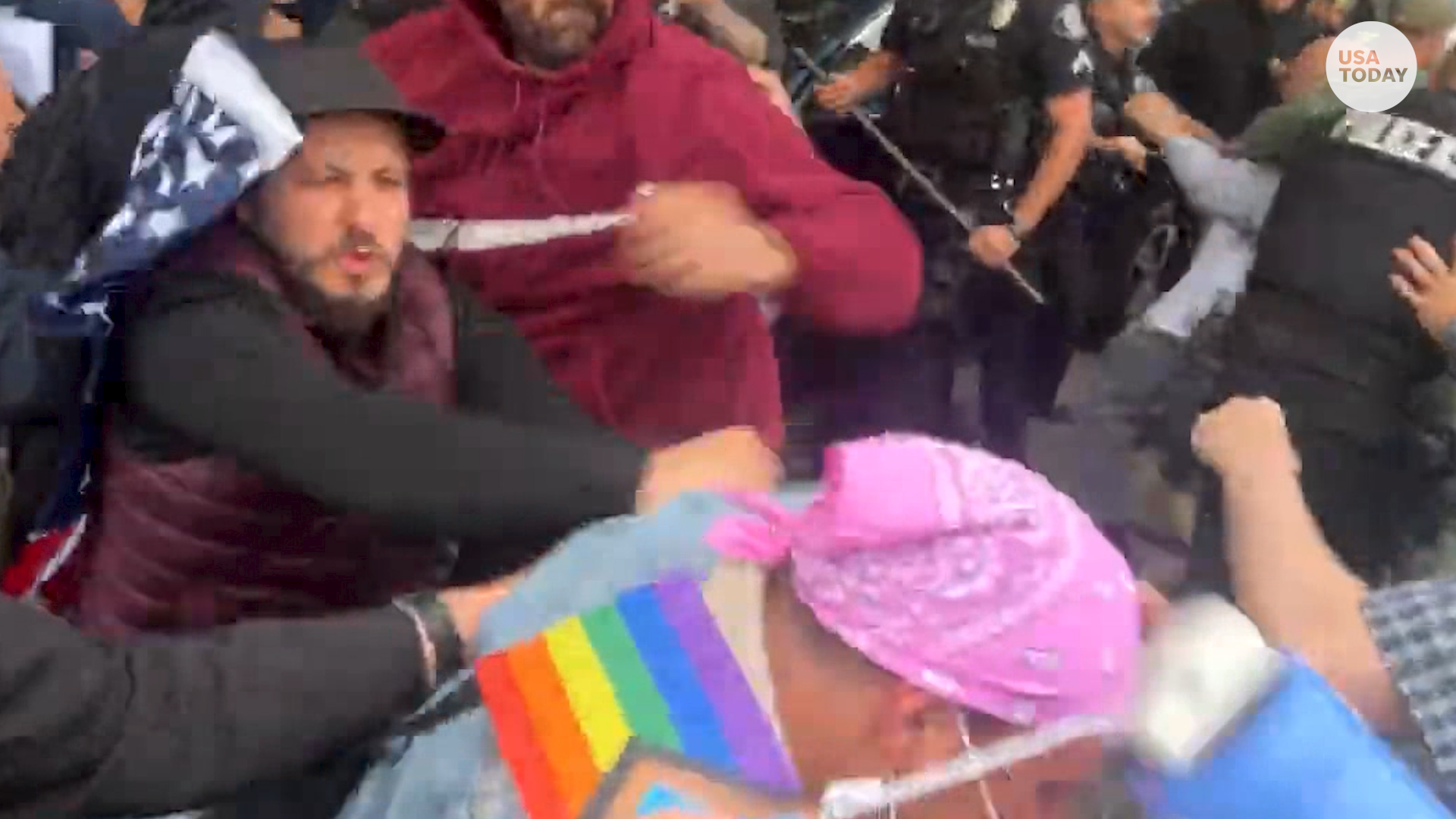
Hundreds of furious demonstrators. Police in riot gear. Barricades on the street and helicopters overhead. This was the scene outside a suburban California school board meeting this week, as the board planned to vote on whether the district should officially recognize June as LGBTQ+ pride month.


A year ago, the decision to observe Pride at schools in Glendale, a suburb about 20 minutes from downtown Los Angeles, did not spark street brawls or result in multiple arrests. But this year things were different.

Maebe Pudlo, a trans nonbinary activist and drag queen who has run for US congress in the district, was among those who showed up to the Glendale unified school district’s meeting. She says local advocates supporting Pride were greeted by people calling them “groomers” and “pedophiles”, and were accused of trying to “indoctrinate” children.


Footage of the violent demonstration in Glendale showed groups of men in the streets in identical “Leave our kids alone” T-shirts and crowds of people shoving and punching each other. The Glendale police said their attempts to de-escalate the situation failed, even after arresting three people and they declared an unlawful assembly and ordered the crowd outside the school to disperse.

Though the board ultimately voted to recognize Pride month, as they have done since 2019, the experience was “terrifying”, said Pudlo, who said she has faced a wave of online harassment since. Anonymous accounts are “saying that folk like me should be killed and hanged”, she said. California “is supposed to be a safe state”.

Local journalists and advocates said that multiple rightwing activists with a history of violence were present at the Glendale incident. The unrest came less than a week after protesters and police clashed outside a North Hollywood elementary school during a demonstration over a planned Pride assembly. There, too, protesters were seen wearing T-shirts reading “Leave our kids alone,” and a trailer with a “leave our kids alone” banner drove through the streets.


Protests outside a school in Los Angeles over Pride turned violent.
 Photograph: David Swanson/Reuters© Provided by The Guardian

The rhetoric at the protest was “ugly” and “hateful”, said Reverand Pat Langlois, who attended the North Hollywood demonstration in support of LGBTQ+ families. While she has been to many protests in the past four decades, “This was something different,” she said.

A transgender teacher’s pride flag was previously set on fire at the same school, prompting a police investigation.

“We think of these things happening in the deep south, or in some very conservative rural areas. This happened a few minutes away from one of the epicenters of gay liberation,” said Roland Palencia, a co-founder of Gay and Lesbian Latinos Unidos, and a longtime activist in Los Angeles.

Related video: Authorities investigating possible hate crime as pride flags are ripped down, burned (USA TODAY) Duration 0:30   View on Watch

0:47


“Our allies – they need to speak out,” Palencia added. “This is the time when they need to say, ‘Enough is enough.’”

On 6 June, the Human Rights Campaign (HRC), an advocacy group, announced that it was declaring a “state of emergency” for LGBTQ+ people in America, hoping to galvanize politicians and other allies to take more action to defend queer people amidst an “unprecedented and dangerous spike” in legislative assaults, as well as literal ones.

So far this year, HRC has documented nearly 20 different acts of intimidation targeting Pride and drag events across the US, from violent protests to bomb threats to extremists howing up to children’s drag story hours.


We think of these things happening in the deep south ... this happened a few minutes away from one of the epicenters of gay liberation
Roland Palencia

More than 500 anti-LGBTQ+ bills have been introduced across the country, with at least 76 signed into law as of early June – the most of any year on record – and more than twice the number of anti-LGBTQ+ laws passed last year, the organization said.

The majority of these bills target trans people, especially trans youth, with a focus on laws “that make it impossible for transgender minors to be able to access medically necessary, best-practice gender-affirming care”, said Sarah Warbelow, HRC’s vice- president of legal policy. Some of these anti-trans laws target healthcare workers, attempting to criminalise them if they try to provide gender-affirming care, and many “are going after the parents of transgender children, as well”, she said.

There has also been “an incredible uptick” in bills “that would make it impossible for school personnel to support LGBTQ+ youth in classroom”, she added, from Florida’s “don’t say gay” law, to attempts to force schools to out students to their parents in the name of parental rights.

Under “don’t say gay” laws in public schools, many teachers “feel that they can no longer be open about their sexual orientation or gender identity and they have to hide who they are out of fear that a parent will single them out, target them, sue their school”, Warbelow said.

Because of federal civil rights protections, teachers might ultimately win those lawsuits, but that doesn’t matter, Warbelow said: “Many folks feel like they don’t have a meaningful choice, even if the law technically protects them.”

Just three years ago, a surging QAnon conspiracy theory movement claimed that Democrats and other elite figures were torturing and violating children as part of satanic rituals, lurid allegations that helped galvanize the January 6 attack on the US capitol.


A view of a memorial in front of Club Q after a mass shooting in November 2022.
 Photograph: Isaiah Downing/Reuters© Provided by The Guardian

Now, those same kind of political “conspiracies” are being applied to LGBTQ+ people, Bamby Salcedo, the president of the TransLatin@ Coalition in Los Angeles, noted.

As cities across the country roll out Pride parades, marches and parties, meant to commemorate the June 1969 uprising against police violence at the Stonewall Inn in Manhattan, many people are on edge, worried about increased harassment or being the targets of deadly attacks.

During Pride month in June 2016, a gunman opened fire at the Pulse Nightclub in Orlando, Florida, leaving 49 people dead in what is still one of the deadliest mass shootings in US history. Last November, Club Q, an LGBTQ+ bar in Colorado, which was hosting a drag event, was the target of another deadly shooting which left five people dead and 17 wounded.

Despite the political atmosphere, many LGBTQ+ Americans say that, while they’re paying more attention to their safety in public, they do not want to give up on Pride events.

“We need to be reminded that we are beautiful and resilient people,” Salcedo, the president of the TransLatin@ Coalition, said. “We are not going to let all this negativity take us away from celebrating ourselves and letting the world know that we exist.”

After decades of advances, including winning the legality for same sex marriage, many LGBTQ+ Americans, especially those in more Democratic states, had come to think of their fight for equality as a linear and unbroken march of progress, Palencia said.

“What we’re realizing is that there are going to be more twists and turns for us to get to full recognition as citizens and as human beings,” Palencia said. “The reality is that the hate never went away.”