It’s possible that I shall make an ass of myself. But in that case one can always get out of it with a little dialectic. I have, of course, so worded my proposition as to be right either way (K.Marx, Letter to F.Engels on the Indian Mutiny)
Thursday, May 22, 2025
Ralph Lauren mulls price hikes as tariffs hurt sales forecast
May 22, 2025
A general view shows the New York Stock Exchange, Thursday, April 10, 2025, in New York. (AP Photo/Yuki Iwamura) (Yuki Iwamura/AP)
Ralph Lauren forecast tepid annual sales on Thursday and said it was weighing price increases for its classic Polo shirts and spring dresses, as the apparel retailer grapples with volatile U.S. tariffs and consumer spending pressures.
Its shares were marginally higher in early trade, as the company beat fourth-quarter estimates for revenue and profit, thanks in part to investments in brands including Polo and Purple Label, as well as increased marketing.
The company expects fiscal 2026 revenue to increase in the low-single digits from last year, including the impact of tariffs, inflationary pressures and spending challenges. Analysts estimate a rise of 4.39%, per data compiled by LSEG.
“The outlook is far more modest. Weakening consumer sentiment and ongoing tensions from trade and geopolitical relations may dampen the appeal of iconic U.S. brands such as Ralph Lauren in overseas markets,” said Sky Canaves, analyst with eMarketer.
Ralph Lauren is among the retailers and luxury brands facing the brunt of unpredictable U.S. tariff shifts that have disrupted businesses and rattled shoppers worldwide.
In fiscal 2024, the company sourced about 96% of its products from outside the U.S., with 15% coming from China, according to its annual filings.
China is also a major market for Ralph Lauren products, following North America and Europe.
While the recent 90-day trade truce between Washington and Beijing cut U.S. tariffs on China to 30% from an eye-watering 145%, the relief is expected to be brief for the Asian country’s export-reliant economy.
Ralph Lauren posted fiscal 2025 gross margin of 68.6%, and forecast it would be flat for fiscal 2026 as higher prices, lower cotton costs, and better sales in key areas help offset steep tariffs and other material costs.
Its revenue of $1.70 billion for the quarter ended March 29, beat estimates of $1.65 billion, while adjusted profit of $2.27 per share trumped estimates of $2.
Anuja Bharat Mistry in Bengaluru; Editing by Devika Syamnath, Reuters
PROFIT OVER PEOPLE TD Bank cutting jobs as Q2 profit tops estimates
By Terry Cain May 22, 2025
TD Bank cutting jobs as Q2 profit tops estimates:
TD Bank plans to cut about two per cent of its workforce in an effort to reduce its cost
base and achieve greater efficiency.
The bank, with about 95,000 employees, says the restructuring will cost up to $700 million in pre-tax charges over the next several quarters. It expects the effort will generate about $100 million in pre-tax savings this fiscal year and annual savings of up to $650 million. TD’s CEO Raymond Chun is leading a review of the bank after paying out more than US$3 billion to U.S. authorities over its anti-money-laundering failures. TD beat earnings estimates in the latest quarter after setting aside less money than expected for souring loans.
TD Bank to lay off 2% of workforce in restructuring
TD Bank on Thursday said it would lay off 2% of its workforce to cut costs and scale up its digital and AI investments, as the bank restructures following its historic anti-money laundering settlement under new CEO Ray Chun.
The layoff involving some 2,000 employees is part of a new restructuring program that will help TD save up to C$650 million ($470 million) annually, including winding down its point of sale financing business in the U.S.
TD’s shares were up about 3.7% in Toronto.
TD expects to incur pre-tax restructuring charges between C$600 million and C$700million pre-tax over the next several quarters.
“We are structurally reducing costs across the bank by taking a disciplined look at our operations and processes to find opportunities to automate and to re engineer them,” Chun told analysts.
“We are identifying opportunities to innovate, to drive efficiencies and operational excellence.”
The review follows TD’s anti-money laundering settlement in the United States that lead to several changes including a new CEO. TD did not say if the layoffs were predominantly in the United States or Canada.
Analysts viewed the restructuring program positively and said it would help offset TD’s prior investments related to its anti-money laundering programs.
Chun, who took charge in February, initiated a strategic review to simplify the business. The bank is expected to share more at its investor day in September.
TD reported better than expected earnings for the second quarter powered by strength at its wholesale banking arm - which houses its capital markets and investment banking businesses.
The unit reported record revenue of C$2.13 billion, up 10% from a year earlier, reflecting higher trading-related revenue and underwriting fees, including from the sale of its remaining equity investment in U.S. financial services firm Charles Schwab SCHW.N.
However, the bank set aside C$1.34 billion ($965.5 million) in provisions to shield against future souring loans in an uncertain environment, up from C$1.07 billion a year earlier, as businesses pause spending and defer long-term decisions.
“We still see loan growth despite the uncertainty in the environment, but given the outlook, and given that there’s uncertainty, we build reserves,” CFO Kelvin Tran said in an interview.
TD’s results, which kick off Canadian banking earnings, offer a glimpse into the impact of the tariffs chaos on the Canadian economy.
Adjusted earnings of C$1.97 per share beat analysts’ average estimates of C$1.76, LSEG data showed.
Reporting by Arasu Kannagi Basil in Bengaluru; Editing by Shailesh Kuber and Jan Harvey, Reuters
New report casts doubt on revival of Quebec LNG project
Piping is seen on the top of a receiving platform of a natural gas pipeline terminus in Kitimat, B.C., on Wednesday, Sept. 28, 2022. THE CANADIAN PRESS/Darryl Dyck
MONTREAL — A shareholder advocacy group says reviving a liquefied natural gas export project in Quebec’s Saguenay region would be costly and likely unprofitable.
Investors for Paris Compliance says demand for LNG in Europe dropped by 18 per cent between 2022 and 2024, and Canadian exports would have a hard time competing in Asian markets.Read the report: The missing business case for LNG exports via Canada’s East Coast
A report published this morning says gas production is expected to grow by 40 per cent from 2024 to 2028, driven by projects in the United States and Qatar, and demand is not expected to keep pace.
A project to transport natural gas from Western Canada to an export terminal in Quebec was cancelled in 2021 due to environmental risks and public opposition, but Quebec Premier François Legault has recently opened the door to pipeline development in the province.
However, the advocacy group says inflation could balloon the project’s price tag to more than $33 billion, and public money would likely be required.
The group says there are better ways to stimulate the Canadian economy, including integrating provincial electricity grids and mining critical minerals.
This report by The Canadian Press was first published May 22, 2025.
Union says Canada Post offers ‘fall short’ as strike deadline nears
Canada Post has issued a new set of offers to the union representing postal workers as the clock ticks. Labour lawyer Sundeep Gokhale discusses the offers.
OTTAWA -- The union representing about 55,000 Canada Post employees said the latest offers from the postal service “fall short” with hours to go until a looming strike deadline.
Canada Post meanwhile said Thursday it’s already seeing mail volumes decline ahead of another possible labour disruption and is pushing for an urgent resolution.
The postal service is ready to resume bargaining “as soon as possible” with a mediator at the table, she said.
“We remain hopeful that negotiations can resume,” Liu said. “Further delays or another strike would have a major impact on employees, small businesses and the millions of Canadians who rely on the postal system.”
In a bulletin posted late Wednesday, the Canadian Union of Postal Workers said it is still reviewing proposals tabled by the Crown corporation earlier in the day.
But it identified a number of areas where the offers disappoint, namely on wages and cost-of-living adjustments.
Canada Post’s offers amount to a little more than 13 per cent in wage increases over four years, where the union was looking for closer to 19 per cent to catch up after years of rampant inflation.
The union also raised concerns about Canada Post’s pitch to include more part-time staff and introduce “dynamic routing” -- a model that could see mail delivery routes change on a daily basis to adjust to varying conditions -- without established rules governing the system.
CUPW also argued that the six extra personal days on offer are “window dressing” and already allotted in the Canada Labour Code.
The union also took issue with a pitch to remove workers’ “five-minute wash-up time.”
Without an agreement in place by the end of Thursday, CUPW members are set to go on strike shortly after midnight.
Canada Post rejected CUPW’s call for a two-week “truce” that would have given the union time to review the new offers in detail.
If postal workers do walk off the job, it would be the second time in less than six months.
By Craig Lord
This report by The Canadian Press was first published May 22, 2025.
IAEA warning over drones near nuclear sites
Thursday, 22 May 2025
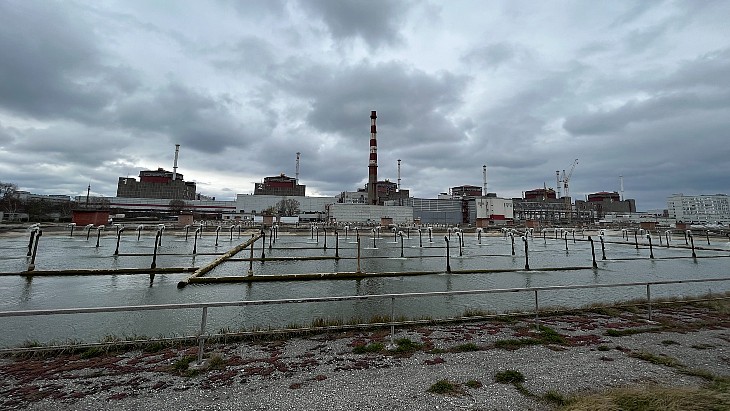
International Atomic Energy Agency Director General Rafael Mariano Grossi has said the flying of drones near Zaporizhzhia and other nuclear power plants in Ukraine "should stop immediately".
The Zaporizhzhia plant (Image: IAEA)
The comments came after International Atomic Energy Agency (IAEA) staff at the Zaporizhzhia nuclear power plant (ZNPP) reported hearing bursts of gunfire on Wednesday morning "coinciding with a purported drone attack on the site’s training centre" which is situated just outside the perimeter of the plant.
The IAEA update said: "The ZNPP told the IAEA team that the drone hit the roof of the training centre, without causing any casualties or major damage. It was not immediately known whether the drone had directly struck the building or whether it crashed on the structure after being shot down, the ZNPP said."
The IAEA team said they had asked to visit the training centre, as happened after a previous incident in April when a drone was shot down and crashed near the training centre, however permission had not been granted at the time the update was published, on Wednesday evening. Zaporizhzhia nuclear power plant has been under Russian military control since March 2022 and lies close to the frontline of Russian and Ukrainian forces.
There have also been regular reports from Ukraine's three operating nuclear power plants of drones near the sites, and in February a drone damaged the giant protective shelter built over Chernobyl's unit 4 which was destroyed in the 1986 accident.
Director General Grossi said: "These reported drone incidents are very concerning, as they could pose a direct threat to nuclear safety and security. To put it simply: there are too many drones flying near nuclear sites, not just the Zaporizhzhia Nuclear Power Plant. It should stop immediately."
As with previous incidents during the war, the IAEA has not attributed blame to either side. Director General Grossi explained in a press conference at the United Nations in April last year that this was particularly the case with drones, saying "we are not commentators. We are not political speculators or analysts, we are an international agency of inspectors. And in order to say something like that, we must have proof, indisputable evidence, that an attack, or remnants of ammunition or any other weapon, is coming from a certain place. And in this case it is simply impossible".
Polish supply chain gears up for country's first nuclear project
By Warwick Pipe
World Nuclear News, in Warsaw
Thursday, 22 May 2025
The Polish government expects a significant share of work on the country's first nuclear power plant to be awarded to local companies, but there are steps needing to be taken by the Polish supply chain, the World Nuclear Supply Chain conference in Warsaw heard.
(Image: World Nuclear Association)
In November 2022, the then Polish government selected Westinghouse AP1000 reactor technology for construction at the Lubiatowo-Kopalino site in the Choczewo municipality in Pomerania in northern Poland. An agreement setting a plan for the delivery of the plant was signed in May last year by Westinghouse, Bechtel and Polskie Elektrownie Jądrowe (PEJ) - a special-purpose vehicle 100% owned by Poland's State Treasury. The Ministry of Climate and Environment in July issued a decision-in-principle for PEJ to construct the three-unit plant. The aim is for Poland's first AP1000 reactor to enter commercial operation in 2033. The total investment costs of the project are estimated to be about PLN192 billion (USD49 billion).
The government expects Polish companies to supply at least 40% of the components and services for the country's first nuclear power plant.
"We are starting our adventure [in nuclear power]," Andrzej Sidlo, counsellor at the Polish Ministry of Industry told the event, organised by World Nuclear Association. "However, we are not starting from scratch ... we don't yet have nuclear in our energy mix, however we have a lot of experienced nuclear companies because of export projects and because of international cooperation."
Monika Silva, Deputy General Director of IGEOS Nuclear - part of the Chamber of Commerce for Energy and Environmental Protection - told those attending that, overall, Polish companies have already supplied components and services to 44 nuclear power plant projects, two nuclear laboratories and two nuclear facilities in 26 countries around the world.
In March, international law firm Baker McKenzie - which acted as legal counsel to Korea Electric Power Cooperation in relation to all aspects of the development, financing and refinancing of the UAE's Barakah project - published a report assessing the current state of readiness of the Polish nuclear sector in respect of the construction of the country's first nuclear power plant. The report also describes the further actions needed to bring Poland closer to completing the project.
The report, using the Nuclear Energy Readiness Index, found that Poland was about 58% ready to start construction of the Choczewo plant, scoring the highest scores for the political (9/10), regulatory and social (8/10) aspects of the undertaking. The lowest score was in the technology field (3/10). Investment and systemic issues, which consist of finance, human resources, accompanying investments and preparation of public administration, received 4 points each.
"It's very surprising that we have a very high score on the Polish political readiness because we are a pretty divided country when it comes to politics," said Agnieszka Skorupinska, Partner, Head of Sustainability and Energy Transition at Baker McKenzie. "But here we all agree we need to have nuclear, so this is a very important development and very important conclusion."
However, the Baker McKenzie report found that the preparedness of the country's supply chain was low, with local companies particularly needing guidance on norms and standards.
"We did rate it rather low, but not in the sense of companies being not fit or not prepared, but simply where the first nuclear project is ... the problem they have is that they really don't know 100% what is expected from them," Silva said. "I think when the information is clear - we need you to do this and that and this will be our requirements for that product - then it will be much easier for the Polish companies to show their real potential."
She said that the Polish industry was quite divided into two distinct groups - one that is "already involved, very developed, very skilled, having all of the levels of the requirement fulfilled". The second group are those that for many years did not believe that the Polish nuclear power plant project would materialise, so now need to take steps to prepare for it.
According to a survey released earlier this year by the Polish Economic Institute, more than 70% of Polish companies said they have experience in the energy sector that can be used in a nuclear project. One-third of companies declare experience from other projects in the nuclear sector abroad. The survey questioned more than 100 Polish companies, including more than 30% of the sample from the Pomeranian Voivodeship, where the project of the first Polish nuclear power plant is being implemented. The study included companies from the construction sector (30%), engineering and construction (28%) and machinery (22%).
Most of the surveyed companies have experience in large infrastructure projects, of which almost half (45%) have worked on the construction of gas or coal-fired power plants, and almost one-third (29%) have experience in nuclear energy. The study also showed that as many as three-quarters of Polish companies have experience in implementing at least one project in the energy sector.
The factors most frequently mentioned among those attracting domestic entrepreneurs to the Polish nuclear project included the opportunity to enter the nuclear energy sector, the possibility of developing and increasing the scale of operations, increasing employee competences and obtaining valuable references, as well as the ambitious and demanding nature of the project.
The companies surveyed were also aware of possible difficulties in joining the project. They mainly indicate a lack of financial support, a competence gap, too high investment requirements and difficulty in recruiting suitably qualified employees.
Estonia starts planning process for SMR plant
Thursday, 22 May 2025
The Government of Estonia has announced the start of the spatial planning process and Strategic Environmental Impact Assessment for Fermi Energia's proposed 600 MWe nuclear power plant.
The announcement was made from a high school in Narva, where the Estonian government is meeting today (Image: Government of Estonia)
The company submitted its application to the country's Ministry of Economic Affairs and Communications to begin the state planning process for a plant based on GE Vernova Hitachi's BWRX-300 small modular reactor technology in January.
"The Estonian government's approval to begin planning for a 600MW nuclear power plant, following Fermi Energia's proposal using GE Hitachi's BWRX-300 small modular reactor technology, represents a significant step forward in Estonia's nuclear energy development," said Fermi Energia's CEO Kalev Kallemets.
"While planning and environmental impact assessments have historically been contentious issues in Estonia, Fermi Energia's extensive community outreach and the trust established with local municipalities - whose councils have already voted to support nuclear plant siting - provides reason for confidence that the planning process will proceed successfully," added Kallemets.
The planning area includes the rural municipalities of Viru-Nigula, Haljala, Rakvere and Vinni and the Rakvere city rural municipality in Lääne-Viru county; the Lüganuse and Toila rural municipalities and Kohtla-Järve city in Ida-Viru county; and the sea area from Kunda Bay to Narva Bay, covering some 1,285 square kilometres in total. This is significantly larger than the actual area where the nuclear power plant and the necessary facilities will be built, but ensures that the best location for the nuclear power plant can be thoroughly considered and assessed, the government said.
Minister of Economic Affairs and Industry Erkki Keldo said the preparation of the plan "does not mean that construction of a nuclear power plant will begin immediately" but is part of the necessary preparations "so that if an investor wishes to invest in the construction of a nuclear power plant and it is decided to build it, the state would already have a thoroughly considered and evaluated plan for this".
"If a decision is made to build a nuclear power plant, its construction will also create new high-paying jobs in the region, which in turn will support the consumption of local services and thereby the development of the local economic environment," Keldo added.
The planning process will involve the residents of the planning area, local governments, relevant authorities, and all other interested parties, the government said.
Several possible locations will be considered in the preliminary part of the spatial planning process, to identify the best location for the nuclear power plant and the infrastructure needed for its operation within the planning area. The designated spatial plan itself will only cover areas where the nuclear plant and its facilities are planned, and will provide "comprehensive and detailed spatial layout of the proposed nuclear power plant and its infrastructure in the best possible location, develop the necessary construction conditions, and resolve other issues related to the construction of a nuclear power plant", the government said. An overhead 330 kV power line, an extension of the existing 330 kV substation, and other electricity transmission facilities are expected to be planned alongside the nuclear power plant. Both Fermi Energia and the national nuclear energy working group have previously analysed the potentially suitable areas.
The first part of the phased planning process - site pre-selection - will take place between 2025 and 2027, focusing on promising areas near the village of Kunda in Viru-Nigula and the village of Aa in Lüganuse. Each location's strategic access to existing infrastructure, will be evaluated, alongside Environmental Impact Assessments, to identify the most viable and sustainable options for development. Fermi Energia said it will use the capital from an already-closed EUR2.3 million (USD2.6 million) funding round with participation from both existing and new investors to finance this phase, specifically the site pre-selection studies.
In 2027, the process will advance to detailed site confirmation, with in-depth studies - covering geology, hydrology, environmental monitoring, and grid connectivity - to ensure the selected site meets the stringent safety and performance standards required for deploying the BWRX-300 reactor.
Fermi Energia said the submission of the construction permit application is planned for 2029. According to Fermi Energia's application to the government, the first of the two planned BWRX-300 reactors could start operation in 2035 if all the processes go ahead smoothly.
Samsung C&T is being considered as a prospective engineering, procurement, and construction contractor for the project following the signature of a teaming agreement between Fermi Energia and the South Korean company in April.
Orano begins production of LEU+ transport cylinders
Wednesday, 21 May 2025
Orano has begun serial production of ten 30B-10 cylinders designed for the transport of LEU+ - uranium hexafluoride enriched up to 10% uranium-235.
Orano's 30B-X cylinder (Image: Orano)
The company made the announcement at the World Nuclear Supply Chain conference taking place in Warsaw, Poland.
The Type 30B cylinders that are currently used to transport enriched uranium hexafluoride (UF6) between fuel cycle facilities around the world are only certified for uranium enriched up to 5% in the fissile uranium-235 isotope, known as low-enriched uranium, or LEU. This is the maximum enrichment level used in commercially operating nuclear power plants today. But nuclear fuels with higher enrichment levels which can enable commercial light water reactors to operate for longer, and more efficiently are being developed. Known as LEU+, such material contains enrichments of 5-10% uranium-235 - outside the certification of regular Type 30B cylinders.
New fuel designs - as well as the evolution of the small modular reactor market, which will require enrichments of up to 20% - mean new solutions will be required for the transport of uranium enriched to up to 20% - and these solutions are not currently available on the market, Orano said.
Supply chain issues relating to the transport solutions for high-assay low-enriched uranium (HALEU) have already been felt - in February 2024 US enrichment company Centrus said delays in the availability of suitable cylinders for the HALEU output from its plant in Ohio would affect its ability to deliver 900 kilograms of HALEU UF6 under a contract with the US Department of Energy.
For transportation, type 30B cylinders are used in conjunction with a protective structural packaging, or overpack, which offers protection against mechanical and thermal impacts due to possible accidents during transportation.
Orano's 30B-10 cylinder - which the company has also previously referred to as the 30B-X - equips the innovative DN30-X package which was licensed in March 2023 by the US Nuclear Regulatory Commission. The DN30-X package combines the properties of the existing DN30 overpack with the new 30B-10 cylinder, which contains a criticality control system using borated steel rods to prevent criticality and enable higher enrichments of UF6 to be transported safely.
Czech-EU agreement 'to act quickly' to clarify nuclear tender issues
Wednesday, 21 May 2025
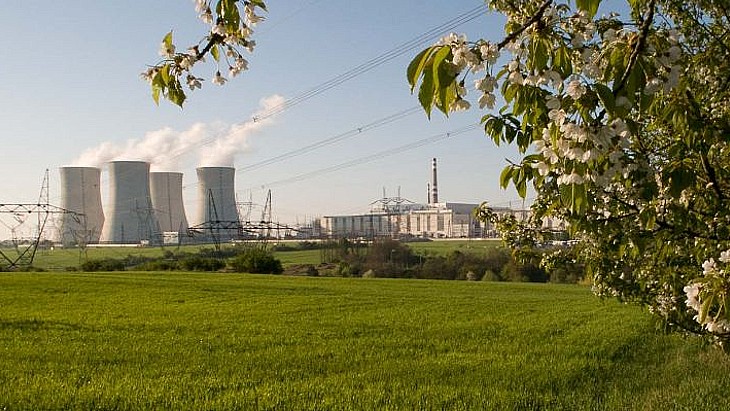
The Czech Republic's Minister of Industry and Trade Lukáš Vlček held talks with French Energy Minister Marc Ferracci and European Commissioner Stéphane Séjourné about the new nuclear planned at Dukovany, and losing bidder EDF's objections to the tender process.
(Image: CEZ)
The Czech Republic is planning new nuclear capacity and in July last year announced Korea Hydro & Nuclear Power (KHNP) was the preferred bidder, ahead of France's EDF. EDF brought a case to the Czech competition authority challenging the tender process, which was dismissed last month. That cleared the way for the planned signing of the official contracts with KHNP on 7 May. However EDF succeeded in securing a last-minute court injunction in a Czech regional court on 6 May to stop the contract being signed until its case relating to the tender process has been heard in court.
On Monday the project development company Elektrárna Dukovany II appealed to the Czech Supreme Administrative Court to get the injunction lifted, with KHNP also filing an appeal on Tuesday. A court spokeswoman said on Wednesday: "At this moment, basic procedural steps are being carried out. The case file will be requested without delay and the cassation appeals will be sent to the parties to the dispute for their comments. The judges are already familiarising themselves with the case. The case is prioritised in the relevant chamber and, given its nature and importance, will be heard as a priority."
In addition to the court cases, it also emerged last week that Séjourné, European Commissioner for Industrial Strategy, had written on 2 May to ask for the contract signature to be postponed because the European Commission had already started a preliminary review "to assess whether potential foreign financial contributions received by the Party (KHNP) constitute foreign subsidies and, if so, whether those foreign subsidies distort the internal market with respect to the project". The Czech Ministry of Industry and Trade dismissed the request, calling it a "courtesy letter" that was not legally binding.
On Tuesday Vlček held virtual talks with Ferracci, saying afterwards: "During today's meeting with French Energy Minister Ferracci, we discussed the progress of the unsuccessful bidder EDF, where I expressed my concerns about the violation of the national interests of the Czech Republic. At the same time, I emphasised that energy security should come first, and that the implementation of the largest project in the history of the Czech Republic is in the interest of the entire European Union."
He added: "The tender was completely transparent, it was carried out according to rules based on the methodology of the International Atomic Energy Agency and agreed to by all bidders, and the offers were evaluated by hundreds of experts."
After his second meeting, with Séjourné, Vlček said: "Our discussions were constructive. We agreed that we must act quickly and that political discussions will always be preceded by expert discussions. The Ministry of Industry and Trade will continue to provide the European Commission with maximum cooperation so that the project continues and all issues are clarified."
He said there was an agreement to start consultations under the leadership of the Director General of the European Commission's Directorate-General for Internal Market, Industry, Entrepreneurship and SMEs, involving his ministry and the Czech competition office with the aim being to "clarify all legal and technical issues related to the EPC contract".
At the time of the selection of KHNP in July 2024, Prime Minister Petr Fiala said the aim was to reach the signing of contracts for the initial unit by the end of March 2025, with the target for test operation of the first new unit being 2036 and commercial operation in 2038. He said the winning tender "based on the evaluation of experts, offered better conditions in most of the evaluated criteria, including the price". The KHNP bid was for a cost of around CZK200 billion (USD8.6 billion) per unit, if two units were contracted.
It was announced at the end of April that the Czech state - which already owns 70% of CEZ - was going to purchase 80% of shares in the Elektrárna Dukovany II project, with CEZ retaining a 20% stake. The 80% stake was valued at CZK3.6 billion (USD163 million).
The Czech Republic currently gets about one-third of its electricity from the four VVER-440 units at Dukovany, which began operating between 1985 and 1987, and the two VVER-1000 units in operation at Temelín, which came into operation in 2000 and 2002.
First RITM-400 reactor unit manufactured for new generation icebreaker
Wednesday, 21 May 2025
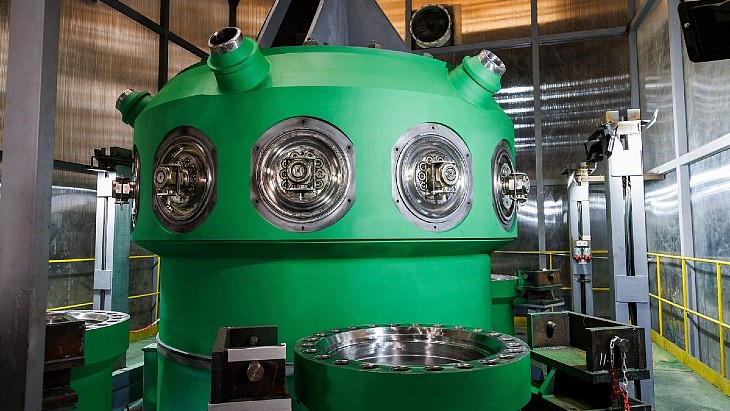
The manufacture of the first RITM-400 reactor unit has been completed for the Rossiya, which is scheduled to feature two of the reactors and become the world's most powerful nuclear-powered icebreaker.
(Image: Rosatom)
The Rossiya, which will be the first of the proposed Project 10510 nuclear-powered icebreakers, will feature two RITM-400 pressurised water reactors. It will be able to penetrate ice up to 4.3 metres thick and clear a channel up to 50 metres wide. The vessel is being built at a shipyard near Vladivostok in eastern Russia. The most recent reported construction target service date is 2030.
The RITM-400 is a development of the RITM-200 reactor design which already has variants for icebreakers, floating power plants and for use on land. As a scaled-up model, RITM-400 produces 315 MWt, with a propeller power of 120 MW, compared with RITM-200's 165 MWt, but uses the same technologies.
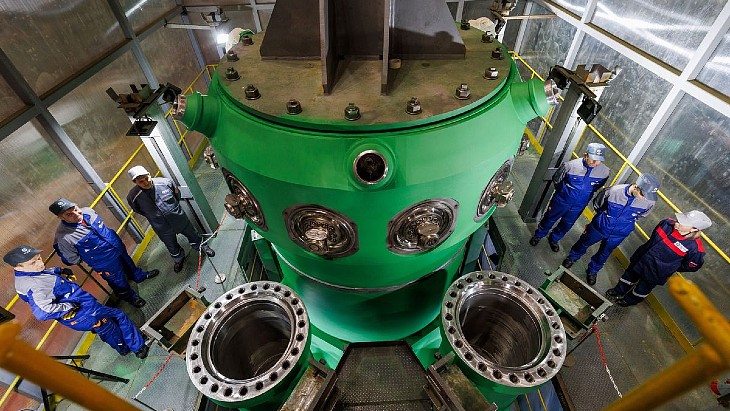
The RITM-400 reactor unit was manufactured at ZiO-Podolsk, Rosatom's machine-building division, with the completion coinciding with the Russian state corporation's events to mark the 80th anniversary of the nuclear industry.
Igor Kotov, head of Rosatom's machine building division, said the second reactor would be completed "in a couple of months" and "both units will be sent to the shipyard for installation on the Rossiya ... the completion of this project opens up new opportunities in developing the Northern Sea Route".
Alexey Likhachev, Director General of Rosatom said: "The completion of the RITM-400 reactor is a significant event for the icebreaker fleet, for Rosatom and for our entire country. The reactor units of the next-generation Rossiya nuclear icebreaker will allow it to break over 4 metres of thick ice."
(Image: Rosatom)
Russia currently has eight operating nuclear-powered icebreakers: the 50 Let Pobedy, Vaigach, Yamal, Taimyr, and the Project 22220 vessels the Arktika, Siberia, Ural and Yakutia. There are also three more Project 22220 vessels in various stages of construction - the Chukotka, Leningrad andStalingrad. Ten RITM-200 reactors have been manufactured for the Project 22220 vessels with a further 10 currently being manufactured for use in icebreakers or small modular reactor plants on land and sea.
The nuclear-powered icebreakers are a key part of Russia's plan to develop the Northern Sea Route, the shipping lane along its north coast, which can cut the distance and speed for shipping goods by sea from northern Europe to Asia. The 5600-kilometre route runs from St Petersburg and Kaliningrad to Vladivostock. Russia says the distance from Murmansk to Japanese ports is halved by using the Northern Sea Route rather than the Suez Canal, with the duration cut from about 37 to 18 days. Global warming has made large-scale navigation along the route more feasible, and it is being facilitated by the construction programme of nuclear-powered icebreakers.
Rosatom reported that in 2024 nearly 37.8 million tonnes of cargo traffic used the Northern Sea Route, 1.6 million tonnes above the previous high. There was also a record number of transit voyages - 92 - which helped set a record of 3 million tonnes of transit cargo. The nuclear icebreaker fleet provided 976 icebreaker escorts.
TVA submits first US BWRX-300 construction application
Tuesday, 20 May 2025
The Tennessee Valley Authority has submitted an application to the US Nuclear Regulatory Commission for a permit to build a GE Vernova Hitachi Nuclear Energy BWRX-300 small modular reactor at Clinch River.
An illustration of a BWRX-300 plant (Image: GVH/TVA)
This makes the Tennessee Valley Authority (TVA) the first utility in the USA to submit a construction permit application for the BWRX-300 technology, and was described by TVA President and CEO Don Moul as "a significant milestone" for TVA, as well as for the region and the USA, accelerating the development of new nuclear technology, its supply chain and delivery model. "TVA has put in the work to advance the design and develop the first application for the BWRX-300 technology, creating a path for other utilities who choose to build the same technology," he said, adding that TVA "looks forward to working with the Administration to accelerate advanced nuclear technologies … we believe deploying new nuclear is essential to providing American families and businesses affordable and abundant electricity for decades to come".
TVA has invested in the standard design of the BWRX-300 as part of a technical collaboration agreement with Ontario Power Generation, Polish company Synthos Green Energy and GE Vernova Hitachi Nuclear Energy (GVH, formerly GE Hitachi Nuclear Energy, GEH). It is also also leading a coalition of utility companies and supply chain partners that has applied for a grant of USD800 million from the US Department of Energy to accelerate construction of the USA's first small modular reactor, and a USD8 million grant to support the cost of the licence review.
Small modular reactors - SMRs - are reactors with a smaller and more modular design than the USA's currently operating commercial nuclear fleet. As well as offering safety enhancements, their smaller footprint and modular design means they can potentially be built more quickly, are easier to operate and better fit into the landscape due to their compact size, TVA said.
TVA already holds an early site permit for SMRs at the Clinch River site, certifying that the site near Oak Ridge, Tennessee, is suitable for the construction of a nuclear power plant from the point of view of site safety, environmental impact and emergency planning. It has also completed and submitted an Environmental Report for the project to the Nuclear Regulatory Commission, and says site preparation for the SMR could begin as soon as 2026.
"TVA’s investment in the standard design of the BWRX-300 technology will accelerate its deployment, helping meet the rising demand for energy and enhancing energy security," GVH President and CEO Craig Ranson said. "This milestone, in addition to this month's decision by the Province of Ontario to build the western world's first SMR, demonstrates that this technology is advanced and real."
The BWRX-300 design is a 300 MWe water-cooled, natural circulation SMR with passive safety systems that leverages the design and licensing basis of the ESBWR boiling water reactor developed by GEH. Earlier this month, the Canadian province of Ontario approved OPG to start construction of the first of four BWRX-300 units planned at the Darlington New Nuclear Project site.
Indian regulator approves new nuclear site
Monday, 19 May 2025
India's nuclear regulator has given its consent to the siting of the four-unit Mahi Banswara Rajasthan Atomic Power Project in Rajasthan.
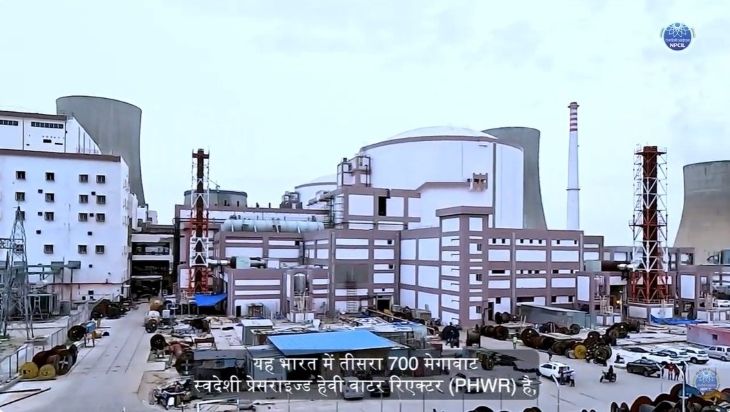
The Mahi Banswara plant will be an Indian 700 MWe PHWR, like units 7 and 8 at the Rajasthan Atomic Power Project shown here (Image: screengrab from NPCIL video)
The Atomic Energy Regulatory Board (AERB) consent is for the siting of four Indian-designed 700 MWe pressurised heavy water reactors (PHWRs) at the site, near the village of Napla, in the Banswara district. The AERB's consent is valid for five years.
The AERB describes siting consent as the first major stage in its licensing of nuclear facilities, followed by construction, commissioning, operation and decommissioning. Consent for siting involves ensuring of the suitability of the site for the proposed facility, including from an engineering point of view, and includes reviews of the site itself, how the facility and the site will interact with each other, and the site's suitability for the implementation of emergency actions. The review process includes a range of studies depending what is applicable to that particular site and project, such as geotechnical, hydrogeological, radioactive impact assessment, baseline natural background, soil studies, and mapping of surrounding areas.
According to the siting consent issued by AERB, the Mahi Banswara site has undergone the reviews required under its regulations. It has consented to the siting of the four units - also known as MBRAPP - subject to satisfactory compliance with conditions including obtaining environmental clearance from the "relevant competent authority".
The four Mahi Banswara units are among ten units that the Indian government has sanctioned to be built under a "fleet" approach: the others are Kaiga units 5 and 6 (in Karnataka), Gorakhpur units 3 and 4 (Haryana), and Chutka units 1 and 2 (Madhyar Pradesh). Two 700 MWe PHWR units at Kakrapar, in Gujurat, are already in commercial operation. Another, Rajasthan unit 7, was connected to the grid in March, and construction is ongoing on Rajasthan unit 8.
The Mahi Banswara units are to be developed under Anushakti Vidhyut Nigam Ltd (Ashvini), a joint venture between Nuclear Power Corporation of India Ltd (NPCIL) and National Thermal Power Corporation (NTPC). Formation of the 51% NPCIL:49% NTPC joint venture set up to construct, own and operate nuclear power plants in India received approval from the government last year.
Under current Indian legislation, only two companies - NPCIL and Bharatiya Nabhikiya Vidyut Nigam Limited (Bhavini, set up to build and operate fast reactors) - are legally allowed to own and operate nuclear power plants in India, but a 2016 amendment to the 1962 Atomic Energy Act allows public sector joint ventures. In January, NPCIL signed an agreement to enable the transfer of the MPRAPP project from NPCIL to the Ashvini joint venture.
Article researched and written by WNN's Claire Maden
Reactor closure marks Taiwan's nuclear exit
Monday, 19 May 2025
Unit 2 of the Maanshan nuclear power plant - Taiwan's last operating reactor - has been disconnected from the grid and will be decommissioned following the expiry of its 40-year operating licence, in accordance with Taiwan's nuclear phase-out policy.
Maanshan (Image: Taipower)
The output of the 938 MWe pressurised water reactor (PWR) was gradually reduced from 13:00 (local time) on Saturday 17 May and was disconnected from the grid at about 22:00, according to the Ministry of Economic Affairs. The reactor was declared in a safe shutdown state about two hours later.
Construction of Maanshan 2 began in February 1979. The unit attained first criticality on 1 February 1985 and was connected to the grid later that month, entering commercial operation three months later.
In July 2021, state-run Taiwan Power Company (Taipower) submitted an application to the Atomic Energy Council to shut down the two-unit Maanshan plant. According to existing legislation, the utility must file an application to decommission the units at least three years prior to energy production stopping.
Unit 1 of the Maanshan plant - a 936 MWe PWR - shut down on 27 July last year on the expiry of its operating licence.
Phase-out policy
Taiwan's Democratic Progressive Party (DPP) was elected to government in January 2016 with a policy of creating a "nuclear-free" Taiwan by 2025. Under this policy, Taiwan's six operable power reactors would be decommissioned as their 40-year operating licences expire. Shortly after taking office, the DPP government passed an amendment to the Electricity Act, passing its phase-out policy into law. The government aims for an energy mix of 20% from renewable sources, 50% from liquefied natural gas and 30% from coal.
However, in a referendum held in November 2018, voters chose to abolish that amendment. The Ministry of Economic Affairs said the amendment was officially removed from the Electricity Industry Act on 2 December.
Nevertheless, then Minister of Economic Affairs Shen Jong-chin said in January 2019 "there would be no extension or restarts of nuclear power plants in Taiwan due to subjective and objective conditions, as well as strong public objection".
Unit 1 of Taiwan's oldest plant, Chinshan, was taken offline in December 2018, followed by Chinshan 2 in July 2019.
The 40-year operating licence for Kuosheng 1 was due to expire on 27 December 2021, when it was due to be shut down. However, in May of that year, Taipower announced it would only be able to operate the reactor until June owing to a lack of storage in the unit's used fuel pool. Unit 2 of the Kuosheng plant was shut down in March 2023.
The construction of two units at Lungmen began in 1999, but the project has been beset with political, legal and regulatory delays. The completed unit 1 was mothballed in July 2015, while construction of unit 2 was suspended in April 2014.
As Taiwan's last operating reactor, Maanshan 2 had been providing about 3% of its electricity.
"This year, four large gas-fired units with a capacity of nearly 5 million kilowatts, including Datan, Hsingda and Taichung power plants, and about 3.5 million kilowatts of wind and photovoltaic power will join the power supply ranks, ensuring that the people have no worries about electricity," the Ministry of Economic Affairs said.
Article researched and written by WNN's Warwick Pipe
CANADA
Westinghouse, First Nations sign MoU to look at SMR opportunities
Thursday, 22 May 2025
World Nuclear News
Westinghouse Electric Company's agreement with the Pabineau and Eel River Bar First Nations is to promote Westinghouse technology for new-build projects at the Port of Belledune in New Brunswick, with an initial focus on exploring AP300 small modular reactor opportunities for local developers.
L-R: Councilor Karen Narvie of Eel River Bar, John Gorman and Chief Terry Richardson mark the signature of the MoU (Image: Westinghouse)
The Memorandum of Understanding also includes the assessment of opportunities for using Westinghouse’s Long Duration Energy Storage technology at the Port of Belledune, which is in New Brunswick.
Pabineau First Nation and Eel River Bar First Nation are both Mi’kmaq communities located in northern New Brunswick. As Indigenous rightsholders at the Port of Belledune, both communities work with the port to support regional economic development.
"Pabineau First Nation is excited to sign this MoU with Westinghouse and Eel River Bar for opportunities that will arise from development in the SMR sector. We believe partnership is the key to success, and growing the economy of the province not only benefits First Nations but the whole province," said Chief Terry Richardson of the Pabineau First Nation.
"The Port of Belledune offers a great opportunity with land and a deep-water port that gives access to world markets. We look forward to continuing to develop our relationship with Westinghouse."
Eel River Bar First Nation Chief Jake Caplin said the agreement represents a forward-looking partnership that puts the two First Nations communities at the centre of "meaningful" economic and environmental progress. "We're proud to be part of clean energy innovation in our territory that will benefit our community members for generations to come," he said.
"Indigenous communities are important partners to Westinghouse as we develop infrastructure projects and new build opportunities in New Brunswick," Westinghouse Canada President John Gorman said. "We are pleased to work with Pabineau and Eel River Bar First Nations to explore the deployment of the AP300 SMR, which is based on the proven and operating AP1000 reactor."
The Belledune Port Authority (BPA) manages the infrastructure and assets of the Port of Belledune in northern New Brunswick. With four marine terminals and 1,600 acres of industrial-zoned land, the Atlantic Ocean port offers some of the shortest sea shipping routes to Europe. The authority's Green Energy Hub is a development district for clean energy projects, along with complementary, low-carbon industries to support regional economic growth. In 2022, the BPA announced plans to pursue the use of SMR technology as part of a future expansion at the port, with proposals for an ARC Clean Technology Canada ARC-100 reactor to provide energy for hydrogen production and other industries.
Westinghouse and the North Shore Mi'kmaq Tribal Council have signed a memorandum of understanding to promote the selection and deployment of Westinghouse technology for nuclear new build projects in New Brunswick.
Strategic Earthquake in Europe Signals Age of Uncertainty
A convergence of crises—geopolitical shifts, energy instability, and economic stagnation—marks the end of a historical era and the beginning of a more volatile multipolar world order.
Challenges include mass immigration, a potential Ukraine settlement favoring Russia, reduced U.S. security guarantees, and unsustainable fiscal models. Defence spending, energy strategy, and resource security.
Populist movements are accelerating as supranational institutions lose influence.
Geopolitically, the events of the first half of 2025 strongly indicate that seismic change is coming to Europe. From the diplomatic wrangling over the end of the Russia-Ukraine war to relations with the Trump administration in the US, Europe’s leaders face a number of serious and pressing dilemmas. One reason the present moment is so pivotal is that a number of major shaping factors have converged at precisely the same time, a kind of ‘great conjunction’ that signals the close of a number of historical cycles and patterns. One epoch has ended and another is about to begin.
Just what this new epoch will look like exactly will become clearer over the next few years. In the meantime, the heightened sense of volatility will bring great risk to investors even as it also presents rich opportunities. Worldwide, the globalist order is in decline,e and a new nationalist-centric order is taking its place. While this shift had been evident to careful observers for quite a long time, the events of the last year, particularly those surrounding the election of US President Donald Trump, caught many people, including governments, off-guard. They had wrongly assumed that globalism was the future.
In practice, this transformation has profound implications, not least because it heralds the emergence of a multipolar world and the disintegration of the ‘rules-based order’ which has predominated since the end of World War Two. It has also become increasingly clear that many of the supranational organisations that have for so long provided the framework through which modern governance and trade take place appear to be cracking up. This includes the UN and the WTO, as well as more regionally-focused entities like the EU and NATO
In terms of specifics, European governments (including those within and outside the EU as well as the EU itself), face a number of major dilemmas. Their strategic choices will have major ramifications for the continent for many years to come.
1. The most explosive factor in domestic politics, particularly in Western Europe, is the question of mass immigration. This issue is connected to all others and ties into debates not just over economic and social questions but also the very fundamentals of identity and sovereignty. Of course, the significant rise of populist and nationalist parties across the continent is directly tied to mass immigration and could augur the end of the ‘postwar consensus’ and a dramatic shift in governing priorities
2. Europe’s governments face dual prospects of a) a post-war settlement in Ukraine in which Russia obtains its strategic and territorial objectives, and b) a US pivot away from NATO and Europe and towards the Far East. The realisation that Europe can no longer rely on the US for military protection, whilst not increasing its own defence spending to 5% of national government budgets has sparked a marked change in defence policies across the continent. Many governments have announced intentions to increase defence spending and business within the continent’s already extensive defence sector is likely to increase. However, this plan is most likely a decade-long endeavour and can only successfully occur within the context of a healthy, functional economy. Any plan to rely on increased borrowing to foot the bill would likely come unstuck as it would only exacerbate existing economic woes.
3. Europe’s economic malaise has been universally noted. Even before the Trump administration came to power, it was clear that existing spending habits were not sustainable. A senior banker on another continent remarked to me last year that the “terrifying” levels of government debt in Europe would certainly ensure the collapse of the social model of governance. In truth, Europe’s economies have been struggling ever since the 2008 financial crisis. Within the EU, the top-heavy bureaucratic structure and mass of extensive regulations have made the prospect of imminent recovery rather remote. Germany had been the motor that kept the EU economy going, yet its own economy has fared very badly in recent years under the impact of the Russia-Ukraine war and increasingly stringent Green regulations.
4. Europe’s lack of competitiveness is notable in a number of domains. The innovation and investment dilemma has become readily apparent with French President Emmanuel Macron publicly recognising that the stifling regulatory space had prompted a vast exodus of talent and capital to fresher pastures such as the US, the UAE, and parts of the Far East. The gap in AI capability is one particularly prominent example.
5. Energy strategy is another area in which governments will have to reassess their options. The war in Ukraine revealed the extent to which governments like Germany had become dependent on Russian gas. Furthermore, the commitment to radical Net Zero targets, made in a context within which climate politics was ascendant, will have a sharp impact on industrial output. However, politically-speaking, it must be asked how much of the climate-centric Green political impetus was reflective of a globalist political framework which was in reality already in decline. Electorally, the Green Party in German enjoyed less support in 2025 than it did in 2021, losing 33 seats. Yet, the new coalition government of Chancellor Merz has made major concessions to the Greens including the promise of devoting €50bn of a new (borrowed) €500bn special fund to climate protection.
More widely, the recent electricity blackouts in Portugal, Spain and parts of France underlined the fragility of the current energy framework. On this, two immediate questions arise. Firstly, how can governments ensure that widespread power outages do not grow more frequent as energy policy has been directed towards Net Zero targets? Secondly, how can such governments expect to manage the inevitable social unrest that would ensue from repeats of such incidents at a time when tensions are already running high?
6. The power cuts in parts of Western Europe once again highlight one of the major drawbacks to hyper-globalisation—the reliance on highly complex but fragile systems. This has been witnessed on a global scale in many different areas, such as last July when a CrowdStrike software update interrupted airlines, banks, healthcare and broadcasters across the world. Then there is the Red Sea crisis, the result of Yemen-based Houthi rebel activity, and a major source of risk in an area through which 30% of the world’s container shipping normally passes. It serves as a prime example of how local flashpoints can have major global ramifications. As the world moves away from hyper-globalisation to a more regionally-based order, supply chains will likely be revised so as to mitigate the level of risk present during a period of great geopolitical instability.
7. Related to this point is the question of resources. As the ‘rules-based order’ wanes there will likely be a return to a much more ‘cut and thrust’ modus operandi as far as state power projection goes. As the grand strategist Gregory Copley noted recently, “Sovereignty is what can be defended, either directly or by alliance.” Globally, there will be a number of key strategic regions of interest, reminiscent of the various ‘Great Games’ of the nineteenth century, such as the Anglo-Russian ‘Great Game’ in Central Asia or the ‘Scramble for Africa’. Today, the completion of the International North South Transport Corridor (INSTC) has provided significant strategic advantage to Russia, which now has uninterrupted trade access to the Indian Ocean. Moreover, Central Asia is becoming a highly important region economically-speaking, not least due to the presence of Rare Earth Elements (REEs), an important factor which is also at play in Africa, as a new ‘Scramble’ effectively takes place there again too, albeit in a different guise. In addition to these, both the Arctic and Antarctic will be of keen interest to the great powers of the 21st century as well as to those with geographical proximity.
President Trump’s repeated comments vis-à-vis Greenland, currently an autonomous territory within the Kingdom of Denmark, are indicative of a number of American strategic objectives. One of these concerns the vital question of REEs, as Greenland possesses some of the world’s largest reserves, including yttrium, scandium, neodymium, and dysprosium. Continental Europe’s prospects in this field are an important point of exploration. While Europe currently does not produce any REEs, various deposits have been located across the continent, from Norway and Sweden to Greece. Interest in these areas is growing, and with it, consideration of the potential for mining, a factor which will have to be balanced with environmental concerns, presents a possible field of interest for investors over the coming decades.
These factors are, of course, only some of the wider strategic concerns with which European governments will have to grapple over this coming transformative period. In the background to all this lies the powerful rise of populism and nationalism, which looks set to grow stronger. How present ‘status quo’ governments choose to respond to the varying strategic challenges of the day will have a major impact on the internal political landscape of respective states as well as the broader geopolitical picture. The present interim period brings with it a sped-up political cycle that sees many national governments at present quite unstable. How all the pieces on the board end up remains to be seen. In the meantime, we could be in for a period of great instability and uncertainty.


_52327.jpg)
_79657.jpg)
_71059.jpg)
_15992.jpg)
_48620.jpg)
_96598.jpg)
