Wednesday, August 13, 2025


Guantánamo and Beyond: A Conversation with Human Rights Lawyer Alka PradhanFeatures

Guantánamo and Beyond: A Conversation with Human Rights Lawyer Alka Pradhan

From defending detainees held at the US naval base in Guantánamo Bay, Cuba—many of whom were subjected to secret detention and torture by US Central Intelligence Agency (CIA) officials—to confronting American politicians over drone strikes that killed civilians in Pakistan, Alka Pradhan has built her career challenging the legal framework created after former US President George W. Bush declared the “War on Terror” in response to the September 11, 2001 (9/11) attacks. As defense lawyer for Ammar al Baluchi in the high-profile military trial related to the September 11 attacks, she has worked to reveal how post-9/11 policies weakened legal protections, allowed abuses to go unpunished, and violated international law. In this interview, Alka Pradhan speaks to JURIST Associate Editorial Director Alanah Vargas about why Guantánamo remains a timely and important issue, how national security posturing distorts justice, and what future generations might criticize about America’s response to 9/11.

You’ve spent years representing detainees at the US Guantánamo Bay detention camp, including Ammar al Baluchi in United States v. Khalid Sheikh Mohammed. What initially drew you to this high-stakes human rights work?

I spent law school and graduate school learning as much as I could about the litigation of high crimes—war crimes, crimes against humanity, and genocide. After 2001, I became really interested in the intersection of human rights and the law of war; where they complement each other, and where there are big gaps. The place with the biggest need at the time was here at home in the United States, litigating the crimes committed by our government post-9/11. I had never thought that I would be litigating against my own government, but if we are ever to be global leaders again, we have to live up to our own standards first. 

The US Central Intelligence Agency (CIA) has played a central role in post-9/11 detention, rendition, and interrogation programs. From a legal perspective, what mechanisms currently exist—or could be developed—to hold intelligence agencies accountable, both within the US system and under international law?

The primary mechanism to shield the CIA from accountability has been the sweeping use of the State Secrets Privilege (State Secrets) by each administration to throw out any cases brought by CIA victims. It is simply not credible that all of the details around the torture program are State Secrets two decades later, and certainly not when so much information has been released. The government could simply stop invoking the privilege and allow the lawsuits to go forward. If the US government believes that the torture program is defensible, then they should attempt to defend it in court, in public.

Under international law, one of the reasons that the International Criminal Court (ICC) has been so maligned by the US in recent years is because of their investigations that included CIA and military crimes abroad. Instead of agreeing to properly investigate ourselves, the US instead sanctioned the ICC. This sort of forceful rejection of international accountability undermines the entire international system. 

Many Americans believe Guantánamo is closed or irrelevant. What do you wish the public better understood about its ongoing legal and moral implications?

I wish that more Americans understood how Guantánamo, the injustices perpetrated there, and our apathy towards it, was an early indicator of our vulnerability to fascism. Each president since 9/11 has expanded executive power so that it’s barely recognizable under the Constitution anymore, and that can be traced directly to Guantánamo and the crimes still occurring there. So the fact that people think Guantánamo is “history” or was somehow necessary, shows how much more education we need on these topics.

How do you navigate tensions between national security narratives, human rights, and the rule of law, especially when your clients are portrayed as “the worst of the worst”?

Security is very different from national security theater, and so much of what the US government does is theater, rather than security. The phrase “worst of the worst” was devastating because few Americans have ever bothered to read beyond it and question who is actually at Guantánamo and why they are being held. Guantánamo was not invented for the “worst of the worst”—rather, the phrase was invented as post-hoc justification for Guantánamo. And I guarantee that if the men held there were white western Europeans, Guantánamo would not exist. Much national security theater is rooted in racism. 

So I try to cut through the propaganda and educate people on the real people at Guantánamo, most of whom were never charged (and could never have been), and how the few that are charged were tortured so badly that fair trials are no longer possible. No matter what the political stripes, most people can agree that the lack of justice for 9/11—because of our own actions—is a travesty. 

Your legal strategy often challenges evidence obtained through torture. How are these arguments received differently in US military commissions versus international legal forums?

I believe it would surprise people to know that torture-acquired evidence is still very much used and promoted by prosecutors around the world, and that courts accept it or look for ways to include it in order to secure convictions. That is true of the American prosecutors at the Guantánamo military commissions, and it is unfortunately sometimes true of prosecutors at the international courts and tribunals. As a believer in international criminal law, I was shocked that the military judge at Guantánamo ruled to suppress my client’s torture-acquired statements on the basis of overwhelming evidence of torture, but international judges refused to do so in a different, but equally compelling case. 

The answer is to strengthen education around the impact of torture on every aspect of the investigative and judicial process. Courts cannot be credible if their decisions are built on torture. This is why I assisted with the drafting of the Mendez Principles and promote their use by attorneys, investigators, and judges around the world. 

Beyond Guantánamo cases, you’ve litigated before international courts representing victims of drone strikes and other alleged abuses. Could you share a case that stands out and what it revealed about accountability in global counterterrorism operations?

I often think about my clients from Pakistan, the children from Waziristan whose grandmother was murdered by a US drone. They traveled here to DC, to try and get an apology or recognition that their grandmother was wrongfully killed. We organized an event for them in Congress; two lawmakers showed up. We asked the Obama White House for an apology, none ever came. My client’s trip was a test of our humanity—whether we recognize that affording people dignity contributes more to our security than random murder and hiding from consequences. And we failed that test. We proved that “global counterterrorism operations” are often premised on our refusal to admit mistakes, which makes us all less safe.

You’ve worked with organizations like ECCHR to hold Western governments accountable for their alleged complicity in torture and surveillance. What legal or political breakthroughs have you seen, and what barriers remain?

I’ve seen very few political breakthroughs on torture and surveillance. In fact, with the current trends of citizenship-stripping and Western governments’ endorsement of crimes in Palestine and other parts of the Middle East and Africa, impunity seems to be spreading. 

The courts have been a source of some light. We’ve seen domestic courts in the UK, regional courts like the ECHR and IACHR, holding state parties accountable for their crimes, and we can use those rulings to build jurisprudence that will hopefully outlast this generational moment. 

What role do international human rights norms and bodies play in your work? How effective are they at holding powerful states accountable?

Human rights and the enforcement bodies are enormously important in my work. They are rarely effective in holding states accountable in a traditional sense—prosecutions will rarely follow a Special Rapporteur’s report, or sanction from the UN Human Rights Committee. But there are many forms of accountability, and recognition is one of them. For my clients, seeing the crime and perpetrators named, and their harm recognized by international experts, is very valuable. 

In addition to litigation, you do public education and advocacy. How important is storytelling in building empathy for clients who may be marginalized or overlooked by the state?

Storytelling—literally talking about how clients arrived at their present circumstances, who their families are, what they love and dislike—is critical to my cases. It is the only thing that can combat government propaganda like the arbitrary “worst of the worst” label. Ironically, the “storytelling” I do is just really just putting out facts to ensure that the public understands that all of these people are human, with the human characteristics that we all have. 

Having worked across US and international legal systems, what are some key differences you’ve noticed in how justice is conceptualized or pursued?

To be honest, the conceptualization of justice seems similar throughout: the promotion of a greater good against the particular villain in the dock. Too often, justice is framed as a single prosecution or trial, which seems unproductive to me—even if such trials are sometimes a necessary part of the solution. Rarely do I see a framing that recognizes the tragedy on all sides that must occur in order for a person or people to be prosecuted for a high crime, or discussion of the holistic change that has to happen to truly prevent crimes like torture, terrorism, war crimes, or crimes against humanity. 

How do you think future generations will judge the legal and moral decisions made during the “War on Terror”?

The biggest tragedy in my mind is that the decisions made post 9/11 could have been corrected in real time. We knew almost immediately that Guantánamo held people who should never have been detained. We knew early on that men were being tortured at the black sites. President Obama campaigned on restoring transparency and curbing executive power in 2007, and then invoked State Secrets more than President Bush had, and grabbed executive power with both hands. Conditions were perfect for further exploitation by whoever came next. We saw the problems, we named the problems and their solutions, and then we collectively looked away and went to brunch as politicians made them worse. And so while I think future generations might understand the initial decisions made as a product of panic and existential fear, they will condemn our laziness in safeguarding democracy, as I do. 

What advice do you have for young lawyers or law students interested in international human rights or accountability litigation but who feel overwhelmed by the scale of global injustice?

I feel overwhelmed at the scale of global injustice all the time, every day. I would say to young lawyers first, that it is absolutely normal to feel disillusioned. For international lawyers, and particularly litigators, we all want those big cases in historic courtrooms, that are precedent-setting. That is good work, and those cases will stretch your abilities to the max. But there is no international human rights without the practice of human rights at home, for individuals and groups in our own countries. Never underestimate the importance of the single client and their family, who look to you for hope—or solidarity at the very least—when the entire system is against them. Win or lose, they will never forget the feeling of having someone in their corner. And as a lawyer, no big splashy win (as great as those are) will ever match the accomplishment of making that difference to someone who needs it.

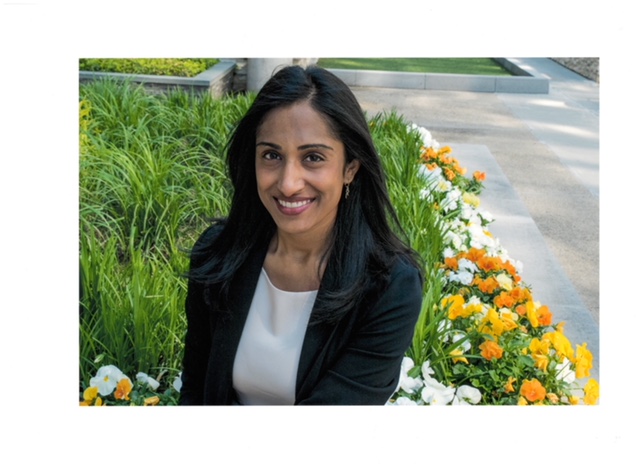
Photo of Alka Pradhan provided to JURIST.

UK court dismisses challenge to anticipated government categorization of Wikipedia

The UK High Court of Justice on Monday dismissed the Wikimedia Foundation’s legal challenge to aspects of the new Online Safety Act (OSA), ruling that the organization failed to establish sufficient grounds to bring the case.

The court dismissed the claim on the basis that Wikimedia failed to demonstrate how legislative and administrative decisions to impose certain duties on sites like Wikipedia were “flawed.”

The court clarified how the UK government and enforcement agency Ofcom are responsible for protecting Wikipedia in certain ways. The ruling Justice wrote that the order “does not give Ofcom and the Secretary of State a green light to implement a regime that would significantly impede Wikipedia’s operations.”

The court outlined how enforcement of the law would only be “justified as proportionate” to its reasonable aims in order to avoid violations of the right to freedom of expression, the right to respect for private and family life, and right to assembly and association found in the European Convention on Human Rights.

The OSA delegates regulatory power to the UK’s Secretary of State, who is tasked with sorting online platforms into certain categories. Platforms incur different duties depending on their categorization. Following this scheme, the Secretary of State, with guidance from Ofcom, adopted certain category thresholds in “Regulation 3.”

The Wikimedia Foundation worried that it would incur weighty duties under its potential categorization and argued that such regulations impede its UK operations, limit UK-users access to information, and pose privacy and safety risks. The foundation specifically challenged the potential imposition of Category 1 duties on Wikipedia, which, in addition to age verification filters, would require the site to “offer adult users tools which [may] give them greater control over the kinds of content they see and who they engage with online.”

The regulation would also place a duty on Wikipedia to create tools that help “reduce the likelihood that [users] will encounter…content that…encourages, promotes or provides instructions for suicide, self-harm or eating disorders,” as well as “racist, antisemitic, homophobic, or misogynist” content.

WF argued that such regulations, namely age verification, “endanger Wikipedia and the global community of volunteer contributors who create the information on the site.” Wikimedia lead counsel Phil Bradley-Schmieg commented on the potential risks:

There are many OSA Category 1 duties. Each one could impact Wikipedia in different ways, ranging from extraordinary operational burdens to serious human rights risk… This new duty would be exceptionally burdensome (especially for users with no easy access to digital ID). Worse still, it could expose users to data breaches, stalking, vexatious lawsuits or even imprisonment by authoritarian regimes.

The foundation also argued that age verification checks will open the door to “vandalism” and “manipulation” of information, as the website operates on contributions from users to ensure accuracy and objectivity. Limiting the amount of users would arguably impact the quality of content on the site.

Wikimedia clarified that it supports the legislation but solely disagreed with Ofcom potentially labelling Wikipedia as a Category 1 site.

Wikimedia said that categorization decisions are expected soon and that it will “continue to seek solutions to protect Wikipedia and the rights of its users” as the OSA continues to take effect.

OSA came into force in July with the goal of protecting children from harmful online content through robust age verification checks. Ofcom’s Enforcement Programme monitors online platforms’ compliance with OSA. According to the agency, many platforms, including Bluesky, Reddit, and X, have begun implementing these checks.

 ENDING D.E.I. AND CIVIL RIGHTS

American Bar Association ends policy reserving board seats for underrepresented groups


On Tuesday, the American Bar Association (ABA) House of Delegates voted to end its longstanding practice of reserving five Board of Governors seats for women, racial minorities, and other underrepresented groups.

While those five positions will remain on the board, the new policy removes demographic restrictions. Instead, any ABA member who can demonstrate a commitment to advancing diversity, equity and inclusion (DEI) will be eligible to run for those positions.

The policy change follows debate over whether to reduce the number of reserved seats from five to three. In the final vote, delegates opted to keep all five positions but remove demographic eligibility requirements. The ABA said the move aligns with its April 2025 resolution reaffirming Goal III, which commits the association to “eliminating bias and enhancing diversity” by focusing on candidates’ demonstrated DEI commitments rather than identity-based criteria.

The decision comes amid declining ABA membership which fell from nearly 400,00 in 2015 to 227,000 in 2024, as well as external pressure from conservative legal groups and political leaders. The Trump administration has criticized the ABA’s diversity policies and threatened to revoke its role as the national accreditor for law schools because of its diversity standards.

The ABA has deferred implementation of its new policy until August 31, 2026.

The ABA Board of Governors includes 44 members who serve staggered three-year terms. The five DEI seats were created in 1986 as part of the associations effort to expand representation. Tuesday’s vote marks the first significant change to this standard in nearly four decades.

China Evergrande Group says to delist from Hong Kong

CAPITALI$M WITH CHINESE CHARACTERISTICS


By AFP
August 12, 2025


Once China's biggest real estate firm, Evergrande was worth more than $50 billion at its peak and helped propel the country's rapid economic growth in recent decades - Copyright AFP/File STRINGER

Embattled property giant China Evergrande Group said Tuesday it will delist from Hong Kong Stock Exchange as a heavier-than-expected debt burden weighed on its liquidation process.

The Hong Kong bourse’s listing committee decided to cancel Evergrande’s listing as it had failed to meet a July deadline to resume trading, according to an exchange filing.

Once China’s biggest real estate firm, Evergrande was worth more than $50 billion at its peak and helped propel the country’s rapid economic growth in recent decades.

But it defaulted in 2021 and became emblematic of the years-long crisis in the country’s property market.

A Hong Kong court issued a winding-up order for Evergrande in January 2024, ruling that the company had failed to come up with a debt repayment plan that suited its creditors.

Evergrande’s shares on the Hong Kong stock exchange were suspended that month.

Liquidators have made moves to recover creditors’ investments, including filing a lawsuit against PwC and its mainland Chinese arm for their role in auditing the debt-ridden developer.

Evergrande’s share listing will be cancelled on August 25, according to Tuesday’s filing, which was attributed to liquidators Edward Middleton and Tiffany Wong.

Middleton and Wong said in an attached progress report that Evergrande’s debt load was bigger than the previously estimated $27.5 billion.

“As at 31 July 2025, this claims’ discovery exercise had resulted in 187 proofs of debt being submitted, by which claims of approximately HK$350 billion (US$45 billion) in aggregate have been made,” the document read.

This figure was not to be taken as final, Middleton and Wong added.

“The liquidators believe that a holistic restructuring will prove out of reach” at this stage, the duo wrote.

China Evergrande Group was a holding company and the liquidators said they had assumed control of more than 100 companies within the group.

They said in the report that they were not able to “estimate the amounts that may ultimately be realised from these entities”.

The property behemoth’s market value was only around $274 million when share trading was suspended, and its founder Xu Jiayin owned a roughly 60 percent stake at the time, Bloomberg News reported.

“Whether or not there’s a delisting, Evergrande’s shareholders will likely have to prepare for near-total loss,” Bloomberg Intelligence analyst Kristy Hung told the news outlet before the delisting was announced.

“The developer’s liquidation and substantial claims from creditors who are ahead in the order suggests equity holders face material risk of getting nothing,” Hung said.
CRIMINAL CRYPTO CAPITALI$M

Disgraced crypto mogul Do Kwon changes plea to guilty in US court


By AFP
August 12, 2025


Image: — © AFP Justin TALLIS

South Korean cryptocurrency specialist Do Kwon pleaded guilty to fraud charges in front of a New York judge on Tuesday following his firm’s multi-billion-dollar bankruptcy, court filings showed.

Do Kwon, who founded Terraform and nurtured two cryptocurrencies central to the bankruptcy, had faced nine counts in a superseding indictment filed by prosecutors in January 2025 to which he initially pleaded not guilty.

The fallen mogul changed his plea in a hearing before Southern District of New York judge Paul Engelmayer, and will be sentenced on December 11, the docket showed.

He was extradited last year from Montenegro to the United States for his role in a fraud linked to his company’s failure, which wiped out about $40 billion of investors’ money and shook global crypto markets.


The crypto tycoon was arrested in March 2023 at the airport in Podgorica, the Montenegrin capital – Copyright GETTY IMAGES NORTH AMERICA/AFP Brandon Bell

The crypto tycoon was arrested in March 2023 at the airport in Podgorica, the Montenegrin capital, while preparing to board a flight to Dubai, in possession of a fake Costa Rican passport.

Before his arrest in the tiny Balkan nation, he had been on the run for months, fleeing South Korea and later Singapore, when his company went bankrupt in 2022.

Do Kwon’s Terraform Labs created a cryptocurrency called TerraUSD that was marketed as a “stablecoin”, a token that is pegged to stable assets such as the US dollar to prevent drastic fluctuations.

Do Kwon successfully marketed them as the next big thing in crypto, attracting billions in investments and global hype.

Media reports in South Korea described him as a “genius”.

But despite billions in investments, TerraUSD and its sister token Luna went into a death spiral in May 2022.

Experts said Kwon had set up a glorified pyramid scheme, in which many investors lost their life savings.

He left South Korea before the crash and spent months on the run.

Cryptocurrencies have come under increasing scrutiny from regulators after a string of controversies in recent years, including the high-profile collapses of exchanges.
‘Stop production’: Small US firms battered by shifting tariffs


By AFP
August 12, 2025


On April 2, US President Donald Trump, with Commerce Secretary Howard Lutnick beside him, unveiled sweeping tariffs on almost all trading partners
 - Copyright AFP/File Brendan SMIALOWSKI


Beiyi SEOW

When US President Donald Trump announced tariffs on almost all trading partners in April, Ben Knepler contacted the factory in Cambodia producing his company’s outdoor furniture. “Stop production,” he ordered.

The announcement involved a 10-percent levy on imports from most partners, set to rise further for many of them. For Cambodia, the planned duty was a staggering 49 percent.

“That night, we spoke to our factory,” Knepler told AFP. “We literally cannot afford to bring our own product into the US with that kind of tariff.”

The decision was even more painful for Knepler and his Pennsylvania-based company, True Places, given that he had previously shifted production of his outdoor chairs to Cambodia from China, following tariffs on Chinese imports imposed by Trump during his first presidency.

“We were facing 25-percent tariffs in China, and there were zero-percent tariffs in Cambodia,” Knepler recalled.

It took him a year to move the massive equipment and molds to Cambodia only to see another steep levy.

With Trump’s “reciprocal” tariff hikes taking effect last Thursday, these Cambodia-made chairs face a lower — though still significant — 19 percent duty.


– ‘Wheel of misfortune’ –


Knepler’s experience echoes that of many US companies producing everything from yo-yos to clothing abroad, after years of offshoring American manufacturing.

To cope, businesses use various strategies.

Some pass on the new costs as a surcharge to customers. Others halted imports when duties reached prohibitive levels, hoping Trump would strike bilateral trade deals that would make their businesses viable again.

Trump frames his tariffs as paid for by other countries, touting tens of billions in revenue this year — but firms contest this description.

“We make the tariff payments when the product comes into the US,” Knepler stressed. “Before we sell it, we’re the ones who pay that tariff.”

Now saddled with hundreds of thousands of dollars in debt he took on to relocate the company’s production to Cambodia, Knepler worries if his business will survive.

He likens the rapid policy changes to spinning a “wheel of misfortune,” resulting in a new tariff each time. Over four months this year, the planned tariff rate on Cambodian exports has gone from 0 to 49 percent, to 10 percent, to 36 percent, to 19 percent, he said.

“No one knows what it’s going to be tomorrow,” he added. “It’s impossible to have any kind of confidence in what the rate will be in three- or four-months’ time.”

Economists warn that tariffs could fuel inflation and drag on growth.

EY chief economist Gregory Daco noted that the duties effective Thursday raise the average tariff rate to 17.6 percent from 2.8 percent at the start of the year -— the highest level since the early 1930s.

While Trump lauds the limited effects his duties have had on US prices so far, experts say tariffs take time to filter through to consumers.

Many of Trump’s sweeping levies also face legal challenges over his use of emergency economic powers.


– Price hikes –


The global tariffs are especially hard to avoid.

Barton O’Brien said he accelerated production and borrowed money to bring in as much inventory as possible before Trump took office.

On the election campaign trail, the Republican leader had floated a 60-percent tariff on imports from China, where O’Brien makes most of his products.

The Maryland-based veteran selling dog harnesses and other accessories rented a container to ship as many products as he could before Trump’s new tariffs would take effect. “I had dog life jackets in the bathroom,” he told AFP.

There is “no way” to produce domestically, he said, adding that comparable American-made products sell for nearly six times his retail prices.

He makes some items too in India and Vietnam.

But Chinese products face an additional 30-percent duty this year, even under an extended truce now expiring in November. The rates for India and Vietnam are 25 percent and 20 percent respectively.

“If you look at the brands I compete with, we’re all made in the same countries. We’re all going to have to raise prices together,” said O’Brien.

India reels from US tariff hike threat

By AFP
August 12, 2025


Jewelry is on display at a store in the ‘Little India’ neighborhood of New York City 
- Copyright AFP ANGELA WEISS


Anuj SRIVAS

Indian exporters are scrambling for options to mitigate the fallout of US President Donald Trump’s threatened tariff salvo against the world’s most populous nation.

Many warn of dire job losses after Trump said he would double new import tariffs from 25 percent to 50 percent if India continues to buy Russian oil, in a bid to strip Moscow of revenue for its military offensive in Ukraine.

“At 50 percent tariff, no product from India can stand any competitive edge,” said economist Garima Kapoor from Elara Securities.

India, one of the world’s largest crude oil importers, has until August 27 to find alternatives to replace around a third of its current oil supply from abroad.

While New Delhi is not an export powerhouse, it shipped goods worth about $87 billion to the United States in 2024.

That 50 percent levy now threatens to upend low-margin, labour-intensive industries ranging from gems and jewellery to textiles and seafood.

The Global Trade Research Initiative estimates a potential 60 percent drop in US sales in 2025 in sectors such as garments.

Exporters say they are racing to fulfil orders before the deadline.

“Whatever we can ship before August 27, we are shipping,” said Vijay Kumar Agarwal, chairman of Creative Group. The Mumbai-based textile and garment exporter has a nearly 80 percent exposure to the US market.

But Agarwal warned that is merely triage.

Shipping goods before the deadline “doesn’t solve” the problem, he said.

“If it doesn’t get resolved, there will be chaos,” he said, adding that he’s worried for the future of his 15,000 to 16,000 employees.

“It is a very gloomy situation… it will be an immense loss of business.”

– Shifting production abroad –

Talks to resolve the matter hinge on geopolitics, far from the reach of business.

Trump is set to meet Vladimir Putin on Friday, the first face-to-face meeting between the two countries’ presidents since Russia launched its full-scale invasion of Ukraine in February 2022.

New Delhi, with longstanding ties with Moscow, is in a delicate situation.

Since Trump’s tariff threats, Prime Minister Narendra Modi has spoken to both Putin and Ukrainian President Volodymyr Zelensky, urging a “peaceful resolution” to the conflict.

Meanwhile, the US tariff impact is already being felt in India.

Businesses say fresh orders from some US buyers have begun drying up — threatening millions of dollars in future business and the livelihoods of hundreds of thousands in the world’s fifth biggest economy.

Among India’s biggest apparel makers with global manufacturing operations, some are looking to move their US orders elsewhere.

Top exporter Pearl Global Industries has told Indian media that some of its US customers asked that orders be produced in lower-duty countries such as Vietnam or Bangladesh, where the company also has manufacturing facilities.

Major apparel maker Gokaldas Exports told Bloomberg it may boost production in Ethiopia and Kenya, which have a 10 percent tariff.

– ‘Standstill’ –

Moody’s recently warned that for India, the “much wider tariff gap” may “even reverse some of the gains made in recent years in attracting related investments”.

India’s gems and jewellery industry exported goods worth more than $10 billion last year and employs hundreds of thousands of people.

“Nothing is happening now, everything is at a standstill, new orders have been put on hold,” Ajesh Mehta from D. Navinchandra Exports told AFP.

“We expect up to 150,000 to 200,000 workers to be impacted.”

Gems, and other expensive non-essential items, are vulnerable.

“A 10 percent tariff was absorbable — 25 percent is not, let alone this 50 percent,” Mehta added.

“At the end of the day, we deal in luxury products. When the cost goes up beyond a point, customers will cut back.”

Seafood exporters, who have been told by some US buyers to hold shipments, are hoping for new customers.

“We are looking to diversify our markets,” says Alex Ninan, who is a partner at the Baby Marine Group.

“The United States is totally out right now. We will have to push our products to alternative markets, such as China, Japan… Russia is another market we are really looking into.”

Ninan, however, warns that is far from simple.

“You can’t create a market all of a sudden,” he said

S.Africa to offer US new deal to avoid 30% tariff


By AFP
August 12, 2025


Copyright AFP/File Jim WATSON


Julie BOURDIN

South Africa will offer a “generous” new trade deal to the United States on Tuesday to avoid 30-percent tariffs, government ministers said.

Washington on Friday slapped the huge tariff on some South African exports, the highest in sub-Saharan Africa, despite efforts by Pretoria to negotiate a better arrangement to avoid massive job losses.

The ministers did not release details of the new offer but said previously discussed measures to increase imports of US poultry, blueberries and pork had been finalised.

“When the document is eventually made public, I think you would see it as a very broad, generous and ambitious offer to the United States on trade,” Agriculture Minister John Steenhuisen said at a press briefing.

Officials have said the 30-percent tariff could cost the economy around 30,000 jobs, with unemployment already at 33.2 percent according to statistics released Tuesday.

“Our goal is to demonstrate that South African exports do not pose a threat to US industries and that our trade relationship is, in fact, complementary,” Trade Minister Parks Tau said.

The United States is South Africa’s third-largest trading partner after the European Union and China.

However South African exports account for only 0.25 percent of total US imports and are “therefore not a threat to US production”, Tau said.

Steenhuisen said US diplomats raised issues related to South African domestic policies, which was a “surprise given the fact we thought we were in a trade negotiation”.

The two nations are at odds over a range of domestic and international policies.

US President Donald Trump has criticised land and employment laws meant to redress racial inequalities that linger 30 years after the end of apartheid.

Steenhuisen is from the pro-business Democratic Alliance (DA) party, the second-largest group in the coalition government, that objects to the same laws.

“Things like expropriation without compensation, things like some of the race laws in the country, are issues that they regard as barriers now to doing trade with South Africa,” he told AFP on the sidelines of the briefing.

“I think we’re seeing some form of a new era now where trade and tariffs are being used to deal with other issues, outside of what would generally be trade concerns,” Steenhuisen said.


– ‘New normal’ –


Other countries, including Brazil and India, have been slapped with “far more punitive tariffs” because of ideological disagreements with the Trump administration, he said.

“This is obviously a new normal to which we’re going to all have to adapt,” Steenhuisen said.

Although US diplomatic ties with several countries have plummeted since Trump took office in January, Pretoria has so far said that political disagreements had not come up in the trade negotiations.

Tau said the negotiations with the United States were “unprecedented” as they did not follow the World Trade Organization rule book.

“That book has been put on the side for now and all of us are grappling with the reality of what we are dealing with,” Tau said, adding it still remained “important that we reaffirm our own commitments to our own sovereignty as a country”.

Nvidia, AMD agree to pay US 15% of revenue from sales of AI chips to China

Nvidia chief executive Jensen Huang met with US President Donald Trump at the White House last week and agreed to give the US government a 15 percent cut of Nvidia’s revenues from chip sales to China, according to media reports Sunday. The US has been restricting which chips Nvidia and its US rival AMD can export to China on national security grounds.


Issued on: 11/08/2025 
By:  FRANCE 24

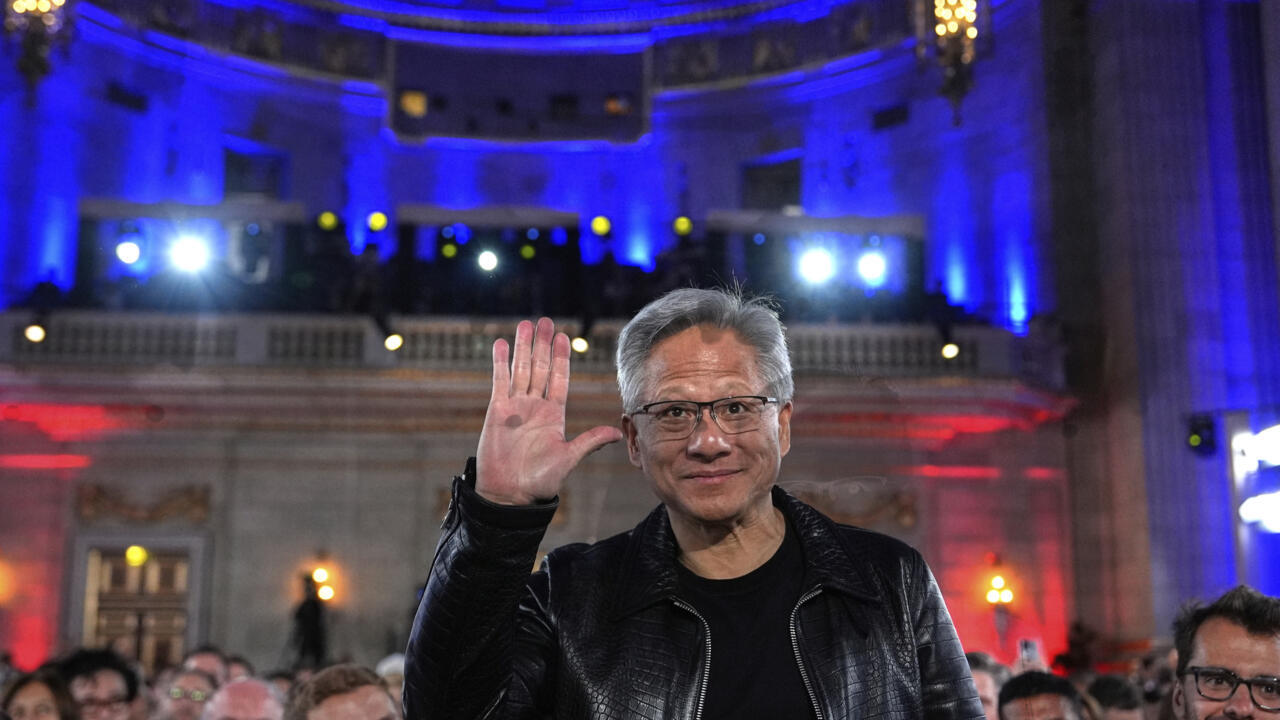
Nvidia CEO Jensen Huang waves as President Donald Trump speaks during an AI summit at the Andrew W. Mellon Auditorium on July 23, 2025, in Washington. © Julia Demaree Nikhinson, AP

US semiconductor giants Nvidia and Advanced Micro Devices have agreed to pay the United States government 15 percent of their revenue from selling artificial intelligence chips to China, according to media reports Sunday.

Nvidia CEO Jensen Huang met with US President Donald Trump at the White House on Wednesday and agreed to give the federal government the cut from its revenues, a highly unusual arrangement in the international tech trade, according to reports in the Financial Times, Bloomberg and New York Times.

AFP was not able to immediately verify the reports.

Nvidia hits milestone of $4 trillion market value

© France 24
01:43

Investors are betting that AI will transform the global economy, and last month Nvidia – the world’s leading semiconductor producer – became the first company ever to hit $4 trillion in market value.

The California-based firm has, however, become entangled in trade tensions between China and the United States, which are waging a heated battle for dominance to produce the chips that power AI.

The US has been restricting which chips Nvidia can export to China on national security grounds.


Nvidia said last month that Washington had pledged to let the company sell its “H20” chips to China, which are a less powerful version the tech giant specifically developed for the Chinese market.

The Trump administration had not issued licenses to allow Nvidia to sell the chips before the reported White House meeting.

On Friday, however, the Commerce Department started granting the licenses for chip sales, the reports said.

Silicon Valley-based Advanced Micro Devices (AMD) will also pay 15 percent of revenue on Chinese sales of its MI308 chips, which it was previously barred from exporting to the country.

The deal could earn the US government more than $2 billion, according to the New York Times report.

The move comes as the Trump administration has been imposing stiff tariffs, with goals varying from addressing US trade imbalances, wanting to reshore manufacturing and pressuring foreign governments to change policies.

A 100 percent tariff on many semiconductor imports came into effect last week, with exceptions for tech companies that announce major investments in the United States.

(FRANCE 24 with AFP)

German gas drive fuels fears of climate backsliding

By AFP
August 12, 2025


The German government wants to build more gas power plants - Copyright AFP Ina FASSBENDER
Sam Reeves

Germany’s conservative-led government has launched a drive to rapidly build more gas-fired power plants, fuelling fears about climate policy backsliding and sparking unease even within its own ranks.

Chancellor Friedrich Merz’s coalition has made reviving Europe’s struggling top economy a priority and argues that reliable and affordable energy supplies are crucial for the country’s manufacturing titans.

But critics charge the bid to boost fossil fuel production is ideologically driven and highlights a shift away from green policies under the new government.

Merz leads a coalition that includes his centre-right CDU party and junior partners the centre-left SPD — but without the Greens, who were in the last administration.

The economy ministry, headed by Katherina Reiche of the CDU, is vocally backing a target of building new gas plants with about 20 gigawatts of power production capacity by 2030.

Reiche, a former energy company executive, has argued it is important to “move very quickly” towards building the plants “in order to maintain a high level of security of supply in our country”.

The goal is to have a backup source of power in times there are shortfalls of renewables, which sometimes happens when the sun is not shining or there is not enough wind.

Supporters say more supply is needed in the short term as nuclear power has been switched off in Germany and coal should follow suit in the coming years.

They argue natural gas — which emits greenhouse gases but is less polluting than coal — can bridge the gap until enough renewables come online.

Under German climate law, the share of renewable electricity consumed in the country should rise to 80 percent by 2030. It stood at around 55 percent in 2024, according to the federal environment agency.


– Energy focus-


Earlier this month, the government agreed gas production could begin off a North Sea island in an area straddling the border with the Netherlands, with a Dutch company planning to extract the fossil fuel, sparking condemnation from environmentalists.

Plans to build more gas plants are not new, and the previous government also wanted to expand capacity, but the new targets are around double those of the past.

Underlining the new government’s changing priorities, Reiche’s ministry has been renamed the “Ministry for Economic Affairs and Energy” — under the Greens in the previous, SPD-led coalition, it was called the “Ministry for Economic Affairs and Climate Action”.

She also appeared at one point to question Germany’s legally binding target of achieving greenhouse gas neutrality by 2045, sparking tensions with SPD environment minister Carsten Schneider.

An economy ministry spokesman told AFP that Reiche “stands by” the current climate goal.

“The government is committed to achieving these targets with the political measures at its disposal — while maintaining Germany’s position as an industrial location,” he said.


– ‘Dramatic setback’ –


The Greens have regularly attacked Reiche while more than 380,000 people have so far signed a petition by campaign group Campact warning her policies risk “a dramatic setback in climate policy”.

But criticism is emerging even within the conservatives.

The Climate Union, grouping CDU and other conservative politicians, has warned subsidies for new gas plants could push up power costs, the Handelsblatt financial daily reported.

Energy think tank Agora Energiewende estimates that only a maximum of 10 gigawatts of extra gas plants would be needed by 2030 to supplement other power sources.

“This will ensure security of supply — even if coal-fired power plants are taken off the grid as planned,” Philipp Godron, the head of the group’s power programme, told AFP.

Meanwhile, questions remain over how quickly the plants can be built, while the European Commission, the EU’s executive arm, still needs to give its approval.

The economy ministry spokesman told AFP that talks with the EU for putting out tenders for a “significant portion” of the plants were “well-advanced”.

He also stressed that any new gas-fired plants must be “decarbonised in the long term”, for example by switching them to green hydrogen, which was necessary “in view of the decarbonisation of the electricity system and compliance with EU law”.
WWII WAR IN THE PACIFIC
‘Nobody else knew’: Allied prisoners of war held in Taiwan

By AFP
August 12, 2025


A man walks past the names of prisoners of war etched into granite at the Taiwan POW Memorial and Peace Park - Copyright AFP I-Hwa Cheng
Allison JACKSON

In a small urban park in Taiwan, more than 4,000 names are etched into a granite wall — most of them British and American servicemen held by the Japanese during World War II.

The sombre memorial sits on the site of Kinkaseki, a brutal prisoner of war camp near Taipei and one of more than a dozen run by Japan on the island it ruled from 1895 until its defeat in 1945.

For decades, little was known of the PoW camps, said Michael Hurst, a Canadian amateur military historian in Taipei, who has spent years researching them.

Many survivors had refused to talk about their experiences, while PoWs held elsewhere in Asia had been unaware of “the horrors” in Taiwan, and museums and academics had glossed over them, Hurst told AFP.

After learning of Kinkaseki in 1996, Hurst spearheaded efforts to locate other camps in Taiwan, build memorials for the veterans, and raise public awareness about their bravery and suffering.

Starting in 1942, more than 4,300 Allied servicemen captured on battlefields across Southeast Asia were sent to Taiwan in Japanese “hell ships”.

Most of the PoWs were British or American, but Australian, Dutch, Canadian and some New Zealand servicemen were also among them.

By the time the war ended, 430 men had died from malnutrition, disease, overwork and torture.

The harsh conditions of Taiwan’s camps were long overshadowed by Japan’s notorious “Death Railway” between Myanmar and Thailand, Hurst said.

More than 60,000 Allied PoWs worked as slave labourers on the line, with about 13,000 dying during construction, along with up to 100,000 civilians, mostly forced labour from the region.

Their experiences were later captured in the 1950s war movie “The Bridge on the River Kwai”.

But as stories of Kinkaseki slowly emerged, it became “known as one of the worst PoW camps in all of Asia”, Hurst said.


– ‘Starving and overworked’ –


Canadian filmmaker Anne Wheeler’s physician father was among the more than 1,100 prisoners of war held in Kinkaseki.

Wheeler said she and her three older brothers “grew up knowing nothing” about their father’s ordeal in the camp, where the men were forced to toil in a copper mine.

After her father’s death in 1963, Wheeler discovered his diaries recording his experience as a doctor during the war, including Taiwan, and turned them into a documentary.

“A War Story” recounts Ben Wheeler’s harrowing journey from Japan-occupied Singapore to Taiwan in 1942.

By the time her father arrived in Kinkaseki, Wheeler said the men there “were already starving and being overworked and were having a lot of mining injuries”.

They were also falling ill with “beriberi, malaria, dysentery, and the death count was going up quickly,” Wheeler, 78, told AFP in a Zoom interview.

Trained in tropical medicine, the doctor had to be “inventive” with the rudimentary resources at hand to treat his fellow PoWs, who affectionately called him “the man sent from God”, she said.

Inflamed appendices and tonsils, for example, had to be removed without anesthesia using a razor blade because “that was all he had”, she said.


– ‘They kept it to themselves’ –


Taiwan was a key staging ground for Japan’s operations during the war. Many Taiwanese fought for Japan, while people on the island endured deadly US aerial bombings and food shortages.

Eighty years after Japan’s surrender, the former PoWs held in Taiwan are all dead and little physical evidence remains of the camps.

At 77, Hurst is still trying to keep their stories alive through the Taiwan POW Camps Memorial Society and private tours.

His book “Never Forgotten” is based on interviews with more than 500 veterans, diaries kept by PoWs and correspondence.

A gate post and section of wall are all that remain of Kinkaseki, set in a residential neighbourhood of Jinguashi town, surrounded by lush, rolling hills.

On the day AFP visited, a Taiwanese woman taking a tour with Hurst said she had “never” studied this part of World War II history at school.

“It’s very important because it’s one of Taiwan’s stories,” the 40-year-old said.

Hurst said he still receives several emails a week from families of PoWs wanting to know what happened to their loved ones in Taiwan.

“For all these years, maybe 50 years, they just kept it to themselves,” Hurst said.

“They knew what they’d suffered, and they knew that nobody else knew.”


Dutch child survivor of Japan’s WWII camps breaks silence


By AFP
August 12, 2025


Japanese camps survivor Tineke Einthoven, 87 - Copyright AFP Frederic DIDES
Vincent-Xavier MORVAN

It has taken Tineke Einthoven 80 years to be able to speak about what she lived through as a child in brutal Japanese internment camps during World War II without breaking down.

“Now I can talk about it without crying,” said the Dutch woman who was four when she and her family were captured and held in “horrible” conditions in a camp on the Indonesian island of Java.

Her three-year nightmare began early in 1942, a few months after the Japanese attacked the US naval base at Pearl Harbor in Hawaii.

“There was a lot of bombing and the Japanese arrived. We had dug a big hole in the garden to shelter my parents, my brother and my two sisters, as well as the family of our servants,” the 87-year-old psychologist recalled, speaking publicly for the first time about the ordeal.

Indonesia was a Dutch colony at the time, and Imperial Japan was keen to get its hands on its oil fields and rubber plantations.

The Japanese separated her father, Willem Frederik Einthoven, from the rest of the family, and they did not hear from him for a year.

The son of Nobel Prize winner Willem Einthoven, the inventor of the electrocardiogram, he was an engineer who headed Radio Malabar, the communications link with the Netherlands, but he refused to collaborate with his captors.


– One in 10 perished –


His wife and children were sent to a camp in Tjibunut, near Bandung, where they were held with thousands of other Dutch, British and Australian civilians.

The vast majority of the 130,000 Allied civilians held by the Japanese during the war were Dutch, with more than one in 10 dying in the camps.

The fact that there were more than twice as many Dutch civilians as military prisoners of war has meant that their ordeal is more “vivid in Dutch collective memory”, said historian Daniel Milne of the University of Kyoto.

“We often had nothing more than a bit of rice to eat,” said Einthoven.

“Since I was the smallest, I would slip under the fence to find food outside the camp, but I could only get weeds,” Einthoven added. Parents were punished if a child was caught. “We risked the death penalty.”

“We suffered from hunger, lack of water, the heat, a total lack of hygiene and hours spent under the sun being counted and recounted.”

One of Einthoven’s friends named Marianne, to whom she had given a doll, died of diphtheria.

“I wondered if that doll would also cross to the other side; it was my first questioning of death,” she said.


– Convoys bombed –


Then, in January 1944, the family was reunited and deported to Japan, where the Japanese military wanted her father and his team to invent a radar system.

During the journey, their convoy was bombed by the Americans, but their ship was spared. Many were not so lucky, with thousands of Dutch POWs perishing on the voyage, their ships sunk or torpedoed.

The 60 or so camps that held “some 1,200 civilians in Japan” are little known, said Mayumi Komiya of the POW Research Network Japan.

Some of the prisoners did not survive, including Tineke’s father, who died of pneumonia at 51, weakened by the lack of food and the long march to the laboratory that had been set up for him.

The family was then sent to a temple 300 kilometres (185 miles) west of Tokyo, where they survived in isolation.

They heard about Emperor Hirohito announcing Japan’s surrender on August 15, 1945 from “some Italians, who were also prisoners not far away. One of them threw himself into my mother’s arms, and she was very embarrassed,” Einthoven recalled.

She still remembers licking soup off rocks with other children from cans that had shattered during a failed American parachute drop to them.

Repatriated via Australia to the Netherlands, Tineke worked after the war as a psychologist in Geneva, Nice in France, and neighbouring Monaco, and had two children.

But she never shared her experiences of those years with anyone beyond her family.

“I am speaking out today to show that even if one has lived through something horrible, one doesn’t have to suffer your entire life. You can move on if you choose to free yourself from the victim status,” she said with a smile.


MERRY CHRISTMAS MR. LAWRENCE THEME


BRIDGE OVER THE RIVER KWAI TRAILER


EU ready to do plastic pollution deal ‘but not at any cost’


By AFP
August 12, 2025


Canadian artist Benjamin Von Wong's sculpture 'The Thinker's Burden', sited outside the UN, is being slowly covered in plastic during the treaty talks in Geneva - Copyright AFP/File Patrick T. Fallon

The European Union is ready to do a deal to land a groundbreaking treaty on plastic pollution, but not at any cost, the EU’s environment commissioner insisted Tuesday.

With little over two days left to strike a global accord in talks at the UN in Geneva, Jessika Roswall said it was “time” to clinch a deal between oil-producing countries and more ambitious nations, including EU states.

Five previous rounds of talks over the past two and a half years have failed to seal an agreement, including a supposedly final round in South Korea late last year.

The current talks in Geneva opened a week ago but are due to close on Thursday.

“The EU is ready to do a deal but not at any cost,” Roswall told reporters.

“We do like plastic… and we will continue to need it. However, we don’t like plastic pollution and it’s time to end plastic pollution as quickly as possible,” the commissioner said.

She said any treaty should give businesses the certainty of a clear global framework in which to operate.

A cluster of mostly oil-producing states calling themselves the Like-Minded Group — including Saudi Arabia, Kuwait, Russia and Iran — want the treaty to focus primarily on waste management.

The EU and others want to go much further by reining in plastic production — which on current trends is set to triple by 2060 — and by phasing out certain especially toxic chemicals.

– Drama in the pipeline –

Danish Environment Minister Magnus Heunicke admitted that the “wide gap” between the rival camps was making the negotiations a challenge but said the work of tackling plastic pollution “will only get harder the longer we wait. So now’s the time”.

“There’s going to be a whole lot more drama in the days to come,” he said, “but our goal is this drama should end up in a deal”, he said, speaking alongside Roswall at the United Nations.

He said all parties, including the EU, had to re-examine their red lines and see where they could tweak them in the interests of landing a deal by Thursday.

“If we all stick to our red lines then a deal is impossible,” he said.

“So we have to look at those red lines and we have to negotiate and compromise — because we will be worse off if we don’t succeed in making a deal.

“That’s not me saying ‘a deal at any price’: Not at all. But a deal that is legally binding and has strong text and lays the ground for our work in the years ahead in order to tackle plastic pollution.”

Breakthrough smart plastic: Self-healing, shape-shifting, and stronger than steel


Texas A&M University
Dr. Mohammad Naraghi showcasing ATSP, the carbon-fiber smart plastic. 

image: 

Dr. Mohammad Naraghi showcasing ATSP, the carbon-fiber smart plastic.

view more 

Credit: Dr. Mohammad Naraghi/Texas A&M University College of Engineering


Aerospace engineering and materials science researchers at Texas A&M University have uncovered new properties of an ultra-durable, recyclable, smart plastic — paving the way for transformative applications in the defense, aerospace and automotive industries.

The breakthrough — funded by the U.S. Department of Defense and published in Macromolecules and the Journal of Composite Materials — was led by Dr. Mohammad Naraghi, director of the Nanostructured Materials Lab and professor of aerospace engineering at Texas A&M, in close collaboration with Dr. Andreas Polycarpou at The University of Tulsa.

"What’s really exciting is that this material isn’t just ultra-durable — it’s also adaptive. From on-demand healing in damaged aircraft to enhancing passenger safety in vehicles, these properties make it incredibly valuable for future materials and design innovations," Naraghi said.


Their work explored the mechanical integrity, shape-recovery and self-healing properties of an advanced carbon-fiber plastic composite called Aromatic Thermosetting Copolyester (ATSP).

Healing Damage On Demand

ATSP opens new frontiers in industries where performance and reliability are critical, and failure isn’t an option.

“In aerospace applications, materials face extreme stress and high temperatures,” Naraghi said. “If any of these elements damage any part of an airplane and disrupt one of their main applications, then you could perform on-demand self-healing.”

As ATSP matures and scales, it holds the potential to transform commercial and consumer industries, particularly the automotive sector. 

“Because of the bond exchanges that take place in the material, you can restore a car’s deformations after a collision, and most importantly, significantly improve vehicle safety by protecting the passenger,” Naraghi said.

ATSP is also a more sustainable alternative to traditional plastics. Its recyclability makes the material an ideal candidate for industries aiming to reduce environmental waste without compromising durability or strength.

“These vitrimers, when reinforced with discontinuous fibers, can undergo level cycling — you can easily crush and mold it into a new shape, and this can happen across many, many cycles, and the chemistry of the material basically doesn’t degrade,” he said.

Uncovering ATSP’s Capabilities

“ATSPs are an emerging class of vitrimers that combine the best features of traditional plastics,” Naraghi said.  “They offer the flexibility of thermoplastics, with the chemical and structural stability of thermosets. So, when combined with strong carbon fibers, you get a material that is several times stronger than steel, yet lighter than aluminum.”

What sets ATSP apart from traditional plastics is its self-healing and shape-recovery capabilities.

“Shape recovery and self-healing are two facets of the same mechanism,” Naraghi explained. “With shape recovery, it refers to the bond exchange within a continuous piece of material — a kind of built-in ‘intelligence.’ And, in self-healing, there’s discontinuity in the material like a crack. These are the properties we investigated.”

To investigate its properties, the researchers used a novel stress-test called cyclical creep testing.

“We applied repeated cycles of tensile, or stretching, loads to our samples, monitoring changes in how the material accumulated, stored and released strain energy,” Naraghi said.

Using cyclical loading, the researchers identified two critical temperatures within the material.

“The first is the glass transition temperature, or the temperature at which the polymer chains can move around easily, and the second is the vitrification temperature. That’s the temperature at which these bonds are thermally activated enough that you can see massive bond exchanges to cause healing, reshaping and recovery,” he said.

The team then conducted deep-cycle bending fatigue tests, periodically heating the material to around 160 degrees Celsius to trigger self-healing.

Their results showed that the ATSP samples not only endured hundreds of stress and heating cycles without failure, but that they actually grew more durable during the healing process.

“Much like skin can stretch, heal and return to its original shape, the material deformed, healed and ‘remembered’ its original shape, becoming more durable than when it was originally made,” Naraghi said.

Crack, Heal, Repeat

Naraghi and his team put the heat-resistant ATSP through five grueling stress cycles, each followed by high temperature exposure at 280 degrees Celsius.

The goal? To assess the material’s performance and self-healing properties.

After two full damage-healing cycles, the material returned to nearly full strength. By the fifth cycle, healing efficiency dropped to about 80% because of mechanical fatigue.

 “Using high-resolution imaging, we observed that the composite after damage and healing was similar to the original design, though repeated damage caused some localized mechanical wear attributed to manufacturing defects,” Naraghi said.

Still, the material’s chemical stability and self-healing behaviors remained reliable across all five cycles.

“We also observed that there was no thermal degradation or breakdown in the material, demonstrating its durability even after damage and healing,” Naraghi said.

Powering Innovation Through Strategic Partnerships

Naraghi’s work, sponsored by the Air Force Office of Scientific Research (AFOSR) and in collaboration with ATSP Innovations, underscores Texas A&M’s commitment of driving technological innovations into revolutionary capabilities that advance U.S. defense and industry priorities.

“Our partnerships are very important,” Naraghi said. “In addition to supporting us financially, the program managers at AFOSR collaborate with us and offer valuable guidance on questions that could have been overlooked. Our close collaboration with ATSP Innovations has also proven to be very fruitful and very important.”

The research team’s breakthrough represents more than an emerging class of materials; it’s a blueprint for how bold science and strategic partnerships can redefine a future where plastics don’t just endure, they evolve and adapt.

“My students and post-docs do the heavy lifting — I cannot thank them enough,” Naraghi added. “It’s through trial and error, collaborations and partnerships that we turn exciting curiosity into impactful applications.”

For more information about Naraghi, visit his faculty page.

X-ray images of ATSP across five different damage-healing cycles. 

X-ray images of ATSP across five different damage-healing cycles. In the first cycle, the scans revealed that ATSP fully healed and recovered its shape and strength. By the fifth cycle, mechanical fatigue began to appear, though the durability and chemical stability were not affected.

Credit

Dr. Mohammad Naraghi/Texas A&M University. https://doi.org/10.1177/00219983251362394