Friday, September 05, 2025


Wildfires producing 'witches' brew' of air pollution, UN warns


Geneva (AFP) – Wildfires are releasing a "witches' brew" of pollutants that can end up wrecking air quality a continent away from the blaze, the UN's weather and climate agency said Friday.


Issued on: 05/09/2025 - RFI
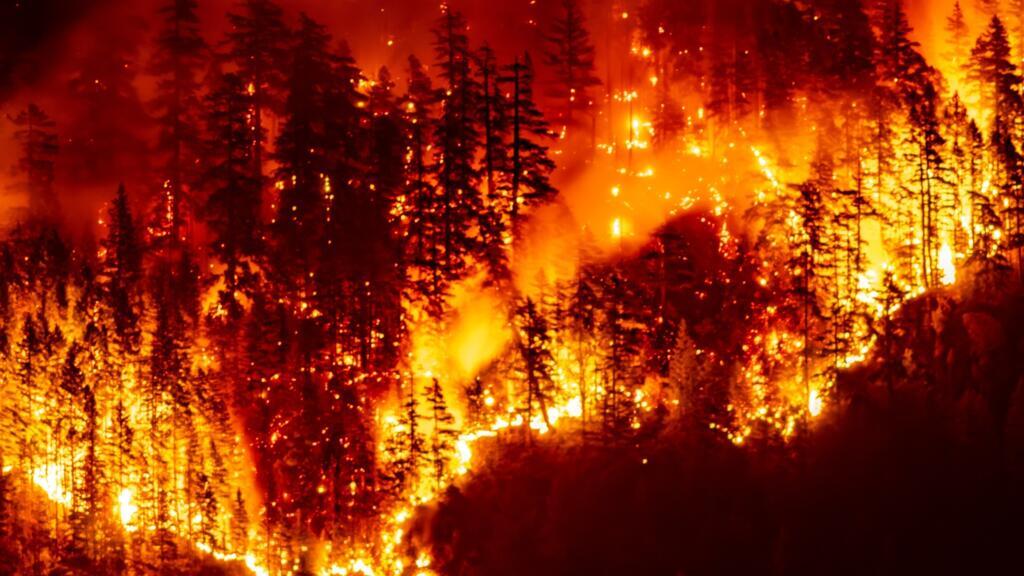
Wildfires in the Amazon, Canada and Siberia have brought home how air quality can be impacted on a vast scale. © Colby Rex O'Neill / AFP

The World Meteorological Organisation said the quality of the air people breathe was interlinked with climate change, and the two issues needed to be tackled together.

Wildfires in the Amazon, Canada and Siberia have brought home how air quality can be impacted on a vast scale, the WMO said in its fifth annual Air Quality and Climate Bulletin.

"Climate impacts and air pollution respect no national borders – as exemplified by intense heat and drought which fuels wildfires, worsening air quality for millions of people," said WMO deputy secretary-general Ko Barrett.
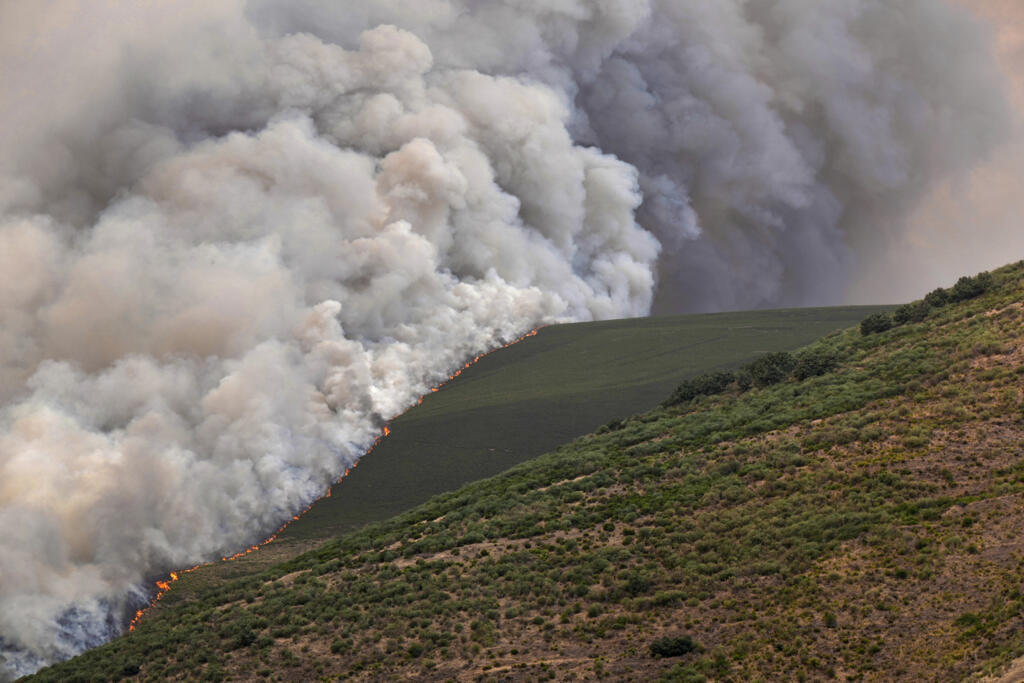
Wildfires cause surges in PM 2.5 particles, which can penetrate deep into the lungs © Cesar Manso / AFP

The bulletin looked at the interplay between air quality and the climate, highlighting the role of tiny particles called aerosols in wildfires, winter fog, shipping emissions and urban pollution.

Particles with a diameter of less than 2.5 micrometres (PM 2.5) are considered particularly harmful since they can penetrate deep into the lungs or cardiovascular system.

Wildfires in 2024 led to above-average PM 2.5 levels in Canada, Siberia and central Africa, the WMO said. The biggest PM 2.5 surge, however, was in the Amazon basin.

Wildfire season stronger, longer

"The wildfire season has the tendency to be stronger and longer every year as a result of climate change," said WMO scientific officer Lorenzo Labrador, who coordinated the bulletin.
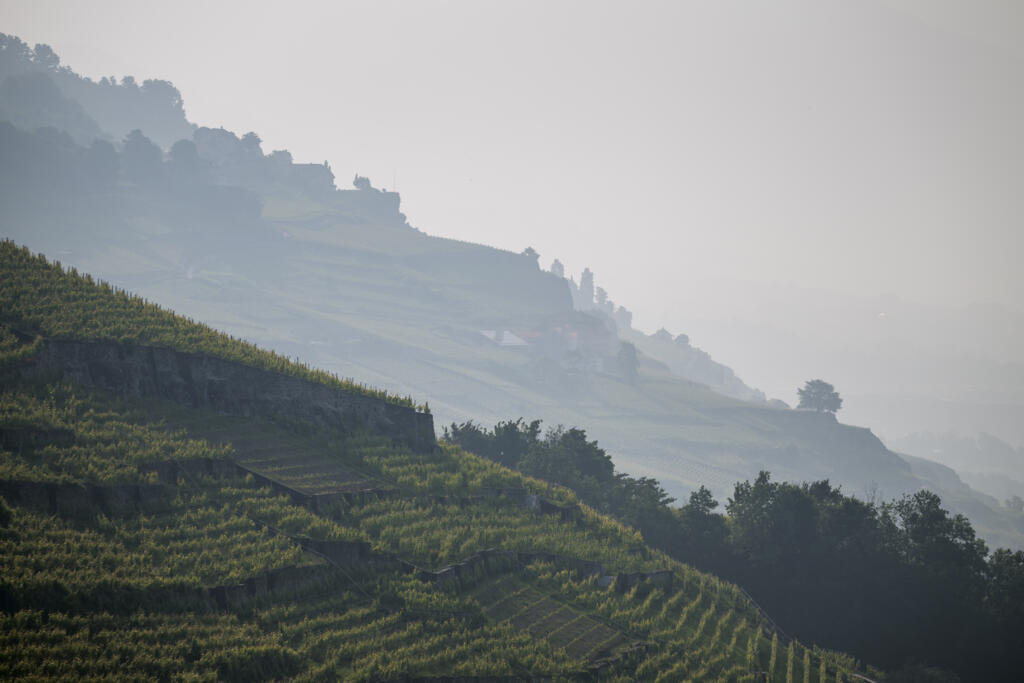
The terraced vineyards of the Swiss shores of Lake Geneva were left blanketed in haze from smoke from Canadian wildfires in June 2025 © Fabrice COFFRINI / AFP

Wildfires in Canada have ended up causing air pollution in Europe.

"We had that last year and this year as well. So you have a degradation in air quality across continents when the meteorological conditions are right," Labrador told a press conference.

"What we have from these fires is essentially a witches' brew of components that pollute the air."

The World Health Organization estimates that air pollution causes more than 4.5 million premature deaths each year.

The WMO called for improved monitoring and better policies to safeguard human and environmental health – and reduce agricultural and economic losses.
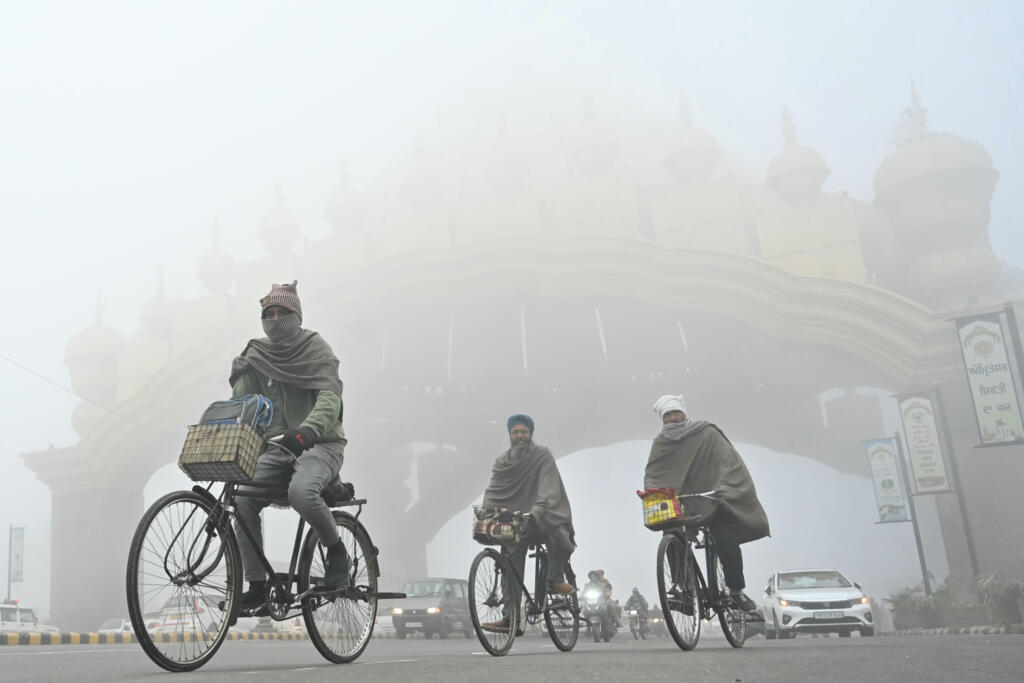
The WMO said winter fog episodes in northern India were growing in frequency and duration © Narinder NANU / AFP


The bulletin highlighted pollution hotspots in northern India.

It said the Indo-Gangetic Plain, home to more than 900 million people, had seen a marked rise in air pollution and winter fog episodes, which are growing in frequency and duration due to pollution, notably from agricultural biomass burning.

"Persistence of fog is no longer a simple, seasonal weather event – it is a symptom of escalating human impact on the environment," it said.

Dramatic improvements in China

PM 2.5 levels continued to decline in eastern China last year, which the WMO put down to sustained mitigation measures.

When countries take measures to combat poor air quality, the improvement can be clearly seen in meteorological data, said Paolo Laj, the WMO's global atmosphere chief.
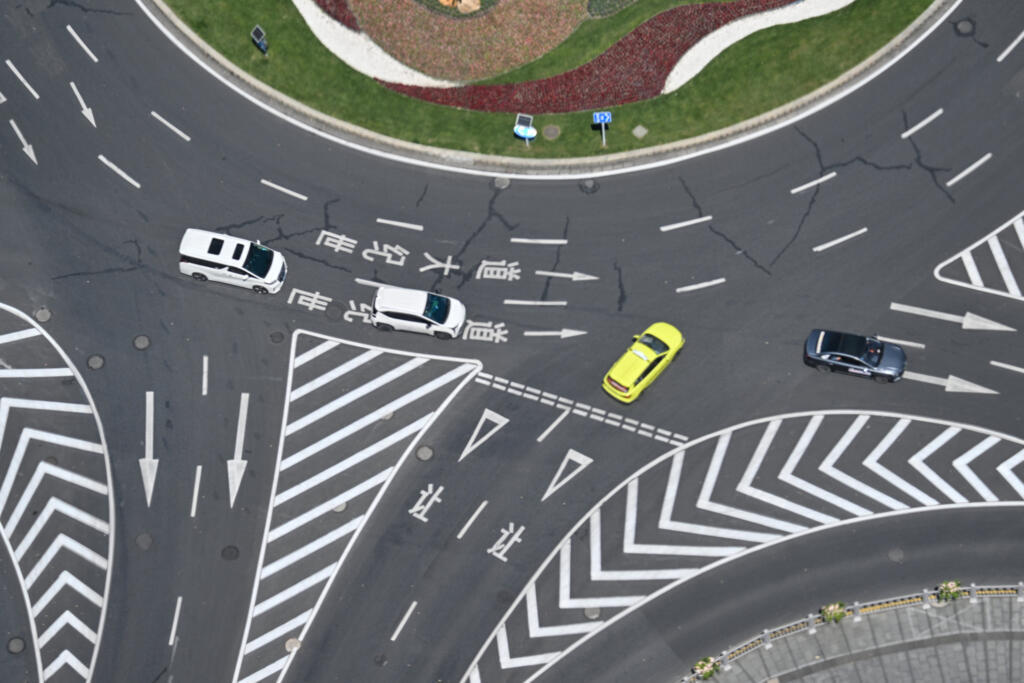

Shanghai has seen improvements in air quality along with other parts of eastern China 
© HECTOR RETAMAL / AFP

"Look at Europe, Shanghai, Beijing, cities in the United States: many cities have taken measures and you see in the long term, a strong decrease" in recorded air pollution, he told AFP.

"Over a 10-year period, Chinese cities have improved their air quality in a dramatic way. It's really impressive what they have done."

Laj said there was no all-purpose measure that could bring about drastic change, such as switching to electric cars, "but when measures are taken, it works".

In Europe, "we don't realise what we were breathing in 20 years ago, but it was much worse than today", he added.


 

Russian state Max messenger mandatory across all devices

Russian state Max messenger mandatory across all devices
The Kremlin is on an extended campaign to retake control of RuNet and is pushing its own messenger service, Max Messaging, to oust the likes of WhatsApp and Telegram by preinstalling it on all new phones. / bne IntelliNews
By bne IntelliNews September 2, 2025

As of September 1, the Max messenger of state-controlled internet major VK is legally prerequired to be preinstalled on every smartphone and tablet sold in Russia, as well as be featured mandatory on the Russian app store RuStore, including on Apple devices, according to The Bell.

bne IntelliNews closely followed how Russian authorities have been priming VK’s messenger for domination in the Russian messenger services.

The idea was previously endorsed by Putin at a recent government meeting with Minister of Digital Development Maksut Shadayev and then signed off with a presidential decree.

The Russian government had officially tasked Kommunikatsionnaya Platforma (Communication Platform), a subsidiary of state-controlled tech and internet major VK, with operating and developing the country’s “national information exchange service”.

While early reports suggested that Max could be a step further towards a WeChat-like “super app”, for now the messenger is likely to become a tool of mass surveillance and another step of Kremlin’s drive for full control of the digital communications and media space.

The Bell reports that public sector employees and government institution workers are being forced to install Max almost coercively. As of September 1 2025 all Moscow schools also need to officially switch to the new national messenger, although the Minister of Education publicly promised that no teachers would be forcibly transferred to Max.

Legal experts surveyed by The Bell argue that forcing employees to install any applications on their personal phones is (so far) illegal. However, an obligation to use specific applications for work may exist, but in theory on a separate work device. 

The Bell advises Russian users forced into installing Max to deny the app access to the camera, microphone, contacts, geolocation, etc. as well as to disable automatic updates. 

The lawyers reminded the publication that all data on Max will be accessible to Russian security services in real time. 

Viber, Discord and Signal messengers are already blocked in Russia, while market leading messengers WhatsApp and Telegram (84mn and 68mn daily users, respectively) appear to be too big to block.

After the military invasion of Ukraine, now state-controlled VK has started to shed assets, focusing on establishing domination in the Russian digital and social media space.

The company sold its market-leading gaming division and swapped its key foodtech services for media assets of another internet peer, Yandex. However, the consolidation has had an adverse effect on VK's leverage and financial results.

As followed by bne IntelliNews, Moscow’s Department of Information Technology most recently introduced another mass surveillance app Amina, mandatory for nationals of Uzbekistan, Tajikistan, Kyrgyzstan, Armenia, Kazakhstan, Georgia, Azerbaijan, Moldova, and Ukraine residing in the capital under a labor permit. 

As of September 2026, the requirement will extend to all foreigners arriving in the country for more than 90 days, including those for study or tourism.

Labour migrants will have to register their residency in Amina and then check in at those places using the app’s GPS tracker. If a person fails to appear at the declared location for three days, they will be removed from the migration center’s registry, have their rights restricted, and may be deported. 


Electric flying taxis to launch in Saudi Arabia within two years

Electric flying taxis to launch in Saudi Arabia within two years
FlyNow Aviation showcasing new eVTOL earlier in August in Austria. (Company image) / Company image.
By bnm Gulf bureau September 3, 2025

FlyNow Aviation Arabia plans to begin operating electric helicopters for cargo transport and firefighting in Saudi Arabia within two years, before launching passenger air taxi services by 2030, IntelliNews can reveal.

The firm expects thousands of the electric helicopters to operate in the skies above Riyadh, Jeddah, Al Ula and Asir as an urban service similar to traditional taxis, local Al-Eqtisadiah reported on September 2.

FlyNow Arabia established its regional headquarters in the Kingdom last year as part of Saudi Arabia's Vision 2030 programme to develop advanced mobility technologies. The company signed a memorandum of understanding with the General Authority of Civil Aviation and the National Industrial Development Centre to conduct pilot programmes starting in 2025.

The electric copters feature coaxial rotors and produce noise levels of just 55 decibels at 150 metres altitude, equivalent to a dishwasher. Winter said the aircraft offers zero carbon emissions and costs significantly less than American competitors, which can exceed €5mn per unit.

Multiple configurations will be available, including a two-seater passenger model, a cargo version capable of carrying 200 kilograms (kg) on a standard Euro-pallet, firefighting variants with water tanks, and medical evacuation units equipped with patient stretchers. The aircraft has a maximum range of 50 kilometres (km) and operates along predetermined routes.

The Austrian company's eCopter aircraft will be priced from $373,000, according to Chief Executive Officer Yvonne Winter.

She added that the project is worth several hundred million dollars and aims to provide practical solutions accessible to everyone, not just luxury transport between airports and hotels.

The company plans to establish an assembly plant in Saudi Arabia with local financing and investment support as IntelliNews previously reported in May.

FlyNow targets commercial cargo operations starting in 2027, with passenger services following after the aircraft accumulates more than one million kilometres of operational experience.

In an interview with local Al Sharq TV in May, Winter said that a single flight on the "electronic helicopter" would cost approximately SAR100 (around $25). She explained that the helicopter's flight range would reach 50 kilometres and automatically fly along predetermined routes to transport passengers and cargo.

Earlier in 2024, Saudi Arabia launched a self-driving aerial taxi service for pilgrims during last year’s Hajj season, as part of the country’s push towards autonomous vehicles.

Saleh bin Nasser Al-Jasser, the Saudi Minister of Transport and Logistics Services, declared this initiative the world's first civil aviation authority-licensed flying taxi.

Earlier in 2024, the country announced it would also operate flying taxis in NEOM, the futuristic city under development north of Mecca in the Tarbuk region.

NEOM has been working with German firm Volocopter since 2021 on a joint venture to deploy Volocopter's eVTOL models - the VoloCity for intracity air taxi services, the VoloRegion for intercity flights within NEOM's regions, and the VoloDrone for cargo transport.


Indonesia uncovers over $60mn in Hajj quota corruption

Indonesia uncovers over $60mn in Hajj quota corruption
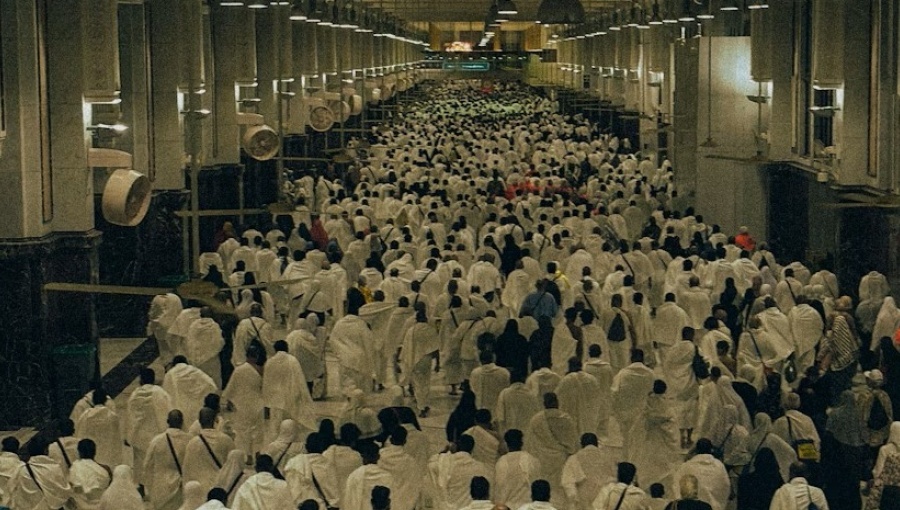
/ Mohammad Mubasher - Unsplash
By bno - Surabaya Office September 4, 2025

The Corruption Eradication Commission (KPK) has intensified its investigation into alleged corruption surrounding Indonesia’s 2023–2024 Hajj quota, with state losses already estimated at more than IDR1 trillion ($60.9mn). According to Tempo.co, the scandal involves the mismanagement of 20,000 additional quotas provided by Saudi Arabia, which were intended to shorten waiting times for Indonesian pilgrims. Instead, the distribution became a lucrative source of abuse, with suspicions that special Hajj candidates were able to depart immediately without enduring the usual years-long queue.

KPK spokesman Budi Prasetyo explained that this allegation is central to the probe. As reported by VOI.id, on September 1, investigators questioned four witnesses at the agency’s Red and White building in South Jakarta: these included Achmad Ruhyudin, a financial staff member of the Mutiara Haji Association; Arie Prasetyo, Manager of Uhud Tour; Asrul Azis Taba, the General Chair of Kesthuri and the Commissioner of PT Raudah Eksati Utama; as well as Eris Herlambang of PT Anugerah Citra Mulia. “They were examined regarding the process of obtaining additional Hajj quotas and the possibility of special Hajj candidates being able to leave immediately without queuing,” Budi said in a written statement on September 3, as cited by Tempo.co.

Seized assets and evidence

The case has already led to the seizure of large assets. VOI.id reported that investigators confiscated $1.6mn, four vehicles, and five parcels of land and buildings linked to parties suspected of profiting from the quota distribution. Budi described these seizures as essential for both strengthening evidence and ensuring recovery of state losses. “This is the KPK’s first step in optimising asset recovery in light of financial losses caused by corruption,” he said.

The investigation has also drawn in prominent figures, including former Minister of Religious Affairs Yaqut Cholil Qoumas, who was questioned regarding the rationale behind the controversial 50:50 distribution of quotas between regular and special Hajj. As Tempo.co highlighted, this allocation violated existing law, which stipulates that 92% of quotas should go to regular pilgrims and just 8% to special Hajj participants.

Money trails and legal grounds

KPK officials emphasised that the probe aims to uncover the flow of illicit funds generated by the alleged buying and selling of quotas. According to VOI.id, the investigation is supported by a general investigation warrant (Sprindik), which grants authority for coercive measures, including witness examinations and searches. The warrant applies Article 2 and Article 3 of the Anti-Corruption Law, alongside Article 55 of the Criminal Code, underscoring that the scandal has inflicted measurable losses on the state.

Early estimates already put those losses above IDR1 trillion, but Tempo.co reported that the figure could rise significantly as KPK continues to coordinate with the Supreme Audit Agency (BPK).

Testimonies and institutional support

Officials from the Hajj Financial Management Agency (BPKH) have also been questioned. Head of BPKH, Fadlul Imansyah, confirmed after a day-long session with investigators on September 2 that he provided information and fully supports the legal process. Speaking to VOI.id, he stressed, “As good citizens and representatives of state institutions, we fully support all efforts to uphold the law.”

Not all figures summoned have complied. Tempo.co noted that preacher and Uhud Tour owner Khalid Zeed Abdullah Basalamah failed to appear for questioning, citing other commitments. His absence adds another layer of complexity to an already sprawling probe that involves government officials, financial managers, and private tour operators.

Implications for pilgrims and institutions

The Hajj quota scandal is more than a financial crime. For millions of Indonesians waiting up to two decades for their turn to embark on the pilgrimage, revelations that some individuals bypassed the queue through corrupt means strike at the heart of fairness and trust in the system. As VOI.id observed, the misuse of Saudi Arabia’s goodwill in providing an extra 20,000 slots undermines both public faith in religious institutions and Indonesia’s international credibility.

As investigations continue, the KPK faces the dual challenge of tracing complex financial transactions and holding powerful figures accountable. With state losses already surpassing IDR1 trillion and the prospect of more revelations to come, this case stands as one of the most significant corruption scandals to hit Indonesia’s religious affairs sector in recent years. Both Tempo.co and VOI.id underline that the outcome will be closely watched, not just for the recovery of state funds but for restoring public trust in the integrity of the Hajj pilgrimage process.


SCO summit highlights India’s balancing act

SCO summit highlights India’s balancing act
/ The Shanghai Cooperation Organisation
By bno Chennai Office September 3, 2025

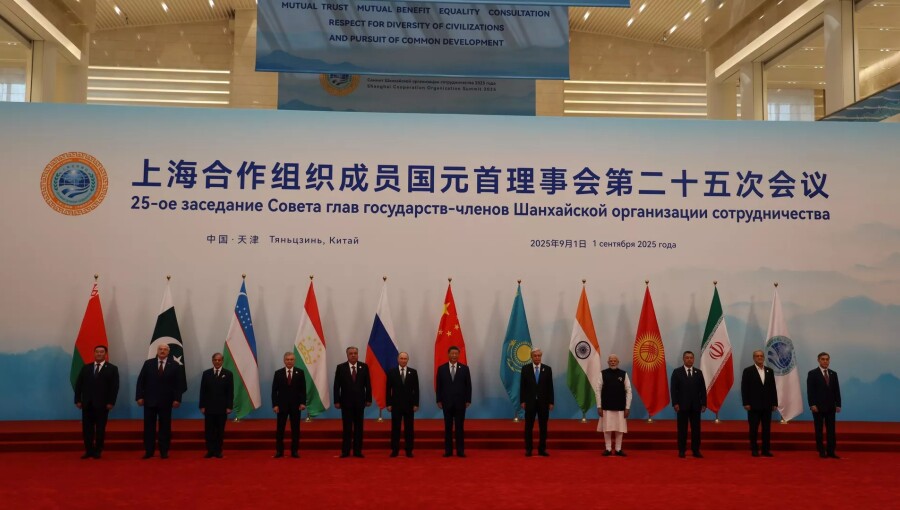
The Shanghai Cooperation Organisation (SCO) summit in Tianjin, held from August 31 to September 1, 2025, reflected India’s careful balancing strategy. On the one hand, New Delhi maintained dialogue with China and Russia, while on the other it reiterated its long-term dependence on the US for its Indo-Pacific strategy. Hosted by China, the summit was the largest in SCO’s history, with leaders from over 20 countries and several international organisations in attendance.

Chinese President Xi Jinping used the platform to announce proposals including an SCO development bank, an energy cooperation mechanism, and a multi-billion dollar loan programme over three years. He also offered member states access to China’s BeiDou satellite system. For India, participation was both a bridge and a shield. It allowed New Delhi to remain engaged with Eurasian institutions while avoiding full alignment with Beijing or Moscow.

Indian Prime Minister Narendra Modi held bilateral meetings with Xi and Putin. With Xi, he underlined the importance of India-China relations for advancing an Asian century and a multipolar world order, while also stressing the need for peace along the border through existing mechanisms.

With Putin, Modi reaffirmed the so-called “all weather” nature of India-Russia ties. Their joint limousine ride and discussions showcased enduring warmth, even as India pressed for progress toward peace in Ukraine. Still, the summit highlighted the SCO’s limits. Observers including US Secretary of the Treasury Scott Bessent noted that it was heavy on symbolism but light on substance. India, for its part, avoided endorsing sweeping anti-Western rhetoric and instead stuck to its principle of strategic autonomy.

Behind the scenes, India’s short-term engagement with SCO partners reflected practical needs. Russia continues to provide discounted energy and spare parts for older military systems. China remains a vital trade partner despite unresolved border tensions. These ties are compartmentalised, energy relations are transactional and territorial disputes remain unsettled, even as SCO membership preserves a channel of communication.

India’s longer-term orientation, however, remains firmly westward. Despite recent frictions under Trump’s tariffs on Indian goods and criticism of Russian oil purchases, the US continues to be India’s key partner in the Indo-Pacific. The relationship is reinforced by US willingness to share advanced technologies, expand defence cooperation, and invest in India’s economic transformation.

A bipartisan consensus in Washington sees India as critical to balancing China. Even so, Washington is uneasy about New Delhi’s insistence on treating Moscow as a privileged partner.

India views Russia as a long-standing supplier of defence equipment and energy, but the US considers this closeness at odds with its sanctions regime and wider strategy. The contradiction is sharper given that the US continues to arm and fund Pakistan, whose security establishment is openly hostile towards India. This double standard fuels scepticism in New Delhi, even as ties with Washington deepen in other areas.

Trump’s constitutional two-term limit means his influence over US foreign policy and by extension India-US relations is approaching its end. This relieves Indian policymakers of the uncertainty that one individual’s style can generate. Although his protectionist measures caused alarm initially, the underlying alignment between India and the US has endured, rooted in Indo-Pacific structural realities rather than personalities.

India’s presence at the Tianjin summit was therefore tactical, not a strategic shift.

Cooperation with the US in defence and technology, maritime coordination through the Quad, and efforts to diversify away from Chinese supply chains remain central to India’s strategy. The SCO forum adds flexibility but does not alter direction.

The challenge for New Delhi is one of perception management, convincing Washington that its SCO participation is transactional, not strategic, while also keeping communication channels open with Beijing and Moscow where necessary. This principle, autonomy within alignment, has been the hallmark of Indian diplomacy for decades.

At the summit, Modi balanced calls for counter-terrorism and peacebuilding with restraint, avoiding the anti-US rhetoric promoted by China and Russia. Displays of bilateral warmth coexisted with caution and compartmentalisation. Ultimately, the Tianjin summit illustrated India’s layered diplomacy.

Engagement with the SCO addresses short-term needs and prevents strategic isolation, while partnership with the US secures long-term momentum in the Indo-Pacific. This dual-track approach represents not a shift in direction but a nuanced balance anchored in the West, yet flexible amid Eurasian turbulence. Trump’s personal influence may fade with his term limit, but America’s need for India will remain. That structural reliance ensures India’s long-term trajectory continues westward, even as its tactical engagements adapt to regional realities.


Storing breast milk for specific times of day could support babies’ circadian rhythm


Labelling expressed breast milk could be a way to ensure babies receive important cues at the right time, helping busy mothers support the development of their baby


Frontiers


Breast milk is the first ‘super food’ for many babies. Full of vitamins, minerals, and other bioactive compounds, it helps build the young immune system and is widely considered the optimal source of infant nutrition. Not all mothers, however, have the opportunity to directly breastfeed multiple times during the day and night, and might use expressed milk stored for later.

Breast milk delivers a variety of cues from the mother to the infant, including signals that are thought to influence babies’ circadian rhythms. The hormones and proteins involved in circadian signaling, however, may vary in breast milk concentration over 24 hours. To learn more about these fluctuations, researchers in the US investigated expressed breast milk samples taken during different times of the day. They published their findings in Frontiers in Nutrition.

“We noted differences in the concentrations of bioactive components in breast milk based on time of day, reinforcing that breast milk is a dynamic food. Consideration should be given to the time it is fed to the infant when expressed breast milk is used,” said first author Dr Melissa Woortman, a recent PhD graduate from the Department of Nutritional Sciences at Rutgers University.

“The timing of these cues would be particularly critical in early life, when the infant’s internal circadian clock is still maturing,” added senior author Prof Maria Gloria Dominguez-Bello, a researcher at the Department of Biochemistry and Microbiology at Rutgers University.

Powerful compounds

The researchers took 10 milliliter breast milk samples from 21 participants at 6am, 12pm, 6pm, and 12am on two different days, which were about a month apart. A further 17 participants provided samples taken at the same times once, resulting in 236 samples included in the analysis. The samples were examined for levels of melatonin, cortisol, and oxytocin – all hormones – as well as immunoglobulin A (IgA), an antibody protein part of the immune system, and lactoferrin, a milk protein. Melatonin and cortisol are involved in the regulation of the circadian rhythm, whereas the other examined components influence intestinal development and gut microbiome dynamics.

They found that some breast milk components, especially melatonin and cortisol, varied over the course of the day. Melatonin peaked at midnight, whereas cortisol was at the highest level in the early morning. “We all have circadian rhythms in our blood, and in lactating mothers, these are often reflected in breast milk,” explained Woortman. “Hormones like melatonin and cortisol follow these rhythms and enter milk from maternal circulation.” The other examined components were mostly stable throughout the day. This might be because they may not be as strongly influenced by signals dictating circadian rhythms.

The team also found that as infants got older, the levels of different compounds in breast milk varied. For example, the levels of cortisol, IgA, and lactoferrin were highest when babies were less than one month old. Higher levels of these compounds likely support immune defense and gut colonization in very young babies.

“When it comes to differences in day/night variations by infant age, this could reflect the stabilizing of the maternal circadian clock that occurs with time after giving birth, as well as the maturing and stabilization of the infant’s circadian rhythm,” Woortman pointed out.

Labels for development

The researchers said their study was not able to account for all potentially relevant demographic factors, including delivery mode and maternal diet, due to sample size. Larger and more diverse cohorts will be needed in the future to ensure the generalizability of these results. In addition, future research should examine how infants respond to the variations observed here.

Still, the findings suggest that feeding expressed milk could be timed to maximize natural biological alignment. This way, circadian signals that support infant sleep, metabolism, and immune development – adaptations shaped through evolution – could be maintained.

“Labeling expressed milk as ‘morning,’ ‘afternoon,’ or ‘evening’ and feeding it correspondingly could help align expressing and feeding times and preserve the natural hormonal and microbial composition of the milk, as well as circadian signals,” Dominguez-Bello pointed out.

“In modern societies where it may not be feasible for mothers to stay with their infants throughout the day, aligning feeding times with the time of milk expression is a simple, practical step that maximizes the benefits of breast milk when feeding expressed milk,” Woortman concluded.