Thursday, March 05, 2026


The Global Costs Of Instability In The Strait Of Hormuz – Analysis


Strait of Hormuz. Credit: VOA

March 5, 2026 
Observer Research Foundation
By Pratnashree Basu


The Strait of Hormuz has once again emerged as a fulcrum of geopolitical risk and economic disruption in the early months of 2026. On 2 March 2026, Iran’s Islamic Revolutionary Guard Corps declared the waterway, the narrow throat between the Persian Gulf and the Gulf of Oman, through which roughly 20 percent of the world’s crude oil and a substantial share of liquefied natural gas transit daily, effectively closed to commercial shipping and threatened to attack any vessel attempting passage. This marked Iran’s most explicit and forceful maritime stance yet, following intensifying conflict with Israel and the United States, including coordinated strikes on Iranian territory.

The immediate and palpable impact of this escalation has been a near collapse of normal shipping flows. In response to heightened risk, international tanker companies and container operators are haltingbookings and cancelling transits across the strait. At the same time, insurers are withdrawing coverage, making trade through the Hormuz commercially unfeasible. With roughly 10 percent of the global container fleet now caught in a bottleneck near Hormuz, the crisis starkly illustrates how swiftly geopolitical risk can translate into logistical paralysis.

These developments have sent shockwaves through international energy markets. Following Iran’s warnings of closure, crude oil prices surged, with Brent crude rising by 8.6 percent amid reports of halted tanker traffic and escalating tensions. Both market psychology and the potential for a direct supply shortfall are reflected in this price increase. Traders are also factoring in the potential for long-term disruption at a chokepoint that supports energy flows to Asia, Europe, and beyond. At the same time, officials and investors recognise that even a brief obstruction in Hormuz can raise input costs across the transportation, industrial, and energy sectors. Reports from shipping analytics indicate that freight costs for very large crude carriers bound for Asia have spiked, illustrating how risk repricing along one route reverberates through global transport markets. Higher insurance premiums — rising by as much as 50 percent — further embed elevated costs into the logistics ecosystem, dampening trade and squeezing profit margins for shippers and commodity buyers alike.

The significance of Hormuz as a maritime artery cannot be overstated. At about 33 km at its narrowest point, it is one of the world’s most critical chokepoints, with oil, gas, and petrochemical exports from producers in Saudi Arabia, the United Arab Emirates, Kuwait, Qatar, and Iran traversing this corridor en route to global markets. The strait’s closure thus represents not just a regional flashpoint but a systemic risk to global energy security. While the most immediate focal point of disruption has been energy, the interconnectedness of global supply chains means the spillovers extend far more broadly. Maritime freight rates, particularly for oil tankers, have spiked dramatically.


From an operational perspective, shipping companies and ports are scrambling to adapt. Carriers are exploring long reroutes around Africa’s Cape of Good Hope or seeking transhipment options that avoid the Gulf entirely, since Hormuz is essentially off-limits. These changes, however, involve clear trade-offs, including longer journey times, higher fuel consumption, and increased congestion at other hubs. These inefficiencies ripple through inventory cycles, delivery schedules, and consumer prices in importing economies, not just the cost of a single voyage.

The crisis exposes fundamental vulnerabilities in the global trade system that extend beyond economic calculations. The geographic concentration of energy exports through a narrow seaway demonstrates how systemic shocks from regional conflicts can be transmitted instantaneously. Maritime chokepoints, far from being passive conduits of commerce, are potential fault lines that governments and corporate organisations must confront. This realisation is likely to shape longer-term planning, from energy diversification strategies to naval deployments aimed at ensuring freedom of navigation.

India’s exposure vividly illustrates the geopolitical–economic nexus. Estimates indicate that almost half of the country’s monthly oil imports pass through the Strait of Hormuz. As a major importer, India sources a significant portion of its crude and LNG via routes through the strait. With tanker movements stalled and supply chains disrupted, New Delhi has issued advisories for Indian-flagged vessels to exercise extreme caution, highlighting the risk to national trade interests and the safety of seafarers.


Similar risks exist in the Indo-Pacific region for China, the world’s largest importer of crude; a protracted closure or ongoing risk premium on Gulf crude supplies would restrict refinery throughput, strain inventories, and potentially lower export competitiveness amid higher input costs. In the European Union(EU), where energy markets remain sensitive to global oil and LNG prices, heightened volatility amplifies cost-of-living pressures and complicates monetary policy for growth and inflation control. Japan and South Korea, heavily reliant on imported energy and lacking substantial domestic resources, are especially vulnerable even to brief disruptions; delays in LNG and oil deliveries can necessitate stockpile draws and refinery slowdowns, raising production costs and increasing inflationary pressure. Together, these patterns show how chokepoint risk translates into actual economic vulnerability for major importers, strengthening the motivation for strategic reserves and diverse sourcing.

Yet even as the world reels from these impacts, debate continues over the nature and duration of the disruption. The current crisis reaffirms that maritime routes are both strategic and economic assets, linking producers with consumers across hemispheres while remaining vulnerable to geopolitical turbulence. The interplay of conflict, risk pricing, and supply-chain mechanics in the Strait of Hormuz vividly illustrates how rapidly regional hostilities can translate into global economic stress. This emphasises the need for both crisis management and structural resilience, including investment in diversified commerce corridors, alternative energy routes, and cooperative marine security frameworks, alongside strengthened diplomatic channels to lower escalation risks.

The crisis unfolding in the Middle East is arguably the most severe in decades. Beyond the battlefield, it constitutes a systemic stress test for global maritime commerce and energy supply chains, highlighting the fragility of interconnected systems and the need for robust policy responses that address both the immediate impacts and the structural vulnerabilities exposed by such disruptions.

About the author: Pratnashree Basu is an Associate Fellow at the Observer Research Foundation.

Source: This article was published by the Observer Research Foundation.


Observer Research Foundation

ORF was established on 5 September 1990 as a private, not for profit, ’think tank’ to influence public policy formulation. The Foundation brought together, for the first time, leading Indian economists and policymakers to present An Agenda for Economic Reforms in India. The idea was to help develop a consensus in favour of economic reforms.


 COMMENT: Iran's oil war could reshape the global economy — and Europe has the most to lose

COMMENT: Iran's oil war could reshape the global economy — and Europe has the most to lose
Iran's Azadi Square with smoke behind from Israeli strike on city's old Mehrabad airport March 3. / CC: IRNA Akbar Tavakoli
By bne IntelliNews March 4, 2026

Iran's retaliatory strikes on American and British oil tankers and, most dramatically, on oil storage facilities in the United Arab Emirates, have pushed an already fragile global energy market to breaking point. The Strait of Hormuz remains effectively blocked. Oil and fertiliser prices are surging. Fuel costs in Britain have doubled. And the reverberations are only just beginning, with people fleeing the UAE and Qatar as fast as they can. 

The immediate consequences are stark enough: 800-plus Iranians are dead and a growing number of Americans, Kuwaitis, Lebanese, Israelies and others. Even if hostilities were to cease tomorrow -  purely hypothetical scenario - the damage to freight rates and insurance premiums would persist for months, if not years. Ships and their cargoes are insured separately, and underwriters have no appetite for risk in what has become the most volatile chokepoint in global trade. Every barrel transiting the Persian Gulf now carries a hefty geopolitical surcharge, and that cost will be passed directly to consumers at a record-breaking speed. Probably the fastest increase since the 2020 Coronavirus (COVID-19) spike. 

The latest numbers speak for themselves. Roughly 20% of the world's natural gas and up to 30% of its oil passes through the narrow mouth of the Hormuz Strait, connecting the Persian Gulf to the Gulf of Oman and on to the Indian Ocean. Of the cargo that reaches the Indian Ocean, some 80% is bound for South-East Asia - principally China, India, Japan and South Korea. Only 15-20% heads to Western Europe and elsewhere, but don't let that calm readers in London into thinking that risk price is spreading far and wide.

This matters enormously. China absorbs between 30% and 40% of that 80% share. India takes a substantial portion of the remainder. These are the two great locomotives of global economic growth, and both now face a sharp and unavoidable increase in the cost of energy. Beijing may have stockpiled strategic reserves and developed alternative supply routes - including the Power of Siberia pipeline and shipments via Vladivostok - but restructuring supply chains is a process, not an event. In the near term, the hit is real.

The likely outcome is not collapse but deceleration. China's growth rate could slip from 5% to 4%, still impressive by Western standards, but a meaningful slowdown for an economy on which much of the developing world depends. India faces a similar trajectory. And when the world's primary growth engines lose momentum, the drag is felt everywhere. Countries teetering on the edge of positive growth risk tipping into contraction, with all the social and political instability that entails.

Europe's position is particularly precarious, as Tucker Carlson remarked on his latest podcast this week. On paper, only 10-15% of Persian Gulf energy supplies are destined for European markets. But context is everything. The continent entered the winter heating season with underground gas storage already below 30%. The Netherlands, once a pillar of European gas security, has seen reserves plummet to a catastrophic 11%. With a month and a half of winter still ahead, every percentage point of supply matters.

For Britain, the unlucky Chancellor of the Exchequer, Racheael Reeves, was blindsided by events (again) despite careful planning for the spring financial statement. British homes are particularly vulnerable at the moment, as around 20% of the country's gas supply comes from Qatar as liquid natural gas (LNG), which could add around GBP500 to households' annual bills, already under immense pressure. For them, a sigh of relief, however, as spring appears to be a saving grace as thermostats turn down. 

There is no evidence that summer will bring relief for the rest of Europe. The EU's increasingly brutal heatwaves drive air-conditioning demand that rivals winter heating loads. The continent faces the unenviable task of replenishing its depleted reserves amid sustained global supply disruption - and must do so while drawing down strategic stocks once considered untouchable.

On currency markets, predictions of a dollar crash appear premature. The greenback remains anchored to the fundamentals of the American economy, which continues to post roughly 3% growth with inflation contained below 4%. The United States' $921bn trade deficit - near its post-2022 record - is a structural vulnerability, not an acute crisis. The dollar's real weakness is not economic but political: Washington's aggressive use of dollar-denominated sanctions has accelerated de-dollarisation, not because the currency is unsound, but because it is feared as a weapon.

The gold market tells a more revealing story. Prices have surged past $5,500 per troy ounce, with some analysts forecasting $5,600 in the near term. Gold's role as the ultimate safe haven is being reaffirmed in spectacular fashion, and these elevated levels are unlikely to retreat even if a ceasefire materialises.

For oil-producing nations outside the conflict zone, the picture is mixed. Higher prices mean higher revenues, and the prospect of increased supply volumes to China, India and - eventually - a chastened Europe is commercially attractive. But no economy is hermetically sealed. Higher global energy prices feed through into domestic inflation, squeeze industrial margins and invite tighter monetary policy. For countries already struggling with anaemic growth, the net effect may be negative even as headline oil revenues climb.

The geopolitical implications are perhaps the most consequential of all. A Europe pushed to the wall on energy security will find it increasingly difficult to sustain support for Ukraine (US isn't helping). With reserves dwindling and prices climbing, the fiscal and political space for continued military and economic assistance is shrinking by the week.  What is clear is that Iran's strikes have altered the calculus for every major economy on earth. This is not a regional skirmish with localised consequences. It is a systemic shock to the architecture of global energy trade, and its effects will be measured in slower growth, higher prices and harder choices for years to come.

The Strait of Hormuz crisis may yet prove to be the United States' "Suez Crisis" and Europe's final jolt to break free from Washington's increasingly insane actions. 


Iran war: How exposed are European economies?
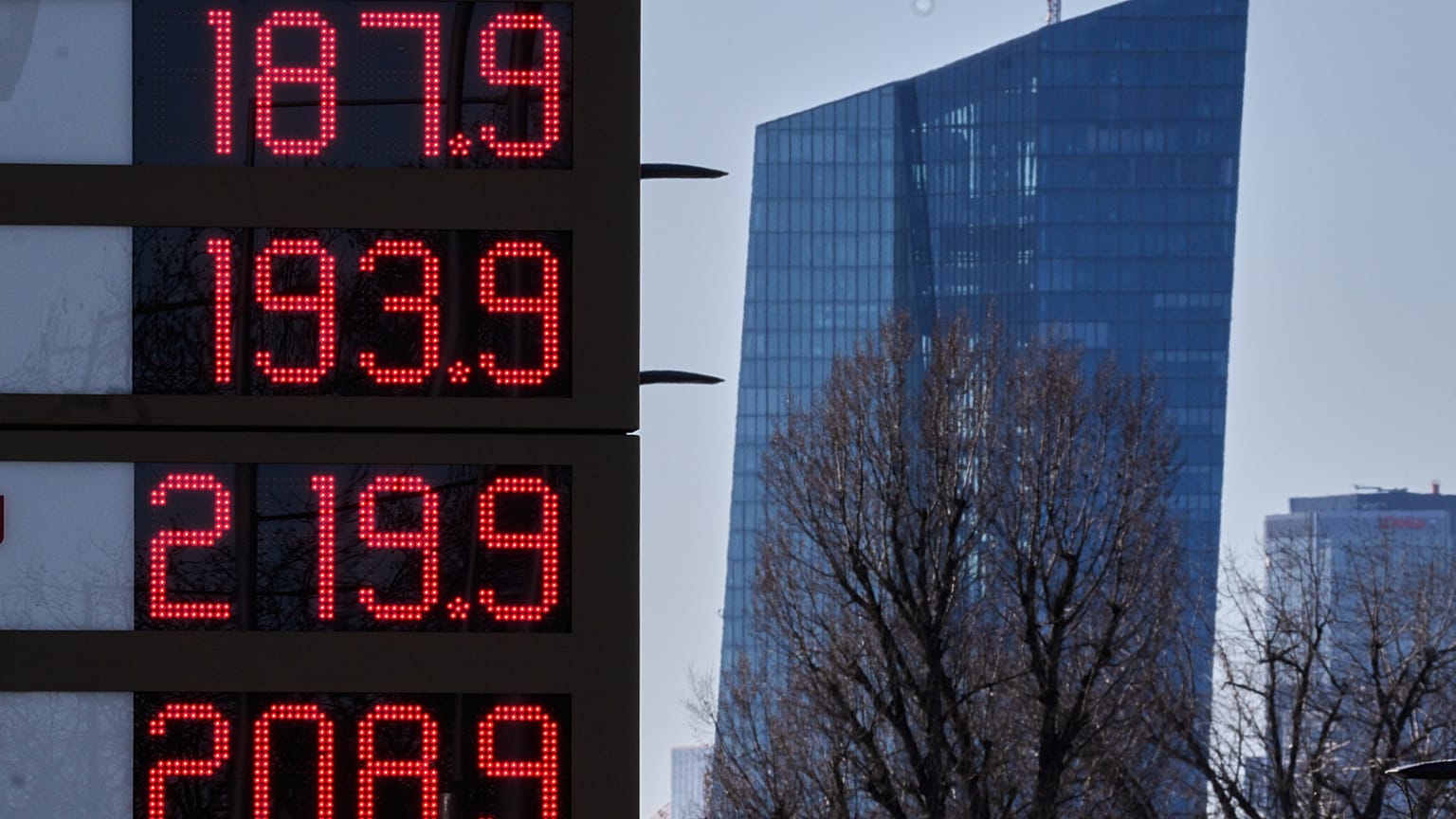
Gas prizes are displayed at a gas station with the European Central Bank in background in Frankfurt, Germany, Monday, March 2, 2026.
Copyright Copyright 2026 The Associated Press. All rights reserved


By Piero Cingari
Published on 

The closure of the Strait of Hormuz has sent gas prices surging by 60%, putting additional strain on Europe's already-depleted winter inventories and prompting economists to revise their 2026 growth and inflation outlooks.

Dutch TTF natural gas futures — Europe's benchmark price — hit €50 per megawatt-hour on Thursday morning, up 60% since US and Israeli strikes on Iran closed the Strait of Hormuz

The move is the continent's sharpest energy shock since the 2022 crisis, and it is landing on a market that was already dangerously exposed: gas inventories across Europe stand at their lowest seasonal levels in years.

With the strait — which carries roughly a fifth of the world's oil trade — still closed, economists and energy analysts warn that even a brief disruption could inflict damage on European growth, push inflation back above target and potentially force the European Central Bank (ECB) to revisit interest rate paths they had only recently stabilised.

Why the Strait of Hormuz matters for Europe

Around 20% of global oil supply and roughly one-fifth of global liquefied natural gas (LNG) trade pass through the strait, making it one of the most strategically important energy corridors in the world.

For Europe, the stakes are considerable. Qatar supplies approximately 15% of the continent's total LNG imports, making unimpeded passage through the strait a matter of energy security.

Europe’s exposure to Gulf energy flows has increased considerably since the continent dramatically reduced imports of Russian fossil fuels after 2022.

Bridget Payne, head of energy forecasting at Oxford Economics, said trade disruption rather than lost production is currently the primary concern.

She estimates oil supply could be disrupted by around 4 million barrels per day over the coming quarter.

While Gulf producers have spare capacity to offset Iranian supply losses, Payne warned that alternative shipping routes can only handle about one-third of the oil normally passing through Hormuz.

Europe entered March with unusually low gas storage levels. Inventories across the continent stood at roughly 30%, with Germany — Europe’s largest economy — reporting reserves as low as 21.6%.

Oxford Economics warned that disruptions to Qatari LNG exports could force Asian buyers to compete more aggressively with Europe for cargoes, potentially making it harder for European countries to refill gas storage ahead of next winter.

Inflation and growth risks rising

Higher energy prices are expected to feed through into inflation across Europe.

"Europe's depleted gas stores and reliance on transport routes via the Middle East point to heightened risks of a larger inflationary supply shock. That could become an additional drag on our already below-consensus forecast for 2026 GDP growth," said Oliver Rakau, chief Germany economist at Oxford Economics.

Oxford Economics expects the conflict to raise eurozone headline inflation by 0.3–0.5 percentage points in 2026, pushing it to around 2.3%.

Higher energy costs could also reduce household purchasing power, trimming economic growth.

Rakau estimates the shock could lower eurozone GDP growth by around 0.1 percentage points to roughly 1.0% this year.

Economists at Goldman Sachs said the conflict in Iran has already prompted revisions to their forecasts for economic growth, inflation and central bank policy.

“We are making changes to our growth, inflation and central banks forecasts in light of the evolving conflict in the Middle East,” said Sven Jari Stehn, chief European economist at Goldman Sachs.

Goldman Sachs also estimates that higher energy prices would trim economic growth by 0.1 to 0.2 percentage points this year across the eurozone, the United Kingdom, Sweden and Switzerland.

However, the outlook could deteriorate if energy prices rise more sharply or remain elevated for longer.

In a downside scenario, oil prices could remain near $80 (€74) per barrel while gas prices stay around €70 per megawatt-hour, according to the bank's estimates.

In a severe scenario, oil could reach $100 (€92) per barrel and gas €100 per megawatt-hour.

In more severe scenarios, the impact could be much larger.

Headline inflation by late 2026 could be nearly two percentage points higher in a downside scenario and as much as 3.6 percentage points higher in a severe shock.

Goldman said it would expect the ECB to deliver two 25 basis point rate hikes in the second half of 2026 in the severe downside scenario, should energy price increases generate significant second-round effects on core inflation.

Logistics disruptions add pressure

The war is also disrupting global logistics networks, adding further uncertainty for European trade.

According to Freightos research head Judah Levine, military strikes and retaliatory attacks in the region have already forced several shipping companies to suspend bookings to Persian Gulf ports.

"The US-Israel strikes on Iran and subsequent Iranian retaliation are driving significant logistics disruptions in the region which could start to be felt more broadly if the conflict stretches on," said Levine.

The Strait of Hormuz handles approximately 2% to 3% of global container volumes, and around 100 container vessels are currently stranded in the Persian Gulf.

Some of the world’s largest carriers, including Hapag-Lloyd and MSC, have halted bookings to and from Gulf ports, while CMA CGM has stopped accepting shipments to the region entirely.

The crisis has also revived concerns about the Red Sea.

The Houthis, who paused attacks on commercial vessels in October, have threatened to resume strikes, prompting the few carriers who had returned to that route to divert back around the Cape of Good Hope, further increasing transport costs.

Meanwhile, disruptions to major Gulf aviation hubs have reduced global air cargo capacity.

Qatar Airways Cargo, Emirates SkyCargo and Etihad together account for roughly 13% of global air freight capacity and play a key role in connecting Asia and Europe.

With many flights grounded and regional airspace closed, freight forwarders are beginning to charter direct flights between Asia and Europe, a shift that is already pushing up transport costs.

Freight rates from Southeast Asia to Europe have risen more than 6% in recent days, according to the Freightos Air Index.

Currency markets reflect rising risk aversion

Financial markets are also reacting to the geopolitical uncertainty.

European currencies have weakened as investors move toward safe-haven assets such as the US dollar and gold.

According to Michał Jóźwiak, market analyst at financial services firm Ebury, the euro has fallen about 1.8% against the dollar since the conflict intensified.

The sell-off has been even more pronounced in Central and Eastern Europe.

The Hungarian forint has weakened nearly 5% against the dollar, while the Polish zloty has dropped around 3.5%, marking one of the sharpest weekly moves since the start of the Ukraine war in 2022.

Further weakness in European currencies could also amplify inflationary pressures by increasing the cost of imports.

A fragile energy balance

For Europe, the unfolding conflict underscores the vulnerability of its post-Russia energy model.

While the continent has significantly reduced its reliance on Russian pipeline gas since 2022, much of that supply has been replaced by seaborne LNG.

This shift has made Europe more exposed to disruptions along global shipping routes and to geopolitical tensions in key transit regions such as the Middle East.

With gas inventories already low and the seasonal refilling of storage facilities under way, any prolonged disruption to energy flows from the Gulf could quickly ripple through European markets and economies.


What are Europe's oil route alternatives to the Strait of Hormuz?
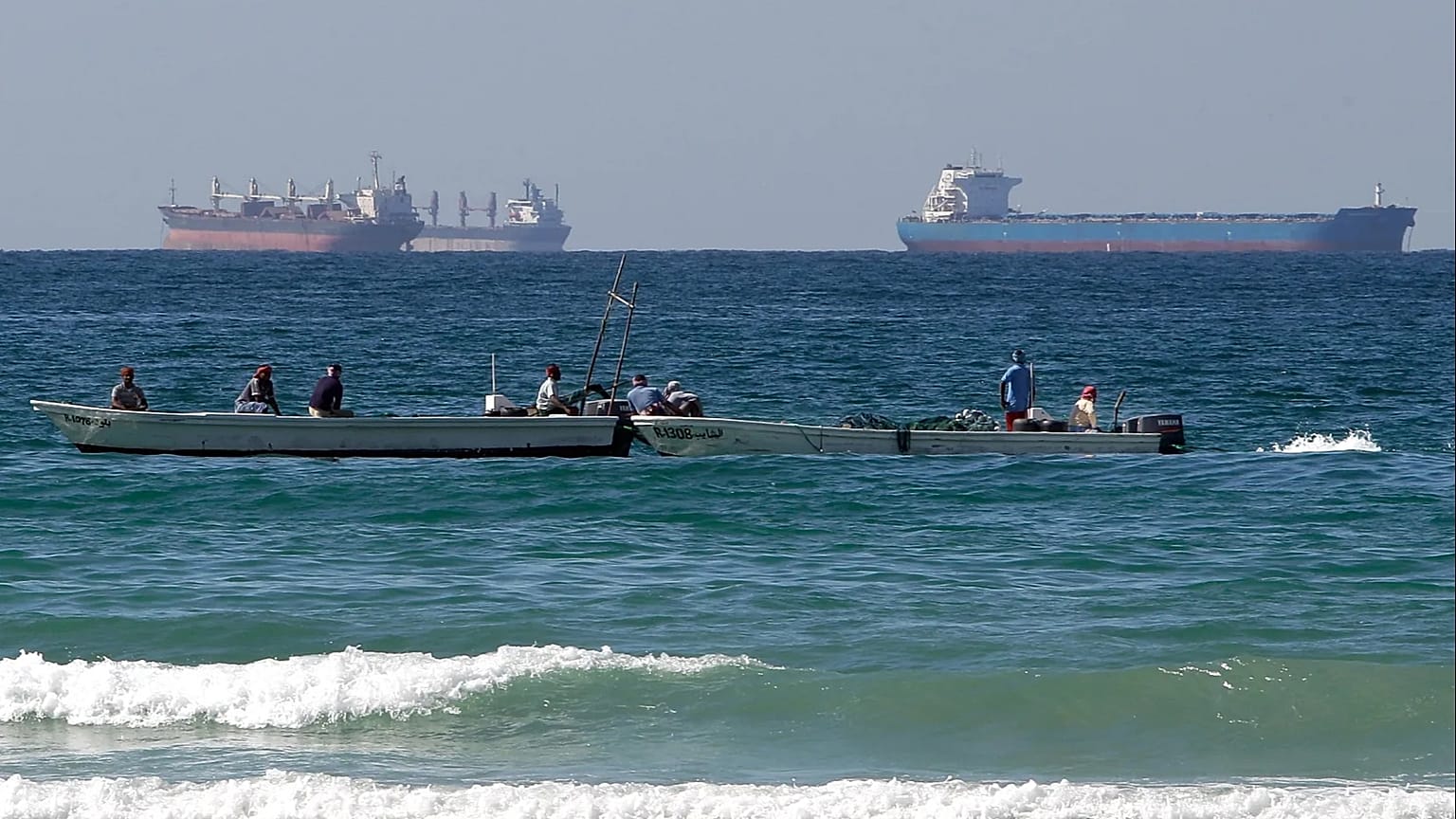
Oil tankers south of the Strait of Hormuz off the town of Ras Al Khaimah in the United Arab Emirates.
Copyright AP Photo / Kamran Jebreili


By Marta Pacheco
Published on 

Many European countries like Italy, Greece, Spain, Poland and Belgium rely on the Strait of Hormuz for imports or refining. Experts say the closure of this corridor will not cut off Europe’s oil supply, but will continue to drive up oil prices and disrupt markets.

As military escalation surges in the Middle East, Iran's announcement of the closure of the Strait of Hormuz has sent crude oil and natural gas prices soaring.

Faced with rising energy costs at home, European leaders are scrambling to avoid a cascading energy crisis, and are especially concerned about mitigating the price shock already being felt in markets.

Many European countries like Italy, Greece, Spain, Poland and Belgium rely on the Strait of Hormuz for imports or refining. Experts say the closure of this corridor will not cut off Europe’s oil supply, but will continue to drive oil prices and disrupt markets.

Lying between the Persian Gulf and the Gulf of Oman, the Strait is a narrow shipping corridor largely under Iranian control, and serves as one of the world’s most critical energy choke points for oil, accounting for 20% of global production.

Johannes Rauball, a senior crude analyst at the real-time data and market intelligence firm Kpler, estimated Hormuz-related disruptions to last another three to four weeks, keeping Europe exposed to elevated prices and volatility, with crude prices currently carrying a risk premium of around $15 (€13) per barrel.

"(Prices) will begin stabilizing once credible prospects of US–Iran talks emerge, or if flows via the Hormuz restart. We expect most of the risk premium to fall when negotiations look tangible, and largely disappear once a structured agreement is reached," Rauball told Euronews.

The European Commission is convening technical experts on Wednesday to address the new energy crisis, which severely complicates the bloc's ongoing battle to cut high electricity prices in a bid to re-industrialise the EU27's competitiveness.

While the bloc's oil imports are diversified, with Norway (14.6%), the United States (14.5%), and Kazakhstan (12.2%) ranking as the top three major suppliers, several EU countries do import oil from Gulf producers.

Saudi Arabia accounted for 6.8% of the bloc's total imports in the first 9 months of 2025, according to EU data, with Spain, Germany, France, and the Netherlands the bloc's top importers.

Iraq has already recorded oil production shut-ins as a result of the military strikes, Rauball said. Other Gulf states — including the UAE, Kuwait, Saudi Arabia, and Qatar — have roughly 10–20 days of flexibility before shut-ins are required, assuming normal production rates.

Alternative oil routes

Baird Langenbrunner, Research Analyst at the Global Energy Monitor, said there are two viable oil pipelines that could serve as an alternative to the Strait of Hormuz.

The first option is the Saudi East-West crude oil pipeline, which has a capacity of 5 million barrels per day. It runs east-to-west across Saudi Arabia from the Abqaiq processing center to Yanbu on the Red Sea

"Yanbu wasn’t designed to be Saudi Arabia’s main export hub, so its infrastructure and tanker-loading capacity will likely constrain actual throughput," Langenbrunner told Euronews.

Parallel pipeline infrastructure along this route could be temporarily converted to carry extra oil, Langenbrunner added, increasing the total takeaway to 7 million barrels per day.

"That would compete with carrying other important liquids to Yanbu," Langenbrunner added.

The second alternative is the Habshan–Fujairah oil pipeline in the United Arab Emirates (UAE), which could transport crude oil to the Fujairah terminal on the Gulf of Oman, but Langenbrunner pointed out it has a much lower daily capacity of 1.8 million barrels.

"The UAE already uses it as a routine export route, because it bypasses insurance and security costs of transiting the strait, and there’s not much spare capacity to use," the energy analyst added.

The recently built Goreh-Jask Crude Oil Pipeline in Iran would, in theory, be capable of bypassing the Strait, he explained, but not without complications.

"This pipeline sits in Iran, which was already under heavy US sanctions and whose infrastructure is under direct military attack. In addition, its confirmed capacity is around 300,000 barrels per day, quite small compared to what the strait handles each day," Langenbrunner said.

Ultimately, only a small fraction of what normally flows through the Strait could transit alternative pipeline routes, compared to the 20 million barrels per day that transit that corridor.

All the while, shipping through the Strait of Hormuz between Iran and Oman has ground to a near halt after vessels in the area were hit as Iran retaliated against US and Israeli strikes.

Shipping insurers have announced they are cancelling war risk coverage after the Iranian armed forces, the Islamic Revolutionary Guard Corps, said the Strait was closed, and tankers are also likely to avoid transiting the Red Sea via the Suez Canal to reach Europe.

"For volumes that can’t go through pipelines and rely on ships, an alternative is to re-route tankers around the Cape of Good Hope to reach Europe, which adds substantial time and cost to transit," Langenbrunner said. "And this only helps oil not already trapped in the Persian Gulf."

North Sea, North Africa and Latin America

North Sea production remains one of Europe’s most secure alternative supply sources.Crude from offshore fields in Norway and the UK can be shipped directly by tanker to European ports.

The US and West Africa also offer viable substitutes, with producers such as Nigeria and Angola shipping crude directly to Europe along Atlantic tanker routes.

North Africa, particularly Algeria and Libya, provides very short-haul Mediterranean supply routes into Southern Europe. These shipments avoid major global chokepoints and benefit from minimal transport distance. But political instability, especially in Libya, poses recurring risks to sustained supply.

Caspian and Central Asian producers such as Kazakhstan and Azerbaijan offer additional diversification. Their crude typically travels by pipeline to Black Sea export terminals before being shipped through the Turkish Straits into the Mediterranean.

Latin American suppliers, notably Brazil and Guyana, can deliver crude to Europe via Atlantic tanker routes that avoid Middle Eastern chokepoints altogether.

Pauline Heinrichs, Lecturer in War Studies at King's College London, said that if Europe wants to take security strategy seriously, it will need to reduce the insecurity from fossil fuel dependency.

“Our security strategy is currently reduced to responding to fossil fuel-induced crises, and I mean that both in terms of fossil fuels themselves, but also the powers that depend on fossil fuels to support their power, including the United States," Heinrichs said.

COMMENT: The coming Sunni-Shia showdown in the Middle East

COMMENT: The coming Sunni-Shia showdown in the Middle East
/ Google Maps
By bno - Taipei Office March 3, 2026

The question not yet asked in all the confusion over the outbreak of hostilities on multiple fronts in the Middle East is whether or not the tangled web of historic rivalries that makes up the region could yet slip into an all-out Sunni–Shia war?

At present, the short answer appears to be that the region’s oldest fault line is being revived, but on Day 4 of missile exchanges and targeting tankers, it remains far from a clear‑cut sectarian battlefield.

What is playing out though is a dangerous blend of sectarian identities and wider regional alliance politics that could resemble a Sunni‑Shia axis if the conflict escalates further.

For decades, the gulf between Shia‑majority Iran and a cluster of Sunni‑dominated states, especially in the Gulf has been a slow-burning proxy‑inflected rivalry. Riyadh and Tehran have never been in a one-on-one war, but their networks of militias and political influence has long made the region appear like a chessboard of competing sectarian kingdoms. That dynamic has floated just below the surface of Middle East politics since the 1979 Iranian Revolution. But now, the current conflict is bringing the possibility of a full-on Sunni VS Shia flashpoint to the fore.

With the fault lines sharpened, the confrontation as it is playing out between the US and Israeli-led West and Iran has pulled a number of governments around the wider Middle East into positions of choice and solidarity like never before.

Dividing lines

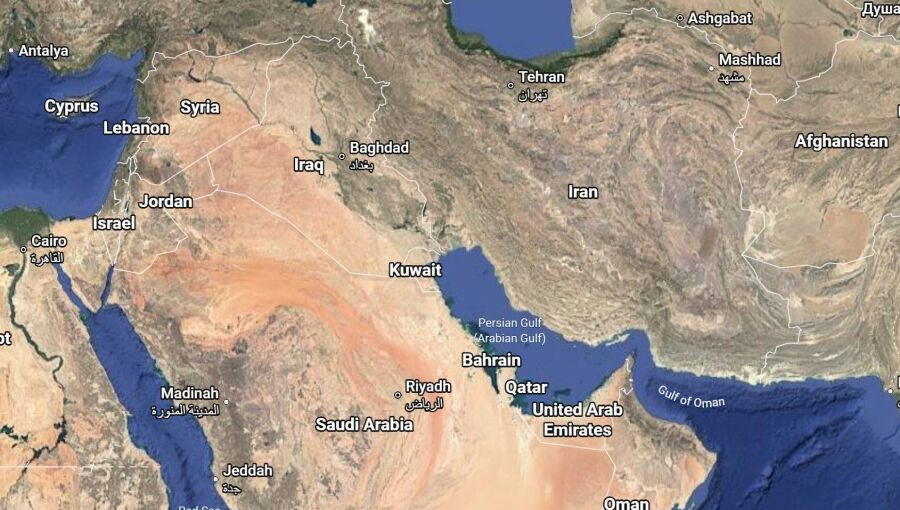
Saudi Arabia – overwhelmingly Sunni – on March 1 summoned Iran’s ambassador in protest over Tehran’s attacks on its territory. Along with Saudi Arabia, Kuwait, Qatar and the UAE as well as Jordan - all Sunni – have found themselves dealing with Iran’s military aggression to differing degrees in the past few days.

The United Arab Emirates (UAE) – another Sunni-majority nation – has seen more than its share of Iranian missiles and drones fired toward UAE territory. These have made headlines around the world as a result of the UAE’s now shattered image of being a safe haven for rich expats. Areas around Abu Dhabi and Dubai have been hit, and UAE air defences have intercepted large numbers of Iranian ballistic missiles and drones, though debris has caused civilian casualties and substantial property damage.

Kuwait, Sunni to the tune of 70% or so, has also seen Iranian strikes at the Ali al‑Salem Air Base and Kuwait International Airport. There are also reports that drones have struck US military facilities in the country.

Qatar too – 90% Sunni with only a tiny Shia minority – is a lynchpin in global energy supplies and has been the victim of multiple Iranian air attacks. These are reported to include missiles and drone strikes targeting facilities including the Al Udeid Air Base and civilian infrastructure.

To the west on the border with Israel, Jordan as a signatory of a recent joint international statement, with other Gulf states and the US condemning Iran’s actions in calling for de‑escalation, has been intercepting missiles headed to air bases including Muwaffaq al‑Salti – at present home to a large number of US combat aircraft including F-15s.

The nation’s two predominantly Shia nations meanwhile are are also seeing their share of trouble. Bahrain has seen numerous Iranian missiles reported near or over Bahraini territory. As home to the US Fifth Fleet base in Manama, this was an inevitability, but the derogatory manner in which state-backed nationalist Iranian media has referred to Bahrain in recent months by claiming the country should be ruled from Tehran, is an indication of Iran's view of the Kingdom. It is a view which, in 1957, saw Tehran claim Bahrain as its 14th province prior to eventual recognition of its independence in the early 1970s, following a period of international pressure.

To the northwest, Iraq, and in particular the Iraqi Kurdistan region, has been on the receiving end of missile and drone volleys near Erbil in the north of the country as well as around US bases. This is likely no coincidence given that most Kurds are Sunni Muslims and that Kurds in Iran have long faced discrimination and unequal treatment by the Iranian state.

Even Afghanistan to the east of Iran, while sympathetic to Tehran and not 'yet' involved in the ongoing conflict based is between 85 and 90% Sunni.

Sectarian or coincidence?

For outsiders and many observers, what we’re seeing feels like a Sunni–Shia confrontation – of Iran’s making, intentional or otherwise.

The imagery writes itself with a Shia-dominated nation and its network of terrorist proxies facing off against multiple regional Sunni governments that just happen to be backed by Washington and Jerusalem.

But looking at the issue in simple black and white terms risks missing vital nuance.

Predominantly Sunni states in the Gulf should in no way be deemed puppets of the West regardless of any unspoken Iranian beliefs that may emerge to this end. Riyadh, Abu Dhabi and Doha all have their own priorities that more often than nor fail to perfectly align with either Washington or Jerusalem.

The wider public and political elites in these states, as do billions around the world, likely view Iran through a prism of security issues, energy politics and even historical prestige, just as much as they may see Israel at least partially through the lens of Palestinian and Arab identity.

To this end, while the conflict appears sectarian on the surface there are multiple layers of socio and geopolitical nuance below that cannot be ignored. One of the most dangerous is the existence of Iran’s network of Shia militias and allied armed groups of which Hezbollah in Lebanon is the most prominent. That they are already involved in moves against Israel is concerning. Should other Iran-backed militia, of which there are between five and ten active, pop up in any way elsewhere in the Gulf region, that concern could switch to alarm.

As such, while the risk is very real that this war may turn full-on sectarian should the actors involved align further with historic Sunni or Shia identities, we are not there yet. However, should the region’s Gulf states lean more visibly into support for Israel or the US campaign as a result of constant Iranian missile and drone attacks, or even Iran-linked militia activity, the perception of a Sunni‑Shia war could harden into reality whereby Sunni versus Shia symbolism would no longer just be theoretically superimposed onto geopolitical conflict – it could be acted upon. 


SYRIA

Eyewitness Report: Twelver Shiite*  Villages Of Nubl And Al-Zahra In The Aleppo Countryside In The Post-Assad Period – Analysis


Map of Nubl and al-Zahra in the northern Aleppo countryside (June 10, 2018): The map shows the locations of the two Twelver Shiite towns within territories held by Syrian government forces (blue), opposition forces (green), and Kurdish forces (yellow) during the Syrian civil war. Despite their isolation amid Sunni and Kurdish regions, both towns have largely avoided post-Assad violence and serve as case studies in localized stability and minority protection. 
(Wikimedia Commons; OpenStreetMap contributors. © OpenStreetMap [ODbL]; map tiles licensed under CC-BY-SA 2.0)


LONG READ


Middle East Quarterly
By Aymenn Jawad al-Tamimi


Media coverage of the status minorities in Syria tends to focus on the Alawites in Homs and the coastal regions; the Druze in the southern province of al-Suwayda; the Christians in light of the Mar Elias church bombing in Damascus (late June 2025), which was claimed by the jihadist group Saraya Ansar al-Sunna; and Syria’s Kurds. Insofar as the Twelver Shiite minority is discussed in reports, the coverage mostly revolves around the Sayyida Zaynab shrine in Damascus,[1] which was a crucial focal point for foreign Shiite militia mobilization on the side of the Assad regime during the war. After all, Iran, whose government belongs to the same sect, was not only interested in propping up the regime as a strategic ally but also purported to represent Twelver Shiite interests in Syria through protecting Twelver Shiite shrines and communities.

There has been no real in-depth coverage of Twelver Shiite communities outside of Damascus such as the two villages of Nubl and al-Zahra in the countryside north of Aleppo. This report aims to remedy that deficiency in coverage. Unlike many media reports on Syria that are often based on a day visit or a few days’ visit to a particular place, this study is the result of extensive time spent in Nubl and al-Zahra.
Isolated Communities

A crucial fact to realize about Nubl and al-Zahra is that the two villages constitute an isolated pocket of Twelver Shiism, surrounded on all sides by Sunni localities, whether Arab Sunni to the east and south or Kurdish to the northwest. While there was much talk during the war about an alleged wave of “Shiification” occurring in Aleppo province, which was a key center of the Iranian and Hezbollah–backed “Local Defense Forces” (LDF) project, most of the discourse was the result of exaggeration and misunderstanding. In fact, even taking into account the people of Nubl and al-Zahra and individual converts to Shiism,[2] the majority of those who worked with the LDF in Aleppo were Sunnis, in keeping with the province’s own demography. This is true even of the “Baqir Brigade,” which was often seen as the crown jewel of Iranian and Hezbollah influence in Syria. The apparent affinity that some members and leaders of the group displayed for Shiism did not translate to conversion to Twelver Shiism but rather reflected general affinity for the Prophet Muhammad’s family and reverence in particular for Muhammad al-Baqir (the Fifth Imam for Shiites but also respected by Sunnis), as well as an attempt to court the Iranians for continued support.[3]

The isolation of Nubl and al-Zahra meant that, as the Assad regime rapidly collapsed in November and December of last year, the population effectively had two choices: they could either accept that the regime was no more and try to adjust to a new post-Assad order or they could flee and opt for indefinite exile. Although the two villages had acquired the status of “fortresses of steadfastness” in pro-Assad regime and pro-“resistance” propaganda and social media, as they were effectively besieged by the insurgents in the period 2012–2016,[4] there was simply no way to resist the insurgents’ advance through the province this time unless they simply wanted to die for no meaningful purpose. After all, as the defenses in Aleppo collapsed, it was also clear that there would be no forthcoming miracle intervention by Iran and Hezbollah to save the regime and those who had stood by it.


Initially, with the exception of a few elderly people and a local notable called Badr Nashab (who was in contact with the insurgents prior to the offensive),[5] the population of Nubl and al-Zahra chose to flee as there were fears (not entirely unjustified at the time) that the insurgents would massacre them on a sectarian basis and as revenge for collaboration with the regime, Iran, and Hezbollah. As such, many inhabitants fled to the Sayyida Zaynab area in Damascus while others ended up being stuck in the al-Safira area just southeast of Aleppo city, effectively coming under “siege,” as they initially refused to accept assurances from the insurgents that they would not be harmed and would be free to return to Nubl and al-Zahra. The insurgents’ assurances, of course, were part of a wider appeal by the insurgent leadership to minority communities as the offensive developed. Eventually, after a few individuals sympathetic to the political opposition and some others returned to Nubl and al-Zahra and could prove to those who had fled that they would not be harmed, larger numbers of the two villages’ inhabitants began returning.

As part of this process of return, virtually all weapons within Nubl and al-Zahra were handed over to the new government, and those who had served with the Assad regime’s army or various auxiliary formations (including the LDF) engaged in a process called taswiya (“regularization” of status, effectively granting an amnesty). Even so, there are many people from Nubl and al-Zahra who still live as exiles today. Some, for example, are working in Aleppo city or Damascus or outside the country in Lebanon and Iraq. A few who were already in Iran for reasons of religious study remain there and refuse to come back. Some who fear or are wanted by the new government have fled to Iran or Lebanon.[6] Some others also live in Europe, having left many years ago for reasons such as a desire to avoid military service and make a better living.

The town council in Nubl, July 9, 2025. As of the time of writing, the head of the town council is the same person who held the position before the fall of the Assad regime. (Photo: Aymenn Jawad al-Tamimi)

Abandoned military equipment in a cave in the countryside surrounding Nubl, May 20, 2025.


The Security Situation

Given the isolation of Nubl and al-Zahra, the two villages’ notables and the wider population currently accept that they need to adjust to the new order and that actively trying to fight it would be pointless. The conciliatory approach with the new administration and the surrounding environment is underscored by the entrance to Nubl from the Aleppo–Gaziantep route, which describes the town as one of “affection and peace.” Demonstrations held in Nubl and al-Zahra in support of the government (e.g., against “federalism” and denouncing the Syrian Democratic Forces (SDF)) and attended by local notables, Shiite clerics, and a portion of the wider population, should similarly be understood as an outwardly “official” stance of pragmatic conciliation. This is so even if some of the inhabitants do not like the new order because they see it as hostile to the wider “axis of resistance” (with which some still identify emotionally and ideologically); or because they see it as a Sunni-dominated order that is prejudiced against Shiites; or because the overthrow of the regime has meant a loss of status and/or income.


For instance, one individual I know in Nubl was previously a brigadier general in the Syrian air force and now finds himself selling fruit, vegetables, and various other food products like Indomie (a well-known brand of instant noodles) at a stall. Although he would like to offer his expertise for building the new Syrian state’s forces, he claims that for now his help will be rejected on the basis that the new army will be an “Umayyad army”—Umayyad referring to a new Sunni populist trend in Syria that emphasizes Syria’s connection with the Umayyad Dynasty, whose caliphate was based in Syria. Although he uses the expression in a somewhat joking way, the “Umayyad” populist trend itself reflects continuity with the rhetoric of Syrian President Ahmad al-Sharaa and his supporters prior to the fall of the regime in which they emphasized the status of Hay’at Tahrir al-Sham (HTS) as an entity upholding Sunni interests in Syria.[7] In addition, the new Syrian army does in fact feature religious instruction that appears to exclude non-Sunnis from joining for the time being.[8] For her part, the ex-brigadier general’s wife claimed that under Assad life was better because they were living with “dignity.” Even so, neither of them has any interest in taking up arms against the new state.

Alongside the pragmatic approach of Nubl and al-Zahra to the new order and the disarmament of the two villages, one should also note that the new authorities appear to have taken up a particular commitment to protecting minorities in the Aleppo area. According to Omar al-Hasan, who served as an independent M.P. in the Syrian parliament under the Assad regime and was backed by the Baqir Brigade, one of the conditions for defection the Baqir Brigade’s leader al-Hajj Khalid put to Ahmad al-Sharaa and the insurgent leadership was that they should protect minorities in the Aleppo region, including the people of Nubl and al-Zahra.[9]

All the above factors combined mean that the security situation in Nubl and al-Zahra is stable. Indeed, it would not be an exaggeration to say that Nubl and al-Zahra are among the safest places in Syria right now. One does not walk the streets in fear of being confronted by an armed gang or individual or that an armed clash will take place in the street between rival individuals (including members of a single family), families, and clans—a regular occurrence in the primarily Sunni province of Deraa in the south, by way of contrast.[10] Nor are there reports of murders and assassinations. Nor does security need to be managed by auxiliary militias amid a deficiency in the capacity of the local police and security forces.


In fact, locals now say that security and law enforcement are better under the police and security apparatus in Nubl and al-Zahra (an outgrowth of the HTS–backed Salvation Government’s police force and the HTS–backed “Public Security Apparatus”) because the police apparatus in the days of Assad regime control during the war had little power to deal with complaints, given how widespread possession of weapons was. Now, by contrast, while Nubl and al-Zahra are certainly not crime-free (for example, residents are careful about ensuring doors are locked in order to be on guard against thefts), the police and security apparatus can meaningfully respond to complaints. The police and security apparatus have also taken the additional measure of installing security cameras to identify suspects.

The police station in Nubl, July 9, 2025. Note the Syrian Salvation Government emblem. (Photo: Aymenn Jawad al-Tamimi)

In addition, the police and security forces, all of whom come from outside Nubl and al-Zahra,’ with no efforts made to recruit locals, generally behave professionally in dealing with the local population. They do not roam the streets harassing locals or shouting sectarian insults at them, nor are there raids, arbitrary arrests, or confiscations of property targeting “regime remnants”[11] and supposed cells linked to Hezbollah and/or Iran. The checkpoints at the entrances to Nubl and al-Zahra via the Aleppo–Gaziantep route are not there to harass and humiliate the local population or restrict their movements but rather to prevent the entry of individuals who might harass or harm the local population.


At the entrance to Nubl, I have observed the checkpoint being manned by personnel of the Public Security Apparatus and, more recently, Military Police who originated from the Turkish–backed “Syrian National Army.”[12] I have always seen them deal respectfully with locals, and they have behaved similarly in my own interactions with them. The first time I entered Nubl for a visit (a visit lasting only a few hours), the Public Security Apparatus’s primary concern was to make sure I did not have weapons with me and to know where I had lived “before the liberation.” They kept my passport on that occasion but just to make sure that I would actually leave the town after my visit. From that time on, I have generally had no problem entering or exiting the town. On one other occasion, I was held for an extended time by the Public Security Apparatus at the town’s checkpoint, though this was because the new personnel at the checkpoint did not know me and decided to refer the matter to their supervisors to check that I had entered the country legally and that my documentation was valid.

The sense of optimism about security is reinforced by the fact that while there were widespread concerns within Nubl and al-Zahra when reports emerged in March 2025 about massacres of Alawites in the coastal regions, fears that they too would be targeted did not at all materialize. In short, Nubl and al-Zahra currently find themselves effectively protected by the new state. This protection has not gone unnoticed among some people from some neighboring Sunni towns and villages and is in fact a source of some resentment. In February 2025, some inhabitants of these neighboring localities held a demonstration at the entrance of Nubl, demanding that people from Nubl and al-Zahra who are implicated in crimes against them be held accountable.[13] To be fair, there is some justification to those demands: some of those from Nubl and al-Zahra who fought on the side of the Assad regime, Iran, and Hezbollah did engage in acts of criminal destruction and looting of properties in some of the neighboring Sunni villages. Just opposite Nubl, on the Aleppo–Gaziantep route, is the Sunni village of Mayer. The majority of the village (which was captured by the regime in 2016 and was, to be sure, a place from which many projectiles were fired indiscriminately at Nubl and al-Zahra)[14] remains in ruins, having been subjected to looting by some fighters from Nubl and al-Zahra. However, some locals in Nubl and al-Zahra, in response to these demands for accountability, assert that those who have actually committed crimes have either been arrested by the state or are wanted and have fled.


In a similar vein, a local news page for the town of Hreitan (a Sunni town located just north of Aleppo city) featured the following post by a North Aleppo countryside local called Muhammad Balkash, complaining about how displaced Sunnis who supported the opposition to Assad have not received any justice or recompense while Sunni supporters of the former regime and the people of Nubl and al-Zahra seemingly enjoy immunity and protection:

In north Aleppo countryside: from Tel Refaat in the north to Hreitan, Anadan, Kafr Hamra and al-Layramun in the south, passing through Mayer, Hayyan, Bayanun and Ratyan, the displaced returns to sell his land either to rebuild his home or build a new home, while the Sunni shabih (Assad supporter) who stole and plundered the displaced people’s livelihoods enjoys the wealth he stole. In contrast, the localities of Nubl and al-Zahra enjoy protection under the slogan of “civil peace,” when they were the human resource for Iran’s militias and were the tip of the spear in killing us, displacing us and stealing our homes and possessions![15]

In some cases, the rhetoric against Nubl and al-Zahra is inflammatory, and while the government may make occasional rhetorical commitments to stamping out sectarian incitement, little in practice is actually being done by the government to address this problem. For example, activist Abd al-Jabbar Abu Thabit, commenting on a social media post in which the Azaz regional administration[16] highlighted the honouring of outstanding school students from Nubl, wrote a message collectively labelling the people of Nubl and al-Zahra as criminals and the students as “children of killers.” He similarly criticized the government and its advertisement of the event as “deepening the wound and increasing the pains of the people of the northern countryside.” To those from Nubl and al-Zahra who posed in photographs with government officials, he warned that “you are thus provoking the revolutionaries and are digging your grave with your foolishness and hands.” [17]

More recently, some initiatives have been advertised in pro-government media in a bid to promote a spirit of conciliation between Nubl and al-Zahra and the surrounding Sunni villages. Most notably, it was claimed that during the government–sponsored fundraising campaign for Aleppo (“Aleppo is the Respected Lady of All”) in December 2025, the people of Nubl and al-Zahra pledged more than a quarter of a million dollars. However, such pledges mean little to the people of the surrounding Sunni villages if they do not readily translate to actual compensation and reconstruction.[18]

Some Restrictions and Grievances


Whatever positive observations might be made about security and law enforcement, there are some de factorestrictions that seem to be the result of consultations between the notables of Nubl and al-Zahra and the local security apparatus and regional security authorities. These consultations and the restrictions are driven by a desire to avoid fitna (internal strife), which could refer, for instance, to behavior that might be seen as provocative towards Sunnis. The most obvious restriction is that it is now de facto forbidden to engage in any public expressions of support for Iran, its supreme leader Ayatollah Khamane’i, or Hezbollah and other Shiite components of the “Axis of Resistance.”


Thus, while one will find residents of Nubl and al-Zahra who identify Khamene’i as their marja’ (a Shiite clerical authority whose rulings and guidance one follows), public images of Khamene’i are forbidden. It is also notable that efforts are being made to remove the image of the deceased IRGC Quds Force commander Qassem Soleimani: most notably, his image that was on a monument in Nubl’s “Martyrs Park” (a cemetery dedicated to the “martyrs” of Nubl during the war, a project that was financed by Iran) has now been removed. However, graves that feature images of fighters alongside the old flag of Assad’s Syria and Hezbollah have otherwise not been touched, likely out of regard by the new authorities for the sentiments of families in Nubl who have relatives buried in the cemetery.

Qassem Soleimani’s image on a monument in Nubl’s “Martyrs Park.” Photo taken in late March 2025. The image has now been removed.

Many images commemorate “martyrs” with the logo of Hezbollah (in the upper-left corner) and/or the old flag of Syria remain. This photo is from the tomb of Taher Nasrallah, who was killed with a group of fighters from Nubl and al-Zahra in Saraqeb (Idlib province) in February 2020, apparently in a Turkish drone attack. Some other posters of “martyrs” that were visible in the first half of 2025 had also been removed by September.

A mural at Nubl’s “Martyrs Park” commemorating the Hamas–led October 7 attack. Photo taken in 2025. (Photo: Aymenn Jawad al-Tamimi)

On the wider religious level too, celebrations of Shiite religious festivals in the streets are not taking place. A recent example to illustrate the contrast between now and then is the occasion of Ashura, which occurs on the tenth day of the Islamic month of Muharram and is commemorated by Shiite Muslims as an occasion to mark the martyrdom of al-Husayn bin Ali, the Third Shiite Imam. In the past, the day of Ashura would be commemorated by a public march in the streets. Further, in the days leading up to Ashura, Latmiyat (songs to express mourning) would be played in the streets. In 2025, no such rituals took place, although inside mosques and homes “Husayn councils” could be held as usual (meetings that would include reading of the Qur’an, sermons from clerics where applicable, and recitation of stories about the killing of Islam’s Prophet Muhammad’s family at the Battle of Karbala).

The Imam al-Mahdi Mosque in Nubl, July 9, 2025. (Photo: Aymenn Jawad al-Tamimi)

A “Husayni council” being held inside the Imam al-Mahdi Mosque during Muharram in 2025. Sermons in the councils touched on a variety of religious topics, such as the need for giving children proper Islamic education and the importance of prayer. (Photo: Aymenn Jawad al-Tamimi)


An Ashura procession in Nubl (August 2022). No such procession was held in 2025. (Photo: Aymenn Jawad al-Tamimi)

The caution against fitna extends to use of social media too. For example, al-Sayyid Muhy al-Din Muhy al-Din, a cleric from Nubl who is a follower of Ayatollah Sistani, put out an online circular to the people of Nubl and al-Zahra in summer 2025, urging them to delete any status updates or posts on social media that contain “provocation of the other side” (i.e., the Sunnis). As he emphasized, “The situation is sensitive and tense, and we do not need anything that increases the tension . . . when you put on your status or account a picture of so-and-so, and such-and-such post, or such-and-such latmiya, this contains provocation of the other side . . . embrace silence and keep away from everything that stirs up sensitivities.” The caution against fitna aside, there are also some grievances that concern the economic situation and services. In this regard, there is some overlap with problems in other parts of Syria, but there is also a local sectarian angle at play here. The departure of Iran and Hezbollah has led to a surge of unemployment in Nubl and al-Zahra because those who were working with the LDF formations just before the regime fell lost their jobs and salaries. In the realm of agriculture, livelihoods were impacted by the drought in 2025 that caused widespread crop failure across the north Aleppo countryside. More generally, some complain that individuals from Nubl and al-Zahra who seek work in neighbouring localities are rejected on the grounds of being Shiite and/or perceived supporters of the prior regime.[19]

The difficult economic situation has thus continued to contribute to emigration from Nubl and al-Zahra, with many young people seeking job opportunities in Lebanon and Iraq, reflecting a trend from prior to the fall of the regime.

View of Nubl’s outskirts and surrounding countryside, summer 2025. 
Photo credit: Aymenn Jawad al-Tamimi

In terms of services, while good quality water is available from underground wells, there is generally no reliable national grid electricity to meet domestic needs. The main exception to this was the provision of some national grid electricity that would allow households to fill their water tanks with water from the state network. In November 2025, however, unidentified assailants destroyed an electricity tower that supplied this electricity to Nubl and al-Zahra, and, as of the time of writing, this disruption has not yet been fixed, forcing residents to rely on water from private wells at higher costs. It is certain that the sabotage was carried out for motives of hatred toward the people of Nubl and al-Zahra.

For other electricity needs, households are mostly reliant on diesel generators that are very costly, at a rate of around $1 per kilowatt,[20] a rate several times higher than in the town of Azaz on the border with Turkey that has long been connected to the Turkish grid.[21] There is talk within Nubl and al-Zahra about plans to extend the Turkish grid connection to the two villages, but there is no definitive confirmation. Others with more money at their disposal can also install solar panels to supply electricity for purposes such as refrigeration and charging of electronic devices. Even so, maintaining constant use of a fridge can prove prohibitively expensive for many households, which then resort to turning off the fridge for periods—posing health risks from the food stored therein.

Assessment: Nubl and al-Zahra and Minorities in Syria

On the positive side, one might argue that the excellent security situation in Nubl and al-Zahra, which is likely to endure, could provide a model for law enforcement in the country, more generally, and protection of minorities within their own localities, in particular. The authorities’ commitment to protecting the inhabitants, the inhabitants’ own pragmatism, and the authorities’ monopoly on force have meant that the two localities have not witnessed the sort of violence and instability observed in other parts of Syria. At times, it almost seems as though Nubl and al-Zahra are a world apart from the reports of violence in other parts of Syria. On a wider level, encouraging a state of law and order and arms control should be among the top priorities of outside actors engaging with the new Syrian government.

However, it has to be said that Nubl and al-Zahra—by virtue of their status as geographically isolated minority communities that can only realistically survive by accepting the new government and adopting a conciliatory stance—present a rather exceptional situation compared with regions inhabited by larger, more widely distributed minority populations such as the coastal region with its Alawite population, the primarily Druze province of al-Suwayda’, and the Kurdish Northeast. In al-Suwayda’, in particular, possession of personal arms is widespread, and the existence of local Druze armed groups that have largely assumed responsibility for security reflects continuity with the situation during the war prior to the fall of the Assad regime. With the widespread violations committed against Druze by government forces and pro-government “tribal militias” in the summer, Druze armed groups have now congregated around a rejectionist position toward the central government, demanding either a Druze autonomous region or an independent Druze state. Whether or not one thinks the notion of Druze independence is realistic, the armed groups in al-Suwayda’ have reason to be skeptical of the government and maintain their status.

Even going beyond the issue of minorities, the past fourteen years of war saw the widespread dissemination of weapons among the Sunni population, with acquisition of arms being remarkably easy even in Sunni areas not too far from Nubl and al-Zahra, such as the town of Azaz and its environs. It is doubtful whether the state has the capacity or will to enforce disarmament among the Sunni population, which, after all, constitutes the new government’s core support base. As the events in al-Suwayda’ showed, al-Sharaa is appreciative of the notion of armed Sunni tribal mobilization in the name of supporting the new Syrian state.[22] Would he want to risk alienating this constituency of support by seeking to disarm it? Within the environment of Nubl and al-Zahra and its environs, a problem posed by the disarmament of the two villages as opposed to the lack of disarmament of the surrounding Sunni localities is that some locals may feel reluctant to venture outside the two villages out of fear of being targeted for sectarian and/or revenge killings.

This fear is then amplified by incidents in which people from Nubl and al-Zahra who went outside the two villages and were killed, such as the kidnapping and killing of Qays Ghreeb in August 2025[23] and the killing of Ali Faraj al-Sayyid in September 2025.[24] Adding to anxieties are occasional rumours of abduction of girls from Nubl and al-Zahra, the most recent case being that of Aya Dasho, a writer who worked with the Iranians in producing propaganda for the Islamic Republic and had returned from Lebanon to Nubl. She then disappeared in December 2025 in a case that was rumored either to be a criminal kidnapping or arrest by the security forces, although the latter seems unlikely. It has since been claimed that she and her family left for Lebanon, but there are no definitive confirmations of her whereabouts. Whatever the truth of the affair, the uncertainty surrounding her story has reinforced anxiety that women in Nubl and al-Zahra might not be safe.


Turning to other Syrian Twelver Shiite communities, it is clear that not all of them have enjoyed the same protection from the new authorities as that afforded to the two villages of Nubl and al-Zahra. In Homs province, in particular,where the Twelver Shiite community is more geographically widespread, there have been multiple reports of displacement and violations.[25] For example, a prominent Shiite cleric in Homs province, Rasul Shahud, was assassinated by unknown assailants in July 2025. They almost certainly targeted him on a sectarian basis.[26]Moreover, whereas the people of Nubl and al-Zahra have been able to return to their homes, the original inhabitants of the two Idlib Twelver Shiite villages of al-Fua and Kafariya—who were fully evacuated in 2018 as part of a deal brokered by Iran, after being besieged by the insurgents since 2015[27]—have not yet been able to return. Their homes were confiscated by armed factions, and Sunni IDPs from other parts of Syria were settled in them and the villages were effectively transformed into Sunni localities. The government seems either unwilling or unable to evict those living in al-Fua and Kafariya and secure the return of the original inhabitants, some of whom have told me that they do not feel it would be safe to return as there is no security guarantee from the government, in addition to threats from inhabitants of neighboring Sunni localities such as Binnish.[28]

In short, while Nubl and al-Zahra present nuances in understanding the situation of minorities in the country, outside actors should realize that the two villages do not necessarily represent the general experience of minorities in Syria and that there are significant obstacles to replicating the positive aspects of the Nubl and al-Zahra model elsewhere. The new Syrian government should thus be held to account for its shortcomings, focusing in particular on the need for building the country’s security apparatus and military forces on a basis that rejects a sectarian framing of Syria’s identity and eschews animosity toward minority sects such as the Alawites and Twelver Shiites. This building of a new, non-sectarian identity is of course also required on the national level such that in the long-run, minority towns should no longer need special checkpoints to protect them from attacks; nor should Shiite practices like holding Ashura processions in the streets or playing Latmiyat be seen as “provocative” acts that have to be suppressed.


About the author: Aymenn Jawad al-Tamimi is the director of the Middle East Forum’s Syria office and a visiting fellow at Stanford University’s Hoover Institution

Source: 
This article was published by the Middle East Quarterly


Endnotes

1 For example, Murtaza Hussain and Ali Younes, “Dispatch from Damascus: The Shia Shrine That Could Define the Future of Syria,” DropSite News, January 30, 2025, https://www.dropsitenews.com/p/damascus-syria-sayyida-zeinab-shrine-kil-iran.

2 I am aware of at least one individual from the Aleppo city neighbourhood of Aziziya who worked with the Iranian-backed “Aleppo Defenders Legion” (which focused on “cultural” activity in the sense of promoting ideological support for the “Axis of Resistance”) and converted to Shiism.


3 Aymenn Jawad al-Tamimi, “How Aleppo Fell,” Syria in Transition, July 2025, https://bit.ly/SiT26July.

A similar example is the Martyr Zayn al-Abidin Berri Brigade, which was also known as the Imam Zayn al-Abidin Brigade (named for the Fourth Shiite Imam). The group received Iranian support and had its origins in the Berri family of Aleppo, a Sunni family known for support for the regime.

4 For a memoir of the siege, see Nour Kourko, When the Paths of the Sky Become Crowded (Qom: al-Mustafa University, 2025).

5 Conversation with Badr Nashab, December 2025. Badr became director of the government-affiliated cultural center in Nubl but resigned in January 2026. During the war he faced harassment from the regime for his sympathies for the opposition cause.

6 The most notable case is Ahmad Junayd, one of the leading local military figures in Nubl who worked with Iran and Hezbollah.

7 See, for example, Ghassan Yasin, “Hay’at Tahrir Al-Sham and Its Madhhabist Entity in Idlib,” Syria TV, September 13, 2024, https://www.syria.tv/هيئة-تحرير-الشام-وكيانها-المذهبي-في-إدلب.

8 See also Raja Abdulrahim, “Syria, Rebuilding Its Military, Relies on Loyalists and Religious Teaching,” New York Times, December 11, 2025.

9 Conversation of author with Omar al-Hasan about Liwa al-Baqir, July 2025.

10 See, for example, “After a Person Was Killed in Familial Infighting, Curfew and Heavy Security Deployment in Tafas in Deraa Countryside,” Syria TV, September 16, 2025, https://www.syria.tv/بعد-مقتل-شخص-باقتتال-عائلي-حظر-تجوال-وانتشار-أمني-كثيف-في-طفس-بريف-درعا. Similarly, on January 5, 2026, the local news site Deraa 24 noted that it had documented the killing of at least 438 people in Deraa during 2025, including 266 civilians. See “Tally of Victims in Deraa Between 2025 and 2025: The Total Number Versus the Civilians,” Deraa 24, January 5, 2026, see https://bit.ly/FacebookPhotoLink.

11 A notable exception is the house of one Yahya Taher al-Aswad, a retired officer of the former regime who is accused of participating in the Hama massacre of 1982. Yahya is outside Nubl. As of the time of writing, his house is used as a base for local security personnel.

12 There are regular rotations of the personnel manning the checkpoint.

13 The outlet al-Mayadeen, known for supporting the “Resistance Axis,” misrepresented this demonstration as calling for mass displacement of the people of Nubl and al-Zahra. See “Syria: Demonstration Demanding the Displacement of the People of Nubl and Al-Zahra’ in North Aleppo Countryside,” al-Mayadeen, February 21, 2025, https://www.almayadeen.net/news/politics/سوريا–تظاهرة-تطالب-بتهجير-أهالي-بلدتي-نبل-والزهراء-في-ريف-ح.


14 See, for example, Kourko, When the Paths of the Sky Become Crowded, 141.

15 See post in Facebook, “Hreitan City News,” July 1, 2025, https://www.facebook.com/Hreitan.City.News/posts/pfbid0J5h7RrEAmpjmeUCHGFrSyQgPzoMiRkf8FrzYz7jJByV9gnUVzYv4ZrmB4W1WYutUl.

16 This regional administration has oversight of Nubl and al-Zahra, reflecting continuity with the prewar administrative division.

17 Facebook post by Abd al-Jabbar Abu Thabit, September 19, 2025,https://www.facebook.com/photo?fbid=780234968048804&set=a.122808663791441.

18 Conversation in January 2026 of author with a member of the local council in Hayyan, a nearby Sunni village largely destroyed during the war.

19 Conversation, for example, of author with an imam in Nubl, September 2025.

20 It is noteworthy that in 2025 there were rumours that the general director of the Nubl and al-Zahra area (Abu Ahmad, whose real name is Bassam Abd al-Wahhab and who originates from the Aleppo locality of Darat Izza) was collecting a portion of the profits from private diesel generator fees, regarding them as jizya (i.e., tribute from non-Muslim minorities to Muslims). Such behaviour may have been a factor in his removal as director in September 2025. The general director in turn answers to the director of the Azaz region to which Nubl and al-Zahra are affiliated.

21 Receipts from Nubl and Azaz in author’s possession.

22 For a concise overview of this matter, see “Lions of Syria,” Syria in Transition, August 2025, https://www.syriaintransition.com/en/home/archive/issue-27/lions-of-syria.

23 He was lured to the town of al-Bab. located northeast of Aleppo city, having been contacted by a gang that posed as customers for a shipment of sand for building work. Besides financial motives, the incident may have been motivated by a desire for revenge, with one rumour being that a relative of one of Qays’ murderers was killed by a relative of Qays.

24 He was killed after an unknown assailant who opened fire on him and two others from the locality of al-Zahra, at the intersection of the nearby Sunni village of Bayanun. The three men had been heading to work.

25 See Aymenn Jawad al-Tamimi, “The Twelver Shiites of Homs: Interview,” Middle East Forum Online, July 1, 2025, https://www.meforum.org/mef-online/the-twelver-shia-of-homs-interview.

Some of the violence and displacement may reflect acts of revenge rather than purely sectarian-motivated violence in the sense of targeting Shiites just for being Shiites. For instance, a local in Nubl more sympathetic to the new administration explained some of the incidents in Homs province by noting that Shiite supporters of the regime in Homs did steal property from displaced Sunnis. Conversation with the author, August 2025.


26 “News About His Assassination in Homs . . . Who Is Shaykh Rasul Shahud,” an-Nahar, July 9, 2025, https://www.annahar.com/arab-world/arabian-levant/230084/أنبا-عن-اغتيال-رجل-الدين-رسول-شحود-في-حمص.

27 For a historical account, see Muhammad Hasan Taqi, Al-Fua and Kafariya: A Story of Glory and Defiance (Qom: al-Mustafa University, 2024).

28 Conversations author with people from al-Fua and Kafariya, September 2025.
Like what your read?


Middle East Quarterly

Middle East Quarterly, published since 1994 and edited by Efraim Karsh, it is the only scholarly journal on the Middle East consistent with mainstream American views. Delivering timely analyses, cutting-edge information, and sound policy initiatives, it serves as a valuable resource for policymakers and opinion-shapers.


Twelver Shiite*

The Twelvers believe that, at the death of the Prophet Muhammad in 632 ce, the spiritual-political leadership (the imamate) of the Muslim community was ordained to pass down to ʿAlī, the Prophet’s cousin and son-in-law, and then to ʿAlī’s son Ḥusayn and thence to other imams down to the 12th, Muḥammad ibn al-Ḥasan, who is understood to have been born circa 870 but to have gone into occultation (Arabic ghaybah; Persian ghaybat)—a state of concealment by God—soon after his father’s death circa 874. The “Hidden Imam,” as he is sometimes called, is considered to be still alive and will return when God determines it to be appropriate and safe. As the Rightly Guided One (mahdī), upon his return he will inaugurate the processes associated with the last days and the Day of Judgment in particular; as part of that process, Jesus also will return. Other titles associated with him include the Awaited One (al-Muntaẓar); the Imam, or Lord, of the Age (Imām al-Zamān or Ṣāḥib al-Zamān); the Lord of Authority (Ṣāḥib al-Amr); the One Who Arises (al-Qāʾim); and, in reference to the presence of God, the Proof (al-Ḥujjah).

During their years in the community, the imams faced harassment and persecution at the hands of the ʿAbbāsid caliphs, who feared that the imams would organize risings against their rule. Following the 12th imam’s occultation, the Twelver Shiʿah enjoyed a measure of tolerance during the Būyid period (945–1055) in what is now Iran and in Baghdad. There were also pockets of the community scattered across a region extending from what is now Lebanon to Khorāsān (what is now northeastern Iran and parts of Turkmenistan and Afghanistan) and in the Persian Gulf region. At the fall of Baghdad to the Sunni Seljuqs in 1055, the Baghdad community scattered to these other centres. From the years following the 1258 Mongol conquest of Baghdad (the ʿAbbāsid capital from the 8th century) through the Il-Khanid period in Iran (1256–1335), Twelver Shiʿi scholars enjoyed some favour at court, but the bulk of the community remained scattered across the region.

BRITANICA