Friday, March 06, 2026

Trump Tracker: Why we're keeping count of every climate attack the POTUS unleashes in 2026
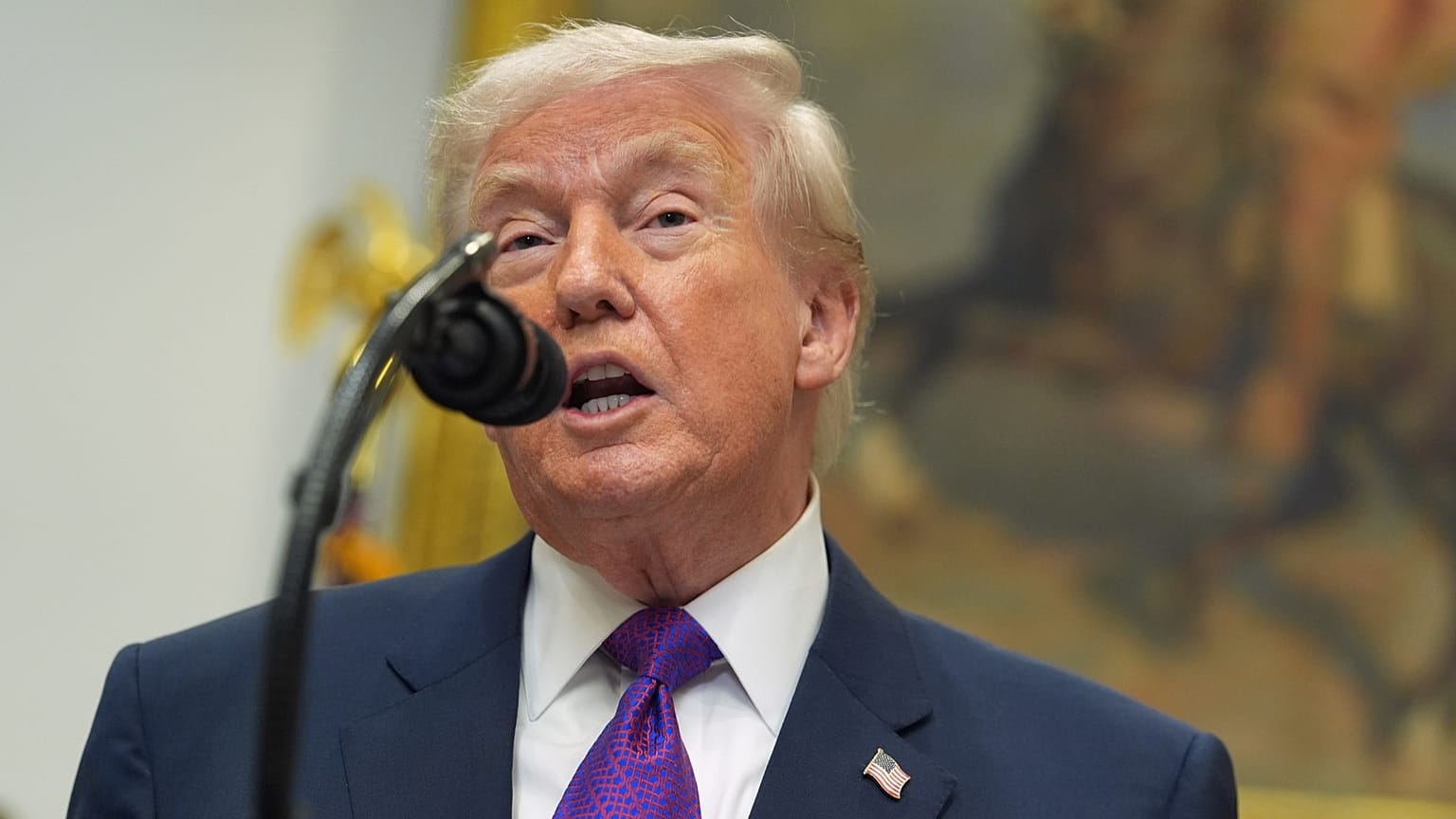
President Donald Trump speaks during an event with Environmental Protection Agency director Lee Zeldin announcing that the EPA will no longer regulate greenhouse gases.
Copyright Copyright 2026 The Associated Press. All rights reserved

By Liam Gilliver with AP
Updated 

Euronews Green is holding the world's most powerful man to account, by documenting all the ways he's sabotaging climate progress this year.

In a world crippled with uncertainty, one thing is for sure: 2026 will go down in history as the year that Donald Trump single-handedly unravelled decades of climate progress.

Since his return to the White House, the POTUS and his administration have turned their back on science, ruthlessly retreating from global pledges and institutions to prioritise the profits of big polluters.

It's stripping the US – which remains the world's largest historical polluter – of any kind of accountability, while the world edges dangerously close to irreversible climate disaster.

But here's the thing: climate change and its devastating effects do not stop at country borders. What one nation does impacts us all.

That's why Euronews Green has consistently covered Trump's unwavering climate setbacks – from his "drill baby drill" attitude over Venezuela's oil reserves to repeatedly describing wind energy as a "con".

Keeping up with these fast-moving stories can be hard, which is why we've created the Trump Tracker – documenting every single action the POTUS is taking to bolster fossil fuel giants and sabotage progress.

Just two months into 2026, and we're already struggling to keep up.

March: A huge blow in the ocean

'Incredibly sadistic' attack on whales

On 3 March, the Trump administration announced plans to revoke vessel speed restrictions on the Atlantic coast that protect whales, including the critically endangered North Atlantic right whale.

Speed limits were put in place back in 2008 to align with climate-related changes in the ocean, with research showing it decreases the risk of whales being struck by ships.

But, the new notice aims to replace the speed limit rule with "unproven technological solutions" that the Centre for Biological Diversity say is not an appropriate substitute for slowing down boats.

“It’s incredibly sadistic to destroy a solution that helps shield endangered whales from being killed by speeding ships," says Rachel Rilee, oceans policy specialist at the Center for Biological Diversity.

"Trump officials are attacking one of the only protections North Atlantic right whales have against extinction. This is a brutal blow to right whales, who need and are legally entitled to far more help than they’ve been getting. I’m disgusted to see the Trump administration going after these beloved animals.”

February: More retreat and less science

'Beautiful clean coal power'

On 11 February, Trump signed an executive order directing the defence department to buy more electricity generated by coal – which is considered the dirtiest, most polluting way of producing energy.

"When burnt, coal releases more carbon dioxide than oil or gas, so it’s by far the worst fuel when it comes to climate change," says Greenpeace. "Coal also produces toxic elements like mercury and arsenic, and small particles of soot which contribute to air pollution."

The executive order does not mention climate change or the environmental impacts of burning coal. Instead, it is referred to as "beautiful clean coal power".

Repeal of the endangerment finding

On 12 February, the Trump Administration formally rescinded a scientific finding that has long been the central basis for US action to regulate heat-trapping gasses and fight climate change.

The Environmental Protection Agency (EPA) issued a final rule revoking a 2009 government declaration known as the endangerment finding. This Obama-era policy determined that carbon dioxide and other greenhouse gases endanger public health and welfare.

The endangerment finding is the legal underpinning of nearly all climate regulations under the Clean Air Act for motor vehicles, power plants and other pollution sources that are heating the planet. It is used to justify regulations, such as auto emissions standards, intended to protect against threats made increasingly severe by climate change – deadly floods, extreme heat waves, catastrophic wildfires and other natural disasters in the US and around the world.

“The Trump administration is abandoning its core responsibility to keep us safe from extreme weather and accelerating climate change,'' says Abigail Dillen, president of the nonprofit law firm Earthjustice.

“There is no way to reconcile EPA’s decision with the law, the science and the reality of disasters that are hitting us harder every year. Earthjustice and our partners will see the Trump administration in court.”

January: UN withdrawal, Venezuela's oil and legal fights

'What happened to global warming?'

In the last week of January, a dangerous winter storm swept across much of the US, leaving at least seven dead, cutting power to thousands of homes, and causing thousands of flights to be cancelled.

Trump used the weather event to cast further doubt on global warming, writing on American conservative-focused social media platform Truth Social: "Record Cold Wave expected to hit 40 states. Rarely seen anything like it before.

"Could the Environmental Insurrectionists please explain - WHATEVER HAPPENED TO GLOBAL WARMING?"

More than a dozen scientists tell news agency AP that the president’s claims are wrong. They point out that even in a warmer world, winter and cold occur, and they never said otherwise. They note that even as it is cold in the eastern United States, more of the world is warmer than average. They also stressed the difference between daily and local weather and long-term, planet-wide climate change.

Meteorologists also said that global warming over the past couple of decades may make this cold seem unprecedented and record-smashing. But government records show it has been much colder in the past.

“This social media post crams a remarkable amount of inflammatory language and factually inaccurate assertions into a very short statement,” says climate scientist Daniel Swain of the California Institute for Water Resources. “First of all, global warming continues – and has in fact been progressing at an increased rate in recent years.”

'Stupid' wind turbine rant

Speaking at the World Economic Forum (WEF) in Davos on 21 January, Trump made several dubious claims about Greenland, NATO and renewable energy.

In a speech that lasted over an hour, Trump claimed that China makes "almost all" of the world's wind turbines, which he continues to refer to as "windmills".

"Yet I haven’t been able to find any windfarms in China,” he said. "Did you ever think of that? It’s a good way of looking. China is very smart. They make [wind turbines].”

President Donald Trump speaks with reporters aboard Air Force One after leaving the World Economic Forum in Davos for Washington, Thursday, Jan. 22, 2026. Copyright 2026 The Associated Press. All rights reserved


Trump went on to argue that China sells wind turbines to other countries for a “fortune”. “They sell them to the stupid people that buy them, but don’t use them themselves,” he added.

According to energy think tank Ember, China’s wind generation in 2024 equalled 40 per cent of global wind generation. In April 2025, wind and solar power generated more than a quarter of the country's electricity.

China is also home to the world's largest wind farm, which is visible from space. Located in the vast desert region of western Gansu, construction of the Gansu Wind Farm began in 2009, with the first phase being completed just a year later. It already features more than 7,000 turbines.

Blocking clean energy grants

On 11 January, a federal judge ruled that the Trump administration acted illegally when it cancelled $7.6 billion (around €6.52 billion) in clean energy grants for projects in states that voted for Kamala Harris in 2024.

The grants supported hundreds of clean energy projects in 16 different states. This includes battery plants, hydrogen technology projects, upgrades to the electric grid and efforts to capture carbon dioxide emissions.

The Energy Department says the projects were terminated after a review determined they did not adequately advance the nation’s energy needs or were not economically viable. Russell Vought, the White House budget director, said on social media that “the Left’s climate agenda is being cancelled".

However, US District Judge Amit Mehta said the administration’s action violated the Constitution’s equal protection requirements.

Anne Evens, CEO of Elevate Energy, one of the groups that lost funding, said the court ruling would help keep clean energy affordable and create jobs.

She told AP: "Affordable energy should be a reality for everyone, and the restoration of these grants is an important step toward making that possible."

Trump’s interest in Greenland

Trump’s growing obsession with Greenland has triggered concerns from environmentalists over its critical mineral resources, which are seen as “essential” for the green energy transition.

A 2023 survey found that 25 of the 34 minerals deemed 'critical raw materials' by the European Commission were found in Greenland. The nation is estimated to hold between 36 and 42 million metric tons of rare earth oxides, making it the second-largest reserve after China.

Tapping into these resources could help the US reduce its dependency on China, which currently processes over 90 per cent of the world’s rare earth minerals, and empower the US as demand rises.

Since his first term, Trump has been trying to tackle this issue – passing bills to increase American mineral production and stepping up deep-sea mining within both US and international waters.

However, some experts believe Greenland’s mineral reserves could just be a smokescreen for Trump’s real motives.

New dietary guidelines

The US Department of Health and Human Services and the Department of Agriculture have come under fire after releasing their 2026 dietary guidelines, which encourage American households to prioritise diets built on “whole, nutrient-dense food.”

The new food pyramid puts an image of a red steak and ground beef at the top under the “protein” section, despite beef being responsible for 20 times more greenhouse gas emissions per gram of protein than plant-based alternatives such as beans and lentils.

Neither of these foods appears on the food pyramid, but they are mentioned in the full dietary guidelines.

“While there are many ways to meet our protein needs, not all protein sources have the same impact on people or the planet,” says Raychel Santo, a food and climate researcher at the World Resources Institute (WRI).

“Beef and lamb, in particular, have some of the highest environmental costs of any protein-rich food – with significantly higher greenhouse gas emissions, land use, and water pollution per ounce of protein than most alternatives.”

Controlling Venezuela’s oil

After US special forces snatched Venezuela’s President and his wife in a lightning raid, Trump has shown a clear interest in the country’s oil reserves.

Venezuela holds the largest proven crude oil reserves in the world, sitting on an estimated 303 billion barrels (Bbbl) – outranking petrostates like Saudi Arabia and Iran.

Trump immediately confirmed the US would be “very strongly involved” in the country’s oil industry, with plans to send large US firms to fix Venezuela’s oil infrastructure and “start making money for the country”. In an interview on 8 January, he said the US could tap into Venezuela’s oil reserves for years.

In an era of accelerating climate breakdown, eyeing Venezuela’s vast oil reserves this way is both reckless and dangerous
 Mads Christensen 
Greenpeace International

“The only safe path forward is a just transition away from fossil fuels, one that protects health, safeguards ecosystems, and supports communities rather than sacrificing them for short-term profit," Christensen adds.

US pulls out of UN climate treaty

The POTUS was accused of “sinking to a new low” after pulling the US out of a key climate treatyin a sweeping withdrawal from global institutions.

In a Presidential Memorandum signed on 7 January, Trump argued it is “contrary to the interests of the US” to remain a member of, participate in, or provide support to more than 60 international organisations, treaties and conventions.

This includes the United Nations Framework Convention on Climate Change (UNFCC) – which aims to stabilise greenhouse gas emissions – and the Intergovernmental Panel on Climate Change (IPCC), the world’s leading authority on climate science.

"At a time when rising seas, record heat, and deadly disasters demand urgent, coordinated action, the US government is choosing to retreat," says Rebecca Brown, President and CEO of the Center for International Environmental Law (CIEL).

"The decision to defund and withdraw from the UNFCCC does not absolve the US of its legal obligations to prevent climate change and remedy climate harm, as the world’s highest court made clear last year."

On 27 January, Trump also officially exited the Paris Agreement – a move he initially put in motion on his first day in office on 20 January 2025. It leaves the US the only country to have withdrawn from the pact, which aims to limit global warming from reaching 1.5°C above pre-industrial levels. Iran, Libya and Yemen are the only countries that didn't join the agreement.


 

Why are Europe's skies turning orange? A massive Saharan dust cloud is on the way

Cerro del Tio Pio park in Madrid, Spain, Wednesday, March 16, 2022.
Copyright AP Photo Manu Fernandez

By Jeremy Wilks
Published on 

"It just shows that we are connected across borders and across continents," says Copernicus scientist Mark Parrington.

If you live in Spain, Portugal, or France, you might want to wait to wash your car.

A massive plume of Saharan dust is currently sweeping across the Mediterranean and into Western Europe, bringing with it orange sunsets, hazy horizons, and a fine layer of desert sand that will coat everything from windscreens to solar panels.

According to the latest forecasts from the Copernicus Atmosphere Monitoring Service (CAMS), the plume is expected to move northward over the coming days, significantly impacting air quality across the Iberian Peninsula before reaching as far as the UK and Scandinavia.

Those particles have been lofted into the air from the Sahara, and travelled thousands of kilometres to Europe. "It just shows that we are connected across borders and across continents by the composition of the atmosphere," says Mark Parrington, Senior Scientist at CAMS.

What are the health risks of PM10 dust?

While the dust makes for spectacular sepia-toned photos, it also brings a silent health risk. National weather services, including AEMET in Spain, IPMA in Portugal, and Météo-France, have issued warnings regarding degraded air quality.

The primary concern during a Saharan dust event is PM10, meaning particulate matter that is less than 10 micrometres in diameter. These are relatively coarse particles, but are small enough to pass into the lungs, where they can irritate the airways, exacerbate asthma, and impact vulnerable groups like the elderly and young children.

If you live in a European city, you are probably more familiar with PM2.5 pollution, which is much finer, and comes from exhaust fumes, industrial processes and combustion of wood. As PM2.5 particles are smaller, they can penetrate deeper into the lungs and even enter the bloodstream.

While Saharan dust is primarily composed of the larger PM10 mineral particles, the sheer concentration during these events can cause total particulate levels to spike far beyond World Health Organization safety limits in some areas.

Is climate change to blame for dust pollution?

Saharan dust events often make headlines, and while they remind us of hot and dusty environments, we should be careful about linking them to a warming planet.

According to Parrington, the science isn't settled yet. "There's no clear picture on exactly how desertification affects the dust source," he explains, referring to the expansion of the Sahara Desert southwards, spurred by climate change and human activity.

Parrington points out that much of this dust originates from specific hotspots like the Bodélé Depression in Chad, where the dust is light enough to rise into the atmosphere under specific pressure conditions. Higher temperatures, drought and higher evaporation lead to lower soil moisture, and if you combine those effects with poor land management, it is conducive to more sand and dust storms.

Furthermore, there is some speculation that changes in atmospheric circulation linked to the effects of climate change may increase the frequency of Saharan dust storms reaching Europe.

Nevertheless, scientists are cautious to link the two directly, as there isn't enough historic data to allow them to trace a clear signal. "To the best of my knowledge there are no conclusive studies linking how desertification and deforestation and other things are affecting mineral dust in the atmosphere, so I think it's still quite an open question," Parrington tells Euronews Green.

What should you expect later this week?

As the dust moves through, residents in affected areas may see the particles mixed with rain, leaving a trademark murky residue on surfaces once the water evaporates.

Health officials recommend that people in high-impact zones avoid strenuous outdoor exercise while the haze persists.

For others, it might be time to whip out your best camera to capture a few Martian-style sunset shots as the dust scatters the evening light into vibrant oranges and reds.

The global aerosol forecast from CAMS, showing the Saharan dust event, can be seen by following this link.

Thursday, March 05, 2026

A Hezbollah Drone Attack Could Pose Severe Threat For Cyprus


File photo of members of Hezbollah. Photo Credit: Fars News Agency


March 5, 2026 
EurActiv
By Sarantis Michalopoulos


(EurActiv) — Nicosia faces a severe security challenge after Hezbollah’s recent attack on British military bases in Cyprus, where the main concern is the possibility of a large-scale drone attack.

The southeastern Mediterranean island, currently holding the EU Presidency, finds itself vulnerable due to its strategic location. Although Lebanon may appear to be far from Europe, it is only a 40-minute flight from Cyprus, putting the island well within reach of Iran-backed Hezbollah’s unmanned aerial vehicles.

Greek media reported that while drones are difficult to detect and intercept, NATO and allied forces in the region maintain the capability to do so. Still, if dozens of drones were launched at once, it would make defending the island challenging.

Cyprus hosts two British military bases that have already been targeted by Iranian and Hezbollah-linked operations.


In response to the escalating threat to Cyprus, several EU countries are sending military support: Greece has deployed two frigates and four F-16 fighter jet, France sent the aircraft carrier Charles de Gaulle, and Germany and Italy are considering sending frigates.

Berlin, however, is not currently planning to provide military support for Cyprus, the government said on Wednesday.

Greece, meanwhile, said that its mission is to support Cyprus’ defence, not the British bases. London, however, has focused on protecting its installations, recently deploying the Royal Navy air‑defence destroyer HMS Dragon.

The Israeli Defence Forces stated on Tuesday that they had deployed troops further into southern Lebanon after Hezbollah began launching rockets and unmanned aerial vehicles into northern Israel early on Monday.

The Lebanese President on 2 March asked Hezbollah to surrender their weapons. However, analysts consider this scenario extremely unlikely.

Amidst the heightened security threat, the Cypriot government will issue a decree prohibiting the use of drones by private individuals.


Turkey Says NATO Defenses Destroyed Incoming Missile From Iran

Iran launches a missile. Photo Credit: Tasnim News Agency


March 5, 2026 
By Arab News


Turkiye said that NATO air defenses destroyed a ballistic missile fired from Iran as it headed into Turkish airspace on Wednesday, marking the first time the alliance member has been drawn into the expanding Middle East conflict.

It was unclear where the missile was headed, but a NATO spokesperson said the trans-Atlantic defense bloc condemned Iran’s targeting of Turkiye and that it stood firmly with all allies.

The Turkish ⁠defense ministry said ⁠the missile had passed over Iraq and Syria before it was downed by NATO air and missile defense systems stationed in the eastern Mediterranean.

There was no immediate comment from the United States, which has air forces stationed at Incirlik base in Turkiye’s south.

The base is in a province bordering Hatay province, where Turkish authorities ⁠said debris from the intercepting NATO missile had fallen.

“We warn all parties to refrain from actions that would lead to further escalation of conflict in the region. In this context, we will continue to consult with NATO and our other allies,” the defense ministry said, adding there were no casualties or injuries.

“All necessary steps to defend our territory and airspace will be taken resolutely and without hesitation. We remind all parties that we reserve the right to respond to any hostile actions against our country,” it added.

Two other initial ⁠statements by ⁠senior Turkish officials about the incident did not mention NATO’s Article 4, which states that allies will “consult together whenever, in the opinion of any of them, the territorial integrity, political independence or security” of a member is threatened.

Turkish Foreign Minister Hakan Fidan conveyed a protest to Iranian counterpart Abbas Araqchi in a call after the incident, a Turkish diplomatic source said.

Ankara sought to mediate talks between Iran and the United States in the weeks before the US and Israel launched strikes against Iran, triggering missile and drone attacks by Tehran. Several countries in the Gulf and elsewhere have been caught in the fallout.


What to know about France's Charles de Gaulle aircraft carrier and its Mediterranean deployment


The Charles de Gaulle aircraft carrier in 2019
Copyright By U.S. Marine Corps photo by Maj. Joshua Smith - This image was released by the United States Navy with the ID 190424-M-BP588-1005


By Jesús Maturana
Published on 

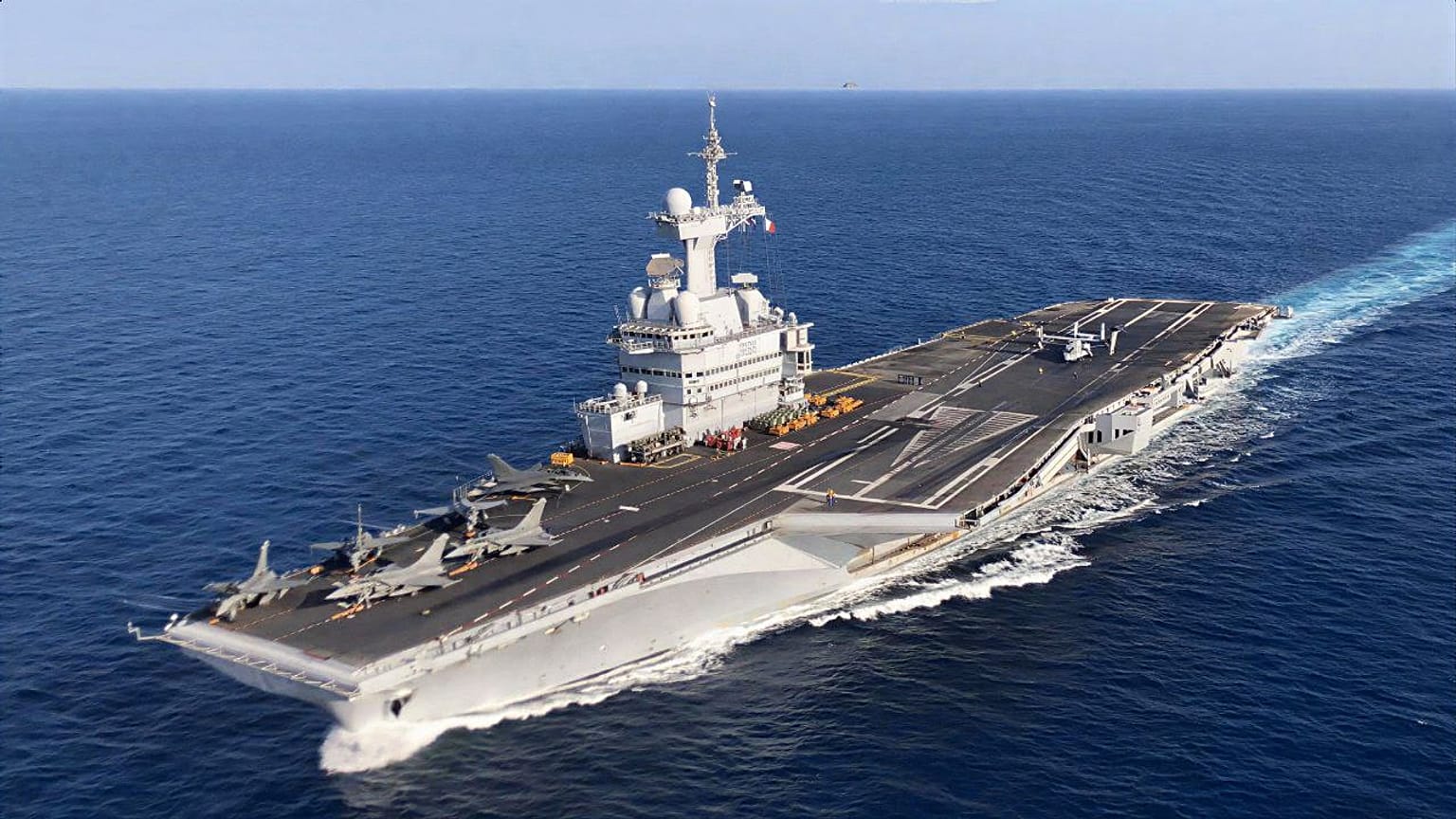
Since 2001, the Charles de Gaulle has served as the crown jewel of French military might. It is the only nuclear-powered aircraft carrier outside the US fleet and has just been deployed in the eastern Mediterranean following the outbreak of the Iran war.

France deployed its nuclear-powered aircraft carrier Charles de Gaulle to the eastern Mediterranean, redirecting the vessel from North Atlantic operations as the Iran war escalates, threatening to spill over outside of the Middle East.

French President Emmanuel Macron announced the deployment during a televised address Tuesday evening. "I have ordered the Charles de Gaulle aircraft carrier, its air assets, and its escort of frigates to set course for the Mediterranean," he said.

The carrier group was pulled from Mission Lafayette 26 in the North Atlantic and Baltic Sea, where it had participated in NATO exercises. The vessel made a stopover in the Swedish port of Malmö last week before receiving new orders.

The Charles de Gaulle is expected to take approximately 10 days to reach the eastern Mediterranean.

Armament and strike capability


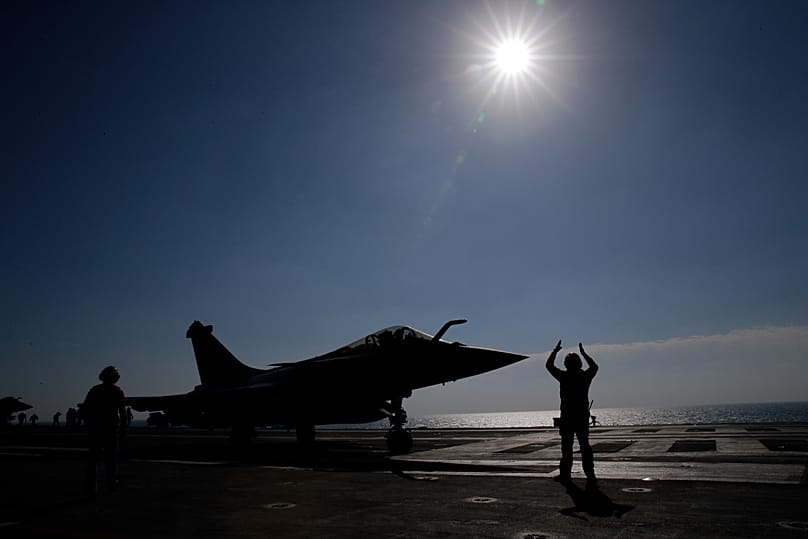
The vessel carries 20 Rafale fighter jets and two E-2C Hawkeye airborne early warning aircraft that will contribute to securing regional airspace, according to France 24.

The 42,500-tonne carrier measures 261 metres in length and is powered by two K15 nuclear reactors, the same type that powers France's Le Triomphant-class submarines.

This propulsion system provides virtually unlimited operational range, allowing the vessel to operate for extended periods without refuelling.

Rafale on the deck of the Charles de Gaulle, file image Copyright 2016 The Associated Press. All rights reserved.

The ship can accommodate approximately 40 aircraft, though it typically operates with between 20 and 30 depending on the mission. The current deployment includes the 20 Rafale M fighters and two Hawkeye aircraft.

The embarked Rafale M aircraft can carry SCALP air-to-ground missiles with ranges exceeding 500 kilometres, AM39 Exocet anti-ship missiles, and laser- or GPS-guided bombs. In air superiority configuration, the aircraft carry Meteor air-to-air missiles.

The carrier itself is equipped with Aster 15 surface-to-air missiles for point defence, 20mm Giat guns and electronic warfare systems. The vessel projects air power rather than engaging in direct surface combat.

History of operations in war theatres

The Charles de Gaulle's operational history includes missions during Operation Enduring Freedom, Libya operations in 2011, the campaign against Islamic State in Syria and Iraq between 2015 and 2019, and deployments in the Indian Ocean during Operation Agapanthus.

The carrier encountered difficulties during its early service years, including propulsion failures and radiological contamination incidents among crew members that required major overhauls.

In 2020, the vessel was temporarily disabled amid the spread of COVID-19 among its 1,760 crew during a Mediterranean mission.

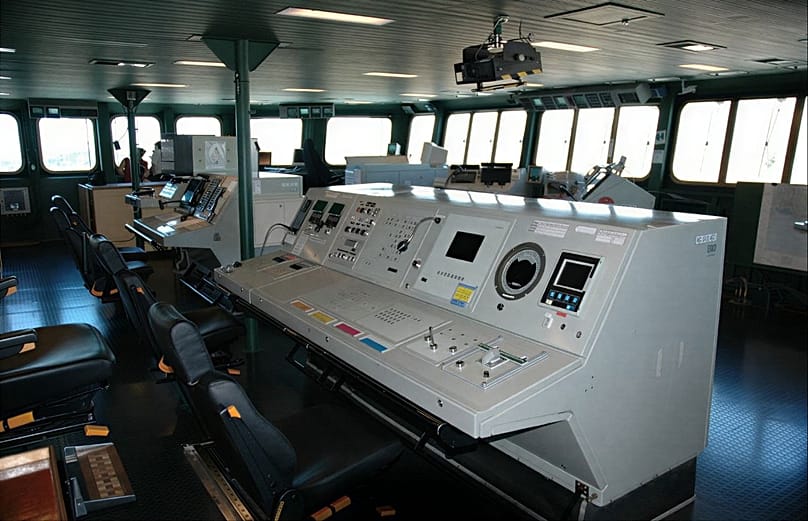
Picture of the Charles de Gaulle's command bridge CC BY-SA 3.0, https://commons.wikimedia.org/w/index.php?curid=38736

France operates only one aircraft carrier. When the vessel enters dry dock for extended maintenance periods every few years, France temporarily loses the naval projection capability that distinguishes it from other European navies.

The deployment follows Iran's statement that its forces effectively closed the Strait of Hormuz. Approximately 20% of global oil and liquefied natural gas passes through the waterway.

Macron also announced Tuesday that France was sending additional air defence units to Cyprus following Iranian drone strikes on the British Royal Air Force base at Akrotiri. The frigate Languedoc and additional air defence assets arrived off Cyprus on Tuesday, according to reports.


Drone attacks on British base in Cyprus spark concern, but no NATO or EU response

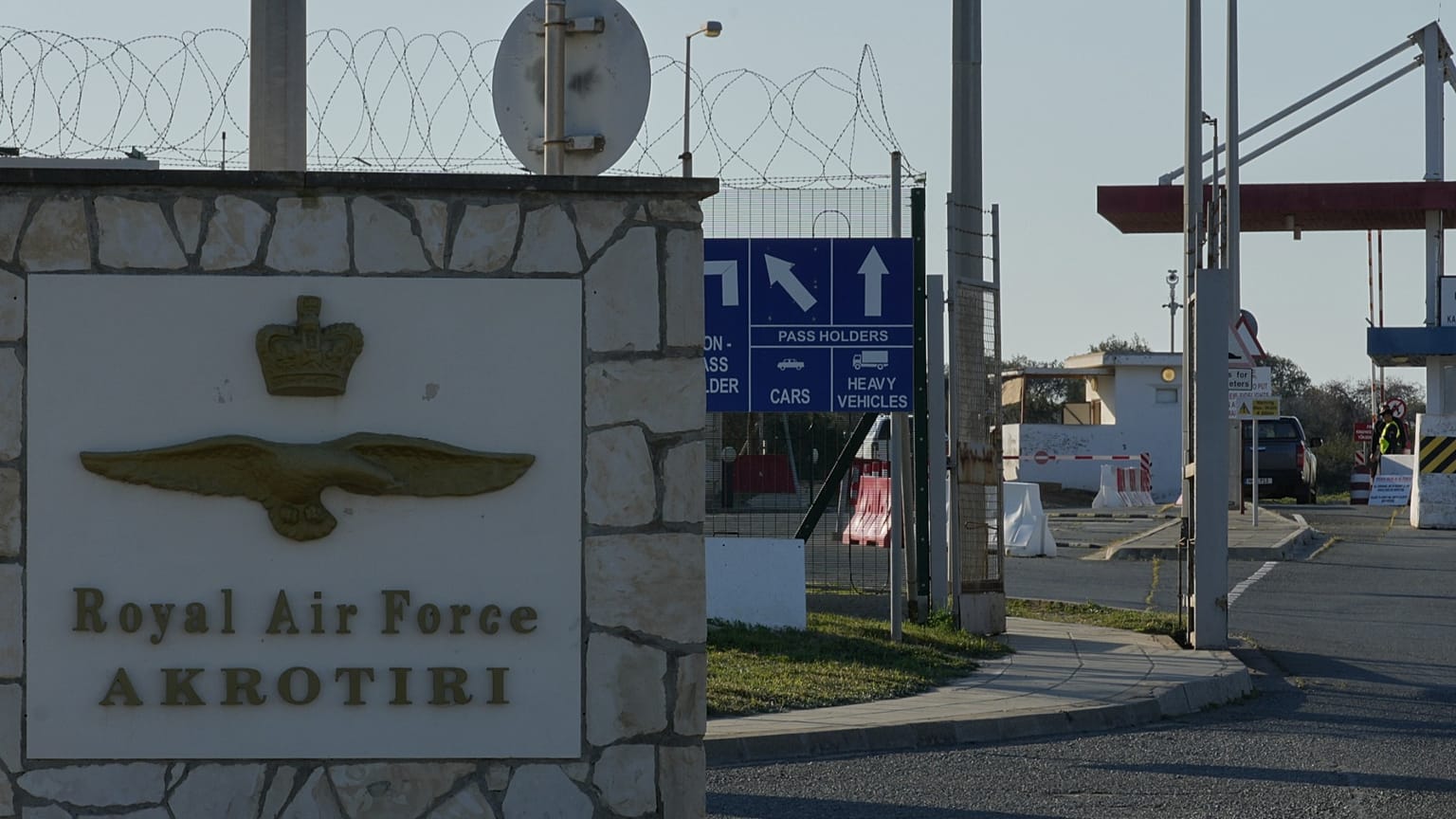
The main gate of Britain's RAF Akrotiri base on Cyprus after it was hit by a suspected drone strike, early morning of 2 March 2026.
Copyright AP Photo

By Alice Tidey
Published on 

Cyprus is one of four EU countries that are not NATO members – but the UK, which has sovereign bases on the island, is.

Drone activity targeting British military facilities in Cyprus has raised security concerns in recent days, but the incidents have so far not prompted formal consultations within either NATO or the European Union over collective defence measures.

Two drones targeting a British base in Akrotiri were intercepted on Monday after another attack on Sunday caused limited damage.

Britain is a member of NATO, but a source at the military alliance confirmed to Euronews on Tuesday that no dedicated discussion had been held among the 32 allies over the incident, which is so far considered to have been quite small.

NATO allies can trigger Article 4 to request consultations among all allies if they feel their territorial integrity, political independence or security is threatened. Poland is the most recent ally to have triggered the article following multiple airspace violations by Russia in September last year.

NATO chief Mark Rutte also stressed during a visit to North Macedonia on Tuesday that the military alliance is "not itself involved" in what's happening in the Middle East, but that it will "defend every inch of NATO territory" if needed.

"Let's be absolutely clear-eyed to what's happening here. Iran is close to getting its hands on a nuclear capability and on a ballistic missile capability," he said.

"I think we are all better off with him (Iranian Ayatollah Ali Khamenei, killed on Saturday by a strike) gone and with the nuclear and ballistic capability being beaten and degraded as it is as we speak."

Rutte reiterated that the operation against Iran was carried out by the US and Israel, and while some allies are providing support, this is being done on a bilateral basis.

Cyprus, one of only four EU member states that is not in NATO, has been receiving help from other member states, with Greece and France both deploying capabilities to help defend the island.

Athens has already sent four F-16 fighter jets and two frigates to the island, while a Cypriot official confirmed to Euronews that Paris is supplying anti-missile and anti-drone systems, as well as a frigate.

Cyprus President Nikos Christodoulides confirmed he is also in contact with German Chancellor Friedrich Merz and Italian Premier Giorgia Meloni.

But this assistance is being lent on a bilateral basis, with "no specific discussion" held so far about the bloc’s mutual defence clause, a European Commission spokesperson confirmed on Tuesday.

"It seems to be very clear the Republic of Cyprus was not the target," Paula Pinho told reporters. "Obviously, it causes anxiety in the people, that's why we also wanted to express our support, that we stand collectively with the member state in the face of any threat."

On the possible activation of Article 42.7 – the EU’s mutual defence clause – Pinho stressed that it "would be for the EU member state, which in this case is victim to a claimed armed attack, to exercise the legal and political assessment" before triggering it.


Greece, France and Germany send forces to Cyprus after Iran-made drone strikes

Fighter taking off from the British bases at Akrotiri, 2 March 2026
Copyright AP Photo/Petros Karadjias
By Nicoleta Drougka & Emma De Ruiter
Published on 

Both Greece and France have agreed to send frigates to Cyprus after a UK air base was targeted by Iranian-made drones on Monday. France will also send additional land-based, anti-drone and anti-missile systems to the country.

Cypriot officials say France will dispatch a warship to Cyprus to help bolster the country’s anti-drone defences after several Iranian-made drones were launched towards a British military base on the eastern Mediterranean island.

France will also send additional land-based, anti-drone and anti-missile systems to the country, officials confirmed Tuesday.

Germany also responded positively to a request to send a warship, according to three officials who spoke on condition of anonymity because they were not permitted to provide details publicly.

The equipment will arrive in Cyprus as soon as possible, they said.

Greece has already sent four F-16 fighter jets to Cyprus while two of its frigates are on their way.

Cyprus President Nikos Christodoulides confirmed he was in contact with German Chancellor Friedrich Merz and Italian Premier Giorgia Meloni in what he said was "immediate (Greek) response being followed by other European states".

"This proves in practice that Greece is paving the way for how the European Union should respond to such cases," Christodoulides said on Tuesday.

Christodoulides made the statement during a meeting between him and his Defence Minister Vassilis Palma and Greek Defence Minister Nikos Dendias and Greek Chief of Defence Staff General Dimitris Houpis in Cyprus.

The moves are part of the activation of the Greek-Cypriot Unified Defence Doctrine, a common strategic plan between Athens and Nicosia in the event of a threat.

Drones likely from Hezbollah

A drone struck the UK base, RAF Akrotiri, shortly after midnight on Monday and caused only minor material damage to an aircraft hangar.

Another two drones were intercepted by British warplanes on the same day after they were scrambled from the air base, officials said.

Cyprus' government said the drones were launched from Lebanon, likely by Hezbollah militants.

UK Prime Minister Keir Starmer said on Monday that British military bases in Cyprus will not be used by Washington for its operations in Iran, despite criticism from US President Donald Trump.

Starmer announced on Sunday that he had agreed to a US request to use British bases for a "specific and limited defensive purpose".

But in comments to parliament on Monday, he said this would not include bases on the Mediterranean island.

"The bases in Cyprus are not being used and not going to be used by the US ... because they're not suitable," he said.