Friday, March 06, 2026

The sea is higher than we thought putting millions more are at risk of extreme flooding

The coastline of Efate Island, Vanuatu is visible on July 19, 2025.
 AP Photo/Annika Hammerschlag, File

By Seth Borenstein and Annika Hammerschlag with AP
Published on 

A new study highlights a 'methodological blind spot' in the way sea level rise is measured.

Rising sea levels spurred by climate change may threaten tens of millions more people than scientists and government planners originally thought. A new study, released on 4 March, exposes mistaken research assumptions on how high coastal waters already are.

Researchers examined hundreds of scientific studies and hazard assessments, calculating that about 90 per cent of them underestimated baseline coastal water heights by an average of 30 centimetres, according to the study in the journal Nature. It's a far more frequent problem in the Global South, the Pacific and Southeast Asia, and less so in Europe and along Atlantic coasts.

The cause is a mismatch between the way sea and land altitudes are measured, says study co-author Philip Minderhoud, a hydrogeology professor at Wageningen University & Research in the Netherlands.

'Methodological blind spot' in measuring coastal water levels

Minderhoud says this is a “methodological blind spot”. Each way measures their own areas properly, he says. But where sea meets land, there's a lot of factors that often don't get accounted for when satellites and land-based models are used.

Studies that calculate sea level rise impact usually “do not look at the actual measured sea level so they used this zero-metre” figure as a starting point, says lead author Katharina Seeger of the University of Padua in Italy. In some places in the Indo-Pacific, it's close to one metre, Minderhoud says.

One simple way to understand it is that many studies assume sea levels without waves or currents, when the reality at the water's edge is of oceans constantly roiled by wind, tides, currents, changing temperatures and things like El Niño, explain Minderhoud and Seeger.

Adjusting to a more accurate coastal height baseline means that if seas rise by a little more than 1 metre – as some studies suggest will happen by the end of the century – waters could inundate up to 37 per cent more land and threaten 77 million to 132 million more people, the study says.

That would trigger problems in planning and paying for the impacts of a warming world.

Sea level rise puts people at risk

"You have a lot of people here for whom the risk of extreme flooding is much higher than people thought,'' says Anders Levermann, a climate scientist at the Potsdam Institute for Climate Impacts Research in Germany, who wasn't part of the study. And Southeast Asia, where the study finds the biggest discrepancy, has the most people already threatened by sea level rise, he says.

Minderhoud points to island nations in that region as an area where the reality of discrepancy hits home.

For 17-year-old climate activist Vepaiamele Trief, the projections aren't abstract. On her island home in the South Pacific archipelago of Vanuatu, the shoreline has visibly retreated within her short lifetime, with beaches eroded, coastal trees uprooted and some homes now barely one metre from the sea at high tide.

On her grandmother’s island of Ambae, a coastal road from the airport to her village has been rerouted inland because of encroaching water. Graves have been submerged and entire ways of life feel under threat.

“These studies, they aren’t just words on a paper. They aren’t just numbers. They’re people’s actual livelihoods,” she says. “Put yourself in the shoes of our coastal communities – their lives are going to be completely overturned because of sea level rise and climate change.”

Paying attention to the starting point

This new study is pretty much about what is the truth on the ground.

Calculations that may be correct for the seas overall or for the land aren't quite right at that key intersection point of water and land, Seeger and Minderhoud says. It's especially true in the Pacific.

“To understand how much higher a piece of land is than the water, you need to know the land elevation and the water elevation. And what this paper says the vast majority of studies have done is to just assume that zero in your land elevation dataset is the level of the water. When in fact, it’s not,” says sea level rise expert Ben Strauss, CEO of Climate Central. His 2019 study was one of the few the new paper says got it right.

“It’s just the baseline that you start from that people are getting wrong," says Strauss, who wasn't part of the research.

Maybe not so bad, some scientists say

Other outside scientists say that Minderhoud and Seeger may be making too much of the problem

“I think they’re exaggerating the implications for impact studies a bit – the problem is actually well understood, albeit addressed in a way that could probably be improved,” says Gonéri Le Cozannet, a scientist at the French geological survey. Most local planners know their coastal issues and plan accordingly, Rutgers University sea level expert Robert Kopp says.

That's true in Vietnam in the high-impact area, Minderhoud says. They have an accurate sense of elevation, he says.

The findings come as a new UNESCO report warns of major gaps in understanding how much carbon the ocean absorbs. That report says that models differ by 10 per cent to 20 per cent in estimating the size of that carbon sink, raising questions about the accuracy of global climate projections that rely on them.

Together, the studies suggest governments may be planning for coastal and climate risks with an incomplete picture of how the ocean is changing.

“When the ocean comes closer, it takes away more than just the land we used to enjoy,” says Thompson Natuoivi, a climate advocate for Save the Children Vanuatu.

“Sea level rise is not just changing our coastline, it’s changing our lives. We are not talking about the future – we’re talking about the right now.”

SPACE/COSMOS


ESA’s Mars Orbiters Watch Solar Superstorm Hit The Red Planet


To study Mars’s atmosphere, ESA’s two Mars orbiters make use of a technique called ‘radio occultation’. CREDIT: European Space Agency

By 

What happens when a solar superstorm hits Mars? Thanks to the European Space Agency’s Mars orbiters, we now know: glitching spacecraft and a supercharged upper atmosphere.

In May 2024, Earth was hit by the biggest solar storm recorded in over 20 years. It sent our planet’s atmosphere into overdrive, triggering shimmering auroras that were seen as far south as Mexico.

This storm also hit Mars. Fortunately, ESA’s two Mars Orbiters – Mars Express and ExoMars Trace Gas Orbiter (TGO) – were in the right place at the right time, with a radiation monitor aboard TGO picking up a dose equivalent to 200 ‘normal’ days in just 64 hours.

A new study to be published in Nature Communications on Thursday 5 March reveals in greater depth how this intense, stormy activity affected the Red Planet.

“The impact was remarkable: Mars’s upper atmosphere was flooded by electrons,” says ESA Research Fellow Jacob Parrott, lead author of the study. “It was the biggest response to a solar storm we’ve ever seen at Mars.”

The superstorm caused a dramatic increase in electrons in two distinct layers of Mars’s atmosphere at altitudes of around 110 and 130 km, with numbers rising by 45% and a whopping 278%, respectively. This is the most electrons we’ve ever seen in this layer of martian atmosphere.

“The storm also caused computer errors for both orbiters – a typical peril of space weather, as the particles involved are so energetic and hard to predict,” adds Jacob. “Luckily, the spacecraft were designed with this in mind, and built with radiation-resistant components and specific systems for detecting and fixing these errors. They recovered fast.”

Pioneering a new technique

To investigate the superstorm’s impact on Mars, Jacob and colleagues used a technique currently being pioneered by ESA known as radio occultation.

First, Mars Express beamed a radio signal to TGO at the very moment it was disappearing over the martian horizon. As TGO vanished, the radio signal was bent (‘refracted’) by the various layers of Mars’s atmosphere before being picked up by the orbiter, allowing scientists to glean more about each layer. The researchers also used observations from NASA’s MAVEN mission to confirm the electron densities.

“This technique has actually been used for decades to explore the Solar System, but using signals beamed from a spacecraft to Earth,” says Colin Wilson, ESA project scientist for Mars Express and TGO, and co-author of the study. “It’s only in the past five years or so that we’ve started using it at Mars between two spacecraft, such as Mars Express and TGO, which usually use those radios to beam data between orbiters and rovers. It’s great to see it in action.”

ESA uses orbiter-to-orbiter radio occultation routinely at Earth, and plans to use it more regularly in future planetary missions.

Different worlds, different weather

The superstorm was experienced very differently at Earth and Mars, highlighting the differences between the two worlds.

At Earth, the response of the upper atmosphere was more muted, thanks to the shielding effect of Earth’s magnetic field. As well as deflecting a lot of solar storm particles away from Earth, the magnetic field also diverted some towards Earth’s poles, where they caused the sky to light up with auroras.

While their differences can make it tricky to compare planets directly, understanding how solar activity impacts the residents of the Solar System – in other words, space weather forecasting – is hugely important. At Earth, solar storms can be dangerous and damaging for astronauts and equipment up in space, and can disrupt our satellites and systems (power, radio, navigation) further down.

However, studying space weather is difficult as the Sun throws out radiation and material erratically, making targeted measurements largely opportunistic. “Fortunately, we were able to use this new technique with Mars Express and TGO just 10 minutes after a large solar flare hit Mars. Currently we’re only performing two observations per week at Mars, so the timing was extremely lucky,” adds Jacob.

Jacob and colleagues captured the aftermath of three solar events – all part of the same storm, but different in terms of what they throw out into space, and how they do it: one flare of radiation, one burst of high-energy particles, and an eruption of material known as a coronal mass ejection (CME).

Together, these events sent fast-moving, energetic, magnetised plasma and X-rays flooding towards Mars. When this barrage of material hit the planet’s upper atmosphere it collided with neutral atoms and stripped away their electrons, causing the region to fill up with electrons and charged particles.

“The results improve our understanding of Mars by revealing how solar storms deposit energy and particles into Mars’s atmosphere – important as we know the planet has lost both huge amounts of water and most of its atmosphere to space, most likely driven by the continual wind of particles streaming out from the Sun,” says Colin.

“But there’s another side to it: the structure and contents of a planet’s atmosphere influence how radio signals travel through space. If Mars’s upper atmosphere is packed full of electrons, this could block the signals we use to explore the planet’s surface via radar, making it a key consideration in our mission planning – and impacting our ability to investigate other worlds.”


Scientists Successfully Harvest Chickpeas From ‘Moon Dirt’


The researchers chose the ‘Myles’ variety of chickpea for this study. Its compact size and resiliency support crop production in space-limited mission environments. 
CREDIT: University of Texas Institute for Geophysics


March 6, 2026 
By Eurasia Review


As the U.S. plans to return to the moon with the upcoming Artemis II mission, a question endures: What will future lunar explorers eat? According to new research from The University of Texas at Austin the answer might be chickpeas.

Scientists have successfully grown and harvested chickpeas using simulated “moon dirt,” the first instance of this crop produced in this medium. The research, which was conducted in collaboration with Texas A&M University, is described in a paper published in the journal Scientific Reports.

Sara Santos, the principal investigator of the project, said that the work is a giant leap in understanding what it will take to grow food on the lunar surface.

“The research is about understanding the viability of growing crops on the moon,” said Santos, who is a distinguished postdoctoral fellow at the University of Texas Institute for Geophysics (UTIG) at the Jackson School of Geosciences. “How do we transform this regolith into soil? What kinds of natural mechanisms can cause this conversion?”

Lunar regolith is the technical term for moon dirt. It lacks the microorganisms and organic material required for plants to live, and while it contains essential nutrients and minerals for plants to grow, it also contains heavy metals that could be toxic to plants.


For their study, the researchers used simulated moon dirt from Exolith Labs, a mix that models the composition of lunar samples brought back by Apollo astronauts.

To create ideal growing conditions in the moon dirt, the team added vermicompost, a byproduct of red wiggler earthworms that’s rich in essential plant nutrients and minerals and has a diverse microbiome. The earthworms create this product by consuming organic material like food scraps or cotton-based clothes and hygiene products that would be otherwise thrown away on missions.

The team then coated the chickpeas with the fungi arbuscular mycorrhizae before planting. The fungi and chickpeas work symbiotically, with the fungi taking up some essential nutrients needed for growth while reducing the uptake of heavy metals.

After that, Santos’ team planted the chickpeas in a mixture of moon dirt and vermicompost in varying proportions.

They found that mixtures of up to 75% moon dirt successfully produced harvestable chickpeas. However, any higher percentage of moon dirt caused issues, with the plants showing signs of stress and early death. The stressed plants survived longer than chickpeas that weren’t inoculated with fungi, showing the importance of their importance to plant health. What’s more, the researchers found that the fungi were able to colonize and survive in the simulant, suggesting they would only need to be introduced one time in a real-world growing setting.

Although harvesting the chickpeas is a big milestone, how the legumes taste and safety is still an open question. The researchers still need to determine the nutritional content of the chickpea and ensure toxic metals were not absorbed during the growing process.

“We want to understand their feasibility as a food source,” said Jessica Atkin, the first author on the paper and a doctoral candidate in the Department of Soil and Crop Sciences at Texas A&M University. “How healthy are they? Do they have the nutrients astronauts need? If they aren’t safe to eat, how many generations until they are?”

While this research was initially funded by Santos and Atkin, the project has now been funded by a NASA FINESST grant.


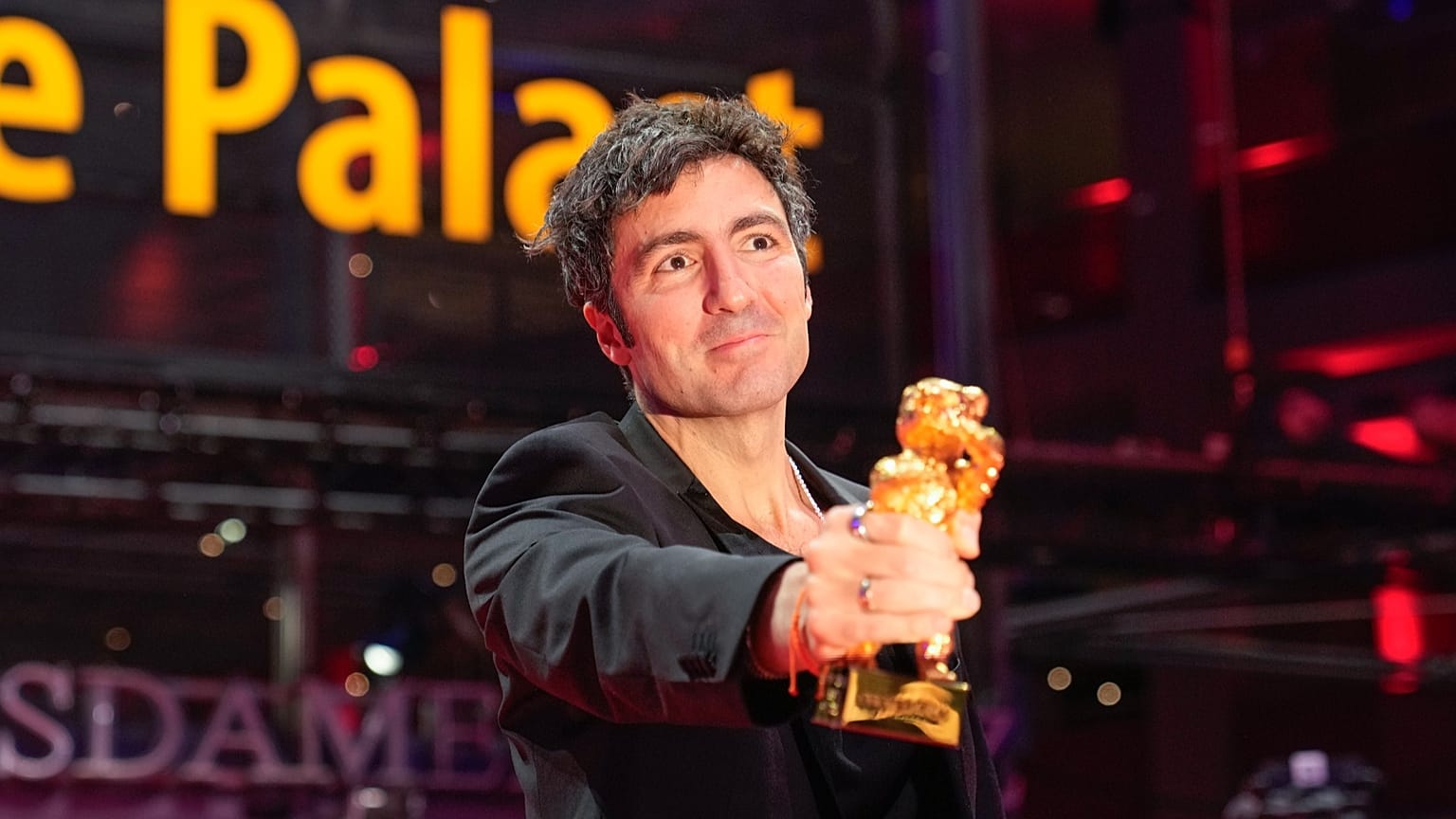
Berlinale crisis: Golden Bear winner İlker Çatak warns of possible German government ‘censorship'

Berlinale crisis: 2026 Golden Bear winner Ilker Catak warns about German government ‘censorship’
Copyright AP Photo


By David Mouriquand
Published on 

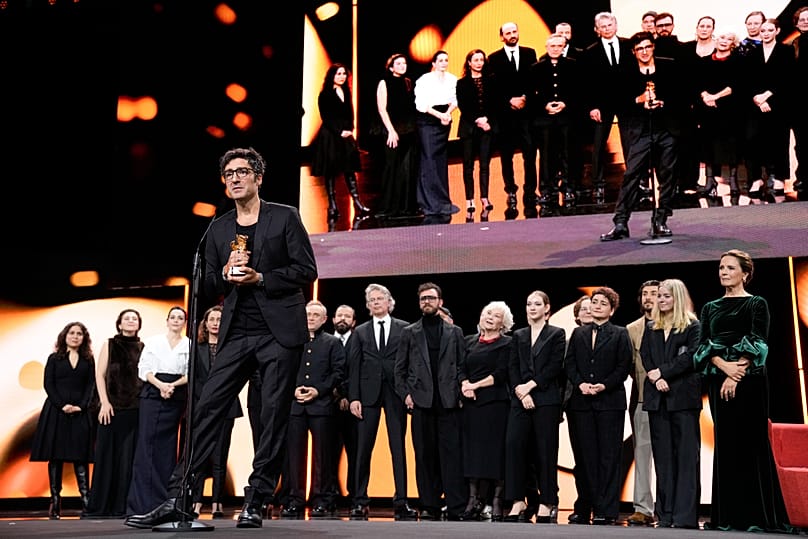
İlker Çatak, who won this year's top prize at the Berlin Film Festival for this political drama 'Yellow Letters', warns of the consequences of adopting a potential code of conduct for the Berlinale. "We would have to call it what it is: censorship.”

German-Turkish director İlker Çatak, whose film Yellow Letters recently won the Berlin Film Festival’s Golden Bear, has commented on the recommendations made by Germany’s culture ministry after Berlinale boss Tricia Tuttle was threatened with dismissal.

Tuttle’s leadership came under threat after this year’s edition of the festival was overshadowed at first by criticism of silence regarding political debate and then by several filmmakers using their acceptance speeches during the awards ceremony to make pro-Palestinian statements and speak out about Gaza.

There has been a groundswell of support for Tuttle – not only from more than 3,000 film professionals, who signed an open letter stating that the Berlinale’s strength “lies in its ability to hold divergent perspectives and to give visibility to a plurality of voices”.

Backing for Tuttle also came from 32 global film festival directors, including Cannes head Thierry Frémaux, who signed an open letter saying “we need to maintain spaces where discomfort is embraced, where debates can be expansive, where new ideas can propagate and where unexpected – and sometimes conflicting – perspectives are made visible.”

This week, the Berlinale confirmed that Tuttle would remain as director following a supervisory board meeting. It concluded with the festival’s organising committee, KBB, issuing a series of recommendations, including the creation of a code of conduct; training for staff dealing with politically sensitive content; as well as the launch of an independent advisory forum representing diverse social groups, including Jewish voices.

German tabloid paper Bild, which is openly pro-Israel, falsely claimed that a condition of Tuttle’s continued employment would require the Berlinale and its guests to sign off on a new “code of conduct”.

The Berlinale said the supervisory board gave “recommendations rather than conditions related to Tuttle’s continued employment."

İlker Çatak has reacted to the potential adoption of such recommendations.

Director Ilker Catak addresses the audience after accepting the Golden Bear for best film for 'Yellow Letters' - 21 Feb 2026 AP Photo

“An international A‑list festival like the Berlinale, a festival dedicated to the liberal arts, freedom of expression, and cinema in all its diverse voices, must never be subjected to “recommendations” or any form of external directive,” the filmmaker said in a statement for Variety.

“Beyond the inviolability of human rights and, in this case, the German Constitution, nothing may dictate how the festival leadership curates its program,” he added. “Filmmakers and guests must also be free to express everything they wish within this framework. Anything else would constitute blatant state interference in the autonomous exercise of art. We would have to call it what it is: censorship.”

Çatak had previously stated with regards to the potential firing of Tuttle: “Do they even realize that all of us - and I certainly include myself in that - I would never submit another film to the Berlinale”.

Tuttle has three years left on her five-year contract as director of the Berlinale, and all eyes are now on the festival and the German government, which during the closing ceremony was accused by Palestinian director Abdallah Al-Khatib of “being partners in the genocide in Gaza by Israel.” A reference in part to Germany maintaining a staunchly pro-Israel stance, rooted in the weight of historical guilt

Çatak’s timely Berlinale winner Yellow Letters is a political drama starring Özgü Namal and Tansu Biçer as a couple of Turkish artists whose marriage is threatened when they are targeted by the state and lose their jobs and home. It wowed audiences at this year’s Berlinale, with praise focusing on the performances and the way it comments on political persecution in Turkey.

LIBERTARIAN REVISIONIST HISTORY

Rothbard And The American Revolution – OpEd

Murray Rothbard in the mid-1950s. Photo Credit: The Ludwig von Mises Institute

March 6, 2026
By Joseph Solis-Mullen

Americans are taught that the Constitution completed the Revolution. The Articles of Confederation were weak, disorder reigned, Shays’s Rebellion terrified the countryside, and sober statesmen in Philadelphia heroically designed a “more perfect Union,” as the story goes. The Constitution thus appears as the Revolution’s crowning achievement.

But, as Rothbard showed, the Constitution was not the fulfillment of 1776, but rather its undoing.

After all, had the American states not just fought a war to reject centralized control by Parliament in London? Why, scarcely four years after Yorktown, were many of the same revolutionary leaders advocating a new consolidated national authority—one equipped with taxing power, a standing army, supremacy over state laws, and an independent judiciary insulated from direct democratic control?

Indeed, Murray Rothbard’s fifth volume of Conceived in Liberty invites us to reconsider the founding moment not as triumph, but as counter-revolution. And modern revisionist scholarship—from Charles Beard to Michael Klarman—suggests that this interpretation deserves more attention than it typically receives.

The Articles: Chaos or Liberty?


The conventional narrative insists that the Articles of Confederation were a failure. Congress could not tax. It could not regulate commerce effectively. It struggled to service war debts. Shays’s Rebellion seemed to expose fatal weakness, et cetera.

But weakness to whom?

Under the Articles, political authority was radically decentralized. Congress lacked independent revenue and depended upon the states. There was no executive, no national judiciary, no standing army in peacetime. Western territories were promised eventual self-government. From the standpoint of the revolutionary suspicion of centralized power, this arrangement was not an embarrassment—it was the logical extension of 1776.

The Revolution had been fought, after all, against a distant legislature claiming plenary authority over colonial affairs. Parliament taxed without representation. It imposed navigation laws and commercial restrictions. It stationed troops in peacetime. The colonists’ grievance was not merely taxation but consolidation—power drawn away from local institutions into an unaccountable center.

The Articles embodied the opposite principle: sovereignty lodged in the states, with Congress acting as their agent. Yet, by the mid-1780s, a coalition of nationalists argued that this decentralization had gone too far.

Shays’ Rebellion and Elite Fear

Much of the urgency for constitutional reform stemmed from Shays’s Rebellion in Massachusetts (1786–87). The textbook version describes desperate debtor-farmers rebelling against lawful authority. But as Leonard Richards demonstrated in Shays’s Rebellion: The American Revolution’s Final Battle, the uprising was less a revolt of insolvent peasants than a tax revolt against aggressive debt enforcement and heavy state taxation designed to service war bonds.

Those bonds had often been purchased at steep discounts by speculators—many of them eastern merchants and financiers—who now demanded repayment at face value. The tax burden fell disproportionately on western farmers. When courts began seizing property for unpaid taxes, rebels closed them.

To nationalists, this was not populist protest but democratic excess. For men like George Washington and James Madison, Shays’s Rebellion confirmed their fear that local majorities could threaten property rights and creditor interests.

Here Rothbard’s interpretation converges with Charles Beard’s earlier thesis in An Economic Interpretation of the Constitution of the United States. Beard argued that the Constitution reflected the interests of bondholders, commercial elites, and national creditors who desired a stronger central government to secure public debts and stabilize commerce. Though Beard’s determinism has been criticized, few deny that financial concerns loomed large in Philadelphia.

Michael Klarman’s The Framers’ Coup reinforces this picture. Klarman demonstrates that the Constitution was not the inevitable outcome of national consensus but the product of strategic maneuvering by political elites who capitalized on economic anxiety and fear of disorder. The Philadelphia Convention exceeded its mandate to amend the Articles and instead drafted an entirely new frame of government. Ratification rules were altered to bypass recalcitrant state legislatures in favor of specially-elected conventions.


If the Revolution was a popular uprising against consolidated imperial authority, the Constitution was most definitely an engineered response to popular unrest at home.

From Confederation to Consolidation

The shift was profound. Under the Constitution, Congress received independent taxing power. Federal law became “supreme.” A national judiciary could invalidate state legislation. The executive branch gained energy and permanence. Standing armies were constitutionally permissible. Interstate commerce fell under federal authority.

The logic of 1776 had been inverted. No longer was power presumed to rest with local institutions unless explicitly delegated; instead, the new government possessed enumerated powers whose interpretation would inevitably expand. The Supremacy Clause and the Necessary and Proper Clause quickly became such instruments of consolidation.

Nationalists defended these changes as essential to protect liberty. But liberty for whom?

For public creditors and commercial interests, national consolidation promised stability, uniformity, and reliable debt servicing. For slaveholding states, the Constitution protected the institution through clauses safeguarding the slave trade (for twenty years), fugitive slaves, and the three-fifths compromise. Sectional and economic interests aligned behind centralization.

The Constitution did not merely strengthen the union; it fundamentally altered the balance of sovereignty.

Betrayal or Transformation?


To call the Constitution a “betrayal” may sound excessive. After all, the Bill of Rights soon followed, and many Antifederalists ultimately acquiesced. But consider the revolutionary premise: that distant centralized power is dangerous; that standing armies threaten liberty; that taxation requires strict consent; that local self-government is the bulwark of freedom. These were not peripheral complaints, they were the Revolution.

Yet, within a decade of independence, leading revolutionaries endorsed a consolidated national government capable of exercising precisely those powers previously denounced in Parliament. The target had changed; the structure increasingly resembled what had been rejected.

The irony is striking. The same generation that resisted London’s claim of supremacy over colonial legislatures created a federal government with supremacy over the states.
The Counter-Revolution Thesis

None of this requires romanticizing the Articles or denying their weaknesses. Nor does it entail rejecting the Constitution outright. But it does require abandoning the myth of inevitability and the assumption that 1787 simply perfected 1776.

The American Revolution contained competing impulses: radical decentralization and elite consolidation. In Philadelphia, the latter prevailed.

If the Revolution was, in part, a revolt against centralized imperial power, then the Constitution represented not its fulfillment but its redirection. The question that remains is not whether the Constitution established some order (it did); the question is whether, in doing so, it compromised the very anti-centralist principles that animated the break with Britain.

For those willing to revisit the founding without piety, the answer may be uncomfortable.

But history rarely flatters the victors of counter-revolutions.


This article was also published at the Mises Institute

Joseph Solis-Mullen

A graduate of Spring Arbor University and the University of Illinois, Joseph Solis-Mullen is a political scientist and graduate student in the economics department at the University of Missouri. A writer and blogger, his work can be found at the Ludwig Von Mises Institute, Eurasia Review, Libertarian Institute, and Sage Advance. You can contact him through his website http://www.jsmwritings.com or find him on Twitter.


SEE 


Lysander Spooner at Boston in 1870 and 1882, respectively. They were ... of the United States," or any one of them, voluntarily supports the. Constitution.


... the American constitution because it justified slavery and otherwise violated individual rights ... I (1867). Lysander Spooner (author). Although this is numbered ...


† This article has been transcribed from Lysander Spooner's handwritten version, on file with the American Antiquarian Society in Worcester, Massachusetts.

... Spooner and the American Letter Mail Co. ... of an innocent one,"27 Spooner had no difficulty in proving that slavery was not mentioned in the Constitution.

This facsimile PDF is published by Liberty Fund, Inc., a non-profit educational foundation established to encourage study of the ideal of a society of free and ...


FOR A SIMILAR ARGUMENT ABOUT THE CANADIAN CONSTITUTION SEE


LA REVUE GAUCHE - Left Comment: 1867 Speech of Louis-Joseph Papineau at the Institut canadien


LA REVUE GAUCHE - Left Comment: I Am Canadien