Friday, March 06, 2026


Is Greenland’s health system as bad as Donald Trump says it is?
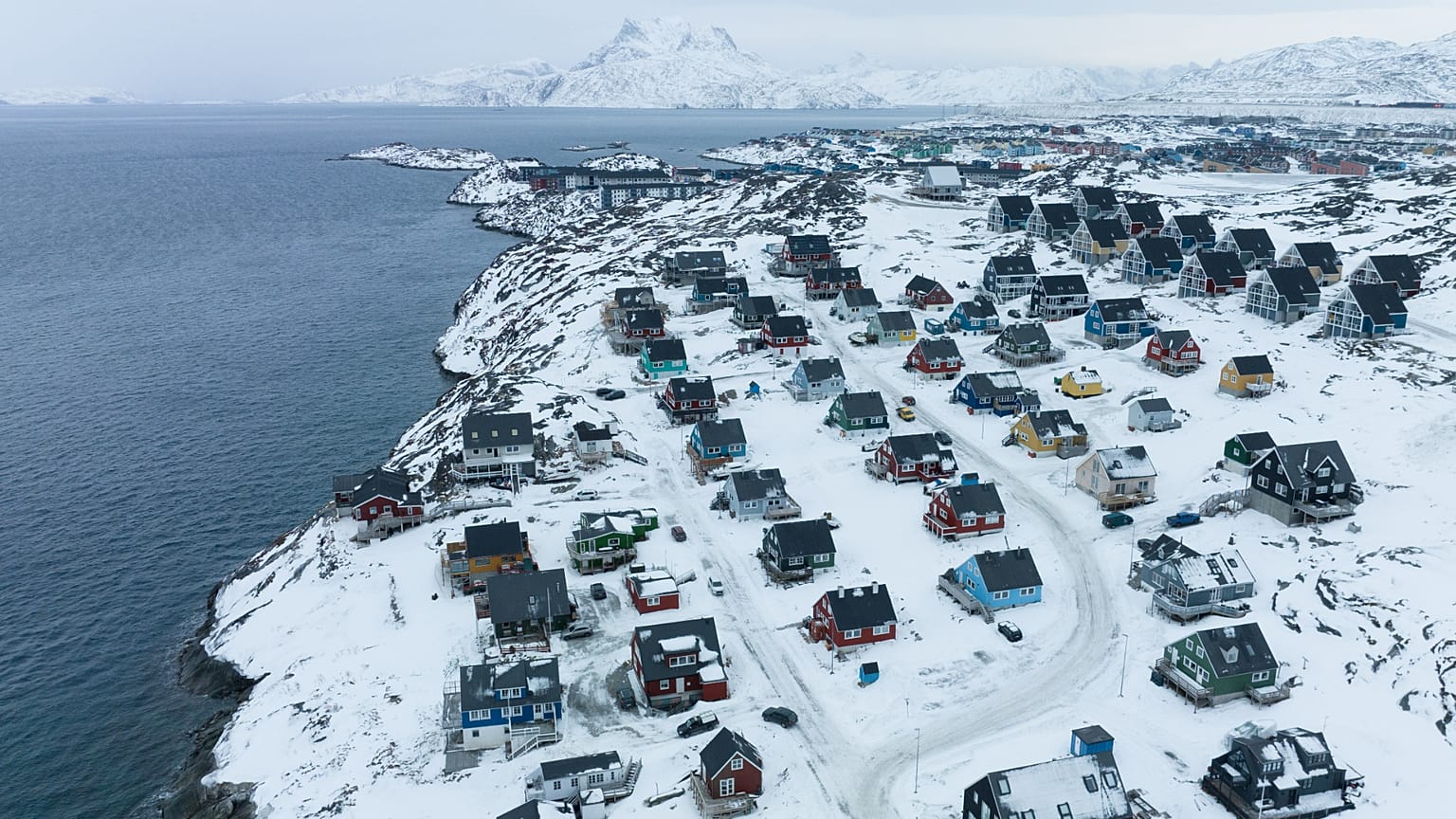
Houses are seen near the coast of a sea inlet of Nuuk, Greenland, on Saturday, Jan. 24, 2026.
Copyright Copyright 2026 The Associated Press. All rights reserved


By Marta Iraola Iribarren
Published on 


Greenland’s government has reiterated the need for foreign healthcare staff and the strengthening of its health system following a US statement alleging patients are not properly treated in the country.

United States President Donald Trump wants to send a hospital ship to Greenland “to take care of the many people who are sick and not being taken care of there,” he wrote on Truth Social on 22 February.

Greenland’s Prime Minister Jens-Frederik Nielsen rejected the offer, citing that the health system in the country is free for everyone, something the United States cannot offer, he said.

But Trump’s claims don’t appear to come out of thin air. Greenland has long struggled to recruit and retain its healthcare staff. The government aims to tackle this through measures such as easing residence permits for professionals.

Anna Wangenheim, Greenland’s Minister of Health and Persons with Disabilities, responded on Facebook that they are working to strengthen their healthcare system, and there is a growing political will to recruit more healthcare professionals from abroad.

Wangenheim added that Greenland will not turn any help away, “not even from the United States”. Healthcare professionals who wish to work in the country, provided they respect the patients, the language, and the culture, are welcome.

As of January 1, 2026, Greenland’s population was counted at more than 56,000, with people dispersed across vast distances. It is the world's least densely populated territory. Around 20,000 live in the capital, Nuuk, with the remainder spread across remote towns and settlements.

Healthcare burden

In 2023, Greenland’s burden of disease measured by Disability-Adjusted Life Years (DALYs) per 100,000 people stood at 38,715. One DALY equals one lost year of healthy life.

The equivalent figure for Denmark is 30.931 and the European average stood at 36,863.

It is estimated that approximately 1.5 percent of the Greenland population was living with cancer in 2023, 18.8 percent with a mental health disorder, both higher than the EU average.

Life expectancy also lags behind Europe. A newborn boy in Greenland can expect to live for 69.3 years, and a newborn girl for 73.9 years, which is far lower compared with the European average of 81.7 years.

How is the health system organised?

The health sector operates across 70 locations. There are approximately 120 medical positions, but around 60 are permanent staff.

Of the 300 nurse positions, 200 are permanent, according to Trap Greenland, a digital encyclopaedia of the country written by local researchers.

The system is divided into five regions, each served by a regional hospital. Queen Ingrid’s Hospital in Nuuk is both a regional hospital for Region Sermersooq and the national hospital.

“Outside Nuuk, the backbone of the system is general practice,” Henrik Hansen, medical advisor at Greenland’s Department of Health and Persons with Disabilities, told Euronews Health.

Specialists from Denmark periodically travel to Greenland to perform advanced procedures, such as eye surgery. Most other surgical procedures, internal medicine, and psychiatry are based at the hospital in Nuuk.

Healthcare has been under Greenlandic jurisdiction since 1992. However, some services are still not available in the territory.

Challenges in delivering healthcare

Greenland’s healthcare system manages the most basic medical challenges. More advanced interventions, highly specialised treatments, and complex care take place in neighbouring Denmark.

Hansen explained that cancer patients are offered to go to Denmark for advanced treatment such as radiotherapy, as Greenland is not equipped to handle radioactive substances.

Invasive cardiologic interventions like angioplasty, stenting for blocked arteries, or valve replacement, are also not available in the region for patients with cardiovascular diseases. Nor are hemodialysis or kidney transplants for people with renal diseases.

In its 2025 annual report, Greenland’s Health Council noted that there is an ongoing desire for as much healthcare treatment as possible to take place close to the patient’s home. Only cases that cannot be handled locally should be managed at Queen Ingrid’s Hospital, and only those beyond its capacity should be referred to Denmark.

However, the Council noted, the more specialised the treatment is, the more challenging it becomes to provide it locally – not only because of staffing, but also because of infrastructure and regulatory requirements involved.

The role of telemedicine

Geography remains one of Greenland’s greatest obstacles. It can take days or even weeks to travel from some settlements to a town with a doctor and healthcare facilities, and weather conditions often cause delays.

“Telemedicine has, to some extent, changed the need for personal contact. For example, skin diseases are now diagnosed with telemedical assistance from Denmark,” Hansen added.

The Greenlandic Health Service launched the app Puisa in 2023 to facilitate secure video consultations between patients at home and healthcare professionals, aiming to reach the most remote areas of the country.

€400 million in EU funding approved to help Greece achieve net zero emissions

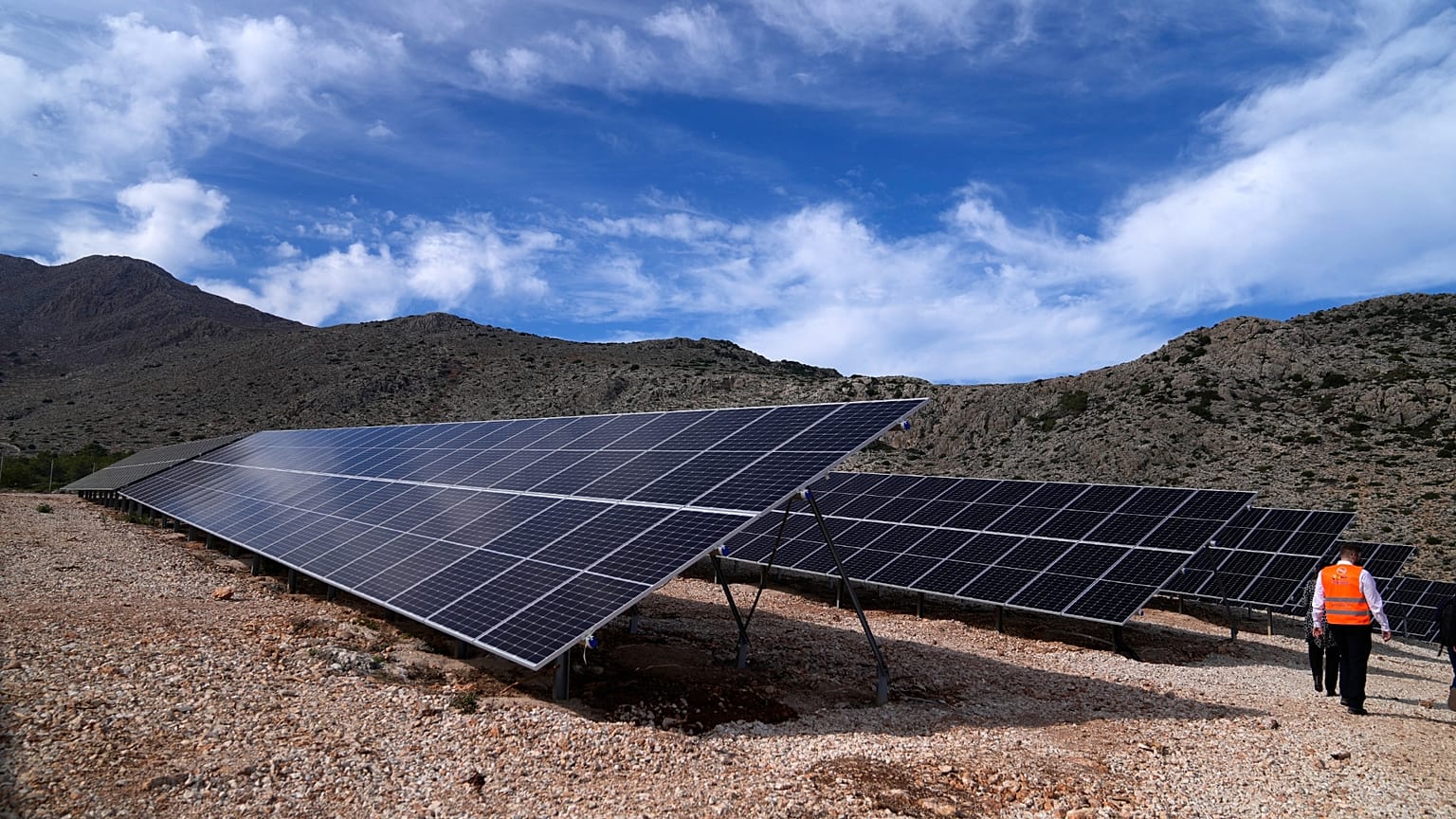
File photo - Photovoltaics in Amorgos
Copyright AP Photo

By Ioannis Karagiorgas
Published on 

The funding will support strategic investments that increase clean technology capacity.

The European Commission has approved €400 million in state aid for Greece to invest in clean tech

In line with the objectives of the Clean Sky Agreement, this initiative is expected to accelerate the transition to a net zero economy. The approval was given on the basis of the Clean Industrial Deal State Aid Framework (CISAF), which was adopted by the Commission on 25 June 2025.

How will Greece use the €400 million funding?

The funding will support strategic investments in the clean technologies sector.

The scheme aims to provide financial support for investments that create or expand production capacity for the manufacture of zero-emission technologies, including the use of secondary raw materials. It also covers key specialised key components listed in Annex II of the CISAF, as well as the production of new or recovered critical raw materials necessary for the manufacture of finished products or their individual key components.

The support will be provided in the form of direct grants and fiscal incentives. The measure applies to enterprises throughout the Greek territory and aid may be granted until 31 December 2030.

The Commission found that the Greek scheme fulfils the conditions of the CISAF. In particular, it was found to create substantial incentives for the production of clean technologies, their basic components and the necessary critical raw materials.

The scheme will provide Greece with additional production capacity for clean technologies. The Greek State can allocate €400 million to support key investments in the sector, using a number of different measures.
 Τερέσα Ριμπέρα 
Executive Vice President responsible for a clean, fair and competitive transition

It also concluded that the measure is necessary, appropriate and proportionate to accelerate the transition to a zero-emission economy and to support economic activities central to the implementation of the Clean Industrial Deal. The decision is in line with Article 107(3)(c) of the Treaty on the Functioning of the European Union and the relevant provisions of the CISAF.

On the basis of the above, the Commission has approved the Greek measure under the EU State aid rules.

"The scheme will provide Greece with additional production capacity for clean technologies," said Teresa Ribera, Executive Vice President in charge of a clean, fair and competitive transition. "The Greek State can make available €400 million to support key investments in the sector, using a number of different measures. This new production capacity will contribute to achieving the agreement's clean industry objectives while minimising potential distortions of competition."

What is the Clean Industrial Deal State Aid Framework?

On 25 June 2025, the European Commission adopted the CISAF to promote support measures in sectors crucial to the transition to a net zero economy, as part of the Clean Industrial Deal.

The CISAF allows Member States to implement, until 31 December 2030, different categories of support to accelerate the green transition, such as:

  • Measures for the development of renewable energy and low-carbon fuels (sections 4.1 and 4.2): Establishing support schemes for investment in renewable energy and storage, with simplified procedures, as well as specific arrangements to accelerate the development of low-carbon fuels.
  • Temporary electricity cost reduction measures for energy-intensive enterprises (section 4.5): Ensuring the transition to clean and affordable electricity by preventing the transfer of production activities to countries with lower environmental standards.
  • Measures for the decarbonisation of industry (section 5): Support for investments that reduce dependence on imported fossil fuels through electrification, energy efficiency improvements and the use of renewable or low-emission hydrogen.
  • Clean technology capacity building measures (section 6): Investment in strategic projects, in line with the Zero Emission Industry Regulation, such as production of batteries, photovoltaic panels, wind turbines, heat pumps, electrolytes and carbon capture, use and storage projects, as well as for key components and critical raw materials.
  • Investment risk mitigation measures (section 8): Support for private investment in clean energy, industrial carbonisation, clean technologies, energy infrastructure and circular economy projects.

More information on the CISAF is available on the Commission's official website. (source in Greek)


Middle East and North Africa 

MENA Region’s Rapid Energy Transition – Analysis


Solar power in Algeria.

Photo Credit: Wikipedia Commons


March 6, 2026
By Dr. Majid Rafizadeh


The Middle East and North Africa region is going through a rapid energy transition and has made significant advances when it comes to renewables.

Several factors have driven this rapid shift, including economic diversification goals, climate pressures and domestic energy demand. In addition, there has been a decline in the cost of clean technologies and governments across the region have been investing heavily in renewables like solar and wind and related infrastructure.

The installed renewable energy capacity in MENA is already about 30 gigawatts. And projections show an expected increase to more than 130 GW by 2030.

Although this shows that the region’s renewable energy capacity is projected to expand more than fourfold by the end of the decade, the transformation is not uniform. While some MENA countries are emerging as global clean energy leaders, others remain constrained. This is due to issues such as inefficient infrastructure, political instability and financial limitations.

However, the trajectory of renewable adoption will significantly influence the future of the region when it comes to economic stability, environmental sustainability and long-term prosperity.


Several MENA countries have positioned themselves at the forefront of the energy transition. They have done so through several paths, including ambitious national strategies, large-scale projects and supportive regulatory frameworks.

Gulf states — particularly Saudi Arabia, the UAE and Qatar — have invested significantly to build some of the world’s largest solar installations. These countries are not only pursuing renewables and transitioning rapidly to reduce emissions, but also to diversify their economies.

Solar energy stands at the top of the region’s transition due to the fact it has exceptional solar irradiance. Regional solar capacity alone could exceed 180 GW by 2030, with more than 80 percent of growth concentrated in Saudi Arabia, the UAE and Egypt. The Gulf states’ long-term strategies — such as meeting a substantial share of their electricity demand through clean sources — shows how energy transition policies are integrated into their broader economic visions.

When it comes to North Africa, the likes of Morocco and Egypt have also made significant progress and emerged as pioneers. Morocco has invested heavily in both solar and wind infrastructure and it aims to produce more than half its electricity from renewables by 2030. Egypt is pursuing a similar target.

Some of the advantages these North African countries have are their natural resources, their proximity to European markets and their adoption of policy frameworks that are designed to attract foreign investment.

There are multiple reasons that some MENA states are accelerating their adoption of renewable energy at such a rapid pace. Firstly, energy demand is rising rapidly due to population growth, urbanization and industrial expansion. Renewable energy offers a cost-effective solution.

Secondly, economic diversification strategies — such as Saudi Arabia’s Vision 2030 — seek to reduce their dependence on oil by developing new industries, including green hydrogen and clean technology manufacturing.

Thirdly, falling costs due to technological advances have transformed the renewables sector and made the transition even more important and economically sound. For example, utility-scale solar projects in the region now achieve some of the lowest electricity prices globally. This makes them very competitive with fossil fuels.

Finally, climate vulnerability is increasing. Many MENA countries face extreme heat, water scarcity and desertification; this strengthens the case for the transition. Reduced emissions will help limit extreme heat and water stress.

However, in spite of this impressive progress, several countries in the region continue to lag. This is related to several underlying factors, such as bureaucratic inefficiencies, prolonged conflicts or unrest, weak governance and an inability to attract long-term investment.

Financing barriers are another major obstacle, as renewable projects demand substantial capital. This is why international climate finance and development banks should provide more support when it comes to funding.

These countries can implement comprehensive policy reforms and strategic investments to provide long-term certainty for investors. In addition, international and regional cooperation will play a vital role. For example, partnerships with European and Asian markets can facilitate technology transfer, financing and export opportunities for this transition. Also, the diversification strategies of these nations should incorporate renewables into their broader economic planning.

Geopolitically speaking, the shift toward renewables will likely reshape regional power dynamics. Countries that successfully diversify their energy systems could gain influence as exporters of clean energy and technology. But those countries that lag will risk economic deterioration, isolation and marginalization. They will also risk environmental crises in a region that is among the world’s most strategically significant.

In a nutshell, the region is undergoing a significant and rapid transition toward renewable energy, propelled by technological advances, economic necessity and environmental pressures. But progress remains uneven. Leading countries have demonstrated that decisive policies, investment and long-term planning can transform energy systems.

Ultimately, the region’s economic stability and environmental sustainability will come down to how decisively it embraces the clean energy transition. If the lagging countries join and accelerate the current momentum, MENA could emerge as a global leader in renewable energy.
This article was published at Arab News
Like what your read?

Please consider supporting Eurasia Review, and thanks for you consideration!


Dr. Majid Rafizadeh

Dr. Majid Rafizadeh is a Harvard-educated Iranian-American political scientist. X: @Dr_Rafizadeh


Ferries in Europe emit more CO2 than 6.6 million cars. Which ports are the worst culprits?

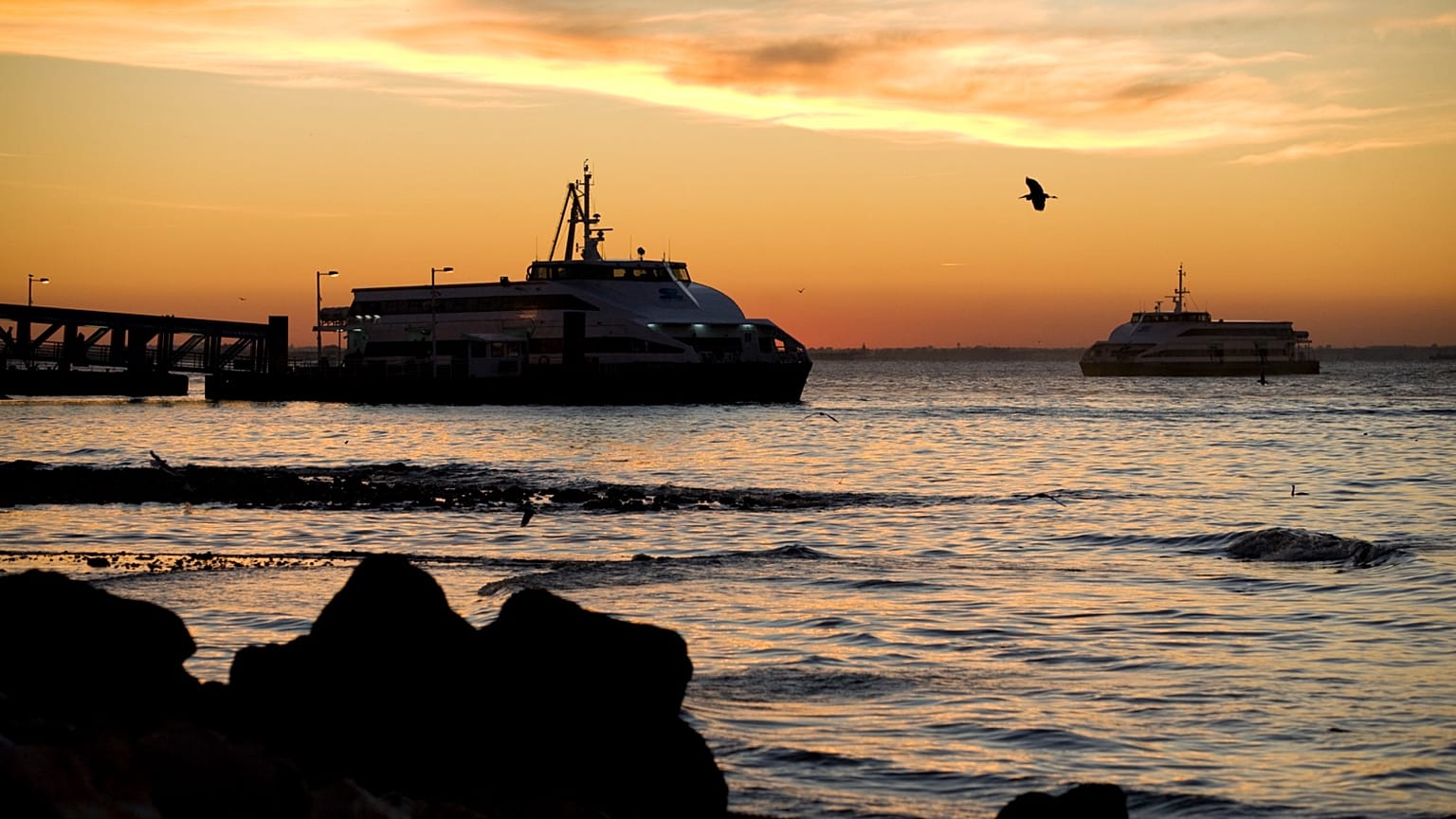
Ferries cross the Tagus river in Lisbon at sunrise, Monday, Oct. 18, 2010.
Copyright Copyright 2010 AP. All rights reserved.


By Liam Gilliver
Published on 

Ferries in certain European cities are responsible for more toxic air pollution than all the cars in those cities, a new study warns.

Fossil-fuelled ferries are choking European ports, as experts call for a rapid transition to electrification.

Ferries play a vital role in connecting Europe’s islands with the mainland, and are often seen as an environmentally friendly alternative to flying. However, many vessels are old and polluting – exposing locals to toxic air pollution.

A new study by NGO Transport & Environment (T&E) has found that in 2023 alone, 1,043 European ferries emitted 13.4 million tonnes of CO2. This is the equivalent of 6.6 million cars over a year.

In port cities such as Barcelona, Dublin and Naples, ferries are responsible for more toxic sulphur oxide pollution (SOx) than all of the cars in those cities, the study warns.

Sulphur oxides are air pollutants that can trigger respiratory problems, worsen asthma and contribute to acid rain and fine particulate pollution.

Which European ferry ports are the most polluting?

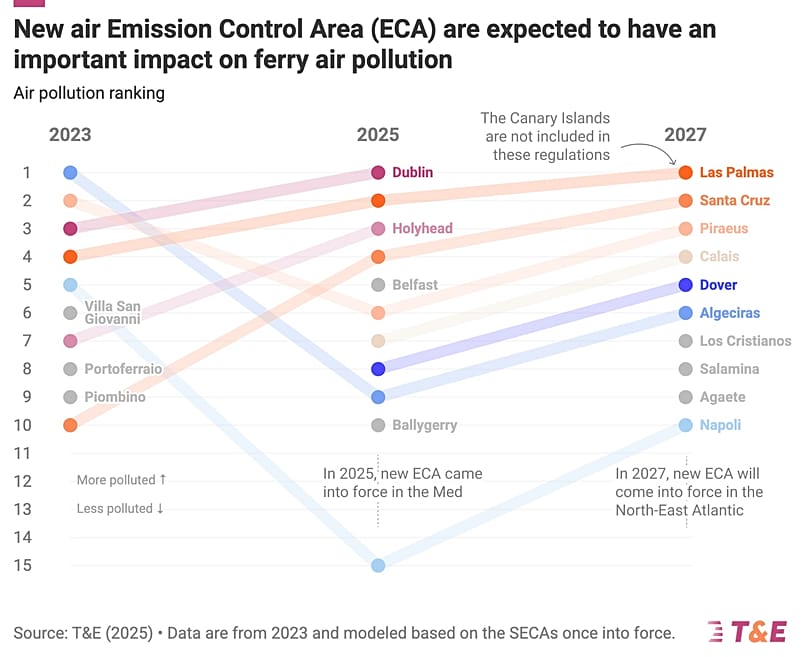
Dublin, Ireland, is currently the most polluted port city in Europe when it comes to ferry-related SOx exposure, followed by Las Palmas in Gran Canaria and Holyhead in Wales.

However, this is set to change next year, when new emission control areas will come into place and limit air pollution from maritime fuels in the North-East Atlantic. As the Canaries are not included in these regulations, Las Palmas is slated to emit the most air pollution in 2027, followed by Santa Cruz in Tenerife.

Graph showing the impact the Emission Control Area (ECA) are expected to have on European ferry ports.
Graph showing the impact the Emission Control Area (ECA) are expected to have on European ferry ports. T&E

Barcelona is the highest CO2-emitting ferry port in Europe, with ferries here also pumping out 1.8 times more SOx than all of the city’s cars – despite restrictions already in place in the Mediterranean.

As of 1 May 2025, the entire Mediterranean Sea is designated a Sulphur Emissions Control Area, requiring ships to reduce fuel sulphur content from 0.5 to 0.10 per cent. These measures were put in place to slash air pollution and enhance air quality in coastal areas.

Is electrification the solution?

T&E found that the average age of ferries in Europe is 26 years, highlighting the need for a “clean renewal”.

The report states that electrification and hybridisation could cut ferry CO2 emissions by up to 42 per cent, improve air quality in port cities and reduce operating costs. At least 60 per cent of Europe’s ferry fleet could run on battery power by 2035, with many routes already cheaper to operate as electric today.

In Sweden’s Stockholm, a hydrofoil electric ferry trial has been found to slash emissions by up to 94 per cent and cut travel times from 55 minutes to roughly 30 minutes.

The main barrier to scaling up electric ferries is charging infrastructure, but T&E argues that the challenge is “smaller than assumed”.

“57 per cent of ports would only need small chargers below 5MW to support electric ferry operations,” the study adds.

‘Connect communities, not pollute them’

“Ferries should connect communities, not pollute them,” says Felix Klann of T&E. “Too many ferries are burning polluting fossil fuels, pumping toxic air into Europe’s port cities.”

Klann argues that electrifying Europe’s ferries could “dramatically” cut emissions and bring a “breath of fresh air” to millions of people. He adds: “Electric ferries are already cheaper to run on many routes, and more will become cost-competitive in the coming years.

“With the average age of ferries in Europe at 26 years, now is the time for a clean renewal.”

Federal Offshore Oil And Gas Lease Sale In Alaska’s Cook Inlet Basin Draws No Bids


Cook Inlet near Clam Gulch is seen on Oct. 23, 2025.
 

(Photo by Yereth Rosen/Alaska Beacon)


March 6, 2026 
Alaska Beacon
By Yereth Rosen


(Alaska Beacon) — The first in a series of newly mandated oil and gas lease sales for federal waters of Alaska’s Cook Inlet received no bids, agency officials said on Wednesday.

The U.S. Bureau of Ocean Energy Management, which oversees oil and gas leasing in federal offshore territory, made the announcement on its website. The federal sale is the first in a series of sales mandated by the 2025 tax and budget bill called the “One Big Beautiful Bill Act.”

“At this time, no bids have been received. In accordance with OBBBA, we will continue to hold leasing opportunities for Cook Inlet so that industry has a regular, predictable federal leasing schedule that ensures we achieve President Trump’s American Energy Dominance Agenda,” said the announcement.

The auction, which offered about 1 million acres, is one of six Cook Inlet sales mandated through 2032 under the bill.

A statement released by the Department of the Interior, which oversees BOEM, said it is important to keep holding Cook Inlet lease sales, despite the results of this one.

“Regular, predictable federal leasing is the foundation for maintaining domestic energy production. Even when a sale receives no bids, maintaining a transparent, congressionally mandated schedule keeps Cook Inlet opportunities available for future investment, strengthens national readiness and supports Alaska’s role in meeting America’s energy needs,” the statement said.

Industry response to a state Cook Inlet lease sale conducted at the same time was little better, continuing a streak of lackluster industry interest in auctions for that basin.

The Alaska Division of Oil and Gas’ annual areawide Cook Inlet sale, which offered 2.9 million acres of state-managed offshore and onshore territory, drew only one bid, according to results released Wednesday.

The sole bid, for a 20-acre tract, was submitted by a company called Three Mountain Oil LLC and totaled $600, according to the division. That is a low amount compared to bids submitted in past state Cook Inlet lease sales, which were typically in the tens of thousands of dollars per tract, and sometimes more.

An areawide lease sale for state territory on the Alaska Peninsula, held at the same time, also drew a single bid. It was the first time since 2014 that anyone had bid in the annual Alaska Peninsula sale. The bid was $800 for a 160-acre parcel, and it was submitted by an individual named Teresa Gouch.
Little historic interest for controversial sales

The federal Cook Inlet lease sale, like the 2022 sale that preceded it, was controversial.

The sale was targeted for legal action over its environmental impacts. A coalition of conservation and Native organizations last week sent the Department of the Interior a notice of intent to sue over what it characterized as inadequate environmental review preceding the sale.

Wednesday’s results bolstered the argument that this and other planned federal Cook Inlet lease sales are unnecessary, said a statement released by Earthjustice, the environmental law firm representing the plaintiffs.

“We are glad to see no companies bid in this unlawful lease sale. This is great news for all who live in and around the Inlet, and particularly critically endangered Cook Inlet beluga whales,” Earthjustice attorney Hannah Payne-Foster said in the statement.

She noted that in addition to the six sales planned under the tax bill, there are additional Cook Inlet sales proposed by the Trump administration in its pending five-year outer continental shelf leasing plan. “As this result reflects, holding these sales is a waste of government resources and a distraction from real energy solutions like a much-needed transition for Alaska to renewable energy,” she said.

Cooper Freeman, Alaska director for the Center for Biological Diversity, said the response to Wednesday’s lease sale could not be attributed to Biden administration disincentives for oil investment as pro-development organizations have claimed in the past.


“This is the Trump sale. This is their sale. It completely flopped. It’s embarrassing. And it’s also a big relief to Cook Inlet fish and wildlife,” Freeman said.

The lack of bids fits the historic pattern for federal lease sales in Cook Inlet stretching back to the Reagan administration.

A controversial lease sale held at the end of 2022 drew only a single bid, which was submitted by Hilcorp, the dominant operator in Cook Inlet. Earlier that year, Sen. Lisa Murkowski and Sen. Dan Sullivan, both R-Alaska, criticized the Biden administration for canceling the lease sale for lack of industry interest. In a joint statement, Sullivan said President Joe Biden and officials in his administration were “blatantly lying” about lack of industry interest in the sale.

The sale wound up being resurrected by Congress, but a lawsuit resulted in a court mandate for a new environmental study. That study is now completed.

A 2017 federal Cook Inlet lease sale drew 14 bids, also from Hilcorp. Only half remain active. A 2004 federal Cook Inlet lease sale drew no bid. A 1997 lease sale drew two bids. A 1982 sale drew no bids. Other Cook Inlet leases sales were canceled in 2011 and 2007 for lack of interest.

The absence of bids in the latest federal Cook Inlet sale happened despite claims by Sullivan that the multiple Cook Inlet auctions, along with mandated auctions in the National Petroleum Reserve in Alaska and the Arctic National Wildlife Refuge, would stimulate broad development.

Sullivan has used multiple public appearances to tout last year’s tax and budget bill as a bonanza for the state, and he emphasized the mandated lease sales during a brief Fox News interview last July, shortly after President Donald Trump signed the bill.

“This is going to be boom time in Alaska for jobs and American energy,” Sullivan said on the Fox Business show Varney & Co. “American energy dominance runs through my great state.”

As is the case with federal Cook Inlet lease sales, recent state Cook Inlet sales have drawn only limited industry interest. From 2016 to 2025, each of the state areawide Cook Inlet lease sales drew between zero and eight bids, according to Division of Oil and Gas records.


Alaska Beacon

Alaska Beacon is an independent, nonpartisan news organization focused on connecting Alaskans to their state government. Alaska, like many states, has seen a decline in the coverage of state news. We aim to reverse that.

Forest Damage Could Double: How Fires, Storms, And Bark Beetles Will Shape The Future Of Europe’s Forests


Tree trunks with clearly visible bark beetle damage. CREDIT: Rupert Seidl / TUM
March 6, 2026 
By Eurasia Review
Wildfires, storms, and bark beetles have a major impact on forests and the benefits they provide for people and the environment. For the first time, a large international team led by researchers at the Technical University of Munich (TUM) has calculated how disturbances could transform Europe’s forests by 2100. Even in the most optimistic scenario, the team foresees a substantial increase in damaged forest area—in the most pessimistic case, disturbances could even double.

Tree mortality is not new; it is a part of natural forest dynamics—where old trees die, young trees regenerate and form the next generation of canopy trees. What is new is the scale at which wildfires, storms, and bark beetles—fueled by climate change—are reshaping forests. Recent years have already shown dramatic levels of forest damage in Central Europe, but until now it was unclear how much forest area might be affected by disturbances in the future. Disturbances determine how much carbon forests can store, how much timber they can provide, and which species they provide habitat for—making the findings highly relevant for policymakers and society.

This knowledge gap has now been filled by a large team of researchers led by Rupert Seidl, Professor of Ecosystem Dynamics and Forest Management at TUM. The researchers estimate that with global warming of just over 4 degrees Celsius, the area disturbed by fires, storms, and bark beetles could more than double by 2100. As a baseline, the researchers used remotely sensed data from 1986 to 2020—a period that already saw unusually high levels of forest disturbance. Even in the best‑case scenario, with warming limited to roughly 2 degrees Celsius, the researchers expect more forest damage in the future than during this reference period.

Regional differences

The team used an AI‑based simulation model trained on 135 million data points from forest simulations across 13,000 European locations in combination with multi-decadal satellite data on forest disturbances. This allowed them to simulate future forest development and the occurrence and impacts of disturbances down to the level of a single hectare, yielding highly precise insights into regional differences in future forest disturbance trajectories.

According to the study, forests in Southern and Western Europe will be particularly affected and will undergo the strongest changes in forest disturbance. Northern Europe is expected to be less severely impacted overall, though hotspots of future forest damage are also likely to emerge there. “Disturbances are increasingly becoming a cross‑regional issue, disrupting timber markets across Europe and threatening the ecosystem services forests provide for society,” says Rupert Seidl.

The authors of the study therefore see an urgent need for forest policy and management to account for increasing disturbance levels: “We need to be prepared for significant forest damage in the coming years. On one hand, this means we must prepare for and buffer against stronger fluctuations in the services forests provide. On the other hand, disturbances also offer the opportunity to establish new, climate‑resilient forests—they act as catalysts for change. Forestry must address both the risks and opportunities of rising disturbance levels, supported by new scientific methods and insights,” Seidl explains.

Scientists sound alarm over Europe's forests as 216,000 hectares at risk - even if warming halts

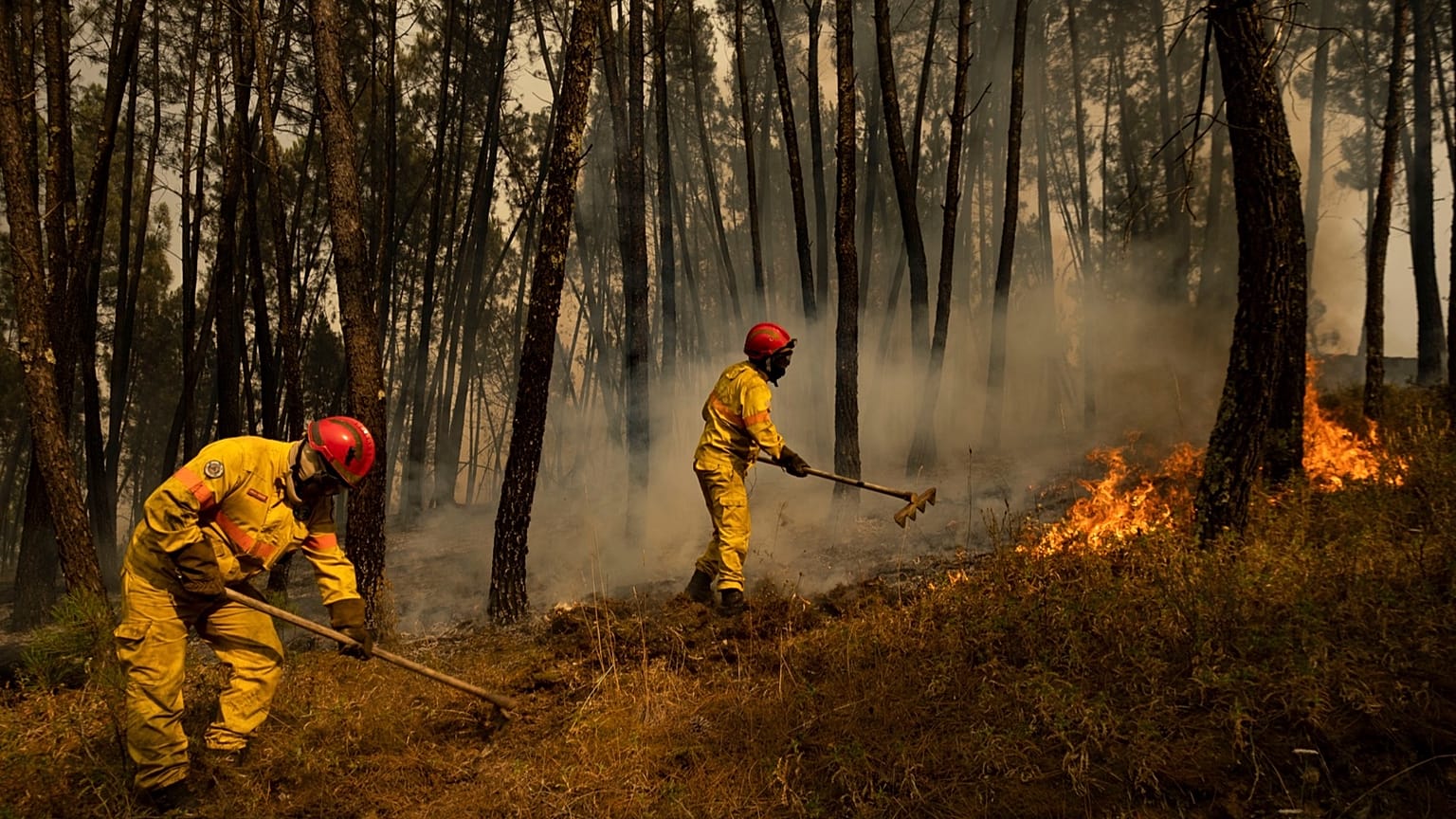
Firefighters try to extinguish a wildfire at the village of Chaveira, near Macao, in central Portugal on Monday, July 22, 2019.
Copyright Copyright 2019 The Associated Press. All rights reserved.

By Liam Gilliver
Published on 

More than 200,000 hectares of European forests could be disturbed annually by 2100, according to a new study.

Forest damage in Europe is projected to rise by 20 per cent by 2100 compared to recent decades, even if the world sticks to ambitious climate measures

A new international study published in the journal Science, with contributions from the Potsdam Institute for Climate Impact Research, warns that wildfires, storms and bark beetle outbreaks – all of which are fuelled by climate change – are putting crucial carbon sources at risk.

Even in a scenario with global warming limited to roughly 2℃, researchers found that annually disturbed forest area could rise from 180,000 to roughly 216,000 hectares per year by the end of the century compared to the “already unprecedented levels of disturbance” from 1986 to 2020.

However, in a scenario where fossil fuel use continues to increase – pushing temperatures even higher – almost 370,000 hectares could be disturbed every year by the end of the century.

Europe’s forests are under threat

The study warns that forests in Southern and Western Europe will be particularly affected and will undergo the ‘strongest changes’ in forest disturbance.

While Northern Europe is expected to be less severely impacted overall, researchers highlight that hotspots of future forest damage are still likely to emerge.

Last year, more than 1,800 forest fires were declared in the EU, emitting around 38 million tonnes of CO2. Scientists say many of these fires occurred where climate anomalies showed much drier and warmer than average conditions.

Summer 2025 was particularly bad for Portugal and Spain, which both witnessed record-breaking wildfires that accounted for more than two-thirds of EU devastation.

According to the World Weather Attribution (WWA), these deadly blazes were around 40 times more likely due to climate change.

Why are forests so important in the fight against climate change?

Europe is among the most forested regions of the world, with around 40 per cent of its land area covered by forests.

Not only do these areas host most of the terrestrial species of animals, plants, and fungi native to the continent – they are also a vital carbon sink that absorbs CO2 from the air and helps fight climate change.

Forests also play an important role in providing clean water, reducing the risk of flooding, and enhancing food security.

However, Christopher Reyer, a scientist at PIK and co-author of the study, says Europe’s forests are likely to absorb less carbon in the future.

“If forests take up less carbon, or potentially even release more than they absorb, this increases pressure on other sectors such as transport and agriculture to reduce their emissions more rapidly,” he adds.

“At the same time, forest management needs to focus more strongly on building resilient forests.”

Is the EU planting enough trees?

In 2010, the EU launched its three billion trees initiative, a milestone that could remove a staggering 15 million tonnes of CO2 from the air per year by 2050.

However, according to an online tool set up by the Commission, less than 38 million trees have been planted in the EU so far.

It means that the EU has only completed around 1.26 per cent of its goal six years into the initiative. Unless planting rates increase dramatically, achieving three billion new trees by 2030 will be unlikely.

A Commission official tells Euronews Green that the initiative is a “voluntary commitment” which aims to mobilise organisations and individuals active in tree planting to report their work – and not a mandatory commitment.

It is planning to launch an award next year to recognise “innovative and impactful tree-planting” in hopes of making large gains towards the goal.


Climate change is bad news for EV batteries. Can technology outsmart rising temperatures?

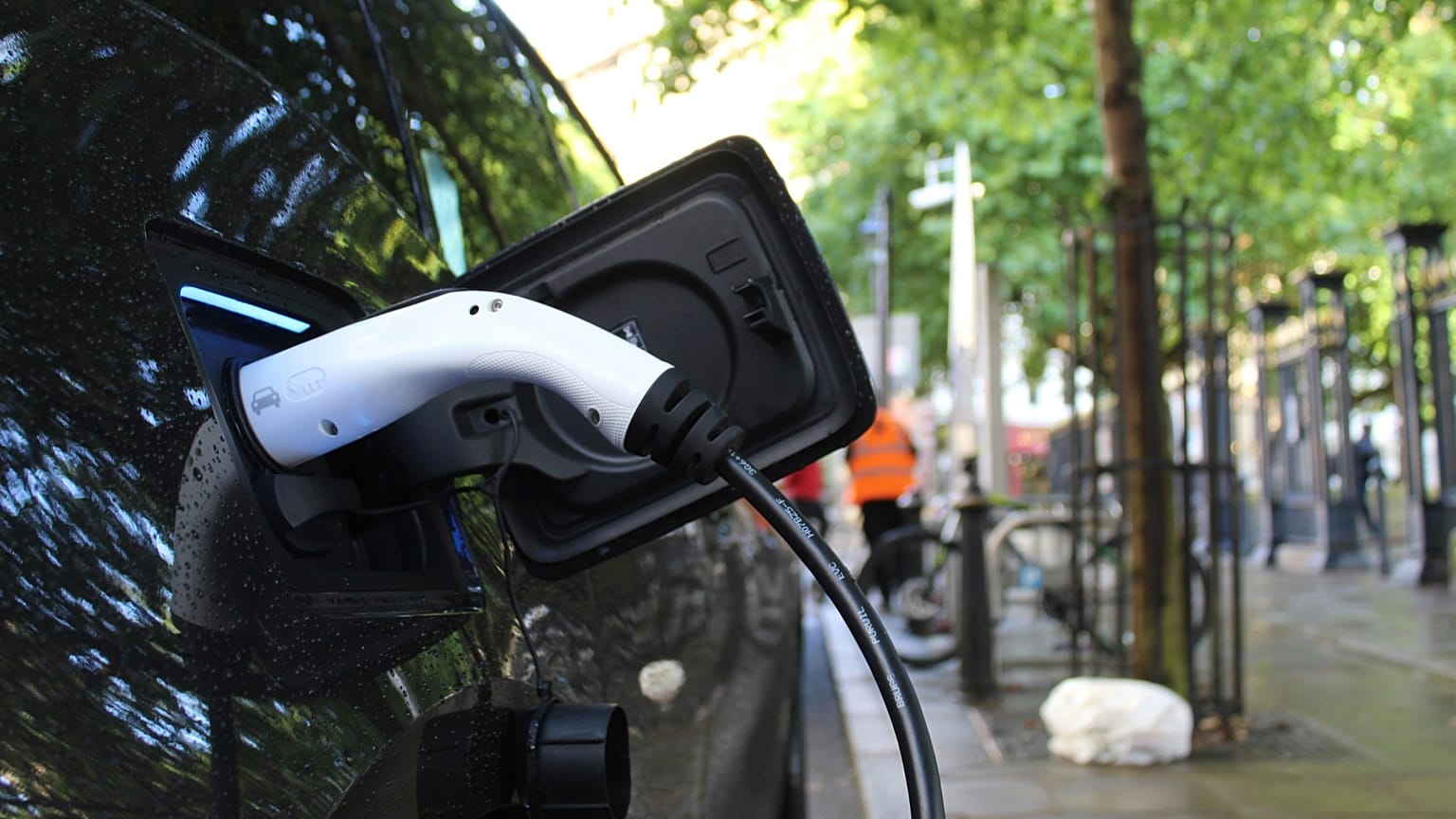
Close-up shot of an EV car being charged.
Copyright Andrew Roberts via Unsplash.

By Liam Gilliver
Published on 

Warmer temperatures accelerate the degradation of batteries in EVs, posing a “make-or-break” for people considering making the switch.

Climate change has created a “catch-22” for the electric vehicle (EV) transition – but advancements in battery technology could outsmart rising temperatures.

Environmental concerns have motivated many to switch to EVs in recent years. According to data from the European Automobile Manufacturers’ Association (ACEA), sales of fully electric cars surpassed those of petrol-only vehicles in the EU for the first time in December 2025.

Despite the EU having softened its 2035 car emissions ban, the bloc registered more hybrid electric cars last year too, signalling a substantial shift. By the end of 2025 petrol car registrations fell by 18.7 per cent, with all major markets seeing declines.

However, one of the main “make-or-break” factors putting people off switching to an EV is their ability to cope with extreme weather.

Is our warming world hindering EV sales?


2025 was the third-hottest year globally and in Europe, with average global temperatures hitting 1.5℃ above pre-industrial levels.

According to Copernicus’ weather monitoring service, the spike was attributed to a build-up of greenhouse gases in the atmosphere and rising sea-surface temperatures – both of which are amplified by human activity.

A 2025 study by What Car? found that EVs can lose as much as 44 per cent of their claimed ranges when faced with temperatures ranging from 32 to 44℃.

Electric performance carmaker Polestar states that temperature has a “big impact” on battery degradation since it affects the chemical reactions inside the battery.

“Just like cold temperatures slow everything down, higher temperatures can create faster reactions, which can lead to unwanted ones that make your battery degrade faster,” the company adds.

However, a study from the University of Michigan found that recent improvements to EV battery technology could already be outmatching degradation from climate change.

Researchers analysed the endurance of old EV batteries made between 2010–2018 with new batteries made between 2019–2023.

In a scenario where the planet warmed by an average of 2℃, EVs with batteries made between 2010 and 2018 would see their lifetimes decline by up to 30 per cent.

But, for new batteries, researchers found that the average lifetime drop is just three per cent, with a maximum drop of 10 per cent.

‘More confidence’ in EVs, but only in certain countries

“Thanks to technological improvements, consumers should have more confidence in their EV batteries, even in a warmer future,” says Haochi Wu, lead author of the study, which has been published in the journal Nature.

Senior author Michael Craig points out that the study has one main caveat: the team only used two representative EVs for their work. This was the Tesla Model 3 and the Volkswagen ID.3.

“In regions like Europe and the US, we feel like we’ve got a good handle on the battery technology that’s available in those regions,” Craig says.

“But when we’re looking at cities in India or sub-Saharan Africa, for example, they may have very different vehicle fleets – and they almost certainly do. So our results may be optimistic for those regions.”

Many of these regions will feel the wrath of climate change the worst, which researchers say shows how inequalities are made worse by global warming.