Friday, March 06, 2026

HUBRIS

With Iran war, US goes it alone like never before

Washington (United States) (AFP) – When the United States fought the 1991 Gulf War, president George H.W. Bush boasted of building a broad coalition unseen in decades. When his son attacked Iraq in 2003, he faced wide criticism but secured several steadfast US allies.


Issued on: 05/03/2026 - FRANCE24

Demonstrators against the war in Iran trample on a portrait of US President Donald Trump during a protest as they march toward the US embassy in Baghdad © AHMAD AL-RUBAYE / AFP

Now, a generation later, President Donald Trump has attacked Iran, and he is barely even trying to make friends.

Trump launched the war alongside Israel, which had long pressed the United States to strike Iran's ruling clerics.

Trump's strategy toward other countries has been focused on intensely pressuring them to cooperate and loudly complaining when they say no.

Trump berated crucial ally Britain as "very, very uncooperative" and said of Prime Minister Keir Starmer: "This is not Winston Churchill we're dealing with."

The center-left prime minister had restricted US warplanes to using two British bases and only for "defensive" purposes, saying he did not believe in "regime change from the skies."

Trump threatened to cut off all trade with Spain after left-wing Prime Minister Pedro Sanchez refused to let US forces use bases.

The United States and Israel made no pretense of going through the United Nations before launching the war that quickly killed Ayatollah Ali Khamenei, Iran's supreme leader.

"It essentially sends the message to the world that Trump's United States sees itself above the law and doesn't even think it needs to claim otherwise," said Kristina Kausch, a deputy managing director at the German Marshall Fund.

She said the war only reinforced European perceptions of Trump, who has stunned the continent by threatening to seize Greenland from NATO ally Denmark.

"The degree to which there is US isolation or loss of soft power will depend on how disastrous the consequences of this decision," she said of the Iran attack.


Refocusing on nation-state


Trump has withdrawn the United States from numerous international bodies, vowing to go it alone in an "America First" foreign policy and to re-emphasize the centrality of the nation-state.

Nadia Schadlow, who was deputy national security advisor in Trump's first term, said the war showed how countries cannot rely on the United Nations when they believe security interests are at stake.


A plume of smoke rises after a strike on Tehran © ATTA KENARE / AFP


"I believe that the UN has value for collaboration, for discussion, for debate. But I don't believe it can prevent wars, especially when one country is determined, and feels that it must act in the interests of its national security," said Schadlow, now a senior fellow at the Hudson Institute.

"It seems that the decision-makers made a determination that security and surprise were critical and were more important than consultation."

Rare unambiguous statements of support for the war came from the right-wing leaders of Argentina and Paraguay as well as from Prime Minister Anthony Albanese of Australia, which has fought alongside the US in every major war.

Albanese backed action "to prevent Iran from obtaining a nuclear weapon." Canadian Prime Minister Mark Carney voiced similar support, although he soon called for de-escalation.

French President Emmanuel Macron opposed the attack as running counter to international law, while German Chancellor Friedrich Merz voiced hope for an end to the Islamic republic while hoping the war will be short.

Washington has shown little interest in sensitivities of friendly countries.

The United States torpedoed an Iranian warship that had just paid a goodwill visit to India, a frequent US partner, killing at least 84 sailors off Sri Lanka, after Defense Secretary Pete Hegseth vowed to reject "stupid rules of engagement."

Strategic benefit for China?

Iran, like Venezuela where Trump removed the president in January, had a privileged relationship with both Russia and China -- which were unwilling or unable to defend their allies against US firepower.

China has also relied on the two countries for oil, although it had reduced its dependence.

But the war could also benefit China. US forces are rapidly using up bombs, missiles and other resources that could be used in a theoretical defense of Taiwan, which Beijing claims, and Beijing is able to observe US war operations in Iran, said Jacob Stokes, a senior fellow at the Center for a New American Security.

Chinese strategists had described the first two decades of the century as a time of opportunity with the United States preoccupied in Afghanistan and Iraq, Stokes said.

"There is this potential for a grand strategic benefit, as Beijing is quite happy to see the United States get bogged down in the Middle East again," he added.

© 2026 AFP

Trump Says US To Play Role In Choosing Iran’s Next Leader As Conflict Widens


March 6, 2026 
By RFE RL


President Donald Trump said Washington will help choose the next leader of Iran as US and Israeli forces continued air strikes amid growing concerns of a broader conflict after drones launched from Iran struck Azerbaijan and Israel pushed into southern Lebanon.


With the United States and Israel currently engaged in a sixth day of war against Iran, the number of countries in the region to suffer Tehran’s retaliatory strikes, which have targeted both military and civilian infrastructure, grew again on March 5.

Trump, speaking to Reuters in a phone interview, said he wants to be involved in choosing Iran’s next leader, while ruling out Mojtaba Khamenei, the son of the late Supreme Leader Ali Khamenei – a hardliner who has been considered a favorite to succeed his father.

“We want to be involved in the process of choosing the person who is going to ⁠lead Iran into the future,” he was quoted by the agency as saying.

“We don’t have to go back every five years and do this again and again…Somebody that’s going to be great for the people, great for the country.”

The supreme leader was killed last weekend in air strikes as US and Israeli military operations pummeled the country.

Since then, a steady barrage of strikes have decimated Iran’s military, communications infrastructure, and other key facilities across the country.

Iran has retaliated with attacks on US military bases across the Middle East, dragging Arab Gulf states — and others such as Turkey and Azerbaijan — onto the frontlines of a war they have long tried to avoid.

Iran’s neighbor Azerbaijan, which has longstanding ties with Israel, reported attacks launched from Iranian territory on March 5.

Two people were injured after drones have struck Azerbaijan’s Nakhchivan autonomous region, with one damaging the region’s airport and a second landing near a school, according to Azerbaijan’s Foreign Ministry.

President Ilham Aliyev said that “Iran committed an act of terror against the territory of Azerbaijan, against the state of Azerbaijan” with the attack, while the Foreign Ministry said Baku “reserves the right to respond.”

Later in the day, Iran’s Foreign Ministry denied that the country had targeted Azerbaijan.

Millions of ethnic Azerbaijanis live in Iran. Azerbaijan is also one of the main oil suppliers to Israel, while Israel has been a key defense partner for Baku for years.

Many in Azerbaijan see Israel’s military supplies as critical during country’s campaign to regain control of the Karabakh region from Armenia.

A day earlier, a ballistic missile launched from Iran was heading toward Turkish airspace and was intercepted by NATO air defense systems, according to Turkish officials.

NATO Secretary-General Mark Rutte condemned Iran but said the incident does not provide immediate reason to trigger the alliance’s mutual defense clause, Article 5.

“The most important thing is that our adversaries have seen yesterday that NATO is so strong and ⁠so vigilant, and even ‌more vigilant, if possible, since Saturday,” Rutte said on March 5, referring to when the US-Israeli strikes began on February 28.

Earlier, a State Department spokesman said US Secretary of State Marco Rubio had spoken with Turkish Foreign Minister Hakan Fidan to discuss recent developments and had pledged “full support” for the NATO ally.

Ukraine To Provide Expertise Against Iran’s Drones

As air travel disruptions continued across the Middle East with Iran firing missiles and drones against Israel and other regional countries, Ukrainian President Volodymyr Zelenskyy said his offers to provide support in countering Tehran’s Shahed drones were accepted.


“We received a request from the United States for specific support in protection against Shaheds in the Middle East region,” Zelenskyy said on his social media on March 5.

Tehran has long been an ally of Russia, supplying it with military equipment and technology and fueling Moscow’s war effort against Ukraine. Zelenskyy said earlier that Russia’s military had used at least 57,000 Shahed drones in attacks on his country, including against its civilian and energy infrastructure.

Now, the Ukrainian president said Kyiv will help its partners with expertise: “I gave instructions to provide the necessary means and ensure the presence of Ukrainian specialists who can guarantee the required security.”

Ukraine, which has just entered the fifth year of repelling Russia’s full-scale invasion, has been suggesting to share its experience in defending against Iranian-made drones since the first Iranian attacks across the Gulf.

Asked on the matter, US President Donald Trump, who has previously criticized some of the European leaders for failing to provide enough support for US military actions said he’ll take “any assistance from ‌any country.”

Trump: US Holds ‘Strong Position’


Trump on March 4 vowed that there would be no let up with the joint air campaign that has killed Iranian Supreme Leader Ali Khamenei and other security, military, and political leaders.

He added that Tehran’s arsenal of ballistic missiles was being “wiped out rapidly.”

Trump has said he ordered the attack on Iran to prevent the country from developing a nuclear weapon but has also said he wanted Tehran to cease its ballistic missile program and to end violence against anti-government protesters, thousands of whom were killed in a brutal crackdown in recent weeks.

Seeking to counter concerns of American ‘”boots on the ground” in the war, the White House on March 4 said deployment of US ground troops in Iran is “not part of the plan for this operation at this time.”

Instead, Trump backed the Kurds in launching their own offensive, saying he thinks it’s “wonderful that they want to do that.” Asked by Reuters if the United States would offer air cover for such an operation, Trump refused to answer.

Earlier in the week, sources told Axios that the president spoke with Kurdish leaders, who sought consultation on whether and how to attack Tehran’s security forces.
Netanyahu Claims ‘Historic Gains’

Israeli Prime Minister Benjamin Netanyahu’s office said the two allies had made “historic gains” in their war against Iran, which is in its sixth day.

“Israel and the United States have together made historic gains to protect our citizens and the civilized world,” government spokeswoman Shosh Bedrosian said in a video message.


As Bedrosian also claimed the attack on Iran was necessary as Tehran was rebuilding its nuclear weapons program in “new underground bunkers” and that there were signs it planned “to attack Israel and US forces in the region,” without providing details.

Separately, Israel stepped up its attacks on strongholds of Iran-allied Hezbollah forces in Lebanon after the group launched missiles into northern Israel. According to Israeli military, Tel Aviv’s goal was to create “a buffer…between our residents and any threat,”

French President Emmanuel Macron on March 4 said he urged Netanyahu to refrain from launching a ground offensive in Lebanon.

“I reiterated the necessity for Hezbollah to immediately cease its attacks on Israel and beyond. This escalatory strategy is a grave mistake that puts the entire region at risk,” Macron wrote on X.

“I also called on the Israeli Prime Minister to preserve the integrity of Lebanese territory and to refrain from launching a ground offensive. It is crucial for the parties to return to the ceasefire agreement,” Macron added.

Reports indicate that Israeli ground forces have already crossed the border into Lebanon, although details remain unclear.

On March 5, Israeli military warned residents in Beirut’s southern suburbs to evacuate immediately. “Save your lives and evacuate your residences immediately,” Israel’s military forces spokesman Avichay Adraee said on X. 


With reporting by RFE/RL’s Radio Farda, RFE/RL correspondent Alex Raufoglu in Washington

RFE/RL journalists report the news in 21 countries where a free press is banned by the government or not fully established.


Middle East Conflict: Who Benefits? – Interview


March 6, 2026
By Gateway House


The conflict in West Asia is already having global reverberations. The firepower on display on all sides is formidable, increasing casualties and limiting travel, expatriate mobility and trade. The takedown of refineries and energy assets will severely impact the global energy flows. Prices of crude oil and natural gas have already increased as energy flows through the Straits of Hormuz have been affected. Countries across the world are watching nervously. Our experts, Security Fellow Lt. General Narasimhan and Energy Fellow Amit Bhandari, discuss the ongoing West Asian conflict, how it will pan out, and its implications for India.


Q: How will the conflict evolve from this point? How long is it likely to last?

A: This conflict was a long time coming. First, the U.S. and Israel went after Iran’s nuclear facilities in 2025, but it was clear that Iran had moved its nuclear infrastructure somewhere safe, and the attacks did not actually achieve what they had sought to. Second, there were already negotiations going on with Iran to sort out the issues of its nuclear programme – and no progress was made even in the last meeting, which was at the end of February. For the U.S. and Israel, it seems to have tilted the balance in favour of launching an offensive. But clearly the U.S. has been preparing for this conflict for almost two or three months now. This is visible by the fact that almost 50% of deployable fighter aircraft have been moved to this theatre, along with aircraft carrier groups and a number of other ships. So the conflict was expected.

Now that it has begun, what happens next? Iran has approximately 2,000 to 2,500 missiles – they have launched only a few so far, 70-100 missiles at the six or seven Gulf countries, which can beat the air defence of that country.

The initial U.S.-Israel attack has wiped out Iran’s leadership – but they had planned for this, and the plans have been implemented. In this case, the Islamic Revolutionary Guards Corps (IRGC) gets split into 31 autonomous units – one for Tehran and the other 30 for each of the provinces. Each of these units can make their own decisions, pick their own targets and do what they have to do. This mosaic defence plan has multiple parts to it, including decentralised decision-making. In case of an attack on Iran, they are to adopt defence in depth, meaning layered defences.


The third part is survivability over winning. Finally, they will also go into asymmetric or guerrilla warfare in case of an invasion by the U.S. and Israel – something that has happened in Afghanistan and Iraq. Their objective is to cause as much damage as they can to the U.S. and Israel.

If the conflict stops at missiles and aerial bombing, it should end within a week or two. But if it goes into an invasion and asymmetric guerrilla warfare situation, there is no limit to how long it can go on for.

Q: Iran has used drones and missiles on a large scale in the conflict so far. Are there any lessons for India from this conflict, especially given our own experience during Operation Sindoor last year? Also, how is the evolution of armed conflicts in the drone era, as witnessed in the past three or four conflicts?

A: The large-scale use of drones started during the Azerbaijan-Armenian conflict. It was then used in Russia-Ukraine, Israel-Gaza, India-Pakistan, and now this West Asia war.

Q: What are the wider geopolitical implications of the conflict, especially for China and Russia? Are there any beneficiaries of this conflict?


A: The first beneficiary of this conflict is of course, Israel. The White House did not expect any kind of a threat from Iran over the next decade. If Iran gets weakened in some form, the first beneficiary is Israel. Second, the U.S. can always boast about regime change and having caused them damage. But they will not be able to take out Iran’s nuclear deterrent.

For China, Iran is a source of oil – China kept importing oil from Iran even during the sanctions period. Chinese ships would switch off their transponders while loading up on Iranian oil in the Gulf. They may have to source this oil from other areas such as Russia. So far, China has made just anodyne statements about a need to end violence.

China will just sit this conflict out, because in any case, either the U.S., Israel, or Iran will be weakened – China will benefit from any or all of this.

India, too, has made anodyne statements. While India seems to have picked a side in the conflict, there hasn’t been any physical support. Prime Minister Narendra Modi was in Israel just before the conflict began. There is a parallel to that – Russia’s President Putin went to China at the start of the Winter Olympics in February 2022 before the Ukraine conflict began.

Q: What has been the impact of this conflict on the energy space?

A: The perception in the energy markets is that this will be a short conflict, which may be over in two or four weeks. We know that 20% of the global oil supply passes through the Straits of Hormuz, and traffic has reduced considerably in the past few days. Hypothetically, if the traffic were to stop for two or four weeks, or longer, there would be widespread panic in the energy markets. That hasn’t happened – the price for Brent is still $78-79/barrel. If there is a serious concern about the stoppage of traffic in the straits, the price would be far higher.

Iran has started to target a number of energy installations – a Saudi refinery, a Kuwaiti refinery, and a UAE oil platform. The attacks on oil infrastructure are partly an attempt to create panic amongst other countries. Oil buyers don’t worry about where they import oil from – West Asia or somewhere else. If the price of oil goes up, it goes up for everyone. So it may be an attempt to induce a larger panic in the global community so that some kind of a negotiated settlement or off-ramp could be created.

Finally, Russia is going to be one of the beneficiaries of the conflict, as it is the second-largest exporter of oil in the world. At this point in time, when there is a concern around a large source of supply, the world economy cannot have another big supplier being pushed out of the marketplace completely.

About the author:
Lt Gen S L Narasimhan is the Adjunct Distinguished Fellow for China and National Security Studies at Gateway House.

Amit Bhandari is the Senior Fellow on Energy, Investment and Connectivity.

Source: This article was written for Gateway House: Indian Council on Global Relations.


Gateway House


Gateway House: Indian Council on Global Relations is a foreign policy think-tank established in 2009, to engage India’s leading corporations and individuals in debate and scholarship on India’s foreign policy and its role in global affairs. Gateway House’s studies programme will be at the heart of the institute’s scholarship, with original research by global and local scholars in Geo-economics, Geopolitics, Foreign Policy analysis, Bilateral relations, Democracy and nation-building, National security, ethnic conflict and terrorism, Science, technology and innovation, and Energy and Environment.

Trump’s Iran War Is Grounds For Impeachment, According To The Constitution – OpEd


March 6, 2026 
By William J. Watkins, Jr.


Prior to the American Revolution, the power over war and foreign affairs was lodged in the executive branch. European monarchs decided when to commit their countries to wars and military incursions. In countries such as Great Britain with representative assemblies, elected officials could withhold funds if they disapproved of a foreign adventure, but there their power ended.

The Founding Fathers rejected the European model. Our first charter of union, the Articles of Confederation, lodged all executive functions in Congress. Under the Articles, Congress possessed “the sole and exclusive right of determining on peace and war.” The thirteen sovereign states were forbidden to engage in hostilities except in cases of invasion or imminent attack.

So, what would the Founders think of President Donald Trump’s war on Iran? They would assume we have abandoned the U.S. Constitution and opted for the European model they rejected. Despite extensive congressional powers over foreign affairs, the president did not consult the national legislature on whether to commit American forces to war in the volatile Middle East. Trump coordinated the start of hostilities with the Israeli government, but not with representatives elected by the American people. This is the height of personal hubris.

Congress sits as mere spectators while the war spreads. Regional conflict intensifies, American service members are killed, and Israeli forces advance into Lebanon. With such a hornets’ nest kicked over, one must wonder whether at this late date Congress can have any meaningful input—especially with the president deploying more troops to the region.

The president’s war on Iran is contrary to the Constitution and rejects safeguards in our republican federation. The attack—its escalation and projected duration of weeks or months—serves as grounds for articles of impeachment. No one person—president or otherwise—should be allowed to commit the country to a Middle Eastern war without the consent of Congress.


Although the Constitution of 1787 created the presidency as the executive branch for the union, the Framers left the matters of war and peace with Congress. In a republican federation, the Founders reasoned, only the people’s representatives should be able to commit the country to war. Consequently, Article I, Section 8 vests Congress with the power to declare war, to raise armies, to equip a navy, to commission privateers to prey on enemy shipping, to call forth the state militias (today the National Guard) to repel invasions, and to make rules concerning prizes seized in conflict.

The Constitution designates the president as the commander-in-chief of the armed forces, but this title simply preserves civilian control over the military. It does not vest the president with authority to use our armed forces as his personal servants who he can dispatch to fight at his pleasure.

In defending the commander-in-chief power, the Federalists (those urging ratification of the Constitution) drew contrasts to the British king. In the North Carolina convention, James Iredell pointed out that the king of Great Britain “is not only the commander-in-chief of the land and naval forces, but has the power, in time of war, to raise fleets and armies. He also has the authority to declare war.” In the South Carolina convention, Charles Pinckney made similar points and stressed that the executive’s “powers did not permit him to declare war.”

James Wilson assured the Pennsylvania convention that the Constitution would not “hurry us into war” because “the important power of declaring war is vested in the legislature at large” and not the president. Whereas the ambitions of kings are prone to carry countries into conflict, Wilson believed that “nothing but our national interest can draw us into a war.”

This concern about the executive and war was succinctly expressed in a letter from James Madison to Thomas Jefferson a decade after ratification. “The constitution supposes, what the History of all Govts demonstrates,” elucidated Madison, “that the Ex. is the branch of power most interested in war, and prone to it.” For this reason, Maidson explained, the Philadelphia Convention “vested the question of war in the Legislature.”

If the Constitution means what it says, then Congress must reclaim the authority the Framers deliberately placed in its hands. The question is not whether one supports or opposes this particular conflict, but whether we will preserve a republic in which the momentous decision to wage war rests with the people’s representatives rather than the will of a single executive. The Founders feared the concentration of war-making power because history taught them where it leads. If we permit that power to drift back into the hands of one person, we do more than risk another protracted conflict abroad—we erode the very constitutional structure designed to safeguard our liberty at home.


This article was also published in The Orange County Register (CA)


William J. Watkins, Jr.


William J. Watkins, Jr. is a Research Fellow at The Independent Institute and author of the Independent books, Crossroads for Liberty: Recovering the Anti-Federalist Values of America’s First Constitution, Reclaiming the American Revolution: The Kentucky and Virginia Resolutions and Their Legacy, and Patent Trolls: Predatory Litigation and the Smothering of Innovation. Full Biography and Recent Publications


Iran conflict is 'not a justified war': Former US special envoy for Iran Robert Malley

Issued on: 05/03/2026 - FRANCE24


11:59 min


Robert Malley, former US special envoy for Iran under Joe Biden and a key negotiator of the 2015 Iran nuclear deal, told FRANCE 24 that the US-Israeli war against Iran is "not a justified war, not a necessary war and not a lawful war". For Malley, the "cacophony" over the conflict's rationale "reflects the fact that this is a joint Israeli-US decision" and a marriage of what US President Donald Trump "saw as a historic opportunity and a man who is driven by hubris and self-aggrandizement".


Six months after Nepal's revolution, Generation Z hopes for change in elections


Issued on: 05/03/2026 -
06:15 min


In Nepal, 18 million people are eligible to vote in this Thursday's parliamentary elections. More than 120 parties are running, over a third of them created after the September 2025 uprising, which was largely driven by Generation Z. Among their demands: an end to corruption and nepotism and above all, job creation. Every day, nearly 2,000 young Nepalis leave the landlocked Himalayan country to find work abroad.

Just a few weeks after the revolution that overthrew the government in Nepal, nearly 1 million new voters registered on the electoral rolls. An unprecedented figure, reflecting the scale of the political earthquake that shook the country: more than 70 people killed and hundreds injured, parliament and dozens of ministries set ablaze, and a youth movement determined to rid itself of the old political guard that has shared power for nearly two decades.

For the past 20 years, Nepali political life has been dominated by the same figures and the same parties, regularly accused of corruption and nepotism. This time, Gen Z wants to break with the old system. FRANCE 24's Alban Alvarez, Sacha Desmaizières and Praveen Kumar Yadav report.


Nepal's rapper-turned-politician takes early lead in key polls

Kathmandu (AFP) – Nepal's centrist party of rapper-turned-politician Balendra Shah took an early lead in the high-stakes parliamentary election on Friday, as slow counting continued after the first polls since last year's deadly uprising.


Issued on: 06/03/2026 - FRANCE24

In Kathmandu's tea shops and city squares, people were glued to their phones, checking results as early trends flashed up © Prakash MATHEMA / AFP

But despite Shah's party loyalists dancing on the streets of Kathmandu in celebration -- the numbers of votes counted remain too low to be confident that it will translate into concrete wins.

By Friday afternoon, 24 hours after polls closed, early trends issued by the Election Commission put Shah's Rastriya Swatantra Party (RSP) ahead.

Alongside Shah, key figures vying for power include Marxist leader KP Sharma Oli, four-time prime minister who was ousted by the September 2025 anti-corruption protests, and the newly elected leader of the Nepali Congress party, Gagan Thapa.

At 5:00 pm (1115 GMT), RSP was leading in more than half of the 165 constituencies.

But there were only two declared results, and RSP had been confirmed only in one, the same as Nepali Congress.

Prakash Nyupane, a spokesman for the Election Commission, said that counting was ongoing "in a peaceful manner" across the Himalayan nation, from snowbound high-altitude mountain regions to the hot plains bordering India.

Voters have chosen who replaces the interim government in place since the September 2025 uprising, in which at least 77 people were killed, and parliament and scores of government buildings were torched.

Youth-led protests under a loose Gen Z banner began as a demonstration against a brief social media ban, but were fed by wider grievances at corruption and a woeful economy.

Kunda Dixit, publisher of the weekly Nepali Times, told AFP that if trends did reflect final wins, the political shift was dramatic.

"This is even a bigger upset than we expected -- it underscores the level of public disenchantment with the old parties for under-performance, as well as anger over the events of September," he said.

'Fate of the country'

Ballot boxes were taken for counting under heavy guard © Prabin RANABHAT / AFP


The polls are one of the most hotly contested elections in the Himalayan republic of 30 million people since the end of a civil war in 2006.

All eyes are watching the results in the key head-to-head battleground constituency of Jhapa-5, a usually sleepy eastern district, where 35-year-old Shah challenged directly the veteran Oli, aged 74.

Shah, better known as Balen, snappily dressed in a black suit and sunglasses, has cast himself as a symbol of youth-driven political change.

At 5:00 pm local time, at 10 percent of the votes counted in Jhapa-5, Shah was ahead by nearly five times as many votes as Oli.

Soldiers with armoured trucks manned barbed wire barricades around the counting centre in Jhapa.

"I hope this result changes the fate of the country for the better," Bhagawati Adhikari, 38, told AFP, who was among a crowd of dozens at Jhapa gathered outside the security cordon.

"The country should be peaceful and secure, youth should get opportunities, corruption should stop -- that's my appeal."

'Rest peacefully'

Election officials sit on the floor as they tally votes at a counting centre in Kathmandu © PRABIN RANABHAT / AFP


More than 3,400 candidates ran for 165 seats in direct elections to the 275-member House of Representatives, the lower chamber of parliament, with 110 more chosen via party lists. Turnout was 59 percent.

Full nationwide tallies could take several days.

Dixit raised the possibility that Shah's RSP could stage a dramatic win.

"If RSP hits the magic 138 seats, Balen will become prime minister -- and hopefully a cabinet of technocrats," added Dixit.

Sushila Karki, the interim prime minister, praised the peaceful conduct of a vote she has said was critical in "determining our future".

Karki, a 73-year-old former chief justice who reluctantly left retirement to lead the nation, now faces the challenge of managing the reaction to results.

The election saw a wave of younger candidates promising to tackle Nepal's dismal economy, challenging veteran politicians who have dominated for decades and argue that their experience guarantees stability and security.

In Jhapa, 68-year-old shopkeeper Ved Prasad Mainali sat listening to a radio.

"Oli may lose, but his supporters wont come out on the streets. If they do, they will face an opposition from a larger crowd that wants change," he told AFP.

"To Oli, I would like to say, that he has ruled for many years -- he has done some good for the country, now he should just rest peacefully. Jhapa is ready to welcome a new prime minister."

© 2026 AFP


US reaches out to Iran’s Kurds, but will they also be ‘hung out to dry’?


ANALYSIS


The US has made an outreach to Iranian Kurdish dissident groups as "Operation Epic Fury" rattles the pieces of the Middle East geostrategic chess game. The Kurds in other countries have a history of being pawns in Washington’s games and have at times used their leverage to their advantage. But under the Trump administration, Iran’s Kurds face colossal challenges.


Issued on: 05/03/2026 
FRANCE24
By: Leela JACINTO

File photo of a Kurdistan Freedom Party (PAK) fighter during a training exercise at a base near Erbil, Iraq, taken February 12, 2026. © Thaier Al-Sudani, Reuters

A day before the US and Israel launched their aerial attack on Iran, Reza Pahlavi, the US-based son of the former shah, posted a message on social media seeking to amend his earlier castigation of an Iranian Kurdish coalition as “separatists” with a “contemptible” agenda.

His effort backfired, unleashing a stream of satirical ripostes that underscored the challenges of leading a country with no history of genuine representative democracy.

The public wrangle kicked off last month after five dissident Iranian Kurdish parties announced the formation of a coalition against the Islamic regime in Tehran. Pahlavi slammed the initiative as a threat to Iran’s territorial integrity, raising alarm bells among Kurds seeking democratic rights denied to them under the Islamic and Pahlavi regimes.

Eager to redress the messaging mishap, Pahlavi then proceeded to post a video featuring him at the centre of a group of mostly unknown men, described as “members of the great family of Iran”, looking on silently as he declared his commitment to ending “all discrimination”.

His attempt was dismissed in many circles of Iran’s fractured opposition, with some social media posts superimposing clown figures on the gathering while others offered cartoons of the Pahlavi “red line” rhetoric.

Screengrab of a cartoon on X depicting Reza Pahlavi, the former Iranian shah's son. © Screengrab X

That was before “Operation Epic Fury” plunged the Middle East into colossal uncertainty as the US scrambles to articulate a day-after plan for Iran.

By Day Four of the war, Iran’s Kurds were receiving an outreach with far more serious implications.

On Tuesday, President Donald Trump had a phone call with the head of the Democratic Party of Iranian Kurdistan (KDPI), the largest of the five parties in the Kurdish coalition, according to news reports. Two days earlier, Trump spoke to Iraqi Kurdish leaders in the semi-autonomous region, where Iranian Kurdish armed groups have peshmerga fighters along the Iran-Iraq border. The CIA was also working to arm Kurdish forces with the aim of fomenting a popular uprising in Iran, CNN reported.

Mobilised, armed and with cohesive leadership structures, Iran’s once-overlooked Kurdish minority are in the spotlight as the country’s future hangs in the balance. The Kurds of the Middle East have been wooed by Washington at different times, on different sides of borders that separate them, with different results. Some have been disastrous. The question now for Iran’s Kurds is whether history is set to be repeated or if its lessons will be heeded.

Armed, mobilised, ready to deploy


From their mountainous heartland in Iran’s northwestern border region, the Kurds – who make up between 10 to 17% of the country’s 93 million population – have a long history of resisting Tehran. Their opposition to the current regime dates back to the 1979 revolution, when the predominantly Sunni community launched an armed uprising against the Shiite Islamist regime.

Over the course of nearly half-a-century, Kurdish parties with different acronyms and ideologies, many with armed wings based on the Iraqi side of the border, have managed to withstand Tehran’s efforts to decimate any political opposition.

“The difference between Iranian Kurdistan and rest of the country is the connection between these parties and the people. If you look at the Kurdish region of Iran, the majority of families have lost at least one member in the war against the Islamic regime. So they are already part of this movement,” explained Shukriya Bradost, a Middle East security expert who has studied the history of Iran’s Kurds.

The effectiveness of Kurdish mobilisation was visible during the December-January protests, when the streets of Iran’s cities, towns and villages turned into bloodbaths as the regime unleashed a crackdown on an unprecedented scale.

As waves of unorganised demonstrators got mowed down by military grade weapons, seven Kurdish political parties came together to issue a joint call for a general strike on January 8. Other ethnic minority provinces joined the strike call, grinding the economy to a halt and keeping their communities off the streets.

READ MORE‘Persian cities feel the pain of the Kurdish regions’

The Kurdish mobilisation maintained momentum in the following weeks and months, with party leaders holding coalition talks. By the time Trump’s military “armada” had deployed to the region, five of the seven Kurdish parties that organised the January 8 strike managed to form a coalition with a political platform and agenda.

The Coalition of Political Forces of Iranian Kurdistan, launched on February 22, incorporates the largest Kurdish party, the Democratic Party of Iranian Kurdistan (KDPI) and the Kurdistan Freedom Party (PAK), whose fighters took part in battles in Iraq against the Islamic State (IS) group.

It also includes the Kurdistan Free Life Party (PJAK), an armed group that joined the Syrian Kurdish YPG (People’s Defence Units) linked to the Turkey-based Kurdistan Workers’ Party (PKK) that joined the US-backed Syrian Democratic Forces (SDF) fight against the IS group in Syria.

Their history of dealing with the US and negotiating majority communities seeking centralised states have taught the Kurds valuable lessons. But in the Iran theatre today, the challenges are enormous, and with Israel seeking to redraw the map of the Middle East, the outcomes are far from certain.
‘Tactical activation, not a strategic partnership’

Trump’s outreach to the Iranian Kurdish opposition based in Iraqi Kurdistan began on Sunday, a day after the launch of Operation Epic Fury, with a phone call to the leaders of the two main Kurdish factions in Iraq — Masoud Barzani and Bafel Talabani, according to reports. It was followed by a conversation the next day with KDPI chief Mustafa Hijri, CNN reported.

While the phone calls made headlines, experts were keeping expectations in check. “It looks like a tactical activation, not a strategic partnership,” said Guney Yildiz, senior adviser on geopolitics and strategic insights at the Anthesis-Wallbrook Group.

“The CIA went through everyone else first – MEK [the dissident Mojahedin e-Khalq], monarchists, diaspora groups – and none of them have serious organisational reach inside the country. The Kurds and the Baloch do. So, this is what's left after every other option was eliminated,” he added. "The problem is that tactical activations end when the tactical need ends."

A vast, multi-ethnic country, Iran shares land borders with seven other countries, with minority groups located in the border areas. The majority ethnic Persians, comprising more than 50% of the population, are predominantly based in the central region while the Azeris (around 24%) and Kurds have heartlands in the north. Other minorities include the Lurs (around 17%) and Arabs (2%) in southwestern Iran, including the oil-rich Khuzestan province bordering Iraq. The Baloch (2%) are another important group in the Sistan-Baluchestan province bordering Pakistan.
Iran has 31 provinces with some bordering seven countries. © Screengrab, X, Maps of India

“At least four of them have armed groups – the Kurds, the Baloch, the Arabs and the Lurs. And you're seeing very clearly among these various ethnic minorities, the thinking, if not preparation, for a situation in which Iran further destabilises,” said James Dorsey, adjunct senior fellow at the Singapore-based S. Rajaratnam School of International Studies.
Crackdown by a weakened regime starts

For Iran’s Kurds, the US-Israeli war against the Islamist regime could be a pivotal moment in their history. “They've been waiting for this moment for four decades. But they also have concerns about the future of the war and what will happen after the death of [Ayatollah Ali] Khamenei,” said Bradost.

The most immediate concern is a vicious crackdown in the Kurdish areas if the regime, battered but not beaten, reverts to standard operating procedures. “If the Iranian regime has a retaliation against any part of the country, the Kurdish region will be the first,” Bradost explained.

That scenario was already unfolding within the first week of the war. On Thursday, the Iranian military said it targeted headquarters of Kurdish forces in Iraqi Kurdistan following strikes on Kurdish regions in both Iran and Iraq, according to Iranian state media.

It could all go horribly wrong for the Kurds, which is why their leaders in Iraqi Kurdistan have pushed the Trump administration for guarantees, explained Dorsey. “Iranian Kurds said, among other things, we want you to have boots on the ground. But even more importantly, we want a no-fly zone. We want to see commitment, because there's been enough Kurdish experience with the US and Israeli support that ended with the Kurds being hung out to dry,” he said.

The ​Iranian intelligence ministry, in its statement on regime operations in the Kurdish areas on Thursday, said Iranian forces were cooperating with "noble Kurds" to thwart the "Israeli-American" ⁠plan to attack Iranian soil and fracture the nation.

The statement underscores the attempts, from inside and outside Iran, to fracture communities and a populace that has repeatedly risen up to demand basic rights and liberties within a representative democratic framework.
The ‘arithmetic’ of tactical ties

As the US-Israeli military operation grinds on without a day-after plan for Iran, the country faces the risk of fracturing along ethnic fault lines, experts note.

“As a matter of principle, any outcome in Iran – whether that is the fragmentation of Iran as a nation state, whether that is the toppling of the regime, or change from within the regime – that produces a government that's less threatening, as far as Israel is concerned, is a victory,” said Dorsey. “As a matter of principle, Israel encourages fragmentation, but that's not the only outcome that they would find acceptable. And the same is true for elements in the United States.”

The Kurds, in their long struggle against majoritarianism, have realised the dangers of demanding an independent state. Across the border in Turkey, the PKK has abandoned its separatist goals and is focused instead on more autonomy and greater Kurdish rights. Considered a terrorist group by Ankara, Washington and several European capitals, the PKK today is engaged in a long drawn-out peace process with Turkish authorities.

But that didn’t stop Turkey from backing the Syrian government’s recent military campaign to push out Kurdish SDF forces from northern Syria. Trump’s special envoy to Syria, Tom Barrack, even declared the SDF’s purpose had "largely expired", crushing Syrian Kurdish hopes of establishing a semi-autonomous zone, which the US helped establish in Iraq.

The Syrian experience hangs over the calculations of Iranian Kurdish groups today, making them more “hard-nosed”, according to Yildiz. “They understand why America made the choices it made in Syria, even if they disagree. They're not operating on hope. They're looking at a regime that's been decapitated three times in nine months and deciding they can't afford to sit this out. Their options are: work with an unreliable partner, or watch the most consequential moment in their political lifetime pass without acting. That's not trust — that's arithmetic,” he said.

The key variable in coming weeks and months, he noted, is whether the Iranian security apparatus holds together or fractures. The US outreach to the Kurds could end "when the tactical need ends. If this shifts to a diplomatic track or the regime stabilises, Kurdish utility to Washington drops fast”.

In which case, the Kurds of Iran will once again embrace the age-old adage that the Kurds have no friends but the mountains. As Israel increases its influence across the region, unchecked this time by the White House, Iran’s Kurds are likely to add new lessons on frenemies, in keeping with the times.


To avoid 'US boots on the ground', Washington considers enlisting separatists in Iran

Issued on: 06/03/2026 - FRANCE24


Top US officials, including the defence secretary, have said that sending US troops into Iran could not be ruled out. But given public opinion in the US, such a move would come with political consequences for US President Donald Trump and the Republicans, especially with the midterm elections approaching in November. However, there are reports that the White House is looking to enlist and even arm separatist groups in the region to accomplish having “boots on the ground”.

Video by: 
Monte FRANCIS


US, Mexico to hold talks ahead of USMCA trade pact review as Trump tariffs loom

The United States and Mexico said Thursday that their negotiators will hold bilateral talks this month ahead of a joint review of the United States–Mexico–Canada Agreement as tariff pressure from US President Donald Trump adds urgency to discussions. The first meeting is set for the week of March 16, with further sessions planned before the pact’s July review.


Issued on: 06/03/2026 -
By: FRANCE 24

The flags of Mexico, Canada and the United States photographed on February 3, 2025. © Paul Sancya, AP

The United States and Mexico said Thursday that negotiators will hold bilateral talks this month ahead of a joint review of the US-Mexico-Canada trade pact, in discussions that come amid tariff pressure from President Donald Trump.

Negotiators are set to hold their first meeting the week of March 16 and convene regularly thereafter, the US Trade Representative's office said.

Under the originally agreed terms, the US-Mexico-Canada Agreement (USMCA) is due to be reviewed in July.

Trump signed and praised the pact during his first presidency, but has reportedly weighed ditching the agreement entirely as tensions with Canada mount.

Since returning to the White House, he has also threatened allies and competitors with fast-changing and sweeping tariffs, although he has created carveouts for a swath of Mexican and Canadian imports entering his country.

For now, Dominic LeBlanc, Ottawa's minister for Canada-US trade, has voiced optimism over the future of the agreement.

LeBlanc is due to be in Washington on Friday where he is set to meet US Trade Representative Jamieson Greer.

"They will discuss the upcoming trilateral review of the (USMCA), as well as bilateral concerns," LeBlanc's spokesperson said.

For the US-Mexico talks, Greer and Mexican Secretary of Economy Marcelo Ebrard have instructed negotiators to "begin a scoping discussion" on needed measures to ensure that benefits of the agreement "accrue primarily to the parties".

This includes "reducing dependence on imports from outside the region, strengthening rules of origin, and enhancing the security of North American supply chains," the USTR's office said in a statement.

LeBlanc last week said that he believed Washington was ready to be specific about their desired USMCA adjustments.

He also indicated in remarks that Trump's dismissive rhetoric about the USMCA does not match his trade team's posture.

(FRANCE 24 with AFP)

 MSF files defamation complaint against


British far-right group

Aid group Médecins Sans Frontières (Doctors Without Borders, or MSF) has filed a complaint for defamation against a British far-right group after one of its teams was verbally attacked in northern France last year while returning from an assignment to assist migrants.


Issued on: 05/03/2026 - RFI

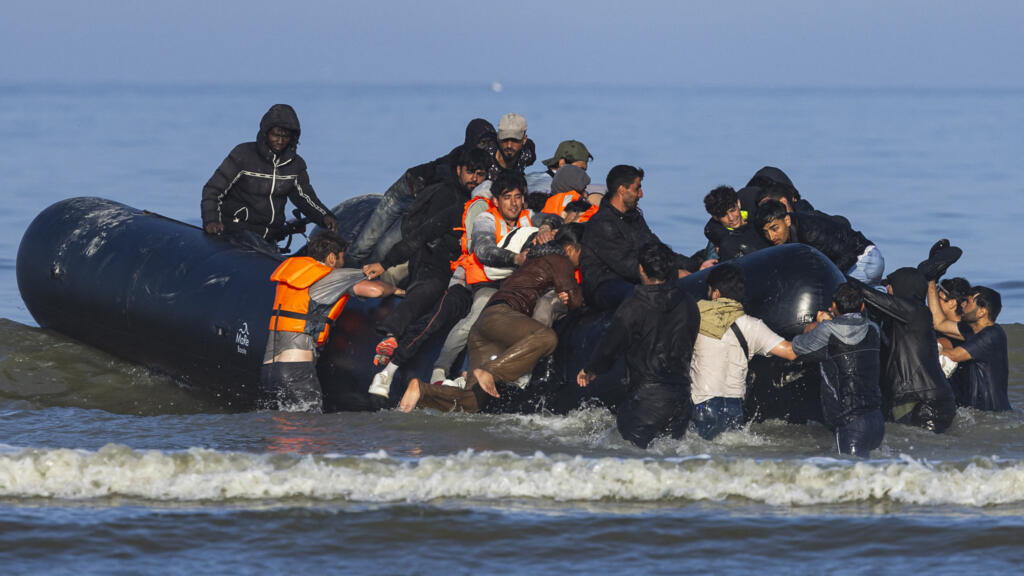
Aid group MSF claims their workers were insulted in northern France last year after giving medical care to people who had survived crossing the English Channel in a boat. 
AFP - SAMEER AL-DOUMY


The organisation said the incident happened on 5 December near Grand-Fort-Philippe as staff were returning from a medical outreach mission to people who had survived attempts to cross the English Channel.

MSF said three activists claiming to belong to the British far-right movement Raise The Colours approached the team and shouted insults.

“These individuals approached the MSF team members in a threatening manner, shouting insults and making defamatory and false statements about the organisation,” MSF said.

Video posted online

The confrontation was filmed by the activists and posted on the group’s social media accounts.

“These images sparked numerous hate messages and threats targeting exiles and humanitarian workers,” MSF said. The organisation added it had filed a complaint with a court in Paris.

French authorities have also opened inquiries into the activities of Raise The Colours.

On 23 January, police chiefs in northern France banned a rally organised by the group’s activists. Police said their actions were part of a xenophobic and anti-immigration ideology and posed a risk to public order.

In mid January, British police banned 10 activists from the movement from entering France.


Climate of hostility

Camille Niel, head of MSF’s mission in France, said the incident reflected a wider climate around migration.

“The repetition of these acts is rooted in a climate of impunity fuelled by rhetoric and migration policies that promote stigmatisation, rejection and hatred, to the detriment of the physical and psychological health of exiled people,” Niel said.


MSF was set up in Paris in December 1971 to provide humanitarian medical care.

In 2019, the charity was active in 70 countries with more than 35,000 staff, mostly local doctors, nurses and other medical professionals.

Logistics technicians, water and sanitation engineers and administrators also work for the group, which receives most of its funding from private donors.

In January, Israel confirmed it would suspend the licences of 37 international humanitarian organisations, including MSF, that operated in the Gaza Strip.

Israeli authorities accused the groups of failing to provide lists of their employees’ names, which are required for security reasons.

MSF called the demand a “scandalous intrusion”. Israel said the measure was needed to stop jihadists infiltrating humanitarian organisations.


UK halts study visas from four countries to stop students claiming asylum

The British government has imposed an "emergency brake" on visas for students from Afghanistan, Cameroon, Myanmar and Sudan, in response to what it said was a surge of requests for asylum from people arriving in the United Kingdom to study.

Issued on: 04/03/2026 - RFI

Medical students from Afghanistan at the University of Glasgow in Scotland on 13 September 2024. The UK is halting all student visas for people from Afghanistan and three other countries. © Andy Buchanan / AFP

In a change to immigration rules announced on Tuesday, the UK will also cease granting work visas to Afghan nationals.

Home Secretary Shabana Mahmood said the ban – the first of its kind – was designed to close a back-door route to claiming asylum.

"Britain will always provide refuge to people fleeing war and persecution, but our visa system must not be abused," she said in a statement.

"That is why I am taking the unprecedented decision to refuse visas for those nationals seeking to exploit our generosity."

The changes are the centre-left government's latest effort to harden its immigration and asylum rules as its rivals on the right use the issue to rally support.

Student visa statistics

The new policy will apply from 26 March.

According to the Home Office, the number of people claiming asylum after arriving in the UK with a valid visa or other permit has more than trebled in the past five years. Around 39,000 such claims were filed last year, bringing the total to 133,760 since 2021.

People from Afghanistan, Cameroon, Myanmar and Sudan make up "an above average proportion" of asylum seekers accommodated at public expense, the ministry said, reporting that claims by students from the four countries had spiked.

Official figures from 2025 show that the top five nationalities with the largest number of people claiming asylum were Pakistan, Eritrea, Iran, Afghanistan and Bangladesh.

The government has reported an increase in the number of applications from Pakistan and Bangladesh in particular, with over 80 percent of claimants from these countries requesting asylum after arriving in the UK on a work, study or other permit. In contrast, 83 percent of Afghan claimants arrived without documents.

A total of 12,578 people claimed asylum last year after coming to the UK on student visas, the government's statistics show. A higher number – 13,557 – applied while on a work visa.


Asylum overhaul

The UK's previous right-wing government also cracked down on student visas, raising financial requirements and barring undergraduates from bringing dependent family members with them to the UK.

Prime Minister Keir Starmer's Labour government has continued the drive to bring down immigration and asylum numbers, especially as polls show rising support for hard-right populist party Reform UK.

Under changes introduced this week, the government made protection for refugees temporary and subject to review every 30 months, after Home Secretary Mahmood argued the UK's system was too generous compared to other countries in Europe.

In November, the UK threatened to block all visas for Angola, Namibia and the Democratic Republic of Congo unless their governments agreed to take back migrants denied permission to stay.

The Home Office has since signed agreements with all three countries to allow Britain to deport people to their territory.


ANTI-MIGRANT REACTIONARY ALLIANCE

Five EU countries team up to build return hubs outside Europe

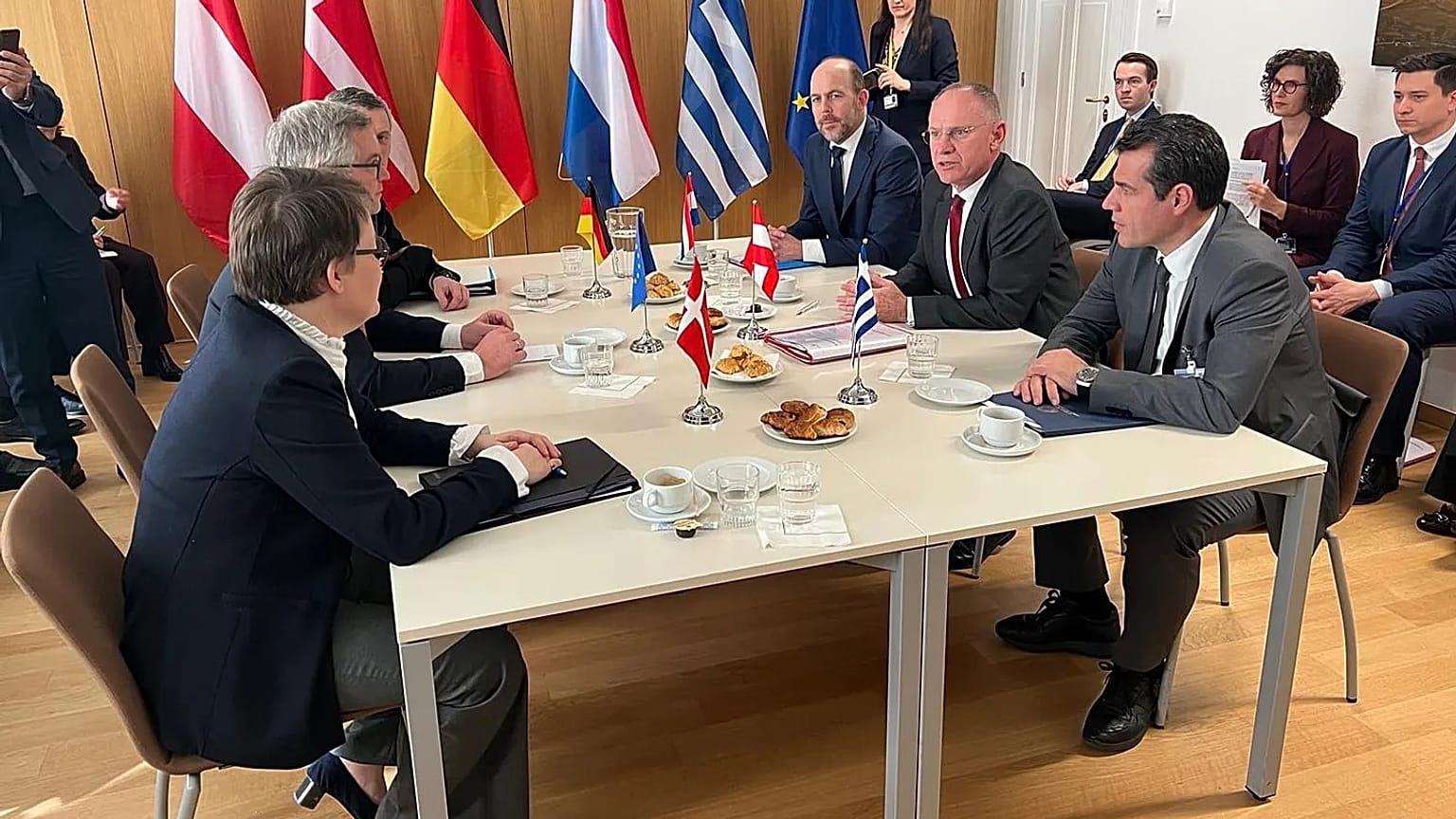
Commissioner Brunner with the minister of Germany, The Netherlands, Greece, Denmark and Austria
Copyright Austrian Interior Minister


By Vincenzo Genovese & Jorge Liboreiro
Published on 

Germany, the Netherlands, Austria, Denmark and Greece are working together to build so-called facilities outside Europe to host irregular migrants who arrive in their territory, a sign of growing momentum for a contentious project.

Germany, the Netherlands, Austria, Denmark and Greece have teamed up to build deportation centres outside Europe, marking the first time a group of EU member states has been established to make the controversial project a reality on the ground.

The extraterritorial camps, also known as return hubs, are meant to host rejected asylum seekers as they wait to be returned to their countries of origin.

Interior ministers from the five countries gathered on Thursday on the margins of a meeting in Brussels. Magnus Brunner, the European Commissioner for Internal Affairs and Migration, took part in the discussions as a guest.

"Returns are an essential part of a well-functioning migration management system [...] and we are very much committed to working together with the Member States on identifying innovative solutions", Brunner said in a press conference after the meeting.

Less than one-third of the people who are ordered to leave the EU are effectively returned to their countries of origin, according to Eurostat.

The coalition aims to "go into concrete implementation" of the deportation centres, Austrian Minister Gerhard Karner told journalists upon his arrival in Brussels.

The joint push from Germany, the Netherlands, Austria, Denmark and Greece builds upon a new regulation that will allow member states to outsource their migration policy by building centres outside the bloc. The hubs are meant to host asylum-seekers whose applications for protection have been turned down in Europe.

The regulation was agreed by EU countries last December and is now being discussed by the European Parliament.

When approved, it will enable governments to deport irregular migrants to third countries unrelated to them, as long as they have bilateral agreements in place. The centres can be either places of transit or locations where a person is expected to stay.

In the meantime, countries are exploring ways to seal partnerships with third countries available to host the migrants they have rejected.

Destination unclear

Germany, the Netherlands, Austria, Denmark and Greece believe that moving ahead in smaller groups is the best way to achieve effective results and prove the contentious model can work in practice, according to diplomats familiar with their thinking.

The coalition already has concrete ideas on how to move ahead, but prefers to keep quiet on any potential destination to avoid spoiling its chances. Any country that might agree to host the return hubs would be offered incentives in exchange.

For Greece, it is important to be the only Southern European country participating in this initiative, government sources told Efsyn newspaper, as the move also sends a deterrent message regarding migration flows.

Other countries are also moving on the topic.

Finland has discussed a similar project with other Nordic countries and is already in talks with non-EU governments, the country's Interior Minister Mari Rantanen told Euronews.

Italy is operating a de facto return hub in Albania, with two centres in Shengjin and Gjader hosting dozens of migrants waiting to be deported.

Still, the idea remains highly controversial. Humanitarian organisations have repeatedly warned that such facilities could result in migrants being held in prison-like conditions, and stressed there is a grave risk of rampant human rights violations.

NGOs have urged the European Parliament to block the regulation, which is due to be voted on by the Civil Liberties Committee on Monday. If approved, it has to be endorsed by the whole Parliament before negotiations with member states can begin.


Multitude: war and democracy in the Age of Empire /. Michael Hardt and Antonio Negri. p. cm. Sequel to: Empire. Includes index. ISBN 1-59420-024-6. 1 ...

If for no other reason Empire deserves, in my view, the international success it is enjoying. Antonio Negri Thank you. The fact remains that now, alongside ...

Empire / Michael Hardt and Antonio Negri. p. cm. Includes ... missions of Empire will be constituent assemblies of the multitude, social ...