Friday, March 20, 2026

Trump's last resort: Inside his four-part plan to topple American democracy


March 19, 2026
ALTERNET

Many of you are justifiably worried that Trump will interfere in the midterm elections. He’s worried he’ll lose Congress: His polls continue to plummet. The economy is worse than ever. Prices are rising. Few new jobs are being created. And his war in Iran is going badly.

We also know he has no qualms about trying to overturn elections. He’s tried before. In February, he stated he would only respect the results of the 2026 midterms “if the elections are honest” — echoing his dangerous threat from 2020. He’s also kicked off a redistricting war and called for elections to be “nationalized.”

He continues to make the baseless claim that noncitizens are voting in our elections, but multiple investigations and fact-checks by election officials from both parties have repeatedly confirmed it is exceedingly rare.

Hence, it’s important now — eight months before the midterms — to “harden” our election systems and be vigilant against what he’s likely to do.

So today I’d like your thoughts on what he’s most likely to do and where the biggest threats lie.

I’m most concerned about Trump interfering in one of these ways:

1. Enacting a federal law requiring proof of citizenship (birth certificate or passport) and an exactly matching current photo ID, in person, to vote.

These requirements are in the SAVE America Act, which the House passed last month and is now under consideration in the Senate. It would disqualify an estimated 21 million people from voting, most of them Democrats, because they can’t afford the cost or hassle of finding their birth certificates — including married women who have changed their names.


The act also threatens election officials with imprisonment if they fail to uphold the bill’s strict voter documentation requirements, and it makes it harder to cast mail-in ballots (throwing into chaos eight states where vote-by-mail is currently the primary method of voting).

The act is a risk, to be sure, but Trump can’t get this measure through the Senate, because Democrats are sure to filibuster it. The only way it has a prayer is if almost every Senate Republican voted to abolish the filibuster. But this is doubtful because some Senate Republicans fear that without the filibuster, Democrats would be able to pass laws that Republicans abhor when Dems are next in the majority.

2. Stationing ICE and Border Patrol agents at polling places.


Some worry that Immigration and Customs Enforcement and Border Patrol agents will be deployed at polling locations during the midterm elections. The intent would obviously be to intimidate voters, especially in immigrant communities and communities of color, and create fear at the ballot box.

This is also a risk, but (for what it’s worth) the Department of Homeland Security says it won’t happen. Heather Honey, who serves as deputy assistant secretary for election integrity at DHS, told a group of secretaries of state that “any suggestion that ICE will be present at any polling location is simply not true.”

Meanwhile, measures to restrict federal agents from operating at or near election-related locations have been introduced in more than half a dozen states. Plus, a federal law dating to the end of the Civil War already bans sending the military or other “armed men” to polling places, except to repel armed enemies of the United States. Finally, the U.S. Constitution also gives states — not the president or federal government — the responsibility for running elections.

3. Seizing ballots and voting machines.


Tulsi Gabbard, director of national intelligence, has been working for months on an investigation into foreign election interference in U.S. voting machines, which could become a pretext for the regime’s seizing them to protect “national security.” Gabbard and the FBI induced Puerto Rico to turn over some of its voting machines and software images for analysis last year.

Gabbard was also on hand on January 28 in Fulton County, Georgia, when the FBI — acting on a search warrant that relied on debunked claims about the 2020 race — seized hundreds of boxes of ballots from a government warehouse. And the Department of Justice has issued lawsuits against dozens of states for copies of their voter rolls that include sensitive personal information.

It’s not hard to imagine the FBI or Justice Department trying to seize ballots while the 2026 midterm votes are being counted. Trump demanded as much in 2020, although his then attorney general rejected that as unlawful. Pam Bondi, the current attorney general, has shown herself willing to do whatever Trump asks, regardless of what the law says.

But the federal courts are unlikely to allow this. A president doesn’t have the authority to regulate elections, which the Constitution assigns to the states.


4. Getting pro-Trump forces to take over state and local voting systems.

Pro-Trump forces in swing states are trying to change election rules and take over local voting systems.

In recent months, Republicans in Michigan, Arizona, and North Carolina have sought changes in election rules that would hobble likely Democratic voters. They want to alter the places and times of voting to disadvantage Democrats, require high levels of proof of citizenship, and challenge the certifications of Democratic winners. Republicans in more than half of state legislatures have introduced legislation to restrict mail-in ballots.

But many of these initiatives have already been struck down by state and federal courts, and voting rights lawyers tell me that others will be challenged on First and 14th Amendment grounds.

Few state proposals to restrict mail-in ballots are under active consideration, presumably because Republicans worry that the restriction may hurt them as much if not more than Democrats. (Ditto for a bill now before Congress to ban mail-in ballots.)

Hence, today’s Office Hours question: Which is Trump’s most likely threat to the integrity of the midterm elections?

Robert Reich is a professor of public policy at Berkeley and former secretary of labor. His writings can be found at https://robertreich.substack.com/.

'Nightmare scenario' that could mean the end of US democracy: report


A member of the Federal Bureau of Investigation (FBI) Evidence Response Team prepares to enter the Fulton County Election Hub and Operation Center after the FBI executed a search warrant there in relation to the 2020 election, according to a law enforcement official familiar with the matter, in Union City, Georgia, U.S. January 28, 2026. REUTERS/Alyssa Pointer
ALTERNET

President Trump is trying to steal the 2026 midterm elections in real time, experts say. But his opponents have the power to stop him.

In a recent report for Vox, Eric Levitz broke down the various methods that Trump may use to rig the results in his favor. These include ordering the military to seize voting machines and ballots in key districts before they have been counted, then altering the results so that the House Republicans can reject enough Democrats on the grounds of their “qualifications” to retain control of that chamber.

Levitz also pointed to Trump’s recent baseless raid on Fulton County, Georgia voting machines, with Director of National Intelligence Tulsi Gabbard present, as proof that Trump is considering doing this while claiming to protect national security. Finally Levitz observed that Trump has talked about stationing ICE at polling stations, which could chill voter turnout.

"For anybody who doubted that this administration is laying the foundation to interfere in elections, the deluge of activity over the last two weeks should lay those doubts to rest,” Wendy Weiser, Vice President of Democracy at the Brennan Center for Justice, told Vox. Weiser’s perspective was echoed by Derek Clinger, Senior Counsel at the State Democracy Research Initiative, University of Wisconsin Law School.

"The nightmare scenario used to be that Trump would invoke the Insurrection Act and have the military seize ballots and machines from a swing state on election night,” Clinger said. “But Fulton County suggests a much more plausible scenario: one where the seizure of ballots is conducted with the appearance of a legal process. I think that approach is both more likely to happen and also harder to challenge in real time."

Yet Levitz argues that Trump’s attempts could fail. Although Justin Levitt, a former Justice Department Official and professor at Loyola Law School, told Vox he believes Trump will do things like misuse ICE to deter people from voting, he does not think Trump’s attempts to directly meddle with voting will be upheld by courts.

"I think every magistrate judge in the country would understand the difference between a search warrant to seize materials for an election that happened five years ago and a search warrant to seize election materials from an election in progress,” Levitt told Vox. Referring to the courts upholding Trump’s Fulton County raid, Levitt said that “I understand why people are worried. But it's not remotely the same."

Levitz further added that any military seizure order would face judicial, political and potentially military resistance, with even some of Trump's own party members rebuking his election takeover remarks. Additionally, ICE does not have enough people to blanket large areas, and their presence at voting stations may inspire heavy turnout rather than intimidate voters into not showing up. Indeed, this is exactly what happened in a Minnesota special election following ICE operations.

As a result of Trump’s recent election meddling efforts, such as assigning an FBI Election Executive, House Minority Leader Hakeem Jeffries warned that “what Donald Trump wants to do is try to nationalize the election. Translation: steal it. And we're not going to let it happen.” Elie Mystal of The Nation condemned people who downplay the threat of Trump stealing the elections, arguing “to ignore the threat posed by Trump, to pretend like everything is going to be okay, to assume that upstanding members of the courts will rise to prevent the theft of the election is to stick your head in the sand.”

He added, “Trump and the Republicans have no intention of letting the upcoming midterms (in which Republicans are predicted to lose control of the House) proceed fairly.”

Although Trump claims the 2020 election was stolen from him, the president has a long history of making baseless claims of theft whenever he loses. When “The Apprentice” was snubbed for Emmys, he accused the process of being rigged. After losing the 2016 GOP Iowa caucuses, he claimed Texas Senator Ted Cruz had stolen them. Before the 2016 presidential election against Hillary Clinton, he declared he'd only accept results "if I win." Then, despite winning in the Electoral College against Clinton, Trump falsely alleged millions voted illegally to explain his vote loss in the popular vote. When he lost in both the Electoral College and popular vote to former President Joe Biden in the 2020 presidential election (despite trying to throttle mail-in votes by jamming up the Post Office), he filed dozens of lawsuits — losing 59 cases out of 60 cases that were rejected by over 90 judges, including many of his own appointees. Even Trump's then-Attorney General, William Barr, found no evidence Trump lost through fraud.
'Hate, hate, hate': Data guru has bad news for Trump

March 20, 2026 
ALTERNET

CNN anchor Boris Sanchez says “history shows that when fuel prices rise, a president's popularity can drop,” and polling appeared to verify his claim.

CNN analyst Harry Enten had no good news for President Donald Trump regarding his recent impact on gas prices and how this was sinking the future of his Republican Party.

“Not good. Not good, Boris Sanchez. “Not good,” said Enten. “I mean, look at what we're talking about here. … Net approval of Trump on gas prices overall: Whoo! -39 points. My goodness gracious. You think that's low. Look at Independence! Even lower: -53 points.”

“He is underwater, swimming in the deep blue sea,” said Enten. “And even amongst those who voted for him in 2024, he's getting just 56 approval there. The bottom line is this: Americans, Independence: They hate, hate, hate the way that Trump is handling gas prices at this point.”

Enten pointed out that Trump was more trusted on handling the cost of living than Kamala Harris in Oct. 2024 by more than 3 points. In fact, inflation was the key reason why Trump was reelected to a second term. It sank the Biden presidency and derailed Harris' chances of winning.


But today Enten points out that Trump is -41 points on the cost of living.

“And I was digging deeper into that poll, Boris, and I saw that his net approval rating among Independents was -60. Minus 60 points! Among Independents [he has] a near universal dislike of trust on the cost of living,” Enten added. “This is now a record low for Donald Trump on the cost of living, including either his first term or his second term. And with gas prices going up, that means the cost of living is going up as well.”

Where this puts Trump and Republicans just a few months ahead of midterms is an even more dismal prediction, said Enten.

“Trump is below 50 percent. And with the president's party average House midterm seat shift … they lose 35 seats on average in the House of Representatives when the president … at the beginning of the spring, before the midterm election, his approval rating is under 50 percent — and Donald Trump is way under 50 percent.


- YouTubeyoutu.be
Netanyahu Threatens ‘Ground Component’ in Iran as Poll Shows Just 7% in US Would Support Invasion

“Trump doesn’t need Israel’s permission to end this war,” said one observer. “The longer he waits, the more Americans pay.”


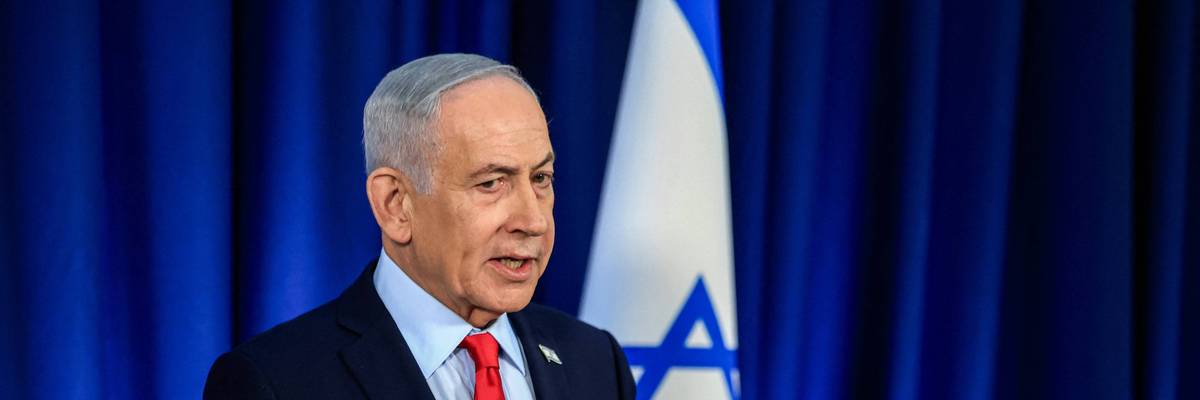
Israeli Prime Minister Benjamin Netanyahu gives a press conference in Jerusalem on March 19, 2026.
(Photo by Ronen Zvulun/Pool/AFP via Getty Images)

Jake Johnson
Mar 20, 2026
COMMON DREAMS

Israeli Prime Minister Benjamin Netanyahu said Thursday that “there has to be a ground component” to the war on Iran as a new survey of US voters showed just 7% support for a large-scale invasion involving American forces.

“It is often said that you can’t win, you can’t do revolutions from the air. That is true,” Netanyahu told reporters during a press conference in Jerusalem. “You can do a lot of things from the air... but there has to be a ground component, as well. There are many possibilities for this ground component. And I take the liberty of not sharing with you all of those possibilities.”

After Secret Briefing, Dem Senators Warn Trump ‘On a Path’ to Ground Invasion of Iran

Nearly 70% of US Voters Oppose Iran Ground Invasion as Trump Weighs Troop Surge


Netanyahu’s insistence on the necessity of ground operations in Iran came as US President Donald Trump declared to reporters in the White House on Thursday, “I’m not putting troops anywhere.”

“If I were,” he added, “I certainly wouldn’t tell you.”

A Reuters/Ipsos poll released Thursday found that just 7% of US voters support the idea of a large-scale ground invasion of Iran—but 65% of Americans believe that Trump will order such an operation anyway.

Just 34% of US voters would support “deploying a small number of special forces troops” to Iran, the survey found, while 55% said they would oppose the use of any ground troops.

The survey came days after Reuters reported that the Trump administration is “considering deploying thousands of US troops to reinforce its operation in the Middle East, as the US military prepares for possible next steps in its campaign against Iran.”

The Pentagon’s push for $200 billion in supplemental funding from the US Congress, which did not authorize the Iran war, amplified concerns that the Trump administration is gearing up for a prolonged conflict that could involve American troops on the ground, despite Trump’s repeated public insistence that the war will be over “very soon.”

Both US and Israeli intelligence agencies have reportedly assessed that Iran’s regime is not on the verge of collapse after nearly three weeks of relentless bombing.

“Western officials and analysts who study Iran said they see little near-term prospect of a ‘regime change’ end to the 47-year-old Islamic republic or the rise of a more democratic government,” The Washington Post reported earlier this week. “The latter is a goal cited by Israeli Prime Minister Benjamin Netanyahu and sometimes by President Donald Trump, who has said he’ll know the war is over ‘when I feel it in my bones.’”

Raed Jarrar, advocacy director at the pro-democracy group DAWN, said Thursday that “the United States and Israel are not fighting the same war,” pointing to recent Israeli strikes on Iranian energy infrastructure. The strikes drew a public rebuke from Trump, who is facing soaring gas prices at home due to the illegal war he launched in partnership with Netanyahu.

“Trump wants a quick exit. Netanyahu wants to permanently destroy Iran as a regional power,” said Shakir. “There is an exit. Trump doesn’t need Israel’s permission to end this war. He’s done it before in Yemen. The longer he waits, the more Americans pay.”

Trita Parsi, executive vice president of the Quincy Institute for Responsible Statecraft, warned Thursday that Trump may be running out of time to “convincingly declare victory and provide himself a face-saving exit.”

“Israel will do all it can to sabotage any such off-ramp, including killing Iranian’s negotiators,” Parsi wrote. “But it will become increasingly clear—if it hasn’t already—to Trump that all his escalatory options only deepen the lose-lose situation he has put himself in.”

“That’s why Trump should never have listened to Netanyahu in the first place,” he added.
FCC Approval of Latest Megamerger Accelerates ‘Creation of State Media’ Under Trump, Critics Warn

One analyst said the Nexstar-Tegna merger was “yet another threat to our democracy, with fewer media companies controlling what gets reported on and how.”


The Nexstar Media Group logo appears on a smartphone screen in this illustration photo in Reno, United States, on December 26, 2024.
(Photo by Jaque Silva/NurPhoto via Getty Images)


Brad Reed
Mar 20, 2026
COMMON DREAMS

Free press advocates warned Thursday that the Federal Communications Commission’s decision to greenlight Nexstar’s takeover of Tegna further imperils US democracy by accelerating the consolidation of broadcast media and extending the reach of right-wing propaganda.

According to The New York Times, the $6.2 billion deal will form a conglomerate that will “oversee 265 television stations in 44 states and Washington, reaching about 80% of US households,” making it by far the largest owner of local TV news in the country. Nexstar is headed by megamillionaire Perry Sook.


‘One Family Is About to Control CBS, CNN, HBO, and TikTok’: Alarm Grows Over Paramount-Warner Bros. Merger


Commissioner Anna Gomez, the lone Democrat currently serving on the FCC, accused her colleagues of rushing approval of the Nexstar-Tegna merger while keeping the general public completely in the dark.

“This merger was approved behind closed doors with no open process, no full commission vote, and no transparency for the consumers and communities who will bear the consequences,” said Gomez, who added that the entire process was “meant to avoid public scrutiny.”

Several critics echoed Gomez’s concerns in denouncing approval of the merger.

Matt Wood, general counsel and vice president of policy at Free Press, accused the FCC of ignoring its own rules limiting broadcast TV station ownership to create a right-wing propaganda machine aimed at pushing the agenda of President Donald Trump and his allies.

“This deal would create a massive broadcast conglomerate willing to put the political agenda of Donald Trump over the needs of the communities local television serves,” said Wood. “[FCC Chairman Brendan] Carr and his allies in Nexstar’s executive suites have put up a smokescreen of rhetoric designed to dupe people into believing that these national conglomerates are truly local stations.”

John Bergmayer, legal director at Public Knowledge, described the FCC’s merger approval as “a betrayal of the agency’s legal obligations and the public it is supposed to serve.” He predicted the deal would have a devastating impact on the quality of local TV news.

“In every market where Nexstar already operates multiple stations, it has consolidated news operations, merged newsrooms, and cut staff,” Bergmayer said. “Nexstar’s CEO told investors the company analyzed the overlap markets ‘line by line, person by person’ to determine where to make cuts. Fewer owners means fewer reporters, fewer editorial voices, and fewer checks on local power.”

Bergmayer added that the merger is “yet another threat to our democracy, with fewer media companies controlling what gets reported on and how.”

Jeff Jarvis, professor emeritus at the CUNY Graduate School of Journalism, warned that the merger is part of “the creation of state media” under the Trump administration, and described it as “even more dangerous than Ellison Inc.,” a reference to the proposed megamerger between Paramount Skydance—a company controlled by the son of billionaire Trump donor Larry Ellison—and Warner Bros. Discovery.

Even with FCC approval, Nexstar’s acquisition of Tegna is not yet a done deal, as eight state attorneys general this week filed an antitrust lawsuit to block the merger.

California Attorney General Rob Bonta, one of the state AGs involved in the lawsuit, described the Nexstar-Tegna deal as “illegal, plain and simple.”

“When broadcast media is owned by a handful of companies, we get fewer voices, less competition,” said Bonta, “and communities lose the critical check on power that local journalism delivers.”
Americans Agree: The Government Shouldn’t Use AI Tech to Spy on Us

What is lacking is any action by Congress to protect our rights. Do we want to live in a country where our fundamental rights depend on the terms of service of powerful technology companies?


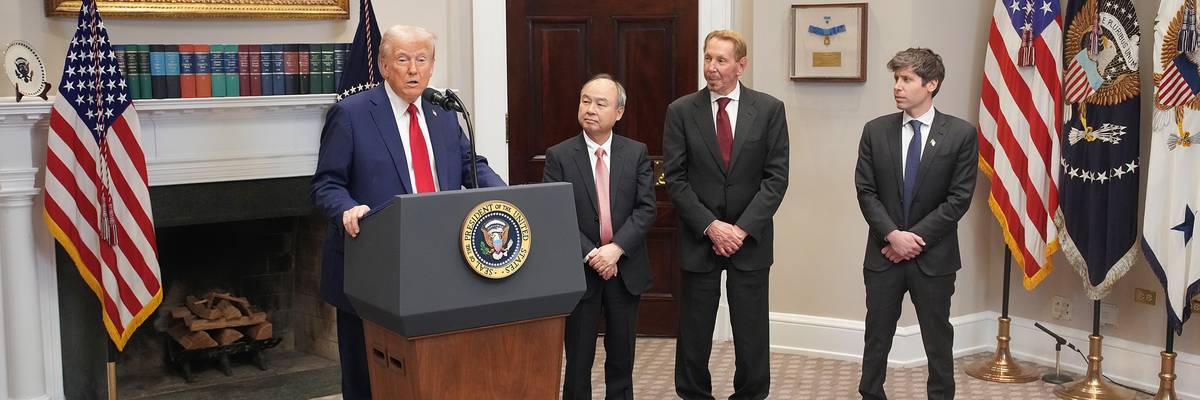
U.S. President Donald Trump speaks in the Roosevelt Room of the White House while SoftBank CEO Masayoshi Son, Oracle CTO Larry Ellison, and OpenAI CEO Sam Altman look on on January 21, 2025 in Washington, DC.
(Photo by Andrew Harnik/Getty Images)

Sumit Sharma
Mar 20, 2026
Common Dreams


Americans, it turns out, have a clearer view of the AI surveillance debate than most of Washington. A new poll from Americans for Responsible Innovation finds that 76% of Americans oppose allowing the government to force AI companies to hand over unrestricted access to their technology for surveilling citizens. The public, in other words, increasingly understands that our Fourth Amendment protections are under threat.

What is lacking is any action by Congress to protect our rights. Do we want to live in a country where our fundamental rights depend on the terms of service of powerful technology companies? The fight over whether the Pentagon should be able to use frontier AI for mass domestic surveillance and autonomous weapons has clarified the challenges we all face, especially under an administration with scant regard for the law.


Rights and Tech Coalition Calls On Congress to End Warrantless Mass Surveillance


Bucking ‘Huge Consensus’ at India Summit, Trump Admin Opposes Global AI Guardrails

It’s commendable that Anthropic took a principled stance and said no to the Department of Defense (DOD). But it is an outlier, for now. Others, like OpenAI, are eager to profit from the billions in government contracts and swooped in to replace Anthropic.

Frontier AI model companies are also only one part of enabling even more domestic surveillance of US citizens. Other companies, such as Microsoft and Amazon, provide critical infrastructure for AI models. For example, every query the Pentagon runs through GPT, every bulk data analysis, every AI-assisted profile of an American citizen that touches OpenAI’s models runs on Microsoft’s Azure cloud.

American citizens and consumers understand what is at stake here, and that is why an overwhelming majority oppose giving the government unchecked surveillance power.

OpenAI and Microsoft jointly confirmed on February 27 that Azure remains the exclusive cloud provider for OpenAI’s APIs, and that any collaboration between OpenAI and a third party, including for government use, is hosted on Azure. Microsoft is the infrastructure. And infrastructure is where surveillance lives. Other companies like Palantir use these models to build surveillance tools. Palantir reportedly has signed a billion-dollar contract with the Department of Homeland Security.

These companies hide behind terms of service, which they claim will stop the government from surveilling US citizens. But these are empty worlds.

OpenAI agreed to DOD terms when Anthropic wouldn’t, and then scrambled to dress up the deal with reassuring language after the backlash nearly buried it. Sam Altman himself admitted the whole thing was “rushed” and that “the optics don’t look good,” which is one way to describe handing the Pentagon sweeping AI capabilities while your competitor gets blacklisted for insisting on civil liberties protections.

When The Guardian reported in February that Immigration and Customs Enforcement (ICE) had more than tripled the data it stores on Azure in just six months, from 400 terabytes to nearly 1,400 terabytes, while deploying Microsoft’s own AI tools to search and analyze images and video, Microsoft responded with a one-liner: Its policies and terms of service “do not allow our technology to be used for the mass surveillance of civilians,” and the company does “not believe ICE is engaged in such activity.” That’s it. That is the entirety of Microsoft’s public position on AI-powered government surveillance in 2026: a terms-of-service claim and a profession of ignorance about what its own customer is doing with its own platform.

This is in contrast to the position Microsoft took in Israel, where last September Microsoft terminated access to Azure for an Israeli military intelligence unit after reporting confirmed the platform was being used for mass surveillance of Palestinians. The company’s president, Brad Smith, then declared that Microsoft prohibits its technology from being used for mass surveillance of civilians “in every country around the world”...except the US it seems.

These companies’ positions are strategically convenient and profitable for them, but untenable for all of us. Legal experts have spent weeks explaining why OpenAI’s revised contract language is insufficient to prevent surveillance, because the operative standard is “consistent with applicable law,” and the US government has historically interpreted that standard to accommodate sweeping surveillance programs.

The same applies to the terms of service of cloud service providers like Microsoft and Amazon. Have these changed substantially since the Snowden revelations that the National Security Agency was conducting mass digital surveillance? Instead of backing down, Amazon, for example, is extending this digital surveillance network into the real world via its Ring service. Dario Amodei is right, what’s at stake now is much larger—“a true panopticon on a scale that we don’t see today, even with the CCP.”

American citizens and consumers understand what is at stake here, and that is why an overwhelming majority oppose giving the government unchecked surveillance power. That kind of consensus is rare in American politics, and it cuts across partisan lines. Congress should act, and companies like Microsoft, Amazon, and the frontier AI companies should be on notice.


Our work is licensed under Creative Commons (CC BY-NC-ND 3.0). Feel free to republish and share widely.


Sumit Sharma
Sumit Sharma is the executive director of NextGen Competition, and an independent economist, advocate, and policy expert in regulatory, competition and sectoral policies.
Full Bio >


Trump AI Framework Would Deliver ‘Big Tech’s Top Policy Priority’: A Ban on State Regulations

“Written by Big Tech, for Big Tech,” said Rep. Yvette Clarke of the Trump administration proposal.


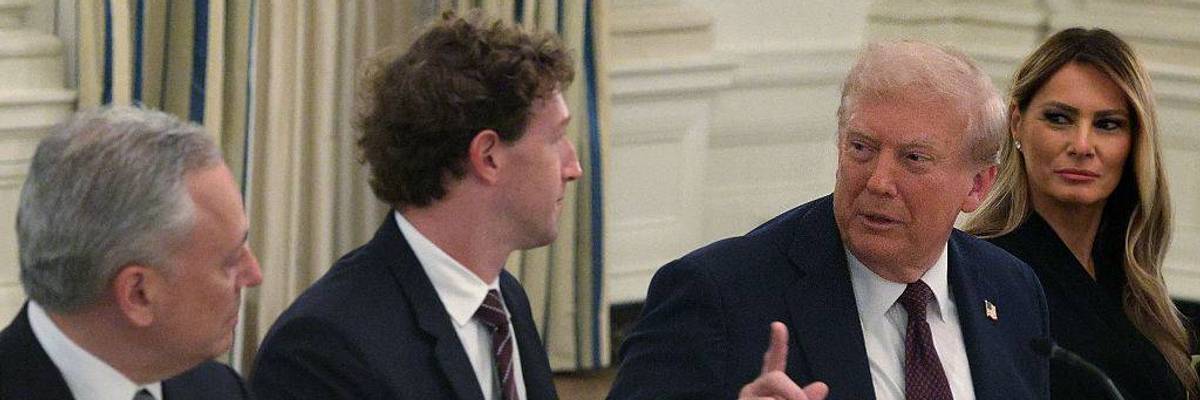
White House ‘AI and Crypto Czar’ David Scahs, Meta CEO Mark Zuckerberg, US President Donald Trump and first lady Melania Trump share a moment at the White House on September 4, 2025 in Washington, DC.
(Photo by Alex Wong/Getty Images)


Brad Reed
Mar 20, 2026
COMMON DREAMS

The Trump administration on Friday released its national policy framework for regulating artificial intelligence, and critics said it gave Silicon Valley a massive gift by coming out in favor of barring state regulation of the technology.

Specifically, Big Tech critics pointed to the framework’s recommendation that the federal government preempt state laws regulating AI that could otherwise “act contrary to the United States’ national strategy to achieve global AI dominance.”


Trump’s Big Tech Pledge Won’t Do: Advocates Make Case for Nationwide Moratorium on Data Centers

“States should not be permitted to regulate AI development,” the framework stated, “because it is an inherently interstate phenomenon with key foreign policy and national security implications.”

The Trump administration’s paper also argued that states “should not unduly burden Americans’ use of AI for activity that would be lawful if performed without AI” and “should not be permitted to penalize AI developers for a third party’s unlawful conduct involving their models.”

Robert Weissman, co-president of Public Citizenslammed the AI policy framework, which he said appeared designed “to protect Big Tech at the expense of everyday Americans.”

“Trump’s AI framework is a hollow document with only one tough and meaningfully binding provision, delivering Big Tech’s top policy priority: It aims to preempt all state laws and rules dealing with AI,” said Weissman. “Preemption would effectively mean no US regulation of AI at all, with the narrow exception of rules to deal with nonconsensual intimate deepfakes, because there are no national rules in place—and this framework would impose no additional standards of consequence.”

Weissman added that while states’ actions to regulate AI are inadequate, they are at least “trying to meet the novel and enormous challenges of the moment,” which “is exactly why Big Tech wants to shut down their efforts.”

Brad Carson, president of Americans for Responsible Innovation, called the White House’s preemption of state AI laws a mistake, predicting that it would lead to even worse problems than the ones created by unregulated social media over the past two decades.

“I think it’s like this: if you think the current state of play in social media guardrails are A-OK, then you’ll be fine with the framework,” he wrote. “If—like most—you believe we made catastrophic mistakes re social media, then you should fervently oppose this vacuous ‘framework.’”

Rep. Don Beyer (D-Va.) singled out the proposed ban on state AI regulations as a particularly troubling aspect of the framework.

“The White House National AI Policy Framework reinforces the Trump administration’s commitment to preempting state-level AI laws without the establishment of clear, enforceable federal guardrails to address the urgent risks posed by AI systems,” he wrote. “It even seeks to limit congressional regulatory action. But until federal action ensures safe and responsible AI development, deployment, and use, states must retain the ability to implement policies to protect the American public.”

Matt Stoller, an antitrust researcher and author of the BIG newsletter, argued that the Trump AI framework should be one of the first things a future Democratic president throws in the garbage after taking office.

Rep. Yvette Clarke (D-NY) delivered a pithy analysis of the White House framework, describing it as being “written by Big Tech, for Big Tech.”
‘People Can’t Afford Healthcare’: Sanders Rips Pentagon Request for Another $200 Billion

“People can’t afford childcare,” said Sen. Bernie Sanders. “And this guy, in addition to giving tax breaks to billionaires, now wants to spend another $200 billion on a war that should never have been fought.”


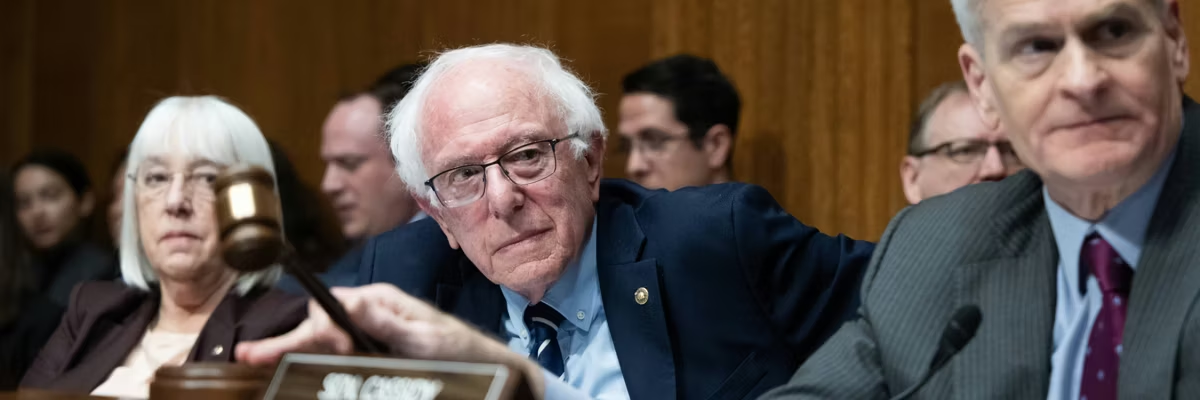
Sen. Bernie Sanders (I-Vt.) looks on during a Senate hearing on February 25, 2026.
(Photo by Tom Williams/CQ-Roll Call, Inc via Getty Images)


Jake Johnson
Mar 20, 2026
COMMON DREAMS


US Sen. Bernie Sanders said Thursday that it is absurd for the Trump administration to demand another $200 billion from Congress for an illegal war on Iran after lawmakers already approved $1 trillion in military spending for the year—and while millions of people across the nation are struggling to afford basic necessities.

“You got people all over this country, 20% of households, spending 50% of their income on housing,” Sanders (I-Vt.) said in an appearance on MS NOW. “People can’t afford healthcare. People can’t afford childcare. And this guy, in addition to giving tax breaks to billionaires, now wants to spend another $200 billion on a war that should never have been fought.”


‘Not Another Penny for Another Endless War,’ Ilhan Omar Says as Trump Seeks $200 Billion

‘Ridiculous’: Pentagon Doesn’t Even Know What to Do With Extra $500 Billion Trump Wants to Spend

The senator’s remarks came as President Donald Trump, who has not yet formally requested the funds from Congress, suggested another $200 billion would be a “small price to pay” as the US-Israeli war on Iran heads toward its fourth week with no end in sight.

“I think the Trump people are in a bit of panic,” Sanders said Thursday. “They’re losing ground. Gas prices are soaring. There is massive discontent against this war. It’s got to end, and we’ve got to make sure that Trump is neutered in 2026.”


With the Trump administration considering a plan to deploy thousands of additional troops to the Middle East amid widespread fears of a ground invasion of Iran—which would explode the price tag of an already costly war—the National Priorities Project (NPP) released an analysis highlighting where the $200 billion requested by the Pentagon could be better spent.

The group estimated that $200 billion would be enough for all of the following this year:Medicaid for the 17 million people who will lose it due to budget cuts and other policies;
Food stamps for the 22 million people who will go hungry due to Trump’s budget cuts;
Medical care for the 1.8 million veterans of the last forever war who still live with disabilities; and
Tripling the number of kids in Head Start, from just over 700,000 to 1.4 million kids.

“Pete Hegseth would rather the US bomb Iranian families than feed American families,” wrote NPP’s Lindsay Koshgarian, referring to the Pentagon secretary. “We should remember the lies that led us into war in Iraq a generation ago. That war ultimately cost nearly $3 trillion. We must not go down that path again. Our tax dollars should be helping struggling Americans, not feeding new forever wars.”


$200 Billion for Trump’s Iran War Is Beyond Grotesque

Every Member of Congress should announce, right now, that they will reject this monstrous war funding proposal.


In this aerial handout picture released by the Iranian Press Center, mourners dig graves during the funeral for children killed in a reported strike on a primary school in Iran’s Hormozgan province in Minab on March 3, 2026. Iranian media have reported hundreds of Iranian casualties, including at a girl’s school, although AFP reporters have not been able to verify tolls independently.
(Photo by Iranian Press Center / AFP via Getty Images)


Robert Weissman
Mar 20, 2026
Common Dreams

The Trump administration’s planned $200 billion war spending request is grotesque beyond words.

It should properly be understood not just as a request to replenish supplies, but to expand, escalate, and perpetuate the illegal, unconstitutional, unpopular and devastating war on Iran. Congress should understand that approving any portion of this funding opens the gates for one, two, and potentially many more war funding requests in the future.


‘Hell No’: Pentagon Wants Over $200 Billion to Fund Trump’s Illegal Iran War


$1 Billion Daily Cost of Trump’s Iran War Could Fund Food Aid, Healthcare for Tens of Millions

How dare the administration propose this gargantuan sum to expand an illegal war of choice at the same time it has rammed through deep cuts in health care and food assistance, refuses to spend foreign assistance at a cost of millions of lives, and has cut spending on protecting clean air, maintaining our national parks, investing in health research, protecting consumers from fraud, and so much more.

Two hundred billion dollars is enough to materially change the lives of Americans and truly make our country stronger. It would be enough to restore food assistance to the four million Americans and Medicaid to the 15 million Americans who will lose those crucial supports under the Republican reconciliation bill; establish universal pre-K education; pay for the annual construction of more than 100,000 units of housing; double the budget of the Environmental Protection Agency; and expand Medicare to cover dental, vision and hearing.

Every Member of Congress should announce, right now, that they will reject this monstrous war funding proposal, before it is formalized.


Our work is licensed under Creative Commons (CC BY-NC-ND 3.0). Feel free to republish and share widely.


Robert Weissman
Robert Weissman is the president of Public Citizen. Weissman was formerly director of Essential Action, editor of Multinational Monitor, a magazine that tracks corporate actions worldwide, and a public interest attorney at the Center for Study of Responsive Law. He was a leader in organizing the 2000 IMF and World Bank protests in D.C. and helped make HIV drugs available to the developing world.
Full Bio >
Israel Didn’t ‘Drag’ the US Into War—American Hawks Have Wanted This for Decades

Blaming Israel alone for this catastrophe lets US leaders off the hook for their actions.


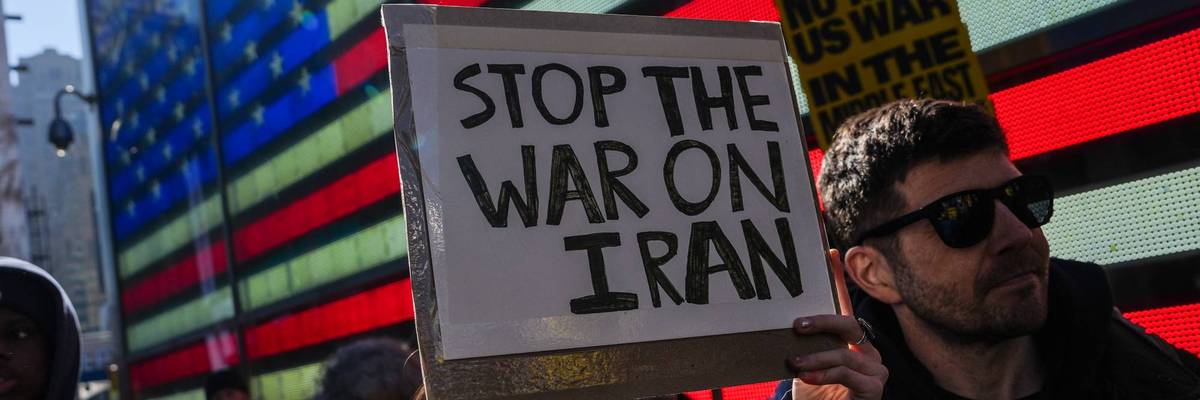
Protesters gather in Times Square as the nation reacts to “major combat operations” in Iran on February 28, 2026 in New York City.
(Photo by Ryan Murphy/Getty Images)
Common Dreams


The US and Israel have launched a deadly—and spreading war—against Iran. Since the conflict could easily become one of the drawn out and catastrophic wars that President Donald Trump postured against when campaigning, many are asking if Israel dragged Trump into this disaster. But while Israel definitely lobbied the White House to attack Iran—and it is partnering with the US in the war—it did not “drag” the US into it.

The truth is, leaders in the US were all too willing to launch this war on their own. We need to hold them accountable—and to beware of fringe, antisemitic conspiracy theorists who blame Jewish people or institutions for the Trump administration’s own well-documented militarism.

Netanyahu’s Influence


There is no question that Israeli Prime Minister Benjamin Netanyahu and other Israeli leaders pushed the US to join them in attacking Iran.

Both Netanyahu and the Israeli military’s chief of staff visited Washington just weeks before the war. And when asked why the US attacked Iran when it did, US Secretary of State Marco Rubio pointed to Israel’s influence. “We knew that there was going to be an Israeli action,” Rubio said. “We knew that that would precipitate an attack against American forces, and we knew that if we didn’t preemptively go after them before they launched those attacks, we would suffer higher casualties.”

While Netanyahu has been pushing for a war like this, he was not pushing an unwilling or reluctant US government.

More recently, Joe Kent—the director of the National Counterterrorism Center—resigned in opposition to the war, saying that “it is clear that we started this war due to pressure from Israel and its powerful American lobby.”

Most Americans opposed the war before it started, and it has proven divisive among the president’s highest profile MAGA supporters. The White House has been vague and contradictory on why it wanted to attack Iran, what the goals of the war are, and how long it will last.

If Americans do not want the war, and the White House cannot explain it, it is reasonable to conclude that it is driven by some outside force. And given Netanyahu’s long-standing belligerence toward Iran—which he has claimed was an imminent threat for 30 years while positioning himself as the one who could defeat it—and Trump’s closeness with the Israeli leader, the notion that the US has been pulled into Israel’s war is a fair conclusion to draw.

But in addition to the fact that this war is the latest and most extensive example of a global rampage by Trump’s Pentagon, there has been enthusiasm in Washington for decades to attack Iran in particular. And while Netanyahu has been pushing for a war like this, he was not pushing an unwilling or reluctant US government. Blaming Israel for this catastrophe lets US leaders off the hook for their actions.

A Half Century of US Hostility to Iran


US hostility toward Iran goes back more than half a century. In 1953, the CIA collaborated with British intelligence and authoritarian Iranian forces to overthrow the democratically elected government of Mohammed Mossadegh—a leader who sought to nationalize Iran’s oil, which the US and United Kingdom saw as a threat. The coup installed Mohammed Reza Pahlavi as Iran’s monarch, and his regime—which was supported and armed by Washington—ruled the country through widespread torture and other severe political repression.

When the Iranian Revolution overthrew Pahlavi’s government in 1979, revolutionaries associated the US government with the old regime and took US embassy staff hostage. The hostage crisis marked a turning point, with Washington adopting a hostile stance against Iran ever since. This has centrally involved US-imposed economic sanctions against Iran, which have devastated generations of Iranians—denying them lifesaving and life-easing medicines and crashing Iran’s currency.

Washington also has a long history of military violence against Iran and its people. The US armed both sides of the horrific Iran-Iraq War of the 1980s, and the US Navy shot down an Iranian civilian airplane in 1988, killing all 290 people onboard. During Trump’s first term, he unilaterally backed the US out of a nuclear agreement—which Iran was fully complying with, according to the United Nation’s nuclear watchdog agency—in favor of what he called the “Maximum Pressure” campaign. This involved deploying US naval ships off the coast of Iran and almost bombing the country in 2019 (Trump called off the attack “10 minutes before” warplanes were supposed to strike). In 2020, as part of the same campaign, Trump assassinated Iranian military and political leader General Qasem Soleimani in Iraq.

In fact, Donald Trump has publicly called for attacking Iran with the military since 1980. In his assaults on Iran during his first and second terms, Trump is following through on long-held desires. But those desires are not his alone—there has been a decades-long drive for war against Iran in a powerful section of Washington’s foreign policy establishment. A popular saying in the Beltway during the US buildup toward invading Iraq in 2003 was “everyone wants to go to Baghdad; real men want to go to Tehran.”

Figures like John Bolton, Trump’s former national security adviser; Mike Waltz, Trump’s current US ambassador to the UN; and Sen. Lindsey Graham (R-SC), who commands a powerful position in the Senate and agitated for this war, all embody Washington’s deeply rooted and powerfully positioned Iran war lobby. When Trump mused in 2020 about destroying Iranian cultural sites with US air strikes in 2020, now Defense Secretary Pete Hegseth said, “I don’t care about Iranian cultural sites.”

These attitudes are not expressions of some manipulation by Israel. They wholly belong to the American men at the helm of Washington’s war machine.

A Stronger—and More Dangerous—US-Israel Partnership


The US also, of course, has a long history of arming Israel and providing cover for the state’s crimes against the Palestinians and many others.

The close strategic relationship between the US and Israel began in 1967, when Israel invaded and occupied the West Bank and Gaza, as well as parts of Egypt, Lebanon, and Syria. The state’s aggression helped the Cold War-driven Pentagon realize its strategic value in fighting against Soviet influence. Since then, the two countries have collaborated militarily in numerous covert and open military operations and full-scale wars. And both presidents Joe Biden and Trump supported Israel’s genocide in Gaza, providing Israel $22 billion in military aid from 2024 to 2025 alone.

The war on Iran is a joint US and Israeli venture. Stopping it requires us to confront the militarism of both countries.

Israel has more power in its relationship with the US than it once did. When the US invaded Iraq in 1991 and Saddam Hussein launched missiles at Israel to draw the country into the war and divide Arab allies of the US, President George H.W. Bush told Israel not to respond. Israel followed orders and held. It is hard to imagine Israel standing down similarly today. But this new level of Israeli power is resulting in greater collaboration between Washington and Tel Aviv, with Washington all too willing to make sure its partner conducts its ever more aggressive actions with impunity.

Today’s war against Iran, now spreading across the region and beyond, reflects decades of close military partnership, escalating to new intensity under the leadership of Benjamin Netanyahu and Donald Trump—who have more in common than their far-right politics. Both leaders face political and legal challenges at home, and both see war as a distraction from those problems.

They also see the opportunity to consolidate Washington and Tel Aviv’s global and regional domination, respectively. Iran remains the most significant challenger to the US and Israel in the Middle East, so Israel certainly didn’t have to “drag” an unwilling US into war against Iran.

Holding Our Own Leaders Accountable

Another reason to be careful about the argument that this is “Israel’s war” is that it easily aligns with antisemitic conspiracy theories that suggest that shadowy Jewish institutions are manipulating Washington to act against its interests.

It is not antisemitic to notice or criticize the outsized role that Israel plays in US politics and especially in this war. But the loudest voices arguing that this is a “war for Israel” are of far-right figures like Marjorie Taylor Greene and Tucker Carlson—whose promotion of antisemitism is well known—and now Joe Kent, who previously associated with (and distanced himself from, as his profile in politics grew) antisemites like Nick Fuentes, Paul Gosar, and Greyson Arnold. Their prominence in the conversation demands vigilance and clarity that antisemitism has no place in our emerging anti-war movement.

The war on Iran is a joint US and Israeli venture. Stopping it requires us to confront the militarism of both countries. At a time when officials like Rubio are shrugging off their own responsibility in this catastrophe, the people of this country need to hold them accountable for their actions and stop this war.


Our work is licensed under Creative Commons (CC BY-NC-ND 3.0). Feel free to republish and share widely.


Khury Petersen-Smith
Khury Petersen-Smith is the Michael Ratner Middle East Fellow and co-director of the New Internationalism Project at the Institute for Policy Studies.
Full Bio >
Free Press Groups Demand Trump Admin End Targeting of Journalists After Nashville Reporter’s Release

Estefany Rodríguez’s detention “has had a chilling effect, undermining journalists’ ability, especially local reporters, to cover their communities without fear of retaliation,” according to one advocate.


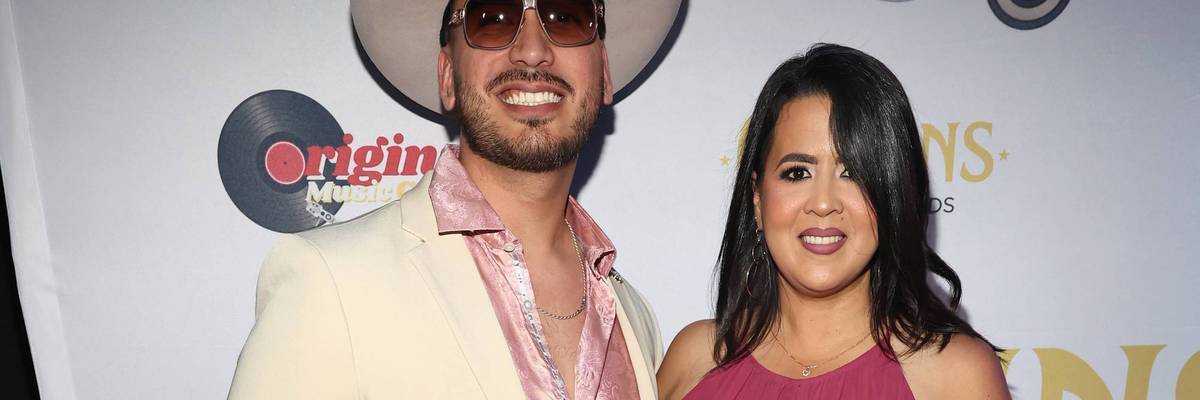
Nashville Noticias journalist Estefany Rodríguez is seen with Alejandro Medina III at the Origins Impact Awards at The Cowan at Topgolf on November 20, 2025 in Nashville, Tennessee.
(Photo by Terry Wyatt/Getty Images)

Julia Conley
Mar 20, 2026
COMMON DREAMS


Immigrant rights and press freedom groups were celebrating Friday after Nashville journalist Estefany Rodríguez was released from a US Immigration and Customs Enforcement detention center in Louisiana, two weeks after she was detained—but advocates said they would continue challenging the violation of Rodríguez’s rights and demanded the Trump administration end its targeting of journalists amid its anti-immigration crackdown.

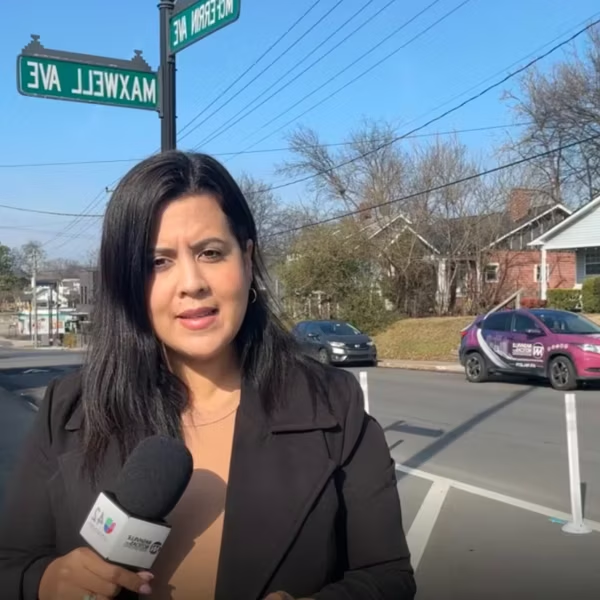
Rodríguez was freed on a $10,000 bond, more than two weeks after the Nashville Noticias reporter was detained outside a gym while traveling in her marked press vehicle.


Retaliation? Nashville Journalist Detained by ICE After Reporting on Trump Crackdown

As Common Dreams reported, press freedom advocates expressed concern that Rodríguez was detained in retaliation for her reporting on ICE’s mass detention and deportation operation under President Donald Trump.

An ICE officer told her lawyer after her arrest that Rodríguez had been labeled a “flight risk” because she “missed” two meetings at the local ICE office—although the agency had previously informed her lawyer and her husband that she didn’t need to go to the meetings.

Nora Benavidez, senior counsel of the media rights group Free Press, said the group welcomed the news of Rodríguez’s release but emphasized that “while this is a victory for Rodríguez, her free speech rights, and the communities she reports for, the fight is not over.”

“We remain troubled by the federal government’s ongoing campaign to silence and deport reporters who cover the administration’s gross mistreatment of immigrants,” said Benavidez. “We will continue to fight for Rodríguez and her right to report free from retaliation while we challenge the federal government’s relentless assaults on the First Amendment across this country.”

“Press freedom is not theoretical—it is tested in moments like this. Safeguarding it means removing unnecessary barriers and ensuring that journalists, especially those serving vulnerable communities, can report freely and without fear.”

Rodríguez was arrested weeks after journalists Don Lemon and Georgia Fort were arrested for reporting on an anti-ICE protest at a church in Minneapolis. Emmy-winning journalist Mario Guevara was arrested last June after reporting on a No Kings protest against Trump in Atlanta; he was detained for more than 100 days before being deported to El Salvador.

Rodríguez arrived in the US lawfully in 2021 from her native Colombia, where she faced threats due to her reporting work. She applied for asylum before her visa expired.

Nashville Banner reported that Rodríguez was granted the bond by a judge on Monday, but a mandatory stay allowed ICE attorneys the opportunity to appeal the decision, which they ultimately did not. Then it took a day for Rodríguez’s family to post the bond through an electronic system on Wednesday, which required approval since they were first-time users.

The bureaucratic delays added to the ordeal Rodríguez faced during her detention, during which she was not able to contact her attorneys until March 14. She first spent a week in a county jail in Alabama where guards placed her in isolation for five days, claiming she had contracted lice. According to Nashville Banner, before she was transferred to the center in Louisiana, the guards “took her to the shower, made her strip naked, and poured cleaning liquid over her head.” The substance made Rodríguez’s eyes burn, and the outlet reported that “she believed the liquid was also used to clean floors.”

Following her release, Rodríguez’s legal case is ongoing. Her lawyers filed an emergency petition for a writ of habeas corpus in federal court. Government lawyers are now arguing the case is moot because Rodríguez has been released, but her attorneys are seeking an evidentiary hearing to obtain an injunction against her potential redetenion.

“We plan to proceed with the habeas petition that was filed on March 4, challenging both her warrantless arrest and retaliation for her exercise of First Amendment rights,” said Mike Holley, an attorney with the Tennessee Immigrant and Refugee Rights Coalition. “Through that petition, we are seeking not only her complete release, but an order prohibiting ICE from mistreating her in a similar way in the future.”

In the petition, Rodríguez’s legal team argued her detention has violated her First, Fourth, and Fifth amendment rights and asserted that she was detained in relation to her coverage of ICE operations.

Jose Zamora, regional director of the Americas for the Committee to Protect Journalists, said Rodríguez’s detention “has had a chilling effect, undermining journalists’ ability, especially local reporters, to cover their communities without fear of retaliation.”

“The government must uphold press freedom and ensure all journalists can work safely and without reprisal,” said Zamora.

Mark Schoeff Jr., president of the National Press Club, said that Rodríguez’s case “should never have reached this point.”

“We urge authorities to drop any further action against Ms. Rodríguez and allow her to continue her work without interference. She is a community-focused journalist whose reporting serves the public interest, and she must be able to work openly and cooperatively as she seeks to resolve her legal status in the United States,” said Schoeff. “A free press depends on the ability of journalists to report without fear of detention or retaliation. Reporters cannot do their jobs if they fear detention for doing their jobs.”

“Press freedom is not theoretical—it is tested in moments like this,” he added. “Safeguarding it means removing unnecessary barriers and ensuring that journalists, especially those serving vulnerable communities, can report freely and without fear.”
TRUMP'S HIGH SEAS PIRACY

US Kills at Least 2 More People in Yet Another Illegal Boat Bombing

“This lawless killing for content cannot become mere background noise,” said one critic.


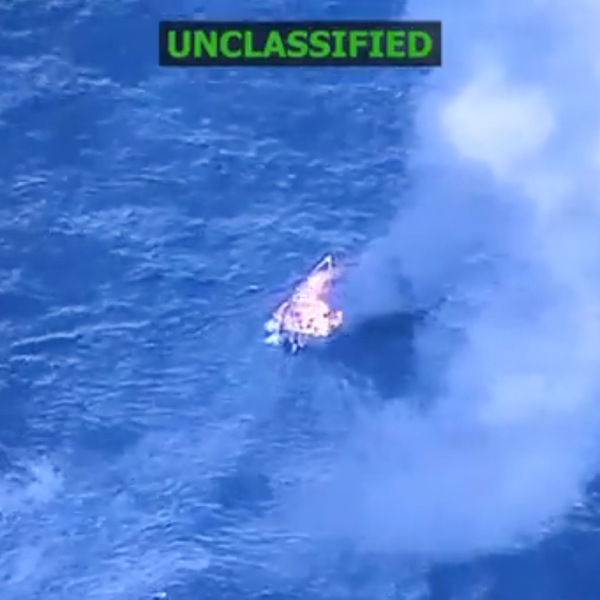
US Southern Command shared on social media a 16-second clip of a strike on a boat in the eastern Pacific that killed three people on February 20, 2026.
(Photo: screen grab/SOUTHCOM/X)

Brad Reed
Mar 20, 2026
COMMON DREAMS

The Trump administration isn’t letting its unconstitutional war with Iran stop its illegal boat-bombing campaign in Latin America.

US Southern Command (SOUTHCOM) said on Friday that it had conducted yet another lethal boat strike on a suspected drug boat traveling in what it described as “known narco-trafficking routes in the Eastern Pacific.”


Amnesty Condemns US ‘Murder’ of 6 More People After Latest Trump Boat Bombing


‘This Is Murder’: Trump Strike Kills 3 More Boaters in the Pacific

While SOUTHCOM initially said that three men survived the Thursday strike, a spokesperson for the US Coast Guard subsequently told CNN reporter Zachary Cohen that two of the men on the boat were killed, while a lone survivor was rescued and taken into custody by authorities in Costa Rica.

According to Cohen, at least 160 people have so far been killed by the Trump administration’s boat strikes, which several legal experts have described as illegal acts of murder.

The latest strike on a suspected drug vessel came on the same day Gen. Francis L. Donovan, the commander of SOUTHCOM, told the Senate Armed Services Committee that the Trump administration’s boat-bombing spree is “not the answer” to the drug addiction crisis in the US.

As reported by The New York Times on Thursday, Donovan told lawmakers that the strikes are “probably not the most effective” tool to combat illicit drug trafficking, and said he was developing a more comprehensive plan to stop the flow of drugs into the US.

Human rights group Amnesty International slammed Donovan for carrying out another strike even while acknowledging their negligible impact on the drug trade.

“Congress must take action against these strikes!” the group said in a social media post.

Brian Finucane, senior adviser at the International Crisis Group, expressed concern that the Trump administration’s Iran war was distracting from the other illegal killing it is carrying out.

“This lawless killing for content cannot become mere background noise,” he wrote.

A coalition of rights organizations led by the ACLU last year sued the Trump administration to demand it release documents that provide legal justification for its boat-bombing campaign.

The groups said that the Trump administration’s rationales for the strikes deserve special scrutiny because their justification hinges on claims that the US is in an “armed conflict” with international drug cartels akin to past conflicts between the US government and terrorist organizations such as al-Qaeda.

The groups argued there is simply no way that drug cartels can be classified under the same umbrella as terrorist organizations, given that the law regarding war with nonstate actors says that any organizations considered to be in armed conflict with the US must be an “organized armed group” that is structured like a conventional military and engaged in “protracted armed violence” with the US government.

 'Cataclysm': United CEO's Iran war memo spooks travelers as oil prices skyrocket


Daniel Hampton
March 20, 2026 
RAW STORY


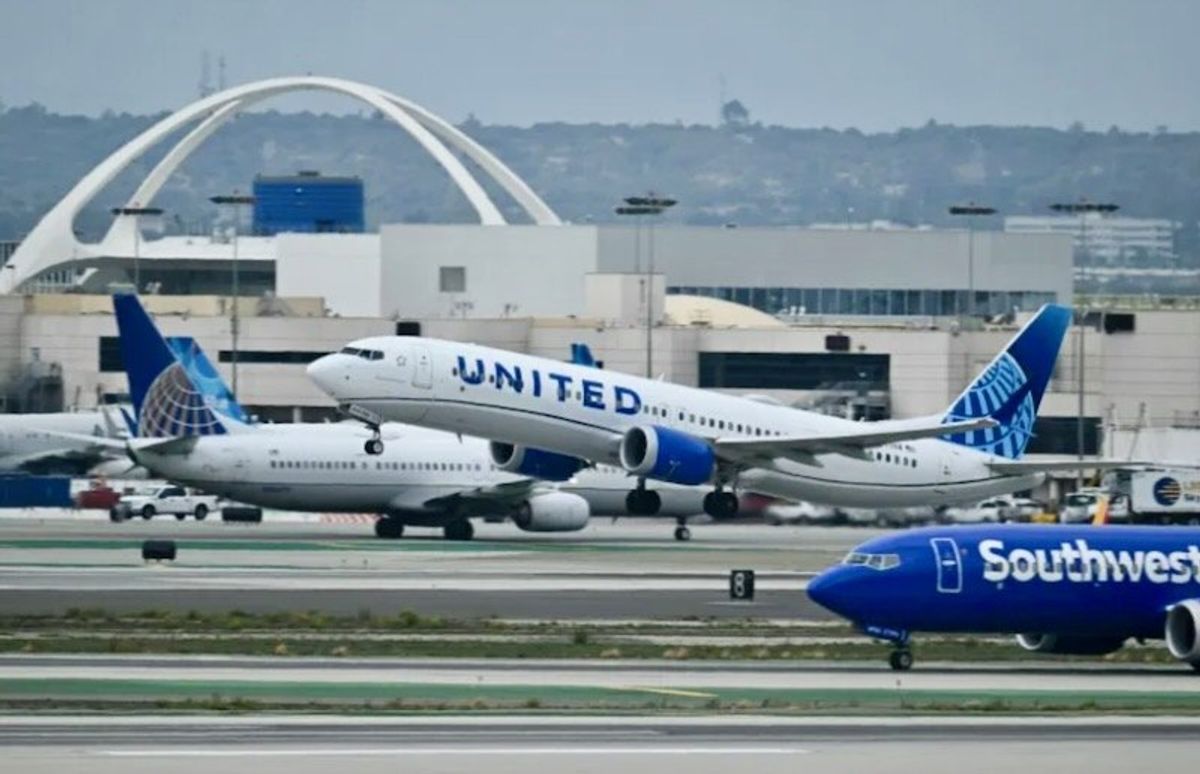
United Airlines says it has discovered loose bolts on Boeing 737 MAX 9 planes in its fleet, like one seen here taking off in September 2023 (Patrick T. Fallon/AFP)

United Airlines CEO Scott Kirby is warning employees that jet fuel prices have more than doubled in three weeks due to the U.S.-Israeli war on Iran, and that the crisis could cost the airline $11 billion annually if prices hold.

In a letter to employees on Friday, Kirby said United is planning for oil to hit $175 per barrel and stay above $100 through the end of 2027. For context, he noted, United's best year netted less than $5 billion in profit.

"[I]t may be a challenge to continue passing through much of the increased fuel price if oil stays higher for longer," he warned.

The airline is cutting roughly 5 percent of its planned capacity, axing red-eyes, Tuesday, Wednesday and Saturday flights during Q2 and Q3, and suspending service to Tel Aviv and Dubai.

Kirby insisted the cuts were temporary and that United would not furlough employees or defer aircraft orders.

"In the short term, that means tactically pruning flying that’s temporarily unprofitable in the face of high oil prices. So, we are canceling about 3 points of flying in off peak periods (think redeyes, Tues/Wed/Sat flying) during Q2 and Q3 and we’ll pull a point of capacity in ORD when the FAA process concludes. We’ve pulled TLV and DXB service, which represents about another 1 point of capacity. That’s about 5 points of this year’s planned capacity in the short term, and our current plan is to restore the full schedule this fall. To be clear, nothing changes about our longer-term plans for aircraft deliveries or total capacity for 2027 and beyond, but there's no point in burning cash in the near term on flying that just can't absorb these fuel costs," he wrote.

Travelers didn't share his optimism.

"Glad I visited 7 continents and 111 countries while I could afford to," wrote Monica Marks, professor of Middle East Politics at NYU Abu Dhabi, on X. "Life is so, so short."

Software engineer Luis Ball Jr. called the $175-per-barrel scenario "a cataclysm," and wrote, "scary stuff."

Writer Ben Panko was more pointed: "No worries, all the incels still fully backing Trump on this don't fly, much less leave their houses."

Mike Norton, former vice chair of the Minneapolis Democratic-Farmer-Labor Party, noted the whiplash, pointing out the White House had touted falling gas prices just two months ago."To give you an idea of how quickly Trump
can f--- things up, the White House tweeted this two months ago," he said, sharing a White House boasting of cheap gas. Kirby closed the letter by comparing United's position to a March Madness bracket, saying the airline was "playing offense."