Saturday, March 21, 2026


Which countries face the broadest international sanctions? Statista


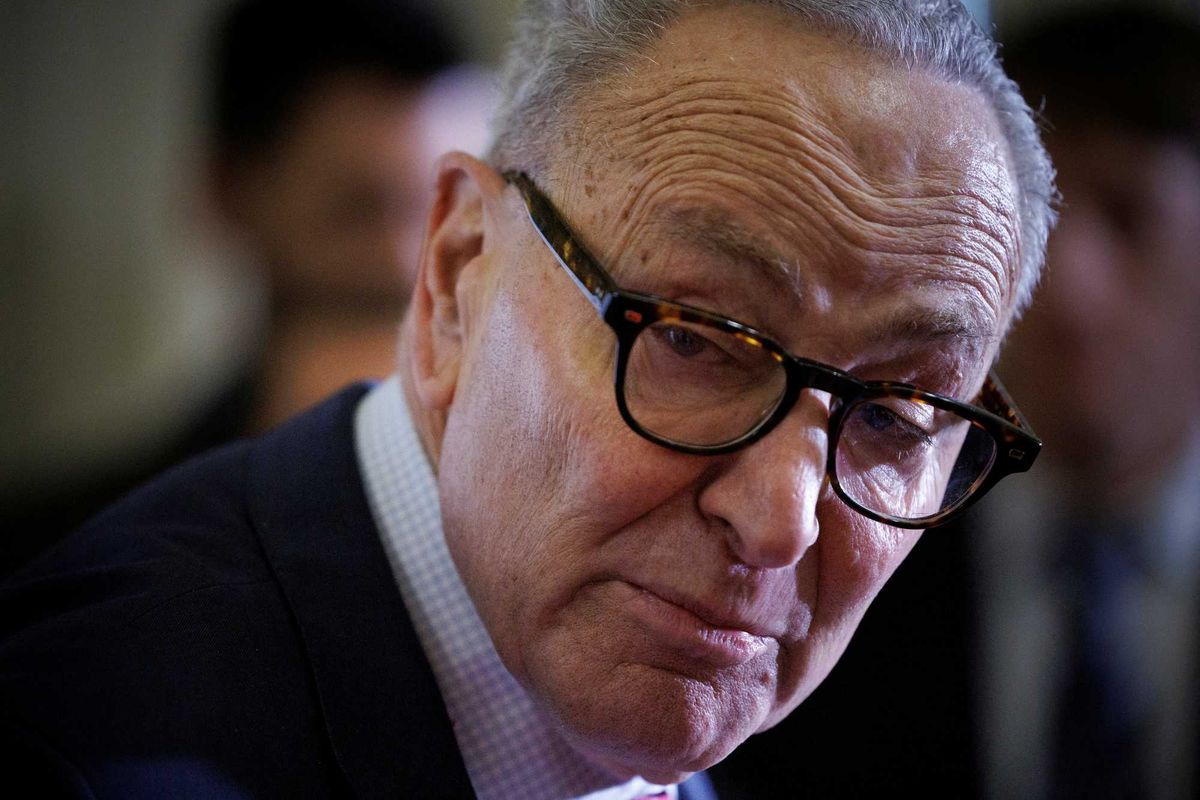
North Korea tops the list of which countries have the most sanctions on them, followed by Iran and Myanmar. Russia comes in at only number five. / bne IntelliNews
By Tristan Gaudiaut for Statista March 20, 2026

As geopolitical tensions remain elevated and economic measures are becoming a key foreign policy tool, sanctions continue to shape global trade and diplomacy, Statista reports.

Since Russia's full-scale invasion of Ukraine in 2022, Western countries have rolled out unprecedented restrictions targeting Moscow’s financial system, energy exports and key industries. At the same time, long-standing measures remain in place against countries such as Iran and North Korea over their nuclear and missile programs, while measures against Myanmar have intensified following the 2021 military coup. More recently, new sanctions have been introduced in response to conflicts, weapons programs and human rights violations in countries such as Russia, Iran and Myanmar.

Official data compiled in our chart shows that a small group of regimes faces particularly broad international pressure. North Korea, Iran, Myanmar and Afghanistan are subject to sanctions from all major Western actors as well as multilateral frameworks such as the UN Security Council, reflecting concerns ranging from nuclear weapons development to political repression and security threats. Russia, Belarus and Syria also face extensive restrictions, although these are not universally backed at the UN level due to geopolitical divisions. Venezuela, meanwhile, is sanctioned by several Western powers but to a lesser extent overall.

It is important to note that not all sanctions are alike. In some cases, such as Afghanistan, measures primarily target individuals or entities (e.g., the Taliban) rather than the state itself. In others, including North Korea and Iran, sanctions are far-reaching and cover trade, finance and entire sectors of the economy. Together, these patterns highlight how sanctions are increasingly used in coordinated ways by major economies, while also underscoring the limits of global consensus in an increasingly fragmented geopolitical landscape.


You will find more infographics at Statista


Democracy fading as autocractic rulers gain ground – Statista


the latest Freedom in the World 2026 report found that democracy fell for the twentieth year in a row as autocractic rulers rise. / bne IntelliNews
By Felix Richter of Statistia March 20, 2026

Released on March 19, the latest Freedom in the World 2026 report finds that global freedom declined for the 20th consecutive year in 2025, with more countries experiencing a deterioration in political rights and civil liberties than improvements, Statista reports.

According to Freedom House, 54 countries saw their scores worsen, compared with just 35 registering gains, as armed conflict, coups and the erosion of democratic institutions continued to weigh on freedom worldwide.

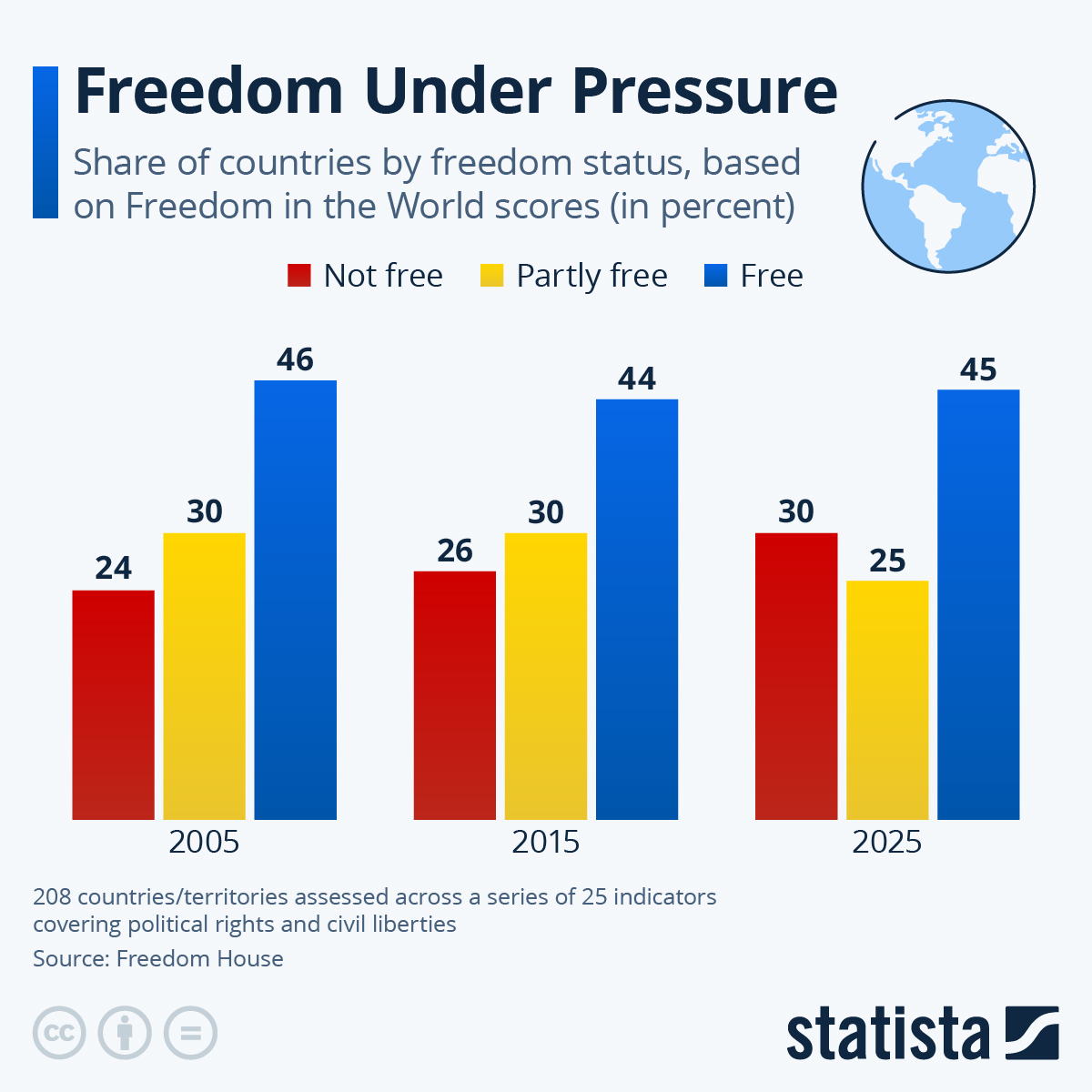
This long-term trend is also reflected in the distribution of countries by freedom status. While the share of countries classified as “Free” has remained broadly stable since 2005, at around 45 percent, the proportion of “not free” countries has increased (from 25 to 30 percent), mainly at the expense of those rated “partly free” (from 30 to 25 percent). In fact, many countries that once occupied a middle ground have shifted toward more authoritarian forms of governance. Over the past two decades, 19 countries have fallen from “partly free” to “not free”, contributing to the expansion of the world’s autocracies, while only a limited number have improved their status and consolidated democratic institutions.

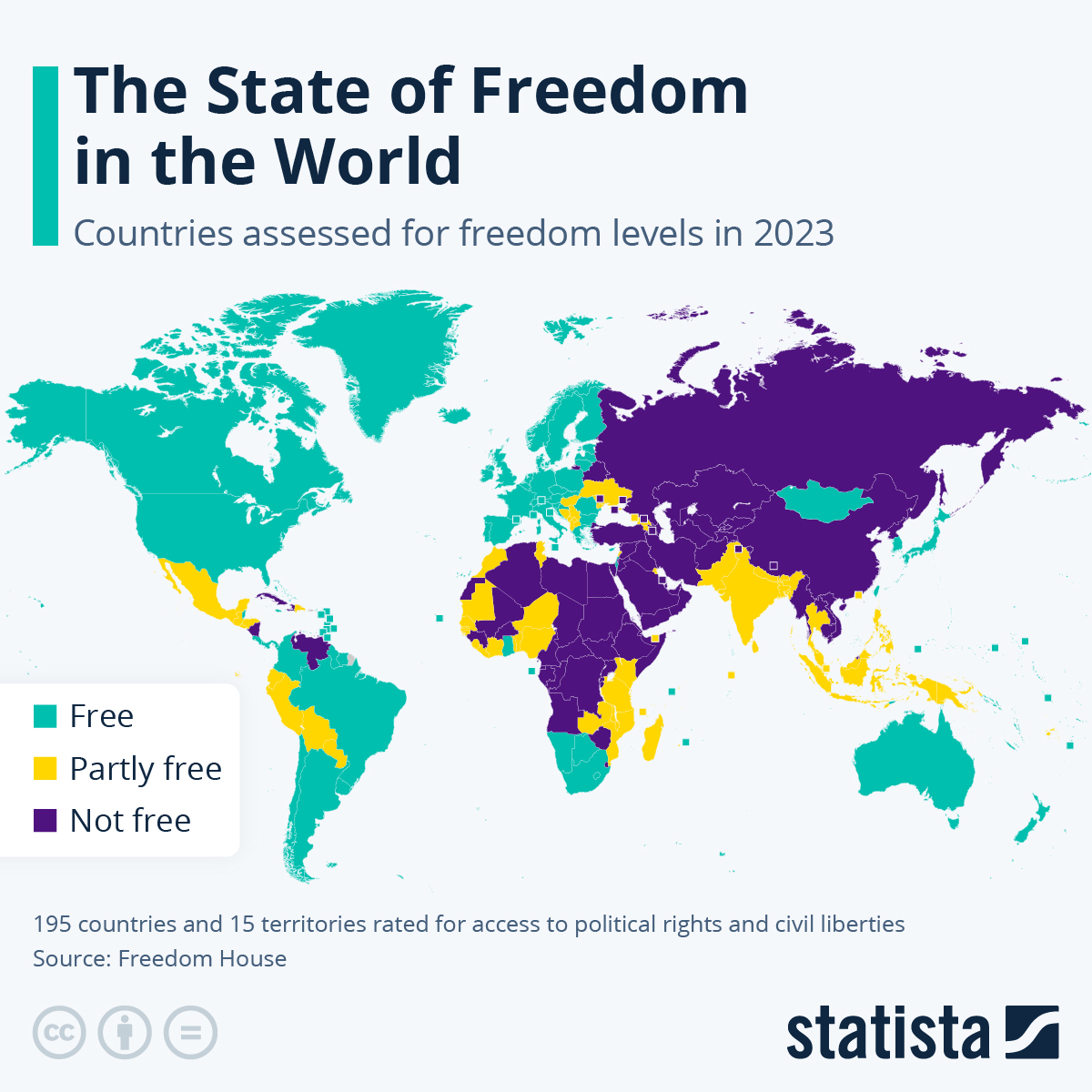
Among the most striking declines over the past two decades are countries such as Nicaragua and Venezuela, where democratic institutions have been steadily dismantled, as well as Mali, which has seen one of the largest score drops since 2005 following repeated coups. Elsewhere, notable setbacks have been recorded in countries such as Turkey and Hungary, while the United States has lost more points than any other country still classified as “free”. On the other hand, some countries have made meaningful progress, including Fiji and Malawi, which recently improved their status to “free”, alongside longer-term gains in countries such as Nepal ("partly free), Bhutan ("free") and Côte d’Ivoire ("partly free").


You will find more infographics at Statista

In all, 54 countries have experienced a deterioration in their political and civil liberties last year, while only 35 countries saw improvements. Guinea-Bissau, Tanzania, Burkina Faso, Madagascar and El Salvador saw their scores drop the furthest compared to last year, while Syria, Sri Lanka, Bolivia and Gabon saw the biggest gains.

Among the countries considered "not free", Sudan, Myanmar and Iran recorded further declines in their scores, as armed conflict and authoritarian repression resulted in profound human rights violations. Meanwhile the scores for Russia and China remained unchanged at 12 and 9 out of 100, respectively, as both countries continue to suppress anything resembling dissent, thereby crippling people's political and civil liberties.

Among the countries rated "free", Bulgaria, Italy and the United States saw the biggest declines. While Bulgaria and Italy saw their scores reduced in the face of widespread public corruption, the decline in freedom in the U.S. was attributed to a combination of long-term trends, such as chronic partisan gridlock, and more recent developments, i.e. the executive branch's assertion of unilateral authority and its threats and reprisals against any political opposition.

Overall, just three countries were assigned a new status, as Bolivia, Fiji and Malawi were upgraded from "partly free" to "free". According to Freedom House, these changes were driven by competitive national elections as well as growing judicial independence and strengthening of the rule of law.

The Freedom in the World Index is an index compiled annually by the U.S. NGO Freedom House, which evaluates civil and political freedom in states and territories around the world. The methodology is based on the Declaration of Human Rights as proclaimed by the United Nations (UN) in 1948 and is intended to assess the political rights and civil liberties of individuals rather than governments.

The countries/territories are evaluated by a team of internal and external analysts and expert advisors from a range of academia, think tanks and human rights communities, with the final scores being the result of a consensus between the analysts, a panel of outside advisors and Freedom House staff. Depending on the weighted index score for political rights and civil liberties, a country is classified as "free", "partly free" or "not free".

 You will find more infographics at Statista


Iran blackout enters 20th day as 456-hour outage sets record, NetBlocks says

Iran blackout enters 20th day as 456-hour outage sets record, NetBlocks says
Iran blackout enters 20th day as 456-hour outage sets record, NetBlocks says. / bne IntelliNews
By bnm Tehran bureau March 19, 2026

Iran’s nationwide internet shutdown has entered its 20th day, with public access to the global web cut for more than 456 hours, network monitor NetBlocks said on March 19, citing real-time connectivity data.

The outage, now the longest recorded in Iran, shows a wartime clampdown on information flows as authorities tighten control over communications during the conflict that began on February 28. Connectivity has fallen to around 1% of normal levels, effectively cutting off millions and deepening the country’s isolation from international networks. The duration surpasses a previous record set in January.

NetBlocks said a brief restoration after roughly 444 hours appeared to result from a filtering “glitch”, allowing limited access before services went dark again.

Restrictions have since broadened. So-called “white SIM” cards, previously used by regime-linked users to maintain access, were disabled on March 15 before being partially restored on March 18, suggesting a calibrated rollback. VPNs have been choked off, domestic platforms intermittently disrupted and messaging traffic curtailed, according to network data.

The tightening coincided with the run-up to Chaharshanbe Suri on March 17, a fire festival that in recent years has doubled as a protest flashpoint, pointing to a pre-emptive effort to disrupt mobilisation channels.

Foreign Minister Abbas Araghchi framed the shutdown as a security measure. “The internet is closed because of security reasons… we have to do everything to protect our people,” he told CBS News, likening the restrictions to wartime controls.

The blackout has unfolded alongside an escalation in hostilities. Israeli and US strikes on Iran since late February have reportedly killed around 1,300 people, including senior figures, while Tehran has retaliated with drone and missile attacks targeting Israel and neighbouring states hosting US assets. The exchange has disrupted aviation routes and unsettled regional markets.

With external connectivity largely severed, Iranians are increasingly reliant on state broadcasters, while information flows shift abroad, where diaspora accounts fill gaps without direct verification from inside the country.


Ukraine deploys 228 counter-drone specialists to Gulf states amid Iran war

Ukraine deploys 228 counter-drone specialists to Gulf states amid Iran war
Ukraine deploys 228 counter-drone specialists to Gulf states amid Iran war. / bne IntelliNews
By bnm Gulf bureau March 20, 2026

Ukrainian President Volodymyr Zelenskiy said 228 Ukrainian counter-drone specialists are now working in Qatar, the UAE and Saudi Arabia, with further cooperation underway with Kuwait and Jordan, RBC-Ukraine reported on March 20.

"Already not 210 but 228 of our experts are in Qatar, the UAE and Saudi Arabia. We are also working with Kuwait and Jordan. I will not disclose the details," Zelenskiy said.

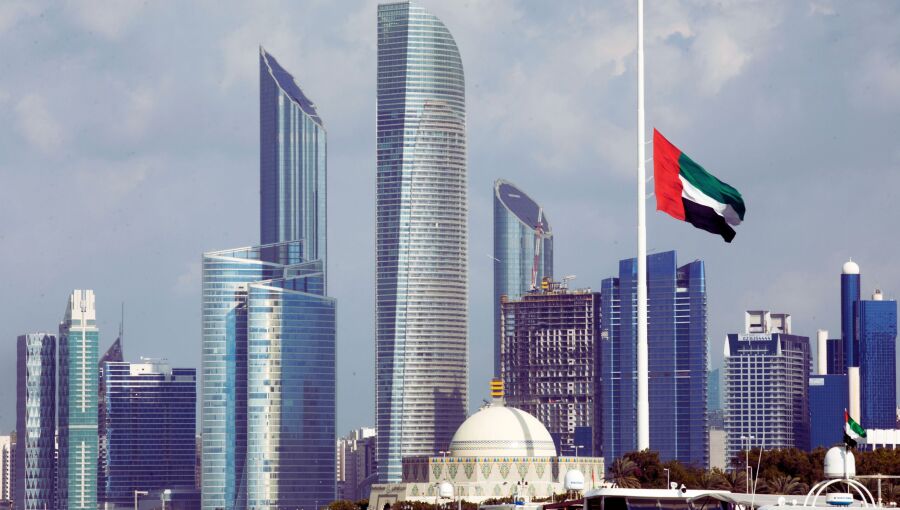
The deployment positions Ukraine as a direct contributor to Gulf air defences at a time when Iran has launched more than 1,600 drones at the UAE alone and hundreds more at Saudi Arabia, Qatar, Kuwait and Bahrain since the war began on February 28.

Ukraine has developed extensive expertise in counter-drone warfare through its own conflict with Russia, where it has faced sustained attacks from Iranian-designed Shahed drones.

Kyiv has been keen to export that knowledge as both a revenue source and a means of strengthening ties with wealthy Gulf partners.

The arrangement also carries a geopolitical dimension. Iran has supplied Russia with attack drones used against Ukrainian cities, making the deployment of Ukrainian specialists to defend Gulf states from Iranian drones a pointed reversal.

Zelensky did not elaborate on whether the specialists were providing training, operating systems or advising on procurement.

Friday, March 20, 2026


African food security threats spike as Iran war strangles fertiliser supplies, prices soar

African food security threats spike as Iran war strangles fertiliser supplies, prices soar
/ bne IntelliNews
By Brian Kenety March 20, 2026

Conflict-driven disruption to fertiliser supply chains in the Middle East is raising the risk of price shocks across Africa, with analysts warning that benchmark urea prices could approach levels seen after Russia’s invasion of Ukraine in February 2022, when global prices roughly doubled, impacting food security.

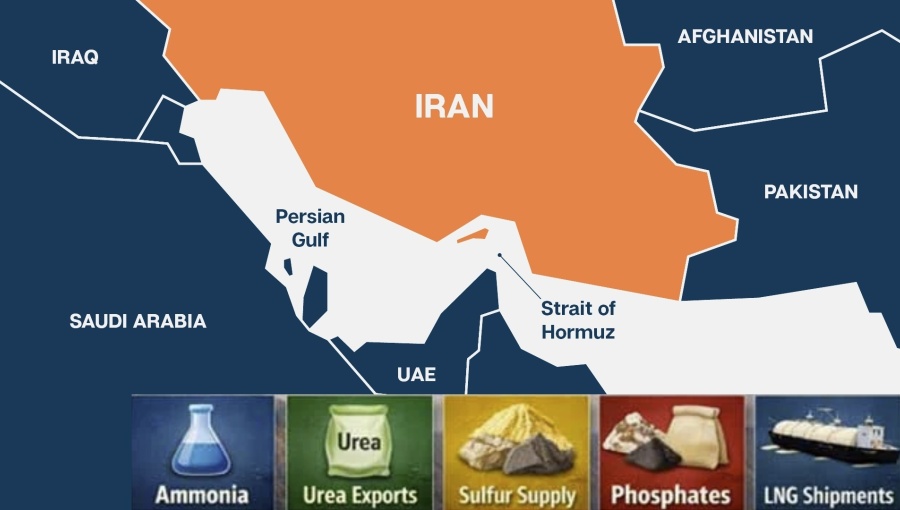
Africa imports more than 6mn tonnes of fertiliser annually and remains heavily dependent on external suppliers, particularly for nitrogen-based products such as urea and ammonia produced in the Gulf. Disruptions to shipments through the Strait of Hormuz, a key maritime corridor, have tightened supply and increased costs.

Urea export prices in the Middle East had risen by around 40% to above $700 per tonne as of mid-March from below $500 prior to the US and Israel joint attacks on Iran, according to Argus, a specialist energy and commodities price reporting agency, highlighting the market’s sensitivity to geopolitical shocks.

Fertiliser markets are structurally vulnerable because production is concentrated in a small number of exporting regions, while most sub-Saharan African countries lack domestic manufacturing capacity. A handful of North African producers, Morocco, Egypt and Algeria, dominate continental output, but exports are insufficient to meet broader regional demand.

Egypt, which supplies about 8% of globally traded urea, may struggle to produce nitrogen fertiliser after Israel declared force majeure on gas exports to the country, according to Scotiabank and Rabobank analysts. Prices for nitrogen-based fertilisers such as urea could roughly double if the Iran war, now in its third week, drags on.

The Food and Agriculture Organization (FAO) has warned that fertiliser affordability is a key factor affecting crop production in developing economies, where farmers often cut fertiliser use when prices rise. Lower fertiliser use can quickly translate into reduced crop yields, particularly for staple crops such as maize, wheat and rice.

The most important fertilisers in the short term are nitrogen-based products such as urea: if farmers do not apply them for one season, yields will suffer, with the same true, to a lesser extent, for other key products such as those based on phosphate and potassium.

In many African countries, farmers already apply less than 20kg of fertiliser per hectare, compared with a global average of about 140kg per hectare. The 2022 fertiliser crisis triggered by the war in Ukraine forced many farmers to further reduce these already low application rates, resulting in even weaker crop yields – and higher food prices.

Svein Tore Holsether, chief executive of Yara International (OSE:YAR), warned that prolonged disruption to Gulf supply routes could have severe consequences for agriculture. “If the Strait of Hormuz was closed for a year it would be catastrophic,” he said, as quoted by The Guardian, adding that fertiliser markets are facing pressure from both supply constraints and rising gas prices, “a double impact”.

Holsether added that Europe would always be able to outbid poorer countries. “The countries that are most vulnerable still pay the highest price,” he said. “In a global auction for fertiliser, Europe will have stronger buying power than poorer parts of the world, we need to keep in mind the magnitude of this before it is too late.”

The 2022 Russia-Ukraine fertiliser crisis sent urea to $925 per tonne, anhydrous ammonia above $1,635 per tonne at retail, and DAP above $1,000 per tonne, according to ProFarmer.

“The current crisis shares similarities, but there are key differences. For one, the Gulf’s exposure is much higher. Also, Russian fertiliser wasn’t removed from the market in 2022, but was instead rerouted. In 2026, there are fewer options for products trapped behind a closed Strait,” the industry publication writes.

Fertiliser costs are a key input in agricultural production, and price increases are typically passed through to consumers. The World Bank has previously warned that fertiliser price spikes feed directly into food inflation, particularly in import-dependent economies.

The continent’s largest agricultural economies — including Kenya, Ethiopia and Ghana — depend on imported fertiliser supplies to maintain crop yields. Price increases can therefore quickly translate into higher food prices and increased fiscal pressure on governments that subsidise fertiliser purchases.

Larger economies such as Ethiopia, Tanzania and Zambia also depend on imports despite growing demand, as local production capacity remains insufficient. Meanwhile, according to the UN’s trade and development agency (Unctad), more than half of war-torn Sudan’s fertiliser comes from the region, while for famine-prone Somalia the figure is close to one-third.

According to the Global Hunger Index 2025, hunger is considered “alarming” in seven countries worldwide, all but two of them in Africa: Burundi, Democratic Republic of the Congo (DRC), Madagascar, Somalia and South Sudan, while hunger remains “serious” across much of sub-Saharan Africa.

“Conflict remains the most destructive force driving hunger. Armed violence fuelled 20 food crises affecting nearly 140 million people in the past year. The wars in Gaza and Sudan illustrate how conflict devastates both livelihoods and lifelines: global famine-level food insecurity, concentrated largely in those two settings, more than doubled between 2023 and 2024,” the GHI report states. 

Georgians continue fight for democracy after almost 500 days of protest

THE COUNTRY NOT THE STATE
Georgians continue fight for democracy after almost 500 days of protest
/ bne IntelliNews
By bne IntelliNews March 20, 2026

It's Saturday night in Tbilisi. A crowd is gathering outside the city's State Concert Hall, chatting among themselves. For some, the gathering offers a brief respite from the exhaustion of prolonged demonstration. For others, it is an act of defiance against a government that opposition figures, Western observers and many Georgians say is illegitimate.

A marching band strikes up, signalling the march to begin. The crowd steps off the pavement and onto the road, bringing traffic to a halt. Several women move to the front, each carrying a photograph. The faces in the images belong to some of Georgia's more than 118 political prisoners, people convicted on charges ranging from protest activity to drug offences to espionage since Georgian Dream came to power in elections that have been widely disputed. The women carrying the photographs are their mothers, a group that has come to be known as the Mothers of Conscience.

The crowd slowly marches down Rustaveli Avenue, growing in size as it does. By the time we are outside parliament, the numbers have reached 800 or so. Tonight is a technical violation of new laws that prohibit blocking the road and pavement. The only way to get around it is to request police permission – which puts protestors in an awkward spot: to ask permission from an authority they don't recognise.

"This is a resistance," 36-year-old Guram Chukhrukidze told bne IntelliNews. "We are not complying with the stupid laws they adopt."

After more than a year of continuous protests, sparked by a disputed election in which Georgian Dream claimed victory despite widespread allegations of fraud, many faces in the crowd have grown familiar.

Sustaining hope

But beneath the conversational mood lies a real paradox: how to sustain hope as new authoritarian legislation is continuously pushed through. Georgian Dream has severely cracked down on the right to protest, freedom of speech and political pluralism. Opposition leaders and protesters have faced new charges ranging from drug offences to espionage. So far, the impact of international sanctions has remained limited; Georgia still has one of the region's fastest-growing economies.

As of March 20, Georgians are on their 478th consecutive day of pro-European protest. Many demonstrators say these protests are the last thing preventing Georgian Dream from presenting itself as a democracy.

"The main source of the government's illegitimacy is this," said Chukhrukidze gesturing toward the crowd gathered outside parliament on March 7.

"They adopted this new law which says that we are obliged to ask to protest. Whenever we want to go and protest, we have to apply first to the police. But actually… this law is against the constitution of Georgia."

Since Georgian Dream was elected, newly introduced laws mean that first-time offences including concealing your face to evade facial recognition, or blocking the road or pavement, can be punished with up to 15 days of immediate detention.

Protests have also adapted in response to these laws. Numbers are smaller and actions are less disruptive; there is no longer tear gas, the use of lasers or a heavy police presence.

"We want to avoid escalation," said Chukhrukidze. "One of the main values of our protest is that we are fully peaceful."

Political legacy 

But for some, continuing to show up is becoming harder as hope grows scarcer. Weekday protests are noticeably smaller than Saturdays as the energy required to continuously show up wanes.

What motivates those who continue to show up is not only the desire for a democratic Georgia, but also the memory of everything they have already endured in its name.

"I personally don't have hope and I don't live in illusions," said 51-year-old Ioska Jandieri, a former political prisoner under ex-president Mikheil Saakashvili. Jandieri was sentenced to eight years for burning his state documents outside parliament in 2007, in protest against a prior election widely suspected of being rigged. The protests that followed contributed to one of the most significant democratic upheavals in the country's history, the Rose Revolution.

"Still, I might be wrong. I'm an ordinary mortal person," said Jandieri. "Maybe today I feel no hope and yet tomorrow the regime could collapse on its own, like what happened with [former Venezuelan president Nicolás] Maduro, for example," he said.

In spite of his fading hope, Jandieri can easily count the number of days he has missed the protests: seven when he was arrested, and four when he had a virus.

"I am a patriot of my country, and I feel obliged to stand on the right side of history every day and to come out and fight for the democracy of my country," he said.

Mothers of Conscience

Tsaro Oshmakashvili, 62, is another dedicated protester who comes to Rustaveli each night. She has taken it upon herself to campaign on behalf of one of over a hundred Georgians imprisoned for political reasons since 2024.

Oshmakashvili met Archil Museliantsi, 30, a political prisoner who has been an orphan since childhood, on Rustaveli Avenue at the height of the protests. At the time, Museliantsi told Oshmakashvili he was ready to die for his country.

He was later arrested and sentenced to four years in prison for setting fire to one of the CCTV cameras the government uses to identify protesters through facial recognition. The video used to convict him does not clearly show his face, and the footage is widely believed to have been spliced together.

Since his arrest, Oshmakashvili has dedicated herself to campaigning for his release alongside the Mothers of Conscience, a group representing the mothers of Georgia's political prisoners, bringing him supplies in Gldani prison, and keeping his name in the public eye.

Despite her near-nightly presence outside parliament, Oshmakashvili also finds herself struggling with hopelessness.

"Lately my mood has been a bit heavy. To say it directly, I feel tired and not in a very good emotional state," she told bne IntelliNews on March 11.

"First, Archil and the boys are in prison, and they absolutely must be released. That gives me the motivation to keep fighting… [but] sometimes a sense of hopelessness comes over me, thinking that it may take a very, very long time."

Camping out 

Darejan Tskhvitaria, 68, has sacrificed a great deal to sustain the protests. When bne IntelliNews visited her on March 11, she had been living in a makeshift tent set up outside parliament for the past 13 months, sleeping on a mattress placed on wooden crates beneath a tarpaulin roof.

"Every day, I go over to the Gallery-Museum to use the toilet and tidy myself up. I bring a bottle of water and wash there. Three times a week, I leave for an hour to go to my cousin's house to bathe, and then I come straight back here."

"This sacrifice is worth it to ensure the protest on Rustaveli never stops. It's worth it for that. Girls used to tell me, 'Darejan, it's so cold, I can't go out,' but then they would say, 'I remembered you, a woman sitting there 24 hours a day, and I told myself I had no right to stay home.'"

That same night, Tskhvitaria was forcibly evicted from her tent after a fire broke out in a neighbouring protester's tent, which was quickly extinguished. Police arrived at the scene, confiscated her phone, and took her to the station.

After four hours, Tskhvitaria was released and her phone was returned, but she found that all her contacts had been deleted. When she arrived back at parliament, her possessions and tent had been removed.

Tskhvitaria says she plans to continue her protest regardless.

"They will probably allow me to set up a tent again, I don't know. But with or without it, I am going to stay here. Last winter I didn't have a tent, but I spent nights here on the concrete. I will continue being here," she told OC Media.

Tskhvitaria also has a personal reason to keep going: her seven-year-old son was poisoned on April 9, 1989, and died seven months later. 

"I've been fighting and involved in activism my entire life. I've fought injustice forever; this is nothing new to me," she told bne IntelliNews.

"If I didn't have hope, I certainly couldn't stay here like this. Hope for the future and faith are what keep me here; they give me the will to fight, because we are right."

"No state has granted legitimacy to this 'pseudo-government' that has seized power. That is a huge trump card for us. We will fight, Europe will help, and we will send them packing."

"A government that supports the Iranian dictatorship and kills its own people has no future. I want to say a huge thank you to Britain for sanctioning these propaganda media outlets, Imedi and POSTV. Their resources will slowly dry up because they won't be able to run ads, and the propaganda will decrease," she said.

Absent youth

Another new feature of the protests is the noticeable absence of young people, many of whom previously endured arrest, severe police brutality, tear gas, and the onslaught of police water cannons during the immediate fallout of the contentious election in November and December 2024. The BBC later reported that these cannons were laced with toxic chemicals.

"Most of the students who were previously active have decided to step back," 22-year-old Sergey Kacheli told bne IntelliNews. "Students are avoiding the protests and withholding their solidarity because of the sheer scale of the crackdown, the ongoing oppression, and the harsh new laws regarding custody."

A report published on March 12 under the OSCE's Moscow Mechanism found clear evidence of democratic backsliding in Georgia, pointing to a pattern of violence and abuse against protesters, journalists, and opposition figures, alongside near-total impunity for those responsible. It warned that efforts to ban the main opposition parties pose a direct threat to political pluralism, and highlighted repressive protest laws, worsening press freedom, and a legislative "chilling effect" driving journalists toward self-censorship.

The report called for the release of political prisoners, new elections under international observation, an end to attempts to outlaw opposition parties, and sanctions against Georgian officials. The government, however, dismissed the findings as politically biased and factually flawed, leaving those on the streets to continue their protests in a standoff over the country's democratic future.
Dems quietly weighing move to oust Schumer as frustrations boil: report

Erik De La Garza
March 20, 2026  
RAW STORY


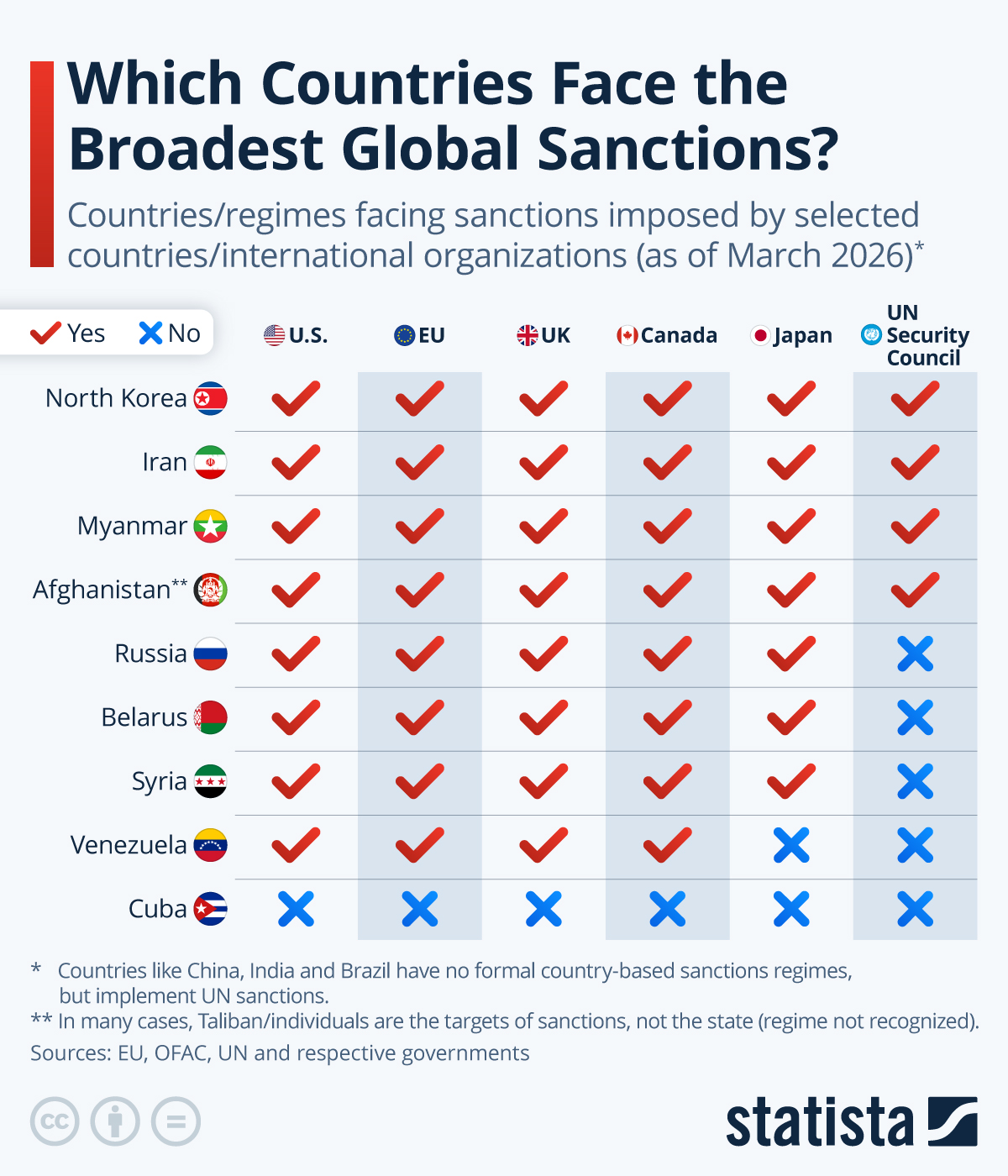
Senate Minority Leader Chuck Schumer (D-NY) speaks at a press conference following the weekly policy luncheon on Capitol Hill in Washington, D.C. on Nov. 19, 2025. REUTERS/Tom Brenner

Frustration with Senate Minority Leader Chuck Schumer is intensifying among some Democrats, with conversations quietly underway about whether he should step aside after the midterm elections, according to an exclusive Wall Street Journal report.

Sen. Chris Murphy (D-CT) told progressive activists during a February dinner that lawmakers had been conducting informal vote counts to gauge whether enough support existed to remove the New York Democrat from his leadership post, the Journal reported Friday.

Murphy told the outlet he does not recall referencing any specific tally and maintains Schumer still has the backing of the caucus. “But the disclosure stood out nonetheless, because it revealed that frustration inside the Senate had reached a high enough level that some Democrats were actively contemplating how to oust Schumer,” the report said.

Murphy is among a group of Democratic senators – including Massachusetts ' Elizabeth Warren and Minnesota's Tina Smith – who have grown dissatisfied with Schumer’s negotiating style and his approach to candidate strategy ahead of November’s elections. Some progressive lawmakers – dubbed “Fight Club” – have even discussed countering Schumer-backed candidates in key races.

Schumer dismissed the criticism, saying scrutiny “goes with the territory” of leadership and insisting his support remains “deep and strong.” Allies also say he retains enough backing to remain minority leader.

Still, some Democrats privately view the 75-year-old top Senate Democrat as an obstacle to change, “who is slowing the party’s drive to stand up to President Trump and thwarting a new generation of leadership from rising.”

Among the names quietly circulating as possible replacements when Schumer does step aside are Sens. Chris Van Hollen (D-MD), Catherine Cortez Masto (D-NV), and Brian Schatz (D-HI), who the Journal reported is viewed as Schumer’s preferred pick.