Sunday, April 19, 2026

UK

As oil giants reap super-profits from war on Iran, public support for Windfall Tax grows


Politicians calling for an end to the Windfall Tax should listen to the public, say campaigners, after new polling from Survation that found voters back the Windfall Tax by a margin of more than two to one, with support crossing party lines and stretching across all areas of the country.

Over half of the population say that ending the Windfall Tax now would be the wrong thing to do. Only 22% felt that it should be ended. And 41% of the public support the Windfall Tax on energy firms, compared to just 17% opposing it. 

Nearly two-thirds of the public believe that the energy industry is profiteering from the conflict in Iran and 47% believe that windfall taxes should be extended to more companies within the energy industry.

Meanwhile, 83% of the public are worried about rising energy costs as a result of the conflict with Iran, and 44% say they would be unable to afford the expected £228 annual increase in energy bills. A quarter of these respondents claim they would be “completely unable to pay my energy bill” if costs rose to this level.

Oil giants have said that they would consider investing more in the North Sea, which is now an ultra-mature and high cost basin, if the government removes the additional levy. However, recent history suggests oil companies will instead just give the extra profits to their shareholders rather than investing in more drilling.

The oil and gas industry has been engaged in a significant lobbying effort to have the current windfall tax – the Energy Profits Levy – repealed or ended early, securing support from some high profile politicians and parties. Both Reform UK and the Conservative Party have repeatedly called for it to be scrapped.

But support for the Windfall Tax continues among voters from all parties, according to the data from Survation.

Among those intending to vote for Reform UK in the next general election, 39% support the Tax with just 24% opposing it. For those thinking of voting Conservative, 44% still support it and 19% oppose it. 

Among Labour, Green and Liberal Democrat voters, support is even stronger – as is support for extending the taxes to other sections of the industry.

Backing for the Windfall Tax was also strong in all areas of the country, with people in Wales polling the strongest support for the levy. Earlier detailed polling in Scotland had shown 41% backing the Tax with 19% opposing it, but the new data suggests that this support has deepened with 44% now in favour of the Levy.

Recent figures have shown that the energy industry made £125bn in profits on their UK operations in the last 5 years and in the month since the conflict in the Middle East began, the share prices of energy companies have soared adding over £233bn to the market capitalisation of firms and resulting in a boost in the wealth of energy firm bosses. 

Simon Francis, End Fuel Poverty Coalition coordinator said: “This is not the moment to hand a tax break to the oil and gas industry and Ministers must hold firm with the Windfall Tax, while also examining any profiteering from the conflict among other sectors of the energy sector.

“Trump’s attacks on Iran, the damage to Qatari gas production and the disruption to supplies has led to spikes in the costs of heating oil and gas.

“But while households will feel the effects of this for months to come, the energy industry will continue to benefit from increased prices and a fresh wave of excess profits.” 

Robert Palmer, deputy director of Uplift said: “Politicians calling for an end to the Windfall Tax just as the oil and gas giants are about to make billions in bumper profits are tone deaf. Instead of siding with the profiteering oil industry, political parties should be standing up for billpayers who are facing a steep Trump Tax on everything from their energy bills, to petrol and food.

“Last time, when Russia invaded Ukraine, oil companies didn’t invest their windfall profits in more drilling, instead executives and shareholders got windfall payouts. The government needs to tune out the barrage of special pleading by the oil firms and their political cheerleaders, and focus on real solutions to this crisis. 

“The only way to bring down energy costs over the long term is to get off our reliance on oil and gas, and invest as fast as we can in renewables. More North Sea drilling will not take a penny off our bills, only boost the profits of fossil fuel companies.”

Labour MP Nadia Whittome agreed: “Drilling in the North Sea won’t make energy cheaper, despite what Badenoch or Farage say, because the price of gas is set by international markets. Expanding our clean energy supplies, on the other hand, would reduce our dependence on expensive fossil fuels and therefore lower bills. A Labour government must hold firm on our climate commitments and double down on renewables.”

Big profits for energy executives from Iran war

Drilling down into the figures, it’s clear that the bosses of some of Britain’s biggest energy companies have seen their personal fortunes surge by millions of pounds as a result of the conflict in the Middle East.

Analysis of shareholdings declared in annual reports and share price movements between 26th February and 27th March 2026 shows how energy chiefs may have benefited from the crisis, even as millions of households brace for a sharp rise in bills.

Among them, Harbour Energy’s Linda Z Cook saw the value of her shareholding rise by more than £4 million to £26 million. Harbour accounts for around 15% of the UK’s domestic oil and gas output and has been led by American Cook since 2021.

Meanwhile Shell’s Wael Sawan added nearly £1.8 million to take his stake to £13.2 million. At Centrica, Chris O’Shea saw the value of his shares rise by over £300,000, even as the British Gas owner’s boss told the BBC this month that higher household bills were “inescapable” and had previously said that it was “impossible to justify” his salary and rewards package.

At BP, interim boss Carol Howle saw her shares grow by over £500,000 during the period. Departed chief executive Murray Auchincloss, who held more than 1.8 million shares at the time of his departure, could have seen his stake rise to £10.6 million at current prices.

The picture is even more dramatic among the global giants whose share prices have been supercharged by the Middle East conflict. Chevron chief executive Michael Wirth saw the value of his near two-million-share stake rise by more than £44 million in a single month, taking his total holding to more than £312 million.

ExxonMobil’s Darren Woods added over £5 million to sit at more than £40 million, and TotalEnergies chief Patrick Pouyanné’s stake now stands at £39 million. Equinor, the Norwegian state-backed firm that supplies much of the gas the UK depends on, saw its shares rise more than 45%, adding nearly £700,000 to the personal stake of chief executive Anders Opedal.

Simon Francis again: “There are very few winners from the conflict in the Middle East, and most of those are the wealthy oil and gas bosses who help set the prices we all pay for our energy. Politicians must show whose side they are on: the households struggling with energy bills, or the millionaires calling for an early end to the Windfall Tax on North Sea profits.”

The figures come as wholesale gas prices remain at levels not seen since 2023. Average household energy bills are forecast to rise to £1,929 from 1st July 2026, an 18% increase on the current cap.

Separate End Fuel Poverty Coalition data shows that energy firms have already made more than £125 billion in profits on their UK operations since 2020. At current energy prices, the Government stands to collect substantial additional tax revenue via the Energy Profits Levy.

Caitlin Boswell, interim Deputy Director at Tax Justice UK said: “Different parts of the economy are set to make eye-watering paydays as they spot opportunities for profiteering from the US-Israeli war on Iran and immense human suffering, while ordinary people see their energy bills sky-rocket.  That’s why the Chancellor should urgently implement excess profits taxes on energy, defence and banking sectors – called for by wider civil society – to send a clear message that the UK won’t accept profiteering from war and crisis.

“This needs to be coupled with tax system reform that ensures the massive asset price rises, like stocks in energy companies, are taxed fairly. Failing to do so will see stock price explosions channel enormous sums of money to the pockets of the super-rich, while millions in the UK are made more vulnerable to the cost of living crisis.”

The full data also shows that 12 of the world’s biggest energy companies added more than £233 billion in combined market value in a single month. In the EU, a report commissioned by Greenpeace Germany suggests that oil companies are making €81.4 million in extra profits every day from skyrocketing fuel prices since the start of the war on Iran, or around €2.5 billion in additional profits for March alone.

Jonathan Bean, Fuel Poverty Action spokesperson, said: “The Government must act urgently to stop more obscene energy profiteering from war, which will leave millions unable to afford the essential energy they need.  Windfall Tax loopholes must be removed and fair wealth taxes introduced.”

The ceasefire won’t bring down bills

Oil share prices fell with the announcement this week of a ceasefire in the conflict – because a ceasefire is bad for profits. But could the fragile ceasefire bring domestic energy bills back down? Simon Francis was pessimistic: “The damage to household energy bills has been done. All households will feel the pain from 1st July when the next Ofgem price cap period starts. For as long as our energy system is hooked on oil and gas prices, history will keep repeating itself and our bills will be at the mercy of decisions taken by Trump, Putin and Gulf States.”

Prime Minister Keir Starmer said this week that he was “fed up with the fact that families across the country see their bills go up and down on energy, businesses’ bills go up and down on energy because of the actions of Putin or Trump across the world.”

But others suggested this was a cop-out. Labour peer Prem Sikka pointed out that energy costs were high even before invasions by Putin and Trump and that the “Ofgem pricing formula guarantees exorbitant corporate profits.” He added: “It can all be ended by nationalization.”

Sign the petition to demand higher taxes on companies profiteering from the crisis here.

Image: https://milestonemagazine.com/3-global-businesses-that-have-thrived-during-the-pandemic/ Licence: Attribution-ShareAlike 3.0 Unported CC BY-SA 3.0 Deed

The Western Australia Playbook: How to Win and Keep Power

APRIL 14, 2026

What lessons might the UK’s beleaguered Labour Party be able to learn from its Australian counterpart? Peter White draws on his experiences in last year’s Western Australia state elections.

How does Western Australia keep bucking the trend and returning progressive Labor governments in the face of an onslaught from the hard right, billionaire-backed campaigns and the bot-driven noise of the internet? The answer is simple. A relentless, positive campaign that clearly and consistently demonstrates the benefits of Labor, while exposing the inadequacies of the opposition.

The number one issue on the doorstep, no matter which electorate you were campaigning in, was the cost of living. It cut across every demographic and community in Western Australia.

Before diving deeper, it is worth a quick primer on Australian politics. Voting is compulsory, with turnout typically around 90 percent, and election day looks very different to the UK. The world famous “democracy sausage” is an Australian rite of passage, a fundraising staple run by local schools and community groups at polling booths.

While, like the UK, Australia has multiple levels of government, the Constitution clearly delineates responsibilities between the Commonwealth and the states. All Australians share the same Prime Minister, but each state has its own Premier. Crucially, only the Federal Government can levy income tax, while the states are funded through a redistribution of Goods and Services Tax revenue, creating a system where some states contribute more than they receive and others rely more heavily on that distribution.

This is where the Western Australian model becomes instructive. Labor did not simply acknowledge cost of living pressures, it owned the issue and responded with clear, tangible measures that voters could understand and feel. Power bill credits worth thousands of dollars, free public transport for school students, free Technical and Further Education courses, and direct payments to families were not abstract policy ideas: they were practical interventions that landed in people’s daily lives.

Crucially, these were not presented as one-off giveaways, but as part of a broader narrative of economic competence. The Cook Labor Government consistently reinforced that strong financial management was what made this support possible. In contrast to the chaos often seen in other jurisdictions, the message was simple and disciplined: a strong economy under Labor allows government to ease pressure on working people.

That message was then localised with precision. Campaigns were not run in the abstract; they were grounded in community outcomes. In South Perth, for example, investment in schools, upgrades to local infrastructure, and funding for new indoor sporting facilities were front and centre. These are not headline-grabbing national policies, but they are exactly the kinds of commitments that voters see, use and remember.

This is perhaps the most important lesson for UK Labour supporters. Electoral success is not built on a single national message alone. It is built on thousands of local conversations where voters can clearly connect a Labor government to improvements in their own lives. Whether it is a new school upgrade, safer streets, or better access to sport and community facilities, the campaign constantly answered the question voters ask: what has Labor done for me and my community?

At the same time, Labor did not shy away from contrast. The opposition was framed not just as an alternative, but as a risk. On issues such as community safety, the campaign highlighted both investment under Labor and the potential rollback under a Liberal National government. Again, the messaging was simple, disciplined and repeated relentlessly: Labor delivers, the opposition cuts.

There was also a strong sense of future optimism embedded throughout the campaign. Investment in renewable energy, housing supply, and job creation was not treated as a distant ambition, but as part of a credible pathway forward. This balance between immediate relief and long-term vision is critical. Voters need to feel both supported today and confident about tomorrow.

Perhaps most importantly, the tone of the campaign remained overwhelmingly positive. This does not mean soft. It means disciplined. While the right leaned heavily into negativity, culture wars and online noise, Labor focused on delivery, stability, and community outcomes. The contrast worked because it aligned with voter priorities. When people are worried about their bills, their jobs, and their families, they are not looking for outrage, they are looking for competence.

For UK progressives, the lesson is clear. Electoral success is not accidental, and it is not purely ideological. It is built on clarity, discipline and delivery. You win by understanding what matters to voters, responding with real policies and communicating those policies in a way that is simple, local, and repeated endlessly.

Western Australia did not buck the trend by chance. It did so by running a campaign that was focused, grounded, and relentlessly connected to the everyday lives of voters. That is what electoral success looks like.

Peter White was the Campaign Director for Western Australia Labor in the seat of South Perth at the 2025 State Election. First won during the COVID landslide that saw WA Labor secure 53 of the 59 seats in Parliament in 2021, South Perth became the number one target for the Liberal Party. Despite sustained opposition focus and significant external pressure, the seat was retained by Labor on a margin of 1.4 percent.

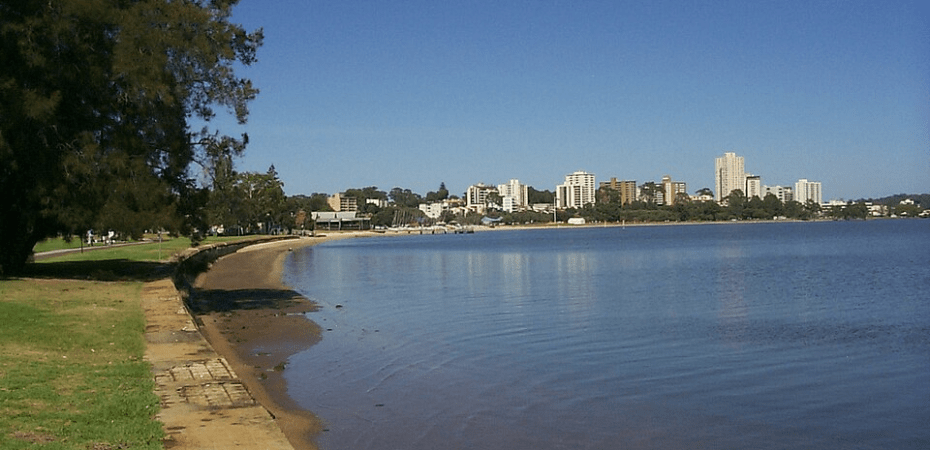
Image: https://commons.wikimedia.org/wiki/File:South_Perth_Western_Australia_5.jpg South Perth Western Australia. Source: Flickr. Author: Chris Johnson. Reviewer: Andre Engels, licensed under the Creative Commons Attribution 2.0 Generic license.


Israel’s war on children: a month in a Gaza hospital


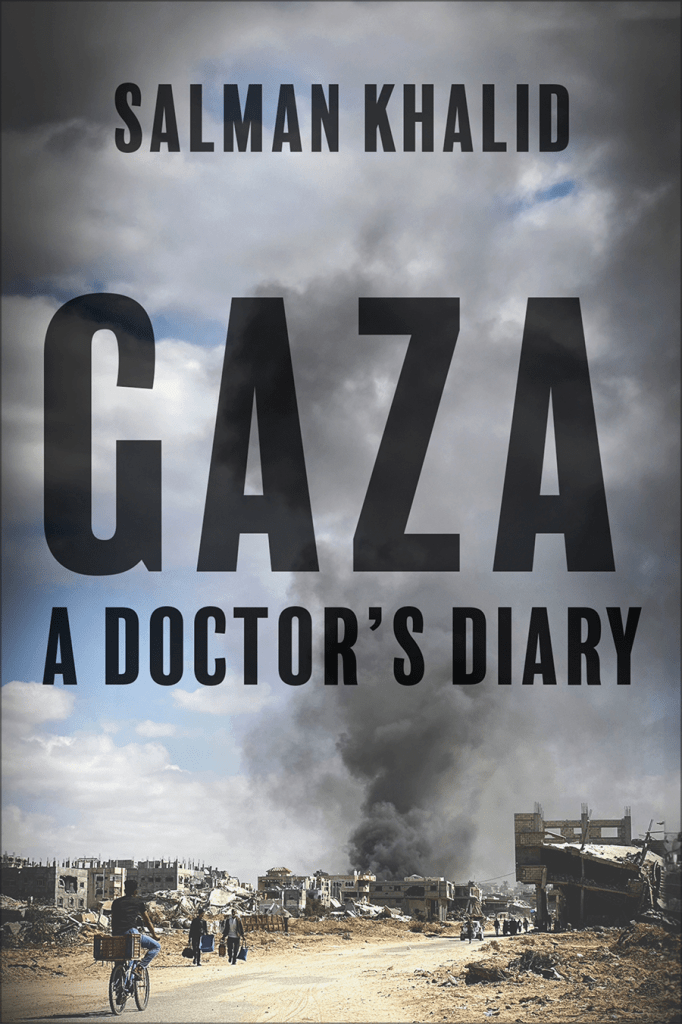
Mike Phipps reviews Gaza: A Doctor’s Diary, by Salman Khalid, published by Pluto.

APRIL 16, 2026

The author of the Foreword of this book, Dr. Fozia Alvi, had worked with the survivors of genocide before, bringing medical aid to the Rohingya refugees. But nothing prepared him for what he found in Gaza: “the heart-wrenching reality of encountering so many children— innocent lives shattered with shrapnel and bullet wounds. I witnessed a generation of amputees, children robbed of their childhood and broken in unmendable ways. I saw mothers consumed with grief, unsure of which of their children to mourn—the ones killed, the ones clinging to life, or the ones left broken, with limbs torn away.”

The journal he introduces was written by Dr. Salman Khalid during his 29-day deployment at Al Aqsa Martyrs Hospital: “no other physician has so thoroughly documented the personal and medical toll of this genocide.”

In August 2024, Emergency Physician Salman Khalid left Canada, his wife and three children to work in Gaza as part of an international team. Crossing into Gaza, “all one could see was miles and miles of ash-coloured, bullet-riddled, crumbled buildings.”

Once he begins work, the stories are heart-breaking. One of his first patients was “a four-year-old boy, who was the size of my two-year-old daughter. His home in the designated humanitarian safe zone was bombed today.” He showed signs of severe brain injury and impending brain death but  the overwhelmed staff were unable to place him on oxygen or a cardiac monitor. Gaza has only one-third of the medical residents it had before October 2023.

The next day at 4am, an Apache helicopter fires three missiles into the tents inside the hospital grounds killing four people, 100 metres from where Khalid is sleeping. This was despite the IDF having marked this as a safe humanitarian zone.

Another injured family is brought in; the woman dies. “I found myself imagining how this man would feel when he wakes up to realize that he is missing a leg, his son will have to defecate in a bag for potentially his entire life, and his wife and mother of his child is dead. If I was in Canada, this shift would rank among the most difficult of my entire career, but it seems like this will be just another day in Gaza.”

A few days later he and his colleagues spend over two hours trying – unsuccessfully – to resuscitate a nine-year-old boy, with a blast injury to the head and chest, whose father, an ER nurse, is assisting in the process. Other children come in with shrapnel embedded over their entire skin like tiny razor blades, or horrific burns. Khalid’s anger gives way to exhaustion.

Khalid describes the ER at Al Aqsa Hospital as “absolute chaos. It is a zoo, a madhouse.” It treats between 1,000 and 1,200 patients per day, in an area that is less than half of his ER’s size back home, which treats between 150 and 250 patients per day. There is no sterility, no air conditioning and the room is crowded with patients and relatives. Tensions between staff, the intrusive media and family members sometimes escalate into brawls.

“There are patients everywhere in the hospital. Rooms are full. Patients are laying on small mattresses they brought from home in hallways, stairwells, lobbies, outside administrative offices… pretty much anywhere there is open floor space.”

What is most distressing in this account is the sheer number of child victims. Khalid reminds us that half of the 2 million people in Gaza are children, so every time the Israelis bomb, half the victims are likely be children. It feels, he says, like killing just for the sake of killing – pointless, cruel torture.

Day 24: “Another 4am bombing of the Nuseirat camp brought mass casualties to our door… Around 1:30pm, we received another wave of casualties from an airstrike at Al-Shati camp.” Most cases Khalid describes in medical detail, but some arrive already taking their final breaths. Others die because of lack of functioning equipment -replacements are refused entry into Gaza by the Israeli authorities.

The following day, wave after wave of casualties arrive. “Of the patients with critical, life-threatening and catastrophic injuries today, half were children… Just when we thought we had things sort of under control, a fresh pile of bodies was dropped to the Red Zone floor with a crowd of more than 20 people trying to figure out who had the most immediately life-threatening injuries in all the chaos.” Yet despite this being Khalid’s worst day so far, other staff tell him that this is barely 30 percent of what they were experiencing just a few months earlier.

There are uplifting moments – but not many. The sheer misery of the situation is deeply affecting. Alongside the new trauma cases, there are patients with massive bed sores, the smell of vomit and necrotic flesh and malnourished patients, particularly children, who appear to be three to four years younger than their actual age. Khalid notes that he’s seen more amputees at this hospital in a single day than he has in his entire career.

As he prepares to leave, Khalid asks a 26-year old colleague what message he should take k to people back home. His answer is shockingly direct: “Don’t worry about us; we have one test and that is to be patient. You have many tests that you have to overcome: greed, free time, and all of your privilege in the West that has caused you to be lazy about fighting for justice. Don’t worry about us. Fix yourselves first.”

Khalid draws a similar conclusion at the end of his stay: “The only difference between September 3rd and today is that on September 3rd I thought the world was still watching, but today I know that no one is.”

Salman Khalid was not obliged to go to Gaza. As he says, “I have no Palestinian blood coursing through my veins.” But, as many who have boarded flotillas to break the siege of Gaza or taken other direct action to help the Palestinian people would understand, he adds: “I believe it is a litmus test for all of us who live in the West. Do we really stand for human rights for all people, or only a select few?” It’s as simple as that.

Not everyone can be an emergency physician in a war-ravaged hospital. But they can speak out, be careful of whose products they buy, write letters and sign petitions, donate.

With the Middle East war ever-widening and the Israeli barbarities in Gaza increasingly rendered acceptable by a complacent media, the plight of the Palestinians is in danger of slipping down the news agenda. Israel’s ‘ceasefire’ in Gaza appears increasingly to be a branding exercise crafted for international opinion: meanwhile, the war crimes continue.

Lat month, United Nations human rights experts highlighted the case of Dr. Hussam Abu Safiya, a Palestinian physician and hospital director who has been imprisoned for more than 450 days and reportedly tortured by his captors.

There is more first-hand testimony from Gaza surgeons available to Western readers. Bleak though this reading may be, it is vital first-hand material that reminds us that the majority of the victims of the indiscriminate carnage unleashed by Israel have no ideology or involvement in the conflict. This war on the innocent must never be normalised.

Mike Phipps’ book Don’t Stop Thinking About Tomorrow: The Labour Party after Jeremy Corbyn (OR Books, 2022) can be ordered here.


UK

We need to end the hostile environment, not create a moral panic against LGBT asylum seekers


17 April, 2026 
Left Foot Forward


Government policies are creating the conditions through which unethical actors can profit


Alex Powell is associate professor of law at the University of Warwick

During the course of this week, the BBC has run a series of articles, shows and podcasts detailing an “undercover investigation” into the UK asylum system. The reporting has given the impression of widespread practices of falsification. However, as a researcher focused on the UK asylum system, my research documents a far more complicated and concerning reality.

The framing of the piece, which is based on a very small number of encounters, presents asylum claims on the basis of someone being LGBTIQA+ as simple. It does this by uncritically repeating the line of an “adviser” to Worcester LGBT captured in the BBC’s video that ‘There is no check-up to find out if the person is gay’. However, my research has documented the reality of claiming asylum in the UK on the basis of being LGBTIQA+.

While the BBC gives the impression that LGBTIQA+ claims are a loophole in the UK asylum system that is widely exploited, such as by linking LGBTIQA+ claims to increased numbers of people who arrived in the UK lawfully claiming asylum, the reality is that of all asylum claims made in 2023 only 2% included reference to sexual orientation.

As such, far from revealing a widespread practice, the BBC’s framing can be seen to perpetuate further moral panic regarding the UK immigration system in a manner that does not accurately represent the realities of that system. Giving an impression of a significant ‘loophole’ where, in reality, even their own piece was unable to document a single confirmed example of someone who had actually succeeded in claiming asylum in the UK on the basis of a false LGBTIQA+ claim. For example, one individual they spoke to had returned to Pakistan after failing to secure status following eight years in the UK.

Within their ‘investigation’ the BBC argues that there exists a ‘fake asylum industry‘. They offer some compelling examples of unethical and unlawful conduct by individuals and organisations. However, misconduct by a small number of advisers is a regulatory issue, not evidence of an “industry”, and it is notable that by engaging in this way and failing to speak to actual refugees the BBC has not focussed on institutional failings and instead fixed public attention on to already vulnerable people and legitimate legal practitioners caught in the crossfire from this report.

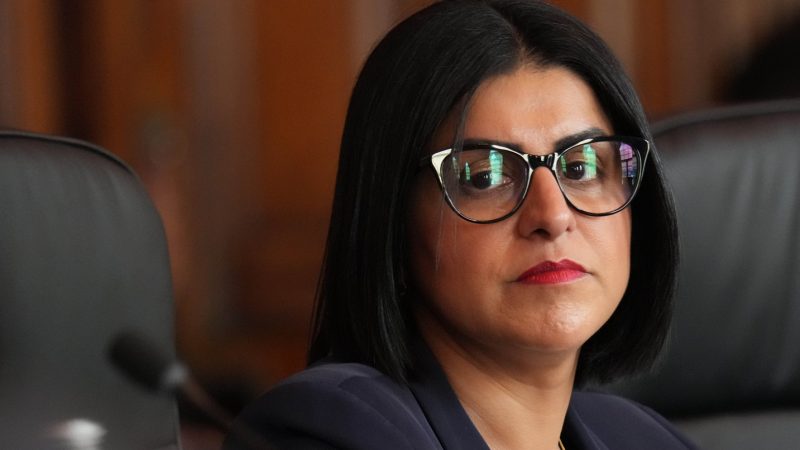
Over recent years, organisations such as the Immigration Law Practitioner’s Association have flagged concerns regarding a “climate of hostility” towards immigration practitioners and judges. With the Home Secretary Shabana Mahmood responding to the BBC’s reporting by claiming that ‘Sham lawyers’ will ‘face the full force of the law‘, there is a real risk that this framing of the poor practice of a small few will contribute to further hostility.

Rather than focusing on isolated examples of poor practice, these investigations should give pause for reflection regarding the structural conditions which push people into seeking the support of unethical advisers. Specifically, in recent years legal aid shortages, extensive delays, visa restrictions and the approach of the UK to refugee status determination have exacerbated the conditions within which a small number of people have been able to profit from the precarity of people seeking asylum.

For example, academic researchers have documented the extremely limited availability of legal aid for asylum in the UK. This includes the existence of “legal aid deserts” where securing legal assistance can be extremely difficult. The impact of this can be that people seeking asylum often end up facing complex legal processes without appropriate legal support. This, in turn, can mean that advisers like those from the BBC’s investigation end up being the only sources of support to which people seeking asylum are able to turn. As such, rather than framing this as evidence of a lucrative industry, an honest assessment would focus on how elements of government policy, such as the hollowing out of legal aid, have created the conditions within which unethical actors are able to profit. This should not, of course, detract from the outstanding work that many other third sector organisations do to support the human beings harmed by the government’s hostile approach to asylum.

Similarly, the BBC’s reporting details claims of “coaching” on LGBTIQA+ narratives. However, as my research has documented, the current approach to refugee status determination in LGBTIQA+ claims focuses strongly on the ability of people seeking asylum to describe their “emotional journey” towards developing an identity in a coherent manner which is supported by their social engagements with a broader LGBTIQA+ community. As such, the issue here is not fake or illegitimate claims, but rather the state’s narrow understanding of LGBTIQA+ identities and the current demands of the asylum system for highly particular narratives that produces the conditions where such ‘coaching’ can take place.

While there are reasons to be concerned about the practices reported by the BBC, this moment is not the time for another moral panic led “crackdown”. Rather, this should give pause for thought about how the practices documented are facilitated by hostile government policies which create the conditions within which unethical actors can profit.

Image credit: James Whatling / Parsons Media – Creative Commons


New report exposes asylum brutality


APRIL 14, 2026

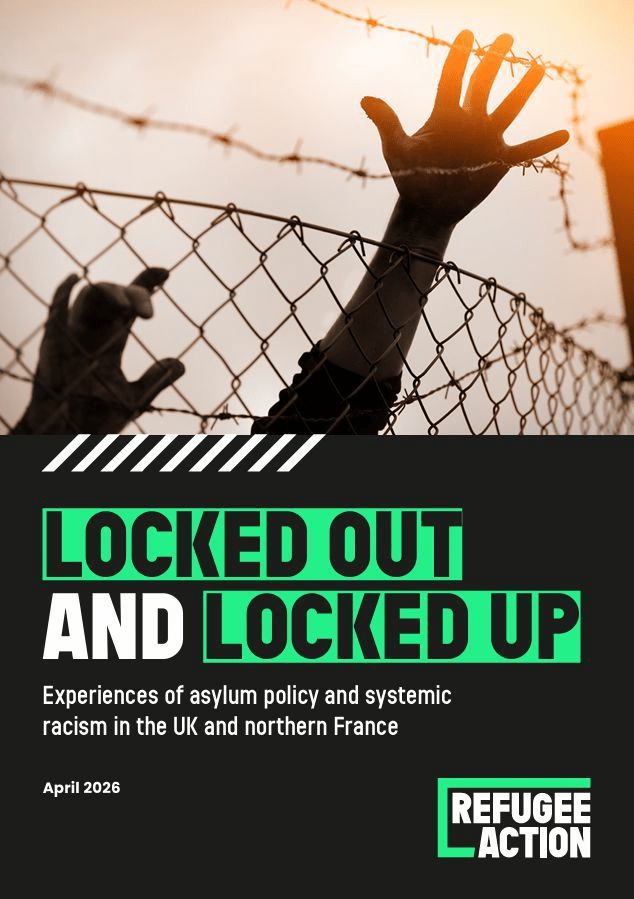
Refugee Action have launched a new report: Locked Out and Locked Up: Experiences of asylum policy and systemic racism in the UK and northern France.

Based on a year of research, co-led by people with lived experience, and with interviews with 32 people across UK asylum hotels and northern France, it exposes how current UK asylum policies are impacting people’s lives and driving systemic racism.

In northern France, people are forced to survive in brutal conditions. Police raids happen every 48 hours. Tents are destroyed. Belongings are taken. Teargas is used. Not even children and babies are kept safe.

And when people reach the UK, they face more hostility. Policies like the “one in, one out” scheme and temporary refugee status continue to deny people’s safety, stability and dignity.

These policies disproportionately target people of colour from countries across Africa, Asia and the Middle East. People fleeing war and persecution are treated with suspicion, criminalised for seeking safety, and subjected to harsher conditions and longer uncertainty. At the same time, safer and faster routes have historically been made more accessible to others.

The findings are stark:

• People are “locked out” of safe routes in northern France, facing violence, deprivation and racial profiling.

• Those who reach the UK are often “locked up” in de facto detention, unable to work, living in poor conditions and stuck in limbo. In the words of one participant, they are in an “open prison”.

• Political rhetoric and media narratives around “small boats” are fuelling dehumanisation and racial injustice.

Participants describe feeling treated “like animals” and being denied basic dignity on both sides of the Channel.

The report calls for:

– The government to immediately end its cruel “one in, one out” policy, and instead fund safe routes for people to arrive in the UK and seek asylum.

– The government to immediately end its new policy of limiting refugee status to thirty months.

– The Independent Chief Inspector of Borders and Immigration (ICIBI) to urgently launch an inspection focused on racial disparities in the treatment and outcomes for people arriving in the UK.

– Politicians of all parties and media outlets to cease referring to people seeking asylum in the UK as “illegal”. Seeking asylum is a legal right under the 1951 Refugee Convention and its 1967 Protocol, regardless of the route a person takes to reach the UK.

For more information, see here.

Send an e-postcard to your MP asking them to take action.


Successive governments have failed to learn lessons of Grenfell Tragedy

17 April, 2026 
Left Foot Forward


The conditions that facilitated the tragedy remain unchecked


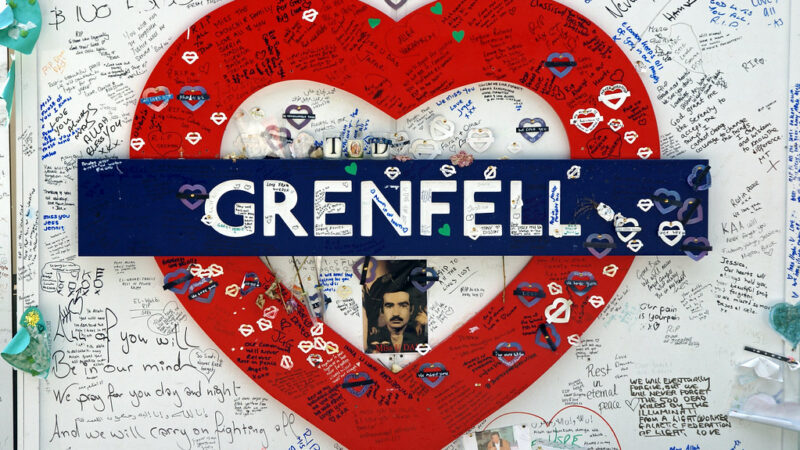
We are approaching the ninth anniversary of the 2017 fire at Grenfell Towers in London which killed 72 people, including 18 children. This week, the UK parliament has passed a Bill to build a memorial to the memory of its victims. The most effective memorial would be to ensure that such avoidable tragedies never occur again. However, the conditions that facilitated the tragedy remain unchecked. The root cause of the tragedy is lust for higher profits; corporate power, performance related executive pay, failure of regulators and indifference of governments to the cry of the people.

The Grenfell tragedy provides a lens for examining systemic failures, corporate abuses, and failure of governments to hold anyone to account in not only housing but numerous other sectors too.

The Grenfell Tragedy

The Grenfell tragedy occurred in one of the wealthiest countries and cities on the planet. The 24-storey social housing block was in the Royal Borough of Kensington and Chelsea, the most affluent borough in London.

Grenfell Tower was located in the poor part of the borough, an area in the top 10% of the most deprived areas in England. Occupants of its 129 apartments had low incomes and survived on the margins of society. They frequently complained about the poor housing conditions, electrical faults and fire safety. There was no building-wide fire alarm or sprinkler system. Tenants’ complaints were ignored even though previous fires and fatalities at similar properties had raised safety concerns.

The fire was caused by an electrical fault which ignited highly combustible materials used in construction and refurbishments of the tower. A subsequent inquiry concluded that there was “systematic dishonesty” by suppliers of cladding panels and insulation products. “They engaged in deliberate and sustained strategies to manipulate the testing processes, misrepresent test data and mislead the market … Arconic deliberately concealed from the market the true extent of the danger of using Reynobond 55 PE in cassette form, particularly on high-rise buildings.”

Kingspan knowingly made false claims about its insulation’s fire performance and conducted “long-running internal discussions about what it could get away with“. Celotex used “dishonest means”.to break into the market, presenting its insulation as safe while knowing it did not meet required standards.

The Kensington and Chelsea Tenant Management Organisation responsible for managing Grenfell Tower on behalf of the Royal Borough of Kensington and Chelsea showed “persistent indifference” to tenants’ complaints about fire safety. The tragedy was the ‘culmination of decades of failure by central government and other bodies in positions of responsibility in the construction industry’, especially as little reform followed previous high-rise block fires.

The Government accepted all 58 of the inquiry’s recommendations but they have not been fully implemented. Many buildings still have the same cladding as in Grenfell.

To date, no corporation or individual has yet been charged or prosecuted over the death of 72 people. No company director has been disqualified by the Department of Business and Trade. The offending companies are not excluded from public procurement. Despite promises, no legislation has been introduced to improve corporate and director accountability. Ministers bat away calls for urgent action by claiming that the Police are looking at the issues.

Grenfell is not the only case of political indifference to corporate abuses and damaged lives.

Corporate Capture of the State

State capture, a form of political corruption, is all around us. Governments speedily prosecute carers and poor people for comparatively minor indiscretions but lack the necessary backbone for dealing with corporate crimes.

England’s water companies have over 1,200 criminal convictions. Companies reward executives for boosting profits by dumping sewage in rivers. They bypass rules on payment of bonuses. To manage public opinion, occasionally fines on companies are announced but then quietly waived or deferred. No company has had its licence to operate withdrawn. No corporate executive has been fined or prosecuted.

The Post Office scandal goes back to the 1990s. The December 2019 High Court judgment showed that it falsely secured criminal convictions of hundreds of postmasters by not revealing that its Horizon accounting system was fundamentally flawed. An independent inquiry revealed that it was assisted by Fujitsu, the supplier of the IT system, lawyers and business advisors. So far, the public purse has paid nearly £1.5bn in compensation to victims.

Horizon’s predecessor system known as Capture was used from 1992 to 1999. It too was flawed and was used to falsely secure criminal convictions of postmasters. Millions will be paid in compensation.

Despite the overwhelming evidence, no corporation or corporate executive has been fined or prosecuted. Fujitsu and others have made no contribution to compensations. Fujitsu still gets government contracts.

The third strand of the Post Office scandal is that there has been no scrutiny of the 100 or so postmaster convictions secured by the Department of Work and Pensions (DWP) for alleged frauds on payments of social security benefits. On 27 February 2025, a Minister told the House of Lords, “My noble friend Lord Sikka raised a question about the DWP convictions. I can assure him that the Minister for Transformation is looking into this, a review is being established”. On 27 January 2026, at a meeting with the relevant Minister I learnt that no review had taken place, and that the government had not even appointed a reviewer. On 23 March 2026, the government finally advertised for the post of a reviewer. The position may be filled by summer 2026 and the reviewer is expected to spend just 30 working days on the job. The review is expected to be cosmetic.

Secret commission from mis-selling of motor finance is the latest finance industry scandal. On 24 October 2024, the Court of Appeal ruled that it was unlawful for car dealers to receive a commission from a lender providing motor finance to a customer, unless it was properly disclosed to the customer and they gave informed consent to the payment. A possible compensation bill of £44bn, hitting bank profits, was mooted. Lenders appealed to the Supreme Court.

In January 2025 the Treasury, led by Chancellor Rachel Reeves, took the unprecedented step of applying to intervene and influence the Supreme Court judges on how they should interpret the law. The Treasury opposed the proposed redress and claimed the compensation would have “adverse consequences for the UK’s reputation as a place to do business and could negatively impact economic growth”. The court rejected the Chancellor’s interference. Faced with snub, the Chancellor said that she is considering emergency legislation to overrule the Supreme Court and limit customer redress. The August 2025 Supreme Court judgment severely diluted the redress available to customers.

The zeal to protect banks is not extended to victims of bank frauds. There is the long-running saga of frauds at HBOS, since 2009 owned by Lloyds Bank. Between 2002 and 2007, small business owners at the Reading branch were classified as ‘high risk’ even they had never missed a repayment of loans. They were sold unnecessary financial products and ultimately forced into liquidation, with senior managers benefiting from the forced sale of assets. Despite the evidence, the Financial Conduct Authority, the Serious Fraud Office and the Police declined to bring any prosecutions. Finally, in 2017, the Thames Valley Police and Crime Commissioner prosecuted and secured criminal convictions of HBOS managers for fraud and corruption.

Still, no regulatory agency sought to fully investigate the £1bn frauds and secure compensation for the victims. The buck was passed to Lloyds Bank for a very limited investigation by Dame Linda Dobbs. A report was promised by 2018. Nothing has been published. I have raised the matter in parliament on several occasions. The typical response from Ministers is silence, indifference, obfuscation and buck-passing.

The above is a tiny part of evidence showing callous disregard for the lives of ordinary people. In the public mind corporate crime is associated with tax dodges, illicit financial flows, dud products, profiteering, bribery and corruption, but it is more than that. It destroys lives, families and communities. The abuses are part of an enterprise culture that persuades many to believe that `bending the rules’ for personal gain is a sign of business acumen. Stealing a march on a competitor, at almost any price, to gain financial advantage is considered to be an entrepreneurial skill, especially where competitive pressures link promotion, status, profits, market shares and niches with meeting business targets. The result is that people are denied safe housing, water, work and essential services. Yet governments are obsessed with deregulation, with little regard for human rights, workers’ rights and protection of people and the environment.

The political system has done little to address the root causes of abuses. Current laws do not impose a proactive duty on companies and directors to take reasonable steps to prevent foreseeable harm arising from their commercial activities. No attempt is made to reform corporate governance, democratise corporations, reform regulation and ministerial accountability. The state itself has become a sponsor of social terror where corporate profits are prioritised over people’s lives. Unless checked, further loss of confidence in institutions of government is inevitable.


Prem Sikka is an Emeritus Professor of Accounting at the University of Essex and the University of Sheffield, a Labour member of the House of Lords, and Contributing Editor at Left Foot Forward.


Viktor Orbán’s defeat exposes ReformUK’s fragile benchmark


Yesterday
Right-Wing Watch

Left Foot Forward

Beyond Hungary, the result may point to something broader. Across Europe, parts of the populist right appear to be encountering limits and have, dare we say it, peaked.


Viktor Orbán is out. Vladimir Putin’s EU ally, who spent 16 years recasting Hungary as a model of “illiberal democracy,” has been decisively shown the door. Some 3.3 million Hungarians opted for Peter Magyar and his Tisza Party, to “dismantle the Orbán system.”

The result raises an awkward question for ultraconservative Orbán admirers in high places around the world, and none more so than Reform UK: what happens when your model collapses and with it, your supposed open highway to power?

MAGA spared no blushes

The timing, it must be said, was exquisite. JD Vance touched down in Budapest to give Orbán his blessing, only to watch voters withdraw theirs – in their droves.

And the anti-MAGA commentariat spared no blushes. “JD Vance is on a historic roll,” mocked former prosecutor and long-term Democrat Ron Filipkowski, cataloguing the vice president’s recent foreign policy blunders.

But the mockery, however deserved, risks understating the significance of what has happened in the small Central European nation, the unravelling of a political project that has spent years insisting it represents the future.

Since 2010, Viktor Orbán cultivated Hungary as a showcase for “illiberal democracy,” a “Christian nationalism” promoted as an alternative to Western liberal democracy. It was a rule focused on centralised power, hostility to independent institutions, cultural conservatism, and relentless emphasis on sovereignty and anti-immigration politics, with razor-wire fences erected at borders.

But as well as domestic governance, it was an export strategy. Through state-aligned media, think tanks, and conferences, Orbán’s Hungary was marketed across the US and Europe, including the UK, as proof that liberal democracy could be hollowed out without electoral cost.

And the model was eagerly imported wherever possible, admired and imitated by a transnational network that included figures like Donald Trump, JD Vance and Reform UK.

That model has now been not just challenged, but repudiated. The scale of Orbán’s defeat to Péter Magyar of the Tisza Party matters. So do the scenes that followed, tens of thousands on the streets of Budapest chanting “Europe! Europe! Europe!,” a direct rebuke to the insular nationalism that defined Orbán’s rule.

This was not simply a change of government. It was a collective rejection of the politics Orbán spent 16 years entrenching at home and abroad. It’s early days and of course, Magyar is a right-wing conservative, but first signs – the move towards Europe and the determination to address corruption – are promising.

Orbán and the British right

From Liz Truss being mocked for claiming “there is no longer free speech in the UK” at a right-wing conference in Hungary in 2025, overlooking Orbán’s well-known crackdown on press freedom, to Miriam Cates praising him as “one of the most important figures in the patriotic conservative movement” and, as recently as March, hosting him for an exclusive GB News interview, many right-wing UK politicians have openly admired Orbán.

This admiration has not been merely rhetorical, it has helped shape a broader political strategy. From calls for mass deportations to deep scepticism of international institutions, especially the EU, Reform-style politics has drawn heavily on Orbán’s Hungary as proof that a confrontational, anti-liberal agenda can evolve from insurgency into durable governance.

Nigel Farage and his allies have long held up Orbán as a benchmark. Farage described him as “the strongest leader in Europe” in 2018, and later as “the future of Europe” for his unapologetic defence of the nation-state against liberal consensus.

Despite Hungary having been ranked as the most corrupt country in the EU, with high levels of poverty, Reform figures have continued to express admiration for his leadership. At a 2025 political festival in Hungary, the party’s head of policy, James Orr, described Orbán’s model as a “counterexample” to what he sees as Britain’s ideological drift away from national pride and heritage.

MattGPT and the MCC

In a recent interview with Hungary Today, Reform’s defeated Gorton and Denton candidate and GB News presenter Matthew Goodwin, praised Hungary as a rare state committed to sovereignty and national identity. Goodwin, also known as ‘MattGPT’ after claims he relied on AI to write his latest book, has extensive links to institutions associated with Orbán.

As DeSmog reports, he has spoken at multiple events hosted by the Mathias Corvinus Collegium (MCC), a state-funded private college chaired by Orbán’s political director, Balázs Orbán. MCC has been described as a propaganda outfit for Orbán’s views on everything from gender to race. It has received over $1.3 billion in public funding and regularly convenes high-profile international conferences.

MCC also has a 10% stake in MOL, Hungary’s national oil company. Just days before the election, MOL announced it would pay MCC a £57 million dividend ahead of schedule, potentially giving it resources to challenge Magyar’s government. However, new reports indicate that Magyar plans to force a delay in the payout until later this year, while his government explores ways to strip MCC of its shares. He has pledged to “end the practice of political network-building with public funds” by cutting off state resources to Orbán’s affiliates.

Meanwhile in Britain, as of early 2026, MCC has been significantly bankrolling the Roger Scruton Legacy Foundation (RSLF) in London, named after the controversial right-wing British philosopher, Roger Scruton. A year before he died in 2020, Scruton was awarded the Order of Merit of Hungary by Orbán in London. The following year, the RSLF was born. In fact, Orbán’s seeming love affair with Scruton, who described Islamophobia as a “propaganda word” invented by the Muslim Brotherhood to “stop discussion of a major issue,” and referred to Hungarian Muslims as “huge tribes,” can be seen through the nine cafes named after the philosopher in Hungary.

A Good Law project report suggests that over 90% of the RSLF’s funding has come from the Russian-oil-backed MCC since 2023. Cambridge theology academic and now Reform UK’s Head of Policy James Orr is a trustee/director of the RSLF. As is Spectator editor and former Tory minister Michael Gove.

Goodwin also previously served as an MCC visiting fellow, teaching and delivering public lectures in Hungary. The Good Law Project noted in February that the role netted Goodwin between €5,000 and €10,000 a month, though Reform disputes this figure. He most recently delivered a keynote speech at an MCC event in Budapest in March 2026 titled “Reclaiming the West.”


In his first press conference following his landslide win, Peter Magyar announced the state would no longer finance institutions such as MCC. He went further, suggesting it may have been a criminal offence for Orbán to have funded MCC with public money, and that he intends to investigate.

What this might mean for ‘MattGPT’ and other figures on the right associated with the institution is far from clear, but the implications could be significant if those claims gain traction beyond Hungary. As Jolyon Maugham, executive director of the Good Law Project, put it:

“If, as Hungary’s new prime minister is suggesting, this funding is criminal, the likes of Matt Goodwin are going to be combing through our proceeds of crime legislation.”

Tim Picton, senior advocacy adviser for Spotlight on Corruption, said the case raises broader concerns about how foreign state-linked funding intersects with British politics:

“MCC has solid links to prominent political figures in the UK and is the main funder of a charity under the leadership of a member of the House of Lords. The revelations that it is now under investigation in Hungary for alleged misuse of public funds have placed the role that thinktanks play in risking foreign interference and illicit money undermining our democracy firmly back on the radar.

“The Home Office should also look carefully at whether UK groups, such as the Roger Scruton Legacy Foundation, that have benefited from funding funnelled from this Hungarian state-backed thinktank should have registered with the UK’s Foreign Influence Registration Scheme.”

The network of Orbán-linked connections within Reform doesn’t end with Roger Goodwin and James Orr. As for Farage himself, in April 2024, the Reform UK leader spoke at the National Conservatism conference in Brussels, headlined by Orbán. The event was organised by MCC’s Brussels’ arm and the Edmund Burke Foundation, where Orr serves as UK chairman. The foundation received $200,000 in 2024 from the Heritage Foundation, which authored the “Project 2025” policy blueprint for Trump’s second term, and maintains ties with the Danube Institute, another body funded by the Hungarian government.

In 2019, Tim Montgomerie, founder of Conservative Home and UnHerd, who defected from the Tories to Reform UK and remains an influential voice within the party, gave an address to the Danube Institute on the “the limits of liberalism” and the potential of its pro-natal family policies.

‘Stunning hypocrisy’

Critics have long pointed to the contradiction of Reform’s admiration of Orbán and his policies. Olivier Hoedeman of the pro-transparency group Corporate Europe Observatory argued Reform’s ties to Orbán’s pro-Kremlin government exposed “the stunning hypocrisy” of its claims to defend democracy and sovereignty.

But what will all this mean moving forward? For Hungary itself, the incoming Tisza Party government must begin the work of unwinding the system built by Viktor Orbán, of restoring institutional independence, of repairing relations with the European Union, and unlocking suspended EU funds to stabilise the economy.

Just as crucial will be whether it can reverse the outward flow of young, skilled Hungarians who left during the Orbán years and persuade them that the country offers a future worth returning to.

Beyond Hungary, the result may point to something broader. Across Europe, parts of the populist right appear to be encountering limits and have, dare we say it, peaked.

Marine Le Pen’s movement was recently stalled in local elections in France, where the far-right National Rally (RN) failed to win control of any major city.

While in the UK, Reform has stumbled in a string of by-elections, including its first electoral test at its ‘flagship’ council in Kent, where it lost to the Green Party. The contest was triggered by the jailing of one of its councillors for controlling and coercive behaviour towards his wife. Meanwhile, a recent Sunday Times poll shows support for Reform has dropped to its lowest level in over a year.

None of this amounts to collapse, but it suggests that far-right momentum is harder to sustain than to generate.

But for Reform UK, events in Hungary carry a more immediate political risk. Just as Nigel Farage’s association with Donald Trump may prove a double-edged sword with voters, so too could its long-standing admiration for Orbán, now that his model has been rejected at the ballot box, and figures within the party may face scrutiny with institutions like the MCC being potentially investigated.

That said, it would perhaps be naive in assuming Orbán’s supporters will go quietly. If anything, the tone was set before a single vote was cast.

Writing in the Telegraph ahead of the election, Tibor Fischer confidently declared: “Orban will win again and the Leftist chatterati just doesn’t get why,” dismissing critics as people who know “bugger all about Hungary or the meaning of the word authoritarian.”


The real problem, he argued, was that commentators were simply reaching for the wrong adjective. “The adjective they’re struggling to find is successful.”

That claim now reads rather differently. “Success” is a difficult label to sustain after such a resounding electoral defeat. And it’s even harder to reconcile with the 3.3 million Hungarians who turned out in record numbers to back Péter Magyar, and, in doing so, reject the very model they were told was working so well.

If Orbán’s “success story” has just been rewritten by voters, Reform UK may find it harder to convince the British electorate that it was ever the right model in the first place.

Thank you, Hungary.

Gabrielle Pickard-Whitehead is author of Right-Wing Watch
Spain approves undocumented migrant amnesty policy, breaking with Europe’s migration crackdown
Yesterday
Left Foot Forward

The aim is to bring those already embedded in Spanish society into the formal economy, ensuring they can work legally, contribute taxes, and access protections.


Spain is charting a notably different course from much of Europe’s tightening grip on migration. The government has approved an amnesty programme that could allow up to 500,000 undocumented migrants to apply for legal status, in what Prime Minister Pedro Sánchez has described as both “an act of justice and a necessity.”

Under the plan, successful applicants will receive a one-year work and residency permit. To qualify, individuals must prove they have been living in Spain for at least five months, arrived before January 1, and have no criminal record. The policy aims to bring those already embedded in Spanish society into the formal economy, ensuring they can work legally, contribute taxes, and access protections.

The move places Spain at odds with many European neighbours, which are focused on curbing arrivals and increasing deportations. Yet Sánchez argues migrants are central to Spain’s current economic strength, helping to power what is now the fastest-growing economy in Europe. With an ageing population and mounting pressure on public services, the country faces a clear demographic challenge, one that immigration may help offset.

And there is growing evidence to support this view. Goldman Sachs research shows Spain’s economy has stood out, distinguished by its higher value-added services sector, and growth momentum that is expected to last for several years.

Their economists have raised their forecasts for Spain and now expect the economy to grow 1.9% in 2026 and 1.7% in 2027, compared with previous forecasts of 1.5% and 1.6%, respectively. This increases next year’s growth forecast for the entire euro area by 0.1 percentage point to 1.2%.

Filippo Taddei, senior economist focusing on southern Europe and European policy within the Goldman Sachs European Economics team, notes how Spain’s economy is getting a boost from immigration. The country is taking in more people relative to the size of its population than Germany, France, or Italy, and the latest influx is characterised by immigrants with higher levels of education and job skills. This distinctive demographic trend “could set Spain on a better footing” than the rest of Europe.

Public reaction to the amnesty has been predictably divided. Critics have echoed familiar anti-immigration tropes, warning of “the self-wrecking of Europe.” Others have responded with support, emphasising the human and economic logic of the policy. As one observer put it, granting legal status to hundreds of thousands of people represents “a huge shift toward stability and dignity for many families.”

Whether this approach becomes a model for others, or remains an outlier, remains to be seen.


Hardt, Michael. Multitude: war and democracy in the Age of Empire /. Michael Hardt and Antonio Negri. p. cm. Sequel to: Empire. Includes index. ISBN 1-59420 ...

Empire / Michael Hardt and Antonio Negri. p. cm. Includes bibliographical ... 4.3 The Multitude against Empire. 393. Notes. 415. Index. 473. Page 11. PREFACE.


Spain Probes Europe's Worst Blackout Over Power Rule Breaches

The Spanish market and competition regulator on Friday opened probes into potential breaches of power sector rules as part of a wider investigation into last year's blackout in the country.

Spain's grid buckled on April 28, 2025, leaving the country, most of Portugal, and, for shorter periods of time, parts of France, without electricity.

Investigations and multiple reports have found over the past year that the immediate cause of the worst blackout Europe has ever seen in modern times was a surge in voltage.

On Friday, the Spanish market and competition regulator, CNMC, announced that it had found breaches of power sector regulations over extended periods of time that should be formally investigated, "although they do not in themselves constitute the cause of the incident."

As a result of ongoing investigations into the blackout and power sector behavior prior to, during, and after the outage, the CNMC has detected various indications of non-compliance with the power sector rules. Some of the non-compliant behavior was maintained for extended periods of time, "which would have affected the functioning of the electricity system and could constitute administrative infringements."

The new investigation into suspected breaching of the power sector rules does not imply that the watchdog is attributing the origin or cause of the blackout to the affected companies, "considering the fact that the incident had multiple causes," the regulator said.

The probes are expected to be completed within 9 to 18 months.

Last year, an expert panel of the European network of electricity transmission system operators, ENTSO-E, released its report on the April 2025 blackout.

The report highlighted "the exceptional and unprecedented nature of this incident - the first time a cascading series of disconnections of generation components along with voltage increases has been part of the sequence of events leading to a blackout in the Continental Europe Synchronous Area."

In short, the report said that excessive voltage was the driver behind the blackout.

By Michael Kern for Oilprice.com