Wednesday, April 22, 2026

 The Islamabad Pivot and the Rise of the Global South’s Diplomatic Order


 April 21, 2026

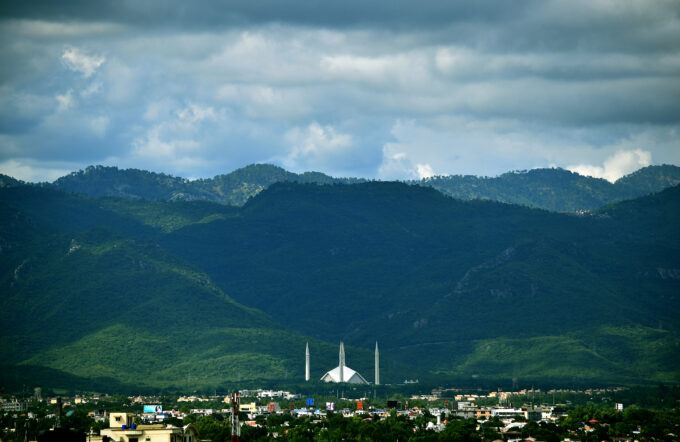
Islamabad’s verdant cityscape merges with the Margalla Hills. Ali Mujtaba – CC BY-SA 4.0

The collapse of the U.S.-Iran talks in Islamabad this week, followed swiftly by Washington’s announcement of a maritime blockade of the Strait of Hormuz, has been widely framed as a return to the familiar patterns of the maximum pressure era. Yet, to view these events solely through the lens of a bilateral failure is to miss a more profound structural shift in global diplomacy. Although the negotiations may have stalled after 21 hours of grueling deliberation between JD Vance and Abbas Araghchi, the venue and the process revealed a significant reality: the center of gravity for international dispute resolution is moving away from the West.

For decades, major diplomatic breakthroughs in the Middle East were synonymous with American soil or European capitals. From Camp David to the Green Tree Accord, the script was predictable: the United States acted as the indispensable mediator, providing the security guarantees and the economic carrots to bring parties to the table. However, the Islamabad talks represent a departure from this historical monopoly. By choosing a South Asian capital as the primary corridor for high-stakes engagement, the international community has effectively recognized a new Islamabad Blueprint defined by Global South mediation rather than Western dictate.

In this current geopolitical climate, the effectiveness of a superpower is no longer measured by its ability to coerce but by its capacity to collaborate. As the Islamabad Blueprint suggests, the future of global stability rests on the shoulders of those who choose the hard work of mediation over the easy path of confrontation. Pakistan’s recent efforts to facilitate a second round of talks underscore this shift. Islamabad is not merely providing a room; it is providing a regional legitimacy that Washington can no longer manufacture on its own.

The failure to reach a deal in Islamabad is being blamed on what Iranian officials describe as excessive demands from the U.S. delegation. Specifically, the insistence on widening the scope of the talks to include non-nuclear regional issues at the eleventh hour suggests a lack of the flexibility required for modern diplomacy. In contrast, the role played by Pakistan, supported quietly by China, Turkey, and Saudi Arabia, focused on a more pragmatic, incremental approach. This group sought to establish a stability anchor based on shared economic interests, particularly the security of energy corridors that are vital to the developing world.

The contrast in methodology is striking. The U.S. approach remains rooted in a zero-sum logic of sanctions and blockades. Within 12 hours of the talks’ dissolution, the White House shifted toward a policy of intercepting vessels. This is a tactic that ignores the changed economic landscape of 2026. Today, a blockade is not merely a military maneuver; it is a direct assault on the energy security of neutral nations across Asia and Africa. By weaponizing the sea lanes, Washington is inadvertently accelerating the very trend it fears most: the transition to a multipolar financial system where the petrodollar is no longer the sole arbiter of trade.

The economic fallout of this rigid unilateralism is already visible. As oil prices climb again toward $100 per barrel following the blockade announcement, the America First strategy is increasingly becoming America Alone. By treating the Strait of Hormuz as a chessboard for containment rather than a global artery, Washington risks alienating the very allies it needs to maintain a coherent international order. The Global South sees this not as a defense of freedom of navigation but as an act of economic piracy that prioritizes tactical leverage over global stability.

China’s role in this evolving landscape is particularly instructive. Unlike the transactional nature of the Western approach, Beijing has spent the last year fostering what it calls a community of shared future. While the United States remains preoccupied with naval destroyers and sanctions lists, China has focused on building infrastructure and technological resilience. The recent deployment of embodied AI for high-risk industrial tasks in the region is a case in point. It serves as a reminder that while one power is looking to close corridors, the other is looking to build the systems that make those corridors more efficient and safe.

This is the essence of the new diplomatic reality. The Islamabad Blueprint signifies that the Global South is no longer content to be a passive theater for great power competition. Countries in the region are now active stakeholders, providing the neutral ground and the creative frameworks necessary for dialogue. Even if the current ceasefire—slated to expire on April 22—is fragile, the fact that the United Staters felt compelled to negotiate in Islamabad, rather than forcing the Iranians to meet in a European capital, is a concession to this new order.

The world is headed toward a pluralistic diplomatic ecosystem. In this new world, the legitimacy of mediators is derived from their ability to provide stability and development, not just their capacity to exert military force. As Washington returns to its toolkit of blockades, it may find that the rest of the world has already moved on, seeking security in the new corridors of the East.

The lesson of the last few days is not that peace is impossible, but that the old ways of achieving it are increasingly obsolete. The Islamabad talks, despite their current impasse, have shown that a new group of mediators is ready to fill the vacuum left by the West’s retreat into unilateralism. For the global community, the task now is to ensure that these new diplomatic pathways are strengthened, providing a much-needed alternative to the cycle of pressure and conflict that has dominated the last century. If the Islamabad Process can survive this week’s naval posturing, it may yet provide the definitive map for a post-unipolar world.

This first appeared on FPIF.

Imran Khalid is a geostrategic analyst and columnist on international affairs. His work has been widely published by prestigious international news organizations and publications.

Pakistan: How a regional warmonger came to host US-Iran peace talks
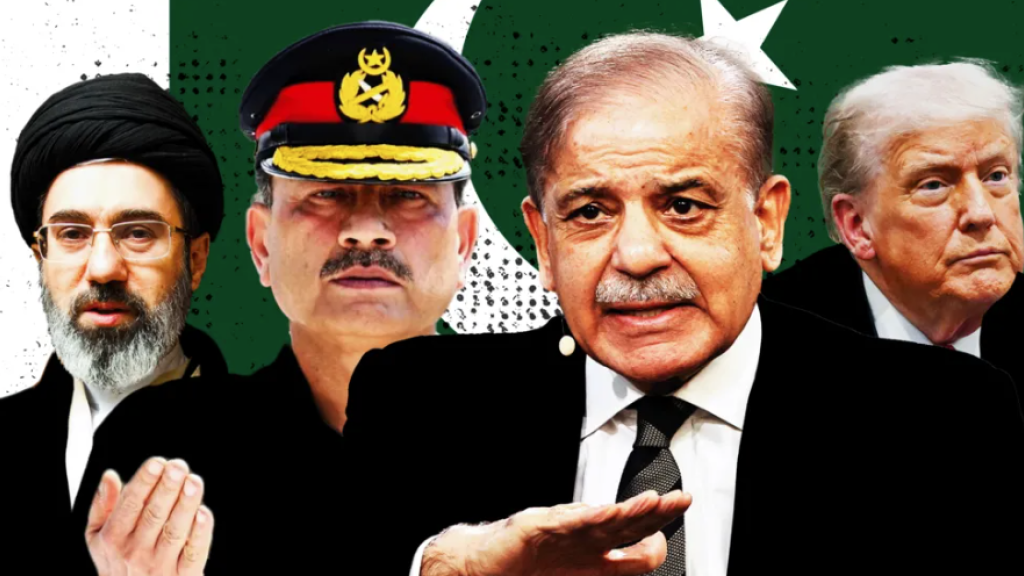

iran us peace talks pakistan

Mainstream Pakistan is basking in (self)glory. As host of the US-Iran negotiations — rumours of a second-round abuzz — Islamabad is upbeat. From talk show hosts to YouTube influencers, the one-dimensional message is clear: Pakistan has finally been assigned the role it deserves in the global hierarchy.

International Relations (IR) academics, otherwise considered irrelevant by the know-all legacy media, are dotting the screens and op-eds. Perhaps one of these IR scholars introduced the media to Giovanni Botero’s 16th century notion of a “middle power.” In any event, the urban middle classes and Twitterrati have enthusiastically embraced Botero’s otherwise vague concept.

That traditional rival India is not just absent in the negotiations but burning with jealousy is the icing on the cake for the media, the chauvinistic middle classes and, of course, the state managers. In my opinion, this is the second most important “moment of glory” for the country’s ruling class, since hosting the Islamic Summit in 1974. However, this time around, it is an event of an even bigger consequence.

The question, however, remains: what has catapulted Islamabad, temporarily at least, to the status of “global peacemaker”, Scandinavian-style? The India-Pakistan conflict in May last year apparently endeared the Pakistani leadership to United States President Donald Trump. Yet, this is an inadequate explanation.

Foreign policy as bread and butter

Pakistan is a country that survives and thrives on foreign policy. The Pakistani ruling class learnt the art of banking on and cashing in geostrategic benefits, whenever an opportunity presented itself, back during the Cold War. Back then, they grasped the diplomatic art of balancing relations between rival powers. For example, Pakistan has friendly relations with China and the US. In 1970, Pakistan facilitated secret Sino-US negotiations, paving the way for diplomatic relations. However, Pakistan has also, on occasions, annoyed both the powers.

Pakistan is hosting the present peace talks only 150 kilometres from Abbottabad, where Osama bin Laden was hunted down on May 2, 2011. Several Taliban commanders and their families, post-9/11, were also residing in Islamabad, a stone’s throw from the US embassy. Beijing has its own grievances against Pakistan. The biggest Chinese resentment, presently, is Islamabad’s attempt to hinder China’s Belt & Road Initiative (BRI) project in Pakistan. The deadly attacks on Chinese nationals employed in huge Chinese projects have at times driven otherwise polite Communist Party of China bureaucrats to publicly reprimand Islamabad.

Likewise, since 1979, Pakistan has managed good relations with Riyadh as well as Tehran. But in each case, irritants and disagreements persist. Tehran has been unhappy over state-patronage lent to anti-Shia militant outfits, responsible for mass violence against Pakistan’s Shia citizens (there was spillover in Afghanistan too). In January, Iran fired missiles and sent drones to attack Pakistan’s Balochistan province. Pakistan, before announcing a truce, repaid in kind.

Mohammed bin Salman, likewise, was incensed by Islamabad’s refusal to dispatch Pakistani troops to fight in the “jihad” against “Houthi rebels” in 2015. Yet, on April 16, Pakistan’s prime minister, Shahbaz Sharif was warmly received by MBS. Shahbaz Sharif speaks broken-Arabic, largely to impress domestic audiences. He learnt Arabic when his family was exiled to Saudi Arabia by the military in 2001.

Iranian foreign minister Abbas Araghchi welcomed Pakistan’s military czar Asim Munir to Teheran on April 16. As Pakistan is a garrison state, military chiefs have command over troops and civilian affairs. Munir’s visit received greater coverage in the Pakistani media than Sharif’s trip to Jeddah. There is a reason for this difference. Not unlike economy and politics, foreign policy also falls within the domain of Pakistan Army’s General Headquarters. Most importantly, the military (manpower, technology) is also Pakistan’s most important diplomatic manoeuvre and valuable export.

A clever client

Pakistan is a client state, but a clever one. It is one thing whether their policies benefit Pakistani citizens, but state managers have successfully peddled their international interests. Owing to their ability to stay effective internationally, they have gained and maintained access to global and regional corridors of power. This access can apparently be explained by a lucky mix of history and geography (more below). During the recent Israeli-US war on Iran, they successfully deployed this as self-interest was involved.

For the past several days, there have been power cuts every second hour. This is because electricity is largely produced from imported oil. Sectarian tensions are another headache for the ruling class. The attacks on the US consulate in Karachi on March 1, in the wake of Iranian leader Ali Khamenei’s assassination, and the large-scale unrest in Gilgit-Baltistan have made global headlines. However, the sectarian aspect went missing in the global and local coverage, for understandable reasons. The attack on the US Consulate was mounted by Shia youth, while Gilgit-Baltistan is a Shia-dominated region (though not all Shia belong to the Ithna Ashari branch).

Given a near-universal anti-Americanism and widespread dislike for Israel, support for Iran during the month-long invasion cut across the sectarian divide. Field Marshal Munir summoned top Shia clerics to warn against any further agitation. His advice to clerics who preferred Iran over Pakistan’s national interests was to “migrate to Iran”. Though his advice was justifiably censured, Munir’s warning was indicative of the ruling elite’s worries.

Meantime, every missile Iran fired at the Gulf sheikhdoms unnerved Islamabad. While Pakistan cannot annoy Tehran, it can hardly afford the wrath of Arab Sultans either. After China, the Gulf states (collectively) are Pakistan’s largest lenders, if one takes into account Pakistan’s bilateral debt. Equally important are the millions of Pakistanis working in the Gulf states, who constitute the largest source of remittances. This diaspora in the Arabian Peninsula, often working in slave-like conditions, keeps the Pakistani economy afloat.

Ironically, while Pakistan was playing the role of peacemaker internationally, China was hosting a week-long round of talks between Kabul and Islamabad, and relations with India remain fraught. Pakistan is neither a peace-maker by ideology or necessity. The Pakistani state’s ideological basis rests on an enmity with India. Present tensions with Kabul are partly an extension of this India-centric approach. Islamabad is furious that the Taliban regime has been cosying up to New Delhi (among other factors). Pakistan may seek to play the role of peacemaker globally but regionally it acts as a warmonger.

Roots of cleverness

Balancing powerful global or regional rivals is not a specifically Pakistani achievement. There are other case studies of a client state pleasing competing patrons. However, the specificity of the Pakistani elite is the fact that they manage it all this time. What explains this clever “ability”?

A combination of the following factors has allowed the ruling clique to perform as a clever client.

  • The state’s garrison character. In a democracy, even when it is highly flawed, a ruling dispensation can not afford unpopular decisions. Foreign policy makers in Pakistan, however, are not answerable to any electorate.
  • Pakistan has a military equipped with nuclear capacity. While Pakistan has sent troops to the Gulf states, its top nuclear scientists have helped Iran and Libya build their nuclear programs.

Pakistan foreign policy scholars usually refer to Pakistan’s geography and the Cold War as an explanation for its foreign policy. On the contrary, the state’s character is the defining factor. A Pakistani state with a different ideology or dispensation would have behaved differently, despite geography.

The claim that Pakistan survives and thrives via its foreign policy is made from the ruling classes’ viewpoint. From the citizens’ perspective, Pakistan’s foreign policy failures are damningly visible when it comes to the neighbourhood. For instance, the post-9/11 policy of running with the hare (Taliban) and hunting with the hound (Washington) turned Pakistan into “Terroristan”. The wave of terror that swept Pakistan after September 11 claimed more than 70,000 lives. The blowback, in the form of the Pakistani Taliban, continues to claim hundreds of lives annually even now.

It is, likewise, a huge failure of diplomacy if a state can not live peacefully with its neighbours, as is Pakistan’s case. While peace with all four neighbours is vital and desirable, it is not on the horizon in the case of India (and Afghanistan) for two reasons. First, as highlighted above, Pakistan identifies itself ideologically as India’s nemesis. Pakistan has no plans to shed this identity anytime soon. Second, the Hindu fundamentalist BJP presently ruling India, with an almost unchallenged hegemonic hold over Indian society, also thrives on anti-Muslim and anti-Pakistan politics. Hence, the outlook is not optimistic for the foreseeable future.

Most importantly, by facilitating these peace talks, the hybrid regime in Pakistan is no doubt building itself a good image that will help legitimise it, even if it was a product of rigged elections. The better image it has internationally, the more repressive it is likely to be domestically.

Farooq Sulehria is the editor of Pakistan’s Foreign Policy and Strategic Relations in the Twenty-First Century, forthcoming for Palgrave Macmillan.

'When did that become normal?' UN chief slams Trump as humanitarian crisis deepens

Stephen Prager,
 Common Dreams
April 21, 2026 


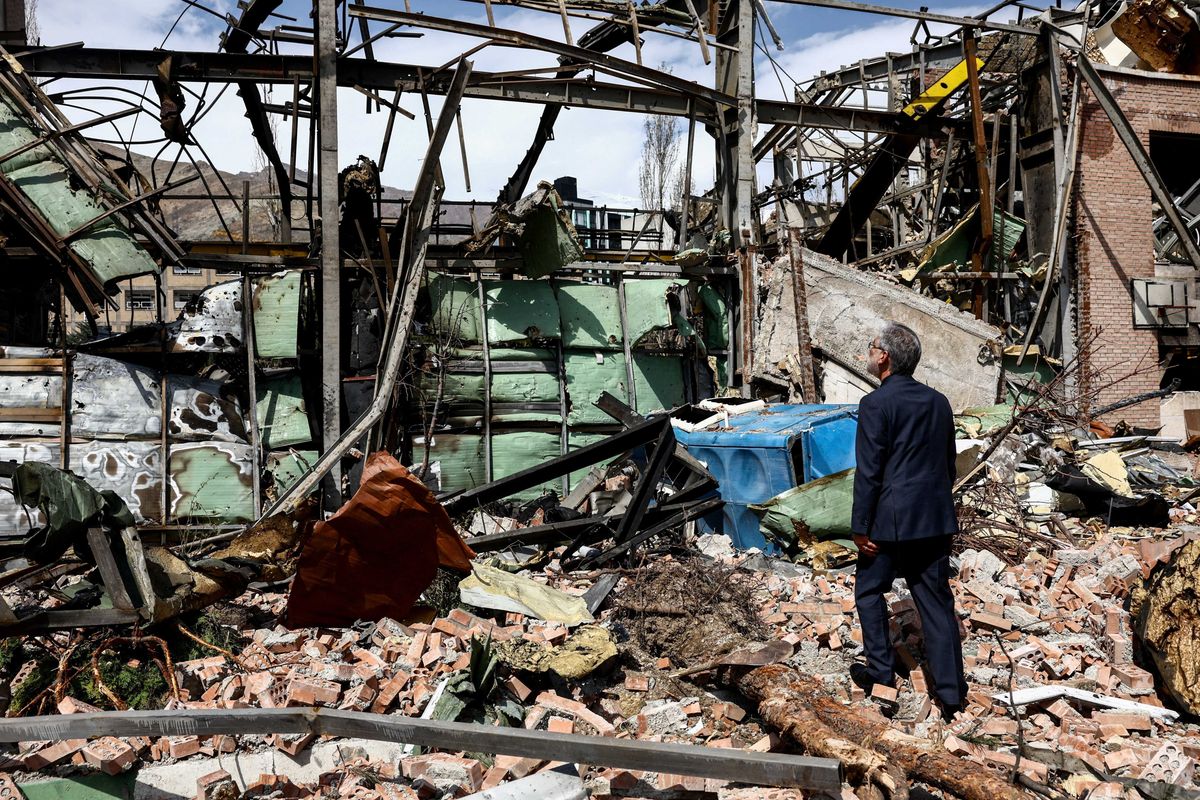
Iran's Minister of Science Hossein Simaee Sarraf inspects the damage at the research building of the Shahid Beheshti University, which was damaged by a strike, amid the U.S.-Israeli conflict with Iran, in Tehran, Iran, April 4, 2026. Majid Asgaripour/WANA (West Asia News Agency) via REUTERS

US President Donald Trump’s war in Iran is costing nearly $2 billion per day, according to a Harvard analysis based on estimates from the Pentagon. The head of the United Nations’ humanitarian agency said the money could instead be used to save more than 87 million lives around the world.

Tom Fletcher, the undersecretary-general for humanitarian affairs and emergency relief coordinator at the UN Office for the Coordination of Humanitarian Affairs (OCHA), spoke at Chatham House on Monday about a “cataclysmic” funding crisis for the UN, in large part due to the termination of billions of dollars in funding from the US and other major powers such as the UK. Fletcher said his agency has seen its budget cut by around 50%.

“We’re already overstretched, underresourced, and literally under attack,” Fletcher said, citing the more than 1,000 humanitarians who have been killed in conflicts around the world over the past three years.

The Iran war, launched at the end of February by the US and Israel, Fletcher said, has stretched UN budgets even further, both by causing chaos within Iran and Lebanon—where more than 5,000 people in total have been killed, including thousands of civilians, and more than 4 million displaced collectively—but also by creating economic upheaval that has exacerbated crises elsewhere.

“You have the [Strait] of Hormuz—fuel prices up 20%, food prices up almost 20%, our humanitarian convoys blocked,” Fletcher said. “We’ve had to take those convoys by air and by land. And the impact, which I think we’ll be feeling for years, of those price rises on Sub-Saharan and East Africa, pushing way more people into poverty.”

Fletcher said that just a fraction of what the US has spent waging the war could have been used to provide a full year of funding for a plan he laid out in January to provide lifesaving food, water, medicine, and shelter to those in dozens of countries facing war and poverty.

“For every day of this conflict, $2 billion is being spent. My entire target for a hyper-prioritized plan to save 87 million lives is $23 billion,” he said. “We could have funded that in less than a fortnight of this reckless war. Now, of course, we cannot.”

Beyond the financial toll, he said, US actions may have done irreparable damage to the authority of international humanitarian law and to UN bodies tasked with enforcing it.


He noted the dramatic increase in the number of humanitarian workers killed around the world over the past three years. According to a UN report earlier this month, of the more than 1,010 of them who were killed in the line of duty, over half were killed during Israel’s genocide in Gaza and escalating attacks in the West Bank.

“A thousand dead humanitarians in three years,” Fletcher said. “When did that become normal?”

He called out the UN Security Council, where the US is one of the permanent members with veto power, for its weak responses to the killing of humanitarians and other flagrant violations of the laws of war.


“Don’t just give us a generic statement where you say humanitarian workers should be protected,” he said. “Make the phone call, call out the people killing us, stop arming those who are doing it.”

He said “big powers” view geopolitics in a highly “transactional” way and do not use the Security Council as a mechanism for defending international humanitarian law.

“I wouldn’t have thought I’d need to say that a couple of years ago, that the Security Council should be defending international humanitarian law, and yet here we are,” he said.


He said that Trump’s recent violent rhetoric toward Iran—which again verged into outright genocidal territory over the weekend when he pledged to “blow up the entire country” with overwhelming attacks on civilian infrastructure—has only further corroded international law.

“The idea that suddenly it’s okay to say, ‘We’re going to blow stuff up,’ ‘We’re going to bomb you back to the Stone Age,’ ‘We’re going to destroy your civilization,’ that kind of language is really dangerous,” Fletcher said. “It gives more freedom to all the other wannabe autocrats around the world to use that sort of language.”

But he said the aggression of the US and its allies has also made the world more warlike and less “generous,” leading countries to put more money into defense that could otherwise go toward alleviating global suffering.


“Whether you’re making the cuts [to UN funding] for ideological reasons or because you’re too busy bombing someone else or because now you feel more insecure at home and so you have to invest more of your money in defense and less in generosity,” he said, “all of that ultimately has an impact on the over 300 million people that we’re here to serve.”
Fox News trolled over panic that Bert and Ernie will become Muslims after learning Arabic

Daniel Hampton
April 21, 2026
COMMON DREAMS


Orlando, Florida. November 06, 2019. Bert and Ernie In Sesame Street Party Parade at Seaworld. (Photo credit: VIAVAL TOURS / Shutterstock)

Comedian Ramy Youssef had a simple response to conservatives melting down over his Sesame Street appearance — take it up with the president.

Youssef guest-starred on the children's classic last week as part of Arab American Heritage Month, spending a few minutes with Elmo learning basic Arabic greetings. The segment was not intended to be threatening, but that wasn't how it was received by the right-wing outrage machine, Variety noted Tuesday.

Fox News contributor Raymond Arroyo took to The Ingraham Angle to sound the alarm and conjure a radically different future for Bert and Ernie.

“I wish ‘Sesame Street’ would stick to teaching kids about letters and numbers and leave the Arabic immersion to someone else. Next, Bert and Ernie will be praying five times a day on Sesame Street, facing east,” Arroyo said.

Appearing on The View, Youssef addressed MAGA backlash by noting that Trump himself signed off on an April 5 social media post about the Iran war with "Praise be to Allah," a detail that conflicts with the conservative case against Arabic words on a children's show.

“I feel for them, right? … I think they’re worried [about] Arabic immersion, and it’s got to be tough, because I think they’re supporters of the President. So imagine your president on Easter is tweeting ‘Praise be to Allah,’ and now Elmo saying ‘habibi’ feels threatening," Youssef said.

The comedian noted he has spent years wading into genuinely divisive political territory without drawing this level of fury.

“There’s been a lot of languages on ‘Sesame Street’ and there’s been no backlash to those. So, it actually really did surprise me,” Youssef said.

He noted he has been outspoken in the past about highly controversial issues, and yet “Elmo saying habibi has set them off in a way that has never happened to me before.”


Author reveals how Trump plans to retain power after leaving office: 'Gives me shivers'


Robert Davis
April 21, 2026
COMMON DREAMS


An author who has written four books about President Donald Trump revealed how the president plans to retain power over the White House once he leaves office.

Journalist Michael Wolff, author of the book "Fire and Fury" about the first Trump administration, argued during a new episode of "Inside Trump's Head," a podcast he co-hosts with Joanna Coles of The Daily Beast, that Trump could use his children to stay in power after his second administration. He singled out Trump's oldest son, Donald Trump Jr., who seems to have been groomed for this very moment.

"He has spent his life as his father's lackey," Wolff noted. "He's spent his life in a business that is of very little consequence except to support his father, who gives me the shivers."

Wolff also noted that Don Jr. seems to be the likely heir as Trump's other children, like Ivanka and Tiffany, have effectively "taken themselves out of the running."

Lara Trump said on a new episode of Katie Miller's eponymous podcast that she would consider running for office again if the circumstances are right.

Wolff added that Trump will need to retain some influence over the White House when he retires. Otherwise, he may turn on the Republican Party.

"He really enjoyed that in his Mar-A-Lago interregnum," Wolff said. "So, he goes back to that still with the Republicans coming to kiss his rings, with his pronouncements being the leading Republican pronouncements, still being able to rag on whatever Democrat is in the White House and then, at some point, he dies a happy man," Wolff said. "However, he would be much less happy if someone in the Republican Party replaced him."


The Trump Administration’s Anti-Blackness is Showing on the Global Stage

The United States’ actions are not just a betrayal of the rest of the world; they are the latest examples of the Trump administration’s betrayal of its own people—and in particular, of the 45 million Americans who are of African descent.


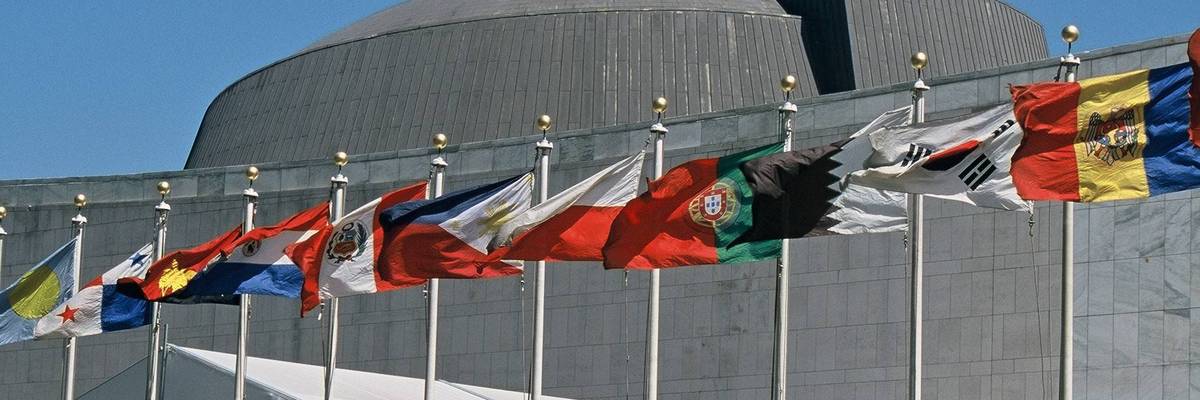
Flags of member states are seen at United Nations headquarters in New York.
(Photo by I, Aotearoa/ Wikipedia/ CC BY-SA 3.0)

Desirée Cormier Smith
Apr 22, 2026
Common Dreams


On March 25, the International Day of Remembrance of the Victims of Slavery and the Transatlantic Slave Trade, the United Nations General Assembly adopted a historic resolution marking an extraordinary step forward for global racial justice. Spearheaded by Ghana and co-sponsored by more than 65 countries largely from Africa, the Caribbean, and Latin America, a declaration designating slavery as the gravest crime against humanity passed the General Assembly. Through this, the majority of the world aligned on one key message: The enslavement of millions of Africans and their descendants for over 400 years is the gravest crime against humanity, we are still dealing with the consequences, and there must be reparatory justice to address the lingering impacts.

In a shameful moment for Americans and the world, the Trump administration voted against this resolution on behalf of the United States—only 1 of 3 countries to do so. This decision comes just months after the US withdrew from the UN Permanent Forum on People of African Descent, falsely claiming it was “racist.” These two actions show that the Trump administration’s anti-Blackness is not limited to its domestic policy—it’s on full display on the global stage, too.

The history bears repeating: The slave trade ignited 400 years of racialized chattel slavery, representing the longest running system of organized human exploitation in history. This period marked the first time in human history when race defined the global political, economic, and social hierarchy. The United States was a driver in creating and perpetuating this unprecedented form of slavery. Across the globe, countries mimicked the United States’ policies to deprive an entire race of its humanity. The centuries-long system impacted millions upon millions of people of African descent, and even after this inhumane system of trafficking, selling, and enslaving human beings was abolished, its legacy continues to be felt today.

The resolution spearheaded by Ghana represents the worldwide atonement for chattel slavery that continues to have immeasurable consequences on the world. Because it is not legally binding, the only rationale for a country like the US to vote against it is that its leaders believe in erasing our world’s greatest atrocity. It signals to the international community that the United States refuses to recognize the ugly parts of our past and how it impacts current realities.

The Trump administration’s actions to undermine forums at the UN designed to promote the rights and equality of people of African descent will be a stain on our nation’s history.

In his opposition to the resolution, the US representative characterized it as a scheme for developing (read: African) countries to gain leverage for the future allocation of resources. Additionally, he accused the resolution of being an attempt to establish a hierarchy of crimes against humanity (note: This was the same justification that the UK, Canada, and EU countries cited as explanation for their abstentions). Yet, this narrow-minded mischaracterization fails to recognize that the transatlantic slave trade and racialized slavery comprised all crimes against humanity: trafficking, forced labor, sexual assault, disease, famine, and the dehumanization of an entire race.

And yet, this is not the only instance of the Trump administration displaying its anti-Blackness on the world stage. When the administration made the decision in January 2026 to withdraw from the UN Permanent Forum on People of African Descent (PFPAD) because it was “contrary to the interests of the United States,” it was saying the quiet part out loud: This administration does not care about or represent the interests of Black Americans.

The UN PFPAD was created in 2021 as a space for people of African descent to discuss ways to improve the quality of life and livelihoods of people of African descent and share recommendations with member states. Its mandate includes promoting “the full political, economic, and social inclusion of people of African descent in societies in which they live as equal citizens without discrimination of any kind” and “ensuring equal enjoyment of all human rights.” The forum’s annual meeting represents the largest UN gathering of Black civil society from around the world. Its fifth session just concluded in Geneva, Switzerland, where the US government’s absence was noticed, but overshadowed by the energy and momentum behind Ghana’s historic resolution.

Civil society from around the world noted the fact that the world’s “superpower” was 1 of 3 countries to vote against the resolution, but the sheer number and diversity of Black American civil society leaders present at the forum made it clear that this shameful vote does not reflect our unwavering commitment to and solidarity in the global struggle for reparatory justice.

The United States’ actions are not just a betrayal of the rest of the world; they are the latest examples of the Trump administration’s betrayal of its own people—and in particular, of the 45 million Americans who are of African descent. This is why the video message from Congressional Black Caucus Chair Rep. Yvette Clarke (D-NY) in the PFPAD closing ceremony was so important: When the federal government fails to represent our interests or even be present in rooms where our issues are being discussed, Black civil society and congressional leaders have always stepped up to fill the void.

The Trump administration’s actions to undermine forums at the UN designed to promote the rights and equality of people of African descent will be a stain on our nation’s history. The administration is telling us loud and clear that it does not view ensuring Black people’s equal human rights as a priority. So, while this administration falsely claims that “President Trump has done more for Black Americans than any other president,” we must remember the words of our great James Baldwin, “I cannot believe what you say because I see what you do.”


Our work is licensed under Creative Commons (CC BY-NC-ND 3.0). Feel free to republish and share widely.


Desirée Cormier Smith
Desirée Cormier Smith is the co-founder and co-president of The Alliance for Diplomacy and Justice. From 2022 until 2025, she served as the inaugural US special representative for racial equity and justice at the US State Department.
Full Bio >
Campaign’s Augmented Reality Tool Allows Students to Explore True Cost of Nuclear Weapons

“We can’t put a nuclear warhead on a teacher’s desk in real life, but with AR we can make you see it there. It puts the cost of these decisions in the room where your kids learn, at the scale where you can actually feel it.”


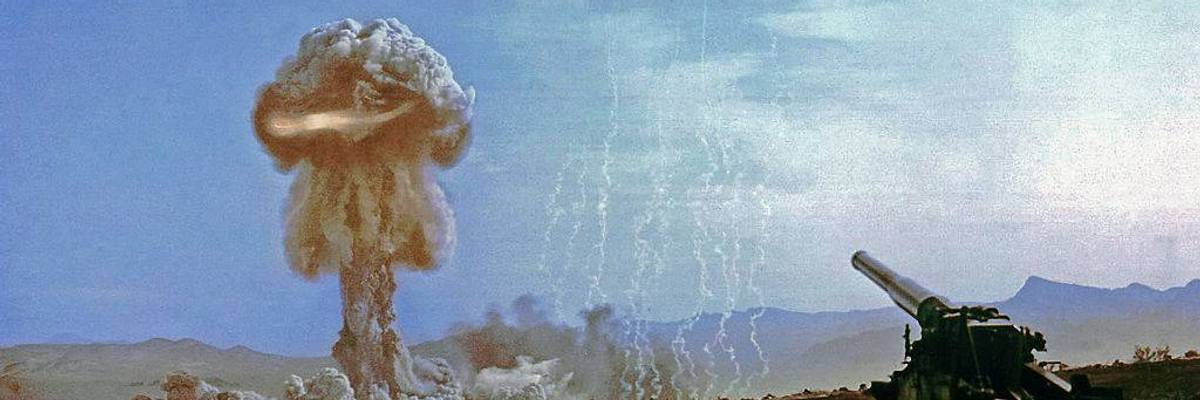
A fireball ascends during a nuclear artillery test Grable Event on May 25, 1953.
(Photo by Galerie Bilderwelt/Getty Images)


Brad Reed
Apr 21, 2026
COMMON DREAMS


A new educational campaign is using augmented reality technology to help American students understand the true costs of possessing and maintaining a massive stockpile of nuclear weapons.

Up in Arms, a campaign started by Ben & Jerry’s co-founder Ben Cohen to increase support for slashing the bloated US defense spending budget, has teamed with nonprofit media lab Amplifier to create Class Dismissed, a new initiative that gives students in K-12 classrooms a jarring visual representation of nuclear weapons.

“This is a campaign about tradeoffs,” Classed Dismissed states on its website. “By placing full-scale representations of nuclear weapons into classrooms, gyms, libraries, and schoolyards, the project makes national spending priorities visible at human scale. As federal military budgets expand, domestic programs are squeezed year after year. While hundreds of billions flow into Cold War–era weapons, schools are left with overcrowded classrooms, aging buildings, and fewer teachers and support staff.”

The campaign emphasizes that the weapons students will see depicted on their devices through augmented reality are “not hypothetical,” but instead reflect “real weapons programs and real costs, translated through comparisons drawn from public reporting and nonpartisan budget analysis.”

Aaron Huey, founder of Amplifier and creative director for Class Dismissed, said the campaign decided to use augmented reality technology to accomplish “things that are physically impossible but politically necessary.”

“We can’t put a nuclear warhead on a teacher’s desk in real life, but with AR we can make you see it there,” said Huey. “It puts the cost of these decisions in the room where your kids learn, at the scale where you can actually feel it.”

The Congressional Budget Office (CBO) in 2025 projected that plans by the US Department of Defense and Department of Energy to “operate, sustain, and modernize current nuclear forces and purchase new forces” will cost $946 billion through 2034, an average of $95 billion per year.

“That total includes $357 billion to operate and sustain current and future nuclear forces and other supporting activities,” CBO explained. “$309 billion to modernize strategic and tactical nuclear delivery systems and the weapons they carry; $72 billion to modernize facilities and equipment for the nuclear weapons laboratory complex; $79 billion to modernize command, control, communications, and early-warning systems; and $129 billion to cover potential additional costs in excess of projected budgeted amounts estimated using historical cost growth.”
Boat Strike Survivors Say They Were Captured, Tortured by US Forces


“They treated us like animals,” said an Ecuadorian fisher who survived an attack on the Don Maca.


Jessica Corbett
Apr 21, 2026
COMMON DREAMS

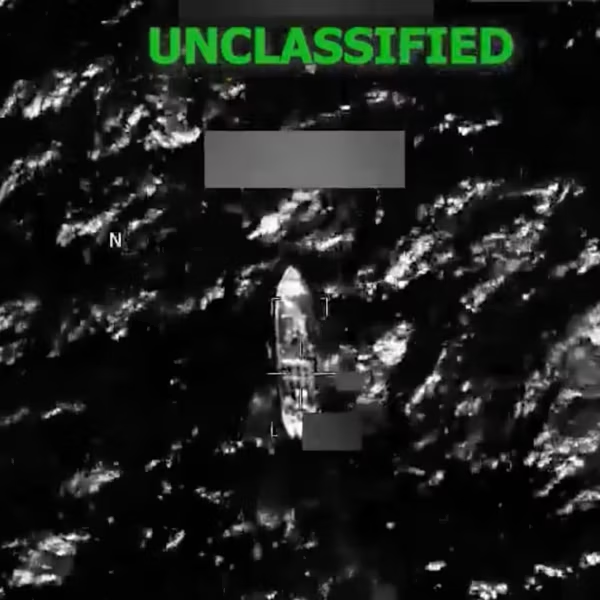
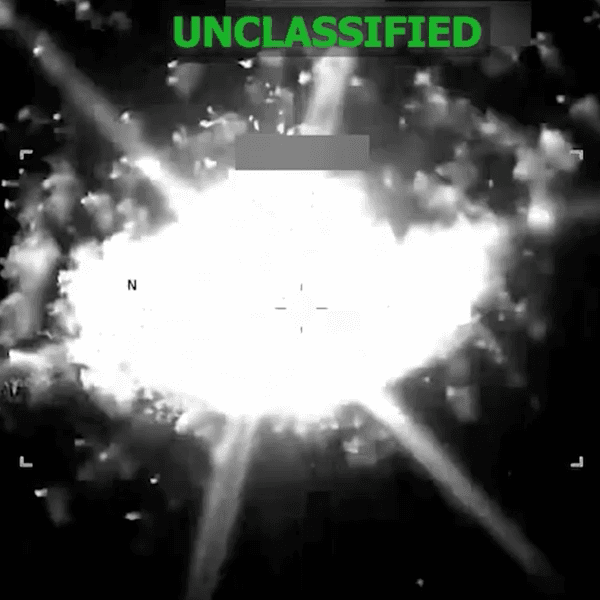
President Donald Trump, Defense Secretary Pete Hegseth, and US Southern Command have repeatedly taken to social media to brag about deadly boat bombings supposedly targeting drug traffickers in the Caribbean Sea and Pacific Ocean for nearly eight months. On Tuesday, survivors of some alleged US strikes on fishing boats accused American forces of torture.

The Ecuadorian fishing boat La Fiorella “went up in smoke” on January 20, and “the eight fishermen aboard have not been seen since,” Camila Lourdes Galarza reported for Drop Site News on Tuesday. “Now, 36 survivors of two Pacific attacks fitting a similar profile alleged that they were abducted and tortured by American forces and taken by boat all the way to El Salvador before being returned to Ecuador.”


The journalist spoke with attorneys, relatives, and survivors, including Hernán Flores, captain of La Negra Francisca Duarte II, which was bombed by a drone with a yellow cylinder on March 17. Flores said: “A lot of us had wounds all over our bodies from the explosion. One young man was bleeding so much he filled the floor of our lifeboat with blood... The drone had flown through our cabin window, torn my nephew’s foot so bad you could see flesh and bone, and made the boat’s roof cave in on the back of my neck. A few seconds later, an explosion shook the boat, causing a terrible ringing in our ears. Out of exasperation, the guys threw themselves into the water, some without life jackets, even the ones who don’t know how to swim.”

The survivors made their way to a blue boat with “spear” on the hull, full of armed, blond, English-speaking men in camouflage uniforms—who drew their guns, handcuffed the fishers, put hoods over their heads, and held them on the vessel’s “scorching metal deck for over 24 hours, blistering their skin,” Galarza reported. They were only given a bottle of water, and “all but one fisherman were denied medical attention, despite the severity of what they had just endured.”

They were eventually returned to Ecuador, where Trump has recently deployed US forces for a joint campaign targeting “narco-terrorists.” However, first, they were turned over to El Salvador’s Coast Guard—which, on April 3, also intercepted 20 more Ecuadorian fishers with “vision and hearing loss, bruised limbs, and perforated arms.”

According to Galarza, those fishers had been aboard the Don Maca, and “they reported a strikingly similar account of an alleged attack by US soldiers: a bombarded boat, a round of bullets, and no due process.” Sebastián Palacios, one of the survivors allegedly held hostage for eight days, said that “they treated us like animals.”


Galarza noted that US SOUTHCOM directed questions about all three incidents to Ecuador, whose Port Authority hung up after hearing that a phone call requesting comment was from journalists.

Harriet Barber got a similar response from SOUTHCOM for her Tuesday reporting on the Don Maca attack in The Guardian. The journalist spoke with survivors, including Palacios, as well as an attorney representing the crew, Fernando Bastias Robayo of the Human Rights Council.

“A US vessel intercepted them and forced them aboard. Once they were detained, their fishing boat was blown up,” said the lawyer. “They were arbitrarily hooded and later abandoned on the Salvadorian coast. Any apprehension followed by incommunicado detention constitutes an enforced disappearance.”

“It was a form of psychological torture, not knowing what’s really going to happen to your life and having your face covered,” he added.

Palacios told Barber that “I get scared in the middle of the night. I can’t sleep well. My ears still hurt... I think that’s it for me. I’m done with fishing. Going back out there is impossible. I thought they were going to kill us.”


Tuesday’s reporting came just two days after SOUTHCOM announced on social media that “Joint Task Force Southern Spear conducted a lethal kinetic strike on a vessel operated by designated terrorist organizations... along known narco-trafficking routes in the Caribbean,” killing three alleged “male narco-terrorists.”

Sunday’s strike brought the death toll from Trump’s boat-bombing campaign to at least 180, according to The New York Times. The Intercept’s tally is 181, while the Washington Office on Latin America believes 182 people are dead. Critics of the campaign have accused the US administration of “war crimes, murder, or both.”

Responding to Trump’s latest confirmed attack, Amnesty International USA on Monday condemned “three more murders at sea” and declared that “Congress must act to stop these bombings.”

So far, both chambers of the Republican-controlled Congress have refused to pass war powers resolutions aimed at halting Trump’s boat strikes. Similar measures targeting his aggression toward Venezuela and Iran have also failed to advance.