Saturday, April 25, 2026

Scientists Call For Integrating Three Energy Demand Goals Into Climate Policy By 2035


By 


A new study published in Science argues that governments should adopt three integrated energy demand goals by 2035, warning that climate policy will fall short unless it focuses not only on how energy is produced, but also on how it is used.

The paper, “New demand goals for energy and climate resilience,” was led by researchers from Iscte – University Institute of Lisbon and the International Institute for Applied Systems Analysis (IIASA). It proposes a “triple-triple” agenda: tripling progress in energy efficiency, electrification, and action to curb extreme energy consumption.

The authors argue that international climate efforts and energy policy have concentrated heavily on expanding clean energy supply, while giving much less attention to final energy demand – the energy actually used in transport, housing, heating, cooling, and industry.

Growing energy demand is also making economies more vulnerable to energy crises and external shocks, reinforcing the need to address the demand side more directly.

“Energy demand is still too often treated as a by-product of growth rather than as a strategic policy domain,” said lead author Nuno Bento. “But demand is where energy services are delivered, where inequalities are most visible, and where some of the fastest gains for resilience and emissions reduction can be achieved.”

The study highlights a stark global imbalance: while half of the world’s population live at or below decent living standards (with an estimated threshold between 15 and 18 GJ per person per year) and more than 700 million people still lack basic electricity services, the top 2% of consumers worldwide use well over 300 GJ per person per year and account for one-third of global energy use. By contrast, the bottom half of the global population accounts for only around 10%.

According to the researchers, reducing patterns of excessive consumption – often benefiting from light or no taxation – is essential not only for cutting emissions, but also for improving energy security and social fairness.

The first proposed goal is to triple the annual rate of improvement in energy efficiency, raising the reduction in final energy intensity of GDP to 4% per year.

The second is to triple the pace of electrification, increasing the share of electricity in final energy use at a 4% annual growth rate and reaching 33% by 2035. The authors say this would accelerate the spread of efficient technologies such as electric vehicles and heat pumps.

The third is to apply fairer taxation to extreme energy use, through a surcharge on consumption above 300 GJ per person per year. The study argues that stronger taxation of luxury energy use such as private jets and yachts, which currently enjoy low or no taxation, could help curb excess demand while generating between $0.2 trillion and $2 trillion annually to expand energy access and support low-carbon investment.

The researchers say the three goals are designed to reinforce one another. Efficiency helps limit overall demand growth. Electrification makes it easier to deliver energy services more efficiently. And taxing excessive consumption can both reduce pressure on energy systems and help finance a fairer transition.

Rather than treating lower demand as a side effect of other policies such as decarbonization, the paper presents it as a policy goal in its own right.

The authors emphasize that these goals are not about austerity or deprivation, they are about delivering better energy services with less waste, lower risk, and greater fairness.

“The purpose of the energy system is to provide decent levels of clean and affordable energy services. We propose three integrated and systemic energy demand goals that would together bring multiple benefits to the people and the planet,” conclude study authors Arnulf Grubler, and Nebojsa Nakicenovic – both Distinguished Emeritus Research Scholars in the Transformative Institutional and Social Solutions Research Group of the IIASA Energy, Climate, and Environment Program.

The Big Bomb Questions – OpEd


By 

By Jonathan Power

Rightly, the debate over how to end the Iranian nuclear (bomb?) crisis is now the number one issue in Western foreign policy. Compared with that, the civil war in Ukraine seems almost trivial—one that could be resolved in a week if only the West made it clear that Ukrainian membership of NATO is not on the table, and that Russia could reclaim its old Russian-speaking provinces.

Likewise, the struggles to defeat ISIS, to contain the Houthis in Yemen, or to protect Taiwan are of lesser consequence. These are serious challenges, but they can be contained. None of them threatens the world in the same existential way.

The Nuclear Taboo at Risk

But nuclear weapons are different. One nuclear bomb going off would bring the world figuratively to its knees. Fear would spread instantly—fear of a second, a third, a fourth strike.

The long-standing taboo against their use—held since the atomic bombings of Hiroshima and Nagasaki—would be shattered.

From there, escalation becomes frighteningly easy to imagine: Pakistan against India, China against Japan, Israel against Iran, North Korea against South Korea, or even one day Russia against China or the United States—or vice versa.

The Iranian “bomb” negotiations are therefore critical. Success would help limit both the spread of nuclear weapons and the risk of their use.

A Quiet Success Story in Nonproliferation

Few people appreciate how successful the fight against nuclear proliferation has been. Outside the five permanent members of the UN Security Council, only four additional countries have acquired nuclear weapons.

On several occasions, countries have come close to developing nuclear arms—only to step back. Libya under Muammar al-Gaddafi voluntarily dismantled its program. South Africa gave up its weapons. Sweden, Iraq, South Korea, Argentina, and Brazil all halted or restrained their ambitions—though Brazil still maintains a large enrichment program tolerated by the United States.

Yet perhaps the most dangerous case was West Germany.

Only 13 years after its defeat in World War II, West German leadership seriously considered building a nuclear bomb. Had it proceeded, the Soviet Union would almost certainly have taken preemptive action, potentially devastating Germany for a second time in a generation.

Germany’s Lesson—and Today’s Warning

Despite the creation of NATO and the Marshall Plan, West German leaders doubted U.S. security guarantees. Chancellor Konrad Adenauer warned against a world where “America is a fortress for itself,” leaving Europe exposed.

In 1956, he wrote to U.S. Secretary of State John Foster Dulles that Europe had lost confidence in American reliability. Soon after, he vowed to acquire “the most modern weapons for Germany.”

By 1958, West Germany had entered into a secret nuclear cooperation agreement with Italy and France. Although pressure from Washington and London officially ended the project, clandestine ambitions persisted.

President John F. Kennedy attempted to resolve the issue through a Multilateral Force (MLF) within NATO, integrating nuclear capabilities under shared command. But even this raised an alarm.

Adenauer, while endorsing the proposal, suggested decisions on nuclear use should be made before consulting the U.S. president—a position that deeply unsettled both Washington and Moscow.

Soviet leader Nikita Khrushchev warned that the MLF would create a dangerous “crack” in nonproliferation efforts. His successor, Alexei Kosygin, cautioned that the Soviet Union would take all necessary measures if West Germany gained access to nuclear weapons in any form.

Given the devastation inflicted by Nazi Germany just years earlier, such fears were understandable.

Washington ultimately abandoned the MLF and applied strong pressure to halt German ambitions. Under Chancellor Willy Brandt, West Germany signed the Nuclear Non-Proliferation Treaty in 1969.

Germany had been stopped in its tracks.

Yet today, debate has quietly re-emerged in Germany about whether it should possess nuclear weapons—an unsettling reminder that history’s lessons are never entirely secure.

Iran and the Cost of Strategic Missteps

This is why the United States is right in principle to be alarmed about Iran—if indeed Tehran intends to build a bomb.

Tragically, President Barack Obama negotiated a highly effective agreement with Iran, only to see it dismantled by President Donald Trump during his first term.

Now Trump faces the near-impossible task of persuading Iran to reverse course.

How depressing it is to watch the United States, once again, shooting itself in the foot.

The Indo-Pacific’s Nuclear Umbrella Paradox: Extended Deterrence And The Erosion Of Non-Proliferation Norms – Analysis

Launch of an intermediate-range hypersonic ballistic missile at an undisclosed location in North Korea on Jan. 6, 2025, in this photo released on Jan, 7, 2025 by the state-run Korean Central News Agency. (RFA)


By 


Extended Deterrence and the Non-Proliferation Paradox

In the wake of intensifying nuclear consultations under the Washington Declaration and continued missile advancements by North Korea, questions surrounding the credibility of United States (US) extended deterrence in the Indo-Pacific have taken on renewed urgency. As allies such as Japan and South Korea deepen their reliance on Washington’s nuclear umbrella while simultaneously expanding debates over their own nuclear futures, the region appears to be entering a more fluid and uncertain phase of nuclear politics—one in which long-standing assumptions about deterrence and non-proliferation are increasingly open to revision.

Extended nuclear deterrence has long been a cornerstone of strategic stability in the Indo-Pacific, particularly through the security guarantees provided by Washington to its key allies, namely Japan and South Korea. By offering protection under its nuclear umbrella, Washington has historically reduced incentives for allied states to pursue independent nuclear weapons programmes, thereby reinforcing, at least in part, the global non-proliferation regime anchored in the Nuclear Non-Proliferation Treaty (NPT). Yet this system increasingly reveals an inherent contradiction: while extended deterrence prevents proliferation in the short term, it may be contributing to its gradual erosion over the longer term. While nuclear deterrence remains central to alliance structures, it continues to legitimise the role of nuclear weapons in international security, even among states that have formally renounced them.

‘Delegated Deterrence’ and Strategic Hedging

At the heart of this paradox is the normalisation of nuclear weapons as instruments of security policy. Non-nuclear allies, although officially dedicated to non-proliferation, depend on the credibility of nuclear retaliation executed on their behalf. This creates a condition of ‘delegated deterrence’, in which the political and moral burdens of nuclear use are effectively outsourced but the strategic logic of nuclear dependence is preserved. Increasingly, however, this dependence is no longer unconditional. Rather than passively accepting extended deterrence guarantees, regional actors are beginning to hedge against uncertainty by exploring a wider range of options, from enhanced conventional capabilities to more ambiguous forms of nuclear latency. This shift reflects a subtle but important transformation in which reliance on the nuclear umbrella is becoming more contingent, shaped by evolving threat perceptions and doubts about long-term reliability.

Structural changes in the regional security environment further complicate the sustainability of this arrangement. US alliances largely developed their deterrent frameworks under Cold War conditions, characterised by bipolar competition and relatively stable escalation dynamics. In contrast, today’s Indo-Pacific features multiple nuclear actors, rapid technological advancements, and increasingly intricate escalation pathways. The advancing nuclear and missile capabilities of North Korea, along with China’s sustained nuclear weapons modernisation—including a significant expansion of its warhead arsenal and the development of more credible second-strike capabilities—have intensified concerns not only about the credibility of US commitments but also about the adequacy of existing deterrence models themselves. Questions that were once theoretical have become politically salient: would the US be willing to risk its cities to defend its allies? The challenge is whether extended deterrence can adapt to a more fragmented and competitive strategic landscape, rather than being solely a matter of perception.

Domestic political debates in both Japan and South Korea further illustrate this tension. Recently, segments of political and strategic communities in both countries have begun to question the long-term reliability of extended deterrence. While official policy remains firmly non-nuclear, public discourse increasingly reflects a willingness to reconsider this stance under deteriorating security conditions. Importantly, the significance of these debates lies less in the immediate prospect of proliferation than in their cumulative effect on strategic thinking. As discussions of nuclear options become more mainstream, the normative barriers that have historically constrained such choices begin to weaken. What emerges is a gradual process of normalisation in which nuclear weapons are increasingly viewed as a legitimate, if undesirable, component of national security, rather than a rapid or abrupt shift towards nuclearisation.

Simultaneously, the emergence of new security arrangements in the Indo-Pacific, such as minilateral frameworks and advanced military cooperation, adds further complexity to the situation. Initiatives like the development of nuclear-powered submarines blur the distinction between civilian and military nuclear domains, reinforcing the perception that nuclear-related capabilities are essential for strategic competitiveness. These developments do not necessarily signal an imminent breakdown of the non-proliferation regime, while still pointing to a more ambiguous and contested environment in which the boundaries of acceptable nuclear behaviour are becoming less clearly defined.

A Fraying Nuclear Order in the Indo-Pacific

The paradox of the nuclear umbrella, therefore, lies in its dual function: it is both a pillar of non-proliferation and a mechanism that perpetuates reliance on nuclear deterrence. This tension is not static; it is deepening. As strategic competition intensifies and confidence in extended deterrence becomes more conditional, the system shows signs of gradual strain instead of sudden collapse. This slow erosion—manifest in shifting discourse, hedging behaviour, and evolving security practices—raises fundamental questions about the long-term viability of the current non-proliferation order in the Indo-Pacific.

India’s nuclear triad operational, still lags far behind China

India’s nuclear triad operational, still lags far behind China
/ GODL - India - Ministry of Defence - wikiFacebook
By IntelliNews April 25, 2026

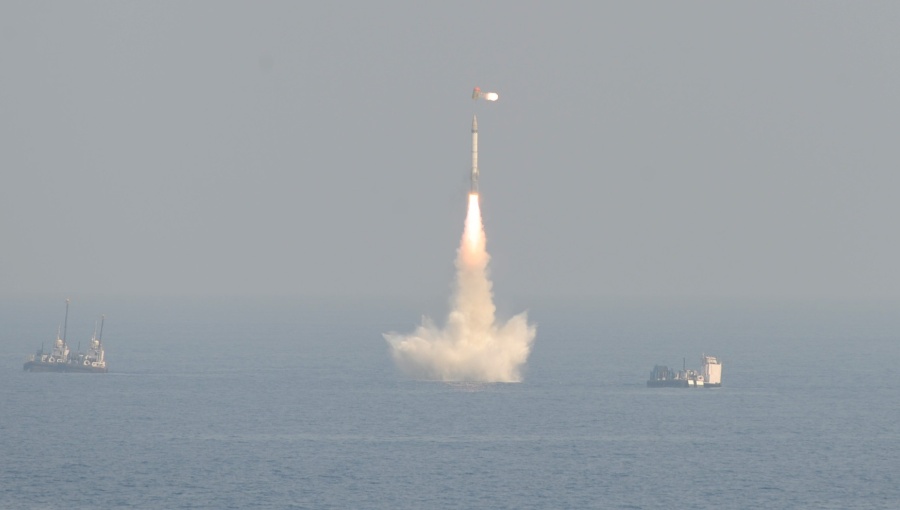
The commissioning of the INS Aridhaman marks an important point in India’s nuclear triad, giving it a third nuclear ballistic missile submarine meaning that the nation can now maintain a continuous at-sea deterrent, Carnegie India writes.

The vessel was quietly commissioned on April 3, at India’s Ship Building Centre in Visakhapatnam with no formal announcement made, although defence minister Rajnath Singh did post a message on social media in Hindi which Carnegie translates as reading: Not words but power, Aridhaman. It is reported that Singh was in the city at the time for the commissioning of a separate naval vessel, a fourth frigate under the Project-17A programme.

The induction of INS Aridhaman is highly significant for India’s nuclear doctrine. Announced in 2003, India bases its nuclear capabilities on assured retaliatory second-strike capability and a no-first-use posture. The act of maintaining a continuous deployment at sea requires at least three submarines: one on patrol, with the others in maintenance or transit.

With the INS Aridhaman now believed to be operational, India has reached that threshold.

The country’s first indigenous SSBN, the INS Arihant, also known as S2, was developed under the Advanced Technology Vessel programme and launched in the 1980s. A 6,000-tonne submarine powered by an 83-MW reactor, was launched in 2009 by then prime minister Manmohan Singh and eventually commissioned in 2016. Two years later, in 2018, current prime minister Narendra Modi announced that the vessel had completed its first deterrence patrol, confirming its operational nuclear strike role while also completing India’s nuclear triad across land, air and sea.

The second SSBN, the INS Arighaat, was commissioned in August 2024 meaning that the addition of the INS Aridhaman, with all its further technological enhancements, albeit classified and not made public, now completes the current three-submarine requirement for continuous deterrence.

In terms of the nation’s payload, India’s ballistic missile arsenal includes the Prithvi and Agni series.

The Agni-5, with a range of over 5,000km, is a canisterised missile in order to improve mobility and storage and was tested in 2024 with multiple independently targetable re-entry vehicles. Air-delivered nuclear capability includes the much-publicised Mirage-2000, Sukhoi-30MKI and Rafale aircraft.

Among the triad, SSBNs remain the most survivable platform for second-strike capability.

All five recognised nuclear powers in the world operate SSBNs with intercontinental submarine-launched ballistic missiles. India, however, still faces a capability gap in this area. Its current submarines are armed with the K-15 missile, which comes with a range of just 750km - thus requiring deployment close to enemy coastlines for retaliation to be effective.

The INS Arighaat and INS Aridhaman are capable of carrying the K-4 missile, with a range of 3,500km, although it is not yet fully operational, Carnegie adds. When deployed, however, the K-4 is expected to form the backbone of India’s underwater deterrent until the K-5, with a planned range of 5,000km, enters service.

A fourth submarine, for now referred to as the ‘S4*’ was launched in 2024 and is expected to be commissioned next year. Other future platforms in the pipeline include the ‘S5’ – which like the S4 is expected to be significantly larger than current submarines at around 13,500 tonnes while also being powered by more advanced reactors.

Attention in India is now also turning to nuclear-powered attack submarines (SSN) which are seen as a critical addition to current naval capabilities for long-range endurance operations in the Indian Ocean. While India currently operates 17 conventional submarines, most are understood to be nearing the end of their operational lifespan.

With this in mind, the Cabinet Committee on Security approved the design and construction of two SSNs in 2024, although the first is not expected to come into service until 2036–37.

By contrast, China operates more than 60 submarines, including at least 12 nuclear-powered vessels and according to the US Office of Naval Intelligence, by 2035 half of Beijing’s projected fleet of around 80 attack submarines could be nuclear-powered – a probability India will need to counter in the long-term given ongoing tensions between Beijing and New Delhi.

US Air Force Announces Selections For Microreactor Deployments


 Joint Base San Antonio's Building 100 (Image: Jonathan Mallard/DVIDS)


By 


The US Department of the Air Force has selected Radiant Industries, Inc, Westinghouse Government Services and Antares Inc as potential microreactor developers and operators under its Advanced Nuclear Power for Installations initiative, as well as announcing a third potential location for a reactor.

The three companies have been selected by the Department of the Air Force (DAF), in conjunction with the Defense Innovation Unit, under the Advanced Nuclear Power for Installations (ANPI) programme, which aims to deploy advanced, contractor-owned and operated nuclear microreactors on DAF installations in partnership with commercial reactor companies. The initiative aims to have seeks to have at least one advanced nuclear reactor operating on at least one DAF installation by 2030 or sooner.

Earlier this month the DAF announced Buckley Space Force Base in Colorado, and Malmstrom Air Force Base in Montana as the first two sites chosen for the ANPI initiative. It has now added Joint Base San Antonio, Texas, as the third potential location to site a nuclear microreactor under the ANPI initiative.

The three selected companies were among a list of eight technology developers selected last year by the US Department of Defense as eligible to seek funding as part of the programme to provide fixed on-site microreactors at military installations (the other companies were BWXT Advanced Technologies LLC, General Atomics Electromagnetic Systems, Kairos Power, LLC, Oklo Inc, and X-Energy, LLC). Each has now been paired with one of the sites: Radiant with Buckley; Westinghouse Government Services with Malmstrom; and Antares with San Antonio.

“The future of air and space dominance is powered by resilient energy,” said Michael Borders, assistant secretary of the Air Force for Energy, Installations and Environment. “By integrating advanced nuclear technology, we are not just keeping the lights on; we are guaranteeing that our most critical national security missions will never be held at risk by a power outage. This is a pivotal moment for the Department of the Air Force.”

Radiant is developing the Kaleidos high-temperature gas-cooled portable microreactor. A year-long testing programme to advance the development of the commercial 1.2 MWe reactor design is expected to begin this year at the Idaho National Laboratory’s DOME test facility. The company says the first Kaleidos reactors will be delivered by 2028.

“Together with our incredible government partners, Radiant is making the nuclear renaissance a reality,” Radiant Chief Revenue Officer Mike Starrett said. “The American energy industry needs to make progress now, not in 5 or 10 years. With a full-power reactor already under assembly, Radiant will deliver.”

Antares, founded in 2023, is developing the R1 sodium heat pipe-cooled microreactor, and says it is on track to conduct a reactor demonstration in 2026 and test its first electricity-producing reactor in 2027, with initial production deployments beginning in 2028. The company is in the final phase of the Department of Energy’s Reactor Pilot Program to build a reactor that achieves criticality before 4 July this year. BWX Technologies began fabrication of the TRISO fuel for the company’s initial reactors last October.

Antares CEO and founder Jordan Bramble said the company is “grateful and proud” to partner with Joint Base San Antonio, the DAF and the Defense Innovation Unit: “We built this company to deliver resilient power for missions like this,” he said.

Westinghouse’s eVinci is also a heat pipe-cooled microreactor, which can produce up to 5 MWe with a 15 MWt core design, running for eight or more full-power years before refuelling. The technology is designed to be factory-built and assembled before it is shipped. 

“Westinghouse’s eVinci microreactor is perfectly suited to ensure our Armed Forces have the reliable and resilient energy they need for mission-critical operations globally,” said Rich Rademacher, President, Westinghouse Government Services. “We look forward to continuing our strong partnership with the Department of the Air Force and the Defense Innovation Unit.”

The ANPI programme is separate from the Department of the Air Force’s microreactor pathfinder project at Eielson Air Force Base in Alaska, which the department describes as a standalone effort demonstrating the feasibility and operational benefits of a microreactor at a single installation.

South Africa Turns To The Military To Fight Crime


Johannesburg, South Africa.


April 25, 2026

By Africa Defense Forum


Facing rising crime, South African President Cyril Ramaphosa authorized a sweeping domestic deployment of military forces to support police operations in five provinces.

He called the South African National Defence Force (SANDF) a “force multiplier” in assisting the South African Police Service (SAPS) with Operation Prosper, which seeks to combat gang violence, extortion syndicates and illegal mining in the Eastern Cape, Free State, Gauteng, North West and Western Cape provinces.

“We are getting the police and the army to work together to handle the challenges our people are facing,” Ramaphosa told parliament on March 13. “The SANDF deployment is necessary to complement the efforts of the SAPS in tackling these crimes and bringing stability to our communities.”

An initial group of 550 Soldiers deployed for three months on January 30 to several parts of Gauteng province, including Johannesburg. Resident Leola Davies described her Johannesburg suburb, Eldorado Park, as a “hellhole.”

“Sodom and Gomorra have nothing on this place,” the 74-year-old pensioner told the BBC for an April 1 article. “I stay indoors all day because I just don’t want to be the next victim. Things are getting worse.”

A second, larger contingent of 2,200 troops began a one-year deployment on April 1 to help with operations in the Eastern Cape, Free State, Gauteng, North West and Western Cape provinces. The initial deployment reportedly cost $4.9 million, while the main deployment will cost just over $50 million for the next year.

Gang violence is a major problem in South Africa, which has one of the world’s highest murder rates. According to the most recent crime statistics, from October through December 2025, about 71 people were killed each day.

“We are losing between 26,000 and 30,000 people to murder every year. That is a crisis that cannot be ignored,” Portfolio Committee on Defence and Military Veterans Chairperson Dakota Legoete said on February 25.

Brig. Gen. Martin Gopane, director of SANDF’s Joint Operations Division, said the deployment will tackle “complex organized crime threats.” The operation’s success will depend on actionable intelligence, specifically in identifying and locating leaders of organized criminal groups rather than focusing on low-level operatives.

“We are not looking for a man on the ground but we’re looking for the kingpins so that we can go identify him, know him — I know where he is, I pounce onto him,” he said in a March 27 briefing before parliament.

Ramaphosa has said the deployment already has brought some much-needed stability and is rebuilding trust within communities and law enforcement. In the Western Cape, police spokesperson Brig. Novela Potelwa said Operation Prosper the effectiveness of SANDF troops will only increase over time.

“We undertake to act decisively on all intelligence shared with the integrated forces,” she told reporters on April 7. “At the same time, a review of the crime landscape indicates that much still needs to be done to stabilize these problematic areas.”

Andy Mashaile, a South African security strategist and retired Interpol ambassador, said SANDF and the Police Service must continue to strengthen intelligence gathering, and the government should maintain oversight to avoid any friction between institutions.

“There is no other way that you will win this war on crime and criminality and transnational organized crime, without intelligence-led operations,” he told Deutsche Welle.

Some security experts have cautioned that deploying the military in this manner must be done carefully. Criminologist Guy Lamb said Soldiers are trained for combat and “not designed to engage in policing.”

“There’s danger that they will escalate situations or respond very aggressively in … tense situations,” he told the BBC.

SANDF’s deployment during the COVID-19 pandemic was intended to help enforce nightly curfews and other restrictions, but harsh criticism followed reports of Soldiers using excessive force, unlawfully detaining and harassing civilians.

Lamb called for a dedicated plan to address the drivers of crime in these communities so crime does not resume once the SANDF leaves.

Others have said that the goal should be a short-term stabilization of the affected areas so SAPS can regain control.

“If the deployment is well planned and carried out with proper controls and discipline, it could provide people with a little breathing space, and buy some time for the police to start implementing the plans they say they have,” wrote Mike Pothier, program manager for the Southern African Catholic Bishops’ Conference Parliamentary Liaison Office in an article for defenceWeb. “If that happens, then perhaps the deployment could be considered worthwhile despite the many concerns.”
Turmoil In Angola: Ghost Of Wagner Or Politics Of Survival? – Analysis

Angola's João Lourenço and Russia's Vladimir Putin. Photo Credit: Kremlin.ru


April 23, 2026 
Observer Research Foundation
By Samir Bhattacharya


The unfolding controversy in Angola over alleged Russian interference by two Russian political consultants, Igor Ratchin and Lev Lakshtanov, is no longer a matter of legal issue. It reflects broader geopolitical anxieties about a proxy war, domestic political rivalries, and, most importantly, the battle of narratives. Currently on trial, these two Russians are accused of orchestrating anti-government protests, spreading disinformation, and attempting to influence Angola’s next presidential election. However, the real question is not only whether there was foreign interference, but also whether these claims are being used for political purposes.

Angolan prosecutors argue that these two Russians were acting on behalf of Africa Politology. This covert network appeared to have emerged from the remnants of the Wagner Group following the death of its founder, Yevgeny Prigozhin, in 2023. This network, according to whistleblower Yalike-Ngonzo, has built a sophisticated disinformation architecture across Africa, designed to weaken Western influence, discredit multilateral institutions, and strengthen Russia’s geopolitical foothold.

Prima facie, these allegations against African Politology make sense. Ratchin and Lakshtanov, on behalf of the organisation, engaged several key political figures in the country, including General Higino Carneiro of the ruling Popular Movement for the Liberation of Angola (MPLA) and opposition leader Adalberto Costa Júnior of the National Union for the Total Independence of Angola (UNITA), and both were offered lucrative financial and strategic support in exchange for political influence. This modus operandi is reminiscent of the Cold War-era hybrid interference.

However, the accusation is far from being proved. Both the accused and their legal team deny any links to Africa Politology, insisting instead that their activities were limited to cultural cooperation, including plans to establish a “Russian House” in Luanda. For example, the alleged mastermind of the disinformation campaign, Maxim Shugalei, known for his successful spying operation on behalf of Prigozhin in Libya, was detained in Chad during the operation. In Libya, he successfully gathered information and prepared a strategy to support Seif al-Islam Gaddafi, the son of former leader Muammar Gaddafi. His escape from a Libyan prison later became a trilogy of action TV films, seemingly sponsored by Prigozhin. However, given the timing of his detention, there is serious doubt over his alleged involvement in Angola.


This incoherence raises questions about the Angolan government’s willingness to use the spectre of Russian interference as a scapegoat for regime survival. Since assuming power in 2017, President João Lourenço has gradually reoriented Angola’s foreign policy away from its traditional alignment with Moscow toward closer ties with Washington. This shift was symbolically reinforced by Joe Biden’s visit to Angola in 2024, during which the ambitious Lobito Corridor project, a strategic infrastructure initiative linking mineral-rich regions of Central Africa to Atlantic export routes, was unveiled.

This westward pivot has not been without consequences. Russian economic interests in Angola have already been curtailed, with companies such as Alrosa and VTB Bank being forced to withdraw due to severe international sanctions following the Ukraine war. Diplomatic engagement has also been scaled down. Lourenço has not met Vladimir Putin since 2019. Against this backdrop, portraying Russia as a destabilising force could serve Angola’s double purpose. It legitimises internal crackdowns under the pretext of national security while putting the blame on Russia for influence operations aligning with Western narratives of Russian interference.

Indeed, the domestic political developments of Africa further elucidate this point. As Angola approaches a critical electoral cycle, questions over succession loom large. And like many other African leaders, Lourenço may also seek to extend his tenure through constitutional manoeuvring. In this context, the marginalisation of rivals becomes a necessary political objective. General Higino Carneiro, though from the same ruling MPLA party, has cross-party appeal and is seen by many as a potential successor. However, in recent times, he was falsely accused of several corruption charges that were later dismissed. His re-emergence as a political contender has been met with renewed accusations, raising a familiar African picture of a crackdown on opposition by the incumbents.


The timing of these developments is also telling. The recent wave of protests in Angola, which was initially triggered by a peaceful taxi strike, eventually escalated into nationwide unrest. While the government claim that foreign actors orchestrated the demonstrations, many journalists and civil society actors insist that the grievances were organic, rooted in economic hardship and governance deficits. The heavy-handed response by security forces, which resulted in multiple deaths and mass arrests, has only deepened scepticism toward the official narrative.

In this light, blaming Africa Politology appears a convenient scapegoat, deflecting attention from internal discontent while consolidating political control. It also allows the government to frame opposition figures as potential collaborators with foreign interests, thereby undermining their legitimacy.

Yet it would be equally naïve to dismiss the possibility of genuine Russian involvement. The Wagner Group and its successor networks have demonstrated a clear capacity and motivation to engage in political influence across Africa. And even though Russia is not directly involved, these operations ultimately benefit the Kremlin. Therefore, any mild response regarding the detention of its citizens may fuel the perception of tacit complicity. In the realm of information warfare, silence is often interpreted as a deliberate action.


Ultimately, the Angolan case illustrates the increasingly blurred boundaries between external interference and internal politics. The broader implication is scary. Angola’s trajectory reflects a wider trend in which African states are becoming arenas for renewed great-power competition. The convergence of resource politics and influence operations evokes uncomfortable parallels with the ideological warfare of the Cold War. As Angola deepens its engagement with the United States (US) while distancing itself from Russia, it risks becoming a frontline state in an emerging proxy war.

Whether Africa Politology represents a genuine threat or an exaggerated one, its use signals a deeper crisis, the growing entanglement of African politics with global rivalries. And in such a landscape, the line between propaganda and power becomes ever harder to discern.


About the author: Samir Bhattacharya is an Associate Fellow at the Observer Research Foundation.

Source: This article was published by the Observer Research Foundation.

ORF was established on 5 September 1990 as a private, not for profit, ’think tank’ to influence public policy formulation. The Foundation brought together, for the first time, leading Indian economists and policymakers to present An Agenda for Economic Reforms in India. The idea was to help develop a consensus in favour of economic reforms.