Monday, May 04, 2026

AU

Tether’s gold hoard nears $20 billion as buying spree continues

Tether is the issuer of USDT, the world’s largest dollar-pegged stablecoin 


Bloomberg News | May 1, 2026 |
Stock image.


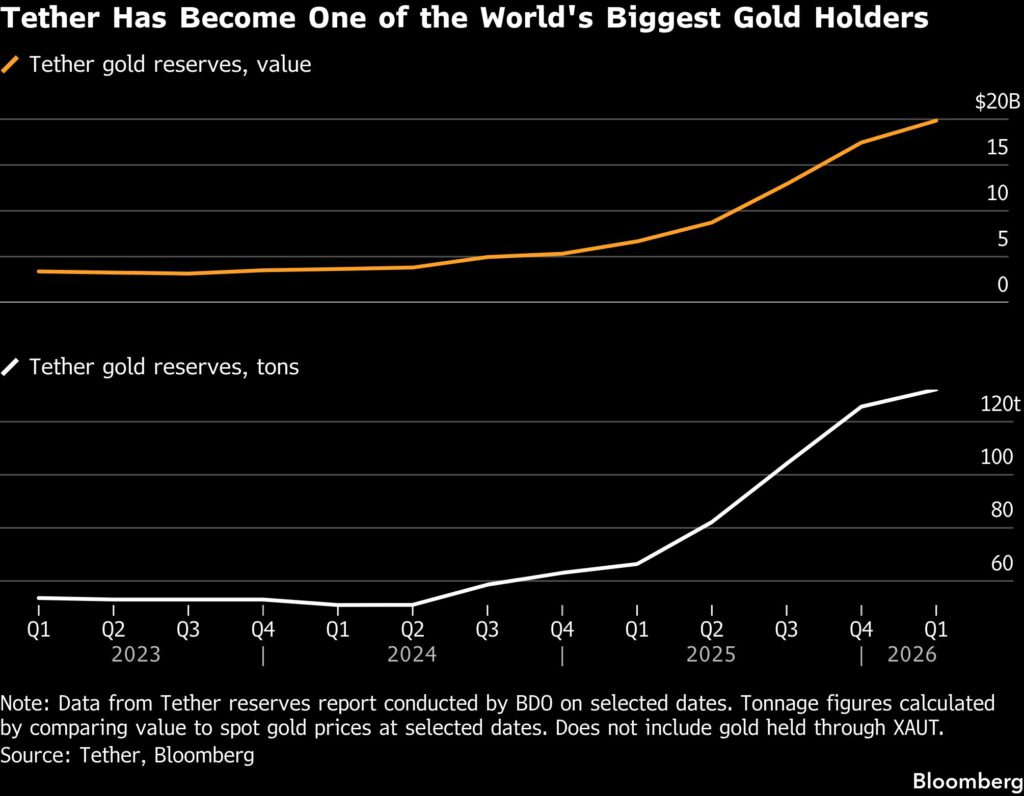
Tether Holdings SA bought more than six tons of gold for its reserves in the first three months of the year, extending a buying streak that’s made it the largest known holder of bullion in the world outside of banks and nation states.


The value of the crypto giant’s gold reserves stood at $19.8 billion at the end of March, according to a quarterly report on its holdings, which equates to 132 tons of bullion based on spot prices. Gold was exceptionally volatile over the quarter, soaring to a record high near $5,600 in January before being hit with a series of sharp selloffs, most recently due to the outbreak of the US-Iran war.

The first-quarter purchases still make Tether one of the largest individual buyers in the market, but it was buying at a markedly slower pace than the previous quarter. It snapped up more than 21 tons of gold for its reserves in the final three months of 2025.

The crypto firm recently cut two senior precious metals traders, just months after hiring them from HSBC Holdings Plc to create what it called “the best trading floor for gold in the world.

Commenting on the departures last month, the company said “it always strives to operate with a lean team” and will leverage expertise gathered from recent investments in the gold industry. Tether in February acquired a stake in US-based precious metals dealer Gold.com Inc, which has a large trading and logistics operation.

Such were the scale of Tether’s disclosed purchases through 2025, that some market watchers pointed to their small, but not insignificant, role in shifting global prices.

“It has been material,” Greg Shearer, head of precious and base metals research at JPMorgan Chase & Co, said in an interview on Friday, prior to Tether’s latest quarterly report. The crypto giant bought more gold than any central bank except Poland through the course of last year, he noted.

Tether is the issuer of USDT, the world’s largest dollar-pegged stablecoin with about $190 billion in circulation. It makes money by taking in dollars in exchange for USDT, and investing them in Treasuries and other assets like bullion.


It generated a net profit of just over $1 billion in the first quarter, adding to a haul of more than $10 billion in 2025.

(By Jack Ryan)

India’s gold investment demand tops jewellery for first time ever in March quarter


Stock image.

India’s investment demand for gold surpassed jewellery consumption for the first time on record in the March quarter, as investors turned to the precious metal amid subdued equity market returns, the World Gold Council (WGC) said on Wednesday.

Stronger investment demand in the world’s second-largest consumer of gold partly offset a decline in jewellery buying, hit by a rally in prices, helping keep overall demand stable, the WGC said.

“For the first time investment demand surpassed jewellery demand,” Sachin Jain, chief executive of the WGC’s Indian operations, told Reuters.

“Investment demand will become increasingly prominent in the coming quarters, with both financial and retail investors showing more interest in gold.”

Investment demand in the March quarter surged 52% from a year earlier to 82 metric tons, while jewellery demand fell 19.5% to 66 tons, the World Gold Council (WGC) said in a report published on Wednesday.

Total gold consumption in the country rose 10.2% to 151 metric tons during the quarter, according to the data.

For the first time, investment demand accounted for a larger share of total consumption than jewellery, rising to 54.3% in the quarter.

Investment demand typically accounts for about a quarter of India’s total gold consumption, but rising prices have been prompting investors to buy coins, bars, and gold exchange-traded funds (ETFs).

Inflows into gold ETFs jumped 186% in the March quarter from a year earlier to a record 20 tons, the WGC said.

Weak stock market performance in recent quarters has been drawing investors to gold ETFs, and the trend is likely to continue, Jain said.

Domestic gold prices have nearly doubled since the start of 2025, while India’s benchmark Nifty 50 has risen 2.4% during the period.

(By Rajendra Jadhav; Editing by Rashmi Aich)


FLSmidth investigates potential breach of sanctions on Russia


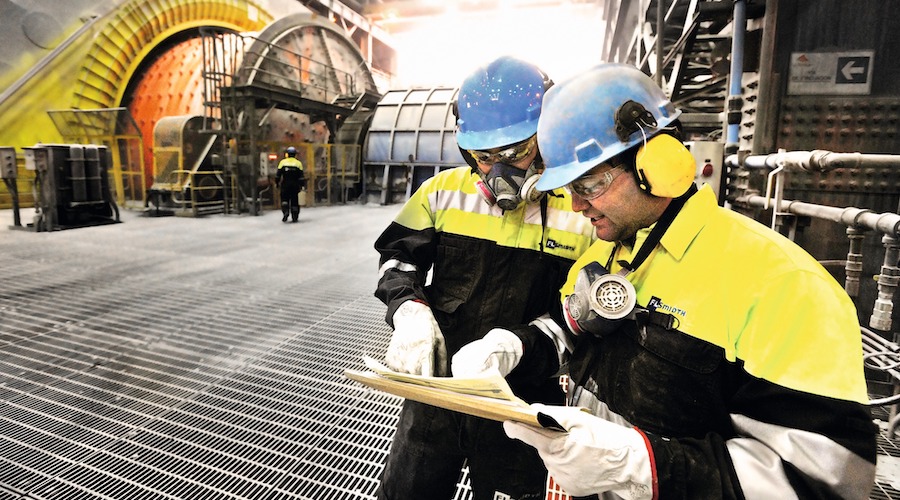
(Image courtesy of FLSmidth).

Danish mining equipment and cement technology supplier FLSmidth said in a statement on Friday it was investigating whether it had failed to comply with sanctions after finding it had provided certain pre-contract tender materials to Russia.

The company said it had found, as part of an ongoing internal probe, that it had provided materials to persons in Russia in connection with a limited number of potential projects in Kazakhstan.


The company has ceased the pursuit of the tenders, it added.

Asked about which sanctions FLSmidth might have breached, the company said in an emailed statement it had notified both the US and the Danish authorities.

“As the investigation is still ongoing, the information we can share at this time is contained in the press release,” the company said.

The US and the European Union imposed sweeping sanctions on Russia following its full-scale invasion of Ukraine in 2022.

The tender activities, which took place before 2026, could constitute services within the scope of applicable sanctions regulations and conflict with internal procedures, FLSmidth said.

The tender materials were provided at the proposal stage without project contracts having been concluded, the company said, referring to preliminary findings from its investigation.

FLSmidth said it was notifying relevant authorities, including the US Treasury’s Office of Foreign Assets Control and the Danish Business Authority, and that it will cooperate with authorities as its internal investigation progresses.


The company said it was in the process of reviewing and enhancing its compliance program and risk management measures as well as other mitigating actions.

Mercuria, Heeney Capital ink Venezuela offtake deals under White House-backed initiative


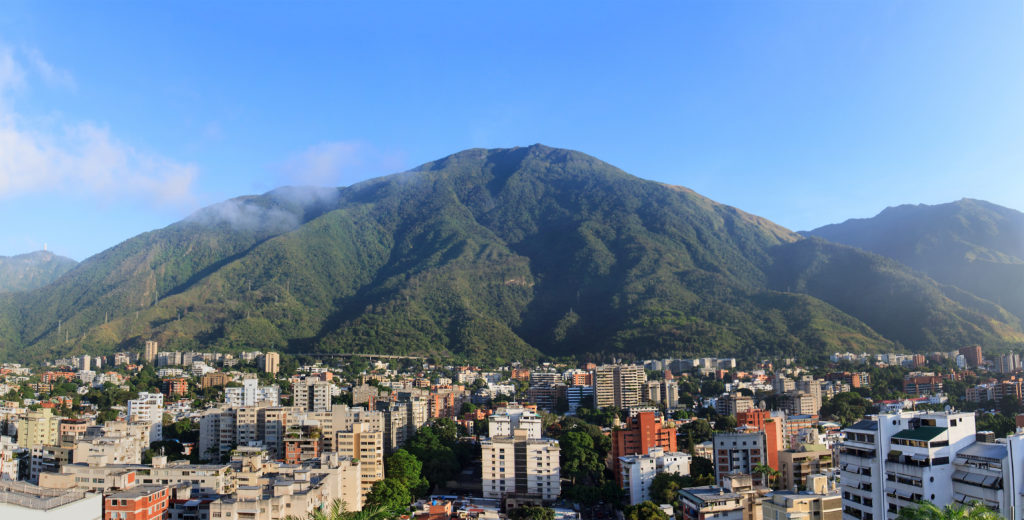
Caracas skyline, Venezuela. Stock image.

Mercuria Energy Group said on Friday it had secured, in partnership with Heeney Capital, strategic offtake agreements for Venezuelan bulk commodities and gold projects, as part of a White House-supported initiative.

The energy and commodities trader said the agreements, backed by related investment commitments, are expected to unlock about $2.2 billion in annual mineral export value.

The deals were advanced alongside a delegation of US government officials and industry participants that visited Caracas to facilitate investment frameworks and supply agreements in oil and mining, Mercuria said.

The transactions aim to “support responsible foreign investment in Venezuela’s extractive industries and prioritize supply to Western markets,” it added.

Mercuria and Heeney Capital are also pursuing additional opportunities across aluminum, nickel and ferrous products, which could represent a further $3 billion in annual mineral export value.

(By Dharna Bafna; Editing by Tasim Zahid)

Canada positioned for $200B clean energy boom, but faster approvals needed: report


Stock image.

Canada is well positioned to capture up to $200 billion in clean energy investments over the next decade, but how much of that opportunity gets captured will depend on system and market factors, says the Canadian Renewable Energy Association (CanREA) in a new report.

The report, titled Watts at Stake: Canada’s $200 Billion Clean Energy Investment Opportunity, sees Canada as a top-tier destination for renewable energy investments due to its resource base, stable policy environment and growing electricity demand.

Over the next 10 years, CanREA projects demand for electricity in Canada to rise, driven by industrial electrification, data centre growth, population increases, and the expansion of energy-intensive sectors such as mining and manufacturing.

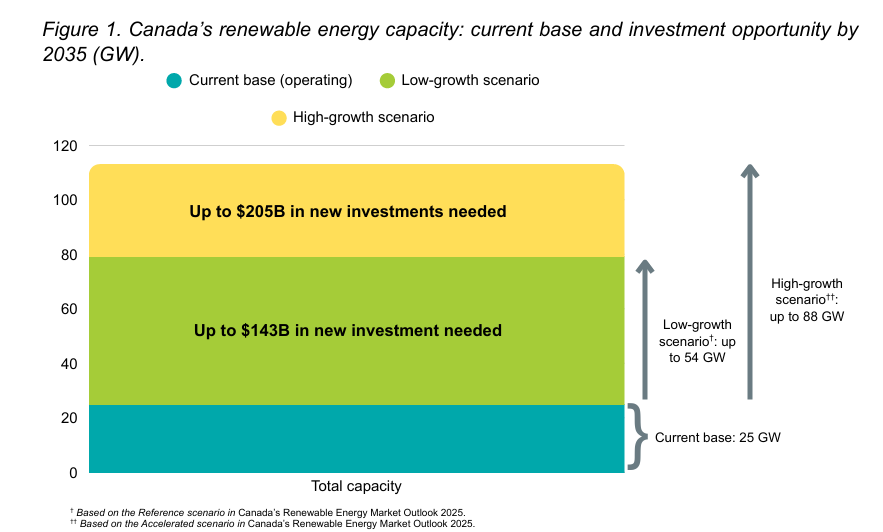
It estimates that between 54 and 88 gigawatts (GW) of new wind, solar and energy storage capacity will be required, more than triple its current levels. That would require as much as $200 billion in investment, or approximately $20 billion annually.

Credit: CanREA

Canada — with approximately 25 GW operating across the country and roughly the same volume in development or moving through procurement — has fundamentals to compete for that capital, the Association says.

However, it added that the government must demonstrate that those projects can move through approvals on “reasonably predictable timelines”, highlighting that some timelines have already been lengthening, raising carrying costs and prompting investors to reassess whether the schedule risk justifies their commitments.

“What is slowing the system is not a shortage of capital or technology, but the time it takes to move a project through approvals, permitting and interconnection queues and into construction,” the authors wrote. “That trend has become more consequential as electricity demand accelerates, narrowing the margin between when new supply is needed and when the system can realistically deliver it.”

They also brought up China as a prime example of how successful outcomes can be achieved when delivery systems, supply chains and grid expansion are coordinated rather than sequential.

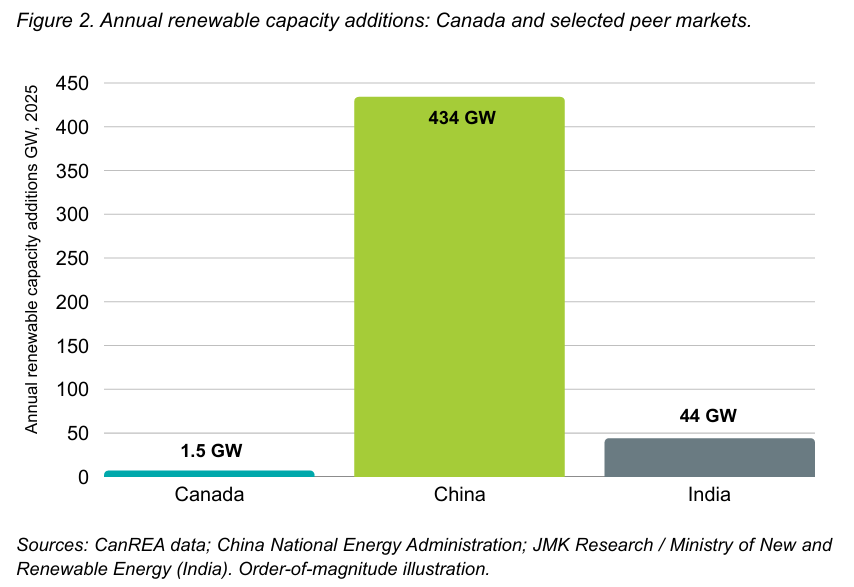
In 2025, the Asian nation added more than 430 GW of new renewable capacity, accounting for more than half of global additions, backed by annual clean energy investment exceeding $600 billion and a
parallel build-out of transmission and storage infrastructure, the report finds. In comparison, Canada added just 1.5 GW, a tiny fraction compared to China.

Credit: CanREA

Still, CanREA sees Canada in a competitive position to secure capital based on the reliability of returns and the quality of the institutional and regulatory environment. However, seizing that opportunity will require full action across all levels of government, it said.

“Canada needs more wind, solar and energy storage to power our future, and the fundamentals to attract investment are already in place,” CanREA CEO Vittoria Bellissimo said.  “These technologies are among the most affordable, fastest to deploy and scalable ways to build new electricity supply, and they are essential to growing Canada’s economy.” 

Read the full report here.


Canada unveils C$1 billion loan program for tariff-impacted industries

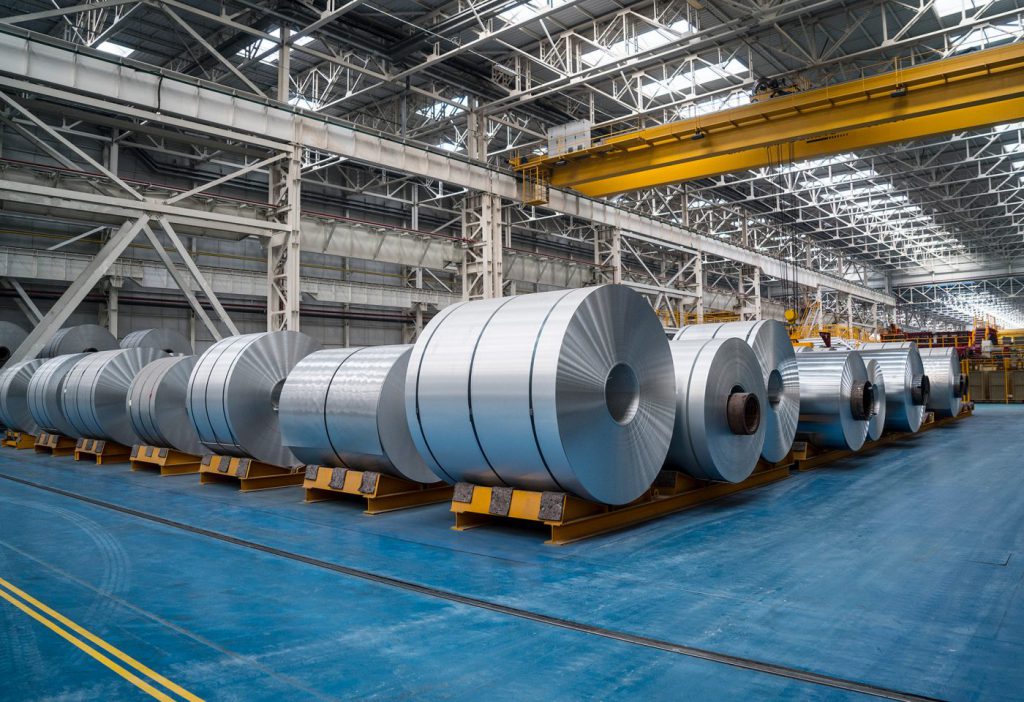
Aluminum steel rolls. Credit: Canada West Foundation

The Canadian government announced on Monday a C$1 billion ($734.65 million) loan program for industries impacted by US tariffs.

The program will be available to industries that manufacture and export products containing steel, aluminum or copper, Industry Minister Melanie Joly said.

The measure is part of the government’s effort to bolster crucial manufacturing sectors after US President Donald Trump imposed tariffs on imports of steel, aluminum, automotive, lumber and copper products.

Canada had previously offered a C$5 billion tariff response fund, a re-skilling program for workers, prioritization of the use of local steel and aluminum, and low freight rates on transportation of steel and lumber within the country among other measures.

“The steel, aluminum and copper sectors are key,” Joly said in a press conference in Ottawa. “They are key, obviously, to our economy, key to our manufacturing sector, but also key to our sovereignty,” she said.

The Business Development Bank of Canada will disburse the loans in amounts of C$2 million to C$5 million over a three-year period at “favourable terms,” she said.

The government also announced C$500 million in funding for regional development agencies to support all sectors affected by tariffs.

This funding is part of the government’s Regional Tariff Response Initiative, which covers all tariff-hit sectors.

($1 = 1.3612 Canadian dollars)

(By Promit Mukherjee; Editing by Caroline Stauffer and Paul Simao)


Metals Australia plans graphite refinery in Quebec


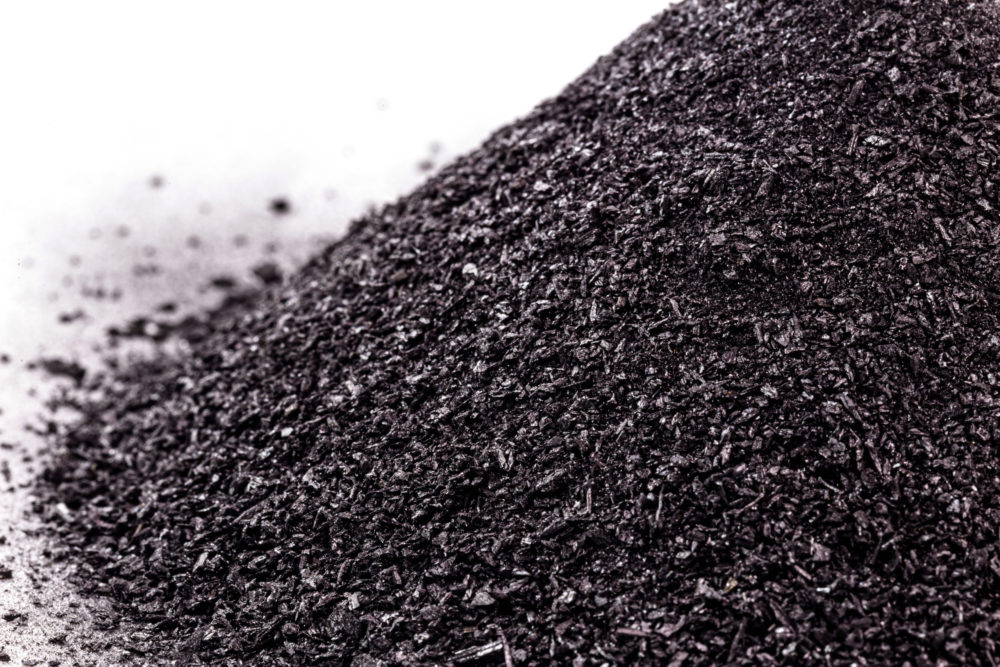
Graphite powder. Stock image.

Metals Australia says it will build a high-purity graphite refinery near Baie-Comeau, Quebec, that could generate more than C$2 billion in economic value while creating 227 permanent jobs.

“At a time when the world increasingly needs stable, secure, long terms supplies of critical minerals and the energy solutions that can be created from them, we have unveiled a world class project that is aligned with that strategic need,” said Paul Ferguson, CEO of Metals Australia.

The company’s preliminary economic assessment shows the facility will process 75,000 tonnes of flake graphite concentrate annually, producing 51,000 tonnes of battery-grade graphite products over a 25-year operational period. Metals Australia expects an internal rate of return of 25.6% on the project.

Strategic location drives selection

Baie-Comeau beat other locations due to its transportation advantages, supportive business environment, available industrial land and existing infrastructure, including rail ferry connections and deep-water port facilities, Metals Australia said.

The company will source raw materials from its upstream graphite project near Fermont, where mineral resources average 10.2% graphite grade—2.4 times higher than publicly available data from competitor Nouveau Monde Graphite’s project.

Metals Australia positions itself as a critical minerals development company targeting the growing battery materials market. Through Canadian subsidiary Northern Resources, the company aims to supply premium graphite products to North American electric vehicle and energy storage manufacturers.

The graphite refinery represents a key component in Quebec’s emerging critical minerals sector, which provincial officials have identified as crucial for economic diversification and its energy transition goals.

Rapid development timeline

Metals Australia plans to skip traditional preliminary feasibility studies and advance directly to final feasibility work while conducting parallel community and Indigenous engagement activities. This accelerated approach aligns with Canada’s goal of establishing five graphite mines and five purified graphite refineries by 2040.

The Perth-based company has identified nine additional graphite zones spanning 33 km that remain undrilled, suggesting significant expansion potential beyond the initial project scope.

Ferguson emphasized the project’s strategic importance for North American supply chains: “Our battery anode material refinery in Quebec is clearly one of compelling economic and strategic advantage for Canada, the province of Quebec and our stakeholders.”

Trump Approves "Keystone Light" Canada-U.S. Oil Pipeline

Last month, we reported that Bridger Pipeline LLC has proposed a giant pipeline with a capacity in excess of 1 million barrels per day (bpd) to transport Canadian crude into the United States. Dubbed "Keystone Light" due to its similarities to the Keystone XL project that former U.S. President Joe Biden canceled in 2021, the 36-inch pipeline would span nearly 650 miles (1,050 km) from the U.S.-Canada border in Phillips County, Montana, to Guernsey, Wyoming, and cost approximately US$2 billion.  And now U.S. President Donald Trump has given the go-ahead for development work on the pipeline to commence, marking yet another milestone in Canada's ongoing drive to diversify its oil exports. 

Trump signed a presidential permit on Thursday authorizing the Bridger Pipeline Expansion, with construction expected to begin in 2027 with a goal of completion by late 2028 or early 2029.

The pipeline will initially operate at ~550,000 bpd; however, Plainview Energy Analytics has noted that batching light crude oil could allow volumes to exceed typical heavy oil ceilings of 800,000 bpd for a line of this size, and deliver up to 1.13 mbpd. 

While the primary stated purpose of the proposed 647-mile Bridger Pipeline expansion is to transport up to 550,000 barrels per day (bpd) of Canadian crude from the U.S.-Canada border in Montana to Guernsey, Wyoming, company maps and plans show it includes potential tie-ins for the Bakken shale oil field. 

The design provides access to a significant portion of Bridger's existing North Dakota gathering network, “This optionality positions the project for potential future expansion beyond 550,000 bpd and creates the possibility of a new competitive egress option for Bakken shippers,” Matthew Lewis, Plainview’s founder, said.

However, the project is expected to face significant opposition from environmental groups, Indigenous communities, and landowners, with a potential need for a new presidential permit for the border crossing. To wit, the Montana Environmental Information Center (MEIC) has raised concerns regarding the inherent risk of spills and the potential environmental impact on Montana's land and water. MEIC has highlighted the history of the owner, Bridger Pipeline LLC (a subsidiary of True Companies), specifically citing the 2015 incident where over 30,000 gallons of oil spilled into the Yellowstone River near Glendive, MT, contaminating the city's water supply. It also argues the pipeline would transport environmentally destructive fuel sources, threatening wildlife habitat, local agriculture, and water quality. WildEarth Guardians and Earthjustice have expressed similar concerns.

Meanwhile, Greenpeace Canada has condemned the expansion, arguing that Canada should focus on reducing oil reliance rather than investing in new fossil fuel infrastructure. In its defense, whereas Keystone Light revives portions of the canceled Keystone XL route, it largely avoids some historical flashpoints by not crossing Native American reservations and following existing infrastructure corridors for 70% of its 650-mile route.

It’s also noteworthy that Greenpeace Canada's position is part of a broader "Greenpeace" network effort that has faced significant legal retaliation from pipeline developers for its opposition tactics, including a 2025 jury verdict in the U.S. that initially ordered the group to pay hundreds of millions in damages for protests related to other projects.

That said, the Bridger Pipeline project belies the fact that Canada’s oil sector is desperately trying to lower its reliance on the United States. To wit, Alberta is actively seeking Asian and Middle Eastern investment for a proposed 1 million barrel per day (bpd) oil pipeline to the West Coast. 

This initiative, led by the provincial government, aims to diversify export markets and reduce a near-total dependence on the United States. Unlike traditional projects, the Alberta government is acting as the formal proponent for the Northwest Coast Oil Pipeline to jumpstart early planning while Enbridge (NYSE:ENB, TSX: ENB), South Bow Corp. (NYSE:SOBO, TSX: SOBO), and the government-owned Trans Mountain are providing technical guidance. According to estimates by the experts, a  1.5-million bpd increase in pipeline capacity could add approximately $31.4 billion annually to Canada's real GDP between 2027 and 2035.

More than 90% of Canadian crude oil exports are shipped to the United States, with the unusually high concentration reflecting a long-standing, integrated infrastructure where Canada serves as the primary foreign supplier of oil to the U.S., particularly heavy crude, driven by limited alternative export routes. This leaves Canada badly exposed to changes in U.S. administration, including policies that can undermine energy security and force Canadian producers to accept lower returns.

By Alex Kimani for Oilprice.com


Treasure Hunt: Val-d’Or – Gold, Grit and the Road to the North

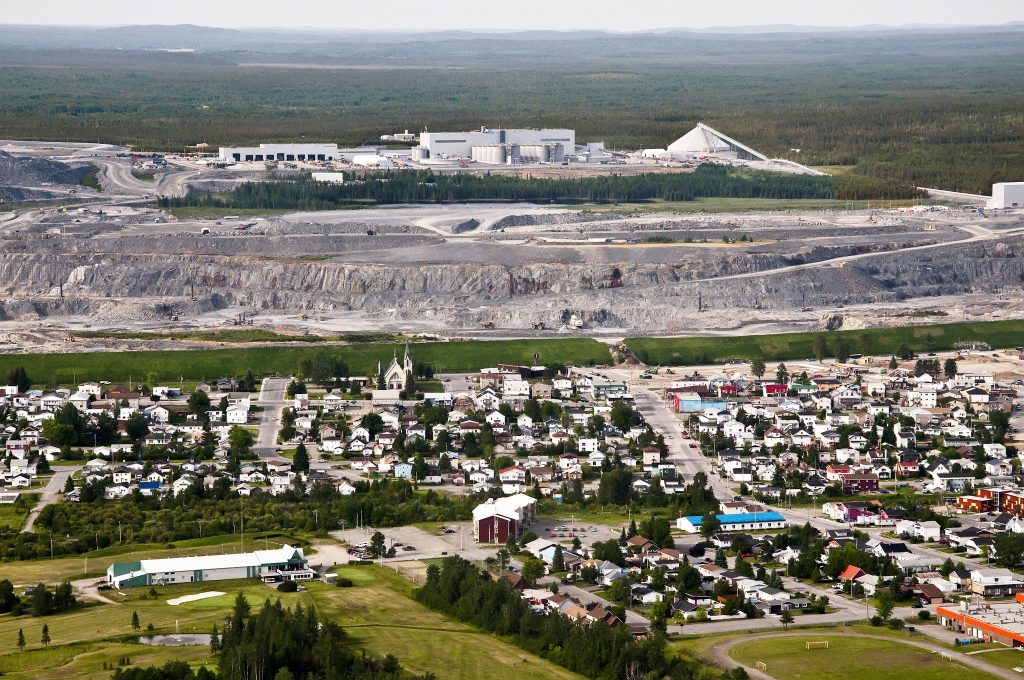
Agnico Eagle Mines’ Canadian Malartic mine in Val-d’Or, Que. Credit: Agnico Eagle Mines

For the latest clue, read the article below; voici la version française.

And watch the video: English | French

There’s a stretch of road in northwestern Quebec where the forest seems endless, a rolling sea of spruce and rock that, at first glance, gives nothing away.

But in the early 1930s, in the depths of the Great Depression, a handful of prospectors looked at this same unforgiving land and saw something else entirely: possibility. They would turn a remote patch of Abitibi wilderness into one of Canada’s most legendary gold camps, a place built on risk, resilience and the stubborn belief that fortune favours those willing to go farther.

The timing couldn’t have been more desperate. Canada was reeling. Jobs had vanished, banks were failing, and across the country men boarded trains heading north and west, or anywhere rumour had it that work, or better yet gold, might be on offer. In Quebec’s Abitibi region, those rumours had started to crystallize.

The discovery didn’t come from a single dramatic nugget, but from persistence, a series of finds that hinted at something larger beneath the surface. Prospectors like Jean-Jacques “Jack” Sullivan, a tough Irish-born miner with a nose for opportunity, began staking claims in what would soon become the Val-d’Or district.

In 1931, Sullivan and his partners uncovered what became the Sullivan Consolidated Mine, one of the first major discoveries in the camp, and nearby strikes at Lamaque, Sigma and elsewhere soon followed. The pattern was unmistakable. This was a camp.

A town forms

At first, there was little in place. No roads, no power, no real infrastructure, just bush, rock and a scattering of tents and rough-cut shacks.

Gold accelerated the pace of change and within a few short years, a settlement took shape. Wooden buildings lined muddy streets, drill rigs hammered into the ground, and supply trucks moved along newly carved roads connecting the camp to the rail line at Senneterre.

The town took on a name that reflected both its promise and its ambition: Val-d’Or, the Valley of Gold. People came quickly, not just miners, but merchants, engineers, cooks and dreamers. Like Dawson decades earlier, it became a place where fortunes could be made or lost in a single season.

Val-d’Or stood out not only for its gold, but for the people who pursued it. Sullivan, steady and relentless, became one of the camp’s early pillars, alongside entrepreneurs, financiers and geologists, many backed by capital from Toronto, the growing nerve centre of mining finance that helped turn discoveries into operating mines.

Building a camp

At the Lamaque mine, one of the richest in the district, underground workings expanded rapidly, producing high-grade ore that justified the effort of building a mine in a remote region.

At Sigma, engineers pushed deeper in pursuit of the gold-bearing veins, extending shafts and refining underground methods that would define the camp.

Together, these operations established Val-d’Or as one of Canada’s premier hard-rock gold districts, one that would prove to be more than a fleeting rush and instead a sustained industrial centre. By the late 1930s, the shift was clear. Val-d’Or was no longer just a camp. It was a city.

Electric lights replaced lanterns. Schools and hospitals followed the mines. Rail lines and roads connected the region to the rest of Quebec. What had been wilderness became one of the most productive gold districts in the country, and unlike many rush towns, it proved durable. The gold held.

Through the Depression, the war years and into the decades that followed, the mines kept producing. Workers went underground not for a quick strike, but for steady wages, a rarity in those uncertain times.

Methods changed as the camp matured. Hand-steel drilling and mule-drawn ore gave way to mechanization, deeper shafts and more sophisticated processing as exploration spread outward across the Abitibi Greenstone Belt, one of the richest gold regions on Earth.

The camp became a training ground for generations of miners, engineers and geologists, many of whom would go on to shape projects across Canada and around the world.

A lasting camp

Over time, a different kind of operator emerged, one focused less on discovery and more on extending mine life. Companies like Agnico Eagle Mines (TSX, NYSE: AEM) came to define this next stage. While not among the original pioneers of Val-d’Or, Agnico Eagle became one of the dominant forces in the Abitibi and beyond, operating across the same gold-rich belt that gave rise to the camp

Its Goldex mine, just outside the city, stands as a direct link to Val-d’Or’s mining tradition, while operations such as LaRonde and Canadian Malartic anchor the wider region as one of the most prolific gold-producing districts in the world. Where early prospectors proved the gold was there, Agnico Eagle and its peers showed it could endure.

Today, Val-d’Or remains a cornerstone of Canadian mining, with modern operations, including revived and expanded projects around the historic Lamaque and Sigma mines, continuing to produce from the same geological structures identified nearly a century ago.

But the real legacy of Val-d’Or isn’t just ounces, it’s endurance. Like Dawson, Val-d’Or carries the imprint of boom and reinvention, and like the Golden Triangle, it reflects the persistence of those who push deeper into the unknown. Like Argentia, in Newfoundland, it shows that even when the first dream fades, something lasting can still take its place.

The road into Val-d’Or today does not lead to a ghost town or a relic of the past. It leads to a living city, still tied unmistakably to the rock beneath it. Headframes rise above the skyline, core shacks hum with activity, and trucks roll in and out carrying the next chapter of a story that began in the hardest of times.

Nearly a century later, that foundation still holds.

Zambia says privacy, minerals concerns stall US health aid deal

Lusaka, Zambia. Stock image.

Zambia’s talks with the US over a new $2 billion health aid deal stalled because the proposed agreement included data sharing that would violate citizens’ privacy rights and was conditional on first agreeing to preferential access to mineral resources, the nation’s foreign minister said.

The inclusion of the terms related to data sharing were unacceptable and “unconscionable,” Mulambo Haimbe said in a statement Monday. He also said it was concerning that the health pact depended on the governments signing a critical minerals agreement favoring US companies.


Haimbe was responding to the outgoing US Ambassador Michael Gonzales, whose farewell speech last week included sharp criticism of the Zambian government, including over what he called “institutionalized and refined corruption” that deterred US investors — claims Haimbe dismissed as “delusional.”


The spat suggests deteriorating relations with the US, after the two nations had drawn closer in recent years under President Hakainde Hichilema’s leadership. Zambia, Africa’s second-biggest copper producer, has seen growing interest from mining investors keen to cash in on near-record prices for the metal key to electric vehicles and power grids.


KoBold Metals, a US company, last week broke ground on a $2.3-billion-plus copper mine that will be Zambia’s biggest. Zambia also plans to develop a rail link to the Angolan port of Lobito, part of a corridor project to which the US has committed hundreds of millions of dollars of funding.

Neighboring Zimbabwe also rejected a US health aid deal because of privacy concerns, as did Ghana. Last year, a Kenyan court suspended part of that nation’s agreement while it hears a case over data privacy concerns.

Gonzales, meanwhile, rejected the notion that the US was making health aid conditional on access to critical minerals.

“Any suggestion that the US would withhold critical life-saving healthcare support from those Zambians whose lives and health depend on it unless we get critical minerals is disgusting and patently false,” he said in his speech.

(By Matthew Hill and Taonga Mitimingi)


Trump sons invested in US group developing $1.1B tungsten project in Kazakhstan: FT

Assy Plateau, Kazakhstan. Stock image.

A company backed by two of US President Donald Trump’s sons reportedly invested in a mining group that is developing a $1.1 billion tungsten project in Kazakhstan, Financial Times has found.

According to FT, both Donald Trump Jr. and Eric Trump have been using a shell company to buy stakes in US construction group Skyline Builders (Nasdaq: SKBL), which on Thursday merged with Cove Kaz Capital Group, the unit of New York-based mining investment group Cove Capital that was awarded the tungsten project last year.

As part of the merger, the companies will create a new entity named Kaz Resources to operate the project, which comprises two deposits (Northern Katpar and Upper Kairakty) located less than 20 miles apart in the Karaganda mining district of Central Kazakhstan.

The FT report, citing securities filings, detailed that Skyline had paid $20 million for a 20% stake in a company with “significant critical minerals assets in Asia”, which it revealed to be Kaz Resources.

Following the Skyline-Cove merger, Kaz Resources is expected to list on the Nasdaq under the symbol “KAZR”.

Responding to FT requests, a Trump Jr. spokesperson said he “does not interface with the federal government on behalf of any company he invests in or advises,” while Eric did not comment.

The deal follows a November announcement disclosing Cove Capital’s involvement in the project as part of the Trump administration’s push to develop critical minerals assets globally to reduce its reliance on Chinese supply. The deal also underpinned a strengthened economic partnership between the US and Kazakhstan, which signed a memorandum of understanding on critical minerals that month.

‘Largest undeveloped’ tungsten resource

According to Cove Capital, the project in Kazakhstan is the largest known undeveloped tungsten resource globally. A JORC-compliant mineral resource from 2023 estimated 1.4 million tonnes of tungsten trioxide (WO3), representing over half of China’s 2.4-million-tonne reserve as calculated by the US Geological Survey.

The current feasibility studies outlined a production capacity of approximately 12,000 tonnes of WO3 per annum from the two deposits, representing approximately 15% of global production, it said.

Cove Capital’s CEO Pini Althaus told Reuters last year that the company anticipates first production in about three years. “This is a generational win for the US and its critical minerals needs,” he also said.

To fund its projected $1.1 billion development cost, the US Export-Import Bank and US International Development Finance Corporation have each expressed interest in funding up to $900 million and $700 million, respectively.

As disclosed in the November announcement, Cove (now Kaz Resources) will control 70% of the project venture and sales of the metal, with Kazakh state miner Tau-Ken Samruk controlling the remaining 30%.


American Tungsten Mining Operation In Kazakhstan Looks To Get Started This Summer


Dominic Heaton (third, right), CEO of Cove Kaz Capital, discusses a $1.1 billion tungsten mine deal with Yersayin Nagaspayev (third, left), Kazakhstan’s Minister of Industry and Construction, and Nariman Absametov (second, right), Board Chairman of state-owned Tau-Ken Samruk, in March 2026. About a month later, Cove Kaz Capital and Tau-Ken Samruk inked the deal. (Photo: gov.kz)


May 4, 2026 
 Eurasianet
By Alexander Thompson

(Eurasianet) — A deal announced at the White House last year for an American company to mine tungsten in Kazakhstan is moving forward after the company closed the deal with the country’s state-owned mining company.

At almost the same time, Cove Kaz Capital, the American mining entity, and a shell company in which US President Donald Trump’s sons reportedly have a significant stake, announced an intention to merge, according to a report published by the Financial Times. The merged entity would seek to become a publicly traded company.

Cove Kaz Capital, a subsidiary of American mining company Cove Capital, indicated no major changes to the terms and scope of the $1.1 billion project that was first laid out last November at the C5+1 summit between Trump and the leaders of the five Central Asian states. The company confirmed that further exploration work will begin this summer.

“The financial closing of the share purchase agreement is a significant mile marker” for the project, Pini Althaus, the CEO of Cove Capital and executive chairman of the Kazakh operation, said in an April 29 statement.

Althaus thanked the Kazakh side for their “outstanding partnership” on regulatory approvals that will allow the company to start feasibility studies this summer, according to the statement. That process will take about 18 months to complete, the company said.

Cove Kaz Capital’s development of the Northern Katpar and Upper Kairakty deposits, estimated to hold 1.4 million tons of tungsten trioxide, represents a flagship initiative in the Trump administration’s efforts to widen US access to Central Asia’s abundance of critical minerals and rare earths. It is also one of the only significant American critical minerals mining projects in the region, other than an antimony mine in Tajikistan that has been operating for many years.

In the deal, Cove Kaz Capital purchased 70 percent of the project’s shares and Tau-Ken Samruk, the national mining company, received 30 percent. Cove Kaz Capital is leading the project’s development.

Just hours after the closing was announced, Cove Kaz Capital announced plans to merge with Skyline Builders Group Holding Ltd. The combined company intends to be listed on the Nasdaq stock exchange as Kaz Resources Inc., according to a joint statement issued by the two entities.

The Financial Times reported April 30 that Trump’s sons, Donald Trump Jr. and Eric Trump, invested in Skyline Builders Group in August of last year and expanded their investment in October.

Althaus told the Financial Times he has not spoken with the Trump brothers. The pair’s initial investment in Skyline Builders Group came before Kazakh President Kassym-Jomart Tokayev informed the White House in September that Kazakhstan was leaning towards awarding the tungsten development contract to Cove Kaz. The deal was publicly announced last November.

Democrats and former American ethics officials have raised concerns about the Trump family’s expanding investments in countries and sectors connected to the president’s foreign policy initiatives.Alexander Thompson is a journalist based in Bishkek, Kyrgyzstan, reporting on current events across Central Asia. He previously worked for American newspapers, including the Charleston, S.C., Post and Courier and The Boston Globe.


Tungsten price breaks records as China export curbs, military demand boost investment

Prices of ammonium paratungstate (APT) are up more than 200% since the start of the year. Stock image.

Tungsten prices have powered further into record-high territory, fuelled by China’s tightening export controls and surging military demand, with supplies stretched thin.

Tungsten is used in aerospace and defence equipment because its extreme heat resistance and hardness allow components to withstand intense temperatures, stress and wear

Prices of ammonium paratungstate (APT), an intermediate used to produce tungsten metal, were above $3,000 per metric ton in Rotterdam, up more than 200% since the start of the year.

China dominates the global tungsten market. It imposed new export restrictions on tungsten in 2025 and cut mining quotas for that year. In December 2025, China said only 15 firms would be allowed to export tungsten in 2026–2027.

In February, China prohibited exports of dual-use items to 20 Japanese entities that it said supply Japan’s military.

Almonty – a key tungsten producer beyond China – began mining at its South Korean mine in March, and a planned Phase 2 expansion is expected to come online in 2027.

The United States currently has no active commercial tungsten mines and while a few projects are under development to curb dependence on Chinese supply, there is no established timeline for production to resume.

Project Blue estimates the global tungsten market was about 129,000 metric tons in 2025. It added that defence demand, currently estimated at around 12% of the tungsten market, is expected to grow to roughly 15% between 2027 and 2028, as stockpile replenishment keeps demand elevated.

Argus said the automotive sector, consuming 25%-30% of tungsten, is currently the largest consumer, though rising EV adoption may curtail consumption.

Defence-sector demand is growing about 8% annually, and if trends hold, defence could overtake automotive as tungsten’s largest consumer by the mid-2030s, said Cristina Belda, senior analyst at Argus.

(By Ashitha Shivaprasad and Anmol Choubey)