Iran war could spark new wave of nuclear reactor construction, says Cameco
Agustín de Vicente / Mayo 2, 2026 |
The uranium giant sees rising demand driven by energy security, AI power needs and global decarbonization efforts.

The ongoing conflict in Iran could trigger a new wave of nuclear reactor construction similar to the buildout seen after the 1970s energy crisis, according to Cameco.
Grant Isaac, president and chief operating officer of the company, said the current geopolitical environment is creating strong momentum for nuclear energy, driven by concerns over energy security, climate goals and national security.
The ongoing conflict in Iran could trigger a new wave of nuclear reactor construction similar to the buildout seen after the 1970s energy crisis, according to Cameco.
Grant Isaac, president and chief operating officer of the company, said the current geopolitical environment is creating strong momentum for nuclear energy, driven by concerns over energy security, climate goals and national security.
Echoes of the 1970s energy crisis
More than 40% of today’s nuclear reactors were built in response to the 1973 oil embargo led by OPEC, according to the International Energy Agency.
Countries such as France, Japan, South Korea and the United Kingdom accelerated nuclear construction programs at the time to reduce reliance on fossil fuels.
Isaac said a similar dynamic is emerging today, as governments seek reliable, 24/7 carbon-free power sources.
More than 40% of today’s nuclear reactors were built in response to the 1973 oil embargo led by OPEC, according to the International Energy Agency.
Countries such as France, Japan, South Korea and the United Kingdom accelerated nuclear construction programs at the time to reduce reliance on fossil fuels.
Isaac said a similar dynamic is emerging today, as governments seek reliable, 24/7 carbon-free power sources.
Uranium demand set to surge
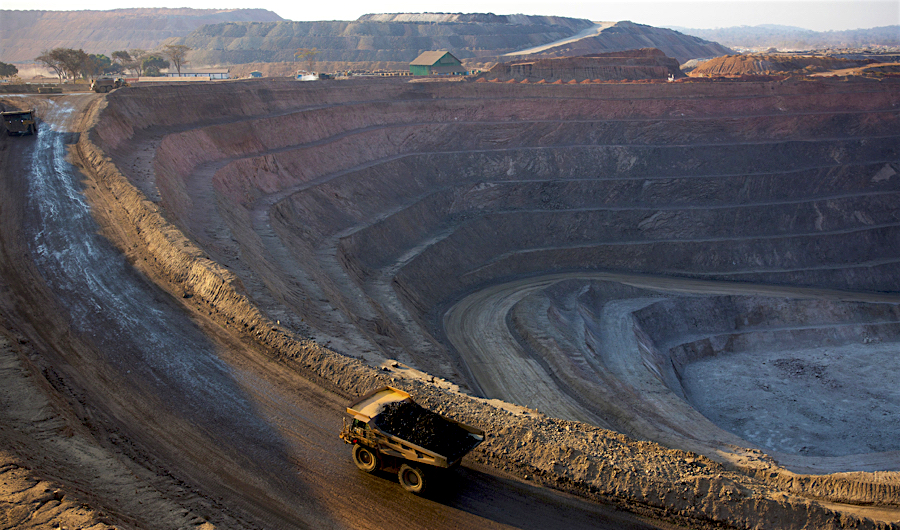
Cameco, operator of the high-grade McArthur River mine in Canada, produces about 15% of global uranium supply and ranks as the world’s second-largest producer after Kazatomprom.
Industry forecasts suggest global uranium demand could triple by 2040, while current consumption already exceeds annual production by 50 to 60 million pounds.
Cameco, operator of the high-grade McArthur River mine in Canada, produces about 15% of global uranium supply and ranks as the world’s second-largest producer after Kazatomprom.
Industry forecasts suggest global uranium demand could triple by 2040, while current consumption already exceeds annual production by 50 to 60 million pounds.
AI and data centers drive electricity demand
Demand for nuclear energy has been rising even before the Iran conflict, fueled by the expansion of data centers and artificial intelligence infrastructure, which require large and stable power supplies.
In the United States, government support has helped accelerate nuclear development, including fast-tracking uranium projects and extending the life of existing reactors such as Diablo Canyon in California.
Demand for nuclear energy has been rising even before the Iran conflict, fueled by the expansion of data centers and artificial intelligence infrastructure, which require large and stable power supplies.
In the United States, government support has helped accelerate nuclear development, including fast-tracking uranium projects and extending the life of existing reactors such as Diablo Canyon in California.
India emerges as a key growth market
Cameco is also expanding its footprint in India, where nuclear capacity is expected to grow significantly.
The company signed a deal in March to supply nearly 22 million pounds of uranium concentrate over nine years in a contract valued at about $1.9 billion.
Through its 49%-owned joint venture with Westinghouse Electric, Cameco is also positioned to participate in new reactor construction projects in India and other markets.
Cameco is also expanding its footprint in India, where nuclear capacity is expected to grow significantly.
The company signed a deal in March to supply nearly 22 million pounds of uranium concentrate over nine years in a contract valued at about $1.9 billion.
Through its 49%-owned joint venture with Westinghouse Electric, Cameco is also positioned to participate in new reactor construction projects in India and other markets.
Tight supply and rising prices
Uranium market fundamentals remain tight, with supply constraints and growing demand pushing prices higher.
Spot uranium prices are currently around $86 per pound, roughly one-third higher than a year ago, while long-term contract prices are nearing $90.
Uranium market fundamentals remain tight, with supply constraints and growing demand pushing prices higher.
Spot uranium prices are currently around $86 per pound, roughly one-third higher than a year ago, while long-term contract prices are nearing $90.
Strategic role of nuclear energy
The renewed focus on nuclear power reflects a broader shift in global energy strategy, where reliability, decarbonization and energy independence are becoming increasingly important.
For the mining sector, this trend reinforces uranium’s role as a critical mineral in supporting the energy transition and meeting the growing electricity demands of a digital and electrified economy.
The war on Iran will speed the transition away from fossil fuels and toward nuclear energy, creating strategic challenges for the United States
By Rachel Bronson | Analysis | March 13, 2026
BULLETIN OF ATOMIC SCIENTISTS
 View looking north showing the Strait of Hormuz, connecting the Gulf of Oman with the Persian Gulf, with the Zagros Mountains and Qeshm Island of Iran in the background, and areas of Oman, Muscat and the United Arab Emirates in the foreground, as seen from the Space Shuttle Columbia in 1992. (Photo by Space Frontiers/Archive Photos/Hulton Archive/Getty Images)
One of the biggest surprises following the US-Israel attacks on Iran was how quickly Iran targeted Persian Gulf energy infrastructure. In the early hours of the fighting, energy analysts were relatively optimistic that global markets could weather a short-lived conflict. This optimism was based on past fighting between Israel and Iran that avoided energy infrastructure and a “loose” (that is, well-supplied) oil market. The expectations proved wrong.
Within hours of the start of what American planners dubbed “Operation Epic Fury,” Iran began targeting the critical energy infrastructure of its Arab neighbors. Iran attacked Ras Tanura, Saudi Arabia’s largest domestic oil refinery, and Ras Laffan and Masaieed, Qatar’s major liquified natural gas production and export facilities. A senior Iranian advisor claimed that any vessel attempting to transit the Strait of Hormuz, where 20 percent of the world’s oil and gas passes each day, would be set on fire. Skittish about traveling through the Gulf, ships began stacking up at its entrance, resulting in what Helima Croft, the global head of commodity strategy at RBC Capital Markets, described as a “parking lot.” Subsequently, Israel attacked oil depots in Tehran, shrouding the Iranian capital in smoke.
The energy bottlenecks caused by the fighting will likely accelerate a global energy transition that is already underway, as countries seek to diversify their energy imports and broaden out supply chains. Perhaps surprisingly, given that the attacks were undertaken to eliminate Iran’s nuclear program, the conflict will likely hasten the adoption of nuclear power programs globally—even in conflict-prone areas. A nuclear resurgence will bring hard questions, especially for the United States, which risks ceding ground to Russia and China if it fails to act.
The nuclear renaissance. Even prior to the current conflict, nuclear power had been experiencing a global renaissance. The International Atomic Energy Agency estimates that the world’s nuclear power capacity could more than double by 2050. Last month, Japan restarted the world’s largest nuclear power plant (by installed capacity), a plant that had been shut since the 2011 accident at Fukushima Daiichi. France, Europe’s nuclear superpower, has reversed plans to reduce its reliance on nuclear power from 70 to 50 percent. Elsewhere in Europe, Italy has ended its 40-year moratorium on nuclear power, Belgium reversed its phase-out policy, and Denmark, Switzerland, and even Germany are considering overturning their bans on civilian nuclear power. Poland is developing its first nuclear power plant, aiming to become operational in 2036.
Such developments are hardly limited to Europe. Over the past 10 years, China has connected more than 20 nuclear reactors to its energy grid, with an additional 23 under construction, adding the nuclear power capacity that it took the US four decades to build. In the United States, the president has allocated billions of dollars to new nuclear funding, and at least five states have eased regulations to facilitate nuclear plant extensions and new builds.
Nuclear power has considerable appeal. It can help overcome the storage challenge posed by renewables such as wind and solar and stabilize energy grids on windless or cloudy days, and it is considerably more efficient than renewables in terms of land use, capacity, and conversion. It is also a cleaner alternative to coal and natural gas.
In the Middle East, the United Arab Emirates’ Barakah plant is responsible for 25 percent of the UAE’s electricity. Turkey is finalizing construction of its Akkuyu plant, which will provide 10 percent of Turkey’s energy by the end of 2028, with Russia as its key partner. Egypt is also partnering with Russia on a nuclear plant that is expected to provide for 10 percent of its energy beginning in 2028.
Saudi Arabia and the United States are in active conversations about launching a nuclear power program. Unlike the UAE, Turkey, and Egypt, Riyadh is pushing for uranium enrichment capabilities. Saudi Arabia and the UAE are also investing in nuclear power projects in Pakistan and India, respectively.
There are at least three key drivers of the nuclear renaissance: political volatility; the need for energy-intensive data centers to power AI’s future; and increasing energy demands in emerging, often energy-poor economies. Notably, political volatility is driving a more intense rather than cautious approach to nuclear power. Russia’s 2022 invasion of Ukraine focused leaders on the vulnerabilities of energy interdependence with potential adversaries. Today’s conflict in the Gulf will only deepen that lesson: In the first hours of the fighting, Qatar shut down its natural gas facilities and Israel shut down its Tamar and Leviathan fields, which export gas to Egypt and Jordan. A second driver is the surge in AI-linked energy demand: data centers require vast, reliable baseload power that intermittent renewables alone cannot provide. Third, fast-growing economies across Asia, Africa and the Middle East are seeking energy-intensive solutions that can scale without dependence on imported fossil fuels.
This nuclear renaissance is part of a broader worldwide energy transition. Oil and gas are expected to fulfil only about 50 percent of the globe’s increasing demand, with wind and solar growing faster than all other renewables to make up most of the difference. Nuclear power, a reliable source of baseload power, will fill the rest—but it brings with it greater risks, including accidents, military targeting and weaponization. One only needs to consider the difficulties Japan is facing in recovering from the 2011 accident to be reminded of the extent of the stakes involved.
Nuclear power programs create long-term geopolitical relationships because of their considerable expense and fuel and waste management requirements. Civilian nuclear programs create decades-long political relationships that benefit the global partners that build and service the plants. Currently, Russia and China are significantly more active in advancing nuclear power partnerships. The United States, once the leader in reactor design and export, has let its own industry atrophy. This will become a political liability unless America can quickly catch up to its global rivals.
When the Zaporizhzhia nuclear power plant was attacked in 2022, European capitals faced a stark decision about how to balance the potential vulnerability of nuclear power plants with the dependence on an aggressor’s fossil fuels. They opted to diversifying away from overdependence on Russian gas and toward nuclear power. Moving forward, others are likely to follow suit.
Some Europeans had hoped that substituting US for Russian gas imports could help them avoid the choice. But tensions over Greenland, NATO, and Ukraine have led European capitals to question the wisdom of relying on the US for energy as well. It is with this in mind that German Chancellor Friedrich Merz concluded that his country’s recent nuclear phase-out was a “strategic mistake.” The open question is whether the United States will help shape this new nuclear future—or be left out of it.
Questions for US leadership. There is good reason for the US to reinvest in its nuclear industry. Increasing energy demands at home are changing domestic incentives and fueling new interest in nuclear power and next-generation reactors. Global markets will be strong given the drivers discussed above.
But perhaps more important are the geopolitical relationships the United States will forego if it opts out of the nuclear renaissance. Energy corridors beget trade corridors, energy conduits accompany data conduits, and energy systems now include an ecosystem of supply chains, sophisticated financing, critical minerals, chokepoints, and investments. Such interconnections offer new areas of political influence. This is why Fatih Birol, the executive director of the International Energy Agency, said at the World Economic Forum in 2026 that “energy security … should be elevated to the level of national security.”
Nuclear plants run for 40 and in some cases 80 years and bring with them ongoing incentives. Washington should be concerned that Russia is deeply investing in the critical energy infrastructure of traditional US allies such as Egypt and Turkey. The United States cannot afford to concede such ties to Russia and China.
But questions confronting Washington’s future leadership are many:
Can it compete on safety? For example, can the United States catch up to global rivals in terms of building and exporting nuclear plant designs without sacrificing its global reputation for safety? President Trump has signed multiple executive orders to cut regulations, speed approvals, and reduce the bureaucratic hurdles that have stifled the industry. Some of these changes are welcomed. But the orders have resulted in slashing staffing and expertise in and the independence of the US Nuclear Regulatory Commission. Such orders have the potential to undermine the United States’ hard-won reputation for world-class safety standards—a key incentive to partnering with the United States in the first place.
What concessions will it have to make? The United States and Saudi Arabia, for example, have tussled for years over the Kingdom’s desire for domestic uranium enrichment. It would be ironic, to put it mildly, if the US attack against Iran to eliminate its nuclear program was followed by an agreement with Saudi Arabia that permitted enrichment. But Saudi Arabia will have significant leverage over the United States as it is offering to heavily invest in America’s domestic nuclear program. The Saudis will also likely demand something from the United States for initiating Operation Epic Fury without serious consideration of its effect on Iran’s Gulf neighbors.
Can it secure the supply chain? The United States cannot directly help reduce supply chain bottlenecks associated with nuclear power, particularly when it comes to fuel sources such as uranium. But it can make things worse. Russia is the dominant global provider of processed uranium, and the nuclear renaissance will heighten its role globally. Canada and Australia are major providers as well. Washington’s recent diplomatic scuffles with those countries hardly seem wise in this context. Prioritizing relations with uranium-rich countries beyond Russia would be a smarter approach.
Can it protect what it builds? Russia surprised everyone in 2022 when it targeted and seized the Zaporizhzhia nuclear power plant in Ukraine, Europe’s largest. That attack highlights new security vulnerabilities as nuclear power plants—including, one day, small modular reactors—expand. It will not be lost on planners that during the opening days of the US-Israel attack, an Iranian military official threatened that Iran would target the Israeli nuclear site of Dimona if Israel and the US seek regime change in Iran, a goal that President Trump has advocated.
Finally, the collapse of the 50-year nuclear arms control architecture has important consequences for trust in the future of nuclear power. Multilateral organizations such as the International Atomic Energy Agency help provide expertise and transparency and resulting confidence that civilian nuclear programs do not become gateways for weaponization. As nuclear agreements wither and multilateral organizations are undermined, significant uncertainty and risk are added to the unfolding nuclear renaissance.
Operation Epic Fury will accelerate the global energy transition, including to nuclear power. The US-Israel attacks and Iran’s response will reshape energy decisions globally. The war has highlighted the vulnerability of relying on gas and oil exports from a conflict-prone part of the world. It will further compel leaders to invest in new sources of energy including renewables and nuclear power. The trend was already underway after Russia’s attack on Ukraine. Operation Epic Fury will reinforce it.
But the drive towards civilian nuclear power brings unique challenges—not least the deep public fear of accidents and leaks, and the ever-present risk of weaponization. As energy historian Daniel Yergin has warned, this conflict could represent the biggest disruption in oil production in history. The desire for energy diversification will only intensify in its wake. The United States should want to lead that future. But to do so, it must answer some hard questions—about safety, partnerships, supply chains, and security—before rivals like Russia and China answer them first.
The renewed focus on nuclear power reflects a broader shift in global energy strategy, where reliability, decarbonization and energy independence are becoming increasingly important.
For the mining sector, this trend reinforces uranium’s role as a critical mineral in supporting the energy transition and meeting the growing electricity demands of a digital and electrified economy.
The war on Iran will speed the transition away from fossil fuels and toward nuclear energy, creating strategic challenges for the United States
By Rachel Bronson | Analysis | March 13, 2026
One of the biggest surprises following the US-Israel attacks on Iran was how quickly Iran targeted Persian Gulf energy infrastructure. In the early hours of the fighting, energy analysts were relatively optimistic that global markets could weather a short-lived conflict. This optimism was based on past fighting between Israel and Iran that avoided energy infrastructure and a “loose” (that is, well-supplied) oil market. The expectations proved wrong.
Within hours of the start of what American planners dubbed “Operation Epic Fury,” Iran began targeting the critical energy infrastructure of its Arab neighbors. Iran attacked Ras Tanura, Saudi Arabia’s largest domestic oil refinery, and Ras Laffan and Masaieed, Qatar’s major liquified natural gas production and export facilities. A senior Iranian advisor claimed that any vessel attempting to transit the Strait of Hormuz, where 20 percent of the world’s oil and gas passes each day, would be set on fire. Skittish about traveling through the Gulf, ships began stacking up at its entrance, resulting in what Helima Croft, the global head of commodity strategy at RBC Capital Markets, described as a “parking lot.” Subsequently, Israel attacked oil depots in Tehran, shrouding the Iranian capital in smoke.
The energy bottlenecks caused by the fighting will likely accelerate a global energy transition that is already underway, as countries seek to diversify their energy imports and broaden out supply chains. Perhaps surprisingly, given that the attacks were undertaken to eliminate Iran’s nuclear program, the conflict will likely hasten the adoption of nuclear power programs globally—even in conflict-prone areas. A nuclear resurgence will bring hard questions, especially for the United States, which risks ceding ground to Russia and China if it fails to act.
The nuclear renaissance. Even prior to the current conflict, nuclear power had been experiencing a global renaissance. The International Atomic Energy Agency estimates that the world’s nuclear power capacity could more than double by 2050. Last month, Japan restarted the world’s largest nuclear power plant (by installed capacity), a plant that had been shut since the 2011 accident at Fukushima Daiichi. France, Europe’s nuclear superpower, has reversed plans to reduce its reliance on nuclear power from 70 to 50 percent. Elsewhere in Europe, Italy has ended its 40-year moratorium on nuclear power, Belgium reversed its phase-out policy, and Denmark, Switzerland, and even Germany are considering overturning their bans on civilian nuclear power. Poland is developing its first nuclear power plant, aiming to become operational in 2036.
Such developments are hardly limited to Europe. Over the past 10 years, China has connected more than 20 nuclear reactors to its energy grid, with an additional 23 under construction, adding the nuclear power capacity that it took the US four decades to build. In the United States, the president has allocated billions of dollars to new nuclear funding, and at least five states have eased regulations to facilitate nuclear plant extensions and new builds.
Nuclear power has considerable appeal. It can help overcome the storage challenge posed by renewables such as wind and solar and stabilize energy grids on windless or cloudy days, and it is considerably more efficient than renewables in terms of land use, capacity, and conversion. It is also a cleaner alternative to coal and natural gas.
In the Middle East, the United Arab Emirates’ Barakah plant is responsible for 25 percent of the UAE’s electricity. Turkey is finalizing construction of its Akkuyu plant, which will provide 10 percent of Turkey’s energy by the end of 2028, with Russia as its key partner. Egypt is also partnering with Russia on a nuclear plant that is expected to provide for 10 percent of its energy beginning in 2028.
Saudi Arabia and the United States are in active conversations about launching a nuclear power program. Unlike the UAE, Turkey, and Egypt, Riyadh is pushing for uranium enrichment capabilities. Saudi Arabia and the UAE are also investing in nuclear power projects in Pakistan and India, respectively.
There are at least three key drivers of the nuclear renaissance: political volatility; the need for energy-intensive data centers to power AI’s future; and increasing energy demands in emerging, often energy-poor economies. Notably, political volatility is driving a more intense rather than cautious approach to nuclear power. Russia’s 2022 invasion of Ukraine focused leaders on the vulnerabilities of energy interdependence with potential adversaries. Today’s conflict in the Gulf will only deepen that lesson: In the first hours of the fighting, Qatar shut down its natural gas facilities and Israel shut down its Tamar and Leviathan fields, which export gas to Egypt and Jordan. A second driver is the surge in AI-linked energy demand: data centers require vast, reliable baseload power that intermittent renewables alone cannot provide. Third, fast-growing economies across Asia, Africa and the Middle East are seeking energy-intensive solutions that can scale without dependence on imported fossil fuels.
This nuclear renaissance is part of a broader worldwide energy transition. Oil and gas are expected to fulfil only about 50 percent of the globe’s increasing demand, with wind and solar growing faster than all other renewables to make up most of the difference. Nuclear power, a reliable source of baseload power, will fill the rest—but it brings with it greater risks, including accidents, military targeting and weaponization. One only needs to consider the difficulties Japan is facing in recovering from the 2011 accident to be reminded of the extent of the stakes involved.
Nuclear power programs create long-term geopolitical relationships because of their considerable expense and fuel and waste management requirements. Civilian nuclear programs create decades-long political relationships that benefit the global partners that build and service the plants. Currently, Russia and China are significantly more active in advancing nuclear power partnerships. The United States, once the leader in reactor design and export, has let its own industry atrophy. This will become a political liability unless America can quickly catch up to its global rivals.
When the Zaporizhzhia nuclear power plant was attacked in 2022, European capitals faced a stark decision about how to balance the potential vulnerability of nuclear power plants with the dependence on an aggressor’s fossil fuels. They opted to diversifying away from overdependence on Russian gas and toward nuclear power. Moving forward, others are likely to follow suit.
Some Europeans had hoped that substituting US for Russian gas imports could help them avoid the choice. But tensions over Greenland, NATO, and Ukraine have led European capitals to question the wisdom of relying on the US for energy as well. It is with this in mind that German Chancellor Friedrich Merz concluded that his country’s recent nuclear phase-out was a “strategic mistake.” The open question is whether the United States will help shape this new nuclear future—or be left out of it.
Questions for US leadership. There is good reason for the US to reinvest in its nuclear industry. Increasing energy demands at home are changing domestic incentives and fueling new interest in nuclear power and next-generation reactors. Global markets will be strong given the drivers discussed above.
But perhaps more important are the geopolitical relationships the United States will forego if it opts out of the nuclear renaissance. Energy corridors beget trade corridors, energy conduits accompany data conduits, and energy systems now include an ecosystem of supply chains, sophisticated financing, critical minerals, chokepoints, and investments. Such interconnections offer new areas of political influence. This is why Fatih Birol, the executive director of the International Energy Agency, said at the World Economic Forum in 2026 that “energy security … should be elevated to the level of national security.”
Nuclear plants run for 40 and in some cases 80 years and bring with them ongoing incentives. Washington should be concerned that Russia is deeply investing in the critical energy infrastructure of traditional US allies such as Egypt and Turkey. The United States cannot afford to concede such ties to Russia and China.
But questions confronting Washington’s future leadership are many:
Can it compete on safety? For example, can the United States catch up to global rivals in terms of building and exporting nuclear plant designs without sacrificing its global reputation for safety? President Trump has signed multiple executive orders to cut regulations, speed approvals, and reduce the bureaucratic hurdles that have stifled the industry. Some of these changes are welcomed. But the orders have resulted in slashing staffing and expertise in and the independence of the US Nuclear Regulatory Commission. Such orders have the potential to undermine the United States’ hard-won reputation for world-class safety standards—a key incentive to partnering with the United States in the first place.
What concessions will it have to make? The United States and Saudi Arabia, for example, have tussled for years over the Kingdom’s desire for domestic uranium enrichment. It would be ironic, to put it mildly, if the US attack against Iran to eliminate its nuclear program was followed by an agreement with Saudi Arabia that permitted enrichment. But Saudi Arabia will have significant leverage over the United States as it is offering to heavily invest in America’s domestic nuclear program. The Saudis will also likely demand something from the United States for initiating Operation Epic Fury without serious consideration of its effect on Iran’s Gulf neighbors.
Can it secure the supply chain? The United States cannot directly help reduce supply chain bottlenecks associated with nuclear power, particularly when it comes to fuel sources such as uranium. But it can make things worse. Russia is the dominant global provider of processed uranium, and the nuclear renaissance will heighten its role globally. Canada and Australia are major providers as well. Washington’s recent diplomatic scuffles with those countries hardly seem wise in this context. Prioritizing relations with uranium-rich countries beyond Russia would be a smarter approach.
Can it protect what it builds? Russia surprised everyone in 2022 when it targeted and seized the Zaporizhzhia nuclear power plant in Ukraine, Europe’s largest. That attack highlights new security vulnerabilities as nuclear power plants—including, one day, small modular reactors—expand. It will not be lost on planners that during the opening days of the US-Israel attack, an Iranian military official threatened that Iran would target the Israeli nuclear site of Dimona if Israel and the US seek regime change in Iran, a goal that President Trump has advocated.
Finally, the collapse of the 50-year nuclear arms control architecture has important consequences for trust in the future of nuclear power. Multilateral organizations such as the International Atomic Energy Agency help provide expertise and transparency and resulting confidence that civilian nuclear programs do not become gateways for weaponization. As nuclear agreements wither and multilateral organizations are undermined, significant uncertainty and risk are added to the unfolding nuclear renaissance.
Operation Epic Fury will accelerate the global energy transition, including to nuclear power. The US-Israel attacks and Iran’s response will reshape energy decisions globally. The war has highlighted the vulnerability of relying on gas and oil exports from a conflict-prone part of the world. It will further compel leaders to invest in new sources of energy including renewables and nuclear power. The trend was already underway after Russia’s attack on Ukraine. Operation Epic Fury will reinforce it.
But the drive towards civilian nuclear power brings unique challenges—not least the deep public fear of accidents and leaks, and the ever-present risk of weaponization. As energy historian Daniel Yergin has warned, this conflict could represent the biggest disruption in oil production in history. The desire for energy diversification will only intensify in its wake. The United States should want to lead that future. But to do so, it must answer some hard questions—about safety, partnerships, supply chains, and security—before rivals like Russia and China answer them first.

_67350.jpg)
_34792_80490.jpg)

_23464.jpg)
_2a5b871f.jpg)
_98025.jpg)