Monday, May 04, 2026

Data from Earth's most remote atoll show soil fungi are key to island regeneration


Society for the Protection of Underground Networks

Graphical abstract 

image: 

Graphical abstract illustrating the intricate symbiosis shaping ecosystem dynamics on Palmyra Atoll.

view more 

Credit: Maddy North / SPUN


Palmyra Atoll, a remote, uninhabited speck of land, coral and sea halfway between Hawaiʻi and American Samoa, is one of the healthiest, intact atolls on the planet—so ecologically sensitive that visiting researchers freeze their clothes at night to kill invasive species. Recently, conservationists have been removing Palmyra’s biggest unwelcome invaders, non-native coconut palm plantations, so Pisonia grandis, an important indigenous rainforest tree, can grow back instead.

But new research published in the journal Current Biology shows that ridding Earth’s most remote atoll of introduced coconut palms may not be enough to re-establish native forests; the right soil fungi need to be there too. The symbiotic relationship between Pisonia and its fungal partners is so strong that every tree root sampled across Palmyra’s thin soils contained critical underground fungi.

Since Pisonia is the backbone of Palmyra and many of the world’s other 598 atolls, the findings suggest that unique soil fungi are central to life on these extraordinary, precarious island ecosystems.

“It reveals a hidden dependency at the heart of an entire ecosystem,” said lead author Charlie Cornwallis, an ecology professor with Lund University in Sweden, who worked on the study in partnership with the Society for the Protection of Underground Networks (SPUN), University of Oxford, The Nature Conservancy and other institutions. “The health of Palmyra's coral reefs ultimately depends on seabirds, which depend on Pisonia trees for nesting, which depend on fungi. Remove any link in that chain and the whole system could unravel.” 

Around the world, mycorrhizal fungi form complex hidden networks that partner with 80 percent of vegetation, providing water, phosphorus and nitrogen to plant roots in exchange for carbon. But no one had ever documented the ways fungi on Palmyra Atoll might help nutrients move between the forest and the sea. So a team of experts, led by evolutionary biologist and SPUN co-founder Toby Kiers, traveled to the middle of the Pacific Ocean to map the atoll’s underground networks.

Palmyra is not undisturbed. Native forests were cleared and replanted with coconut palms as far back as the 1850s. The U.S. military during World War II re-engineered the landscape even more—and likely introduced invasive black rats. The rats wiped out seedlings and bird hatchlings and decimated crab populations. After TNC and partners eradicated the rodents in 2011, Pisonia seedlings and crabs blanketed the ground across the atoll.  By the time fungal researchers arrived in 2022, workers had removed 1.5 million coconut palms. The atoll was experiencing a rebirth.

The scientists hiked beneath skies awash in flapping terns and waded through lagoons thick with fish. They bypassed crabs by the thousands, including coconut crabs with leg spans as long as baseball bats. They even got bumped by the occasional shark. In every sample they took below Pisonia trees across 27 of Palmyra’s islands, they found rare fungi, several species of which had not been documented anywhere else on Earth. The further scientists got from Pisonia trees, the fewer of its fungal partners they mapped. They even found fungi on tree roots suspended several feet off the ground, suggesting that soil is not essential for the fungi to associate with their hosts. 

The research suggests that Pisonia might need help to reclaim areas cleared of coconut palms. So scientists identified fungal “hot spots” where soil could be transplanted to help seedlings thrive.

“Until now, restoration has almost exclusively focused on native plants. That is changing,” said Kiers, whose groundbreaking work documenting fungal networks recently earned her the Tyler Prize, known as the “Nobel Prize for the Environment,” and a prestigious MacArthur Fellowship. “Research is showing how successful restoration involves introducing native plants together with native fungi.”

Those fungi help more than just trees. Pisonia produces dense canopies that offer nesting spots for millions of seabirds, from red-footed boobies to great frigatebirds. The birds’ falling guano flushes through the sandy soil into the surrounding ocean, feeding plankton that nourishes spectacular coral reefs. Those support abundant marine life, including enormous concentrations of reef sharks. Guano droppings on land also feed vegetation eaten by land crabs, which dig burrows and aerate and mix the soil in ways that appear to increase the density of Pisonia’s fungal partners, the scientists found. By comparing fungal diversity inside and outside of crab burrows, the team found links between burrowing activity and higher fungal diversity.

“It’s not that other ecosystems aren’t interconnected,” co-author Stuart West, a professor of evolutionary biology at the University of Oxford, said. But on Palmyra “it’s rammed in your face and amplified because it’s all squashed onto a small, simple island with fewer things.”

Alex Wegmann, lead scientist for The Nature Conservancy’s Island Resilience Strategy called it “one of the few places you can literally say, with science backing you up, ‘That tree right there is important to that coral out there.’”

The study is a reminder that conservation isn't just about species you can see. On remote island systems like atolls, if symbiotic partners are lost, replacements can be scarce. Documenting hidden underground fungi may be crucial to preventing ecosystem collapse.

TNC’s Palmyra Preserve is encompassed by the U.S. Fish and Wildlife Service’s Palmyra Atoll National Wildlife Refuge (out to 12 nautical miles) and by the Pacific Islands Heritage Marine National Monument (out to 50 nautical miles), one of the largest swaths of ocean and islands protected in the world. This research was conducted under a permit from FWS.

Link to press kit:
Photos and more information

All authors: Charlie K. Cornwallis, Michael E. Van Nuland, Alex Wegmann, Bethan F. Manley, Jinsu Elhance, Justin D. Stewart, Caroline Daws, Andressa M. Venturini, Nicole A. Hynson, Kabir G. Peay, E. Toby Kiers, Stuart A. West.

SPUN is supported by grants from the Jeremy and Hannelore Grantham Environmental Trust, the Paul Allen Family Foundation, and the Schmidt Family Foundation. ETK acknowledges support from NWO-VICI (202.012), NWO-SPINOZA (SPI.2023.2), and an Ammodo grant; CKC from the Knut and Alice Wallenberg Foundation (Wallenberg Academy Fellowship number 2018.0138); and SAW from the ERC (834164). AMV’s postdoctoral position was supported by a National Science Foundation grant (Division of Environmental Biology, DEB-1952687) awarded to KP. KP was supported by the US Department of Energy Office of Biological and Environmental Research under Award Number DE-SC0023661 and is a Fellow of the Canadian Institute for Advanced Research Fungal Kingdom program. 


The Pisonia grandis is an important rainforest tree and the backbone of Palmyra and many of the world’s other 598 atolls

In Palmyra Atoll, Dr. Toby Kiers uses a corer to extract soil for molecular analysis.

Credit

SPUN


Fusion industry leaders call for EU long-term plan


The heads of a dozen fusion and industrial companies have called on the European Commission to develop an EU Fusion Strategy to ensure Europe remains a leader in the commercialisation of fusion power.
 
The world's first commercial stellarator fusion power plant is planned to be built at the former Gundremmingen nuclear power plant in Germany (Image: Proxima Fusion)

"For too long, Europe has relied on external dependencies for energy, critical technologies, and strategic raw materials," they say in an open letter to European Commission President Ursula von der Leyen, EU Energy Commissioner Dan Jørgensen, and EU Commissioner for Startups, Research and Innovation Ekaterina Zaharieva.

"We have grown complacent with the status quo, adopting emergency measures when in need, and focusing on incremental improvements at best. This must change. Political leaders in the EU and its Member States must shift from short-term solutions to a long-term plan that delivers energy security, reduces structural dependencies, strengthens technological sovereignty and prevents future disruptions from dictating our economic fate."

Fusion power, they say, must be a part of that plan.

"Fusion is no longer a distant dream," the letter says. "Sites for fusion power plants have already been identified in Germany, the UK and Sweden. The US, China, Japan, and Canada are scaling up public support and private investment. Europe now faces a strategic choice: stay among the leaders of this transition or continue to depend on technologies and value chains developed elsewhere."

The CEOs say the European Commission should present an EU Fusion Strategy "that gets the level of ambition right from the start" in order for commercial fusion power plants to be constructed in the 2030s. "Europe has one chance to set the trajectory - and it must seize it. Europe's industrial base is ready to support commercial fusion, and there is broad alignment across the ecosystem on the need for a clear and ambitious strategy."

They say the strategy must recognise fusion as a strategic priority for Europe's competitiveness, energy security, and net-zero objectives. It must be "ambitious, technology‑neutral and outcome-oriented". The strategy must prioritise milestone‑based funding that incentivises private investment and rewards progress and performance. It must set out concrete steps to integrate fusion into existing EU regulatory frameworks, ensuring that it is treated differently from fission, "reflecting its fundamentally lower risk profile". It must strengthen, adapt and expand European supply chains and workforce capabilities, ensuring that value creation remains in Europe.

The industry leaders add that the strategy must be accompanied by an action plan that commits budget, mobilises capital and sets "a favourable and predictable regulatory pathway" to make commercial fusion happen.

"The benefits will be transformative: clean and abundant energy, industrial renewal, technological leadership, high-skill jobs for a generation of European talent working on one of humanity’s most ambitious endeavours," the letter concludes. "It is a future we can approach with confidence rather than apprehension."

The letter was signed by senior figures from: ‍Renaissance Fusion, Focused Energy, Marvel Fusion, Proxima Fusion, Novatron Fusion, Gauss Fusion GmbH, NINEFusion, DWE GmbH, RI Research Instruments GmbH, Fusion Europe, Fusion Industry Association, and ProFusion German Fusion Industry Association.

Big Oil Begins Return to Canada amid Energy Crunch

  • Major energy firms are shifting back to Canadian oil and gas, highlighted by Shell’s $16.4B acquisition of ARC Resources to boost reserves and LNG-linked production.

  • Middle East disruptions and global supply risks are making Canada’s stable, resource-rich energy sector increasingly attractive to investors and buyers.

  • Expanded pipeline capacity, potential LNG growth, and a more industry-friendly policy stance are helping revive confidence in Canada’s oil and gas sector.

For about ten years, Big Oil moved away from Canada’s oil sands and into cheaper, more easily developed—and less regulated—locations. Now, the supermajors are returning, looking for a piece of an energy industry that just got a lot more attractive.

Last week, Shell said it would buy Canada’s ARC Resources in a $16.4-billion deal that will add roughly 370,000 barrels of oil equivalent per day to its production and strengthen the supermajor’s position in one of the continent’s most strategic gas corridors.

The acquisition gives Shell access to roughly 2 billion barrels of reserves while bolstering supply feeding LNG Canada, the export project Shell operates with a 40% stake and increasingly views as a cornerstone of its Asia growth strategy. With ARC’s assets adjoining Shell’s Canadian operations that feed LNG Canada, the deal boosts Shell’s LNG supply position while also replenishing reserves.

Days after that news broke, reports emerged that Shell was considering a partial sale of its stake in LNG Canada, with three of the biggest asset managers globally vying for the interest. KKR, Apollo Management, and Blackstone are in the race, Reuters reported, citing unnamed sources, earlier this week, with a potential deal estimated at between $10 billion and $15 billion.

The price tag for the stake highlights Canada’s position as a secure energy supply alternative to the Middle East, where flows of oil and gas remain paralyzed. But Shell and the asset managers are not the only ones eyeing a greater presence in Canada’s oil and gas patch.

TotalEnergies, Norway’s Equinor, ConocoPhillips, and BP are also looking at acquisition opportunities in Canada, Reuters reported this week. The publication cited unnamed sources as saying the four majors had asked investment banks to compile lists of suitable acquisition targets for them. There is no guarantee deals will be made but the fact there is interest from supermajors suggests a changing sentiment to the countries with one of the most abundant oil and gas reserves in the world.

“The fact they (Shell) are buying in Canada is an indication that we have tremendous, world quality resources,” an energy consultant from McDaniel & Associates told Reuters, noting that interest was “validating”.

Earlier reports this month about interest in Canadian liquefied gas from European buyers also sounded a note of validation. European energy buyers are already big clients of U.S. LNG producers, but long-term diversification would require spreading reliance over more suppliers, hence the interest in Canadian LNG.

Japan’s biggest gas buyer, JERA, is also looking to North America for supply diversification amid the massive disruption in the Middle East. For JERA, the matter is as urgent as it is for European buyers such as Uniper, not least because the Japanese company had recently sealed a 3-million-tpa supply deal with QatarEnergy. The Qatari company declared force majeure on exports in March following Iranian strikes on its LNG infrastructure.

The renewed interest of Big Oil in Canada’s oil and gas, however, reflects a change in sentiment among their investors, as well as the indispensable nature of hydrocarbons, as evidenced by the race to secure alternative supplies amid the Middle Eastern outages. That change suggests climate change and carbon emissions are no longer the number-one priority for energy investors—because it was climate and emission concerns that drove Big Oil out of Canada in the first place. That, and a pipeline shortage.

Back in 2019, the Canadian energy industry was facing an investor exodus. Production, especially from the oil sands, was rising, but there were no new pipelines getting built, so producers were stuck with rail exports to the United States. They were also being pressured by increasingly harsh emission-related regulations—and yet production grew.

Since then, the Trans Mountain pipeline has been doubled in capacity—and is already used at that capacity—and there is talk about more pipelines, and about a second LNG project on the west coast of the country. The Ksi Lisims project, if built, would be smaller than LNG Canada, which would eventually have a capacity of 14 million tons annually but is currently producing at less than the nameplate capacity of its first train, which is 6.5 million tons. Ksi Lisims is planned at 12 million tons annually, making for a total Canadian export capacity of 26 million tons, which looks like they would be very much in demand in Asia.

Canada’s oil and gas are attractive again, not least because of an apparent change in government attitude. The Carney government has signaled it would like to do business with the energy industry instead of stifling it. Although this change is more words than action, it seems to have contributed to the change in Big Oil sentiment. “When you want energy and you look at the world and what could go wrong, Canada has a lot of things going for it,” law firm Mayer Brown partner Jose Valera told Reuters.

By Irina Slav for Oilprice.com

USGS Finds 328 Years of Lithium Imports Buried in Appalachia

  • USGS discovers 2.3 million metric tons of economically recoverable lithium spread across Appalachian states from Maine to the Carolinas

  • Deposits represent 328 years' worth of last year's lithium imports and enough material to power 130 million electric vehicles

  • Discovery positions U.S. to reclaim mineral independence as global lithium production capacity is set to double within three years

America's worrisome dependency on foreign sources of lithium could become a thing of the past: About 328 years' worth of last year's lithium imports is buried in Appalachia, according to a new analysis published by the US Geological Survey (USGS). That's about 2.3 million metric tons of undiscovered but economically recoverable lithium -- aka "white gold."

"This research shows that the Appalachians contain enough lithium to help meet the nation's growing needs – a major contribution to U.S. mineral security, at a time when global lithium demand is rising rapidly," said USGS Director Ned Mamula. "The United States was the dominant world producer of lithium three decades ago, and this research highlights the abundant potential to reclaim our mineral independence." Today, Australia is the top producer, and China in second place -- however, China boasts about 60% of the world's lithium refining capacity for batteries.

The deposits are spread over a large swath of territory. The southern Appalachians -- primarily the Carolinas -- have about 1.43 million metric tons, while the northern Appalachians hold 900,000 metric tons, most of it in Maine, New Hampshire and Vermont, USGS says. Added up, it's enough to put the requisite lithium in 130 million electric vehicles, or a thousand years worth of laptop production.

USGS project global lithium production capacity will double over the next three years. In April, Finland became the first European country to host the full continuum of lithium production, from an open-pit mine that produces battery-grade lithium hydroxide, to a refinery. "The €783 million project is operated by Keliber Oy, a Finnish mining and battery-materials company," EuroNews reported.

Today, there's only one operating lithium mine in America: the Albemarle Silver Peak Mine in Nevada. Earlier this week, environmentalists sued to stop exploratory drilling in Oregon near the Nevada border. The US Bureau of Land Management had given the green light for HiTech Minerals to set up 168 drill sites over five years, on a 7,200-acre expanse of public land. The plaintiffs include "Great Old Broads for Wilderness." In a 2024 analysis, USGS concluded that brines in southwest Arkansas' Smackover Formation hold 5 to 19 million metric tons of lithium, but didn't determine what proportion is economically recoverable.

To say the more-promising Appalachian deposits were created a long time ago is an understatement. "Lithium-rich pegmatites in the northern Appalachians formed from the same geologic forces that built the mountains more than 250 million years ago," explained the USGS, a Department of the Interior organization and the country's largest water, earth and biological science mapping organization. "The high heat and pressure during the mountain-building caused some of the deeper crustal rocks to melt, and some of these magmas were rich in lithium."

By Zerohedge

Trump’s Renewable Energy Crackdown Hits Legal Wall

  • A federal judge ruled that requiring personal approval for all wind and solar projects was unlawful and harmful to public interests.

  • The policy had already delayed or threatened over 57 GW of renewable capacity and billions in investment.

  • The decision marks the latest in a string of court rulings pushing back against federal attempts to curb clean energy growth.

Over the last year, U.S. President Donald Trump has taken aim at the renewable energy industry, in an attempt to scale back efforts to undergo a green transition. Trump has instead favoured the expansion of the oil, gas, and coal industries, as well as the development of nuclear power. However, the move has been met with significant public and legal pushback, as it becomes clear that halting the rollout of renewable energy will not be so simple.

In April, federal judge Denise J Casper in Massachusetts rejected the Trump administration's efforts to halt renewable energy deployment. The judge ruled that the requirement for the Interior Secretary, Doug Burgum, to personally approve all solar and wind energy projects on federal lands and waters was unlawful. Casper agreed that the Trump administration’s actions likely violate federal statute and would cause irreparable harm if the court did not intervene.

The Trump administration previously said that greater oversight was required for new projects to counteract the preferential treatment of renewable energy that was seen under the Biden administration. It gave Burgum permission to review and veto issues such as proposed leases to rights of way, construction and operational plans, grants, and biological opinions. As part of the ruling, Casper issued a preliminary injunction to prevent the government from implementing this policy.

The lawsuit was launched in December by a coalition of regional wind and solar developers, including the Alliance for Clean Energy New York, MAREC Action, Southern Renewable Energy Association, Clean Grid Alliance, Interwest Energy Alliance, Renewable Northwest, Carolinas Clean Energy Business Association, Renew Northeast and Green Energy Consumers Alliance.

The coalition feared the policy could threaten the development of solar and wind projects. The members argued that Burgum favoured fossil fuels and aimed to delay renewable energy development to enhance the position of oil and gas. The lawsuit challenged six final agency actions that relegated wind and solar technologies to “second-class status”.

The challenged actions include:

The Trump administration’s attack on renewable energy over the last year has resulted in the delay or cancellation of approximately 57.2 GW of wind, solar, hybrid, and offshore wind capacity across projects with around $905 million in capital invested. The government’s renewable energy restrictions put between $8.4 billion and $25.6 billion of federal tax credits for renewable energy development at risk over the next three years, according to Judge Casper.

Casper stated, “Plaintiffs have shown that the public interest favours preliminary relief from the Agency Actions because the Agency Actions ‘harm the public by delaying and preventing the development of wind and solar energy projects in the United States, which in turn threatens the public’s vital interest in maintaining a reliable, affordable, and resilient power grid, which is currently struggling to meet record energy demand.’”

The plaintiffs said that the ruling marked a positive step towards developing more affordable energy options for U.S. consumers. “Clean energy is fast, affordable and here to stay… We look forward to getting back to work and restarting the impacted wind and solar projects nationwide,” the statement said.

Meanwhile, the managing director for power at the Natural Resources Defence Council, Kit Kennedy, stated, “The administration should take the hint and stop these illegal attacks on projects that will help meet surging electricity demand and bring down costs for consumers.”

The ruling comes just three months after a court ruled in favour of the ongoing development of offshore wind projects. In January, a U.S. federal court granted a preliminary injunction permitting the construction of the Revolution Wind offshore wind project to restart. This move temporarily blocked suspension orders issued by the Bureau of Ocean Energy Management in late 2025. 

Then, in February, a federal judge threw out the Interior Department’s halt work order on a multibillion-dollar wind farm off the coast of New York State, marking the fifth time that U.S. courts ruled against Trump administration efforts to stop offshore wind development.

However, Trump has previously been known to throw money at the problem to make it go away. Following the court rulings in favour of offshore wind development, the Trump administration offered France’s TotalEnergies almost $1 billion to permanently halt its wind projects. This makes one wonder how Trump will respond to the latest ruling on his administration’s policies attacking renewable energy development. While the ruling could help provide temporary relief for green energy developers, the Trump administration is unlikely to back down on its efforts to quash green energy development. 

By Felicity Bradstock for Oilprice.com


Repsol Set to Sell 49% in Spanish Renewables Portfolio to UAE's Masdar

Spanish energy giant Repsol is in the final stage of selling a 49% stake in its largest renewables portfolio in Spain to Masdar, the clean energy giant of the United Arab Emirates (UAE), Spanish daily Cinco Dias reported on Monday, citing sources close to the deal.

Repsol is finalizing a deal to sell to Masdar 49% in the Minerva project, which is valued at $994 million (850 million euros) and comprises 706 megawatts (MW) of installed capacity across 13 wind farms and six photovoltaic plants.

The deal, expected to be finalized within weeks, is aimed at raising capital at Repsol by welcoming a minority partner in the renewable asset portfolio, Cinco Dias reported.

As part of its 2026-2028 strategic plan, Repsol will be looking to boost its renewable generation capacity and maximize the value of these assets through the entry of partners.

By 2028, Repsol expects to have up to 9,000 MW of operating renewable energy projects of greater value and return — especially in wind, solar, and storage initiatives. This strategy prioritizes the most profitable opportunities in Spain and the United States, with the aim of maximizing value generation and ensuring returns surpassing 10%, the company says.

Masdar, for its part, aims to become one of the world's biggest renewable energy companies with global assets with a combined capacity of 100 GW by 2030.

Masdar's shareholders are Abu Dhabi's oil giant ADNOC, Abu Dhabi's sovereign investment company Mubadala, and state utility giant TAQA.

The UAE firm already has strong foothold on the Iberian markets in Spain and Portugal, thanks to deals in recent years to acquire stakes in solar and wind assets.

In 2024, Masdar bought Saeta Yield from Brookfield for $1.4 billion, boosting its portfolio with 745 MW of predominantly wind assets, and a 1.6 GW development pipeline in Spain and Portugal.

Last year, Masdar acquired a 49.99% stake in a portfolio comprising four operational solar PV plants from Enel Green Power Espana S.L., a subsidiary of Endesa.

By Michael Kern for Oilprice.com

Remembering Chornobyl

40 years on we are still asking the wrong questions and getting a lot of wrong answers, writes Linda Pentz Gunter

Probably the most heinous crime, other than the avoidable accident itself and its immediate coverup, is the way that the Chornobyl (Ukrainian equivalent spelling) nuclear power disaster in Ukraine, 40 years old this week, has been used to downplay and normalize the long-lasting health impacts caused by that April 26, 1986 explosion.

Still today, the myth is repeated that “no one died” — meaning no one in the public. Instead, we are told over and over that it was only a handful of liquidators, sent in to deal with the immediate crisis, who were killed by the massive release of radiation resulting from the reactor explosion.

And still today, in part because of that myth, now so firmly cemented in the public and media narratives around the Chornobyl disaster, the true health effects of even just routine reactor operation, or the exposures suffered by communities living around active or abandoned uranium mines, or by those working in uranium enrichment or fuel fabrication facilities, are discounted and dismissed.

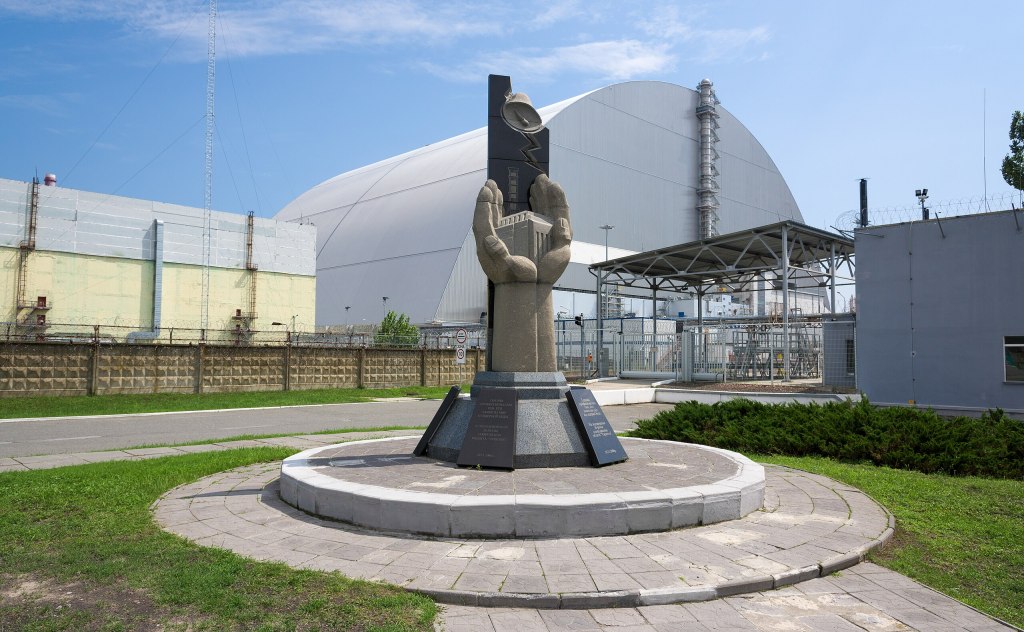
The Chornobyl Dome, now damaged by a Russian drone attack, and a memorial at the site. 
(Photo: Hnabel/Wikimedia Commons)

Worse still, we are now facing a concerted effort by the Trump administration to emasculate already weak radiation protection standards, once again ignoring females who are most vulnerable to harm, and especially pregnant women, babies and children. 

Through yet another executive order accelerating nuclear power expansion while sparing the industry the costs it should incur to guarantee safety (an impossibility anyway), the White House wants to abandon the long-held Linear No Threshold (LNT) model.

LNT holds that radiation damage increases with higher exposures, and that harm is posed by all radiation exposure no matter how small. But LNT itself is already unsatisfactory, since health studies continue to indicate that more — not less — protection is needed for non-cancer impacts, and for radionuclides taken internally, than is already provided by applying LNT.

This is what makes the perpetual focus on “who died” when it comes to major nuclear accidents, fundamentally the wrong question. We will likely never know who or how many died as a result of the Chornobyl disaster. Registries and statistics weren’t kept, people moved around, and, as is so often the case, illnesses were ascribed to other causes. Certainty is hard to achieve.

Nevertheless, perhaps one of the most important pieces of research on the health realities of the Chornobyl aftermath was done by historian Kate Brown in her book Manual For Survival. A Chernobyl Guide to the Future. It looks like a “hefty tome”, but it is anything but. Despite being nonfiction, it reads like a page-turning thriller and some of what she uncovers is eye-stretching. And, of course, by saying “uncovers,” we immediately understand that this was indeed a cover-up, first by the then Soviet Union, and then compliantly perpetuated by the United States and other western allies eager to avoid any shocking realization by the general public that nuclear power technology is phenomenally dangerous and human beings are liable to lose control of it, with disastrous results.

This returns us to the question about the protracted harm that can be caused if something goes very badly wrong at a nuclear power plant. And it returns us to dispensing with the wrong question, which is “how many people died?”

That wrong question, a favorite of headline writers and spin doctors, sets us on a perpetual path to dispute. The health figures, especially fatalities, have become the most misrepresented statistic related to the Chornobyl disaster. But focusing only on fatalities also serves to diminish the disaster’s impact. Nuclear power plant accidents often do not kill people instantly and sometimes not at all. It can take years before fatal illnesses triggered by a nuclear accident take hold. This creates a challenge in calculating just who eventually died due to the accident and who suffered non-fatal consequences.

Exposure to ionizing radiation released by a nuclear power plant (and not just from accidents but every day) can cause serious non-fatal illnesses as well. These should not be discounted. Arguably, neither should post-accident psychological trauma. Nuclear power plant accidents can and should be prevented. The only sure way to do so is to close them all down. Otherwise we risk another Chornobyl, or Three Mile Island, or Fukushima.

In our Thunderbird newsletter of 2018, we examined some of the key myths around the impacts of the Chornobyl disaster now 40 years ago. Below, is a synopsis of some of the key points, as they bear repeating and remain perpetually true. The full document can be read here.

What happened?

On April 26, 1986, Unit 4 at the Chornobyl nuclear power plant exploded. That explosion and the resulting fire, lofted huge amounts of radioactivity into the atmosphere. Unit 4 was relatively new, having only been in service for just over two years. The accident occurred during what should have been a routine test to see how the plant would operate if it lost power. The test involved shutting down safety systems but a series of human errors, compounded by design flaws, instead set in motion a catastrophic chain of events.

After shutting down the turbine system that provided the cooling water to the reactor, the water began boiling and workers desperately tried to re-insert control rods to slow down the nuclear reaction. But the rods jammed and control of Unit 4 was irrevocably lost. The explosion and fire — which took five months to put out — dispersed at least 200 times more radioactivity than that produced by the Hiroshima and Nagasaki bombs. The fallout contaminated several million square kilometers of land in the former Soviet Union and in Europe and was also detected in the US. 

Soviet authorities were slow to react. The accident was first detected by monitors in Sweden. The nearby city of Pripyat was not evacuated immediately. By the time they did so, radioactivity levels were 60,000 times higher than “normal”. 

The financial cost of the accident, while difficult to calculate given the many unknowns, is estimated to be in the region of $700 billion and is expected to keep rising.

The Liquidators 

The Chornobyl liquidators were dispatched to the stricken nuclear plant in the immediate aftermath, as well as for at least the subsequent two years, to manage and endeavor to “clean up” the disaster. They included military as well as civilian personnel such as firefighters, nuclear plant workers and other skilled professionals.

While estimates of the number of liquidators varies, the generally accepted figure is around 800,000. However, evaluating their fate has been difficult. Only a small portion of them were subject to medical examinations. 

A memorial to the Chornobyl liquidators.

Yet, by 1992 it was estimated that 70,000 liquidators were invalids and 13,000 had died. These estimates rose to 50,000 then to 100,000 deaths among liquidators in 2006. By 2010, Yablokov et al. estimated a death toll of 112,000 to 125,000 liquidators.

Even the Russian authorities admit findings of liquidators aging prematurely, with a higher than average number having developed various forms of cancer, leukemia, somatic and neurological problems, psychiatric illnesses and cataracts.

The UN Office for the Coordination of Humanitarian Affairs found a statistically significant increase of leukemia among Russian liquidators who were in service at Chernobyl in 1986 and 1987.

General populations inside and outside the former Soviet Union 

As with the liquidators, tracking the health of general populations exposed to the plume pathway of Chornobyl has been problematic. Within the Soviet Union, people moved away and neither they nor many living in other affected countries were tracked or monitored. While countless numbers may have died from their Chornobyl-related illnesses, equal or even greater numbers may have survived with debilitating or chronic physical as well as mental illnesses caused by the accident. 

Establishing exact numbers may never be possible. Media reports often rely on the 2003-2005 Chernobyl Forum report produced by the nuclear promoting International Atomic Energy Agency. The agency ignored its own data that indicated there would be 9,000 future fatal future cancers in Belarus, Russia and Ukraine, claiming there would be no more than 4,000. Both numbers are gross underestimations. The report focused only on the most heavily exposed areas in making its predictions. It ignored the much larger populations in the affected countries as a whole, and in the rest of the world, who have been exposed to lower but chronic levels of radiation from Chornobyl.

In contrast, a comprehensive analysis by the late Soviet scientist, Alexey Yablokov and colleagues, examined more than 5,000 Russian studies. They concluded that almost a million premature deaths would result from Chornobyl. Meanwhile, the TORCH report (The Other Report on Chernobyl), by Dr. Ian Fairlie, predicts between 30,000 and 60,000 excess cancer deaths worldwide due to the accident.

Chornobyl’s Children artwork by Thierry Ehrmann/Creative Commons. 
Children are especially susceptible to harm from radiation exposure but a new White House executive order will
 weaken already inadequate protection standards for the most vulnerable.

More than half the Chornobyl fallout landed outside of the Ukraine, Belarus and Russia — in Europe, Asia and North America. Fallout from Chornobyl contaminated about 40% of Europe’s surface. Immediately after the accident, thyroid cancer was particularly rampant in Belarus, Ukraine and Russia, where no prophylactic remedy in the form of potassium iodide pills was offered. Consequently, as Baverstock and Williams found in 2006, “by far, the most prominent health consequence of the accident is the increase in thyroid cancer among those exposed as children . . . particularly in children living close to the reactor.”

In contrast, Poland, where potassium iodide was distributed, experienced relatively low rates of thyroid cancers. While thyroid cancer is considered one of the more treatable kinds of cancers, this does not mean it should be viewed as an acceptable consequence of a nuclear power plant accident. Such diseases — especially among children — impact emotional, social, and physical wellbeing. In the former Soviet Union, those operated on bear a scare referred to grimly as the “Chornobyl necklace.”

Dr. Wladimir Wertelecki, a physician and geneticist, has conducted research, particularly focused on Polissia, Ukraine. There he found clear indications of altered child development patterns, or teratogenesis. Wertelecki noted birth defects and other health disturbances among not only those who were adults at the time of the Chornobyl disaster, but their children who were in utero at the time and, most disturbingly, their later offspring.

Important research has also been conducted on psychological effects. Pierre Flor-Henry and others examined some of the psychological disorders resulting from Chornobyl and found a clinical pathology related to radiation exposure. Flor-Henry found that schizophrenia and chronic fatigue syndrome among a high percentage of liquidators were accompanied by organic changes in the brain. This suggested that various neurological and psychological illnesses could be caused by exposure to radiation levels between 0.15 and 0.5 sieverts.

There are of course many other non-cancerous diseases caused by nuclear accidents that release radioactivity. A peak in Down Syndrome cases was observed in newborns born in 1987 in Belarus, one year after the Chornobyl nuclear accident. This phenomenon has been found around other nuclear sites. Abnormally high rates of Down Syndrome were found in the Dundalk, Ireland population possibly tied to the operation of the Sellafield nuclear waste reprocessing plant across the Irish Sea in Cumbria, England.

Read full Thunderbird: Chornobyl: The Facts.

Linda Pentz Gunter is the Executive Director of Beyond Nuclear and writes for and edits Beyond Nuclear International. She is the author of the book, No To Nuclear. Why Nuclear Power Destroys Lives, Derails Climate Progress And Provokes War, published by Pluto Press. Any opinions are her own.

Headline photo: Jorge Lascar/Creative Commons.