Sunday, May 10, 2026

White House lashes out at ‘sick’ Star Wars actor Mark Hamill for AI post of dead Donald Trump
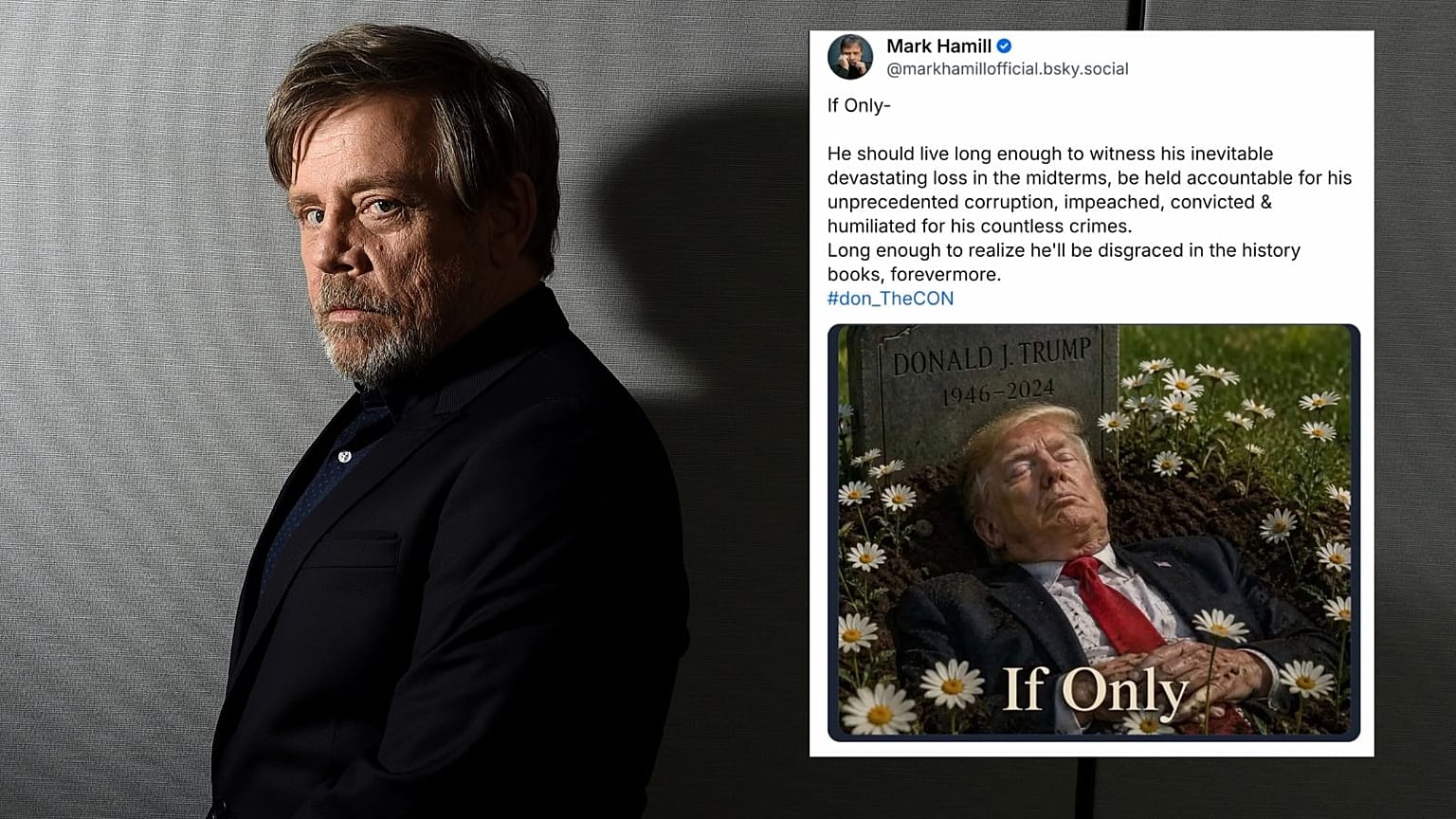
Trump administration lashes out at ‘sick’ Star Wars actor Mark Hamill for AI post of dead president
Copyright AP Photo - bsky screenshot Mark Hamill


By David Mouriquand
Published on 

The White House has called Mark Hamill a “sick individual” after the Star Wars actor posted an image of Donald Trump in a grave on social media.

The Trump administration has lashed out at Star Wars actor Mark Hamill for posting an image on social media of Trump dead in a grave.

The White House claims that the image and rhetoric inspire security threats.

“Mark Hamill is one sick individual,” the White House wrote in a post on X. “These Radical Left lunatics just can’t help themselves. This kind of rhetoric is exactly what has inspired three assassination attempts in two years against our President.”

The Luke Skywalker actor posted what appeared to be an AI image of Trump on Bluesky, featuring the president in an open grave. The image included the caption “If Only” and a headstone showing his date of death as 2024.

“If Only - He should live long enough to witness his inevitable devastating loss in the midterms, be held accountable for his unprecedented corruption, impeached, convicted & humiliated for his countless crimes,” Hamill wrote in an accompanying post. “Long enough to realize he'll be disgraced in the history books, forevermore. #don_TheCON.”

Hamill deleted the image and issued further clarification: “Accurate Edit for Clarity: ‘He should live long enough to... be held accountable for his... crimes,’” Hamill wrote on Bluesky. “Actually, I was wishing him the opposite of dead, but apologize if you found the image inappropriate.”

The image comes after a man was charged with the attempted assassination of Trump in a shooting at the White House Correspondent’s Association dinner last month.

Days after the shooting, Melania Trump demanded that talk show host Jimmy Kimmel be fired, as the comedian joked days prior to the incident that the first lady had a "glow like an expectant widow".

Kimmel responded to criticism of his joke by saying it was merely a reference to the couple's age difference.

Melania Trump’s comments massively backfired online, with many accusing her of hypocrisy and pointing out a massive double standard, as Trump frequently lashes out with violent rhetoric and images aimed at his opponents.

Recently, during the course of the Iran war, he posted an image of himself holding a machine gun and threatened that a “whole civilization will die” unless Tehran agrees to his demands.

Last year, he shared an AI-generated video of himself bombing No Kings protestors and an AI image riffing on the war film Apocalypse Now.

Elsewhere, and Star Wars related, Trump posted another unsual image on May 4 – Star Wars day.

The White House shared an image of Trump as the Mandalorian (with Grogu in tow, looking like he wants to be anywhere else). Trump holds an American flag in one hand (which notably has only 11 red and white stripes as opposed to 13) and is pictured without the Mandalorian helmet on his head (a big no-no in the Mandalorian code, if Trump knew anything about the cultural references he was riffing on).

"In a galaxy that demands strength - America stands ready," the White House wrote. "This is the way. May the 4th be with you."

The post was met with backlash, with Star Wars fans blasting Trump.

"This has caused a major disturbance in the force today. Yikes," someone wrote online, while another said: "Please tell me there will be a lawsuit."

This wasn’t the first time the White House shared Star Wars-inspired imagery of Trump. Last year, they posted an image of a distressingly muscular Trump holding a red lightsaber.

"Happy May the 4th to all, including the Radical Left Lunatics who are fighting so hard to bring Sith Lords, Murderers, Drug Lords, Dangerous Prisoners, & well known MS-13 Gang Members, back into our Galaxy. You’re not the Rebellion - you’re the Empire," the caption read.

Once more, Trump and his administration failed to fully grasp the cultural implications of the image, as red is the chosen colour of the villainous Sith Lords. Star Wars creator George Lucas once said regarding lightsaber colours: “Good guys are green and blue, bad guys are red.”

Hardly rocket science.

As one X user pointed out: “The lack of self awareness and hypocrisy by calling the left ‘the empire’ while showing Trump with a Sith lightsaber.”


Blonde, fervent and fake: Can AI-generated


Trump fans boost him in the midterms?

Clad in swimsuits or sometimes military fatigues, the mostly blonde women lavish praise on US President Donald Trump and vilify his rivals. But these Trump fans are AI-generated, flooding tech platforms with fervent but fake political messaging ahead of the November US midterm elections.


Issued on: 10/05/2026 
By: FRANCE 24


Researchers are warning against AI influencers that seek to influence US voters. © Chris Delmas, AFP


Hyper-realistic AI avatars parroting Donald Trump slogans like "America First" and echoing MAGA talking points on immigration are increasingly present on the American political scene, underscoring how new technologies can be used to energise and manipulate voters.

"Where are all my MAGA friends at? If you voted for Trump, say it loud in the comments and you've got yourself a new follower from Texas," an AI-generated woman sporting a red MAGA hat declares on TikTok.

"Trump is the future of America," reads text overlaid on another AI-generated TikTok video depicting a teenage girl on a beach, a US flag fluttering in the background.

In an Instagram clip set to the Village People's "YMCA", an avatar portraying a "MAGA patriot" says she "came out of the closet as a Trump supporter".


It's not clear who is behind the AI accounts and whether they are part of a coordinated influence operation ahead of the November elections that will determine whether Republicans maintain control of Congress.

Trump began really embracing AI-generated images last year, including pushing unfounded corruption allegations against California's Democratic Governor Gavin Newsom and a blatantly racist post, later deleted, depicting former president Barack Obama and first lady Michelle Obama as apes.


'Shape public opinion'

US media have detected hundreds of AI-generated pro-Trump influencers in recent months – young men and women depicted in military fatigues or dressed as immigration agents – commenting on hot-button political issues including abortion and the Iran conflict.

The Governance and Responsible AI Lab (GRAIL) at Purdue University has also tracked numerous such accounts across TikTok, Instagram and Facebook.

"The growing wave of political AI influencers amid the 2026 elections is a glimpse into a future where hyper-targeted AI content can be used to shape public opinion," Andrew Yoon of CivAI, a nonprofit focused on AI's capabilities and dangers, told AFP.

Such content is "increasingly difficult to detect, especially when made by sophisticated operators", Yoon said.

As AI technology becomes more and more sophisticated, online manipulation using phony influencers could "become even more personalised and difficult to control", he added.

One AI influencer on Instagram – featuring a lifelike female soldier posing alongside Trump – amassed nearly a million followers before she was revealed to be AI and the account was suspended.

Referring to the synthetic soldier, Justine Moore, an AI-focused partner at Silicon Valley investor Andreessen Horowitz, wrote on X: "I'm genuinely floored by how many dudes are following influencers that are clearly AI."

These pro-Trump influencers slap lifelike human faces on disinformation – pairing them with realistic voices and talking points and thus creating the illusion of a legitimate political movement.
Political themes, financial motives

Disinformation typically surges around elections, propelled by automated bots, trolls and phony accounts that amplify false narratives and push them into mainstream political discourse.

The potential for manipulation is multiplying with AI. And few regulations exist to stop it.

Researchers warn that AI deepfakes – which have already been used to target global leaders including French President Emmanuel Macron and Ukraine's President Volodymyr Zelensky – can influence voter turnout and distort geopolitical events.

While promoting Trump, some AI influencers also appear focused on boosting engagement, attracting followers and promoting commercial products.

The bio of one pro-Trump AI influencer on Instagram directed users to a website selling MAGA-themed artwork priced at up to $500.

"Many of them are driven by commercialisation goals, using politics as a means rather than an end," Daniel Schiff, an assistant professor at Purdue University and co-director of GRAIL, told AFP.

As election season approaches, Schiff said he expects a rise in AI-generated messaging. Despite the political themes, he says "financial profit" will likely be the primary goal behind generating digital influencers.

(FRANCE 24 with AFP)


Malian filmmaker captures disappearing Tuareg culture and traditions

In Undertows: A Tuareg Tale, Malian film director Intagrist el Ansari captures the way of life of his people – the Tuaregs. Filmed over 10 years in nomadic settlements and refugee camps, the documentary bears witness to a world "that no longer quite exists".


Issued on: 10/05/2026 - RFI

In his documentary Undertows: A Tuareg Tale, filmmaker Intagrist el Ansari preserves the words of his elders. © Intagrist el Ansari / Prosodie Films

The stars of the documentary Undertows: A Tuareg Tale are between 60 and 90 years old – the uncles, friends and role models of the film’s director, Intagrist el Ansari, a descendant of the Kel Ansar, the ruling tribe of the Timbuktu region in northern Mali.

Released this week in France, the film is structured as a letter to his son, and traces the history, resistance and culture of the Tuareg people.

Nomads and herders deeply connected to the land, the Tuareg have inhabited the Sahara for centuries. Today, however, their traditional way of life is under threat from political instability, drought and forced settlement.


Undertows: A Tuareg Tale – Trailer


Traditions under threat

“Clearly, the Tuareg world as it existed until the 1980s, as I knew it, can no longer survive in that form,” the filmmaker told RFI.

“All the children of this generation, born in exile and into a scattered Tuareg world, will at some point ask themselves who they are,” he says. “The film offers some answers.”

Over the course of two hours, the documentary explores Tuareg traditions, knowledge and ways of life – particularly their nomadic culture, increasingly eroded by drought and displacement.

Still from "Undertows: A Tuareg Tale". © Prosodie Films


Mali Tuareg peace deal raises hopes but faces challenges

“After the great era of caravan trade, the Tuareg world relied primarily on livestock farming,” el Ansari explains. “But the Sahel and Sahara were among the first regions to be clearly affected by climate change.

“And the major consequence for Tuareg communities has been the decimation of their herds. Without livestock, there is no longer any reason to follow the transhumance routes," he added, referring to ancient, seasonal migration paths used by shepherds.

But the erosion of Tuareg life did not begin with climate change. Colonisation and regional conflict also profoundly reshaped their society.

“There is a divide within the Tuareg world,” el Ansari says. “During colonisation, the Tuareg communities of the north were cut off from those of the south, as colonial powers reorganised Africa between North and West Africa. After decolonisation, that divide deepened further, as borders were drawn between the newly independent states.”

Undertows: A Tuareg Tale mourns this disappearing world, while displaying a determination to keep its memory alive. As el Ansari says, people disappear but their legends remain.

This article has been adapted from this article in French and this interview by Léa Boutin-Rivière.


Dozens killed in jihadist attacks in central Mali

Jihadist fighters launched a fresh wave of deadly attacks in central Mali that killed dozens of people, local and security sources said on Saturday. One local official said the latest attacks brought the death toll to more than 70 in recent days, as Islamist armed groups intensify assaults on villages across the region.


Issued on: 10/05/2026 - 
By: 
FRANCE 24 


Malian soldiers stand near a truck during a patrol following the attack on Mali's main military base Kati, outside the capital Bamako, in Kati, Mali, April 27, 2026. Picture taken with a mobile phone. © Stringer, Reuters

A fresh wave of attacks by jihadist fighters in central Mali killed dozens of people, local and security sources said Saturday.

Friday's attacks were claimed by the al Qaeda-linked Group for the Support of Islam and Muslims (JNIM), who had already killed at least 30 people in attacks on villages on Wednesday.

One local official said the latest attacks by the armed groups had brought the toll to more than 70 in recent days.

Another local official put the death toll at 80.

"Our hearts are bleeding," one local youth leader said, accusing nearby army detachments of doing nothing to help, despite multiple calls.

One security source described the situation in the region as "worrying". "JNIM is targeting villages that refused to sign local agreements," the source added.

The latest attacks come after JNIM and the Tuareg-dominated Azawad Liberation Front (FLA) carried out an unprecedented assault against the ruling junta in Mali last month.

Since then, Mali's security situation has become critical, with several areas in the north now controlled by armed groups.

(FRANCE 24 with AFP)
Togo’s fight against centuries-old map revives debate over African representation

A plan by Togo to ask the United Nations General Assembly in September to move away from the Mercator world map has revived a broader debate over how different projections can shape perceptions of Africa.


Issued on: 10/05/2026 - RFI

Africa’s representation on world maps is under renewed focus, as Togo challenges the use of a centuries-old projection. 
ASSOCIATED PRESS - Charles Rex Arbogast

By:Anne-Marie Bissada

The proposal was approved by the African Union in April after leaders raised the issue during the bloc’s February summit, backing a campaign to replace the long dominant Mercator projection with one that more accurately reflects the true size of the world's continents – especially Africa.

Faya Ndiaye, co-founder and deputy executive director of advocacy organisation Speak Up Africa, argues that distorting the true size of countries on maps can quietly shape how people view who matters in the world.

“I think it’s important to note that maps are not neutral," she told RFI.

Of the widely used Mercator map, she said: “Greenland appears almost as large as Africa, when in reality Africa is 14 times larger."

Shaping perceptions


For Africa, Ndiaye said, being shown as smaller than its true size can send a damaging message about the continent’s importance – and even cause it to be sidelined in negotiations.

The African Union published a decision during its February summit backing the use of the Equal Earth wall map – despite the Mercator outline still appearing in its own logo.

“The Mercator cartographic projection distorts the real size of the African continent, influences perceptions, and negatively affects the objective assessment of Africa’s economic viability,” it said in a statement.


The Equal Earth map. © Tom Patterson


Geography remains one of several enduring markers that continue to shape perceptions of Africa, said Carlos Lopes of the Mandela School of Public Governance at the University of Cape Town, South Africa.

Lopes – one of the academics behind the Correct the Map project, which was established in 2025 with Africa No Filter, a group focused on changing global narratives about Africa – says the way the continent is viewed is still influenced by how the world is drawn.

“There are some markers that continue to be used that influence the views about the continent,” he told RFI. “One of those markers is the way we look into geography.”


Mercator legacy

Still widely used around the world, the Mercator projection was first drawn in 1569 by Flemish geographer Gerardus Mercator. It transformed navigation by helping sailors chart more direct routes across oceans, by representing compass directions as straight lines.

Its design was a major scientific breakthrough at the time, but critics say its lasting dominance also reflects the values of a period in which European powers placed themselves at the centre of a colonial world view.

“Maybe [the Mercator map] was not meant to minimise Africa, but we know that it was important for European powers to place Europe as the centre of the of the world,” Ndiaye said.

In the 1500s, its creation was “amazingly progressive," said Lopes, describing it as an ambitious effort to design a map that brought the world together.

“But that’s the 16th century, it’s not today,” he added. “It can only be justified in the name of comfort and in the name of the power dynamics of that time. Keeping the same mentality in today’s world is not acceptable because we know better.”


Gall-Peters Projection


The debate over map projections is linked to wider efforts to correct narratives about Africa.

During struggles for independence by colonised African countries in the 1950s and '60s, efforts to reduce colonial markers often focused on changing the names of streets and even the countries themselves.

In 1957, for example, when the British colony known then as the Gold Coast gained its independence, it took the name Ghana to honour its ancient Ghana empire. Following its independence from the United Kingdom in 1980, Zimbabwe changed its name from Rhodesia, and the name of its capital from Salisbury to Harare.

But the debate over how Africa as a whole was represented largely remained within academic circles, said Ndiaye.

That changed when cartographers proposed the Gall-Peters Projection. James Gall, a Scottish clergyman and cartographer, had first outlined the map in 1855, but Arno Peters, a German historian, revived the idea and brought it to international attention in the early 1970s.

Peters argued that the Gall-Peters map was a socially just projection because it preserved equal-area projection – the true relative size of landmasses.

He pushed the name "Peters World Map", saying it was easier to brand, and tied this directly to his campaign to change the world map.

The Peters projection map of the world. © By Strebe (Wikimedia Commons)


“The Peters Projection was actually quite popular with the UN,” said Lopes. “A lot of UN agencies [began] producing maps using the Peters Projection.”

Peters officially presented his map in 1973, including on it a legend to help people understand why it looked different from the more familiar Mercator version.

It was adopted throughout the mid-1970s and 1980s by agencies including the UN's Unesco and Unicef and the World Council of Churches, and remains widely used by schools across the United Kingdom and in parts of the United States.

However, while the Peters World map fixed one problem – land area distortion – it introduced another: shape distortion. For example, countries near the equator such as the Democratic Republic of Congo and Indonesia appear tall and narrow, while high-latitude countries such as Canada and Russia appear flattened and widened.

While UNESCO and UNICEF continue to use the Peters projection, there has been pushback against it since the 1980s.

In 1989, several geographic organisations, including the National Geographic Society in the US, the American Cartographic Association (now the Cartography and Geographic Information Society) and the National Council for Geographic Education, came together to call for a ban on all rectangular coordinate maps, including Peters projection.

Today’s campaign, Ndiaye said, aims to move the debate beyond academia and into public discussion so Africans can “take full ownership over how our continent is being represented globally”.

Women's board share at Germany's largest listed firms dips again

08.05.2026, DPA

A woman sits among numerous men at Hotel Adlon in Berlin - FILE PHOTO - A woman sits among numerous men at the Family Business Day 2024 at the Hotel Adlon. (zu dpa: «Women's board share at Germany's largest listed firms dips again»)

Photo: Bernd von Jutrczenka/dpa

The share of women on supervisory boards at Germany's largest listed companies among shareholder representatives has declined for a second consecutive year, according to an analysis by recruitment consultancy Russell Reynolds.

The proportion fell by 0.1 percentage points to 38.3% during the current round of annual general meetings. Among newly appointed board members, the share dropped to 32%, the lowest level recorded this decade. 

The companies in question are listed on Germany's DAX index, which tracks Germany's 40 largest listed firms by market capitalization.

The data marks a reversal over the past two years after 15 years of steady gains in female representation, which rose from around 7% to more than 40% by 2024. 

One possible explanation is shorter tenure among female board members. Women leaving or set to leave supervisory boards this year served an average of 5.4 years, compared with 9.5 years for men, the study found.

Jens-Thomas Pietralla of Russell Reynolds said that the lack of progress toward parity for two consecutive years was not a positive development, especially as it countered broader European trends. Pietralla added that women also remained underrepresented in key leadership positions.

The study suggests past inequality is now feeding into current disparities. 

In uncertain times, companies tend to prefer candidates with chief executive experience, Pietralla said. As relatively few women have held chief executive roles at DAX firms, the pool of eligible female candidates is smaller, he added.

At the top level, however, female representation has improved slightly. Following Sabrina Soussan's recent appointment as chair of the supervisory board at Continental, five of the boards are now chaired by women. If Amparo Moraleda takes over the supervisory board at Airbus from René Obermann in October, that number would rise further, lifting the share to 15%.

Have posters for Kneecap’s album ‘Fenian’ been censored by London transport?

Posters for Kneecap’s new album ‘Fenian’ censored in London transport
Copyright Heavenly - Canva

By David Mouriquand
Published on 


The band’s manager Daniel Lambert has claimed that Transport For London would not allow promotional posters for Kneecap's new album 'Fenian'.

Warning: This article contains language some readers may find offensive.

Irish hip-hop trio Kneecap are no strangers to controversy, as evidenced by their recent legal woes, which eventually saw the charges against member Mo Chara dropped, with the UK government losing its appeal.

However, beyond the headlines, they can back up their engaged verve with artistic mastery, as their new album ‘Fenian’ can attest.

However, Transport For London (TfL) doesn’t seem to be letting them off the hook.

The band’s manager has said that the posters for ‘Fenian’ had to be censored as the local government body responsible for most of the transport network in London would not allow them.

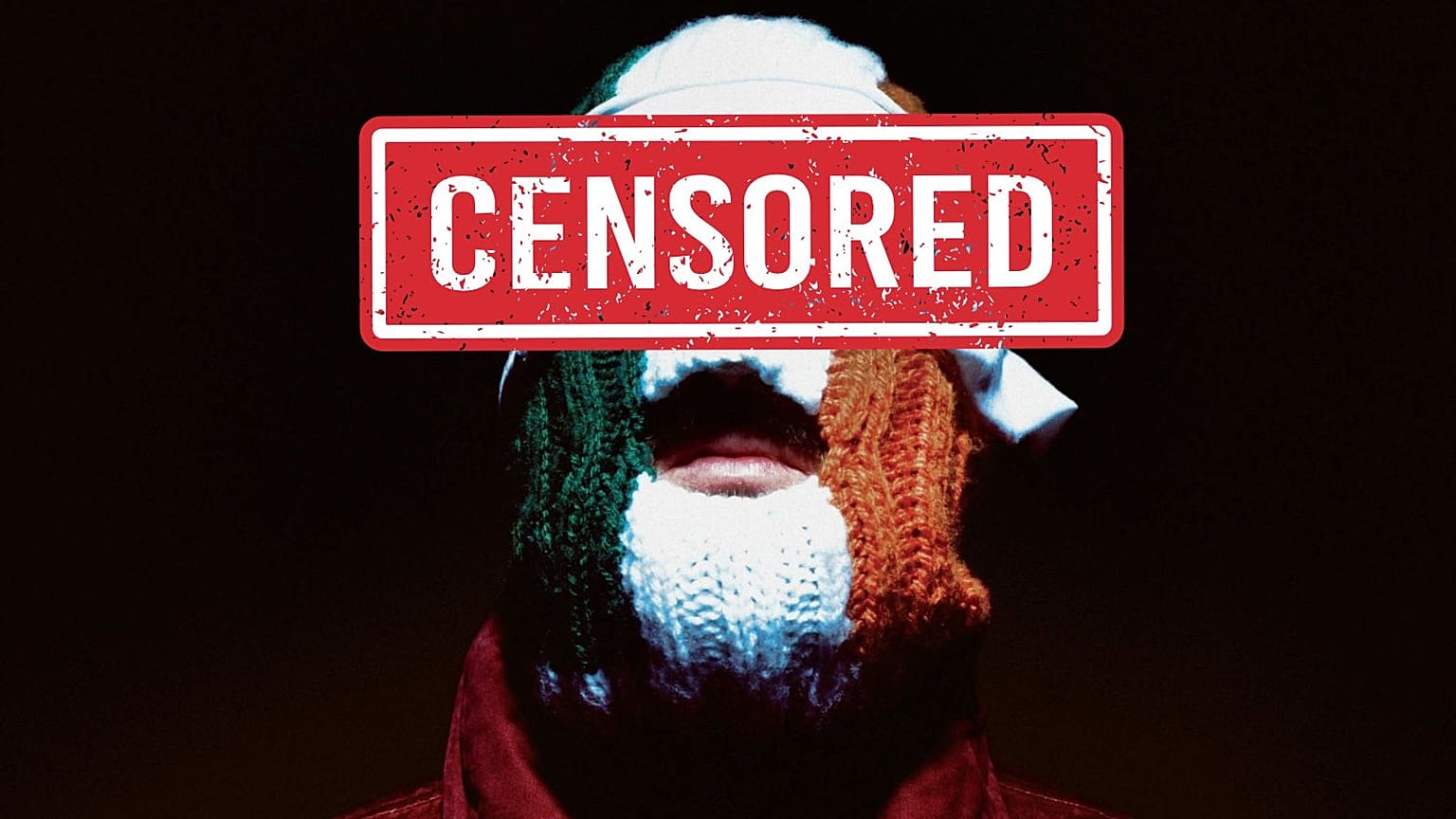
Daniel Lambert has claimed that they had to censor the promotional posters, which originally featured the album artwork, the title, and review pull quotes – including one from UK Prime Minister Keir Starmer, who branded Kneecap as “completely intolerable”.

Kneecap - Fenian album cover
Kneecap - Fenian album cover Heavenly

Lambert revealed on X that the design was not permitted by TfL and that they had to submit amended versions that censored both the word ‘Fenian’ and the Keir Starmer’s name.

TfL shared a statement with Belfast Telegraph, claiming that they had only ever received the censored version, and did not ask the band’s management to make any adjustments.

“The redacted style of the poster reflects the version that was submitted to us for approval. We did not request any changes to the artwork before the current advertising campaign commenced,” a TfL spokesperson told the outlet.

However, Lambert claims that the band was rejected when they put forward the non-censored design.

“The company we book London tube ads with confirmed our original artwork was NOT accepted by TFL & ‘FENIAN’ had to be removed,” he wrote. “We then provided a redacted poster – took a week for approval and deadlines missed. Delay was then TFL making the decision to even approve redacted one.”

Lambert added in a subsequent post: “The facts here are pretty clear. I said they ‘only accepted with them blanked out’. Which is true and accurate”.

The post included a screenshot of an email with the subject “KNEECAP Tube Ads’ with a response that read: “I can confirm TFL will not allow the word FENIAN to be displayed unfortunately. All ads have to be completely impartial and non-political of any movement.”

Despite their criticism of England, Starmer and the UK justice system, what could possess TfL to ban the image?

It could be something to do with the word “Fenian”, which refers to the 19th-century Irish revolutionaries who fought to overthrow British rule to achieve an independent Irish republic.

The term has been used as an insult. However, the album 'Fenian' sees Kneecap reclaim the word.

In the informative, tongue-in-cheek and foul-mouthed liner notes for ‘Fenian’, the band provide some context for the word: “Origin: name of an ancient Irish people. Historical: Irish Republican revolutionaries that fought for Irish independence from the British Empire (and the church). Modern: Member of a secret socialist society of sound cunts active globally. Offensive: A derogatory term for an Irish nationalist - ‘You Fenian cunt’.”

Released on 1 May, Euronews Culture called the album “engrossing”, “incredibly catchy” and “a masterful album”.

“Yes, they rap about “international law they were abusing”. Yes, they’ve provoked tabloid outrage. And yes, they’ve released ‘Fenian’, a masterful album which proves they know exactly what they’re doing, and that they have the range to match their verve.”

Read the full review here.

This is not the first time that an advert for the band has been banned in London.

Last year, the trio said that they were “banned” from advertising one of their posters on the London Underground.

TfL deemed the Kneecap poster, showing their frequently used logo depicting a balaclava, "would likely cause widespread or serious offence to reasonable members of the public".

In an Instagram post, the group shared a picture of the offending poster.

“[It] has been rejected because: ‘it is likely to cause widespread or serious offence to reasonable members of the public on account of the product or services being advertised, the content or design of the advertisement, or by way of implication’,” they wrote. “See it. Say it. Censored.”

The group, longtime supporters of Palestine, suggested at the time that they had been repressed for speaking up about the ongoing genocide in Gaza.

“Speak out against genocide and they’ll use every single angle they can to silence you. Join the IOF [pejorative term for the Israeli Defence Force], murder kids, fly to London and nothing happens – you’ll be welcomed and applauded.”

Kneecap’s ‘Fenian’ is out now.


'David Attenborough Effect': Meet the wildlife artists inspired by the legendary broadcaster

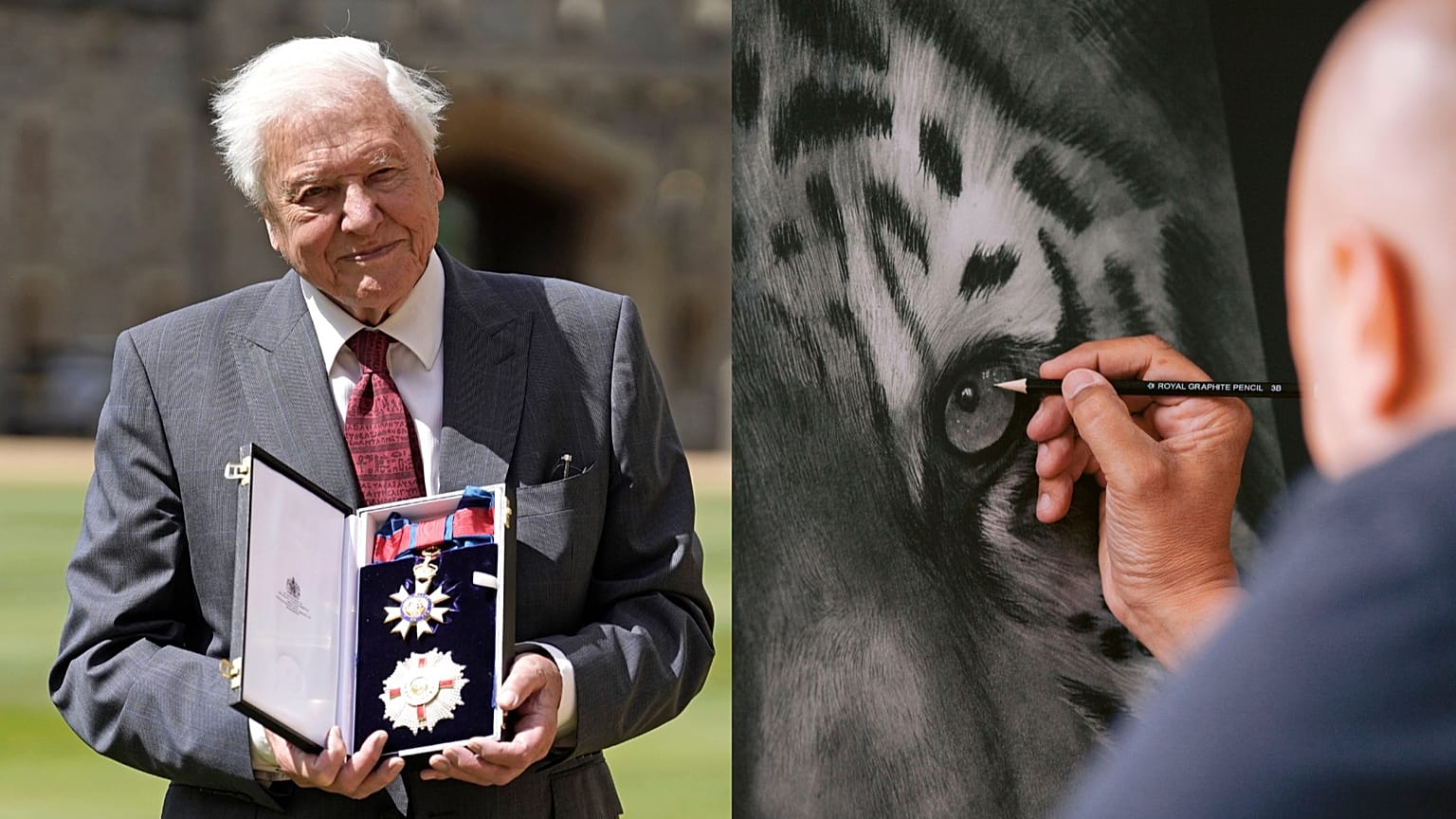
David Attenborough (left) and Skip Khangurra (right).
Copyright AP Photo and Libra Fine Arts.

By Liam Gilliver
Published on 

As David Attenborough turns 100, Euronews Earth explores the real-life impacts of his extraordinary career.

Sir David Attenborough will likely go down in history as the most treasured wildlife broadcaster on planet Earth – and tomorrow, he turns 100

Starting his TV career as a trainee producer for the BBC in 1952, Attenborough oversaw the first-ever colour broadcast in Europe, and quickly became the leading voice of the world’s most popular nature documentaries.

To date, he has written, presented or narrated more than 100 films, including the award-winning ‘Life’ series which tracks the “extraordinary ends” to which animals and plants go in order to survive.

Alongside his melodic storytelling and clear passion for the natural world, Attenborough has ended up inspiring a new generation of conservationists, animal-lovers, and environmental activists.

The ‘David Attenborough Effect’

Attenborough’s work is so persuasive that fans have coined the term ‘the David Attenborough Effect’, demonstrating how the issues he highlights in his work have brought about real change.

A 2019 poll by GlobalWebIndex, which surveyed 3,833 people in the US and the UK, found that when Attenborough issued a call to action to combat plastic waste in the second series of Planet Earth, searches for “plastic recycling” spiked by 55 per cent in the UK.

In the wake of the documentary, survey participants reported a 53 per cent drop in their single-use plastic consumption.

But it isn’t just ordinary people sitting at home watching TV who have been inspired by Attenborough’s work.

Following galvanising footage of bottom trawling in ‘Ocean’ – where boats drag heavy, weighted nets across the seabed to catch fish and kill everything in their wake – a ban on deep-sea fishing in parts of the Atlantic rich with marine life was upheld by the EU’s General Court.

David Attenborough is a ‘constant source of inspiration’

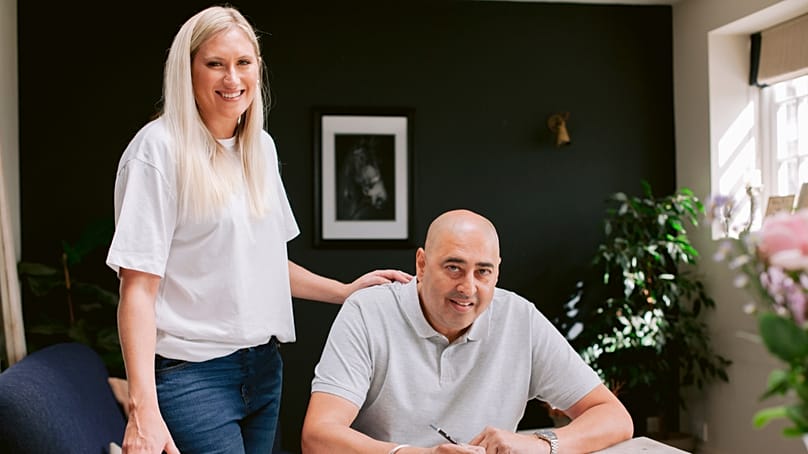
Artists Skip and Katherine Khangurra lives were changed by the David Attenborough effect. They set up their company Libra Fine Arts after watching the broadcaster’s shows.

“We both grew up watching Attenborough’s programmes on TV, captured by his remarkable voiceovers,” Katherine, 42, tells Euronews Earth.

“Skip, 57, is often inspired to draw after watching a series – whether it’s penguins from ‘Frozen Planet’ or gorillas from ‘Gorillas Revisited’. The filmmaking in these programmes is extraordinary, revealing incredible detail in every scene, sometimes even down to the individual hairs of each animal.

Katherine (left) and Skip (right) Supplied by Libra Fine Arts

The couple, who live in Windsor, England, say Attenborough’s work has been a “constant source of inspiration” for them, as it has been for many other artists around the world.

They once gifted Attenborough some of their wildlife cards, and received a “beautiful” handwritten note in response. “The time and care he put into writing to us personally really touched us,” Katherine says.

The next generation learning about wildlife

Now, Katherine and Skip use their art as a learning resource for families – helping parents to teach their children the names of different species and their traits and “connect” with wildlife.

“It’s wonderful to watch those moments of curiosity and connection, and especially lovely to see the next generation learning about animals and building that connection for the future,” Katherine says.

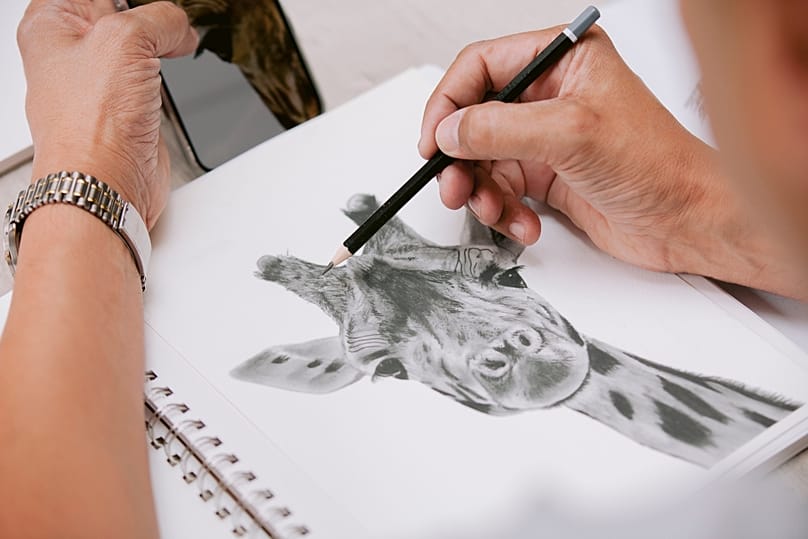
Skip drawing a giraffe. Supplied by Libra Fine Arts.


A 2022 study of 842 primary school students, which was published in the science journal Global Ecology and Conservation, found that children's willingness to conserve wild animals was positively associated with both direct (time spent outdoors) and indirect (watching nature programmes or reading nature books) nature contact frequency, their knowledge of species, and their likeability of species.

“Children's knowledge and likeability of species were also positively associated with nature contact frequency (direct and indirect forms),” the study states.

“Therefore, wildlife conservation would benefit from environmental education and child care policies that enable children to spend time outdoors and learn about nature in multiple ways.”