Saturday, May 16, 2026

'World's oldest dog' contender dies in France aged 30

Villy-le-Pelloux (France) (AFP) – A French toy spaniel named Lazare thought to have been "the world's oldest dog" has died aged 30, his carer said on Friday.

Issued on: 15/05/2026 - RFI

Lazare was 30 years and five months old © Jeff PACHOUD / AFP

AFP contacted the Guinness World Records to find out if Lazare had held the record before he passed away on Thursday, but did not receive an immediate response.

Lazare, a Papillon dwarf spaniel with stand-up "butterfly" ears, was born on December 4, 1995, according to animal charity worker Anne-Sophie Moyon.

He spent most of his life with the same owner until she died and he was then handed to the charity's shelter.

Single mother Ophelie Boudol, 29, fell in love with the animal one year her senior at the shelter last month.

She had initially intended to find a pet for her mother, she told AFP, but she invited Lazare to join her family instead.

Lazare died just weeks later.

"You were our little grandpa baby," Boudol wrote in a farewell post on Instagram.

"You chose to take your final flight in my arms on the evening of 14 May, to join your mistress who loved you so much," she said.

Ophelie Boudol, 29, fell in love with Lazare last month © Jeff PACHOUD / AFP

At 30 years and five months old, Lazare wore nappies, could no longer hear or see, and slept almost all day.

But Boudol said he was delightfully spirited.

"He really has such an endearing personality," she told AFP earlier this week as she cradled him at her home in the southeastern town of Villy-le-Pelloux.

When Moyon and colleagues discovered Lazare's age, they thought "Lazare might be the world's oldest dog", she said.

They verified his birth date in two registries, and filled in the paperwork to register him for a possible record as a joke, she added.

A Portuguese Rafeiro do Alentejo named Bobi was thought to be the oldest dog when he died reportedly aged 31 in 2023, according to the Guinness World Records website.

But a review in 2024 found there was not enough conclusive evidence of his age.
FRANCE NEEDS A NEW WAVE

France has 'responsibility' to break glass ceiling for women in film

Only five directors out of 22 at this year's Cannes Film Festival are women – two fewer than in 2025. Campaigners who want to see the film industry become more inclusive say the numbers reflect a broader gender gap in French cinema.


Issued on: 15/05/2026 - RFI

Actor Eye Haidara speaks at the opening ceremony of the 79th Cannes Film Festival, 12 May 2026. © Scott A Garfitt/Invision/AP

By: Ollia Horton


There are five women in the official competition at Cannes this year, three from France, one from Germany and one from Austria – representing 23 percent of the 22 films vying for the Palme d’Or prize.

It is progress compared to the average of 3 percent of women directors competing from 1946 to 1980, and 12 percent between 2011 and 2020.

This average went up to 25 percent between 2021 and 2025, with a record year in 2023, when six women were selected – 33 percent of the total.

Women are better represented in other categories at the festival, notably Un Certain Regard, where films by female directors from around the world make up 60 percent of the selection this year.

These categories are looking for new talent and are more daring in terms of format, but ultimately have smaller budgets, says French organisation Collectif 50/50.

The independent group produces regular industry reports in a bid to monitor and promote equality in the film and audiovisual industry, as well as greater visibility for minority groups in general.

Fanny de Casimacker, the collective's director, has been tracking the representation of women at film festivals for a number of years and while she acknowledges progress is being made, she says there is more to be done.


Responsibility to lead


"The goal ideally is to have 50 percent women in the official competition, where the power and the greatest recognition lie," she tells RFI.

The Cannes Film Festival provides a global platform to foreground issues in the industry and beyond, from gender parity to discrimination and abuse.

As one of Europe’s biggest film-producing countries, France must continue to be a leader in equality and inclusiveness, she says.

"I think it's a responsibility, when you're a major industry, to be at the forefront of social issues."

Members of the jury pose on stage during the Opening Ceremony of the 79th edition of the Cannes Film Festival in Cannes, southern France, on 12 May 2026. AFP - ANTONIN THUILLIER


Festival director Thierry Frémaux weighed in on the question in his opening press conference on Monday, dismissing the idea of mandating the inclusion of a certain number of women directors.

"Under no circumstances should there be a quota policy," he insisted, stating that festival organisers nonetheless aim for parity in "the juries and governing bodies".

This is thanks to a charter signed between Collectif 50/50 and the Cannes Film Festival in 2018 to promote greater transparency and inclusion in the wake of the #MeToo movement.

This year, the jury consists of four women and five men.

The festival director acknowledged that progress remains insufficient. "The figures show that it's progressing, but it's slow, it's not enough," Frémaux said, adding a broader discussion on the role of women in cinema was needed.


Progress stalling


De Casimacker acknowledges "significant progress" has been made since the Harvey Weinstein scandal in 2017 drew global outrage over sexual violence and prompted wider reflection on women's position in the film industry.

Though cases could still be better managed, she says, there is "a greater willingness to listen, both from institutions and from the profession itself".

But when it comes to the number of women making films, de Casimacker admits "things have lost momentum".

What is worrying, she says, is that the gender parity which has existed in film schools for several years should be reflected in the industry by now, but "that's not the case".

In the Collectif’s latest report, which looks at the 206 films produced in France in 2025, data shows that only 33 percent of directors are women, 31 percent of screenwriters and 15 percent of directors of photography.

There is also a clear divide when it comes to the budgets allocated to women filmmakers, and the representation of women in technical and production roles.


French director Justine Triet, left, with actor Sandra Hueller on the set of the film "Anatomy of a Fall". © Neon via AP

Women continue to remain notably dominant in certain sectors, such as costume designers (90 percent) and casting directors (71 percent), for example, but are conspicuously absent in special effects (11 percent) and sound mixing (9 percent).

De Casimacker explains that often the professions dominated by women are those that are given specific, limited remits on set – like editing, which takes place behind the scenes.

When there are bigger budgets, there is a large pay gap. Even if female costume designers are indeed the vast majority, in the French film industry, their male counterparts are paid more.

"This worries us because we feel that we should redouble our efforts in raising awareness and addressing these inequalities," de Casimacker says.

"Right now, we have the impression that there has perhaps even been a lack of interest in these issues, even though we are very, very far from achieving any form of parity in the industry."


Since January 2019, the National Centre for Cinema (CNC) has implemented a "parity bonus", a 15 percent film funding incentive for productions that hire women in multiple key roles, in collaboration with Collectif 50/50.

However, the collective has noted a stagnation since 2022: only about 35 percent of films qualify each year.

De Casimacker warns that economic pressures hang over the international film industry as a whole, which could spell setbacks on advancing equality and other social issues.

"If there's one thing we observe in all countries, it's that women and female directors are more present in independent films than in big-budget commercial films. And so these are often the first films to be affected by economic difficulties."

Lack of diversity


Collectif 50/50 has also expressed concern over the diversity of countries represented in the official selection this year, with voices from the West dominating.

"This also raises questions about inclusion in general and what international narrative we're presenting, given that the Cannes Film Festival was built around a specific political context and also aims to depict a state of the world. So what does it mean to truly represent a state of the world if it's only a handful of countries telling that story?" de Casimacker asks.

People walk past the Palais des Festivals ahead of the Cannes Film Festival on 11 May 2026. © Andreea Alexandru/Invision/AP


To help address this imbalance, Collectif 50/50 has launched a mentorship programme, Mariama Lab, for young African women professionals from five West African countries who want to transition from making short films to feature films. In partnership with Mariama Institut, a film writing residency in Mauritania created by screenwriter Kessen Tall and director Azata Soro, participants are supported for a year by leading figures in the film industry.

"The idea is to combine our strengths internationally on these issues, not simply to stop at our national borders, but to consider cinema and filmmaking as a whole," de Casimacker says, explaining that collaboration is key throughout the audiovisual sector, from financing to production.

Collectif 50/50 is presenting the project on the sidelines of the Cannes festival, where it aims to draw attention to diversity and inclusion through a series of events.

"Cinema conveys images, and today, whether internationally or otherwise, with the absence or underrepresentation of certain regions, there's a tendency to value a predominantly white culture and cinema," de Casimacker says.

She and her colleagues aim to "bring the margins towards the centre for a cinema that is a little more inclusive, and that allows everyone to identify and recognise themselves and to have somewhat plural narratives, reflecting our society".
ONLY SENDING MEN BACK, EH WOT

EU's push to deport Afghan refugees brings the Taliban back to the table

GENDER APARTHEID STATE 

The European Union is moving towards closer cooperation with Afghanistan's Taliban regime over the return of Afghan migrants, despite legal and human rights concerns about sending people back to the country.


Issued on: 15/05/2026 - RFI


An Afghan asylum seeker sits outside a tent in Brussels in September 2023. European governments are pushing for closer cooperation with Taliban authorities over the return of Afghan migrants. 
AFP - SIMON WOHLFAHRT

The European Commission this week confirmed that it had invited Taliban representatives to Brussels for technical talks on deportations, with EU officials saying the meeting could take place before the summer.

The discussions reflect growing pressure from several European governments seeking to send back rejected asylum seekers and Afghans convicted of crimes. Rights groups and migration analysts warn that conditions in Afghanistan remain unsafe.

“The European Commission, together with the Swedish Ministry of Justice, has sent a letter to the de facto authorities in Afghanistan asking them to take part in a technical meeting on the return of Afghan migrants,” European Commission spokesperson Markus Lammert told journalists in Brussels on Tuesday.

He said that EU member states had mandated the European Union to maintain "operational dialogue" with the Taliban, but added this "in no way" amounted to a formal recognition of the regime.

Two technical meetings between European officials and Afghan authorities have already taken place in Kabul. This time, the talks would be held in Brussels, bringing Taliban representatives into the heart of EU institutions.

Planned EU-Taliban talks on return of Afghan nationals spark backlash
Deportation pressure

Several European governments have been pushing Brussels for months to restart deportations to Afghanistan, which were heavily restricted after the Taliban returned to power in August 2021.

Twenty countries, including Germany, Poland, Greece and Italy, sent a joint letter to Brussels in October 2025 calling for negotiations with the authorities in Kabul.

They argue that Europe needs to resume deportations of some rejected Afghan asylum seekers and people convicted of crimes because they pose a security risk.

Germany became the first European country to deport Afghans back to Taliban-run Afghanistan in August 2024. Since then, 121 Afghans living illegally in Germany have been returned to Kabul in three deportation operations.

German authorities said those deported had criminal records involving offences including sexual violence, homicide and assault – but an investigation this month by German broadcaster ZDF found Berlin was also targeting single Afghan men with no criminal convictions.
Afghan nationals arrive at Hanover-Langenhagen airport in Germany in September 2025. AFP - MICHAEL MATTHEY


Taliban representatives travelled to Germany in July last year after demanding that direct talks take place before further deportations could go ahead.

“We want to carry out regular returns, and that does not mean only charter flights, but also commercial flights,” German Interior Minister Alexander Dobrindt said in early October.

Austria followed 10 days later by deporting an Afghan refugee convicted of sexual offences and aggravated violence.

“These criminals must leave our country and where they come from does not matter,” Austrian Chancellor Christian Stocker said.

EU confirms 'contact' with Taliban in Afghanistan over migrant returns
Rights concerns

Rights groups and migration specialists say deportations to Afghanistan remain dangerous under Taliban rule.

“It is obvious that the conditions are not in place for people to return to Afghanistan,” Laurent Delbos from Forum Réfugiés, a French refugee support organisation, told RFI.

While European law does not completely prohibit deportations to Afghanistan, member states remain bound by the European Convention on Human Rights, which bans torture and inhuman treatment.

“Case law from recent decades prohibits returning people to countries where they would face this kind of treatment,” explained Matthieu Tardis, a migration policy specialist and co-director of the French migration research group Synergies Migrations.


Afghan refugees gather during a protest calling for support from the United Nations refugee agency UNHCR in Islamabad in May 2022. AFP - FAROOQ NAEEM


UN agencies have repeatedly issued warnings over human rights violations in Afghanistan since the Taliban returned to power. Reports have documented arbitrary arrests, forced disappearances, political repression and what UN officials describe as “gender apartheid”.

Afghans were the largest group of asylum seekers in the European Union in 2025, while Eurostat figures showed that 73 percent received protection at the first stage of the asylum process.

The European Court of Human Rights blocked the deportation of an Afghan man from Sweden in March because of a “real risk of ill-treatment” if he returned, partly because of his “westernisation”.

Thousands of Afghan refugees return from Pakistan as border tensions boil over
Diplomatic line crossed

European governments are also trying to overcome practical barriers to deportations.

Without cooperation from the Taliban authorities on travel documents and flights, deportations remain difficult to carry out.

“These discussions must move forward if they want to implement these deportations,” Tardis explained.

Criticism has already emerged inside the European Parliament.

“For years, the European Commission has collaborated with some of the world’s most authoritarian regimes as part of European Union migration policy,” French Green member of the European Parliament Mélissa Camara told RFI.

"A new line has been crossed with the invitation of representatives of the Taliban regime. It marks a profound abandonment of the values and rights that form the foundation of the European Union."

Amnesty International researcher Zaman Sultani condemned what he called a “scandalous” shift that ignored arbitrary Taliban rule.

“Most of the deportees we spoke to are human rights activists who can no longer even return to where they lived or work because they fear being recognised and then tortured or killed,” he said. “But where can they return except home?”

The UN High Commissioner for Human Rights called in July last year for “an immediate halt to forced returns of all Afghan refugees and asylum seekers”.

This article has been adapted from the original verison in French by Caroline Renaux.

Sierra Leone to take in hundreds of West Africans deported by US, minister says


Sierra Leone has agreed to take in hundreds of West African migrants who are being deported by the United States, its foreign minister has said – the latest deal as part of the ​Trump administration's bid to accelerate removals.


Issued on: 16/05/2026 - RFI

Minister of Foreign Affairs Timothy Kabba, pictured at an Ecowas meeting in Abuja in December 2025, has said Sierra Leone will take in hundreds of West African migrants deported from the US. AFP - LIGHT ORIYE TAMUNOTONYE

The first flight of so-called third-country deportees will arrive in ⁠Sierra Leone on 20 May transporting 25 nationals from Senegal, Ghana, Guinea and Nigeria, Foreign Minister Timothy Kabba told Reuters.

Sierra Leone signed a Third Country National Agreement ‌with the US to accept 300 Ecowas citizens from the US per year with a ⁠maximum of 25 a month," Kabba said, referring to the 15-member West African regional bloc.

The US has previously sent third-country deportees to African states including Democratic Republic of Congo, Ghana, Cameroon, Equatorial Guinea ​and Eswatini.

The move has been criticised by legal experts and rights groups over the legal ‌basis for the transfers and the treatment of deportees sent to countries where they are not nationals.

Deportees to Africa forced home


Sierra Leone's arrangement to accept only deportees from Ecowas countries is similar to that of Ghana.

Deportees sent to Ghana, Equatorial Guinea and elsewhere on the continent have then been forced to return to their home countries ​despite receiving court-ordered protection in the US designed to prevent that from happening.

It is unclear whether the deportees sent to Sierra Leone will be allowed to stay there.

Kabba did not say what Sierra Leone would get in ​return for taking in the deportees, but noted it was "part of our bilateral relationship with ​the US to assist with its immigration policy".

In a report published in February entitled "At what cost?", Democrats on the Senate Foreign Relations Committee said the total ​cost of third-country removals was unknown, but that more than $32 million had been sent directly to five countries – Equatorial Guinea, Rwanda, El Salvador, Eswatini and Palau.

The US and Sierra Leone have been at odds on deportations before. In 2017, during the first Trump administration, Washington said the US Embassy in Freetown would deny tourist and business visas ⁠to Sierra Leonean foreign ministry and immigration officials because the government was refusing to take in Sierra Leonean deportees.

The State Department did ⁠not immediately respond ​to a request for comment on the new agreement with Sierra Leone. The White House and the State Department have previously said the deportations are lawful.

(with newswires)


 ANTI  REFUGEE, ASYLUM MIGRANT LAWS

Council of Europe reinterprets migrant rights, Meloni champions 'Italian model'

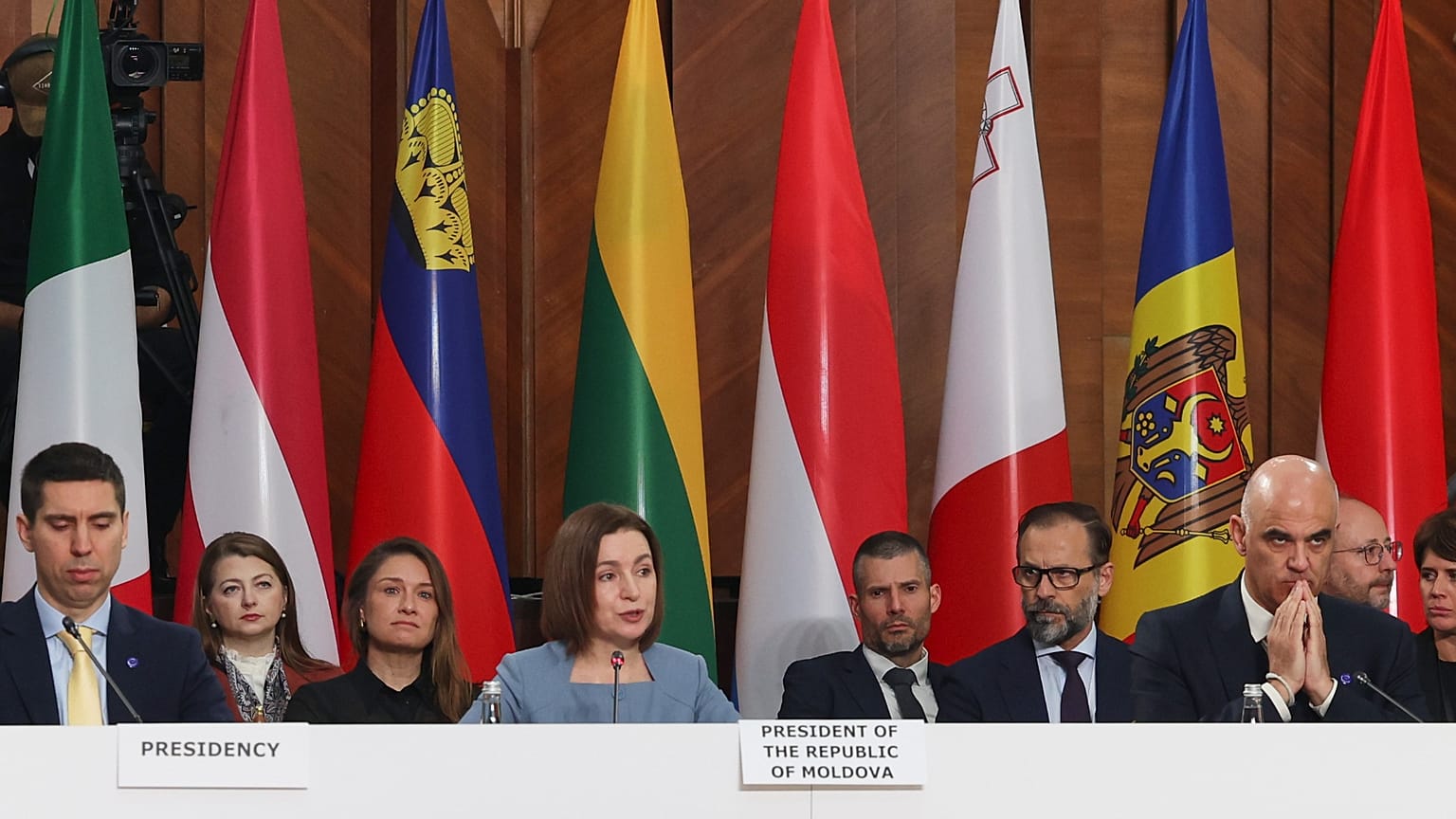
Council of Europe meeting in Moldova
Copyright Copyright 2026 The Associated Press. All rights reserved.
By Fortunato Pinto
Published on 


Council of Europe member states have backed a declaration reinterpreting the European Convention on Human Rights, and Italy claims credit for the returns scheme agreed by Rome and Tirana.

The meeting of the Council of Europe Committee of Ministers concluded on Friday in Chisinau, Moldova. Top of European leaders' agenda were unwavering support for Ukraine, the strengthening of democratic security, the fight against information manipulation and foreign interference, as well as the management of migration flows.

Among the most important decisions, taken on Italy's initiative, the standout measure is the adoption of a new interpretation of the European Convention on Human Rights, which could facilitate the expulsion of some migrants, including to "repatriation centres" in third countries.

What the Council of Europe declaration says

In detail, the approved declaration defines the rights set out in Articles 3 and 8 of the Convention, which concern protection from torture and inhuman or degrading treatment and the right to private and family life. The document endorses cooperation with third countries on migration, including the use of "repatriation centres", provided that those countries comply with the Convention on Human Rights.

The text states that the prohibition of torture and inhuman or degrading treatment remains absolute, but specifies that 'the assessment of the minimum level of severity of ill-treatment that constitutes inhuman or degrading treatment or punishment is relative and depends on all the circumstances of the case'.

On the legal front, as regards Article 8, the declaration states that states may expel foreign nationals despite their right to private and family life, provided that this is balanced against a legitimate aim, such as national security, and that the European Court of Human Rights would require 'valid reasons' to prevail over a state's decision.

'It is essential to be able to respond with new tools to today's challenges,' explains Italy's Undersecretary for Foreign Affairs Massimo Dell'Utri, underlining that the document acknowledges the need to address effectively and promptly the challenges posed by irregular migration, in order to strengthen border protection and ensure national security, also through cooperation instruments with third countries in managing flows and combating migrant smuggling and organised crime, while at the same time reaffirming the central role of the Convention as a pillar of the European legal order.

Meloni: legitimacy of the Italy-Albania model recognised

The outcome of the summit was greeted with great satisfaction in Rome by Prime Minister Giorgia Meloni. 'The Chisinau Declaration, adopted today by the 46 member states of the Council of Europe, recognises the legitimacy for nations to pursue innovative solutions in managing migration flows, such as repatriation hubs in third countries, following the model launched by Italy in Albania'.

This is what Prime Minister Meloni writes on social media, noting that 'it is an important result, the outcome of a process that Italy helped to open with courage and determination together with Danish Prime Minister Frederiksen'. 'What was prompting debate only a year ago,' Meloni adds, 'has today become a principle shared by the 46 member states of the Council of Europe and shows, once again, that the Italian approach to an orderly management of migration flows, pursued with seriousness and consistency by our government, has now also become Europe's approach'.

Beyond the migration dossier, the member states of the Council of Europe renewed their firm support for Ukraine, with particular emphasis on international instruments aimed at determining Russia's responsibility for the aggression. Thirty-six states, including Italy, and the European Union adopted the founding decision establishing the Special Tribunal for the crime of aggression against Ukraine.


Monoskop.org

https://monoskop.org/images/9/95/Hardt_Michael_Negri_Antonio_Empire.pdf

4.3 The Multitude against Empire. 393. Notes. 415. Index. 473. Page 11. PREFACE. Empire is materializing before our very eyes. Over the past several decades, as ...

Rebels-library.org

http://rebels-library.org/files/multitude.pdf

Page 1. MULTITUDE. WAR AND DEMOCRACY. IN THE AGE OF EMPIRE. MICHAEL HARDT ... Empire calls on war for its legitimation, the multitude calls on democracy as its ...


Newleftreview.org

https://newleftreview.org/issues/ii120/articles/empire-twenty-years-on.pdf

Just as today's. Empire was formed in response to the insurgencies of the multitudes from below, so too, potentially, it could fall to them, as long as those.


Tropical forests still under pressure despite slowdown in losses

Millions of hectares of tropical forest were destroyed in 2025, despite a slowdown in deforestation led by Brazil. Environmental experts say the drop shows governments can curb forest loss, but warn rainforests remain under pressure from agriculture, mining and fires.


Issued on: 15/05/2026 - RFI

BOYCOTT PALM OIL
Smoke rises during the deforestation of a new planting area for palm oil plantations in Lamno, Indonesia's Aceh province on 18 January 2026. 
AFP - CHAIDEER MAHYUDDIN

Tropical regions lost 4.3 million hectares of primary forest during the year, an area roughly the size of Switzerland, figures from Global Forest Watch – run by the World Resources Institute and the University of Maryland – showed.

The total was down 36 percent from 2024, when extreme wildfires drove tropical forest destruction to record levels. But forest loss still remained 46 percent higher than it was 10 years ago.

The equivalent of 11 football fields of primary forest continued disappearing every minute, affecting biodiversity, water supplies and carbon storage.

Global Forest Watch said current losses remain far above the level needed to meet the UN goal of ending deforestation by 2030.

Brazil launches global fund to reward protection of rainforests


Brazil effect


Much of the decline was driven by Brazil, home to the world’s largest rainforest.

Since returning to office in 2023, President Luiz Inácio Lula da Silva has made tackling deforestation a political priority.

Brazil also hosted the UN Cop30 climate summit in Belém in November, where rainforest protection was a major focus.

The country reduced primary forest destruction unrelated to fires by 41 percent compared with 2024, reaching its lowest level since records began, after introducing anti-deforestation measures and increasing penalties for environmental crimes.

“The working group established by Brazil with the government, civil society, academia, local communities and the private sector forms a powerful formula for combating deforestation,” Mirela Sandrini, a Brazil specialist at the World Resources Institute, told RFI.

But Sandrini warned that Brazil’s forests remain under threat from agricultural expansion linked to commodity production and livelihoods.

Other countries also reduced tropical forest destruction, including Colombia, while Malaysia and Indonesia kept losses well below previous levels.

Fragile progress


Environmental pressures continue across many forest regions.

Soy farming and cattle ranching in Brazil, nickel mining in Indonesia and cobalt mining in the Congo Basin are all contributing to forest destruction.

Primary forest loss also remained high in Bolivia, Cameroon and Madagascar.

While agriculture remains the main driver of forest destruction worldwide, wildfires also played a major role in 2025, accounting for 42 percent of global forest losses.

“Over the past three years, fires have destroyed more than twice as much forest cover as 20 years ago,” said Elizabeth Goldman, co-director of Global Forest Watch.

While some fires occur naturally, most are caused by humans.


Fire threat

Wildfires were especially severe in Canada, where 5.3 million hectares were destroyed, making 2025 the country’s second-worst year on record.

In France, forest destruction caused by fires was seven times higher than in 2024.

In Spain and Portugal, fires caused 60 percent of tree losses as hotter and drier conditions increased the risk of wildfire.

The Intergovernmental Panel on Climate Change (IPCC) has warned that in a world warmed by 4C, fires could become around 30 percent more frequent, with burned areas expanding by 50 to 70 percent.

Global Forest Watch warned 2026 could become “a pivotal year” if the El Nino weather pattern returns and pushes temperatures even higher.

(with newswires)
'Conversion therapy' is banned in eight EU countries – so why not the rest?

A decision by the European Union not to pursue a bloc-wide ban on so-called "conversion therapy" targeting LGBTQI+ people has divided campaigners and lawmakers. Brussels argues that a binding law could have taken up to 18 years to negotiate.


Issued on: 14/05/2026 - RFI

Demonstrators protest against conversion therapy outside parliament in Nicosia, Cyprus, on 25 May 2023. The European Union has ruled out pursuing a bloc-wide ban on the practice. © AP - Petros Karadjias


Instead of proposing legislation across all 27 member states, the European Commission on Wednesday said it would recommend that governments introduce their own bans – a strategy Equality Commissioner Hadja Lahbib told RFI was the fastest and most realistic path to action.

“To adopt binding legislation, unanimity would have been needed anyway,” Lahbib said.

“Rather than plunging into discussions that could have taken 10, 15 or even 18 years, we preferred this recommendation because we are convinced it will be much more effective.”


'Shameful' practice

Conversion practices seek to change a person’s sexual orientation or gender identity through sometimes violent methods.

United Nations experts have called for a worldwide ban, describing the practices as discriminatory, humiliating and a violation of bodily integrity.

More than one million people signed a petition last year calling on the EU to outlaw the procedures – which reportedly include physical aggression, exorcism, hormone therapy, electric shocks and spiritual retreats – across the bloc.

The campaign was backed by public figures including pop stars Angèle and Pierre de Maere, as well as former French prime minister Gabriel Attal.

“It is a shameful practice, an unacceptable practice. This is not healthcare – it’s violence in disguise. Nobody should have to go through this,” Lahbib said.


The European Commission argued that trying to introduce a binding EU law could have led to years of political deadlock.

A pride flag flew outside the commission headquarters in Brussels as the announcement was made on Wednesday.

“Conversion practices have no place in our union,” said European Commission President Ursula von der Leyen.

Eight EU countries have already outlawed conversion practices – Belgium, Cyprus, France, Germany, Greece, Malta, Portugal and Spain.

Possible future bans are also being discussed in Ireland, the Netherlands and Denmark, while other countries, including Slovakia, continue to resist.

Divided response

Reactions from gay rights groups and lawmakers were mixed.

Supporters of the commission’s approach argued that a recommendation could deliver quicker results than years of negotiations over an EU law.

Cianan Russel from LGBTQI+ rights network ILGA-Europe said the EU had taken the strongest action open to it.

“We are engaged in a long-term struggle and we want a viable and effective solution over the long term. The commission has taken the most effective measure possible,” Russel said.

Critics argued that Brussels had failed to act strongly enough at a time when homophobic rhetoric is growing internationally.


The campaign group Against Conversion Therapy, which launched the petition, called the decision “a missed opportunity”.

“In an international political climate where reactionary ideas are on the rise around the world, there is an urgent need for the European Union to act,” the group said.

At the European Parliament, lawmakers adopted a resolution in April supporting a ban.

Manon Aubry, a left-wing French MEP, described the commission’s decision as “shameful”.

Meanwhile Melissa Camara, a member of the parliament’s LGBTIQ+ rights group, told the French news agency AFP the commission’s move was “a step in the right direction” but “far too timid” given “the damage and trauma caused by these practices”.

(with newswires and reporting from RFI in French)


Eurovision gears up for boycotted final, with fiery Finns favourites

Vienna (AFP) – A fiery Finnish violinist-singer duo followed by an Australian star are the favourites to win Saturday's Eurovision grand final, with the contest hit by an unprecedented boycott over Israel's participation.


Issued on: 16/05/2026 - RFI

The overwhelming favorites in the final are violinist Linda Lampenius 
and pop singer Pete Parkkonen 
© GEORG HOCHMUTH / APA/AFP


This year in Vienna marks the 70th edition of the world's biggest televised music event, which despite the razzmatazz rarely escapes the politics in the background.

Five countries, including Spain, traditionally one of the Eurovision Song Contest's biggest financial contributors, are staying away over Israel's participation to protest against its war in Gaza.

Australian star Delta Goodrem has climbed to second place among the favourites 
© Tobias SCHWARZ / AFP


The overwhelming favourites in the 25-country final are violinist Linda Lampenius and pop singer Pete Parkkonen, who already set ablaze the immense circular stage of Vienna's Stadthalle concert venue in the first semi-final on Tuesday.

Australian star Delta Goodrem, who has sold nine million albums, climbed to second place among the bookmakers' favourites, after her performance in the second semi-final on Thursday that saw her soar into the air on a riser from the top of a glittering piano.

The final begins at 9:00 pm local time (1900 GMT) in front of some 11,200 spectators.

"It's going to come down to Finland and Australia," Fabien Randanne, a journalist at French news outlet 20 Minutes and a specialist on the contest, told AFP.


'Star aura'


Internationally acclaimed violinist Lampenius, 56, got permission to use her 1781 Galliano live, to perform "Liekinheitin" ("Flamethrower") in Finnish with Parkkonen, 36.

Romania's Alexandra Capitanescu has managed to break into the top 5 favourites
 © Tobias SCHWARZ / AFP


Instruments featured on stage are typically pre-recorded.

"I will never be a wallflower," Lampenius, who has appeared on the cover of Playboy and in an episode of "Baywatch", told Austrian news agency APA ahead of the final.

The 41-year-old Goodrem, who had a string of international hits in the early 2000s, has raised hopes of a first win for her country with "Eclipse", a song evoking a romantic alignment of the planets.

Australia has appeared at Eurovision by invitation since 2015.

"The European public still has more or less conscious reservations about voting for Australia, wondering what the country is doing in the contest, but perhaps Delta Goodrem's star aura can spur them to rally around her," Randanne said.

Her rise in the odds has come at the expense of Greece, Israel, Denmark and France, which have slipped in the rankings.

Romania's Alexandra Capitanescu, 22, has managed to break into the top 5 thanks to an electrifying stage presence with her metal track "Choke Me".

Meanwhile, Sal Da Vinci, 56, could emerge as "the dark horse" with his love song "Per sempre si" ("Forever yes"), according to Sebastien Dias-das-Almas, a French journalist who has covered Eurovision since 2011.

A major figure on the Italian music scene, Da Vinci "could appeal to the traditional audience, who only follow the contest on television on the night of the event", Dias-das-Almas said.


'Song protest'


While stage designs vary in boldness, songs range from pop to heavy rock and electro and are performed in diverse languages from Maltese to Albanian.

Fans from 75 countries have flocked to Vienna for the spectacle 
© Alex HALADA / AFP


Fans from 75 countries have flocked to Vienna for the spectacle.

Undeterred by the rain, many have taken musical cruises on the Danube and sang karaoke in the huge fan zone set up in front of the City Hall and aboard trams crisscrossing the city.

"We have nothing like this in America, and I think Eurovision is phenomenal because it brings everybody together," Tory Huflar, an American fan, told AFP after Thursday's second semi-final.

Some 166 million viewers watched the contest on television last year when it was hosted in Switzerland.

Austria hopes to match that figure despite the boycott by Iceland, Ireland, the Netherlands, Slovenia and Spain and a call by more than 1,000 artists not to watch Eurovision over Israel's participation.

Pro-Palestinian activists organised an alternative concert dubbed 'song protest'
 © Joe Klamar / AFP


Spanish Prime Minister Pedro Sanchez on Friday said he was certain his country was on "the right side of history".

Pro-Palestinian activists organised an alternative concert dubbed "song protest" on Friday in downtown Vienna, which has been under tight security all week.

"I'm Jewish, I support Palestine, and I don't want a platform to be given to Israel at Eurovision," Dalia Sarig, 57, wearing a keffiyeh scarf around her neck, told AFP.
France to probe Khashoggi killing after complaint against Saudi crown prince

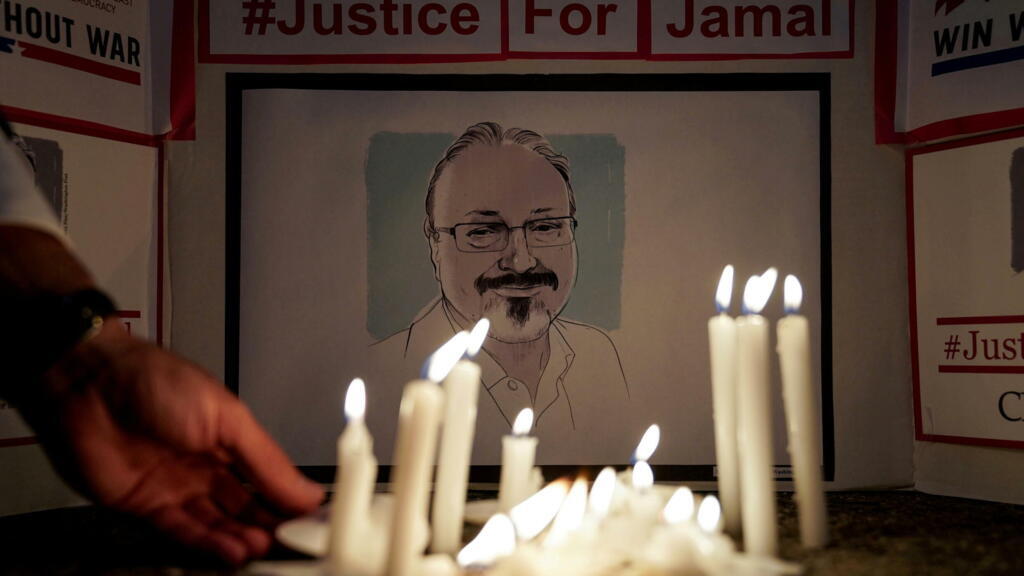
A Paris judge will investigate the 2018 assassination of Saudi dissident journalist Jamal Khashoggi after rights groups filed a complaint against Crown Prince Mohammed Bin Salman, French sources have told AFP.


Issued on: 16/05/2026 - RFI

The French probe will examine the extent of MBS' role in Khashoggi's killing at the Saudi embassy in Istanbul in 2018. REUTERS - Sarah Silbiger

Both Mohammed Bin Salman (MBS) and the kingdom faced intense international uproar over the assassination of Khashoggi in Saudi Arabia's consulate in Istanbul.

Khashoggi, a US resident who wrote critically about the oil-rich kingdom in The Washington Post, was strangled and then dismembered inside the consulate on 2 October, 2018.

In a 2021 report, US intelligence claimed the crown prince was directly responsible for the killing.

However President Donald Trump has since denied MBS' role saying the prince "knew nothing" about the journalist's murder.

Khashoggi's employer, Democracy for the Arab World Now (DAWN), and the rights group Trial International had petitioned the French courts on the matter during MBS' visit to France in July 2022.

They were subsequently joined by a complaint from press freedom watchdog Reporters Without Borders (RSF).

"An investigating judge from the crimes against humanity unit will now investigate the complaint" for torture and enforced disappearances, the National Anti-Terrorism Prosecutor's Office (Pnat) confirmed when contacted by AFP.

An 'abominable crime'


It comes after years of legal wrangling, with the prosecutor's office opposed to opening a case in France on admissibility grounds.

But in a decision handed down on Monday, the court of appeal ruled in the rights groups' favour, which DAWN hailed as a key step towards obtaining justice for the journalist's killing.

"The crime of which Jamal Khashoggi was a victim is an abominable crime, decided and planned at the highest level of the Saudi state, which had a journalist executed who was a dissident and independent voice," said Emmanuel Daoud, a lawyer for RSF.

Trial International's lawyer, Henri Thulliez, said there "should no longer be any obstacle to opening a judicial investigation into the atrocious crime committed against Jamal Khashoggi".


In 2019, the UN High Commissioner for Human Rights Agnès Callamard (now head of Amnesty International), published a damning investigation into what the watchdog called “the unlawful death of Mr Jamal Khashoggi".

Based on interviews with Saudi personel, Turkish intelligence operatives, recordings of telephone conversations and security cameras, the report claimed Khashoggi’s murder constituted an extrajudicial killing, which the Kingdom of Saudi Arabia was responsible for.

Callamard said the assassination also constituted a violation of the Vienna Convention on Consular Relations, of the prohibition against the extra-territorial use of force in time of peace, an act of torture under the terms of the Convention Against Torture, ratified by Saudi Arabia.


The Saudi assembly Shura Council roundly rejected the report's findings.

(with newswires)