Monday, May 25, 2026


Inside Portugal’s huge operation to beat wildfires with Black Hawks, bulldozers and firefighters
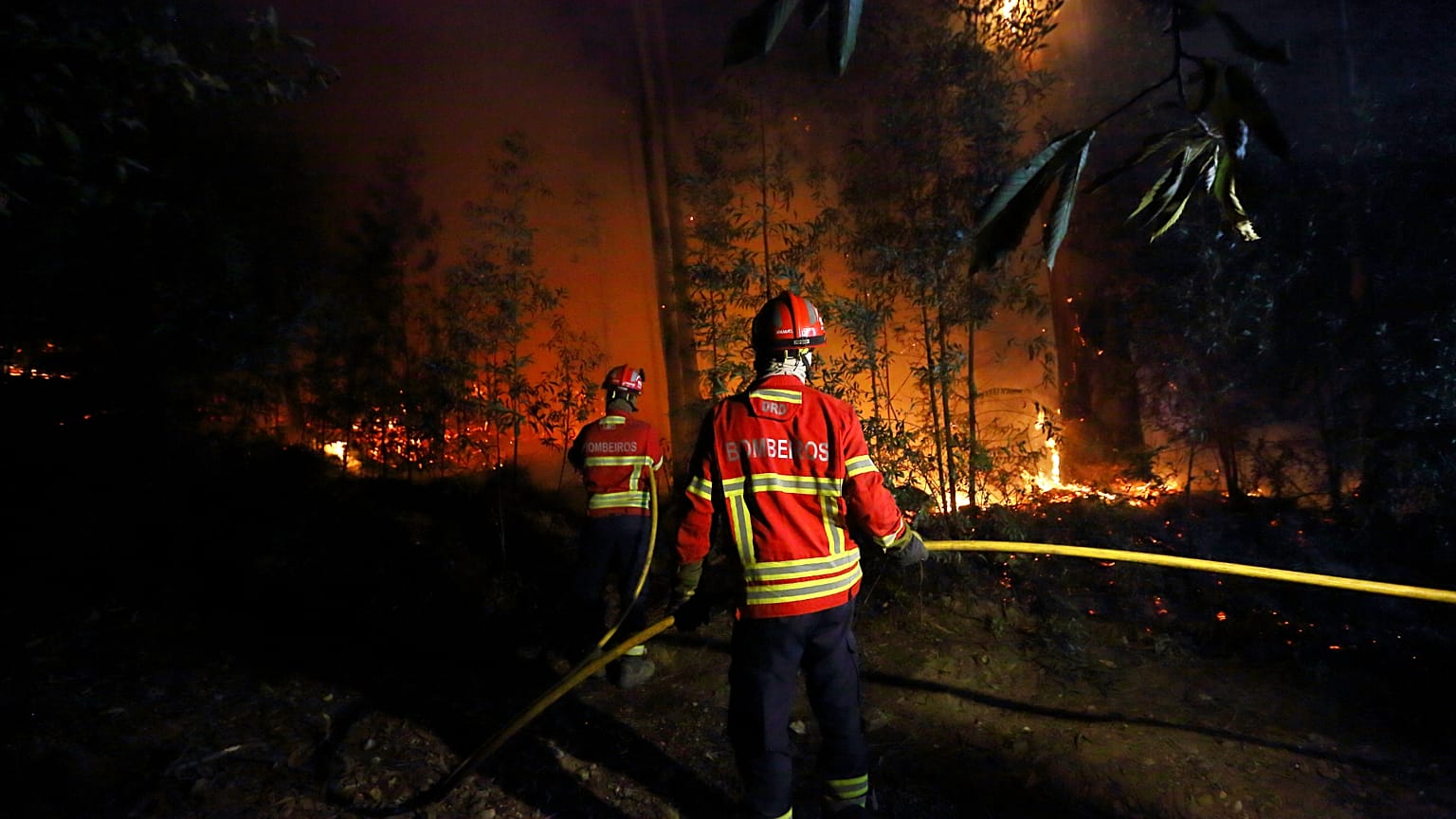
Firefighters work to extinguish a wildfire on the outskirts of Sever do Vouga, Portugal, 18 September 2024
Copyright AP Photo/Bruno Fonseca

By João Azevedo & Ruth Wright with AFP
Published on

The public are being asked to 'do their part' by clearing tinder from around their homes.

“If the authorities managed to remove all that timber, I would feel much calmer because it is a huge amount of fuel for fires. Here on my property, I am trying to remove as much as I can.

79-year-old retiree Manuel Calhanas is doing just what Portugal's Minister for Internal Administration has asked of citizens: "do your part" ahead of a "terrible summer".

Devastating wildfires gripped Portugal in 2025, when more than a quarter of a million hectares of land burned.

With fears that this year could be even worse, Portugal has mounted an intensive nationwide operation to clear fallen trees and dry leaves - the tinder that wildfires thrive on.

Citizens are being asked to clear the land around their homes - known to be one of the most effective ways of saving lives - as well as flagging up blocked roads to authorities as these could prevent emergency services from getting to them.

Winter storms have left fuel lying on the ground

2026 has already been a year of extreme weather for Portugal. In early February, the country declared a state of emergency after it was hit by two devastating storms just a week apart. Storms Leonardo and Kristin brought torrential rain and flooding, leading to fallen trees snapping power lines and people being evacuated from their homes by boats.

The strong winds ripped off tree canopies and toppled trees, leading to leaves and vegetation covering the ground in many places. As temperatures rise during the early summer, this vegetation will dry out and become tinder - the perfect fuel for wildfires.

In Leiria, the area that was worst hit, between five and eight million trees were felled by the storms, reports news website Expresso.

Felled trees mean that some roads are still blocked, which could hamper the efforts of emergency services in the event of wildfires.

How is Portugal preparing for wildfires?

Luís Neves says that clearing roads is one of the focuses of a multi-agency operation to prepare for wildfires.

“In 22 municipalities, 10,000 kilometres of roads, rural tracks, firebreaks and land in need of clearing have been identified and, in one week, 3,000 kilometres have already been cleared, practically one third,” he said.

Neves highlighted the cooperation between Civil Protection, the security forces, local authorities and the Armed Forces within the Integrated Command for Prevention and Operations (CIPO), which brings together the ministries of Internal Administration, Defence, and Agriculture and the Sea, tasked with clearing roads and improving access in forest areas.

Fire retardant set to be one of the main weapons in the fight against the flames

Portugal's National Authority for Emergency and Civil Protection says that particular attention will be paid to Leiria, the area hardest hit by Storm Kristin, because of the vegetation now lying on the ground.

Other areas of high concern are the two other districts within the inland pine forest – Coimbra and Castelo Branco – as well as the North and the Algarve, says Mário Silvestre, national commander for Emergency and Civil Protection, in an interview with Lusa news agency.

The authorities want to tackle fires as soon as they start and will roll out the use of fire retardant, a chemical substance capable of delaying or even halting the advance of the flames. “This year we will have four more aerial bases operating with fire retardant. We will go up to five. What we want is to increase even further the success rate we currently have in initial attack,” says Silvestre.

This substance was used at just one air base in 2025, but, given the good results achieved, it will be “one of the major bets” in 2026, Silvestre added, in an effort to contain fires which today spread far more violently than they did a decade ago.

As part of this anticipatory approach, specialist reconnaissance teams will be deployed in each of the country’s sub-regions, tasked with providing the operations commander with essential information on the risk and type of fire. The aim is to improve the system’s communication capacity and ensure earlier intervention.

The reinforced attack groups have also been increased, from one to four. These are highly capable tactical forces called in for situations that require prolonged intervention.

All the changes introduced will be tested in an intensive operational exercise designed to ensure coordination among all the agencies involved.

The 2026 Special Device for Fighting Rural Fires (DECIR) shows a slight increase compared with last year. The most critical phase – Delta – runs from 1 July to 30 September, when DECIR will have 15,149 personnel in 2,596 teams, 3,463 ground vehicles and 81 aircraft. Two Black Hawk helicopters from the Air Force, with greater capacity for water transport and more complex operations, will be deployed for firefighting for the first time.

During this most demanding period, the authorities will also have at their disposal 50 bulldozers, twice as many as in 2025, with the ICNF providing a further 18, secretary of state for Civil Protection Rui Rocha said in an interview with JN/TSF.

Since last Friday, the first reinforcement of resources, known as Bravo level, have been in place on the ground and will remain until the end of May: 11,955 personnel, organised into 2,031 teams, are on standby, supported by 2,599 vehicles and 37 aircraft.

According to the national commander for Emergency and Civil Protection, the plan announced may be adjusted in line with assessments carried out at different stages of its implementation.

Marinha Grande has already cleared more than 154 kilometres of forest tracks

For several weeks now, the sound of chainsaws has echoed through Marinha Grande as crews clear piles of timber from the tracks criss-crossing the pine and eucalyptus forests.

This is a large-scale operation carried out seven days a week, since the beginning of March, by a sizeable team bringing together the Municipal Civil Protection Service, the Forestry Technical Office, soldiers from the National Republican Guard (GNR), the Institute for the Conservation of Nature and Forests (ICNF), the Civil Protection Special Force, volunteer firefighters from Marinha Grande and Vieira de Leiria, as well as the Armed Forces.

“The storm hit us during the night of 27 to 28 January and there is still a lot of damage on the ground,” Paulo Vicente, mayor of Marinha Grande, told news agency AFP.

Significant damage has been found to forest roads, which cover an area of around 289 kilometres, the council said in a statement. Many of these tracks are “vital for the access of emergency vehicles and for the prevention and fighting of rural fires”, the municipality warns.

The priority is to create links between the forest tracks to ensure safe movement in these areas and access to the nearest urban settlements.

By 6 May, 154 kilometres of the forest road network had already been cleared, surpassing the initial target of 115 kilometres. “Given the good progress of the operation, the scale of the work and the needs identified on the ground, a new target of 178 kilometres has been set,” the council added in the same statement.

The work involves not only clearing the tracks, but also cleaning land and creating fuel management strips - areas where vegetation is reduced or cut back) – tasks which, the municipality stresses, are crucial to reducing the risk of rural fires.

The planned intervention covers a total of 198 hectares, “including strips along the municipal road network and in the interface zones with the industrial areas of Marinha Grande and Vieira de Leiria”, according to the council.

"A particularly hot summer is forecast and, for our region, these pine forests are a powder keg,” the mayor of Marinha Grande warns.

How bad was Portugal's 2025 wildfire season?

According to the Joint Research Centre of the European Commission, 999 fires were recorded on Portuguese soil in 2025, burning 284,012 hectares. The burned area was twice that of 2024, making 2025 the second-worst year of the last decade, only behind the tragic 2017 season, which devastated more than 500,000 hectares and claimed over 100 lives.

The same body confirms the worsening trend and points to a rising likelihood of extreme weather events, dominated by so-called megafires: more violent, spreading faster and therefore harder to control. The new pattern became particularly visible from 2017 onwards, as heatwaves became more frequent, summers got longer and droughts became common.


Heat, rain and Saharan dust hit Portugal
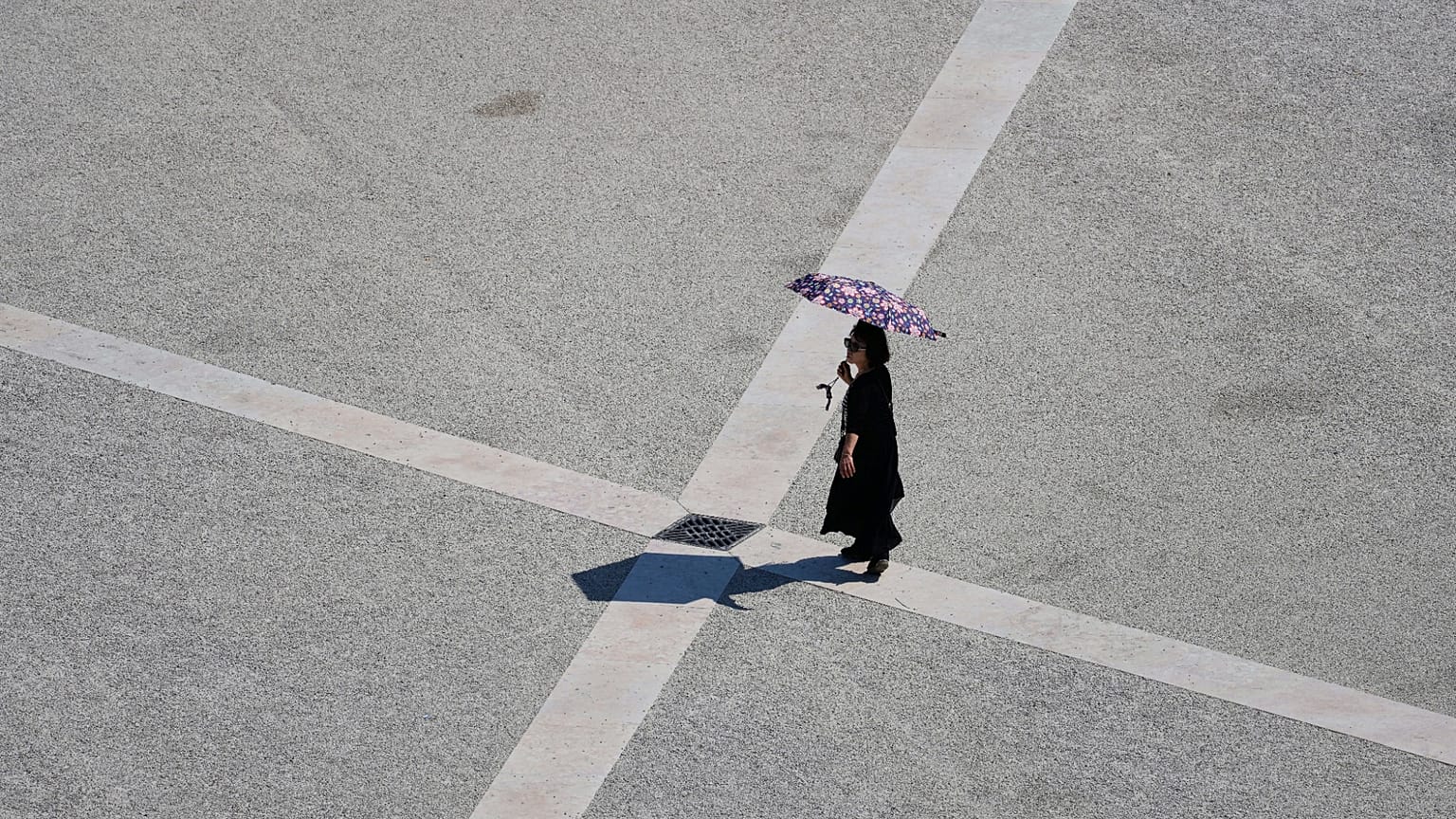
Archive (02.08.2025): A woman uses an umbrella to shield herself from the sun as she crosses Lisbon's Praça do Comércio on a hot day
Copyright AP Photo

By Manuel Ribeiro
Published on


The Portuguese Institute for Sea and Atmosphere forecasts above-average weekend temperatures for the time of year, with rain and thunderstorms, as a tropical air mass carrying Saharan dust approaches the Iberian Peninsula.

Temperatures this weekend could reach 35 degrees on mainland Portugal, a spell of hot weather that IPMA considers unusual for this time of year

Thermometer readings are expected to be between 30 and 35 °C across most of the country, possibly reaching 39 °C in some inland areas of the Tagus Valley. Minimum temperatures will also rise nationwide, hovering around 20 °C.

This weekend, the high temperatures will be accompanied by some cloud and showers along the coast, with the possibility of heavy rain and hail, along with thunderstorms, in inland areas, especially on Saturday afternoon. Because of the humidity, temperatures in those regions may fall slightly. There will also be dust in suspension coming from North Africa, IPMA adds.

According to IPMA, this weekend’s weather conditions are “favourable to the transport of dust from North Africa”. The suspended dust is expected to persist until the end of the day on Saturday.

What is this desert dust and what precautions should you take?

The phenomenon begins in the Sahara Desert in North Africa, when storms with strong winds raise large quantities of sand and dust.

The Meteo Trás os Montes portal, a Facebook page (source in Portuguese) dedicated to providing information on weather phenomena, explains that “the heavier particles end up quickly falling near their source”, that is, in the Sahara Desert. “The finer, lighter particles, however, can rise thousands of metres into the atmosphere and remain suspended for several days.”

After reaching altitudes above 1,500 metres, the lighter dust “enters air currents”, beginning “a long journey” that carries it across the Mediterranean and the Atlantic. “Depending on the weather conditions, these dust masses can travel thousands of kilometres.” Some reach Europe, Spain and Portugal, and others cross to the far side of the Atlantic. When the wind changes direction or loses strength, these particles begin to fall to the surface.

This concentration of desert dust can cause discomfort for some people, such as allergies and other respiratory problems (asthma, bronchitis). It also creates haze, reducing visibility, which can increase risk, especially for drivers.

But it is not all bad. The upside of desert dust is that it is “rich in minerals, especially iron and phosphorus” and, when it falls into the ocean, it becomes an important nutrient for the marine food chain, Meteo Trás os Montes notes. When it reaches land, it “acts as a natural fertiliser”.

Rain: eight northern and central districts under yellow warning

Also according to IPMA, the districts of Bragança, Vila Real, Braga, Viana do Castelo, Aveiro, Porto, Viseu and Guarda will be, this Saturday, under a yellow warning, the least severe on a three-level scale, due to rain and thunderstorms.

The forecast heatwave is expected to intensify over the course of next week, and the public is therefore advised to take specific precautions, such as drinking more water, avoiding alcoholic beverages, seeking cool or air-conditioned places for at least two to three hours a day, avoiding direct exposure to the sun, especially between 11 am and 5 pm, and using sunscreen with a protection factor higher than 30.

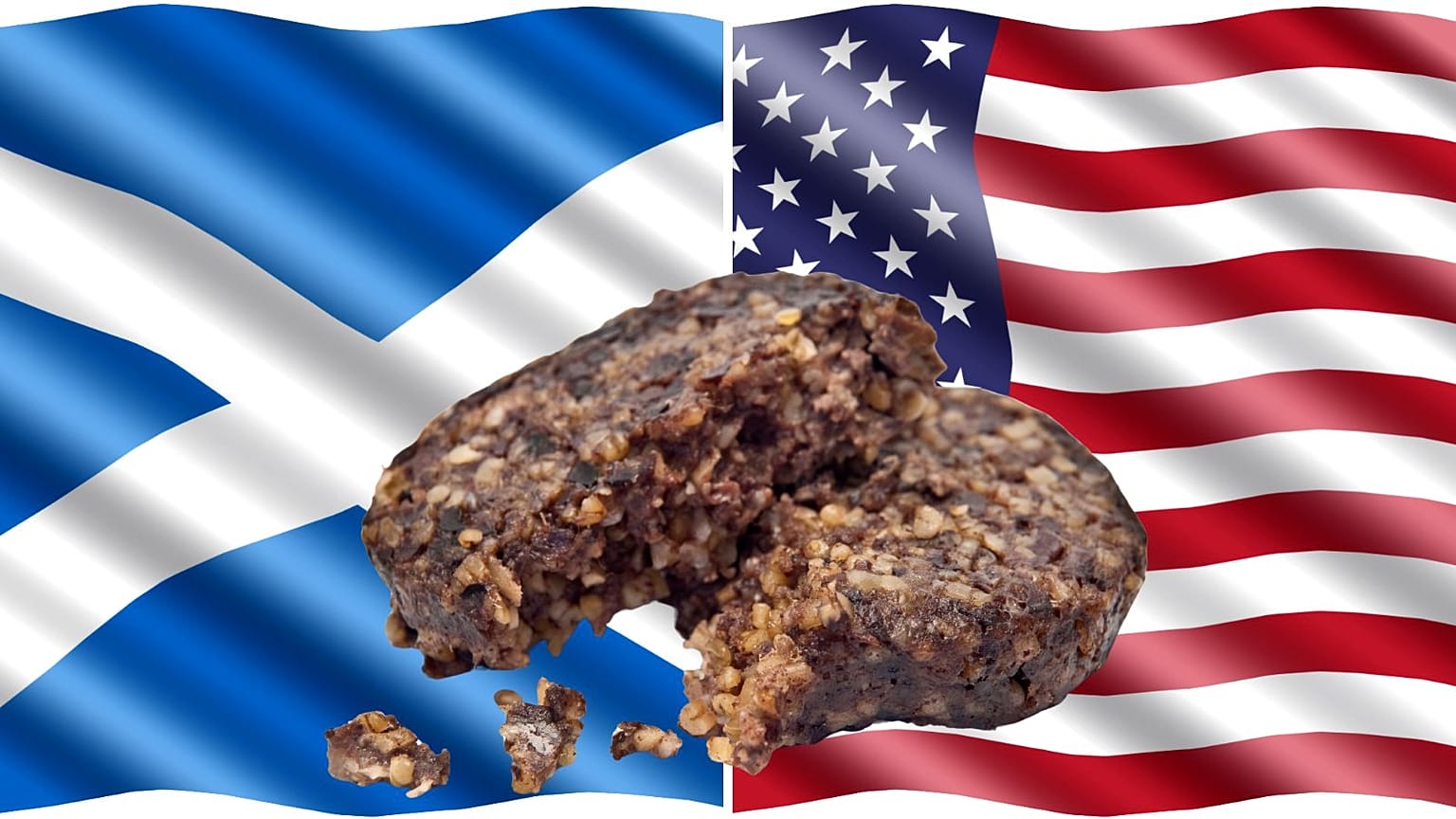

 

Scotland urges US to ‘make haggis legal again’ ahead of World Cup

Scotland to US: ‘Make haggis legal again’ ahead of World Cup
Copyright Canva

By David Mouriquand
Published on 2


Scotland's national dish has been illegal in the US since the 70s. Now, the tartan rebellion has begun, with one of Scotland's leading butchers leading the charge. After all, how can Scotland be expected to compete (and win) if haggis isn't on the menu?

One of Scotland’s leading butchers has launched a campaign for the US to legalise haggis ahead of the World Cup.

Perthshire-based Simon Howie Butchers is behind the petition to “make haggis legal again”. Or: ‘MHLA’, for American readers who crave a simpler four-letter acronym that can fit on a cap.

First things first... For those of you who haven’t yet had the pleasure, haggis is a savoury Scottish institution containing sheep’s pluck (heart, liver, lungs), minced with onions, oatmeal, spices, and traditionally encased and served in the animal’s stomach.

Yes, it sounds like a lot for any colon to handle. As the 2001 Larousse Gastronomique states, “its description is not immediately appealing.”

However, and trust us on this one: it’s truly delicious.

Haggis goodness
Haggis goodness Canva

Then why is it illegal in the US – especially when the radioactive drink (read: neon-coloured diabetes in a bottle) Mountain Dew is considered fine and dandy?

Well, the ban has been in affect since 1979, due to federal food regulations relating to the consumption of offal – specifically sheep lung, which constitutes up to 15 per cent of the traditional haggis recipe. This has meant that Scottish producers have not been able to export haggis to the US since it is still banned under the US Department of Agriculture regulations.

But that could be about to change, especially since Scotland is heading to the World Cup this summer for the first time since 1998, after six unsuccessful qualifying campaigns.

Simon Howie Butchers' campaign will be fronted by Scottish broadcaster and journalist Gordon Smart, and football fans travelling to the US are being supplied with flags emblazoned with "no haggis, no party".

A new post on Instagram by Simon Howie Butcher states: “For the first time in a generation, the Tartan Army are heading to the world stage. But we’ve got a problem: a big one... Our national dish, haggis, banned in the US right when it matters the most.”

“This isn’t just tradition being ignored – it's regulation gone mad. But Simon Howie are offering the land of opportunity a real opportunity. They’re leading the charge to make haggis legal again.”

In a further statement, Simon Howie said: “With such warmth and long-standing affinity between Americans and Scots, we’re appealing to the USA to embrace this delicious delicacy and ‘make haggis legal again’.”

So, whether you’re mad about the exorbitant prices of World Cup tickets which makes the whole tournament look like an elitist and grotesque shambles... Whether you think that FIFA’s supposed political neutrality has been completely demolished by president Gianni Infantino and his sycophancy towards FIFA's inaugural Peace Price winner Donald Trump... Whether you side with the Iranian FA who stated that it “cannot be expected to look forward to the World Cup with hope” and remained alarmed about the fact that more than 120 organisations have collectively issued a “travel advisory” driven by what they call “the Trump administration’s violent and abusive immigration crackdown”... This is yet another thing to get worked up about.

A national dish has been banned for too long, and Americans are being deprived of a tasty export. More than that, it’s time to celebrate Scotland’s return to the World Cup with respect for their traditions...

Or, to appeal to our American cousins once more by quoting Scottish-American comedian Craig Ferguson, haggis is just a hotdog with a bad publicist.

There. Doesn't sound too bad now, does it?

Time will tell if Americans have the stomach for it.

The World Cup kicks off 11 June and lasts until 19 July. The tournament will be hosted across the US, Canada, and Mexico.


World leader in Earth observation made in Europe: Small satellites from Finland see everything


 By Hans von der Brelie

Published on


EU governments are eager to work with ICEYE. The Finnish space company sells mini satellites that help allied nations safeguard their sovereignty. That’s because when it comes to Earth observation and military reconnaissance, the high-resolution radar eyes in space are second to none.


Two young innovators from Poland and Finland have built one of the world’s best satellite systems. The radar sensors of ICEYE monitor oil spills, hurricanes and forest fires from an altitude of 600 km. The nanosatellites detect illegal loggers, collect data on flooding, and keep an eye on the movements of military equipment.

Even through cloud cover and in the middle of the night, the small satellites deliver ultra-precise detailed images. They identify aircraft types at hostile airports. The eyes of ICEYE track suspicious ship movements across vast stretches of ocean.

The fourth generation of satellites currently in orbit (weight: 200 kg) improves the resolution from 25 cm to 16 cm. “And that's not the end of it”, says Damon Ollomon, one of the vice presidents of ICEYE, in an interview with Euronews.

The ICEYE team in Helsinki is particularly proud of its rapid response time. “We can deliver images within two hours, and we aim to reduce that to less than ten minutes”, said Ollomon.

ICEYE currently operates a constellation of more than 70 satellites in Earth orbit. “We produce 25 satellites a year and are now increasing this to 50 per year”, says Ollomon.

ICEYE was founded in 2014, and start-up capital was provided by the EU. The company has subsidiaries in Poland, Spain, Germany, and Greece, among others, and employs around 1,000 people from 70 countries. Last year, ICEYE achieved a turnover of EUR 250 million.

In an interview with Euronews, Pekka Laurila, one of the founders of ICEYE, offered a piece of advice to the EU: “Take risks and put ambitious plans into action immediately – not 10 years from now. Europe has resources. So at the very least, we should aim to become the best in the world. Take this seriously!”


Royal Navy patrol ship arrives off remote Atlantic island to relieve army paratroopers

Image shared by the Ministry of Defence
Copyright UK Ministry of Defence

By Nathan Rennolds
Published on

Tristan da Cunha, the UK's most remote overseas territory, sits deep in the South Atlantic Ocean and is normally only accessible by boat.

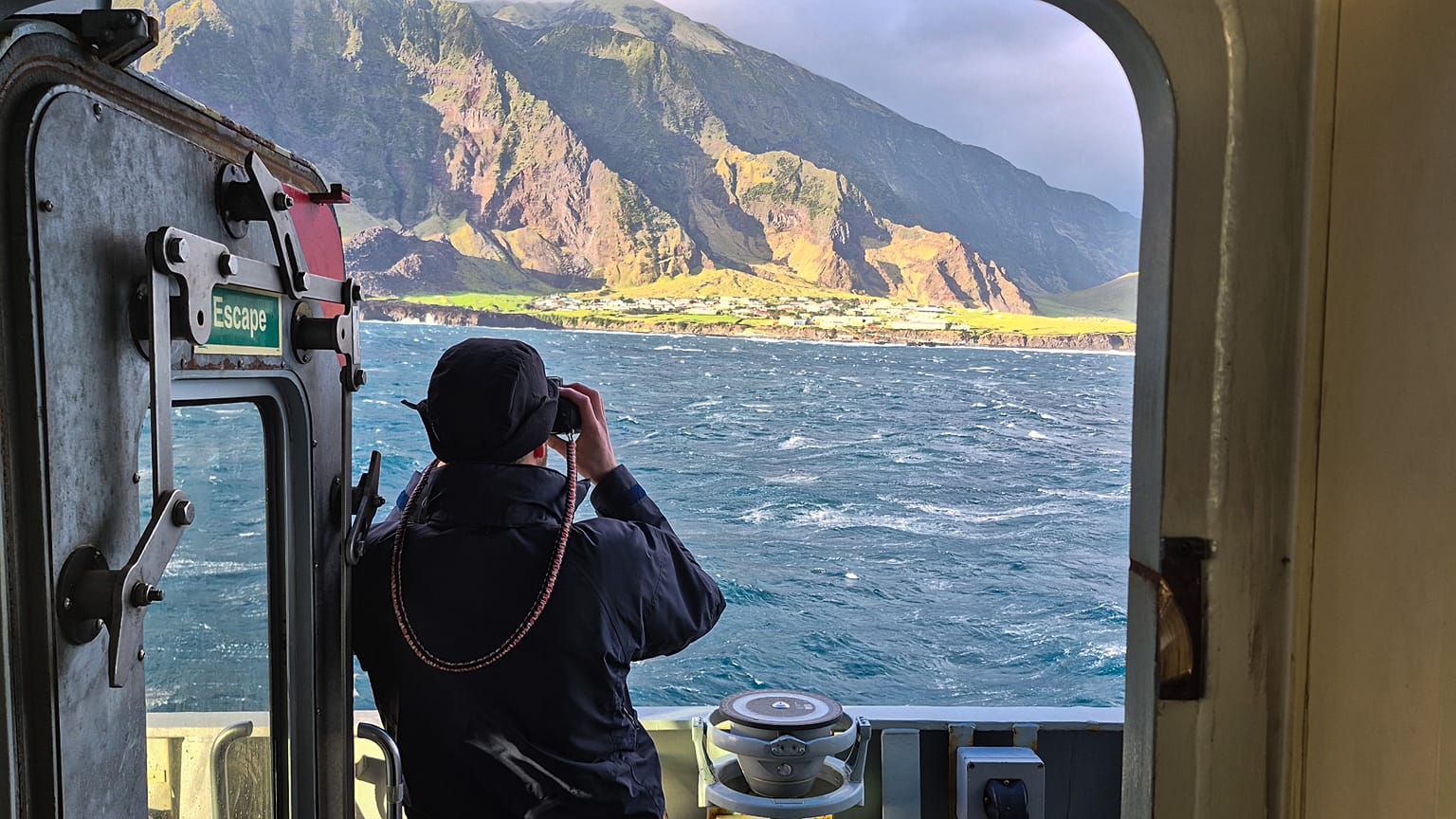
A Royal Navy patrol ship has arrived off the coast of Tristan da Cunha to deliver critical supplies and relieve a team of army specialists who parachuted onto the remote island earlier this month.

The UK Ministry of Defence announced on Sunday that the HMS Medway had arrived in the area and that it would remain there for several days, dropping off six civilian medics and retrieving the paratroopers, who have been supporting a British national suspected of contracting Hantavirus.

The Medway is the second of five Royal Navy River Class offshore patrol vessels and is used to support Britain’s overseas territories, as well as helping deliver humanitarian aid.

Specialists from the army's 16 Air Assault Brigade Combat Team completed a "daring" drop into Tristan da Cunha earlier in May after a British national who had been on board the Hantavirus-stricken MV Hondius cruise ship reported symptoms after returning home to the island.

Tristan da Cunha, the UK's most remote inhabited overseas territory, sits deep in the South Atlantic Ocean and is normally only accessible by boat. It has a population of around 220 people.

Speaking at the time, Minister for the Armed Forces Al Carns called it an "extraordinary operation" and paid "huge tribute" to those involved.

Dramatic footage of the mission shared by the MOD showed the soldiers leaping out of a military transport aircraft and opening their parachutes above the island.


Macron calls Lukashenko as US withdraws from Ukraine ceasefire talks

Macron calls Lukashenko as US withdraws from Ukraine ceasefire talks
French President Emmanuel Macron put in a rare call to Belarus president Alexander Lukashenko the day after Russia fired two Oreshnik cruise missiles at Kyiv and warned him not to get dragged into Russia’s war in Ukraine. / bne IntelliNewsFacebook
By Ben Aris in Berlin May 25, 2026

French President Emmanuel Macron took the unusual step of calling Belarus president Alexander Lukashenko on May 24, which is now housing Russian nuclear weapons.

The French President warned Lukashenko against involving Belarus in Russia’s war against Ukraine during their first phone call since 2022, Swiss outlet Le Temps reported on May 24, citing sources close to Macron.

Tensions on the Ukraine-Belarus border have been rising recently. President Volodymyr Zelenskiy said on May 15 that he had instructed the Security Service of Ukraine (SBU) to prepare a response plan for threats from Belarus. Zelenskiy specifically mentioned strengthening the Chernihiv-Kyiv sector.

That followed Lukashenko's statement on May 12 that he planned a limited mobilization of specific military units to “prepare for possible combat operations,” but also claimed Belarus was “committed to peace.”

Macron's call also came a day after Russia reportedly fired two Oreshnik IRCM cruise missiles at Kyiv, which have nuclear capability and can hit most European capitals. Last year, Russia moved several of these missiles to Belarus in an escalatory role. Lukashenko boasted that he has operational control over the missiles, but the Kremlin said it remains in full control of the missiles and the ability to launch them.

The call comes in the context of improved relations between Belarus and the Western allies. Lukashenko has recently been flirting with the White House and agreed to a string of political prisoner releases as the Belarus strong man goes back to his old ways of trying to play the West off against the Kremlin on which he is now entirely dependent.

"A phone call between the presidents of Belarus and France, Alexander Lukashenko and Emmanuel Macron, has taken place today at the initiative of the French side," the Belarusian foreign ministry said in a statement. Macron and Lukashenko discussed "regional issues and Belarus's relations with the EU and France in particular".

In December, Macron suggested that the Europeans should resume direct talks with Putin – a call that has been since joined by half a dozen other EU leaders. European leaders have become increasingly frustrated at being excluded from peace talks led by the US administration under Donald Trump, who said last week that the US would no longer participate in the negotiations.

US Secretary of State Marco Rubio admitted that US efforts to bring the Ukraine conflict to a halt have stalled and no talks are currently taking place.

"But we hope that will change because that war can only end with a negotiated settlement. It will not end with a military victory by one side or the other, at least from a traditional standpoint of how military victories are defined," he noted.

The secretary of state added that there appears to be no one else in the world currently capable of facilitating a settlement between Ukraine and Russia. However, he noted that "if someone else would like to handle it, they should".

The failure of the US efforts to broker a ceasefire has knocked the ball into Europe’s court and Marcon’s outreach to Lukashenko is a play to bring Lukashenko in on the EU’s side as he continues to have some leverage over Putin, at least as a possible mediator – a role Lukashenko would love to take up.

Europe is currently searching for a European leader to lead a negotiating team to talk to the Kremlin, which also appears to have given up on a US-brokered breakthrough. On May 9, Putin suggested that the Kremlin would be willing to negotiate with Europe, if a suitable interlocutor can be found.


 As part of his new dovish stance towards the Ukraine conflict, Lukashenko said that Minsk would not join the war in Ukraine and is ready to meet with President Zelenskyy.

"I am ready to meet with him anywhere - in Ukraine, in Belarus - and discuss the problems of Belarusian-Ukrainian relations," Lukashenko said. Previously, Minsk was the venue for two rounds of peace talks between president Vladimir Putin and former German Chancellor Angela Merkel, which produced the Minsk I and II accords under the presidency of former Ukrainian President Petro Poroshenko after a proxy war between Ukraine and Russia broke out in the Donbas in 2014.

Lukashenko’s comments were a response to the Ukrainian president's statement last week that Russia was trying to further drag Minsk into the war and was considering plans for operations in the south and north of Belarus. The accusation is not without merit after Lukashenko gave Russia permission to launch an assault on Kyiv from Belarusian territory in February 2022 at the very start of the war that ultimately ended in disaster.


The hunt for a European mediator in Russia-Ukraine talks continues, but no talks are likely yet

The hunt for a European mediator in Russia-Ukraine talks continues, but no talks are likely yet
Finnish President Alexander Stubb has said he would be willing to lead a European delegation on Ukraine peace talks with the Kremlin, but insists on an immediate ceasefire first that will rule out negotiations for the Kremlin. / bne IntelliNewsFacebook
By Ben Aris in Berlin Ben Aris in Berlin May 25, 2026

Finnish President Alexander Stubb has put himself forward to represent the EU in possible ceasefire talks with Russia now the US has fully withdrawn from the process, but immediately ruled out any talks starting unless Russia agreed to a full ceasefire in Ukraine.

This position is a return to the hard line position Ukraine and its European allies adopted at the London conference last April, and was immediately rejected by the Kremlin, which has rejected any talk to ceasefire and insisted on a longer more difficult process of reaching a lasting peace deal, which presumably includes territorial concessions from Ukraine in the Donbas.

Stubb said that he doesn’t rule out that Europe may engage in dialogue with Russia already this year, but if he sticks to an insistence on a ceasefire as a prelude to any talks, the Kremlin is almost certain to refuse.

"I can imagine that Europe will engage in dialogue with Russia this or that way this year. However, it is impossible to say right now when this happens," Stubb said, answering questions from the audience of the Yle broadcaster on May 24.

When asked whether he can act as a mediator, he said that if he is asked, "it will probably be difficult to say ‘no’."

Stubb’s name has come up as one of several candidates for a European mediator at potential talks with Moscow. Other candidates include former Italian Prime Minister Mario Draghi and Stubb’s predecessor as Finnish president Sauli Niinistö. Angela Merkel’s name was also put forward, but she has already said no and recommended someone active in service. German President Frank-Walter Steinmeier is also considered to be a possible candidate.

The discussion on finding a European mediator began after president Vladimir Putin said in a press conference following the  Victory Day parade that the end of the war in Ukraine was “close” and suggested he was open to talking to an EU representative, suggesting someone like his old friend and former German Chancellor Gerhard Schroeder, who is widely seen as a Russian stodge after he went to work for Gazprom after he left office. However, Putin also said that the Kremlin would not deal with anyone that has been “spitting insults at us.” That immediately ruled out one obvious candidate – the head of the European Commission foreign policy Kaja Kallas, who has been extremely critical of Russia.

It seems that the Kremlin will have the same objections to Stubb: commenting on his candidature, Russian Foreign Ministry Spokeswoman Maria Zakharova noted that the Finnish leader “tops the list of Western elites’ representatives who use the language of hatred when speaking about Russia.”

Stubb is a proponent of continuing the war and says Ukraine is in its “best military position of the war thanks to ‘math’” — one Ukrainian soldier lost for every eight Russians.

Western analysts have pointed to Armed Forces of Ukraine (AFU) gains on the battlefield and an apparent slowing of Russian advances since the start of this year. But these are still counted in a few hundred kilometres at best and the Armed Force of Russia (AFR) remains firmly in control of around 20% of Ukrainian territory.

Moreover, the relative disparity in the size of the population of the two countries means Russia can sustain considerably higher casualty losses than Ukraine for longer.

“I seriously doubt both this approach and the numbers; and the strategy is far from winning or even realistic. Russia has 143mn people. Ukraine’s population has collapsed dramatically — from over 40mn pre-war to roughly 25mn or even lower today, with more than 10mn refugees abroad, heavy civilian deaths, and the country bleeding out demographically in a brutal war of attrition,” former Ukrainian presidential press spokesperson Iulia Mendel said in a post. “Raw kill ratios (especially obviously dubious) ignore the hard truth of sustainability and the vastly different sizes of our nations.”


Latvia: Standing with Ukraine

Issued on: 22/05/2026 - 
12:43 min From the show

Since Russia's full-scale invasion of Ukraine in February 2022, Latvia has been providing massive support to war-torn Ukraine. Like Estonia and Lithuania, this small Baltic state is among the European countries hosting the highest number of Ukrainian refugees relative to its population. Our reporters Valentine Patry and Hugo Laridon went to Latvia to meet some of those who are helping Ukrainians.

BY:
Valentine PATRY
Hugo Laridon

Ukraine overtakes Moldova in income race to the title of Europe's poorest country

Ukraine overtakes Moldova in income race to the title of Europe's poorest country
The two countries that long shared the unwanted title of Europe's poorest have diverged sharply — and the direction of travel tells a grim story about what three years of war does to an economy / bne IntelliNews
By Ben Aris in Berlin May 25, 2026

For years, Ukraine and Moldova have vied for the dubious honour of being the poorest country in Europe. The contest was close enough to be largely academic and they regularly traded last and second to last places for years. That symmetry is over. The average Moldovan today earns approximately 1.5 times more in dollar terms than the average Ukrainian. Ukraine is now officially the poorest country in Europe.

As recently as 2021, the two neighbours had nearly identical income levels — two small, post-Soviet economies stuck at the bottom of the European table, each struggling with corruption, emigration and the chronic underinvestment that comes with geopolitical limbo. Indeed, in the early years following the Maidan revolution in 2014, an influx of investment lubricated with a dollop of optimism even saw Ukrainian wages grow and start to close the gap with the much richer and more prosperous Russia.

Since then economic chaos and political instability has now given way to full scale war, the destruction of infrastructure, the displacement of millions of working-age citizens. Private investment has collapsed and hollowed out an economy that, before February 2022, had shown genuine signs of modernisation.

Moldova's relative rise is not a story of transformation. Chisinau remains poor by any European measure, and its own challenges — Russian energy dependence, a shrinking population, the unresolved frozen conflict in Transnistria — have not disappeared. Indeed, Moldova's economic situation is so dire that President Maria Sandu has even suggested reunifying with Romania, with which Moldova has close historical ties.

The demographic dimension compounds the economic one. Ukraine has lost millions of people to emigration since the invasion — many of them young, educated and unlikely to return quickly regardless of how the war ends. Ukraine has the worst demographics in the world with mortality three-times higher than fertility. And the drain on labour caused by the forced conscription of any man of military age that has not fled the country has led to a slow strangulation of industry. The tax base shrinks, the labour force thins, and the fiscal dependence on foreign aid for fully half the budget has already sent debt to GDP to over 100% and rising.

For European policymakers watching from Brussels, the income reversal is a data point that sharpens an already difficult question: what does post-war Ukrainian recovery actually look like, at what cost, and who will pay for it? The €90bn support package the EU has mobilised addresses the immediate financing gap. But two thirds of that money is earmarked for defence spending and the rest is for wages. Nothing significant is being spent on reconstruction; what is being spent is rebuilding energy assets destroyed by Russian missiles last winter.

Millions of Ukrainians may remain in EU for years even after war ends

Millions of Ukrainians may remain in EU for years even after war ends
The central bus station in Odesa, Ukraine. / IntelliNewsFacebook
By IntelliNews May 25, 2026

Millions of Ukrainian refugees are likely to remain in the European Union for years – and possibly permanently – even if the war with Russia ends, according to a new report by Dutch think-tank Clingendael Institute that warns European governments must prepare for long-term integration rather than assume a rapid mass return home.

The report, "Between War and Return: Scenarios for the Future of Ukraine and Its Refugees", outlines four possible futures for Ukraine between 2026 and 2030 and analyses how each could reshape migration flows across Europe.

“The report concludes that in all scenarios a large number of Ukrainian refugees – including those in continued need of protection or in need of an alternative status after TPD ends – will likely remain in the EU for many years, if not permanently,” the study said, referring to the EU’s Temporary Protection Directive (TPD).

“Russia’s full-scale invasion of Ukraine in February 2022 not only led to the largest and most destructive war in Europe since World War II, but also led to the continent’s biggest displacement crisis since that time,” the report said. More than 5.9mn Ukrainian refugees were recorded outside the country by January 2026, according to figures cited in the report.

The Clingendael study was published as uncertainty grows over the future trajectory of the war and the prospects for refugee return. US President Donald Trump has pushed diplomatic initiatives aimed at ending the conflict, but the report noted that “Donald Trump’s fervent diplomatic offensive” had produced “few tangible results”.

The authors said policymakers needed to prepare for multiple possible futures rather than rely on assumptions about a quick end to the conflict or a swift repatriation of refugees.

“As such, this report is an exercise in strategic foresight, which is a systematic analysis of plausible futures,” the paper said.

The study presents four scenarios ranging from continued war with Ukrainian territorial gains to a Russian military advance, and from fragile ceasefires to a more stable post-war recovery backed by Western security guarantees.

In the first scenario, Ukraine manages to regain parts of the east and south while the war drags on. Economic recovery remains weak, but the improved security situation encourages many displaced Ukrainians to return.

Under this outcome, the number of Ukrainians requiring protection in the EU would fall from around 4.3mn to between 2.4mn and 2.7mn.

The second scenario paints a far darker picture. Russian forces achieve major territorial advances, recapturing the entire Donbas region and pushing closer to major Ukrainian cities including Kharkiv, Dnipro and Zaporizhzhia. The report said this would trigger a new wave of mass migration into Europe.

“This scenario leads to large new displacements of Ukrainians, with 7.1 to 11.7mn more Ukrainians fleeing to the EU,” the study said. Under that scenario, the number of Ukrainians needing protection inside the EU could rise to between 9.3mn and 13.9mn people.

The third scenario envisages a ceasefire without a meaningful peace settlement or major economic recovery. Fighting decreases substantially, but Russia continues hybrid pressure on Ukraine while political conditions inside the country deteriorate. As a result, many refugees would remain reluctant to return despite the reduction in violence.

“This scenario leads to limited further displacement,” the study said, while warning that “the disappointing economic and political situation in Ukraine leads to limited return migration”.

Around 2.4mn Ukrainians would still require protection in the EU under this outcome, while many others would shift from temporary protection to permanent or longer-term residency arrangements.

The fourth and most optimistic scenario assumes a stable ceasefire combined with strong Western security guarantees and deep institutional reform inside Ukraine. “In this scenario, there is no new displacement of Ukrainians nor forced emigration out of Ukraine,” the report said. 

The study estimates that around 2.5mn Ukrainians currently under temporary protection in the EU would return home in that case. However, the report said large numbers would still stay in Europe permanently.

“Even in the most positive scenario, in which the war ends with a robust ceasefire and Ukraine achieves a substantial economic recovery … no more than 2.5mn BTPs are expected to return, while more than a million Ukrainians whose TPD status has expired are expected to remain in the EU,” the study said.

The report stressed that ending active fighting alone would not be enough to trigger mass refugee returns. “A third key conclusion of this report is that an end to the active fighting through a ceasefire is an insufficient condition for Ukrainian refugees to return in large numbers,” the authors wrote.

Instead, return decisions would depend heavily on the durability of any ceasefire, Ukraine’s security environment, economic opportunities and political trajectory after the war.

“Once the war ends, the prospects for refugee return will also be determined by the nature of the ceasefire and the robustness of Ukraine’s resulting security, the level of economic recovery that will take place, and the political developments in post-war Ukraine,” the report said.

The study warned that Ukraine’s demographic challenges were becoming increasingly severe after years of war, migration and population decline.

Before Russia’s full-scale invasion, Ukraine’s population was estimated at around 41mn. By the end of 2025, only about 31mn people remained in government-controlled areas, according to figures cited in the report.

The authors said many of the war’s demographic effects were likely irreversible. “The war against Russia is transforming Ukraine’s economy, geography, demographics, politics, and society,” the report said.

“Key features of this change are the country’s demographic decline, forced international migration, the demographic and economic shift from the east to the west of the country, the decline of traditional industries and employment models … and the rise of new industries.”

The report also highlighted the risk that some of the most vulnerable Ukrainians could become trapped in dangerous frontline areas because they lack the means to leave.

“Contrary to what one might expect, those Ukrainians who are hit the hardest by adverse and deteriorating conditions … are typically the least mobile,” the study said.

Demographic forecasts cited in the report suggest Ukraine’s population could shrink to between 24mn and 35mn by 2050 depending on how the war develops and how much migration continues.

The study cited Ukrainian demographer Ella Libanova as saying Ukraine would require hundreds of thousands of immigrants annually just to stabilise its population.

Against that backdrop, the authors argued that EU governments needed to shift towards long-term planning for Ukrainian refugees already living in Europe.

“This means that EU member states, including the Netherlands, need to start planning to facilitate the longer stay of Ukrainian refugees who cannot return in the near future,” the report said.

The paper also warned that if legal protections expire without replacement arrangements, many refugees could struggle to remain legally inside the EU.

“The end of the TPD (without similar alternatives), for example, would lead many Ukrainian refugees to apply for alternative statuses in their respective host countries,” the study said.

“If they are unable to do so, the refugees in question would more likely move out of the EU and towards other host countries … or resort to illegality rather than return en masse to Ukraine.”

The report concluded that European governments needed clearer long-term strategies both for integration and for legal residency pathways.

“In order to avoid such a turn towards illegality,” the authors wrote, “the EU member states should develop specific plans to allow Ukrainians who are unable to return to remain in their host countries for a longer period of time.”