Wednesday, May 27, 2026


Video: One Person Killed and Two Survive as US Strikes Suspected Drug  FISHING Boat 

strike on drug boat
Southern Command reported one person was killed and two survived its latest strike of suspected drug smugglers (Southern Command)

Published May 27, 2026 4:38 PM by The Maritime Executive


After a possible lull in the strikes against suspected drug smugglers, or in reporting the strikes, U.S. forces confirmed another strike in the Eastern Pacific. The U.S. also reported an interception and arrests in another case, showing the mixed use of tactics in the efforts to slow drug smuggling.

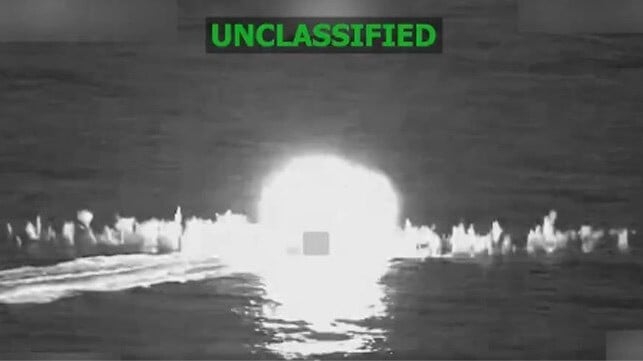
U.S. Southern Command reported the latest strike, saying it took place on May 26 in the Eastern Pacific. The accompanying video shows a lone motorboat speeding along when it is struck and explodes. Two areas of burning debris are seen, with Southern Command saying one person was killed.

They also said there were two survivors after the attack. They said the U.S. Coast Guard was immediately notified to begin a search and rescue operation for the survivors. There was no indication if anyone was recovered.


The report repeats the accusations from the Trump administration that the boats are operated by “designated terrorist organizations.” They repeated the assertions that intelligence confirmed the vessel was transiting along a known narco-trafficking route.

The Associated Press calculates that this brings it to approximately 50 strikes divided between the Caribbean and Pacific. The operation began in September 2025, and based on the various statements from Southern Command and the Pentagon, it is calculated that nearly 200 people have been killed.


In a separate report, the Joint Interagency Task Force also announced an interception. The accompanying video shows the water being strafed, and then a Coast Guard or Navy launch intercepting a go-fast boat and arresting the people on board. The report said 1,153 kg of cocaine was seized. Three people were also detained in the operation, which also involved partners, including Colombia. The interception took place, they said, near Panama.

The administration has consistently asserted that the vessels being targeted are operated by the drug cartels, which it has labeled terrorist organizations. NPR, however, released interviews conducted in Ecuador with local fishermen. The assertion is that the U.S. is conducting indiscriminate attacks on boats offshore. Several fishermen in Ecuador tell NPR that U.S.-flagged vessels attacked them at sea and destroyed their fishing boats.


UN Tribunal Awards $14M in Compensation for 2022 Seizure of VLCC off Africa

crew of Heroic Idun
Crew of the Heroic Idun was held for 92 days in Equatorial Guinea and later in Nigeria (All India Seafarers' Union)

Published May 27, 2026 3:39 PM by The Maritime Executive


The International Tribunal for the Law of the Sea, a UN body for settling international maritime disputes, read out its verdict in the 2022 case of the seizure of the crude oil tanker Heroic Idun, awarding just over $14 million in compensation. A five-judge panel, including a representative from the Marshall Islands and Equatorial Guinea, ruled that Equatorial Guinea had violated multiple principles of the Convention of the Seas and the right to free navigation when it seized the vessel and held the crew before later turning them over to Nigeria for prosecution.

The incident had begun in August 2022 when the tanker was waiting to load crude at an offshore Nigerian platform. When it was approached by a small boat claiming to be the Nigerian Navy, the crew panicked, thinking it could be pirates. They decided to depart while the Nigerians asserted the ship did not have proper papers and was attempting to illegally load oil.

Nigeria was unable to stop the vessel as it headed south off the west coast of Africa. While it was in the EEZ of São Tomé and Principe, the navy of Equatorial Guinea intercepted the Heroic Idun. The crew asserted they were threatened by the navy vessel, saying it would use force to stop the ship. They relented and were directed into anchorage in Equatorial Guinea, arriving on August 13, 2022. The crew and the tanker were detained for more than three months, with part of the crew removed from the tanker and taken to Malabo. 

The Marshall Islands, as the flag state of the tanker, joined with others in protesting the detention and seeking to have the crew released. Despite the protests, the crew and the tanker were handed over to Nigeria in November to face charges of piracy. The crew was finally released in May 2023.

The Marshall Islands filed the complaint against Equatorial Guinea for the illegal detention of the vessel and, in April 2023, agreed to the terms of the tribunal. 

Reading out its verdict, the court said Equatorial Guinea had attempted to justify its actions due to the threat of piracy in the region and a regional anti-piracy crackdown. The tribunal, however, said, “There was no credible basis of the contention” and that the evidence from Equatorial Guinea failed to provide adequate grounds to justify the seizure on the suspicion of piracy. It said that anti-piracy operations still have legal limits and “cannot be used as a blanket justification for stopping and seizing foreign commercial ships.”

The Tribunal found that the interception and apprehension of the tanker was a violation, as was the levying of a fine. In addition, it said the treatment of the crew was another violation. It also said that Nigeria was not an indispensable third party to the proceedings.

The Marshall Islands had sought nearly $55 million in damages plus the return of the $2 million fine imposed on the captain while the ship was in Equatorial Guinea. The total amount of the award is $14 million, including the repayment of the fine. 

Among the elements that were awarded to the Marshall Islands in its complaint were the medical costs for the crew during the 92-days they were detained in Equatorial Guinea, as well as the crew’s pay, travel costs, bunker expenses for the tanker, agency and port fees, and an increase in war risk premium and lost income while the vessel was unavailable for hire. They also awarded the costs of putting in place a replacement crew and the costs for drydocking and repairs to the tanker. The only cost the Tribunal did not reimburse was the expense incurred for security escort services in Nigerian waters.

Compensation for the 26 crewmembers being held for 92 days was figured at $1,750 per day per person. That totaled $4,186,000. 

The Tribunal released a 206-page report. Established by the UN in the 1990s, the rules of the Tribunal are that all judgments are final. There are no provisions for an appeal.


China "Drives Off" Dutch Navy Frigate in the Paracel Islands

De Ruyter
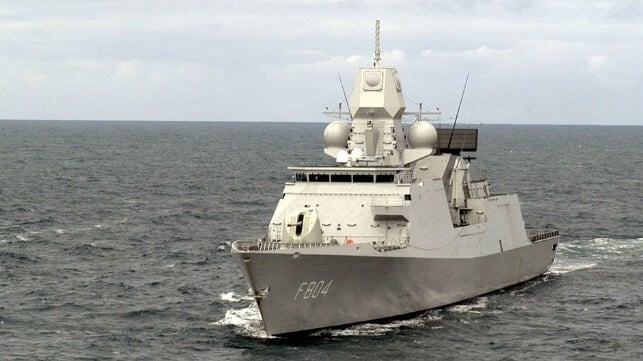
De Ruyter (Royal Netherlands Navy)

Published May 27, 2026 3:07 PM by The Maritime Executive


Chinese and Dutch naval forces had a tense encounter near the Paracel Islands on Wednesday, according to the PLA Southern Theater Command. 

The Dutch frigate HNLMS De Ruyter was operating in the vicinity of the Paracels, which are administered by China and claimed by Vietnam. According to PLA spokesperson Senior Captain Zhai Shichen, the frigate launched its helicopter multiple times to "intrude into China's territorial airspace."

In response, PLA Navy and PLA Air Force assets used "verbal warnings and warning electronic interference" to express the Chinese military's objections. Southern Theater Command claims that it "expelled" the frigate from the area with these measures, citing unspecified laws and regulations for justification. 

Shichen accused De Ruyter's crew of infringing on China's territorial sovereignty, among other offenses. "We firmly oppose such acts and solemnly demand that the Dutch side immediately cease its infringement and provocative actions," he said. 

The Dutch defense ministry denies that De Ruyter did anything wrong, and a spokesperson told NU that the frigate is "currently sailing in waters where free movement is permitted."

China claims the overwhelming majority of the South China Sea as its own under its sweeping "nine dash line" policy, including large swathes of international waters and the EEZs of neighboring states. Beijing asserts that the policy is consistent with the UN Convention on the Law of the Sea, but the Permanent Court of Arbitration in the Hague dismissed its expansive claims in 2016. China has refused to acknowledge or abide by the arbitral panel's decision. 

The area around the Paracels is sensitive for Chinese interests. Chinese contractors have been working actively since last year to expand the footprint of a large atoll, Antelope Reef, dredging it out and adding dozens of acres of usable space.

In years past, China's land reclamation projects in the South China Sea have been a prelude to the construction of military facilities. China repeated this pattern throughout early- to mid-2010s in the Spratly Islands, creating sprawling mega-bases with naval harbors, air defenses and bomber-capable runways. This forward base infrastructure supports China Coast Guard, PLA Navy and maritime militia operations inside the Philippine EEZ. 


Russia Surveyed the Hulk of Arctic Metagaz in its Criminal Investigation

burnt out LNG gas carrier Arctic Metagaz
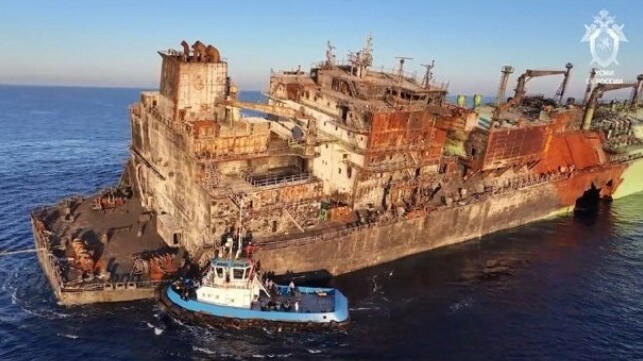
A Russian investigative team visited the hulk of the Arctic Metagaz (Russian Investigative Committee)

Published May 25, 2026 3:51 PM by The Maritime Executive


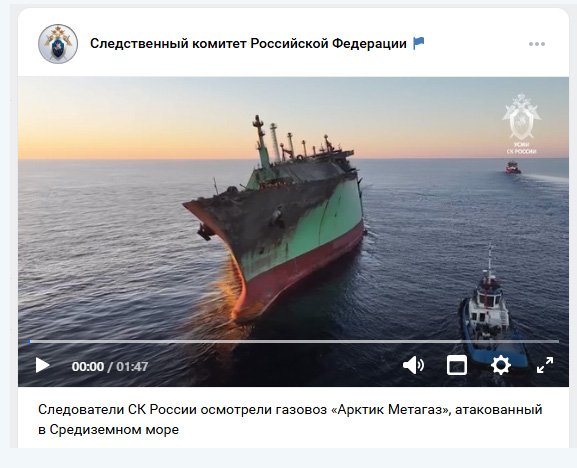
The Russian Investigative Committee released details after its survey of the wreck of the gas carrier Arctic Metagaz. It says it is continuing with the forensic investigation into the “criminal case of an act of international terrorism.”

A team of investigators from the Committee, assisted by the Russian Ministry of Foreign Affairs and the Ministry of Defense, traveled to Libya. They used unmanned aerial vehicles and underwater vehicles to perform a detailed inspection of the vessel. They report documenting evidence of the fire, the complete destruction of the vessel’s control systems, and the destruction of two of the four LNG tanks.

“The nature of the damage indicates external impact from explosive devices,” the Committee said in its statement. Spokesperson Svetlana Petrenko also asserted that the vessel was attacked on March 3 off the coast of Malta by “unmanned aerial vehicles and unmanned boats armed with explosive devices,” but they stopped short of specifically naming Ukraine for carrying out the attack.

The team also recovered the vessel’s data recorder. The Committee says it is being “decoded” as part of a computer-technical examination. It is part of a range of forensic examinations that have been ordered.

The vessel’s second mate and a sailor who were injured during the blast and fire have successfully received medical treatment. The crew has been repatriated to Murmansk.


(Click to play video - Russian Investigative Committee)


The statement did not say when the vessel was surveyed. Libyan officials reported they had been attempting for weeks to control the hulk, which was drifting in the Mediterranean. Unconfirmed reports indicated that the vessel was finally brought under control by forces in eastern Libya and anchored near Benghazi. 

Russian officials have repeatedly described it as an act of “maritime piracy” and “international terrorism.” However, they declined to get involved in the salvage efforts, saying the hulk would be the responsibility of the area where it finally came to rest.

Ukraine has remained silent on the incident, never taking credit for the destruction of the ship. The media outlet RFI and the Associated Press, however, detailed how Ukraine had set up a unit in Libya. They had asserted that in a covert deal between Ukraine and the UN-recognized government, which controls Tripoli and western Libya, as many as 200 Ukrainian operatives, mostly drone experts, were working from three bases in Libya.


Russia Finds Two Mines Attached to Hull of LPG Carrier Arriving at Ust-Luga

LPG tanker at anchor with mines discovered on its hull
Arrhenius had two mines attached to its hull off the Russian port of Ust-Luga (FSB on Telegram)

Published May 25, 2026 12:59 PM by The Maritime Executive


Russian officials are reporting that they thwarted an attempted terrorist attack after discovering mines attached to the hull of a tanker arriving from Belgium. They were able to disarm the mines and are inspecting them as part of a criminal investigation.

The Liberian-flagged LPG tanker Arrhenius (26,645 dwt) arrived in Ust-Luga on May 20, according to the statement from the Russian security service FSB. It anchored off the port for an inspection as part of a program Russia instituted last year to increase port security after several other attacks.

During the inspection, divers discovered magnetic devices attached to the hull, and a subsequent investigation by drones from a specialized explosive team confirmed there were two mines in the area of the engine room. Media reports are that each mine contained 7 kg (15 pounds) of explosives.

The FSB, in its statement, referred to the mine as “naval magnetic mines, which had presumably been made in a NATO country using industrially manufactured products." The news agency TASS, however, suggests that the limpet mines were homemade rather than of a recognizable NATO design.

The captain of the vessel told the authorities that they had proceeded to Antwerp after loading a cargo of LPG, but when they arrived on May 12 were instructed to anchor offshore because the terminal was not ready. They are blaming a strike by Belgian port workers for delaying the arrival. The ship docked after holding approximately 36 hours, and unloading took an additional 25 hours. It departed Antwerp on May 16 and proceeded directly to Ust-Luga with no stops.

Russian officials are asserting that the explosives couldn't have been attached to the hull while the ship was in Russian waters. 

The ship was evacuated, but the crew was later permitted to return to the vessel, which remains in the area outside Ust-Luga. The reports said it was to have loaded a cargo and proceeded to Turkey.

Suspicions immediately centered on Ukraine, which has increased its attacks against the Russian energy infrastructure, but so far, there have been no comments from Ukrainian officials. Russia said a criminal investigation has been launched.

In addition to the drone attacks, Russia has been on heightened security at its ports after a series of tanker explosions last year that were linked to mines. The tanker Koala exploded at the dock in Ust-Luga in February 2025. Russian officials initially called it an accident, but later reports speculated it was a mine blast that made three holes in the hull and caused the vessel to settle at the stern to the bottom of the harbor.


South Korea Identifies Iranian Missile Components from Attack on HMM Ship

damage to HMM ship from Iranian anti-ship missiles
South Korea recovered components that show the damage was done by an Iranian anti-ship missile (Foreign Ministry released photos)

Published May 27, 2026 6:49 PM by The Maritime Executive


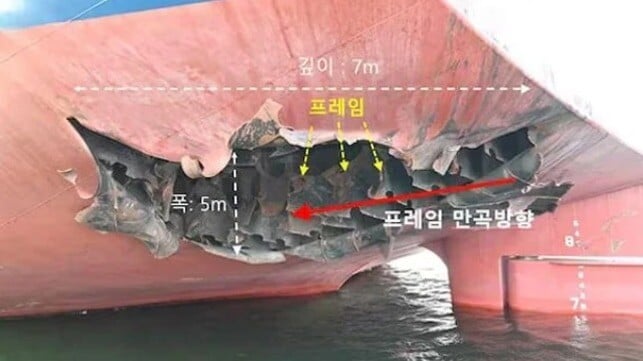
Officials in South Korea revealed the results of their investigation over the past two weeks into the attack on the HMM cargo ship Namu. The vessel was struck by two objects, which they initially said were unidentified flying projectiles but have now concluded were a version of Iranian anti-ship missiles.

The Namu (38,314 dwt) was struck on May 4 while it was anchored off the UAE port of Umm Al Quwain. There were 24 crewmembers who were not injured, but there was a fire in the engine room and a hole in the hull above the waterline. The statement describes the hole as measuring approximately 16.5 feet by 23 feet and shows clear indications of an external explosion. The ship was taken to Dubai for inspection and repairs.

South Korean officials said on Wednesday, May 27, that they have analyzed the pieces recovered by a team sent to Dubai to examine the ship. They found the engine from the missile, a warhead, explosives, and the airframe. The First Minister of the Ministry of Foreign Affairs, Park Yoon-joo, told the audience that they believe it was an anti-ship missile from the Nour series developed in Iran.

The reported finding markings, which they presume are from an Iranian manufacturer. They said the engine was similar to an Iranian turbojet engine. The reports are that the first warhead that struck the ship did not detonate. They said during the briefing that the warhead was similar in shape to those on Iran’s Nour anti-ship missile.

They had previously reported, based on crew accounts and video footage, that the ship was struck by two flying objects about one minute apart. Both hit in the stern near the engine room. They now said the first one did not detonate but started a fire in the engine room. The second one exploded and caused the fire to spread rapidly.

Vice Minister Park, however, declined to blame a specific party for the attack. He said it was difficult, based on the current situation in Iran, to tell if it was the regular military, the Revolutionary Guard, or possibly one of the groups supported by Iran.

However, the government has for the second time summoned the Iranian ambassador. It met with him earlier in the month, and after the meeting, the ambassador tried to claim Iran was not involved in the attack. The government said it will make a “strong protest” and present the evidence to the ambassador.

The government has been criticized for its cautious response to the attack. Donald Trump posted about the attack on social media, saying maybe it would convince South Korea to join the efforts to reopen the Strait of Hormuz.


UK Permits Liabilities Limitation in Solong-Stena Immaculate 2025 Allision

containership Solong destroyed by fire after hitting tanker
Owners and operators of the Solong are being permitted to limit their liabilities from the 2025 incident when the ship hit an anchored tanker

Published May 27, 2026 7:40 PM by The Maritime Executive


The UK Admiralty Court handed down a decision last week after hearing arguments from the owners and operators of the containership Solong that they should be permitted to limit liabilities from the 2025 incident when their ship plowed into the anchored tanker Stena Immaculate. At issue were claims by Stena Bulk, as the owners of the tanker, and Crowley, as the charterer, that the owners of the containership had knowingly let it sail with problems that would contribute to the incident.

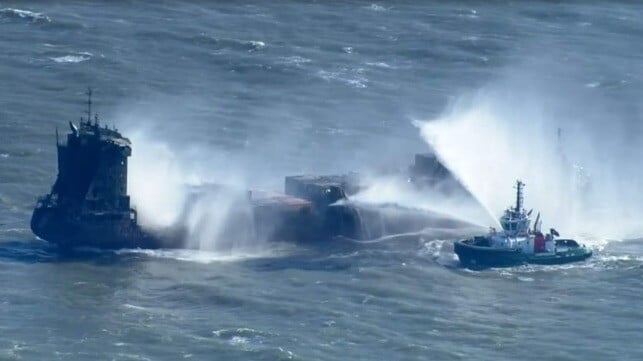
The Solong was sailing from Scotland to the Netherlands when, on the morning of March 10, 2025, it hit the anchored tanker Stena Immaculate off the coast of England near Hull. A massive fire erupted as one of the tanks filled with jet fuel was breached, killing one crewmember on the Solong. The remaining crewmembers from both ships were rescued, but the fire would burn for days, destroying the containership and badly damaging the tanker.

The UK court was considering claims by Stena and Crowley opposing the limitation of liabilities under Article 4 of the 1976 Convention on the Limitation of Liability for Maritime Claims. Article 4 would have removed the right to limit the liabilities if it could be proven that “personal acts of omission, committed with intent to cause such loss, or recklessness and with knowledge that such a loss would probably result.”

In opposition to the limitation of liabilities, the tanker’s interests were calling the Solong “unseaworthy” and asserting the captain's navigational practices were dangerous and likely known by management of the companies. They asserted the designated manager ashore likely knew of the problems with the operation of the Solong.

The owners and operators of the Solong acknowledged that Captain Vladimir Motin was convicted of manslaughter by a UK court. He was charged with failing to maintain a proper lookout and not properly using the radar and other navigational systems. In that case, it was alleged he had missed the opportunities to identify the anchored tanker while they were at a sufficient distance and failed to sound an alarm when it became evident the containership would ram the tanker. A preliminary statement from UK investors said they believe there was spotty visability meaning the Solong should have had a lookout.

A seaman thought to be working near the bow of the containership, Mark Pernia, had been available to serve as a lookout but was working on the bow. His body was never found, and he is presumed to have died when the ship struck the tanker or in the subsequent fire. 

The owners of the Solong acknowledge the gross failure of watchkeeping and navigation duties by the captain, but they assert the problems were limited to the captain’s failures. The captain, in his defense, had tried to blame the bridge systems, but that was rejected during his trial.

Justice Andrew Barker of the Admiralty Court found that the tanker’s owners and operators had no realistic prospect of proving their case to meet the high threshold to break the limitation of liabilities. He rejected their argument that disclosures during the case might present supporting evidence, in effect saying the companies were fishing.

Stena Bulk and Crowley are pursuing claims for the damage to Stena Immaculate, which was sold to a new owner they said would repair the ship, as well as cargo losses, salvage costs, and the crew’s claims. Based on the court’s decision, the liability will be capped at around $20 million to be split by all the claimants.

The case comes as a similar issue is about to be presented in the U.S. courts. Grace Ocean, the owner of the containership Dali, and Synergy Marine, the manager of the vessel, filed shortly after the vessel destroyed the Key Bridge in Baltimore to limit their liabilities, citing an 1850s law. The federal judge in the case last week rejected a last-minute filing to delay the case, which is now due to start on June 1.

Judge James Bredar of the U.S. District Court for the District of Maryland, in the first phase of the trial, will be hearing the same issue if the owners and operators of the containership can limit their liabilities. The second phase of the civil trial will deal with the claims from five of the families of the victims, as well as financial claims from the City of Baltimore, cargo owners, and businesses that suffered financial losses. Synergy Marine and its technical superintendent have also been indicted in federal court on criminal charges relating to the operation and maintenance of the vessel, as well as claims of providing false information to investigators.


MARAD Honors Crew of Stena Immaculate for Response to Allision

Courtesy Crowley
Courtesy Crowley Maritime

Published May 26, 2026 10:28 PM by The Maritime Executive


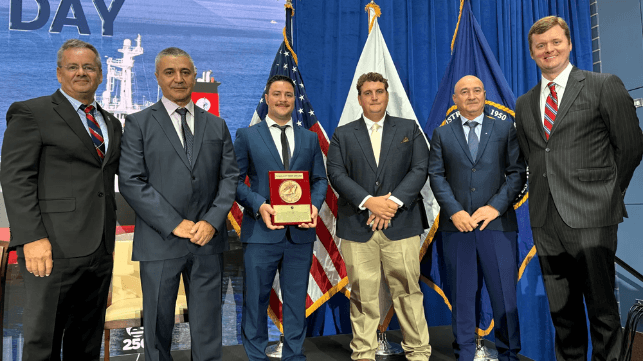
On National Maritime Day, the Maritime Administration awarded the crew of the tanker Stena Immaculate its Gallant Ship Award, honoring their bravery and skill in responding to the allision with the container feeder Solong last year. 

On March 10, 2025, the feeder Solong struck the Stena Immaculate on the port side amidships as the tanker lay at anchor off the Humber Estuary. One cargo tank was ruptured and a fire broke out, but the crew took action and saved both their vessel and the majority of the cargo. 

"The bravery?and immediate response?of these 23 professional mariners saved lives and?prevented catastrophic?damage to the environment. Their extreme courage and professionalism embodied?the highest ideals of?U.S.?maritime," said James C. Fowler, EVP and division president at Crowley, Stena Immaculate's operator. "This honor for the crew of the Stena Immaculate underscores the essential role that U.S. mariners play in safely sustaining supply chains and supporting national defense at home and abroad."

The crew previously received a special recognition plaque at the United Seamen's Service's Admiral of the Ocean Sea awards in November.

The crew of the Solong were less fortunate. The feeder ship burned for eight days after alluding with Stena Immaculate, and one crewmember was lost and presumed dead. The Solong's master was convicted of manslaughter in a UK court in February, and was sentenced to six years in prison. The hulk of the burned boxship has been sold for scrap. 


India Secures Release of 10 Crewmembers Detained for 10 Months in Iran

Iranian attack boats
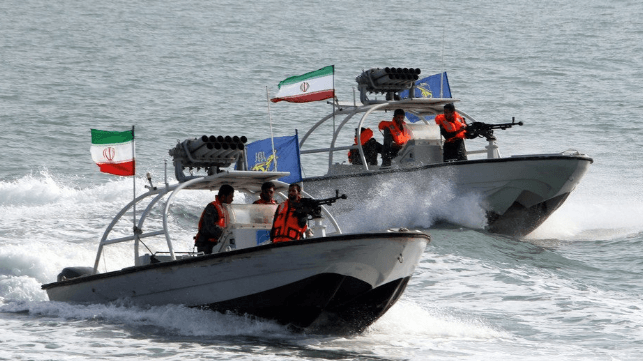
Iran seized the crew with the Indian crew in July 2025 on charges of fuel smuggling (Fars file photo)

Published May 27, 2026 12:48 PM by The Maritime Executive


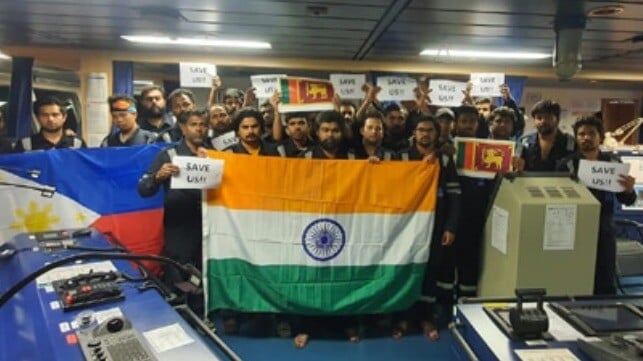
India’s Directorate General of Shipping is reporting that 10 Indian nationals detained in Iran for the past 10 months have been released and repatriated. The individuals were working aboard a small product tanker seized by Iran as part of its crackdown on fuel smuggling in the region.

The Directorate General reports the release is the result of a sustained diplomatic effort involving the ministries for shipping and external affairs, the shipping company and its managers, and the Indian embassy in Tehran. It reports that the crewmembers had been detained, arrested, and imprisoned in Iran.

The product tanker Harbour Phoenix (7,628 dwt) was stopped by the Iranians in July 2025. The vessel, which was built in 1994, is managed out of the UAE and registered in Palau. It was accused of smuggling fuel with the Iranian Border Police and the Iranian Navy, saying they worked jointly as part of the continuing efforts started earlier in 2025 to stop fuel smuggling. Iran was also moving to prosecute the crews of vessels caught smuggling with reports of long prision sentences. 

The authorities highlighted that they are using electronic equipment and aerial surveillance as well as intelligence reports to track suspected fuel smuggling. The vessel was about 23 miles off Kuh-e Mobarak near Jask when the vessel was stopped for an inspection. They report finding over 2 million liters of diesel fuel aboard. The media is setting the value at $1.8 million.

The release comes as India has been quietly working to resume its oil shipments from the Middle East. Last week, Iran permitted the first LPG carrier bound for India to make the transit of the Strait of Hormuz, and media reports said India’s External Affairs Minister had met with the Iranians during the BRICS summit in India.

India has emphasized the importance of getting its seafarers trapped in the Persian Gulf out of the area safely along with their vessels. It is reportedly preparing to send additional vessels into the Gulf to load additional oil and, meanwhile, has been buying oil from Russia to fill some of the country’s short-term gaps in supply.


Bar Harbor Struggles with Cruise Ship Limits as Judge Overturns Ordinance

Bar Harbor Maine
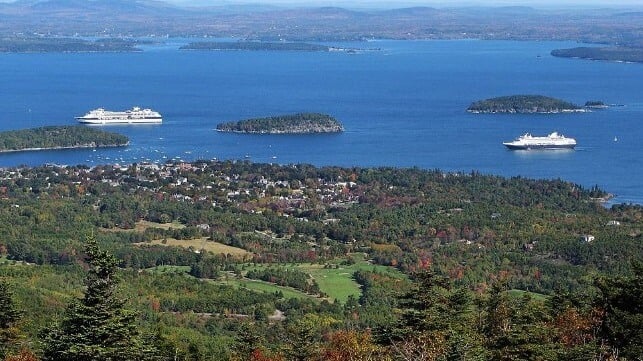
Cruise ships anchored off Bar Harbor (CC BY 2.0 / Smudge9000)

Published May 27, 2026 10:03 AM by The Maritime Executive


Bar Harbor, a picturesque town on the Maine coastline, continues to be one of the most closely followed examples as the local town council works to balance the number of cruise passengers with local residents and the annual tourist influx. It is an example of overtourism and the challenges of balancing the various, sometimes competing interests.

The Town Council was trying, in true New England fashion, to build a consensus between the competing factions. The U.S. Census estimates that in 2025, there were just 3,500 full-time residents of Bar Harbor, but data developed for the town showed an average of 11,500 visitors in the area of the waterfront in the summer, and peak days with 15,000 visitors near the waterfront.

Residents argued that downtown was impassable during these surges, largely coming from the cruise ships, and that the one-day visitors were detrimental to multi-day hotel stays from shore-side tourists. Many business owners who depend on the tourists wanted to maintain cruise ship visits, which were reported to number 100 or more cruise ships between May and late October each year. Opponents of the ban assert that cruise passengers are only a small portion of the total visitors, noting that nearby Acadia National Park gets two million visits each year, and many people also visit the town.

Faced with similar challenges, ports such as Juneau, Alaska, have reached a series of voluntary agreements with the cruise industry. Other destinations, such as the city of Amsterdam, have sought to move cruise ships out of the city center, while Greece instituted a new fee system for its most popular destinations, including Mykonos and Santorini, as did Mexico. The French Riviera established restrictions on the size and number of cruise ships anchoring at some of its most popular ports, while the residents of Key West, Florida, voted for restrictions on large cruise ships using the city pier.

The Bar Harbor Town Council tasked its Cruise Ship Committee to come up with a compromise, and it put forward in 2022 a plan to limit the number of passengers to approximately 3,200 to 3,500 people per day and between 30,000 and 65,000 per month, depending on the season. The opponents, however, were successful in pushing the issue onto a ballot, and in November 2022, the residents voted to limit cruise ship passengers to 1,000 per day.

Since then, the Town Council has found itself caught in the middle, having to defend the results of the vote against proponents of the cruise industry that sued to block the limits. The issue has gone back and forth in the courts, with positive and negative decisions. At the same time, a second vote attempting to repeal the restrictions was rejected by the residents by a small margin.

Bar Harbor began declining new reservations from cruise ships, and as a result, the Town Council says there will be fewer than 50,000 cruise visitors in 2026. The number is also expected to continue to decline as reservations made before the restrictions are completed.

The issue was sent back to a U.S. District Court earlier this year after a lower court pointed out contradictions in a prior ruling. Federal Judge Lance Walker heard further arguments and, on May 15, ruled that, other than in July and August when tourism is at its peak, the cruise restrictions were excessive and therefore unconstitutional.

The judge, who previously said he respects the residents’ vote, wrote in his decision, “I conclude that the ordinance’s 1,000-passenger cap is not clearly excessive in relation to its local benefit during the peak summer tourism season, but it is clearly excessive in relation to the shoulder seasons.” He found that the plaintiffs challenging the restriction made “more sensible” protests over the restriction in the shoulder season while the defendants’ “opposition lacks persuasive force.” He called for a more balanced approach during tourism’s shoulder seasons. 

The Town Council said it would consider its next steps while assuring residents that it would not allow a return to the unsustainable levels of cruise ship visitations in the past. It also promised not to take new cruise ship reservations until an agreement can be reached that follows the court’s directions.

At the same time, the town is exploring broader issues related to tourism by establishing a Sustainable Tourism Task Force. It capped short-term vacation rentals and is exploring a lodging moratorium to focus on visitors staying a few days. The proponents of restrictions argue that shore-side visitors spend more, visit restaurants and other businesses, and their spending increases when they spend a few days versus the one-day short stopovers from a cruise.

The cruise lines have argued repeatedly that they can work with the local jurisdictions to manage the influx from the ships. They propose coordinating schedules and staggering arrival times.

The outcome of Bar Harbor’s efforts to balance the competing interests and provide an amicable solution could become a model for other popular tourist destinations that seek to manage the influx of cruise passengers.Photo courtesy of Smudge 9000 via CC by 2.0 license)
HANTAVIRUS

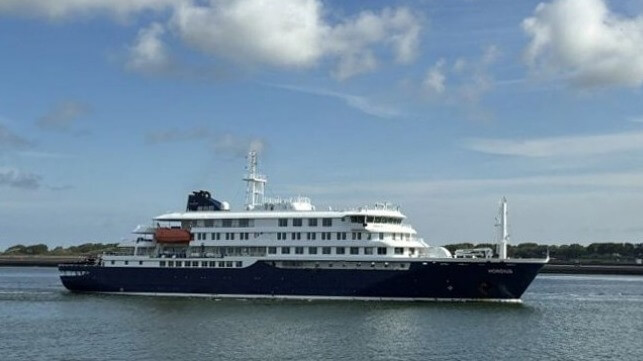
Expedition Cruise Ship Hondius Delayed for Additional Cleaning

expedition cruise ship Hondius
Hondius arrived in Rotterdam May 18 to begin the cleaning process (GGD Rotterdam)

Published May 27, 2026 1:40 PM by The Maritime Executive


A week after the expedition cruise ship Hondius reached Rotterdam with a skeleton crew aboard, the operator reports its departure is being delayed for additional cleaning procedures. The company did not specify what additional efforts would be required as it works to ensure the hantavirus has been fully eradicated and the ship is prepared for a return to service.

Oceanwide Expeditions, which operates the ship, said that based on inspection findings by the public health service in Rotterdam, GGD, additional cleaning procedures would be implemented. GGD advised on the additional efforts and will reinspect the vessel before it is cleared to depart for Vissingen.

The five remaining crewmembers who had been aboard during the cruise and the return to Rotterdam also disembarked the ship on May 23. The captain of the cruise ship was transported to Poland on a specialized transport, while the Dutch crewmembers are in home quarantine. A quarantine facility was also established in the Port of Rotterdam for crew who were awaiting return to their home countries. Two of the final disembarking crew were a Russian and a Ukrainian, with the other two being Dutch.

The ship reached Rotterdam on May 18 after disembarking all of its passengers and about half the crew in Tenerife for evacuation flights home or to the Netherlands. The company said when the ship reached the Netherlands with 25 crewmembers and two medical personnel from the Netherlands, that there were no symptomatic individuals aboard.

The company’s CEO, Remi Bouysset, issued a statement thanking everyone for their support and saying their focus remained on the health and safety of the crew and passengers. He reiterated the indications, which he said “strongly suggest” that the virus was introduced before embarkation and did not originate from the vessel.

“At this stage, there is no indication that the source of infection was linked to the vessel’s condition or to Oceanwide Expeditions’ onboard operations. We maintain strict pest-control and biosecurity procedures onboard our vessels, including regular inspections and monitoring,” reported Bouysset.

Spain’s Ministry of Health said Monday, May 25, that another of the 14 people it was monitoring has now tested positive for hantavirus. Authorities stated that the patient is a close contact identified through the epidemiological monitoring and that they are now in a specialized hospital unit. It was the second Spaniard reported to have tested positive after leaving the cruise ship.

The World Health Organization said as of May 25, there were reports of a total of 12 cases linked to the cruise ship. After the three individual passengers who passed away, the WHO says there have been no additional deaths reported since May 2. It terms the situation as stable while noting that all the passengers and crew remain in quarantine and under close monitoring to ensure they receive care if needed.

Oceanwide continues to expect that the Hondius will return to service on June 13. Two earlier cruises were canceled while the in-depth cleaning proceeded.